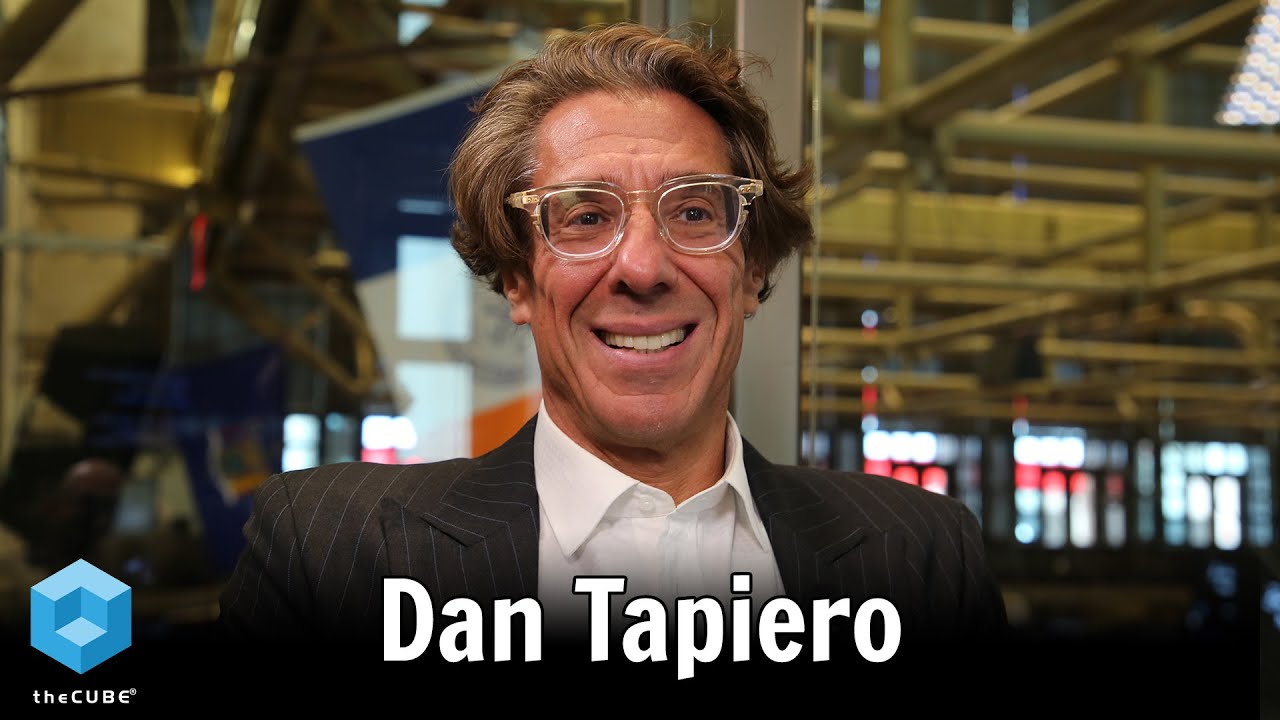
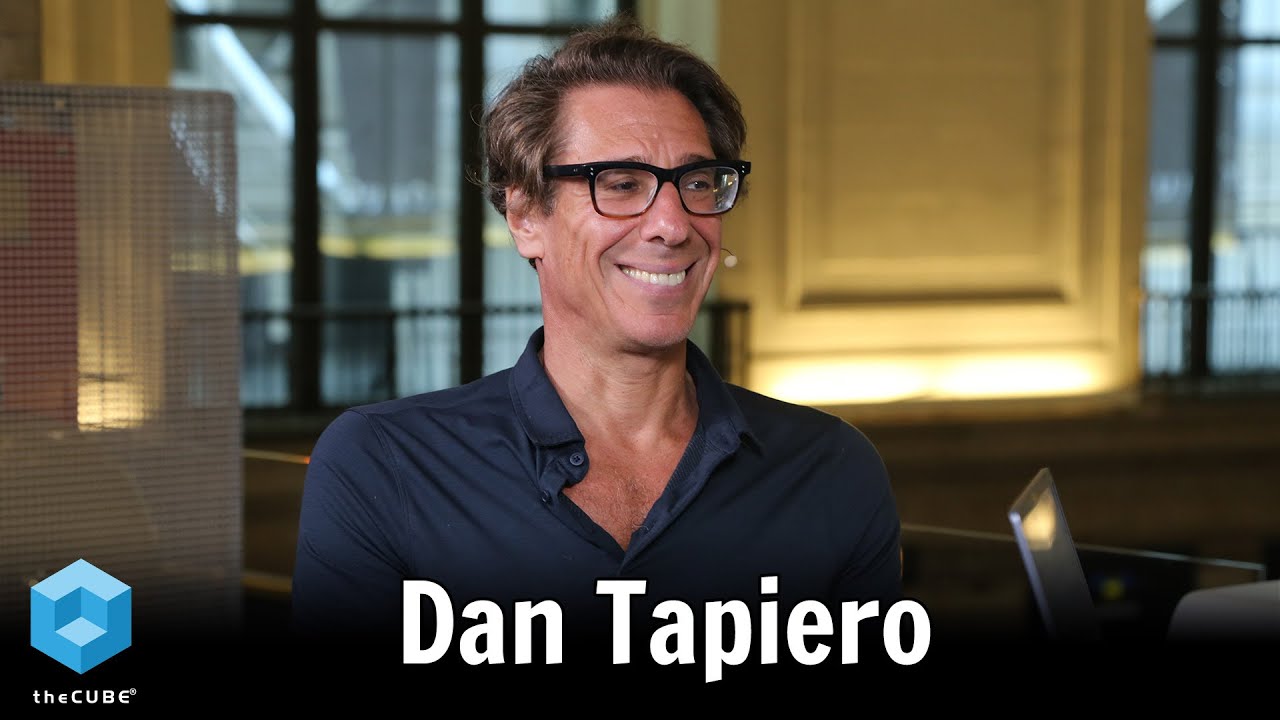
Dan Tapiero, co-founder and CEO of RoundTable Partners and 10T Holdings, joins theCUBE at the NYSE to discuss his extensive background in finance and his transition into the digital asset ecosystem. With over 20 years in the macro hedge fund industry, Tapiero brings valuable insights as he highlights the role of cryptocurrencies and blockchain in transforming business finance and infrastructure. theCUBE Research team, led by John Furrier, engages Tapiero in an in-depth discussion on the evolution of digital assets and the future of growth in this sector.
Tapiero emphasizes the potential of digital assets, predicting a substantial market value increase from $300 billion to a projected $10 trillion within the next decade. According to Tapiero, the current environment favors companies building this new ecosystem, as businesses generate significant revenue and prepare to enter public markets. The interview explores the role of US regulatory shifts in fostering a supportive atmosphere for cryptocurrencies, along with the importance of positioning the US as a global hub for blockchain technology and digital assets. #DanTapiero #DigitalAssets #theCUBE #NYSE #Crypto #Blockchain #Web3
Explore more about this topic and related insights on SiliconANGLE: siliconangle.com. Subscribe to our blockchain playlist for further discussions: [Blockchain Playlist](#).
00:00 - Intro
00:06 - Cryptocurrency and Blockchain: An Introductory Overview
02:31 - The Journey of Dan Tapiero and the Rise of 10T Holdings
09:09 - Crypto Industry Developments and Challenges
16:31 - Crypto Companies and Public Offerings
20:44 - The Future of Digital Assets
23:10 - The Digital Cultural Revolution: Final Reflections
Forgot Password
Almost there!
We just sent you a verification email. Please verify your account to gain access to
theCUBE + NYSE Wired: Crypto Trailblazers. If you don’t think you received an email check your
spam folder.
Sign in to theCUBE + NYSE Wired: Crypto Trailblazers.
In order to sign in, enter the email address you used to registered for the event. Once completed, you will receive an email with a verification link. Open this link to automatically sign into the site.
Register For theCUBE + NYSE Wired: Crypto Trailblazers
Please fill out the information below. You will recieve an email with a verification link confirming your registration. Click the link to automatically sign into the site.
You’re almost there!
We just sent you a verification email. Please click the verification button in the email. Once your email address is verified, you will have full access to all event content for theCUBE + NYSE Wired: Crypto Trailblazers.
I want my badge and interests to be visible to all attendees.
Checking this box will display your presense on the attendees list, view your profile and allow other attendees to contact you via 1-1 chat. Read the Privacy Policy. At any time, you can choose to disable this preference.
Select your Interests!
add
Upload your photo
Uploading..
OR
Connect via Twitter
Connect via Linkedin
EDIT PASSWORD
Share
Forgot Password
Almost there!
We just sent you a verification email. Please verify your account to gain access to
theCUBE + NYSE Wired: Crypto Trailblazers. If you don’t think you received an email check your
spam folder.
Sign in to theCUBE + NYSE Wired: Crypto Trailblazers.
In order to sign in, enter the email address you used to registered for the event. Once completed, you will receive an email with a verification link. Open this link to automatically sign into the site.
Sign in to gain access to theCUBE + NYSE Wired: Crypto Trailblazers
Please sign in with LinkedIn to continue to theCUBE + NYSE Wired: Crypto Trailblazers. Signing in with LinkedIn ensures a professional environment.
Are you sure you want to remove access rights for this user?
Details
Manage Access
email address
Community Invitation
Yuval Rooz, Digital Asset
Dan Tapiero, co-founder and CEO of RoundTable Partners and 10T Holdings, joins theCUBE at the NYSE to discuss his extensive background in finance and his transition into the digital asset ecosystem. With over 20 years in the macro hedge fund industry, Tapiero brings valuable insights as he highlights the role of cryptocurrencies and blockchain in transforming business finance and infrastructure. theCUBE Research team, led by John Furrier, engages Tapiero in an in-depth discussion on the evolution of digital assets and the future of growth in this sector.
Tapiero emphasizes the potential of digital assets, predicting a substantial market value increase from $300 billion to a projected $10 trillion within the next decade. According to Tapiero, the current environment favors companies building this new ecosystem, as businesses generate significant revenue and prepare to enter public markets. The interview explores the role of US regulatory shifts in fostering a supportive atmosphere for cryptocurrencies, along with the importance of positioning the US as a global hub for blockchain technology and digital assets. #DanTapiero #DigitalAssets #theCUBE #NYSE #Crypto #Blockchain #Web3
Explore more about this topic and related insights on SiliconANGLE: siliconangle.com. Subscribe to our blockchain playlist for further discussions: [Blockchain Playlist](#).
00:00 - Intro
00:06 - Cryptocurrency and Blockchain: An Introductory Overview
02:31 - The Journey of Dan Tapiero and the Rise of 10T Holdings
09:09 - Crypto Industry Developments and Challenges
16:31 - Crypto Companies and Public Offerings
20:44 - The Future of Digital Assets
23:10 - The Digital Cultural Revolution: Final Reflections
play_circle_outlineExploring Canton: A Hub for Responsible Crypto Institutions and the Significance of Configurable Privacy in Blockchain Networks
replyShare Clip
play_circle_outlineAI plays a role in enhancing data quality and structured information for blockchain contracts.
replyShare Clip
play_circle_outlineScaling Engineering and Innovative Blockchain Solutions: The Shift Towards On-Chain Securities in Digital Asset Development
replyShare Clip
play_circle_outlineEmbracing Change: Integrating TradFi with Blockchain for Innovation, Transparency, and Real Business Cash Flows on Ethereum's Anniversary
>> Welcome back to theCUBE. I'm Gemma Allen here at the NYSC. This is our Crypto Trailblazer Series in partnership with NYSC Wired. Today we're marking 10 years of Ethereum and joining me now is a man who's been blazing a trail for quite a while. Yuval Rooz, co-founder of Digital Asset. Welcome, Yuval.
Yuval Rooz
>> Hi, Emma. Thank you for having me.
Gemma Allen
>> So you were on with John and June and I think your key takeaway, John Furrier, my co-host who's not here today, but I'm delighted to get the chance to chat with you, was that you want to make Canton the number one destination for responsible institutions.
Yuval Rooz
>> Yep.
Gemma Allen
>> Break that down for me. Tell me what does that mean?
Yuval Rooz
>> Sure. So everybody is super excited about crypto rails, digital assets, tokenization, and they're eager to get going and start doing things on chain. But the reality is if you are a publicly traded company or you're a regulated company, it doesn't mean that just because you're excited, you could just do whatever you want. And the reality is that a lot of the chains that have been created have been designed with no privacy. You could have third parties change the history of the chain. A lot of people think that crypto is immutable. It's really not immutable. So the reality is, again, if you have fiduciary duties because you are running a publicly trade company or you're regulated, you can't just do certain things. So on Canton, first of all, we have configurable privacy. So if you transact on chain, not everybody can see your activity, which is really good if you are a trading company or if you're a publicly traded company and you don't want everyone to see all of your activity, you can have sovereignty and control over your assets. So no third party can change your books and records. And there's a few other features, especially around governance. I think that we have a very open governance with a pretty incredible board and participants. So I think it's the combination of those things that gets institutional companies very comfortable with Canton.
Gemma Allen
>> Well, it's obviously a huge space and based on the year you guys have had in way of the raise, your series E, you think you raised 135 million earlier this year. Am I correct?
Yuval Rooz
>> 145.
Gemma Allen
>> 145. Sorry. I don't want to low ball you guys.
Yuval Rooz
>> No, no, no. It was 135 and then another 10 later.
Gemma Allen
>> Wow. Okay. A lot of folks agree that there's obviously an urgent and very important need for this. But you yourself, let's talk a little bit about your journey, 'cause you started in TradFi. You grew up in the world of finance and then saw an opportunity or I guess a missing niche perhaps. Fill me in. What was it that made you decide, "You know what? This world isn't chaotic enough. I want to go into crypto."
Yuval Rooz
>> Yeah. So I started at Citadel and then moved to DRW trading and I was very fortunate that when I was... After doing trading at DRW, I also was involved in their venture team. And that was during the year that DRW started Cumberland Mining, which is one of the largest OTC trading desks in crypto in 2012. So for two to three years, I've been looking at companies to invest in the space, but also have been thinking about, "Well, what is the next generation of infrastructure?" And really saw an opportunity that if eventually you could move all of the flows that happen in TradFi into these type of rails, not only you are going to have more efficient markets, but as a result of that efficiency, you'll be able to create financial products that today would not be financially really feasible to launch. And that's really what made me make the jump and start this company.
Gemma Allen
>> When it comes to the tech world broadly, it feels like privacy is a term that caught up with the industry, right. We all know about the impacts of the data privacy shield in Europe and the two worlds that are kind of following a different path right now and consumer information and all that stuff. In this space though, do you think it's something that has been pivotal from the beginning? 'Cause there has been a lot of skepticism and scrutiny around why we shouldn't adapt and really, I guess, make this more of a mainstream concept up until lately here in the US. So do you think privacy was at the forefront of people's thinking? Or...
Yuval Rooz
>> So when we wrote the white paper for Canton in 2016, we said that privacy is a must have. And I would say that for many years we have been viewed as kind of dinosaurs, "Oh, it's only the TradFi world that needs privacy." In crypto, privacy was a bug, not a feature.
Gemma Allen
>> Wow.
Yuval Rooz
>> And I think that kind of what you're talking about, which is very true, is that I would say in the last 6 to 12 months, people understand that if we really want to bring institutional flow to run on these networks, which at the end of the day is really where most of the volume takes place, privacy is a must have. I think that the challenge is that once you have designed these systems from an architecture perspective without privacy, bolting out privacy as an afterthought is challenging. I think that one of the advantages we have is that we've designed the network with privacy in mind from day one and didn't launch Main Net until we actually had the design in place.
Gemma Allen
>> Wow. And tell me, what does it look like? When we talk about privacy in the world of crypto and blockchain, are we talking about increased transparency? Are we talking about the ability to audit? What exactly does it look like on a day-to-day tactical level?
Yuval Rooz
>> Yeah, I think that that's probably one of the most important questions because as you said, a lot of times people will say privacy, but I think they mean different things. So what we mean by privacy is if you are a stakeholder to a transaction, no different like in a legal contract sense, if you are a party to a transaction, you are entitled to see all the information of the contract. In our case, a smart contract. You should also be able to share that information with third parties that have the right to see these contracts. For example, if a regulator wanted to audit the activity that happened in the contract, they should be able to see that. Because you need to comply in many cases with KYC, AML, you as the issuer of an asset need to be able to see all the activity. But those that don't have a need to know are not even aware that that contract existed or that it happened. To us, that is privacy. It's the ability to share information on a need to know basis, and those that don't have that need to know, don't even know that it happened. A lot of times people will say that nobody gets to see anything is privacy. Our view is that that's anonymity, and that's not really compatible with how financial services work. And again, in a world where you are regulated or have fiduciary duties to customers or other type of parties that need to be able to see what you're doing, for us, this anonymity is not a really reliable solution.
Gemma Allen
>> So talk to me a little bit about speed, because it seems as though that is a core driver for industry broadly right now. And this, if we think about what happened in tech from a privacy perspective, a lot of the time it became a reactive thing because things were growing so fast that in a last... I guess people didn't really understand what the risks really and truly were, right?
Yuval Rooz
>> Yeah.
Gemma Allen
>> How do you kind of approach that right now? Do people view privacy as a element or kind of part of a process which creates like a slow-down or it makes it less harder to innovate? Talk me through that.
Yuval Rooz
>> So my view is that unless your architecture is designed not to be able to scale, every technology eventually will process things faster. It's a question, do you have the fundamental blocks to actually to allow you to do certain activities? So I'll give you an example. If anonymity was out of the question, who cares if anonymity is performant because you can't do certain activity. If lack of privacy is going to prevent you from doing activity, who cares what is your throughput when you have lack of privacy, right. Our view was, first of all, solve some of the fundamental blocks and make sure that you have an architecture that allows you to scale not only vertically, which is meaning making the software faster, but with more hardware, you'll be able to increase throughput. And that was our approach. And as a result of that, there is yet to have a use case that we haven't been able to tackle. And I also think that over time, we're going to get to the throughput levels that are capable of running global markets. I would say that already today, we're running some critical pieces of the market all the way to like 10% of the US repo market. And even in the sports wagering, we have clients that are doing thousands of transactions per second, and I believe we're going to do even more than that.
Gemma Allen
>> Well, tell me a little bit about those buyer personas per se. I'm sure they are changing rapidly as more and more folks enter the space, organization becomes more mainstream. What have you seen in the period that you've been on? We all kind of associate financial services and regulatory environments with needing security and privacy, right, but what unusual use cases or opportunities do you see?
Yuval Rooz
>> I mean, because I come from markets, the most unusual for me is sports wagering, but we do work in life insurance and annuities, mortgages, equities, fixed income, securities lending, securities financing, commodities. I mean, the gamut is pretty wide. Private markets is another big area. So I don't know if there's necessarily unusual, just that I've never been in the world of sports wagering and to see people use the technology for that is pretty exciting too.
Gemma Allen
>> And tell me about the global viewpoint for this. I mean, we've had a very different ethos and sentiment around crypto here in the US in the last year or so, but you know, other markets have had different viewpoints for quite a while. What do you see as like interesting jurisdictions and even from a business perspective, where has there been a lot of growth?
Yuval Rooz
>> So the US is the largest market in the world, and I think it's going to remain for a while. I would say that until the current administration, most of our clients were in the US, but let's just say were more quiet about the activity that they were doing. So we've been conducting our business globally for the last few years. I think that really what have changed is how fast now opportunities in the US are taking place. So if anything, if majority of our clients were even before this administration in the US, it's now that these customers are even moving faster and are growing faster. So I would say the US is becoming even a bigger piece. And what you're seeing is now that the rest of the world is trying to play catch up where until like a year or so ago, it was, "Hey, where is the US? There's nothing to show for." I don't think that that was true. I think that it's just that clients that were operating were much more cautious, so you just weren't reading about it in the news as much as you heard about things internationally.
Gemma Allen
>> I love it. So tell me, I have to ask you about the world of AI and the converging of these two worlds 'cause we're connecting capital markets and web3 to Wall Street here. So we see AI at least 20 times per sentence. How do you see it playing out? Do you see it, you use it, digital asset, do you see it amongst your consumer and customer base?
Yuval Rooz
>> Yeah. So we, as a company, of course, we use it as a productivity tool to help us develop the technology faster and more efficient. I am not aware... There's a few projects that use AI to give better queries on the chain that are part of our ecosystem. We don't do any sovereignty use case for AI at the moment, which is I think sometimes what people in crypto talk about. But what I do see that is a good use of the technology is that a lot of times people talk about blockchain as kind of like this one source of truth and one thing that not a lot of people talk about is, well, what happens when bad data goes into your one source of truth? Now you've effectively created a one source of truth, which is based on a lie, right. And everybody just thinks that that's-
Gemma Allen
>> And some say a myth.
Yuval Rooz
>> ... the truth. So actually making sure that the data that goes into a blockchain system is really high quality is something that some of our clients are using AI, both to make sure that unstructured data shows up in structured form into smart contracts, but also giving confidence intervals around the quality of the data that they're putting into the chain.
Gemma Allen
>> And tell me a little bit about the privacy space in terms of how you see it playing out in a world where we have 24, 7 access to US treasuries. You think that's possible and in that world, do you foresee a scenario whereby there's almost like an ISO for privacy and regulation as part of the infrastructure layer? How do you envision this futuristically?
Yuval Rooz
>> Yeah. So what I hope is that regulators continue to do what I call, or what people call principle based regulation, meaning we don't really care what is the technology that you use as long as you can meet certain characteristics of the system. And that's why I said the ability to audit, the ability to prevent certain things from happening. But I think that actually what's more interesting as a result of 24, 7 markets, as we've seen in crypto over the last few months, is there are certain times of lower liquidity that can trigger pretty significant movements in certain assets and those can trigger margin calls and things like that. I think one of the things that we are very focused on when we work with clients is not just like, "Oh, it's cool that you could do something 24, 7, but also what are the risks that that introduces to your system?" Historically, when you couldn't withdraw money from banks electronically, it was very easy to prevent a bank run. You just closed the bank and nobody could come into the bank to ask for money, but now when it's electronic, what do you do? So I think that similarly speaking, we as an industry need to think about what are the implications of having 24, 7 and what are the risks also that it introduces during times that there's not a lot of liquidity.
Gemma Allen
>> And tell me, what's on the product roadmap? What's ahead? Where are you guys investing that 145 million? Is it going into tech R&D?
Yuval Rooz
>> Yeah. So most of our focus, I know a lot of people are talking about tokenization. We try not to talk about tokenization. We want to create on chain securities. We want the security to be just on chain. You didn't have to tokenize it. So holding the token is equal, holding the security rather than an IOU token. So most of our focus is scaling our engineering team and scaling some of the projects that are going to bring some pretty cool assets to be native on chain.
Gemma Allen
>> So based on the journey you've been on, I have no doubt. So 10 years of Ethereum, have to ask you about the industry broadly, future predictions, what excites you? And I was going to ask you what keeps you awake at night, but I'm guessing I can kind of... That's pretty obvious, but tell me, how do you think about this moment we're at within the industry?
Yuval Rooz
>> Yeah. I think we have a window of opportunity. I would say that we're still not at a point where there's enough happening natively on chain. I would say that a lot of the activity that is happening in crypto is still highly speculative around prices of crypto. And that's not to say that there's not really amazing examples. Like, we're talking about Ethereum, like, Aave, for example, and some other things that are happening. But I would say for the most part, most of the activity is speculation. I think that what I'm hoping to see in the next few years is real businesses with underlying cash flows that are moving their activity to happen natively on chain, because I think that if we don't do that, we have failed as an industry in terms of our mission to truly move the world forward and actually bring TradFi to be on chain.
Gemma Allen
>> In a transparent, responsible and protective way.
Yuval Rooz
>> Yep.
Gemma Allen
>> Yuval, thank you so much for coming on theCUBE. Great to chat with you. Wish you all the best and hope to see you back here soon.
Yuval Rooz
>> Awesome. Thank you so much.
Gemma Allen
>> I'm Gemma Allen here at the New York Stock Exchange. This is our Crypto Trailblazer Series, today marking 10 years of Ethereum. Thank you so much for watching.
>> Welcome back to theCUBE. I'm Gemma Allen here at the NYSC. This is our Crypto Trailblazer Series in partnership with NYSC Wired. Today we're marking 10 years of Ethereum and joining me now is a man who's been blazing a trail for quite a while. Yuval Rooz, co-founder of Digital Asset. Welcome, Yuval.
Yuval Rooz
>> Hi, Emma. Thank you for having me.
Gemma Allen
>> So you were on with John and June and I think your key takeaway, John Furrier, my co-host who's not here today, but I'm delighted to get the chance to chat with you, was that you want to make Canton the number one destination for responsible institutions.
Yuval Rooz
>> Yep.
Gemma Allen
>> Break that down for me. Tell me what does that mean?
Yuval Rooz
>> Sure. So everybody is super excited about crypto rails, digital assets, tokenization, and they're eager to get going and start doing things on chain. But the reality is if you are a publicly traded company or you're a regulated company, it doesn't mean that just because you're excited, you could just do whatever you want. And the reality is that a lot of the chains that have been created have been designed with no privacy. You could have third parties change the history of the chain. A lot of people think that crypto is immutable. It's really not immutable. So the reality is, again, if you have fiduciary duties because you are running a publicly trade company or you're regulated, you can't just do certain things. So on Canton, first of all, we have configurable privacy. So if you transact on chain, not everybody can see your activity, which is really good if you are a trading company or if you're a publicly traded company and you don't want everyone to see all of your activity, you can have sovereignty and control over your assets. So no third party can change your books and records. And there's a few other features, especially around governance. I think that we have a very open governance with a pretty incredible board and participants. So I think it's the combination of those things that gets institutional companies very comfortable with Canton.
Gemma Allen
>> Well, it's obviously a huge space and based on the year you guys have had in way of the raise, your series E, you think you raised 135 million earlier this year. Am I correct?
Yuval Rooz
>> 145.
Gemma Allen
>> 145. Sorry. I don't want to low ball you guys.
Yuval Rooz
>> No, no, no. It was 135 and then another 10 later.
Gemma Allen
>> Wow. Okay. A lot of folks agree that there's obviously an urgent and very important need for this. But you yourself, let's talk a little bit about your journey, 'cause you started in TradFi. You grew up in the world of finance and then saw an opportunity or I guess a missing niche perhaps. Fill me in. What was it that made you decide, "You know what? This world isn't chaotic enough. I want to go into crypto."
Yuval Rooz
>> Yeah. So I started at Citadel and then moved to DRW trading and I was very fortunate that when I was... After doing trading at DRW, I also was involved in their venture team. And that was during the year that DRW started Cumberland Mining, which is one of the largest OTC trading desks in crypto in 2012. So for two to three years, I've been looking at companies to invest in the space, but also have been thinking about, "Well, what is the next generation of infrastructure?" And really saw an opportunity that if eventually you could move all of the flows that happen in TradFi into these type of rails, not only you are going to have more efficient markets, but as a result of that efficiency, you'll be able to create financial products that today would not be financially really feasible to launch. And that's really what made me make the jump and start this company.
Gemma Allen
>> When it comes to the tech world broadly, it feels like privacy is a term that caught up with the industry, right. We all know about the impacts of the data privacy shield in Europe and the two worlds that are kind of following a different path right now and consumer information and all that stuff. In this space though, do you think it's something that has been pivotal from the beginning? 'Cause there has been a lot of skepticism and scrutiny around why we shouldn't adapt and really, I guess, make this more of a mainstream concept up until lately here in the US. So do you think privacy was at the forefront of people's thinking? Or...
Yuval Rooz
>> So when we wrote the white paper for Canton in 2016, we said that privacy is a must have. And I would say that for many years we have been viewed as kind of dinosaurs, "Oh, it's only the TradFi world that needs privacy." In crypto, privacy was a bug, not a feature.
Gemma Allen
>> Wow.
Yuval Rooz
>> And I think that kind of what you're talking about, which is very true, is that I would say in the last 6 to 12 months, people understand that if we really want to bring institutional flow to run on these networks, which at the end of the day is really where most of the volume takes place, privacy is a must have. I think that the challenge is that once you have designed these systems from an architecture perspective without privacy, bolting out privacy as an afterthought is challenging. I think that one of the advantages we have is that we've designed the network with privacy in mind from day one and didn't launch Main Net until we actually had the design in place.
Gemma Allen
>> Wow. And tell me, what does it look like? When we talk about privacy in the world of crypto and blockchain, are we talking about increased transparency? Are we talking about the ability to audit? What exactly does it look like on a day-to-day tactical level?
Yuval Rooz
>> Yeah, I think that that's probably one of the most important questions because as you said, a lot of times people will say privacy, but I think they mean different things. So what we mean by privacy is if you are a stakeholder to a transaction, no different like in a legal contract sense, if you are a party to a transaction, you are entitled to see all the information of the contract. In our case, a smart contract. You should also be able to share that information with third parties that have the right to see these contracts. For example, if a regulator wanted to audit the activity that happened in the contract, they should be able to see that. Because you need to comply in many cases with KYC, AML, you as the issuer of an asset need to be able to see all the activity. But those that don't have a need to know are not even aware that that contract existed or that it happened. To us, that is privacy. It's the ability to share information on a need to know basis, and those that don't have that need to know, don't even know that it happened. A lot of times people will say that nobody gets to see anything is privacy. Our view is that that's anonymity, and that's not really compatible with how financial services work. And again, in a world where you are regulated or have fiduciary duties to customers or other type of parties that need to be able to see what you're doing, for us, this anonymity is not a really reliable solution.
Gemma Allen
>> So talk to me a little bit about speed, because it seems as though that is a core driver for industry broadly right now. And this, if we think about what happened in tech from a privacy perspective, a lot of the time it became a reactive thing because things were growing so fast that in a last... I guess people didn't really understand what the risks really and truly were, right?
Yuval Rooz
>> Yeah.
Gemma Allen
>> How do you kind of approach that right now? Do people view privacy as a element or kind of part of a process which creates like a slow-down or it makes it less harder to innovate? Talk me through that.
Yuval Rooz
>> So my view is that unless your architecture is designed not to be able to scale, every technology eventually will process things faster. It's a question, do you have the fundamental blocks to actually to allow you to do certain activities? So I'll give you an example. If anonymity was out of the question, who cares if anonymity is performant because you can't do certain activity. If lack of privacy is going to prevent you from doing activity, who cares what is your throughput when you have lack of privacy, right. Our view was, first of all, solve some of the fundamental blocks and make sure that you have an architecture that allows you to scale not only vertically, which is meaning making the software faster, but with more hardware, you'll be able to increase throughput. And that was our approach. And as a result of that, there is yet to have a use case that we haven't been able to tackle. And I also think that over time, we're going to get to the throughput levels that are capable of running global markets. I would say that already today, we're running some critical pieces of the market all the way to like 10% of the US repo market. And even in the sports wagering, we have clients that are doing thousands of transactions per second, and I believe we're going to do even more than that.
Gemma Allen
>> Well, tell me a little bit about those buyer personas per se. I'm sure they are changing rapidly as more and more folks enter the space, organization becomes more mainstream. What have you seen in the period that you've been on? We all kind of associate financial services and regulatory environments with needing security and privacy, right, but what unusual use cases or opportunities do you see?
Yuval Rooz
>> I mean, because I come from markets, the most unusual for me is sports wagering, but we do work in life insurance and annuities, mortgages, equities, fixed income, securities lending, securities financing, commodities. I mean, the gamut is pretty wide. Private markets is another big area. So I don't know if there's necessarily unusual, just that I've never been in the world of sports wagering and to see people use the technology for that is pretty exciting too.
Gemma Allen
>> And tell me about the global viewpoint for this. I mean, we've had a very different ethos and sentiment around crypto here in the US in the last year or so, but you know, other markets have had different viewpoints for quite a while. What do you see as like interesting jurisdictions and even from a business perspective, where has there been a lot of growth?
Yuval Rooz
>> So the US is the largest market in the world, and I think it's going to remain for a while. I would say that until the current administration, most of our clients were in the US, but let's just say were more quiet about the activity that they were doing. So we've been conducting our business globally for the last few years. I think that really what have changed is how fast now opportunities in the US are taking place. So if anything, if majority of our clients were even before this administration in the US, it's now that these customers are even moving faster and are growing faster. So I would say the US is becoming even a bigger piece. And what you're seeing is now that the rest of the world is trying to play catch up where until like a year or so ago, it was, "Hey, where is the US? There's nothing to show for." I don't think that that was true. I think that it's just that clients that were operating were much more cautious, so you just weren't reading about it in the news as much as you heard about things internationally.
Gemma Allen
>> I love it. So tell me, I have to ask you about the world of AI and the converging of these two worlds 'cause we're connecting capital markets and web3 to Wall Street here. So we see AI at least 20 times per sentence. How do you see it playing out? Do you see it, you use it, digital asset, do you see it amongst your consumer and customer base?
Yuval Rooz
>> Yeah. So we, as a company, of course, we use it as a productivity tool to help us develop the technology faster and more efficient. I am not aware... There's a few projects that use AI to give better queries on the chain that are part of our ecosystem. We don't do any sovereignty use case for AI at the moment, which is I think sometimes what people in crypto talk about. But what I do see that is a good use of the technology is that a lot of times people talk about blockchain as kind of like this one source of truth and one thing that not a lot of people talk about is, well, what happens when bad data goes into your one source of truth? Now you've effectively created a one source of truth, which is based on a lie, right. And everybody just thinks that that's-
Gemma Allen
>> And some say a myth.
Yuval Rooz
>> ... the truth. So actually making sure that the data that goes into a blockchain system is really high quality is something that some of our clients are using AI, both to make sure that unstructured data shows up in structured form into smart contracts, but also giving confidence intervals around the quality of the data that they're putting into the chain.
Gemma Allen
>> And tell me a little bit about the privacy space in terms of how you see it playing out in a world where we have 24, 7 access to US treasuries. You think that's possible and in that world, do you foresee a scenario whereby there's almost like an ISO for privacy and regulation as part of the infrastructure layer? How do you envision this futuristically?
Yuval Rooz
>> Yeah. So what I hope is that regulators continue to do what I call, or what people call principle based regulation, meaning we don't really care what is the technology that you use as long as you can meet certain characteristics of the system. And that's why I said the ability to audit, the ability to prevent certain things from happening. But I think that actually what's more interesting as a result of 24, 7 markets, as we've seen in crypto over the last few months, is there are certain times of lower liquidity that can trigger pretty significant movements in certain assets and those can trigger margin calls and things like that. I think one of the things that we are very focused on when we work with clients is not just like, "Oh, it's cool that you could do something 24, 7, but also what are the risks that that introduces to your system?" Historically, when you couldn't withdraw money from banks electronically, it was very easy to prevent a bank run. You just closed the bank and nobody could come into the bank to ask for money, but now when it's electronic, what do you do? So I think that similarly speaking, we as an industry need to think about what are the implications of having 24, 7 and what are the risks also that it introduces during times that there's not a lot of liquidity.
Gemma Allen
>> And tell me, what's on the product roadmap? What's ahead? Where are you guys investing that 145 million? Is it going into tech R&D?
Yuval Rooz
>> Yeah. So most of our focus, I know a lot of people are talking about tokenization. We try not to talk about tokenization. We want to create on chain securities. We want the security to be just on chain. You didn't have to tokenize it. So holding the token is equal, holding the security rather than an IOU token. So most of our focus is scaling our engineering team and scaling some of the projects that are going to bring some pretty cool assets to be native on chain.
Gemma Allen
>> So based on the journey you've been on, I have no doubt. So 10 years of Ethereum, have to ask you about the industry broadly, future predictions, what excites you? And I was going to ask you what keeps you awake at night, but I'm guessing I can kind of... That's pretty obvious, but tell me, how do you think about this moment we're at within the industry?
Yuval Rooz
>> Yeah. I think we have a window of opportunity. I would say that we're still not at a point where there's enough happening natively on chain. I would say that a lot of the activity that is happening in crypto is still highly speculative around prices of crypto. And that's not to say that there's not really amazing examples. Like, we're talking about Ethereum, like, Aave, for example, and some other things that are happening. But I would say for the most part, most of the activity is speculation. I think that what I'm hoping to see in the next few years is real businesses with underlying cash flows that are moving their activity to happen natively on chain, because I think that if we don't do that, we have failed as an industry in terms of our mission to truly move the world forward and actually bring TradFi to be on chain.
Gemma Allen
>> In a transparent, responsible and protective way.
Yuval Rooz
>> Yep.
Gemma Allen
>> Yuval, thank you so much for coming on theCUBE. Great to chat with you. Wish you all the best and hope to see you back here soon.
Yuval Rooz
>> Awesome. Thank you so much.
Gemma Allen
>> I'm Gemma Allen here at the New York Stock Exchange. This is our Crypto Trailblazer Series, today marking 10 years of Ethereum. Thank you so much for watching.









































 Gemma Allen