In this insightful episode of the Crypto Trailblazers series hosted by theCUBE, Mike Cagney of Figure Markets sits down with analysts from theCUBE Research to discuss groundbreaking advancements in blockchain technology and their implications for the finance sector. This video is part of the NYSE Wired digital event, aimed at bridging the gap between Silicon Valley and Wall Street by integrating technology and finance.
Cagney, an eminent figure in fintech, shares expertise on the transformative role of blockchain in financial markets during this interview. Conducted by seasoned analysts at theCUBE, the discussion delves into Figure’s innovative contributions, including their blockchain-native loan origination and securitization process. He outlines how Figure leverages blockchain to achieve cost reductions, enhanced security and improved liquidity in financial transactions.
Key takeaways from the interview highlight insights on the evolution of the Web3 ecosystem, such as the emergence of stablecoins as pivotal to transaction processes and the rise of decentralized finance (DeFi). Oltsik states these developments signify a shift towards democratizing finance, wherein truth and transparency are foundational. The conversation concludes with a look at Figure’s pioneering efforts in creating a new financial marketplace utilizing blockchain technology.
#CryptoTrailblazers #FigureMarkets #BlockchainInnovation #Web3 #NYEWired #BlockchainFinance #DecentralizedFinance #Fintech #Stablecoins
Find more SiliconANGLE news and analysis https://siliconangle.com/.
Follow theCUBE's wall-to-wall event coverage https://siliconangle.com/events/
Learn about the latest theCUBE events https://www.thecube.net/
00:00 - Intro
00:05 - Emerging Innovations in Financial Technology and Market Dynamics
02:45 - Key Elements in Financial Ecosystem Dynamics
06:20 - Blockchain: Truth and Transformation
09:39 - Shaping the Future: Innovations in Financial Markets and Stablecoin Integration
13:15 - Enabling the Future: Navigating Disruptions in Banking and Lending
16:51 - Exploring Opportunities and Building Confidence in the Blockchain Ecosystem
Forgot Password
Almost there!
We just sent you a verification email. Please verify your account to gain access to
theCUBE + NYSE Wired: Crypto Trailblazers. If you don’t think you received an email check your
spam folder.
Sign in to theCUBE + NYSE Wired: Crypto Trailblazers.
In order to sign in, enter the email address you used to registered for the event. Once completed, you will receive an email with a verification link. Open this link to automatically sign into the site.
Register For theCUBE + NYSE Wired: Crypto Trailblazers
Please fill out the information below. You will recieve an email with a verification link confirming your registration. Click the link to automatically sign into the site.
You’re almost there!
We just sent you a verification email. Please click the verification button in the email. Once your email address is verified, you will have full access to all event content for theCUBE + NYSE Wired: Crypto Trailblazers.
I want my badge and interests to be visible to all attendees.
Checking this box will display your presense on the attendees list, view your profile and allow other attendees to contact you via 1-1 chat. Read the Privacy Policy. At any time, you can choose to disable this preference.
Select your Interests!
add
Upload your photo
Uploading..
OR
Connect via Twitter
Connect via Linkedin
EDIT PASSWORD
Share
Forgot Password
Almost there!
We just sent you a verification email. Please verify your account to gain access to
theCUBE + NYSE Wired: Crypto Trailblazers. If you don’t think you received an email check your
spam folder.
Sign in to theCUBE + NYSE Wired: Crypto Trailblazers.
In order to sign in, enter the email address you used to registered for the event. Once completed, you will receive an email with a verification link. Open this link to automatically sign into the site.
Sign in to gain access to theCUBE + NYSE Wired: Crypto Trailblazers
Please sign in with LinkedIn to continue to theCUBE + NYSE Wired: Crypto Trailblazers. Signing in with LinkedIn ensures a professional environment.
Are you sure you want to remove access rights for this user?
Details
Manage Access
email address
Community Invitation
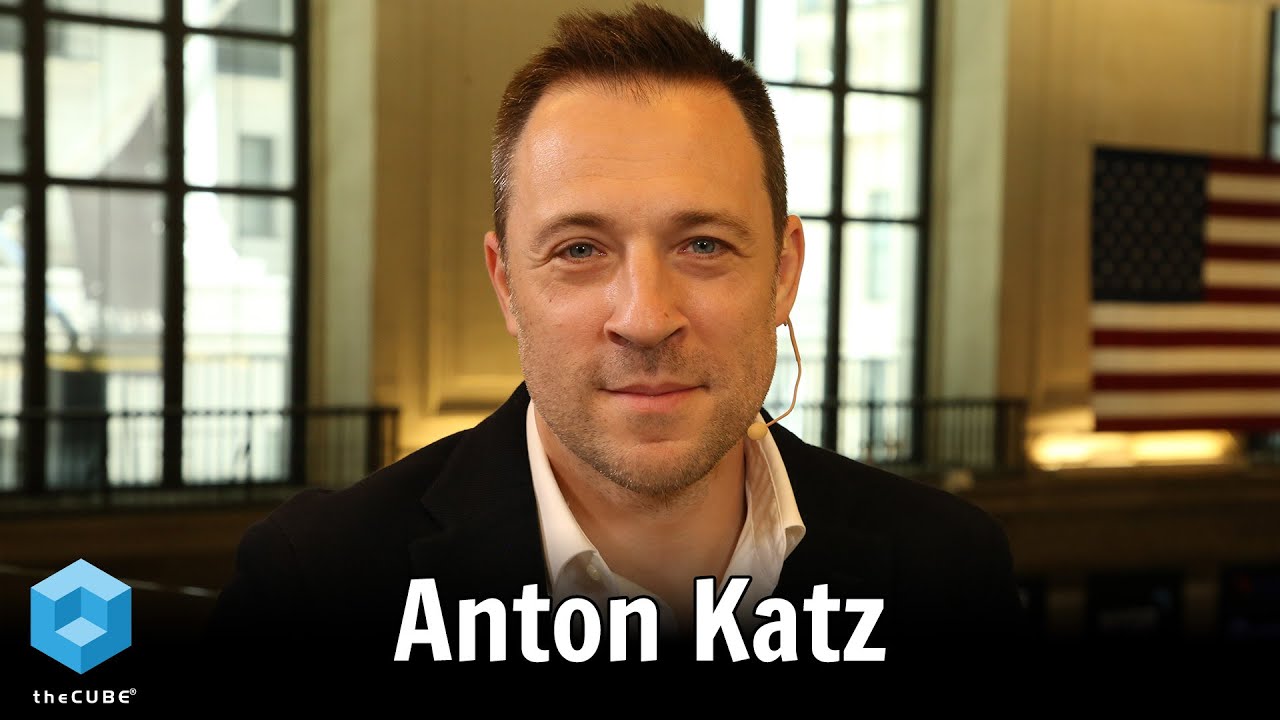
Anton Katz, Talos
In this insightful episode of the Crypto Trailblazers series hosted by theCUBE, Mike Cagney of Figure Markets sits down with analysts from theCUBE Research to discuss groundbreaking advancements in blockchain technology and their implications for the finance sector. This video is part of the NYSE Wired digital event, aimed at bridging the gap between Silicon Valley and Wall Street by integrating technology and finance.
Cagney, an eminent figure in fintech, shares expertise on the transformative role of blockchain in financial markets during this interview. Conducted by seasoned analysts at theCUBE, the discussion delves into Figure’s innovative contributions, including their blockchain-native loan origination and securitization process. He outlines how Figure leverages blockchain to achieve cost reductions, enhanced security and improved liquidity in financial transactions.
Key takeaways from the interview highlight insights on the evolution of the Web3 ecosystem, such as the emergence of stablecoins as pivotal to transaction processes and the rise of decentralized finance (DeFi). Oltsik states these developments signify a shift towards democratizing finance, wherein truth and transparency are foundational. The conversation concludes with a look at Figure’s pioneering efforts in creating a new financial marketplace utilizing blockchain technology.
#CryptoTrailblazers #FigureMarkets #BlockchainInnovation #Web3 #NYEWired #BlockchainFinance #DecentralizedFinance #Fintech #Stablecoins
Find more SiliconANGLE news and analysis https://siliconangle.com/.
Follow theCUBE's wall-to-wall event coverage https://siliconangle.com/events/
Learn about the latest theCUBE events https://www.thecube.net/
00:00 - Intro
00:05 - Emerging Innovations in Financial Technology and Market Dynamics
02:45 - Key Elements in Financial Ecosystem Dynamics
06:20 - Blockchain: Truth and Transformation
09:39 - Shaping the Future: Innovations in Financial Markets and Stablecoin Integration
13:15 - Enabling the Future: Navigating Disruptions in Banking and Lending
16:51 - Exploring Opportunities and Building Confidence in the Blockchain Ecosystem
>> Hi everybody. Welcome back to New York Stock Exchange. You're watching the NYSE Wired plus theCUBE's coverage of our Media week focusing on Crypto Trailblazers. Excited to have Anton Katz here. He's the co-founder and CEO of Talos. Good to see you. Thanks for coming in.
Anton Katz
>> Thank you so much for having me.
Dave Vellante
>> So I see founders and co-founders. I always like to ask why did you and Ethan start the company?
Anton Katz
>> Oh man. So in short, my background and Ethan's background, Ethan is my co-founder and CTO, our background is in building these kind of large scale systems for institutions in capital markets. We've done this in every other asset class. In some of our companies we were some of the largest provider of trading systems to the market. So our background is in capital markets. We decided to move into digital assets, first of all, because we thought that crypto is going to evolve into an actual asset class, and if you hold that as truth, then you will see institutions needing the kind of technology that we provided in capital markets. And so the first assumption for us was institutions will be a part of this, institutions will need tools, we are experts at building those kind of tools. The second assumption here is that we think that crypto and specifically technology under cryptos, that's really technology that powers digital assets is going to encompass ultimately all of capital markets. And so for us it's about how do you create a platform that allows institutions to move into digital assets, into this new electronic domain more seamlessly than before.
Dave Vellante
>> So people refer to you as the institutional operating system for digital assets.
Anton Katz
>> That's very kind of them.
Dave Vellante
>> Well, I mean I think that's sort of how to think about you, when I was researching the company. My question is how mature is that? What needs to be done to achieve that founding premise and that vision? I mean, I know you're well on your way.
Anton Katz
>> Yeah, absolutely. So one of the things to keep in mind is how do we think the world evolves from here and what happened in the past six and a half years that we've been running the company? So generally speaking, when we came into the space, institutions could not really interact with crypto in any meaningful capacity. The tools were not there. The liquidity is super fragmented, the technology was very fragmented. So what Talos introduced in the very beginning, the very first thing that we built was connecting all the different liquidity providers together, allowing our clients to interact with exchanges, with OTC providers, market makers, dealers, ultimately connecting to decentralized world as well. And so the evolution of the market structure also evolved with the company there. Today our clients are coming in for a much more sophisticated tooling that they're asking for. So they're looking for portfolio management tools, they're looking for settlement tools. And so what we're seeing is that Talos continues to evolve exactly with the evolution of the market. Right now, as we are starting to touch other asset classes and we're starting to see other asset classes migrate to digital assets rails, that's ultimately kind of like the last leg of that journey that you're referring to what actually happens at the end of it. We're somewhere in between right now. We're now starting to see the true experimentation and the beginning of adoption of digital assets outside of crypto, so real world assets starting to move to digital assets. And that I think is the last leg of that evolution. That's when we're going to see the entire capital market starting to migrate digital assets rail. That's where Talos really finds its meaning as like the conduit of that new reality.
Dave Vellante
>> So you've, in a sense, you mentioned OTC providers, exchanges, dark pools, I mean you're providing a consistent experience across all of these and providing consistent liquidity across them. That was the first sort of problem you solved.
Anton Katz
>> That was the need of the market. We had plenty of our clients coming in and basically saying, we want to trade this asset and we want to trade this asset like we trade other asset classes in capital markets. And that's bread and butter for us. That's what we've built in capital markets. Even in capital markets, you tend to unify the liquidity pool. You build this aggregation. Across the entire liquidity pool you build algorithmic trading tools. That's actually what we did in crypto. So creating, to use your words, this consistent trading experience is almost like creating a consistent and familiar experience to the clients that are migrating from capital markets to digital assets. And so at the beginning when we started, there were quite a lot of crypto natives, people that effectively started their operations in crypto. Today, the vast majority of newer clients that are coming in are some of the largest, more sophisticated institutions in capital markets that are coming in into this domain. So creating this unified experience for them, creating familiar experience, safe experience is basically one of the top priorities.
Dave Vellante
>> So I love it. I love the action here. It's coming to the end of the day, the bell's going to ring pretty soon.
Anton Katz
>> -
Dave Vellante
>> It's going to blow our ears out. You can see they're ringing the bell and you can hear the action here, which this is the best part of the day. So I want to ask you, just be prepared. Okay, so you just addressed this, but I want you to maybe double click on it a little bit. A lot of people think you just serve fintechs and crypto natives, but you just described those two worlds of colliding together. So how do you balance the traditional risk-averse world, stodgy capital market types versus the high volatility sort of new techs?
Anton Katz
>> Yeah, the interesting thing about the market is that the market is actually dictating that. So what happened is that in the beginning when we launched the firm, we had a lot of risk-friendly institutions that are coming in. They want to interact with this market. They want to trade fast. They're able to take risks. They're able to go after venues that generally people don't go after. While the rest of the larger traditional institutions were held back a little bit and they were absolutely risk-averse. That is changing pretty dramatically today. For Talos specifically, over the past 10 months, we onboarded asset managers. These are traditional asset managers. Between them totaling around $18 trillion of assets under management. That's a whole different ballgame, right? This is not like your typical risk friendly institutions. These are folks that are there to provide true, meaningful service to their clients. They're traditional in every sense of the word. So the market is like migrating that way. It's slowly adapting and slowly starting to touch those people that are a little bit more on the conservative side.
Dave Vellante
>> There it comes. Do you have a perspective, I'll get the question out. There it is. I don't know, Brendan, if you can hear me, I don't think-
Anton Katz
>> close.
Dave Vellante
>> There you go. All right. Well, I'm glad you got to experience that, Anton.
Anton Katz
>> Incredible.
Dave Vellante
>> That was kind of cool.
Anton Katz
>> The challenge is going to be to hearing you now.
Dave Vellante
>> Yeah, yeah, right. Plug your ears, I should have warned you. Do you have a point of view on sort of digitizing real-world assets, put real estate aside for a minute because that's going to take longer, it's happening maybe more slowly than a lot of people thought, but how does that fit into your vision?
Anton Katz
>> Yeah. So first of all, it's a great, great and very relevant question for right now. It fits exactly into our vision because again, we strongly believe that ultimately all assets are digital assets. I'm an engineer by training and so are quite a lot of people on the Talos team. We've built a lot of the infrastructure out there for capital markets. We strongly believe that the kind of tools that you can build today on top of digital assets are night and day. The things that we can do today in digital assets are just mind-boggling in terms of the capabilities, capital efficiency, in terms of understanding your risk in real time. Ultimately, we think that all assets migrate there, but there's a timing component there. And I think the people used to constantly believe that you're looking at all your traditional assets and you're basically saying, let's pick one that makes the most sense to migrate digital assets first. Let's pick the ones that are like, oh, is it fixed income? Because it's very hard to do. Is it a back office for this other asset class? The reality is starting to shape up a little bit differently. What we are seeing is we're seeing adoption across things like repo. So repo is starting to migrate a little bit more digital assets rails because repo intraday is very, very, very hard to do. Repo for some short amounts of time, very, very hard to do logistically. Crypto or rather digital assets, solves that for you. And then the other thing that's really, really cool, and that's again lessons of the past year, we always said equities is going to be the last one. I mean, look behind US, equities is traded really well. It's an efficient asset class. Front office is super efficient. We know how to trade equities from an electronic perspective. The clients don't care. So when the retail sector across the globe comes in and they say, but we want to have a wallet that does this and we want to trade these 24/7, we want to trade this so through the weekend, we want to be able to hold this, I want to be transacting with this friend, that's going to move the asset class digital assets rail. So we are tracking all this kind of stuff. We're participating in quite a lot of these initiatives. And generally my point of view is that the clients, the traction determine what migrates next, but the migration is inevitable.
Dave Vellante
>> This is very interesting discussion because you started with the efficiency and that's where you would think a lot of digital assets are going to come into play. Crypto and the blockchain take the inefficiencies out. Let's not start with equities because they're very efficient, but people don't want the bell.
Anton Katz
>> People want access. People want to get to a marketplace that includes all those assets, they want to transact fast. It's ultimately, like a lot of other things, you can build the best device in the world, but if it doesn't sell, if you don't have the clients for it, nobody cares.
Dave Vellante
>> And I can buy fractional shares on Robinhood, that's fine. But, I want my wallet.
Anton Katz
>> That's exactly right. And so that's what we see. We see this kind of a duality of what makes sense versus what the client wants. And I can tell you that the clients tend to win.
Dave Vellante
>> Are we at a generational tipping point as well or is it intergenerational?
Anton Katz
>> I don't think it's as extreme. I think they're ultimately maybe different people see different aspects of things that appeal to them in their particular journey using their own kind of targets, like what they're trying to achieve. I don't think that this is a true generational change. I do think that it's transformation. That the way we know, what we know about finance and the finance that we know and worked with all of our lives, that is going to change materially. It's going to become more global. It's going to be faster. And it doesn't have to be real time, but it's going to be faster than what it is today. It's going to become a lot more comfortable, a lot more approachable to quite a lot of people around the world. And that's actually where you want the market to go. So I think that that's where we're heading.
Dave Vellante
>> You said it doesn't have to be real time, is there a lot of latency in the system today in the capital markets?
Anton Katz
>> Yeah.
Dave Vellante
>> It's like, yeah, just a touch.
Anton Katz
>> Every time that... We're very, very used to speaking about what is T plus one and T plus two, T plus three. You have to understand sometimes the reasoning is operational. You do these things not because you want to settle two, three days into the future. So effectively you and I did a trade, but we can't settle that trade for another two to three days. It's because some operational processes need to happen. Digital assets shortcut quite a lot of that. So actually the interesting thing, we just had this conversation with one of the largest financial institutions in the world this morning, where what's going to happen is you're going to see a balance. The technology is going to get you to the point where we can settle trades effectively like five minutes out, one minute out. And that's the case today in crypto. Crypto is the poster child of it. Which is interesting to see where crypto meets the traditional assets, right? Crypto, you can settle your trades... If I'm trading with you bilaterally tomorrow, I want to send you the assets, it's just as fast as the chain. And that means in some chains it's 10 minutes, in some chains it's 20 seconds and the assets are done. You have almost like finality, they're in your wallet on the other side. Is that where we want to be in capital markets? Not clear. We still want to go through checks, we still want to do the things, we still want to net. So chances are what we are going to see is we're going to see this kind of a almost like end-of-day settlement on net basis, but for everything, for every asset.
Dave Vellante
>> As an inherent buffer, which is a feature, not a bug.
Anton Katz
>> That's exactly right. And that's the way to look at it. To look at it as a feature but not as bug, not as something that you absolutely have to do, but something that allows you the capabilities and the safety that you need.
Dave Vellante
>> So that brings me to my next question. We touched on it before sort of a TAM expansion into portfolio management, but is there also a compliance angle for you?
Anton Katz
>> Yeah, 100%. So when we started the company our bread and butter was always in trading, and that's still like we are the largest one by far in what we do. And we all started from trading, and that's providing the clients with ability to trade. Over the past three, three and a half years, we've been expanding very dramatically into the other aspects of the investment lifecycle. And that's exactly where we find our clients come in. And there's a couple of reasons for that. One is because with digital assets, you can do that. A lot of these things, having technology embedded in the asset class allows you to connect a lot of those pieces together. And to be more specific, what are those pieces? When we have a portfolio management and we are showing our clients where their assets are, that's the real representation of the assets. That's real time. You have immediate visibility to your assets. When we trade those assets, that's trading activity. When we then settle those assets, that's the actual movement of those assets. All those things are now done inside the platform. So Talos is migrating more and more into this one-stop shop. We allow our clients to go all the way from pre-trade to trade to post-trade.
Dave Vellante
>> Full lifecycle.
Anton Katz
>> Exactly. And I think that's one of the innovations that we can do. And that's one of the visions digital assets provide, you can do that today using this new technology.
Dave Vellante
>> So you are really underscoring the shifts in institutional trading. I mean you're at the heart of it. Fast-forward five years, what does this world look like?
Anton Katz
>> Well, I mean, five years is an interesting one because with everything that's going on right now, with the evolution -
Dave Vellante
>> Could probably say five months.
Anton Katz
>> ... accelerating, it's hard to say. Sometimes it is, right? Sometimes it's literally five months. We are thinking that we are going to see a lot more tokenization, a lot more digitization of capital markets. We're going to see migration of quite a lot of these assets to on chain. Will the migration be complete pretty much 100%? No. We are going to do representation in traditional markets, but we will see more and more presentations of asset classes here. For Talos, that means that we have to over time encompass more and more of the asset classes. It's kind of like, if you think about it's two dimensions that we care about. We care about, one, how many asset classes we have on the platform because all of our clients right now, these traditional clients are coming in, they're not coming in saying like, oh, I only trade crypto. They're coming in saying, crypto is yet another thing I trade, but I trade everything else. I hold everything else. I provide services in everything else. We need to grow up to be a company that allows them to exercise the gamut of those possibilities to cover that entire landscape. So that's kind of one thing. That's one dimension. The second dimension for us is the kind of services that we provide. Again, because today you can connect quite a lot of these things. You can seamlessly go from pre-trade to trade to post-trade. We have to provide those services. Compliance is one of those. So we have, so far, we've made three acquisitions to date. We are likely going to be making more acquisitions. For us, the strategy is we build. If we don't believe we can build it, it's buy. And if we don't believe we should be building or buying it, it's partner. And so every single, we think about it as like, here's the entire investment life cycle, we divide that into rows and we basically say, where do we build, where do we buy, where do we partner to be the kind of company we need to be in five years or in five months?
Dave Vellante
>> And when you choose to buy versus build, you just look at what it's going to cost to build, your estimate of the time it's going to take and the value you can accrue on the M&A and how fast you can get that back. Are there architectural considerations as well?
Anton Katz
>> Always.
Dave Vellante
>> And so technically you've got to have the right mindset, the right philosophy. There's cultural issues as well. Yeah?
Anton Katz
>> You should join our M&A team.
Dave Vellante
>> Yeah. Somebody told me one time I should be an M&A. I've given so much M&A advice to my M&A friends.
Anton Katz
>> You've seen it all. No, look, I mean you're absolutely right. All those parameters matter quite a lot. Like what you're paying, is it actually one plus one equals three? What are you getting to is... Time to market is another thing. If we think that the market for something is going to be valid in three years, buying something today that is fully developed doesn't make sense. We know that we can develop. This is literally what we're the best at. We are the best at executing. We are engineers, we know how to build this kind of stuff. And then to your point, what is the technical ability of the other team? That's very, very important because ultimately that's how platforms fail or how the platform succeed. We need to know that we can... For us, it's not, hey, let's own a bunch of different things. For us, it's provide a coherent experience to our customer. And for that, integration has to be part of it. For that technology plays a big role.
Dave Vellante
>> Anton, I asked you your vision of the future, you sort of laid it out. What bets will you making on things that won't change, what's not going to change in the future that you would double down and bet on?
Anton Katz
>> That's interesting. I mean the nature of the clients doesn't necessarily change. The use cases don't change. Talos has, almost, if you will, two groups of larger clients. So we have the buy-side institutions and obviously we have the sell-side or rather service providers. So on the service provider we power some of the largest retail brokers, institutional brokers, OTC desks and so on and so forth. The kind of services they provide and the kind of services that we see banks right now coming in and starting to figure out how they can provide to those customers, that doesn't necessarily change. The demand is still there. Underlying folks want to be able to own these assets, some of them want to speculate on these assets. Corporations need them for operational reasons. The use case that's underlying, don't change. Some changes in terms of how people make money. Some of the strategies change. People want to trade the basis, people want to trade something else. Like opportunities in the market change, that changes. But generally speaking, you're like, finance is not the main thing. Finance powers the world. The world doesn't necessarily change that much. There's use cases and the world is set up in a certain way. So I think that combination of understanding what the clients ultimately want to achieve will continue and forever will be the driving force in terms of what do we develop. But the functionality, how you do it, that change is pretty significant.
Dave Vellante
>> And your customers, they want as little friction as possible.
Anton Katz
>> Well that's always been the case.
Dave Vellante
>> Right. That's never going to change.
Anton Katz
>> No, and actually speaking of change, there's a very interesting trend there, especially over the past 15 years. So if you look at it, 15 years ago a lot of traditional solutions were very happy to build on their own. They would come in and they would say, because there are also not a lot of solutions, so they're like, hey, I'm going to build the data thing. I'm going to build connectivity and then I'm going to build the algo execution. I'm going to build a settlement layer. Today that's almost unheard of, right? The institutions today know that they should focus on things that are key to them, that are unique to them and go to people like us or to other vendors where it's commoditized where we do this for everybody. So the change has been that there's a lot more dependency on layers like us, but for us... To use your point, people want less friction. Actually, the interesting thing is not only do they want less friction, they're willing to pay for it too. So even in capital markets, when I was in asset management, if somebody came to us and they said, listen, but our platform can handle these multiple asset classes and can do this kind of stuff, we would pay more. I will tell you. Because integration is horrible, and thinking about how to connect all those pieces together is horrible. So Talos is solving that for our clients. We're saying it's a one-stop shop, come in, you don't have to do everything that we do, but pick what you do and a lot of this stuff is going to get integrated.
Dave Vellante
>> And the point you're making about them not doing the heavy lifting that's a commodity, what's the point of that? If they can buy it, why build it? AI really accentuates that even further, because they've got their own proprietary data, they might have their own proprietary processes that aren't out there trained on an LLM and that they can apply AI to and get competitive advantage potentially and build on top of that.
Anton Katz
>> Yeah. That's a great analogy, right? There's going to be this distinction between there's going to be things that are unique to you. Look at, there's one of the very, very large quantitative asset managers that's talking about this right now. They've been forever recording all the data that they have, recording every conversation that they have. And right now they're starting to, very publicly, they're talking about training the large language models on the data. Now, back in the day, you would build the entire functionality by yourself. Today they are going to large language models that are generally in the industry, even that part is now becoming commoditized. And the unique thing is the one that's truly unique to them, not their ability to build large language models, but their ability to generate this unique set of data. So it's a great analogy in terms of this division that's happening between people that are going to be generating capital based on their unique abilities and using the commoditized for everything else.
Dave Vellante
>> Interesting. Anton, thanks so much for coming on theCUBE. Really appreciate it.
Anton Katz
>> Thank you very, very much for having me.
Dave Vellante
>> Best of luck.
Anton Katz
>> Thank you so much.
Dave Vellante
>> All right, and thank you for watching today's coverage of our Crypto Trailblazers Media Week. This is Dave Vellante for John Furrier. Second bell, you may not know, the options exchange closes 15 minutes after the stock exchange. Thanks for watching. We'll see you next time on theCUBE and NYSE Wired.
>> Hi everybody. Welcome back to New York Stock Exchange. You're watching the NYSE Wired plus theCUBE's coverage of our Media week focusing on Crypto Trailblazers. Excited to have Anton Katz here. He's the co-founder and CEO of Talos. Good to see you. Thanks for coming in.
Anton Katz
>> Thank you so much for having me.
Dave Vellante
>> So I see founders and co-founders. I always like to ask why did you and Ethan start the company?
Anton Katz
>> Oh man. So in short, my background and Ethan's background, Ethan is my co-founder and CTO, our background is in building these kind of large scale systems for institutions in capital markets. We've done this in every other asset class. In some of our companies we were some of the largest provider of trading systems to the market. So our background is in capital markets. We decided to move into digital assets, first of all, because we thought that crypto is going to evolve into an actual asset class, and if you hold that as truth, then you will see institutions needing the kind of technology that we provided in capital markets. And so the first assumption for us was institutions will be a part of this, institutions will need tools, we are experts at building those kind of tools. The second assumption here is that we think that crypto and specifically technology under cryptos, that's really technology that powers digital assets is going to encompass ultimately all of capital markets. And so for us it's about how do you create a platform that allows institutions to move into digital assets, into this new electronic domain more seamlessly than before.
Dave Vellante
>> So people refer to you as the institutional operating system for digital assets.
Anton Katz
>> That's very kind of them.
Dave Vellante
>> Well, I mean I think that's sort of how to think about you, when I was researching the company. My question is how mature is that? What needs to be done to achieve that founding premise and that vision? I mean, I know you're well on your way.
Anton Katz
>> Yeah, absolutely. So one of the things to keep in mind is how do we think the world evolves from here and what happened in the past six and a half years that we've been running the company? So generally speaking, when we came into the space, institutions could not really interact with crypto in any meaningful capacity. The tools were not there. The liquidity is super fragmented, the technology was very fragmented. So what Talos introduced in the very beginning, the very first thing that we built was connecting all the different liquidity providers together, allowing our clients to interact with exchanges, with OTC providers, market makers, dealers, ultimately connecting to decentralized world as well. And so the evolution of the market structure also evolved with the company there. Today our clients are coming in for a much more sophisticated tooling that they're asking for. So they're looking for portfolio management tools, they're looking for settlement tools. And so what we're seeing is that Talos continues to evolve exactly with the evolution of the market. Right now, as we are starting to touch other asset classes and we're starting to see other asset classes migrate to digital assets rails, that's ultimately kind of like the last leg of that journey that you're referring to what actually happens at the end of it. We're somewhere in between right now. We're now starting to see the true experimentation and the beginning of adoption of digital assets outside of crypto, so real world assets starting to move to digital assets. And that I think is the last leg of that evolution. That's when we're going to see the entire capital market starting to migrate digital assets rail. That's where Talos really finds its meaning as like the conduit of that new reality.
Dave Vellante
>> So you've, in a sense, you mentioned OTC providers, exchanges, dark pools, I mean you're providing a consistent experience across all of these and providing consistent liquidity across them. That was the first sort of problem you solved.
Anton Katz
>> That was the need of the market. We had plenty of our clients coming in and basically saying, we want to trade this asset and we want to trade this asset like we trade other asset classes in capital markets. And that's bread and butter for us. That's what we've built in capital markets. Even in capital markets, you tend to unify the liquidity pool. You build this aggregation. Across the entire liquidity pool you build algorithmic trading tools. That's actually what we did in crypto. So creating, to use your words, this consistent trading experience is almost like creating a consistent and familiar experience to the clients that are migrating from capital markets to digital assets. And so at the beginning when we started, there were quite a lot of crypto natives, people that effectively started their operations in crypto. Today, the vast majority of newer clients that are coming in are some of the largest, more sophisticated institutions in capital markets that are coming in into this domain. So creating this unified experience for them, creating familiar experience, safe experience is basically one of the top priorities.
Dave Vellante
>> So I love it. I love the action here. It's coming to the end of the day, the bell's going to ring pretty soon.
Anton Katz
>> -
Dave Vellante
>> It's going to blow our ears out. You can see they're ringing the bell and you can hear the action here, which this is the best part of the day. So I want to ask you, just be prepared. Okay, so you just addressed this, but I want you to maybe double click on it a little bit. A lot of people think you just serve fintechs and crypto natives, but you just described those two worlds of colliding together. So how do you balance the traditional risk-averse world, stodgy capital market types versus the high volatility sort of new techs?
Anton Katz
>> Yeah, the interesting thing about the market is that the market is actually dictating that. So what happened is that in the beginning when we launched the firm, we had a lot of risk-friendly institutions that are coming in. They want to interact with this market. They want to trade fast. They're able to take risks. They're able to go after venues that generally people don't go after. While the rest of the larger traditional institutions were held back a little bit and they were absolutely risk-averse. That is changing pretty dramatically today. For Talos specifically, over the past 10 months, we onboarded asset managers. These are traditional asset managers. Between them totaling around $18 trillion of assets under management. That's a whole different ballgame, right? This is not like your typical risk friendly institutions. These are folks that are there to provide true, meaningful service to their clients. They're traditional in every sense of the word. So the market is like migrating that way. It's slowly adapting and slowly starting to touch those people that are a little bit more on the conservative side.
Dave Vellante
>> There it comes. Do you have a perspective, I'll get the question out. There it is. I don't know, Brendan, if you can hear me, I don't think-
Anton Katz
>> close.
Dave Vellante
>> There you go. All right. Well, I'm glad you got to experience that, Anton.
Anton Katz
>> Incredible.
Dave Vellante
>> That was kind of cool.
Anton Katz
>> The challenge is going to be to hearing you now.
Dave Vellante
>> Yeah, yeah, right. Plug your ears, I should have warned you. Do you have a point of view on sort of digitizing real-world assets, put real estate aside for a minute because that's going to take longer, it's happening maybe more slowly than a lot of people thought, but how does that fit into your vision?
Anton Katz
>> Yeah. So first of all, it's a great, great and very relevant question for right now. It fits exactly into our vision because again, we strongly believe that ultimately all assets are digital assets. I'm an engineer by training and so are quite a lot of people on the Talos team. We've built a lot of the infrastructure out there for capital markets. We strongly believe that the kind of tools that you can build today on top of digital assets are night and day. The things that we can do today in digital assets are just mind-boggling in terms of the capabilities, capital efficiency, in terms of understanding your risk in real time. Ultimately, we think that all assets migrate there, but there's a timing component there. And I think the people used to constantly believe that you're looking at all your traditional assets and you're basically saying, let's pick one that makes the most sense to migrate digital assets first. Let's pick the ones that are like, oh, is it fixed income? Because it's very hard to do. Is it a back office for this other asset class? The reality is starting to shape up a little bit differently. What we are seeing is we're seeing adoption across things like repo. So repo is starting to migrate a little bit more digital assets rails because repo intraday is very, very, very hard to do. Repo for some short amounts of time, very, very hard to do logistically. Crypto or rather digital assets, solves that for you. And then the other thing that's really, really cool, and that's again lessons of the past year, we always said equities is going to be the last one. I mean, look behind US, equities is traded really well. It's an efficient asset class. Front office is super efficient. We know how to trade equities from an electronic perspective. The clients don't care. So when the retail sector across the globe comes in and they say, but we want to have a wallet that does this and we want to trade these 24/7, we want to trade this so through the weekend, we want to be able to hold this, I want to be transacting with this friend, that's going to move the asset class digital assets rail. So we are tracking all this kind of stuff. We're participating in quite a lot of these initiatives. And generally my point of view is that the clients, the traction determine what migrates next, but the migration is inevitable.
Dave Vellante
>> This is very interesting discussion because you started with the efficiency and that's where you would think a lot of digital assets are going to come into play. Crypto and the blockchain take the inefficiencies out. Let's not start with equities because they're very efficient, but people don't want the bell.
Anton Katz
>> People want access. People want to get to a marketplace that includes all those assets, they want to transact fast. It's ultimately, like a lot of other things, you can build the best device in the world, but if it doesn't sell, if you don't have the clients for it, nobody cares.
Dave Vellante
>> And I can buy fractional shares on Robinhood, that's fine. But, I want my wallet.
Anton Katz
>> That's exactly right. And so that's what we see. We see this kind of a duality of what makes sense versus what the client wants. And I can tell you that the clients tend to win.
Dave Vellante
>> Are we at a generational tipping point as well or is it intergenerational?
Anton Katz
>> I don't think it's as extreme. I think they're ultimately maybe different people see different aspects of things that appeal to them in their particular journey using their own kind of targets, like what they're trying to achieve. I don't think that this is a true generational change. I do think that it's transformation. That the way we know, what we know about finance and the finance that we know and worked with all of our lives, that is going to change materially. It's going to become more global. It's going to be faster. And it doesn't have to be real time, but it's going to be faster than what it is today. It's going to become a lot more comfortable, a lot more approachable to quite a lot of people around the world. And that's actually where you want the market to go. So I think that that's where we're heading.
Dave Vellante
>> You said it doesn't have to be real time, is there a lot of latency in the system today in the capital markets?
Anton Katz
>> Yeah.
Dave Vellante
>> It's like, yeah, just a touch.
Anton Katz
>> Every time that... We're very, very used to speaking about what is T plus one and T plus two, T plus three. You have to understand sometimes the reasoning is operational. You do these things not because you want to settle two, three days into the future. So effectively you and I did a trade, but we can't settle that trade for another two to three days. It's because some operational processes need to happen. Digital assets shortcut quite a lot of that. So actually the interesting thing, we just had this conversation with one of the largest financial institutions in the world this morning, where what's going to happen is you're going to see a balance. The technology is going to get you to the point where we can settle trades effectively like five minutes out, one minute out. And that's the case today in crypto. Crypto is the poster child of it. Which is interesting to see where crypto meets the traditional assets, right? Crypto, you can settle your trades... If I'm trading with you bilaterally tomorrow, I want to send you the assets, it's just as fast as the chain. And that means in some chains it's 10 minutes, in some chains it's 20 seconds and the assets are done. You have almost like finality, they're in your wallet on the other side. Is that where we want to be in capital markets? Not clear. We still want to go through checks, we still want to do the things, we still want to net. So chances are what we are going to see is we're going to see this kind of a almost like end-of-day settlement on net basis, but for everything, for every asset.
Dave Vellante
>> As an inherent buffer, which is a feature, not a bug.
Anton Katz
>> That's exactly right. And that's the way to look at it. To look at it as a feature but not as bug, not as something that you absolutely have to do, but something that allows you the capabilities and the safety that you need.
Dave Vellante
>> So that brings me to my next question. We touched on it before sort of a TAM expansion into portfolio management, but is there also a compliance angle for you?
Anton Katz
>> Yeah, 100%. So when we started the company our bread and butter was always in trading, and that's still like we are the largest one by far in what we do. And we all started from trading, and that's providing the clients with ability to trade. Over the past three, three and a half years, we've been expanding very dramatically into the other aspects of the investment lifecycle. And that's exactly where we find our clients come in. And there's a couple of reasons for that. One is because with digital assets, you can do that. A lot of these things, having technology embedded in the asset class allows you to connect a lot of those pieces together. And to be more specific, what are those pieces? When we have a portfolio management and we are showing our clients where their assets are, that's the real representation of the assets. That's real time. You have immediate visibility to your assets. When we trade those assets, that's trading activity. When we then settle those assets, that's the actual movement of those assets. All those things are now done inside the platform. So Talos is migrating more and more into this one-stop shop. We allow our clients to go all the way from pre-trade to trade to post-trade.
Dave Vellante
>> Full lifecycle.
Anton Katz
>> Exactly. And I think that's one of the innovations that we can do. And that's one of the visions digital assets provide, you can do that today using this new technology.
Dave Vellante
>> So you are really underscoring the shifts in institutional trading. I mean you're at the heart of it. Fast-forward five years, what does this world look like?
Anton Katz
>> Well, I mean, five years is an interesting one because with everything that's going on right now, with the evolution -
Dave Vellante
>> Could probably say five months.
Anton Katz
>> ... accelerating, it's hard to say. Sometimes it is, right? Sometimes it's literally five months. We are thinking that we are going to see a lot more tokenization, a lot more digitization of capital markets. We're going to see migration of quite a lot of these assets to on chain. Will the migration be complete pretty much 100%? No. We are going to do representation in traditional markets, but we will see more and more presentations of asset classes here. For Talos, that means that we have to over time encompass more and more of the asset classes. It's kind of like, if you think about it's two dimensions that we care about. We care about, one, how many asset classes we have on the platform because all of our clients right now, these traditional clients are coming in, they're not coming in saying like, oh, I only trade crypto. They're coming in saying, crypto is yet another thing I trade, but I trade everything else. I hold everything else. I provide services in everything else. We need to grow up to be a company that allows them to exercise the gamut of those possibilities to cover that entire landscape. So that's kind of one thing. That's one dimension. The second dimension for us is the kind of services that we provide. Again, because today you can connect quite a lot of these things. You can seamlessly go from pre-trade to trade to post-trade. We have to provide those services. Compliance is one of those. So we have, so far, we've made three acquisitions to date. We are likely going to be making more acquisitions. For us, the strategy is we build. If we don't believe we can build it, it's buy. And if we don't believe we should be building or buying it, it's partner. And so every single, we think about it as like, here's the entire investment life cycle, we divide that into rows and we basically say, where do we build, where do we buy, where do we partner to be the kind of company we need to be in five years or in five months?
Dave Vellante
>> And when you choose to buy versus build, you just look at what it's going to cost to build, your estimate of the time it's going to take and the value you can accrue on the M&A and how fast you can get that back. Are there architectural considerations as well?
Anton Katz
>> Always.
Dave Vellante
>> And so technically you've got to have the right mindset, the right philosophy. There's cultural issues as well. Yeah?
Anton Katz
>> You should join our M&A team.
Dave Vellante
>> Yeah. Somebody told me one time I should be an M&A. I've given so much M&A advice to my M&A friends.
Anton Katz
>> You've seen it all. No, look, I mean you're absolutely right. All those parameters matter quite a lot. Like what you're paying, is it actually one plus one equals three? What are you getting to is... Time to market is another thing. If we think that the market for something is going to be valid in three years, buying something today that is fully developed doesn't make sense. We know that we can develop. This is literally what we're the best at. We are the best at executing. We are engineers, we know how to build this kind of stuff. And then to your point, what is the technical ability of the other team? That's very, very important because ultimately that's how platforms fail or how the platform succeed. We need to know that we can... For us, it's not, hey, let's own a bunch of different things. For us, it's provide a coherent experience to our customer. And for that, integration has to be part of it. For that technology plays a big role.
Dave Vellante
>> Anton, I asked you your vision of the future, you sort of laid it out. What bets will you making on things that won't change, what's not going to change in the future that you would double down and bet on?
Anton Katz
>> That's interesting. I mean the nature of the clients doesn't necessarily change. The use cases don't change. Talos has, almost, if you will, two groups of larger clients. So we have the buy-side institutions and obviously we have the sell-side or rather service providers. So on the service provider we power some of the largest retail brokers, institutional brokers, OTC desks and so on and so forth. The kind of services they provide and the kind of services that we see banks right now coming in and starting to figure out how they can provide to those customers, that doesn't necessarily change. The demand is still there. Underlying folks want to be able to own these assets, some of them want to speculate on these assets. Corporations need them for operational reasons. The use case that's underlying, don't change. Some changes in terms of how people make money. Some of the strategies change. People want to trade the basis, people want to trade something else. Like opportunities in the market change, that changes. But generally speaking, you're like, finance is not the main thing. Finance powers the world. The world doesn't necessarily change that much. There's use cases and the world is set up in a certain way. So I think that combination of understanding what the clients ultimately want to achieve will continue and forever will be the driving force in terms of what do we develop. But the functionality, how you do it, that change is pretty significant.
Dave Vellante
>> And your customers, they want as little friction as possible.
Anton Katz
>> Well that's always been the case.
Dave Vellante
>> Right. That's never going to change.
Anton Katz
>> No, and actually speaking of change, there's a very interesting trend there, especially over the past 15 years. So if you look at it, 15 years ago a lot of traditional solutions were very happy to build on their own. They would come in and they would say, because there are also not a lot of solutions, so they're like, hey, I'm going to build the data thing. I'm going to build connectivity and then I'm going to build the algo execution. I'm going to build a settlement layer. Today that's almost unheard of, right? The institutions today know that they should focus on things that are key to them, that are unique to them and go to people like us or to other vendors where it's commoditized where we do this for everybody. So the change has been that there's a lot more dependency on layers like us, but for us... To use your point, people want less friction. Actually, the interesting thing is not only do they want less friction, they're willing to pay for it too. So even in capital markets, when I was in asset management, if somebody came to us and they said, listen, but our platform can handle these multiple asset classes and can do this kind of stuff, we would pay more. I will tell you. Because integration is horrible, and thinking about how to connect all those pieces together is horrible. So Talos is solving that for our clients. We're saying it's a one-stop shop, come in, you don't have to do everything that we do, but pick what you do and a lot of this stuff is going to get integrated.
Dave Vellante
>> And the point you're making about them not doing the heavy lifting that's a commodity, what's the point of that? If they can buy it, why build it? AI really accentuates that even further, because they've got their own proprietary data, they might have their own proprietary processes that aren't out there trained on an LLM and that they can apply AI to and get competitive advantage potentially and build on top of that.
Anton Katz
>> Yeah. That's a great analogy, right? There's going to be this distinction between there's going to be things that are unique to you. Look at, there's one of the very, very large quantitative asset managers that's talking about this right now. They've been forever recording all the data that they have, recording every conversation that they have. And right now they're starting to, very publicly, they're talking about training the large language models on the data. Now, back in the day, you would build the entire functionality by yourself. Today they are going to large language models that are generally in the industry, even that part is now becoming commoditized. And the unique thing is the one that's truly unique to them, not their ability to build large language models, but their ability to generate this unique set of data. So it's a great analogy in terms of this division that's happening between people that are going to be generating capital based on their unique abilities and using the commoditized for everything else.
Dave Vellante
>> Interesting. Anton, thanks so much for coming on theCUBE. Really appreciate it.
Anton Katz
>> Thank you very, very much for having me.
Dave Vellante
>> Best of luck.
Anton Katz
>> Thank you so much.
Dave Vellante
>> All right, and thank you for watching today's coverage of our Crypto Trailblazers Media Week. This is Dave Vellante for John Furrier. Second bell, you may not know, the options exchange closes 15 minutes after the stock exchange. Thanks for watching. We'll see you next time on theCUBE and NYSE Wired.








































 Dave Vellante