We just sent you a verification email. Please verify your account to gain access to
theCUBE + NYSE Wired: Crypto Trailblazers. If you don’t think you received an email check your
spam folder.
Sign in to theCUBE + NYSE Wired: Crypto Trailblazers.
In order to sign in, enter the email address you used to registered for the event. Once completed, you will receive an email with a verification link. Open this link to automatically sign into the site.
Register For theCUBE + NYSE Wired: Crypto Trailblazers
Please fill out the information below. You will recieve an email with a verification link confirming your registration. Click the link to automatically sign into the site.
You’re almost there!
We just sent you a verification email. Please click the verification button in the email. Once your email address is verified, you will have full access to all event content for theCUBE + NYSE Wired: Crypto Trailblazers.
I want my badge and interests to be visible to all attendees.
Checking this box will display your presense on the attendees list, view your profile and allow other attendees to contact you via 1-1 chat. Read the Privacy Policy. At any time, you can choose to disable this preference.
Select your Interests!
add
Upload your photo
Uploading..
OR
Connect via Twitter
Connect via Linkedin
EDIT PASSWORD
Share
Forgot Password
Almost there!
We just sent you a verification email. Please verify your account to gain access to
theCUBE + NYSE Wired: Crypto Trailblazers. If you don’t think you received an email check your
spam folder.
Sign in to theCUBE + NYSE Wired: Crypto Trailblazers.
In order to sign in, enter the email address you used to registered for the event. Once completed, you will receive an email with a verification link. Open this link to automatically sign into the site.
Sign in to gain access to theCUBE + NYSE Wired: Crypto Trailblazers
Please sign in with LinkedIn to continue to theCUBE + NYSE Wired: Crypto Trailblazers. Signing in with LinkedIn ensures a professional environment.
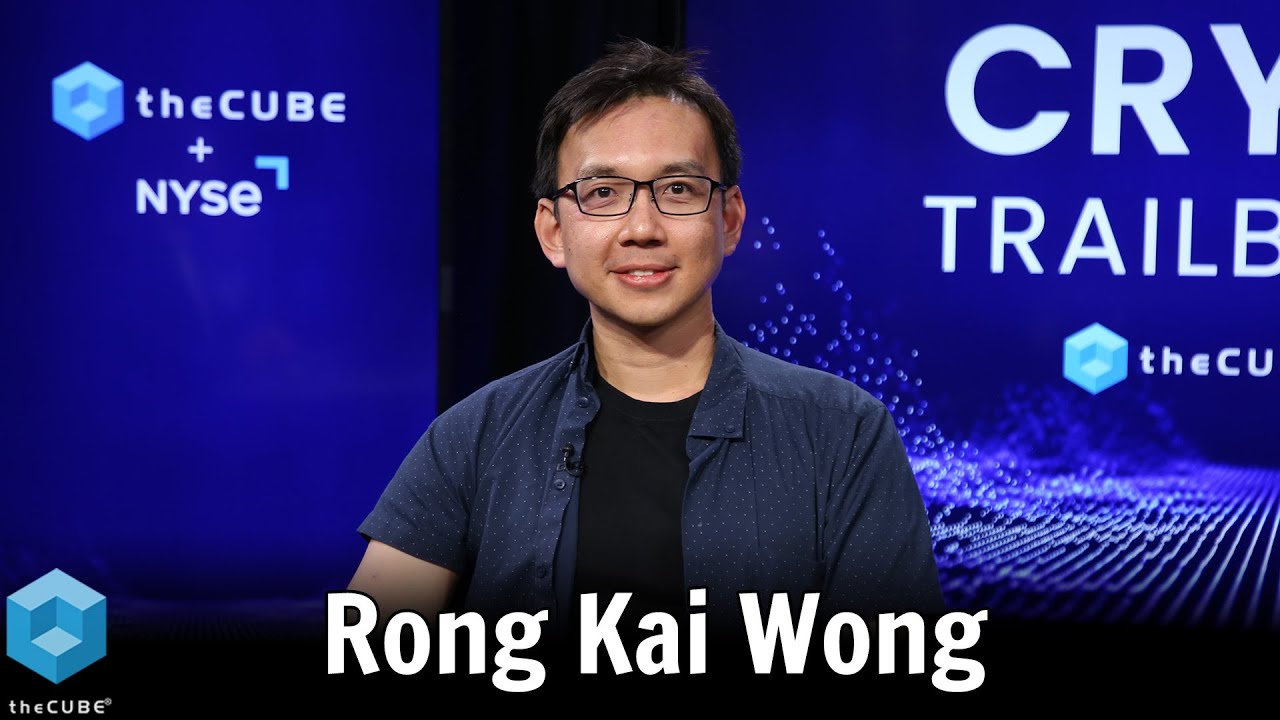
>> Welcome back everyone. I'm John for your host of theCUBE. We are here at our New York Stock Exchange Studio. We got our own dedicated podcast set here. We got the show floor and another set over there. Of course, we have Silicon Valley connecting technology and Wall Street together. It's a great trailblazer series on crypto infrastructure, creating value. The next generation is upon us. Solana Foundation is here. Jon Wong, the head of engineering for a very fast chain and growing very fast. Welcome to theCUBE. Thanks for coming on.
Jon Wong
>> I'm really excited to be here.
John Furrier
>> Solana is a great foundational partner of this new wave of on-chain token economics. The token values, it's funny, I just came back from NVIDIA GTC and they talk about tokens in a whole other way, but tokens are driving digital network effects, coins, and whether it's a collectible or for business that's coming here at the NYSE, you're seeing a lot of action. And you're also seeing the maturization of kind of the business side tech entrepreneurial activity at an all-time high, and you guys are a big part of this. Congratulations. Let's get into it. So you guys have a solution. Talk about your product and how that compares, because there's debate out there, where do I go? What's it cost? What's it mean for me? What's the differentiator? What's the key thing about Solana?
Jon Wong
>> Yeah, absolutely. So I've been at the Solana Foundation for about three years, and I've had to answer this from anyone, from a Web3 native founder, two people just building something in their garage, all the way through Stripe, PayPal, Visa, this level. So had a chance to answer this question. There's a few reasons why you want to pick Solana, right? One, it's fast and it's cheap. There's two reasons, but I think this is incredible, because if you think about the consumer experience of using any product, you want to click something and know that it happened, right? So there's a lack of reorgs. That means that things don't just disappear, and those transactions cost you sub-cent, right? The median transaction fee on the network's about 0.0014 cents, and that means for businesses, they can actually sponsor those transactions on behalf of the consumers. And that makes for a great experience, because look, I don't know that people want to know about Solana, the gas token. They want to use a product, they want to work with the business, all that sort of stuff. You combine that with the high throughput of the chain, just yesterday, Solana did 80 million transactions, which is about five times more than all major chains combined.
John Furrier
>> Yesterday?
Jon Wong
>> Yesterday.
John Furrier
>> Just one day?
Jon Wong
>> Yes, March 25th, 2025, 80 million transactions. It is just an incredible feat of distributed computing power.
John Furrier
>> How much value is locked into the chain? Could you share some of the stats on that too?
Jon Wong
>> Absolutely. So right now, as of earlier today, about $7 billion worth of value across stablecoins, across any number of tokens. But I think the important thing to capture there is not just how much money is locked, because look, Ethereum has maybe 10X more of that. It's more around what those assets are doing. And so when we compare that to the $2 billion worth of volume, what you see is something that we call velocity. What is the velocity of any dollar that's showing up on Solana and how can you use it and compose against it across the entire DeFi ecosystem? That's un-comparable in part because it's fast and it's cheap, so you can do all these cool things that you couldn't do on Ethereum.
John Furrier
>> Yeah. The thing that you hear a lot about in these crypto trailblazer conversations is things like total value locks, transaction numbers, speeds and feeds, all that data, but you start to hear words like payment rails. You hear things like liquidity. You hear things like throughput, and then you start to see, access who's doing what. When you're seeing the creativity, the entrepreneurial activity, like you said, whether it's from the dorm room to the boardroom, you're starting to see business and developers coming together. People are doing stuff. So that means the token economy is here. What is some of the activities in the market that you're seeing? Because I think that's the real shift. You got the metrization of now markets realizing that even finance markets like here at the NYC, trading will be completely tokenized for sure. I mean, why even have closing bells? I mean, it's 24/7. What is the main activities you're seeing that you guys are attracting the people? Is it easy to get into? Is it lower cost? What are some of the, and then what does that enable?
Jon Wong
>> Yeah, absolutely. So I think the most dominant product that we're seeing right now is stablecoins. So every institution, every business, every enterprise has to be thinking about stablecoins and how it fits into their systems, whether you're handling cross-border payments, even if you're just paying out your contractors, all of these things are just much easier, much faster and much cheaper using stablecoins, especially on Solana. And that really fundamentally changes the kinds of businesses you can have. For example, things like credit cards tend to take a while to settle. From the time that you swipe all the way to the merchant getting any money, there's a time gap there, right? But some people would rather have their money as soon as you swipe it rather than waiting for the settlement period. Can you create a defy liquidity pool that allows you to facilitate that stablecoin transaction immediately and then basically wait for the time arbitrage of money just sitting around knowing that you're going to get settled in from the credit card, right? You combine that with enterprises like PayPal. They issued the stablecoin on Solana last year called PYUSD, and they actually have the same version on Ethereum, but it was too expensive for them to use it for any of their internal products. So guess what? They use something like Solana, they can now use it in Zoom, their remittance products, and it's much easier and simpler to use.
John Furrier
>> And transactions per second on Ethereum versus Solana is much different.
Jon Wong
>> Absolutely.
John Furrier
>> Performance-wise, right?
Jon Wong
>> Yeah. On any given day, thousands of transactions per second. And again, the big piece there is how responsive is it? When I click something, how do I know that this thing finished? On Bitcoin, that's like 10 minutes, right?
John Furrier
>> It's funny, we're here at the NYSE and our podcast studio here, Nvidia, Tesla's on the board. They're yelling trades out there. This idea of clearing so fast really is the future, because why even have middlemen and intermediaries? And some people have no banking capabilities. You got a phone, but I can't bank whether they've been, they have no bank or they're un-banked. So this is now in a global economy. What is your view on the whole engineering side of how to make this global, instant, and then what does that enable? When I got my phone, I mean, it changes everything. Social dynamics, the pecking order, how you get people confidence-
Jon Wong
>> Absolutely....
John Furrier
>> in having movements. I mean, all kinds of social impact.
Jon Wong
>> Absolutely. You're hitting on all of the points that we talk a lot about at the Solana Foundation, in part because look, the payment rails in the United States might feel okay if you have a credit card, but some people don't, right? If you have a bank account, some people don't. If you're an accredited investor, not everyone's an accredited investor. So there's all of these opportunities, financial opportunities that we take for granted. Certainly if you live on the West Coast, the East Coast, you tend to use credit cards more often than not. And so when we think about accessibility, we have this great dashboard, Visa On-Chain analytics where they talk about the basket size, how much volume is actually happening focused on stablecoins, and on Solana, just about 50% of all stablecoin transactions are underneath a hundred dollars. So the people are using Solana for everyday things. Certainly some people are using it for trading, but they're not using it to just send $2 million from one place to the other. They're using it for day-to-day payments. They're using it for working with each other.
John Furrier
>> It's basically for everybody.
Jon Wong
>> Exactly.
John Furrier
>> Because the cost to get in, the barriers, the hurdle to get going is, scope that for us. What's the barrier to get in? Say I want to do a CUBE coin. What do I do?
Jon Wong
>> Yeah, it's a great question. So one thing we saw, especially over the last few months is something on the order of 30 to 50,000 new tokens a day showing up on Solana. Why is that? In part because on Solana, you don't have to customize and develop a custom smart contract for every token. Instead, you actually use the same token program that's been battle-hardened over the last five years, and you create tokens off of that. And so that means that someone with no coding experience can create a token and exchange value all the way around the world at the speed of light effectively for free. And so when you start doing that, then you get back into this, what do the movements look like? What does it look like to organize and coordinate across a large group of people all around the world is wild.
John Furrier
>> One of the things I love about doing theCUBE for 15 years, we cover a lot of events where people are face-to-face. We see the impact of digital network effects as well, and stories drive movements. So what stories can you share that you've seen in the past three years where literally life-changing moments for people where they have an idea, some innovation, gets a spark of creativity. It could be a couple entrepreneurs, it could be a business. Can you share some examples? Because I think the stories speak for themselves.
Jon Wong
>> Absolutely. I think this is one of the hallmarks of Solana. There's the tech part, and that was Anatoly, two coffees and a beer. We all know that story about engineers figuring out a distributed system that wasn't Ethereum and really approaching parallel execution and all that sort of stuff. But the ecosystem that was built on top of it, by the nature of it not being Ethereum has always had the opportunity to be the contrarian, to always pick the other decision, take the other path, and over the last few years with the economy, the market going up and down and up and down and up and down, it would've been very easy. It's easy for everyone to just say, "Hey, I'm going to choose something else. I'm going to choose the path that's well trodden," and the founders in Solana that have not done that have stuck to their guns and built up the Solana ecosystem, that is the big reason why people come to Solana. People come to Solana because of the tech. They stay because of the vibes and the ecosystem of other just incredible builders and founders that have the conviction to stick through some of the worst things that ever.
John Furrier
>> What were some of the contrarian or they stick to their guns? What were some of the key decisions that you can highlight that illustrate that?
Jon Wong
>> Yeah, I mean, first off, just not being EVM compatible is actually a very concrete choice. When you think about on the engineering side, you have to build for fast, a cheap and parallelized execution. You just have to have a different system. There are certainly people that are trying new things, but at that time, that was actually a really tough decision and means that it would be hard to raise money, all that sort of stuff. On the business development-
John Furrier
>> That's the contrarian, that's your contrarian example?
Jon Wong
>> Would be-
John Furrier
>> EVM is obviously, was not a first-class citizen on Solana, so that was a decision, intentional.
Jon Wong
>> Yes, and it means that you have to learn something new. You have to think, every person that comes to Solana, teams and companies, the first thing I tell them to do is unlearn Ethereum. And the reason why is because it constrains you. The way that I think about it is, look, if you've grown up with horses your entire life, you know how to handle horseshoes and all that sort of stuff, and you know how things work. When you suddenly see a car, are you going to feed it? Are you going to treat it like a horse? No, you take this car, you got to build a road certainly, but once you build a road, you're connected to the rest of the world. That's a fundamental mindset shift that means that there will be people that don't know what horses look like, right? At some point in the future. So that's what I think about, and on the, that's on the tech side. On the growth side, it really has always been a focus on developers. Builders, we are so early in our journey as an ecosystem, to be deciding who should win anything, we still need to make more shots on goal. We need to have better experiments that test product market fit. And so as it relates to growth and business, we really highlight tangible use cases that people can see and touch and feel right now.
John Furrier
>> Yeah, if you look at, I remember when I first used AWS, I think it was when had custom domains, EC2 string was like this long. My choice was simple. I didn't want to buy a box with Supermicro and go provision it in a shared rack with no cover. So power and cooling was the air, right? So then I would've to kind of configure the box, and it was just simple. And no-name brands like Dropbox, Airbnb now became the big thing, you're starting to see that similar kind of build out. What's your view on that? Because you're starting to see, if you have that kind of enablement, people are going to start building. So yeah, I got a car and car-native, if you will, or I'm chain-native, whatever term you want to use. That's what's happening. What's your take on that? Because a developer can unlearn Ethereum, but there's going to be people coming in fresh that are going to jump in. They're going to see raw power like the original cloud. Now, it's complicated. Now they got higher level services in the cloud, but as an example, you're an entrepreneur. You go, "Wow, I got building blocks. I don't need to buy a server. I'm going to provision everything in the cloud." Born in the cloud. Is there an equivalent born on Solana version of that? Do you see that?
Jon Wong
>> Yeah, that's actually a really good framing. I think one, I have two things here. One is that decreasingly, it'll be important what exact technology you use. In the same way that, look, we have all these applications. Do we care that they're on AWS or GCP or anything like that? We pick technologies to solve problems, and as long as your business and you can analyze, hey, these are the problems I want to solve, and blockchain fixes this, that's the lens to take. And sometimes that'll mean multi-chain, sometimes that'll all be on Solana, whatever it makes sense for you. The thing that is important though is blockchain is absolutely a multiplayer game, and this is the part that people discount. In something like AWS, you don't really know or care about your neighbors. You're just doing your own thing. You have your vendor lock and you have your thing that you're doing. On chain, what you need to think about is how are you going to compose and work well with others, and that philosophic-
John Furrier
>> Give an example.
Jon Wong
>> Yeah, so something like, this is a really cool example that we've been seeing more recently is the tokenization of time. Time itself. How do you make sure that, hey, I have, this is an application called Time.fun that says, "Hey, my time is worth X," right? I'm happy to take that meeting during lunch, but you're going to surge price that because I want to eat my lunch. But then how do you then take that primitive, this thing that is my time and allow me to then book it on my calendar or something like that? And now two different applications that have no concept of each other can use the same mechanic, which is this tokenized piece of time.
John Furrier
>> Yeah, that's what you mean by connected to others. It's a connected ecosystem.
Jon Wong
>> Connected ecosystem. The other way to think about it is permission-less partnerships, is thinking about how much work it would take to create something like a mileage program. Today you'd have to be an airline and you'd have to do all this stuff and you had to connect all these partners and you have to, agreements and all that sort of stuff. Or you could just say like, "Hey, I noticed that you like these kinds of NFTs and now I'm going to give you this sort of extra special thing at Boba Guys," right? Because they recognize stuff that's on chain.
John Furrier
>> Yeah. So you got to let natural composability into the platform in the ecosystem.
Jon Wong
>> Yeah, that's blockchain. I mean, block, that's the key piece is you need to look around you and say, "Look, is my business better by being in this government or in this city or in this country where all these other people are building things that multiply my impact?" Because it's never just us. It's us and everybody else.
John Furrier
>> Jon, I want to talk about some of the system side of the engineer, but I also want to, you mentioned stablecoins. Talk about the importance of stablecoin, because besides the social impact, the stablecoin becomes huge for digital currency. Talk about what stablecoin is doing and why it's so important.
Jon Wong
>> Yeah, this is a great question. We're seeing a number of different stablecoins around the world. The vast majority of them tend to be US dollar denominated, and there's a few different reasons why someone might want this. One is access to the dollar certainly is one aspect to it. The other part is just honestly the efficiency of being able to send money around the world at the speed of light for again, a sub-cent, fee and being able to settle that immediately. So folks like Visa are using this to settle between banks across different countries using USTC on Solana, and that's just a huge efficiency game because now you go from T plus two or one or three or whatever it is to T plus one second, and so now you can move your money around a lot easier. You can use it as a bookkeeping tally, that sort of stuff. It also doesn't close. How many times have you tried to ACH something on a Friday and said-
John Furrier
>> It's terrible.
Jon Wong
>> When is this getting here? Tuesday, next week. I'm like, but dude, it's my money. I'm going from my account to my account.
John Furrier
>> I love Venmo. Why can't I have that work like that directly to people?
Jon Wong
>> Right. And Venmo doesn't work in Canada, so it's like now you, that's not that far away. So all of these systems have borders and sometimes for good reason, but in this case, what we're seeing is that a stablecoin allows you to have access at that global level without having to think about, okay, here are all the different steps for each country, because that's what your arm ramp is for. That is what your account's for.
John Furrier
>> Yeah. One of the things I love about this market, I want to get into why the speed's important. You mentioned the banks are getting involved. There's a lot of artificial structural blockers that have been incumbent by the systems for the old way. You mentioned Visa and banks. Speed's everything, right? Because operating at massive speeds now on low latency, so their latency SLA is so tight because that's the way they operate today. But now if I want to integrate banking for instance into stablecoin, which makes total sense, do those rails line up? You can't be not performant. Talk about the importance of the capitalism side of it, because as this clicks, the complete integration happens because now you have compatibility. There might be some technical system stuff that goes on between the different layers, but hey, I got speeds and feeds on Solana side, culture, economy, banking basically, money transferring, stablecoins. Now I've got this trillions over here. What does that look like? I mean, is it happening?
Jon Wong
>> Absolutely. I think part of why I moved to New York is actually to spend a lot more time close to financial institutions that are thinking about what real world assets look like, tokenization of different money market funds and that sort of stuff. And they're thinking about it in a similar means where one is accessibility because now they can access a bigger base of folks. The other is we have things like RWA is that you can start to do in a much more efficient way. If you handle the legal parts off chain, but then once you have this asset, it can trade very easily and compose into unique aspects where now a team like Apollo doesn't need to think about collateralizing a loan against a money markets thing that they're building. Another protocol knows how to do it. They know like, hey, I know I've had that agreement with them and now I can lend against this collateral or providing margin, whatever it is for your trading options and stuff like that. So-
John Furrier
>> Let's talk about the event you guys have coming up. Accelerate is in May. You also had some news of Blackstone, right?
Jon Wong
>> BlackRock, yeah.
John Furrier
>> BlackRock. Sorry, my bad. Accelerate first, and then we'll get into the announcement of BlackRock.
Jon Wong
>> Yeah, absolutely. So we're in a unique time. With the administration change, with renewed energy around crypto in the United States, we wanted to really capture that zeitgeist and put it on display for everybody. So May 19 through 23rd, we're running something called Accelerate, which is a Breakpoint-style conference. It's 3,000 people, it's in Manhattan. Breakpoint is our flagship conference that we run every year, and the goal of Accelerate is to not just talk about Solana, but Solana and its adjacencies, which is all of crypto, and all of crypto's adjacencies, which are finance, technology and culture, all of which happen to intersect really well right here in New York City. And so we expect, this is such a cool venue. It looks like the United States. One stage of San Francisco, product, innovation, how do you build a company? In the middle of Chicago is where the food is. And the last stage is New York and DC. And what we're trying to have is a conversation about, how do we up-level the conversations we're having? It's not just about the shill zone and what I want to say about my product, it's let's talk about the future of crypto for the next five to 10 years with policy, regulation, institutions in mind. And I think that's something where Solana is incredible, the Solana Foundation's really good at running events, and we want to put that on show right here in New York City.
John Furrier
>> And so basically you're basically simulating with the map, the regions that are critical stakeholders, tech, money, policy.
Jon Wong
>> Yeah.
John Furrier
>> In the US at least.
Jon Wong
>> Absolutely. Tech, money and policy. And I think that's important because look, crypto's not new to the United States. There's been plenty of founders that have been based here for a long time, but I've heard so many stories and dealt with personally, founders that wanted to leave or had to be asked, were asked, "Hey, you guys are going to need to move or close down your company."
John Furrier
>> Or get sued.
Jon Wong
>> Or get sued.
John Furrier
>> People get un-banked sued, they had to flee the jurisdiction. I mean, people left.
Jon Wong
>> Yeah, and they're not doing strictly legal things because there's no rules, right?
John Furrier
>> Yeah. It's a hostile environment.
Jon Wong
>> And so when you have regulation, clear regulation, which it seems like things are happening and we feel very hopeful around, that's where we start to see people really finding, hey, there's support from the administration. Now I don't have to move to Europe. Now I don't have to move to Asia to build my business, which should be built here in the United States.
John Furrier
>> It's great to see David Sacks in there as the crypto and AI czar because he's an entrepreneur, also investor, he's a CUBE alumni as well. But just that kind of vibe. And I think you're starting to see capitalism is not shamed because when it's efficient, when you have efficiencies, what blockchain tokens do is actually creates efficiencies. I mean, you can have transparent capitalism and not worry about the evil empires. Just think about it. You can democratize literally
Jon Wong
>> Everything. I think so. And that transparency, even spending where you can actually see what's happening and you can see, hey, there's no middle people in between my, again, peer-to-peer transfer. Those are simple things, right? Cash should be digital. Digital can do whatever it is that you want it to be able to do.
John Furrier
>> Yeah, I mean, we have a CUBE global initiative similar to the Amazon regions, Silicon Valley, Wall Street, DC, London, Berlin, Dubai, get these key regions where there's people, create this media network. And you know what? It'd make everything free, token it. I have to look at the chains. Give me the pitch. What's the pitch?
Jon Wong
>> I mean, so look, fast and cheap is good, but it's all about one, battle-tested, and two, is it where everyone is playing? And right now, every token for every company is showing up on Solana, whether they're NFT communities. Whether they're trading venues, everyone is finding that, hey, even though I used Ethereum in the past and that community has been awesome, this is where everybody trades. So we're in NYSE. This is where, there's a lot of companies trading here. The rest of the internet trades on Solana.
John Furrier
>> I think NYSE, N-Y-S-E can be the crypto exchange. I mean, they have the propensity for it. It's institutional, it's prestigious, it's a symbol.
Jon Wong
>> I'm happy to chat. I'm always, that's what I'm here for, because I spend most of my time walking people through what Solana is capable of, how much is resourcing, how you're going to teach your engineers, and ultimately it should be a great decision for your business. I'm not doing that just because, oh, I want everyone. I'm just like, look, this will be a good business decision for you and you'll benefit from it.
John Furrier
>> I want to ask you something on the system side, because one of the things we've been seeing, and we've been talking about it for now five years if not every day, a systems revolution is happening. I mean, decentralization obviously, if you believe in distributed computing, distributed systems, computer science, you drink the Kool-Aid from NVIDIA, you love Jensen Wong, you love what's going on with the infrastructure, AI infrastructure, the decentralized infrastructure, and then what that enables. So you have this disruptive enabler, and it's not your yesterday's strategy of just build some cool tech and ship it either to the cloud or to customers. It's now systematic. You mentioned connected ecosystem. Everything is now system, a systems problem and opportunity. Talk about the people you guys hire. What does the A player look like in a systems revolution? First, do you agree there's a system revolution, and if so, or we can debate it, but I think it is, but I mean clearly what's your thoughts and what does that look like from an A player? Because now the talent, they're born with systems thinking. Some of these born in the hyperscalers, born at Facebook, Palantir, you name those companies, they're doing large-scale, basically distributed computing systems with open source.
Jon Wong
>> Yep, absolutely. And I think the thing about those companies is that they're incredibly well capitalized and they have to spend a lot of money hiring lots of folks to be able to do it. And that's before they figure out exactly what product they're trying to build. So the way that I look at crypto teams that I find so fascinating is that they're able to operate at such high leverage. You'll see these massive protocols, three people that had an idea that now they can reach a global audience in the span of months. We look at decentralized physical infrastructure networks, being able to do something like Helium does a decentralized mobile carrier where you can have a node inside your own home to improve your cell phone coverage. Everyone wants that, right? You don't have to wait for a big Telco to install an antenna two blocks from your house to be able to do that. And the only scalable way to do this is to use tokens to incentivize the deployment of these devices all around the world. Right?
John Furrier
>> It's interesting. Everything rhymes right now. All the innovation kind of rhymes in the same song sheet. Efficiencies cuts through. That example, why call the telco? Why wait? AI's doing the same thing at levels of productivity, taking away all the heavy lifting around tasks, agents.
Jon Wong
>> AI is really cool. I think there was an opportunity there to create agents that now can spend, right? I just saw this demo where there was an AI agent like bought a Red Bull on Amazon using USDC on Solana just by asking like, "Hey, I need a Red Bull." And suddenly this whole thing just works using crypto rails, right? So AI is, generally speaking, single player, you have a model that's analyzing your response, and blockchains make it multiplayer. And that's where Solana plays a huge role in those AI agents being able to interact with the broader economy of things online.
John Furrier
>> And you can actually make the energy envelope bounded by energy. Obviously crypto is bounded by energy, so is AI. Again, efficiencies come in there at kind of the physical layer as well. All right, BlackRock announcement. What is that about?
Jon Wong
>> This is huge. I mean, it's one, it's an nod towards, hey, look-
John Furrier
>> Explain the announcement then get into commentary.
Jon Wong
>> Yeah, great. So BlackRock has a fund called BUIDL that they've deployed on a number of different chains, and using their development partner, Securitize, now tokenizing that on Solana. They announced that earlier this week, and that means that you can access this fund on chain natively issued on Solana, which is a huge deal. So this is a security token. It has specific permissions, and so first of its kind in terms of having that permissioning on chain.
John Furrier
>> Security, utility, all happen at the same time. Jon, thanks for coming on. The bell will be ringing soon. Now, behind you, these big bells go off. So normally I like to keep it rolling when we're in the other studio because it's not as loud, but this'll be super loud. Thanks for coming on. Really appreciate it. Congratulations.
Jon Wong
>> Thank you so much.
John Furrier
>> Solana Foundation, again, bring the performance and the democratization to the world. That wave is coming, the trailblazers, the pioneers, ushering in a new generation of innovation, and transparent capitalism. I think that's the theme from the trailblazers, and you can do all good with that as well as social changes upon us, and it's all connected ecosystem. I'm John Furrier, thanks for watching.
>> Welcome back everyone. I'm John for your host of theCUBE. We are here at our New York Stock Exchange Studio. We got our own dedicated podcast set here. We got the show floor and another set over there. Of course, we have Silicon Valley connecting technology and Wall Street together. It's a great trailblazer series on crypto infrastructure, creating value. The next generation is upon us. Solana Foundation is here. Jon Wong, the head of engineering for a very fast chain and growing very fast. Welcome to theCUBE. Thanks for coming on.
Jon Wong
>> I'm really excited to be here.
John Furrier
>> Solana is a great foundational partner of this new wave of on-chain token economics. The token values, it's funny, I just came back from NVIDIA GTC and they talk about tokens in a whole other way, but tokens are driving digital network effects, coins, and whether it's a collectible or for business that's coming here at the NYSE, you're seeing a lot of action. And you're also seeing the maturization of kind of the business side tech entrepreneurial activity at an all-time high, and you guys are a big part of this. Congratulations. Let's get into it. So you guys have a solution. Talk about your product and how that compares, because there's debate out there, where do I go? What's it cost? What's it mean for me? What's the differentiator? What's the key thing about Solana?
Jon Wong
>> Yeah, absolutely. So I've been at the Solana Foundation for about three years, and I've had to answer this from anyone, from a Web3 native founder, two people just building something in their garage, all the way through Stripe, PayPal, Visa, this level. So had a chance to answer this question. There's a few reasons why you want to pick Solana, right? One, it's fast and it's cheap. There's two reasons, but I think this is incredible, because if you think about the consumer experience of using any product, you want to click something and know that it happened, right? So there's a lack of reorgs. That means that things don't just disappear, and those transactions cost you sub-cent, right? The median transaction fee on the network's about 0.0014 cents, and that means for businesses, they can actually sponsor those transactions on behalf of the consumers. And that makes for a great experience, because look, I don't know that people want to know about Solana, the gas token. They want to use a product, they want to work with the business, all that sort of stuff. You combine that with the high throughput of the chain, just yesterday, Solana did 80 million transactions, which is about five times more than all major chains combined.
John Furrier
>> Yesterday?
Jon Wong
>> Yesterday.
John Furrier
>> Just one day?
Jon Wong
>> Yes, March 25th, 2025, 80 million transactions. It is just an incredible feat of distributed computing power.
John Furrier
>> How much value is locked into the chain? Could you share some of the stats on that too?
Jon Wong
>> Absolutely. So right now, as of earlier today, about $7 billion worth of value across stablecoins, across any number of tokens. But I think the important thing to capture there is not just how much money is locked, because look, Ethereum has maybe 10X more of that. It's more around what those assets are doing. And so when we compare that to the $2 billion worth of volume, what you see is something that we call velocity. What is the velocity of any dollar that's showing up on Solana and how can you use it and compose against it across the entire DeFi ecosystem? That's un-comparable in part because it's fast and it's cheap, so you can do all these cool things that you couldn't do on Ethereum.
John Furrier
>> Yeah. The thing that you hear a lot about in these crypto trailblazer conversations is things like total value locks, transaction numbers, speeds and feeds, all that data, but you start to hear words like payment rails. You hear things like liquidity. You hear things like throughput, and then you start to see, access who's doing what. When you're seeing the creativity, the entrepreneurial activity, like you said, whether it's from the dorm room to the boardroom, you're starting to see business and developers coming together. People are doing stuff. So that means the token economy is here. What is some of the activities in the market that you're seeing? Because I think that's the real shift. You got the metrization of now markets realizing that even finance markets like here at the NYC, trading will be completely tokenized for sure. I mean, why even have closing bells? I mean, it's 24/7. What is the main activities you're seeing that you guys are attracting the people? Is it easy to get into? Is it lower cost? What are some of the, and then what does that enable?
Jon Wong
>> Yeah, absolutely. So I think the most dominant product that we're seeing right now is stablecoins. So every institution, every business, every enterprise has to be thinking about stablecoins and how it fits into their systems, whether you're handling cross-border payments, even if you're just paying out your contractors, all of these things are just much easier, much faster and much cheaper using stablecoins, especially on Solana. And that really fundamentally changes the kinds of businesses you can have. For example, things like credit cards tend to take a while to settle. From the time that you swipe all the way to the merchant getting any money, there's a time gap there, right? But some people would rather have their money as soon as you swipe it rather than waiting for the settlement period. Can you create a defy liquidity pool that allows you to facilitate that stablecoin transaction immediately and then basically wait for the time arbitrage of money just sitting around knowing that you're going to get settled in from the credit card, right? You combine that with enterprises like PayPal. They issued the stablecoin on Solana last year called PYUSD, and they actually have the same version on Ethereum, but it was too expensive for them to use it for any of their internal products. So guess what? They use something like Solana, they can now use it in Zoom, their remittance products, and it's much easier and simpler to use.
John Furrier
>> And transactions per second on Ethereum versus Solana is much different.
Jon Wong
>> Absolutely.
John Furrier
>> Performance-wise, right?
Jon Wong
>> Yeah. On any given day, thousands of transactions per second. And again, the big piece there is how responsive is it? When I click something, how do I know that this thing finished? On Bitcoin, that's like 10 minutes, right?
John Furrier
>> It's funny, we're here at the NYSE and our podcast studio here, Nvidia, Tesla's on the board. They're yelling trades out there. This idea of clearing so fast really is the future, because why even have middlemen and intermediaries? And some people have no banking capabilities. You got a phone, but I can't bank whether they've been, they have no bank or they're un-banked. So this is now in a global economy. What is your view on the whole engineering side of how to make this global, instant, and then what does that enable? When I got my phone, I mean, it changes everything. Social dynamics, the pecking order, how you get people confidence-
Jon Wong
>> Absolutely....
John Furrier
>> in having movements. I mean, all kinds of social impact.
Jon Wong
>> Absolutely. You're hitting on all of the points that we talk a lot about at the Solana Foundation, in part because look, the payment rails in the United States might feel okay if you have a credit card, but some people don't, right? If you have a bank account, some people don't. If you're an accredited investor, not everyone's an accredited investor. So there's all of these opportunities, financial opportunities that we take for granted. Certainly if you live on the West Coast, the East Coast, you tend to use credit cards more often than not. And so when we think about accessibility, we have this great dashboard, Visa On-Chain analytics where they talk about the basket size, how much volume is actually happening focused on stablecoins, and on Solana, just about 50% of all stablecoin transactions are underneath a hundred dollars. So the people are using Solana for everyday things. Certainly some people are using it for trading, but they're not using it to just send $2 million from one place to the other. They're using it for day-to-day payments. They're using it for working with each other.
John Furrier
>> It's basically for everybody.
Jon Wong
>> Exactly.
John Furrier
>> Because the cost to get in, the barriers, the hurdle to get going is, scope that for us. What's the barrier to get in? Say I want to do a CUBE coin. What do I do?
Jon Wong
>> Yeah, it's a great question. So one thing we saw, especially over the last few months is something on the order of 30 to 50,000 new tokens a day showing up on Solana. Why is that? In part because on Solana, you don't have to customize and develop a custom smart contract for every token. Instead, you actually use the same token program that's been battle-hardened over the last five years, and you create tokens off of that. And so that means that someone with no coding experience can create a token and exchange value all the way around the world at the speed of light effectively for free. And so when you start doing that, then you get back into this, what do the movements look like? What does it look like to organize and coordinate across a large group of people all around the world is wild.
John Furrier
>> One of the things I love about doing theCUBE for 15 years, we cover a lot of events where people are face-to-face. We see the impact of digital network effects as well, and stories drive movements. So what stories can you share that you've seen in the past three years where literally life-changing moments for people where they have an idea, some innovation, gets a spark of creativity. It could be a couple entrepreneurs, it could be a business. Can you share some examples? Because I think the stories speak for themselves.
Jon Wong
>> Absolutely. I think this is one of the hallmarks of Solana. There's the tech part, and that was Anatoly, two coffees and a beer. We all know that story about engineers figuring out a distributed system that wasn't Ethereum and really approaching parallel execution and all that sort of stuff. But the ecosystem that was built on top of it, by the nature of it not being Ethereum has always had the opportunity to be the contrarian, to always pick the other decision, take the other path, and over the last few years with the economy, the market going up and down and up and down and up and down, it would've been very easy. It's easy for everyone to just say, "Hey, I'm going to choose something else. I'm going to choose the path that's well trodden," and the founders in Solana that have not done that have stuck to their guns and built up the Solana ecosystem, that is the big reason why people come to Solana. People come to Solana because of the tech. They stay because of the vibes and the ecosystem of other just incredible builders and founders that have the conviction to stick through some of the worst things that ever.
John Furrier
>> What were some of the contrarian or they stick to their guns? What were some of the key decisions that you can highlight that illustrate that?
Jon Wong
>> Yeah, I mean, first off, just not being EVM compatible is actually a very concrete choice. When you think about on the engineering side, you have to build for fast, a cheap and parallelized execution. You just have to have a different system. There are certainly people that are trying new things, but at that time, that was actually a really tough decision and means that it would be hard to raise money, all that sort of stuff. On the business development-
John Furrier
>> That's the contrarian, that's your contrarian example?
Jon Wong
>> Would be-
John Furrier
>> EVM is obviously, was not a first-class citizen on Solana, so that was a decision, intentional.
Jon Wong
>> Yes, and it means that you have to learn something new. You have to think, every person that comes to Solana, teams and companies, the first thing I tell them to do is unlearn Ethereum. And the reason why is because it constrains you. The way that I think about it is, look, if you've grown up with horses your entire life, you know how to handle horseshoes and all that sort of stuff, and you know how things work. When you suddenly see a car, are you going to feed it? Are you going to treat it like a horse? No, you take this car, you got to build a road certainly, but once you build a road, you're connected to the rest of the world. That's a fundamental mindset shift that means that there will be people that don't know what horses look like, right? At some point in the future. So that's what I think about, and on the, that's on the tech side. On the growth side, it really has always been a focus on developers. Builders, we are so early in our journey as an ecosystem, to be deciding who should win anything, we still need to make more shots on goal. We need to have better experiments that test product market fit. And so as it relates to growth and business, we really highlight tangible use cases that people can see and touch and feel right now.
John Furrier
>> Yeah, if you look at, I remember when I first used AWS, I think it was when had custom domains, EC2 string was like this long. My choice was simple. I didn't want to buy a box with Supermicro and go provision it in a shared rack with no cover. So power and cooling was the air, right? So then I would've to kind of configure the box, and it was just simple. And no-name brands like Dropbox, Airbnb now became the big thing, you're starting to see that similar kind of build out. What's your view on that? Because you're starting to see, if you have that kind of enablement, people are going to start building. So yeah, I got a car and car-native, if you will, or I'm chain-native, whatever term you want to use. That's what's happening. What's your take on that? Because a developer can unlearn Ethereum, but there's going to be people coming in fresh that are going to jump in. They're going to see raw power like the original cloud. Now, it's complicated. Now they got higher level services in the cloud, but as an example, you're an entrepreneur. You go, "Wow, I got building blocks. I don't need to buy a server. I'm going to provision everything in the cloud." Born in the cloud. Is there an equivalent born on Solana version of that? Do you see that?
Jon Wong
>> Yeah, that's actually a really good framing. I think one, I have two things here. One is that decreasingly, it'll be important what exact technology you use. In the same way that, look, we have all these applications. Do we care that they're on AWS or GCP or anything like that? We pick technologies to solve problems, and as long as your business and you can analyze, hey, these are the problems I want to solve, and blockchain fixes this, that's the lens to take. And sometimes that'll mean multi-chain, sometimes that'll all be on Solana, whatever it makes sense for you. The thing that is important though is blockchain is absolutely a multiplayer game, and this is the part that people discount. In something like AWS, you don't really know or care about your neighbors. You're just doing your own thing. You have your vendor lock and you have your thing that you're doing. On chain, what you need to think about is how are you going to compose and work well with others, and that philosophic-
John Furrier
>> Give an example.
Jon Wong
>> Yeah, so something like, this is a really cool example that we've been seeing more recently is the tokenization of time. Time itself. How do you make sure that, hey, I have, this is an application called Time.fun that says, "Hey, my time is worth X," right? I'm happy to take that meeting during lunch, but you're going to surge price that because I want to eat my lunch. But then how do you then take that primitive, this thing that is my time and allow me to then book it on my calendar or something like that? And now two different applications that have no concept of each other can use the same mechanic, which is this tokenized piece of time.
John Furrier
>> Yeah, that's what you mean by connected to others. It's a connected ecosystem.
Jon Wong
>> Connected ecosystem. The other way to think about it is permission-less partnerships, is thinking about how much work it would take to create something like a mileage program. Today you'd have to be an airline and you'd have to do all this stuff and you had to connect all these partners and you have to, agreements and all that sort of stuff. Or you could just say like, "Hey, I noticed that you like these kinds of NFTs and now I'm going to give you this sort of extra special thing at Boba Guys," right? Because they recognize stuff that's on chain.
John Furrier
>> Yeah. So you got to let natural composability into the platform in the ecosystem.
Jon Wong
>> Yeah, that's blockchain. I mean, block, that's the key piece is you need to look around you and say, "Look, is my business better by being in this government or in this city or in this country where all these other people are building things that multiply my impact?" Because it's never just us. It's us and everybody else.
John Furrier
>> Jon, I want to talk about some of the system side of the engineer, but I also want to, you mentioned stablecoins. Talk about the importance of stablecoin, because besides the social impact, the stablecoin becomes huge for digital currency. Talk about what stablecoin is doing and why it's so important.
Jon Wong
>> Yeah, this is a great question. We're seeing a number of different stablecoins around the world. The vast majority of them tend to be US dollar denominated, and there's a few different reasons why someone might want this. One is access to the dollar certainly is one aspect to it. The other part is just honestly the efficiency of being able to send money around the world at the speed of light for again, a sub-cent, fee and being able to settle that immediately. So folks like Visa are using this to settle between banks across different countries using USTC on Solana, and that's just a huge efficiency game because now you go from T plus two or one or three or whatever it is to T plus one second, and so now you can move your money around a lot easier. You can use it as a bookkeeping tally, that sort of stuff. It also doesn't close. How many times have you tried to ACH something on a Friday and said-
John Furrier
>> It's terrible.
Jon Wong
>> When is this getting here? Tuesday, next week. I'm like, but dude, it's my money. I'm going from my account to my account.
John Furrier
>> I love Venmo. Why can't I have that work like that directly to people?
Jon Wong
>> Right. And Venmo doesn't work in Canada, so it's like now you, that's not that far away. So all of these systems have borders and sometimes for good reason, but in this case, what we're seeing is that a stablecoin allows you to have access at that global level without having to think about, okay, here are all the different steps for each country, because that's what your arm ramp is for. That is what your account's for.
John Furrier
>> Yeah. One of the things I love about this market, I want to get into why the speed's important. You mentioned the banks are getting involved. There's a lot of artificial structural blockers that have been incumbent by the systems for the old way. You mentioned Visa and banks. Speed's everything, right? Because operating at massive speeds now on low latency, so their latency SLA is so tight because that's the way they operate today. But now if I want to integrate banking for instance into stablecoin, which makes total sense, do those rails line up? You can't be not performant. Talk about the importance of the capitalism side of it, because as this clicks, the complete integration happens because now you have compatibility. There might be some technical system stuff that goes on between the different layers, but hey, I got speeds and feeds on Solana side, culture, economy, banking basically, money transferring, stablecoins. Now I've got this trillions over here. What does that look like? I mean, is it happening?
Jon Wong
>> Absolutely. I think part of why I moved to New York is actually to spend a lot more time close to financial institutions that are thinking about what real world assets look like, tokenization of different money market funds and that sort of stuff. And they're thinking about it in a similar means where one is accessibility because now they can access a bigger base of folks. The other is we have things like RWA is that you can start to do in a much more efficient way. If you handle the legal parts off chain, but then once you have this asset, it can trade very easily and compose into unique aspects where now a team like Apollo doesn't need to think about collateralizing a loan against a money markets thing that they're building. Another protocol knows how to do it. They know like, hey, I know I've had that agreement with them and now I can lend against this collateral or providing margin, whatever it is for your trading options and stuff like that. So-
John Furrier
>> Let's talk about the event you guys have coming up. Accelerate is in May. You also had some news of Blackstone, right?
Jon Wong
>> BlackRock, yeah.
John Furrier
>> BlackRock. Sorry, my bad. Accelerate first, and then we'll get into the announcement of BlackRock.
Jon Wong
>> Yeah, absolutely. So we're in a unique time. With the administration change, with renewed energy around crypto in the United States, we wanted to really capture that zeitgeist and put it on display for everybody. So May 19 through 23rd, we're running something called Accelerate, which is a Breakpoint-style conference. It's 3,000 people, it's in Manhattan. Breakpoint is our flagship conference that we run every year, and the goal of Accelerate is to not just talk about Solana, but Solana and its adjacencies, which is all of crypto, and all of crypto's adjacencies, which are finance, technology and culture, all of which happen to intersect really well right here in New York City. And so we expect, this is such a cool venue. It looks like the United States. One stage of San Francisco, product, innovation, how do you build a company? In the middle of Chicago is where the food is. And the last stage is New York and DC. And what we're trying to have is a conversation about, how do we up-level the conversations we're having? It's not just about the shill zone and what I want to say about my product, it's let's talk about the future of crypto for the next five to 10 years with policy, regulation, institutions in mind. And I think that's something where Solana is incredible, the Solana Foundation's really good at running events, and we want to put that on show right here in New York City.
John Furrier
>> And so basically you're basically simulating with the map, the regions that are critical stakeholders, tech, money, policy.
Jon Wong
>> Yeah.
John Furrier
>> In the US at least.
Jon Wong
>> Absolutely. Tech, money and policy. And I think that's important because look, crypto's not new to the United States. There's been plenty of founders that have been based here for a long time, but I've heard so many stories and dealt with personally, founders that wanted to leave or had to be asked, were asked, "Hey, you guys are going to need to move or close down your company."
John Furrier
>> Or get sued.
Jon Wong
>> Or get sued.
John Furrier
>> People get un-banked sued, they had to flee the jurisdiction. I mean, people left.
Jon Wong
>> Yeah, and they're not doing strictly legal things because there's no rules, right?
John Furrier
>> Yeah. It's a hostile environment.
Jon Wong
>> And so when you have regulation, clear regulation, which it seems like things are happening and we feel very hopeful around, that's where we start to see people really finding, hey, there's support from the administration. Now I don't have to move to Europe. Now I don't have to move to Asia to build my business, which should be built here in the United States.
John Furrier
>> It's great to see David Sacks in there as the crypto and AI czar because he's an entrepreneur, also investor, he's a CUBE alumni as well. But just that kind of vibe. And I think you're starting to see capitalism is not shamed because when it's efficient, when you have efficiencies, what blockchain tokens do is actually creates efficiencies. I mean, you can have transparent capitalism and not worry about the evil empires. Just think about it. You can democratize literally
Jon Wong
>> Everything. I think so. And that transparency, even spending where you can actually see what's happening and you can see, hey, there's no middle people in between my, again, peer-to-peer transfer. Those are simple things, right? Cash should be digital. Digital can do whatever it is that you want it to be able to do.
John Furrier
>> Yeah, I mean, we have a CUBE global initiative similar to the Amazon regions, Silicon Valley, Wall Street, DC, London, Berlin, Dubai, get these key regions where there's people, create this media network. And you know what? It'd make everything free, token it. I have to look at the chains. Give me the pitch. What's the pitch?
Jon Wong
>> I mean, so look, fast and cheap is good, but it's all about one, battle-tested, and two, is it where everyone is playing? And right now, every token for every company is showing up on Solana, whether they're NFT communities. Whether they're trading venues, everyone is finding that, hey, even though I used Ethereum in the past and that community has been awesome, this is where everybody trades. So we're in NYSE. This is where, there's a lot of companies trading here. The rest of the internet trades on Solana.
John Furrier
>> I think NYSE, N-Y-S-E can be the crypto exchange. I mean, they have the propensity for it. It's institutional, it's prestigious, it's a symbol.
Jon Wong
>> I'm happy to chat. I'm always, that's what I'm here for, because I spend most of my time walking people through what Solana is capable of, how much is resourcing, how you're going to teach your engineers, and ultimately it should be a great decision for your business. I'm not doing that just because, oh, I want everyone. I'm just like, look, this will be a good business decision for you and you'll benefit from it.
John Furrier
>> I want to ask you something on the system side, because one of the things we've been seeing, and we've been talking about it for now five years if not every day, a systems revolution is happening. I mean, decentralization obviously, if you believe in distributed computing, distributed systems, computer science, you drink the Kool-Aid from NVIDIA, you love Jensen Wong, you love what's going on with the infrastructure, AI infrastructure, the decentralized infrastructure, and then what that enables. So you have this disruptive enabler, and it's not your yesterday's strategy of just build some cool tech and ship it either to the cloud or to customers. It's now systematic. You mentioned connected ecosystem. Everything is now system, a systems problem and opportunity. Talk about the people you guys hire. What does the A player look like in a systems revolution? First, do you agree there's a system revolution, and if so, or we can debate it, but I think it is, but I mean clearly what's your thoughts and what does that look like from an A player? Because now the talent, they're born with systems thinking. Some of these born in the hyperscalers, born at Facebook, Palantir, you name those companies, they're doing large-scale, basically distributed computing systems with open source.
Jon Wong
>> Yep, absolutely. And I think the thing about those companies is that they're incredibly well capitalized and they have to spend a lot of money hiring lots of folks to be able to do it. And that's before they figure out exactly what product they're trying to build. So the way that I look at crypto teams that I find so fascinating is that they're able to operate at such high leverage. You'll see these massive protocols, three people that had an idea that now they can reach a global audience in the span of months. We look at decentralized physical infrastructure networks, being able to do something like Helium does a decentralized mobile carrier where you can have a node inside your own home to improve your cell phone coverage. Everyone wants that, right? You don't have to wait for a big Telco to install an antenna two blocks from your house to be able to do that. And the only scalable way to do this is to use tokens to incentivize the deployment of these devices all around the world. Right?
John Furrier
>> It's interesting. Everything rhymes right now. All the innovation kind of rhymes in the same song sheet. Efficiencies cuts through. That example, why call the telco? Why wait? AI's doing the same thing at levels of productivity, taking away all the heavy lifting around tasks, agents.
Jon Wong
>> AI is really cool. I think there was an opportunity there to create agents that now can spend, right? I just saw this demo where there was an AI agent like bought a Red Bull on Amazon using USDC on Solana just by asking like, "Hey, I need a Red Bull." And suddenly this whole thing just works using crypto rails, right? So AI is, generally speaking, single player, you have a model that's analyzing your response, and blockchains make it multiplayer. And that's where Solana plays a huge role in those AI agents being able to interact with the broader economy of things online.
John Furrier
>> And you can actually make the energy envelope bounded by energy. Obviously crypto is bounded by energy, so is AI. Again, efficiencies come in there at kind of the physical layer as well. All right, BlackRock announcement. What is that about?
Jon Wong
>> This is huge. I mean, it's one, it's an nod towards, hey, look-
John Furrier
>> Explain the announcement then get into commentary.
Jon Wong
>> Yeah, great. So BlackRock has a fund called BUIDL that they've deployed on a number of different chains, and using their development partner, Securitize, now tokenizing that on Solana. They announced that earlier this week, and that means that you can access this fund on chain natively issued on Solana, which is a huge deal. So this is a security token. It has specific permissions, and so first of its kind in terms of having that permissioning on chain.
John Furrier
>> Security, utility, all happen at the same time. Jon, thanks for coming on. The bell will be ringing soon. Now, behind you, these big bells go off. So normally I like to keep it rolling when we're in the other studio because it's not as loud, but this'll be super loud. Thanks for coming on. Really appreciate it. Congratulations.
Jon Wong
>> Thank you so much.
John Furrier
>> Solana Foundation, again, bring the performance and the democratization to the world. That wave is coming, the trailblazers, the pioneers, ushering in a new generation of innovation, and transparent capitalism. I think that's the theme from the trailblazers, and you can do all good with that as well as social changes upon us, and it's all connected ecosystem. I'm John Furrier, thanks for watching.