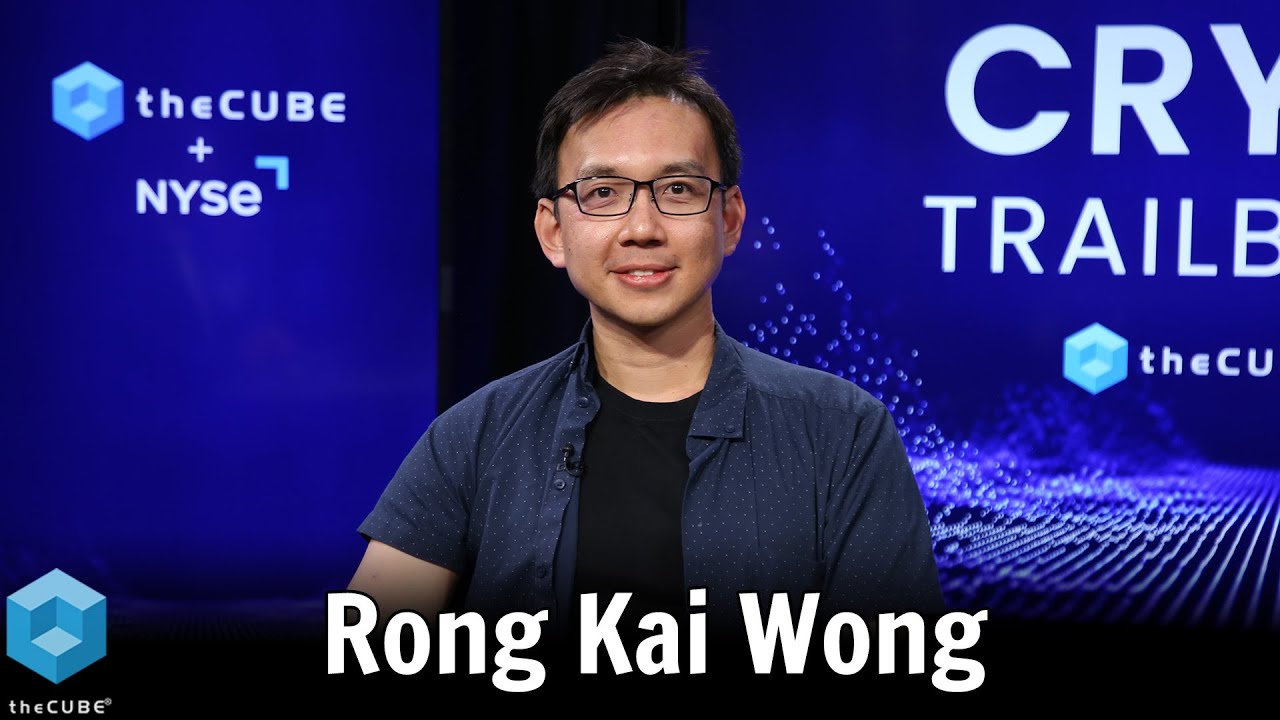
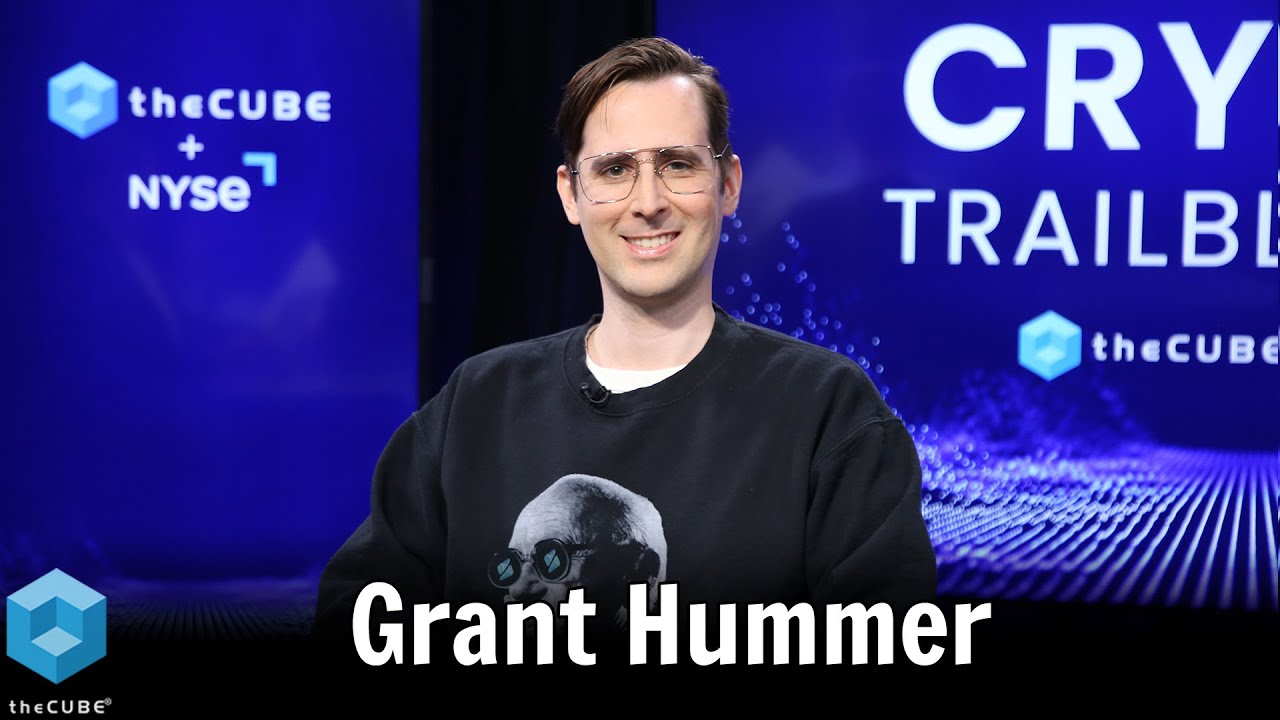
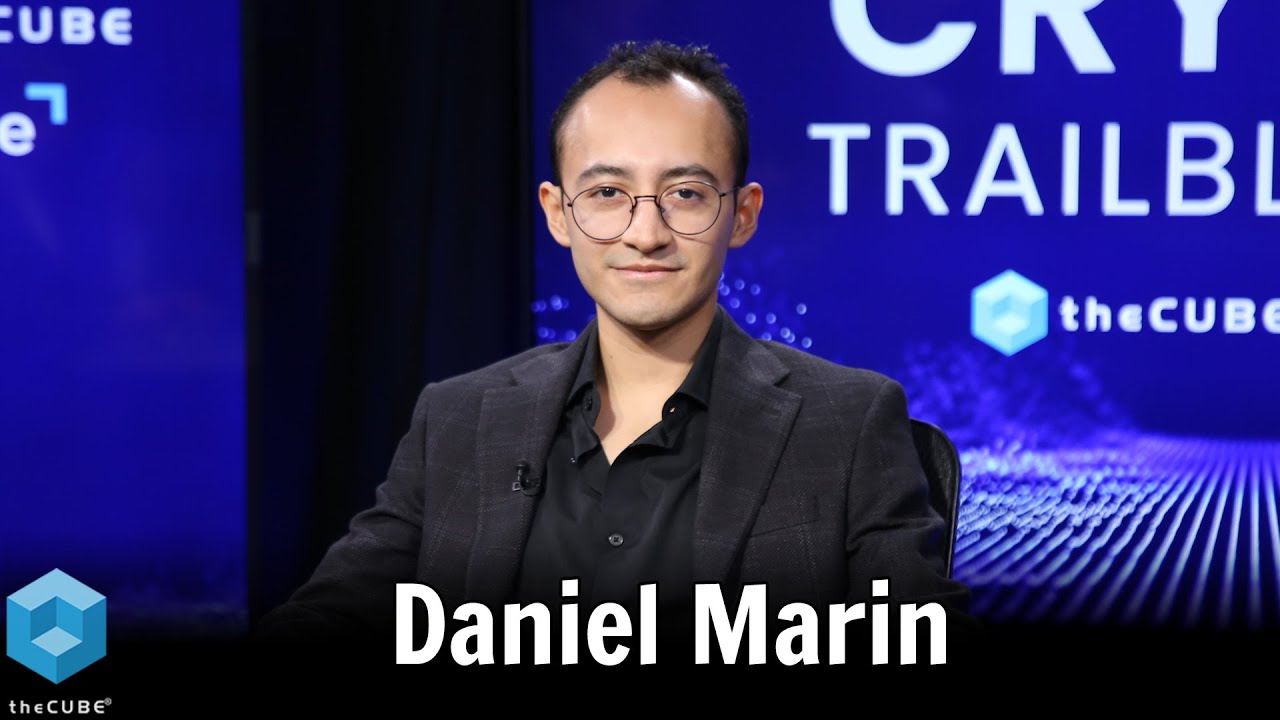
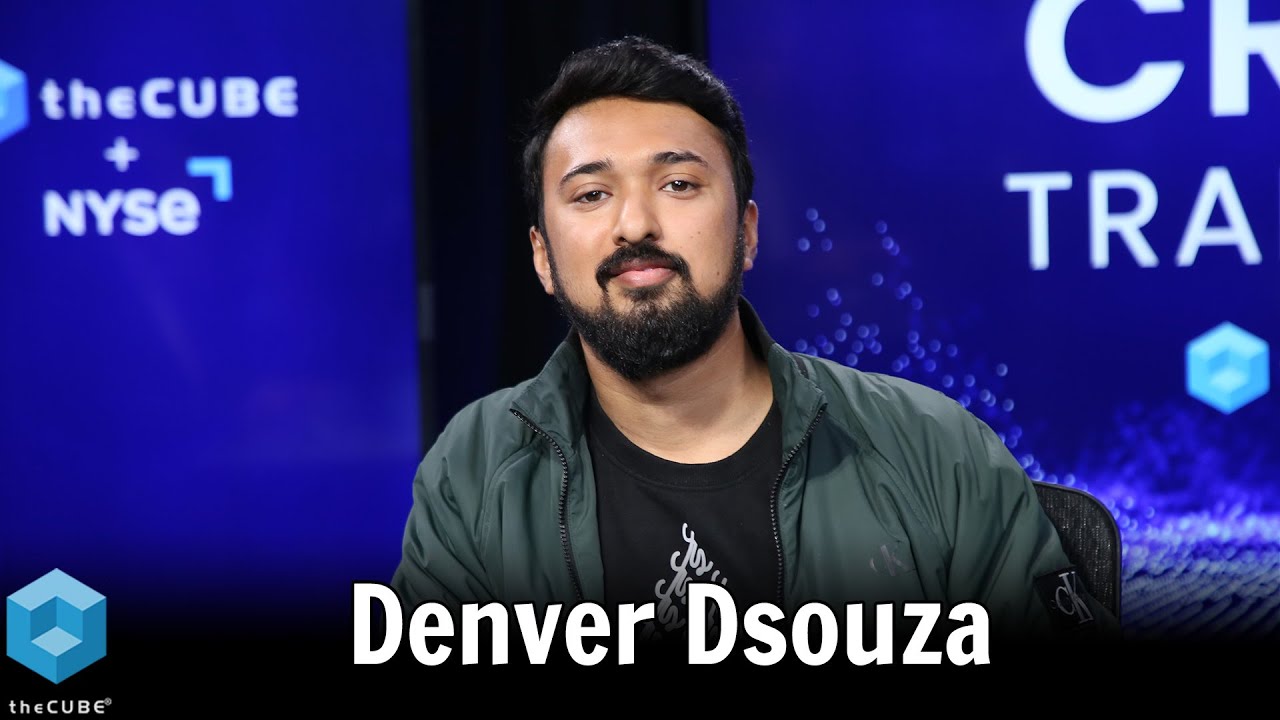
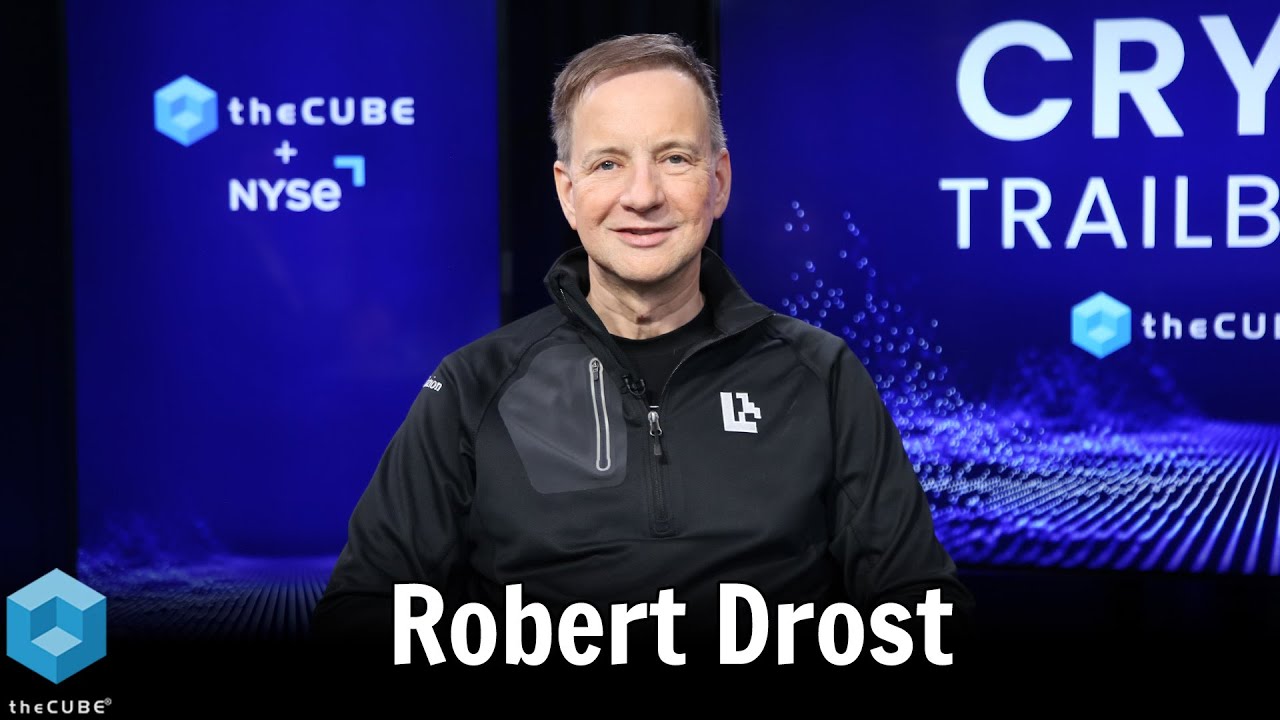
Rong Kai Wong of Reactive Network participates in an insightful interview as part of the Crypto Trailblazers series. They are deeply embedded in the Ethereum ecosystem and bring expertise to discuss the current status and future possibilities for Ethereum as it scales and evolves post the initial wave of mainstream adoption.
In this interview, conducted by theCUBE Research and analysts, Wong shares insights into the challenges and opportunities within the Ethereum space. As a pivotal figure in the ecosystem, they discuss the balance between scale and value within blockchain networks and unveil Reactive Network, a solution aimed at enhancing on-chain reactivity, which is crucial for increased developer productivity.
Key takeaways from this discussion include their emphasis on eliminating centralized points of failure, fostering innovation through scaling solutions, and ambition to expand blockchain applications into non-Web3 commercial arenas. Wong believes that enabling smart contracts to respond organically to on-chain events paves the way for new applications and real-world use cases, transforming the industry landscape.
#CryptoTrailblazers #ReactiveNetwork #Ethereum #Blockchain #Web3 #SmartContracts #CryptoInnovation
Find more SiliconANGLE news and analysis https://siliconangle.com/.
Follow theCUBE's wall-to-wall event coverage https://siliconangle.com/events/
Learn about the latest theCUBE events https://www.thecube.net/
00:00 - Ethereum and Innovations: A Journey from Foundations to Future
02:52 - Navigating the Dualities of Ethereum: Scaling, Value, and Decentralization
05:51 - Enhancing Blockchain and Smart Contract Efficiency with Reactive Network
08:18 - Navigating the Intersection: Developer Insights on Reactive Networks and Web3-AI Synergy
10:23 - Summary and Conclusions: Strengthening Security and Acknowledgements
Forgot Password
Almost there!
We just sent you a verification email. Please verify your account to gain access to
theCUBE + NYSE Wired: Crypto Trailblazers. If you don’t think you received an email check your
spam folder.
Sign in to theCUBE + NYSE Wired: Crypto Trailblazers.
In order to sign in, enter the email address you used to registered for the event. Once completed, you will receive an email with a verification link. Open this link to automatically sign into the site.
Register For theCUBE + NYSE Wired: Crypto Trailblazers
Please fill out the information below. You will recieve an email with a verification link confirming your registration. Click the link to automatically sign into the site.
You’re almost there!
We just sent you a verification email. Please click the verification button in the email. Once your email address is verified, you will have full access to all event content for theCUBE + NYSE Wired: Crypto Trailblazers.
I want my badge and interests to be visible to all attendees.
Checking this box will display your presense on the attendees list, view your profile and allow other attendees to contact you via 1-1 chat. Read the Privacy Policy. At any time, you can choose to disable this preference.
Select your Interests!
add
Upload your photo
Uploading..
OR
Connect via Twitter
Connect via Linkedin
EDIT PASSWORD
Share
Forgot Password
Almost there!
We just sent you a verification email. Please verify your account to gain access to
theCUBE + NYSE Wired: Crypto Trailblazers. If you don’t think you received an email check your
spam folder.
Sign in to theCUBE + NYSE Wired: Crypto Trailblazers.
In order to sign in, enter the email address you used to registered for the event. Once completed, you will receive an email with a verification link. Open this link to automatically sign into the site.
Sign in to gain access to theCUBE + NYSE Wired: Crypto Trailblazers
Please sign in with LinkedIn to continue to theCUBE + NYSE Wired: Crypto Trailblazers. Signing in with LinkedIn ensures a professional environment.
Are you sure you want to remove access rights for this user?
Details
Manage Access
email address
Community Invitation
Kenneth Goodwin, Jeanensis
Rong Kai Wong of Reactive Network participates in an insightful interview as part of the Crypto Trailblazers series. They are deeply embedded in the Ethereum ecosystem and bring expertise to discuss the current status and future possibilities for Ethereum as it scales and evolves post the initial wave of mainstream adoption.
In this interview, conducted by theCUBE Research and analysts, Wong shares insights into the challenges and opportunities within the Ethereum space. As a pivotal figure in the ecosystem, they discuss the balance between scale and value within blockchain networks and unveil Reactive Network, a solution aimed at enhancing on-chain reactivity, which is crucial for increased developer productivity.
Key takeaways from this discussion include their emphasis on eliminating centralized points of failure, fostering innovation through scaling solutions, and ambition to expand blockchain applications into non-Web3 commercial arenas. Wong believes that enabling smart contracts to respond organically to on-chain events paves the way for new applications and real-world use cases, transforming the industry landscape.
#CryptoTrailblazers #ReactiveNetwork #Ethereum #Blockchain #Web3 #SmartContracts #CryptoInnovation
Find more SiliconANGLE news and analysis https://siliconangle.com/.
Follow theCUBE's wall-to-wall event coverage https://siliconangle.com/events/
Learn about the latest theCUBE events https://www.thecube.net/
00:00 - Ethereum and Innovations: A Journey from Foundations to Future
02:52 - Navigating the Dualities of Ethereum: Scaling, Value, and Decentralization
05:51 - Enhancing Blockchain and Smart Contract Efficiency with Reactive Network
08:18 - Navigating the Intersection: Developer Insights on Reactive Networks and Web3-AI Synergy
10:23 - Summary and Conclusions: Strengthening Security and Acknowledgements
>> Welcome back, everyone, to the Crypto Trailblazers series here at the NYSE. I'm John Furrier, host of theCUBE, of course, part of the NYSE Wired community where we feature in the leaders in crypto. We have a great leader here. He's been there for ... In the early days, OG Ken Goodwin, managing director at Jeanensis. Thanks for coming on. Appreciate you coming on theCUBE Crypto Trailblazers. You're a trailblazer.
Kenneth Goodwin
>> Well, I feel like a trailblazer. And John, thank you so much for having me on your show. It's an honor and a privilege to be here back on this->> Not too shabby -
Kenneth Goodwin
>> Not too shabby here. I tell you.... >> background.
Kenneth Goodwin
>> Exactly.>> All right, let's get into what ... First, explain what you do. Get that out on the table real quick so people understand what you do right now.
Kenneth Goodwin
>> Sure. We're Jeanensis, and we also have Jeanensis capital markets, and we're two-fold. We have evaluation advisory firms. We offer evaluation services mainly to mid-cap firms and public firms. And then we also have a fund that we're also launching called a 144 Trailblazer Fund which also includes a stablecoin. There's a stablecoin component to it where we're actually going to be doing an 80/20 because we figured that the challenge is, how do you actually tokenize a fund in this day and age, right? It's very hard to do. Right, John? We figured an 80/20. 80% fiat. 20% stablecoin. We're digitizing first with a gradual movement toward tokenization.>> And this is what I like about this Trailblazer series because, again, we were just talking before we came on camera around some of the early days of Bitcoin. And now with the mainstreaming of crypto, great economic climate here in the US for crypto. We have a regime in the presidency. We have a crypto czar, David Sacks, friend of theCUBE. AI is booming.
Kenneth Goodwin
>> That's right.>> Real-world assets going on chain is a real conversation. Real institutions are getting behind it. Stablecoin's rising up to be a nice leveler from a risk management standpoint. That's going to check the box. It's spawning all kinds of innovations. I want to get your thoughts, first of all, of looking at the historical perspective. Where are we on the mainstreaming of this now? Because you're starting to see real-world assets. Mean things like, hey, let's tokenize the forest. Water. I mean, I'm making this up, but this is where it's going. Real-world assets aren't just ... It's not just money. They're assets.
Kenneth Goodwin
>> They're assets.>> There's money, and then there's financial systems. There's assets all coming together that traditionally have been old-school. What's your reaction and thoughts on that?
Kenneth Goodwin
>> Well, there's two sides of the coin here. I teach corporate finance at NJIT. You also have tangible assets and intangible assets. The first side is that tangible assets that you call real-world assets. I agree with you. The tokenization component to that will take a while, but the recognization of that, that what's happening with the GENIUS Act, is very monumental. The first step is happening right now. Institutions are starting to explore it. You hear BlackRock and the CEO say he wants to tokenize everything. But he's got the money to do it. But what's going on behind the scenes is, how do you actually create the algorithms to tokenize an asset? Now, the key point here is that the minute you do that, you also have to look at how do you treat that asset now. How do you actually treat it for accounting? How do you treat it for regulatory? How do you treat it for reporting? Now, here's the case study for it. Tesla, back in 2022, he purchased Bitcoins, and he put it down as an intangible asset. Interesting, right? He gave a longer period of time to treat the asset, and then at the same time you saw it on the cash flow statement. You saw it on the balance sheet and the income statement. And he got some rewards for that too. And he sold the actual assets. Now, the big challenge is, how do you actually treat it? Do you bring it down to the intangible? If you bring it down to intangible, you bring it down to the core essentials, which is data. At the end of the day, Bitcoin and crypto is all about data aggregation. The recognition of that as data is very, very key. That's going to be a challenge going forward in terms of tokenization.>> That's interesting. The whole intangible/tangible asset ... That's an accounting thing, right? Let's get into the financial side of it. There's ways to do that. Is that well understood? And is that gamified at this point? Because Elon ... He's not a dumbass. He figured that, "I could treat this as an intangible asset. I'm going to get a benefit there." Is the financial reporting system evolving fast enough, in your opinion? Again, some say stablecoins aren't that stable, but that's a whole 'nother conversation. But we're making progress.
Kenneth Goodwin
>> Right. We're making progress, definitely.>> How is the traditional institutional side of it from reporting? Management? Because crypto offers for the first time pure capitalism.
Kenneth Goodwin
>> Exactly.>> It's just got transparency in the data. Are people catching up? How would you scope that opportunity or challenge?
Kenneth Goodwin
>> It's a great opportunity. It's systems. The first part, let's get back to the Stablecoin Act with the GENIUS Act. The first part is the legislation component to it. We have two more acts that needs to be cleared. Now, you have the policymaking side. No one talks about this policymaking. Our legislator is creating the laws and providing the tools. Now, the next step is the designation of prudential regulators. Who is going to be responsible for overseeing crypto? It's going to be the CFTC. It's going to be the SEC. It's going to be a combination of both. It's going to fall on the financial stability oversight council, which is very, very significant. And then the last stage is what you said, John. It's the reporting side. That's that capital market infrastructure that no one wants to talk about. How do you go reporting? How do you go treatment? And these are accounting. These are the financial areas. There's opportunities for the right firms. And there's several firms out here who are actually waiting for this.>> What's your vision on that? What's a good template to understand this? What's your vision? How should this play out, in your opinion?
Kenneth Goodwin
>> It's going to be a while. I think that ... And my colleagues are sitting there jumping on TV saying America's going to take over and be the great crypto capital of the world. Not really. We will, eventually->> Not right away....
Kenneth Goodwin
>> but not right away. Eventually, we will. Eventually, it's going to happen, not only at institutions. And if you go back to the institutions, they've actually had offices for a period of time studying this. You go back to JP Morgan Chase. JP Morgan Chase has been tested on a treasury security services side. They understood already. They have a stablecoin that's ready to be launched. It's not as if the institutions are not ready as of yet. They're ready to launch new products.>> But there's a lot of blockers, or dependencies, I should say. One of them is policy of laws. Reporting. Stack rank those blockers or challenges. What's the first one to get knocked down first?
Kenneth Goodwin
>> Regulations. If you look at ... Let's get back into our financial tier-one institutions. They still have to deal with the SEC. They still have to deal with the Fed and the OCC. You still have the regulatory side. The regulators have not written policy yet. When a regulator write policies, they're taking old policies plus new legislation. The idea of doing a digital asset regulation is not there. There's really no framework. There's no regulatory framework for, let's say, a JP Morgan Chase or any Citigroup to follow.>> That's a pacing item right there, for sure.
Kenneth Goodwin
>> It's a big ... And then you have consumer compliance. How do you go out and communicate to the public what is a stablecoin? The public knows about Bitcoin. You can go outside. Everyone tell you about Bitcoin, but stablecoins, like you just mentioned ... How many people know about what is the initial purpose of a stablecoin and the types of stablecoins are out there? That's the big challenge that you have. This is product suitability. That's a big key that no one's talking about. How do you test your new product in the marketplace to make sure that it's safe and sound, and it's not going against consumer compliance regulations?>> Are there best practices right now that you see? As you mentioned, some of the people evaluating it. Are there best practices now that people are using that you point to and share that people are evaluating to get these frameworks going?
Kenneth Goodwin
>> Well, I do. And I'm kind of biased in this area to a certain degree. I do think USTC is actually a good company where's it's actually test the waters already. I do believe, when I look at Coinbase and what he's done ... And these are companies that's been around for a long time. And you and I, we've been in this industry for about a good nine, 10 years. They didn't just grow up overnight. They had to deal with regulatory institutions and state as well as federal. Now, federal. These institutions have governance risk and controls in place. When they do launch a new product, it's already been tested.>> And that's the key to get that framework. All right, I have to ask you. Since you mentioned that you teach at NJIT, New Jersey Institute of Technology, great college system, what's the young guns? Are they like, "Come on, professor. It's easy,"? Everyone who's young loves this because they understand digital.
Kenneth Goodwin
>> Exactly.>> What's the young minds' thinking around this now? Because, to them, it's a no-brainer. Digital currencies. They're online all the time. What's the vibe there? Can you share a story or anecdotes around how the young minds are thinking about crypto?
Kenneth Goodwin
>> They love it. They love it. For them, this is their generation. I taught also at Baruch College. I taught New York City's first digital asset management course in New York City. And I challenged my students. I said, "How do you take traditional assets and tie it to a DeFi product's assets? And can you create a portfolio from it?" And that's hard. That's really hard. You and I know because digital assets ... The volatility is very wide. I challenged my students. They loved it. They did the research. They found different types of different tokens. Alternative tokens. They figured out they could figure out other ways of doing DeFi products. They did non-fungible tokens in their portfolio. It was just unbelievable to see what was doing what they were doing->> I'm really hardcore on this. I think you got to let the young minds because they're ... What's the expression? Unconsciously competent. They don't have the dogma of previous generations.
Kenneth Goodwin
>> Exactly.>> And they wake up and say, "Hey, boomers, you've made this mess," but this is an opportunity. It's a financial opportunity. And they'll solve problems, not knowing they're a deer in the headlights than one level, but they're smart on the other. Their fresh perspectives. This is what we're seeing.
Kenneth Goodwin
>> Exactly. And ->> A whole 'nother generational shift.
Kenneth Goodwin
>> Exactly what you said. The key is solving problems. They figure out another solution to use technology. They understand this technology. They don't just look at the actual product itself. They're looking at coding layer one, layer two, layer three. They know the protocols. Now, they have a good fundamental understanding of the backbone of distributed ledger technology and the products too. I look at this generation, this whole digitization of finance and money, which is where we are leaning toward, and the stablecoin is, to me, was the first thing. I said this three years ago. Two years ago, I said this on TV. Another TV station. The first thing we're asked. They said, "What was the first product that is going to be looked upon?" And I said, "Stablecoins, because it represents a digital payment system." And when you look at money market accounts, guess what? Stablecoins is the ideal for it. And these students picked it up immediately. They understood that already.>> Instantly. I got to ask you about FinTech because one of the things I was talking with Vince at FinTech TV about, and Troy, is the FinTech was finance tech. Payment rails. Crypto comes on the scene. Now, obviously crypto is dominating the FinTech market because it's, again, cutting edge. It's two sides of that coin. Opportunity, and then still challenges can be solved. But digital commerce, in general, is a broad category. How has FinTech changed in the past, say, five years, cut three years? What's been the most categorical change? Because now it's not a narrow vertical. It's almost like it shouldn't even be called FinTech because all tech has now payment rail settlement issues.
Kenneth Goodwin
>> Exactly.>> Or some of the things you brought up that will be solved. Is FinTech dead, or is it just now it's everything? It's like AI. AI's infusing in everything, but maybe-
Kenneth Goodwin
>> That's a great question. That's an excellent question. And I liked the commerce side here because I did my TEDx talk on this.>> .
Kenneth Goodwin
>> My TEDx talk was based on multiple different types of technologies. I got rid of the whole FinTech idea. And what I did was I looked at different AI, artificial intelligence, artificial cognitive intelligence. I looked at in terms of cloud computing. I looked in terms of blockchain technology. And I said, "What if we solve the problem of creating a borderless trade system?" What if we solve the problem of ... Let's say we're looking at specification management, which is data driven, and actually specification management goes back to Deming, Drouse, and Drucker. The idea of adjusting time management. What if we take technology, and we apply that into a problem? It's no longer FinTech.>> It's horizontal.
Kenneth Goodwin
>> Right. It's horizontal. Now, you take this technology, and you're solving the issue with trade, which is where you got issue with tariffs today, right? At all places. But you solve it. You create borderless trade. You lower the cost. You have execution. You pick up the speed. And to answer your question, I think that's where we're leaning toward. FinTech was very broad. It included everything. It was like that big soup, and you include all different types of vegetables in the pot. And now, it's becoming more finite. Now, what you're having ... Like you said, the commerce component is key today, but what's really driving that is treasury. Treasury. The digitization of treasury. You're going to hear there's more and more, both in AI, both in also our blockchain space, is a digitization treasury. That's not going away. How do you digitize treasury which controls cash flows, balance sheet, P&L, and everything else?>> That's a big item on the table. I'm going to put a marker on that. We'll come back to that, Ken, for sure. You brought up borderless, one of my hot buttons because the hottest trend that we're covering on theCUBE, all these different events, is sovereignty. Now, there's a lot of hubbub about AI sovereignty, which is because it's on the hype cycle. But cloud computing, which you mentioned, sovereign cloud, is the first step. This is my opinion. I'd love to get your reaction. If you don't solve the sovereign border, what is your borders first, you can't have borderless because now payments are also in the borders. To have borderless, you have to have sovereignty. That's my assumption. Do you agree with that kind of premise that borderless, the end game, which people want borderless, but when you have now sovereign countries, Europeans trying to figure it out right now, because they're just in regulation hell, as we know, how do you solve for borderless? One, give people the sovereign ability to do business.
Kenneth Goodwin
>> Exactly.>> One. That's baseline. That's foundational. And then you got to have cloud. I might have an Amazon or a Google or my own cloud in the country. Once you have that, then you can have money.
Kenneth Goodwin
>> You have money.>> You have money. Now, money and technology go together. Now, that's hard. Then you have the stablecoins across all those. Then you got borderless. Now, it sounds complicated, but in reality, borderless is not that easy.
Kenneth Goodwin
>> It's very hard.>> What's your reaction to that?
Kenneth Goodwin
>> Very hard. These are multiple policies. You just ran through several policies that we have to deal with with Europe. If you look at now you have Misfit, and you have several policies that's coming out of Europe that's kind of leading the charge. Typically, here, it's been in the US with Basel, Basel One, Basel Two, Basel Three, where we work with our European partners. You got to kind of do the very same thing. Now, here in the United States, the biggest challenge we have is federal and state. No one is talking about the universal commercial codes, the UCC codes, right? What you're talking about, from a very broad perspective, is very critical. How do we get uniforminality when it comes down to policies and controls? Governance risk, controls, and policy. I think eventually the technology will cause that to happen. It's ironic. The technology will be the driver that will cause nation states to come together and say, "How can we work together to make a borderless trade?" I don't think the nation states are going to sit there and say, "Hey, let's meet together," but the technology is going to drive it because everyone's going to be using their stablecoins. Everyone wants to have similar stablecoins. And it's going to cause these nation states to say, "In order for us to receive these stablecoins or the intellectual property, which is really the key behind that when we talk about cloud, we got to have a uniformality in intellectual property rights." And then when that happens, you're going to have this borderless systems that's in place.>> And the payment rails are certainly proliferating settlements. A whole issue that ties back to some of the treasury challenges. Just yesterday, JD Vance said at the Trump AI for America ... Said something for the first time I heard someone say it, besides me, is that I think that ... And also Jensen Huang brought up energy. Bitcoin is bounded by energy. So is AI. The combination of energy and payments and coins, sovereignty and borderless, might change the geopolitical landscape. JD Vance said on the podcast stage yesterday that he was approached by a nation that proposed an alternative to NATO around the formation around the tech stacks. Looking at major disruption to governance globally, because energy and money are now impacting geopolitical relationships. And the other countries that have either good energy or not have good energy might want to have a partnership. You're starting to see the idea of a NATO. An alternative NATO. Just throwing it out there. Again, I've been saying on theCUBE for the past month that geopolitical will be impacted because of the energy crisis. That's bounding. That's a bounding function for AI and Bitcoin. And you got payments. Programmable money. Clearing. Banking. Plumbing. All that plumbing. Huge dynamic. What's your reaction to that? Crazy?
Kenneth Goodwin
>> Well, I agree with you. Money is financial energy. If you want to put the two together, you're absolutely right. The data centers have been a big key here. One of the big drivers that I've seen in this space, at least in the financial space, is to build up the data centers. I've been fortunate. I'm going to throw out the company. I know I shouldn't blow out the name, but Cantor Fitzgerald has invited me two years ago to sit in their office to look at 11 different companies. And those companies, those are the companies they're following. They're AI blockchain mining companies. And I sat back, and I said, "Well, it's also going to include data centers." You've got to have data centers around that. You have the tangible side of that where you build up the actual assets, and then you also have the machinery of that. It's very critical for national defense. Most people don't look at this. You got AI, and you have blockchain, distributed ledger technology, that's really helping your defense systems here in the United States and around the world.>> Competitive advantage.
Kenneth Goodwin
>> Right. Competitive advantage. And this is why those other nations ... This is why there's a big battle with Taiwan and these other nations. China as well as Brazil as the BRICS, right? India. South Africa. You want to throw in Singapore. Singapore. Dubai. Those men or states. They understand that, if you have a country that controls the flow of energy, the flow of energy which controls everything, controls the execution side of this, now we're talking about Nikola Tesla, right? Tesla was saying that from original work. Tesla was saying that, "Hey, if I can figure out how I can extract energy around us and give it for free," which would've solved a lot of our problems today, but energy was the key driver. Energy is what drives everything around us. The country that controls that and that manages that and controls the data, which is our energy source, your data, my data, which is the source for financial energy, controls everything else.>> Ken, great conversation. Got to leave it there. Let's come back, and we'll hit some of these markers we put down. Great conversation. Thanks for coming on, theCUBE. Always a pleasure.
Kenneth Goodwin
>> Pleasure.>> Crypto Trailblazers is getting it from Ken here. I'm getting wide range of issues, but it's coming. The opportunity to dominate on a national and international scale. Bounded by energy. Bounded by data. This is programmable money meets intelligence. This is the world we live in. Again, theCUBE's doing its part to bring you the data here and all the energy. I'm John Furrier, host of theCUBE. Thanks for watching.
>> Welcome back, everyone, to the Crypto Trailblazers series here at the NYSE. I'm John Furrier, host of theCUBE, of course, part of the NYSE Wired community where we feature in the leaders in crypto. We have a great leader here. He's been there for ... In the early days, OG Ken Goodwin, managing director at Jeanensis. Thanks for coming on. Appreciate you coming on theCUBE Crypto Trailblazers. You're a trailblazer.
Kenneth Goodwin
>> Well, I feel like a trailblazer. And John, thank you so much for having me on your show. It's an honor and a privilege to be here back on this->> Not too shabby -
Kenneth Goodwin
>> Not too shabby here. I tell you.... >> background.
Kenneth Goodwin
>> Exactly.>> All right, let's get into what ... First, explain what you do. Get that out on the table real quick so people understand what you do right now.
Kenneth Goodwin
>> Sure. We're Jeanensis, and we also have Jeanensis capital markets, and we're two-fold. We have evaluation advisory firms. We offer evaluation services mainly to mid-cap firms and public firms. And then we also have a fund that we're also launching called a 144 Trailblazer Fund which also includes a stablecoin. There's a stablecoin component to it where we're actually going to be doing an 80/20 because we figured that the challenge is, how do you actually tokenize a fund in this day and age, right? It's very hard to do. Right, John? We figured an 80/20. 80% fiat. 20% stablecoin. We're digitizing first with a gradual movement toward tokenization.>> And this is what I like about this Trailblazer series because, again, we were just talking before we came on camera around some of the early days of Bitcoin. And now with the mainstreaming of crypto, great economic climate here in the US for crypto. We have a regime in the presidency. We have a crypto czar, David Sacks, friend of theCUBE. AI is booming.
Kenneth Goodwin
>> That's right.>> Real-world assets going on chain is a real conversation. Real institutions are getting behind it. Stablecoin's rising up to be a nice leveler from a risk management standpoint. That's going to check the box. It's spawning all kinds of innovations. I want to get your thoughts, first of all, of looking at the historical perspective. Where are we on the mainstreaming of this now? Because you're starting to see real-world assets. Mean things like, hey, let's tokenize the forest. Water. I mean, I'm making this up, but this is where it's going. Real-world assets aren't just ... It's not just money. They're assets.
Kenneth Goodwin
>> They're assets.>> There's money, and then there's financial systems. There's assets all coming together that traditionally have been old-school. What's your reaction and thoughts on that?
Kenneth Goodwin
>> Well, there's two sides of the coin here. I teach corporate finance at NJIT. You also have tangible assets and intangible assets. The first side is that tangible assets that you call real-world assets. I agree with you. The tokenization component to that will take a while, but the recognization of that, that what's happening with the GENIUS Act, is very monumental. The first step is happening right now. Institutions are starting to explore it. You hear BlackRock and the CEO say he wants to tokenize everything. But he's got the money to do it. But what's going on behind the scenes is, how do you actually create the algorithms to tokenize an asset? Now, the key point here is that the minute you do that, you also have to look at how do you treat that asset now. How do you actually treat it for accounting? How do you treat it for regulatory? How do you treat it for reporting? Now, here's the case study for it. Tesla, back in 2022, he purchased Bitcoins, and he put it down as an intangible asset. Interesting, right? He gave a longer period of time to treat the asset, and then at the same time you saw it on the cash flow statement. You saw it on the balance sheet and the income statement. And he got some rewards for that too. And he sold the actual assets. Now, the big challenge is, how do you actually treat it? Do you bring it down to the intangible? If you bring it down to intangible, you bring it down to the core essentials, which is data. At the end of the day, Bitcoin and crypto is all about data aggregation. The recognition of that as data is very, very key. That's going to be a challenge going forward in terms of tokenization.>> That's interesting. The whole intangible/tangible asset ... That's an accounting thing, right? Let's get into the financial side of it. There's ways to do that. Is that well understood? And is that gamified at this point? Because Elon ... He's not a dumbass. He figured that, "I could treat this as an intangible asset. I'm going to get a benefit there." Is the financial reporting system evolving fast enough, in your opinion? Again, some say stablecoins aren't that stable, but that's a whole 'nother conversation. But we're making progress.
Kenneth Goodwin
>> Right. We're making progress, definitely.>> How is the traditional institutional side of it from reporting? Management? Because crypto offers for the first time pure capitalism.
Kenneth Goodwin
>> Exactly.>> It's just got transparency in the data. Are people catching up? How would you scope that opportunity or challenge?
Kenneth Goodwin
>> It's a great opportunity. It's systems. The first part, let's get back to the Stablecoin Act with the GENIUS Act. The first part is the legislation component to it. We have two more acts that needs to be cleared. Now, you have the policymaking side. No one talks about this policymaking. Our legislator is creating the laws and providing the tools. Now, the next step is the designation of prudential regulators. Who is going to be responsible for overseeing crypto? It's going to be the CFTC. It's going to be the SEC. It's going to be a combination of both. It's going to fall on the financial stability oversight council, which is very, very significant. And then the last stage is what you said, John. It's the reporting side. That's that capital market infrastructure that no one wants to talk about. How do you go reporting? How do you go treatment? And these are accounting. These are the financial areas. There's opportunities for the right firms. And there's several firms out here who are actually waiting for this.>> What's your vision on that? What's a good template to understand this? What's your vision? How should this play out, in your opinion?
Kenneth Goodwin
>> It's going to be a while. I think that ... And my colleagues are sitting there jumping on TV saying America's going to take over and be the great crypto capital of the world. Not really. We will, eventually->> Not right away....
Kenneth Goodwin
>> but not right away. Eventually, we will. Eventually, it's going to happen, not only at institutions. And if you go back to the institutions, they've actually had offices for a period of time studying this. You go back to JP Morgan Chase. JP Morgan Chase has been tested on a treasury security services side. They understood already. They have a stablecoin that's ready to be launched. It's not as if the institutions are not ready as of yet. They're ready to launch new products.>> But there's a lot of blockers, or dependencies, I should say. One of them is policy of laws. Reporting. Stack rank those blockers or challenges. What's the first one to get knocked down first?
Kenneth Goodwin
>> Regulations. If you look at ... Let's get back into our financial tier-one institutions. They still have to deal with the SEC. They still have to deal with the Fed and the OCC. You still have the regulatory side. The regulators have not written policy yet. When a regulator write policies, they're taking old policies plus new legislation. The idea of doing a digital asset regulation is not there. There's really no framework. There's no regulatory framework for, let's say, a JP Morgan Chase or any Citigroup to follow.>> That's a pacing item right there, for sure.
Kenneth Goodwin
>> It's a big ... And then you have consumer compliance. How do you go out and communicate to the public what is a stablecoin? The public knows about Bitcoin. You can go outside. Everyone tell you about Bitcoin, but stablecoins, like you just mentioned ... How many people know about what is the initial purpose of a stablecoin and the types of stablecoins are out there? That's the big challenge that you have. This is product suitability. That's a big key that no one's talking about. How do you test your new product in the marketplace to make sure that it's safe and sound, and it's not going against consumer compliance regulations?>> Are there best practices right now that you see? As you mentioned, some of the people evaluating it. Are there best practices now that people are using that you point to and share that people are evaluating to get these frameworks going?
Kenneth Goodwin
>> Well, I do. And I'm kind of biased in this area to a certain degree. I do think USTC is actually a good company where's it's actually test the waters already. I do believe, when I look at Coinbase and what he's done ... And these are companies that's been around for a long time. And you and I, we've been in this industry for about a good nine, 10 years. They didn't just grow up overnight. They had to deal with regulatory institutions and state as well as federal. Now, federal. These institutions have governance risk and controls in place. When they do launch a new product, it's already been tested.>> And that's the key to get that framework. All right, I have to ask you. Since you mentioned that you teach at NJIT, New Jersey Institute of Technology, great college system, what's the young guns? Are they like, "Come on, professor. It's easy,"? Everyone who's young loves this because they understand digital.
Kenneth Goodwin
>> Exactly.>> What's the young minds' thinking around this now? Because, to them, it's a no-brainer. Digital currencies. They're online all the time. What's the vibe there? Can you share a story or anecdotes around how the young minds are thinking about crypto?
Kenneth Goodwin
>> They love it. They love it. For them, this is their generation. I taught also at Baruch College. I taught New York City's first digital asset management course in New York City. And I challenged my students. I said, "How do you take traditional assets and tie it to a DeFi product's assets? And can you create a portfolio from it?" And that's hard. That's really hard. You and I know because digital assets ... The volatility is very wide. I challenged my students. They loved it. They did the research. They found different types of different tokens. Alternative tokens. They figured out they could figure out other ways of doing DeFi products. They did non-fungible tokens in their portfolio. It was just unbelievable to see what was doing what they were doing->> I'm really hardcore on this. I think you got to let the young minds because they're ... What's the expression? Unconsciously competent. They don't have the dogma of previous generations.
Kenneth Goodwin
>> Exactly.>> And they wake up and say, "Hey, boomers, you've made this mess," but this is an opportunity. It's a financial opportunity. And they'll solve problems, not knowing they're a deer in the headlights than one level, but they're smart on the other. Their fresh perspectives. This is what we're seeing.
Kenneth Goodwin
>> Exactly. And ->> A whole 'nother generational shift.
Kenneth Goodwin
>> Exactly what you said. The key is solving problems. They figure out another solution to use technology. They understand this technology. They don't just look at the actual product itself. They're looking at coding layer one, layer two, layer three. They know the protocols. Now, they have a good fundamental understanding of the backbone of distributed ledger technology and the products too. I look at this generation, this whole digitization of finance and money, which is where we are leaning toward, and the stablecoin is, to me, was the first thing. I said this three years ago. Two years ago, I said this on TV. Another TV station. The first thing we're asked. They said, "What was the first product that is going to be looked upon?" And I said, "Stablecoins, because it represents a digital payment system." And when you look at money market accounts, guess what? Stablecoins is the ideal for it. And these students picked it up immediately. They understood that already.>> Instantly. I got to ask you about FinTech because one of the things I was talking with Vince at FinTech TV about, and Troy, is the FinTech was finance tech. Payment rails. Crypto comes on the scene. Now, obviously crypto is dominating the FinTech market because it's, again, cutting edge. It's two sides of that coin. Opportunity, and then still challenges can be solved. But digital commerce, in general, is a broad category. How has FinTech changed in the past, say, five years, cut three years? What's been the most categorical change? Because now it's not a narrow vertical. It's almost like it shouldn't even be called FinTech because all tech has now payment rail settlement issues.
Kenneth Goodwin
>> Exactly.>> Or some of the things you brought up that will be solved. Is FinTech dead, or is it just now it's everything? It's like AI. AI's infusing in everything, but maybe-
Kenneth Goodwin
>> That's a great question. That's an excellent question. And I liked the commerce side here because I did my TEDx talk on this.>> .
Kenneth Goodwin
>> My TEDx talk was based on multiple different types of technologies. I got rid of the whole FinTech idea. And what I did was I looked at different AI, artificial intelligence, artificial cognitive intelligence. I looked at in terms of cloud computing. I looked in terms of blockchain technology. And I said, "What if we solve the problem of creating a borderless trade system?" What if we solve the problem of ... Let's say we're looking at specification management, which is data driven, and actually specification management goes back to Deming, Drouse, and Drucker. The idea of adjusting time management. What if we take technology, and we apply that into a problem? It's no longer FinTech.>> It's horizontal.
Kenneth Goodwin
>> Right. It's horizontal. Now, you take this technology, and you're solving the issue with trade, which is where you got issue with tariffs today, right? At all places. But you solve it. You create borderless trade. You lower the cost. You have execution. You pick up the speed. And to answer your question, I think that's where we're leaning toward. FinTech was very broad. It included everything. It was like that big soup, and you include all different types of vegetables in the pot. And now, it's becoming more finite. Now, what you're having ... Like you said, the commerce component is key today, but what's really driving that is treasury. Treasury. The digitization of treasury. You're going to hear there's more and more, both in AI, both in also our blockchain space, is a digitization treasury. That's not going away. How do you digitize treasury which controls cash flows, balance sheet, P&L, and everything else?>> That's a big item on the table. I'm going to put a marker on that. We'll come back to that, Ken, for sure. You brought up borderless, one of my hot buttons because the hottest trend that we're covering on theCUBE, all these different events, is sovereignty. Now, there's a lot of hubbub about AI sovereignty, which is because it's on the hype cycle. But cloud computing, which you mentioned, sovereign cloud, is the first step. This is my opinion. I'd love to get your reaction. If you don't solve the sovereign border, what is your borders first, you can't have borderless because now payments are also in the borders. To have borderless, you have to have sovereignty. That's my assumption. Do you agree with that kind of premise that borderless, the end game, which people want borderless, but when you have now sovereign countries, Europeans trying to figure it out right now, because they're just in regulation hell, as we know, how do you solve for borderless? One, give people the sovereign ability to do business.
Kenneth Goodwin
>> Exactly.>> One. That's baseline. That's foundational. And then you got to have cloud. I might have an Amazon or a Google or my own cloud in the country. Once you have that, then you can have money.
Kenneth Goodwin
>> You have money.>> You have money. Now, money and technology go together. Now, that's hard. Then you have the stablecoins across all those. Then you got borderless. Now, it sounds complicated, but in reality, borderless is not that easy.
Kenneth Goodwin
>> It's very hard.>> What's your reaction to that?
Kenneth Goodwin
>> Very hard. These are multiple policies. You just ran through several policies that we have to deal with with Europe. If you look at now you have Misfit, and you have several policies that's coming out of Europe that's kind of leading the charge. Typically, here, it's been in the US with Basel, Basel One, Basel Two, Basel Three, where we work with our European partners. You got to kind of do the very same thing. Now, here in the United States, the biggest challenge we have is federal and state. No one is talking about the universal commercial codes, the UCC codes, right? What you're talking about, from a very broad perspective, is very critical. How do we get uniforminality when it comes down to policies and controls? Governance risk, controls, and policy. I think eventually the technology will cause that to happen. It's ironic. The technology will be the driver that will cause nation states to come together and say, "How can we work together to make a borderless trade?" I don't think the nation states are going to sit there and say, "Hey, let's meet together," but the technology is going to drive it because everyone's going to be using their stablecoins. Everyone wants to have similar stablecoins. And it's going to cause these nation states to say, "In order for us to receive these stablecoins or the intellectual property, which is really the key behind that when we talk about cloud, we got to have a uniformality in intellectual property rights." And then when that happens, you're going to have this borderless systems that's in place.>> And the payment rails are certainly proliferating settlements. A whole issue that ties back to some of the treasury challenges. Just yesterday, JD Vance said at the Trump AI for America ... Said something for the first time I heard someone say it, besides me, is that I think that ... And also Jensen Huang brought up energy. Bitcoin is bounded by energy. So is AI. The combination of energy and payments and coins, sovereignty and borderless, might change the geopolitical landscape. JD Vance said on the podcast stage yesterday that he was approached by a nation that proposed an alternative to NATO around the formation around the tech stacks. Looking at major disruption to governance globally, because energy and money are now impacting geopolitical relationships. And the other countries that have either good energy or not have good energy might want to have a partnership. You're starting to see the idea of a NATO. An alternative NATO. Just throwing it out there. Again, I've been saying on theCUBE for the past month that geopolitical will be impacted because of the energy crisis. That's bounding. That's a bounding function for AI and Bitcoin. And you got payments. Programmable money. Clearing. Banking. Plumbing. All that plumbing. Huge dynamic. What's your reaction to that? Crazy?
Kenneth Goodwin
>> Well, I agree with you. Money is financial energy. If you want to put the two together, you're absolutely right. The data centers have been a big key here. One of the big drivers that I've seen in this space, at least in the financial space, is to build up the data centers. I've been fortunate. I'm going to throw out the company. I know I shouldn't blow out the name, but Cantor Fitzgerald has invited me two years ago to sit in their office to look at 11 different companies. And those companies, those are the companies they're following. They're AI blockchain mining companies. And I sat back, and I said, "Well, it's also going to include data centers." You've got to have data centers around that. You have the tangible side of that where you build up the actual assets, and then you also have the machinery of that. It's very critical for national defense. Most people don't look at this. You got AI, and you have blockchain, distributed ledger technology, that's really helping your defense systems here in the United States and around the world.>> Competitive advantage.
Kenneth Goodwin
>> Right. Competitive advantage. And this is why those other nations ... This is why there's a big battle with Taiwan and these other nations. China as well as Brazil as the BRICS, right? India. South Africa. You want to throw in Singapore. Singapore. Dubai. Those men or states. They understand that, if you have a country that controls the flow of energy, the flow of energy which controls everything, controls the execution side of this, now we're talking about Nikola Tesla, right? Tesla was saying that from original work. Tesla was saying that, "Hey, if I can figure out how I can extract energy around us and give it for free," which would've solved a lot of our problems today, but energy was the key driver. Energy is what drives everything around us. The country that controls that and that manages that and controls the data, which is our energy source, your data, my data, which is the source for financial energy, controls everything else.>> Ken, great conversation. Got to leave it there. Let's come back, and we'll hit some of these markers we put down. Great conversation. Thanks for coming on, theCUBE. Always a pleasure.
Kenneth Goodwin
>> Pleasure.>> Crypto Trailblazers is getting it from Ken here. I'm getting wide range of issues, but it's coming. The opportunity to dominate on a national and international scale. Bounded by energy. Bounded by data. This is programmable money meets intelligence. This is the world we live in. Again, theCUBE's doing its part to bring you the data here and all the energy. I'm John Furrier, host of theCUBE. Thanks for watching.