In this insightful episode of theCUBE, we are joined by Alexandra Debow, co-founder and CEO of swsh, at the New York Stock Exchange Studio. We delve into the growing influence of digital photo sharing technologies within live events, as highlighted at the NYSE Wired: Crypto Trailblazers gathering.
Debow, a notable figure in the tech world and driving force behind swsh, shares their expertise and insights in this dynamic discussion hosted by theCUBE's analyst. They discuss the creation and evolution of swsh, an innovative photo sharing application designed to enhance post-event connections through shared albums and AI-driven features. The discussion covers the app's rapid growth, particularly on college campuses and its expansion into global events, highlighting swsh's unique positioning in the photo-sharing landscape alongside Instagram and other platforms.
Key takeaways from the conversation include Debow's insights into the power of AI in improving user experiences, as swsh continues to redefine the way users interact with digital content by allowing them to filter photos by personal relevance and brand presence. According to theCUBE's analyst, swsh is not just changing the way photos are managed, but also its potential to shape social dynamics in real-world settings and generate brand engagement through shared digital real estate.
Forgot Password
Almost there!
We just sent you a verification email. Please verify your account to gain access to
theCUBE + NYSE Wired: Crypto Trailblazers. If you don’t think you received an email check your
spam folder.
Sign in to theCUBE + NYSE Wired: Crypto Trailblazers.
In order to sign in, enter the email address you used to registered for the event. Once completed, you will receive an email with a verification link. Open this link to automatically sign into the site.
Register For theCUBE + NYSE Wired: Crypto Trailblazers
Please fill out the information below. You will recieve an email with a verification link confirming your registration. Click the link to automatically sign into the site.
You’re almost there!
We just sent you a verification email. Please click the verification button in the email. Once your email address is verified, you will have full access to all event content for theCUBE + NYSE Wired: Crypto Trailblazers.
I want my badge and interests to be visible to all attendees.
Checking this box will display your presense on the attendees list, view your profile and allow other attendees to contact you via 1-1 chat. Read the Privacy Policy. At any time, you can choose to disable this preference.
Select your Interests!
add
Upload your photo
Uploading..
OR
Connect via Twitter
Connect via Linkedin
EDIT PASSWORD
Share
Forgot Password
Almost there!
We just sent you a verification email. Please verify your account to gain access to
theCUBE + NYSE Wired: Crypto Trailblazers. If you don’t think you received an email check your
spam folder.
Sign in to theCUBE + NYSE Wired: Crypto Trailblazers.
In order to sign in, enter the email address you used to registered for the event. Once completed, you will receive an email with a verification link. Open this link to automatically sign into the site.
Sign in to gain access to theCUBE + NYSE Wired: Crypto Trailblazers
Please sign in with LinkedIn to continue to theCUBE + NYSE Wired: Crypto Trailblazers. Signing in with LinkedIn ensures a professional environment.
Are you sure you want to remove access rights for this user?
Details
Manage Access
email address
Community Invitation
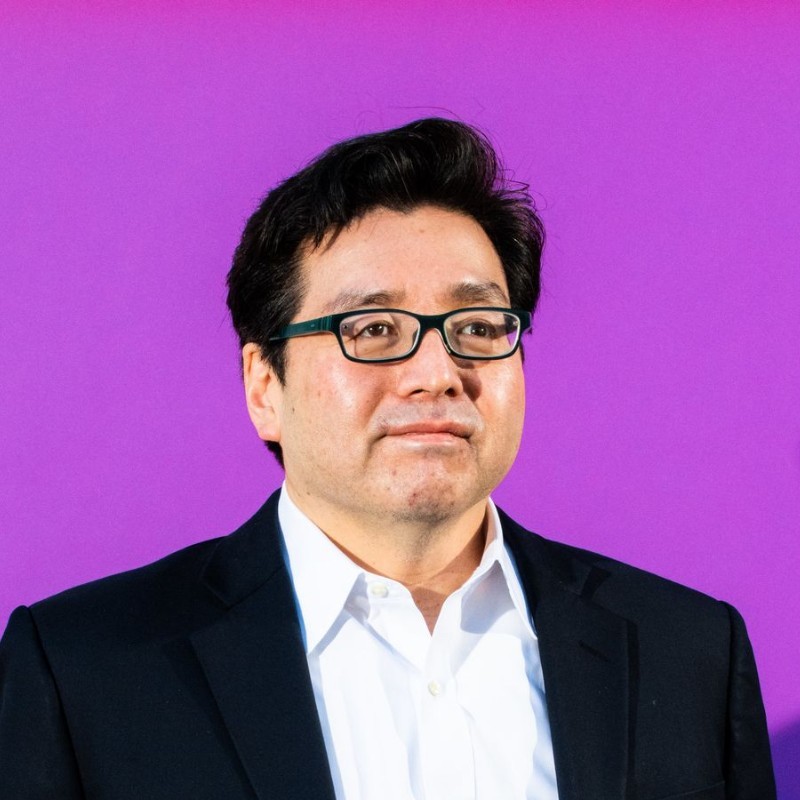
Thomas Lee, Fundstrat
Exploring the Future of Cryptocurrency with Offchain Labs
Join us as we delve into an insightful discussion with Steven Goldfeder of Offchain Labs, analyzed by theCUBE Research. This segment, part of the Crypto Trailblazers series in collaboration with NYSE Wired, explores the innovative efforts redefining the Ethereum ecosystem and the broader blockchain landscape.
Steven Goldfeder, co-founder and CEO of Offchain Labs, discusses significant advancements and strategic insights in blockchain technology. In this engaging episode, hosted at theCUBE Studios, Goldfeder shares their expertise on how Offchain Labs contributes to the evolution of Ethereum through groundbreaking projects such as Prysm and Arbitrum, while discussing impacts on scalability and decentralization.
In this discussion, Goldfeder elaborates on key technological initiatives driven by Offchain Labs, focusing particularly on Arbitrum, the pioneering layer two scaling solution for Ethereum. They illustrate how innovative platforms such as Arbitrum significantly enhance Ethereum's capacity, efficiency, and scalability without compromising security or decentralization, closely analyzed by theCUBE Research.
Highlights include Goldfeder's insights on the future trajectory of Ethereum and its ecosystem, emphasizing the sustainable development model and potential for global business transformations. Goldfeder states that engaging with regulators now can ensure crypto's lasting impact, aligning with a US administration open to embracing this technological shift. This discussion offers valuable perspectives for developers, businesses, and policymakers navigating the crypto landscape.
#OffchainLabs #Arbitrum #Ethereum #theCUBE #NYSEWired #Blockchain #CryptoTrailblazers #Scalability #Decentralization #Innovation #Crypto #SmartContracts #PaloAlto #CryptoRegulation
Find more SiliconANGLE news and analysis https://siliconangle.com/.
Follow theCUBE's wall-to-wall event coverage https://siliconangle.com/events/
Learn about the latest theCUBE events https://www.thecube.net/
00:00 - Intro
00:06 - Exploring Innovations in Blockchain: A Deep Dive into Offchain Labs and Arbitrum
05:23 - Ethereum's Scalability and the Layered Architecture
08:01 - Smart Contracts and Developer Innovations on Arbitrum
11:46 - The Impact of Arbitrum on Blockchain App Development
16:08 - Navigating the Future: Offchain Labs and Ethereum in a Regulatory Landscape
>> Hello, welcome to TheCUBE here at our East Coast Studios, New York Stock Exchange. This is a SiliconANGLE, TheCUBE's NYSE Wired program. Tom Lee, the CEO of Fundstrat, chairman of Bitmine is here inside TheCUBE, usually on TV, on other outlets, FinTech we just came back from. Of course, a regular on CNBC, giving his market commentary across the board. Great background in macro and equities. Tom, great to have you on TheCUBE for the first time. Welcome to our program.
Thomas Lee
>> Thank you.>> So the NYSE Wired, we're exploring a lot of different topics, deep tech, everything from supercomputing, NVIDIA, all the way up to now the crypto trailblazers as part of that program. You got a lot of action going on. You're not only analyzing the market with the one firm, you've got some great performance of your listed company here on the NYSE. Talk about that venture.
Thomas Lee
>> Yeah, glad to. The company is Bitmine, the ticker is BMNR. We announced that I was becoming chairman and that transaction closed July 8th, so roughly 16 days ago. So, it's been about two weeks. And the company has since transformed from being a $26 million market cap to a stock with four and a half billion of market cap, and roughly 2 billion worth of Ethereum. And the revenue now, or net income annually from those holdings is almost a hundred million dollars. So, it's become basically a mid-cap with a hundred million dollars of net income within 16 days.>> Super awesome. Impressive. Congratulations.
Thomas Lee
>> Thank you.>> I love the financial markets right now with crypto. One, the climate's phenomenal. We have a regime in place, that's pro crypto. Thank God for that. What's that change been like for you? What's the impact been? Obviously your performance, we see Bitcoin, MicroStrategy keeps bragging every day about how they have the Bitcoin holders. Ethereum as a treasury play is also hot. It's really changed a lot. What's the big takeaway?
Thomas Lee
>> Well, at Fundstrat we've been recommending Bitcoin and Ethereum for about eight years. And most of that eight-year journey when Bitcoin was under a thousand was that crypto was not considered legal or legitimate. And it fought a constant uphill battle to get regulatory recognition. But in the past year, that has completely transformed. And now crypto is not only being embraced by the government, but the banks are really running into crypto now. And they're embracing it because they're making money off the ETFs. But also because the stablecoin business has become the ChatGPT moment for crypto. It's widely been widely adopted by consumers and merchants. And now banks want to offer stablecoins. And most of that's taking place on Ethereum. So Ethereum, from talking to my institutional clients, has become the biggest macro trade for the next 10 years.>> It's great to see that grow. I say programmable as well. Programmable money is also smart contracts, well understood there. Bitcoin store value, great check. Both different.
Thomas Lee
>> Very different.>> What's been the real innovation on the Ether side that's been, I guess maybe not surprising, but most movement in terms of has it been the entrepreneurial activities, has been the financial opportunities. What has been the big game changer on Ethereum with the new trends there?
Thomas Lee
>> Well, first, Bitcoin and Ethereum should be friends, 'cause I think the community tends to be really fractured. There's ETH maxis or Bitcoin maxis. But Bitcoin really is proven itself to be digital gold, a real store value and a good way to move and actually move quite a lot of money pretty simply, and move a lot of value. But Ethereum, as you said, is programmable. It is really robust. The uptime is better than any other layer one blockchain, especially with smart contracts. And so, that's where Wall Street is coming in and saying, "You know what? I want to tokenize a dollar. That's the stablecoin. I want to tokenize real estate. I want to tokenize equities." Most of that is taking place on Ethereum. J.P. Morgan's choosing at Robinhood, and that has led to the price recovering from 1,700 to 3,800. It's still below the 6,000 from five years ago. And if you inflation adjust it, it's like 9,000. So, Ethereum is still super cheap.>> So, goodbye then.
Thomas Lee
>> Yeah, it's a goodbye.>> So you mentioned Wall Street, obviously Circle went public with big IPOs. I was talking about that one. Bullish. Tom Farley, former President NYSE has taken that one out. Dan Tapiero has talked here on TheCUBE about the Crypto 7. He sees the vision of like a Mag 7 for Crypto. BitGo filed confidentially. Can NYSE win this wave? Nasdaq won kind of the tech wave in the .com bubble because they can maybe list there, go to town on that. Is Crypto feeling it here with NYSE or is it people lean here? What's your view on the NYSE opportunity?
Thomas Lee
>> When I talk to the Crypto community, they want to be recognized by Wall Street as legitimate. The most prestigious net exchange is the NYSE. Bitmine is listed on the New York Stock Exchange. It's a storied exchange, not only in the U.S. but globally. Right? Who else in the world doesn't know what the NYSE is? You may not even have heard of the LSE or you know what I mean? Or the Hang Seng. But we've all heard of NYSE and there's only 500 stocks. So if I was a crypto company and I wanted to be considered legitimate by Wall Street, you'd want to be listed on the New York Stock Exchange.>> I think it's a great place. We love the view here above the floor here. A lot of action. Still actively trading behind us here. Obviously, the main floor's got the market makers all the trades electronically. I think it's a huge opportunity. Culturally it fits.>> Yeah. That's right.>> Especially with outside the United States. Very recognizable brand.
Thomas Lee
>> Yes, exactly. It is a household name. It's no different than saying Google or Apple. It's NYSE.>> All right. So now, let's get into some of the equities. If I'm an investor and I want to get into crypto, what should I be looking at? What are some of the things that you see that are kind of first principle funding or investible, I guess, thesis or conditions? Can you share your thoughts on this? Because it's going to be a crazy ride. stablecoins totally change the game. What do I look for?
Thomas Lee
>> Well, an investor who's going to buy anything in crypto and in equity has to say, "What's worked in the stock market? And it's always been buying the winner take most blue chip company. That's why we have the Mag 7, and as you said, Dan calls it, Crypto 7. But I think that there's really good blockchains, but the ones that are dominant are Bitcoin, Ethereum, and maybe Solana. And in terms of crypto equities, MicroStrategy is the bluest of blue chip. There's Coinbase and Circle. In the Ethereum treasury world, the institutions are going to buy an Ethereum treasury stock over Ethereum because they can just make a directional trade on Ethereum. But they'd rather own a crypto treasury the way MicroStrategy was a 35X for them. So I think they'll pick the one with the largest market cap, the most liquid. Currently, it's Bitmine with four and a half billion in market cap.>> One of the things I look at is momentum. Obviously, that's big. Legitimacy, as you pointed out, is to look totally like what we need to get established. A lot of people think, "Oh, Bitcoin, Ethereum, all this crypto plays. There's an underbelly going on." A lot of these firms that are outside the United States, pre-Trump regime, they've got real money. They're making some cash. So, there's actual real businesses here. Tell them about that dynamic, because I think that is probably the most misunderstood factoid out there, is that there's actually real value being created.
Thomas Lee
>> Stablecoins are a hugely profitable business because Circle is showing it, because they don't pay interest and they're earning 4% on their reserves. Coinbase is a very profitable company. It's done very well, but the Ethereum treasury companies are very profitable. When we do native staking, we're going to earn more than 4% native staking yield. So on the current Ethereum held, and we haven't disclosed what it is as of now, this minute. We've disclosed what we had yesterday. It's about a hundred million dollars net income business.>> . And that's net income.
Thomas Lee
>> Yeah->> It's real net income.>> ... it's dividendable net income.>> I love Joe Lubin's quote recently and talking about his Ether treasury play, I think SharpLink Gaming. He did an RPO. Thanks for correcting me on that. He said, according to him, "It's a productive and yielding asset.">> Yeah, he's right.>> What is he referring to there?
Thomas Lee
>> Well, what he's saying is that Ethereum generates a yield. So if you're holding it and you're staking it, you're getting paid for it. And that's what he's referring to. And you can reinvest it into more Ethereum or you can treat it as net income, or both. Because it is recognized as income from a... As long as it's properly done from a gap perspective, it's considered revenue and net income.>> All right. And I think that's the big takeaway, there's real bill value extraction and creation. So staking, that's a play.>> And if the Fed goes to 2%, it's a pretty good yield.>> Awesome. I got to ask you about, I've been in a lot of conversations with folks that love this market. Obviously pro, on the pro side, maximalist on both sides, but also they see the opportunity recognition. And one thing that's always talked about is the antiquated, outdated systems, whether it's financial reporting, you mentioned gap. What's behind? What needs to catch up? Where's the work? Where's the saw sharpening moment here? but now there's a lot of, you got to sharpen the saw and cut the wood a little bit here. Chop some wood, carry the water. There's a lot of blocking and tackling that's got to get done from these old. What are the sequence of events that get this thing a hundred percent planing out beautifully?
Thomas Lee
>> Well, we don't have enough time.>> Give me the top three.
Thomas Lee
>> Well, because we have to fix plumbing and regulatory boundaries and definitions like, what's an asset, what's a commodity? These are not clear definitions, but I think probably the simplest thing that your viewer has to think about is geography. That Ethereum is the same blockchain in any country, but we're treating it with different rules and with a different quotation. Stablecoins are helping change that, but it's a lot. It's very complex. So, I->> thing is a huge issue.
Thomas Lee
>> Yeah. So I think that regulators don't have an easy job, and if I can help, I will. And if I could help with policy, I'd be glad to. We're going to be one of, well, we are the largest holder of Ethereum today, more than the Ethereum Foundation because we have over 2 billion of Ethereum. So, we want to make sure everything works.>> It's a big bet.>> Yeah.>> What are you most excited about on this bet? Because obviously besides the net income, which is phenomenal by the way, congratulations on that, what are you excited about as you see this developing out further? What's the macro conditions look?
Thomas Lee
>> Oh, well, there's a lot of innovation that comes with crypto. I think that you have to think about crypto as it's Wall Street going onto the blockchain. But then it's AI making the digital world more acceptable. So crypto is the intersection of Wall Street and AI, so it's a really important place to be for the next 10 years.>> Yeah, I mean I love that. Someone quoted here on my show saying, "Hey, financial energy.", because I was riffing on the energy bounded behind Bitcoin, obviously NVIDIA and all these kinds. AI is bounded by energy. So is crypto, energy. But the financial energy is the money piece. What do you see that when you look at sovereignty and borderless transactions? Because that's the beautiful thing about the global economy, is that so you have borderless opportunities.
Thomas Lee
>> Well, I mean the reality is that what you just described is going to create winners and losers globally because the U.S. is going to get stronger. This is actually a dollarization story as well.>> On the stablecoins, what's your view on do we need to have, is there going to be a zillion stablecoins? Is is going to be a power law? There going to be specialty coins? I mean heard J.P. Morgan's been testing it, J.P. Morgan Chase, I heard Fidelity.
Thomas Lee
>> There's been a lot. Before there were stablecoins, there were stablecoins.>> What has to happen? Is it okay to have a multitude of stablecoins or will there be...
Thomas Lee
>> As long as people are backing the reserves, there's no risk. And I think that's what the model is.>> That's the key fact of the risk factor?>> Yeah. An example is you probably don't realize, have you been to Bermuda?>> Yeah.>> Okay. And you use Bermudian dollars, right? That's a stablecoin because the Central Bank does not guarantee that rate.>> Really? I didn't know that.>> There is nothing backing a Bermudian dollar, but it's still equal to a dollar.>> So, we are already kind of living it.
Thomas Lee
>> So, circle is more secure than a Bermudian dollar. I'm not trying to offend Bermuda, but->> It's good to pick on. Small island, still nice there. Okay. So, Circle's prospects. Do you feel good about that IPO? .
Thomas Lee
>> Yeah. JeremyLaird's, great. Kathy Wood's the anchor. She's done really well with that.>> Cool. What's on your plan? What's your focus right now? What are you working on? What are you optimizing for right now?
Thomas Lee
>> Well, we have a lot of plans for Bitmine that I can't share because of course, it's material, non-public information. But at Fundstrat we've been really chopping wood and really investing in this space for a long time. And now clients are coming to us and asking us what's really happening.>> Awesome. And for the financial folks watching, we know that they're all looking at changing some of the plumbing. What's their opportunity? What would you advise them?
Thomas Lee
>> Well, I think many banks are going to come out ahead. I mean, I think J.P. Morgan and Goldman are winners. I mean->> By sheer size or the work they put in, or?
Thomas Lee
>> They're smart. J.P. Morgan's a super smart company and same thing, Goldman. I mean, any company that is good at trading is going to get crypto right.>> You think so?
Thomas Lee
>> Yeah, a hundred percent.>> Is crypto our first shot at full transparency, like pure capitalism? I mean, if everything's on the chain-
Thomas Lee
>> It's Darwinism maybe.>> Kill or be killed. Yeah. I mean-
Thomas Lee
>> I don't know if it's capitalism, but it's Darwinism.>> Tom, thanks for coming on TheCUBE. I really appreciate you spending time in our Wired program. Appreciate it. Thanks for coming on.>> Yeah, thank you.>> All right, Crypto trail, but it's got one right here. Again, the world's changing the financial markets, the credibility, the legitimacy of the NYSE. More importantly, as an opportunity to make money and also create wealth, crypto is a huge opportunity. Digital transactions and physical world, physical AI, physical crypto coming together in the digital world. Of course, we're doing our part bringing all the data here on TheCUBE. Thanks for watching.
>> Hello, welcome to TheCUBE here at our East Coast Studios, New York Stock Exchange. This is a SiliconANGLE, TheCUBE's NYSE Wired program. Tom Lee, the CEO of Fundstrat, chairman of Bitmine is here inside TheCUBE, usually on TV, on other outlets, FinTech we just came back from. Of course, a regular on CNBC, giving his market commentary across the board. Great background in macro and equities. Tom, great to have you on TheCUBE for the first time. Welcome to our program.
Thomas Lee
>> Thank you.>> So the NYSE Wired, we're exploring a lot of different topics, deep tech, everything from supercomputing, NVIDIA, all the way up to now the crypto trailblazers as part of that program. You got a lot of action going on. You're not only analyzing the market with the one firm, you've got some great performance of your listed company here on the NYSE. Talk about that venture.
Thomas Lee
>> Yeah, glad to. The company is Bitmine, the ticker is BMNR. We announced that I was becoming chairman and that transaction closed July 8th, so roughly 16 days ago. So, it's been about two weeks. And the company has since transformed from being a $26 million market cap to a stock with four and a half billion of market cap, and roughly 2 billion worth of Ethereum. And the revenue now, or net income annually from those holdings is almost a hundred million dollars. So, it's become basically a mid-cap with a hundred million dollars of net income within 16 days.>> Super awesome. Impressive. Congratulations.
Thomas Lee
>> Thank you.>> I love the financial markets right now with crypto. One, the climate's phenomenal. We have a regime in place, that's pro crypto. Thank God for that. What's that change been like for you? What's the impact been? Obviously your performance, we see Bitcoin, MicroStrategy keeps bragging every day about how they have the Bitcoin holders. Ethereum as a treasury play is also hot. It's really changed a lot. What's the big takeaway?
Thomas Lee
>> Well, at Fundstrat we've been recommending Bitcoin and Ethereum for about eight years. And most of that eight-year journey when Bitcoin was under a thousand was that crypto was not considered legal or legitimate. And it fought a constant uphill battle to get regulatory recognition. But in the past year, that has completely transformed. And now crypto is not only being embraced by the government, but the banks are really running into crypto now. And they're embracing it because they're making money off the ETFs. But also because the stablecoin business has become the ChatGPT moment for crypto. It's widely been widely adopted by consumers and merchants. And now banks want to offer stablecoins. And most of that's taking place on Ethereum. So Ethereum, from talking to my institutional clients, has become the biggest macro trade for the next 10 years.>> It's great to see that grow. I say programmable as well. Programmable money is also smart contracts, well understood there. Bitcoin store value, great check. Both different.
Thomas Lee
>> Very different.>> What's been the real innovation on the Ether side that's been, I guess maybe not surprising, but most movement in terms of has it been the entrepreneurial activities, has been the financial opportunities. What has been the big game changer on Ethereum with the new trends there?
Thomas Lee
>> Well, first, Bitcoin and Ethereum should be friends, 'cause I think the community tends to be really fractured. There's ETH maxis or Bitcoin maxis. But Bitcoin really is proven itself to be digital gold, a real store value and a good way to move and actually move quite a lot of money pretty simply, and move a lot of value. But Ethereum, as you said, is programmable. It is really robust. The uptime is better than any other layer one blockchain, especially with smart contracts. And so, that's where Wall Street is coming in and saying, "You know what? I want to tokenize a dollar. That's the stablecoin. I want to tokenize real estate. I want to tokenize equities." Most of that is taking place on Ethereum. J.P. Morgan's choosing at Robinhood, and that has led to the price recovering from 1,700 to 3,800. It's still below the 6,000 from five years ago. And if you inflation adjust it, it's like 9,000. So, Ethereum is still super cheap.>> So, goodbye then.
Thomas Lee
>> Yeah, it's a goodbye.>> So you mentioned Wall Street, obviously Circle went public with big IPOs. I was talking about that one. Bullish. Tom Farley, former President NYSE has taken that one out. Dan Tapiero has talked here on TheCUBE about the Crypto 7. He sees the vision of like a Mag 7 for Crypto. BitGo filed confidentially. Can NYSE win this wave? Nasdaq won kind of the tech wave in the .com bubble because they can maybe list there, go to town on that. Is Crypto feeling it here with NYSE or is it people lean here? What's your view on the NYSE opportunity?
Thomas Lee
>> When I talk to the Crypto community, they want to be recognized by Wall Street as legitimate. The most prestigious net exchange is the NYSE. Bitmine is listed on the New York Stock Exchange. It's a storied exchange, not only in the U.S. but globally. Right? Who else in the world doesn't know what the NYSE is? You may not even have heard of the LSE or you know what I mean? Or the Hang Seng. But we've all heard of NYSE and there's only 500 stocks. So if I was a crypto company and I wanted to be considered legitimate by Wall Street, you'd want to be listed on the New York Stock Exchange.>> I think it's a great place. We love the view here above the floor here. A lot of action. Still actively trading behind us here. Obviously, the main floor's got the market makers all the trades electronically. I think it's a huge opportunity. Culturally it fits.>> Yeah. That's right.>> Especially with outside the United States. Very recognizable brand.
Thomas Lee
>> Yes, exactly. It is a household name. It's no different than saying Google or Apple. It's NYSE.>> All right. So now, let's get into some of the equities. If I'm an investor and I want to get into crypto, what should I be looking at? What are some of the things that you see that are kind of first principle funding or investible, I guess, thesis or conditions? Can you share your thoughts on this? Because it's going to be a crazy ride. stablecoins totally change the game. What do I look for?
Thomas Lee
>> Well, an investor who's going to buy anything in crypto and in equity has to say, "What's worked in the stock market? And it's always been buying the winner take most blue chip company. That's why we have the Mag 7, and as you said, Dan calls it, Crypto 7. But I think that there's really good blockchains, but the ones that are dominant are Bitcoin, Ethereum, and maybe Solana. And in terms of crypto equities, MicroStrategy is the bluest of blue chip. There's Coinbase and Circle. In the Ethereum treasury world, the institutions are going to buy an Ethereum treasury stock over Ethereum because they can just make a directional trade on Ethereum. But they'd rather own a crypto treasury the way MicroStrategy was a 35X for them. So I think they'll pick the one with the largest market cap, the most liquid. Currently, it's Bitmine with four and a half billion in market cap.>> One of the things I look at is momentum. Obviously, that's big. Legitimacy, as you pointed out, is to look totally like what we need to get established. A lot of people think, "Oh, Bitcoin, Ethereum, all this crypto plays. There's an underbelly going on." A lot of these firms that are outside the United States, pre-Trump regime, they've got real money. They're making some cash. So, there's actual real businesses here. Tell them about that dynamic, because I think that is probably the most misunderstood factoid out there, is that there's actually real value being created.
Thomas Lee
>> Stablecoins are a hugely profitable business because Circle is showing it, because they don't pay interest and they're earning 4% on their reserves. Coinbase is a very profitable company. It's done very well, but the Ethereum treasury companies are very profitable. When we do native staking, we're going to earn more than 4% native staking yield. So on the current Ethereum held, and we haven't disclosed what it is as of now, this minute. We've disclosed what we had yesterday. It's about a hundred million dollars net income business.>> . And that's net income.
Thomas Lee
>> Yeah->> It's real net income.>> ... it's dividendable net income.>> I love Joe Lubin's quote recently and talking about his Ether treasury play, I think SharpLink Gaming. He did an RPO. Thanks for correcting me on that. He said, according to him, "It's a productive and yielding asset.">> Yeah, he's right.>> What is he referring to there?
Thomas Lee
>> Well, what he's saying is that Ethereum generates a yield. So if you're holding it and you're staking it, you're getting paid for it. And that's what he's referring to. And you can reinvest it into more Ethereum or you can treat it as net income, or both. Because it is recognized as income from a... As long as it's properly done from a gap perspective, it's considered revenue and net income.>> All right. And I think that's the big takeaway, there's real bill value extraction and creation. So staking, that's a play.>> And if the Fed goes to 2%, it's a pretty good yield.>> Awesome. I got to ask you about, I've been in a lot of conversations with folks that love this market. Obviously pro, on the pro side, maximalist on both sides, but also they see the opportunity recognition. And one thing that's always talked about is the antiquated, outdated systems, whether it's financial reporting, you mentioned gap. What's behind? What needs to catch up? Where's the work? Where's the saw sharpening moment here? but now there's a lot of, you got to sharpen the saw and cut the wood a little bit here. Chop some wood, carry the water. There's a lot of blocking and tackling that's got to get done from these old. What are the sequence of events that get this thing a hundred percent planing out beautifully?
Thomas Lee
>> Well, we don't have enough time.>> Give me the top three.
Thomas Lee
>> Well, because we have to fix plumbing and regulatory boundaries and definitions like, what's an asset, what's a commodity? These are not clear definitions, but I think probably the simplest thing that your viewer has to think about is geography. That Ethereum is the same blockchain in any country, but we're treating it with different rules and with a different quotation. Stablecoins are helping change that, but it's a lot. It's very complex. So, I->> thing is a huge issue.
Thomas Lee
>> Yeah. So I think that regulators don't have an easy job, and if I can help, I will. And if I could help with policy, I'd be glad to. We're going to be one of, well, we are the largest holder of Ethereum today, more than the Ethereum Foundation because we have over 2 billion of Ethereum. So, we want to make sure everything works.>> It's a big bet.>> Yeah.>> What are you most excited about on this bet? Because obviously besides the net income, which is phenomenal by the way, congratulations on that, what are you excited about as you see this developing out further? What's the macro conditions look?
Thomas Lee
>> Oh, well, there's a lot of innovation that comes with crypto. I think that you have to think about crypto as it's Wall Street going onto the blockchain. But then it's AI making the digital world more acceptable. So crypto is the intersection of Wall Street and AI, so it's a really important place to be for the next 10 years.>> Yeah, I mean I love that. Someone quoted here on my show saying, "Hey, financial energy.", because I was riffing on the energy bounded behind Bitcoin, obviously NVIDIA and all these kinds. AI is bounded by energy. So is crypto, energy. But the financial energy is the money piece. What do you see that when you look at sovereignty and borderless transactions? Because that's the beautiful thing about the global economy, is that so you have borderless opportunities.
Thomas Lee
>> Well, I mean the reality is that what you just described is going to create winners and losers globally because the U.S. is going to get stronger. This is actually a dollarization story as well.>> On the stablecoins, what's your view on do we need to have, is there going to be a zillion stablecoins? Is is going to be a power law? There going to be specialty coins? I mean heard J.P. Morgan's been testing it, J.P. Morgan Chase, I heard Fidelity.
Thomas Lee
>> There's been a lot. Before there were stablecoins, there were stablecoins.>> What has to happen? Is it okay to have a multitude of stablecoins or will there be...
Thomas Lee
>> As long as people are backing the reserves, there's no risk. And I think that's what the model is.>> That's the key fact of the risk factor?>> Yeah. An example is you probably don't realize, have you been to Bermuda?>> Yeah.>> Okay. And you use Bermudian dollars, right? That's a stablecoin because the Central Bank does not guarantee that rate.>> Really? I didn't know that.>> There is nothing backing a Bermudian dollar, but it's still equal to a dollar.>> So, we are already kind of living it.
Thomas Lee
>> So, circle is more secure than a Bermudian dollar. I'm not trying to offend Bermuda, but->> It's good to pick on. Small island, still nice there. Okay. So, Circle's prospects. Do you feel good about that IPO? .
Thomas Lee
>> Yeah. JeremyLaird's, great. Kathy Wood's the anchor. She's done really well with that.>> Cool. What's on your plan? What's your focus right now? What are you working on? What are you optimizing for right now?
Thomas Lee
>> Well, we have a lot of plans for Bitmine that I can't share because of course, it's material, non-public information. But at Fundstrat we've been really chopping wood and really investing in this space for a long time. And now clients are coming to us and asking us what's really happening.>> Awesome. And for the financial folks watching, we know that they're all looking at changing some of the plumbing. What's their opportunity? What would you advise them?
Thomas Lee
>> Well, I think many banks are going to come out ahead. I mean, I think J.P. Morgan and Goldman are winners. I mean->> By sheer size or the work they put in, or?
Thomas Lee
>> They're smart. J.P. Morgan's a super smart company and same thing, Goldman. I mean, any company that is good at trading is going to get crypto right.>> You think so?
Thomas Lee
>> Yeah, a hundred percent.>> Is crypto our first shot at full transparency, like pure capitalism? I mean, if everything's on the chain-
Thomas Lee
>> It's Darwinism maybe.>> Kill or be killed. Yeah. I mean-
Thomas Lee
>> I don't know if it's capitalism, but it's Darwinism.>> Tom, thanks for coming on TheCUBE. I really appreciate you spending time in our Wired program. Appreciate it. Thanks for coming on.>> Yeah, thank you.>> All right, Crypto trail, but it's got one right here. Again, the world's changing the financial markets, the credibility, the legitimacy of the NYSE. More importantly, as an opportunity to make money and also create wealth, crypto is a huge opportunity. Digital transactions and physical world, physical AI, physical crypto coming together in the digital world. Of course, we're doing our part bringing all the data here on TheCUBE. Thanks for watching.