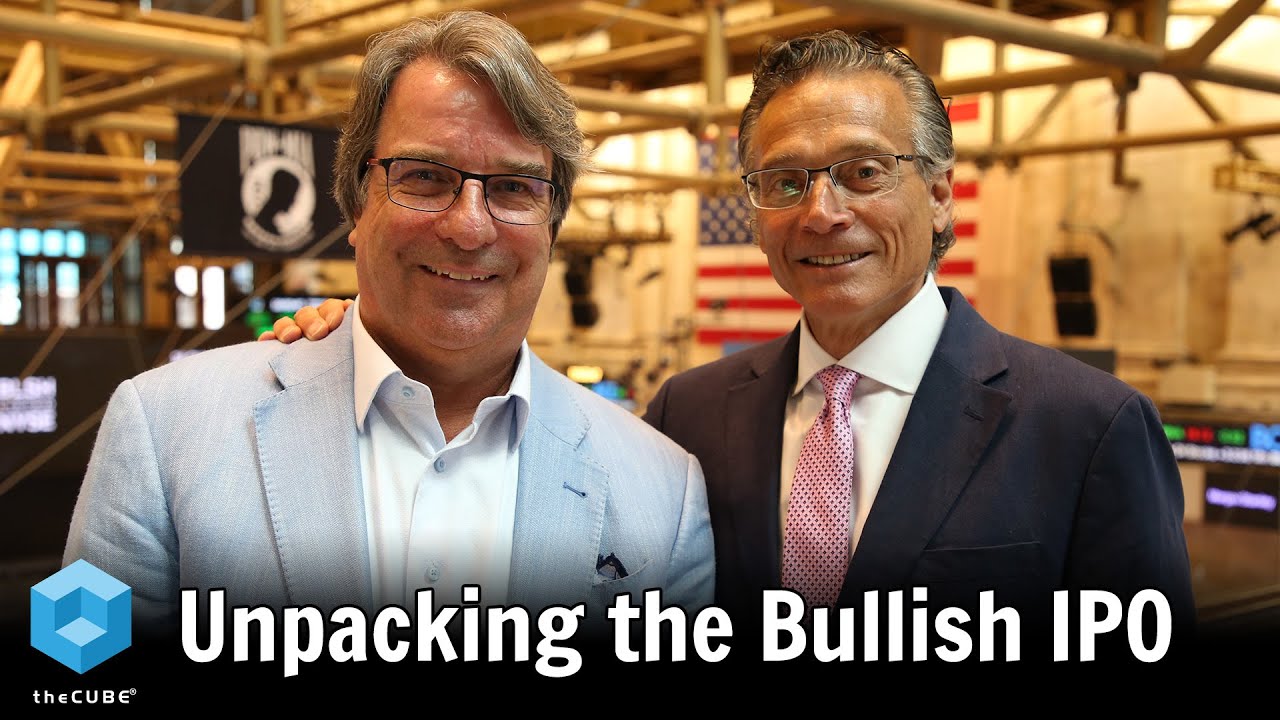
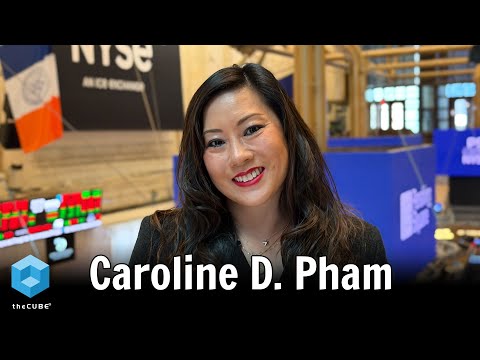
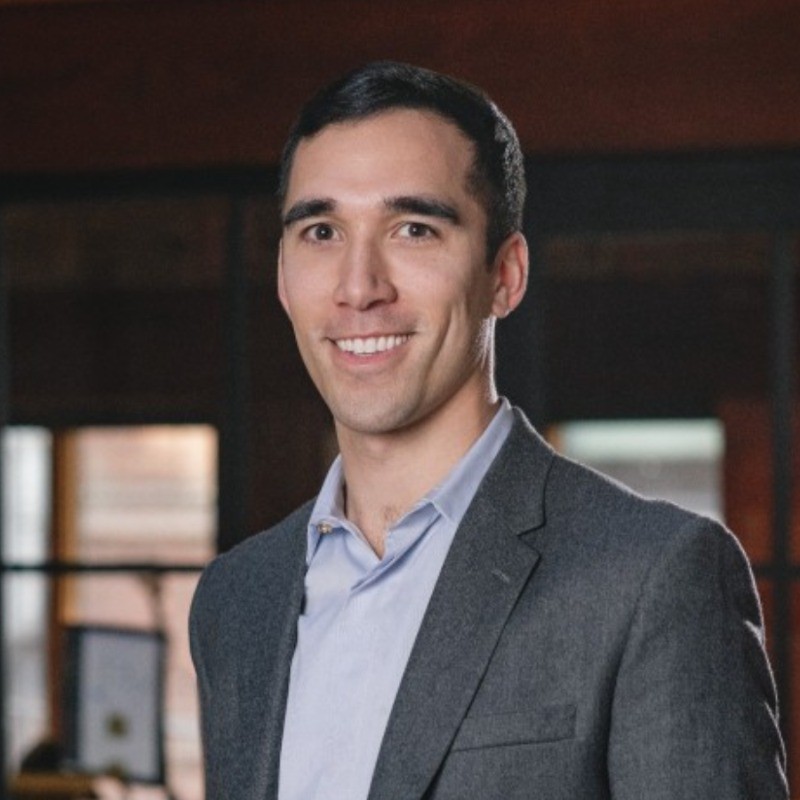
Kenneth Goodwin, Managing Director at Jeanensis, joins John Furrier from theCUBE at the NYSE Wired series to explore the world of cryptocurrency and its intersection with modern finance and technology.
In this engaging discussion, Goodwin shares their expertise on the evolving landscape of digital currencies, highlighting the challenges and opportunities that arise with tokenizing financial assets. With a focus on real-world assets and stablecoins, the conversation with theCUBE Research examines the complexities of integrating traditional financial systems with advanced crypto solutions, moderated by Furrier.
The video reveals key insights such as the need for streamlined regulations and the potential for stablecoins as a new digital financial system. Goodwin notes that the development of borderless trade systems and digital treasury is essential for the progress of cryptocurrency and for addressing broader economic challenges.
Forgot Password
Almost there!
We just sent you a verification email. Please verify your account to gain access to
theCUBE + NYSE Wired: Crypto Trailblazers. If you don’t think you received an email check your
spam folder.
Sign in to theCUBE + NYSE Wired: Crypto Trailblazers.
In order to sign in, enter the email address you used to registered for the event. Once completed, you will receive an email with a verification link. Open this link to automatically sign into the site.
Register For theCUBE + NYSE Wired: Crypto Trailblazers
Please fill out the information below. You will recieve an email with a verification link confirming your registration. Click the link to automatically sign into the site.
You’re almost there!
We just sent you a verification email. Please click the verification button in the email. Once your email address is verified, you will have full access to all event content for theCUBE + NYSE Wired: Crypto Trailblazers.
I want my badge and interests to be visible to all attendees.
Checking this box will display your presense on the attendees list, view your profile and allow other attendees to contact you via 1-1 chat. Read the Privacy Policy. At any time, you can choose to disable this preference.
Select your Interests!
add
Upload your photo
Uploading..
OR
Connect via Twitter
Connect via Linkedin
EDIT PASSWORD
Share
Forgot Password
Almost there!
We just sent you a verification email. Please verify your account to gain access to
theCUBE + NYSE Wired: Crypto Trailblazers. If you don’t think you received an email check your
spam folder.
Sign in to theCUBE + NYSE Wired: Crypto Trailblazers.
In order to sign in, enter the email address you used to registered for the event. Once completed, you will receive an email with a verification link. Open this link to automatically sign into the site.
Sign in to gain access to theCUBE + NYSE Wired: Crypto Trailblazers
Please sign in with LinkedIn to continue to theCUBE + NYSE Wired: Crypto Trailblazers. Signing in with LinkedIn ensures a professional environment.
Are you sure you want to remove access rights for this user?
Details
Manage Access
email address
Community Invitation
Morgan Krupetsky, Ava Labs & Connor Dougherty, Valinor Group
Kenneth Goodwin, Managing Director at Jeanensis, joins John Furrier from theCUBE at the NYSE Wired series to explore the world of cryptocurrency and its intersection with modern finance and technology.
In this engaging discussion, Goodwin shares their expertise on the evolving landscape of digital currencies, highlighting the challenges and opportunities that arise with tokenizing financial assets. With a focus on real-world assets and stablecoins, the conversation with theCUBE Research examines the complexities of integrating traditional financial systems with advanced crypto solutions, moderated by Furrier.
The video reveals key insights such as the need for streamlined regulations and the potential for stablecoins as a new digital financial system. Goodwin notes that the development of borderless trade systems and digital treasury is essential for the progress of cryptocurrency and for addressing broader economic challenges.
Morgan Krupetsky, Ava Labs & Connor Dougherty, Valinor Group
Morgan Krupetsky
VP, OnChain FinanceAva Labs
Connor Dougherty
InvestorValinor Group
search
>> Hello, I'm John Furrier here at theCUBE at our New York Stock Exchange studio here on the East Coast. Of course, we've got our Palo Alto Studio. This is theCUBE and the NYSE Wired Crypto Trailblazers series ongoing. So, we talk a little leaders, we're making it happen, bringing in the future, building out the networks, build out the technology to bring in a new era of money, programmable money applications, the convergence of tech and finance coming together. We've got Morgan Krupetsky, she's the VP of Onchain Finance at Ava Labs; and Conor Dougherty, investor of Valinor Group. Thanks for coming in. Being a leader in the Crypto Trailblazers, you guys are blazing the trails. Thanks for coming in.>> Thank you for having us.>> So we had you guys on before, and again, the theme is consistent. There's awakening in the market, Morgan, on finance and crypto. And when I say crypto, the infrastructure's, not so much cryptocurrency that's hot, but the movement of the shift in the platform is driving all the traditional players to come in. What's your take on that?>> Yeah. So, I started at Ava Labs a little over three years ago after over a decade in traditional financial services. And it has been very interesting to see this major convergence between TradFi, DeFi, CFi and tokenization. And it's really converged again over these past few years. And I think we'll continue to see that convergence going forward. And to your point, John, there's been a evolution, I would say, in terms of a focus and use cases with respect to the crypto industry on more crypto casino and speculative use cases. Finally, we're seeing, and slowly, but we're seeing that shift to more real-world adoption and leveraging the tech as an enabler to drive forward various real-world use cases, which I'm sure we'll talk about. So, it's a really interesting and exciting time I think in this space. And Connor and other partners have been pivotal parts of that where we're finally starting to drive things forward from a real adoption perspective, solving real-world issues. And so it's definitely exciting to be kind of at the forefront of that.>> Luigi on, he was talking about the Avalanche network, the investment coming in, confidence is critical. Enthusiasm's high, but now running things. What's the importance of Avalanche in this? Because I think this is a key disruptive enabler, because it's going to enable some disruption in a good way.>> Yeah. I mean, I think from an Avalanche standpoint, can feel free to add in, and I think probably Luigi mentioned this when he was on, but I think from the beginning our stated mission has been to digitize and tokenize the world's assets. So, the concept of real-world asset tokenization is obviously, to your point, very popular, and there's a lot of enthusiasm around it today. But we've been focused on it from day one. And from an Ava Labs perspective, the team is this awesome mix of academics, engineers, and business people. A lot of people have come from Wall Street, who have come from financial services, from both the buy side and the sell side, who are really driving things forward. So, from an Avalanche ecosystem standpoint, there's a lot of tech enablers and differentiators in terms of what it is that is drawing institutions and partners to the Avalanche network. But there's a lot of value add and trusted advisor relationships that we've built with capital partners and other institutions to form this really institutionally focused ecosystem.>> Conor, talk about your role in this, because you have a traditional finance background as well. It's like it's coming together, it's not the insiders anymore, driving and plowing the fields. It's going next level. What's your role? What do you guys do? How does this fit in?>> So Valinor, we formed it last year, we're really focused at the intersection of traditional finance and crypto. I think last year, even more than this year, that was more of a controversial take, and certainly a little earlier. But we believe that all financial assets are going to move on the blockchain rails. And so our particular skill set is in the credit arena. That's our investment acumen for our entire team comes from that space. And so we've really been looking at, she was talking about Avalanche's focus. To give Avalanche credit, they do have a very solid institutional focus, and they've also been fostering and building the use case that we think is really interesting, which is credit, where the utility of the technology is really high. And we can talk about why, but that's where we focus, is kind of accelerating the transition of credit assets on chain.>> I think this onChain finance, that's your title, you're the VP of Onchain finance. I'm like, "okay, that's a new title. I haven't seen that one before." But it speaks to what's happening. I mean, it is what it is, on chain finance, got credit vehicles, all kinds of new products are emerging. What is onchain finance, Morgan?>> That's a good question. So, I think, as I mentioned before, really all these historically disparate worlds are increasingly converging, whether that is DeFi and tokenization, or tokenization and traditional financial services. And so when I think about onchain finance, I think it's inclusive of everything, from DeFi and institutional DeFi tokenization, payments and treasury, and then wholesale finance or institutional finance. And it's really on the ladder how are large scale institutions, banks, central banks, FMIs, leveraging the technology to drive forward their day-to-day business? Could be from a more operational front, which we could talk about, or from a revenue generation perspective? And so all of these kinds of verticals or subverticals are not necessarily mutually exclusive, but together they really, again, leverage the technology to drive forward something within the financial services arena.>> What's some of the momentum points? Can you guys share as the low-hanging fruit use cases get knocked down, what are some of the sequence of value creation that you're seeing come out of this as the world starts moving? It's going to move fast, we're predicting that, on our research side. What are some of the examples people can look at and go, "Wow, that's real proof point"?>> Yeah. So I would say, and I'm happy to start off on a more retail perspective, and then if you want to add in from an institutional perspective, I think over the past year and a half, stable coins obviously have really increased in attention and focus and obviously they've been around for a while. But I think stable coins were a critical piece of blockchain-based infrastructure that are really driving forward various use cases today. From a more retail perspective, I think the order of operations has been, especially in the global south and developing and emerging markets, just the ability to enable individuals and businesses to access dollars. That's the first and foremost value prop. And so we're seeing that already happening. There's over 260 billion in stable coin market cap today. Then the ability to, again, leverage the technology to enable digital savings accounts on those dollars. And then finally, the ability to use various stable coin-enabled card products to complete that order of operations and allow people to spend. From an institutional standpoint, we're seeing private credit partners leveraging stable coins plus programmatic credit facilities to drive forward things in that realm. And maybe, Conor, if you want to talk a little bit to that.>> Yeah. I think what's most exciting for me personally is I'm able to invest in asset classes that would require a ton more infrastructure than we have as a firm today. And so if you think about the past shops I was at, there was an equal amount of back office folks, as front office folks, to manage all the manual data, review it, especially in asset-backed credit, right? Asset-backed credit is in these revolving facilities, there's a lot of money moving in and out. And if you can monitor that programmatically, look at the collateral and get direct data feeds, and pull that all into kind of a coded servicing element->> The efficiency draw.>> Yeah. And so we wouldn't be able to participate in that market unless we use the tech. So that's the most tangible point I can make.>> We had Tom Lee on and a bunch of other folks are all like, "Yeah, the staking is huge," and starting to see the value shift to the holders. And so that's becoming a product opportunity. So I guess the question is, if you guys had to put your product's hat on for your product managers, what products come out of this? As you look at the momentum, you give a great example of some of the efficiencies you can be agile on and have differentiation and achieve the success, there's a product opportunity to create new financial products from this. What's different? How should people think about what evolves out of this, versus the rip and replace lift and shift old way, new way? Is there any thoughts there?>> Yeah. The way, just to create frameworks on how I think about it, I really think that this is finance's cloud moment. I think there's a fully new operating system that's here. And so when you think about just starting an asset management firm. That's going to be completely rethought. Just like a tech firm when they could now have the cloud, they didn't need to buy all the server racks and all the tech infrastructure to start that business. I think in finance it's going to be a lot easier to start financial firms, because all that back office barrier to entry has been reduced. And so you'll see more entrepreneurship in the space, which is really exciting.>> Yeah. We're seeing that right now. If you go back, I was mentioning this on a previous podcast where, if you go back to 2016 to 2018, all the alpha nerds were coding away, blockchain was the hottest area. And then of course, then AI hit and then little bubble problem. But now it's back. If you look at all the startups coming out, I mean, New York, San Francisco, Miami, all around the world, not just the US, some serious tech being built right now. And that's a sign.>> Definitely. Yeah, I mean, I think historically we've seen a lot of, and this continues, a lot of tech really focused on various types of infrastructure, whether it was blockchain, obviously from the Avalanche standpoint, or Oracles on and off ramps, privacy solutions, so on and so forth. And I think that that's going to continue. But I think we get increasingly excited is when we meet various builders that are building applications onchain that we consider kind of tech enablement partners who have a B2B or a B2B2C go to market. And they're the ones who I think are driving forward a lot of this adoption, as it relates to bringing the real world onchain, and mass adoption. Because they're generally speaking building things that are solving real world issues, and novel concept, and that are really helping the traditional markets, whether that is institutions or various types of enterprises, leverage this technology in a way where it is not the feature, it is totally abstracted away, but it enables a net new product, service or capability that historically was infeasible or incapable before. And obviously, Valinor is one example of that.>> One of the things I want to get both of your thoughts on, if you don't mind, is the cultural revolution that's happening. I was giving a talk to some Gen Zs with some Gen Xers, which is my generation. And we were the generation where the web came on the scene, internet. So we were pre-internet. And that was a fun ride during that time. But there seems to be a culture and intersection between, it's not just Gen Zs in the future, millennials building it, it's really a melting pot of the two cultures. So you guys are in finance, you've seen what it was and is, and what it's evolving to. A lot of folks on the Gen Z side, they come from a traditional finance background. But they also see the world completely like a clean sheet of paper. So, there's a lot of opportunities for this new generation of talent. What would be your view on how to frame that? If someone coming out of college and it's very well publicized that smart people have graduated from college and not a lot of jobs, the old banking roles are not open and there's a lot of people like, "Hey, I want to go work in banking, but guess what? There's not a lot of positions that classic laddering up is not there." But now they're entrepreneurial. But they're fresh, they're smart. And then you got that older school coming together. How do you talk about that? How do you see that? You agree?>> I think we're at the cusp of a total huge run of entrepreneurship in finance. I don't think we've ever been set up for a better period of time. This infrastructure change is just going to enable that. And I mean, I just did it. I was at a very, very big financial institution. And I have been surprised how much we've been able to accomplish with the small team. There's just a lot of tooling that didn't exist even just a few years ago that can help you operate leaner. And so if I was coming out of college, I would try to reimagine the traditional path through finance, and think that I could be a real force without taking it.>> You can take territory down pretty quickly.>> Yeah.>> Morgan, you were smiling. You must have an strong opinion on this.>> No, I agree. I totally agree. I mean, I think also what's interesting about this space is that all of the information is out there. Most of it is open source, whether that's through podcasts, through various social media platforms, whether it's Twitter, LinkedIn or others, white papers. They're all out there. So, in terms of getting up the learning curve, and really delving into this space, it's very unique and maybe even different than a traditional consulting or financial services path, where a lot of it is either you can read and consume yourself, and then frankly what I found is a lot of the people in the industry are very open to getting you up the learning curve, connecting you with other people. And frankly, that was a lot of my path in terms of entering and pivoting into this space where you talk to someone, they introduce you to find more people, and people are very kind of general->> Very positive some. I mean, that's been the most refreshing, amazing thing about entering this frontier versus, we know Wall Street, it could be a little bit zero-sum at times.>> Exactly. Darwinism at its best there, some say. I would say capitalism, I corrected by a few. "No, it's Darwinism," like, "Okay, I am from California." But this is a huge issue, because I think one of the things, you mentioned enablement, I have a big disruptive enablement view on this. It's going to disrupt some, some will adopt on the institutional side, official side, but some will be displaced. There'll be going to be displacement. And that has to come from the new generation. So, what advice would you have people, because I get this question all the time, "How do I get involved?" Because certainly the self-starters who will just say, "I'm just going to take territory down and be entrepreneurial, but not everyone is." What are some of the paths? Is it good networking in New York? What's the vibe? How does someone get involved?>> Yeah, I mean, from my perspective, and feel free to add in, I mean, being in New York, especially now, given the positive regulatory environment, New York has drawn so many more entrepreneurs. And obviously, it's been center from a financial services perspective for a while now. And so I think there's a ton of different networking events, and obviously you guys are a prime example of that. And networking, events, conferences, meetups. And generally speaking, they're pretty open. And so I think a lot of it is getting out there, meet people, and just immerse yourself, is what I would say. I think we met at a conference actually here in New York, funny enough. So, I think it's out there just a matter of taking the advantage and doing the work. I mean, obviously you have to be proactive, but the resources are in front of you.>> Yeah. I mean, I don't think it's any strong, hungry individuals that are high caliber are going to figure out a way. And I think that holds true here.>> Some of the schools, they teach some of this stuff, but not everyone teaches that. Even computer science is being talked about, go back three years ago, was the most popular curriculum at Berkeley, and most of the schools. Now it's like, "Wait a minute, they're being replaced by co-pilots and coding assistants." So, as people jump in and level up, it's probably faster to level up. So that's a huge deal. The other thing that, Conor, you brought up fintech. There was a general consensus that fintech has been commoditized, that, hey, fintech five years ago was payment rails. So now it's a completely separate animal because there's entrepreneurship in finance, and finance tech. There's real tech, it's finance, it's onchain finance. So, fintech seems to have a renaissance, and it seems like it was kind of boring, not boring, but a couple of years ago it's kind of like, "Okay, what is fintech?" You got AI and everything. So it seems to be finance and tech. Everyone has apps. Okay, payment rails. But settlements are harder, credit's hard." This is fintech. What's the new fintech, if you had to kind of describe what the fintech category is today?>> Yeah, I guess that's very big world and encompasses a lot. But I think what's interesting is, to your point, the preliminary revolution that led to fintech was a lot of it was upgrades to UI and UX, and a lot of upgrades to the front end. And I think that's what led to the growth of various fintechs as we know them. But I think fintech 3.0 or whatever we want to call this, is really going to be an upgrade to the backend, and the backend plumbing, which is maybe less sexy, but it is definitely the thing that->> Money, you got to flow through it.>> Totally. And I think it's where programmatic capital comes in, programmatic credit facilities come in. And I think we're going to see a big upgrade there, and then I'm sure net new applications and capabilities that are more blockchain native.>> Yeah, I completely agree. I mean, just we call it wrappers, a lot of digital wrappers. That's not really changing a basic analog system that moves money around, and how trades are done.>> Let's talk about the backend, because Avalanche, again, it has great success, you mentioned use cases. What were some of the bottlenecks that are now removed, and what are the blockers that need to be worked on to go to the next level? Because you're starting to see the movement, all the top firms are working on stuff, whether they admit it or not, they're working on it. So it's coming. What have been some of the bottlenecks relieved, and where are the to-do items?>> So for us, from an Avalanche standpoint, obviously onchain finance has and continues to be a big focus. Within that world, I would say driving forward private credit is something that's of particular focus for us, because I think it's an area which, as Conor alluded to, is historically operationally very intensive. And where I think a lot of this technology be it stable coins, programmatic credit facilities can really help. And so maybe Conor, if you want to elucidate some of that.>> Yeah. I mean, I think it's not going to be easy, and we're set up our business to try to accelerate what I think is the most important unlock, which is actual institutional capital coming onchain. Credit is an institutional product, if we want to focus on credit. And so I think a lot of what you've seen is, and I'm not trying to knock any of it, but more on the marketing side with relations to the tech, but actually using it, and moving, and provisioning investment dollars on the rails is slower. And so I think what you need to do, and what we're trying to do, is show that we can design better risk rewards at the point of origination deals that we're doing by using the tech are less risky per unit of return. And if you can do that, that will make institutional capital interesting. And that's->> Yeah, to your point, the backend, not very sexy, but has minimum requirements. You have to hit that hard, make it sure it works.>> Yeah. I try not to focus on talking about the tech. Either if I am talking to a borrower who wants a programmatic credit facility, I say, "I can get you money every day instead of once a week." That's a big step up from private credit. If I'm talking to an institutional investor, I say, "You're taking less risk per unit of return because this technology increases transparency, it reduces one of the largest risk factors, which is fraud, because you're programming where the money moves." You reduce that counterparty risk, who can take the money and send it to wherever they want, because it's routed programmatically to where it needs to go. And so there's elements of risk reduction, and I don't really need to talk about the blockchain.>> It just got to work.>> Yeah.>> Just track it away. You guys did the hard work upfront. And that's the business logic. And one of the big trends coming out of this is that domain experts that they have the skills could essentially wire up the solution. And now they've got the backend done. What does that turn into? More firms, more dominance? As you guys are going to have a great solution, you're going to have competition. How does this all play out? How does the ecosystem evolve? I guess that's my question, in terms of this future.>> I, again, will refer to positive some. I think the tams here are massive. I think we take much more of a partner approach. We don't think about disruption that much. We think about going into the halls of all the old firms that I know and used to interact with and say, "Hey, this is where the future is. We can help you be the front"->> It's a rising tide.>> Yeah, very much so.>> And there's tons of opportunity. But being first is great. I mean, being early is a good win.>> That's the bet, right?>> Yeah, good bet. Okay, so what's next for you guys? What are you optimizing for? What's the outlook look like? Morgan, we'll start with you.>> Sure. I mean, I think for us, we're really doubling down on this space, from a resourcing perspective, from a personal perspective. Again, I really think that all of these worlds are going to continue to converge, and I think we'll see more... And we're already starting to see this traditional enterprises and companies with distribution entering the space and offering various blockchain-based product services and capabilities to their customers. Again, abstracting away the tech and just enabling them to have net new products, which is great. And the goal in the North Star where it's like you're just using the tech without even knowing you're caring about the tech. And so I think the more of that we see, the better. Today, as an example, one of our other partners, our tech enablement partners called inversion, they're really taking a private equity approach to crypto adoption by buying more traditional businesses and installing a crypto or blockchain backend, and really helping to upgrade those companies. And so I think more inversions, more balanores, more of some of our partners, again, who are driving these real-world use cases, this is really the ecosystem that we're excited about building.>> And you guys? Your outlook?>> Yeah, I think now is the time credibly to start... Institutions I think we'll start really leaning in more than they ever have. And again, putting dollars onchain. And so I think we're trying to currently scale our business to bring some of those partners alongside us into our deals. We have that institutional fluency, so I think we can be that translation agent and bridge some of those capital flows onchain.>> You got a great value proposition. Help people make more money, leverage the dollars, and leverage the assets. All right, so put a plug into what you guys are working on. Take a minute to what you guys are looking to do. Hire, key goals. Conor, we'll start with you.>> Yes. So, I think we've been working a pilot, we've been working on with Avalanche, but what we've been working on more generally is just taking a very manual backend credit facility management operational element and making it much simpler. And so we feel like we figured that out, and the time now is to scale, because it's not just crypto businesses that are looking for those facilities anymore. It's now traditional fintechs who stablecoin regulation has passed in the US. They're like, "Wow, this is the time to actually start facilitating stablecoins into our operations so we can get better money." And so we have to scale to meet that moment. And so what we're trying to do is re-imagine or transform our business from just an investment manager to more of kind of a merchant approach. And so we're going to be scaling to bring partners in to do that.>> Awesome. Awesome. Can't wait to see that grow. Plug for you guys, what's going on?>> I mean, everything that Connor said bring us I would say the asset managers, the banks, the FMIs. Anybody who is looking to operationalize a digital asset strategy, we want to talk to them. I think we can help them very early on in their journey as they're understanding the tech all the way through and production deployments and everything in between. So, send me the TradFi and the fintech.>> You guys are blazing the trail. I mean, if you're looking and look back five years from now, remember that conversation we had. I mean, it's happening fast. I mean, the speed just in the past six to eight months alone has been phenomenal. Congratulations. Thanks for coming on theCUBE Pod here. Thanks.>> Thank you.>> All right. I'm John Furrier, theCUBE and the NYSE. Thanks for watching.
Morgan Krupetsky, Ava Labs & Connor Dougherty, Valinor Group
search
>> Hello, I'm John Furrier here at theCUBE at our New York Stock Exchange studio here on the East Coast. Of course, we've got our Palo Alto Studio. This is theCUBE and the NYSE Wired Crypto Trailblazers series ongoing. So, we talk a little leaders, we're making it happen, bringing in the future, building out the networks, build out the technology to bring in a new era of money, programmable money applications, the convergence of tech and finance coming together. We've got Morgan Krupetsky, she's the VP of Onchain Finance at Ava Labs; and Conor Dougherty, investor of Valinor Group. Thanks for coming in. Being a leader in the Crypto Trailblazers, you guys are blazing the trails. Thanks for coming in.>> Thank you for having us.>> So we had you guys on before, and again, the theme is consistent. There's awakening in the market, Morgan, on finance and crypto. And when I say crypto, the infrastructure's, not so much cryptocurrency that's hot, but the movement of the shift in the platform is driving all the traditional players to come in. What's your take on that?>> Yeah. So, I started at Ava Labs a little over three years ago after over a decade in traditional financial services. And it has been very interesting to see this major convergence between TradFi, DeFi, CFi and tokenization. And it's really converged again over these past few years. And I think we'll continue to see that convergence going forward. And to your point, John, there's been a evolution, I would say, in terms of a focus and use cases with respect to the crypto industry on more crypto casino and speculative use cases. Finally, we're seeing, and slowly, but we're seeing that shift to more real-world adoption and leveraging the tech as an enabler to drive forward various real-world use cases, which I'm sure we'll talk about. So, it's a really interesting and exciting time I think in this space. And Connor and other partners have been pivotal parts of that where we're finally starting to drive things forward from a real adoption perspective, solving real-world issues. And so it's definitely exciting to be kind of at the forefront of that.>> Luigi on, he was talking about the Avalanche network, the investment coming in, confidence is critical. Enthusiasm's high, but now running things. What's the importance of Avalanche in this? Because I think this is a key disruptive enabler, because it's going to enable some disruption in a good way.>> Yeah. I mean, I think from an Avalanche standpoint, can feel free to add in, and I think probably Luigi mentioned this when he was on, but I think from the beginning our stated mission has been to digitize and tokenize the world's assets. So, the concept of real-world asset tokenization is obviously, to your point, very popular, and there's a lot of enthusiasm around it today. But we've been focused on it from day one. And from an Ava Labs perspective, the team is this awesome mix of academics, engineers, and business people. A lot of people have come from Wall Street, who have come from financial services, from both the buy side and the sell side, who are really driving things forward. So, from an Avalanche ecosystem standpoint, there's a lot of tech enablers and differentiators in terms of what it is that is drawing institutions and partners to the Avalanche network. But there's a lot of value add and trusted advisor relationships that we've built with capital partners and other institutions to form this really institutionally focused ecosystem.>> Conor, talk about your role in this, because you have a traditional finance background as well. It's like it's coming together, it's not the insiders anymore, driving and plowing the fields. It's going next level. What's your role? What do you guys do? How does this fit in?>> So Valinor, we formed it last year, we're really focused at the intersection of traditional finance and crypto. I think last year, even more than this year, that was more of a controversial take, and certainly a little earlier. But we believe that all financial assets are going to move on the blockchain rails. And so our particular skill set is in the credit arena. That's our investment acumen for our entire team comes from that space. And so we've really been looking at, she was talking about Avalanche's focus. To give Avalanche credit, they do have a very solid institutional focus, and they've also been fostering and building the use case that we think is really interesting, which is credit, where the utility of the technology is really high. And we can talk about why, but that's where we focus, is kind of accelerating the transition of credit assets on chain.>> I think this onChain finance, that's your title, you're the VP of Onchain finance. I'm like, "okay, that's a new title. I haven't seen that one before." But it speaks to what's happening. I mean, it is what it is, on chain finance, got credit vehicles, all kinds of new products are emerging. What is onchain finance, Morgan?>> That's a good question. So, I think, as I mentioned before, really all these historically disparate worlds are increasingly converging, whether that is DeFi and tokenization, or tokenization and traditional financial services. And so when I think about onchain finance, I think it's inclusive of everything, from DeFi and institutional DeFi tokenization, payments and treasury, and then wholesale finance or institutional finance. And it's really on the ladder how are large scale institutions, banks, central banks, FMIs, leveraging the technology to drive forward their day-to-day business? Could be from a more operational front, which we could talk about, or from a revenue generation perspective? And so all of these kinds of verticals or subverticals are not necessarily mutually exclusive, but together they really, again, leverage the technology to drive forward something within the financial services arena.>> What's some of the momentum points? Can you guys share as the low-hanging fruit use cases get knocked down, what are some of the sequence of value creation that you're seeing come out of this as the world starts moving? It's going to move fast, we're predicting that, on our research side. What are some of the examples people can look at and go, "Wow, that's real proof point"?>> Yeah. So I would say, and I'm happy to start off on a more retail perspective, and then if you want to add in from an institutional perspective, I think over the past year and a half, stable coins obviously have really increased in attention and focus and obviously they've been around for a while. But I think stable coins were a critical piece of blockchain-based infrastructure that are really driving forward various use cases today. From a more retail perspective, I think the order of operations has been, especially in the global south and developing and emerging markets, just the ability to enable individuals and businesses to access dollars. That's the first and foremost value prop. And so we're seeing that already happening. There's over 260 billion in stable coin market cap today. Then the ability to, again, leverage the technology to enable digital savings accounts on those dollars. And then finally, the ability to use various stable coin-enabled card products to complete that order of operations and allow people to spend. From an institutional standpoint, we're seeing private credit partners leveraging stable coins plus programmatic credit facilities to drive forward things in that realm. And maybe, Conor, if you want to talk a little bit to that.>> Yeah. I think what's most exciting for me personally is I'm able to invest in asset classes that would require a ton more infrastructure than we have as a firm today. And so if you think about the past shops I was at, there was an equal amount of back office folks, as front office folks, to manage all the manual data, review it, especially in asset-backed credit, right? Asset-backed credit is in these revolving facilities, there's a lot of money moving in and out. And if you can monitor that programmatically, look at the collateral and get direct data feeds, and pull that all into kind of a coded servicing element->> The efficiency draw.>> Yeah. And so we wouldn't be able to participate in that market unless we use the tech. So that's the most tangible point I can make.>> We had Tom Lee on and a bunch of other folks are all like, "Yeah, the staking is huge," and starting to see the value shift to the holders. And so that's becoming a product opportunity. So I guess the question is, if you guys had to put your product's hat on for your product managers, what products come out of this? As you look at the momentum, you give a great example of some of the efficiencies you can be agile on and have differentiation and achieve the success, there's a product opportunity to create new financial products from this. What's different? How should people think about what evolves out of this, versus the rip and replace lift and shift old way, new way? Is there any thoughts there?>> Yeah. The way, just to create frameworks on how I think about it, I really think that this is finance's cloud moment. I think there's a fully new operating system that's here. And so when you think about just starting an asset management firm. That's going to be completely rethought. Just like a tech firm when they could now have the cloud, they didn't need to buy all the server racks and all the tech infrastructure to start that business. I think in finance it's going to be a lot easier to start financial firms, because all that back office barrier to entry has been reduced. And so you'll see more entrepreneurship in the space, which is really exciting.>> Yeah. We're seeing that right now. If you go back, I was mentioning this on a previous podcast where, if you go back to 2016 to 2018, all the alpha nerds were coding away, blockchain was the hottest area. And then of course, then AI hit and then little bubble problem. But now it's back. If you look at all the startups coming out, I mean, New York, San Francisco, Miami, all around the world, not just the US, some serious tech being built right now. And that's a sign.>> Definitely. Yeah, I mean, I think historically we've seen a lot of, and this continues, a lot of tech really focused on various types of infrastructure, whether it was blockchain, obviously from the Avalanche standpoint, or Oracles on and off ramps, privacy solutions, so on and so forth. And I think that that's going to continue. But I think we get increasingly excited is when we meet various builders that are building applications onchain that we consider kind of tech enablement partners who have a B2B or a B2B2C go to market. And they're the ones who I think are driving forward a lot of this adoption, as it relates to bringing the real world onchain, and mass adoption. Because they're generally speaking building things that are solving real world issues, and novel concept, and that are really helping the traditional markets, whether that is institutions or various types of enterprises, leverage this technology in a way where it is not the feature, it is totally abstracted away, but it enables a net new product, service or capability that historically was infeasible or incapable before. And obviously, Valinor is one example of that.>> One of the things I want to get both of your thoughts on, if you don't mind, is the cultural revolution that's happening. I was giving a talk to some Gen Zs with some Gen Xers, which is my generation. And we were the generation where the web came on the scene, internet. So we were pre-internet. And that was a fun ride during that time. But there seems to be a culture and intersection between, it's not just Gen Zs in the future, millennials building it, it's really a melting pot of the two cultures. So you guys are in finance, you've seen what it was and is, and what it's evolving to. A lot of folks on the Gen Z side, they come from a traditional finance background. But they also see the world completely like a clean sheet of paper. So, there's a lot of opportunities for this new generation of talent. What would be your view on how to frame that? If someone coming out of college and it's very well publicized that smart people have graduated from college and not a lot of jobs, the old banking roles are not open and there's a lot of people like, "Hey, I want to go work in banking, but guess what? There's not a lot of positions that classic laddering up is not there." But now they're entrepreneurial. But they're fresh, they're smart. And then you got that older school coming together. How do you talk about that? How do you see that? You agree?>> I think we're at the cusp of a total huge run of entrepreneurship in finance. I don't think we've ever been set up for a better period of time. This infrastructure change is just going to enable that. And I mean, I just did it. I was at a very, very big financial institution. And I have been surprised how much we've been able to accomplish with the small team. There's just a lot of tooling that didn't exist even just a few years ago that can help you operate leaner. And so if I was coming out of college, I would try to reimagine the traditional path through finance, and think that I could be a real force without taking it.>> You can take territory down pretty quickly.>> Yeah.>> Morgan, you were smiling. You must have an strong opinion on this.>> No, I agree. I totally agree. I mean, I think also what's interesting about this space is that all of the information is out there. Most of it is open source, whether that's through podcasts, through various social media platforms, whether it's Twitter, LinkedIn or others, white papers. They're all out there. So, in terms of getting up the learning curve, and really delving into this space, it's very unique and maybe even different than a traditional consulting or financial services path, where a lot of it is either you can read and consume yourself, and then frankly what I found is a lot of the people in the industry are very open to getting you up the learning curve, connecting you with other people. And frankly, that was a lot of my path in terms of entering and pivoting into this space where you talk to someone, they introduce you to find more people, and people are very kind of general->> Very positive some. I mean, that's been the most refreshing, amazing thing about entering this frontier versus, we know Wall Street, it could be a little bit zero-sum at times.>> Exactly. Darwinism at its best there, some say. I would say capitalism, I corrected by a few. "No, it's Darwinism," like, "Okay, I am from California." But this is a huge issue, because I think one of the things, you mentioned enablement, I have a big disruptive enablement view on this. It's going to disrupt some, some will adopt on the institutional side, official side, but some will be displaced. There'll be going to be displacement. And that has to come from the new generation. So, what advice would you have people, because I get this question all the time, "How do I get involved?" Because certainly the self-starters who will just say, "I'm just going to take territory down and be entrepreneurial, but not everyone is." What are some of the paths? Is it good networking in New York? What's the vibe? How does someone get involved?>> Yeah, I mean, from my perspective, and feel free to add in, I mean, being in New York, especially now, given the positive regulatory environment, New York has drawn so many more entrepreneurs. And obviously, it's been center from a financial services perspective for a while now. And so I think there's a ton of different networking events, and obviously you guys are a prime example of that. And networking, events, conferences, meetups. And generally speaking, they're pretty open. And so I think a lot of it is getting out there, meet people, and just immerse yourself, is what I would say. I think we met at a conference actually here in New York, funny enough. So, I think it's out there just a matter of taking the advantage and doing the work. I mean, obviously you have to be proactive, but the resources are in front of you.>> Yeah. I mean, I don't think it's any strong, hungry individuals that are high caliber are going to figure out a way. And I think that holds true here.>> Some of the schools, they teach some of this stuff, but not everyone teaches that. Even computer science is being talked about, go back three years ago, was the most popular curriculum at Berkeley, and most of the schools. Now it's like, "Wait a minute, they're being replaced by co-pilots and coding assistants." So, as people jump in and level up, it's probably faster to level up. So that's a huge deal. The other thing that, Conor, you brought up fintech. There was a general consensus that fintech has been commoditized, that, hey, fintech five years ago was payment rails. So now it's a completely separate animal because there's entrepreneurship in finance, and finance tech. There's real tech, it's finance, it's onchain finance. So, fintech seems to have a renaissance, and it seems like it was kind of boring, not boring, but a couple of years ago it's kind of like, "Okay, what is fintech?" You got AI and everything. So it seems to be finance and tech. Everyone has apps. Okay, payment rails. But settlements are harder, credit's hard." This is fintech. What's the new fintech, if you had to kind of describe what the fintech category is today?>> Yeah, I guess that's very big world and encompasses a lot. But I think what's interesting is, to your point, the preliminary revolution that led to fintech was a lot of it was upgrades to UI and UX, and a lot of upgrades to the front end. And I think that's what led to the growth of various fintechs as we know them. But I think fintech 3.0 or whatever we want to call this, is really going to be an upgrade to the backend, and the backend plumbing, which is maybe less sexy, but it is definitely the thing that->> Money, you got to flow through it.>> Totally. And I think it's where programmatic capital comes in, programmatic credit facilities come in. And I think we're going to see a big upgrade there, and then I'm sure net new applications and capabilities that are more blockchain native.>> Yeah, I completely agree. I mean, just we call it wrappers, a lot of digital wrappers. That's not really changing a basic analog system that moves money around, and how trades are done.>> Let's talk about the backend, because Avalanche, again, it has great success, you mentioned use cases. What were some of the bottlenecks that are now removed, and what are the blockers that need to be worked on to go to the next level? Because you're starting to see the movement, all the top firms are working on stuff, whether they admit it or not, they're working on it. So it's coming. What have been some of the bottlenecks relieved, and where are the to-do items?>> So for us, from an Avalanche standpoint, obviously onchain finance has and continues to be a big focus. Within that world, I would say driving forward private credit is something that's of particular focus for us, because I think it's an area which, as Conor alluded to, is historically operationally very intensive. And where I think a lot of this technology be it stable coins, programmatic credit facilities can really help. And so maybe Conor, if you want to elucidate some of that.>> Yeah. I mean, I think it's not going to be easy, and we're set up our business to try to accelerate what I think is the most important unlock, which is actual institutional capital coming onchain. Credit is an institutional product, if we want to focus on credit. And so I think a lot of what you've seen is, and I'm not trying to knock any of it, but more on the marketing side with relations to the tech, but actually using it, and moving, and provisioning investment dollars on the rails is slower. And so I think what you need to do, and what we're trying to do, is show that we can design better risk rewards at the point of origination deals that we're doing by using the tech are less risky per unit of return. And if you can do that, that will make institutional capital interesting. And that's->> Yeah, to your point, the backend, not very sexy, but has minimum requirements. You have to hit that hard, make it sure it works.>> Yeah. I try not to focus on talking about the tech. Either if I am talking to a borrower who wants a programmatic credit facility, I say, "I can get you money every day instead of once a week." That's a big step up from private credit. If I'm talking to an institutional investor, I say, "You're taking less risk per unit of return because this technology increases transparency, it reduces one of the largest risk factors, which is fraud, because you're programming where the money moves." You reduce that counterparty risk, who can take the money and send it to wherever they want, because it's routed programmatically to where it needs to go. And so there's elements of risk reduction, and I don't really need to talk about the blockchain.>> It just got to work.>> Yeah.>> Just track it away. You guys did the hard work upfront. And that's the business logic. And one of the big trends coming out of this is that domain experts that they have the skills could essentially wire up the solution. And now they've got the backend done. What does that turn into? More firms, more dominance? As you guys are going to have a great solution, you're going to have competition. How does this all play out? How does the ecosystem evolve? I guess that's my question, in terms of this future.>> I, again, will refer to positive some. I think the tams here are massive. I think we take much more of a partner approach. We don't think about disruption that much. We think about going into the halls of all the old firms that I know and used to interact with and say, "Hey, this is where the future is. We can help you be the front"->> It's a rising tide.>> Yeah, very much so.>> And there's tons of opportunity. But being first is great. I mean, being early is a good win.>> That's the bet, right?>> Yeah, good bet. Okay, so what's next for you guys? What are you optimizing for? What's the outlook look like? Morgan, we'll start with you.>> Sure. I mean, I think for us, we're really doubling down on this space, from a resourcing perspective, from a personal perspective. Again, I really think that all of these worlds are going to continue to converge, and I think we'll see more... And we're already starting to see this traditional enterprises and companies with distribution entering the space and offering various blockchain-based product services and capabilities to their customers. Again, abstracting away the tech and just enabling them to have net new products, which is great. And the goal in the North Star where it's like you're just using the tech without even knowing you're caring about the tech. And so I think the more of that we see, the better. Today, as an example, one of our other partners, our tech enablement partners called inversion, they're really taking a private equity approach to crypto adoption by buying more traditional businesses and installing a crypto or blockchain backend, and really helping to upgrade those companies. And so I think more inversions, more balanores, more of some of our partners, again, who are driving these real-world use cases, this is really the ecosystem that we're excited about building.>> And you guys? Your outlook?>> Yeah, I think now is the time credibly to start... Institutions I think we'll start really leaning in more than they ever have. And again, putting dollars onchain. And so I think we're trying to currently scale our business to bring some of those partners alongside us into our deals. We have that institutional fluency, so I think we can be that translation agent and bridge some of those capital flows onchain.>> You got a great value proposition. Help people make more money, leverage the dollars, and leverage the assets. All right, so put a plug into what you guys are working on. Take a minute to what you guys are looking to do. Hire, key goals. Conor, we'll start with you.>> Yes. So, I think we've been working a pilot, we've been working on with Avalanche, but what we've been working on more generally is just taking a very manual backend credit facility management operational element and making it much simpler. And so we feel like we figured that out, and the time now is to scale, because it's not just crypto businesses that are looking for those facilities anymore. It's now traditional fintechs who stablecoin regulation has passed in the US. They're like, "Wow, this is the time to actually start facilitating stablecoins into our operations so we can get better money." And so we have to scale to meet that moment. And so what we're trying to do is re-imagine or transform our business from just an investment manager to more of kind of a merchant approach. And so we're going to be scaling to bring partners in to do that.>> Awesome. Awesome. Can't wait to see that grow. Plug for you guys, what's going on?>> I mean, everything that Connor said bring us I would say the asset managers, the banks, the FMIs. Anybody who is looking to operationalize a digital asset strategy, we want to talk to them. I think we can help them very early on in their journey as they're understanding the tech all the way through and production deployments and everything in between. So, send me the TradFi and the fintech.>> You guys are blazing the trail. I mean, if you're looking and look back five years from now, remember that conversation we had. I mean, it's happening fast. I mean, the speed just in the past six to eight months alone has been phenomenal. Congratulations. Thanks for coming on theCUBE Pod here. Thanks.>> Thank you.>> All right. I'm John Furrier, theCUBE and the NYSE. Thanks for watching.