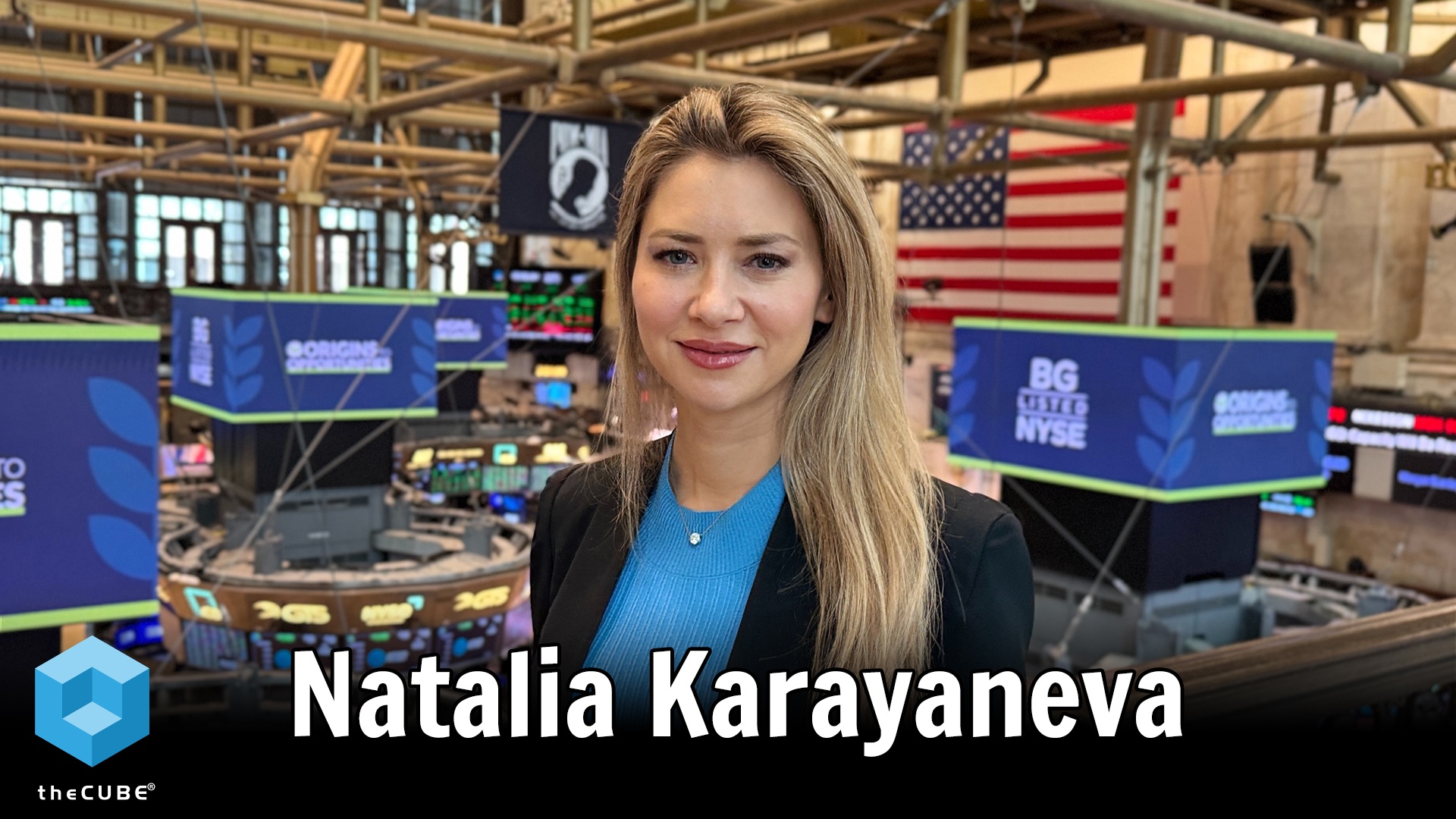
Natalia Karayaneva of Propy joins theCUBE's Crypto Trailblazer series with NYSE Wired to discuss the company's ambitious $100 million expansion strategy. Propy aims to revolutionize the title industry through blockchain and artificial intelligence technologies.
In this enlightening session, Karayaneva outlines Propy’s progress since its inception in 2017, highlighting significant accomplishments such as the acquisition of its first title company and the implementation of AI and smart contracts to enhance efficiency. The episode underscores crucial moments and technological advancements driving Propy towards mass adoption in the title industry.
Karayaneva emphasizes the transformative potential of AI and blockchain in title and escrow processes, focusing on reducing fraud and enhancing cost-efficiency. The conversation also explores Propy's innovative solutions such as the AI Agent Avery, which optimizes document processing, and examines the impact of recent legislative changes on the real estate market.
Forgot Password
Almost there!
We just sent you a verification email. Please verify your account to gain access to
theCUBE + NYSE Wired: Crypto Trailblazers. If you don’t think you received an email check your
spam folder.
Sign in to theCUBE + NYSE Wired: Crypto Trailblazers.
In order to sign in, enter the email address you used to registered for the event. Once completed, you will receive an email with a verification link. Open this link to automatically sign into the site.
Register For theCUBE + NYSE Wired: Crypto Trailblazers
Please fill out the information below. You will recieve an email with a verification link confirming your registration. Click the link to automatically sign into the site.
You’re almost there!
We just sent you a verification email. Please click the verification button in the email. Once your email address is verified, you will have full access to all event content for theCUBE + NYSE Wired: Crypto Trailblazers.
I want my badge and interests to be visible to all attendees.
Checking this box will display your presense on the attendees list, view your profile and allow other attendees to contact you via 1-1 chat. Read the Privacy Policy. At any time, you can choose to disable this preference.
Select your Interests!
add
Upload your photo
Uploading..
OR
Connect via Twitter
Connect via Linkedin
EDIT PASSWORD
Share
Forgot Password
Almost there!
We just sent you a verification email. Please verify your account to gain access to
theCUBE + NYSE Wired: Crypto Trailblazers. If you don’t think you received an email check your
spam folder.
Sign in to theCUBE + NYSE Wired: Crypto Trailblazers.
In order to sign in, enter the email address you used to registered for the event. Once completed, you will receive an email with a verification link. Open this link to automatically sign into the site.
Sign in to gain access to theCUBE + NYSE Wired: Crypto Trailblazers
Please sign in with LinkedIn to continue to theCUBE + NYSE Wired: Crypto Trailblazers. Signing in with LinkedIn ensures a professional environment.
Are you sure you want to remove access rights for this user?
Details
Manage Access
email address
Community Invitation
Natalia Karayaneva, Propy
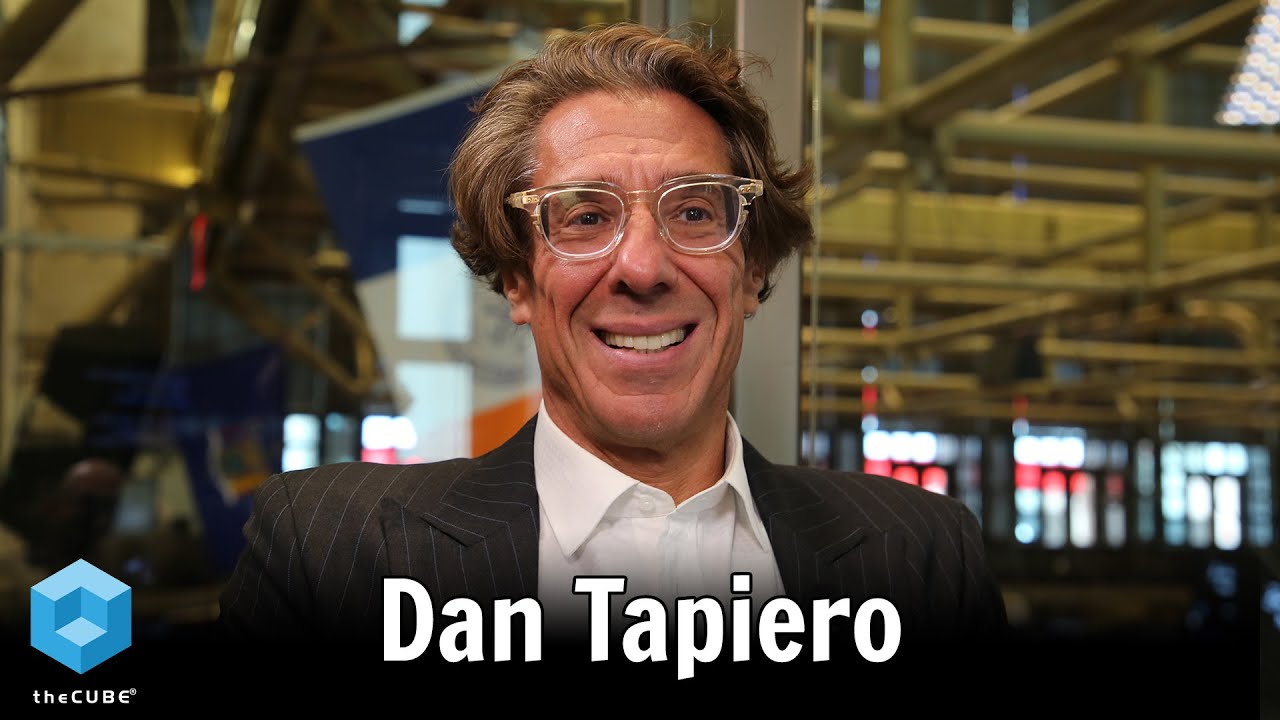
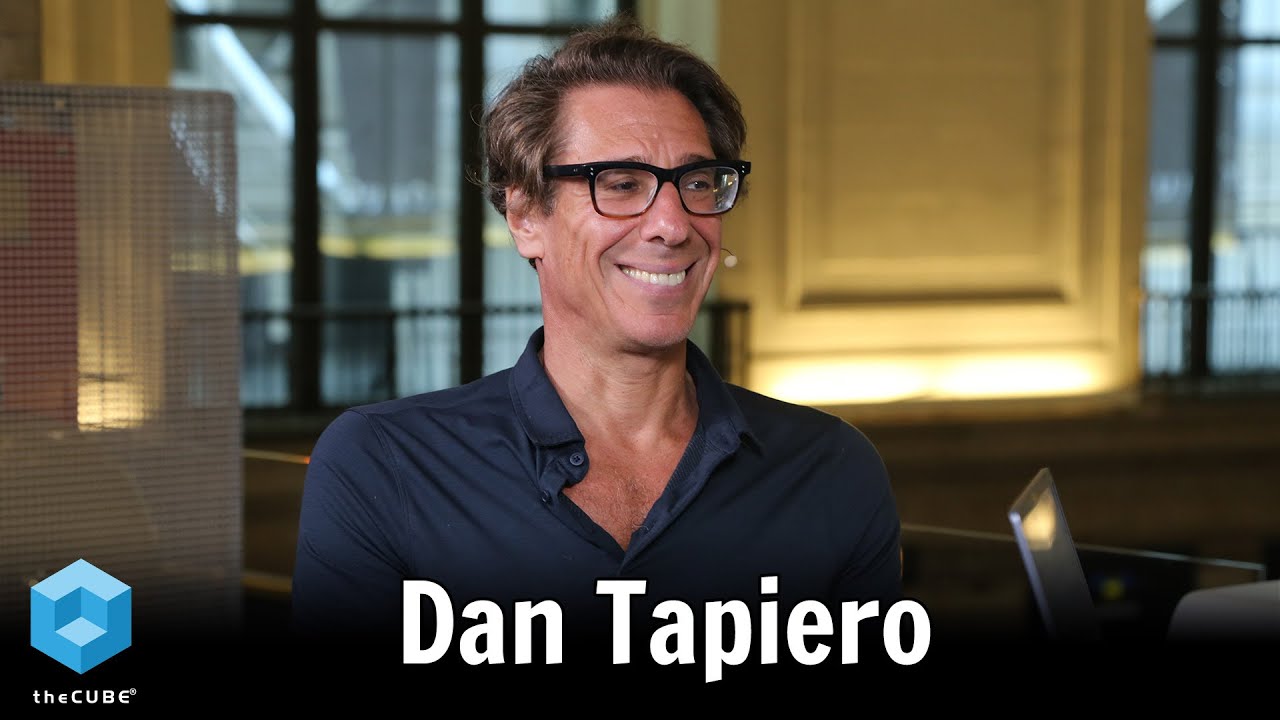
Dan Tapiero, co-founder and CEO of RoundTable Partners and 10T Holdings, joins theCUBE at the NYSE to discuss his extensive background in finance and his transition into the digital asset ecosystem. With over 20 years in the macro hedge fund industry, Tapiero brings valuable insights as he highlights the role of cryptocurrencies and blockchain in transforming business finance and infrastructure. theCUBE Research team, led by John Furrier, engages Tapiero in an in-depth discussion on the evolution of digital assets and the future of growth in this sector.
Tapiero emphasizes the potential of digital assets, predicting a substantial market value increase from $300 billion to a projected $10 trillion within the next decade. According to Tapiero, the current environment favors companies building this new ecosystem, as businesses generate significant revenue and prepare to enter public markets. The interview explores the role of US regulatory shifts in fostering a supportive atmosphere for cryptocurrencies, along with the importance of positioning the US as a global hub for blockchain technology and digital assets. #DanTapiero #DigitalAssets #theCUBE #NYSE #Crypto #Blockchain #Web3
Explore more about this topic and related insights on SiliconANGLE: siliconangle.com. Subscribe to our blockchain playlist for further discussions: [Blockchain Playlist](#).
00:00 - Intro
00:06 - Cryptocurrency and Blockchain: An Introductory Overview
02:31 - The Journey of Dan Tapiero and the Rise of 10T Holdings
09:09 - Crypto Industry Developments and Challenges
16:31 - Crypto Companies and Public Offerings
20:44 - The Future of Digital Assets
23:10 - The Digital Cultural Revolution: Final Reflections
>> Hello, welcome back to the Crypto Trailblazer series. I'm John Furrier, the host. This is part of theCUBE series with the NYSE Wired podcast and community where we break down and talk to the leaders and break down all the action. And Natalia is in the house. She's the CEO and founder of Propy. She's the innovator, trailblazer, and property tech on chain. Natalia, great to see you in person. I know of, you've been following your venture from day one, so not many crypto companies launch in Palo Alto, now you're in Miami. So congratulations on your success. And you got news, a hundred million dollars expansion. So let's get into it, hard news. Well, congratulations and thanks for coming on.
Natalia Karayaneva
>> Thank you. Yeah.>> Talk about the news, a hundred million dollars you're going to put to work on an expansion strategy, explain what's happening.
Natalia Karayaneva
>> Exactly. Thank you so much for having me, and it was so great to share some memories from the early Palo Alto days. We've launched Propy in 2017, as I mentioned. It took us a while to get to this point where we're today and finally today we're announcing this a hundred million dollar roll up strategy where we will acquire existing title companies, profitable title companies nationally, and expand our technology, making those title companies more efficient. We've acquired already our first title company took us about two years and a half to automate the process, bring AI, bring smart contracts, efficiencies and infrastructure, and we've seen the uplift of the margin, the productivity, so we're very excited now.>> Well, I'm really excited for you because one notable thing about you and your venture is you got in at the early days when it was the smartest people working on it, and then there was a nuclear winter, bad time, and then now we got the good regime in place and all the things are lining up with the GENIUS Act and the Clarity Act. And here in New York, obviously it's booming as money is on the table, real money gets everyone's attention on the exchanges like NYSE and financial institutions. They can't ignore the fact there's money to be made, so it's real, so it's actually going mainstream, and so you're truly a pioneer. The market you're going after it is a go big or go home kind of play. I mean, critical mass with this acquisition strategy or the AI enabled roll up, as you say, is super gettable one, and two, the benefit for you would be what, critical mass and economies of scale. What's the end game?
Natalia Karayaneva
>> Yeah, I think you're right. It's the mass adoption of title on chain and AI enabled title where we're able to tap into this 25 billion title industry, acquire a hundred million dollars worth of title companies, they're profitable, they're also very->> Old and antiquated.
Natalia Karayaneva
>> Yes, very, very antiquated, but they've built those connections with the local community. They're great people. All they need is technology and onboarding. And for us, it's a very cheap way to go to a unicorn status by acquiring a hundred million dollars worth of revenue. Again, the margin is 20%, we're increasing it to 40% almost instantly with all the efficiencies that we're bringing to the table. And we have all this demand from title companies. We know we'll be disrupted. How about you acquire us and we become the part of the history.>> And that's the process of the business model, what has changed? Obviously you mentioned the title companies, you're still focused on that one segment. Explain the focus.
Natalia Karayaneva
>> Yeah. Well, we pivoted a lot. In terms of the business model, we've pivoted a lot. We've done the first ever blockchain transactions with a couple of clicks, which have yet to scale. We're very far from it. We've sold our platform as a SaaS solutions to brokerages, but the real innovation in money making is in title. So we sit in between all the parties. We act as a licensed title and escrow company, so we distribute funds, we do title search, we record deeds in the county, and we make sure that the whole conveyance and settlement is happening with the regulation and the compliance. It's important for us to be an innovator, yet a very compliant player.>> Yeah, if you look at the successful AI companies right now and the successful crypto and crypto infrastructure companies, it's the ones that look like boring markets. I was talking to an AI entrepreneur, she was amazing. You know what she's doing? She's automating the basically buy-sell agreements between landlords, and turns out that's a slow process, it's back and forth. One click, it's done, she's just focused on automating that process. Here with titles, it's the key document for exchanging value, and you have that on chain. What's the difference with your solution? Obviously you get the scale up, that's a good efficiency, you have a one stop shop for services, but what's the crypto angle, limiting fraud? What's the upside for going on chain?
Natalia Karayaneva
>> Yeah, that's a great question. First of all, when the true on chain transaction scales, it means no unnecessary fees. The consumer today is losing billions of dollars in transaction fees, this affects the housing affordability issue in America with all the added fees. But today, our settlement is working on smart contracts. So while AI and our humans are collecting data and reviewing all the purchase agreements, title report, all the inspection documents, in the end, the settlement has to be done by humans. I'm surprised it's not automated in America, In many countries it is, but here in one state, first you record the deed and then you transfer the funds. In other states, it's the opposite. But how about a settlement happening immutably by smart contracts automatically at the same time? So we eliminate fraud. Because you mentioned, yes, you are right, one of the biggest issues is fraud, wire fraud, deed fraud. Homeownership is being hacked and attacked almost every single month and wire fraud, where fraudsters are stealing thousands and thousands of dollars, sometimes millions from those home buyers that have been saving this money their entire life and then suddenly this money was->> Take me through that. That's not really well reported, and I've heard of it. Explain the hacking process. Well, how does someone get hacked? Are they vulnerable? Is it in the process of closing? Where's the hack points? What does the surface area look like for the hacker? Give us a few examples, you don't have to scare them.
Natalia Karayaneva
>> Yeah, one of the example is if someone is doing a transaction with a traditional title company without any cyber security protection, then all these documents are being collected in those transaction management platforms or document storages, sometimes not protected. Hackers are very smart to observe which homes are pending, and if they're pending, they get into emails of those people in different transaction management system, and then they know precisely when you have to transfer and wire your funds. That day, they will forge the document, the wire instruction with the same logo of this outdated title company, send it to you, and you would transfer, let's say, $500,000->> Right to their bank.
Natalia Karayaneva
>> ... to their bank.>> Yeah, yeah. I heard of people getting hacked too, these systems of record, these enterprise systems and getting their tax refunds wired to them. So they're basically hacking the IRS. And so this is just old systems that have the middleman and opaque workflows.
Natalia Karayaneva
>> Yes, exactly.>> That's the problem.
Natalia Karayaneva
>> Yeah, and closing transactions by email, sending documents back and forth by email. If you have a secure platform, which is protected, you don't have to transfer wire instructions, but instead click an escrow deposit link sent by Propy. You get to your online banking, you have your amount, click, and you are transferring your funds securely.>> So you're on chain, it's immutable. You have smart contracts, which reduces the middleman. How does that work and how are you using agents in the process? Because if the smart contracts are between two parties, who writes that smart contract? Is it automated? Does your platform do it? So let's just say I want to sell my property to you, do I do the smart contract?
Natalia Karayaneva
>> No, no.>> Take me through the, I'm a customer. What happens?
Natalia Karayaneva
>> Yeah. So for every single transaction, we initiate a new smart contract for the buyer and the seller, they don't have to know anything about blockchain.>> It's under the covers?
Natalia Karayaneva
>> Under the covers, on the back end we have the smart contract running for you. And it knows the terms of the purchase agreement. AI reads it, we have 99.9% accuracy, which we finally got in the past four years. So it's been a lot of work. It's not just the hype because of the ChatGPT. And when we got the terms, smart contracts understand what are the amounts, when is the closing date, humans are reviewing that as well. And then we collect information from you, an AI agent, which we launched today, AI Agent Avery helps us to collect information and data for smart contract execution when we don't have integrations. For example, with some mortgages, we're integrated, but with most of them, unfortunately not. So humans have to call them and ask for a mortgage payout document. And instead, AI agent is calling saying, "Hello, I'm calling from property title, I need a mortgage payout for XYZ number of the transaction." And then the lender would ask follow up questions, "What's the name? What's the expiration date?" And the AI agent knows the whole context around the transaction, answers intelligently, receives this mortgage payout, puts the right number to our smart contract settlement, and then the transaction follows.>> All done by Agent Avery?
Natalia Karayaneva
>> Agent Avery, but she's guided by our licensed escrow officers and she does not communicate with our end user. So with clients, it's still our escrow officers who are again licensed, they have now more time to talk to agents, to home buyers and home sellers.>> You're making the transaction less friction, frictionless?
Natalia Karayaneva
>> Yes.>> Okay, what's your vision? Okay, you got the $100 million expansion, you're going to bring people into the fold, get all those titles on chain, use that platform with the agent to make them go faster, what's your vision going forward? What's the 20 mile stair out to the future?
Natalia Karayaneva
>> So our vision is to expand nationally through the roll-up acquisition to reach more profitability and more efficiency through the AI agent, and become the household name for closings and become the new standard of how we should do transactions. Shrink the closing time from 30 days to several days. And we've proved it with several transactions, proof of concept, that it could be done within 24 hours. We need to change policies to when we have the perfect market share, and we understand that it's time to also get into policies and changing the pricing so that it's more consumer-friendly, I think the whole industry will be disrupted. Just like Uber, it's a transportation, but we no longer have licensed taxi medallion all over the country or globally.>> We still go from point A to point B instead of a taxi with Uber.
Natalia Karayaneva
>> Yes, exactly. It's the same, a user-friendly, more secure way to go from A to B, from signing a purchase agreement to actually owning a home. And my inspiration is the new generation to not be afraid to buy homes. We want the new generation to own real estate, not just Bitcoin, a great funny way to entertain with cryptocurrency and casino-like coins, we want them to get exposure to user-friendly assets such as real estate.>> So with stablecoin, that's going to be a lot easier. I mean, how much have you seen momentum shift? I mean, we celebrate, "Oh, someone bought a house with Bitcoin." That house is probably worth a hell of a lot more now than the Bitcoin is... I think the Bitcoin, the price has gone up. When was the first transaction you did with Bitcoin, about 2018?
Natalia Karayaneva
>> Probably '18 in California. And it was Bitcoin to Bitcoin.>> Oh, it was, okay.
Natalia Karayaneva
>> Yeah, it was not even transferred. The buyer and the seller .>> The price was great, low a thousands maybe at that time. I forget what the price was, but again, significantly higher now, obviously. Are people doing more transactions with crypto?
Natalia Karayaneva
>> Yes.>> I imagine they are. Any stats you can share in terms of the global house market transaction with crypto?
Natalia Karayaneva
>> Unfortunately there is no data as such. But it was an interesting research analysis by Redfin who is, it's not a crypto player, so they were kind of a little bit, maybe even anti-crypto. That's why this research is interesting. So they surveyed thousands of people in America, and it appeared in 2022 during the last boom, that 11.6% of first home buyers use cryptocurrency to fund their down payment, which is an incredibly high number of, I assume mostly young people getting into homeownership. This number this year would be much higher. We transact more and more in Bitcoin. It becomes kind of a norm. Realtors are not afraid anymore. Sellers are not afraid that we have a little addendum that we will exchange them and we'll send them the dollars. But the most fascinating thing happened in July, after the GENIUS Act was enacted in June. Suddenly the real estate developers that worked with us that are again, not super tech forward or crypto native, they shared with their community that they would accept Bitcoin and stablecoins, suddenly in July, they had 80% of sales in stablecoin in USDC from different buyers. We had one buyer selling high end 10 units to 10 different buyers using stablecoins. And now the developers are also interested to hold stablecoins instead of dollars because they yield higher than dollars.>> Yeah, it's interesting. And then the stablecoins open up more liquidity, certainly on the crypto holders, but I can see it's kind of ironic that housing's a store of value and then you have all this making all the fees. So what I would do is sell my home for Bitcoin, stake the Bitcoin and buy another house with it. So not that you can get the fees, but I mean Bitcoin has been a great store of value. So it's been fun. All right, biggest lesson you've learned, you had quite the journey. Again, you're a trailblazer, so again, 2017 when you started, a lot's changed. The whole world now is going mainstream. Just in July you mentioned those stats, we're feeling it in all sectors, credit, again, treasuries are hot. You're starting to see a lot of financial institutions connecting, otherwise they're going to get disrupted. So you're starting to see old world, new world guard coming together, the old guard and new guard. What's your message to the people watching that are not in crypto and not in the crypto industry, about the importance of this mainstream momentum? What have you learned that you could share in saying, "Hey, this is really real. What can they do?" Just random advice for folks watching. What would you say?
Natalia Karayaneva
>> Well, the biggest learning for me in this journey of building a tech company in the crypto space and AI space is really the conviction. Because when you get to the industry like crypto and when you start with reading the Bitcoin white paper, when you understand that it's the ultimate store of value, not just because the community decided so, but actually it's a software that works, and that's the biggest learning. If you get into something, don't just follow the crowd for a month or two in trying to make quick money, but if you're building something, build with conviction and with a bigger goal. If you're just investing, take your time to read white papers, learn about the founder, and what's the mission. I think it's important given what we've seen in the past during the crypto winters and SBF, and you could easily kind of sense when the founder or when the project doesn't have this end goal of bringing value to the community and to the world. And that's why again, Bitcoin, Ethereum, Solana, these are all phenomenal protocols with phenomenal founders.>> Natalia, great to have you on theCube. Thanks for being part of the Crypto Trailblazer series. This is our hottest show segment we have because it's so much content, there's so much positive change. There's still a lot of work to be done, but you're starting to see the breakthrough, the trajectory up into the right in terms of growth, mainstreaming systems like titles, and I'm sure, you'll dominate with the roll-up strategy. Is there competition or are you the only one in there? I don't really see a lot of competition with the $100 million roll-up machine you got.
Natalia Karayaneva
>> Yeah, we don't see any title competitors, title and blockchain competitors. Fractional ownership tokenization is different. It's a different animal, now we are seeing Vlad Tenev is talking about it of Robinhood. So we don't do that. We may do it, because again, those ->> The market is the market, you've got to follow the market.
Natalia Karayaneva
>> Exactly. But luckily, we've been long enough to over leave our probably 200 competitors because when we did the token sale in 2017, about 200 white papers were launched about bringing real estate on blockchain, similar to what>> Vaporware, it was vaporware.
Natalia Karayaneva
>> Yes, there were a number. They couldn't survive. We did, and now we're thriving. And again, this institutional adoption is really helping us. The crypto-friendly administration, all the regulatory frameworks that are being put in place, it's a trailblazer for us, for our growth and we're very excited that finally, blockchain is not a bad word, that it means cybersecurity, it means cryptography, it means the next generation infrastructure.>> Yeah, immutable, safe, transparent, and free. Thank you for coming on, appreciate it.
Natalia Karayaneva
>> Thank you.>> I'm John Furrier, host of the Crypto Trailblazers by the NYSE Wired program and community. Stay tuned. We're doing our part and our CubeCoin is coming out soon, our token, everyone's going to have a coin and on-chain, real-world assets is happening. And again, property, titles, everything is going on-chain, real-world assets. That means the world we live in, physical AI, physical crypto, a hot market. Thanks for watching.
>> Hello, welcome back to the Crypto Trailblazer series. I'm John Furrier, the host. This is part of theCUBE series with the NYSE Wired podcast and community where we break down and talk to the leaders and break down all the action. And Natalia is in the house. She's the CEO and founder of Propy. She's the innovator, trailblazer, and property tech on chain. Natalia, great to see you in person. I know of, you've been following your venture from day one, so not many crypto companies launch in Palo Alto, now you're in Miami. So congratulations on your success. And you got news, a hundred million dollars expansion. So let's get into it, hard news. Well, congratulations and thanks for coming on.
Natalia Karayaneva
>> Thank you. Yeah.>> Talk about the news, a hundred million dollars you're going to put to work on an expansion strategy, explain what's happening.
Natalia Karayaneva
>> Exactly. Thank you so much for having me, and it was so great to share some memories from the early Palo Alto days. We've launched Propy in 2017, as I mentioned. It took us a while to get to this point where we're today and finally today we're announcing this a hundred million dollar roll up strategy where we will acquire existing title companies, profitable title companies nationally, and expand our technology, making those title companies more efficient. We've acquired already our first title company took us about two years and a half to automate the process, bring AI, bring smart contracts, efficiencies and infrastructure, and we've seen the uplift of the margin, the productivity, so we're very excited now.>> Well, I'm really excited for you because one notable thing about you and your venture is you got in at the early days when it was the smartest people working on it, and then there was a nuclear winter, bad time, and then now we got the good regime in place and all the things are lining up with the GENIUS Act and the Clarity Act. And here in New York, obviously it's booming as money is on the table, real money gets everyone's attention on the exchanges like NYSE and financial institutions. They can't ignore the fact there's money to be made, so it's real, so it's actually going mainstream, and so you're truly a pioneer. The market you're going after it is a go big or go home kind of play. I mean, critical mass with this acquisition strategy or the AI enabled roll up, as you say, is super gettable one, and two, the benefit for you would be what, critical mass and economies of scale. What's the end game?
Natalia Karayaneva
>> Yeah, I think you're right. It's the mass adoption of title on chain and AI enabled title where we're able to tap into this 25 billion title industry, acquire a hundred million dollars worth of title companies, they're profitable, they're also very->> Old and antiquated.
Natalia Karayaneva
>> Yes, very, very antiquated, but they've built those connections with the local community. They're great people. All they need is technology and onboarding. And for us, it's a very cheap way to go to a unicorn status by acquiring a hundred million dollars worth of revenue. Again, the margin is 20%, we're increasing it to 40% almost instantly with all the efficiencies that we're bringing to the table. And we have all this demand from title companies. We know we'll be disrupted. How about you acquire us and we become the part of the history.>> And that's the process of the business model, what has changed? Obviously you mentioned the title companies, you're still focused on that one segment. Explain the focus.
Natalia Karayaneva
>> Yeah. Well, we pivoted a lot. In terms of the business model, we've pivoted a lot. We've done the first ever blockchain transactions with a couple of clicks, which have yet to scale. We're very far from it. We've sold our platform as a SaaS solutions to brokerages, but the real innovation in money making is in title. So we sit in between all the parties. We act as a licensed title and escrow company, so we distribute funds, we do title search, we record deeds in the county, and we make sure that the whole conveyance and settlement is happening with the regulation and the compliance. It's important for us to be an innovator, yet a very compliant player.>> Yeah, if you look at the successful AI companies right now and the successful crypto and crypto infrastructure companies, it's the ones that look like boring markets. I was talking to an AI entrepreneur, she was amazing. You know what she's doing? She's automating the basically buy-sell agreements between landlords, and turns out that's a slow process, it's back and forth. One click, it's done, she's just focused on automating that process. Here with titles, it's the key document for exchanging value, and you have that on chain. What's the difference with your solution? Obviously you get the scale up, that's a good efficiency, you have a one stop shop for services, but what's the crypto angle, limiting fraud? What's the upside for going on chain?
Natalia Karayaneva
>> Yeah, that's a great question. First of all, when the true on chain transaction scales, it means no unnecessary fees. The consumer today is losing billions of dollars in transaction fees, this affects the housing affordability issue in America with all the added fees. But today, our settlement is working on smart contracts. So while AI and our humans are collecting data and reviewing all the purchase agreements, title report, all the inspection documents, in the end, the settlement has to be done by humans. I'm surprised it's not automated in America, In many countries it is, but here in one state, first you record the deed and then you transfer the funds. In other states, it's the opposite. But how about a settlement happening immutably by smart contracts automatically at the same time? So we eliminate fraud. Because you mentioned, yes, you are right, one of the biggest issues is fraud, wire fraud, deed fraud. Homeownership is being hacked and attacked almost every single month and wire fraud, where fraudsters are stealing thousands and thousands of dollars, sometimes millions from those home buyers that have been saving this money their entire life and then suddenly this money was->> Take me through that. That's not really well reported, and I've heard of it. Explain the hacking process. Well, how does someone get hacked? Are they vulnerable? Is it in the process of closing? Where's the hack points? What does the surface area look like for the hacker? Give us a few examples, you don't have to scare them.
Natalia Karayaneva
>> Yeah, one of the example is if someone is doing a transaction with a traditional title company without any cyber security protection, then all these documents are being collected in those transaction management platforms or document storages, sometimes not protected. Hackers are very smart to observe which homes are pending, and if they're pending, they get into emails of those people in different transaction management system, and then they know precisely when you have to transfer and wire your funds. That day, they will forge the document, the wire instruction with the same logo of this outdated title company, send it to you, and you would transfer, let's say, $500,000->> Right to their bank.
Natalia Karayaneva
>> ... to their bank.>> Yeah, yeah. I heard of people getting hacked too, these systems of record, these enterprise systems and getting their tax refunds wired to them. So they're basically hacking the IRS. And so this is just old systems that have the middleman and opaque workflows.
Natalia Karayaneva
>> Yes, exactly.>> That's the problem.
Natalia Karayaneva
>> Yeah, and closing transactions by email, sending documents back and forth by email. If you have a secure platform, which is protected, you don't have to transfer wire instructions, but instead click an escrow deposit link sent by Propy. You get to your online banking, you have your amount, click, and you are transferring your funds securely.>> So you're on chain, it's immutable. You have smart contracts, which reduces the middleman. How does that work and how are you using agents in the process? Because if the smart contracts are between two parties, who writes that smart contract? Is it automated? Does your platform do it? So let's just say I want to sell my property to you, do I do the smart contract?
Natalia Karayaneva
>> No, no.>> Take me through the, I'm a customer. What happens?
Natalia Karayaneva
>> Yeah. So for every single transaction, we initiate a new smart contract for the buyer and the seller, they don't have to know anything about blockchain.>> It's under the covers?
Natalia Karayaneva
>> Under the covers, on the back end we have the smart contract running for you. And it knows the terms of the purchase agreement. AI reads it, we have 99.9% accuracy, which we finally got in the past four years. So it's been a lot of work. It's not just the hype because of the ChatGPT. And when we got the terms, smart contracts understand what are the amounts, when is the closing date, humans are reviewing that as well. And then we collect information from you, an AI agent, which we launched today, AI Agent Avery helps us to collect information and data for smart contract execution when we don't have integrations. For example, with some mortgages, we're integrated, but with most of them, unfortunately not. So humans have to call them and ask for a mortgage payout document. And instead, AI agent is calling saying, "Hello, I'm calling from property title, I need a mortgage payout for XYZ number of the transaction." And then the lender would ask follow up questions, "What's the name? What's the expiration date?" And the AI agent knows the whole context around the transaction, answers intelligently, receives this mortgage payout, puts the right number to our smart contract settlement, and then the transaction follows.>> All done by Agent Avery?
Natalia Karayaneva
>> Agent Avery, but she's guided by our licensed escrow officers and she does not communicate with our end user. So with clients, it's still our escrow officers who are again licensed, they have now more time to talk to agents, to home buyers and home sellers.>> You're making the transaction less friction, frictionless?
Natalia Karayaneva
>> Yes.>> Okay, what's your vision? Okay, you got the $100 million expansion, you're going to bring people into the fold, get all those titles on chain, use that platform with the agent to make them go faster, what's your vision going forward? What's the 20 mile stair out to the future?
Natalia Karayaneva
>> So our vision is to expand nationally through the roll-up acquisition to reach more profitability and more efficiency through the AI agent, and become the household name for closings and become the new standard of how we should do transactions. Shrink the closing time from 30 days to several days. And we've proved it with several transactions, proof of concept, that it could be done within 24 hours. We need to change policies to when we have the perfect market share, and we understand that it's time to also get into policies and changing the pricing so that it's more consumer-friendly, I think the whole industry will be disrupted. Just like Uber, it's a transportation, but we no longer have licensed taxi medallion all over the country or globally.>> We still go from point A to point B instead of a taxi with Uber.
Natalia Karayaneva
>> Yes, exactly. It's the same, a user-friendly, more secure way to go from A to B, from signing a purchase agreement to actually owning a home. And my inspiration is the new generation to not be afraid to buy homes. We want the new generation to own real estate, not just Bitcoin, a great funny way to entertain with cryptocurrency and casino-like coins, we want them to get exposure to user-friendly assets such as real estate.>> So with stablecoin, that's going to be a lot easier. I mean, how much have you seen momentum shift? I mean, we celebrate, "Oh, someone bought a house with Bitcoin." That house is probably worth a hell of a lot more now than the Bitcoin is... I think the Bitcoin, the price has gone up. When was the first transaction you did with Bitcoin, about 2018?
Natalia Karayaneva
>> Probably '18 in California. And it was Bitcoin to Bitcoin.>> Oh, it was, okay.
Natalia Karayaneva
>> Yeah, it was not even transferred. The buyer and the seller .>> The price was great, low a thousands maybe at that time. I forget what the price was, but again, significantly higher now, obviously. Are people doing more transactions with crypto?
Natalia Karayaneva
>> Yes.>> I imagine they are. Any stats you can share in terms of the global house market transaction with crypto?
Natalia Karayaneva
>> Unfortunately there is no data as such. But it was an interesting research analysis by Redfin who is, it's not a crypto player, so they were kind of a little bit, maybe even anti-crypto. That's why this research is interesting. So they surveyed thousands of people in America, and it appeared in 2022 during the last boom, that 11.6% of first home buyers use cryptocurrency to fund their down payment, which is an incredibly high number of, I assume mostly young people getting into homeownership. This number this year would be much higher. We transact more and more in Bitcoin. It becomes kind of a norm. Realtors are not afraid anymore. Sellers are not afraid that we have a little addendum that we will exchange them and we'll send them the dollars. But the most fascinating thing happened in July, after the GENIUS Act was enacted in June. Suddenly the real estate developers that worked with us that are again, not super tech forward or crypto native, they shared with their community that they would accept Bitcoin and stablecoins, suddenly in July, they had 80% of sales in stablecoin in USDC from different buyers. We had one buyer selling high end 10 units to 10 different buyers using stablecoins. And now the developers are also interested to hold stablecoins instead of dollars because they yield higher than dollars.>> Yeah, it's interesting. And then the stablecoins open up more liquidity, certainly on the crypto holders, but I can see it's kind of ironic that housing's a store of value and then you have all this making all the fees. So what I would do is sell my home for Bitcoin, stake the Bitcoin and buy another house with it. So not that you can get the fees, but I mean Bitcoin has been a great store of value. So it's been fun. All right, biggest lesson you've learned, you had quite the journey. Again, you're a trailblazer, so again, 2017 when you started, a lot's changed. The whole world now is going mainstream. Just in July you mentioned those stats, we're feeling it in all sectors, credit, again, treasuries are hot. You're starting to see a lot of financial institutions connecting, otherwise they're going to get disrupted. So you're starting to see old world, new world guard coming together, the old guard and new guard. What's your message to the people watching that are not in crypto and not in the crypto industry, about the importance of this mainstream momentum? What have you learned that you could share in saying, "Hey, this is really real. What can they do?" Just random advice for folks watching. What would you say?
Natalia Karayaneva
>> Well, the biggest learning for me in this journey of building a tech company in the crypto space and AI space is really the conviction. Because when you get to the industry like crypto and when you start with reading the Bitcoin white paper, when you understand that it's the ultimate store of value, not just because the community decided so, but actually it's a software that works, and that's the biggest learning. If you get into something, don't just follow the crowd for a month or two in trying to make quick money, but if you're building something, build with conviction and with a bigger goal. If you're just investing, take your time to read white papers, learn about the founder, and what's the mission. I think it's important given what we've seen in the past during the crypto winters and SBF, and you could easily kind of sense when the founder or when the project doesn't have this end goal of bringing value to the community and to the world. And that's why again, Bitcoin, Ethereum, Solana, these are all phenomenal protocols with phenomenal founders.>> Natalia, great to have you on theCube. Thanks for being part of the Crypto Trailblazer series. This is our hottest show segment we have because it's so much content, there's so much positive change. There's still a lot of work to be done, but you're starting to see the breakthrough, the trajectory up into the right in terms of growth, mainstreaming systems like titles, and I'm sure, you'll dominate with the roll-up strategy. Is there competition or are you the only one in there? I don't really see a lot of competition with the $100 million roll-up machine you got.
Natalia Karayaneva
>> Yeah, we don't see any title competitors, title and blockchain competitors. Fractional ownership tokenization is different. It's a different animal, now we are seeing Vlad Tenev is talking about it of Robinhood. So we don't do that. We may do it, because again, those ->> The market is the market, you've got to follow the market.
Natalia Karayaneva
>> Exactly. But luckily, we've been long enough to over leave our probably 200 competitors because when we did the token sale in 2017, about 200 white papers were launched about bringing real estate on blockchain, similar to what>> Vaporware, it was vaporware.
Natalia Karayaneva
>> Yes, there were a number. They couldn't survive. We did, and now we're thriving. And again, this institutional adoption is really helping us. The crypto-friendly administration, all the regulatory frameworks that are being put in place, it's a trailblazer for us, for our growth and we're very excited that finally, blockchain is not a bad word, that it means cybersecurity, it means cryptography, it means the next generation infrastructure.>> Yeah, immutable, safe, transparent, and free. Thank you for coming on, appreciate it.
Natalia Karayaneva
>> Thank you.>> I'm John Furrier, host of the Crypto Trailblazers by the NYSE Wired program and community. Stay tuned. We're doing our part and our CubeCoin is coming out soon, our token, everyone's going to have a coin and on-chain, real-world assets is happening. And again, property, titles, everything is going on-chain, real-world assets. That means the world we live in, physical AI, physical crypto, a hot market. Thanks for watching.