Exploring Crypto with Thomas Lee: Insights from Fundstrat and Bitmine
Thomas Lee, Chief Executive Officer of Fundstrat and Chairman of Bitmine, joins theCUBE at the New York Stock Exchange Wired to discuss the evolving landscape of cryptocurrency. With an extensive background in macroeconomics and equities, Lee delves into the performance of Bitmine, noting its remarkable growth in market capitalization and revenue within just two weeks. This interview, hosted by John Furrier of SiliconANGLE Media, offers a rare opportunity to gain insights from a leading authority in finance and crypto.
The video begins with Lee sharing expertise on the transformation of the crypto space, highlighting the growth of Bitmine and its listing on the New York Stock Exchange. Key discussion points include the rapid adoption of cryptocurrencies such as Bitcoin and Ethereum, the emergence of stablecoins, and the growing interest from institutional investors. Lee addresses how the crypto sector shapes the future of financial markets, discussing both challenges and opportunities.
Viewers gain valuable insights about the importance of recognizing the regulatory landscape and the role of stablecoins in the broader financial system. According to Lee, Ethereum has emerged as a major player, especially with the rise of tokenization and blockchain's integration into financial services. The conversation also touches upon strategic moves by leading financial institutions to embrace crypto, which Lee asserts is crucial to their future success.
Forgot Password
Almost there!
We just sent you a verification email. Please verify your account to gain access to
theCUBE + NYSE Wired: Crypto Trailblazers. If you don’t think you received an email check your
spam folder.
Sign in to theCUBE + NYSE Wired: Crypto Trailblazers.
In order to sign in, enter the email address you used to registered for the event. Once completed, you will receive an email with a verification link. Open this link to automatically sign into the site.
Register For theCUBE + NYSE Wired: Crypto Trailblazers
Please fill out the information below. You will recieve an email with a verification link confirming your registration. Click the link to automatically sign into the site.
You’re almost there!
We just sent you a verification email. Please click the verification button in the email. Once your email address is verified, you will have full access to all event content for theCUBE + NYSE Wired: Crypto Trailblazers.
I want my badge and interests to be visible to all attendees.
Checking this box will display your presense on the attendees list, view your profile and allow other attendees to contact you via 1-1 chat. Read the Privacy Policy. At any time, you can choose to disable this preference.
Select your Interests!
add
Upload your photo
Uploading..
OR
Connect via Twitter
Connect via Linkedin
EDIT PASSWORD
Share
Forgot Password
Almost there!
We just sent you a verification email. Please verify your account to gain access to
theCUBE + NYSE Wired: Crypto Trailblazers. If you don’t think you received an email check your
spam folder.
Sign in to theCUBE + NYSE Wired: Crypto Trailblazers.
In order to sign in, enter the email address you used to registered for the event. Once completed, you will receive an email with a verification link. Open this link to automatically sign into the site.
Sign in to gain access to theCUBE + NYSE Wired: Crypto Trailblazers
Please sign in with LinkedIn to continue to theCUBE + NYSE Wired: Crypto Trailblazers. Signing in with LinkedIn ensures a professional environment.
Are you sure you want to remove access rights for this user?
Details
Manage Access
email address
Community Invitation
Ambre Soubiran, Kaiko
Exploring Crypto with Thomas Lee: Insights from Fundstrat and Bitmine
Thomas Lee, Chief Executive Officer of Fundstrat and Chairman of Bitmine, joins theCUBE at the New York Stock Exchange Wired to discuss the evolving landscape of cryptocurrency. With an extensive background in macroeconomics and equities, Lee delves into the performance of Bitmine, noting its remarkable growth in market capitalization and revenue within just two weeks. This interview, hosted by John Furrier of SiliconANGLE Media, offers a rare opportunity to gain insights from a leading authority in finance and crypto.
The video begins with Lee sharing expertise on the transformation of the crypto space, highlighting the growth of Bitmine and its listing on the New York Stock Exchange. Key discussion points include the rapid adoption of cryptocurrencies such as Bitcoin and Ethereum, the emergence of stablecoins, and the growing interest from institutional investors. Lee addresses how the crypto sector shapes the future of financial markets, discussing both challenges and opportunities.
Viewers gain valuable insights about the importance of recognizing the regulatory landscape and the role of stablecoins in the broader financial system. According to Lee, Ethereum has emerged as a major player, especially with the rise of tokenization and blockchain's integration into financial services. The conversation also touches upon strategic moves by leading financial institutions to embrace crypto, which Lee asserts is crucial to their future success.
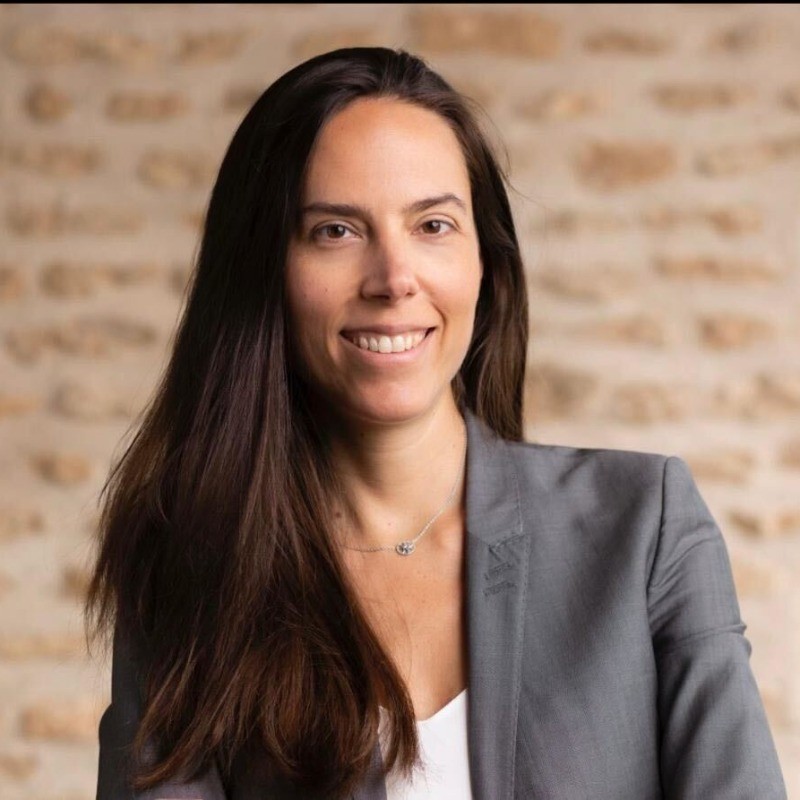
>> Hello, I'm John Furrier with theCUBE. We are here live at theCUBE Studio at the NYSC. Of course, we've got our Palo Alto Studio connecting the West Coast and Wall Street. Got great crypto trailblazers lineup, all the action in that series. Really featuring the leaders who are making it happen. As the market continues to grow and transform, the upgrades are coming, the re-platformization of crypto finance, all going on. Again, digital assets are all coming on and connecting the physical and AI world. Ambre Soubiran is here, CEO Kaiko. Good to see. Did I get that right?>> Yes, absolutely.>> The French in me. Cool. Welcome to theCUBE. Our studio is part of our NYSE Wired Program. Thanks for coming on.>> Thank you for having me.>> So you guys are in a very awesome business because there's always a cloud-native vibe in crypto. Where's the data? What's going on with the data? How is it instrumented? What's the real-time feeds look like? It's a data-intensive business. Now you have multiple chains. So things like observability, like IT stuff comes out. There's no IT in crypto because it's decentralized, so there's no IT department, but the data's flying everywhere. You guys kind of build a system for that. Explain what you guys do. I want to get into it. I think this is a super important area because it's kind of a glue layer at the same time as it is a deployment opportunity.>> Yeah.>> Explain what you guys do.>> Absolutely. And it is a glue layer. It is also a catalyst layer, and I'll explain why actually in a disintermediated world it's going to trigger execution. But maybe going back to the history of Kaiko. So we are a global data and analytics company focusing initially on crypto as an investable asset class, meaning crypto as you know, there's thousands of different cryptocurrencies trading across hundreds of exchanges, and every crypto is traded against something else. So you have actually hundreds of thousands of what we call pairs of assets. Bitcoin dollar has hundreds of markets. So we are connected to all the cryptocurrency trading venues that are centralized venues such as Coinbase, Kraken, Gemini, et cetera, gathering every single historical and real-time tick transaction down to the individual transaction level as well as every single quote. So every bid, every ask. This is a lot of market data, traditional style market data, and we do spots and we do derivatives. So we're talking about millions of instruments in real time for which we get every single transaction globally. On top of that, we do all of the what's called the decentralized exchange financial market data. So we run our own blockchain nodes and we gather data within blocks directly as they're created on DeFi protocols, whether it's DEXs or lending and borrowing protocols, et cetera. That's the market data business. Using that, we do analytics and analytics is all the risk management stuff, it's all the nav calculation, pricing solutions, liquidity metrics, all of these kind of more advanced quantitative data metrics. And then we another business called Kaiko Indices. And here it is a regulated business that administers benchmark rates for the purpose of selling to someone who is building a financial product, for example, listing a regulated crypto derivative or issuing an ETF or an ETP. So that's the scope of what->> So that's hardcore, that's regulated. Explain, that's an index and it's regulated. So it means there's oversight.>> Yeah, exactly. So there is a regulatory framework called BMR Benchmark Regulation. It's a European market authority framework and it regulates data providers. It doesn't have anything to do with crypto by the way. It's just a market data regulation that regulates data providers for as long as they administer benchmarks that are going to be used for the purpose of listing or settling financial products, as in if there is a financial consequence of settling against those rates, it has to go under some relatively strict governance process, et cetera.>> Yeah.>> So we're regulated, Kaiko Indices is regulated under this and that's how we actually sell to regulated derivatives as well as->> So you are the key piece of that because there's no market without you.>> The market data piece is critical. It brings transparency. We work a lot with public institutions as well. We work with regulators globally in market surveillance, business intelligence, all of these aspects. So market data is a critical part of market infrastructure in any industry. And we've been doing that for crypto specifically as a, crypto is an investable asset class. Now we have been leading a little bit more towards infrastructure play now. And here it is about what I think is going to be the next decade of evolution of blockchain, which is more the capital markets industry. Not just treating crypto as an investable asset class, but rather understanding that blockchain from an infrastructure standpoint is an incredible technology to execute financial applications. And here it's more about operational workflows and running these existing traditional capital markets workflows in a more disintermediated way. Thereby the point I made earlier around data being even more critical is that if you have less intermediation, initial data that you're going to input into financial contract becomes increasingly critical. And that is something we've been working on a lot this year.>> So you nailed the data piece. Okay. So you got that done, check and you're doing with some hardcore regulatory kind of like compliance, that's key. ETF's, etc, we're seeing that. Then you're sequencing into infrastructure. What's the driver for that? Is the fact that there's more need, more infrastructure developing?>> Yeah.>> Or you guys are both, you guys are leveraging that as a service? What's the driver for that?>> So you're right, it's completely demand. I think 2025 is an inflection point where crypto is not just this asset class that you can trade and that there's quantitative metrics and volatility and everything that you can trade on. There is now more this infrastructure angle and that is highly tied into tokenization of real world assets. And everything we hear about is more about treating blockchain as an infrastructure layer. And if you treat blockchain as an infrastructure layer where you're going to execute traditional financial applications, you need to onboard external financial market data that does not live initially on the infrastructure layer in order to enable those applications.>> You win because you can get at president creation of infrastructure, the analytics requirements baked in.>> Yeah.>> Is that it?>> Yeah, exactly. And the idea, we're really at the intersection of data, data being regulated. We have all of the possible data related audits and security audits, SOC 1, SOC 2, IOS code, DORA. People who know will know. So we're at the intersection of data and doing data rights. Infrastructure from a blockchain standpoint, so being able to read data from blockchain networks and being able to bring data to blockchain network, which is two different things. And then capital markets. And for me, capital market is the ultimate addressable markets. And actually Kaiko, we've been building over the past 10 years, crypto focused data solutions, essentially plumbing for providing financial information on crypto assets. But crypto assets until recently were crypto as we know them, Bitcoin, ETH, and all the ERC tokens. As we're talking about tokenization, crypto assets or tokens are actually traditional securities, right? So the plumbing is the same. What we've been doing, what we've been building over the past 10 years remains, we are just applying that to a much broader addressable market, which is capital markets. And this really, why we have been focusing more on infrastructure this year is just because of demand. It's only since 2025 that we're seeing meaningful tokenization initiatives and that I think will be remembered as an inflection point in the industry.>> And why is the capital markets piece so important? What's the inflection point that's going to be meaningful?>> It's meaningful because we're talking about, so we're OpEx efficiency. Right. It's about doing the same thing better, faster, and cheaper obviously for financial institutions. So having those kind of assets or securities natively issued on blockchains so that they can then be used on blockchains for collateral in order to enable lending or any kind of financial transaction directly on chain. So here it's really about not changing the way the financial system works, but rather putting it on rails that are just more efficient and cheaper. And that has really started becoming a thing in 2025. Until last year, we were seeing some form of tokenization initiatives that were more around wrapping an existing assets into a token so that you could distribute it differently to a crypto audience. It was more of a distribution play, which in my opinion is not the trillion dollar play. The trillion dollar play is the existing capital markets industry and kind of reinventing the underlying rails for that.>> Yeah.>> That is just a ginormous addressable market. And that system, that kind of on-chain capital markets industry will require a data infrastructure layer that knows how to interact between traditional financial market data and blockchain infrastructure and that's->> So you're building a data platform for capital markets?>> Yes. On chain.>> On chain. And which is an upgrade because the existing plumbing works, but it's not really kind of upgraded for DeFi.>> It's upgrading.>> Upgrading of what you guys want to do. So I would imagine your business will flip 60 40 in the other way in the future.>> It's possible that we do more. As the kind of amount of traditional securities onboarded on blockchain through tokenization grow, it will kind of make crypto->> But your data platform for the analytics and the data. You have to build that data platform for yourself. Now on the infrastructure side, you're embedding that data platform in deployments.>> Exactly, yes.>> And now that's going to enable modernization of the capital market rails. What other areas would you see? Certainly other institutions are going to want to jump on board this.>> Absolutely, and it's also, it goes both ways, right? It's about onboarding financial market data onto blockchains to trigger the execution of financial applications on chain. And it's also the other way around, which is there is going to be, with all these tokenization initiatives, there is going to be some financial market activity happening on chain. The world needs to know, right? You need to have access to that market data. And most traditional market data providers do not know how to run a node and extract data from blocks in real time, index the events, give it meaning and kind of reverse engineer a financial protocol on chain to be able to distribute through an API, something that looks like market data. And this is really our DNA of bridging those two worlds and being a partner. So we're not trying to replace the existing traditional financial data providers or the blockchain networks. We're really more this kind of plumbing in between.>> You're monitoring, you're actively real-time extraction, analytics and provide some infrastructure service.>> Exactly.>> What is the infrastructure service that you provide? Can you explain that?>> Yeah, so typically bringing data on chain. This is really something that is already done a lot in order to enable, for example, lending and borrowing protocols. Right. So you have Oracles. We are data providers to most of the Oracles on chain where we provide them with the price rate for any cryptocurrency that is being used as collateral on a decentralized exchange. And the smart contract that is doing the lending protocol needs to know what is the value of the collateral to know if there is a liquidation event. Typically, this is a very common use case->> Yeah. Yeah.>> In crypto. So we provide data for these kind of use cases. And the example I just gave is in the context of cryptocurrency lending, but you could do that for any kind of tokenized assets.>> Yeah.>> And here you would need to get the market data of the collateral at the issuer level and bring it on chain. And when we're talking about some types of securities, the data may not be public, it may be privately owned data. So there's a whole security element to that and a whole privacy element to that that is important.>> You must see a lot of trends. All the action that's happened over the years, 10 years you've been doing this. Are there moments that you saw the early, because you see the, I mean its data, I mean it's anonymous, but you see blocks moving, things are happening.>> Yeah.>> Are the whales moving? Now with getting loans, I mean you don't need to do anything.>> Yeah.>> So what's the activity look like? What's the zeitgeist of the data look like?>> So typically something that you would see and you see in moments of high volatility. So what we see clearly is market depth. I think market depth is a fascinating metric. What we call market depth, and we actually distribute some metrics to show that is the organic supply and demand for any given crypto on centralized exchanges and decentralized exchanges. So we're talking about order book structure and then liquidity pool structure. This is really interesting and very often you can kind of foresee a little bit what's going on depending on the supply and demand imbalances and curves and things like that. That I think is one important aspect of looking at market data. The other thing is because all of the DeFi protocols are completely disintermediated and kind of automated, things tend to happen faster than on the centralized world. So when FTX collapsed and when Celsius happened, you could see some of the liquidations happen on chain faster and before it actually had to materialize in the centralized world. And I think that these are other kind of alpha that is very interesting to watch.>> And that's probably the interest a lot of your customers.>> It's the reason why they want that level of precision and real-timeness in the data. Absolutely.>> High-frequency trading was a big event here in this community. Obviously Flash Boys was a book written about it.>> Yeah, I read the book of course.>> Is there a flash crypto kind of vibe because you're at the center of the data convergence. You've got the platform expansion accelerating, centralized and decentralized. The TradFi is just front end, so you need to know it's on the front end, the back end. I'm simplifying DeFi's back end, TradFi's front end. You're at the center of it. So you're seeing everything. Is there a position that you want to lock in as a brand and company positioning?>> So a lot of people have asked us like, why don't you start a fund because you have all this data in real-time, you have so much alpha, like why don't you just do your own trading company? Which I think is a very different job. We are in the world of all of the plumbing and enabling people and I don't want to start competing with my clients.>> Yeah.>> So we really, I think->> You could technically do it. I mean, but your mind would go there, you optimize for that.>> Exactly. Different business. Right. Our value prop is really a kind of critical financial market data. And when we were discussing earlier you mentioned Bloomberg, typically we're not really a Bloomberg play because we don't have a media play or a terminal play. We are more like what market was in the early days, right? It's really about enabling the financial industry with critical data.>> Well, I have media. Maybe I could use your data.>> Yeah, you can.>> And compete with Bloomberg.>> Absolutely. If there is a bottom line in this screen with the price of Bitcoin, I hope it's going to be Kaiko.>> Ooh, we're working on that. All kidding aside, I think market feeds are huge. AI is coming.>> Yeah.>> Okay, it's here. Generative AI is moving fast. I'm sure you're thinking a lot about the tech involved because Bloomberg terminal, joking aside, people want personalized experiences on whether they're consuming content or, I mean, in the future I'd love to have a video with cool data wrapped around it based upon who the viewer is.>> Yeah.>> That's real-time, runtime assembly->> Absolutely.>> Kind of thinking.>> Yeah. So for us, the interesting play with AI specifically when it comes to Kaiko and such a humongous database is more the kind of disintermediation of the software play. We think we can plug in an AI bot directly on top of our database so that our clients can interact with the data directly and query in a just human interaction, the database directly, which basically spares us from building a terminal play, a software play, dashboards, et cetera. And so we are building an AI tool now that we're going to expose towards the end of the year to our clients where they can just interact with the data directly without having to build any sophisticated model or software.>> I have to ask you a question. The one thing I get from people that isn't in the industry is isn't the data market fragmented?>> It is. Yeah.>> And what does it have to do to get unified or is that even a steady state?>> So it depends. Two things, right? In terms of where the market data comes from, in crypto it's crazy fragmented because of the number of exchanges where people can trade the same thing, like I mentioned Bitcoin dollar earlier. If you take a traditional stock, Apple or whatever, there's not so many places where you can trade it. Crypto can be traded on a lot of different centralized exchanges and anyone can actually list a pool on a decentralized financial protocol and boom, you have a new price formation and you have a new market. So there is a huge fragmentation of the sources of data and that also gives value to people like us because it is a lot of heavy lifting in order to kind of consolidate all of those data sources.>> It's interesting, exchanges existed to solve the problem->> Of fragmentation.>> Of fragmentation, but yet it's a feature in decentralized because the analytics has to catch up to the actual thing.>> Yeah. But the truth is centralized exchanges, like decentralized, sorry, cryptocurrency exchanges are, I think in nature, very different to traditional financial exchanges because they're very retail. I have an account on a couple of crypto exchanges. People have individual, retail people will have accounts. Binance has 600 whatever million accounts. I mean something crazy and crazy amount of accounts. So there's a very different structure in the ecosystem of cryptocurrency exchanges versus traditional financial exchanges. Now when it comes to tokenized assets, etc, I don't think we'll see tokenized equities on every cryptocurrency exchange as we see that for crypto. Now when it comes to the fragmentation of data providers, I think this is shrinking. In the world of crypto, we've seen a couple of acquisitions and consolidation in the past couple of months. I think this is going to keep going. And to be honest, the industry needs not just, it's not a winner-takes-all play because the industry needs at least a primary and a backup. And so it's probably a two, three kind of large global companies providing source of truth when it comes to data.>> It's hard to do.>> But it's really hard to do and it's expensive to do actually.>> Yeah.>> The infra costs of running a data business in crypto because of the fragmentation makes it expensive. So unless you have scale, it's actually hard to survive. And that explains why so many smaller crypto businesses are just going out of business.>> Yeah, it didn't have the CapEx.>> Yeah.>> Talk about the business fundamentals for you. As you said, it's expensive. 10 years you've financed it.>> Yeah.>> What's been the financing vehicle? How did you finance it?>> So we did->> What are some of the robust nature of the business? Can you share some of the fundamentals?>> Absolutely. So we did three traditional VC funding rounds, seed series A, series B. The last round was three and a half years ago. We are now profitable, so we don't need to raise again. We may raise again in order to be a little bit more aggressive on the capital market side.>> On growth.>> And potentially with M&A.>> For growth.>> Exactly, exactly. So we don't really, at this point we're financially stable but need probably to->> It's good. The key to success in entrepreneurship is don't run out of money.>> Exactly.>> Get profitable.>> It's exactly that and mine it.>> Now it's a scale question of->> Exactly.>> What you want to go after for opportunities.>> It's not a question of how much you raise and are you raising more than the others, it's how you spend your money. And I think historically we've been very good at spending our cash. My personal north star has been profitability because that's how you get infinite runway in some way. And for me, time is the luxury. Time is especially the luxury because of the different perception of time that companies like us have versus the financial institutions we're selling into. For us a quarter is a lot of time. For a large financial institutions, a quarter is the time it takes->> Half a day.>> To get a DocuSign signed. So actually we need the luxury of time as a company. That's how we get better. That's how we have the ability to build long-term stuff. And so we've done that on crypto and now my big focus is really how are we going to bridge the capital markets and the blockchain worlds and how are we going to enable capital markets applications on the->> And your vision for that is what?>> And my vision for that is that at some point people won't even know that the underlying tech is a blockchain, but financial institutions will kind of issue their own securities and we'll essentially tokenize. This word can mean a bit of everything.>> So ICE is a target customer of yours?>> Absolutely. Absolutely.>> Because you want to abstract away all their requirements from the end user.>> Yeah. Or we want to help them basically run the same workflows that they currently run on a blockchain, make it less intermediated, make it more efficient, thereby cheaper and more margins for you. So I would say we are halfway between a plumber and an enabler, for instance.>> Okay, so where are you guys located? What's your offices? I'm sure it's all around the world.>> So headquarters is New York. That's where I'm based. We have product and engineering in Paris. We have an office in London and an office in Singapore from where we cover APEC. So we're really, I like to say we're not decentralized, like we're not a remote company at all. We are global, centralized.>> You got a lot of French crypto action going on. You had Ledger out in Paris. Lot of->> Yeah, the French ecosystem. I mean, we have great engineers, to be honest.>> Yeah.>> We were early on blockchain. The early, early, when I started 10 years ago, Kaiko, Paris and Berlin were the two European hubs for crypto. Berlin was more DeFi kind of developer, open source focus, and there was a lot of the early protocols that were built there. Paris was more, a little bit more financial services. Ledger is a custodian, Kaiko is a market data provider, et cetera.>> That makes sense given the proximity of Berlin. More Silicon Valley-like. France more New York, business.>> Exactly.>> Plumbing, upgrades.>> Yeah, and London. I mean, before Kaiko, I was in London for 10 years. I'm still a banker at core, so I'm happy to see that evolution of the industry towards financial institutions.>> Yeah, I was just in Paris for the Ray Summit and a lot of the younger generation was very vocal on the EU. They're like, "Hey guys, let's go. Let's not overthink things.">> Yeah.>> I think there's a real sentiment and shift in European countries.>> Yeah, I mean there's a reason I'm here too. Right. It's purely the market. As much as I'm proud that we're originally a French company and that product and engineering is in France, we have brilliant engineers. I mean there's no question, but the capital is in the US.>> Okay, final question for you because this has come up out of the crypto trailblazers that theCUBE has been doing and SiliconANGLE's covering. And it's a surprise for me because it was not obvious to me, but it probably was for you. In New York and certainly Silicon Valley, mainly in New York, there's financial entrepreneurship happening. And I say that in the purest sense of the word entrepreneurship, where there's reinvention, there's new things being built and productized. It almost looks like a technology kind of ecosystem, but in finance, the product and not arbitrage. I mean, arbitrage has been going on in the financial markets for a long time, but true entrepreneurial ventures.>> Yeah.>> What's your reaction to that? Do you agree? And->> So within financial institutions, I don't think so because I think we have killed incentive for people to innovate within large financial institutions. And I think this explains why blockchain at the financial institution level is finally kind of getting into the business teams. Initially, all the banks had a digital asset person.>> Yeah.>> And that is wonderful and that is great because it raised awareness internally and everything, but it was not really a business problem until relatively recently when there started being this kind of operational efficiency angle that thereby means less cost and thereby profits and->> That's like an IT exercise.>> Exactly. But IT, the problem is because they're not initially driving revenue, it's harder to get your voice across. So I think within institutions it's been hard, but that blockchain now is obvious and people are now moving into that. Now when it comes to startups innovating within financial services, I think it's crazy. It's really impressive. Yeah, you have, even the Neobanks, they're like from the past five years have been really innovating because they're less regulated. So you can innovate outside of the financial regulation and then you get acquired by a bank and then they hopefully->> Start all over again.>> Yeah. But also that's also how the banks then innovate. It's because then regulation catches up, et cetera.>> And they want the fresh blood in there to help assimilate the slowness. I think that's a good point. I think the financial entrepreneurship, they're developers in the sense of they got domain expertise, probably writing some code too with the friends or teams, but it's easy to teach a developer how to operate than an operator to develop.>> Yes.>> And that's how the cloud happened.>> Yeah, that's true.>> DevOps happened because DevOps, the developers became the operators.>> Yeah. However, I would argue that I'm seeing in the younger generation less inclination to go towards banking careers or these->> The traditional ones?>> Yeah, the traditional ones. And I think->> I agree.>> It's a bit of a shame. Honestly, I don't think I could have done what I'm doing now with Kaiko if I didn't have 10 years of equity derivatives, structuring in a large bank. I was working for HSBC in London for 10 years, and you learn so much. And also it's impossible to come up with a solution to a problem you don't understand. So unless you've been at the kind of financial institution level and you've suffered or seen the problem, how are you going to come up with a solution? And I think that is one of the problems we're seeing in blockchain, is a lot of young passionate people, they're passionate about the technology, but they don't really necessarily always understand the problems they're trying to solve.>> They don't have a requisite requirement, the requisite knowledge or domain expertise grinding through the early days.>> So yeah. So I mean, I would push for start going in an industry, learn about the industry, understand what the problems are. Once you've identified the problem, you've done 90% of the work, right? Then you can find solutions. And so I'm actually->> Okay. So->> In favor of financial services.>> I'm with you. I think there's a ton of opportunities, but I want to just ask you a question because I get this question all the time. A lot of the Gen Zers coming out of college aren't getting those jobs.>> No. They're not interested too.>> They're not interested. And even the ones that want to, there's not a lot of opportunities. So the question is what do they do? How do you lure them in, or not lure, bad word, how do you incent them->> With a bit of cheese.>> Luring. I think, want a piece of finance or some bitcoin? But this is like, there's a whole generational shift, and it's not just the young generation, it's the cultural fusing of generations coming together.>> It used to be financial incentive. I mean, I got into banking because I was obsessed with making money just to be, I mean, that's the reality of it.>> Yeah. Of course.>> Right. Initially you were going out of college, the highest paid jobs, you were going into financial services. So I think now that tech became so sexy and well, like it paid well, it attracted a lot of talents. And so it's a good question on how can financial institutions be competitive with those large tech organizations, especially those that are building financial services like technology, financial services. It's hard to compete. Yeah.>> Yeah. Well, we know JPMorgan Chase has no problem. They have a $17 trillion IT technology budget. Not too shabby. But not everyone has that kind of dough. I mean, they don't have that kind of cash.>> No.>> Well, thanks for coming on theCUBE. Final, put the plug in for what you're working on. You guys hiring, you're profitable, what are you looking to do? Give the commercial.>> We are hiring, we're expanding. We would love to get people that have done a decade or two into financial services and capital markets and now want to kind of pivot into infra for the industry, blockchain related. And no, I mean, if you need data, you know where to find us. If you need to bring data on a blockchain, you know where to find us. And so->> Great market data is what drives the action, infrastructure services. The future of the blockchain and crypto data platforms are being built. Thanks for coming on our crypto trailblazers. Appreciate the commentary and advice.>> Thank you for having me.>> All right. The trailblazers are making it happen. They're building the next generation, upgrades, re-platforming. Data will be the center of the value props. It's always been for the past decade and continues to be the most important thing. Real time, availability of data, horizontally scalable, domain-specific, all connected together. That's what's going on here. Of course, theCUBE is doing its part to bring you the data. I'm John Furrier, your host. Thanks for watching.
>> Hello, I'm John Furrier with theCUBE. We are here live at theCUBE Studio at the NYSC. Of course, we've got our Palo Alto Studio connecting the West Coast and Wall Street. Got great crypto trailblazers lineup, all the action in that series. Really featuring the leaders who are making it happen. As the market continues to grow and transform, the upgrades are coming, the re-platformization of crypto finance, all going on. Again, digital assets are all coming on and connecting the physical and AI world. Ambre Soubiran is here, CEO Kaiko. Good to see. Did I get that right?>> Yes, absolutely.>> The French in me. Cool. Welcome to theCUBE. Our studio is part of our NYSE Wired Program. Thanks for coming on.>> Thank you for having me.>> So you guys are in a very awesome business because there's always a cloud-native vibe in crypto. Where's the data? What's going on with the data? How is it instrumented? What's the real-time feeds look like? It's a data-intensive business. Now you have multiple chains. So things like observability, like IT stuff comes out. There's no IT in crypto because it's decentralized, so there's no IT department, but the data's flying everywhere. You guys kind of build a system for that. Explain what you guys do. I want to get into it. I think this is a super important area because it's kind of a glue layer at the same time as it is a deployment opportunity.>> Yeah.>> Explain what you guys do.>> Absolutely. And it is a glue layer. It is also a catalyst layer, and I'll explain why actually in a disintermediated world it's going to trigger execution. But maybe going back to the history of Kaiko. So we are a global data and analytics company focusing initially on crypto as an investable asset class, meaning crypto as you know, there's thousands of different cryptocurrencies trading across hundreds of exchanges, and every crypto is traded against something else. So you have actually hundreds of thousands of what we call pairs of assets. Bitcoin dollar has hundreds of markets. So we are connected to all the cryptocurrency trading venues that are centralized venues such as Coinbase, Kraken, Gemini, et cetera, gathering every single historical and real-time tick transaction down to the individual transaction level as well as every single quote. So every bid, every ask. This is a lot of market data, traditional style market data, and we do spots and we do derivatives. So we're talking about millions of instruments in real time for which we get every single transaction globally. On top of that, we do all of the what's called the decentralized exchange financial market data. So we run our own blockchain nodes and we gather data within blocks directly as they're created on DeFi protocols, whether it's DEXs or lending and borrowing protocols, et cetera. That's the market data business. Using that, we do analytics and analytics is all the risk management stuff, it's all the nav calculation, pricing solutions, liquidity metrics, all of these kind of more advanced quantitative data metrics. And then we another business called Kaiko Indices. And here it is a regulated business that administers benchmark rates for the purpose of selling to someone who is building a financial product, for example, listing a regulated crypto derivative or issuing an ETF or an ETP. So that's the scope of what->> So that's hardcore, that's regulated. Explain, that's an index and it's regulated. So it means there's oversight.>> Yeah, exactly. So there is a regulatory framework called BMR Benchmark Regulation. It's a European market authority framework and it regulates data providers. It doesn't have anything to do with crypto by the way. It's just a market data regulation that regulates data providers for as long as they administer benchmarks that are going to be used for the purpose of listing or settling financial products, as in if there is a financial consequence of settling against those rates, it has to go under some relatively strict governance process, et cetera.>> Yeah.>> So we're regulated, Kaiko Indices is regulated under this and that's how we actually sell to regulated derivatives as well as->> So you are the key piece of that because there's no market without you.>> The market data piece is critical. It brings transparency. We work a lot with public institutions as well. We work with regulators globally in market surveillance, business intelligence, all of these aspects. So market data is a critical part of market infrastructure in any industry. And we've been doing that for crypto specifically as a, crypto is an investable asset class. Now we have been leading a little bit more towards infrastructure play now. And here it is about what I think is going to be the next decade of evolution of blockchain, which is more the capital markets industry. Not just treating crypto as an investable asset class, but rather understanding that blockchain from an infrastructure standpoint is an incredible technology to execute financial applications. And here it's more about operational workflows and running these existing traditional capital markets workflows in a more disintermediated way. Thereby the point I made earlier around data being even more critical is that if you have less intermediation, initial data that you're going to input into financial contract becomes increasingly critical. And that is something we've been working on a lot this year.>> So you nailed the data piece. Okay. So you got that done, check and you're doing with some hardcore regulatory kind of like compliance, that's key. ETF's, etc, we're seeing that. Then you're sequencing into infrastructure. What's the driver for that? Is the fact that there's more need, more infrastructure developing?>> Yeah.>> Or you guys are both, you guys are leveraging that as a service? What's the driver for that?>> So you're right, it's completely demand. I think 2025 is an inflection point where crypto is not just this asset class that you can trade and that there's quantitative metrics and volatility and everything that you can trade on. There is now more this infrastructure angle and that is highly tied into tokenization of real world assets. And everything we hear about is more about treating blockchain as an infrastructure layer. And if you treat blockchain as an infrastructure layer where you're going to execute traditional financial applications, you need to onboard external financial market data that does not live initially on the infrastructure layer in order to enable those applications.>> You win because you can get at president creation of infrastructure, the analytics requirements baked in.>> Yeah.>> Is that it?>> Yeah, exactly. And the idea, we're really at the intersection of data, data being regulated. We have all of the possible data related audits and security audits, SOC 1, SOC 2, IOS code, DORA. People who know will know. So we're at the intersection of data and doing data rights. Infrastructure from a blockchain standpoint, so being able to read data from blockchain networks and being able to bring data to blockchain network, which is two different things. And then capital markets. And for me, capital market is the ultimate addressable markets. And actually Kaiko, we've been building over the past 10 years, crypto focused data solutions, essentially plumbing for providing financial information on crypto assets. But crypto assets until recently were crypto as we know them, Bitcoin, ETH, and all the ERC tokens. As we're talking about tokenization, crypto assets or tokens are actually traditional securities, right? So the plumbing is the same. What we've been doing, what we've been building over the past 10 years remains, we are just applying that to a much broader addressable market, which is capital markets. And this really, why we have been focusing more on infrastructure this year is just because of demand. It's only since 2025 that we're seeing meaningful tokenization initiatives and that I think will be remembered as an inflection point in the industry.>> And why is the capital markets piece so important? What's the inflection point that's going to be meaningful?>> It's meaningful because we're talking about, so we're OpEx efficiency. Right. It's about doing the same thing better, faster, and cheaper obviously for financial institutions. So having those kind of assets or securities natively issued on blockchains so that they can then be used on blockchains for collateral in order to enable lending or any kind of financial transaction directly on chain. So here it's really about not changing the way the financial system works, but rather putting it on rails that are just more efficient and cheaper. And that has really started becoming a thing in 2025. Until last year, we were seeing some form of tokenization initiatives that were more around wrapping an existing assets into a token so that you could distribute it differently to a crypto audience. It was more of a distribution play, which in my opinion is not the trillion dollar play. The trillion dollar play is the existing capital markets industry and kind of reinventing the underlying rails for that.>> Yeah.>> That is just a ginormous addressable market. And that system, that kind of on-chain capital markets industry will require a data infrastructure layer that knows how to interact between traditional financial market data and blockchain infrastructure and that's->> So you're building a data platform for capital markets?>> Yes. On chain.>> On chain. And which is an upgrade because the existing plumbing works, but it's not really kind of upgraded for DeFi.>> It's upgrading.>> Upgrading of what you guys want to do. So I would imagine your business will flip 60 40 in the other way in the future.>> It's possible that we do more. As the kind of amount of traditional securities onboarded on blockchain through tokenization grow, it will kind of make crypto->> But your data platform for the analytics and the data. You have to build that data platform for yourself. Now on the infrastructure side, you're embedding that data platform in deployments.>> Exactly, yes.>> And now that's going to enable modernization of the capital market rails. What other areas would you see? Certainly other institutions are going to want to jump on board this.>> Absolutely, and it's also, it goes both ways, right? It's about onboarding financial market data onto blockchains to trigger the execution of financial applications on chain. And it's also the other way around, which is there is going to be, with all these tokenization initiatives, there is going to be some financial market activity happening on chain. The world needs to know, right? You need to have access to that market data. And most traditional market data providers do not know how to run a node and extract data from blocks in real time, index the events, give it meaning and kind of reverse engineer a financial protocol on chain to be able to distribute through an API, something that looks like market data. And this is really our DNA of bridging those two worlds and being a partner. So we're not trying to replace the existing traditional financial data providers or the blockchain networks. We're really more this kind of plumbing in between.>> You're monitoring, you're actively real-time extraction, analytics and provide some infrastructure service.>> Exactly.>> What is the infrastructure service that you provide? Can you explain that?>> Yeah, so typically bringing data on chain. This is really something that is already done a lot in order to enable, for example, lending and borrowing protocols. Right. So you have Oracles. We are data providers to most of the Oracles on chain where we provide them with the price rate for any cryptocurrency that is being used as collateral on a decentralized exchange. And the smart contract that is doing the lending protocol needs to know what is the value of the collateral to know if there is a liquidation event. Typically, this is a very common use case->> Yeah. Yeah.>> In crypto. So we provide data for these kind of use cases. And the example I just gave is in the context of cryptocurrency lending, but you could do that for any kind of tokenized assets.>> Yeah.>> And here you would need to get the market data of the collateral at the issuer level and bring it on chain. And when we're talking about some types of securities, the data may not be public, it may be privately owned data. So there's a whole security element to that and a whole privacy element to that that is important.>> You must see a lot of trends. All the action that's happened over the years, 10 years you've been doing this. Are there moments that you saw the early, because you see the, I mean its data, I mean it's anonymous, but you see blocks moving, things are happening.>> Yeah.>> Are the whales moving? Now with getting loans, I mean you don't need to do anything.>> Yeah.>> So what's the activity look like? What's the zeitgeist of the data look like?>> So typically something that you would see and you see in moments of high volatility. So what we see clearly is market depth. I think market depth is a fascinating metric. What we call market depth, and we actually distribute some metrics to show that is the organic supply and demand for any given crypto on centralized exchanges and decentralized exchanges. So we're talking about order book structure and then liquidity pool structure. This is really interesting and very often you can kind of foresee a little bit what's going on depending on the supply and demand imbalances and curves and things like that. That I think is one important aspect of looking at market data. The other thing is because all of the DeFi protocols are completely disintermediated and kind of automated, things tend to happen faster than on the centralized world. So when FTX collapsed and when Celsius happened, you could see some of the liquidations happen on chain faster and before it actually had to materialize in the centralized world. And I think that these are other kind of alpha that is very interesting to watch.>> And that's probably the interest a lot of your customers.>> It's the reason why they want that level of precision and real-timeness in the data. Absolutely.>> High-frequency trading was a big event here in this community. Obviously Flash Boys was a book written about it.>> Yeah, I read the book of course.>> Is there a flash crypto kind of vibe because you're at the center of the data convergence. You've got the platform expansion accelerating, centralized and decentralized. The TradFi is just front end, so you need to know it's on the front end, the back end. I'm simplifying DeFi's back end, TradFi's front end. You're at the center of it. So you're seeing everything. Is there a position that you want to lock in as a brand and company positioning?>> So a lot of people have asked us like, why don't you start a fund because you have all this data in real-time, you have so much alpha, like why don't you just do your own trading company? Which I think is a very different job. We are in the world of all of the plumbing and enabling people and I don't want to start competing with my clients.>> Yeah.>> So we really, I think->> You could technically do it. I mean, but your mind would go there, you optimize for that.>> Exactly. Different business. Right. Our value prop is really a kind of critical financial market data. And when we were discussing earlier you mentioned Bloomberg, typically we're not really a Bloomberg play because we don't have a media play or a terminal play. We are more like what market was in the early days, right? It's really about enabling the financial industry with critical data.>> Well, I have media. Maybe I could use your data.>> Yeah, you can.>> And compete with Bloomberg.>> Absolutely. If there is a bottom line in this screen with the price of Bitcoin, I hope it's going to be Kaiko.>> Ooh, we're working on that. All kidding aside, I think market feeds are huge. AI is coming.>> Yeah.>> Okay, it's here. Generative AI is moving fast. I'm sure you're thinking a lot about the tech involved because Bloomberg terminal, joking aside, people want personalized experiences on whether they're consuming content or, I mean, in the future I'd love to have a video with cool data wrapped around it based upon who the viewer is.>> Yeah.>> That's real-time, runtime assembly->> Absolutely.>> Kind of thinking.>> Yeah. So for us, the interesting play with AI specifically when it comes to Kaiko and such a humongous database is more the kind of disintermediation of the software play. We think we can plug in an AI bot directly on top of our database so that our clients can interact with the data directly and query in a just human interaction, the database directly, which basically spares us from building a terminal play, a software play, dashboards, et cetera. And so we are building an AI tool now that we're going to expose towards the end of the year to our clients where they can just interact with the data directly without having to build any sophisticated model or software.>> I have to ask you a question. The one thing I get from people that isn't in the industry is isn't the data market fragmented?>> It is. Yeah.>> And what does it have to do to get unified or is that even a steady state?>> So it depends. Two things, right? In terms of where the market data comes from, in crypto it's crazy fragmented because of the number of exchanges where people can trade the same thing, like I mentioned Bitcoin dollar earlier. If you take a traditional stock, Apple or whatever, there's not so many places where you can trade it. Crypto can be traded on a lot of different centralized exchanges and anyone can actually list a pool on a decentralized financial protocol and boom, you have a new price formation and you have a new market. So there is a huge fragmentation of the sources of data and that also gives value to people like us because it is a lot of heavy lifting in order to kind of consolidate all of those data sources.>> It's interesting, exchanges existed to solve the problem->> Of fragmentation.>> Of fragmentation, but yet it's a feature in decentralized because the analytics has to catch up to the actual thing.>> Yeah. But the truth is centralized exchanges, like decentralized, sorry, cryptocurrency exchanges are, I think in nature, very different to traditional financial exchanges because they're very retail. I have an account on a couple of crypto exchanges. People have individual, retail people will have accounts. Binance has 600 whatever million accounts. I mean something crazy and crazy amount of accounts. So there's a very different structure in the ecosystem of cryptocurrency exchanges versus traditional financial exchanges. Now when it comes to tokenized assets, etc, I don't think we'll see tokenized equities on every cryptocurrency exchange as we see that for crypto. Now when it comes to the fragmentation of data providers, I think this is shrinking. In the world of crypto, we've seen a couple of acquisitions and consolidation in the past couple of months. I think this is going to keep going. And to be honest, the industry needs not just, it's not a winner-takes-all play because the industry needs at least a primary and a backup. And so it's probably a two, three kind of large global companies providing source of truth when it comes to data.>> It's hard to do.>> But it's really hard to do and it's expensive to do actually.>> Yeah.>> The infra costs of running a data business in crypto because of the fragmentation makes it expensive. So unless you have scale, it's actually hard to survive. And that explains why so many smaller crypto businesses are just going out of business.>> Yeah, it didn't have the CapEx.>> Yeah.>> Talk about the business fundamentals for you. As you said, it's expensive. 10 years you've financed it.>> Yeah.>> What's been the financing vehicle? How did you finance it?>> So we did->> What are some of the robust nature of the business? Can you share some of the fundamentals?>> Absolutely. So we did three traditional VC funding rounds, seed series A, series B. The last round was three and a half years ago. We are now profitable, so we don't need to raise again. We may raise again in order to be a little bit more aggressive on the capital market side.>> On growth.>> And potentially with M&A.>> For growth.>> Exactly, exactly. So we don't really, at this point we're financially stable but need probably to->> It's good. The key to success in entrepreneurship is don't run out of money.>> Exactly.>> Get profitable.>> It's exactly that and mine it.>> Now it's a scale question of->> Exactly.>> What you want to go after for opportunities.>> It's not a question of how much you raise and are you raising more than the others, it's how you spend your money. And I think historically we've been very good at spending our cash. My personal north star has been profitability because that's how you get infinite runway in some way. And for me, time is the luxury. Time is especially the luxury because of the different perception of time that companies like us have versus the financial institutions we're selling into. For us a quarter is a lot of time. For a large financial institutions, a quarter is the time it takes->> Half a day.>> To get a DocuSign signed. So actually we need the luxury of time as a company. That's how we get better. That's how we have the ability to build long-term stuff. And so we've done that on crypto and now my big focus is really how are we going to bridge the capital markets and the blockchain worlds and how are we going to enable capital markets applications on the->> And your vision for that is what?>> And my vision for that is that at some point people won't even know that the underlying tech is a blockchain, but financial institutions will kind of issue their own securities and we'll essentially tokenize. This word can mean a bit of everything.>> So ICE is a target customer of yours?>> Absolutely. Absolutely.>> Because you want to abstract away all their requirements from the end user.>> Yeah. Or we want to help them basically run the same workflows that they currently run on a blockchain, make it less intermediated, make it more efficient, thereby cheaper and more margins for you. So I would say we are halfway between a plumber and an enabler, for instance.>> Okay, so where are you guys located? What's your offices? I'm sure it's all around the world.>> So headquarters is New York. That's where I'm based. We have product and engineering in Paris. We have an office in London and an office in Singapore from where we cover APEC. So we're really, I like to say we're not decentralized, like we're not a remote company at all. We are global, centralized.>> You got a lot of French crypto action going on. You had Ledger out in Paris. Lot of->> Yeah, the French ecosystem. I mean, we have great engineers, to be honest.>> Yeah.>> We were early on blockchain. The early, early, when I started 10 years ago, Kaiko, Paris and Berlin were the two European hubs for crypto. Berlin was more DeFi kind of developer, open source focus, and there was a lot of the early protocols that were built there. Paris was more, a little bit more financial services. Ledger is a custodian, Kaiko is a market data provider, et cetera.>> That makes sense given the proximity of Berlin. More Silicon Valley-like. France more New York, business.>> Exactly.>> Plumbing, upgrades.>> Yeah, and London. I mean, before Kaiko, I was in London for 10 years. I'm still a banker at core, so I'm happy to see that evolution of the industry towards financial institutions.>> Yeah, I was just in Paris for the Ray Summit and a lot of the younger generation was very vocal on the EU. They're like, "Hey guys, let's go. Let's not overthink things.">> Yeah.>> I think there's a real sentiment and shift in European countries.>> Yeah, I mean there's a reason I'm here too. Right. It's purely the market. As much as I'm proud that we're originally a French company and that product and engineering is in France, we have brilliant engineers. I mean there's no question, but the capital is in the US.>> Okay, final question for you because this has come up out of the crypto trailblazers that theCUBE has been doing and SiliconANGLE's covering. And it's a surprise for me because it was not obvious to me, but it probably was for you. In New York and certainly Silicon Valley, mainly in New York, there's financial entrepreneurship happening. And I say that in the purest sense of the word entrepreneurship, where there's reinvention, there's new things being built and productized. It almost looks like a technology kind of ecosystem, but in finance, the product and not arbitrage. I mean, arbitrage has been going on in the financial markets for a long time, but true entrepreneurial ventures.>> Yeah.>> What's your reaction to that? Do you agree? And->> So within financial institutions, I don't think so because I think we have killed incentive for people to innovate within large financial institutions. And I think this explains why blockchain at the financial institution level is finally kind of getting into the business teams. Initially, all the banks had a digital asset person.>> Yeah.>> And that is wonderful and that is great because it raised awareness internally and everything, but it was not really a business problem until relatively recently when there started being this kind of operational efficiency angle that thereby means less cost and thereby profits and->> That's like an IT exercise.>> Exactly. But IT, the problem is because they're not initially driving revenue, it's harder to get your voice across. So I think within institutions it's been hard, but that blockchain now is obvious and people are now moving into that. Now when it comes to startups innovating within financial services, I think it's crazy. It's really impressive. Yeah, you have, even the Neobanks, they're like from the past five years have been really innovating because they're less regulated. So you can innovate outside of the financial regulation and then you get acquired by a bank and then they hopefully->> Start all over again.>> Yeah. But also that's also how the banks then innovate. It's because then regulation catches up, et cetera.>> And they want the fresh blood in there to help assimilate the slowness. I think that's a good point. I think the financial entrepreneurship, they're developers in the sense of they got domain expertise, probably writing some code too with the friends or teams, but it's easy to teach a developer how to operate than an operator to develop.>> Yes.>> And that's how the cloud happened.>> Yeah, that's true.>> DevOps happened because DevOps, the developers became the operators.>> Yeah. However, I would argue that I'm seeing in the younger generation less inclination to go towards banking careers or these->> The traditional ones?>> Yeah, the traditional ones. And I think->> I agree.>> It's a bit of a shame. Honestly, I don't think I could have done what I'm doing now with Kaiko if I didn't have 10 years of equity derivatives, structuring in a large bank. I was working for HSBC in London for 10 years, and you learn so much. And also it's impossible to come up with a solution to a problem you don't understand. So unless you've been at the kind of financial institution level and you've suffered or seen the problem, how are you going to come up with a solution? And I think that is one of the problems we're seeing in blockchain, is a lot of young passionate people, they're passionate about the technology, but they don't really necessarily always understand the problems they're trying to solve.>> They don't have a requisite requirement, the requisite knowledge or domain expertise grinding through the early days.>> So yeah. So I mean, I would push for start going in an industry, learn about the industry, understand what the problems are. Once you've identified the problem, you've done 90% of the work, right? Then you can find solutions. And so I'm actually->> Okay. So->> In favor of financial services.>> I'm with you. I think there's a ton of opportunities, but I want to just ask you a question because I get this question all the time. A lot of the Gen Zers coming out of college aren't getting those jobs.>> No. They're not interested too.>> They're not interested. And even the ones that want to, there's not a lot of opportunities. So the question is what do they do? How do you lure them in, or not lure, bad word, how do you incent them->> With a bit of cheese.>> Luring. I think, want a piece of finance or some bitcoin? But this is like, there's a whole generational shift, and it's not just the young generation, it's the cultural fusing of generations coming together.>> It used to be financial incentive. I mean, I got into banking because I was obsessed with making money just to be, I mean, that's the reality of it.>> Yeah. Of course.>> Right. Initially you were going out of college, the highest paid jobs, you were going into financial services. So I think now that tech became so sexy and well, like it paid well, it attracted a lot of talents. And so it's a good question on how can financial institutions be competitive with those large tech organizations, especially those that are building financial services like technology, financial services. It's hard to compete. Yeah.>> Yeah. Well, we know JPMorgan Chase has no problem. They have a $17 trillion IT technology budget. Not too shabby. But not everyone has that kind of dough. I mean, they don't have that kind of cash.>> No.>> Well, thanks for coming on theCUBE. Final, put the plug in for what you're working on. You guys hiring, you're profitable, what are you looking to do? Give the commercial.>> We are hiring, we're expanding. We would love to get people that have done a decade or two into financial services and capital markets and now want to kind of pivot into infra for the industry, blockchain related. And no, I mean, if you need data, you know where to find us. If you need to bring data on a blockchain, you know where to find us. And so->> Great market data is what drives the action, infrastructure services. The future of the blockchain and crypto data platforms are being built. Thanks for coming on our crypto trailblazers. Appreciate the commentary and advice.>> Thank you for having me.>> All right. The trailblazers are making it happen. They're building the next generation, upgrades, re-platforming. Data will be the center of the value props. It's always been for the past decade and continues to be the most important thing. Real time, availability of data, horizontally scalable, domain-specific, all connected together. That's what's going on here. Of course, theCUBE is doing its part to bring you the data. I'm John Furrier, your host. Thanks for watching.