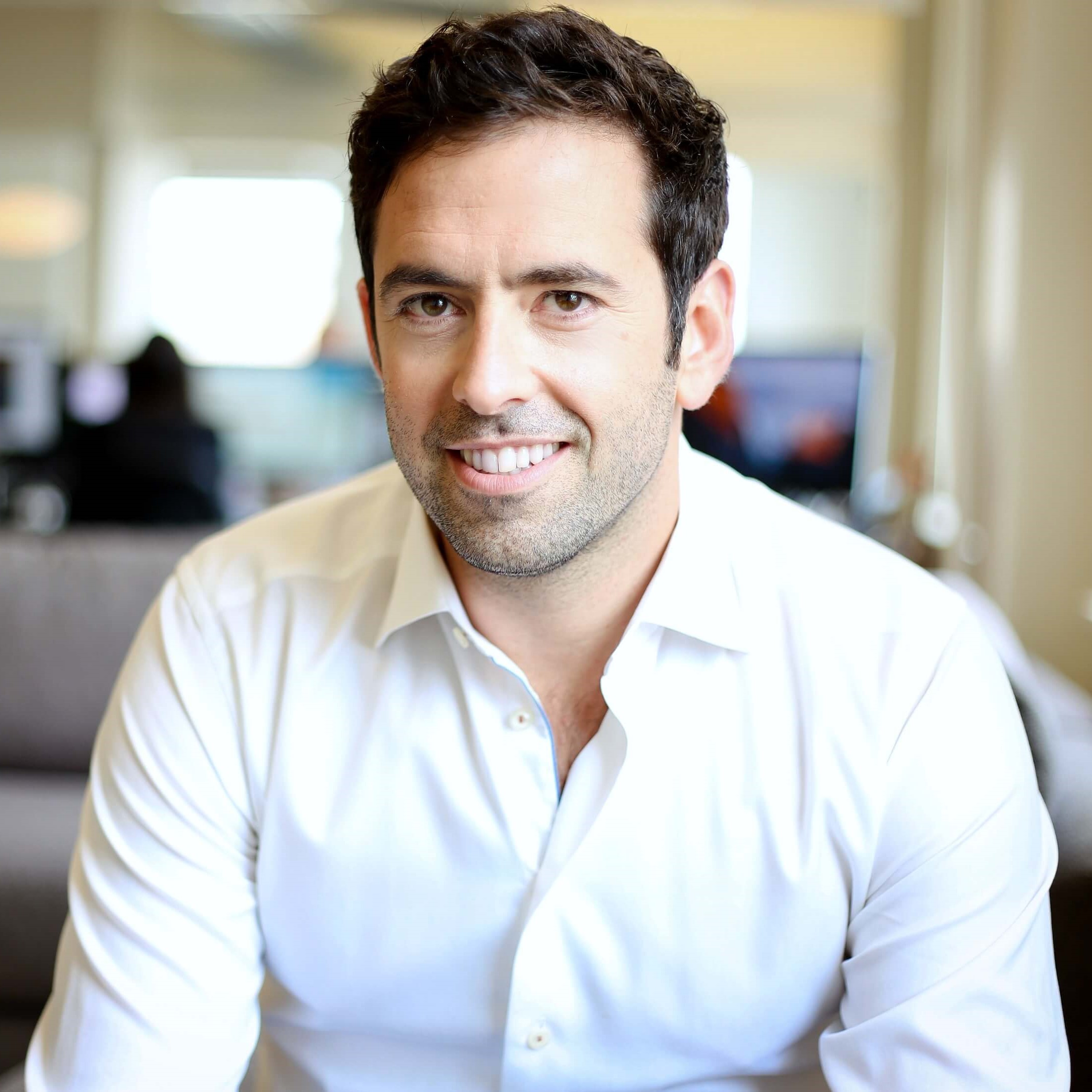
In this special edition of Crypto Trailblazer NYC, Yuval Rooz, co-founder and CEO of Digital Asset, sits down with theCUBE’s John Furrier to explore how enterprise blockchain is moving from hype to real-world transformation. Rooz shares his candid insights on the evolving regulatory climate in the US, the importance of financial sovereignty in a borderless world, and why institutional trust and control – not just transparency – will define the next phase of digital finance.
The conversation dives into the architecture behind Digital Asset’s Canton Network, a layer-one blockchain purpose-built for large-scale institutional adoption. Rooz outlines the design principles enabling privacy, programmability and compliance, positioning Canton as the “books and records” infrastructure for the next generation of on-chain activity. From tokenized treasuries and stablecoins to private equity and repo markets, Rooz reveals how real assets – not IOUs – are already running natively on Canton, with top financial institutions like Goldman Sachs, BNP Paribas and Euroclear participating in governance and adoption.
The interview also explores how Digital Asset’s $150M equity round, with backing from firms such as DRW, Citadel Securities and Tradeweb, signals confidence in the company’s approach to institutional-grade crypto infrastructure. Rooz emphasizes the importance of boring-but-critical foundations like title law, auditability and reconciliation – features that reduce operational risk while unlocking massive efficiency gains across sectors like insurance, fixed income and even sports betting.
This is a must-watch for anyone tracking the real shift from speculative crypto to systemic integration in global finance.
Forgot Password
Almost there!
We just sent you a verification email. Please verify your account to gain access to
theCUBE + NYSE Wired: Crypto Trailblazers. If you don’t think you received an email check your
spam folder.
Sign in to theCUBE + NYSE Wired: Crypto Trailblazers.
In order to sign in, enter the email address you used to registered for the event. Once completed, you will receive an email with a verification link. Open this link to automatically sign into the site.
Register For theCUBE + NYSE Wired: Crypto Trailblazers
Please fill out the information below. You will recieve an email with a verification link confirming your registration. Click the link to automatically sign into the site.
You’re almost there!
We just sent you a verification email. Please click the verification button in the email. Once your email address is verified, you will have full access to all event content for theCUBE + NYSE Wired: Crypto Trailblazers.
I want my badge and interests to be visible to all attendees.
Checking this box will display your presense on the attendees list, view your profile and allow other attendees to contact you via 1-1 chat. Read the Privacy Policy. At any time, you can choose to disable this preference.
Select your Interests!
add
Upload your photo
Uploading..
OR
Connect via Twitter
Connect via Linkedin
EDIT PASSWORD
Share
Forgot Password
Almost there!
We just sent you a verification email. Please verify your account to gain access to
theCUBE + NYSE Wired: Crypto Trailblazers. If you don’t think you received an email check your
spam folder.
Sign in to theCUBE + NYSE Wired: Crypto Trailblazers.
In order to sign in, enter the email address you used to registered for the event. Once completed, you will receive an email with a verification link. Open this link to automatically sign into the site.
Sign in to gain access to theCUBE + NYSE Wired: Crypto Trailblazers
Please sign in with LinkedIn to continue to theCUBE + NYSE Wired: Crypto Trailblazers. Signing in with LinkedIn ensures a professional environment.
Are you sure you want to remove access rights for this user?
Details
Manage Access
email address
Community Invitation
Yuval Rooz, Digital Asset
In this special edition of Crypto Trailblazer NYC, Yuval Rooz, co-founder and CEO of Digital Asset, sits down with theCUBE’s John Furrier to explore how enterprise blockchain is moving from hype to real-world transformation. Rooz shares his candid insights on the evolving regulatory climate in the US, the importance of financial sovereignty in a borderless world, and why institutional trust and control – not just transparency – will define the next phase of digital finance.
The conversation dives into the architecture behind Digital Asset’s Canton Network, a layer-one blockchain purpose-built for large-scale institutional adoption. Rooz outlines the design principles enabling privacy, programmability and compliance, positioning Canton as the “books and records” infrastructure for the next generation of on-chain activity. From tokenized treasuries and stablecoins to private equity and repo markets, Rooz reveals how real assets – not IOUs – are already running natively on Canton, with top financial institutions like Goldman Sachs, BNP Paribas and Euroclear participating in governance and adoption.
The interview also explores how Digital Asset’s $150M equity round, with backing from firms such as DRW, Citadel Securities and Tradeweb, signals confidence in the company’s approach to institutional-grade crypto infrastructure. Rooz emphasizes the importance of boring-but-critical foundations like title law, auditability and reconciliation – features that reduce operational risk while unlocking massive efficiency gains across sectors like insurance, fixed income and even sports betting.
This is a must-watch for anyone tracking the real shift from speculative crypto to systemic integration in global finance.
>> Welcome back, everyone. theCUBE here at our New York Stock Exchange Studios, part of NYSE WIRED relationship, of course, connecting Silicon Valley and Palo Alto to Wall Street is theCUBE, and of course, powering the NYSE Open WIRED Community. Yuval Rooz here, co-founder and CEO of Digital Asset, a fast-growing company doing extremely well right now. They got some fresh funding, but more importantly, they are a key trailblazer and participant leader in the big wave that is happening, the digitization of our country, our society, money system, programmable money plus a system that's decentralized, is going to set the table. And with stablecoins and a variety of other things happening, you're starting to see signs that first-party relationship between physical and digital is happening. Yuval, thank you for coming in and being a trailblazer as part of our Crypto Trailblazers series. Appreciate it.
Yuval Rooz
>> Thank you for having me.>> So you heard my little intro there. I truly been watching for years and been following Bitcoin since it was underground to mainstream. It's been a wave. You had the regulatory problems in the US, a lot of people moving outside. You started to see some of the underbelly activities happen. That's a very early market. And then starting to see the realization of value, creation in store and also extraction. And then you start to see AI come into the mix, which is more frothy. So it's kind of like that perfect storm, almost like a rogue wave, if you will, hitting the financial institutions. The reality setting in, I truly see it happening here. I see it happening all around the world. It's real, and you guys are in the middle of it. Talk about the reality now because you start to see real players coming in, looking at retrofitting, in some cases, replatforming financial systems. The money's money, it's digital. I mean, my statement in B of A, Wells Fargo, I mean, I see a number, it's not like cash. I mean it's digitally stored somewhere. So you're seeing all these things. What's your take right now? Where are we in the market? Then we'll get into some of the cool things that's happening.
Yuval Rooz
>> Yeah, listen, I think that a lot of times people ask me, "So are you excited? There's a new administration. All these laws are coming into play," and definitely, we're very excited about the administration and their take on the industry. I think what's more exciting is actually the regulators that the administration have put in place are actually encouraging market participants to use the technology. I think everybody recognized you called AI, but specifically around blockchain, crypto, digital assets are recognizing that it's an inevitable future and if it's an inevitable future, it's in the interest of the United States to be a key player in both developing the technology, but also being the first user of the technology at scale. So I think that what's more exciting for us right now as a company is, although there's the Genius Act, there's the Clarity Act, which are really good developments. It's the fact that a lot of our clients that have been our clients even before this administration, but now you're seeing them being much more excited to actually put the technology to use. And we've seen even before these two legislations have been put into place, a lot of market participants are actually moving to use the technology.>> You don't have to be a rocket scientist to figure out what's happening. If you're under the age of 30, anyone watching, you'd be like, "Why is this happening faster?" So I think the dogma and going to break through that system, and I want to get your thoughts on another concept that's got total mainstream action across other sectors like cloud computing and AI sovereignty. I mean, you're just basically talking about sovereignty in the United States, financial systems, we have border borders in the past, now we're talking about borderless. So the role of sovereignty is now an intersection between a lot of things too. Money will be a driver too because we want to buy cloud and buy AI. You're going to have to spend some money to do that through a financial system. Talk about sovereignty and how that's playing into what you guys are doing.
Yuval Rooz
>> Yeah, I think that we need to be careful that although this technology is designed to break historical boundaries that existed, I don't think that sovereignty is going anywhere. And that's why I think it is in the interest of the US to become the innovator, the first that really takes use of the technology, no different than the internet. The internet does not belong to anyone, but clearly was developed in the United States and the United States have benefited quite a lot. Similarly, I think about some of the assets, like we're talking about how do we proliferate financial services into areas today that don't use it? It is in the key interests of the United States that it's those financial institutions that proliferate the US dollar or US treasury globally. And again, you're breaking the boundaries of who can put their hands on those assets because it's easier, cheaper, but it's still US->> It's interesting, you bring up that point that I've always found counterintuitive to conventional wisdom. Sovereignty, you'd think, "Oh, put up walls." The old security was moats. Build the moats around the castle, protect the bad guys. Now there's borderless security. If you think about what you just said, and I want to get your reaction to this, a borderless world actually needs good sovereignty because you want good transactions in your country.
Yuval Rooz
>> Right. No, absolutely.>> This is what.... Kind of we're all about with these-
Yuval Rooz
>> I think structure. If you look at Tether, I mean, why has Tether been so successful in my opinion is because the whole world won exposure to US dollars, right? And Tether have effectively given it to them, similar with Circle that is now doing a great job in the United States, but you're seeing that there is significant amount of interest to get access to US assets, and that's why I always believe that it's in the US interest to be in control of that destiny and to drive it themselves rather than others.>> Is that still the demand curve right now? Driver assets?
Yuval Rooz
>> I mean, yeah, listen, I think ... The number one payment currency still is the US dollar. If you look at sovereign bonds, it's still US treasury bonds. It's still the number one non-cash collateral that gets used all over the world. And I think that if the US takes an approach of actually trying to enable that to be even easier to put your hands on, less friction, but still have their sovereignty, that it's their asset, I think you're going to see a tremendous pickup. And we're seeing that with our clients. I mean, access to 24 by 7 US treasuries is something that every financial institution in the world would be interested in.>> Yeah. And I love this physical blending of digital world, whether you call it digital twins or just the realization driving your business. Let's talk about the business you co-founded and are running as the chief digital asset. Talk about what you guys do. You have funding that's validating a lot of the approach, both in actually equity and you have tokens, you got the Canton Network, which you are the creators of, but you have your own on top. Talk about the business, how it's structured, first principles, business model. Give a quick overview.
Yuval Rooz
>> Sure. So when we started the company, our vision was that all major industries eventually will move to be on chain. And the question was, "Well, what does it require for?" A lot of times people will say regulated entities. I think regulated entities will have these challenges as a hard requirement by the regulators, but I would even say even publicly traded companies or large scale companies will have the same challenges, even though it's not driven by regulation, which is I don't want my activity to be known to the whole world. And it's this lack of privacy almost became a feature in crypto rather than a bug. So I think people have grown to accept that there's just no privacy in crypto, and that's almost a good thing. We disagree with that. The whole mission behind digital asset was how can we create a layer one that actually allows grownups, large institutional players to actually say, "We can trust a public chain to become our official books and records." And that's not a small->> It's ambition. Huge ambition.
Yuval Rooz
>> It's a huge ambition. But I think that that's the value of blockchain, is if... The reason why to me crypto is so interesting is when I pledge a token into a DeFi protocol, I perfected the security. There is no off-chain system that I need to reconcile to, that I need to make sure that->> It is the system.
Yuval Rooz
>> It is the system. So if you could do that on real-world assets, at scale, I think you unlock a TAM that I can't even try to project. The opportunity is big. So for us, the question was, "Well, how do you do that?" And there were some small but very challenging components to do. It's like one is privacy. If you're a publicly traded company and you want to do payments, you don't want the whole world to know your payments. There's a whole industry of analysts that are trying to project your income based on public information. You definitely don't go and share with these analysts all of your daily activities. There's competitors, there's other players that you just don't want to know. One is privacy. And I think now you're seeing a lot of players in crypto use the P-word quite extensively. We don't really believe that they're solving for privacy, but that's one. Again, the element of control. Again, a lot of people in crypto think that permissionless is the only solution, but actually when you look at stablecoin, stablecoin, issuers have the right to freeze your assets if you don't comply with OFAC and all kinds of things. So this idea of control is, again, a super important feature if you want large organizations to trust your books.>> Emission payments. What about settlements? How do you view the settlement side of it? Because harder, obviously, payment rails are great. Why? What's your view on the settlement side of it?
Yuval Rooz
>> So settlement of what? I think when it comes to payments, I think you want to settle things as fast as possible.>> Well, the system is no settlement. It's settled.
Yuval Rooz
>> Yeah. I think that a lot of times when it comes, we're sitting on just above a floor of equity markets and an options market. Sometimes settling things is not necessarily the most capital efficient. And I think that to me, when we think about crypto networks, it's having the ability to settle in real time, not necessarily having to settle in real time because it's not necessarily always efficient.>> What is your fundraising... Give a quick... You guys had a recent round. Can you share some numbers? There was some undisclosed piece, but what's the amount, what's that mean to you guys?
Yuval Rooz
>> Yeah, so we raised close to $150 million in equity led by DRW, Tradeweb, but we had Citadel Securities, Optiver, IMC, DTCC, Goldman, Bnp Circle, and a few others participate. And I think for us, everyone who participated in the round is committed to Canton Network, which is huge for us. To be honest, that is the most valuable piece of the round. But again, it's developing the ecosystem, doubling down on some of the product and engineering work that is needed and some good marketing. But I think that you're going to see->> The equity holders is really more for solidarity confidence. You have the cash, it's nice to have, but you also raise money with tokens, right?
Yuval Rooz
>> Yeah. So we have a token and we are capable of transacting the token. The token will be listed towards the end of the year, and for us it was important to also have token holders that are aligned with->> I think equity stakeholders is a great message to the market. Is that important, to give confidence? I hear a lot of people here in New York and come from California kind of jumps out at me where I'm not used to seeing them lean into the wave like they are. It seems they want confidence.
Yuval Rooz
>> Yeah, I think that if you look at everything that is happening in crypto and whether it's Solana, Ethereum, now Canton, everybody's going after the institutional adoption. They know that that's where the value is. A lot of times people will talk about the daily volume of crypto, 100, 200, $300 billion a day of volume, and then you look at the US repo market and that's 10 and a half trillion dollars a day, right?>> It's still growing.
Yuval Rooz
>> Right. So the numbers that you can achieve with institutional adoption are significantly bigger, and that's why the players that participated in the round are so important for us.>> What milestones have you guys hit? Share some metrics. How are you running your business? What are some key things you're focused on? What are you optimizing for?
Yuval Rooz
>> So I think every KPI on the network have been over achieved, whether it's number of participants. I think that there's a queue of over a thousand validators that are looking to join the network. The on-chain fees, I think we're in the top 10 now already as a chain, and that's before we even->> In terms of fees, revenue or fees lower-
Yuval Rooz
>> Fees generated by apps on the net->> So money making.
Yuval Rooz
>> Yeah. And this is before we even listed the coin. So I think that for us it's all about driving real world utility applications. So the fees that are being generated by those applications, who are the members that are joining? So what are the validators? What are they using the network for? And then the foundation to me is another huge success. We partnered with Lennox, we have Euroclear chairing it. We have Goldman, BNP, HSBC, Tradeweb, Broadridge, and a lot of->> How'd you get all those big dogs?
Yuval Rooz
>> San markets, and we're not trying to sell a pipe dream of a bearer world that we're going to send ourselves 300 years back. We understand the challenges and why capital market->> structure, all those things.
Yuval Rooz
>> Management... Yeah, we understand regulation, we understand title law and things... Boring stuff, but it's boring stuff->> It's funny.
Yuval Rooz
>> When bad things happen, it kind of revert back to these boring stuff and that's, I think, what gives us a lot of credibility.>> Yeah. A common theme of the crypto trailblazers has been from some astute folks like yourself have said this, and I want to get your reaction if you don't mind, "Capitalism done is what crypto does because..." And that, meaning it's instrumented, so there's some privacy, but it's also not a privacy. You see transactions. This is what capitalism can be done right, and many are saying that the environment that's emerging, the one you're leading in, it's transparent. It's there. It's like, "What's the problem?" What's wrong with capitalism if it's fully instrumented, has the safeguards, has all the recovery, boring stuff that you were just kind of mentioning is important? I mean, is this capitalism done right in your mind or that just kind of over the top?
Yuval Rooz
>> Listen, I mean there's always good to be a bit over the top, but I think conceptually, it's true. I think that the reason we chose the Linux Foundation is we wanted the governance of the network to be done in the open, truly in the open with all... You could join the foundation, you could be part of every committee, you could be part of the board if you wanted to, you could participate in all the decisions. At the end of the day, I think that even in capitalism, there are commercial interests where you don't want to broadcast to the world everything that you're doing. The rules though of how you engage with the system should be known to everyone, and I think that that's really the nuance of Canton, is that we don't just believe that everything needs to be transparent for the sake of transparency because then you'll have actors that just don't participate fully. But how do you engage with the network, who is allowed to join the network, that should all be transparent and for everybody to be allowed to participate.>> I think that's a great point because in this era of massive transformation, it's IT and the cloud side and AI, in some cases, platforms, there's technology, then there's business transformation because you're kind of pointing that out. Let's keep it in the open. You want to see how every screw is made and turned and made and every decision. That's the tech platform. That's the network. Business is confidential sometimes. Why would I want-
Yuval Rooz
>> Exactly. Exactly. That's business transformation. Tell me about the business transformation that you're seeing. That's where the action is. Follow the money. The tech powers it.>> Yeah. I mean, listen, I think that we haven't disclosed a lot to the world all of the things that we have achieved to date, and the reason why is when Canton was launched and this funding and just ahead of listing, we were going to blast to the world everything that have been happening over the last few years. But we're seeing all the way from feeder funds and private equity, private credit, mortgages, physical commodities, life insurance, annuities, sports wagering, fixed income, repo, equities-
Yuval Rooz
>> Medias.>> Actually, yes we do. We have a crypto media. All of those things are running natively on Canton. And again, it's very different. When I say run natively, we are not representing some IOU token by someone else. These assets are actually managing their books and records natively on Canton, and I think what we're seeing now is we're starting to see DeFi protocols coming to Canton and saying, "Well, can you actually pledge your private equity holding against a loan all on chain?" So we are seeing this transformation and also the value of actually using blockchain to reduce your operation.
Yuval Rooz
>> We're going to bring our CUBE coin to->> Love that.
Yuval Rooz
>> .>> Talk about the efficiencies and what's some of the leverage that you're seeing coming out of this, because obviously what you just said was pretty strong statement about goodness that comes out of that. What are some of the value points in leverage efficiency when you have that kind of action happening where things are cleaner and working?
Yuval Rooz
>> Yeah, I think that just the data architecture of blockchain... I'll give a very random example. We did a project with a life insurance company, and in life insurance, you might find out that 10 years ago, someone when they struck a NAV, they miscalculated the price and now you have a path dependency. So for 10 years, the price or the value of the life insurance is wrong, and now you'll have to bring a team of consultants that will work for six to nine months to really adjust all of your books and records back 10 years and it will take 6 to 12 minutes even->> And a lot of fees.
Yuval Rooz
>> We do that now in five minutes, and I mean that's just a tiny example of->> So massive operating leverage, waste reduction.
Yuval Rooz
>> Yeah, no reconciliation for the most part. We are talking about->> More efficiency.
Yuval Rooz
>> Yeah, I mean, stablecoin is a great example. What is the value if you could move dollars in real time? And you just think about the financing today, when you think about like, "Hey, if it takes me 30 days to move the money, I need to get financing, I need to capitalize my... Right? Because there's cash flows. So there's just so many seconders and treasuries->> Are stablecoins stable?
Yuval Rooz
>> Is commercial bank money stable?>> There is always arbitrage.
Yuval Rooz
>> Listen, I think that it's important, like everything will have its ups and downs, right? Commercial bank money is always viewed as stable until a bank doesn't manage its risk management properly and then they go under. We've had a few banks go under recently and if the government doesn't go in or someone buys them, your money is at risk. So your deposits are not always->> Always human error, but the system has to be pure. That's what you guys are focused on.
Yuval Rooz
>> Yeah. And I think that you're not going to get a bulletproof system. You're never going to get that. I think that... The way I think about blockchain and crypto is how do you bring better auditability and better transparency where you need it, right? And that will reduce the errors or the mistakes that happen.>> Great. That's a great first principle. All right, final question. Paint the vision as you guys got some nice funding from stakeholders in the industry, good credibility there, they're now partners. You've got the token, you got the network, you got great brands on board as customers, institutions are jumping in fast. Obviously, they go a little slower, but that's too slow. What's your vision for the next couple of years for the company? What's the technical vision, business vision, then goals?
Yuval Rooz
>> Our goal is to make Canton Network the number one destination for any responsible institution to conduct their on-chain activity. That means that we're going to see Canton top three on-chain fees within the next couple of years, and as a result of that, you should probably see the market cap of the network and align with it.>> IPO windows open for .
Yuval Rooz
>> Who knows?>> How big are those fees?
Yuval Rooz
>> Who knows?>> Love the smile. Great to have you on. Shake your Hand.
Yuval Rooz
>> Thank you so much for having->> Love you pioneering. You're a trailblazer. And again, I love it because we've been waiting and it's the last regime in the US and you're starting to see now the sovereignty and why people should have really good borderless activities. Stablecoin's been a great thing and the work you're doing, appreciate you.
Yuval Rooz
>> Yeah, thank you so much for having me.>> I'm John Furrier, host of theCUBE. We are here for the Crypto Trailblazers series, part of theCUBE and the NYSE and the WIRED Community, all open source. It's an open access network that theCUBE and the NYSE put together, of course. Contribute more content. Of course, we're doing our best part to bring that to you. Thanks for watching.
>> Welcome back, everyone. theCUBE here at our New York Stock Exchange Studios, part of NYSE WIRED relationship, of course, connecting Silicon Valley and Palo Alto to Wall Street is theCUBE, and of course, powering the NYSE Open WIRED Community. Yuval Rooz here, co-founder and CEO of Digital Asset, a fast-growing company doing extremely well right now. They got some fresh funding, but more importantly, they are a key trailblazer and participant leader in the big wave that is happening, the digitization of our country, our society, money system, programmable money plus a system that's decentralized, is going to set the table. And with stablecoins and a variety of other things happening, you're starting to see signs that first-party relationship between physical and digital is happening. Yuval, thank you for coming in and being a trailblazer as part of our Crypto Trailblazers series. Appreciate it.
Yuval Rooz
>> Thank you for having me.>> So you heard my little intro there. I truly been watching for years and been following Bitcoin since it was underground to mainstream. It's been a wave. You had the regulatory problems in the US, a lot of people moving outside. You started to see some of the underbelly activities happen. That's a very early market. And then starting to see the realization of value, creation in store and also extraction. And then you start to see AI come into the mix, which is more frothy. So it's kind of like that perfect storm, almost like a rogue wave, if you will, hitting the financial institutions. The reality setting in, I truly see it happening here. I see it happening all around the world. It's real, and you guys are in the middle of it. Talk about the reality now because you start to see real players coming in, looking at retrofitting, in some cases, replatforming financial systems. The money's money, it's digital. I mean, my statement in B of A, Wells Fargo, I mean, I see a number, it's not like cash. I mean it's digitally stored somewhere. So you're seeing all these things. What's your take right now? Where are we in the market? Then we'll get into some of the cool things that's happening.
Yuval Rooz
>> Yeah, listen, I think that a lot of times people ask me, "So are you excited? There's a new administration. All these laws are coming into play," and definitely, we're very excited about the administration and their take on the industry. I think what's more exciting is actually the regulators that the administration have put in place are actually encouraging market participants to use the technology. I think everybody recognized you called AI, but specifically around blockchain, crypto, digital assets are recognizing that it's an inevitable future and if it's an inevitable future, it's in the interest of the United States to be a key player in both developing the technology, but also being the first user of the technology at scale. So I think that what's more exciting for us right now as a company is, although there's the Genius Act, there's the Clarity Act, which are really good developments. It's the fact that a lot of our clients that have been our clients even before this administration, but now you're seeing them being much more excited to actually put the technology to use. And we've seen even before these two legislations have been put into place, a lot of market participants are actually moving to use the technology.>> You don't have to be a rocket scientist to figure out what's happening. If you're under the age of 30, anyone watching, you'd be like, "Why is this happening faster?" So I think the dogma and going to break through that system, and I want to get your thoughts on another concept that's got total mainstream action across other sectors like cloud computing and AI sovereignty. I mean, you're just basically talking about sovereignty in the United States, financial systems, we have border borders in the past, now we're talking about borderless. So the role of sovereignty is now an intersection between a lot of things too. Money will be a driver too because we want to buy cloud and buy AI. You're going to have to spend some money to do that through a financial system. Talk about sovereignty and how that's playing into what you guys are doing.
Yuval Rooz
>> Yeah, I think that we need to be careful that although this technology is designed to break historical boundaries that existed, I don't think that sovereignty is going anywhere. And that's why I think it is in the interest of the US to become the innovator, the first that really takes use of the technology, no different than the internet. The internet does not belong to anyone, but clearly was developed in the United States and the United States have benefited quite a lot. Similarly, I think about some of the assets, like we're talking about how do we proliferate financial services into areas today that don't use it? It is in the key interests of the United States that it's those financial institutions that proliferate the US dollar or US treasury globally. And again, you're breaking the boundaries of who can put their hands on those assets because it's easier, cheaper, but it's still US->> It's interesting, you bring up that point that I've always found counterintuitive to conventional wisdom. Sovereignty, you'd think, "Oh, put up walls." The old security was moats. Build the moats around the castle, protect the bad guys. Now there's borderless security. If you think about what you just said, and I want to get your reaction to this, a borderless world actually needs good sovereignty because you want good transactions in your country.
Yuval Rooz
>> Right. No, absolutely.>> This is what.... Kind of we're all about with these-
Yuval Rooz
>> I think structure. If you look at Tether, I mean, why has Tether been so successful in my opinion is because the whole world won exposure to US dollars, right? And Tether have effectively given it to them, similar with Circle that is now doing a great job in the United States, but you're seeing that there is significant amount of interest to get access to US assets, and that's why I always believe that it's in the US interest to be in control of that destiny and to drive it themselves rather than others.>> Is that still the demand curve right now? Driver assets?
Yuval Rooz
>> I mean, yeah, listen, I think ... The number one payment currency still is the US dollar. If you look at sovereign bonds, it's still US treasury bonds. It's still the number one non-cash collateral that gets used all over the world. And I think that if the US takes an approach of actually trying to enable that to be even easier to put your hands on, less friction, but still have their sovereignty, that it's their asset, I think you're going to see a tremendous pickup. And we're seeing that with our clients. I mean, access to 24 by 7 US treasuries is something that every financial institution in the world would be interested in.>> Yeah. And I love this physical blending of digital world, whether you call it digital twins or just the realization driving your business. Let's talk about the business you co-founded and are running as the chief digital asset. Talk about what you guys do. You have funding that's validating a lot of the approach, both in actually equity and you have tokens, you got the Canton Network, which you are the creators of, but you have your own on top. Talk about the business, how it's structured, first principles, business model. Give a quick overview.
Yuval Rooz
>> Sure. So when we started the company, our vision was that all major industries eventually will move to be on chain. And the question was, "Well, what does it require for?" A lot of times people will say regulated entities. I think regulated entities will have these challenges as a hard requirement by the regulators, but I would even say even publicly traded companies or large scale companies will have the same challenges, even though it's not driven by regulation, which is I don't want my activity to be known to the whole world. And it's this lack of privacy almost became a feature in crypto rather than a bug. So I think people have grown to accept that there's just no privacy in crypto, and that's almost a good thing. We disagree with that. The whole mission behind digital asset was how can we create a layer one that actually allows grownups, large institutional players to actually say, "We can trust a public chain to become our official books and records." And that's not a small->> It's ambition. Huge ambition.
Yuval Rooz
>> It's a huge ambition. But I think that that's the value of blockchain, is if... The reason why to me crypto is so interesting is when I pledge a token into a DeFi protocol, I perfected the security. There is no off-chain system that I need to reconcile to, that I need to make sure that->> It is the system.
Yuval Rooz
>> It is the system. So if you could do that on real-world assets, at scale, I think you unlock a TAM that I can't even try to project. The opportunity is big. So for us, the question was, "Well, how do you do that?" And there were some small but very challenging components to do. It's like one is privacy. If you're a publicly traded company and you want to do payments, you don't want the whole world to know your payments. There's a whole industry of analysts that are trying to project your income based on public information. You definitely don't go and share with these analysts all of your daily activities. There's competitors, there's other players that you just don't want to know. One is privacy. And I think now you're seeing a lot of players in crypto use the P-word quite extensively. We don't really believe that they're solving for privacy, but that's one. Again, the element of control. Again, a lot of people in crypto think that permissionless is the only solution, but actually when you look at stablecoin, stablecoin, issuers have the right to freeze your assets if you don't comply with OFAC and all kinds of things. So this idea of control is, again, a super important feature if you want large organizations to trust your books.>> Emission payments. What about settlements? How do you view the settlement side of it? Because harder, obviously, payment rails are great. Why? What's your view on the settlement side of it?
Yuval Rooz
>> So settlement of what? I think when it comes to payments, I think you want to settle things as fast as possible.>> Well, the system is no settlement. It's settled.
Yuval Rooz
>> Yeah. I think that a lot of times when it comes, we're sitting on just above a floor of equity markets and an options market. Sometimes settling things is not necessarily the most capital efficient. And I think that to me, when we think about crypto networks, it's having the ability to settle in real time, not necessarily having to settle in real time because it's not necessarily always efficient.>> What is your fundraising... Give a quick... You guys had a recent round. Can you share some numbers? There was some undisclosed piece, but what's the amount, what's that mean to you guys?
Yuval Rooz
>> Yeah, so we raised close to $150 million in equity led by DRW, Tradeweb, but we had Citadel Securities, Optiver, IMC, DTCC, Goldman, Bnp Circle, and a few others participate. And I think for us, everyone who participated in the round is committed to Canton Network, which is huge for us. To be honest, that is the most valuable piece of the round. But again, it's developing the ecosystem, doubling down on some of the product and engineering work that is needed and some good marketing. But I think that you're going to see->> The equity holders is really more for solidarity confidence. You have the cash, it's nice to have, but you also raise money with tokens, right?
Yuval Rooz
>> Yeah. So we have a token and we are capable of transacting the token. The token will be listed towards the end of the year, and for us it was important to also have token holders that are aligned with->> I think equity stakeholders is a great message to the market. Is that important, to give confidence? I hear a lot of people here in New York and come from California kind of jumps out at me where I'm not used to seeing them lean into the wave like they are. It seems they want confidence.
Yuval Rooz
>> Yeah, I think that if you look at everything that is happening in crypto and whether it's Solana, Ethereum, now Canton, everybody's going after the institutional adoption. They know that that's where the value is. A lot of times people will talk about the daily volume of crypto, 100, 200, $300 billion a day of volume, and then you look at the US repo market and that's 10 and a half trillion dollars a day, right?>> It's still growing.
Yuval Rooz
>> Right. So the numbers that you can achieve with institutional adoption are significantly bigger, and that's why the players that participated in the round are so important for us.>> What milestones have you guys hit? Share some metrics. How are you running your business? What are some key things you're focused on? What are you optimizing for?
Yuval Rooz
>> So I think every KPI on the network have been over achieved, whether it's number of participants. I think that there's a queue of over a thousand validators that are looking to join the network. The on-chain fees, I think we're in the top 10 now already as a chain, and that's before we even->> In terms of fees, revenue or fees lower-
Yuval Rooz
>> Fees generated by apps on the net->> So money making.
Yuval Rooz
>> Yeah. And this is before we even listed the coin. So I think that for us it's all about driving real world utility applications. So the fees that are being generated by those applications, who are the members that are joining? So what are the validators? What are they using the network for? And then the foundation to me is another huge success. We partnered with Lennox, we have Euroclear chairing it. We have Goldman, BNP, HSBC, Tradeweb, Broadridge, and a lot of->> How'd you get all those big dogs?
Yuval Rooz
>> San markets, and we're not trying to sell a pipe dream of a bearer world that we're going to send ourselves 300 years back. We understand the challenges and why capital market->> structure, all those things.
Yuval Rooz
>> Management... Yeah, we understand regulation, we understand title law and things... Boring stuff, but it's boring stuff->> It's funny.
Yuval Rooz
>> When bad things happen, it kind of revert back to these boring stuff and that's, I think, what gives us a lot of credibility.>> Yeah. A common theme of the crypto trailblazers has been from some astute folks like yourself have said this, and I want to get your reaction if you don't mind, "Capitalism done is what crypto does because..." And that, meaning it's instrumented, so there's some privacy, but it's also not a privacy. You see transactions. This is what capitalism can be done right, and many are saying that the environment that's emerging, the one you're leading in, it's transparent. It's there. It's like, "What's the problem?" What's wrong with capitalism if it's fully instrumented, has the safeguards, has all the recovery, boring stuff that you were just kind of mentioning is important? I mean, is this capitalism done right in your mind or that just kind of over the top?
Yuval Rooz
>> Listen, I mean there's always good to be a bit over the top, but I think conceptually, it's true. I think that the reason we chose the Linux Foundation is we wanted the governance of the network to be done in the open, truly in the open with all... You could join the foundation, you could be part of every committee, you could be part of the board if you wanted to, you could participate in all the decisions. At the end of the day, I think that even in capitalism, there are commercial interests where you don't want to broadcast to the world everything that you're doing. The rules though of how you engage with the system should be known to everyone, and I think that that's really the nuance of Canton, is that we don't just believe that everything needs to be transparent for the sake of transparency because then you'll have actors that just don't participate fully. But how do you engage with the network, who is allowed to join the network, that should all be transparent and for everybody to be allowed to participate.>> I think that's a great point because in this era of massive transformation, it's IT and the cloud side and AI, in some cases, platforms, there's technology, then there's business transformation because you're kind of pointing that out. Let's keep it in the open. You want to see how every screw is made and turned and made and every decision. That's the tech platform. That's the network. Business is confidential sometimes. Why would I want-
Yuval Rooz
>> Exactly. Exactly. That's business transformation. Tell me about the business transformation that you're seeing. That's where the action is. Follow the money. The tech powers it.>> Yeah. I mean, listen, I think that we haven't disclosed a lot to the world all of the things that we have achieved to date, and the reason why is when Canton was launched and this funding and just ahead of listing, we were going to blast to the world everything that have been happening over the last few years. But we're seeing all the way from feeder funds and private equity, private credit, mortgages, physical commodities, life insurance, annuities, sports wagering, fixed income, repo, equities-
Yuval Rooz
>> Medias.>> Actually, yes we do. We have a crypto media. All of those things are running natively on Canton. And again, it's very different. When I say run natively, we are not representing some IOU token by someone else. These assets are actually managing their books and records natively on Canton, and I think what we're seeing now is we're starting to see DeFi protocols coming to Canton and saying, "Well, can you actually pledge your private equity holding against a loan all on chain?" So we are seeing this transformation and also the value of actually using blockchain to reduce your operation.
Yuval Rooz
>> We're going to bring our CUBE coin to->> Love that.
Yuval Rooz
>> .>> Talk about the efficiencies and what's some of the leverage that you're seeing coming out of this, because obviously what you just said was pretty strong statement about goodness that comes out of that. What are some of the value points in leverage efficiency when you have that kind of action happening where things are cleaner and working?
Yuval Rooz
>> Yeah, I think that just the data architecture of blockchain... I'll give a very random example. We did a project with a life insurance company, and in life insurance, you might find out that 10 years ago, someone when they struck a NAV, they miscalculated the price and now you have a path dependency. So for 10 years, the price or the value of the life insurance is wrong, and now you'll have to bring a team of consultants that will work for six to nine months to really adjust all of your books and records back 10 years and it will take 6 to 12 minutes even->> And a lot of fees.
Yuval Rooz
>> We do that now in five minutes, and I mean that's just a tiny example of->> So massive operating leverage, waste reduction.
Yuval Rooz
>> Yeah, no reconciliation for the most part. We are talking about->> More efficiency.
Yuval Rooz
>> Yeah, I mean, stablecoin is a great example. What is the value if you could move dollars in real time? And you just think about the financing today, when you think about like, "Hey, if it takes me 30 days to move the money, I need to get financing, I need to capitalize my... Right? Because there's cash flows. So there's just so many seconders and treasuries->> Are stablecoins stable?
Yuval Rooz
>> Is commercial bank money stable?>> There is always arbitrage.
Yuval Rooz
>> Listen, I think that it's important, like everything will have its ups and downs, right? Commercial bank money is always viewed as stable until a bank doesn't manage its risk management properly and then they go under. We've had a few banks go under recently and if the government doesn't go in or someone buys them, your money is at risk. So your deposits are not always->> Always human error, but the system has to be pure. That's what you guys are focused on.
Yuval Rooz
>> Yeah. And I think that you're not going to get a bulletproof system. You're never going to get that. I think that... The way I think about blockchain and crypto is how do you bring better auditability and better transparency where you need it, right? And that will reduce the errors or the mistakes that happen.>> Great. That's a great first principle. All right, final question. Paint the vision as you guys got some nice funding from stakeholders in the industry, good credibility there, they're now partners. You've got the token, you got the network, you got great brands on board as customers, institutions are jumping in fast. Obviously, they go a little slower, but that's too slow. What's your vision for the next couple of years for the company? What's the technical vision, business vision, then goals?
Yuval Rooz
>> Our goal is to make Canton Network the number one destination for any responsible institution to conduct their on-chain activity. That means that we're going to see Canton top three on-chain fees within the next couple of years, and as a result of that, you should probably see the market cap of the network and align with it.>> IPO windows open for .
Yuval Rooz
>> Who knows?>> How big are those fees?
Yuval Rooz
>> Who knows?>> Love the smile. Great to have you on. Shake your Hand.
Yuval Rooz
>> Thank you so much for having->> Love you pioneering. You're a trailblazer. And again, I love it because we've been waiting and it's the last regime in the US and you're starting to see now the sovereignty and why people should have really good borderless activities. Stablecoin's been a great thing and the work you're doing, appreciate you.
Yuval Rooz
>> Yeah, thank you so much for having me.>> I'm John Furrier, host of theCUBE. We are here for the Crypto Trailblazers series, part of theCUBE and the NYSE and the WIRED Community, all open source. It's an open access network that theCUBE and the NYSE put together, of course. Contribute more content. Of course, we're doing our best part to bring that to you. Thanks for watching.