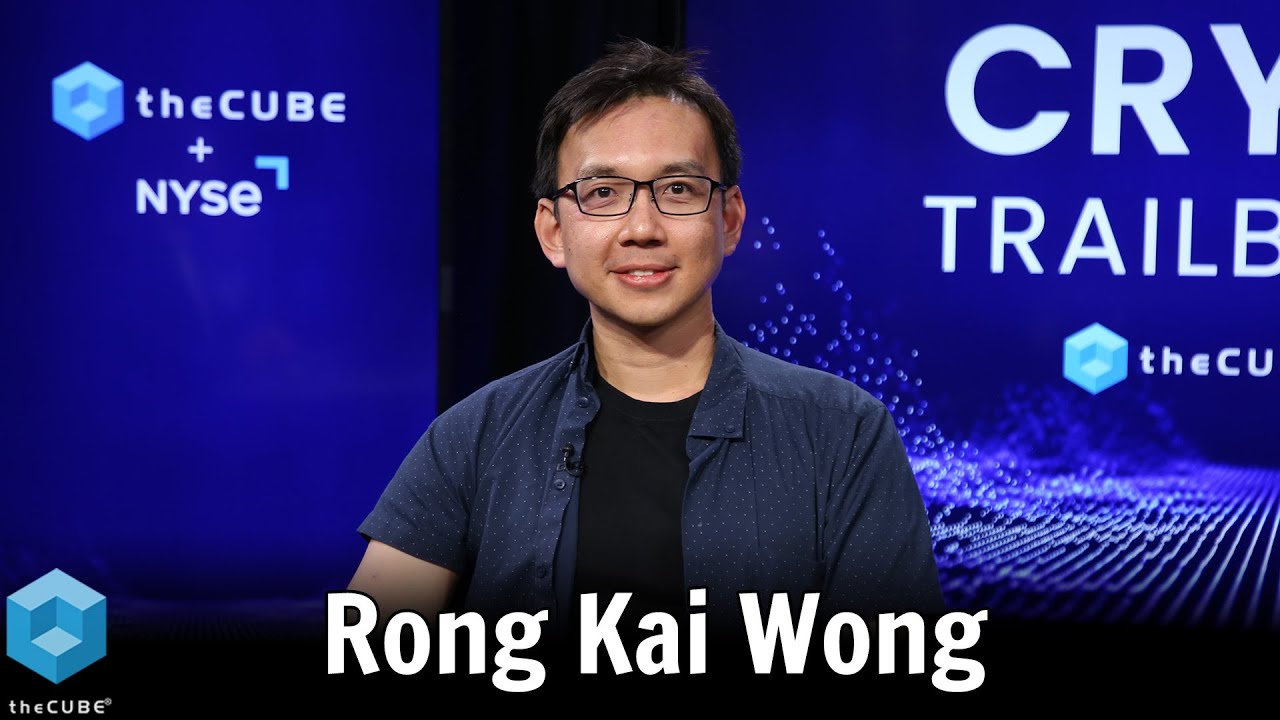
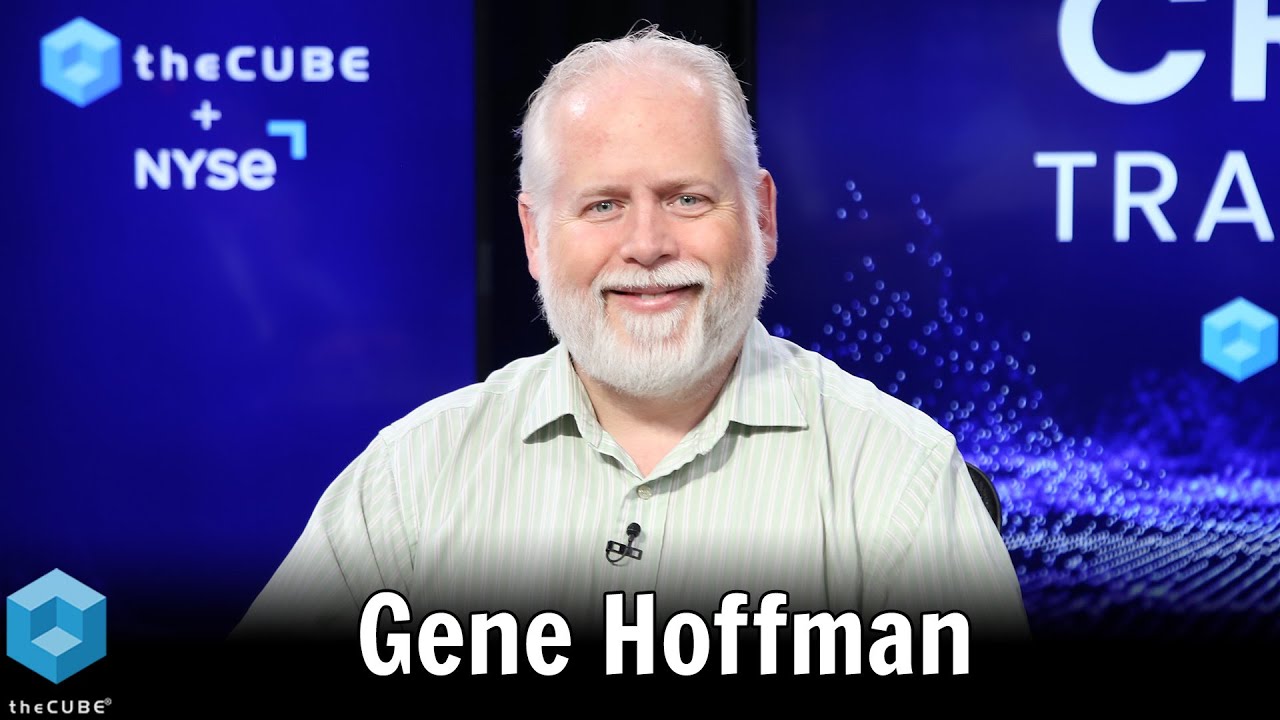
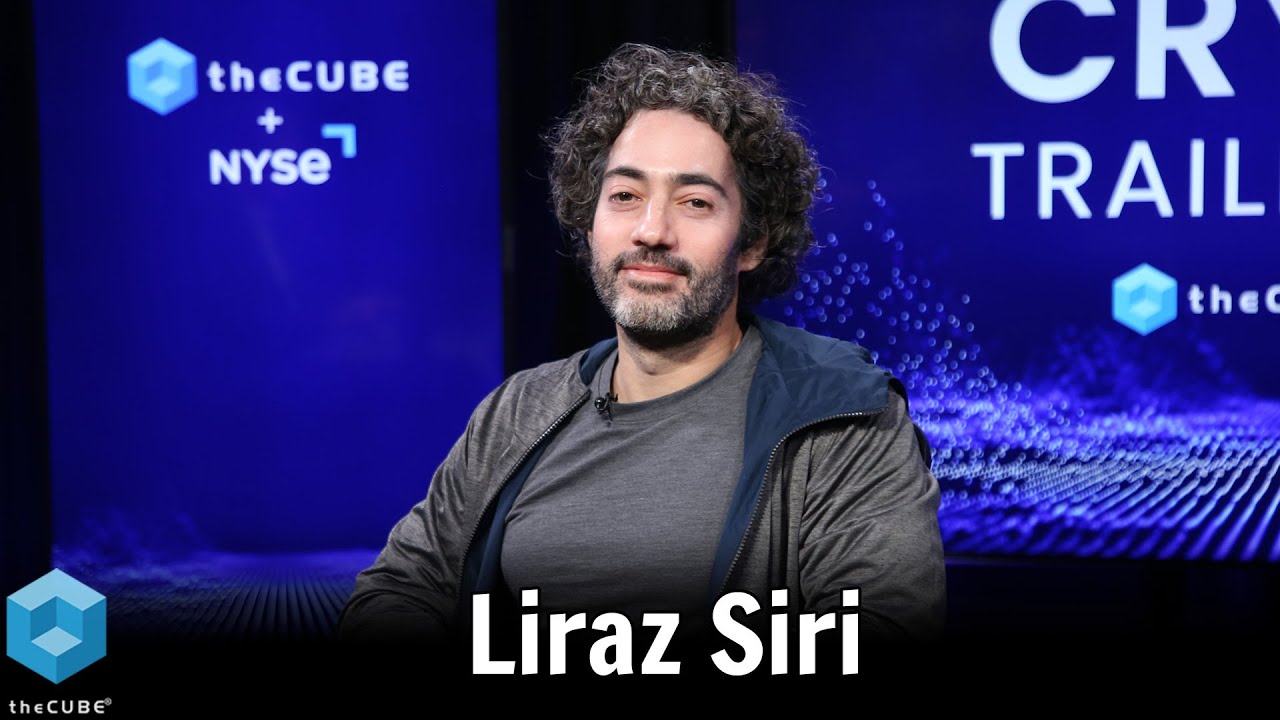
In this insightful episode of the Crypto Trailblazers series hosted by theCUBE, Mike Cagney of Figure Markets sits down with analysts from theCUBE Research to discuss groundbreaking advancements in blockchain technology and their implications for the finance sector. This video is part of the NYSE Wired digital event, aimed at bridging the gap between Silicon Valley and Wall Street by integrating technology and finance.
Cagney, an eminent figure in fintech, shares expertise on the transformative role of blockchain in financial markets during this interview. Conducted by seasoned analysts at theCUBE, the discussion delves into Figure’s innovative contributions, including their blockchain-native loan origination and securitization process. He outlines how Figure leverages blockchain to achieve cost reductions, enhanced security and improved liquidity in financial transactions.
Key takeaways from the interview highlight insights on the evolution of the Web3 ecosystem, such as the emergence of stablecoins as pivotal to transaction processes and the rise of decentralized finance (DeFi). Oltsik states these developments signify a shift towards democratizing finance, wherein truth and transparency are foundational. The conversation concludes with a look at Figure’s pioneering efforts in creating a new financial marketplace utilizing blockchain technology.
#CryptoTrailblazers #FigureMarkets #BlockchainInnovation #Web3 #NYEWired #BlockchainFinance #DecentralizedFinance #Fintech #Stablecoins
Find more SiliconANGLE news and analysis https://siliconangle.com/.
Follow theCUBE's wall-to-wall event coverage https://siliconangle.com/events/
Learn about the latest theCUBE events https://www.thecube.net/
00:00 - Intro
00:05 - Emerging Innovations in Financial Technology and Market Dynamics
02:45 - Key Elements in Financial Ecosystem Dynamics
06:20 - Blockchain: Truth and Transformation
09:39 - Shaping the Future: Innovations in Financial Markets and Stablecoin Integration
13:15 - Enabling the Future: Navigating Disruptions in Banking and Lending
16:51 - Exploring Opportunities and Building Confidence in the Blockchain Ecosystem
Forgot Password
Almost there!
We just sent you a verification email. Please verify your account to gain access to
theCUBE + NYSE Wired: Crypto Trailblazers. If you don’t think you received an email check your
spam folder.
Sign in to theCUBE + NYSE Wired: Crypto Trailblazers.
In order to sign in, enter the email address you used to registered for the event. Once completed, you will receive an email with a verification link. Open this link to automatically sign into the site.
Register For theCUBE + NYSE Wired: Crypto Trailblazers
Please fill out the information below. You will recieve an email with a verification link confirming your registration. Click the link to automatically sign into the site.
You’re almost there!
We just sent you a verification email. Please click the verification button in the email. Once your email address is verified, you will have full access to all event content for theCUBE + NYSE Wired: Crypto Trailblazers.
I want my badge and interests to be visible to all attendees.
Checking this box will display your presense on the attendees list, view your profile and allow other attendees to contact you via 1-1 chat. Read the Privacy Policy. At any time, you can choose to disable this preference.
Select your Interests!
add
Upload your photo
Uploading..
OR
Connect via Twitter
Connect via Linkedin
EDIT PASSWORD
Share
Forgot Password
Almost there!
We just sent you a verification email. Please verify your account to gain access to
theCUBE + NYSE Wired: Crypto Trailblazers. If you don’t think you received an email check your
spam folder.
Sign in to theCUBE + NYSE Wired: Crypto Trailblazers.
In order to sign in, enter the email address you used to registered for the event. Once completed, you will receive an email with a verification link. Open this link to automatically sign into the site.
Sign in to gain access to theCUBE + NYSE Wired: Crypto Trailblazers
Please sign in with LinkedIn to continue to theCUBE + NYSE Wired: Crypto Trailblazers. Signing in with LinkedIn ensures a professional environment.
Are you sure you want to remove access rights for this user?
Details
Manage Access
email address
Community Invitation
Robert Leshner, Superstate
In this insightful episode of the Crypto Trailblazers series hosted by theCUBE, Mike Cagney of Figure Markets sits down with analysts from theCUBE Research to discuss groundbreaking advancements in blockchain technology and their implications for the finance sector. This video is part of the NYSE Wired digital event, aimed at bridging the gap between Silicon Valley and Wall Street by integrating technology and finance.
Cagney, an eminent figure in fintech, shares expertise on the transformative role of blockchain in financial markets during this interview. Conducted by seasoned analysts at theCUBE, the discussion delves into Figure’s innovative contributions, including their blockchain-native loan origination and securitization process. He outlines how Figure leverages blockchain to achieve cost reductions, enhanced security and improved liquidity in financial transactions.
Key takeaways from the interview highlight insights on the evolution of the Web3 ecosystem, such as the emergence of stablecoins as pivotal to transaction processes and the rise of decentralized finance (DeFi). Oltsik states these developments signify a shift towards democratizing finance, wherein truth and transparency are foundational. The conversation concludes with a look at Figure’s pioneering efforts in creating a new financial marketplace utilizing blockchain technology.
#CryptoTrailblazers #FigureMarkets #BlockchainInnovation #Web3 #NYEWired #BlockchainFinance #DecentralizedFinance #Fintech #Stablecoins
Find more SiliconANGLE news and analysis https://siliconangle.com/.
Follow theCUBE's wall-to-wall event coverage https://siliconangle.com/events/
Learn about the latest theCUBE events https://www.thecube.net/
00:00 - Intro
00:05 - Emerging Innovations in Financial Technology and Market Dynamics
02:45 - Key Elements in Financial Ecosystem Dynamics
06:20 - Blockchain: Truth and Transformation
09:39 - Shaping the Future: Innovations in Financial Markets and Stablecoin Integration
13:15 - Enabling the Future: Navigating Disruptions in Banking and Lending
16:51 - Exploring Opportunities and Building Confidence in the Blockchain Ecosystem
>> Welcome back. I'm John. I'm John Furrier, host of theCUBE here in our NYSE CUBE studios. Of course, we have our Palo Alto Studios, and now, here at the NYSE is part of the NYSE Wired program and community connecting Silicon Valley and Wall Street. Tech and money are merging. The convergence of those two tech has gone mainstream. You see AI, you see blockchain everywhere. Blockchain and crypto infrastructure are now going mainstream. Clear lines of sight into what's going on, where the money could be made, including the entrepreneurship reform is great. Robert Leshner is CEO of Superstate, blockchain builder, protocol developer, entrepreneur. Thanks for coming in.
Robert Leshner
>> John, thanks for having me.>> So, on the monologue there, I talked about money and tech coming together. The confluence of the two worlds connecting is monumental. It's a historic time. One, the government's behind it. That's a huge deal. We hope that continues. But there's an entrepreneurial vibe that's exploding because the infrastructure, it's like the cloud, early days, hey, get a little EC2, S3, some queuing, some building blocks, and then a lot of other stuff happened after that. That's going on now at a much larger scale.
Robert Leshner
>> In a big way, and this really started when blockchain started to emerge on the scene. Initially, with Bitcoin, this was a permissionless ecosystem for value to move that anyone could participate in. And then later with Ethereum and then Solana and other blockchains, and you can contrast this to really with the pace of financial innovation over the last a hundred years, which was everything evolved very iteratively and very slowly.>> Controlled.
Robert Leshner
>> Very controlled. And that's because systems were very locked down and very centralized. And to make changes, you had to get buy-in from so many different players around the country and across Wall Street. And what's happened over the last few years is developers and entrepreneurs have been able to build completely de novo systems on their own to route value, to program value, and to move value in the ways that they envision and achieve incredible scale extremely quickly. And when I look at what's happening here, money and tech have merged, and it's all due to the fact that blockchains are so open and so permissionless. And it's allowed the creativity of a thousand entrepreneurs to bloom in a way that's just a hundred times the velocity that it was in this very iterative FinTech changing.>> Yeah, it's accelerating. Robert, I want to get your thoughts on the mainstreaming of this, what you just talked about because there's, I won't say baggage, I just said it, but there's some iteration in blockchain. We had a dark time there in the US. People wanted to talk about it but didn't want to, but now, we're in an open, thriving environment.
Robert Leshner
>> Let's talk about it.>> We're loud and proud in the industry, but what is that mainstream confidence level? The enthusiasm's high. There's some skepticism. The attitudinal scale is out there, but I'd say most enthusiastic I've ever seen, confidence is what people want. What do we need to see for confidence?
Robert Leshner
>> Yeah, here's what I think builders see, here's what institutions see, here's what the government sees and here's what regular individuals see. They see a system that works. They see blockchains that even in the craziest situations where Sam Bankman-Fried stole a bunch of money from FTX and prices crashed, the underlying technology and systems have worked tirelessly 24/7, 365, basically without issue for years. And what people see and gives them confidence is the fact that these are foundations to build new applications on top of that are basically bulletproof and that have operated through thick and thin. And now, you see the regulatory system saying, this is a powerful technology that works. The technology works, let's get behind it. And contrast that just a couple of years ago when people were scared of this new technology->> Upgrades going on all the time, things were changing, things were forking.
Robert Leshner
>> This is not a technology to be afraid of. If America were afraid of the internet, we wouldn't have everything that's been built over the last 30 years. We wouldn't have the biggest companies on earth trading on the New York Stock Exchange and trading across the world being built here. If we were afraid of the internet, nothing would exist.>> I'm glad you brought the internet, but I want to get your thoughts on something because in the early days of the internet, one of the big things that was tracked by Mary Meeker, who was an analyst at Morgan Stanley at the time was online population growth, which is how many people get online. At that time, it's hard to understand now, but there was a point where no one was online. It was like they actually tracked, wow, it's gone up, the growth rate of more people coming online, whether it's dial up on AOL or whatever it was, and broadband then came on. So, what's the metric in your mind for your business and for financial? Is there online assets? Is it online users? It's hard to compare apples to oranges there, but it was a clear metric. The more people that got online, more people searched, more people did commerce, more should happened. So, what's the equivalent metric?
Robert Leshner
>> It's a great question. There's really two primary metrics that I think anyone listening can think about. One is what percent of the population is interacting with crypto or blockchain-based assets? And if you look, Coinbase has 40 million users in the US. You have Robinhood, there's a huge number of people trading crypto. The total number of Americans at this point is probably close to about 20% of the population in one way or another is touching crypto assets. And that's a huge number, right?>> That's huge.
Robert Leshner
>> By the time 20% of the population had used the internet, it was game over. The internet was an inevitable victory. We're there with crypto. The second piece, and I think we're much earlier, is what percent of assets, what percent of the market cap of wealth is actually recorded on a blockchain, trading on a blockchain, and absorbing the inherent advantages of a blockchain-based system? And that's still incredibly small. If you look at what's recorded on blockchains right now, it's just crypto native assets that were issued for the first time on blockchains. Typically, the assets issued by a project that is a blockchain or is a blockchain application, it's not yet the companies on the New York Stock Exchange. And so, the total market cap of crypto is only about $4 trillion. And when you compare that to roughly the $700 trillion of assets in general, yeah, it's a big number, but it's a very small number indicative of how much upside we have as an industry.>> Yeah. And I would also put an exclamation point on out by saying that which you just nailed was the metric that matters is user experience, the 20%, whatever, that plus number is already validation. The rest is just like on the internet, oh, dial-ups getting faster. Oh, broadband comes on, websites load faster, you got flash. So, I think the mechanisms are going to come downstream. Okay. So, let's talk about what you guys are doing and what your opportunity is. Can you share your venture, what you're focused on? What's the market and what's the business model and value proposition?
Robert Leshner
>> Absolutely. At Superstate, what we're doing is we're taking all of the companies and all of the stock and all of the securities that aren't yet on a blockchain and we're bringing them on a blockchain. And the way we go about this is we partner with security issuers and that can be a fund and we've created a few funds, that can be public equity. We're working with a number of different public companies. And what we do is we help those issuers take the asset that would otherwise trade in a very legacy system and way, and I don't want to knock what's happening behind here because it works.>> It's modern legacy.
Robert Leshner
>> We help them future-proof their securities and we bring them onto a blockchain. And when we bring them onto a blockchain, they inherit the advantages of blockchain-based assets. The things that people see with crypto-native, everything. They see instant settlement, they see global access, they see 24/7, 365 day of the year, zero seconds of downtime trading. And what we do is we enable all of these securities to come on-chain. And the idea behind this is that 4 trillion that exists today, my hope is that it goes to 700 trillion and that all of the assets start to live on a blockchain instead of the way they're recorded today, which is through very legacy transfer agents that still use leather-bound journals in some cases.>> And through the clay tablets.
Robert Leshner
>> The clay tablets, it's through layers upon layers upon layers of different middlemen and record-keeping.>> It's so funny, I go to my Bank of America statement online, it's an app and there's no money, it's just digital. I'm just reading my balance. Why is the back end of that antiquated and outdated?
Robert Leshner
>> Right. And there's probably like 20 overlapping systems at Bank of America that have that number in it.>> Okay. Talk about the chain. Is it Solana you guys are working with? Is it Solana small chain? How does it work? Is it specific to the chain?
Robert Leshner
>> Absolutely. So, we're starting by bringing securities to Ethereum and Solana. We chose these two blockchains because this is where the largest user bases are today. Whether you look at retail, whether you look at hedge funds, whether you look at sophisticated investors, these are the chains with the most adoption from the individuals and professionals, and that could change. Over time, there might be new blockchains that emerge, but today, Ethereum and Solana have the best adoption and critical mass if you're going to be recording and issuing securities.>> Talk about those two chains, ironically have smart contracts. So, we're talking about programmable money at this point. So, I brought that up because money has always been different from the institutions. You've got programmable money and you have smart contracts, which enables transactional elements to happen, which money's then part of. So, there's two things going on there. Codes being written, apps are integrating. It's a very app-friendly environment. What's the impact there for you, guys?
Robert Leshner
>> Well, smart contracts are just a fancy way of saying computer program. And it's these computer programs that enable the incredible properties of blockchains to emerge. So, what a smart contract is, it's a computer program that's open source that lives on a blockchain that you can't really change the code to, so that you can see how it works and it defines how to route value around, and it enables you to do incredible things. If I'm a hedge fund, I could set up a smart contract that enables me to meet a margin call every time I am required to automatically, instantaneously and without any->> No middleman, nothing.
Robert Leshner
>> No middleman, right? And what these smart contracts allow is just for the predefined programming of routing money, and that's incredible. And what that allows is all of these assets to operate with extraordinary efficiency, with no back offices, without middle offices, and without oftentimes, front offices. It allows financial markets to be created. In a lot of cases, there's people building 10, 50, close to $100 billion financial markets that are just running autonomously. And that's something that has never been achieved before prior to smart contracts.>> Talk about the strategies needed to do assets on chain and securities. I was riffing with an entrepreneur in here a couple of months ago, why can't my stock options be on chain? Why can't I take them? It's a matter of time.
Robert Leshner
>> It's a matter of time.>> What's the process? What's the strategy? So, I went into ChatGPT and prompted what's the strategy to move on chain? What would be the answer be?
Robert Leshner
>> Yeah. So, the strategy that Superstate uses is we're an SEC-registered transfer agent that partners with issuers to record their securities as tokens on blockchains. And we've built out an ecosystem of compliance and technology to enable issuers and Superstate as a transfer agent to meet all of the requirements of the securities launch today. And it really comes down to therefore a couple of things. One is business development and sales and explaining to companies why this is the future. The second is technology that's been built. The third is the regulatory structure that's already exists. The SEC been coming out with modernized guidance for transfer agents and for blockchains and for tokenization. And then lastly, and most importantly is the demand. And we're finally at a point where there's starting to be demand for tokenized securities. And so, all of these four important building blocks are coming together and we're just starting the wave of on-chain adoption.>> Robert, I got to ask you, because you're an OG in crypto, if you look back to I'd say 2014 timeframe between I'd say 2012, 2013, to 2017, if you were an alpha engineer, you were in blockchain, because it was the most intoxicating, intellectually attractive market to go and solve a problem. You were there then, we were covering it, we saw that firsthand, and then it went through like the ICO craze and the dark period. Now, we're back. If you look at AI, go back to 2017. So, blockchain hands off to AI at between 2017 and 2021. All the alpha engineers we're working on early AI infrastructure and algorithms. Now, you've got both coming together. To scope the order of magnitude, game-changing position of crypto infrastructure, knowing that that progression happened and what it means today because I think this is not well-talked about, but it's the confluence of those two. And there's overlap, but there's also still pure player builders and engineers and stuff, people working on stuff. It's almost symbiotic. And you're seeing AI being infused into blockchain. Why not get all the compliance data using AI and suck that in and then apply it into the transparency layer of blockchain? Talk about that.
Robert Leshner
>> Yeah. Well, I agree with you. I think they're absolutely starting to converge. It's very early in their convergence. The reason why they fit together so well is blockchains and smart contracts create the infrastructure and the environment to automate the execution of transactions, to define and execute on trades, the routing of money, payment, all of these things that are like the foundation of financial and capital markets and AI is the decision-making. And it's a smarter and smarter and smarter ability to make decisions and answer questions really to say, "When should I use this infrastructure and how should I use it?" And these two things are starting to converge. And the reason why they're going to fit so well is crypto doesn't stop. It runs 24/7, 365 and it's global. And the convergence of AI plus crypto means you can have autonomous systems, software, agents, whatever you want to call the AI routing value around the world in the ways that it sees fit 24/7, 365. And that combination is just so unbelievably powerful and we haven't really seen what it looks like in practice yet.>> Yes, it's coming.
Robert Leshner
>> But it's coming.>> And I ask because what you're doing at Superstate is interesting because you're going right down the path of what all the leaders do, which is you knock the foundational stuff out first. That's infrastructure. In cloud, it was IaaS, Infrastructure as a Service, and then you had Platform as a Service, and then SaaS sat on top. Okay, it's very simple stack. The same thing's happening in finance. There's a financial infrastructure re-plumbing. Describe that trend. What is actually happening from a blockchain or I don't have to call it blockchain or crypto infrastructure, but the financial infrastructure, what's the IaaS version of it? It's not that simple, but I'm trying to get at it.
Robert Leshner
>> It's not that simple, and there's a lot of competing factors here, but when you zoom out, what's happening is we have a number of blockchains that are getting better and better and better every single year. And more assets are being issued on those blockchains, and they're being used for more and more financial activity. So, whether it's Ethereum, whether it's Solana, whether it's private blockchains, whether it's all the things in between, you're starting to see the foundations.>> The proliferation of chains.
Robert Leshner
>> The proliferation of chains with better and better tech every single year. And there's a number of incredible blockchains that can process a lot of transactions and can route a lot of value. And we're starting to see adoption from application developers there. So, the blockchains themselves are getting better every single year. We're starting to see more and more people plugging into those blockchains and building on top of them, whether it's businesses like Coinbase or Robinhood or every bank is exploring a stable coin. Everybody's starting to plug into those blockchains. And the way they're doing that is with assets issued on those blockchains. That's the second core building point. We call them tokens, and you can call them a bunch of different things, but simplest, let's just call them tokens.>> An instrument of mechanism of something.
Robert Leshner
>> A mechanism of recording an asset.>> On the blockchain, first principle, idea of speed, transparency, mutability, all that.
Robert Leshner
>> Exactly. Yeah. And 24/7 and global, right?>> Yeah.
Robert Leshner
>> And the ability to automate all of the activity. So, we're seeing the tokens, and the next piece of the infrastructure here is just the financial and capital market side of this is like how do you bring it all together? Whether that's trading, whether that's borrowing and lending, whether that's derivatives, whether that's very creative applications that do something different that no one's really conceived of yet, or whether it's something as simple as risk management and insurance. You're starting to see the financial markets come together combining the assets and the blockchain and the users.>> I love that answer because a lot of people ask me that question, and I say, it's not as simple as SaaS. There's no financial app from the bank. It's the system's design. They have to integrate in and computer science 101 would tell you abstraction's a good way to do that. Absolutely, right?
Robert Leshner
>> And the really interesting thing is on a blockchain, you can build things to either be completely open where you're like, "Oh, anyone can plug into this." You can build things to be completely closed and private to resemble more the way dark pools operate. And you can build anything in the middle and in between where it's like semi-open and it's going to lead to a lot of different creative applications and use cases that I don't think most people that are used to one way of doing business envision.>> It's classic stack. You got the foundational infrastructure, optimize for that, enable, it's enablement. So, you have to enable the next layer.
Robert Leshner
>> Absolutely.>> And then we'll see what happens. Amazing time. I love this market right now because it matches everything that I like. Disruptive enablement, entrepreneurship, dislocation, structural change. But now, you've got old guard and new guard interacting. It's not a displacement. There'll be some lost territory. There'll be some crumbs, maybe some breakfast gets eaten, maybe a little bit of lunch from some of the incumbents, which is good.
Robert Leshner
>> Yeah, I definitely think it's collaboration in the middle of incredible change. The one thing that I think is going to change the most is we're going to start to see more and more things that have historically been done on Wall Street through investment banks and through major exchanges and through traditional institutions start to move on chain. We're going to see more and more trading moving on chain. We're already seeing->> Why wouldn't all assets be on chains? It's just a no-brainer. Again, well-
Robert Leshner
>> I believe they will.>> Well, the infrastructure, again, to your point, the maturization of the infrastructure, once that foundation gets set, then the layers come in, then you have systems and no systems can be tailored for the use cases of the systems that integrate in.
Robert Leshner
>> Yeah, fundamentally, we're evolving from leather-bound journals that record who owns an asset with 30 different backups and competing versions that might disagree or have to be reconciled on a daily basis to one radically transparent 24/7 source of truth that everybody can plug into and tap into, and it's just a better system for us.>> It came up in our breakfast today at the Solana office around transparency. It is ultimately almost pure capitalism at its best because it's all there. The lights are on and it's secure. All right, put a plug in for the company. You guys are growing. Give a state of the stats where you guys are, how big you are, what are you going to do? What's your focus?
Robert Leshner
>> Yeah, so at Superstate, we've now announced that we're working with about six public companies to tokenize their stock and bring it onto the blockchains, Ethereum and Solana. We have a number of other issuers that we're working with. Coming up in the next weeks and months, really what we're going to be doing is taking these public company stocks and help plugging them into DeFi applications and the systems that exist on blockchains that we didn't build that other people are building, the trading venues, the borrowing and lending venues, the derivatives venues, and plugging in public companies. And over time, what we're going to start to see is more and more public companies working with Superstate to tokenize their->> And the value to them is what?
Robert Leshner
>> The value to them is their stock can trade 24/7, the investors and shareholders of their stock have new use cases. They can use it as collateral with an application. They can borrow against it, they can do all these->> The Robinhood factor's going to kick in.
Robert Leshner
>> The Robinhood factor's going to->> Yeah, and other apps is going to come out.
Robert Leshner
>> And we haven't even touched on capital formation yet, which I think is really the holy grail, which->> And what has been, highlight that real quick for us. What does that look like? What's that market look like?
Robert Leshner
>> So, on a blockchain, you have the ability for a global investor base to participate in capital markets 24/7. And we haven't really seen this used for capital formation for companies before. We've seen it used for capital formation, for crypto native projects. People have raised $500 million in an hour on blockchains. It happened again and again and again, but it's always been for very crypto native projects. I think the thing that's coming and that we're really excited about Superstate is how can you use a blockchain once you have tokenized shares for capital formation? And that's really the next chapter.>> It's interesting, and we can probably do a whole riff on this later, but one of the things I've been saying coming from Silicon Valley here is that the role of the product manager is to build products. And I think what you're teasing at is here, there's going to be a product management tsunami because the ideation of what could be possible, just take capital formation, someone's going to create those products.
Robert Leshner
>> Oh, of course.>> It's Lego blocks, but the IP will be, does this dog hunt?
Robert Leshner
>> Oh, the dogs will hunt. Trust me.>> With money involved, it'll have-
Robert Leshner
>> The dogs will hunt much more efficiently than the way it's currently done on Wall Street.>> I was saying to someone the other day, I'm like, "What's the Wall Street vibe on crypto?" I go, look, first of all, the hype cycles doesn't matter in New York. It's money. If the money's on the table, it's real, and it is. I think the market is so hot because the fog has cleared. People have lines of sight into legitimate business opportunities. And the crypto companies that are now migrating back into the US or here, their numbers are phenomenal. So, it's not like they're not doing great. You got some companies that are just blowing away the numbers. They're going to go public tomorrow here.
Robert Leshner
>> Yeah. This is a massive growth sector and we're in the second inning of it. This is like, it's still so hilariously early, given how much building is ahead.>> Robert, congratulations. Great to have you on theCUBE. Love the energy. Again, this is a great entrepreneurial year. Love what you guys are doing. Continue to do it, more change coming. You're enabling that. Thanks for coming on. Appreciate it.
Robert Leshner
>> Thanks, John. Appreciate it.>> All right. I'm John Furrier, host of theCUBE, doing our part to get this content unchained, sharing here is part of our Crypto Trailblaze where we interviewed the leaders. We're making it happen as a new era, a new generation, a new cultural shift around money, programmable money, and also assets. All going digital to digital, physical, and digital are merging and have merged. Now, it's just instrument it and build the apps. Thanks for watching.
>> Welcome back. I'm John. I'm John Furrier, host of theCUBE here in our NYSE CUBE studios. Of course, we have our Palo Alto Studios, and now, here at the NYSE is part of the NYSE Wired program and community connecting Silicon Valley and Wall Street. Tech and money are merging. The convergence of those two tech has gone mainstream. You see AI, you see blockchain everywhere. Blockchain and crypto infrastructure are now going mainstream. Clear lines of sight into what's going on, where the money could be made, including the entrepreneurship reform is great. Robert Leshner is CEO of Superstate, blockchain builder, protocol developer, entrepreneur. Thanks for coming in.
Robert Leshner
>> John, thanks for having me.>> So, on the monologue there, I talked about money and tech coming together. The confluence of the two worlds connecting is monumental. It's a historic time. One, the government's behind it. That's a huge deal. We hope that continues. But there's an entrepreneurial vibe that's exploding because the infrastructure, it's like the cloud, early days, hey, get a little EC2, S3, some queuing, some building blocks, and then a lot of other stuff happened after that. That's going on now at a much larger scale.
Robert Leshner
>> In a big way, and this really started when blockchain started to emerge on the scene. Initially, with Bitcoin, this was a permissionless ecosystem for value to move that anyone could participate in. And then later with Ethereum and then Solana and other blockchains, and you can contrast this to really with the pace of financial innovation over the last a hundred years, which was everything evolved very iteratively and very slowly.>> Controlled.
Robert Leshner
>> Very controlled. And that's because systems were very locked down and very centralized. And to make changes, you had to get buy-in from so many different players around the country and across Wall Street. And what's happened over the last few years is developers and entrepreneurs have been able to build completely de novo systems on their own to route value, to program value, and to move value in the ways that they envision and achieve incredible scale extremely quickly. And when I look at what's happening here, money and tech have merged, and it's all due to the fact that blockchains are so open and so permissionless. And it's allowed the creativity of a thousand entrepreneurs to bloom in a way that's just a hundred times the velocity that it was in this very iterative FinTech changing.>> Yeah, it's accelerating. Robert, I want to get your thoughts on the mainstreaming of this, what you just talked about because there's, I won't say baggage, I just said it, but there's some iteration in blockchain. We had a dark time there in the US. People wanted to talk about it but didn't want to, but now, we're in an open, thriving environment.
Robert Leshner
>> Let's talk about it.>> We're loud and proud in the industry, but what is that mainstream confidence level? The enthusiasm's high. There's some skepticism. The attitudinal scale is out there, but I'd say most enthusiastic I've ever seen, confidence is what people want. What do we need to see for confidence?
Robert Leshner
>> Yeah, here's what I think builders see, here's what institutions see, here's what the government sees and here's what regular individuals see. They see a system that works. They see blockchains that even in the craziest situations where Sam Bankman-Fried stole a bunch of money from FTX and prices crashed, the underlying technology and systems have worked tirelessly 24/7, 365, basically without issue for years. And what people see and gives them confidence is the fact that these are foundations to build new applications on top of that are basically bulletproof and that have operated through thick and thin. And now, you see the regulatory system saying, this is a powerful technology that works. The technology works, let's get behind it. And contrast that just a couple of years ago when people were scared of this new technology->> Upgrades going on all the time, things were changing, things were forking.
Robert Leshner
>> This is not a technology to be afraid of. If America were afraid of the internet, we wouldn't have everything that's been built over the last 30 years. We wouldn't have the biggest companies on earth trading on the New York Stock Exchange and trading across the world being built here. If we were afraid of the internet, nothing would exist.>> I'm glad you brought the internet, but I want to get your thoughts on something because in the early days of the internet, one of the big things that was tracked by Mary Meeker, who was an analyst at Morgan Stanley at the time was online population growth, which is how many people get online. At that time, it's hard to understand now, but there was a point where no one was online. It was like they actually tracked, wow, it's gone up, the growth rate of more people coming online, whether it's dial up on AOL or whatever it was, and broadband then came on. So, what's the metric in your mind for your business and for financial? Is there online assets? Is it online users? It's hard to compare apples to oranges there, but it was a clear metric. The more people that got online, more people searched, more people did commerce, more should happened. So, what's the equivalent metric?
Robert Leshner
>> It's a great question. There's really two primary metrics that I think anyone listening can think about. One is what percent of the population is interacting with crypto or blockchain-based assets? And if you look, Coinbase has 40 million users in the US. You have Robinhood, there's a huge number of people trading crypto. The total number of Americans at this point is probably close to about 20% of the population in one way or another is touching crypto assets. And that's a huge number, right?>> That's huge.
Robert Leshner
>> By the time 20% of the population had used the internet, it was game over. The internet was an inevitable victory. We're there with crypto. The second piece, and I think we're much earlier, is what percent of assets, what percent of the market cap of wealth is actually recorded on a blockchain, trading on a blockchain, and absorbing the inherent advantages of a blockchain-based system? And that's still incredibly small. If you look at what's recorded on blockchains right now, it's just crypto native assets that were issued for the first time on blockchains. Typically, the assets issued by a project that is a blockchain or is a blockchain application, it's not yet the companies on the New York Stock Exchange. And so, the total market cap of crypto is only about $4 trillion. And when you compare that to roughly the $700 trillion of assets in general, yeah, it's a big number, but it's a very small number indicative of how much upside we have as an industry.>> Yeah. And I would also put an exclamation point on out by saying that which you just nailed was the metric that matters is user experience, the 20%, whatever, that plus number is already validation. The rest is just like on the internet, oh, dial-ups getting faster. Oh, broadband comes on, websites load faster, you got flash. So, I think the mechanisms are going to come downstream. Okay. So, let's talk about what you guys are doing and what your opportunity is. Can you share your venture, what you're focused on? What's the market and what's the business model and value proposition?
Robert Leshner
>> Absolutely. At Superstate, what we're doing is we're taking all of the companies and all of the stock and all of the securities that aren't yet on a blockchain and we're bringing them on a blockchain. And the way we go about this is we partner with security issuers and that can be a fund and we've created a few funds, that can be public equity. We're working with a number of different public companies. And what we do is we help those issuers take the asset that would otherwise trade in a very legacy system and way, and I don't want to knock what's happening behind here because it works.>> It's modern legacy.
Robert Leshner
>> We help them future-proof their securities and we bring them onto a blockchain. And when we bring them onto a blockchain, they inherit the advantages of blockchain-based assets. The things that people see with crypto-native, everything. They see instant settlement, they see global access, they see 24/7, 365 day of the year, zero seconds of downtime trading. And what we do is we enable all of these securities to come on-chain. And the idea behind this is that 4 trillion that exists today, my hope is that it goes to 700 trillion and that all of the assets start to live on a blockchain instead of the way they're recorded today, which is through very legacy transfer agents that still use leather-bound journals in some cases.>> And through the clay tablets.
Robert Leshner
>> The clay tablets, it's through layers upon layers upon layers of different middlemen and record-keeping.>> It's so funny, I go to my Bank of America statement online, it's an app and there's no money, it's just digital. I'm just reading my balance. Why is the back end of that antiquated and outdated?
Robert Leshner
>> Right. And there's probably like 20 overlapping systems at Bank of America that have that number in it.>> Okay. Talk about the chain. Is it Solana you guys are working with? Is it Solana small chain? How does it work? Is it specific to the chain?
Robert Leshner
>> Absolutely. So, we're starting by bringing securities to Ethereum and Solana. We chose these two blockchains because this is where the largest user bases are today. Whether you look at retail, whether you look at hedge funds, whether you look at sophisticated investors, these are the chains with the most adoption from the individuals and professionals, and that could change. Over time, there might be new blockchains that emerge, but today, Ethereum and Solana have the best adoption and critical mass if you're going to be recording and issuing securities.>> Talk about those two chains, ironically have smart contracts. So, we're talking about programmable money at this point. So, I brought that up because money has always been different from the institutions. You've got programmable money and you have smart contracts, which enables transactional elements to happen, which money's then part of. So, there's two things going on there. Codes being written, apps are integrating. It's a very app-friendly environment. What's the impact there for you, guys?
Robert Leshner
>> Well, smart contracts are just a fancy way of saying computer program. And it's these computer programs that enable the incredible properties of blockchains to emerge. So, what a smart contract is, it's a computer program that's open source that lives on a blockchain that you can't really change the code to, so that you can see how it works and it defines how to route value around, and it enables you to do incredible things. If I'm a hedge fund, I could set up a smart contract that enables me to meet a margin call every time I am required to automatically, instantaneously and without any->> No middleman, nothing.
Robert Leshner
>> No middleman, right? And what these smart contracts allow is just for the predefined programming of routing money, and that's incredible. And what that allows is all of these assets to operate with extraordinary efficiency, with no back offices, without middle offices, and without oftentimes, front offices. It allows financial markets to be created. In a lot of cases, there's people building 10, 50, close to $100 billion financial markets that are just running autonomously. And that's something that has never been achieved before prior to smart contracts.>> Talk about the strategies needed to do assets on chain and securities. I was riffing with an entrepreneur in here a couple of months ago, why can't my stock options be on chain? Why can't I take them? It's a matter of time.
Robert Leshner
>> It's a matter of time.>> What's the process? What's the strategy? So, I went into ChatGPT and prompted what's the strategy to move on chain? What would be the answer be?
Robert Leshner
>> Yeah. So, the strategy that Superstate uses is we're an SEC-registered transfer agent that partners with issuers to record their securities as tokens on blockchains. And we've built out an ecosystem of compliance and technology to enable issuers and Superstate as a transfer agent to meet all of the requirements of the securities launch today. And it really comes down to therefore a couple of things. One is business development and sales and explaining to companies why this is the future. The second is technology that's been built. The third is the regulatory structure that's already exists. The SEC been coming out with modernized guidance for transfer agents and for blockchains and for tokenization. And then lastly, and most importantly is the demand. And we're finally at a point where there's starting to be demand for tokenized securities. And so, all of these four important building blocks are coming together and we're just starting the wave of on-chain adoption.>> Robert, I got to ask you, because you're an OG in crypto, if you look back to I'd say 2014 timeframe between I'd say 2012, 2013, to 2017, if you were an alpha engineer, you were in blockchain, because it was the most intoxicating, intellectually attractive market to go and solve a problem. You were there then, we were covering it, we saw that firsthand, and then it went through like the ICO craze and the dark period. Now, we're back. If you look at AI, go back to 2017. So, blockchain hands off to AI at between 2017 and 2021. All the alpha engineers we're working on early AI infrastructure and algorithms. Now, you've got both coming together. To scope the order of magnitude, game-changing position of crypto infrastructure, knowing that that progression happened and what it means today because I think this is not well-talked about, but it's the confluence of those two. And there's overlap, but there's also still pure player builders and engineers and stuff, people working on stuff. It's almost symbiotic. And you're seeing AI being infused into blockchain. Why not get all the compliance data using AI and suck that in and then apply it into the transparency layer of blockchain? Talk about that.
Robert Leshner
>> Yeah. Well, I agree with you. I think they're absolutely starting to converge. It's very early in their convergence. The reason why they fit together so well is blockchains and smart contracts create the infrastructure and the environment to automate the execution of transactions, to define and execute on trades, the routing of money, payment, all of these things that are like the foundation of financial and capital markets and AI is the decision-making. And it's a smarter and smarter and smarter ability to make decisions and answer questions really to say, "When should I use this infrastructure and how should I use it?" And these two things are starting to converge. And the reason why they're going to fit so well is crypto doesn't stop. It runs 24/7, 365 and it's global. And the convergence of AI plus crypto means you can have autonomous systems, software, agents, whatever you want to call the AI routing value around the world in the ways that it sees fit 24/7, 365. And that combination is just so unbelievably powerful and we haven't really seen what it looks like in practice yet.>> Yes, it's coming.
Robert Leshner
>> But it's coming.>> And I ask because what you're doing at Superstate is interesting because you're going right down the path of what all the leaders do, which is you knock the foundational stuff out first. That's infrastructure. In cloud, it was IaaS, Infrastructure as a Service, and then you had Platform as a Service, and then SaaS sat on top. Okay, it's very simple stack. The same thing's happening in finance. There's a financial infrastructure re-plumbing. Describe that trend. What is actually happening from a blockchain or I don't have to call it blockchain or crypto infrastructure, but the financial infrastructure, what's the IaaS version of it? It's not that simple, but I'm trying to get at it.
Robert Leshner
>> It's not that simple, and there's a lot of competing factors here, but when you zoom out, what's happening is we have a number of blockchains that are getting better and better and better every single year. And more assets are being issued on those blockchains, and they're being used for more and more financial activity. So, whether it's Ethereum, whether it's Solana, whether it's private blockchains, whether it's all the things in between, you're starting to see the foundations.>> The proliferation of chains.
Robert Leshner
>> The proliferation of chains with better and better tech every single year. And there's a number of incredible blockchains that can process a lot of transactions and can route a lot of value. And we're starting to see adoption from application developers there. So, the blockchains themselves are getting better every single year. We're starting to see more and more people plugging into those blockchains and building on top of them, whether it's businesses like Coinbase or Robinhood or every bank is exploring a stable coin. Everybody's starting to plug into those blockchains. And the way they're doing that is with assets issued on those blockchains. That's the second core building point. We call them tokens, and you can call them a bunch of different things, but simplest, let's just call them tokens.>> An instrument of mechanism of something.
Robert Leshner
>> A mechanism of recording an asset.>> On the blockchain, first principle, idea of speed, transparency, mutability, all that.
Robert Leshner
>> Exactly. Yeah. And 24/7 and global, right?>> Yeah.
Robert Leshner
>> And the ability to automate all of the activity. So, we're seeing the tokens, and the next piece of the infrastructure here is just the financial and capital market side of this is like how do you bring it all together? Whether that's trading, whether that's borrowing and lending, whether that's derivatives, whether that's very creative applications that do something different that no one's really conceived of yet, or whether it's something as simple as risk management and insurance. You're starting to see the financial markets come together combining the assets and the blockchain and the users.>> I love that answer because a lot of people ask me that question, and I say, it's not as simple as SaaS. There's no financial app from the bank. It's the system's design. They have to integrate in and computer science 101 would tell you abstraction's a good way to do that. Absolutely, right?
Robert Leshner
>> And the really interesting thing is on a blockchain, you can build things to either be completely open where you're like, "Oh, anyone can plug into this." You can build things to be completely closed and private to resemble more the way dark pools operate. And you can build anything in the middle and in between where it's like semi-open and it's going to lead to a lot of different creative applications and use cases that I don't think most people that are used to one way of doing business envision.>> It's classic stack. You got the foundational infrastructure, optimize for that, enable, it's enablement. So, you have to enable the next layer.
Robert Leshner
>> Absolutely.>> And then we'll see what happens. Amazing time. I love this market right now because it matches everything that I like. Disruptive enablement, entrepreneurship, dislocation, structural change. But now, you've got old guard and new guard interacting. It's not a displacement. There'll be some lost territory. There'll be some crumbs, maybe some breakfast gets eaten, maybe a little bit of lunch from some of the incumbents, which is good.
Robert Leshner
>> Yeah, I definitely think it's collaboration in the middle of incredible change. The one thing that I think is going to change the most is we're going to start to see more and more things that have historically been done on Wall Street through investment banks and through major exchanges and through traditional institutions start to move on chain. We're going to see more and more trading moving on chain. We're already seeing->> Why wouldn't all assets be on chains? It's just a no-brainer. Again, well-
Robert Leshner
>> I believe they will.>> Well, the infrastructure, again, to your point, the maturization of the infrastructure, once that foundation gets set, then the layers come in, then you have systems and no systems can be tailored for the use cases of the systems that integrate in.
Robert Leshner
>> Yeah, fundamentally, we're evolving from leather-bound journals that record who owns an asset with 30 different backups and competing versions that might disagree or have to be reconciled on a daily basis to one radically transparent 24/7 source of truth that everybody can plug into and tap into, and it's just a better system for us.>> It came up in our breakfast today at the Solana office around transparency. It is ultimately almost pure capitalism at its best because it's all there. The lights are on and it's secure. All right, put a plug in for the company. You guys are growing. Give a state of the stats where you guys are, how big you are, what are you going to do? What's your focus?
Robert Leshner
>> Yeah, so at Superstate, we've now announced that we're working with about six public companies to tokenize their stock and bring it onto the blockchains, Ethereum and Solana. We have a number of other issuers that we're working with. Coming up in the next weeks and months, really what we're going to be doing is taking these public company stocks and help plugging them into DeFi applications and the systems that exist on blockchains that we didn't build that other people are building, the trading venues, the borrowing and lending venues, the derivatives venues, and plugging in public companies. And over time, what we're going to start to see is more and more public companies working with Superstate to tokenize their->> And the value to them is what?
Robert Leshner
>> The value to them is their stock can trade 24/7, the investors and shareholders of their stock have new use cases. They can use it as collateral with an application. They can borrow against it, they can do all these->> The Robinhood factor's going to kick in.
Robert Leshner
>> The Robinhood factor's going to->> Yeah, and other apps is going to come out.
Robert Leshner
>> And we haven't even touched on capital formation yet, which I think is really the holy grail, which->> And what has been, highlight that real quick for us. What does that look like? What's that market look like?
Robert Leshner
>> So, on a blockchain, you have the ability for a global investor base to participate in capital markets 24/7. And we haven't really seen this used for capital formation for companies before. We've seen it used for capital formation, for crypto native projects. People have raised $500 million in an hour on blockchains. It happened again and again and again, but it's always been for very crypto native projects. I think the thing that's coming and that we're really excited about Superstate is how can you use a blockchain once you have tokenized shares for capital formation? And that's really the next chapter.>> It's interesting, and we can probably do a whole riff on this later, but one of the things I've been saying coming from Silicon Valley here is that the role of the product manager is to build products. And I think what you're teasing at is here, there's going to be a product management tsunami because the ideation of what could be possible, just take capital formation, someone's going to create those products.
Robert Leshner
>> Oh, of course.>> It's Lego blocks, but the IP will be, does this dog hunt?
Robert Leshner
>> Oh, the dogs will hunt. Trust me.>> With money involved, it'll have-
Robert Leshner
>> The dogs will hunt much more efficiently than the way it's currently done on Wall Street.>> I was saying to someone the other day, I'm like, "What's the Wall Street vibe on crypto?" I go, look, first of all, the hype cycles doesn't matter in New York. It's money. If the money's on the table, it's real, and it is. I think the market is so hot because the fog has cleared. People have lines of sight into legitimate business opportunities. And the crypto companies that are now migrating back into the US or here, their numbers are phenomenal. So, it's not like they're not doing great. You got some companies that are just blowing away the numbers. They're going to go public tomorrow here.
Robert Leshner
>> Yeah. This is a massive growth sector and we're in the second inning of it. This is like, it's still so hilariously early, given how much building is ahead.>> Robert, congratulations. Great to have you on theCUBE. Love the energy. Again, this is a great entrepreneurial year. Love what you guys are doing. Continue to do it, more change coming. You're enabling that. Thanks for coming on. Appreciate it.
Robert Leshner
>> Thanks, John. Appreciate it.>> All right. I'm John Furrier, host of theCUBE, doing our part to get this content unchained, sharing here is part of our Crypto Trailblaze where we interviewed the leaders. We're making it happen as a new era, a new generation, a new cultural shift around money, programmable money, and also assets. All going digital to digital, physical, and digital are merging and have merged. Now, it's just instrument it and build the apps. Thanks for watching.