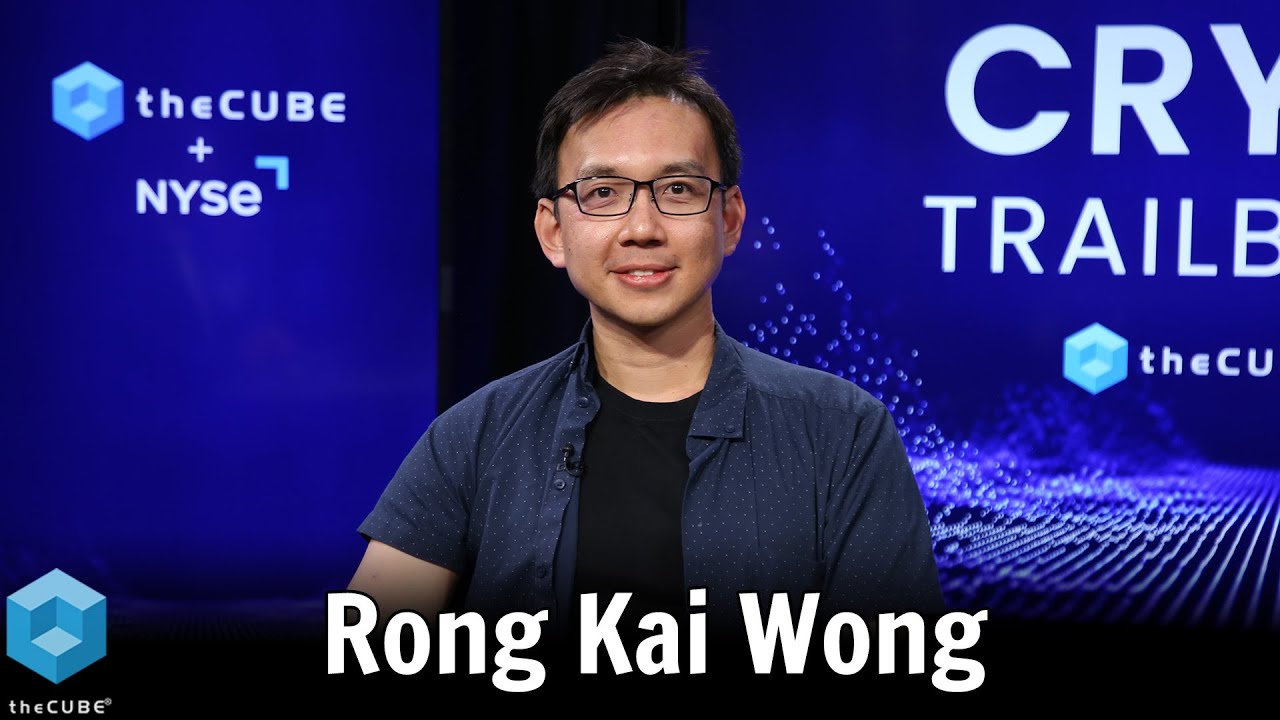
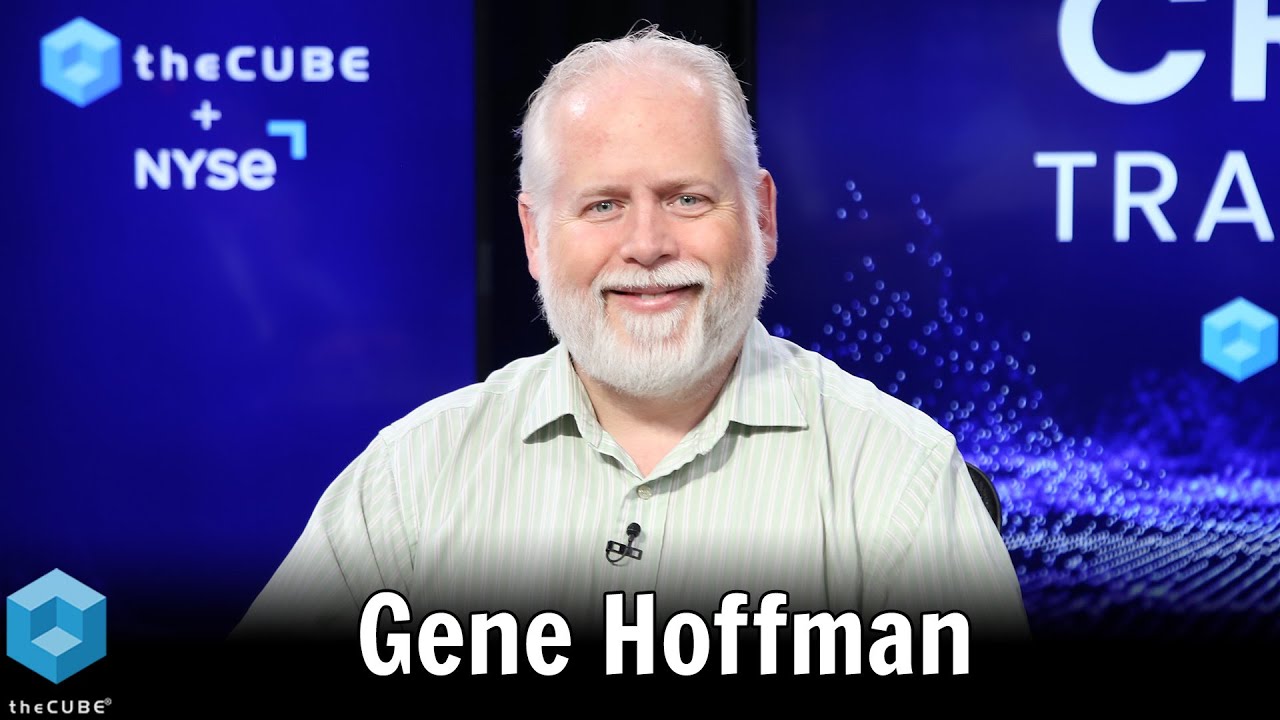
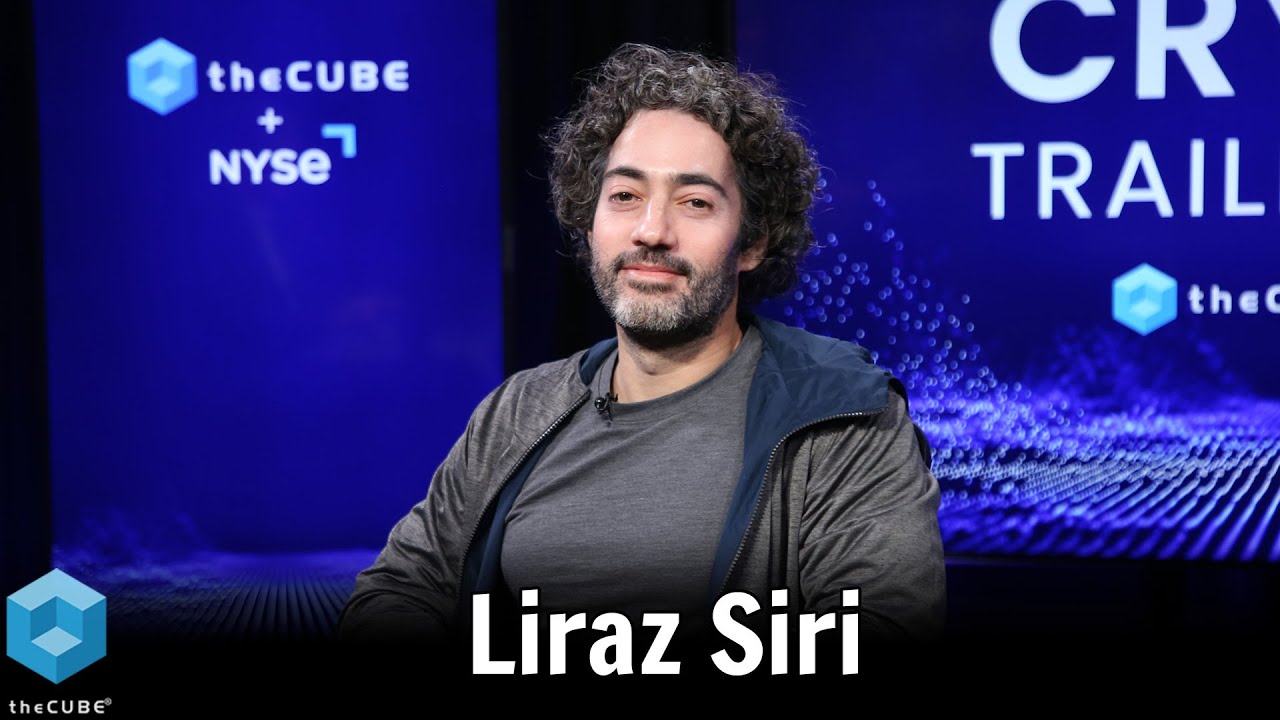
In this insightful episode of the Crypto Trailblazers series hosted by theCUBE, Mike Cagney of Figure Markets sits down with analysts from theCUBE Research to discuss groundbreaking advancements in blockchain technology and their implications for the finance sector. This video is part of the NYSE Wired digital event, aimed at bridging the gap between Silicon Valley and Wall Street by integrating technology and finance.
Cagney, an eminent figure in fintech, shares expertise on the transformative role of blockchain in financial markets during this interview. Conducted by seasoned analysts at theCUBE, the discussion delves into Figure’s innovative contributions, including their blockchain-native loan origination and securitization process. He outlines how Figure leverages blockchain to achieve cost reductions, enhanced security and improved liquidity in financial transactions.
Key takeaways from the interview highlight insights on the evolution of the Web3 ecosystem, such as the emergence of stablecoins as pivotal to transaction processes and the rise of decentralized finance (DeFi). Oltsik states these developments signify a shift towards democratizing finance, wherein truth and transparency are foundational. The conversation concludes with a look at Figure’s pioneering efforts in creating a new financial marketplace utilizing blockchain technology.
#CryptoTrailblazers #FigureMarkets #BlockchainInnovation #Web3 #NYEWired #BlockchainFinance #DecentralizedFinance #Fintech #Stablecoins
Find more SiliconANGLE news and analysis https://siliconangle.com/.
Follow theCUBE's wall-to-wall event coverage https://siliconangle.com/events/
Learn about the latest theCUBE events https://www.thecube.net/
00:00 - Intro
00:05 - Emerging Innovations in Financial Technology and Market Dynamics
02:45 - Key Elements in Financial Ecosystem Dynamics
06:20 - Blockchain: Truth and Transformation
09:39 - Shaping the Future: Innovations in Financial Markets and Stablecoin Integration
13:15 - Enabling the Future: Navigating Disruptions in Banking and Lending
16:51 - Exploring Opportunities and Building Confidence in the Blockchain Ecosystem
Forgot Password
Almost there!
We just sent you a verification email. Please verify your account to gain access to
theCUBE + NYSE Wired: Crypto Trailblazers. If you don’t think you received an email check your
spam folder.
Sign in to theCUBE + NYSE Wired: Crypto Trailblazers.
In order to sign in, enter the email address you used to registered for the event. Once completed, you will receive an email with a verification link. Open this link to automatically sign into the site.
Register For theCUBE + NYSE Wired: Crypto Trailblazers
Please fill out the information below. You will recieve an email with a verification link confirming your registration. Click the link to automatically sign into the site.
You’re almost there!
We just sent you a verification email. Please click the verification button in the email. Once your email address is verified, you will have full access to all event content for theCUBE + NYSE Wired: Crypto Trailblazers.
I want my badge and interests to be visible to all attendees.
Checking this box will display your presense on the attendees list, view your profile and allow other attendees to contact you via 1-1 chat. Read the Privacy Policy. At any time, you can choose to disable this preference.
Select your Interests!
add
Upload your photo
Uploading..
OR
Connect via Twitter
Connect via Linkedin
EDIT PASSWORD
Share
Forgot Password
Almost there!
We just sent you a verification email. Please verify your account to gain access to
theCUBE + NYSE Wired: Crypto Trailblazers. If you don’t think you received an email check your
spam folder.
Sign in to theCUBE + NYSE Wired: Crypto Trailblazers.
In order to sign in, enter the email address you used to registered for the event. Once completed, you will receive an email with a verification link. Open this link to automatically sign into the site.
Sign in to gain access to theCUBE + NYSE Wired: Crypto Trailblazers
Please sign in with LinkedIn to continue to theCUBE + NYSE Wired: Crypto Trailblazers. Signing in with LinkedIn ensures a professional environment.
Are you sure you want to remove access rights for this user?
Details
Manage Access
email address
Community Invitation
Marc Boiron, Polygon Labs
In this insightful episode of the Crypto Trailblazers series hosted by theCUBE, Mike Cagney of Figure Markets sits down with analysts from theCUBE Research to discuss groundbreaking advancements in blockchain technology and their implications for the finance sector. This video is part of the NYSE Wired digital event, aimed at bridging the gap between Silicon Valley and Wall Street by integrating technology and finance.
Cagney, an eminent figure in fintech, shares expertise on the transformative role of blockchain in financial markets during this interview. Conducted by seasoned analysts at theCUBE, the discussion delves into Figure’s innovative contributions, including their blockchain-native loan origination and securitization process. He outlines how Figure leverages blockchain to achieve cost reductions, enhanced security and improved liquidity in financial transactions.
Key takeaways from the interview highlight insights on the evolution of the Web3 ecosystem, such as the emergence of stablecoins as pivotal to transaction processes and the rise of decentralized finance (DeFi). Oltsik states these developments signify a shift towards democratizing finance, wherein truth and transparency are foundational. The conversation concludes with a look at Figure’s pioneering efforts in creating a new financial marketplace utilizing blockchain technology.
#CryptoTrailblazers #FigureMarkets #BlockchainInnovation #Web3 #NYEWired #BlockchainFinance #DecentralizedFinance #Fintech #Stablecoins
Find more SiliconANGLE news and analysis https://siliconangle.com/.
Follow theCUBE's wall-to-wall event coverage https://siliconangle.com/events/
Learn about the latest theCUBE events https://www.thecube.net/
00:00 - Intro
00:05 - Emerging Innovations in Financial Technology and Market Dynamics
02:45 - Key Elements in Financial Ecosystem Dynamics
06:20 - Blockchain: Truth and Transformation
09:39 - Shaping the Future: Innovations in Financial Markets and Stablecoin Integration
13:15 - Enabling the Future: Navigating Disruptions in Banking and Lending
16:51 - Exploring Opportunities and Building Confidence in the Blockchain Ecosystem
>> Hello, I'm John Furrier with theCUBE. We're here at our New York Stock Exchange CUBE Studios. Of course, we've got our Palo Alto Connecting Tech and Wall Street. This is part of our Crypto Trailblazers, NYSE Wired community and network. Of course, we're breaking down all the action from the people making it happen. As blockchain and crypto digital money meets new decentralized infrastructure, the game is accelerating with stablecoins and all the regulation that's coming in. The policy is really clear in the air in terms of seeing what's visible in terms of the value proposition. Got a great guest here, the CEO Polygon Labs. Marc Boiron is here. Marc, thanks for coming in. Appreciate you. We're just down at FinTech.TV. Now you're back up in theCUBE in our studios overlooking the floor. Thanks for coming on.
Marc Boiron
>> Thanks for having me.>> I love this wave right now because when you start to see standards or at least some de facto clarity, pun intended, Clarity Act, and you get the Genius Act, you starting to see a really good formation of how the wave is rising up and then the tide is floating all the boats. Decentralized infrastructure works when it's interoperable. It works when it scales. It works when it's secure. It works when it has all the checks and balances of the governance and the compliance and all the things that are needed for the banks and the financial institutions to come in. So that's all kind of coalescing in the confluence that's happening right now. You guys in the middle of it, explain what you guys are doing. You guys are really setting the table for what looks to be a great web-like experience. Explain what you guys are doing.
Marc Boiron
>> Yeah. Most people think of Polygon for Polygon PoS, which is really settlement infrastructure for payments and RWAs, but another important part of what we do, and it's really core to our mission, is bringing together all of Web3 as one. So if you think of what exists today and you can go back to the internet when it was initially created, there were multiple networks that were independently operating. If that had remained that way, the experience that we have on the internet that it feels very seamless wouldn't exist. TCP/IP came along and suddenly it felt seamless, and the same thing needs to exist in blockchains. You've got Polygon. You've got Arbitrum. You've got Solana. You've got Ethereum. You've got all of these different blockchains. If you think today of the experience to actually get onto one of these blockchains and then need to go from one to the other, it is a difficult experience. People often ask, "Are we ready for mass adoption?" My answer is on an individual blockchain, if that was the only thing that would exist, the answer is yes. But what's going to happen if we were to try to do that today is somebody would come and use Polymarket on Polygon and then they would see a cool game that they want to use, they wouldn't know whether it's on Polygon or elsewhere and they would spend 20 minutes trying to figure out, "How do I go from Polygon to Arbitrum?" as an example. So, really, we are developing something that we call the Agglayer, which is really intended to be that TCP/IP, that interim layer over any custom network so that everyone can use it in seamless way.>> Yeah. I'm old enough to remember the OSI model, open systems interconnect where TCP/IP was that key layer of abstraction, and underneath it was all standardized, right? So that was a key moment in time because at first it was just more of a seven-layer model and then ended up working. Before that, we had many computers, IBM, Digital Equipment Corporation, all the people that now are pretty much out of business, those proprietary network operating systems. It was a hassle and you had to have specialism in that if you were a developer. You had to know the network protocols if you were in that world. Now with the web, that was easy because the internet was formed by the government, but then the web layered on top. Now, in this world is abstractions are critical. So how do you guys look at that when someone says, "Is it truly seamless"? Because some would say, "Hey, maybe it's harder to truly do like a gateway." What would be your answer to that when you say, "Okay. We cracked the code on the interoperability"? What's the key secret sauce? What do you guys do?
Marc Boiron
>> Yeah. Really, for me, what it comes down to is number one, security, is we need to maintain security across all of it. So that's the most important. Nobody cares about that, but it's the thing that needs to matter maybe the most. But the second part comes down to just not knowing that they're what chain you are on. It shouldn't matter. So what this should look like, if you assume crypto wallet infrastructure is going to be the infrastructure that we interact with, then what you should be able to see is you see an asset and all you're deciding is, "I want to use that asset." You're not thinking, "Is there what blockchain? Is there even a blockchain frankly underneath it?" You're not thinking about that. You're not thinking about, "Okay. Right now, I have to think, okay, I want to use it on this app. What chain is that on? What chain is my asset on?" You wouldn't. You just have one interface and you're saying, "I want to use this application." Seamlessly, under the hood, you're moving from one to the other, which is completely doable once that infrastructure gets built up.>> So it's seamless.
Marc Boiron
>> Seamless.>> All right. So you guys got a great market. The market opportunities, obviously there we're seeing the wave. Talk about the business, the business model. Are you guys targeting enterprises developers? Because when I hear you talking, I'm going to think, "Okay. I'm a developer. I'm an end user. I shouldn't care. But if I'm coding apps, I need to know." What is the focus? Who are you guys targeting? What's the business model? Take a minute to explain that.
Marc Boiron
>> Yeah, that's a good question. Part of the idea of you need this being able to seamlessly go from one chain to another, there's something underlying that which is this idea that chains shouldn't do everything. They should actually be specific to things. Just like a website is usually specific to a topic or an application is specific to an application, a blockchain should be specific to something. Because blockchains are so new, they've done everything and now we're starting to see that specialization, right? On the Polygon side, for example, Polygon PoS specializes on payments and RWAs. There's DeFi-specific chains. There's DePIN-specific chains. That infrastructure is all being built on essentially blockchain stacks. So we have a stack that anyone can use, spin up a new blockchain. You connect it to this interoperable piece, and that's what you're offering. One of the very important things here when you think about institutions and who you're really targeting is you need to be able to package something up that they can take out of a box immediately be interoperable with everything else with all the tools that you want on top so they can offer that seamless experience. So we think about this not from A, are we targeting just institutions or are we targeting just Web3-centric developers? It's more of a what do they each need? We have a we refer to as chain development kit. We have an enterprise stack, then we have a non-enterprise stack. The whole point is they have different needs.>> It's not the classic "We're targeting developers. Use our stuff." You're targeting people deploying infrastructure for assets, RWA basically. If I'm a bank or I'm in an institution, I'll have developers. I'll have infrastructure people. I'll need to do that system-thinking design. Is that right? Did I get that right?
Marc Boiron
>> Yeah, that's right. We want to give them the basics, what they want to build on top of it. They have the expertise. They know their business. We just need to make it easy for them, right? They should be able to write things in the language that they want to write it in. They should be able to plug into APIs instead of just writing smart contracts. We need to hand them something that they can then go run with.>> Is the driver for you just the accelerated assets on chain wave? Is that a big part of what you guys see?
Marc Boiron
>> Yeah. I actually think this is fundamental and a lot of people miss this in crypto. I think it's the only thing that matters in crypto. What I mean by this is that->> Money, assets....
Marc Boiron
>> when you look at Web2, what is the important thing? It's information. When you look at Web3, the content is assets and that's the thing that matters. It's like you can have tons of apps, you can have tons of all, none of it matters if you don't have assets to actually use them. Yeah, assets is really key.>> I think that's the fundamental to start with the enabler because that's the core. I'd love to get your thoughts on use cases because one of the things that's coming up from our Crypto Trailblazers series from these leaders we're talking to is there's new productization of things that are enabled by that, like financial products, technical products, how you leverage and stake your own asset. I mean, just all kinds of new derivative, maybe that's not the right word, new ways to think about how an asset is translated. What is your thoughts on that and what are some of the use cases that you guys see early on and what would be some of the dots you'd connect?
Marc Boiron
>> Yeah, I think the biggest one that everyone is starting to know about is stablecoins, right? You're taking an off-chain asset being a dollar. We on Polygon have 16 different currencies, so there's actually much more than just the dollar, for example, but you're bringing those on chain and what you're doing is you're taking something that is localized and when it's not, it's slow and expensive to something that is now global, fast and cheap in stablecoins. To me, that's the top of mind most obvious one that is incredibly disruptive. I think the second one that comes to mind is DeFi, decentralized finance, right? When you look at that, you think of right now when you want to do anything in the financial system, you're dealing with a bunch of intermediaries. Today, I can take a stablecoin and without talking to anybody, I can go and earn a return on that stablecoin by interacting with a smart contract and not by interacting with a person. I don't need any approvals, anything of that nature. This gets to the concept of RWA or tokenized assets that ends up being really important. I was actually talking to a banker last night at dinner and we were having a conversation. They're like, "I just don't see anything disruptive about it. It lowers costs," which is true. Every institution's interested in tokenized asset because it lowers costs. I think what that's missing is it brings a second very important thing, which is collateral management. You can now take that tokenized version and you can go use it as collateral in a DeFi market and you can go borrow against that. Now, from a Web3 crypto person's perspective, they see then they're like, "Ooh, I can go leverage it up," and what we call looping it and go get 16% returns on a 9% return asset. But when you think about it from a real use case, think of a treasury manager who says, "I want to hold Apollo's ACRED product that is on Polygon." What that allows them to do is earn a 9% yield. When they say, "I need liquidity," they don't go talk to a banker. They literally deposit it. They go borrow at an 80% LTV and they now have the cash that they need to do anything overnight in stablecoins that they need.>> I mean, that is to me the direct monetization value of what's eliminated here. I can see how banks might throw shade on it because they're the ones who are making the money, but also I can see how they go to leverage because I think about all the things that are going on. I think about that movie, The Big Short, a tranche of this, and I'm betting on that and it's like you can have a... Comes collateral out here of my stablecoin, but it's mixed in with a treasure. I mean, you can almost get kind of convoluted. How does the TradFi and the DeFi systems equalize or normalize around that? Because I'm like, "Wow. How do you track this? Because I have a piece of this and I have a piece of that." I mean, what's your thoughts on that? Because I know your legal background, but also is that a feature or a bug or is it just the system takes care of it? What's the view on that? It's kind of a weird scenario on what I about.
Marc Boiron
>> I think the nice thing about blockchains is they're all transparent. So it all comes down to how do you help people visualize these things because it's all there. There's no secret there. So the question then becomes how do we take a blockchain transaction, which right now you look at a block explorer and it has tons of random letters and codes and stuff like that, that tells you everything about the transaction. How do you bring that to people so that they visualize it in the charts and graphs that they're used to seeing? I think that'll be a huge step because again, they shouldn't care about what's going on under the hood. They should just care about what's actually happening in the end that I can see. But this ties into the same banker I was having a conversation with mentioned this idea of, "In finance, one of the ways that we make money is through inefficiencies. We like inefficient systems because we get to make money off of inefficient systems." This came up in the context of me saying when we... It was like an agentic payments conversation around AI.>> Exactly.
Marc Boiron
>> I was talking about how right now when people are doing things in AI, they are having AI agents do work, and then on a monthly basis, if they're accumulating money, they might make payments or every week or something like that. My point was, well, let's just bring in stablecoins, let the agents pay each other in stablecoins. They can be paying each other every second. The answer was we don't want that. Users and the end users want that, but if you are in finance, you don't. So there is some tension that exists there and the question's going to be how much pressure are users going to put into wanting the better solution.>> Marc, I mean, it's a great cultural conversation because I was having a conversation with a friend about how the cloud came about. If you go back to 2007 or '08, when Amazon really hit the scene and then fast-forward, say, 2011 or 2012, AWS, Amazon Web Service, was considered nothing. It was like, of course, anyone who's a developer or an entrepreneur used it because they didn't have to buy servers and deploy a data center. At that time, the people that were involved when we were there, I think, early in 2008, but Netflix came on early. Now you've got Capital One. The conversation was, "Why are you doing that?" Adrian Cockroft who ran Netflix's infrastructure had a famous line. I want to tie this what you were just saying. He said, "We did it because..." And he's a genius. He's a very good visionary too. He said, "It was easier to teach a developer how to run operations in the cloud than teach an operator how to code."
When you look at it now, you're like, "Actually, he's right because the ops are now programmable." So if you think about what's going on in banking, it's easier to teach a developer or someone who's crypto-native to run a bank than teach a bank how to code. Now, you may not because you sell, but that's a cultural shift. That is an absolute flip. What's your reaction to that? I mean, kind of weird analogy, but I see this culture happening where it's programmable money, but money's a different thing than a bank and you have all these disparate systems.
Marc Boiron
>> I strongly agree with you simply because we've actually seen it happen already. When you look at DeFi, I try to tell people in crypto this all the time, what we do most of the time in DeFi is recreate things that banks already doing and we're just trying to do them better, right? When you think of a lot of the leverage products that exist in crypto or just more some of the simple products that exist in DeFi, these are all things that are not new to finance. They've existed in finance for a long time, but the crypto people are doing them because they're creative. Some of them did spend time in traditional finance and understand it, and so they're already doing that. The part that we haven't done yet is that cultural shift in the way that you're describing on the other end of the spectrum.>> It's interesting because if that happens, first of all, I think we were in violent agreement, but if you believe that to be true, say I think it will be true, but let's just say we think it's going to be true, just the disruption of what that means, that means there'll be dead companies. That means there'll be roadkill. That means there will be people who don't make it. So you might have a situation where you have people on two sides of the street on the wrong side when it flips mainstream. I mean, that's what we're seeing as an entrepreneur. You guys are building out this company. How do you explain that to someone? I mean, because it's hard to explain because early days, the best, it wasn't obvious, but for insiders, it was. It was, but they just arbitrage that lack of understanding. I mean, Amazon was misunderstood for a long, long time, but the people who got it, got it. How do you explain that to people? You just tell them you're going to be roadkill if you don't get on board?
Marc Boiron
>> Yeah. Look, your cloud example is one of the best examples you could put to, and we use it all the time because it is just the perfect example. But you see it over and over again, right? The Uber example, obviously, there's always disruption.>> You mean the legacy incumbents?
Marc Boiron
>> Legacy incumbents getting->> Misplaced....
Marc Boiron
>> just beat out by somebody else. I think that one thing that I think is a little different is I don't think any traditional institution is ignoring this, right? They all have Web3 arms. They all have strategy people who are spending time thinking about this.>> They've been working on stuff too. Everyone, they wouldn't admit it until this year, but I know all the banks that I talked to had projects going on.
Marc Boiron
>> Oh, yeah. Yeah.>> They've been working on this.
Marc Boiron
>> We've been talking to them. We were working with, I mean, some of the institutions three years ago, four years ago there already, all of them are doing it. The difference is they've moved from... We would only do pilots to we will actually put assets on chain. I think somebody like BlackRock deserves a lot of credit with BUIDL. When they were able to say, "Hey, we're going to tokenize this money market fund and bring it on chain," that was like an eye-opener for everybody. They're still approaching it in that way, which is like step number one, if you talk to any institution is let's tokenize assets on chain. Let's get our feet wet is their way of doing it, but in recognition of we need to make sure we're not missing something. Now, the reality of how these things develop though is they do that, but on the other end, what you've got new DeFi companies doing is much more aggressive innovation and the question always becomes do the incumbents innovate fast or do they wait too long?>> Yeah, I'm an optimistic person, so I'll put my doom and gloom scenario aside because I think cloud's a good example. However, with AI, if you look at some of the AI trends as generic as human in the loop, it's a co-pilot, then yeah, agents are out there. If you have domain expertise in AI, you're winning. That's key to the success, the data, the domain expertise. So I would say that one wild card scenario here in the world we're living in now relative to DeFi and TradFi is the banks could be the banks in the loop. So if they have the domain expertise, it's really how they dogmatic around certain things and they have to really understand that. So I have to ask you, I think that's probably a more realistic scenario, so what are the dogmatic things they got to let go of? Because yes, some stuff will be automated and changed. Where should they lean in and do what Netflix did with AWS? How would you advise an institution or someone who's forward-thinking and saying, "Okay. Don't look at the big picture. You got to let that go. Maybe that's your favorite pet or toy or whatever system, but it's not going to last, but focus on this." What would be that narrative?
Marc Boiron
>> I love that question. The biggest one is working on things in the way that you know how to work on them and here's what I mean by that, which is if you actually were to ask what is the thing that is slowing down an institution most? The answer is directly interacting with a smart contract and a lot of this is for security reasons, is if a bank wants to start working with something on a blockchain, what they want is they want an API because they're used to working with APIs. If they need to do things directly on a chain, then it requires an internal process that is going to take a very, very long time and we've dealt with this a lot. So I think one of those things is, "Hey, you can build secure contracts, build the expertise to build those secure contracts. Start getting that muscle now. Don't go through a one-year approval process to figure out whether you want to interact with smart contracts." Now what you're doing is interacting with APIs that lets you test things, but you're not getting the real muscles that you need.>> Get some wins, get some identified use cases, low-hanging fruit, get the muscle building, and that's the same with the AI. So I want to ask you something because this is interesting because I'm always fascinated by which industries will adopt things faster. If you go back to, say, cloud or even other IT environments, the regulated industries were the worst, telecom, healthcare, oil and gas, finance, very strict regulated, by the book, all these rules and always were moving slow. When AI came into the picture, they were lighting up because they did all that prep for the wrong reasons and they had all the data lined up. So I would say that the institutions would have all this working around the grinding out, the KYC, all the stuff that they need to manage on a regulatory basis. That's not going to hurt them, so that's kind of like a good muscle. How would you advise that piece? Because I think that's a superpower if harnessed.
Marc Boiron
>> Yeah. It all comes down to the same issue, which is always how much time are we going to spend on this thing that might become an important part to our business when we have all of this other stuff? What's happening right now on this exact front is you have startups that are all the ones coming up with the KYC processes and everything else with the goal only of satisfying the incumbents who are already doing that very, very well. So the answer really comes down to, okay, well, why don't we think about how it is that we leverage what we already have for an on-chain world rather than waiting for somebody else to go ahead and develop that, which is never going to actually fit what you need ideally? That's one thing. Then the second thing would be strangely enough is just the lobbying work that needs to be done. An example that I'll give is one thing that would make everyone's life easier on a blockchain and off a blockchain is if you could reuse KYC from one institution to the other, right? The idea that right now you need to go and do KYC at every single institution, it's somewhat absurd, right? I think that one of the things that has opened this conversation is this idea of zero-knowledge proofs. I don't know if you've covered it on the show at all, but the general idea being->> Identity. I mean, math is great for crypto-proofs. They're proven, they're out there.
Marc Boiron
>> Yeah. You could prove things about your identity without actually revealing that information. Once you can do that, what should be able to happen is instead of having a thousand honeypots of information, you should be able to have one that everyone shares where that information is never actually being revealed, but is being trusted through this cryptography. If you actually had banks, for example, trying to push forward with that and there's probably some consortium that comes together around one kind of pot->> Are you seeing any work there? I mean, we are covering that. I mean, I just did a series on quantum readiness because this month we're starting to see operational testing around quantum rates. So we all know that these keys are being harvested and then they're going to be decrypted. Of course, crypto with quantum computers will be used by the bad guys first, not the good guys. This is already being discussed. That's coming from NIST and these industry standard groups. So the question is, are you seeing that dialogue or is it more of a wish list from your standpoint?
Marc Boiron
>> I mean, there's a lot of that dialogue in the crypto community around ZK specifically because it's going to become a more and more important part. I'm not deep enough in the ZK world, although as Polygon we have->> It's a must-have....
Marc Boiron
>> one of the leading ZK team.>> I think you're right, it's a must-have because you can have an identity system without revealing and maintaining your privacy.
Marc Boiron
>> Yes.>> Why wouldn't you?
Marc Boiron
>> Yeah, exactly. There's literally no reason.>> All right. I want to ask you before we get into some of the things, your goals for your business. I get this question all the time. I love to see get you an answer from you is that people are like, what's TradFi and DeFi? What's the difference? How would you describe TradFi and DeFi? It comes up all the time because people like learning the terms. What would be your definition?
Marc Boiron
>> Yeah. It's probably almost easier starting with DeFi. I think the DeFi being these systems make things happen from a financial perspective, meaning you are interacting with smart contracts on a blockchain. Those are the things that are custody in the assets. Those are the things that are being trusted is the code. To me that is DeFi. TradFi is the world that we live in where we're trusting people and institutions with decisions, money->> Trading, stocks....
Marc Boiron
>> assets, everything.... >> stocks trading kind of thing. So the front-end basically.
Marc Boiron
>> Yep.>> So front-end, backend.
Marc Boiron
>> Exactly. That's a good way of putting it. Actually, there's this concept of the DeFi mullet thesis. It's, hey, something we spend a lot of time on, which is this idea of we generally put it as FinTech in the front, DeFi in the back. So you take the traditional finance experience that is very good, but then you basically just use the backend being DeFi, which is frankly a better backend than what exists today.>> Well, you guys are doing great work. I love the interoperability. Let's get into some of the commercialization side of it, which is highly rampant right now. It's accelerating. We cover Nvidia accelerated computing. We got now acceleration on DeFi, TradFi as well. What is the business model for you guys going forward? How is your business doing? Can you just give some stats on what kind of throughput you guys are seeing in terms of performances? Where's the momentum? What's the outlook growth look like?
Marc Boiron
>> Yeah. Most of this will be focused on the blockchain that we have. That's Polygon PoS. This is definitely a misunderstood part. What's the business model around a blockchain? The right way to think about it is a blockchain basically has a set of validators who operate it. They're really you could almost virtually call it the owner of that business, of which we might be a validator or two and you're basically earning based off of that. That is the business model is you want more usage of your blockchain so that there's more fees that are earned by that set of validators, and that's really it. So instead of it being a centralized company that earns the fees, it's this digital effect .>> If I own the chain and you're owning the fees, how do I get paid?
Marc Boiron
>> We developed the software for it, but being that we are one of those validators, we receive fees as well as part of it.>> So you have a software license fee?
Marc Boiron
>> It's totally open source. It's open source, and basically it's all transaction based. So user comes and uses the blockchain. They pay the gas and that gas goes to validators.>> You mean you're a fee-based monetization?
Marc Boiron
>> It's fee based.>> Yeah. So here's the software. Any professional services involved or is that just will turn the turnkey?
Marc Boiron
>> That's part of it. So it's really just come use the software. This is all user-based. It's not developers. What we want to do is we want to attract a ton of applications, ton of FinTechs who want to put their stablecoins on here so that they bring users to use the blockchain. I almost view it as the business model for us is increasing distribution through others.>> I have 15 million of my audience members out there. I want to bring my own chain. I come to you. What do I do? I just say, "I want my own cube chain," and then up and running. I have to have some assets on there.
Marc Boiron
>> That's different. I was describing the Polygon PoS model. Then there's the model of I want my own blockchain. That monetization strategy is actually very different for us. We take nothing off of that whatsoever. It's completely open source and you come and you use it. Why do we care about that? Because what we offer is it on our interoperability solution. Now when people want to move between chains, there will be a fee associated with that.>> So you're investing in the interoperability piece because the long game there is more transactions on PoS.
Marc Boiron
>> Yeah. A lot of on PoS and across->> Across chains....
Marc Boiron
>> that interoperability solution. I think a lot of people in crypto really focus on one to two-year outcomes. One thing Polygon's done well for better or worse in the crypto world is we've always had 10-year outlooks on things. For us, interoperability, we know this is something that's going to take three to five years to drive significant volumes, but what you do see today is that there's massive demand for it already. With every new chain that's coming and there continue to be new chains, that's just more demands.>> Marc, great conversation. Final question for you is five years out, seven years out, what's that preferred future look like for you? In your mind's eye, what does that look like?
Marc Boiron
>> I describe this all the time. I use the 10-year timeframe. Let's use seven years.>> Ten's fine, go to 10.
Marc Boiron
>> Every new business that starts, it doesn't matter. Traditional finance software doesn't matter. They're going to ask themselves a question. They're going to say, "Do I want to do this on a blockchain or not?" Right now, they don't ask themselves that. What they ask themselves is, "Do I want to do this on AWS or GCP?" They will ask themselves, "Do I do this on a blockchain or do I not?" A portion will not. I think the idea that blockchains will eat the world is ridiculous. There's use cases for it and there's not. For those who do, then they're going to need to decide, "What do I end up using?" Most of the time what they're going to want to do is create their own chain and they're going to default to, "We create it on the interoperability solution that Polygon created because there's network effects around that." Now when they go ahead and they launch their chain, they can offer it to their users and users are going to be using blockchains the way they use websites today. That's the future that I'm looking for.>> I mean, the network effects use because there's only... It's digital, so the network matters. That's all that matters is the network effects. Marc, thanks for coming in. What's your personal goals this year? What are you looking to do? Hire, funding, going public. What's the plan? Republican towards NYSE, but what I mean, what is your goals for the next year?
Marc Boiron
>> Yeah. For us, it's all about adoption on the payment side of things. We've got a big hire that we're going to be announcing soon on the payment side of things. I think we have six months in a row of straight upward growth on the payment side on Polygon. I think we hit $500 million in just payment provider payments last month. To me, I want to see that billion-dollar number. At the end is if December we hit a billion dollars in payment provider payments on Polygon PoS, then that's the big target that we want to hit and I think we're well on track to do that.>> Well, thanks for coming on. I really appreciate it. Cryptocurrency and infrastructure, the blockchain, again, it's going mainstream. Stablecoin's really going to bring it in a lot of forces together. Again, Crypto Trailblazers blazing the trail for digital life. It's just a matter of time and that's going to happen. All this is going to happen. Of course, theCUBE's doing its part to bring that to you. I'm John Furrier, your host. Thanks for watching.
>> Hello, I'm John Furrier with theCUBE. We're here at our New York Stock Exchange CUBE Studios. Of course, we've got our Palo Alto Connecting Tech and Wall Street. This is part of our Crypto Trailblazers, NYSE Wired community and network. Of course, we're breaking down all the action from the people making it happen. As blockchain and crypto digital money meets new decentralized infrastructure, the game is accelerating with stablecoins and all the regulation that's coming in. The policy is really clear in the air in terms of seeing what's visible in terms of the value proposition. Got a great guest here, the CEO Polygon Labs. Marc Boiron is here. Marc, thanks for coming in. Appreciate you. We're just down at FinTech.TV. Now you're back up in theCUBE in our studios overlooking the floor. Thanks for coming on.
Marc Boiron
>> Thanks for having me.>> I love this wave right now because when you start to see standards or at least some de facto clarity, pun intended, Clarity Act, and you get the Genius Act, you starting to see a really good formation of how the wave is rising up and then the tide is floating all the boats. Decentralized infrastructure works when it's interoperable. It works when it scales. It works when it's secure. It works when it has all the checks and balances of the governance and the compliance and all the things that are needed for the banks and the financial institutions to come in. So that's all kind of coalescing in the confluence that's happening right now. You guys in the middle of it, explain what you guys are doing. You guys are really setting the table for what looks to be a great web-like experience. Explain what you guys are doing.
Marc Boiron
>> Yeah. Most people think of Polygon for Polygon PoS, which is really settlement infrastructure for payments and RWAs, but another important part of what we do, and it's really core to our mission, is bringing together all of Web3 as one. So if you think of what exists today and you can go back to the internet when it was initially created, there were multiple networks that were independently operating. If that had remained that way, the experience that we have on the internet that it feels very seamless wouldn't exist. TCP/IP came along and suddenly it felt seamless, and the same thing needs to exist in blockchains. You've got Polygon. You've got Arbitrum. You've got Solana. You've got Ethereum. You've got all of these different blockchains. If you think today of the experience to actually get onto one of these blockchains and then need to go from one to the other, it is a difficult experience. People often ask, "Are we ready for mass adoption?" My answer is on an individual blockchain, if that was the only thing that would exist, the answer is yes. But what's going to happen if we were to try to do that today is somebody would come and use Polymarket on Polygon and then they would see a cool game that they want to use, they wouldn't know whether it's on Polygon or elsewhere and they would spend 20 minutes trying to figure out, "How do I go from Polygon to Arbitrum?" as an example. So, really, we are developing something that we call the Agglayer, which is really intended to be that TCP/IP, that interim layer over any custom network so that everyone can use it in seamless way.>> Yeah. I'm old enough to remember the OSI model, open systems interconnect where TCP/IP was that key layer of abstraction, and underneath it was all standardized, right? So that was a key moment in time because at first it was just more of a seven-layer model and then ended up working. Before that, we had many computers, IBM, Digital Equipment Corporation, all the people that now are pretty much out of business, those proprietary network operating systems. It was a hassle and you had to have specialism in that if you were a developer. You had to know the network protocols if you were in that world. Now with the web, that was easy because the internet was formed by the government, but then the web layered on top. Now, in this world is abstractions are critical. So how do you guys look at that when someone says, "Is it truly seamless"? Because some would say, "Hey, maybe it's harder to truly do like a gateway." What would be your answer to that when you say, "Okay. We cracked the code on the interoperability"? What's the key secret sauce? What do you guys do?
Marc Boiron
>> Yeah. Really, for me, what it comes down to is number one, security, is we need to maintain security across all of it. So that's the most important. Nobody cares about that, but it's the thing that needs to matter maybe the most. But the second part comes down to just not knowing that they're what chain you are on. It shouldn't matter. So what this should look like, if you assume crypto wallet infrastructure is going to be the infrastructure that we interact with, then what you should be able to see is you see an asset and all you're deciding is, "I want to use that asset." You're not thinking, "Is there what blockchain? Is there even a blockchain frankly underneath it?" You're not thinking about that. You're not thinking about, "Okay. Right now, I have to think, okay, I want to use it on this app. What chain is that on? What chain is my asset on?" You wouldn't. You just have one interface and you're saying, "I want to use this application." Seamlessly, under the hood, you're moving from one to the other, which is completely doable once that infrastructure gets built up.>> So it's seamless.
Marc Boiron
>> Seamless.>> All right. So you guys got a great market. The market opportunities, obviously there we're seeing the wave. Talk about the business, the business model. Are you guys targeting enterprises developers? Because when I hear you talking, I'm going to think, "Okay. I'm a developer. I'm an end user. I shouldn't care. But if I'm coding apps, I need to know." What is the focus? Who are you guys targeting? What's the business model? Take a minute to explain that.
Marc Boiron
>> Yeah, that's a good question. Part of the idea of you need this being able to seamlessly go from one chain to another, there's something underlying that which is this idea that chains shouldn't do everything. They should actually be specific to things. Just like a website is usually specific to a topic or an application is specific to an application, a blockchain should be specific to something. Because blockchains are so new, they've done everything and now we're starting to see that specialization, right? On the Polygon side, for example, Polygon PoS specializes on payments and RWAs. There's DeFi-specific chains. There's DePIN-specific chains. That infrastructure is all being built on essentially blockchain stacks. So we have a stack that anyone can use, spin up a new blockchain. You connect it to this interoperable piece, and that's what you're offering. One of the very important things here when you think about institutions and who you're really targeting is you need to be able to package something up that they can take out of a box immediately be interoperable with everything else with all the tools that you want on top so they can offer that seamless experience. So we think about this not from A, are we targeting just institutions or are we targeting just Web3-centric developers? It's more of a what do they each need? We have a we refer to as chain development kit. We have an enterprise stack, then we have a non-enterprise stack. The whole point is they have different needs.>> It's not the classic "We're targeting developers. Use our stuff." You're targeting people deploying infrastructure for assets, RWA basically. If I'm a bank or I'm in an institution, I'll have developers. I'll have infrastructure people. I'll need to do that system-thinking design. Is that right? Did I get that right?
Marc Boiron
>> Yeah, that's right. We want to give them the basics, what they want to build on top of it. They have the expertise. They know their business. We just need to make it easy for them, right? They should be able to write things in the language that they want to write it in. They should be able to plug into APIs instead of just writing smart contracts. We need to hand them something that they can then go run with.>> Is the driver for you just the accelerated assets on chain wave? Is that a big part of what you guys see?
Marc Boiron
>> Yeah. I actually think this is fundamental and a lot of people miss this in crypto. I think it's the only thing that matters in crypto. What I mean by this is that->> Money, assets....
Marc Boiron
>> when you look at Web2, what is the important thing? It's information. When you look at Web3, the content is assets and that's the thing that matters. It's like you can have tons of apps, you can have tons of all, none of it matters if you don't have assets to actually use them. Yeah, assets is really key.>> I think that's the fundamental to start with the enabler because that's the core. I'd love to get your thoughts on use cases because one of the things that's coming up from our Crypto Trailblazers series from these leaders we're talking to is there's new productization of things that are enabled by that, like financial products, technical products, how you leverage and stake your own asset. I mean, just all kinds of new derivative, maybe that's not the right word, new ways to think about how an asset is translated. What is your thoughts on that and what are some of the use cases that you guys see early on and what would be some of the dots you'd connect?
Marc Boiron
>> Yeah, I think the biggest one that everyone is starting to know about is stablecoins, right? You're taking an off-chain asset being a dollar. We on Polygon have 16 different currencies, so there's actually much more than just the dollar, for example, but you're bringing those on chain and what you're doing is you're taking something that is localized and when it's not, it's slow and expensive to something that is now global, fast and cheap in stablecoins. To me, that's the top of mind most obvious one that is incredibly disruptive. I think the second one that comes to mind is DeFi, decentralized finance, right? When you look at that, you think of right now when you want to do anything in the financial system, you're dealing with a bunch of intermediaries. Today, I can take a stablecoin and without talking to anybody, I can go and earn a return on that stablecoin by interacting with a smart contract and not by interacting with a person. I don't need any approvals, anything of that nature. This gets to the concept of RWA or tokenized assets that ends up being really important. I was actually talking to a banker last night at dinner and we were having a conversation. They're like, "I just don't see anything disruptive about it. It lowers costs," which is true. Every institution's interested in tokenized asset because it lowers costs. I think what that's missing is it brings a second very important thing, which is collateral management. You can now take that tokenized version and you can go use it as collateral in a DeFi market and you can go borrow against that. Now, from a Web3 crypto person's perspective, they see then they're like, "Ooh, I can go leverage it up," and what we call looping it and go get 16% returns on a 9% return asset. But when you think about it from a real use case, think of a treasury manager who says, "I want to hold Apollo's ACRED product that is on Polygon." What that allows them to do is earn a 9% yield. When they say, "I need liquidity," they don't go talk to a banker. They literally deposit it. They go borrow at an 80% LTV and they now have the cash that they need to do anything overnight in stablecoins that they need.>> I mean, that is to me the direct monetization value of what's eliminated here. I can see how banks might throw shade on it because they're the ones who are making the money, but also I can see how they go to leverage because I think about all the things that are going on. I think about that movie, The Big Short, a tranche of this, and I'm betting on that and it's like you can have a... Comes collateral out here of my stablecoin, but it's mixed in with a treasure. I mean, you can almost get kind of convoluted. How does the TradFi and the DeFi systems equalize or normalize around that? Because I'm like, "Wow. How do you track this? Because I have a piece of this and I have a piece of that." I mean, what's your thoughts on that? Because I know your legal background, but also is that a feature or a bug or is it just the system takes care of it? What's the view on that? It's kind of a weird scenario on what I about.
Marc Boiron
>> I think the nice thing about blockchains is they're all transparent. So it all comes down to how do you help people visualize these things because it's all there. There's no secret there. So the question then becomes how do we take a blockchain transaction, which right now you look at a block explorer and it has tons of random letters and codes and stuff like that, that tells you everything about the transaction. How do you bring that to people so that they visualize it in the charts and graphs that they're used to seeing? I think that'll be a huge step because again, they shouldn't care about what's going on under the hood. They should just care about what's actually happening in the end that I can see. But this ties into the same banker I was having a conversation with mentioned this idea of, "In finance, one of the ways that we make money is through inefficiencies. We like inefficient systems because we get to make money off of inefficient systems." This came up in the context of me saying when we... It was like an agentic payments conversation around AI.>> Exactly.
Marc Boiron
>> I was talking about how right now when people are doing things in AI, they are having AI agents do work, and then on a monthly basis, if they're accumulating money, they might make payments or every week or something like that. My point was, well, let's just bring in stablecoins, let the agents pay each other in stablecoins. They can be paying each other every second. The answer was we don't want that. Users and the end users want that, but if you are in finance, you don't. So there is some tension that exists there and the question's going to be how much pressure are users going to put into wanting the better solution.>> Marc, I mean, it's a great cultural conversation because I was having a conversation with a friend about how the cloud came about. If you go back to 2007 or '08, when Amazon really hit the scene and then fast-forward, say, 2011 or 2012, AWS, Amazon Web Service, was considered nothing. It was like, of course, anyone who's a developer or an entrepreneur used it because they didn't have to buy servers and deploy a data center. At that time, the people that were involved when we were there, I think, early in 2008, but Netflix came on early. Now you've got Capital One. The conversation was, "Why are you doing that?" Adrian Cockroft who ran Netflix's infrastructure had a famous line. I want to tie this what you were just saying. He said, "We did it because..." And he's a genius. He's a very good visionary too. He said, "It was easier to teach a developer how to run operations in the cloud than teach an operator how to code."
When you look at it now, you're like, "Actually, he's right because the ops are now programmable." So if you think about what's going on in banking, it's easier to teach a developer or someone who's crypto-native to run a bank than teach a bank how to code. Now, you may not because you sell, but that's a cultural shift. That is an absolute flip. What's your reaction to that? I mean, kind of weird analogy, but I see this culture happening where it's programmable money, but money's a different thing than a bank and you have all these disparate systems.
Marc Boiron
>> I strongly agree with you simply because we've actually seen it happen already. When you look at DeFi, I try to tell people in crypto this all the time, what we do most of the time in DeFi is recreate things that banks already doing and we're just trying to do them better, right? When you think of a lot of the leverage products that exist in crypto or just more some of the simple products that exist in DeFi, these are all things that are not new to finance. They've existed in finance for a long time, but the crypto people are doing them because they're creative. Some of them did spend time in traditional finance and understand it, and so they're already doing that. The part that we haven't done yet is that cultural shift in the way that you're describing on the other end of the spectrum.>> It's interesting because if that happens, first of all, I think we were in violent agreement, but if you believe that to be true, say I think it will be true, but let's just say we think it's going to be true, just the disruption of what that means, that means there'll be dead companies. That means there'll be roadkill. That means there will be people who don't make it. So you might have a situation where you have people on two sides of the street on the wrong side when it flips mainstream. I mean, that's what we're seeing as an entrepreneur. You guys are building out this company. How do you explain that to someone? I mean, because it's hard to explain because early days, the best, it wasn't obvious, but for insiders, it was. It was, but they just arbitrage that lack of understanding. I mean, Amazon was misunderstood for a long, long time, but the people who got it, got it. How do you explain that to people? You just tell them you're going to be roadkill if you don't get on board?
Marc Boiron
>> Yeah. Look, your cloud example is one of the best examples you could put to, and we use it all the time because it is just the perfect example. But you see it over and over again, right? The Uber example, obviously, there's always disruption.>> You mean the legacy incumbents?
Marc Boiron
>> Legacy incumbents getting->> Misplaced....
Marc Boiron
>> just beat out by somebody else. I think that one thing that I think is a little different is I don't think any traditional institution is ignoring this, right? They all have Web3 arms. They all have strategy people who are spending time thinking about this.>> They've been working on stuff too. Everyone, they wouldn't admit it until this year, but I know all the banks that I talked to had projects going on.
Marc Boiron
>> Oh, yeah. Yeah.>> They've been working on this.
Marc Boiron
>> We've been talking to them. We were working with, I mean, some of the institutions three years ago, four years ago there already, all of them are doing it. The difference is they've moved from... We would only do pilots to we will actually put assets on chain. I think somebody like BlackRock deserves a lot of credit with BUIDL. When they were able to say, "Hey, we're going to tokenize this money market fund and bring it on chain," that was like an eye-opener for everybody. They're still approaching it in that way, which is like step number one, if you talk to any institution is let's tokenize assets on chain. Let's get our feet wet is their way of doing it, but in recognition of we need to make sure we're not missing something. Now, the reality of how these things develop though is they do that, but on the other end, what you've got new DeFi companies doing is much more aggressive innovation and the question always becomes do the incumbents innovate fast or do they wait too long?>> Yeah, I'm an optimistic person, so I'll put my doom and gloom scenario aside because I think cloud's a good example. However, with AI, if you look at some of the AI trends as generic as human in the loop, it's a co-pilot, then yeah, agents are out there. If you have domain expertise in AI, you're winning. That's key to the success, the data, the domain expertise. So I would say that one wild card scenario here in the world we're living in now relative to DeFi and TradFi is the banks could be the banks in the loop. So if they have the domain expertise, it's really how they dogmatic around certain things and they have to really understand that. So I have to ask you, I think that's probably a more realistic scenario, so what are the dogmatic things they got to let go of? Because yes, some stuff will be automated and changed. Where should they lean in and do what Netflix did with AWS? How would you advise an institution or someone who's forward-thinking and saying, "Okay. Don't look at the big picture. You got to let that go. Maybe that's your favorite pet or toy or whatever system, but it's not going to last, but focus on this." What would be that narrative?
Marc Boiron
>> I love that question. The biggest one is working on things in the way that you know how to work on them and here's what I mean by that, which is if you actually were to ask what is the thing that is slowing down an institution most? The answer is directly interacting with a smart contract and a lot of this is for security reasons, is if a bank wants to start working with something on a blockchain, what they want is they want an API because they're used to working with APIs. If they need to do things directly on a chain, then it requires an internal process that is going to take a very, very long time and we've dealt with this a lot. So I think one of those things is, "Hey, you can build secure contracts, build the expertise to build those secure contracts. Start getting that muscle now. Don't go through a one-year approval process to figure out whether you want to interact with smart contracts." Now what you're doing is interacting with APIs that lets you test things, but you're not getting the real muscles that you need.>> Get some wins, get some identified use cases, low-hanging fruit, get the muscle building, and that's the same with the AI. So I want to ask you something because this is interesting because I'm always fascinated by which industries will adopt things faster. If you go back to, say, cloud or even other IT environments, the regulated industries were the worst, telecom, healthcare, oil and gas, finance, very strict regulated, by the book, all these rules and always were moving slow. When AI came into the picture, they were lighting up because they did all that prep for the wrong reasons and they had all the data lined up. So I would say that the institutions would have all this working around the grinding out, the KYC, all the stuff that they need to manage on a regulatory basis. That's not going to hurt them, so that's kind of like a good muscle. How would you advise that piece? Because I think that's a superpower if harnessed.
Marc Boiron
>> Yeah. It all comes down to the same issue, which is always how much time are we going to spend on this thing that might become an important part to our business when we have all of this other stuff? What's happening right now on this exact front is you have startups that are all the ones coming up with the KYC processes and everything else with the goal only of satisfying the incumbents who are already doing that very, very well. So the answer really comes down to, okay, well, why don't we think about how it is that we leverage what we already have for an on-chain world rather than waiting for somebody else to go ahead and develop that, which is never going to actually fit what you need ideally? That's one thing. Then the second thing would be strangely enough is just the lobbying work that needs to be done. An example that I'll give is one thing that would make everyone's life easier on a blockchain and off a blockchain is if you could reuse KYC from one institution to the other, right? The idea that right now you need to go and do KYC at every single institution, it's somewhat absurd, right? I think that one of the things that has opened this conversation is this idea of zero-knowledge proofs. I don't know if you've covered it on the show at all, but the general idea being->> Identity. I mean, math is great for crypto-proofs. They're proven, they're out there.
Marc Boiron
>> Yeah. You could prove things about your identity without actually revealing that information. Once you can do that, what should be able to happen is instead of having a thousand honeypots of information, you should be able to have one that everyone shares where that information is never actually being revealed, but is being trusted through this cryptography. If you actually had banks, for example, trying to push forward with that and there's probably some consortium that comes together around one kind of pot->> Are you seeing any work there? I mean, we are covering that. I mean, I just did a series on quantum readiness because this month we're starting to see operational testing around quantum rates. So we all know that these keys are being harvested and then they're going to be decrypted. Of course, crypto with quantum computers will be used by the bad guys first, not the good guys. This is already being discussed. That's coming from NIST and these industry standard groups. So the question is, are you seeing that dialogue or is it more of a wish list from your standpoint?
Marc Boiron
>> I mean, there's a lot of that dialogue in the crypto community around ZK specifically because it's going to become a more and more important part. I'm not deep enough in the ZK world, although as Polygon we have->> It's a must-have....
Marc Boiron
>> one of the leading ZK team.>> I think you're right, it's a must-have because you can have an identity system without revealing and maintaining your privacy.
Marc Boiron
>> Yes.>> Why wouldn't you?
Marc Boiron
>> Yeah, exactly. There's literally no reason.>> All right. I want to ask you before we get into some of the things, your goals for your business. I get this question all the time. I love to see get you an answer from you is that people are like, what's TradFi and DeFi? What's the difference? How would you describe TradFi and DeFi? It comes up all the time because people like learning the terms. What would be your definition?
Marc Boiron
>> Yeah. It's probably almost easier starting with DeFi. I think the DeFi being these systems make things happen from a financial perspective, meaning you are interacting with smart contracts on a blockchain. Those are the things that are custody in the assets. Those are the things that are being trusted is the code. To me that is DeFi. TradFi is the world that we live in where we're trusting people and institutions with decisions, money->> Trading, stocks....
Marc Boiron
>> assets, everything.... >> stocks trading kind of thing. So the front-end basically.
Marc Boiron
>> Yep.>> So front-end, backend.
Marc Boiron
>> Exactly. That's a good way of putting it. Actually, there's this concept of the DeFi mullet thesis. It's, hey, something we spend a lot of time on, which is this idea of we generally put it as FinTech in the front, DeFi in the back. So you take the traditional finance experience that is very good, but then you basically just use the backend being DeFi, which is frankly a better backend than what exists today.>> Well, you guys are doing great work. I love the interoperability. Let's get into some of the commercialization side of it, which is highly rampant right now. It's accelerating. We cover Nvidia accelerated computing. We got now acceleration on DeFi, TradFi as well. What is the business model for you guys going forward? How is your business doing? Can you just give some stats on what kind of throughput you guys are seeing in terms of performances? Where's the momentum? What's the outlook growth look like?
Marc Boiron
>> Yeah. Most of this will be focused on the blockchain that we have. That's Polygon PoS. This is definitely a misunderstood part. What's the business model around a blockchain? The right way to think about it is a blockchain basically has a set of validators who operate it. They're really you could almost virtually call it the owner of that business, of which we might be a validator or two and you're basically earning based off of that. That is the business model is you want more usage of your blockchain so that there's more fees that are earned by that set of validators, and that's really it. So instead of it being a centralized company that earns the fees, it's this digital effect .>> If I own the chain and you're owning the fees, how do I get paid?
Marc Boiron
>> We developed the software for it, but being that we are one of those validators, we receive fees as well as part of it.>> So you have a software license fee?
Marc Boiron
>> It's totally open source. It's open source, and basically it's all transaction based. So user comes and uses the blockchain. They pay the gas and that gas goes to validators.>> You mean you're a fee-based monetization?
Marc Boiron
>> It's fee based.>> Yeah. So here's the software. Any professional services involved or is that just will turn the turnkey?
Marc Boiron
>> That's part of it. So it's really just come use the software. This is all user-based. It's not developers. What we want to do is we want to attract a ton of applications, ton of FinTechs who want to put their stablecoins on here so that they bring users to use the blockchain. I almost view it as the business model for us is increasing distribution through others.>> I have 15 million of my audience members out there. I want to bring my own chain. I come to you. What do I do? I just say, "I want my own cube chain," and then up and running. I have to have some assets on there.
Marc Boiron
>> That's different. I was describing the Polygon PoS model. Then there's the model of I want my own blockchain. That monetization strategy is actually very different for us. We take nothing off of that whatsoever. It's completely open source and you come and you use it. Why do we care about that? Because what we offer is it on our interoperability solution. Now when people want to move between chains, there will be a fee associated with that.>> So you're investing in the interoperability piece because the long game there is more transactions on PoS.
Marc Boiron
>> Yeah. A lot of on PoS and across->> Across chains....
Marc Boiron
>> that interoperability solution. I think a lot of people in crypto really focus on one to two-year outcomes. One thing Polygon's done well for better or worse in the crypto world is we've always had 10-year outlooks on things. For us, interoperability, we know this is something that's going to take three to five years to drive significant volumes, but what you do see today is that there's massive demand for it already. With every new chain that's coming and there continue to be new chains, that's just more demands.>> Marc, great conversation. Final question for you is five years out, seven years out, what's that preferred future look like for you? In your mind's eye, what does that look like?
Marc Boiron
>> I describe this all the time. I use the 10-year timeframe. Let's use seven years.>> Ten's fine, go to 10.
Marc Boiron
>> Every new business that starts, it doesn't matter. Traditional finance software doesn't matter. They're going to ask themselves a question. They're going to say, "Do I want to do this on a blockchain or not?" Right now, they don't ask themselves that. What they ask themselves is, "Do I want to do this on AWS or GCP?" They will ask themselves, "Do I do this on a blockchain or do I not?" A portion will not. I think the idea that blockchains will eat the world is ridiculous. There's use cases for it and there's not. For those who do, then they're going to need to decide, "What do I end up using?" Most of the time what they're going to want to do is create their own chain and they're going to default to, "We create it on the interoperability solution that Polygon created because there's network effects around that." Now when they go ahead and they launch their chain, they can offer it to their users and users are going to be using blockchains the way they use websites today. That's the future that I'm looking for.>> I mean, the network effects use because there's only... It's digital, so the network matters. That's all that matters is the network effects. Marc, thanks for coming in. What's your personal goals this year? What are you looking to do? Hire, funding, going public. What's the plan? Republican towards NYSE, but what I mean, what is your goals for the next year?
Marc Boiron
>> Yeah. For us, it's all about adoption on the payment side of things. We've got a big hire that we're going to be announcing soon on the payment side of things. I think we have six months in a row of straight upward growth on the payment side on Polygon. I think we hit $500 million in just payment provider payments last month. To me, I want to see that billion-dollar number. At the end is if December we hit a billion dollars in payment provider payments on Polygon PoS, then that's the big target that we want to hit and I think we're well on track to do that.>> Well, thanks for coming on. I really appreciate it. Cryptocurrency and infrastructure, the blockchain, again, it's going mainstream. Stablecoin's really going to bring it in a lot of forces together. Again, Crypto Trailblazers blazing the trail for digital life. It's just a matter of time and that's going to happen. All this is going to happen. Of course, theCUBE's doing its part to bring that to you. I'm John Furrier, your host. Thanks for watching.