In this insightful episode of the Crypto Trailblazers series hosted by theCUBE, Mike Cagney of Figure Markets sits down with analysts from theCUBE Research to discuss groundbreaking advancements in blockchain technology and their implications for the finance sector. This video is part of the NYSE Wired digital event, aimed at bridging the gap between Silicon Valley and Wall Street by integrating technology and finance.
Cagney, an eminent figure in fintech, shares expertise on the transformative role of blockchain in financial markets during this interview. Conducted by seasoned analysts at theCUBE, the discussion delves into Figure’s innovative contributions, including their blockchain-native loan origination and securitization process. He outlines how Figure leverages blockchain to achieve cost reductions, enhanced security and improved liquidity in financial transactions.
Key takeaways from the interview highlight insights on the evolution of the Web3 ecosystem, such as the emergence of stablecoins as pivotal to transaction processes and the rise of decentralized finance (DeFi). Oltsik states these developments signify a shift towards democratizing finance, wherein truth and transparency are foundational. The conversation concludes with a look at Figure’s pioneering efforts in creating a new financial marketplace utilizing blockchain technology.
#CryptoTrailblazers #FigureMarkets #BlockchainInnovation #Web3 #NYEWired #BlockchainFinance #DecentralizedFinance #Fintech #Stablecoins
Find more SiliconANGLE news and analysis https://siliconangle.com/.
Follow theCUBE's wall-to-wall event coverage https://siliconangle.com/events/
Learn about the latest theCUBE events https://www.thecube.net/
00:00 - Intro
00:05 - Emerging Innovations in Financial Technology and Market Dynamics
02:45 - Key Elements in Financial Ecosystem Dynamics
06:20 - Blockchain: Truth and Transformation
09:39 - Shaping the Future: Innovations in Financial Markets and Stablecoin Integration
13:15 - Enabling the Future: Navigating Disruptions in Banking and Lending
16:51 - Exploring Opportunities and Building Confidence in the Blockchain Ecosystem
Forgot Password
Almost there!
We just sent you a verification email. Please verify your account to gain access to
theCUBE + NYSE Wired: Crypto Trailblazers. If you don’t think you received an email check your
spam folder.
Sign in to theCUBE + NYSE Wired: Crypto Trailblazers.
In order to sign in, enter the email address you used to registered for the event. Once completed, you will receive an email with a verification link. Open this link to automatically sign into the site.
Register For theCUBE + NYSE Wired: Crypto Trailblazers
Please fill out the information below. You will recieve an email with a verification link confirming your registration. Click the link to automatically sign into the site.
You’re almost there!
We just sent you a verification email. Please click the verification button in the email. Once your email address is verified, you will have full access to all event content for theCUBE + NYSE Wired: Crypto Trailblazers.
I want my badge and interests to be visible to all attendees.
Checking this box will display your presense on the attendees list, view your profile and allow other attendees to contact you via 1-1 chat. Read the Privacy Policy. At any time, you can choose to disable this preference.
Select your Interests!
add
Upload your photo
Uploading..
OR
Connect via Twitter
Connect via Linkedin
EDIT PASSWORD
Share
Forgot Password
Almost there!
We just sent you a verification email. Please verify your account to gain access to
theCUBE + NYSE Wired: Crypto Trailblazers. If you don’t think you received an email check your
spam folder.
Sign in to theCUBE + NYSE Wired: Crypto Trailblazers.
In order to sign in, enter the email address you used to registered for the event. Once completed, you will receive an email with a verification link. Open this link to automatically sign into the site.
Sign in to gain access to theCUBE + NYSE Wired: Crypto Trailblazers
Please sign in with LinkedIn to continue to theCUBE + NYSE Wired: Crypto Trailblazers. Signing in with LinkedIn ensures a professional environment.
Are you sure you want to remove access rights for this user?
Details
Manage Access
email address
Community Invitation
Mary Gooneratne, Loopscale
In this insightful episode of the Crypto Trailblazers series hosted by theCUBE, Mike Cagney of Figure Markets sits down with analysts from theCUBE Research to discuss groundbreaking advancements in blockchain technology and their implications for the finance sector. This video is part of the NYSE Wired digital event, aimed at bridging the gap between Silicon Valley and Wall Street by integrating technology and finance.
Cagney, an eminent figure in fintech, shares expertise on the transformative role of blockchain in financial markets during this interview. Conducted by seasoned analysts at theCUBE, the discussion delves into Figure’s innovative contributions, including their blockchain-native loan origination and securitization process. He outlines how Figure leverages blockchain to achieve cost reductions, enhanced security and improved liquidity in financial transactions.
Key takeaways from the interview highlight insights on the evolution of the Web3 ecosystem, such as the emergence of stablecoins as pivotal to transaction processes and the rise of decentralized finance (DeFi). Oltsik states these developments signify a shift towards democratizing finance, wherein truth and transparency are foundational. The conversation concludes with a look at Figure’s pioneering efforts in creating a new financial marketplace utilizing blockchain technology.
#CryptoTrailblazers #FigureMarkets #BlockchainInnovation #Web3 #NYEWired #BlockchainFinance #DecentralizedFinance #Fintech #Stablecoins
Find more SiliconANGLE news and analysis https://siliconangle.com/.
Follow theCUBE's wall-to-wall event coverage https://siliconangle.com/events/
Learn about the latest theCUBE events https://www.thecube.net/
00:00 - Intro
00:05 - Emerging Innovations in Financial Technology and Market Dynamics
02:45 - Key Elements in Financial Ecosystem Dynamics
06:20 - Blockchain: Truth and Transformation
09:39 - Shaping the Future: Innovations in Financial Markets and Stablecoin Integration
13:15 - Enabling the Future: Navigating Disruptions in Banking and Lending
16:51 - Exploring Opportunities and Building Confidence in the Blockchain Ecosystem
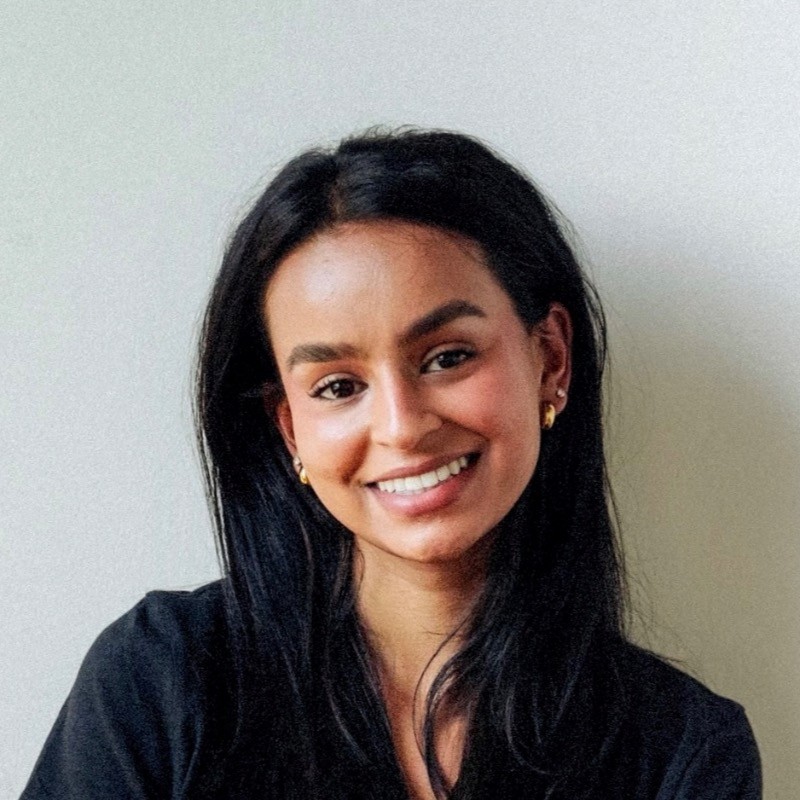
>> Hello, I'm John Furrier with theCUBE here at our New York Stock Exchange East Coast Studios here as part of the NYC Wired program and community. Of course, theCUBE has our West Coast studios in Palo Alto connecting Silicon Valley and Wall Street. Obviously, all the massive tech cover is part of our Crypto Trailblazer series where we're interviewing the leaders making it happen. The generation is shifting digital assets, the digital and physical world are coming together. We're seeing that on the AI side. We're seeing it on the crypto DeFi Trad side as well. The world is coming together and we got Mary Gooneratne here as co-founder and CEO of Loopscale, entrepreneur, founder of a growing company. Welcome to theCUBE for our Crypto Trailblazers.
Mary Gooneratne
>> Thank you so much for having me.>> Talking off camera talking about Duke and UNC, all that rivalry. You guys met your founders together, your co-founder at school together. Great story there. You're a startup in a hot area right now and Loopscale's new. Explain the origination, what you guys do, because this market here in New York is very entrepreneurial. We're not talking about hustle entrepreneurs, we're talking about structural change. The institutions are leaning in, market opportunity is massive. Give us a quick overview of how it all started.
Mary Gooneratne
>> Of course. Yeah, so Loopscale is focused on credit markets for specifically digital assets, and then later the digital economy more broadly. We started Loopscale because a lot of the early versions of borrowing and lending platforms on blockchain were very focused on crypto native assets, and were limited by early network constraints in computing and space and speed. Now, with the advent of networks like Solana, you're able to build a lending platform that not only has this transparency and visibility of earlier lending systems on chain, but can also support the types of sophisticated products you have in traditional finance today.>> How did it come together? You mentioned you met your co-founder at Duke, you guys went to school together. How did this all come together? You're sitting around saying, "Hey, we want to disrupt, we see some territory we're going to take." What was the inspiration?
Mary Gooneratne
>> Yeah, so we were originally focused on real world asset lending prior to the launch of Loopscale. For us, it was really recognizing that blockchain had this transformative power in the industry, and a lot of the focus of existing protocols at the time were on this very crypto native user base. But traditional finance is obviously orders of magnitude larger, and we saw a significant opportunity in bringing some of the sophisticated products of TradFi and the capital of TradFi to on chain infrastructure.>> Yeah, DeFi and TradFi in financial, I call it front end and back end, right? You've got the retail app side and you got the back end both exploding in value creation right now. Which side do you guys lean towards? Both sides of that? Do you see more DeFi a hybrid? What would you guys optimize for?
Mary Gooneratne
>> Yeah, so we're really excited moving forward around the DeFi mullet type product, in which for those that don't know refers to when you have a DeFi infrastructure product powering some consumer front end that's usually a Web2 type of product. A great example of this is Coinbase now has Bitcoin backed loans powered by a DeFi lending protocol. That's where we're most excited about. For us, the innovation is particularly at the infrastructure level and less so at the platform level, though we do have most of our usage from the platform right now.>> You're using the platform to enable some of those capabilities?
Mary Gooneratne
>> Yeah, it's a great place for us to start in terms of that's the most accessible point for the DeFi native users and the initial base of liquidity to get started.>> You got the good team, you guys know the market. What's the product status right now? Could you share where the product market fit momentum is or where you see that evolving?
Mary Gooneratne
>> Yeah, so the most momentum we've had and traction we've had has been around a lot of these new asset launches on Solana. That's between new staking tokens, new real world assets that are being tokenized. Something that's unique about Loopscale is we have the ability because it's order book based to support credit markets. As long as there's one borrower and one lender and there's not this large startup liquidity that's required. We've been positioning ourselves as a place where new assets can come to scale on Solana. Obviously, there's a ton of new assets coming every day from different institutions.>> Talk about the order book aspect, because this has come up a lot on this series where it's not fast and loose. This is specific that value to that.
Mary Gooneratne
>> Yeah.>> Talk about that.
Mary Gooneratne
>> This is something that's specifically Solana enabled, the ability to have an on-chain order book. Our protocol supports the parameterization from a lender, from a borrower across what collateral are you lending to, at what rates? You're effectively setting a rule set around assets you're willing to lend against. It allows you to create a lot more granular and capital efficient protocol. Then, you can abstract it as much as you want for different kind of user bases on top of that. But that's the core of the protocol, is this idea of a bilateral one-to-one loan.>> I bring that up because a lot of people that aren't inside the ropes like you are as founder, co-founder, is that they get scared, they see the movie The Big Short, they see like, "Oh, what's going on with all this credit and treasuries out there?" The stake in the paradigm is beautiful, staking against your assets is a wonderful thing. People should look into that more carefully. But the idea that the transparency of the on-chain is a significant revolution. This is what people don't understand. Share your thoughts on this envision because you got an order book, you got assets on chain, agents are going to come in there soon. AI is going to be part of that, but the software mechanisms solve that problem.
Mary Gooneratne
>> I think for us, and this is what excites me about the space more broadly, is how are you able to reduce the cost of issuing credit and minimize risk in such a way that enables you to offer more credit and enable more liquidity to flow into the space. That's ultimately what fuels all sorts of growth, both economically and different industries. For us, being able to do a collateralized loan, and so the main place is you have costs in lending or things like servicing, being able to seize the collateral and sell and all of those things start to cut off basis points, and ultimately shrink the number of loans or credit you can issue that's higher ROI. If you're able to programmatically surface the loans where every payment is automatically accounted for, you're able to automatically liquidate collateral based on a real-time price feed, automatically sell that collateral. You're suddenly shaving off all of these inefficiencies that traditionally exist in credit markets. As a function of that, increase liquidity in the space, expand the number of things you're able to offer markets for. I think my opinion is that the space of credit specifically is one of the most powerful uses for blockchain and as the most potential to be transferable.>> The efficiency piece is really powerful because that's just the waste. You clean that up and then you got targeted assets. The value on both sides work.
Mary Gooneratne
>> Exactly. It's both more efficient for lenders and now borrowers have access to new types of credit products and new types of borrowing products that they did not have access to before.>> All right, so you feel good about the product market opportunity, because that's always a risk in startups, team products. Now, customer sales, that's the other risk area that most startups have to get through. There's many risks. There's many more risks. But talk about the market momentum you have. What are some of the use cases? Can you give some examples of where you're winning and areas you're working on?
Mary Gooneratne
>> The most common use right now for borrowing and lending on chain is around different types of leverage trading and carry trading, where folks are depositing some yielding asset and accessing permissionless leverage against that asset. We've been seeing a lot of that. In particular, we've been seeing a large growth in use of other types of tokenized yield that's based in real world assets. There's a new product called OnRe that we've had a lot of success with and they're a tokenized reinsurance product. Folks will leverage that tokenized reinsurance and earn a boosted yield on that. We're seeing lots of those types of products including tokenized credit products from Alphaledger, which I think you spoke with in a previous episode. Those are the fastest growing products right now. I think moving forward those are ones we're really excited about, along with embedding the borrowing opportunity in different contexts.>> You know what I love about this market and that I think you represent is this generational shift in financial entrepreneurship. I've been talking about a lot this series recently is that disruption is massive. You have essentially products, I feel like we're talking about a product manager role like, okay, this new product, let's tokenize it. I think there's going to be a lot of arbitrage in the short term from the dislocation, but also net new products.
Mary Gooneratne
>> Yeah, I think that's super valuable and I think a qualm I've had with just technology over the past decade or so is you have a lot of circular where it's like computer scientists solving problems for themselves. Since you have all these product management tools and very tech-focused SaaS products and less so the intersection of two different industries, which is where a lot of the opportunity to innovate comes from.>> If you think about what's happening in finance, entrepreneurship and finance has been what I call hustle entrepreneurship where it's like, "Hey, get a prepaid calling card, ride under the payment rails, buy a boat, make 30 million, which is not bad." But you're not going to make a billion dollars. Here we are talking about you could literally take down the credit department at a major institution, that's structural.
Mary Gooneratne
>> Yeah, finance is the biggest industry.>> I've never seen this in my life forever.
Mary Gooneratne
>> It's been an exciting year.>> So, okay, you get the product mindset. Now, also the online community isn't new. You look at the gaming markets, you look at Solana and all the chains, a lot of the use cases are digital games, digital marketplaces. Virtual marketplaces, digital games. They have economies.
Mary Gooneratne
>> Yeah, and I think that's the beauty of having a general purpose infrastructure for transacting value, is sure you have use cases on the institutional side, but then you have companies like Collector Crypt which are facilitating trading card marketplaces. That's all thanks to, again, a general purpose platform where you can build basically anything on.>> I have to ask you, so people's watching this, say some guy or gal on Discord or someone watching saying, "Hey, I want to come in here. I have domain expertise in say finance or opportunity recognition." What do you look for for talent to hire or partner with? What's the mindset? Like you said, it's not the old school tech, that's for tech, but this is the tech principles being applied, entrepreneurial principles to taking down new market opportunities.
Mary Gooneratne
>> Yeah, and I think this is probably true for every startup, but obviously, there is a degree of expertise and domain expertise we care about. But at the end of the day, it's about, can you iterate? Can you learn from what you're iterating on and move on quickly and learn and adapt, and work ethic? In terms of what we hire for, that's what we're always looking for, is can you learn a lot? Because this space is always changing, like you mentioned. It's in constant inflow of news and things to keep up to speed on. That genuinely matter in terms of what's the best next asset for us to support, the best next use case for us to support. You need to be keeping on top of all those things. Having some prior existing knowledge only gets you so far, and it's really about how much can you keep pace with things.>> I was talking to a super nerd in Silicon Valley a while back and he's like, "John, what's going on with all this financial entrepreneurship?" I go, "Well, you're a packet guy. When you have programmability for packets, you make them move around." I go, "Now you've got programmable money." Okay, this is what DeFi and TradFi offers. Imagine having an operating system to program money like packets, put it in your pocket. He's like, "Oh, I get it." This never existed before. The banks with the money, institutions, they're very siloed, incumbent players holding the market down.
Mary Gooneratne
>> I think it's a very relevant distinction to make in terms of internet was like programmable information or email. Because I think a lot of what you hear from, like when I explained this to my parents, for example, is, okay, how is that different from Venmo? I can send money from my phone on Venmo. But describing this open store of before it was information and now it's money where people can permissionlessly and programmatically move that around, is a super valuable primitive that it's hard to intuitively grasp.>> I like how you brought up the family reference. You must get that a lot, "What do you do again?" Does that happen?
Mary Gooneratne
>> Yeah, I still get it from my mom. I've explained it on every FaceTime since we started this.>> The mom test, you got to pass the mom test.
Mary Gooneratne
>> Yes.>> It's like Venmo, but it's very efficient and no one owns it.
Mary Gooneratne
>> Yeah, she has a new analogy every single time.>> What's your favorite explanation when a newbie non-industry person says, "What do you do?"
Mary Gooneratne
>> My favorite explanation?>> Yeah.
Mary Gooneratne
>> I think crypto has become more ubiquitous that I can say lending against your Bitcoin, you have Bitcoin, you want to go buy a house or get a down payment or something like that, and you get to lock that up and borrow against it.>> See how good that is for you? That's really good. Oh, why doesn't that exist? Because middlemen are taking fees.
Mary Gooneratne
>> Yeah, why can't I do? Exactly. For people to understand, unless you've borrowed against these products before or you're a trader using margin, borrowing is not something that people have everyday. It's like you do one to two big loans in your life. It's like your student loan and your mortgage, credit cards just feel like payments, and so people don't necessarily have a grasp on it.>> Real world assets on chain has huge momentum around that. I was even saying on the interview a while back, why isn't the rainforest on the chain? You could literally think about every asset in the world, physical world, to have some digital representation. Why can't stock options be on chain? Why can't I pledge my investing schedule against a loan? These are the kinds of things that are going to come down the road.
Mary Gooneratne
>> Yeah, I'm very excited both for the tokenization of existing assets, which I think is difficult for the reasons you mentioned of there's people that are already controlling the transfer and custody right now. But I'm also excited about different brand new digital native assets. An example I use a lot is, so right now Solana has an integration with Shopify where you can get USDC paid to an address. The ability to tokenize that revenue stream and be able to borrow against this actually transferable revenue stream versus a bank like lending against a revenues, and then you have to go through the process of pulling those revenues out.>> What's the progression on your vision around businesses going on chain? Because that's another area we're seeing a lot of activity on, Mary. It's like, okay, there's public chains and I see private chains, there could be a zillion chains out there. The stable coin's been a great tailwind, honestly, to peg against the dollar. What's your view of that and how should a business think about it? You just mentioned tokenized revenue streams. That's awesome.
Mary Gooneratne
>> I'm a little biased, of course, because we are building on a public blockchain, but to me, it seems like a lot of the rush to launch new L1's or build on these brand new ones is misguided and misses what the fundamental purpose of having infrastructure like this is. Of course, it's fast and you get all these benefits from a blockchain, but at the end of the day, a lot of the times the database could be faster if you're going for a single use case and for it to be private. If you're looking to build a product that is composing with other products, which is the crux of where you lose a lot of efficiency and finances, you have all these silos. The more that you can aggregate into a single ledger, the better. The benefit for us in being on Solana is you have all these different companies that are issuing assets on chain. We have a verifiable price that as long as you trust Solana, you have a source of truth in terms of when you're liquidating the collateral, how much this asset is worth, how much that asset is worth. For a company that's building on chain or a company that's thinking about launching an L1, you have to ask yourself, why am I launching this? The goal usually should be about composability and working with other companies to accomplish some shared mission. In that case you want to->> Yeah, Solana's got a lot of communities there as well.
Mary Gooneratne
>> And a huge network effect both across liquidity and ecosystem partners and assets.>> What's the big thing about Solana that people should know about? Because, obviously, coming back into the United States it's been mostly international given the regime, but it's also hugely popular. The numbers are phenomenal, the revenue's great, it's open, public. What's the highlights that people should be aware of because it's not obvious to the bigger names. Obviously, Bitcoin's Bitcoin, but you've got Ethereum. To me these smart contracts and these agents are coming down the pike very fast and that software programmability will be a huge deal. Why Solana?
Mary Gooneratne
>> We've been building on Solana since 2021 and we haven't thought twice about moving. I think my reasoning for why we are building then is the same as it is now, once you use Solana, once you build on Solana and you've tried to build and use on other chains, you realize that there is no other place where you have greater surface area to build in infrastructure that can actually compete with traditional finance. When we're looking at these different L1's you have to focus on, okay, here's what has, maybe Ethereum has the most liquidity today, but Internet Explorer had the most number of users early on as well. You just have to think, okay, 10 years from now, when all of traditional finance lives on a public blockchain, what chain will that be? I think the answer is Solana.>> The better product does win.
Mary Gooneratne
>> The better product does win.>> The better mousetrap wins. All right.
Mary Gooneratne
>> That's what it comes down to. The better product wins and the better product is Solana.>> No one says I want a slower blockchain.
Mary Gooneratne
>> Or more expensive.>> Yeah, more expensive and all kinds of product revisions. All right, so let's say I want to do a CubeCoin on Solana. What do I do? How much programmability? What's the hurdles? What's the uptake? Assuming I've built an Ethereum version in a sandbox and I want to just go to Solana, which we did by the way, but I'm just curious.
Mary Gooneratne
>> Yeah, there's a lot of tools now to be able to launch it just from a UI, whether that's a company like Orca or Meteora, where you can launch a token pretty easily as long as you have a little bit of Sol and a wallet set up.>> Yeah. What about entrepreneurs out there? What would your advice to people who watches this and say, "Hey, you know what, I want to get into a white space." Is there areas that you see for people to jump in? Any white spaces that you think would be immediate low-hanging fruit opportunities for entrepreneurs to either huddle and go after?
Mary Gooneratne
>> Yeah, I think there's a lot of opportunity in blockchain. I think because the space is moving so quickly, it's easy to feel that maybe all the opportunities are been pulled. But if you, again, think about how big traditional finance is versus DeFi, there are so many products at an infrastructure level on the credit level and on the tokenization level of every single TradFi product there is, there's probably, we've scratched the surface of maybe 10 plus products.>> It's not late-to-the-party mentality?
Mary Gooneratne
>> You're not late-to the party.>> Everyone are kind of, well, all the good ideas are taken. I hate when I hear that. The product opportunities to create new products, financial products, not technical products, but to do a combination of both is massive.
Mary Gooneratne
>> Yeah. Finance has innovated massively just as an industry since 1970 and that's only accelerated.>> Mary, thank you so much for coming on our Crypto Trailblazer. Super exciting what you're working on, and congratulations, we'll see you certainly around.
Mary Gooneratne
>> Thank you so much.>> All right. I'm John Furrier with the Crypto Trailblazers series, part of the NYC Wired programming community. Of course, theCUBE here in the New York Stock Exchange Studio. Thanks for watching.
>> Hello, I'm John Furrier with theCUBE here at our New York Stock Exchange East Coast Studios here as part of the NYC Wired program and community. Of course, theCUBE has our West Coast studios in Palo Alto connecting Silicon Valley and Wall Street. Obviously, all the massive tech cover is part of our Crypto Trailblazer series where we're interviewing the leaders making it happen. The generation is shifting digital assets, the digital and physical world are coming together. We're seeing that on the AI side. We're seeing it on the crypto DeFi Trad side as well. The world is coming together and we got Mary Gooneratne here as co-founder and CEO of Loopscale, entrepreneur, founder of a growing company. Welcome to theCUBE for our Crypto Trailblazers.
Mary Gooneratne
>> Thank you so much for having me.>> Talking off camera talking about Duke and UNC, all that rivalry. You guys met your founders together, your co-founder at school together. Great story there. You're a startup in a hot area right now and Loopscale's new. Explain the origination, what you guys do, because this market here in New York is very entrepreneurial. We're not talking about hustle entrepreneurs, we're talking about structural change. The institutions are leaning in, market opportunity is massive. Give us a quick overview of how it all started.
Mary Gooneratne
>> Of course. Yeah, so Loopscale is focused on credit markets for specifically digital assets, and then later the digital economy more broadly. We started Loopscale because a lot of the early versions of borrowing and lending platforms on blockchain were very focused on crypto native assets, and were limited by early network constraints in computing and space and speed. Now, with the advent of networks like Solana, you're able to build a lending platform that not only has this transparency and visibility of earlier lending systems on chain, but can also support the types of sophisticated products you have in traditional finance today.>> How did it come together? You mentioned you met your co-founder at Duke, you guys went to school together. How did this all come together? You're sitting around saying, "Hey, we want to disrupt, we see some territory we're going to take." What was the inspiration?
Mary Gooneratne
>> Yeah, so we were originally focused on real world asset lending prior to the launch of Loopscale. For us, it was really recognizing that blockchain had this transformative power in the industry, and a lot of the focus of existing protocols at the time were on this very crypto native user base. But traditional finance is obviously orders of magnitude larger, and we saw a significant opportunity in bringing some of the sophisticated products of TradFi and the capital of TradFi to on chain infrastructure.>> Yeah, DeFi and TradFi in financial, I call it front end and back end, right? You've got the retail app side and you got the back end both exploding in value creation right now. Which side do you guys lean towards? Both sides of that? Do you see more DeFi a hybrid? What would you guys optimize for?
Mary Gooneratne
>> Yeah, so we're really excited moving forward around the DeFi mullet type product, in which for those that don't know refers to when you have a DeFi infrastructure product powering some consumer front end that's usually a Web2 type of product. A great example of this is Coinbase now has Bitcoin backed loans powered by a DeFi lending protocol. That's where we're most excited about. For us, the innovation is particularly at the infrastructure level and less so at the platform level, though we do have most of our usage from the platform right now.>> You're using the platform to enable some of those capabilities?
Mary Gooneratne
>> Yeah, it's a great place for us to start in terms of that's the most accessible point for the DeFi native users and the initial base of liquidity to get started.>> You got the good team, you guys know the market. What's the product status right now? Could you share where the product market fit momentum is or where you see that evolving?
Mary Gooneratne
>> Yeah, so the most momentum we've had and traction we've had has been around a lot of these new asset launches on Solana. That's between new staking tokens, new real world assets that are being tokenized. Something that's unique about Loopscale is we have the ability because it's order book based to support credit markets. As long as there's one borrower and one lender and there's not this large startup liquidity that's required. We've been positioning ourselves as a place where new assets can come to scale on Solana. Obviously, there's a ton of new assets coming every day from different institutions.>> Talk about the order book aspect, because this has come up a lot on this series where it's not fast and loose. This is specific that value to that.
Mary Gooneratne
>> Yeah.>> Talk about that.
Mary Gooneratne
>> This is something that's specifically Solana enabled, the ability to have an on-chain order book. Our protocol supports the parameterization from a lender, from a borrower across what collateral are you lending to, at what rates? You're effectively setting a rule set around assets you're willing to lend against. It allows you to create a lot more granular and capital efficient protocol. Then, you can abstract it as much as you want for different kind of user bases on top of that. But that's the core of the protocol, is this idea of a bilateral one-to-one loan.>> I bring that up because a lot of people that aren't inside the ropes like you are as founder, co-founder, is that they get scared, they see the movie The Big Short, they see like, "Oh, what's going on with all this credit and treasuries out there?" The stake in the paradigm is beautiful, staking against your assets is a wonderful thing. People should look into that more carefully. But the idea that the transparency of the on-chain is a significant revolution. This is what people don't understand. Share your thoughts on this envision because you got an order book, you got assets on chain, agents are going to come in there soon. AI is going to be part of that, but the software mechanisms solve that problem.
Mary Gooneratne
>> I think for us, and this is what excites me about the space more broadly, is how are you able to reduce the cost of issuing credit and minimize risk in such a way that enables you to offer more credit and enable more liquidity to flow into the space. That's ultimately what fuels all sorts of growth, both economically and different industries. For us, being able to do a collateralized loan, and so the main place is you have costs in lending or things like servicing, being able to seize the collateral and sell and all of those things start to cut off basis points, and ultimately shrink the number of loans or credit you can issue that's higher ROI. If you're able to programmatically surface the loans where every payment is automatically accounted for, you're able to automatically liquidate collateral based on a real-time price feed, automatically sell that collateral. You're suddenly shaving off all of these inefficiencies that traditionally exist in credit markets. As a function of that, increase liquidity in the space, expand the number of things you're able to offer markets for. I think my opinion is that the space of credit specifically is one of the most powerful uses for blockchain and as the most potential to be transferable.>> The efficiency piece is really powerful because that's just the waste. You clean that up and then you got targeted assets. The value on both sides work.
Mary Gooneratne
>> Exactly. It's both more efficient for lenders and now borrowers have access to new types of credit products and new types of borrowing products that they did not have access to before.>> All right, so you feel good about the product market opportunity, because that's always a risk in startups, team products. Now, customer sales, that's the other risk area that most startups have to get through. There's many risks. There's many more risks. But talk about the market momentum you have. What are some of the use cases? Can you give some examples of where you're winning and areas you're working on?
Mary Gooneratne
>> The most common use right now for borrowing and lending on chain is around different types of leverage trading and carry trading, where folks are depositing some yielding asset and accessing permissionless leverage against that asset. We've been seeing a lot of that. In particular, we've been seeing a large growth in use of other types of tokenized yield that's based in real world assets. There's a new product called OnRe that we've had a lot of success with and they're a tokenized reinsurance product. Folks will leverage that tokenized reinsurance and earn a boosted yield on that. We're seeing lots of those types of products including tokenized credit products from Alphaledger, which I think you spoke with in a previous episode. Those are the fastest growing products right now. I think moving forward those are ones we're really excited about, along with embedding the borrowing opportunity in different contexts.>> You know what I love about this market and that I think you represent is this generational shift in financial entrepreneurship. I've been talking about a lot this series recently is that disruption is massive. You have essentially products, I feel like we're talking about a product manager role like, okay, this new product, let's tokenize it. I think there's going to be a lot of arbitrage in the short term from the dislocation, but also net new products.
Mary Gooneratne
>> Yeah, I think that's super valuable and I think a qualm I've had with just technology over the past decade or so is you have a lot of circular where it's like computer scientists solving problems for themselves. Since you have all these product management tools and very tech-focused SaaS products and less so the intersection of two different industries, which is where a lot of the opportunity to innovate comes from.>> If you think about what's happening in finance, entrepreneurship and finance has been what I call hustle entrepreneurship where it's like, "Hey, get a prepaid calling card, ride under the payment rails, buy a boat, make 30 million, which is not bad." But you're not going to make a billion dollars. Here we are talking about you could literally take down the credit department at a major institution, that's structural.
Mary Gooneratne
>> Yeah, finance is the biggest industry.>> I've never seen this in my life forever.
Mary Gooneratne
>> It's been an exciting year.>> So, okay, you get the product mindset. Now, also the online community isn't new. You look at the gaming markets, you look at Solana and all the chains, a lot of the use cases are digital games, digital marketplaces. Virtual marketplaces, digital games. They have economies.
Mary Gooneratne
>> Yeah, and I think that's the beauty of having a general purpose infrastructure for transacting value, is sure you have use cases on the institutional side, but then you have companies like Collector Crypt which are facilitating trading card marketplaces. That's all thanks to, again, a general purpose platform where you can build basically anything on.>> I have to ask you, so people's watching this, say some guy or gal on Discord or someone watching saying, "Hey, I want to come in here. I have domain expertise in say finance or opportunity recognition." What do you look for for talent to hire or partner with? What's the mindset? Like you said, it's not the old school tech, that's for tech, but this is the tech principles being applied, entrepreneurial principles to taking down new market opportunities.
Mary Gooneratne
>> Yeah, and I think this is probably true for every startup, but obviously, there is a degree of expertise and domain expertise we care about. But at the end of the day, it's about, can you iterate? Can you learn from what you're iterating on and move on quickly and learn and adapt, and work ethic? In terms of what we hire for, that's what we're always looking for, is can you learn a lot? Because this space is always changing, like you mentioned. It's in constant inflow of news and things to keep up to speed on. That genuinely matter in terms of what's the best next asset for us to support, the best next use case for us to support. You need to be keeping on top of all those things. Having some prior existing knowledge only gets you so far, and it's really about how much can you keep pace with things.>> I was talking to a super nerd in Silicon Valley a while back and he's like, "John, what's going on with all this financial entrepreneurship?" I go, "Well, you're a packet guy. When you have programmability for packets, you make them move around." I go, "Now you've got programmable money." Okay, this is what DeFi and TradFi offers. Imagine having an operating system to program money like packets, put it in your pocket. He's like, "Oh, I get it." This never existed before. The banks with the money, institutions, they're very siloed, incumbent players holding the market down.
Mary Gooneratne
>> I think it's a very relevant distinction to make in terms of internet was like programmable information or email. Because I think a lot of what you hear from, like when I explained this to my parents, for example, is, okay, how is that different from Venmo? I can send money from my phone on Venmo. But describing this open store of before it was information and now it's money where people can permissionlessly and programmatically move that around, is a super valuable primitive that it's hard to intuitively grasp.>> I like how you brought up the family reference. You must get that a lot, "What do you do again?" Does that happen?
Mary Gooneratne
>> Yeah, I still get it from my mom. I've explained it on every FaceTime since we started this.>> The mom test, you got to pass the mom test.
Mary Gooneratne
>> Yes.>> It's like Venmo, but it's very efficient and no one owns it.
Mary Gooneratne
>> Yeah, she has a new analogy every single time.>> What's your favorite explanation when a newbie non-industry person says, "What do you do?"
Mary Gooneratne
>> My favorite explanation?>> Yeah.
Mary Gooneratne
>> I think crypto has become more ubiquitous that I can say lending against your Bitcoin, you have Bitcoin, you want to go buy a house or get a down payment or something like that, and you get to lock that up and borrow against it.>> See how good that is for you? That's really good. Oh, why doesn't that exist? Because middlemen are taking fees.
Mary Gooneratne
>> Yeah, why can't I do? Exactly. For people to understand, unless you've borrowed against these products before or you're a trader using margin, borrowing is not something that people have everyday. It's like you do one to two big loans in your life. It's like your student loan and your mortgage, credit cards just feel like payments, and so people don't necessarily have a grasp on it.>> Real world assets on chain has huge momentum around that. I was even saying on the interview a while back, why isn't the rainforest on the chain? You could literally think about every asset in the world, physical world, to have some digital representation. Why can't stock options be on chain? Why can't I pledge my investing schedule against a loan? These are the kinds of things that are going to come down the road.
Mary Gooneratne
>> Yeah, I'm very excited both for the tokenization of existing assets, which I think is difficult for the reasons you mentioned of there's people that are already controlling the transfer and custody right now. But I'm also excited about different brand new digital native assets. An example I use a lot is, so right now Solana has an integration with Shopify where you can get USDC paid to an address. The ability to tokenize that revenue stream and be able to borrow against this actually transferable revenue stream versus a bank like lending against a revenues, and then you have to go through the process of pulling those revenues out.>> What's the progression on your vision around businesses going on chain? Because that's another area we're seeing a lot of activity on, Mary. It's like, okay, there's public chains and I see private chains, there could be a zillion chains out there. The stable coin's been a great tailwind, honestly, to peg against the dollar. What's your view of that and how should a business think about it? You just mentioned tokenized revenue streams. That's awesome.
Mary Gooneratne
>> I'm a little biased, of course, because we are building on a public blockchain, but to me, it seems like a lot of the rush to launch new L1's or build on these brand new ones is misguided and misses what the fundamental purpose of having infrastructure like this is. Of course, it's fast and you get all these benefits from a blockchain, but at the end of the day, a lot of the times the database could be faster if you're going for a single use case and for it to be private. If you're looking to build a product that is composing with other products, which is the crux of where you lose a lot of efficiency and finances, you have all these silos. The more that you can aggregate into a single ledger, the better. The benefit for us in being on Solana is you have all these different companies that are issuing assets on chain. We have a verifiable price that as long as you trust Solana, you have a source of truth in terms of when you're liquidating the collateral, how much this asset is worth, how much that asset is worth. For a company that's building on chain or a company that's thinking about launching an L1, you have to ask yourself, why am I launching this? The goal usually should be about composability and working with other companies to accomplish some shared mission. In that case you want to->> Yeah, Solana's got a lot of communities there as well.
Mary Gooneratne
>> And a huge network effect both across liquidity and ecosystem partners and assets.>> What's the big thing about Solana that people should know about? Because, obviously, coming back into the United States it's been mostly international given the regime, but it's also hugely popular. The numbers are phenomenal, the revenue's great, it's open, public. What's the highlights that people should be aware of because it's not obvious to the bigger names. Obviously, Bitcoin's Bitcoin, but you've got Ethereum. To me these smart contracts and these agents are coming down the pike very fast and that software programmability will be a huge deal. Why Solana?
Mary Gooneratne
>> We've been building on Solana since 2021 and we haven't thought twice about moving. I think my reasoning for why we are building then is the same as it is now, once you use Solana, once you build on Solana and you've tried to build and use on other chains, you realize that there is no other place where you have greater surface area to build in infrastructure that can actually compete with traditional finance. When we're looking at these different L1's you have to focus on, okay, here's what has, maybe Ethereum has the most liquidity today, but Internet Explorer had the most number of users early on as well. You just have to think, okay, 10 years from now, when all of traditional finance lives on a public blockchain, what chain will that be? I think the answer is Solana.>> The better product does win.
Mary Gooneratne
>> The better product does win.>> The better mousetrap wins. All right.
Mary Gooneratne
>> That's what it comes down to. The better product wins and the better product is Solana.>> No one says I want a slower blockchain.
Mary Gooneratne
>> Or more expensive.>> Yeah, more expensive and all kinds of product revisions. All right, so let's say I want to do a CubeCoin on Solana. What do I do? How much programmability? What's the hurdles? What's the uptake? Assuming I've built an Ethereum version in a sandbox and I want to just go to Solana, which we did by the way, but I'm just curious.
Mary Gooneratne
>> Yeah, there's a lot of tools now to be able to launch it just from a UI, whether that's a company like Orca or Meteora, where you can launch a token pretty easily as long as you have a little bit of Sol and a wallet set up.>> Yeah. What about entrepreneurs out there? What would your advice to people who watches this and say, "Hey, you know what, I want to get into a white space." Is there areas that you see for people to jump in? Any white spaces that you think would be immediate low-hanging fruit opportunities for entrepreneurs to either huddle and go after?
Mary Gooneratne
>> Yeah, I think there's a lot of opportunity in blockchain. I think because the space is moving so quickly, it's easy to feel that maybe all the opportunities are been pulled. But if you, again, think about how big traditional finance is versus DeFi, there are so many products at an infrastructure level on the credit level and on the tokenization level of every single TradFi product there is, there's probably, we've scratched the surface of maybe 10 plus products.>> It's not late-to-the-party mentality?
Mary Gooneratne
>> You're not late-to the party.>> Everyone are kind of, well, all the good ideas are taken. I hate when I hear that. The product opportunities to create new products, financial products, not technical products, but to do a combination of both is massive.
Mary Gooneratne
>> Yeah. Finance has innovated massively just as an industry since 1970 and that's only accelerated.>> Mary, thank you so much for coming on our Crypto Trailblazer. Super exciting what you're working on, and congratulations, we'll see you certainly around.
Mary Gooneratne
>> Thank you so much.>> All right. I'm John Furrier with the Crypto Trailblazers series, part of the NYC Wired programming community. Of course, theCUBE here in the New York Stock Exchange Studio. Thanks for watching.