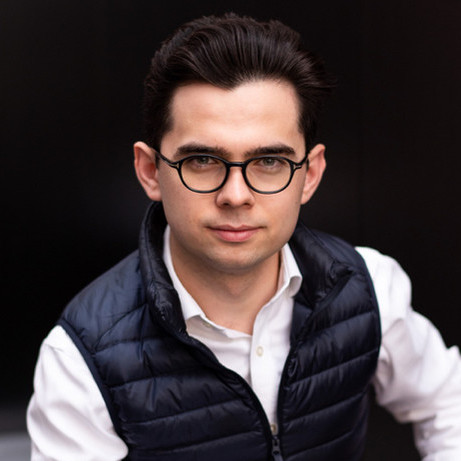
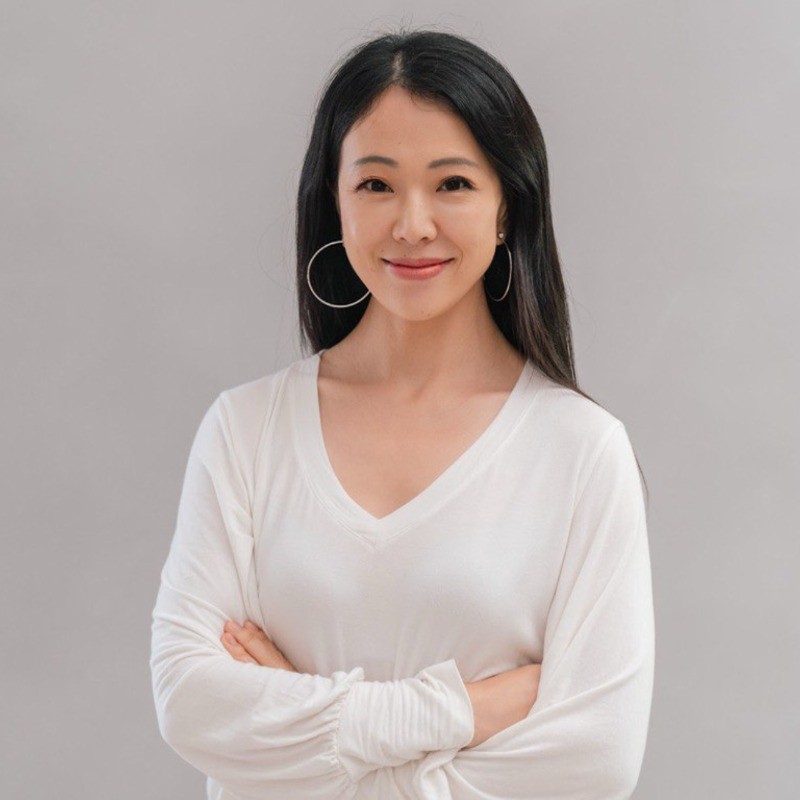
As part of theCUBE + NYSE Wired: Crypto TrailBlazers series, YZi Labs leaders Ella Zhang, managing partner, and Alex Odagiu, senior investment director, join host John Furrier to share how the firm is driving the next wave of innovation at the intersection of Web3, AI and biotech. Zhang unpacks the strategic rebrand from Binance Labs, highlighting YZi Labs’ three-pillar model of incubation, direct investment and liquid strategy that supports founders from inception through IPO. She details how blockchain and AI can securely unlock siloed biomedical data to accelerate life sciences breakthroughs while preserving privacy, and how tokenomics can incentivize responsible data sharing.
Odagiu adds perspective on working with startups through every growth stage and the convergence of crypto, AI and biotech into borderless innovation ecosystems. The discussion examines real-world trends in stablecoin adoption, the role of regulatory clarity in accelerating mainstream payments and settlement and how global community building and talent development are differentiating today’s incubator model. Zhang and Odagiu also share their thesis on delaying token launches until product-market fit is achieved, ensuring durable business models before layering in token economics.
Forgot Password
Almost there!
We just sent you a verification email. Please verify your account to gain access to
theCUBE + NYSE Wired: Crypto Trailblazers. If you don’t think you received an email check your
spam folder.
Sign in to theCUBE + NYSE Wired: Crypto Trailblazers.
In order to sign in, enter the email address you used to registered for the event. Once completed, you will receive an email with a verification link. Open this link to automatically sign into the site.
Register For theCUBE + NYSE Wired: Crypto Trailblazers
Please fill out the information below. You will recieve an email with a verification link confirming your registration. Click the link to automatically sign into the site.
You’re almost there!
We just sent you a verification email. Please click the verification button in the email. Once your email address is verified, you will have full access to all event content for theCUBE + NYSE Wired: Crypto Trailblazers.
I want my badge and interests to be visible to all attendees.
Checking this box will display your presense on the attendees list, view your profile and allow other attendees to contact you via 1-1 chat. Read the Privacy Policy. At any time, you can choose to disable this preference.
Select your Interests!
add
Upload your photo
Uploading..
OR
Connect via Twitter
Connect via Linkedin
EDIT PASSWORD
Share
Forgot Password
Almost there!
We just sent you a verification email. Please verify your account to gain access to
theCUBE + NYSE Wired: Crypto Trailblazers. If you don’t think you received an email check your
spam folder.
Sign in to theCUBE + NYSE Wired: Crypto Trailblazers.
In order to sign in, enter the email address you used to registered for the event. Once completed, you will receive an email with a verification link. Open this link to automatically sign into the site.
Sign in to gain access to theCUBE + NYSE Wired: Crypto Trailblazers
Please sign in with LinkedIn to continue to theCUBE + NYSE Wired: Crypto Trailblazers. Signing in with LinkedIn ensures a professional environment.
Are you sure you want to remove access rights for this user?
Details
Manage Access
email address
Community Invitation
Ella Zhang and Alex Odagiu YZi Labs
As part of theCUBE + NYSE Wired: Crypto TrailBlazers series, YZi Labs leaders Ella Zhang, managing partner, and Alex Odagiu, senior investment director, join host John Furrier to share how the firm is driving the next wave of innovation at the intersection of Web3, AI and biotech. Zhang unpacks the strategic rebrand from Binance Labs, highlighting YZi Labs’ three-pillar model of incubation, direct investment and liquid strategy that supports founders from inception through IPO. She details how blockchain and AI can securely unlock siloed biomedical data to accelerate life sciences breakthroughs while preserving privacy, and how tokenomics can incentivize responsible data sharing.
Odagiu adds perspective on working with startups through every growth stage and the convergence of crypto, AI and biotech into borderless innovation ecosystems. The discussion examines real-world trends in stablecoin adoption, the role of regulatory clarity in accelerating mainstream payments and settlement and how global community building and talent development are differentiating today’s incubator model. Zhang and Odagiu also share their thesis on delaying token launches until product-market fit is achieved, ensuring durable business models before layering in token economics.
>> Welcome back, everyone, to theCUBE here at our NYSE studios. Part of the NYSE Wired program, I'm John Furrier, host of theCUBE with Dave Vellante. Two days of coverage of Crypto Trailblazers. And as the world goes mainstream with crypto, entrepreneurship, innovation is happening all around the world. And of course, it's those next entrepreneurs that are going to make things happen, and bring in that change and really change the world. We got two great guests here. Ella Zhang is Managing Partner, Head of YZi Labs. And Alex Odagiu, Senior Investment Director at YZi Labs, formerly Binance Labs. Thanks for coming on, being a pioneer Crypto Trailblazer.>> Thank you, our honor.
Alex Odagiu
>> Thanks, John.>> Okay. So, I'm really excited by what you guys are doing, as we were talking before we came on, about how productive your team has been, Ella. And everyone knows Binance has been one of the biggest successes in crypto and now YZi Labs' rebranding. So, first, before we get into the reasoning of the change, the rebrand, talk about what YZi Labs is doing. You're here at the NYSE, where this is the home of the IPOs in crypto, seems to be. Got one's happening in the circle, went public, there's a few more in the pipeline. It seems to be the symbol of crypto here. What do you guys do? Explain for the folks watching and set the context.>> Yes. Thank you. So, we rebrand from Binance Labs the beginning of this year to YZi Labs, for the main reason to expand our focus from Web3 to Web3 plus AI and biotech. The reason is because we are at the intersection of the explosion of AI. And eventually, all the combination of AI and Web3 together is to advance humanity. So, we also expand our focus into biotech, where to help people, human beings to get healthier, longer and happier life.>> And putting real world assets on chain has been a big theme. You're seeing stablecoins. All the trends are lining up nicely for commerce innovation. You mentioned some of the life sciences innovation. GPUs work great there too, and so does the blockchain.>> Exactly.>> So, you're starting to see the decentralization, the tokenization of maybe my gene sequencing will be on the chain, immutable forever. I mean, these are the things that are going on. What are some of the things you're doing? You guys have a incubator. Is it you deploying capital? Can explain how it works?>> Yes. We do three main pillar things. One is incubation, direct investment, and the liquid strategy. Incubation, we do three seasons per year. Each season, we bring together 20 to 30, the top of the founders in Web3, AI and biotech. We bring them world-class mentorship, like CZ, the founder of E. Vitalik was also part of our mentorship program. And then we bring them together to form the community. And then we provide them the initial funding for them to speed up their building. And when they grow up, we see more traction, we can provide them more funding for direct investment. And even when they listed in IPO in New York Exchange one day, we can still help them to elevate them to next level. That's what we do, three pillar of the investment.>> So, from the beginning to the end of their life, potentially, or durable company, you can participate and help people?>> Yes.>> Alex, what's it like for you? What's your role? What do you do?
Alex Odagiu
>> So, I'm part of the investment team. I get to talk to a lot of founders, get to know them very well. And as Ella mentioned, we're working with them across the board from when they're a team of two co-founders, all the way when they need to hire their 50th, their 100th employees. And all that cycle gives us a lot of insight into the next themes that are coming up in crypto, AI and biotech. And what we're seeing right now is the convergence of those. And I think the technologies eventually will give the opportunity to anyone to build across any of those stacks. So, whether you are coming from the blockchain, you want to expand into AI or the other way around. Or from biotech and you want to experience the decentralized science that we've seen taking off in crypto, we can help with all of those.>> What are some of the bio examples? Can you guys share? It might not be obvious to folks. I just made it up about my gene sequencing being on the chain, but I've heard that before. What are some of the things that you're seeing go decentralized in bio? Is it intellectual properties? Is it data? I mean, give us some examples, Ella.>> Yes. So, these size still quite early. We're doing a lot of explorations. But one of the biggest problem we see is the data. So, the biomarkers and bio data now is siloed. Siloed in hospitals, in clinics, in university, in different labs. And how we can essentially putting them together to advancing the AI training. We know the AI training needs data, but then it's associated with personal identity or personal information. How we can leverage blockchain exchange, blockchain technology to put the data in the container where we don't disclose the personal information, but we can leverage the data point to train those bio-sciences.>> So, security and privacy together?>> Exactly. Exactly.>> And so, in AI, we hear a lot about semantic layers, harmonization layers to make it horizontally scalable with domain-specific data. That's great in databases, but now with decentralized you get authenticity and privacy; is that right?>> Exactly. Exactly. Also, the incentives layer of token economics, also incentivizes some patients, some personal data to be shared, and to be monetized, and to be leveraged by training.>> One of the things I'm curious, if you both could weigh in on this, is around 2015, we saw... I also have a studio in Palo Alto from Wall Street at Silicon Valley. All the alpha engineers were really focused in on blockchain, because it is actually attractive for people who want to solve big problems. So, there was a surge of activity, startups and obviously around 2018, regulatory wins were... headwinds happened. We're starting to see that same kind of sentiment back again. Can you share the mindset of some of the entrepreneurs you're working with? What are they thinking? How old are they? Are they young guns? Are they old guys like me? I mean, this is an age of a perfect time to be doing this. What's the sentiment like for some of the entrepreneurs you're seeing?>> Yeah. Very good question. Actually, we started seven years ago, 2018. I personally was very inspired by the diversity of participating participants in this area. We see the most brilliant scientists, cybersecurity experts. We see very young, energetic DJing, we call them DJing people. They're participating in decentralization and creating the collaborative economy for the new world. That's where we see the energies from.>> So, a lot of mission?>> A lot of mission-driven people, yes. And we have a joke that's, saying every people come into the crypto, they have a deep story, brought them in.>> Alex, talk about being almost a similarity between AI wave we're in now. I've read more white papers in the past two years, I think I could read. But I remember last time I read that many white papers was during crypto. Everyone had a white paper. Not only about the technology, but how token economics were working, a lot of sharing, a lot of collaboration. Similar vein right now with AI. Similar dynamics, similar mindset of how people are thinking, framing the opportunities. What's your take on it? Do you agree with that?
Alex Odagiu
>> Yeah. I think blockchain, but also AI offers a really clean slate of experimenting with new business models, new incentivization mechanics. And there's really no better technology, actually, a combination of those two, to build new use cases that are inherently borderless. You can immediately spin up a community across borders, where they start here and then you want to go into Asian, Europe. Likewise, from the other side, it actually builds bridges like we've never seen before. And that can only be done through a really clear tokenomic model, which is the incentive layer. But also, the technology that we're seeing is highly scalable from the AI side. So, whether you're building applications that want to touch and bring some use cases from the AI, for example, data being one. Contributing your data to a community that then is used to enhance or enable other use cases. You can only do it through the blockchain layer.>> Yeah. And the immutability is just an attractive feature. Security, privacy, Ella, you mentioned that. I want to ask you about community, because the community has been very open from day one. Peer review, that's an older term, but it's a lot of consensus. That's a word that everyone knows is used a lot. And now you mentioned borderless. If you look at things like the GENIUS Act in the US and the CLARITY Act, you're starting to see the policies and the framework starting to be adopted to ease the pain, so that the rest of the world could adopt it. Talk about the community, and some of the things going on in things like the GENIUS Act and here in the US and others. We are starting to see some real intersection between that purist, I'll call them, the community, but also the rest of the world. Thoughts on that?>> Yes. So, one obvious thing we see that many countries, they are building their stablecoins. The country leaders actually pay a lot of attention to what GENIUS Act try to establish, the framework. And they're learning. And each countries, they're also increasing the awareness and knowledge about access to remittances, crypto payment, things like that. But all the fundamental layer is a stablecoin. And we see many kind of country-level project are building stablecoins. And that's a collaborative global community we see that potentially push crypto to mainstream.>> How much of an impact, Alex, has a stablecoin been? Because it seems to be a moment in time where the bit flips a little bit for the mainstream plumbing of the world, so stablecoin seems to be that moment, a rallying point almost around, okay, we can cross over.
Alex Odagiu
>> Totally. So, I think right now we're all time high in terms of stablecoin market cap. There is a concentration at the top, in the top three, four. And I think that would only grow. So far, I believe we've seen three phases of stablecoin adoption. So, the initial phase was the unit of accounting for on-chain trading, which people use the stablecoin because they did not have access to the fiat rails. So, if you want to lock in your profit or losses in crypto, you would do that through a stablecoin. Next phase came with the distribution of yield. So, these are stablecoins that pass on the yield on chain to the holders of those. And I think right now we're in the third phase. We're just getting started with it, where the stablecoins are used for payments, remittances, across border, capital flows. And this is really exciting, because we're just getting started. I believe we're going to see a lot of adoption, especially as you mentioned with the regulatory clarity that is coming out of the US. And it's really exciting to see the US taking that leading role, because through this we're also seeing the US securing the reserve currency status. Because really, crypto, especially stablecoin, it's 99% denominated in US dollars.>> Yeah. And it's got to be stable.
Alex Odagiu
>> And it's got to be stable.>> That's why the word stable is in the word.>> It has to be.>> It's interesting. I love the fact that the payment rails with stablecoins there, but also settlement is coming online. There's not a lot of settlement rails. That's emerging. Thoughts on payment rails, adoption, great, check. Thoughts on settlement, how that's looking? Any thoughts, how you see that evolving?>> Yeah. So, I think that part we see the regulatory framework is developing. As long as the maturity of the regulatory framework, we believe that more institutions will participate and will on-ramp their assets into on-chain. And that will completely bring the stablecoin and crypto adoption to mainstream. That's where we see the benefit of the next.>> And all the institutions that have their systems that can connect into->> Exactly.>> ... and transact->> Exactly.>> ... the digital currency, which we all know is happening. Real world assets on-chain are happening super-fast. All right. Talk about YZi Labs, what you guys are doing here. You have some exciting things going on in New York. Share the news.>> Yes. Actually, this Friday, we are bringing over 25 teams to deliver, showcase their project in New York Stock Exchange. Thank you for hosting us. That's really exciting.>> That's awesome.>> Yeah. We got this chance also, because we see the regulators and government. And can see the SEC chair bring Project Crypto. They want to bring the global of the innovations to the US. And then we talk to them and saying this angle is our incubator. We are actually bringing the global innovators together and they give us this chance to showcase here.>> Yeah. And what I like about what you guys are doing, it's like we love incubation, we love the incubator model. We've seen that work for startup ecosystems. You guys are bringing kind of a crypto flair to it. Big community. Well, big in terms of also nurturing, but also it's not just funding. You have other service layers. Talk about those service layers you offer the portfolios, the entrepreneurs coming, because they have a mission. They can maybe align their mission and impact with it, but they're there to build something. They have a goal. What are some of the things that's different than yesterday's incubator that we all know from the VC world that's out there? What's different?>> Yes. Obviously, early founders, they need a lot of mentorship. So, we are building a world-class mentorship. That's also found, the leading incubators. We learn a lot from the NYC, all of them. But I've been in founder shoes several years myself. I think two biggest pain point. One is talents. All the project and founders are lacking of top talents to join their mission. So, we are building the recruiting layer to help them bring in the top talents together. That's also the reason we build the physical location in New York, San Francisco for talents just hang. And they can know each other, that help them find the talents.>> Dating?>> Yes.>> Entrepreneurs getting together, magic happens?>> Yes. And the second thing is go-to-market. You build a very working product, and then next thing is what? Where is the users? Where is the adopters? So, with Binance ecosystem and all the portfolio companies, we now have over 300 portfolio companies include coin market cap, trust wallet, all of them together. We have over 400 million of users. So, those users and network can become the natural go-to-market channel for our incubation projects.>> And you have liquidity, too. Talk about that, because that comes into once you tokenize, there's token economics.>> Yes. So, we don't promise listing when we incubate those projects, but we provide them initial funding for them to bootstrap.>> And mentoring, right?>> Yeah, mentoring. And then for the fact of this demo day, there are over 150 investors come to join their next round. So, provide the more capital to help them grow. But our thesis, actually, we don't encourage them to launch token. Don't focus on token economics before they find the product market fit and scaling of law. And we want the project to deliver the product service without token incentives.>> And then what happens after that? Do you guys then come in, Alex, you come in, mentor them on token economics?
Alex Odagiu
>> Totally. I think really what the token does is enhance a great business model. So, you add a layer that was not there before the blockchain technology had its advent. So, with the tokenomics, you actually can make a business 10 times greater. And we have a lot of great mentors from our network, whether these are founders that we had in the prior cohorts of incubation or they're just friends, or investors, or people that gets exciting->> Think of the scar tissue.
Alex Odagiu
>> Yes.>> The experience.
Alex Odagiu
>> It's a lot more helpful to learn from someone's mistakes, but also their know-how and their learnings. We use the incubation as a platform to share that knowledge.>> Got it.
Alex Odagiu
>> And it works very well to create these flywheels, because knowledge is compounding. From one cohort to another, we can actually track and see how the tokenomics, the overall approach to building crypto businesses has evolved over time.>> So, optimize for the durable business?>> Yes. Exactly.>> Okay. Get that focused on and then use token economics in mind, but don't optimize for the arbitrage or the economic piece of it until you've nailed the value proposition.>> Yes. Really focus on long-term value creation.>> All right. Okay. So, will you have 150 investors here on Friday?>> Yes.
Alex Odagiu
>> Yes.>> Okay. I'll have to do a fly-by off to come up and see you guys. All right. What's the status? How does someone get involved? People are going to be curious now that they see this. You guys are helping. This is like a pure entrepreneurship environment. There's funding there. You have community of mentors. Fast path to escape velocity when things take off, super-fast environment. Some take a little bit longer to get going, but that's just the way things are if they're building something, hard, deep tech. What's the process? How do I get involved if I'm watching? What's in it for me? I'm really interested. What do I do? Is there an application? Who makes the decision? Do you write the checks? I mean, take me through the process.>> Yeah. So, we have online application for next season already opened. Encourage John to apply, if you're interested.>> If you say John sent you, you go right to the top of the list.>> You still have to go through the interview process vetted by the Labs team. And the BNB chain team will help to interview the founders. So, we make the decision together internally.>> Well, Ella, as a previous founder, you've been there, done that. What's it like to be a founder right now? Because certainly, it's exciting. We talked about that. But the ease of use to get it going these days with the tools, AI certainly is there. I think life sciences is generally a huge mark. Obviously, financial services is always spending money. They're always doing new things. But now you've got all these markets that were slow and antiquated, siloed data sets. They're now seeing possibilities to re-platform with very little disruption. What's it like to be a founder? If you were a founder right now... You're kind of founder. You're running this small team, about 12 people, with all that capital. What's it like to be a founder? And if you were a founder doing this, what would you be doing?>> Yes. Very good question. I think founders are very focused. This is a good thing. On the flip side, you probably cannot get blinded by other things. The reason we build this community is we want to help the founders get focused, yet keep the eyes on how the whole ecosystem is developing. I really like the quote that CZ give to our founders. "Don't be scared, don't be feared of pivoting. Fail fast and you can reach the success faster." CZ said, until he started Binance, the previous project, he really regrets not fail them faster.>> He would fail faster.>> I have the same feeling that we should... sometimes we get too focused, yet too blinded.>> Yeah. You got to zoom out sometimes.>> Yes.>> Look at the big picture. Alex, now with the investment thesis, everyone wants to know what gets approved fastest. Verticals, are there certain areas that you guys see on your mind that people are watching, they're playing around, experimenting, building? What are some of the hot areas that you're focused in on?
Alex Odagiu
>> The great thing about YZi Labs is that we are very open-minded. And in fact, we do not stay limited to just one area. We are very keen to explore any idea. So, it can be the threshold between a crazy idea and a completely innovative idea. It is very thin, so we'd love really crazy ideas. Usually, they come with a lot of innovation. And we're open to explore, and back the best and brightest founders. So, whatever they're building.>> I've interviewed Andy Jassy many times, the CEO of Amazon. He had a expression, "I believe what I believe, but I'm not close-minded. Show me data, I'll change my mind." And I think pivoting, understanding the data. Congratulations. We're really grateful what you do. Entrepreneurship is flourishing. And you can hear them calling all the trades behind us. Thanks for coming on. Appreciate you.
Alex Odagiu
>> Thank you, John.
Alex Odagiu
>> Thank you.>> I'm John Furrier, host of theCUBE. We're here at the NYSE. They're trading the ops like crazy today. And of course, entrepreneurship is going next level. A whole new environment is upon us. A lot of disruptive enablement to structural change. And again, blockchains, decentralized computing, decentralized money is coming to mainstream all around the world. I'm John Furrier. Thanks for watching.
>> Welcome back, everyone, to theCUBE here at our NYSE studios. Part of the NYSE Wired program, I'm John Furrier, host of theCUBE with Dave Vellante. Two days of coverage of Crypto Trailblazers. And as the world goes mainstream with crypto, entrepreneurship, innovation is happening all around the world. And of course, it's those next entrepreneurs that are going to make things happen, and bring in that change and really change the world. We got two great guests here. Ella Zhang is Managing Partner, Head of YZi Labs. And Alex Odagiu, Senior Investment Director at YZi Labs, formerly Binance Labs. Thanks for coming on, being a pioneer Crypto Trailblazer.>> Thank you, our honor.
Alex Odagiu
>> Thanks, John.>> Okay. So, I'm really excited by what you guys are doing, as we were talking before we came on, about how productive your team has been, Ella. And everyone knows Binance has been one of the biggest successes in crypto and now YZi Labs' rebranding. So, first, before we get into the reasoning of the change, the rebrand, talk about what YZi Labs is doing. You're here at the NYSE, where this is the home of the IPOs in crypto, seems to be. Got one's happening in the circle, went public, there's a few more in the pipeline. It seems to be the symbol of crypto here. What do you guys do? Explain for the folks watching and set the context.>> Yes. Thank you. So, we rebrand from Binance Labs the beginning of this year to YZi Labs, for the main reason to expand our focus from Web3 to Web3 plus AI and biotech. The reason is because we are at the intersection of the explosion of AI. And eventually, all the combination of AI and Web3 together is to advance humanity. So, we also expand our focus into biotech, where to help people, human beings to get healthier, longer and happier life.>> And putting real world assets on chain has been a big theme. You're seeing stablecoins. All the trends are lining up nicely for commerce innovation. You mentioned some of the life sciences innovation. GPUs work great there too, and so does the blockchain.>> Exactly.>> So, you're starting to see the decentralization, the tokenization of maybe my gene sequencing will be on the chain, immutable forever. I mean, these are the things that are going on. What are some of the things you're doing? You guys have a incubator. Is it you deploying capital? Can explain how it works?>> Yes. We do three main pillar things. One is incubation, direct investment, and the liquid strategy. Incubation, we do three seasons per year. Each season, we bring together 20 to 30, the top of the founders in Web3, AI and biotech. We bring them world-class mentorship, like CZ, the founder of E. Vitalik was also part of our mentorship program. And then we bring them together to form the community. And then we provide them the initial funding for them to speed up their building. And when they grow up, we see more traction, we can provide them more funding for direct investment. And even when they listed in IPO in New York Exchange one day, we can still help them to elevate them to next level. That's what we do, three pillar of the investment.>> So, from the beginning to the end of their life, potentially, or durable company, you can participate and help people?>> Yes.>> Alex, what's it like for you? What's your role? What do you do?
Alex Odagiu
>> So, I'm part of the investment team. I get to talk to a lot of founders, get to know them very well. And as Ella mentioned, we're working with them across the board from when they're a team of two co-founders, all the way when they need to hire their 50th, their 100th employees. And all that cycle gives us a lot of insight into the next themes that are coming up in crypto, AI and biotech. And what we're seeing right now is the convergence of those. And I think the technologies eventually will give the opportunity to anyone to build across any of those stacks. So, whether you are coming from the blockchain, you want to expand into AI or the other way around. Or from biotech and you want to experience the decentralized science that we've seen taking off in crypto, we can help with all of those.>> What are some of the bio examples? Can you guys share? It might not be obvious to folks. I just made it up about my gene sequencing being on the chain, but I've heard that before. What are some of the things that you're seeing go decentralized in bio? Is it intellectual properties? Is it data? I mean, give us some examples, Ella.>> Yes. So, these size still quite early. We're doing a lot of explorations. But one of the biggest problem we see is the data. So, the biomarkers and bio data now is siloed. Siloed in hospitals, in clinics, in university, in different labs. And how we can essentially putting them together to advancing the AI training. We know the AI training needs data, but then it's associated with personal identity or personal information. How we can leverage blockchain exchange, blockchain technology to put the data in the container where we don't disclose the personal information, but we can leverage the data point to train those bio-sciences.>> So, security and privacy together?>> Exactly. Exactly.>> And so, in AI, we hear a lot about semantic layers, harmonization layers to make it horizontally scalable with domain-specific data. That's great in databases, but now with decentralized you get authenticity and privacy; is that right?>> Exactly. Exactly. Also, the incentives layer of token economics, also incentivizes some patients, some personal data to be shared, and to be monetized, and to be leveraged by training.>> One of the things I'm curious, if you both could weigh in on this, is around 2015, we saw... I also have a studio in Palo Alto from Wall Street at Silicon Valley. All the alpha engineers were really focused in on blockchain, because it is actually attractive for people who want to solve big problems. So, there was a surge of activity, startups and obviously around 2018, regulatory wins were... headwinds happened. We're starting to see that same kind of sentiment back again. Can you share the mindset of some of the entrepreneurs you're working with? What are they thinking? How old are they? Are they young guns? Are they old guys like me? I mean, this is an age of a perfect time to be doing this. What's the sentiment like for some of the entrepreneurs you're seeing?>> Yeah. Very good question. Actually, we started seven years ago, 2018. I personally was very inspired by the diversity of participating participants in this area. We see the most brilliant scientists, cybersecurity experts. We see very young, energetic DJing, we call them DJing people. They're participating in decentralization and creating the collaborative economy for the new world. That's where we see the energies from.>> So, a lot of mission?>> A lot of mission-driven people, yes. And we have a joke that's, saying every people come into the crypto, they have a deep story, brought them in.>> Alex, talk about being almost a similarity between AI wave we're in now. I've read more white papers in the past two years, I think I could read. But I remember last time I read that many white papers was during crypto. Everyone had a white paper. Not only about the technology, but how token economics were working, a lot of sharing, a lot of collaboration. Similar vein right now with AI. Similar dynamics, similar mindset of how people are thinking, framing the opportunities. What's your take on it? Do you agree with that?
Alex Odagiu
>> Yeah. I think blockchain, but also AI offers a really clean slate of experimenting with new business models, new incentivization mechanics. And there's really no better technology, actually, a combination of those two, to build new use cases that are inherently borderless. You can immediately spin up a community across borders, where they start here and then you want to go into Asian, Europe. Likewise, from the other side, it actually builds bridges like we've never seen before. And that can only be done through a really clear tokenomic model, which is the incentive layer. But also, the technology that we're seeing is highly scalable from the AI side. So, whether you're building applications that want to touch and bring some use cases from the AI, for example, data being one. Contributing your data to a community that then is used to enhance or enable other use cases. You can only do it through the blockchain layer.>> Yeah. And the immutability is just an attractive feature. Security, privacy, Ella, you mentioned that. I want to ask you about community, because the community has been very open from day one. Peer review, that's an older term, but it's a lot of consensus. That's a word that everyone knows is used a lot. And now you mentioned borderless. If you look at things like the GENIUS Act in the US and the CLARITY Act, you're starting to see the policies and the framework starting to be adopted to ease the pain, so that the rest of the world could adopt it. Talk about the community, and some of the things going on in things like the GENIUS Act and here in the US and others. We are starting to see some real intersection between that purist, I'll call them, the community, but also the rest of the world. Thoughts on that?>> Yes. So, one obvious thing we see that many countries, they are building their stablecoins. The country leaders actually pay a lot of attention to what GENIUS Act try to establish, the framework. And they're learning. And each countries, they're also increasing the awareness and knowledge about access to remittances, crypto payment, things like that. But all the fundamental layer is a stablecoin. And we see many kind of country-level project are building stablecoins. And that's a collaborative global community we see that potentially push crypto to mainstream.>> How much of an impact, Alex, has a stablecoin been? Because it seems to be a moment in time where the bit flips a little bit for the mainstream plumbing of the world, so stablecoin seems to be that moment, a rallying point almost around, okay, we can cross over.
Alex Odagiu
>> Totally. So, I think right now we're all time high in terms of stablecoin market cap. There is a concentration at the top, in the top three, four. And I think that would only grow. So far, I believe we've seen three phases of stablecoin adoption. So, the initial phase was the unit of accounting for on-chain trading, which people use the stablecoin because they did not have access to the fiat rails. So, if you want to lock in your profit or losses in crypto, you would do that through a stablecoin. Next phase came with the distribution of yield. So, these are stablecoins that pass on the yield on chain to the holders of those. And I think right now we're in the third phase. We're just getting started with it, where the stablecoins are used for payments, remittances, across border, capital flows. And this is really exciting, because we're just getting started. I believe we're going to see a lot of adoption, especially as you mentioned with the regulatory clarity that is coming out of the US. And it's really exciting to see the US taking that leading role, because through this we're also seeing the US securing the reserve currency status. Because really, crypto, especially stablecoin, it's 99% denominated in US dollars.>> Yeah. And it's got to be stable.
Alex Odagiu
>> And it's got to be stable.>> That's why the word stable is in the word.>> It has to be.>> It's interesting. I love the fact that the payment rails with stablecoins there, but also settlement is coming online. There's not a lot of settlement rails. That's emerging. Thoughts on payment rails, adoption, great, check. Thoughts on settlement, how that's looking? Any thoughts, how you see that evolving?>> Yeah. So, I think that part we see the regulatory framework is developing. As long as the maturity of the regulatory framework, we believe that more institutions will participate and will on-ramp their assets into on-chain. And that will completely bring the stablecoin and crypto adoption to mainstream. That's where we see the benefit of the next.>> And all the institutions that have their systems that can connect into->> Exactly.>> ... and transact->> Exactly.>> ... the digital currency, which we all know is happening. Real world assets on-chain are happening super-fast. All right. Talk about YZi Labs, what you guys are doing here. You have some exciting things going on in New York. Share the news.>> Yes. Actually, this Friday, we are bringing over 25 teams to deliver, showcase their project in New York Stock Exchange. Thank you for hosting us. That's really exciting.>> That's awesome.>> Yeah. We got this chance also, because we see the regulators and government. And can see the SEC chair bring Project Crypto. They want to bring the global of the innovations to the US. And then we talk to them and saying this angle is our incubator. We are actually bringing the global innovators together and they give us this chance to showcase here.>> Yeah. And what I like about what you guys are doing, it's like we love incubation, we love the incubator model. We've seen that work for startup ecosystems. You guys are bringing kind of a crypto flair to it. Big community. Well, big in terms of also nurturing, but also it's not just funding. You have other service layers. Talk about those service layers you offer the portfolios, the entrepreneurs coming, because they have a mission. They can maybe align their mission and impact with it, but they're there to build something. They have a goal. What are some of the things that's different than yesterday's incubator that we all know from the VC world that's out there? What's different?>> Yes. Obviously, early founders, they need a lot of mentorship. So, we are building a world-class mentorship. That's also found, the leading incubators. We learn a lot from the NYC, all of them. But I've been in founder shoes several years myself. I think two biggest pain point. One is talents. All the project and founders are lacking of top talents to join their mission. So, we are building the recruiting layer to help them bring in the top talents together. That's also the reason we build the physical location in New York, San Francisco for talents just hang. And they can know each other, that help them find the talents.>> Dating?>> Yes.>> Entrepreneurs getting together, magic happens?>> Yes. And the second thing is go-to-market. You build a very working product, and then next thing is what? Where is the users? Where is the adopters? So, with Binance ecosystem and all the portfolio companies, we now have over 300 portfolio companies include coin market cap, trust wallet, all of them together. We have over 400 million of users. So, those users and network can become the natural go-to-market channel for our incubation projects.>> And you have liquidity, too. Talk about that, because that comes into once you tokenize, there's token economics.>> Yes. So, we don't promise listing when we incubate those projects, but we provide them initial funding for them to bootstrap.>> And mentoring, right?>> Yeah, mentoring. And then for the fact of this demo day, there are over 150 investors come to join their next round. So, provide the more capital to help them grow. But our thesis, actually, we don't encourage them to launch token. Don't focus on token economics before they find the product market fit and scaling of law. And we want the project to deliver the product service without token incentives.>> And then what happens after that? Do you guys then come in, Alex, you come in, mentor them on token economics?
Alex Odagiu
>> Totally. I think really what the token does is enhance a great business model. So, you add a layer that was not there before the blockchain technology had its advent. So, with the tokenomics, you actually can make a business 10 times greater. And we have a lot of great mentors from our network, whether these are founders that we had in the prior cohorts of incubation or they're just friends, or investors, or people that gets exciting->> Think of the scar tissue.
Alex Odagiu
>> Yes.>> The experience.
Alex Odagiu
>> It's a lot more helpful to learn from someone's mistakes, but also their know-how and their learnings. We use the incubation as a platform to share that knowledge.>> Got it.
Alex Odagiu
>> And it works very well to create these flywheels, because knowledge is compounding. From one cohort to another, we can actually track and see how the tokenomics, the overall approach to building crypto businesses has evolved over time.>> So, optimize for the durable business?>> Yes. Exactly.>> Okay. Get that focused on and then use token economics in mind, but don't optimize for the arbitrage or the economic piece of it until you've nailed the value proposition.>> Yes. Really focus on long-term value creation.>> All right. Okay. So, will you have 150 investors here on Friday?>> Yes.
Alex Odagiu
>> Yes.>> Okay. I'll have to do a fly-by off to come up and see you guys. All right. What's the status? How does someone get involved? People are going to be curious now that they see this. You guys are helping. This is like a pure entrepreneurship environment. There's funding there. You have community of mentors. Fast path to escape velocity when things take off, super-fast environment. Some take a little bit longer to get going, but that's just the way things are if they're building something, hard, deep tech. What's the process? How do I get involved if I'm watching? What's in it for me? I'm really interested. What do I do? Is there an application? Who makes the decision? Do you write the checks? I mean, take me through the process.>> Yeah. So, we have online application for next season already opened. Encourage John to apply, if you're interested.>> If you say John sent you, you go right to the top of the list.>> You still have to go through the interview process vetted by the Labs team. And the BNB chain team will help to interview the founders. So, we make the decision together internally.>> Well, Ella, as a previous founder, you've been there, done that. What's it like to be a founder right now? Because certainly, it's exciting. We talked about that. But the ease of use to get it going these days with the tools, AI certainly is there. I think life sciences is generally a huge mark. Obviously, financial services is always spending money. They're always doing new things. But now you've got all these markets that were slow and antiquated, siloed data sets. They're now seeing possibilities to re-platform with very little disruption. What's it like to be a founder? If you were a founder right now... You're kind of founder. You're running this small team, about 12 people, with all that capital. What's it like to be a founder? And if you were a founder doing this, what would you be doing?>> Yes. Very good question. I think founders are very focused. This is a good thing. On the flip side, you probably cannot get blinded by other things. The reason we build this community is we want to help the founders get focused, yet keep the eyes on how the whole ecosystem is developing. I really like the quote that CZ give to our founders. "Don't be scared, don't be feared of pivoting. Fail fast and you can reach the success faster." CZ said, until he started Binance, the previous project, he really regrets not fail them faster.>> He would fail faster.>> I have the same feeling that we should... sometimes we get too focused, yet too blinded.>> Yeah. You got to zoom out sometimes.>> Yes.>> Look at the big picture. Alex, now with the investment thesis, everyone wants to know what gets approved fastest. Verticals, are there certain areas that you guys see on your mind that people are watching, they're playing around, experimenting, building? What are some of the hot areas that you're focused in on?
Alex Odagiu
>> The great thing about YZi Labs is that we are very open-minded. And in fact, we do not stay limited to just one area. We are very keen to explore any idea. So, it can be the threshold between a crazy idea and a completely innovative idea. It is very thin, so we'd love really crazy ideas. Usually, they come with a lot of innovation. And we're open to explore, and back the best and brightest founders. So, whatever they're building.>> I've interviewed Andy Jassy many times, the CEO of Amazon. He had a expression, "I believe what I believe, but I'm not close-minded. Show me data, I'll change my mind." And I think pivoting, understanding the data. Congratulations. We're really grateful what you do. Entrepreneurship is flourishing. And you can hear them calling all the trades behind us. Thanks for coming on. Appreciate you.
Alex Odagiu
>> Thank you, John.
Alex Odagiu
>> Thank you.>> I'm John Furrier, host of theCUBE. We're here at the NYSE. They're trading the ops like crazy today. And of course, entrepreneurship is going next level. A whole new environment is upon us. A lot of disruptive enablement to structural change. And again, blockchains, decentralized computing, decentralized money is coming to mainstream all around the world. I'm John Furrier. Thanks for watching.