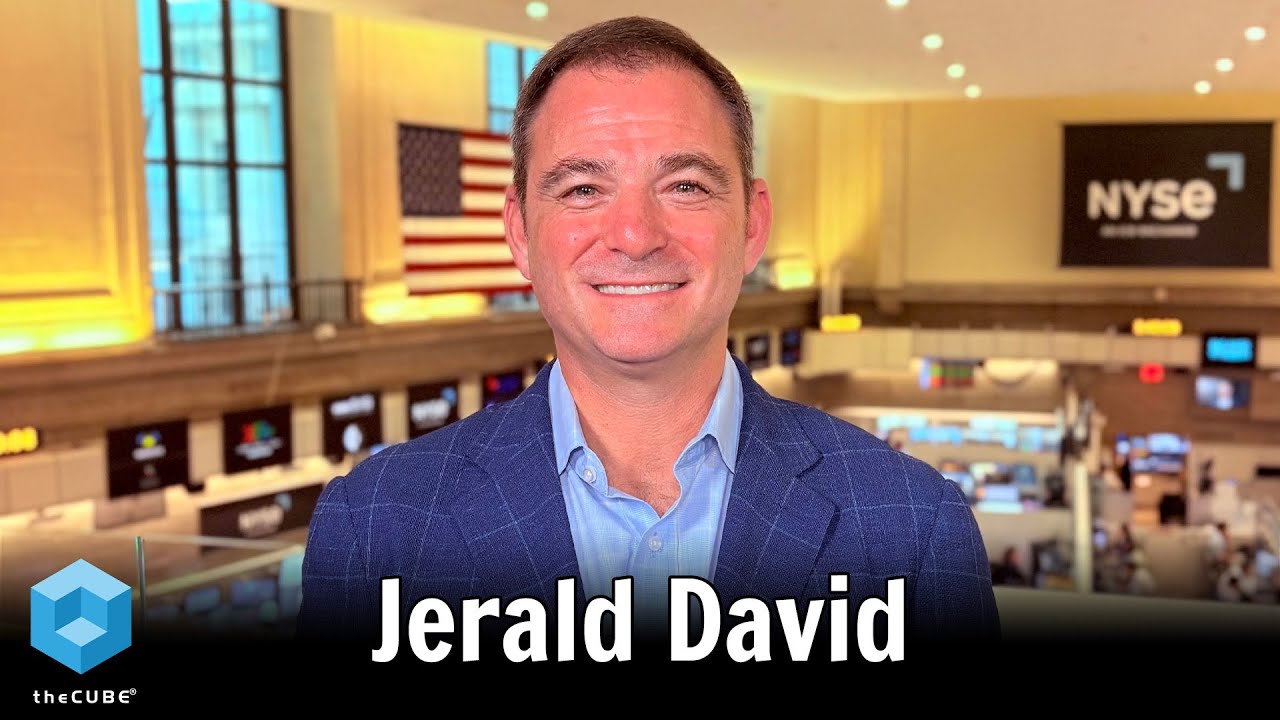
This episode examines real-time settlement infrastructure for tokenized assets and institutional adoption. Jerald David of Lynq, chief executive officer, joins John Furrier of theCUBE Research. David explains Lynq's approach to building a real-time settlement layer for tokenized assets, payments and collateral movement, and they discuss institutional adoption, partner integrations and platform evolution. Furrier explores the Avalanche migration, total value locked, TVL, interest distribution mechanics and broad use cases such as trade finance, cross-border settlement and exchange clearing workflows.
David notes that Lynq grows to nearly 40 institutional clients, surpasses $90 million in total value locked, TVL, and completes a planned Avalanche migration to increase throughput. They report roughly $300,000 in daily interest returned to users and highlight partner integrations and netting for capital efficiency. Furrier underscores the network effect and ecosystem partnerships as critical levers for scaling institutional adoption.
Forgot Password
Almost there!
We just sent you a verification email. Please verify your account to gain access to
theCUBE + NYSE Wired: Crypto Trailblazers. If you don’t think you received an email check your
spam folder.
Sign in to theCUBE + NYSE Wired: Crypto Trailblazers.
In order to sign in, enter the email address you used to registered for the event. Once completed, you will receive an email with a verification link. Open this link to automatically sign into the site.
Register For theCUBE + NYSE Wired: Crypto Trailblazers
Please fill out the information below. You will recieve an email with a verification link confirming your registration. Click the link to automatically sign into the site.
You’re almost there!
We just sent you a verification email. Please click the verification button in the email. Once your email address is verified, you will have full access to all event content for theCUBE + NYSE Wired: Crypto Trailblazers.
I want my badge and interests to be visible to all attendees.
Checking this box will display your presense on the attendees list, view your profile and allow other attendees to contact you via 1-1 chat. Read the Privacy Policy. At any time, you can choose to disable this preference.
Select your Interests!
add
Upload your photo
Uploading..
OR
Connect via Twitter
Connect via Linkedin
EDIT PASSWORD
Share
Forgot Password
Almost there!
We just sent you a verification email. Please verify your account to gain access to
theCUBE + NYSE Wired: Crypto Trailblazers. If you don’t think you received an email check your
spam folder.
Sign in to theCUBE + NYSE Wired: Crypto Trailblazers.
In order to sign in, enter the email address you used to registered for the event. Once completed, you will receive an email with a verification link. Open this link to automatically sign into the site.
Sign in to gain access to theCUBE + NYSE Wired: Crypto Trailblazers
Please sign in with LinkedIn to continue to theCUBE + NYSE Wired: Crypto Trailblazers. Signing in with LinkedIn ensures a professional environment.
Are you sure you want to remove access rights for this user?
Details
Manage Access
email address
Community Invitation
Jerald David, Lynq
This episode examines real-time settlement infrastructure for tokenized assets and institutional adoption. Jerald David of Lynq, chief executive officer, joins John Furrier of theCUBE Research. David explains Lynq's approach to building a real-time settlement layer for tokenized assets, payments and collateral movement, and they discuss institutional adoption, partner integrations and platform evolution. Furrier explores the Avalanche migration, total value locked, TVL, interest distribution mechanics and broad use cases such as trade finance, cross-border settlement and exchange clearing workflows.
David notes that Lynq grows to nearly 40 institutional clients, surpasses $90 million in total value locked, TVL, and completes a planned Avalanche migration to increase throughput. They report roughly $300,000 in daily interest returned to users and highlight partner integrations and netting for capital efficiency. Furrier underscores the network effect and ecosystem partnerships as critical levers for scaling institutional adoption.
>> Welcome back over to theCUBE here at our New York Stock Exchange studio of theCUBE. Of course, we have our Palo Alto studio connecting Silicon Valley to Wall Street. As technology becomes the market, the convergence of capital markets and technology continue to be the wave of innovation. It's attracting all the C-suite deep tech players all coming together. This is our Crypto Trailblazers program where we feature the leaders who are making it happen. Jerald David here, he's the CEO of Lynq back again. Seven months ago was in here talking about how payments are easy, settlements are hard, and a variety of other tokenized assets on chain. Great to have you back. Thanks for coming back, appreciate it.
Jerald David
>> Amazing to be back, John. Great upgrade. Looks great in here and I'm glad to be with you.
John Furrier
>> It's awesome. Just the NYSE Wired program powered by theCUBE and the community that's open, Brian and I put together, has really hit a nerve with the intersection of technology and the capital markets, mainly because tech is the market, as I said. AI was seeing it clearly on the deep tech side. On the blockchain deep tech, massive innovations on the chain, on all the software, AI is playing in there too. But the impact has been significant. Last time you were on, you were talking about some of the traction you had. That was seven months ago. So first, let's recap the key insight from last time. Again, you guys were doing something really clever and smart and relevant. Let's recap what we talked about because a lot's changed.
Jerald David
>> Yeah, John, thanks for that, for sure. Yeah, I think that in terms of recap of where we are right now, seven months ago, we were just getting things going. We were bringing our initial users on. We had just announced the business. We had B2C2, Wintermute, Galaxy, FalconX as our first users and supporters. We'd created the integration with Fireblocks. And at that point, we were realizing what the business plan itself had laid out. We were creating a real-time settlement layer. That settlement layer was being used for a couple of core things. Settlement for counterparties who are interacting with each other. Collateral movement's really important and hard to do in the real world. And then ultimately, obviously, interacting with other different players in the marketplace. So since then, we've added a ton of users. We now have almost 40 institutional clients on the platform. Primary use cases for them are settlement and-
John Furrier
>> That's up from last time. It was roughly 15 or so, 16.
Jerald David
>> It is, and it's growing.
John Furrier
>> 40?
Jerald David
>> Almost 40.
John Furrier
>> So institutional adoption.
Jerald David
>> That's right. Yeah. It's all the traditional players you'd seen in the digital asset space. We've got a couple users now that are coming from outside of the digital asset space. We're starting to realize some of the newer different use cases that we're building out, but we're trying to create this network of users. The network of users is critically important when you're dealing with things like settlement, when you're dealing with things like transference of value in between different parties. So not just that, in terms of the users and the progress we've made there, we've added a bunch of exchanges. And now, we're setting our eyes on some of the different infrastructural challenges that we have faced.
John Furrier
>> Yeah. And I was very impressed with the positioning as an infrastructure layer to fix some of the obvious, not blockers, but just evolutionary issues, like to get more people on, more people in the network. What's been the big news on the platform side recently? Share, the recent news, Avalanche was a recent thing for you guys. Explain that.
Jerald David
>> I'm trying to think back now, it's been a little bit of time. So I think there were a series of things. A lot of them were centered around the growth that we're getting. Hitting over $90 million worth of TVL on the platform was a big milestone for us. That first time crossing 30 users, now we've got 50 in our sites, so we're looking forward to that. I think the other thing too that we were talking about on other different conversations I've been having is the number and the amount of interest that's been distributed to clients now. We're taking an interest bearing asset on that settlement layer and we're offering yield back to users. We've now surpassed almost $300,000 of interest payments that we've given back to users on a daily basis. And most recently, as you mentioned before, the news with Avalanche is really, really interesting for us.
John Furrier
>> Explain that migration. It's up and running, it's production. Just take us through quick stats on that.
Jerald David
>> Yeah. It was over four months in planning by the technology team. We partner with Tacit for that, as you know. The team itself had a goal in mind. They had a set timeline and they wanted to make sure that there was no disruptions or lack of continuity for users on the platform. So that was the first thing. The second was making sure we hit the timeline. And the real driver for all this was making sure that we had the right infrastructure in place to handle the throughput and volume that we expect to have on the platform very, very soon.
John Furrier
>> One thing that jumped out at me last time, and I want to get the update on two fronts. One, the capabilities and also the regulatory environment was the real time transfer of tokenized assets and dollars.
Jerald David
>> Yeah.
John Furrier
>> Huge opportunity. What's been the change on the platform side of the infrastructure and what's been the regulatory? I mean, is CLARITY Act moving? Give us some updates on those two fronts.
Jerald David
>> Yeah, 100%. So from a regulatory perspective, we've pieced together a patchwork of licenses. We operate what we consider to be in the clear of any sort of the pending and upcoming hurdles that you might have seen from clarity that many are clamoring about. For us, we're using shares of a fund. Those shares are issued in our private blockchain and ultimately we use those shares in order to go ahead and power the platform. For us, delivering interest back to users is fully permissible under what the legislation itself has proposed and what we believe is ultimately going to come pass. For us though, there are a couple different fronts. There's the regulatory component for us, which outside of the broker dealer that we have in tZERO, that is a special purpose broker dealer, a carrying broker dealer, and a FINRA registered broker dealer. We also have obviously the oversight that comes from the fund side of the business managed by Tassat.
John Furrier
>> We touched briefly last time on some of the adoption milestones, some of the adoption factors, retail first, institutions follow second. How's that looking now? We're seeing a lot of different things in the market. What's the current state of adoption?
Jerald David
>> Yeah. I mean, I think that everyone's got their eyes right now on this intersection between traditional finance and where that hits with digital assets and where this market, this asset class is moving. For us, our solution seems to be something that large scale institutions that are moving into this space are in need of. The reason why I say that is because large scale traditional firms are going to make sure that they've got the right risk management tools in place when they enter a new market, specifically digital assets. From our standpoint, having dialogues with banks and asset managers, we satisfy a lot of those requirements they have. SOC 1 Type 2 certified platforms. Don't have to worry about that security, the regulation that I talked about before. But most importantly, the fact that all users are AML, KYCed, AIQP qualified, gives a level of comfort that you're not dealing with actors that might potentially be bad.
John Furrier
>> You're so much a frontier player. The frontier models you hear about the AI. There's a set of frontier leads. We feature them here on the Crypto Trailblazers, on the AI side, we have the set of leaders, but there's a lot of fast followers coming in. I was having a dinner the other night here in New York, and someone very smart was talking about, and they're still thinking, I'm like, "Hey, these real world assets, they're coming on the chain. The convergence of physical and digital is happening in AI and in crypto all up and down the stack." And I'll use you guys as an example. And this person was very well versed in finance, but behind the times, not in the zeitgeist, reading yesterday's news. And I said, "Hey, for example, digital art, there's a variety of discussions for art coming on the chain and all kinds of assets," because it was an art conversation and they immediately went to NFTs. And I made a comment, again, maybe you can correct me, I want to get your thoughts on this because this seems to be where people's heads are at. They think, "Oh, NFTs was kind of a scam, people made money," whatever. And I said, "No, well now you now have a legitimate mechanism. The NYSE could be trading soon with real world assets." That's their direction and our other exchanges. So the world's changed on not the mechanism of having digital art or digital asset, it's now legitimized via the mechanisms and the players. Explain this. It's very nuanced, but I want you to explain it because there's an audience out there that has this fog of, what's really happening? Is JP Morgan behind this or the big banks? So there's a lot of unknown data or misinformation.
Jerald David
>> 100%.
John Furrier
>> Clarify this.
Jerald David
>> Yeah. John, I think that the far majority of the use cases that we've seen so far are institutional in nature, right? So it doesn't come as a large surprise that downstream, the retail users aren't really aware of what's happening. In fact, I think that that's probably, if I think about the way that we're going to be even more successful, it's creating and obscuring the layer that happens below hand and allowing for a simple interface whereby clients themselves aren't aware of what's happening in the background, right? A good example of how that could play out. I was on a panel in Chicago just last week and the chief product officer of Northern Trust was talking about how they're moving forward in a direction and they're considering tokenizing a share class of an existing fund, which many refer to as a digital twin, right? Whereby a buyer will have the ability to go ahead and purchase a digital asset security or they could purchase a traditional share. So subscribe to that fund. So the question ends up being, if you're a retail user, what are you going to do with that share? If you can take that share and you get self-custody and that gives you a lot more confidence that you're the owner of that share and you trust that more than DTCC, then that's going to be a great use case. But I think that those are the initial use cases.
John Furrier
>> And the NewFi event that we had here with theCUBE and NYSE Wired was another proof point where if I have private equity in my company, a stock option and I'm an employee, I could leverage that asset. I don't have to sell it on the secondary. I can get that value and pledge it to buy a house.
Jerald David
>> Even better, think about a scenario whereby Carta, whereby you're sitting here, you're looking at your holdings, has an on ramp to a digital asset security ATS. So when you did have a liquidity event, you could actually look at your holdings right there, you probably would have a wallet associated with that too. And then you've got the ability to go ahead with one click, go ahead and liquidate that position into a public market, or perhaps even to a private market.
John Furrier
>> Yeah. And I think the work you guys are doing is really, again, pioneering and then frontier because once the wallets are in your phone, like Apple Pay, then it's game over. The custody always seems to be the retail piece. Okay, what does this system, I got to get a wallet, I got to do this thing and download it, have keys. A little bit complicated for the average lame user who's out there is just doing subway tokens and buying right on the subway. I think when that comes, that's what you guys are preparing for.
Jerald David
>> That's 100% right. I mean, when I think about what we're building at Lynq, we're creating the infrastructure layer. We're creating the foundation for the way that we believe settlement should be working. And one of the things that I think is most cool about where we are in the evolution of the business that we originally started with a couple of use cases in mind whereby we were dealing with settlement, collateral movements, on ramping to exchange and things like that in the digital asset space. What we've found very, very quickly is that the technology that we have, the flows that we've built and the regulatory needle that we've thread is very applicable to several other use cases, including trade finance, cross border movements of payments, settlement and clearing for traditional exchanges as well that are trying to solve 24/7 and how it is that their clients interact with their FCMs and their FCMs interact with the clearinghouse.
John Furrier
>> All right. Talk about what changes next because as you guys continue to plow the fields, so to speak, blaze the trail, what's going to happen next? What are you focused on? What are some of the key things you see happening for Lynq and then the market?
Jerald David
>> Yeah, so I think there's a few. I think we're going to continue to onboard more users. We're going to onboard additional exchanges. We're going to bring on a large stable coin issuer on the go forward basis. And that, I think from my standpoint, begins to create the ecosystem and it creates the network that we're trying to build. We're adding on a couple different layers. We're partnering with a couple of key partners that will help us expedite the offering that we have and get it into the hands of additional users. Companies like BridgePort that are a connection layer, they're a piece of middleware that can connect us faster to different exchanges that are out there. A company called Cycles that's out there that has a really cool technology that's used for netting, that we're bringing on platform right now in order for us to go ahead and offer netting to clients, which is a capital efficiency. And then building on the relationships with some of the partners that we have like Fireblocks, for example, boring deeper and deeper into their ecosystem and allowing for our mutual clients to use the platform in a more compelling way.
John Furrier
>> It's funny, I see a lot of the thought leaders in the industry, and I'm smiling because we've been saying it for over a decade and a half on the tech side. Ecosystem's everything. You mentioned network, network effect, huge part of partners.
Jerald David
>> Yes.
John Furrier
>> This business that you're in really is heavily reliant on partners. Talk about those leaders that are, again, on the front range of this wave and how important it is for the partnerships to be in place to get all the piece parts working as an operating system.
Jerald David
>> It's 100% right. I mean, I think about to the early days, well before I was in here talking once we had the real business together, but two plus years ago when we were thinking about what the art of the possible really could be, we relied on four main market participants from the trading side, B2C2, Wintermute, Galaxy, and FalconX, and they've been amazing advisors to us. We built the business and supporters of the business as we continue to grow and build it forward. Other partners that we have like Fireblocks, for example, really an amazing partner to have, a great story and an amazing distribution play as well as custody solution. And then the early exchanges like EDX and crypto.com that leaned in when no one else was doing so in the beginning because it was a risk, and now reaping the rewards of being an early adopter and recognizing higher trade flow and volume.
John Furrier
>> Talk about those rewards. And when you reap the benefits, when you're harvesting that value from the hard work, what are some of the things that jump out as metrics and results?
Jerald David
>> Yeah. I mean, I think that when people think about platforms like this, they default to two things. The first thing they default to are number of users on the platform, as you absolutely bought up already. And like I said, we're tipping 40, we'll be at 50 soon. And I think that we really have started to realize the goal of that network, that community you mentioned. I think the second thing is TVL on the platform. I think that's a metric that people look to a lot to go ahead and try to understand what the adoption is of the platform. And I think those numbers are fickle, much like trading volumes or open interest you would see in an exchange like this. Those numbers will ebb and flow. But I think that the other element that's really important for us that's hard to quantify is the actual activity and the transfers on platform. And that's something that we've been really, really pleased with, seeing folks not just register or send funds to the platform, but actually begin to actually use this for settlement.
John Furrier
>> Activity engagement. They're using it.
Jerald David
>> Activity and engagement is great. And now what we find ourselves seeing is that we're not adding one or two clients on, but we're partnering with somebody, to your point. Clients like Finery Markets, for example, who are out there, whereby they're bringing on their users for us, we're onboarding their users and we're making their systems more streamlined and more effective.
John Furrier
>> Well, great to have you on theCUBE. As always, great stuff. What's the plug for the company, people watching? Are you a new category? What are the things that you guys are knocking down? Put a plug in for Lynq.
Jerald David
>> Yeah. To your point about categories, we want to be the leader of this category. It's a point earlier about competition coming. There are others that are out there that have aspirations to go ahead and create that network of trusted users that we have. But if we continue focusing on our mission, we continue to add users like we're doing and keep the technology where it is right now with the new Avalanche upgrade with stability that it is on the L1, I believe that we're going to continue to push forward with something that the industry is going to embrace and help move us forward.
John Furrier
>> Well, great to see you, Jerald. Thanks for coming on. Appreciate it.
Jerald David
>> Thanks for having me, John.
John Furrier
>> All right. The Crypto Trailblazers, again, this is a sizable shift obviously in the financial plumbing, the system, the adoption of the institution is real. We're seeing real clarity coming into the market, more coming. And of course, the benefits of this new system is going to be the players involved. The frontier leaders are here on theCUBE at the NYSE Wired program. Thanks for watching.
>> Welcome back over to theCUBE here at our New York Stock Exchange studio of theCUBE. Of course, we have our Palo Alto studio connecting Silicon Valley to Wall Street. As technology becomes the market, the convergence of capital markets and technology continue to be the wave of innovation. It's attracting all the C-suite deep tech players all coming together. This is our Crypto Trailblazers program where we feature the leaders who are making it happen. Jerald David here, he's the CEO of Lynq back again. Seven months ago was in here talking about how payments are easy, settlements are hard, and a variety of other tokenized assets on chain. Great to have you back. Thanks for coming back, appreciate it.
Jerald David
>> Amazing to be back, John. Great upgrade. Looks great in here and I'm glad to be with you.
John Furrier
>> It's awesome. Just the NYSE Wired program powered by theCUBE and the community that's open, Brian and I put together, has really hit a nerve with the intersection of technology and the capital markets, mainly because tech is the market, as I said. AI was seeing it clearly on the deep tech side. On the blockchain deep tech, massive innovations on the chain, on all the software, AI is playing in there too. But the impact has been significant. Last time you were on, you were talking about some of the traction you had. That was seven months ago. So first, let's recap the key insight from last time. Again, you guys were doing something really clever and smart and relevant. Let's recap what we talked about because a lot's changed.
Jerald David
>> Yeah, John, thanks for that, for sure. Yeah, I think that in terms of recap of where we are right now, seven months ago, we were just getting things going. We were bringing our initial users on. We had just announced the business. We had B2C2, Wintermute, Galaxy, FalconX as our first users and supporters. We'd created the integration with Fireblocks. And at that point, we were realizing what the business plan itself had laid out. We were creating a real-time settlement layer. That settlement layer was being used for a couple of core things. Settlement for counterparties who are interacting with each other. Collateral movement's really important and hard to do in the real world. And then ultimately, obviously, interacting with other different players in the marketplace. So since then, we've added a ton of users. We now have almost 40 institutional clients on the platform. Primary use cases for them are settlement and-
John Furrier
>> That's up from last time. It was roughly 15 or so, 16.
Jerald David
>> It is, and it's growing.
John Furrier
>> 40?
Jerald David
>> Almost 40.
John Furrier
>> So institutional adoption.
Jerald David
>> That's right. Yeah. It's all the traditional players you'd seen in the digital asset space. We've got a couple users now that are coming from outside of the digital asset space. We're starting to realize some of the newer different use cases that we're building out, but we're trying to create this network of users. The network of users is critically important when you're dealing with things like settlement, when you're dealing with things like transference of value in between different parties. So not just that, in terms of the users and the progress we've made there, we've added a bunch of exchanges. And now, we're setting our eyes on some of the different infrastructural challenges that we have faced.
John Furrier
>> Yeah. And I was very impressed with the positioning as an infrastructure layer to fix some of the obvious, not blockers, but just evolutionary issues, like to get more people on, more people in the network. What's been the big news on the platform side recently? Share, the recent news, Avalanche was a recent thing for you guys. Explain that.
Jerald David
>> I'm trying to think back now, it's been a little bit of time. So I think there were a series of things. A lot of them were centered around the growth that we're getting. Hitting over $90 million worth of TVL on the platform was a big milestone for us. That first time crossing 30 users, now we've got 50 in our sites, so we're looking forward to that. I think the other thing too that we were talking about on other different conversations I've been having is the number and the amount of interest that's been distributed to clients now. We're taking an interest bearing asset on that settlement layer and we're offering yield back to users. We've now surpassed almost $300,000 of interest payments that we've given back to users on a daily basis. And most recently, as you mentioned before, the news with Avalanche is really, really interesting for us.
John Furrier
>> Explain that migration. It's up and running, it's production. Just take us through quick stats on that.
Jerald David
>> Yeah. It was over four months in planning by the technology team. We partner with Tacit for that, as you know. The team itself had a goal in mind. They had a set timeline and they wanted to make sure that there was no disruptions or lack of continuity for users on the platform. So that was the first thing. The second was making sure we hit the timeline. And the real driver for all this was making sure that we had the right infrastructure in place to handle the throughput and volume that we expect to have on the platform very, very soon.
John Furrier
>> One thing that jumped out at me last time, and I want to get the update on two fronts. One, the capabilities and also the regulatory environment was the real time transfer of tokenized assets and dollars.
Jerald David
>> Yeah.
John Furrier
>> Huge opportunity. What's been the change on the platform side of the infrastructure and what's been the regulatory? I mean, is CLARITY Act moving? Give us some updates on those two fronts.
Jerald David
>> Yeah, 100%. So from a regulatory perspective, we've pieced together a patchwork of licenses. We operate what we consider to be in the clear of any sort of the pending and upcoming hurdles that you might have seen from clarity that many are clamoring about. For us, we're using shares of a fund. Those shares are issued in our private blockchain and ultimately we use those shares in order to go ahead and power the platform. For us, delivering interest back to users is fully permissible under what the legislation itself has proposed and what we believe is ultimately going to come pass. For us though, there are a couple different fronts. There's the regulatory component for us, which outside of the broker dealer that we have in tZERO, that is a special purpose broker dealer, a carrying broker dealer, and a FINRA registered broker dealer. We also have obviously the oversight that comes from the fund side of the business managed by Tassat.
John Furrier
>> We touched briefly last time on some of the adoption milestones, some of the adoption factors, retail first, institutions follow second. How's that looking now? We're seeing a lot of different things in the market. What's the current state of adoption?
Jerald David
>> Yeah. I mean, I think that everyone's got their eyes right now on this intersection between traditional finance and where that hits with digital assets and where this market, this asset class is moving. For us, our solution seems to be something that large scale institutions that are moving into this space are in need of. The reason why I say that is because large scale traditional firms are going to make sure that they've got the right risk management tools in place when they enter a new market, specifically digital assets. From our standpoint, having dialogues with banks and asset managers, we satisfy a lot of those requirements they have. SOC 1 Type 2 certified platforms. Don't have to worry about that security, the regulation that I talked about before. But most importantly, the fact that all users are AML, KYCed, AIQP qualified, gives a level of comfort that you're not dealing with actors that might potentially be bad.
John Furrier
>> You're so much a frontier player. The frontier models you hear about the AI. There's a set of frontier leads. We feature them here on the Crypto Trailblazers, on the AI side, we have the set of leaders, but there's a lot of fast followers coming in. I was having a dinner the other night here in New York, and someone very smart was talking about, and they're still thinking, I'm like, "Hey, these real world assets, they're coming on the chain. The convergence of physical and digital is happening in AI and in crypto all up and down the stack." And I'll use you guys as an example. And this person was very well versed in finance, but behind the times, not in the zeitgeist, reading yesterday's news. And I said, "Hey, for example, digital art, there's a variety of discussions for art coming on the chain and all kinds of assets," because it was an art conversation and they immediately went to NFTs. And I made a comment, again, maybe you can correct me, I want to get your thoughts on this because this seems to be where people's heads are at. They think, "Oh, NFTs was kind of a scam, people made money," whatever. And I said, "No, well now you now have a legitimate mechanism. The NYSE could be trading soon with real world assets." That's their direction and our other exchanges. So the world's changed on not the mechanism of having digital art or digital asset, it's now legitimized via the mechanisms and the players. Explain this. It's very nuanced, but I want you to explain it because there's an audience out there that has this fog of, what's really happening? Is JP Morgan behind this or the big banks? So there's a lot of unknown data or misinformation.
Jerald David
>> 100%.
John Furrier
>> Clarify this.
Jerald David
>> Yeah. John, I think that the far majority of the use cases that we've seen so far are institutional in nature, right? So it doesn't come as a large surprise that downstream, the retail users aren't really aware of what's happening. In fact, I think that that's probably, if I think about the way that we're going to be even more successful, it's creating and obscuring the layer that happens below hand and allowing for a simple interface whereby clients themselves aren't aware of what's happening in the background, right? A good example of how that could play out. I was on a panel in Chicago just last week and the chief product officer of Northern Trust was talking about how they're moving forward in a direction and they're considering tokenizing a share class of an existing fund, which many refer to as a digital twin, right? Whereby a buyer will have the ability to go ahead and purchase a digital asset security or they could purchase a traditional share. So subscribe to that fund. So the question ends up being, if you're a retail user, what are you going to do with that share? If you can take that share and you get self-custody and that gives you a lot more confidence that you're the owner of that share and you trust that more than DTCC, then that's going to be a great use case. But I think that those are the initial use cases.
John Furrier
>> And the NewFi event that we had here with theCUBE and NYSE Wired was another proof point where if I have private equity in my company, a stock option and I'm an employee, I could leverage that asset. I don't have to sell it on the secondary. I can get that value and pledge it to buy a house.
Jerald David
>> Even better, think about a scenario whereby Carta, whereby you're sitting here, you're looking at your holdings, has an on ramp to a digital asset security ATS. So when you did have a liquidity event, you could actually look at your holdings right there, you probably would have a wallet associated with that too. And then you've got the ability to go ahead with one click, go ahead and liquidate that position into a public market, or perhaps even to a private market.
John Furrier
>> Yeah. And I think the work you guys are doing is really, again, pioneering and then frontier because once the wallets are in your phone, like Apple Pay, then it's game over. The custody always seems to be the retail piece. Okay, what does this system, I got to get a wallet, I got to do this thing and download it, have keys. A little bit complicated for the average lame user who's out there is just doing subway tokens and buying right on the subway. I think when that comes, that's what you guys are preparing for.
Jerald David
>> That's 100% right. I mean, when I think about what we're building at Lynq, we're creating the infrastructure layer. We're creating the foundation for the way that we believe settlement should be working. And one of the things that I think is most cool about where we are in the evolution of the business that we originally started with a couple of use cases in mind whereby we were dealing with settlement, collateral movements, on ramping to exchange and things like that in the digital asset space. What we've found very, very quickly is that the technology that we have, the flows that we've built and the regulatory needle that we've thread is very applicable to several other use cases, including trade finance, cross border movements of payments, settlement and clearing for traditional exchanges as well that are trying to solve 24/7 and how it is that their clients interact with their FCMs and their FCMs interact with the clearinghouse.
John Furrier
>> All right. Talk about what changes next because as you guys continue to plow the fields, so to speak, blaze the trail, what's going to happen next? What are you focused on? What are some of the key things you see happening for Lynq and then the market?
Jerald David
>> Yeah, so I think there's a few. I think we're going to continue to onboard more users. We're going to onboard additional exchanges. We're going to bring on a large stable coin issuer on the go forward basis. And that, I think from my standpoint, begins to create the ecosystem and it creates the network that we're trying to build. We're adding on a couple different layers. We're partnering with a couple of key partners that will help us expedite the offering that we have and get it into the hands of additional users. Companies like BridgePort that are a connection layer, they're a piece of middleware that can connect us faster to different exchanges that are out there. A company called Cycles that's out there that has a really cool technology that's used for netting, that we're bringing on platform right now in order for us to go ahead and offer netting to clients, which is a capital efficiency. And then building on the relationships with some of the partners that we have like Fireblocks, for example, boring deeper and deeper into their ecosystem and allowing for our mutual clients to use the platform in a more compelling way.
John Furrier
>> It's funny, I see a lot of the thought leaders in the industry, and I'm smiling because we've been saying it for over a decade and a half on the tech side. Ecosystem's everything. You mentioned network, network effect, huge part of partners.
Jerald David
>> Yes.
John Furrier
>> This business that you're in really is heavily reliant on partners. Talk about those leaders that are, again, on the front range of this wave and how important it is for the partnerships to be in place to get all the piece parts working as an operating system.
Jerald David
>> It's 100% right. I mean, I think about to the early days, well before I was in here talking once we had the real business together, but two plus years ago when we were thinking about what the art of the possible really could be, we relied on four main market participants from the trading side, B2C2, Wintermute, Galaxy, and FalconX, and they've been amazing advisors to us. We built the business and supporters of the business as we continue to grow and build it forward. Other partners that we have like Fireblocks, for example, really an amazing partner to have, a great story and an amazing distribution play as well as custody solution. And then the early exchanges like EDX and crypto.com that leaned in when no one else was doing so in the beginning because it was a risk, and now reaping the rewards of being an early adopter and recognizing higher trade flow and volume.
John Furrier
>> Talk about those rewards. And when you reap the benefits, when you're harvesting that value from the hard work, what are some of the things that jump out as metrics and results?
Jerald David
>> Yeah. I mean, I think that when people think about platforms like this, they default to two things. The first thing they default to are number of users on the platform, as you absolutely bought up already. And like I said, we're tipping 40, we'll be at 50 soon. And I think that we really have started to realize the goal of that network, that community you mentioned. I think the second thing is TVL on the platform. I think that's a metric that people look to a lot to go ahead and try to understand what the adoption is of the platform. And I think those numbers are fickle, much like trading volumes or open interest you would see in an exchange like this. Those numbers will ebb and flow. But I think that the other element that's really important for us that's hard to quantify is the actual activity and the transfers on platform. And that's something that we've been really, really pleased with, seeing folks not just register or send funds to the platform, but actually begin to actually use this for settlement.
John Furrier
>> Activity engagement. They're using it.
Jerald David
>> Activity and engagement is great. And now what we find ourselves seeing is that we're not adding one or two clients on, but we're partnering with somebody, to your point. Clients like Finery Markets, for example, who are out there, whereby they're bringing on their users for us, we're onboarding their users and we're making their systems more streamlined and more effective.
John Furrier
>> Well, great to have you on theCUBE. As always, great stuff. What's the plug for the company, people watching? Are you a new category? What are the things that you guys are knocking down? Put a plug in for Lynq.
Jerald David
>> Yeah. To your point about categories, we want to be the leader of this category. It's a point earlier about competition coming. There are others that are out there that have aspirations to go ahead and create that network of trusted users that we have. But if we continue focusing on our mission, we continue to add users like we're doing and keep the technology where it is right now with the new Avalanche upgrade with stability that it is on the L1, I believe that we're going to continue to push forward with something that the industry is going to embrace and help move us forward.
John Furrier
>> Well, great to see you, Jerald. Thanks for coming on. Appreciate it.
Jerald David
>> Thanks for having me, John.
John Furrier
>> All right. The Crypto Trailblazers, again, this is a sizable shift obviously in the financial plumbing, the system, the adoption of the institution is real. We're seeing real clarity coming into the market, more coming. And of course, the benefits of this new system is going to be the players involved. The frontier leaders are here on theCUBE at the NYSE Wired program. Thanks for watching.








































 John Furrier