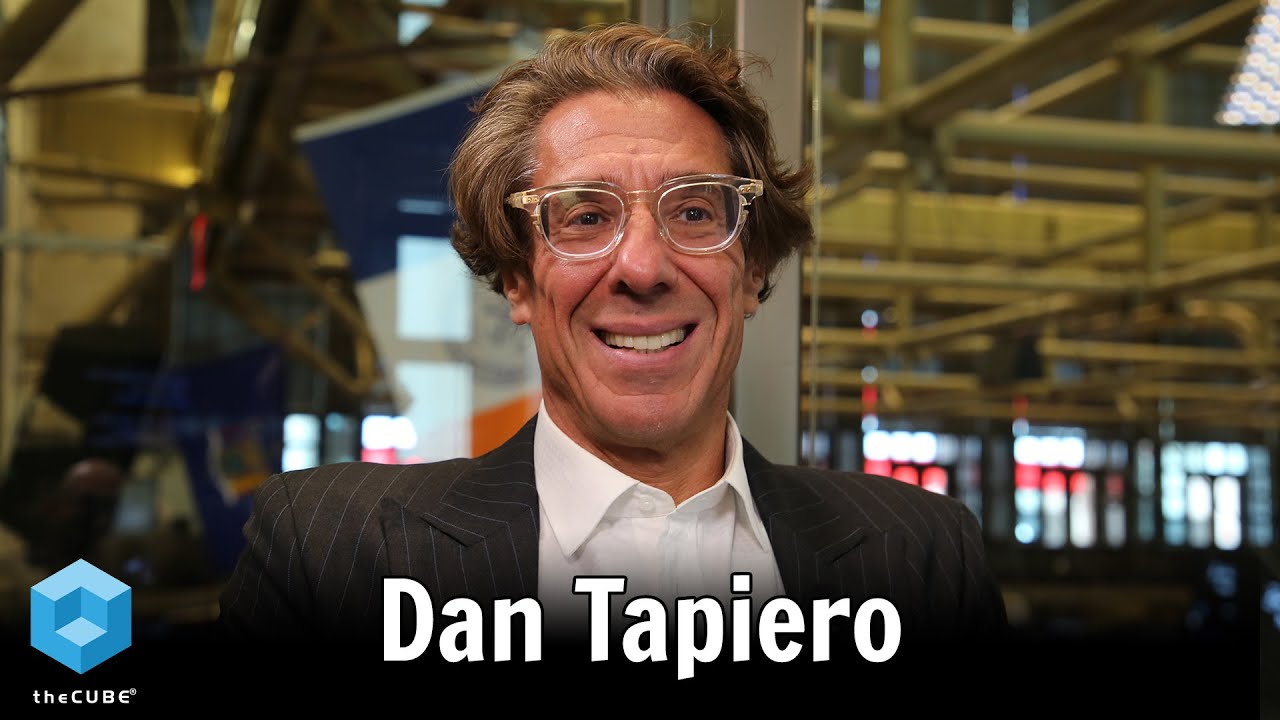
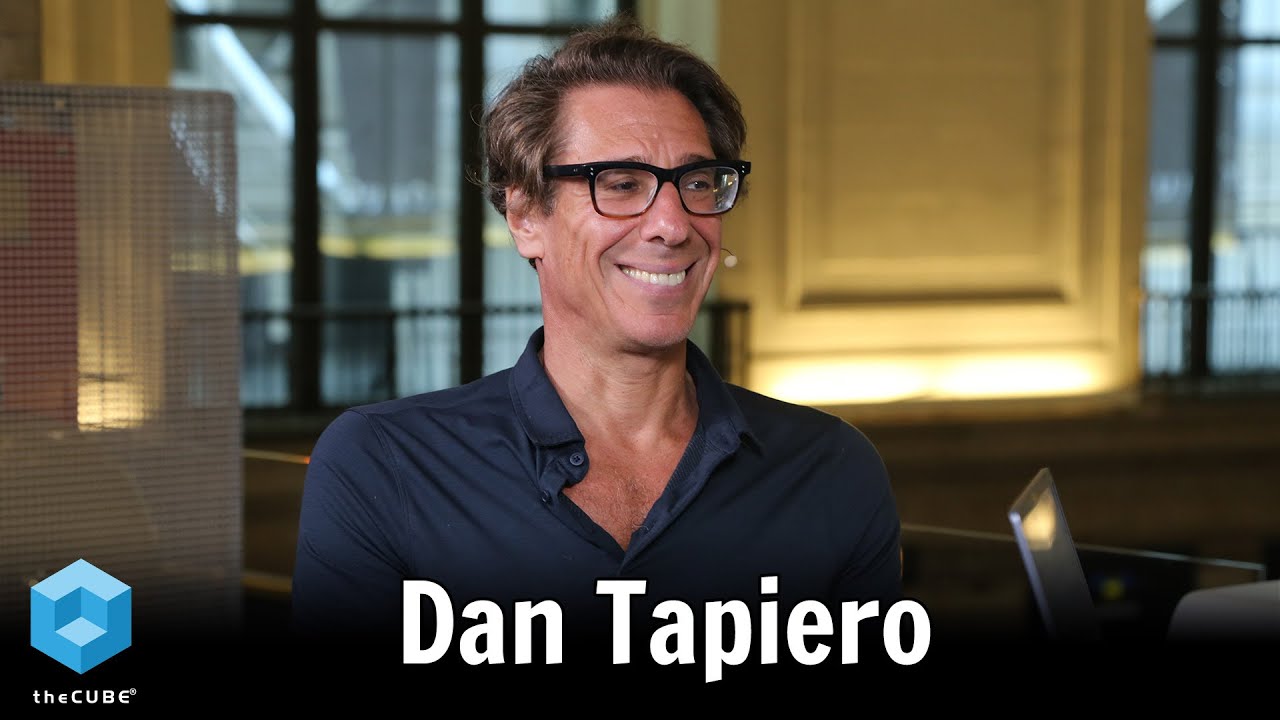
Dan Tapiero, co-founder and CEO of RoundTable Partners and 10T Holdings, joins theCUBE at the NYSE to discuss his extensive background in finance and his transition into the digital asset ecosystem. With over 20 years in the macro hedge fund industry, Tapiero brings valuable insights as he highlights the role of cryptocurrencies and blockchain in transforming business finance and infrastructure. theCUBE Research team, led by John Furrier, engages Tapiero in an in-depth discussion on the evolution of digital assets and the future of growth in this sector.
Tapiero emphasizes the potential of digital assets, predicting a substantial market value increase from $300 billion to a projected $10 trillion within the next decade. According to Tapiero, the current environment favors companies building this new ecosystem, as businesses generate significant revenue and prepare to enter public markets. The interview explores the role of US regulatory shifts in fostering a supportive atmosphere for cryptocurrencies, along with the importance of positioning the US as a global hub for blockchain technology and digital assets. #DanTapiero #DigitalAssets #theCUBE #NYSE #Crypto #Blockchain #Web3
Explore more about this topic and related insights on SiliconANGLE: siliconangle.com. Subscribe to our blockchain playlist for further discussions: [Blockchain Playlist](#).
00:00 - Intro
00:06 - Cryptocurrency and Blockchain: An Introductory Overview
02:31 - The Journey of Dan Tapiero and the Rise of 10T Holdings
09:09 - Crypto Industry Developments and Challenges
16:31 - Crypto Companies and Public Offerings
20:44 - The Future of Digital Assets
23:10 - The Digital Cultural Revolution: Final Reflections
Forgot Password
Almost there!
We just sent you a verification email. Please verify your account to gain access to
theCUBE + NYSE Wired: Crypto Trailblazers. If you don’t think you received an email check your
spam folder.
Sign in to theCUBE + NYSE Wired: Crypto Trailblazers.
In order to sign in, enter the email address you used to registered for the event. Once completed, you will receive an email with a verification link. Open this link to automatically sign into the site.
Register For theCUBE + NYSE Wired: Crypto Trailblazers
Please fill out the information below. You will recieve an email with a verification link confirming your registration. Click the link to automatically sign into the site.
You’re almost there!
We just sent you a verification email. Please click the verification button in the email. Once your email address is verified, you will have full access to all event content for theCUBE + NYSE Wired: Crypto Trailblazers.
I want my badge and interests to be visible to all attendees.
Checking this box will display your presense on the attendees list, view your profile and allow other attendees to contact you via 1-1 chat. Read the Privacy Policy. At any time, you can choose to disable this preference.
Select your Interests!
add
Upload your photo
Uploading..
OR
Connect via Twitter
Connect via Linkedin
EDIT PASSWORD
Share
Forgot Password
Almost there!
We just sent you a verification email. Please verify your account to gain access to
theCUBE + NYSE Wired: Crypto Trailblazers. If you don’t think you received an email check your
spam folder.
Sign in to theCUBE + NYSE Wired: Crypto Trailblazers.
In order to sign in, enter the email address you used to registered for the event. Once completed, you will receive an email with a verification link. Open this link to automatically sign into the site.
Sign in to gain access to theCUBE + NYSE Wired: Crypto Trailblazers
Please sign in with LinkedIn to continue to theCUBE + NYSE Wired: Crypto Trailblazers. Signing in with LinkedIn ensures a professional environment.
Are you sure you want to remove access rights for this user?
Details
Manage Access
email address
Community Invitation
Rachel Anderika, Anchorage
Dan Tapiero, co-founder and CEO of RoundTable Partners and 10T Holdings, joins theCUBE at the NYSE to discuss his extensive background in finance and his transition into the digital asset ecosystem. With over 20 years in the macro hedge fund industry, Tapiero brings valuable insights as he highlights the role of cryptocurrencies and blockchain in transforming business finance and infrastructure. theCUBE Research team, led by John Furrier, engages Tapiero in an in-depth discussion on the evolution of digital assets and the future of growth in this sector.
Tapiero emphasizes the potential of digital assets, predicting a substantial market value increase from $300 billion to a projected $10 trillion within the next decade. According to Tapiero, the current environment favors companies building this new ecosystem, as businesses generate significant revenue and prepare to enter public markets. The interview explores the role of US regulatory shifts in fostering a supportive atmosphere for cryptocurrencies, along with the importance of positioning the US as a global hub for blockchain technology and digital assets. #DanTapiero #DigitalAssets #theCUBE #NYSE #Crypto #Blockchain #Web3
Explore more about this topic and related insights on SiliconANGLE: siliconangle.com. Subscribe to our blockchain playlist for further discussions: [Blockchain Playlist](#).
00:00 - Intro
00:06 - Cryptocurrency and Blockchain: An Introductory Overview
02:31 - The Journey of Dan Tapiero and the Rise of 10T Holdings
09:09 - Crypto Industry Developments and Challenges
16:31 - Crypto Companies and Public Offerings
20:44 - The Future of Digital Assets
23:10 - The Digital Cultural Revolution: Final Reflections
>> Welcome back. I'm John Furrier with theCUBE. We are here at theCUBE's NYSE Studio. Of course, we have our Palo Alto Studio in California connecting Silicon Valley and Wall Street. This is our NYSE Wired program, a CUBE original, where we kind of talk about the technology in the capital markets. This is our Crypto Trailblazers series, where we feature the leaders making it happen in crypto, crypto infrastructure, ushering in a new generation of value creation, value extraction, the financial money system. Crypto is going to be a very big part of it. Of course, the AI side coming in too. Rachel's here, Anderika, head of global operations of the bank. Did I get that right?
Rachel Anderika
>> Yeah. Yeah.
John Furrier
>> Anderika, COO of Anchorage Digital. Thanks for coming on.
Rachel Anderika
>> Yeah.
John Furrier
>> We had the founders on many times. Huge success story. Congratulations.
Rachel Anderika
>> Yes.
John Furrier
>> Welcome to theCUBE.
Rachel Anderika
>> Oh, thank you. I'm so happy to be here.
John Furrier
>> So you're talking about before we came on camera, a full circle moment for you?
Rachel Anderika
>> Yes.
John Furrier
>> Explain.
Rachel Anderika
>> Sure, sure. I was actually a consultant to Anchorage as they were going through the chartering process. And I have this very vivid memory saying to a woman that I worked with who had been the controller of the currency. She had been acting controller for a couple of years and she was at long history at the OCC. And I turned to her and I said, "Anchorage Digital is never going to get that charter. That will never happen."
And like a week later, they got the charter. And it was on the eve of the last administration, of the last Trump administration. And it was actually the last day that the charter was conveyed. And I remember at that very moment, I was like, "We are in for a lot of headwinds." And so, we started to build over the last five years, we were the first, but we never wanted to be the last. And so, it's a real full circle moment to see another innovative company doing this all within the regulatory perimeter.
John Furrier
>> So you're head of global operations, means you're running the show?
Rachel Anderika
>> I'm running the show.
John Furrier
>> Making the trains run on time and the tracks are being laid down at the same time.
Rachel Anderika
>> Yes, sir. Anytime an asset moves on our platform, that's my team. Yep.
John Furrier
>> So it's super exciting. I can imagine the trials and tribulations of being a pioneer. Talk about your view on the trust bank that you guys did. What its role in the community vis-a-vis full service banks, like Erebor.
Rachel Anderika
>> Yeah, yeah, sure. And it's really important to understand the difference. So what Anchorage Digital is, is a regulated platform serving institutions. So we have a trust bank, and that trust bank is really the core of what we have. And think about us as a security company that conveys our services through a regulated charter. And so, we custody those assets. And you've had Diogo and Nathan on here, custody in the digital asset space is inherently a security activity. But those services are kind of wrapped with a regulated entity. So we're not doing credit creation. So think of us as a coat check. When you put your coat in a coat check, you want to get that same coat back, not a different coat. That's kind of the same. So we're not really hypothecating assets, we are really holding those things safe. We enable other companies to build on top of us through that. So what Erebor is doing is they're really engaging in credit creation, and servicing from a credit perspective and payments perspective, the innovation sector.
John Furrier
>> And I like their first principle too, because they're looking at it like, "Okay, we're going to be the tech bank," which is very cool.
Rachel Anderika
>> Very.
John Furrier
>> And did that come from the work you guys did or was it, I know that you guys, Diego was an investor in that company.
Rachel Anderika
>> Sure.
John Furrier
>> But that company bank exists for the service of the other companies, like Palmer Luckey's company, Anduril's one of them, they're going to take advantage of it.
Rachel Anderika
>> Absolutely, absolutely. And we need banks Erebor. So what I would say is that Anchorage Digital was really at the forefront, I think. We had the first charter. We really proved that digital assets can exist within the regulated perimeter. We proved that these assets were not scary things. You can do all of the same things that you do. You can comply with laws, rules and regulations. You can comply with information security standards. And so, what Erebor is doing is they're serving the innovation economy in a way that from a credit creation perspective, you really need to. What they're also doing is they are using stablecoins as means of payment. And I think without Anchorage you wouldn't have the regulators comfortable enough to say, "Hey, I know how stablecoins work, I know how this is regulated. I know what crypto looks like within the regulatory perimeter." So we really kind of proved that. And it's amazing to see Erebor-
John Furrier
>> You're foundational.
Rachel Anderika
>> Yeah.
John Furrier
>> What's your relationship with Erebor? Is there a business relationship?
Rachel Anderika
>> We always are looking for ways to partner. So really any bank, any insured depository institution where we think that we can have some kind of a partnership, whether it is custody, whether it is working together to provide any kind of fiat types of services, whether it's servicing wealth clients, we're always looking for that. Erebor is just getting off the ground from an operational perspective. There's tons of ways that-
John Furrier
>> But they would tap into your services around the regulatory?
Rachel Anderika
>> Around crypto, around holding and touching the crypto for sure.
John Furrier
>> Okay, that makes a lot of sense. Okay, so now my next question is that I love this trend, because I like how it's personalized banking at a kind of categorical scale. I love that tech angle. I'm sure there'll be other ones. I was joking with Diego that we have in theCUBE, SiliconANGLE, about 25 million viewers and readers in our network, have got a huge network effect. I mean, why can't I start a bank? He's like, "You should."
But I'm like, "Okay, how would that..."
First of all, I don't know anything about banking, but the trend, if this continues, you're going to see probably more of these kinds of things happening. The foundational services are enabling that as core primitives. Custody being one, the trust bank, I buy all that. What happens next? What's your vision on growth? Because I would imagine banking as a service, you could say, "Hey, John, we got you covered. Do your thing, get the money from your fans and sponsors, and put them in your bank. You could hold their money, maybe you could do something with that." So I'm just kind of riffing out loud, but how would that play out?
Rachel Anderika
>> Yeah, so I think the question is, is what does it look like for other banks to build on top of what Anchorage, what others are creating? And so, I'll say this. It is been a very interesting policy year. What you saw with GENIUS being passed, that really signaled to banks, "Hey, we can do stablecoins now."
So now it was past six months ago. Now we're seeing really the large financial institutions saying things like, "Hey, you know what? I want to be a stablecoin issuer and I don't really know how to do that. I don't really have the infrastructure to be able to issue my own, to be the issuer of a stablecoin. So I want to work with a white label stablecoin issuer, like an Anchorage."
So that's one way. And it's also really interesting to see how certainty from a policy perspective and a legislative perspective trickles down into the innovation economy.
John Furrier
>> In what way?
Rachel Anderika
>> So GENIUS passed. It signaled like, hey, you can get into this spot. We think that we're going to have CLARITY passed pretty soon. That's going to enable institutions, hey, it's safe to build. It's safe to think about your five-year horizon. And it's a signal to the market where as it used to be, hey, it's a risk to get into crypto. Now it's moving to, hey, it's a risk to not get into crypto.
John Furrier
>> And how do I execute?
Rachel Anderika
>> And how do I execute?
John Furrier
>> The reporting. CLARITY will give clarity to the kind of financial reporting that people learned and CFOs learned in school. But it's going to be different, a new version, is that right? Or kind of, no?
Rachel Anderika
>> I think so, a little bit. So what CLARITY is going to do for us is it's going to give us some rules of the road in terms of how can institutions engage, what from a market's perspective is going to make sense? What is the infrastructure that is expected? How can developers operate in this economy? What is it that they have to do to exist within the US? And really I think it's going to do two things. It's going to signal to the large institutions, the large banks, heavily regulated, "Hey, it's okay to build."
And number two, it's going to say to the innovators, "Hey, this is how you operate in the US." And we want to bring that back to the US.
John Furrier
>> So in terms of your operating model from a business standpoint, what are you doing with those assets? If I give you my custody and say, "Hey, hold my crypto, I'm going to do something with it, whether it's a bank or other service."
Do you guys invest stuff there? What happens, does it sit there? Is my coat being used by somebody else and getting paid for it?
Rachel Anderika
>> Never. Never. Your coat is safe. Your coat is always safe. So you give us your coat, you give us your assets. So if you came to Anchorage and you wanted to open up an account, you would have the most secure custody that is available to anybody. You have a bankruptcy remote infrastructure. So if Anchorage went away, your assets are safe and they would be returned to you. But the other thing that we have is we have the ability to move assets through our platform. We have a trading desk, we have the ability to stake your assets through our platform as well. So there's various ways. You can now engage in DeFi strategies through our bank. And that's extremely important to be able to offer yield opportunities in various ways. So we really offer a gateway for you to engage safely within the crypto ecosystem.
John Furrier
>> The Synapse collapse was something that is a sign of innovation in my opinion, but also spooks the market. That was a couple of years ago. Now you guys are a stable piece of that. This is where the regulatory thing connects, right? This is where the clarity is.
Rachel Anderika
>> Wait, are they about to ring the bell?
John Furrier
>> They're going to ring the bell soon.
Rachel Anderika
>> Okay. All right, so I'll get to it. So Synapse was really, what that showed is that you really need to have a very strong understanding of your provider's provider, right? Synapse was a huge ledger issue at grand scale. And I think that a couple of things within crypto, those crypto assets, especially if they're segregated like they are at Anchorage, you're able to really see your assets on chain. So that ledger is taken care of. I mean, the second thing is making sure that every layer of the infrastructure that you're interacting with is subject to the same regulatory standards. And I think that's extremely important.
John Furrier
>> That's great on the explanation, great insight. So it really kind of helped the market in a way, because it showed that if you don't do it right, the consequences are dramatic.
Rachel Anderika
>> Yeah, absolutely. Well, I'll tell you another thing. What we saw after Synapse and what we saw in response to Anchorage getting its charter, we really saw a spooking of regulatory sentiment when it comes to innovation in banking. And I think that what we're seeing right now is a very broad understanding that innovation is happening. So do you want it to happen within the regulatory perimeter, where people are safe, where we all know what's happening? Or do you want it to happen outside of the regulatory perimeter?
John Furrier
>> Inside.
Rachel Anderika
>> Outside or inside? We want it to be inside.
John Furrier
>> Yeah, want it to inside, because that way they can put the rules and understand going on.
Rachel Anderika
>> Exactly
John Furrier
>> As Andy Grove's famous Intel C said, "Let chaos reign then reign in the chaos."
>> Yeah. And I think right now what you're seeing is also with both the banking regulators and the markets regulators, you are seeing individuals at the heads of these agencies who have a very strong understanding of innovation. They have a collective consciousness that innovation needs to happen on US soil according to a set of rules. They understand the United States responsibility to lead in financial innovation and otherwise, and they're working with the industry in order to make that happen.
John Furrier
>> Love that. I love your comment earlier, you were talking about it's not a question of when to do it. That brings up kind of what we're seeing in the Crypto Trailblazer program. It's not so much a strategy risk anymore. It's an execution risk.
Rachel Anderika
>> Yes.
John Furrier
>> Take me through your thoughts, because you have a growth strategy, you have a go-to market, you guys are out there. What's the motion? What's the growth strategy? Because people are getting it. The money's on the table. You got the GENIUS and CLARITY acts developing nicely. Good climate.
Rachel Anderika
>> So I'll tell you from my perspective, and we have been a regulated bank for five years. We just had our five-year anniversary, and we took a lot of time to build the foundation and the primitives within the banking platform. And then what you can do very easily is to build on top of that. And so, one of the questions that we get a lot of is you're in a lot of businesses. We are working with every ETF issuer. We are working with every large financial institution. We are working in the wealth space. We are working with protocols, the innovators. So we are working with market makers. We have a trading desk. So there's so much that we're doing, but it really is all on the scaled foundation that we took the time to build subject to regulatory standards. And so, when I think about execution risk, if you asked me that three years ago, I would be like, "Wow, I'm a little bit concerned." But we turned inward and we made a lot of investment from an engineering perspective into being able to do this and to being able to do it in a scaled way. And so, for a company like ours, we're really primed to capture the market opportunity in front of us, because we don't have all of the figuring out that you've had to do.
John Furrier
>> Foundation set, basically.
Rachel Anderika
>> Foundation set. Exactly.
John Furrier
>> Now it's managing market forces.
Rachel Anderika
>> Yep.
John Furrier
>> Head winds, tailwinds, demand curves, normal stuff, right?
Rachel Anderika
>> Yeah, exactly. Everything else is normal stuff, right? It's market swings. We still build, because we build through cycles. And that's I think one of the most important things at Anchorage. It's the thing that we talk about all the time. Nathan and I talk about it, Diogo and I talk about it. It's like in the ethos of what Anchorage does if you build first.
John Furrier
>> Yeah. Final question for you. How do you spend your time these days? I know you just came off a plane to Austin. Welcome back to New York.
Rachel Anderika
>> Thank you. Thank you. How do I spend my time? So I spend a lot of time with my team. I spend a lot of time providing context. We spend a lot of time thinking about clients and use case, and making the product better. We spend a lot of time, like the operations really partnering with our product and engineering to make the best platform possible. We think a lot about what is the next use case, what is the use case after this use case, and are we prepared for that? So that's a lot of the time.
John Furrier
>> What's your favorite use case? What's clear visibility on use cases? What's developing? What are you eyeing?
Rachel Anderika
>> Yeah. So for us right now, there's obviously, so the stablecoin world, the impact of stablecoins I don't think can be understated. We have everybody rushing to want to issue a stablecoin. There's going to be winners and there's going to be losers. But what we are seeing here is a time where payments and the movement of money is just fundamentally being reimagined. And so, that's my all time favorite use case.
John Furrier
>> Money movement.
Rachel Anderika
>> Money movement. How do you move money globally, securely, fast, without friction? And that is where I think the most value creation-
John Furrier
>> I mean, that is where the holy grail is.
Rachel Anderika
>> It's the holy grail.
John Furrier
>> And what mechanisms would you say are being phased out on this generation? Because you have a lot of legacy stuff out there that was processed based upon the system at that time.
Rachel Anderika
>> Sure.
John Furrier
>> Now we got the new era, call it the new era. We'll say new era, fast, frictionless, secure. Okay, cool. I love that. Had me at hello there. Good. What goes away? Because now you have a completely different transparency equation, risk management, compliance with regulatory oversight for what you guys do. What's different?
Rachel Anderika
>> Yeah, what's different? Well, I think that the speed is different for sure. I think that the number of hands, the way that value settles, the way that transactions settle is going to be fundamentally different. And we've talked about that a lot. I think that we're going to have, it's particularly in economies where there isn't as much of an infrastructure already. We are providing infrastructure, promoting US dollar hegemony. I think that that is fundamentally different and we haven't seen that before. So I would say that those are the things that are, I think where it's shifting.
John Furrier
>> I think the US dollar stablecoin relationship is a really positive one. I think it's going to have... I don't think people talk about that much.
Rachel Anderika
>> No.
John Furrier
>> The impact of what it could mean for other countries. I mean, look at what's going on in the world stage, access to capital, inflation. All these factors are now in line with actually being managed, not worrying. If I'm in some foreign country where the currency fluctuations are so massive, I could lose my entire wealth.
Rachel Anderika
>> Yeah, absolutely, because your wealth is tied inextricably to the interest of a government. And that's where our wealth is tied to, the value of the dollar. But we have the political systems in place. And so, what you see is that globally people want to have their savings in US dollars. I go to Brazil with some friends and all of their family is like, "Don't buy. If you want cash here, bring your dollars to me, because I want your dollars." So I've been doing that for years. And so, that's going to happen now in stablecoins, but at a scaled pace.
John Furrier
>> I remember in the '80s, I was in college, Greece loved the dollars.
Rachel Anderika
>> Yeah, absolutely. Absolutely. \.
John Furrier
>> Similar now.
Rachel Anderika
>> Exactly. What was that?
John Furrier
>> Now it's similar pattern.
Rachel Anderika
>> It's a similar pattern.
John Furrier
>> And now I have an iPhone. It's got Apple Pay. Why not have a crypto wallet in there? So when that happens, we're mainstream.
Rachel Anderika
>> Yeah. And I think that what's going to happen long-term, and we talk about this all the time, is that when the interface gets better, which it obviously will, we're not even going to know that we're interacting in stablecoins.
John Furrier
>> Rachel, thank you so much for coming in on your very busy day at the big event tonight.
Rachel Anderika
>> Of course. This is awesome. I couldn't be prouder of the team. I'm so excited for what's to come.
John Furrier
>> Yeah, super exciting milestones and just the beginning. It's getting started.
Rachel Anderika
>> Yeah.
John Furrier
>> Thanks for blazing the trail.
Rachel Anderika
>> Oh, of course.
John Furrier
>> Thanks for hanging in there.
Rachel Anderika
>> Hey, yeah. It's okay. They don't call it the bleeding edge for nothing.
John Furrier
>> The bleeding edge, the pioneers take a few arrows in the back, but that's what makes it happen. Once one domino falls, they all come in. You're starting to see the revolution happen in real time, going mainstream, next generation infrastructure in banking, money and tech all coming together. Of course, this is theCUBE here in the center of it all, in New York City at NYSE. I'm John Furrier, your host. Thanks for watching.
>> Welcome back. I'm John Furrier with theCUBE. We are here at theCUBE's NYSE Studio. Of course, we have our Palo Alto Studio in California connecting Silicon Valley and Wall Street. This is our NYSE Wired program, a CUBE original, where we kind of talk about the technology in the capital markets. This is our Crypto Trailblazers series, where we feature the leaders making it happen in crypto, crypto infrastructure, ushering in a new generation of value creation, value extraction, the financial money system. Crypto is going to be a very big part of it. Of course, the AI side coming in too. Rachel's here, Anderika, head of global operations of the bank. Did I get that right?
Rachel Anderika
>> Yeah. Yeah.
John Furrier
>> Anderika, COO of Anchorage Digital. Thanks for coming on.
Rachel Anderika
>> Yeah.
John Furrier
>> We had the founders on many times. Huge success story. Congratulations.
Rachel Anderika
>> Yes.
John Furrier
>> Welcome to theCUBE.
Rachel Anderika
>> Oh, thank you. I'm so happy to be here.
John Furrier
>> So you're talking about before we came on camera, a full circle moment for you?
Rachel Anderika
>> Yes.
John Furrier
>> Explain.
Rachel Anderika
>> Sure, sure. I was actually a consultant to Anchorage as they were going through the chartering process. And I have this very vivid memory saying to a woman that I worked with who had been the controller of the currency. She had been acting controller for a couple of years and she was at long history at the OCC. And I turned to her and I said, "Anchorage Digital is never going to get that charter. That will never happen."
And like a week later, they got the charter. And it was on the eve of the last administration, of the last Trump administration. And it was actually the last day that the charter was conveyed. And I remember at that very moment, I was like, "We are in for a lot of headwinds." And so, we started to build over the last five years, we were the first, but we never wanted to be the last. And so, it's a real full circle moment to see another innovative company doing this all within the regulatory perimeter.
John Furrier
>> So you're head of global operations, means you're running the show?
Rachel Anderika
>> I'm running the show.
John Furrier
>> Making the trains run on time and the tracks are being laid down at the same time.
Rachel Anderika
>> Yes, sir. Anytime an asset moves on our platform, that's my team. Yep.
John Furrier
>> So it's super exciting. I can imagine the trials and tribulations of being a pioneer. Talk about your view on the trust bank that you guys did. What its role in the community vis-a-vis full service banks, like Erebor.
Rachel Anderika
>> Yeah, yeah, sure. And it's really important to understand the difference. So what Anchorage Digital is, is a regulated platform serving institutions. So we have a trust bank, and that trust bank is really the core of what we have. And think about us as a security company that conveys our services through a regulated charter. And so, we custody those assets. And you've had Diogo and Nathan on here, custody in the digital asset space is inherently a security activity. But those services are kind of wrapped with a regulated entity. So we're not doing credit creation. So think of us as a coat check. When you put your coat in a coat check, you want to get that same coat back, not a different coat. That's kind of the same. So we're not really hypothecating assets, we are really holding those things safe. We enable other companies to build on top of us through that. So what Erebor is doing is they're really engaging in credit creation, and servicing from a credit perspective and payments perspective, the innovation sector.
John Furrier
>> And I like their first principle too, because they're looking at it like, "Okay, we're going to be the tech bank," which is very cool.
Rachel Anderika
>> Very.
John Furrier
>> And did that come from the work you guys did or was it, I know that you guys, Diego was an investor in that company.
Rachel Anderika
>> Sure.
John Furrier
>> But that company bank exists for the service of the other companies, like Palmer Luckey's company, Anduril's one of them, they're going to take advantage of it.
Rachel Anderika
>> Absolutely, absolutely. And we need banks Erebor. So what I would say is that Anchorage Digital was really at the forefront, I think. We had the first charter. We really proved that digital assets can exist within the regulated perimeter. We proved that these assets were not scary things. You can do all of the same things that you do. You can comply with laws, rules and regulations. You can comply with information security standards. And so, what Erebor is doing is they're serving the innovation economy in a way that from a credit creation perspective, you really need to. What they're also doing is they are using stablecoins as means of payment. And I think without Anchorage you wouldn't have the regulators comfortable enough to say, "Hey, I know how stablecoins work, I know how this is regulated. I know what crypto looks like within the regulatory perimeter." So we really kind of proved that. And it's amazing to see Erebor-
John Furrier
>> You're foundational.
Rachel Anderika
>> Yeah.
John Furrier
>> What's your relationship with Erebor? Is there a business relationship?
Rachel Anderika
>> We always are looking for ways to partner. So really any bank, any insured depository institution where we think that we can have some kind of a partnership, whether it is custody, whether it is working together to provide any kind of fiat types of services, whether it's servicing wealth clients, we're always looking for that. Erebor is just getting off the ground from an operational perspective. There's tons of ways that-
John Furrier
>> But they would tap into your services around the regulatory?
Rachel Anderika
>> Around crypto, around holding and touching the crypto for sure.
John Furrier
>> Okay, that makes a lot of sense. Okay, so now my next question is that I love this trend, because I like how it's personalized banking at a kind of categorical scale. I love that tech angle. I'm sure there'll be other ones. I was joking with Diego that we have in theCUBE, SiliconANGLE, about 25 million viewers and readers in our network, have got a huge network effect. I mean, why can't I start a bank? He's like, "You should."
But I'm like, "Okay, how would that..."
First of all, I don't know anything about banking, but the trend, if this continues, you're going to see probably more of these kinds of things happening. The foundational services are enabling that as core primitives. Custody being one, the trust bank, I buy all that. What happens next? What's your vision on growth? Because I would imagine banking as a service, you could say, "Hey, John, we got you covered. Do your thing, get the money from your fans and sponsors, and put them in your bank. You could hold their money, maybe you could do something with that." So I'm just kind of riffing out loud, but how would that play out?
Rachel Anderika
>> Yeah, so I think the question is, is what does it look like for other banks to build on top of what Anchorage, what others are creating? And so, I'll say this. It is been a very interesting policy year. What you saw with GENIUS being passed, that really signaled to banks, "Hey, we can do stablecoins now."
So now it was past six months ago. Now we're seeing really the large financial institutions saying things like, "Hey, you know what? I want to be a stablecoin issuer and I don't really know how to do that. I don't really have the infrastructure to be able to issue my own, to be the issuer of a stablecoin. So I want to work with a white label stablecoin issuer, like an Anchorage."
So that's one way. And it's also really interesting to see how certainty from a policy perspective and a legislative perspective trickles down into the innovation economy.
John Furrier
>> In what way?
Rachel Anderika
>> So GENIUS passed. It signaled like, hey, you can get into this spot. We think that we're going to have CLARITY passed pretty soon. That's going to enable institutions, hey, it's safe to build. It's safe to think about your five-year horizon. And it's a signal to the market where as it used to be, hey, it's a risk to get into crypto. Now it's moving to, hey, it's a risk to not get into crypto.
John Furrier
>> And how do I execute?
Rachel Anderika
>> And how do I execute?
John Furrier
>> The reporting. CLARITY will give clarity to the kind of financial reporting that people learned and CFOs learned in school. But it's going to be different, a new version, is that right? Or kind of, no?
Rachel Anderika
>> I think so, a little bit. So what CLARITY is going to do for us is it's going to give us some rules of the road in terms of how can institutions engage, what from a market's perspective is going to make sense? What is the infrastructure that is expected? How can developers operate in this economy? What is it that they have to do to exist within the US? And really I think it's going to do two things. It's going to signal to the large institutions, the large banks, heavily regulated, "Hey, it's okay to build."
And number two, it's going to say to the innovators, "Hey, this is how you operate in the US." And we want to bring that back to the US.
John Furrier
>> So in terms of your operating model from a business standpoint, what are you doing with those assets? If I give you my custody and say, "Hey, hold my crypto, I'm going to do something with it, whether it's a bank or other service."
Do you guys invest stuff there? What happens, does it sit there? Is my coat being used by somebody else and getting paid for it?
Rachel Anderika
>> Never. Never. Your coat is safe. Your coat is always safe. So you give us your coat, you give us your assets. So if you came to Anchorage and you wanted to open up an account, you would have the most secure custody that is available to anybody. You have a bankruptcy remote infrastructure. So if Anchorage went away, your assets are safe and they would be returned to you. But the other thing that we have is we have the ability to move assets through our platform. We have a trading desk, we have the ability to stake your assets through our platform as well. So there's various ways. You can now engage in DeFi strategies through our bank. And that's extremely important to be able to offer yield opportunities in various ways. So we really offer a gateway for you to engage safely within the crypto ecosystem.
John Furrier
>> The Synapse collapse was something that is a sign of innovation in my opinion, but also spooks the market. That was a couple of years ago. Now you guys are a stable piece of that. This is where the regulatory thing connects, right? This is where the clarity is.
Rachel Anderika
>> Wait, are they about to ring the bell?
John Furrier
>> They're going to ring the bell soon.
Rachel Anderika
>> Okay. All right, so I'll get to it. So Synapse was really, what that showed is that you really need to have a very strong understanding of your provider's provider, right? Synapse was a huge ledger issue at grand scale. And I think that a couple of things within crypto, those crypto assets, especially if they're segregated like they are at Anchorage, you're able to really see your assets on chain. So that ledger is taken care of. I mean, the second thing is making sure that every layer of the infrastructure that you're interacting with is subject to the same regulatory standards. And I think that's extremely important.
John Furrier
>> That's great on the explanation, great insight. So it really kind of helped the market in a way, because it showed that if you don't do it right, the consequences are dramatic.
Rachel Anderika
>> Yeah, absolutely. Well, I'll tell you another thing. What we saw after Synapse and what we saw in response to Anchorage getting its charter, we really saw a spooking of regulatory sentiment when it comes to innovation in banking. And I think that what we're seeing right now is a very broad understanding that innovation is happening. So do you want it to happen within the regulatory perimeter, where people are safe, where we all know what's happening? Or do you want it to happen outside of the regulatory perimeter?
John Furrier
>> Inside.
Rachel Anderika
>> Outside or inside? We want it to be inside.
John Furrier
>> Yeah, want it to inside, because that way they can put the rules and understand going on.
Rachel Anderika
>> Exactly
John Furrier
>> As Andy Grove's famous Intel C said, "Let chaos reign then reign in the chaos."
>> Yeah. And I think right now what you're seeing is also with both the banking regulators and the markets regulators, you are seeing individuals at the heads of these agencies who have a very strong understanding of innovation. They have a collective consciousness that innovation needs to happen on US soil according to a set of rules. They understand the United States responsibility to lead in financial innovation and otherwise, and they're working with the industry in order to make that happen.
John Furrier
>> Love that. I love your comment earlier, you were talking about it's not a question of when to do it. That brings up kind of what we're seeing in the Crypto Trailblazer program. It's not so much a strategy risk anymore. It's an execution risk.
Rachel Anderika
>> Yes.
John Furrier
>> Take me through your thoughts, because you have a growth strategy, you have a go-to market, you guys are out there. What's the motion? What's the growth strategy? Because people are getting it. The money's on the table. You got the GENIUS and CLARITY acts developing nicely. Good climate.
Rachel Anderika
>> So I'll tell you from my perspective, and we have been a regulated bank for five years. We just had our five-year anniversary, and we took a lot of time to build the foundation and the primitives within the banking platform. And then what you can do very easily is to build on top of that. And so, one of the questions that we get a lot of is you're in a lot of businesses. We are working with every ETF issuer. We are working with every large financial institution. We are working in the wealth space. We are working with protocols, the innovators. So we are working with market makers. We have a trading desk. So there's so much that we're doing, but it really is all on the scaled foundation that we took the time to build subject to regulatory standards. And so, when I think about execution risk, if you asked me that three years ago, I would be like, "Wow, I'm a little bit concerned." But we turned inward and we made a lot of investment from an engineering perspective into being able to do this and to being able to do it in a scaled way. And so, for a company like ours, we're really primed to capture the market opportunity in front of us, because we don't have all of the figuring out that you've had to do.
John Furrier
>> Foundation set, basically.
Rachel Anderika
>> Foundation set. Exactly.
John Furrier
>> Now it's managing market forces.
Rachel Anderika
>> Yep.
John Furrier
>> Head winds, tailwinds, demand curves, normal stuff, right?
Rachel Anderika
>> Yeah, exactly. Everything else is normal stuff, right? It's market swings. We still build, because we build through cycles. And that's I think one of the most important things at Anchorage. It's the thing that we talk about all the time. Nathan and I talk about it, Diogo and I talk about it. It's like in the ethos of what Anchorage does if you build first.
John Furrier
>> Yeah. Final question for you. How do you spend your time these days? I know you just came off a plane to Austin. Welcome back to New York.
Rachel Anderika
>> Thank you. Thank you. How do I spend my time? So I spend a lot of time with my team. I spend a lot of time providing context. We spend a lot of time thinking about clients and use case, and making the product better. We spend a lot of time, like the operations really partnering with our product and engineering to make the best platform possible. We think a lot about what is the next use case, what is the use case after this use case, and are we prepared for that? So that's a lot of the time.
John Furrier
>> What's your favorite use case? What's clear visibility on use cases? What's developing? What are you eyeing?
Rachel Anderika
>> Yeah. So for us right now, there's obviously, so the stablecoin world, the impact of stablecoins I don't think can be understated. We have everybody rushing to want to issue a stablecoin. There's going to be winners and there's going to be losers. But what we are seeing here is a time where payments and the movement of money is just fundamentally being reimagined. And so, that's my all time favorite use case.
John Furrier
>> Money movement.
Rachel Anderika
>> Money movement. How do you move money globally, securely, fast, without friction? And that is where I think the most value creation-
John Furrier
>> I mean, that is where the holy grail is.
Rachel Anderika
>> It's the holy grail.
John Furrier
>> And what mechanisms would you say are being phased out on this generation? Because you have a lot of legacy stuff out there that was processed based upon the system at that time.
Rachel Anderika
>> Sure.
John Furrier
>> Now we got the new era, call it the new era. We'll say new era, fast, frictionless, secure. Okay, cool. I love that. Had me at hello there. Good. What goes away? Because now you have a completely different transparency equation, risk management, compliance with regulatory oversight for what you guys do. What's different?
Rachel Anderika
>> Yeah, what's different? Well, I think that the speed is different for sure. I think that the number of hands, the way that value settles, the way that transactions settle is going to be fundamentally different. And we've talked about that a lot. I think that we're going to have, it's particularly in economies where there isn't as much of an infrastructure already. We are providing infrastructure, promoting US dollar hegemony. I think that that is fundamentally different and we haven't seen that before. So I would say that those are the things that are, I think where it's shifting.
John Furrier
>> I think the US dollar stablecoin relationship is a really positive one. I think it's going to have... I don't think people talk about that much.
Rachel Anderika
>> No.
John Furrier
>> The impact of what it could mean for other countries. I mean, look at what's going on in the world stage, access to capital, inflation. All these factors are now in line with actually being managed, not worrying. If I'm in some foreign country where the currency fluctuations are so massive, I could lose my entire wealth.
Rachel Anderika
>> Yeah, absolutely, because your wealth is tied inextricably to the interest of a government. And that's where our wealth is tied to, the value of the dollar. But we have the political systems in place. And so, what you see is that globally people want to have their savings in US dollars. I go to Brazil with some friends and all of their family is like, "Don't buy. If you want cash here, bring your dollars to me, because I want your dollars." So I've been doing that for years. And so, that's going to happen now in stablecoins, but at a scaled pace.
John Furrier
>> I remember in the '80s, I was in college, Greece loved the dollars.
Rachel Anderika
>> Yeah, absolutely. Absolutely. \.
John Furrier
>> Similar now.
Rachel Anderika
>> Exactly. What was that?
John Furrier
>> Now it's similar pattern.
Rachel Anderika
>> It's a similar pattern.
John Furrier
>> And now I have an iPhone. It's got Apple Pay. Why not have a crypto wallet in there? So when that happens, we're mainstream.
Rachel Anderika
>> Yeah. And I think that what's going to happen long-term, and we talk about this all the time, is that when the interface gets better, which it obviously will, we're not even going to know that we're interacting in stablecoins.
John Furrier
>> Rachel, thank you so much for coming in on your very busy day at the big event tonight.
Rachel Anderika
>> Of course. This is awesome. I couldn't be prouder of the team. I'm so excited for what's to come.
John Furrier
>> Yeah, super exciting milestones and just the beginning. It's getting started.
Rachel Anderika
>> Yeah.
John Furrier
>> Thanks for blazing the trail.
Rachel Anderika
>> Oh, of course.
John Furrier
>> Thanks for hanging in there.
Rachel Anderika
>> Hey, yeah. It's okay. They don't call it the bleeding edge for nothing.
John Furrier
>> The bleeding edge, the pioneers take a few arrows in the back, but that's what makes it happen. Once one domino falls, they all come in. You're starting to see the revolution happen in real time, going mainstream, next generation infrastructure in banking, money and tech all coming together. Of course, this is theCUBE here in the center of it all, in New York City at NYSE. I'm John Furrier, your host. Thanks for watching.








































 John Furrier