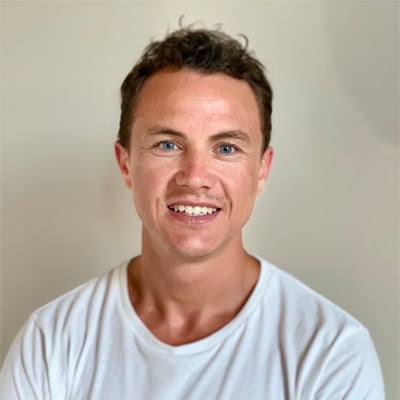
In this insightful episode of the Crypto Trailblazers series hosted by theCUBE, Mike Cagney of Figure Markets sits down with analysts from theCUBE Research to discuss groundbreaking advancements in blockchain technology and their implications for the finance sector. This video is part of the NYSE Wired digital event, aimed at bridging the gap between Silicon Valley and Wall Street by integrating technology and finance.
Cagney, an eminent figure in fintech, shares expertise on the transformative role of blockchain in financial markets during this interview. Conducted by seasoned analysts at theCUBE, the discussion delves into Figure’s innovative contributions, including their blockchain-native loan origination and securitization process. He outlines how Figure leverages blockchain to achieve cost reductions, enhanced security and improved liquidity in financial transactions.
Key takeaways from the interview highlight insights on the evolution of the Web3 ecosystem, such as the emergence of stablecoins as pivotal to transaction processes and the rise of decentralized finance (DeFi). Oltsik states these developments signify a shift towards democratizing finance, wherein truth and transparency are foundational. The conversation concludes with a look at Figure’s pioneering efforts in creating a new financial marketplace utilizing blockchain technology.
#CryptoTrailblazers #FigureMarkets #BlockchainInnovation #Web3 #NYEWired #BlockchainFinance #DecentralizedFinance #Fintech #Stablecoins
Find more SiliconANGLE news and analysis https://siliconangle.com/.
Follow theCUBE's wall-to-wall event coverage https://siliconangle.com/events/
Learn about the latest theCUBE events https://www.thecube.net/
00:00 - Intro
00:05 - Emerging Innovations in Financial Technology and Market Dynamics
02:45 - Key Elements in Financial Ecosystem Dynamics
06:20 - Blockchain: Truth and Transformation
09:39 - Shaping the Future: Innovations in Financial Markets and Stablecoin Integration
13:15 - Enabling the Future: Navigating Disruptions in Banking and Lending
16:51 - Exploring Opportunities and Building Confidence in the Blockchain Ecosystem
Forgot Password
Almost there!
We just sent you a verification email. Please verify your account to gain access to
theCUBE + NYSE Wired: Crypto Trailblazers. If you don’t think you received an email check your
spam folder.
Sign in to theCUBE + NYSE Wired: Crypto Trailblazers.
In order to sign in, enter the email address you used to registered for the event. Once completed, you will receive an email with a verification link. Open this link to automatically sign into the site.
Register For theCUBE + NYSE Wired: Crypto Trailblazers
Please fill out the information below. You will recieve an email with a verification link confirming your registration. Click the link to automatically sign into the site.
You’re almost there!
We just sent you a verification email. Please click the verification button in the email. Once your email address is verified, you will have full access to all event content for theCUBE + NYSE Wired: Crypto Trailblazers.
I want my badge and interests to be visible to all attendees.
Checking this box will display your presense on the attendees list, view your profile and allow other attendees to contact you via 1-1 chat. Read the Privacy Policy. At any time, you can choose to disable this preference.
Select your Interests!
add
Upload your photo
Uploading..
OR
Connect via Twitter
Connect via Linkedin
EDIT PASSWORD
Share
Forgot Password
Almost there!
We just sent you a verification email. Please verify your account to gain access to
theCUBE + NYSE Wired: Crypto Trailblazers. If you don’t think you received an email check your
spam folder.
Sign in to theCUBE + NYSE Wired: Crypto Trailblazers.
In order to sign in, enter the email address you used to registered for the event. Once completed, you will receive an email with a verification link. Open this link to automatically sign into the site.
Sign in to gain access to theCUBE + NYSE Wired: Crypto Trailblazers
Please sign in with LinkedIn to continue to theCUBE + NYSE Wired: Crypto Trailblazers. Signing in with LinkedIn ensures a professional environment.
>> Welcome back everyone. I'm John Furrier, host of theCUBE, here at theCUBE's NYSE Studio here on the balcony overlooking the trading floor of the New York Stock Exchange. Of course, we have our Palo Alto Studio connecting Silicon Valley and Wall Street Tech, and money is converging and converged, continues to converge. This is part of our Crypto's Trailblazers ongoing series. We feature the leaders in the crypto and blockchain infrastructure. We're bringing in the game changing, generational changing technology and the financial money systems being disrupted and enabled at the same time as we usher in the modern era. Dmitry is back. Okay. He is the co-founder of QuickNode, a leading developer platform on blockchain. Also, an original gangster of theCUBE Crypto Trailblazer program with the NYSE Wired community, as part of our first program. Welcome back. Good to see you. Yes. All right. This program is so exciting because there are so many Crypto Trailblazers. Well, there's a lot of OGs who are kicking ass, taking names, and then you have a whole another flight of entrepreneurs coming in. It's very entrepreneur. It's a really fun market. It's great to do these series because we're just showcasing and getting great data on what's happening. So you're on in March. First question for you is, what's new on your end? A lot is changing.
Dmitry Shklovsky
>> Yeah, absolutely. So we released a new Streams product, released a new Webhooks product. It's all about delivering data reliably and quickly. We upped our Solana offerings. We run a validator. We significantly improved our performance on Solana and we probably onboarded 20 new chains to our platform. So now, we're at over 85 chains, and that's over 105 networks. So broad coverage of data in the blockchain space.>> I'm really glad that you're back because one of the things that we've observed on the Crypto Trailblazers program is the proliferation of chains has happened, happening, public and private. The old guard and new guard are interacting, which is great science, not a replacement. There's going to be some overlaps and people will lose some territory, but that's a good thing. Collaboration is really critical. So that's a foundational infrastructure maturization. That's going to bring in a massive tsunami of developers.
Dmitry Shklovsky
>> That's right.>> And we see that clearly. We believe it. We report on it. That's your business. Talk about what you guys are doing, for people who don't know your company. This phenomenon is happening very, very fast, that there's a development market and it's not just apps. It's systems and apps. So there's utility, there's things going on, but there's a system integration.
Dmitry Shklovsky
>> Right.>> It's like an abstraction. Like in computer science, you build on top of things.
Dmitry Shklovsky
>> Right.>> Chains are everywhere, now you build on top of them. You've got stable coins.
Dmitry Shklovsky
>> Correct.>> Things are lining up.
Dmitry Shklovsky
>> Yeah. So the public blockchains, having the data auditable, available, and the convergence of the traditional markets, especially that's what's happening now with the change in administration, with there being regulatory unlocks, we are now seeing the traditional markets looking to get involved, where previously, this was a little difficult for them. They were shying away from that. So we just recently did an event in the Solana Skyline for institutional clients where we saw folks from Mysten Labs, Goldman Sachs, MasterCard, Deloitte. And they're excited to be working in this space again. Some of those folks have been in the crypto positions in their respective companies for multiple years, and they were like the odd kid out. And now, they're expanding their teams. They're expanding that technology and looking to get and catch this wave.>> QuickNode is building, helping people build on-chain applications.
Dmitry Shklovsky
>> That's right.>> You provide developers and businesses the tools to do that, which is beautiful. Picks and shovels-
Dmitry Shklovsky
>> That's right.>> ... for the maturity of the infrastructure. What are some of the use cases that came out of that meeting? Obviously, big names. IT is no stranger. JP Morgan Chase spends 10 trillion, $13 trillion annually. I'm sorry. Billion, 13 billion annually on their technology budget.
Dmitry Shklovsky
>> That's a big number, just because... They have a team, as everyone else does. Developing is not new.>> Right.
Dmitry Shklovsky
>> What's the difference now? What are you seeing? What's the feedback at that meeting? What are they honing in on? What's the focus?Absolutely. So the traditional markets and the rules that they abide by are in some ways, polar opposites of what blockchain was built for and stands for. And they're trying to navigate and bridge that gap. So the traditional markets and the traditional equities can merge and function on this new network, this new internet, this new layer of the internet. So that was a common theme.>> And what are some of their concerns, questions? It's almost like a living RFP. I can imagine probably getting requirements.
Dmitry Shklovsky
>> Right.>> What are some of the things they're looking for?
Dmitry Shklovsky
>> Compliance.>> Yeah. Compliance, number one.
Dmitry Shklovsky
>> Compliance, security. A lot of these companies, they have internal databases and even trading strategies. How do you prevent reverse engineering, anti-tracking? But also in the same token is, how do you keep track of which wallets hold, which trades were done, analytics around all of that? And this is something that QuickNode is helping with. So we're SOC 2 compliant, SOC 1 type 2, SOC 2 type 2. This year, we just got our ISO 27001. We're a team of 120 all around the world. We have 24/7 round of support. So these companies, they come to us and we give them the level of service that they expect.>> We were just together at the blockchain breakfast at the Solana office. They put on Nick and team. The title was, State of Crypto, the View from Washington. We had some folks in there from the Solana side, as well as some policy makers. What was your takeaway from that breakfast? What was the vibe?
Dmitry Shklovsky
>> Right. So the Solana team that's working to drive crypto policy within Washington, they're doing great work because it's quite ambiguous because this is a new technology. And to help shape the policy that will shape the next decades and what finance will run on, in my opinion, everything. This is the future of everything, not just finance. And so for them to hear that they're working towards that and trying to influence positive change, it's great to hear.>> And the president of the Futures was there. Trabue was there, Bland from NYSE. He actually was from ICE actually, their parent company. They are huge in the data business. They have an interest in this. He has a very pro crypto stance.
Dmitry Shklovsky
>> Excellent.>> And it reminds me of the early internet days when the US government protected the DNS because it was in the United States. They created kind of a heat shield. But also, there was some work being done. It was like, let the let self-govern, let the players, the builders build.
Dmitry Shklovsky
>> Yeah, let them innovate.>> Give them some freedom, but let chaos reign a little bit, and then reign in the chaos. Andy Gross' favorite expression. I love that. I use it all the time. Okay. What's that going on look like for you? What needs to happen? What's that policy in your opinion? Because we have to get the old and new together. That's a generational story. It's not well told, but it's happening. The young and old are working together. New guard and old guard are connecting. They need to.
Dmitry Shklovsky
>> Well, it's this recent 180 where we're seeing tweets from the SEC that are very pro crypto. We're seeing legislation that's very pro crypto to allow innovation to happen. And that allows developers to not be afraid to experiment with this technology. And like I said, innovate and create something new and create something that's more efficient, something that can handle higher throughput. So it's great to see that this new legislation has ushered in not only a new wave of developers, but also existing businesses are now able to experiment without being afraid to be punished for it.>> I met a great contact there, Ryan. He's a lawyer. I think he said he was the outside counsel for Solana. Anyway, he knows the game down there. He had a great line. He said that there's a task force been put together and they're open for business. He used the word, open. That's a good sign. Because remember all these big secular trends like say, open source software, doesn't survive without the Apache foundation.
Dmitry Shklovsky
>> Right.>> It doesn't survive without the Linux foundation. So you have this kind of communal self-governance. Now, with the chains populating up, it's like open source projects. It's very similar. It's open, it's transparent. You've got developers, they love projects. Some fail, some don't.
Dmitry Shklovsky
>> Right. Well, the internet opened up that freedom to create and go global from day one. And having that kind of freedom in the blockchain space is, I think that's progress.>> Yeah. I think Solana is doing a great job. I like how they're a thin organization too. They're not bloated. They're very thin at the top. On your business, what's your focus right now? What are your to-do items? Share. You don't have to give away any property secrets. It's transparent. You guys are already out in the open, but you got a great opportunity. You're helping people get on board because there, you're an on-ramp.
Dmitry Shklovsky
>> Sure. So we have built a best-in-class base layer. And so we're looking to build products higher up the stack, and then bundle it up to create full-on solutions. So when the institutions come to us and say, "Hey, I want to do X, Y, and Z," we will have the solution for them. And being in the space since 2017, we've developed a network of partners to... We can act as a router. So we can connect them to the right folks, let's say if we don't have the solution in-house or that's not something that we're focusing on. But yeah, the future is about building solutions.>> And those are systems. At the end of the day, it's the network.
Dmitry Shklovsky
>> Sure.>> The network. What is the key criteria if someone is putting up strategy document together? Let's say I went to ChatGPT and said, "What's my strategy document? Create a draft of a strategy document for onboarding my assets on-chain or onboarding my business on a chain." What would the answer be and what would be your role in that answer?
Dmitry Shklovsky
>> So we do offer a service, professional services, which can help navigate certain regulatory things, compliance. It depends on the use case. Because blockchain has such a broad range of use cases, again, it's case by case, project by project, solution by solution. So at the end also, that base layer that we have, that infrastructure layer, it involves reading and writing to and from the blockchain. So that's going to be involved in some way, shape, or form.>> You've been around since 2017, co-founder. I have to ask the co-founder question. What's it like now, and look back in 2017, scope the change trajectory, where we are today, difference between the two points from origination time to now, what's been the biggest change for you guys? Just maturity?
Dmitry Shklovsky
>> Yeah. Maturity is definitely one of them. Scale where certain wallets may... For example, wallets or exchanges had maybe tens of thousands of users. Now, they're having to handle tens of thousands of users. There's way more assets than before. So we have to find ways to deliver that data reliably without error. That's very important. Data accuracy is super important. Because when there's lots of money on the line, you have to have the data be super accurate and you have to get it fast. There are some apps where if you receive the data in 150 milliseconds, it doesn't work, trading strategies that->> Data loss is a killer. You can't have data loss.
Dmitry Shklovsky
>> Or if you deliver that data within 50 milliseconds, which in many cases across all the chains, we do, then the app works, the strategy works.>> What's the biggest blocker for you that you need to see taken out from the Washington crowd? Is there anything that's on your mind?
Dmitry Shklovsky
>> From what I hear, what's going on right now is the right pace. It's the right direction. I don't have any particular roadblocks. We're still working in a data center space. We're working with networks. Something is storing this data and sending this over. It's a top of all the other technologies that have been built decades prior, and that's already been well-developed, well established. The rules are there. So unlocking, loosening up the regulations and providing guidance. So the new age of developers, especially with AI and robotics, I see that converging within the next five years. That's where the focus should be in Washington.>> I've always loved the phrase, programmable money. One, because the word, programmable, is in it. Because I think software is going to do a lot of good work. This is coming. It's here. What's programmable money mean to you, programmable systems? What has to be in place for the frictionless programmability of money systems?
Dmitry Shklovsky
>> I think a good amount of it is already there with smart contracts and some of these new technologies that are being developed to be able to program money, to your point. Yeah, I think it's heading in the right direction.>> The thing I love about these financial issues is that they kind of realize, Dmitry, that they're there, and they know they have to lean in. So they're putting a lot of people on the street to do that, which is a great sign. So I always ask the question, what's the confidence boost in your mind for people? Because the enthusiasm is high. Confidence is where they need to see. I mean, financial strength is zero downtime. They have high bar.
Dmitry Shklovsky
>> Right.>> What's the confidence layer look like? What needs to be in place? Or from a confidence standpoint, what do you guys organize around to give them the confidence?
Dmitry Shklovsky
>> Right. So from our end, it is compliance. We already offer four nines uptime SLAs. At the end of the day, it is the maturity, the longer a blockchain is around and the longer the blockchain technology is around. Like, Bitcoin is super stable. Ethereum is very stable. Solana has been doing great work and they're very stable right now. So it's just about doing the thing.>> Get that foundation layer right.
Dmitry Shklovsky
>> Let people experiment and break things, and then you fix them, and then you move on to the next. It's like phases.>> Yeah, yeah, . It's a ratchet game. Keep moving it forward. All right. Put a plug in for your company. What are you working on? What's on your mind? Are you guys hiring? What's your focus? Put a plug in for what you guys are working on.
Dmitry Shklovsky
>> Sure. We're helping build the future of everything. We provide institutions and businesses access to blockchain data, whether you're building, whether you're business or an enterprise. Customers like Coinbase, Paxos, Circle, Binance and Big 4, and also several Fortune 100 companies, we're looking to meet them where they need to be. So take their traditional processes and help them incorporate all the benefits of blockchain, all the efficiencies of blockchain.>> Dmitry, great to have you on your trailblazer. Again, part of our inaugural class, we're going to continue this series. Super popular. Thanks for being part of the Wired community program and theCUBE. Thank you. Thanks for coming on. I'm John Furrier on theCUBE. We're doing our part. We're transparent. We're sharing the data as fast as we can, talking to the experts. The Crypto Trailblazers program is part of the NYC Wired and theCUBE initiative, is really about talking to the leaders who are making it happen and sharing the latest data we can get, best practices, use cases, and just what people are thinking about and sharing that with the community. Thanks for watching.
>> Welcome back everyone. I'm John Furrier, host of theCUBE, here at theCUBE's NYSE Studio here on the balcony overlooking the trading floor of the New York Stock Exchange. Of course, we have our Palo Alto Studio connecting Silicon Valley and Wall Street Tech, and money is converging and converged, continues to converge. This is part of our Crypto's Trailblazers ongoing series. We feature the leaders in the crypto and blockchain infrastructure. We're bringing in the game changing, generational changing technology and the financial money systems being disrupted and enabled at the same time as we usher in the modern era. Dmitry is back. Okay. He is the co-founder of QuickNode, a leading developer platform on blockchain. Also, an original gangster of theCUBE Crypto Trailblazer program with the NYSE Wired community, as part of our first program. Welcome back. Good to see you. Yes. All right. This program is so exciting because there are so many Crypto Trailblazers. Well, there's a lot of OGs who are kicking ass, taking names, and then you have a whole another flight of entrepreneurs coming in. It's very entrepreneur. It's a really fun market. It's great to do these series because we're just showcasing and getting great data on what's happening. So you're on in March. First question for you is, what's new on your end? A lot is changing.
Dmitry Shklovsky
>> Yeah, absolutely. So we released a new Streams product, released a new Webhooks product. It's all about delivering data reliably and quickly. We upped our Solana offerings. We run a validator. We significantly improved our performance on Solana and we probably onboarded 20 new chains to our platform. So now, we're at over 85 chains, and that's over 105 networks. So broad coverage of data in the blockchain space.>> I'm really glad that you're back because one of the things that we've observed on the Crypto Trailblazers program is the proliferation of chains has happened, happening, public and private. The old guard and new guard are interacting, which is great science, not a replacement. There's going to be some overlaps and people will lose some territory, but that's a good thing. Collaboration is really critical. So that's a foundational infrastructure maturization. That's going to bring in a massive tsunami of developers.
Dmitry Shklovsky
>> That's right.>> And we see that clearly. We believe it. We report on it. That's your business. Talk about what you guys are doing, for people who don't know your company. This phenomenon is happening very, very fast, that there's a development market and it's not just apps. It's systems and apps. So there's utility, there's things going on, but there's a system integration.
Dmitry Shklovsky
>> Right.>> It's like an abstraction. Like in computer science, you build on top of things.
Dmitry Shklovsky
>> Right.>> Chains are everywhere, now you build on top of them. You've got stable coins.
Dmitry Shklovsky
>> Correct.>> Things are lining up.
Dmitry Shklovsky
>> Yeah. So the public blockchains, having the data auditable, available, and the convergence of the traditional markets, especially that's what's happening now with the change in administration, with there being regulatory unlocks, we are now seeing the traditional markets looking to get involved, where previously, this was a little difficult for them. They were shying away from that. So we just recently did an event in the Solana Skyline for institutional clients where we saw folks from Mysten Labs, Goldman Sachs, MasterCard, Deloitte. And they're excited to be working in this space again. Some of those folks have been in the crypto positions in their respective companies for multiple years, and they were like the odd kid out. And now, they're expanding their teams. They're expanding that technology and looking to get and catch this wave.>> QuickNode is building, helping people build on-chain applications.
Dmitry Shklovsky
>> That's right.>> You provide developers and businesses the tools to do that, which is beautiful. Picks and shovels-
Dmitry Shklovsky
>> That's right.>> ... for the maturity of the infrastructure. What are some of the use cases that came out of that meeting? Obviously, big names. IT is no stranger. JP Morgan Chase spends 10 trillion, $13 trillion annually. I'm sorry. Billion, 13 billion annually on their technology budget.
Dmitry Shklovsky
>> That's a big number, just because... They have a team, as everyone else does. Developing is not new.>> Right.
Dmitry Shklovsky
>> What's the difference now? What are you seeing? What's the feedback at that meeting? What are they honing in on? What's the focus?Absolutely. So the traditional markets and the rules that they abide by are in some ways, polar opposites of what blockchain was built for and stands for. And they're trying to navigate and bridge that gap. So the traditional markets and the traditional equities can merge and function on this new network, this new internet, this new layer of the internet. So that was a common theme.>> And what are some of their concerns, questions? It's almost like a living RFP. I can imagine probably getting requirements.
Dmitry Shklovsky
>> Right.>> What are some of the things they're looking for?
Dmitry Shklovsky
>> Compliance.>> Yeah. Compliance, number one.
Dmitry Shklovsky
>> Compliance, security. A lot of these companies, they have internal databases and even trading strategies. How do you prevent reverse engineering, anti-tracking? But also in the same token is, how do you keep track of which wallets hold, which trades were done, analytics around all of that? And this is something that QuickNode is helping with. So we're SOC 2 compliant, SOC 1 type 2, SOC 2 type 2. This year, we just got our ISO 27001. We're a team of 120 all around the world. We have 24/7 round of support. So these companies, they come to us and we give them the level of service that they expect.>> We were just together at the blockchain breakfast at the Solana office. They put on Nick and team. The title was, State of Crypto, the View from Washington. We had some folks in there from the Solana side, as well as some policy makers. What was your takeaway from that breakfast? What was the vibe?
Dmitry Shklovsky
>> Right. So the Solana team that's working to drive crypto policy within Washington, they're doing great work because it's quite ambiguous because this is a new technology. And to help shape the policy that will shape the next decades and what finance will run on, in my opinion, everything. This is the future of everything, not just finance. And so for them to hear that they're working towards that and trying to influence positive change, it's great to hear.>> And the president of the Futures was there. Trabue was there, Bland from NYSE. He actually was from ICE actually, their parent company. They are huge in the data business. They have an interest in this. He has a very pro crypto stance.
Dmitry Shklovsky
>> Excellent.>> And it reminds me of the early internet days when the US government protected the DNS because it was in the United States. They created kind of a heat shield. But also, there was some work being done. It was like, let the let self-govern, let the players, the builders build.
Dmitry Shklovsky
>> Yeah, let them innovate.>> Give them some freedom, but let chaos reign a little bit, and then reign in the chaos. Andy Gross' favorite expression. I love that. I use it all the time. Okay. What's that going on look like for you? What needs to happen? What's that policy in your opinion? Because we have to get the old and new together. That's a generational story. It's not well told, but it's happening. The young and old are working together. New guard and old guard are connecting. They need to.
Dmitry Shklovsky
>> Well, it's this recent 180 where we're seeing tweets from the SEC that are very pro crypto. We're seeing legislation that's very pro crypto to allow innovation to happen. And that allows developers to not be afraid to experiment with this technology. And like I said, innovate and create something new and create something that's more efficient, something that can handle higher throughput. So it's great to see that this new legislation has ushered in not only a new wave of developers, but also existing businesses are now able to experiment without being afraid to be punished for it.>> I met a great contact there, Ryan. He's a lawyer. I think he said he was the outside counsel for Solana. Anyway, he knows the game down there. He had a great line. He said that there's a task force been put together and they're open for business. He used the word, open. That's a good sign. Because remember all these big secular trends like say, open source software, doesn't survive without the Apache foundation.
Dmitry Shklovsky
>> Right.>> It doesn't survive without the Linux foundation. So you have this kind of communal self-governance. Now, with the chains populating up, it's like open source projects. It's very similar. It's open, it's transparent. You've got developers, they love projects. Some fail, some don't.
Dmitry Shklovsky
>> Right. Well, the internet opened up that freedom to create and go global from day one. And having that kind of freedom in the blockchain space is, I think that's progress.>> Yeah. I think Solana is doing a great job. I like how they're a thin organization too. They're not bloated. They're very thin at the top. On your business, what's your focus right now? What are your to-do items? Share. You don't have to give away any property secrets. It's transparent. You guys are already out in the open, but you got a great opportunity. You're helping people get on board because there, you're an on-ramp.
Dmitry Shklovsky
>> Sure. So we have built a best-in-class base layer. And so we're looking to build products higher up the stack, and then bundle it up to create full-on solutions. So when the institutions come to us and say, "Hey, I want to do X, Y, and Z," we will have the solution for them. And being in the space since 2017, we've developed a network of partners to... We can act as a router. So we can connect them to the right folks, let's say if we don't have the solution in-house or that's not something that we're focusing on. But yeah, the future is about building solutions.>> And those are systems. At the end of the day, it's the network.
Dmitry Shklovsky
>> Sure.>> The network. What is the key criteria if someone is putting up strategy document together? Let's say I went to ChatGPT and said, "What's my strategy document? Create a draft of a strategy document for onboarding my assets on-chain or onboarding my business on a chain." What would the answer be and what would be your role in that answer?
Dmitry Shklovsky
>> So we do offer a service, professional services, which can help navigate certain regulatory things, compliance. It depends on the use case. Because blockchain has such a broad range of use cases, again, it's case by case, project by project, solution by solution. So at the end also, that base layer that we have, that infrastructure layer, it involves reading and writing to and from the blockchain. So that's going to be involved in some way, shape, or form.>> You've been around since 2017, co-founder. I have to ask the co-founder question. What's it like now, and look back in 2017, scope the change trajectory, where we are today, difference between the two points from origination time to now, what's been the biggest change for you guys? Just maturity?
Dmitry Shklovsky
>> Yeah. Maturity is definitely one of them. Scale where certain wallets may... For example, wallets or exchanges had maybe tens of thousands of users. Now, they're having to handle tens of thousands of users. There's way more assets than before. So we have to find ways to deliver that data reliably without error. That's very important. Data accuracy is super important. Because when there's lots of money on the line, you have to have the data be super accurate and you have to get it fast. There are some apps where if you receive the data in 150 milliseconds, it doesn't work, trading strategies that->> Data loss is a killer. You can't have data loss.
Dmitry Shklovsky
>> Or if you deliver that data within 50 milliseconds, which in many cases across all the chains, we do, then the app works, the strategy works.>> What's the biggest blocker for you that you need to see taken out from the Washington crowd? Is there anything that's on your mind?
Dmitry Shklovsky
>> From what I hear, what's going on right now is the right pace. It's the right direction. I don't have any particular roadblocks. We're still working in a data center space. We're working with networks. Something is storing this data and sending this over. It's a top of all the other technologies that have been built decades prior, and that's already been well-developed, well established. The rules are there. So unlocking, loosening up the regulations and providing guidance. So the new age of developers, especially with AI and robotics, I see that converging within the next five years. That's where the focus should be in Washington.>> I've always loved the phrase, programmable money. One, because the word, programmable, is in it. Because I think software is going to do a lot of good work. This is coming. It's here. What's programmable money mean to you, programmable systems? What has to be in place for the frictionless programmability of money systems?
Dmitry Shklovsky
>> I think a good amount of it is already there with smart contracts and some of these new technologies that are being developed to be able to program money, to your point. Yeah, I think it's heading in the right direction.>> The thing I love about these financial issues is that they kind of realize, Dmitry, that they're there, and they know they have to lean in. So they're putting a lot of people on the street to do that, which is a great sign. So I always ask the question, what's the confidence boost in your mind for people? Because the enthusiasm is high. Confidence is where they need to see. I mean, financial strength is zero downtime. They have high bar.
Dmitry Shklovsky
>> Right.>> What's the confidence layer look like? What needs to be in place? Or from a confidence standpoint, what do you guys organize around to give them the confidence?
Dmitry Shklovsky
>> Right. So from our end, it is compliance. We already offer four nines uptime SLAs. At the end of the day, it is the maturity, the longer a blockchain is around and the longer the blockchain technology is around. Like, Bitcoin is super stable. Ethereum is very stable. Solana has been doing great work and they're very stable right now. So it's just about doing the thing.>> Get that foundation layer right.
Dmitry Shklovsky
>> Let people experiment and break things, and then you fix them, and then you move on to the next. It's like phases.>> Yeah, yeah, . It's a ratchet game. Keep moving it forward. All right. Put a plug in for your company. What are you working on? What's on your mind? Are you guys hiring? What's your focus? Put a plug in for what you guys are working on.
Dmitry Shklovsky
>> Sure. We're helping build the future of everything. We provide institutions and businesses access to blockchain data, whether you're building, whether you're business or an enterprise. Customers like Coinbase, Paxos, Circle, Binance and Big 4, and also several Fortune 100 companies, we're looking to meet them where they need to be. So take their traditional processes and help them incorporate all the benefits of blockchain, all the efficiencies of blockchain.>> Dmitry, great to have you on your trailblazer. Again, part of our inaugural class, we're going to continue this series. Super popular. Thanks for being part of the Wired community program and theCUBE. Thank you. Thanks for coming on. I'm John Furrier on theCUBE. We're doing our part. We're transparent. We're sharing the data as fast as we can, talking to the experts. The Crypto Trailblazers program is part of the NYC Wired and theCUBE initiative, is really about talking to the leaders who are making it happen and sharing the latest data we can get, best practices, use cases, and just what people are thinking about and sharing that with the community. Thanks for watching.