Exploring Ethereum's Role in the Future of Finance
In this episode, Vivek Raman, co-founder and Chief Executive Officer of Etherealize, discusses the pivotal shifts occurring within the cryptocurrency landscape. With a focus on Ethereum's role in the tokenization of assets, this episode is part of the ongoing Crypto Trailblazers series hosted by theCUBE. Raman dives into key developments such as the Genius Act and the Clarity Act, which significantly impact the ecosystem of blockchain technologies.
Raman brings a wealth of expertise in blockchain and financial technologies, particularly with Ethereum. During the conversation, Raman discusses the accelerating trends in asset tokenization and the advancements brought about by recent legislation. Joined by theCUBE Research, they examine Ethereum's position as a decentralized network, comparing its evolutionary trajectory to disruptive historical shifts in technology.
Key takeaways from this discussion include the vital role of Ethereum in financial innovation and the growing significance of tokenized financial products. According to Raman, the future of finance is set to embrace transparency and decentralization, with Ethereum as the leading backbone. The discussion also highlights the importance of responsible blockchain innovation and the progress toward enhancing privacy and infrastructure for institutional adoption.
Forgot Password
Almost there!
We just sent you a verification email. Please verify your account to gain access to
theCUBE + NYSE Wired: Crypto Trailblazers. If you don’t think you received an email check your
spam folder.
Sign in to theCUBE + NYSE Wired: Crypto Trailblazers.
In order to sign in, enter the email address you used to registered for the event. Once completed, you will receive an email with a verification link. Open this link to automatically sign into the site.
Register For theCUBE + NYSE Wired: Crypto Trailblazers
Please fill out the information below. You will recieve an email with a verification link confirming your registration. Click the link to automatically sign into the site.
You’re almost there!
We just sent you a verification email. Please click the verification button in the email. Once your email address is verified, you will have full access to all event content for theCUBE + NYSE Wired: Crypto Trailblazers.
I want my badge and interests to be visible to all attendees.
Checking this box will display your presense on the attendees list, view your profile and allow other attendees to contact you via 1-1 chat. Read the Privacy Policy. At any time, you can choose to disable this preference.
Select your Interests!
add
Upload your photo
Uploading..
OR
Connect via Twitter
Connect via Linkedin
EDIT PASSWORD
Share
Forgot Password
Almost there!
We just sent you a verification email. Please verify your account to gain access to
theCUBE + NYSE Wired: Crypto Trailblazers. If you don’t think you received an email check your
spam folder.
Sign in to theCUBE + NYSE Wired: Crypto Trailblazers.
In order to sign in, enter the email address you used to registered for the event. Once completed, you will receive an email with a verification link. Open this link to automatically sign into the site.
Sign in to gain access to theCUBE + NYSE Wired: Crypto Trailblazers
Please sign in with LinkedIn to continue to theCUBE + NYSE Wired: Crypto Trailblazers. Signing in with LinkedIn ensures a professional environment.
Are you sure you want to remove access rights for this user?
Details
Manage Access
email address
Community Invitation
Vivek Raman, Etherealize
Exploring Ethereum's Role in the Future of Finance
In this episode, Vivek Raman, co-founder and Chief Executive Officer of Etherealize, discusses the pivotal shifts occurring within the cryptocurrency landscape. With a focus on Ethereum's role in the tokenization of assets, this episode is part of the ongoing Crypto Trailblazers series hosted by theCUBE. Raman dives into key developments such as the Genius Act and the Clarity Act, which significantly impact the ecosystem of blockchain technologies.
Raman brings a wealth of expertise in blockchain and financial technologies, particularly with Ethereum. During the conversation, Raman discusses the accelerating trends in asset tokenization and the advancements brought about by recent legislation. Joined by theCUBE Research, they examine Ethereum's position as a decentralized network, comparing its evolutionary trajectory to disruptive historical shifts in technology.
Key takeaways from this discussion include the vital role of Ethereum in financial innovation and the growing significance of tokenized financial products. According to Raman, the future of finance is set to embrace transparency and decentralization, with Ethereum as the leading backbone. The discussion also highlights the importance of responsible blockchain innovation and the progress toward enhancing privacy and infrastructure for institutional adoption.
play_circle_outlineIntroduction of the Crypto Trailblazer series highlighting key technologists and financiers.
replyShare Clip
play_circle_outlineEthereum's Rise and Stablecoins: The Driving Forces Behind Positive Momentum in the Crypto Market
replyShare Clip
play_circle_outlineStablecoins seen as a crucial product with significant market fit in finance.
replyShare Clip
play_circle_outlineScaling Operations: $40 Million Fundraising to Accelerate Asset Tokenization and Enhance Privacy in Public Blockchains for Institutional Adoption
>> Welcome back, I'm John Furrier, host of theCUBE. We are here at our NYSE studio, theCUBE. Of course, this is the East Coast access point. We got Palo Alto connecting Silicon Valley and Wall Street, tech and money coming together. This is our Crypto Trailblazer series. This is the people making it happen. And as the shift goes on and we're tokenizing all the assets, converting Wall Street into tokenized assets, the world is going crazy. Of course, you've got all the top technologists, financiers all in the building here tonight. Vivek Raman is here, the co-founder and CEO of Etherealize. Welcome back. For Etherealize, first time back for you. Appreciate it.
Vivek Raman
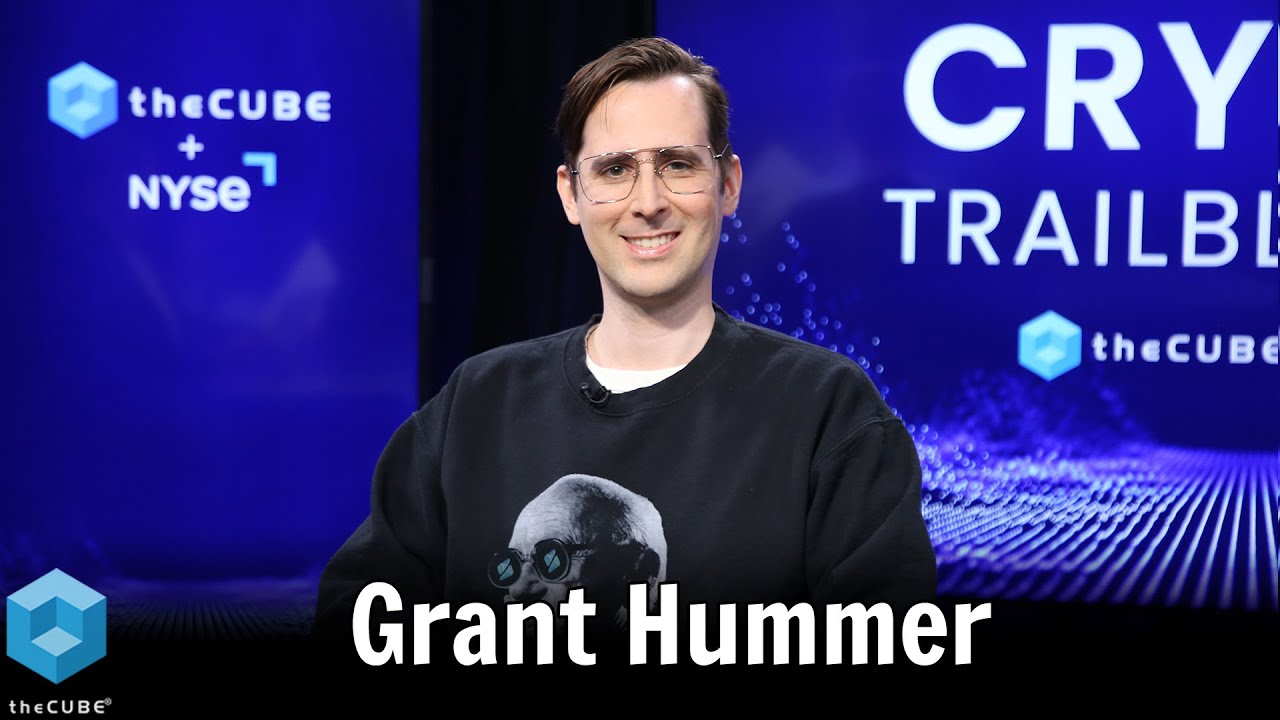
>> Thank you for having me.>> So Grant was on and I had a great chat in our Palo Alto studio for our Crypto Trailblazers there. A lot's happened since he's been on, right? So IPO window's open, Ethereum and stablecoins is booming. The market has got a great tailwind and a lot of the companies that have been doing the work internationally are coming back in the United States. Big story there. But the story is Ethereum continues to be that layer for stablecoins and programmable money.
Vivek Raman
>> I think that the ecosystem's been working for a very long time for this moment, and we had every single tailwind you can possibly ask for converge at the same time. The Genius Act passing is a huge, huge milestone because it codifies blockchains into law. You're seeing the rise of digital asset treasuries and you're seeing ETH ETF inflows give a lot of tailwind to ETH the asset, and you're seeing institutions that actually are able to tokenize assets now and everyone's rushing to get a blockchain plan. Everyone's rushing to get a tokenization plan. Most of that's happening on Ethereum. It's a really exciting time to be here.>> And don't forget the Clarity Act too. That brings the regulation and the, I won't say laggards, but the folks that have to catch up fast, which is how do you regulate that stuff? Because once that kicks in, the floodgates are going to open up even further because now all that measurement's in place for the money,
Vivek Raman
>> That's part of the reason. People say that stablecoins were the ChatGPT moment for Ethereum, which is absolutely true, but I call it the ChatGPT 1.0 moment. The second we have the Clarity Act pass and you can have frameworks for broader tokenization, deeply honored to testify in front of Congress about the Clarity Act, about the benefits of it, benefits of decentralization tests, it's been a surreal six months, but once Clarity Act passes, then you're going to get ChatGPT 2.0, which is the tokenization of everything, and that's where Ethereum really gets to->> Take us through which dots connect when that happens, because you're seeing a lot of shoes drop, as they say, very accelerated, reminds me of when Nvidia of two years ago started to really accelerate on the AI side, then it just continued to the thunder away. We're kind of in that kick up right now on the acceleration. What happens next? What's going to go on? More entrepreneurship obviously, more building, more assets being tokenized. What's going on? Tell us what's happening.
Vivek Raman
>> It all starts with stablecoins, tokenized versions of the dollar which found such ridiculous product market fit. $170 billion of stablecoins on Ethereum in the network, but that's the tip of the iceberg because the world's a lot bigger than just tokenized dollars. Last year, Larry Fink was out there saying that every single asset will be tokenized, and that was very visionary, but it was early. Now with things like Genius and Clarity Act, we actually are at the cusp of every single asset being tokenized. Once that happens, you're going to have trillions and trillions of assets coming on chain, transacting in a programmatic manner. You're going to have the internet moment for finance.>> Yeah. The thing about technology, which I love, is that it's a disruptive enabler, and that's the key words. Disruptive enabler. Disruption could be bad or good. So when you're enabling things like Ethereum does with open decentralized ecosystems, things flourish. In the internet days, information was commoditized and democratized. Great. Information flows faster. High frequency trading, access to information, we get smarter. But with blockchain and crypto, DeFi and TradFi, that's value being democratized.
Vivek Raman
>> Exactly right.>> Okay, so now that's money. Not just money, but value.
Vivek Raman
>> And assets.>> Assets. Assets are valuable. That gets people's attention on Wall Street because it's now money and assets, not fantasy or oh, information's available, which they're used to. Talk about that dynamic because that moves the needle because that makes it not only just real, impactful.
Vivek Raman
>> A lot of Wall Street, and I mean the reason we started Etherealize was because a lot of Wall Street still operates on, honestly, it's Stone Age technology. Still on phones and faxes and paper confirmations and wire transfers. Everyone wanted the industry to upgrade, just the technology hadn't been ready and mature and have regulatory backing. So people who have been around blockchains for 10 years, the banks all know how Ethereum works. The asset managers know Ethereum works. They've been waiting for that moment of clarity, no pun intended, and that all came right now. So I think that being able to take assets, digitize them for the technology age, put them on public blockchains like Ethereum, the most secure, the most decentralized ones and have them flow value, it's positive sum. It actually adds revenue, it cuts costs. It's the most technology I've ever seen. Ethereum is the most important technology I think we've seen come across other than AI in the last->> And I love the programmability. I've always loved smart contracts. I think that's the future. Zillions of smart contracts will be out there. Agents are going to come on board.
Vivek Raman
>> A hundred percent.>> A lot of stuff's going to happen with software. Software's eating money, not the world anymore. But I've got to ask you about the product market fit comment you made. Stablecoin, amazing product market fit, totally agree. Let's talk about other products and other product market fit. One of the things that's coming out of this Crypto Trailblazer series is an observation that I have of new products that no one's ever thought of as emerging. And there's some easy knockdowns like staking, doing combinations of products because now you've got value that you can keep and make it work for me, I'm basically creating a collateral document, credit for me while it goes up in price. So if you look at the theory and price in Bitcoin, it's still projected to go skyrocketing. What's your thoughts on this idea of productization? Put your product manager hat on and be like, okay, if I'm a young gun or a senior person in the industry, work at the big firm, I could just replicate something that I see as inefficient or do it better and actually disrupt and take territory down. Or, hey, I got some Ethereum, I'm just going to move all my money into Ethereum and stake it and buy a house and watch that go up in value.
Vivek Raman
>> Wall Street doesn't upgrade very often. There was the.com, then after the 2008 crisis, we needed to have some upgrades, some reforms. The technology is two positive sum. It's not even disruptive. It's not even displacing anything. It just allows for more productization like you said. So while our first focus as Etherealize was helping grow the Ethereum ecosystem, the ETH price is very, very important for that to become a store of value. That's starting to happen. I think there's a lot further to go for that, but now we get to put our product hats on and we get to say, how do we create more tokenization? How do we bring more yield onto Ethereum? And then once we have tokenized assets and yield on Ethereum, how do we create structured products? You couldn't before very easily put together a tokenized stock and a tokenized bond and package them together as a new product for people to invest in. Now you can with tokenization. So you can mix and match any asset with any... You can customize anything, and that's something that's only possible when everything is digitized and everything has software behind it.>> Yeah. In fact, that's a good point. I asked another expert who was on, I forget which guest it was on theCUBE. I said, yeah, when I hear all this awesome product, which by the way I'm totally agreeing with you on, I think of that movie, The Big Short. A CDO of a CDO of a CDO. Everyone knows that movie where it's like a tranche here. It's basically a mangled up set of assets. And I brought that up as a reference and the answer was, well, it's more efficient and transparent now. So it's like you have now software. So the answer was, yeah, there might be co-mingling of things or mashups, I don't know what word to use, but software can solve that. So talk about that dynamic. I think this is an important part that if you're not in the software industry, you might not get that that is not an apples to apples kind of comparison.
Vivek Raman
>> It's not and it's really, really important to dispel that because we saw what happens when crypto doesn't reach its full potential. Last cycle, all the crypto activity was done in the shadows. It was actually done off chain, so it didn't even leverage the blockchain. And you saw hidden leverage pile up and then we had a crash. This time when we actually responsibly used blockchains, everything is transparent, everything is collateralized. You can see the collateral that actually backs everything. The ability for the system to crash because of hidden leverage is literally impossible because everything is on a blockchain. So the more we actually use this infrastructure, ironically, it's the more hardened it gets and the less there is the chance for a systemic crash. So you can have the most esoteric structured products, but they're all going to be transparent, they're all going to be collateralized, and that's the real future->> Just to reiterate that point because I'm a pro open source person, as everyone knows who watches theCUBE, open source had the same kind of shade thrown on... In the early days in the '90s, like '80s and '90s, it's open, everyone can hack it. Also, everyone can see it too. So you had the most stable, most productive errors in software development in the history of the world was done under the open source regime. Period.
Vivek Raman
>> Exactly right.>> There's no other comparison. Proprietary loss every time.
Vivek Raman
>> Yeah, that's exactly right.>> Think about your business now because I want to get your thoughts since the last time I talked to you guys, Grant was in Palo Alto. It seems like years ago. Probably just like yesterday. But a lot's changed. What's going on with you guys? How has the world view evolved for you? Obviously super exciting, some of the progress on Ethereum and all things you've just mentioned. What's going on with your business momentum? What's some of the things you're working on? What's changed? Obviously the market's hot and heavy right now.
Vivek Raman
>> We just announced our fundraise. It was a pretty large fundraise to evolve our company from an Ethereum ecosystem company, which we will always do forever, Ethereum ecosystem has to be front and center, but now is the time to productize, like you said. Now is the time to build infrastructure. If all of Wall Street, all asset managers, all banks are ready to adopt public blockchain infrastructure, then we should be there to help them and hold their hand through that process. There aren't enough developers. There aren't enough infrastructure and product builders for responsible adoption. We have a very unique team. We know how back offices work. We know how infrastructure works, we know how trading and settlement works. So we want to come in and productize it and work with the banks and the asset managers to upgrade their systems that's in a positive some way to them. That's the next chapter for Etherealize. We're still going to keep saying ETH's the greatest asset ever. We're still going to keep working with the whole ecosystem and that'll go on in perpetuity, but now it's time to productize.>> It's in escape velocity mode.
Vivek Raman
>> Yeah.>> We had Maya on, she's the CEO of FG Nexus. She just went public. She made a comment. She said, "In 10, 20 years, I think it might be sooner, all of Wall Street will be tokenized." That was the statement she made. That's fair I think. That's a fair statement given the timeframe she mentioned. But when I talk about DeFi and TradFi, being from Silicon Valley, it's like back end and front end. Like, oh, I get it. So talk about this because you guys have both views. Back end expertise. Okay, so that's pure tech. Think like cloud computing at scale, distributed computing. Those are technology nuts and bolts.
Vivek Raman
>> Exactly.>> Got to get nailed down. Then there's the front end and you think web, oh, user experience, web 2.0, an app. I'm envisioning a world where it'll be like that very quickly where you don't even know where the money came from or care. This is kind of what we're seeing. What do you think of that statement? Yes, you agree or what's your reaction to that and what has to happen to make it completely seamless to a user who just wants to get paid like a Venmo?
Vivek Raman
>> I actually think that the way Ethereum will win is when it is the invisible backbone of every single financial transaction. It is the perfect backend software. It's the perfect backend layer where all assets can be tokenized and move around and trade. But the beautiful part is banks, asset managers, payments providers like Venmo, they can build their own front ends on top of it and just plug into Ethereum. So our goal is to rewire and plug Wall Street into Ethereum, plug payments processors into Ethereum. I think the backend is really, really important because that's how we build the next foundation for a secure financial system. But the front ends are going to be honestly as we know them, you're going to Apple Pay for payments->> Prompting.
Vivek Raman
>> It'll settle on->> Prompting, who do I need to pay today?
Vivek Raman
>> Exactly. They'll be prompting, it'll search->> Oh, your agent took care of it.
Vivek Raman
>> Exactly. That's the future.>> Explain to the folks who are watching why Ethereum will be the backbone of financial tokenization layer if they haven't been following the recent Ethereum. They hear a lot of other things out there, this power stablecoin, this does that. Why is Ethereum so well positioned for being the backbone, the backend of financial ecosystem?
Vivek Raman
>> There's two reasons and I think they're the two complementary reasons that'll allow Ethereum to win. One, it is the most decentralized, which means the most secure, which means the most global network on the planet for tokenization. So when you ask an asset manager, when you ask people that manage risk, they need to put their assets on the most decentralized, secure blockchain. That's hands down Ethereum. That's why the most->> That's a winning spec, basically.
Vivek Raman
>> That's a winning spec, and it's because it's been designed that way from day one. It didn't start off as a VC chain, it didn't start off as a company chain. It started off as a decentralized chain.>> Kind of like the internet.
Vivek Raman
>> Kind of like the internet. The only other chain->> No one owns it.
Vivek Raman
>> And that was one of my lines in Congress is it is a system that is owned by none, but it's successful by all. And so Ethereum is owned by nobody and that's why the financial system will use it. But on the flip side too, I always like saying Ethereum's not a charity. You can make the most money by using Ethereum. By building a layer two blockchain on top of Ethereum, companies can have their own chains, they can have their own customizations. The profit margins on Ethereum an- layer twos are like 90, 95%. So they can actually make a lot of money, have their customers customize their chain and plug into the universal>> They can have their cake and eat it too. They can basically plug into the global ecosystem now, full payment, settlement backbone, and have unique intellectual property. Sounds like the AI value proposition. I mean, right now in the AI world, as you know, all the on-premise action is going on. They're building out the AI factories because that's where their proprietary data is. Now, that's kind of a weird analogy, but if you look at having their own chain, they'll probably do the same thing for that too, right?
Vivek Raman
>> And it's fully customizable. You can have it as permissionless as permissionless people want. The spectrum for innovation on layer twos is infinite, and that's why you're seeing all the major exchanges. Yesterday, a South Korean exchange, Upbit, announced their layer two on Ethereum. It's global. This is happening globally. People are building layer twos as their companies, and it all plugs into Ethereum and it is like the AI analogy.>> Well, I have to hit you guys up to get some mentoring on theCUBE chain we want to roll out, theCUBE coin. We've been waiting to launch since 2018 when the ICO market went belly up. I have to ask you about the Congress experience. What was it like to present in front of Congress as they try to figure out? Because now you're basically talking to lawyers for the most cases, some techies in there, but for the most part, thank God we got David Saxon, good crew in there from the tech side. But most house members are lawyers or the classic, the internet's a series of tubes. We've seen that meme. What was it like and how did it go?
Vivek Raman
>> It was a civic duty, so I'm very, very honored to have the opportunity to represent Ethereum. Ethereum wasn't really represented in the US government for a while, so we got the tap for it, and I'm really, really honored to be able to do it. It was one of the more inspiring and motivating things that I've ever done because both sides of the aisle want responsible crypto innovation. I actually didn't see very much difference between Republicans and Democrats. Crypto is non-partisan. Crypto is an infrastructure layer. Everyone knows it improves the financial system. Now that there is some momentum and impetus to actually integrate crypto into the US financial fabric, everyone wanted it. So everyone's willing to learn. Congresspeople are willing to learn. We talked to the SEC a decent amount. They're the most open they've ever been. It's a completely different regime than before.>> I mean, it's one of those things. It's like, how could you not love liberty, justice for all, democratization, access, meritocracy, freedom. I mean, these are all the principles. I mean, what else is there? How do you fight that?
Vivek Raman
>> You can't.>> You don't.
Vivek Raman
>> It's non-partisan and it's what the country was founded on and the fact that we're bringing that here, everyone wants it. It was just very inspiring to see both sides of the aisle, all the regulators want to responsibly innovate blockchain innovation. That's part of the reason why we're accelerating because we need responsible innovation and we can't have the wrong kind of adoption. So we're focused on the right, secure, safe, institutional adoption.>> All right, well, you guys are awesome. We love following your company. Thanks for coming back on theCUBE, great to have you here. Honor to sit next to you doing the civic duty. I would've gone if I was tapped, but no one wants to hear what I think. Of course, I got a lot of data in theCUBE AI brain. But talk about your company now. You got the raise. How much have you guys raised? Give some stats. The raise, what are you going to do with it? What's the focus, use of funds? What's the goals?
Vivek Raman
>> We raised $40 million, which is a big raise for a fairly new company. And the reason is because we need the firepower to go build all the products and infrastructure the Wall Street needs. What does that include? Tokenization of every asset class. We're looking at every single fixed income asset class, yielding asset classes, commodities, all of that needs to come on chain. You said all of Wall Street's going to come on chain in 10 to 20 years. We'll try and do that faster. So we need to->> What would be the optimistic goal? What's the number if you had to put the glass is half full or almost full? Three to five? I mean, certainly within 10.
Vivek Raman
>> Yeah, trillions of dollars in the next three to five, and then the exponential curve in 10. I think blockchains are here and they're ready, so it's time to put a... And also a lot of infrastructure. Privacy is not solved yet on public blockchains and every player, every financial player, they need privacy. So we're building very, very bespoke, pretty high tech zero-knowledge-proof privacy infrastructure to plug into Ethereum so institutions and institutions can compliantly but also privately use blockchains. And then we're building the application suite. It's not just enough to tokenize an asset and throw it on a blockchain. That's a vanity metric. We need assets to actually trade and move and be used in DeFi like you said in the backend. So we're building all of that. So it's a real blitz. There's a window of opportunity and we're going to strike.>> I was talking to an OG Bitcoiner on theCUBE a few weeks ago, and I'm like, "Remember the days when Bitcoin was so low-priced that we would give Bitcoin away to friends to get them hooked and bring people in to expand the community?" And I said, "Well, we should do the same for stablecoins." Just start and do it. Because he made a comment, "Start doing transactions," and I think the new ethos in the community is just start using it. And I think that is coming up. What do you think about that and what would be the equivalent stablecoin party? In your world, what is that kind of cool event or thing to do for people to just get flowing? Is it more awareness? Because your customers are pretty big customers.
Vivek Raman
>> Yeah, they're institutional.>> POCs? Is it a pilot? What do they do?
Vivek Raman
>> At the institutional level, it's plug them into Ethereum. It's plug them into this amazing backend that upgrades their systems. At the consumer level, ETH is the next Bitcoin. So Bitcoin has now reached store value status. ETH, people can own it, they can stake it, they can make income off of it. It's an unbelievable store value asset. So that's what I'd point to. I'd say use the DeFi economy by having some ETH and then capturing that upside.>> You've got a lot going on for you guys. Congratulations and thanks for coming in here for our Crypto Trailblazers ongoing series. Appreciate it.
Vivek Raman
>> Thank you so much.>> Congratulations on the raise, $40 million. And again, the technologists who are building this money being invested, the new wave is here, all the tokens here on Wall Street. I'd even say there'll be a digital twin soon of NYSC and all the markets. So again, the digital world is connecting with physical. It's happened, it's already happened. Now it's being instrumented and value's going to be created. So of course, we're doing our part to bring that to you. I'm John Furrier, host of theCUBE. Thanks for watching.
>> Welcome back, I'm John Furrier, host of theCUBE. We are here at our NYSE studio, theCUBE. Of course, this is the East Coast access point. We got Palo Alto connecting Silicon Valley and Wall Street, tech and money coming together. This is our Crypto Trailblazer series. This is the people making it happen. And as the shift goes on and we're tokenizing all the assets, converting Wall Street into tokenized assets, the world is going crazy. Of course, you've got all the top technologists, financiers all in the building here tonight. Vivek Raman is here, the co-founder and CEO of Etherealize. Welcome back. For Etherealize, first time back for you. Appreciate it.
Vivek Raman
>> Thank you for having me.>> So Grant was on and I had a great chat in our Palo Alto studio for our Crypto Trailblazers there. A lot's happened since he's been on, right? So IPO window's open, Ethereum and stablecoins is booming. The market has got a great tailwind and a lot of the companies that have been doing the work internationally are coming back in the United States. Big story there. But the story is Ethereum continues to be that layer for stablecoins and programmable money.
Vivek Raman
>> I think that the ecosystem's been working for a very long time for this moment, and we had every single tailwind you can possibly ask for converge at the same time. The Genius Act passing is a huge, huge milestone because it codifies blockchains into law. You're seeing the rise of digital asset treasuries and you're seeing ETH ETF inflows give a lot of tailwind to ETH the asset, and you're seeing institutions that actually are able to tokenize assets now and everyone's rushing to get a blockchain plan. Everyone's rushing to get a tokenization plan. Most of that's happening on Ethereum. It's a really exciting time to be here.>> And don't forget the Clarity Act too. That brings the regulation and the, I won't say laggards, but the folks that have to catch up fast, which is how do you regulate that stuff? Because once that kicks in, the floodgates are going to open up even further because now all that measurement's in place for the money,
Vivek Raman
>> That's part of the reason. People say that stablecoins were the ChatGPT moment for Ethereum, which is absolutely true, but I call it the ChatGPT 1.0 moment. The second we have the Clarity Act pass and you can have frameworks for broader tokenization, deeply honored to testify in front of Congress about the Clarity Act, about the benefits of it, benefits of decentralization tests, it's been a surreal six months, but once Clarity Act passes, then you're going to get ChatGPT 2.0, which is the tokenization of everything, and that's where Ethereum really gets to->> Take us through which dots connect when that happens, because you're seeing a lot of shoes drop, as they say, very accelerated, reminds me of when Nvidia of two years ago started to really accelerate on the AI side, then it just continued to the thunder away. We're kind of in that kick up right now on the acceleration. What happens next? What's going to go on? More entrepreneurship obviously, more building, more assets being tokenized. What's going on? Tell us what's happening.
Vivek Raman
>> It all starts with stablecoins, tokenized versions of the dollar which found such ridiculous product market fit. $170 billion of stablecoins on Ethereum in the network, but that's the tip of the iceberg because the world's a lot bigger than just tokenized dollars. Last year, Larry Fink was out there saying that every single asset will be tokenized, and that was very visionary, but it was early. Now with things like Genius and Clarity Act, we actually are at the cusp of every single asset being tokenized. Once that happens, you're going to have trillions and trillions of assets coming on chain, transacting in a programmatic manner. You're going to have the internet moment for finance.>> Yeah. The thing about technology, which I love, is that it's a disruptive enabler, and that's the key words. Disruptive enabler. Disruption could be bad or good. So when you're enabling things like Ethereum does with open decentralized ecosystems, things flourish. In the internet days, information was commoditized and democratized. Great. Information flows faster. High frequency trading, access to information, we get smarter. But with blockchain and crypto, DeFi and TradFi, that's value being democratized.
Vivek Raman
>> Exactly right.>> Okay, so now that's money. Not just money, but value.
Vivek Raman
>> And assets.>> Assets. Assets are valuable. That gets people's attention on Wall Street because it's now money and assets, not fantasy or oh, information's available, which they're used to. Talk about that dynamic because that moves the needle because that makes it not only just real, impactful.
Vivek Raman
>> A lot of Wall Street, and I mean the reason we started Etherealize was because a lot of Wall Street still operates on, honestly, it's Stone Age technology. Still on phones and faxes and paper confirmations and wire transfers. Everyone wanted the industry to upgrade, just the technology hadn't been ready and mature and have regulatory backing. So people who have been around blockchains for 10 years, the banks all know how Ethereum works. The asset managers know Ethereum works. They've been waiting for that moment of clarity, no pun intended, and that all came right now. So I think that being able to take assets, digitize them for the technology age, put them on public blockchains like Ethereum, the most secure, the most decentralized ones and have them flow value, it's positive sum. It actually adds revenue, it cuts costs. It's the most technology I've ever seen. Ethereum is the most important technology I think we've seen come across other than AI in the last->> And I love the programmability. I've always loved smart contracts. I think that's the future. Zillions of smart contracts will be out there. Agents are going to come on board.
Vivek Raman
>> A hundred percent.>> A lot of stuff's going to happen with software. Software's eating money, not the world anymore. But I've got to ask you about the product market fit comment you made. Stablecoin, amazing product market fit, totally agree. Let's talk about other products and other product market fit. One of the things that's coming out of this Crypto Trailblazer series is an observation that I have of new products that no one's ever thought of as emerging. And there's some easy knockdowns like staking, doing combinations of products because now you've got value that you can keep and make it work for me, I'm basically creating a collateral document, credit for me while it goes up in price. So if you look at the theory and price in Bitcoin, it's still projected to go skyrocketing. What's your thoughts on this idea of productization? Put your product manager hat on and be like, okay, if I'm a young gun or a senior person in the industry, work at the big firm, I could just replicate something that I see as inefficient or do it better and actually disrupt and take territory down. Or, hey, I got some Ethereum, I'm just going to move all my money into Ethereum and stake it and buy a house and watch that go up in value.
Vivek Raman
>> Wall Street doesn't upgrade very often. There was the.com, then after the 2008 crisis, we needed to have some upgrades, some reforms. The technology is two positive sum. It's not even disruptive. It's not even displacing anything. It just allows for more productization like you said. So while our first focus as Etherealize was helping grow the Ethereum ecosystem, the ETH price is very, very important for that to become a store of value. That's starting to happen. I think there's a lot further to go for that, but now we get to put our product hats on and we get to say, how do we create more tokenization? How do we bring more yield onto Ethereum? And then once we have tokenized assets and yield on Ethereum, how do we create structured products? You couldn't before very easily put together a tokenized stock and a tokenized bond and package them together as a new product for people to invest in. Now you can with tokenization. So you can mix and match any asset with any... You can customize anything, and that's something that's only possible when everything is digitized and everything has software behind it.>> Yeah. In fact, that's a good point. I asked another expert who was on, I forget which guest it was on theCUBE. I said, yeah, when I hear all this awesome product, which by the way I'm totally agreeing with you on, I think of that movie, The Big Short. A CDO of a CDO of a CDO. Everyone knows that movie where it's like a tranche here. It's basically a mangled up set of assets. And I brought that up as a reference and the answer was, well, it's more efficient and transparent now. So it's like you have now software. So the answer was, yeah, there might be co-mingling of things or mashups, I don't know what word to use, but software can solve that. So talk about that dynamic. I think this is an important part that if you're not in the software industry, you might not get that that is not an apples to apples kind of comparison.
Vivek Raman
>> It's not and it's really, really important to dispel that because we saw what happens when crypto doesn't reach its full potential. Last cycle, all the crypto activity was done in the shadows. It was actually done off chain, so it didn't even leverage the blockchain. And you saw hidden leverage pile up and then we had a crash. This time when we actually responsibly used blockchains, everything is transparent, everything is collateralized. You can see the collateral that actually backs everything. The ability for the system to crash because of hidden leverage is literally impossible because everything is on a blockchain. So the more we actually use this infrastructure, ironically, it's the more hardened it gets and the less there is the chance for a systemic crash. So you can have the most esoteric structured products, but they're all going to be transparent, they're all going to be collateralized, and that's the real future->> Just to reiterate that point because I'm a pro open source person, as everyone knows who watches theCUBE, open source had the same kind of shade thrown on... In the early days in the '90s, like '80s and '90s, it's open, everyone can hack it. Also, everyone can see it too. So you had the most stable, most productive errors in software development in the history of the world was done under the open source regime. Period.
Vivek Raman
>> Exactly right.>> There's no other comparison. Proprietary loss every time.
Vivek Raman
>> Yeah, that's exactly right.>> Think about your business now because I want to get your thoughts since the last time I talked to you guys, Grant was in Palo Alto. It seems like years ago. Probably just like yesterday. But a lot's changed. What's going on with you guys? How has the world view evolved for you? Obviously super exciting, some of the progress on Ethereum and all things you've just mentioned. What's going on with your business momentum? What's some of the things you're working on? What's changed? Obviously the market's hot and heavy right now.
Vivek Raman
>> We just announced our fundraise. It was a pretty large fundraise to evolve our company from an Ethereum ecosystem company, which we will always do forever, Ethereum ecosystem has to be front and center, but now is the time to productize, like you said. Now is the time to build infrastructure. If all of Wall Street, all asset managers, all banks are ready to adopt public blockchain infrastructure, then we should be there to help them and hold their hand through that process. There aren't enough developers. There aren't enough infrastructure and product builders for responsible adoption. We have a very unique team. We know how back offices work. We know how infrastructure works, we know how trading and settlement works. So we want to come in and productize it and work with the banks and the asset managers to upgrade their systems that's in a positive some way to them. That's the next chapter for Etherealize. We're still going to keep saying ETH's the greatest asset ever. We're still going to keep working with the whole ecosystem and that'll go on in perpetuity, but now it's time to productize.>> It's in escape velocity mode.
Vivek Raman
>> Yeah.>> We had Maya on, she's the CEO of FG Nexus. She just went public. She made a comment. She said, "In 10, 20 years, I think it might be sooner, all of Wall Street will be tokenized." That was the statement she made. That's fair I think. That's a fair statement given the timeframe she mentioned. But when I talk about DeFi and TradFi, being from Silicon Valley, it's like back end and front end. Like, oh, I get it. So talk about this because you guys have both views. Back end expertise. Okay, so that's pure tech. Think like cloud computing at scale, distributed computing. Those are technology nuts and bolts.
Vivek Raman
>> Exactly.>> Got to get nailed down. Then there's the front end and you think web, oh, user experience, web 2.0, an app. I'm envisioning a world where it'll be like that very quickly where you don't even know where the money came from or care. This is kind of what we're seeing. What do you think of that statement? Yes, you agree or what's your reaction to that and what has to happen to make it completely seamless to a user who just wants to get paid like a Venmo?
Vivek Raman
>> I actually think that the way Ethereum will win is when it is the invisible backbone of every single financial transaction. It is the perfect backend software. It's the perfect backend layer where all assets can be tokenized and move around and trade. But the beautiful part is banks, asset managers, payments providers like Venmo, they can build their own front ends on top of it and just plug into Ethereum. So our goal is to rewire and plug Wall Street into Ethereum, plug payments processors into Ethereum. I think the backend is really, really important because that's how we build the next foundation for a secure financial system. But the front ends are going to be honestly as we know them, you're going to Apple Pay for payments->> Prompting.
Vivek Raman
>> It'll settle on->> Prompting, who do I need to pay today?
Vivek Raman
>> Exactly. They'll be prompting, it'll search->> Oh, your agent took care of it.
Vivek Raman
>> Exactly. That's the future.>> Explain to the folks who are watching why Ethereum will be the backbone of financial tokenization layer if they haven't been following the recent Ethereum. They hear a lot of other things out there, this power stablecoin, this does that. Why is Ethereum so well positioned for being the backbone, the backend of financial ecosystem?
Vivek Raman
>> There's two reasons and I think they're the two complementary reasons that'll allow Ethereum to win. One, it is the most decentralized, which means the most secure, which means the most global network on the planet for tokenization. So when you ask an asset manager, when you ask people that manage risk, they need to put their assets on the most decentralized, secure blockchain. That's hands down Ethereum. That's why the most->> That's a winning spec, basically.
Vivek Raman
>> That's a winning spec, and it's because it's been designed that way from day one. It didn't start off as a VC chain, it didn't start off as a company chain. It started off as a decentralized chain.>> Kind of like the internet.
Vivek Raman
>> Kind of like the internet. The only other chain->> No one owns it.
Vivek Raman
>> And that was one of my lines in Congress is it is a system that is owned by none, but it's successful by all. And so Ethereum is owned by nobody and that's why the financial system will use it. But on the flip side too, I always like saying Ethereum's not a charity. You can make the most money by using Ethereum. By building a layer two blockchain on top of Ethereum, companies can have their own chains, they can have their own customizations. The profit margins on Ethereum an- layer twos are like 90, 95%. So they can actually make a lot of money, have their customers customize their chain and plug into the universal>> They can have their cake and eat it too. They can basically plug into the global ecosystem now, full payment, settlement backbone, and have unique intellectual property. Sounds like the AI value proposition. I mean, right now in the AI world, as you know, all the on-premise action is going on. They're building out the AI factories because that's where their proprietary data is. Now, that's kind of a weird analogy, but if you look at having their own chain, they'll probably do the same thing for that too, right?
Vivek Raman
>> And it's fully customizable. You can have it as permissionless as permissionless people want. The spectrum for innovation on layer twos is infinite, and that's why you're seeing all the major exchanges. Yesterday, a South Korean exchange, Upbit, announced their layer two on Ethereum. It's global. This is happening globally. People are building layer twos as their companies, and it all plugs into Ethereum and it is like the AI analogy.>> Well, I have to hit you guys up to get some mentoring on theCUBE chain we want to roll out, theCUBE coin. We've been waiting to launch since 2018 when the ICO market went belly up. I have to ask you about the Congress experience. What was it like to present in front of Congress as they try to figure out? Because now you're basically talking to lawyers for the most cases, some techies in there, but for the most part, thank God we got David Saxon, good crew in there from the tech side. But most house members are lawyers or the classic, the internet's a series of tubes. We've seen that meme. What was it like and how did it go?
Vivek Raman
>> It was a civic duty, so I'm very, very honored to have the opportunity to represent Ethereum. Ethereum wasn't really represented in the US government for a while, so we got the tap for it, and I'm really, really honored to be able to do it. It was one of the more inspiring and motivating things that I've ever done because both sides of the aisle want responsible crypto innovation. I actually didn't see very much difference between Republicans and Democrats. Crypto is non-partisan. Crypto is an infrastructure layer. Everyone knows it improves the financial system. Now that there is some momentum and impetus to actually integrate crypto into the US financial fabric, everyone wanted it. So everyone's willing to learn. Congresspeople are willing to learn. We talked to the SEC a decent amount. They're the most open they've ever been. It's a completely different regime than before.>> I mean, it's one of those things. It's like, how could you not love liberty, justice for all, democratization, access, meritocracy, freedom. I mean, these are all the principles. I mean, what else is there? How do you fight that?
Vivek Raman
>> You can't.>> You don't.
Vivek Raman
>> It's non-partisan and it's what the country was founded on and the fact that we're bringing that here, everyone wants it. It was just very inspiring to see both sides of the aisle, all the regulators want to responsibly innovate blockchain innovation. That's part of the reason why we're accelerating because we need responsible innovation and we can't have the wrong kind of adoption. So we're focused on the right, secure, safe, institutional adoption.>> All right, well, you guys are awesome. We love following your company. Thanks for coming back on theCUBE, great to have you here. Honor to sit next to you doing the civic duty. I would've gone if I was tapped, but no one wants to hear what I think. Of course, I got a lot of data in theCUBE AI brain. But talk about your company now. You got the raise. How much have you guys raised? Give some stats. The raise, what are you going to do with it? What's the focus, use of funds? What's the goals?
Vivek Raman
>> We raised $40 million, which is a big raise for a fairly new company. And the reason is because we need the firepower to go build all the products and infrastructure the Wall Street needs. What does that include? Tokenization of every asset class. We're looking at every single fixed income asset class, yielding asset classes, commodities, all of that needs to come on chain. You said all of Wall Street's going to come on chain in 10 to 20 years. We'll try and do that faster. So we need to->> What would be the optimistic goal? What's the number if you had to put the glass is half full or almost full? Three to five? I mean, certainly within 10.
Vivek Raman
>> Yeah, trillions of dollars in the next three to five, and then the exponential curve in 10. I think blockchains are here and they're ready, so it's time to put a... And also a lot of infrastructure. Privacy is not solved yet on public blockchains and every player, every financial player, they need privacy. So we're building very, very bespoke, pretty high tech zero-knowledge-proof privacy infrastructure to plug into Ethereum so institutions and institutions can compliantly but also privately use blockchains. And then we're building the application suite. It's not just enough to tokenize an asset and throw it on a blockchain. That's a vanity metric. We need assets to actually trade and move and be used in DeFi like you said in the backend. So we're building all of that. So it's a real blitz. There's a window of opportunity and we're going to strike.>> I was talking to an OG Bitcoiner on theCUBE a few weeks ago, and I'm like, "Remember the days when Bitcoin was so low-priced that we would give Bitcoin away to friends to get them hooked and bring people in to expand the community?" And I said, "Well, we should do the same for stablecoins." Just start and do it. Because he made a comment, "Start doing transactions," and I think the new ethos in the community is just start using it. And I think that is coming up. What do you think about that and what would be the equivalent stablecoin party? In your world, what is that kind of cool event or thing to do for people to just get flowing? Is it more awareness? Because your customers are pretty big customers.
Vivek Raman
>> Yeah, they're institutional.>> POCs? Is it a pilot? What do they do?
Vivek Raman
>> At the institutional level, it's plug them into Ethereum. It's plug them into this amazing backend that upgrades their systems. At the consumer level, ETH is the next Bitcoin. So Bitcoin has now reached store value status. ETH, people can own it, they can stake it, they can make income off of it. It's an unbelievable store value asset. So that's what I'd point to. I'd say use the DeFi economy by having some ETH and then capturing that upside.>> You've got a lot going on for you guys. Congratulations and thanks for coming in here for our Crypto Trailblazers ongoing series. Appreciate it.
Vivek Raman
>> Thank you so much.>> Congratulations on the raise, $40 million. And again, the technologists who are building this money being invested, the new wave is here, all the tokens here on Wall Street. I'd even say there'll be a digital twin soon of NYSC and all the markets. So again, the digital world is connecting with physical. It's happened, it's already happened. Now it's being instrumented and value's going to be created. So of course, we're doing our part to bring that to you. I'm John Furrier, host of theCUBE. Thanks for watching.