Exploring Innovations in Crypto: Insights from NYSE Wired's Crypto Trailblazers
In this special edition of theCUBE's Crypto Trailblazers series, we delve into the evolving crypto landscape as we celebrate Ethereum's tenth anniversary. Joining host John Furrier is Michael Ciklin, co-founder of Double Zero, and a distinguished leader in crypto finance. Holding multiple key roles such as Chief Operating Officer, General Counsel, and Chief Financial Officer at EtherMachine, Ciklin shares their expertise on navigating the crypto market's transformative phase.
Throughout the video, Furrier and Ciklin explore EtherMachine's strategic focus on structured growth and its commitment to innovation within the Ethereum ecosystem. According to Ciklin, EtherMachine thrives on a lean yet highly capable team to lead staking operations exclusively on Ethereum. The discussion highlights key concepts such as staking yield, capital structure optimization, and the strategic importance of structured products in financial engineering, as shared by analysts from theCUBE Research.
Key takeaways from this conversation include insights into the role of stable coins in shaping modern finance. According to Ciklin, stable coins are poised to become pivotal in the crypto market as they address significant structural gaps, offering innovations such as real-time visibility and programmatic currency management. With Ethereum's recognized position in institutional finance and its potential for fostering new financial applications, the discussions offer a deeper understanding of the crypto landscape's evolution.
Forgot Password
Almost there!
We just sent you a verification email. Please verify your account to gain access to
theCUBE + NYSE Wired: Crypto Trailblazers. If you don’t think you received an email check your
spam folder.
Sign in to theCUBE + NYSE Wired: Crypto Trailblazers.
In order to sign in, enter the email address you used to registered for the event. Once completed, you will receive an email with a verification link. Open this link to automatically sign into the site.
Register For theCUBE + NYSE Wired: Crypto Trailblazers
Please fill out the information below. You will recieve an email with a verification link confirming your registration. Click the link to automatically sign into the site.
You’re almost there!
We just sent you a verification email. Please click the verification button in the email. Once your email address is verified, you will have full access to all event content for theCUBE + NYSE Wired: Crypto Trailblazers.
I want my badge and interests to be visible to all attendees.
Checking this box will display your presense on the attendees list, view your profile and allow other attendees to contact you via 1-1 chat. Read the Privacy Policy. At any time, you can choose to disable this preference.
Select your Interests!
add
Upload your photo
Uploading..
OR
Connect via Twitter
Connect via Linkedin
EDIT PASSWORD
Share
Forgot Password
Almost there!
We just sent you a verification email. Please verify your account to gain access to
theCUBE + NYSE Wired: Crypto Trailblazers. If you don’t think you received an email check your
spam folder.
Sign in to theCUBE + NYSE Wired: Crypto Trailblazers.
In order to sign in, enter the email address you used to registered for the event. Once completed, you will receive an email with a verification link. Open this link to automatically sign into the site.
Sign in to gain access to theCUBE + NYSE Wired: Crypto Trailblazers
Please sign in with LinkedIn to continue to theCUBE + NYSE Wired: Crypto Trailblazers. Signing in with LinkedIn ensures a professional environment.
Are you sure you want to remove access rights for this user?
Details
Manage Access
email address
Community Invitation
Michael Ciklin, Ether Machine
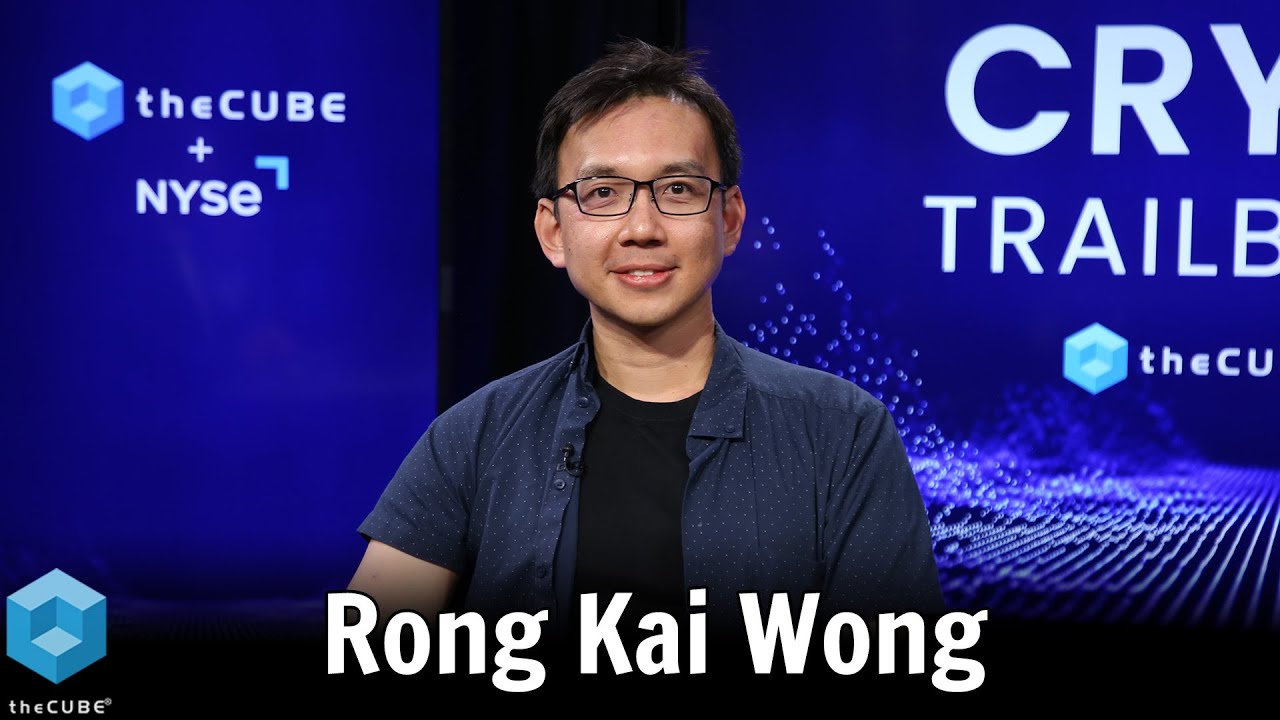
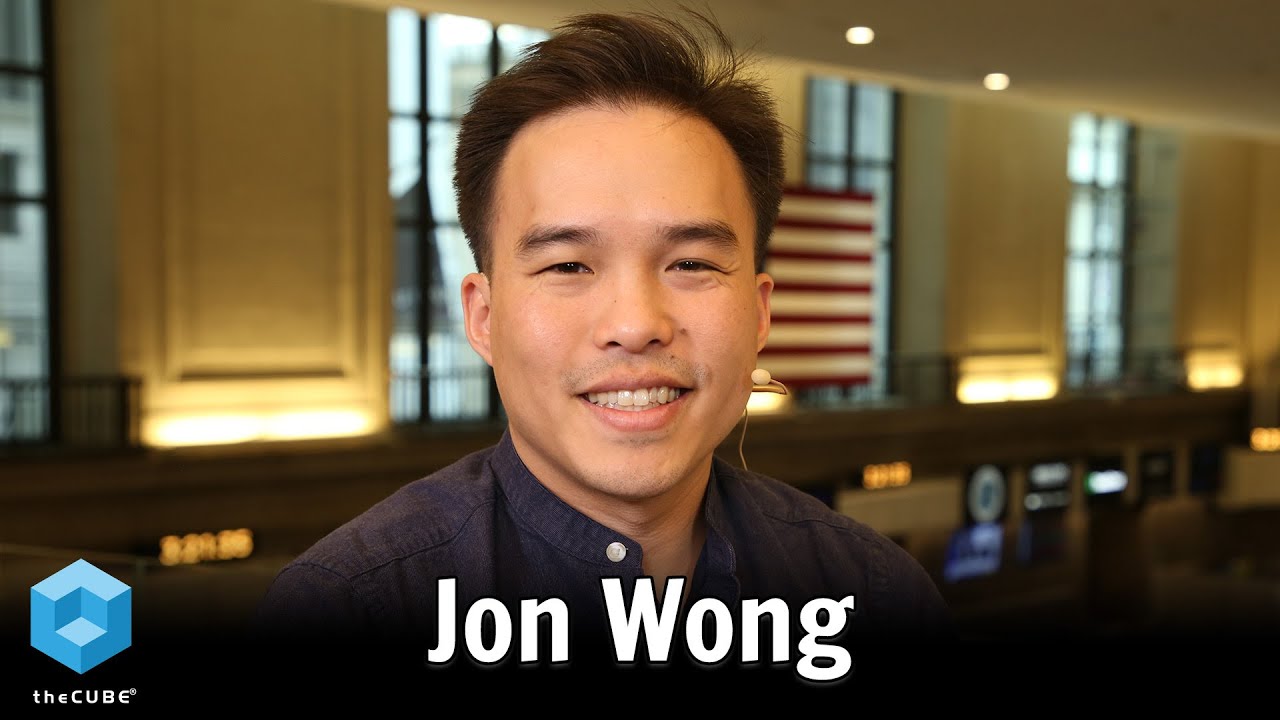
Jon Wong of Solana Foundation shares valuable perspectives on the rapidly evolving crypto landscape in this episode from the New York Stock Exchange Studio. This engaging discussion features Wong, head of engineering at Solana Foundation, and is hosted by theCUBE's John Furrier. The conversation addresses the innovative strides Solana is making within the on-chain token economics and distributed computing spaces.
Wong discusses the transformative role Solana plays in crypto infrastructure, drawing on extensive experience in the field. They explain Solana's unique value propositions, including speed, cost-efficiency and transaction volume. Hosted by theCUBE and featuring insights from theCUBE Research, this discussion explores how Solana differentiates itself in the competitive blockchain landscape.
Throughout the video, Wong emphasizes the implications of integrating stablecoins in everyday financial transactions, highlighting the potential for market disruption and democratization. They discuss key aspects such as stablecoins' role in cross-border payments and the tokenization of real-world assets. Analysts, including Carpenter, suggest that Solana's efforts in simplifying blockchain integration pave the way for decentralized applications to gain mainstream traction.
Find more SiliconANGLE news and analysis https://siliconangle.com/
Follow theCUBE's wall-to-wall event coverage https://siliconangle.com/events/
Learn about the latest theCUBE events https://www.thecube.net/
00:00 - Intro
00:06 - Exploring Solana: Foundation, Economics, and Unique Advantages
03:19 - Solana's Impact on Market Trends and Emerging Stablecoin Opportunities
08:27 - Token Creation and User Stories
10:42 - Solana's Contrarian Decisions
15:26 - Stablecoin Importance and Banking Integration
20:52 - Navigating Financial Landscapes: Trends, Collaborations, and Conclusions
#SolanaFoundation #CryptoInfrastructure #Stablecoins #theCUBE #NYSEWired #BlockchainInnovation
play_circle_outlineEthereum: The Institutional Backbone for Stable Coins and Tokenization in Modern Finance Amid Interest Rate Impacts
replyShare Clip
play_circle_outlineLegacy businesses face disruption due to the efficiencies brought by stable coins and staking.
replyShare Clip
play_circle_outlineComparing Ethereum and Bitcoin: Impact on Funding, Securities Pricing, Staking Yield, and Capital Structure Optimization in Investment Strategies
>> Welcome back everyone. I'm John Furrier, host of theCUBE here at our NYSECube Studios. Of course, we have our studio in Palo Alto and this is our Crypto Trailblazer series, wall-to-wall coverage here for Ethereum's ten-year celebration, the New York stock, part of our WIRED program and the WIRED community. We're breaking down all the action as the mainstream crypto market re-plums the financial systems. All the products that we once knew will change. The infrastructure is enabling more entrepreneurship, more innovation, and that's all making it happen. Michael's here, COO, general counsel, CFO of EtherMachine, many hats, but the critical ops. Michael, great to see you on theCUBE. Thanks for coming on.
Michael Ciklin
>> Thanks so much for having me.
John Furrier
>> So first of all, the three titles, COO, general counsel, chief financial officer, you got to mind the store. You're like watching the cash register on one hand.
Michael Ciklin
>> We have a lot going on. We have a lean team, but pound for pound, I'd put them up against anyone in the space.
John Furrier
>> So before we came on camera, I wish we had more time. We're doing like 13 interviews, but the business that you're in, first explain what EtherMachine's doing because the market's almost like a product market refitting going on. Explain what you guys do and I want to get into some of the-
Michael Ciklin
>> Sure. Happy to do it. I think one of the key points is we did not sacrifice structure for speed. So we've been very methodical about our approach and upon DSPAC we'll be a multi-billion dollar company backed by who I would consider to be some of the most astute investors in the world, both on the traditional side of the house, but also on the crypto native side of the house in a clean, pure play entity backed by a management team. And I'm happy to go through the biographies, what I'd say are essentially second to none with the goal of harvesting, staking yield, restaking yield, DeFi yield, but then also optimizing our capital structures such that we can harvest arbitrage yield as well, which I think is the key to trading at an elevated MNAV over time.
John Furrier
>> And you guys are pure play staking Ethereum only.
Michael Ciklin
>> Correct. Ethereum only. We're purists.
John Furrier
>> Purists. Well, it's an ecosystem. I've been having these questions, this versus that. Getting behind the Ethereum has what benefits for you? How would you answer that question?
Michael Ciklin
>> Well, I think Ethereum has been anointed as the institutional crypto rails for what is arguably kind of the most momentous use cases in the history of modern finance, which is stable coins and tokenization. And I think you see Larry Fink has a background in structured products, which is where I come from. So the interest rate implications for stable coins is they become the natural buyers of US treasuries are enormous, not only for funding our government, but being able to fund houses, automobiles, you name it, there's $48.7 trillion in fixed income assets priced off the US yield curve. And you could see sovereigns pulling back, Japan, Canada, China. So who becomes the marginal buyer of stable coin... Or excuse me, of treasuries and that's stable coins. And then on the tokenization side, I think I've spent the past 11 years in structured products and I think Larry Fink sees an analog to the growth of structured products. When he first got in the early eighties, there was a 49% KGAR over that time for two decades. So if you look at the 31 billion in real world assets that are currently tokenized, you layer that growth curve over it. You're at 90 trillion in tokenized assets in 20 years.
John Furrier
>> You think about what hasn't been tokenized yet too. There's a growth.
Michael Ciklin
>> No, I mean the TAM is so large and the runway is so long. I think the question is not should you have exposure to ETH, it's how do you express that exposure? And obviously we're a little biased.
John Furrier
>> All right, so explain for the folks that don't know what structured products are, explain what a structured product is.
Michael Ciklin
>> So structured products are the way, say legacy non-agency mortgage-backed securities. So the nice thing about it is you can tranche out risk and rewards such that say institutions can come into the top of the stack and hedge funds are people that are more comfortable being in a first-loss position could come in at the bottom of the stack. And what that allows for is it's a way to really spurn economic activity because you don't have to buy a book of whole loans. You can tranche it out. You have geographic diversity and so those investors can pick their spots so that more people are in homes, more people are in cars. I mean, it's kind of wild to think that an active financial engineering can have such an economic benefit for Main Street.
John Furrier
>> I really like what you're talking about because I've been seeing on theCUBE, I'm not a financial guru like you are in terms of financial engineering.
Michael Ciklin
>> Well, I wouldn't go that far.
John Furrier
>> You're slicing and dicing the salami as they say in many different directions. But in the tech world, product management was always the key thing on building technology. And when I come to Wall Street, I see entrepreneurship flourishing, that was once kind of a unique... You have to be a certain person to do certain things.
Michael Ciklin
>> Sure.
John Furrier
>> So you're talking about structured products and where you're taking the conversation is there's product opportunities to craft products.
Michael Ciklin
>> Oh, absolutely.
John Furrier
>> And so I think again, I want to ask you, because you're the expert, there's almost like a, arbitrage only or hey, I'm going to ride some inefficiencies or dislocation. There's actual product management-like thinking that was once preserved for like, hey, here's the feature benefits in finance more than ever before. Maybe I'm misreading it or maybe I'm not getting it, but what do you think about that? Is there new products coming? I mean, the cloud technology created Airbnb. Is there an Airbnb in the financial engineering-
Michael Ciklin
>> I mean, I think that's what I feel like Ethereum in particular has reached escape velocity from an institutional investor's perspective. And I think it has to do everything from being able to put a tri party repo agreement on chain or you can look what it's going to do for custody and clearing because you have an instant settlement. So I mean, that cuts 50 to 70% of the costs out of the back office. And I think there's so many different applications that are coming down the pike that it's really... This is like the iPhone moment, except I would say Uber is already loaded on it with a stable coin use case and tokenization and all of these other things that are going to follow. Because when you pair triple entry accounting with smart contracts and a native currency, just so much innovation can take place.
John Furrier
>> I mean, what you're saying is the efficiency is the enabler because how you do valuations are completely changed.
Michael Ciklin
>> The instant visibility, real-time visibility in the balance sheets, which is pretty... Because you have a view into your counterparty. One of the problems with the great financial crisis is there was only 700 billion in subprime that was issued. Well, Tarp was 700 billion. They could have bought every subprime issuance at a hundred cents on the dollar. But the problem is they layered 5 trillion of synthetics on top and then put them all on repo. So what you had was a complete lack of truth and trust because you didn't have visibility in your counterparty.
John Furrier
>> It's a black box.
Michael Ciklin
>> And everything stopped.
John Furrier
>> Yeah, that's awesome. You're hitting all my key points I've been saying for a couple of weeks asking the questions. Had someone tell me, I don't understand all this stuff. The treasuries is like this layered products. I think I'm watching the Big Short. Explain why that doesn't happen. Is it from what you just said and is it just the wrong comparable? Is it the wrong metaphor to say-
Michael Ciklin
>> Are you talking about that specifically?
John Furrier
>> The housing crisis, the movie The Big Short, the treasuries people can relate to. It's almost scares people. Wait a minute, what's in all this financial engineering?
Michael Ciklin
>> But I would say that that's the beauty of the blockchain is because you have visibility into your counterparties. There's a source of truth and trust that you see in real-time. Whereas everything before the GFC was so opaque. Well, this solves that.
John Furrier
>> On the application you just mentioned earlier that you can see the efficiencies on the chain and the yields of all this financial engineering. What was it like before with all that back office heavy lifting? Obviously there's costs involved, there's time. That changes the opportunity recognition. How do you view that? Or does that mean it's going to be a tsunami of new applications?
Michael Ciklin
>> Oh, I think that's part of it. But as far as clearing out all of the headache and waste and back office functions, I mean, it's going to be a game changer.
John Furrier
>> All right, so everyone asks me what the price of E is going to go to, but I'm not a predictor. But if this rising tide continues, what's your estimate in terms of the ecosystem impact? Not so much the price of ETH, but if it continues to have this beautiful two-sided marketplace with the efficiencies and view into the counterparty, it's going to be a very programmable action. And then when agents start coming in, you're going to see probably even more programmability. So automation and authenticity and trust become interesting. How do you in your mind frame that? How should we-
Michael Ciklin
>> Well, I like valuing things on the back of a napkin. I think if your investment thesis requires a sixty-page analysis and what the price of copper does and what the current accounts in three country does and what the front end of the curve does, you're probably in trouble. You don't get style points in investing. And I just look at the ratio of stable coins right now, 280 billion, 70% of which live on ETH. You have Secretary Besson saying he thinks that number is going to go to 2 trillion in relatively short order. So that's a six to 7X. And then if you look at the potential growth curve on tokenization, I mean, if you hit anywhere near that 49% KGAR, than hey, haircut it because there's all just degrees of good and great at that point in time. So I think a simple relative value framework, when you're looking at say a 7X on stable coins and you're looking at a 3000X on tokenization, I mean, the numbers get really big really quickly. Now nothing is riskless, but I think you have a stability and a certainty here in a probabilistic basis that I think makes me very comfortable on the long-term growth of-
John Furrier
>> What is the importance of stable coins for the folks watching that might not know the impact, obviously it's backed by the US dollar, that's a sovereignty issue that expands the US and also transactions in other countries cross border. Why is stable coins so important to making the money system work so well?
Michael Ciklin
>> I think it's really a function of sovereigns pulling back and stable coins stepping up to take that place because a lot of times the yield curve is priced on the marginal buyer. Well, you have stable coins stepping up and firming up that bid. The cost of funding across all these different businesses from the sovereign level to someone who wants to buy a new home are enormous. And I think that's why you hear Secretary Besant touting it, why you hear Larry Fink touting it because they realize the import of the interest rates across all different tenors.
John Furrier
>> Yeah, it creates a sovereign dynamic for sure. If you're thinking about applications like builders, if I'm a builder, the ecosystem is big right now here. The Ethereum ecosystem is one of the key differentiators. There's going to be more and more builders building applications, smart contracts. What does that mean?
Michael Ciklin
>> Absolutely.
John Furrier
>> What does that mean to the overall system in your mind? Obviously you're staking it. Does that change your perspective or you just... It's agnostic to that group?
Michael Ciklin
>> I think you're going to see this shift from mountains of paperwork from lawyers to programmatic money with real visibility into counterparties in real time. And I think that's just the import of that is big. So I see a lot of legacy businesses being disrupted. And another interesting point is that I think Jeff Bezos has this quote that your margin is my opportunity.
John Furrier
>> I love it.
Michael Ciklin
>> Well, I think with stable coins, and I won't mention the name, one of my good friends works at a very large company and his bulge bracket bank is very worried because he's running the in-house stable coin initiative and he thinks he can reduce costs by up to 98% using crypto rails versus traditional rails. So think about all the legacy players that operate with a lot of operational leverage that what happens when that margin gets eaten into. Well, growth trajectories start to plummet and P multiples gap down. So I think there's actually a pretty good case for getting exposure to ETH just as a hedge in terms of portfolio construction.
John Furrier
>> That's a great point actually. I never thought about that. Yeah, I mean the tide could turn in any direction there. On treasuries, the staking piece I find very fascinating because it's new to me. A lot of people I've heard like rumblings, let's go to the moon. And then other ones, oh, it's going to shit the bed. Okay, are we allowed to curse here?
Michael Ciklin
>> This is great. It's the internet. You can say whatever you want.
John Furrier
>> It's important to make a point. There's a doom and gloom scenario. What is the dynamics? Because people see micro, okay, they see micro strategies. I think it's genius. I think owning your asset, having your money be the bank for yourself. If I'm a consumer, I was just talking with ledger about this. Hey, if I got self-gusty, that's my money. I own it. Why wouldn't I want to be the bank for myself? Treasuries, I see that as very disruptive. I think it's very cool. What am I missing? What are people missing when they throw shade on treasuries?
Michael Ciklin
>> On treasuries in general-
John Furrier
>> Treasuries and staking and taking a strategy of staking on ETH like what you guys are doing.
Michael Ciklin
>> Well, I think one of the beautiful parts about staking is you look at micro strategy, it's really a terminal value play. Now in terms of issuing converts and prefs. What's great about Ethereum is you have that staking yield that can cover that debt service. So I think that makes a huge difference from an investor's perspective, but also from the pricing of the securities' perspective. So look, I think what Micro Strategy has done by hats off to them because they really kind of were pioneers in the capital structure optimization side of this, but I think that know ETH is a productive asset. Bitcoin is a store of value, but ETH puts that value to work. And I think that's a key differentiator and has wide-ranging implications for how you structure your securities and how you're viewed in the marketplace.
John Furrier
>> I really like that perspective in comparing Bitcoin as store and ETH work. As you guys take your business to the next level, what's your focus right now? You mentioned you have an intentional plan on the capital structure and how you're managing your assets.
Michael Ciklin
>> Sure. I think our focus and what I would consider to be a key differentiator versus a lot of the other DATs that are in the space is we didn't sacrifice structure for speed. I think if you look at when we first met with the bankers, part of the process was here's a list of shells. Well, even if you whittle it down to the top quartile or the top decile, we're worried that we're going to be carrying around a basket of liabilities that we don't want to carry around. And top of mind is legacy litigation liabilities, because you're injecting billions of dollars into this vehicle. Well, to me, that's a tort lawyer's dream. I mean, that's the ultimate honeypot. And then you have legacy opco issues. I mean, there's a reason this is a micro cap. Something obviously went very wrong. So how much time are we going to have to spend on this legacy business that obviously got into trouble. And then there's the legacy governance issues. I mean, you do the shell, you're stuck with a portion of the management and also a lot of guys on the board that they... There's a reason this company is a micro cap, so I don't want to have to deal with them when we're trying to make decisions to drive shareholder value. I mean, to me that is a massive distraction. And then also there's the accounting piece. If you have to deal with all that legacy mix, how are you going to get a big four audit engagement?
John Furrier
>> You're going to get caught in the weeds.
Michael Ciklin
>> No, it sounds like an absolute mess.
John Furrier
>> Tie your hands and feet together. Throw you in the ocean. Try to swim.
Michael Ciklin
>> Yeah, no thanks.
John Furrier
>> Yeah. Pass.
Michael Ciklin
>> Hard pass.
John Furrier
>> Hard pass. All right, well, if you could share one piece of advice with someone who's watching that wants to get into this field, a lot of entrepreneurs coming in, a lot of fresh minds. Not just young, old and young, new teams coming together. What's the best advice? How do I get involved? I want to learn how to play in this game. I want to participate, not necessarily in just pure stake, but maybe staking and or financial engineer. I think financial products are going to come at us. I think what Cloud did with SaaS, iPhone kind of moments was new brands converge, got Dropbox, Airbnb. I think there's going to be a new financial version of things emerging.
Michael Ciklin
>> Sure. Well, I think they should send us the resume. I mean, that's the first-
John Furrier
>> Okay, you're hired. Put a plug in for what you guys are doing. Put a plug in.
Michael Ciklin
>> No, look, I think it's a matter of finding knowledgeable people, but also good people. I mean, you work really hard in this space and to be saddled with the type of personalities you don't really spend a lot of time with. I mean, you work too hard. So I think that's critical, but it's just really trying to find people. And even if it's on Twitter, I mean, I've met some amazing people. Just you DM somebody and who knows where you can breadcrumb that relationship.
John Furrier
>> Yeah. Yeah. I mean, they just publish your thoughts.
Michael Ciklin
>> Yeah, they'll find you.
John Furrier
>> Thanks for coming on. Appreciate it, Michael.
Michael Ciklin
>> Appreciate it.
John Furrier
>> Love the energy. Love the brain power. Again, the new models are emerging and it's a lot of financial engineering, but the financial products, but also the enablement. Bitcoin's a store of value. Ethereum's a store of work. That store of work is the proof of work. We're doing our part, bringing in the work here for you. I'm John Furrier, host of theCUBE. Thanks for watching.
>> Welcome back everyone. I'm John Furrier, host of theCUBE here at our NYSECube Studios. Of course, we have our studio in Palo Alto and this is our Crypto Trailblazer series, wall-to-wall coverage here for Ethereum's ten-year celebration, the New York stock, part of our WIRED program and the WIRED community. We're breaking down all the action as the mainstream crypto market re-plums the financial systems. All the products that we once knew will change. The infrastructure is enabling more entrepreneurship, more innovation, and that's all making it happen. Michael's here, COO, general counsel, CFO of EtherMachine, many hats, but the critical ops. Michael, great to see you on theCUBE. Thanks for coming on.
Michael Ciklin
>> Thanks so much for having me.
John Furrier
>> So first of all, the three titles, COO, general counsel, chief financial officer, you got to mind the store. You're like watching the cash register on one hand.
Michael Ciklin
>> We have a lot going on. We have a lean team, but pound for pound, I'd put them up against anyone in the space.
John Furrier
>> So before we came on camera, I wish we had more time. We're doing like 13 interviews, but the business that you're in, first explain what EtherMachine's doing because the market's almost like a product market refitting going on. Explain what you guys do and I want to get into some of the-
Michael Ciklin
>> Sure. Happy to do it. I think one of the key points is we did not sacrifice structure for speed. So we've been very methodical about our approach and upon DSPAC we'll be a multi-billion dollar company backed by who I would consider to be some of the most astute investors in the world, both on the traditional side of the house, but also on the crypto native side of the house in a clean, pure play entity backed by a management team. And I'm happy to go through the biographies, what I'd say are essentially second to none with the goal of harvesting, staking yield, restaking yield, DeFi yield, but then also optimizing our capital structures such that we can harvest arbitrage yield as well, which I think is the key to trading at an elevated MNAV over time.
John Furrier
>> And you guys are pure play staking Ethereum only.
Michael Ciklin
>> Correct. Ethereum only. We're purists.
John Furrier
>> Purists. Well, it's an ecosystem. I've been having these questions, this versus that. Getting behind the Ethereum has what benefits for you? How would you answer that question?
Michael Ciklin
>> Well, I think Ethereum has been anointed as the institutional crypto rails for what is arguably kind of the most momentous use cases in the history of modern finance, which is stable coins and tokenization. And I think you see Larry Fink has a background in structured products, which is where I come from. So the interest rate implications for stable coins is they become the natural buyers of US treasuries are enormous, not only for funding our government, but being able to fund houses, automobiles, you name it, there's $48.7 trillion in fixed income assets priced off the US yield curve. And you could see sovereigns pulling back, Japan, Canada, China. So who becomes the marginal buyer of stable coin... Or excuse me, of treasuries and that's stable coins. And then on the tokenization side, I think I've spent the past 11 years in structured products and I think Larry Fink sees an analog to the growth of structured products. When he first got in the early eighties, there was a 49% KGAR over that time for two decades. So if you look at the 31 billion in real world assets that are currently tokenized, you layer that growth curve over it. You're at 90 trillion in tokenized assets in 20 years.
John Furrier
>> You think about what hasn't been tokenized yet too. There's a growth.
Michael Ciklin
>> No, I mean the TAM is so large and the runway is so long. I think the question is not should you have exposure to ETH, it's how do you express that exposure? And obviously we're a little biased.
John Furrier
>> All right, so explain for the folks that don't know what structured products are, explain what a structured product is.
Michael Ciklin
>> So structured products are the way, say legacy non-agency mortgage-backed securities. So the nice thing about it is you can tranche out risk and rewards such that say institutions can come into the top of the stack and hedge funds are people that are more comfortable being in a first-loss position could come in at the bottom of the stack. And what that allows for is it's a way to really spurn economic activity because you don't have to buy a book of whole loans. You can tranche it out. You have geographic diversity and so those investors can pick their spots so that more people are in homes, more people are in cars. I mean, it's kind of wild to think that an active financial engineering can have such an economic benefit for Main Street.
John Furrier
>> I really like what you're talking about because I've been seeing on theCUBE, I'm not a financial guru like you are in terms of financial engineering.
Michael Ciklin
>> Well, I wouldn't go that far.
John Furrier
>> You're slicing and dicing the salami as they say in many different directions. But in the tech world, product management was always the key thing on building technology. And when I come to Wall Street, I see entrepreneurship flourishing, that was once kind of a unique... You have to be a certain person to do certain things.
Michael Ciklin
>> Sure.
John Furrier
>> So you're talking about structured products and where you're taking the conversation is there's product opportunities to craft products.
Michael Ciklin
>> Oh, absolutely.
John Furrier
>> And so I think again, I want to ask you, because you're the expert, there's almost like a, arbitrage only or hey, I'm going to ride some inefficiencies or dislocation. There's actual product management-like thinking that was once preserved for like, hey, here's the feature benefits in finance more than ever before. Maybe I'm misreading it or maybe I'm not getting it, but what do you think about that? Is there new products coming? I mean, the cloud technology created Airbnb. Is there an Airbnb in the financial engineering-
Michael Ciklin
>> I mean, I think that's what I feel like Ethereum in particular has reached escape velocity from an institutional investor's perspective. And I think it has to do everything from being able to put a tri party repo agreement on chain or you can look what it's going to do for custody and clearing because you have an instant settlement. So I mean, that cuts 50 to 70% of the costs out of the back office. And I think there's so many different applications that are coming down the pike that it's really... This is like the iPhone moment, except I would say Uber is already loaded on it with a stable coin use case and tokenization and all of these other things that are going to follow. Because when you pair triple entry accounting with smart contracts and a native currency, just so much innovation can take place.
John Furrier
>> I mean, what you're saying is the efficiency is the enabler because how you do valuations are completely changed.
Michael Ciklin
>> The instant visibility, real-time visibility in the balance sheets, which is pretty... Because you have a view into your counterparty. One of the problems with the great financial crisis is there was only 700 billion in subprime that was issued. Well, Tarp was 700 billion. They could have bought every subprime issuance at a hundred cents on the dollar. But the problem is they layered 5 trillion of synthetics on top and then put them all on repo. So what you had was a complete lack of truth and trust because you didn't have visibility in your counterparty.
John Furrier
>> It's a black box.
Michael Ciklin
>> And everything stopped.
John Furrier
>> Yeah, that's awesome. You're hitting all my key points I've been saying for a couple of weeks asking the questions. Had someone tell me, I don't understand all this stuff. The treasuries is like this layered products. I think I'm watching the Big Short. Explain why that doesn't happen. Is it from what you just said and is it just the wrong comparable? Is it the wrong metaphor to say-
Michael Ciklin
>> Are you talking about that specifically?
John Furrier
>> The housing crisis, the movie The Big Short, the treasuries people can relate to. It's almost scares people. Wait a minute, what's in all this financial engineering?
Michael Ciklin
>> But I would say that that's the beauty of the blockchain is because you have visibility into your counterparties. There's a source of truth and trust that you see in real-time. Whereas everything before the GFC was so opaque. Well, this solves that.
John Furrier
>> On the application you just mentioned earlier that you can see the efficiencies on the chain and the yields of all this financial engineering. What was it like before with all that back office heavy lifting? Obviously there's costs involved, there's time. That changes the opportunity recognition. How do you view that? Or does that mean it's going to be a tsunami of new applications?
Michael Ciklin
>> Oh, I think that's part of it. But as far as clearing out all of the headache and waste and back office functions, I mean, it's going to be a game changer.
John Furrier
>> All right, so everyone asks me what the price of E is going to go to, but I'm not a predictor. But if this rising tide continues, what's your estimate in terms of the ecosystem impact? Not so much the price of ETH, but if it continues to have this beautiful two-sided marketplace with the efficiencies and view into the counterparty, it's going to be a very programmable action. And then when agents start coming in, you're going to see probably even more programmability. So automation and authenticity and trust become interesting. How do you in your mind frame that? How should we-
Michael Ciklin
>> Well, I like valuing things on the back of a napkin. I think if your investment thesis requires a sixty-page analysis and what the price of copper does and what the current accounts in three country does and what the front end of the curve does, you're probably in trouble. You don't get style points in investing. And I just look at the ratio of stable coins right now, 280 billion, 70% of which live on ETH. You have Secretary Besson saying he thinks that number is going to go to 2 trillion in relatively short order. So that's a six to 7X. And then if you look at the potential growth curve on tokenization, I mean, if you hit anywhere near that 49% KGAR, than hey, haircut it because there's all just degrees of good and great at that point in time. So I think a simple relative value framework, when you're looking at say a 7X on stable coins and you're looking at a 3000X on tokenization, I mean, the numbers get really big really quickly. Now nothing is riskless, but I think you have a stability and a certainty here in a probabilistic basis that I think makes me very comfortable on the long-term growth of-
John Furrier
>> What is the importance of stable coins for the folks watching that might not know the impact, obviously it's backed by the US dollar, that's a sovereignty issue that expands the US and also transactions in other countries cross border. Why is stable coins so important to making the money system work so well?
Michael Ciklin
>> I think it's really a function of sovereigns pulling back and stable coins stepping up to take that place because a lot of times the yield curve is priced on the marginal buyer. Well, you have stable coins stepping up and firming up that bid. The cost of funding across all these different businesses from the sovereign level to someone who wants to buy a new home are enormous. And I think that's why you hear Secretary Besant touting it, why you hear Larry Fink touting it because they realize the import of the interest rates across all different tenors.
John Furrier
>> Yeah, it creates a sovereign dynamic for sure. If you're thinking about applications like builders, if I'm a builder, the ecosystem is big right now here. The Ethereum ecosystem is one of the key differentiators. There's going to be more and more builders building applications, smart contracts. What does that mean?
Michael Ciklin
>> Absolutely.
John Furrier
>> What does that mean to the overall system in your mind? Obviously you're staking it. Does that change your perspective or you just... It's agnostic to that group?
Michael Ciklin
>> I think you're going to see this shift from mountains of paperwork from lawyers to programmatic money with real visibility into counterparties in real time. And I think that's just the import of that is big. So I see a lot of legacy businesses being disrupted. And another interesting point is that I think Jeff Bezos has this quote that your margin is my opportunity.
John Furrier
>> I love it.
Michael Ciklin
>> Well, I think with stable coins, and I won't mention the name, one of my good friends works at a very large company and his bulge bracket bank is very worried because he's running the in-house stable coin initiative and he thinks he can reduce costs by up to 98% using crypto rails versus traditional rails. So think about all the legacy players that operate with a lot of operational leverage that what happens when that margin gets eaten into. Well, growth trajectories start to plummet and P multiples gap down. So I think there's actually a pretty good case for getting exposure to ETH just as a hedge in terms of portfolio construction.
John Furrier
>> That's a great point actually. I never thought about that. Yeah, I mean the tide could turn in any direction there. On treasuries, the staking piece I find very fascinating because it's new to me. A lot of people I've heard like rumblings, let's go to the moon. And then other ones, oh, it's going to shit the bed. Okay, are we allowed to curse here?
Michael Ciklin
>> This is great. It's the internet. You can say whatever you want.
John Furrier
>> It's important to make a point. There's a doom and gloom scenario. What is the dynamics? Because people see micro, okay, they see micro strategies. I think it's genius. I think owning your asset, having your money be the bank for yourself. If I'm a consumer, I was just talking with ledger about this. Hey, if I got self-gusty, that's my money. I own it. Why wouldn't I want to be the bank for myself? Treasuries, I see that as very disruptive. I think it's very cool. What am I missing? What are people missing when they throw shade on treasuries?
Michael Ciklin
>> On treasuries in general-
John Furrier
>> Treasuries and staking and taking a strategy of staking on ETH like what you guys are doing.
Michael Ciklin
>> Well, I think one of the beautiful parts about staking is you look at micro strategy, it's really a terminal value play. Now in terms of issuing converts and prefs. What's great about Ethereum is you have that staking yield that can cover that debt service. So I think that makes a huge difference from an investor's perspective, but also from the pricing of the securities' perspective. So look, I think what Micro Strategy has done by hats off to them because they really kind of were pioneers in the capital structure optimization side of this, but I think that know ETH is a productive asset. Bitcoin is a store of value, but ETH puts that value to work. And I think that's a key differentiator and has wide-ranging implications for how you structure your securities and how you're viewed in the marketplace.
John Furrier
>> I really like that perspective in comparing Bitcoin as store and ETH work. As you guys take your business to the next level, what's your focus right now? You mentioned you have an intentional plan on the capital structure and how you're managing your assets.
Michael Ciklin
>> Sure. I think our focus and what I would consider to be a key differentiator versus a lot of the other DATs that are in the space is we didn't sacrifice structure for speed. I think if you look at when we first met with the bankers, part of the process was here's a list of shells. Well, even if you whittle it down to the top quartile or the top decile, we're worried that we're going to be carrying around a basket of liabilities that we don't want to carry around. And top of mind is legacy litigation liabilities, because you're injecting billions of dollars into this vehicle. Well, to me, that's a tort lawyer's dream. I mean, that's the ultimate honeypot. And then you have legacy opco issues. I mean, there's a reason this is a micro cap. Something obviously went very wrong. So how much time are we going to have to spend on this legacy business that obviously got into trouble. And then there's the legacy governance issues. I mean, you do the shell, you're stuck with a portion of the management and also a lot of guys on the board that they... There's a reason this company is a micro cap, so I don't want to have to deal with them when we're trying to make decisions to drive shareholder value. I mean, to me that is a massive distraction. And then also there's the accounting piece. If you have to deal with all that legacy mix, how are you going to get a big four audit engagement?
John Furrier
>> You're going to get caught in the weeds.
Michael Ciklin
>> No, it sounds like an absolute mess.
John Furrier
>> Tie your hands and feet together. Throw you in the ocean. Try to swim.
Michael Ciklin
>> Yeah, no thanks.
John Furrier
>> Yeah. Pass.
Michael Ciklin
>> Hard pass.
John Furrier
>> Hard pass. All right, well, if you could share one piece of advice with someone who's watching that wants to get into this field, a lot of entrepreneurs coming in, a lot of fresh minds. Not just young, old and young, new teams coming together. What's the best advice? How do I get involved? I want to learn how to play in this game. I want to participate, not necessarily in just pure stake, but maybe staking and or financial engineer. I think financial products are going to come at us. I think what Cloud did with SaaS, iPhone kind of moments was new brands converge, got Dropbox, Airbnb. I think there's going to be a new financial version of things emerging.
Michael Ciklin
>> Sure. Well, I think they should send us the resume. I mean, that's the first-
John Furrier
>> Okay, you're hired. Put a plug in for what you guys are doing. Put a plug in.
Michael Ciklin
>> No, look, I think it's a matter of finding knowledgeable people, but also good people. I mean, you work really hard in this space and to be saddled with the type of personalities you don't really spend a lot of time with. I mean, you work too hard. So I think that's critical, but it's just really trying to find people. And even if it's on Twitter, I mean, I've met some amazing people. Just you DM somebody and who knows where you can breadcrumb that relationship.
John Furrier
>> Yeah. Yeah. I mean, they just publish your thoughts.
Michael Ciklin
>> Yeah, they'll find you.
John Furrier
>> Thanks for coming on. Appreciate it, Michael.
Michael Ciklin
>> Appreciate it.
John Furrier
>> Love the energy. Love the brain power. Again, the new models are emerging and it's a lot of financial engineering, but the financial products, but also the enablement. Bitcoin's a store of value. Ethereum's a store of work. That store of work is the proof of work. We're doing our part, bringing in the work here for you. I'm John Furrier, host of theCUBE. Thanks for watching.








































 John Furrier