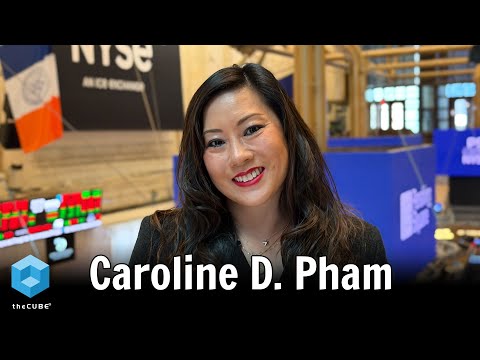
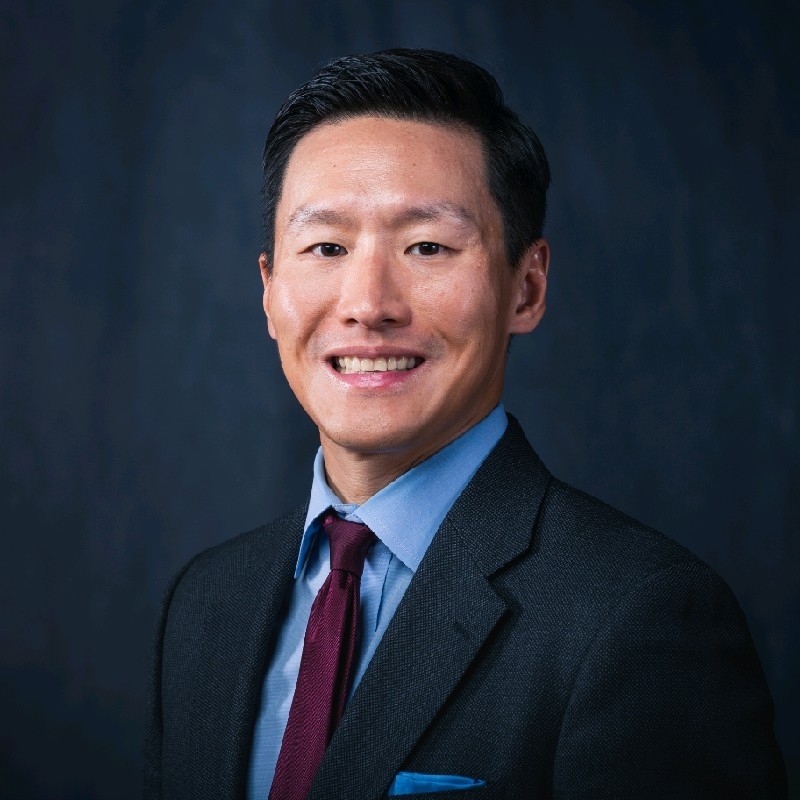
Elliot Han, Chief Investment Officer at C1 Fund, provides insights into the evolving landscape of digital assets during a recent discussion on theCUBE's Crypto Trailblazers series. The conversation, hosted by John Furrier, Co-Founder and Co-Chief Executive Officer of SiliconANGLE Media, delves into the intricacies of merging physical and digital assets in today’s financial markets, with Han sharing first-hand experiences from navigating regulatory hurdles and achieving a public listing for C1 Fund.
In this episode, Han outlines their journey and highlights the groundbreaking achievements of C1 Fund, the first publicly listed closed-end fund targeted at digital assets. They discuss the fund's strategies to enable public market access to private digital asset investments, a domain traditionally restricted to venture capitalists and insiders. The conversation, facilitated by theCUBE Research and video hosts, explores the regulatory environment and how C1 Fund successfully paves the way for increased investor participation in this emerging market sector.
Key takeaways include Han's detailed narrative on overcoming regulatory challenges and ensuring investor protections through transparency. Han explains that the process of public listing involves a thorough review by the Securities and Exchange Commission and the New York Stock Exchange, ensuring compliance and credibility. The discussion further touches upon the fund's strategy of targeting financially robust private digital companies poised for public exits within 36 months, thereby maximizing value for investors.
Forgot Password
Almost there!
We just sent you a verification email. Please verify your account to gain access to
theCUBE + NYSE Wired: Crypto Trailblazers. If you don’t think you received an email check your
spam folder.
Sign in to theCUBE + NYSE Wired: Crypto Trailblazers.
In order to sign in, enter the email address you used to registered for the event. Once completed, you will receive an email with a verification link. Open this link to automatically sign into the site.
Register For theCUBE + NYSE Wired: Crypto Trailblazers
Please fill out the information below. You will recieve an email with a verification link confirming your registration. Click the link to automatically sign into the site.
You’re almost there!
We just sent you a verification email. Please click the verification button in the email. Once your email address is verified, you will have full access to all event content for theCUBE + NYSE Wired: Crypto Trailblazers.
I want my badge and interests to be visible to all attendees.
Checking this box will display your presense on the attendees list, view your profile and allow other attendees to contact you via 1-1 chat. Read the Privacy Policy. At any time, you can choose to disable this preference.
Select your Interests!
add
Upload your photo
Uploading..
OR
Connect via Twitter
Connect via Linkedin
EDIT PASSWORD
Share
Forgot Password
Almost there!
We just sent you a verification email. Please verify your account to gain access to
theCUBE + NYSE Wired: Crypto Trailblazers. If you don’t think you received an email check your
spam folder.
Sign in to theCUBE + NYSE Wired: Crypto Trailblazers.
In order to sign in, enter the email address you used to registered for the event. Once completed, you will receive an email with a verification link. Open this link to automatically sign into the site.
Sign in to gain access to theCUBE + NYSE Wired: Crypto Trailblazers
Please sign in with LinkedIn to continue to theCUBE + NYSE Wired: Crypto Trailblazers. Signing in with LinkedIn ensures a professional environment.
Are you sure you want to remove access rights for this user?
Details
Manage Access
email address
Community Invitation
Elliot Han, C1 Fund
Exploring the Future of Cryptocurrency with Offchain Labs
Join us as we delve into an insightful discussion with Steven Goldfeder of Offchain Labs, analyzed by theCUBE Research. This segment, part of the Crypto Trailblazers series in collaboration with NYSE Wired, explores the innovative efforts redefining the Ethereum ecosystem and the broader blockchain landscape.
Steven Goldfeder, co-founder and CEO of Offchain Labs, discusses significant advancements and strategic insights in blockchain technology. In this engaging episode, hosted at theCUBE Studios, Goldfeder shares their expertise on how Offchain Labs contributes to the evolution of Ethereum through groundbreaking projects such as Prysm and Arbitrum, while discussing impacts on scalability and decentralization.
In this discussion, Goldfeder elaborates on key technological initiatives driven by Offchain Labs, focusing particularly on Arbitrum, the pioneering layer two scaling solution for Ethereum. They illustrate how innovative platforms such as Arbitrum significantly enhance Ethereum's capacity, efficiency, and scalability without compromising security or decentralization, closely analyzed by theCUBE Research.
Highlights include Goldfeder's insights on the future trajectory of Ethereum and its ecosystem, emphasizing the sustainable development model and potential for global business transformations. Goldfeder states that engaging with regulators now can ensure crypto's lasting impact, aligning with a US administration open to embracing this technological shift. This discussion offers valuable perspectives for developers, businesses, and policymakers navigating the crypto landscape.
#OffchainLabs #Arbitrum #Ethereum #theCUBE #NYSEWired #Blockchain #CryptoTrailblazers #Scalability #Decentralization #Innovation #Crypto #SmartContracts #PaloAlto #CryptoRegulation
Find more SiliconANGLE news and analysis https://siliconangle.com/.
Follow theCUBE's wall-to-wall event coverage https://siliconangle.com/events/
Learn about the latest theCUBE events https://www.thecube.net/
00:00 - Intro
00:06 - Exploring Innovations in Blockchain: A Deep Dive into Offchain Labs and Arbitrum
05:23 - Ethereum's Scalability and the Layered Architecture
08:01 - Smart Contracts and Developer Innovations on Arbitrum
11:46 - The Impact of Arbitrum on Blockchain App Development
16:08 - Navigating the Future: Offchain Labs and Ethereum in a Regulatory Landscape
>> Welcome back, everyone, to theCUBE here. I'm John Furrier, your host. The New York Stock Exchange CUBE Studios, our East Coast access point. Of course, we've got Palo Alto connecting Silicon Valley and Wall Street tech and money come together. I got a great series here, The Crypto Trailblazer, an ongoing series we started out. Now, it's booming. The leaders who are blazing the trail as cryptocurrency goes next level, which is the commercialization mainstreaming of money, platforms, investments, the entire institutional money system is going to be upgraded with crypto. We got a great series going on here. We've got Elliot Han, chief investment officer C1 Fund, a trailblazer himself and his fund. Great to have you on. Thanks for coming in.
Elliot Han
>> Great. Thanks for having me.>> So, the first trailblazer thing I want to highlight, you guys were the first crypto SPAC, the first closed-end fund for digital assets, which I think that, to me, is huge because that is what everyone wants now, is real-world assets on-chain. That's the hottest area. That's the area that many, and we included, think is going to be the biggest growth area as companies realize that physical and digital is coming together. Even Nvidia's CEO loves physical AI, which is just an indicator that that means digital is happening. So, congratulations.
Elliot Han
>> Thank you very much. We appreciate it.>> So, explain the fund, what you guys do. And you went public here at the NYSE, so you're a listed company.
Elliot Han
>> Yes, we are. So, we went public about a month ago, August 7th. C1 Fund is a closed-end fund. There's a lot of closed-end funds out there for a variety of different industries, but what we focus on, and we're the only ones out there right now, is digital assets. So, we focus on private late-stage digital asset companies going through the space right now. And the whole purpose of the fund is to provide access to public market investors of these private digital asset companies. Because traditionally, and for many years now, the only people who really had access were traditional VCs and a lot of insiders. But with the rise of potential secondary platforms, there's one-off negotiated secondary sales and even occasional primary rounds, that's definitely opened the doors, but there still really isn't any media out there for a main street investor to invest, as well as even small and mid-cap institutions. And by being a publicly-listed fund, we have the liquidity, so people can go to their brokerage accounts and buy shares in our fund, which then gives us access to a lot of these private digital asset companies they would never have access to before.>> Yeah, it's a great model. And by the way, I want to point out not only is the trailblazing, it's hard to be a trailblazer because sometimes you don't make it out the other side.
Elliot Han
>> Yes, you're right.>> And right now, one of the hottest topic is the regulatory changeover in the US, which is attracting a lot of in-migration back again and entrepreneurial activity. So, you have a very strong market right now on the builder side, which is going to be the future IPOs and future ones that you're going to invest in. But you've been through the knothole, as they say.
Elliot Han
>> We have.>> So, take us through because that's a huge accomplishment to be the first closed-end fund. You grinded it out, you got the scar tissue. I'm sure there's some scar tissue. Share the process you guys have experienced with SEC. You know the regulatory hurdles. What did you learn and what does that do for everyone else? You opened up the door for others. What's the net-net on that?
Elliot Han
>> Absolutely. Yeah, so thank you for that. So, I mean I can take us all the way back to December 2021, that's when we were doing the first crypto SPAC that was out there and that was a difficult time. We were able to get the SPAC public at the time. And we spoke to a lot of companies. There were potential deals that could have been done. But the issue we had back then was we had an unfavorable SEC with especially digital asset companies and having them go public. So, we were good stewards of capital. We returned that money instead of forcing a transaction for the sake of it. And so, obviously->> By the way, a lot of SPACs just took the money.
Elliot Han
>> Correct.>> In the event that SPACs crater.
Elliot Han
>> Yes, exactly. And that's not what we wanted to do. We were very good... There were a lot of investors that we had developed many relationships with in previous business dealings and our different roles and careers that we've had, so we wanted to make sure that we did right by them. And they were all very supportive at the time. And so, we said to them, "Hey, we couldn't find a transaction. The regulatory environment is not conducive to get one through, so we're going to give the money back to you guys," and they even picked up a little bit of interest on top of that. And we went away and we thought about new ideas. "How do we create more access to public investors?" And we came up with this idea of a secondaries fund, but take it public instead of keeping it private. One, for transparency exposure, making sure that everyone understands what's going on. Because quite frankly, sometimes when you put your money into a private secondaries fund, you just don't know. And you might get an occasional letter here and there, but because we're publicly listed, we have quarterly earnings announcements and a variety of other disclosures that need to be made. And I think the other aspect was also we wanted to make sure that there was protection for investors. Because if we were going to make sure that public investors had access to these types of companies, we want to make sure that they completely had the protection they need and the public vehicle route was the right way. Part of it was going through that SEC process. And I'll go back to your original question. It took us almost 18 months. It was a long process, very arduous. We straddled both administrations, the previous administration where it was a little difficult. Things did change for us with the current administration that did come in. There was some regulatory tailwinds in the digital asset space, but obviously, they weren't going to just push us through for the sake of pushing us through. They wanted to make sure that investors were protected. And we did everything that we needed to do to make sure that all the appropriate disclosures, all the appropriate protections. And yeah, we finally got that approval in late July and we ended up listing the fund in August and we're excited.>> That's a huge accomplishment. I'm glad you took the time to explain that and appreciate that. I also want to ask you for the folks, I get this question all the time that don't understand what's going on inside the ropes, especially in DC. What's the culture like in there? Obviously, they're not going to rubber stamp just get that press release for the president, but there's actually real people doing real work.
Elliot Han
>> Correct.>> What's the environment like? Are they doing a good job? Do you feel good about what's happening in those-
Elliot Han
>> Yeah.>> Because they put out great regulatory frameworks. CLARITY Act, we got to see all that. It's beautiful.
Elliot Han
>> GENIUS.>> We got the GENIUS Act. Those things are really moving the needles. Stable coins are popping.
Elliot Han
>> Of course. Yeah.>> Come on. Things are rocking and rolling.
Elliot Han
>> Absolutely. So, I think the one word that I've told people when I get asked that question is just commercial. The people, the regulators, the lawmakers out there are taking a very commercial view here. Obviously, the regulatory and legal aspects are going to be very important, as well as the compliance, and those are in tip-top shape. But layered on top of that, they're also taking a very commercial view to make sure that what makes the most sense? How can we give access and with the potential of making some money for all types of investors out there from retail out to institutional? And that's what we saw throughout this process because they wanted to make sure that, "Okay, we follow your logic on how you can provide that exposure, but what are some of the protections involved?" So, I think the difference between what we went through before and what we went through recently was that there's more of a balance here. It isn't whole heavy-handed where it's all commercial, just let's talk about money and not worry about protections, nor the other way around where it's only protections and not really looking at the practicalities. And so, I think because of that balance->> So, the aperture or their view was very wide in terms of impact?
Elliot Han
>> Correct. Correct.>> Not just favoring a deal financing here, but they're looking at the societal, just the business climate?
Elliot Han
>> Exactly. Because we're seeing such a great rise in a lot of people are doing really well financially and economically as a result of this new fledgling space and they wanted to make sure that main street also has access to it.>> And plus, I think there's good recognition of the global impact of the global economy around cryptos, not just the US thing. Now, I think US sovereignty and competitiveness, of course, living in the United States and being an American, of course, why wouldn't we want to be the best?
Elliot Han
>> Of course.>> But it's not just us, it's everybody.
Elliot Han
>> Yeah, and I think that's also a reflection of our fund too because we are not only a US-based fund we are looking at companies globally, excluding China, Hong Kong and Macau, but anywhere there's a quality digital asset company that makes sense to be part of the fund, we will be looking through and doing due diligence on.>> And I was just talking with an investor, and you look at the market cap outside of the United States prior to this administration in the United States, it's inverted.
Elliot Han
>> Oh, yes. Absolutely.>> There's massive business being done. There's real companies doing real business that could literally go public anytime they want. And that's why I want to get into your fund because what's interesting, okay, closed-end fund. You go public. You give access, which is great for investors. So, that's a win. Check, check. Now, okay, now you got to pick good. It's like Moneyball, right? You got to do the right thing. I mean you got to... What's the strategy? How many people do you buy... Or not buy. Take us through the mechanics. How does it all work?
Elliot Han
>> Yeah, so I mean I think with the resurgence and in digital assets, and obviously, there's a lot of regulatory tailwinds here, it's become a pretty crowded field. Everyone's popped out of the woodworks here. And you're right, that is a question, how do you distinguish one from the other? I think for us, we start off with an initial filter. We look at scale, we look at governance, which is very important. And I think one of the most important aspects is revenue durability. And then, that serves as an initial threshold to help us narrow down that initial funnel of companies pretty quickly. And then, what we end up having is a lot of these later stage companies, going back to using your words, real companies, real businesses, real revenue that's recurring and real clients. And what we've found is that a lot of these companies are already profitable because maybe they don't have the exposure, they've been in the back seat in the dark for the last couple of years, people are unaware, but a decent percentage of these companies are so profitable that they would rival, if not surpass, a lot of the small mid-cap traditional financial institutions.>> I mean the bar on the tech side IPO is small compared to what the revenues of some of these .
Elliot Han
>> Oh, absolutely.>> Even top and bottom line are massive numbers.
Elliot Han
>> Correct. Yeah.>> Trillions I'm hearing, those deals.
Elliot Han
>> Yeah, it's very big.>> Billions on the . All right. So, these are all private companies?
Elliot Han
>> Correct.>> Okay. So, you take a position in the private. How does it work? You take a position?
Elliot Han
>> Yeah, so we buy a stake in these private digital asset companies, we hold onto that stake. The companies we are looking at are later-stage companies. We're not looking at any of the early seed, series A, or B, or anything like that. That's probably first->> Is there a revenue threshold or it's more subjective based on ?
Elliot Han
>> I would say we're looking at as long as there is revenue, a substantial revenue, not a piddling amount to say you technically have revenue. We are looking at generally companies that are $500 million last valuation and up, but we found that the vast majority are unicorns, if not .>> With good growth prospects-
Elliot Han
>> Correct. Yeah, good management teams, good governance.>> Classic due diligence?
Elliot Han
>> Yeah, anything you would expect of your non-digital asset type company, all the companies that are listed on the stock exchange, those types. And so, we hold onto those positions and we look to see where these companies are potentially having an exit anywhere between the next 12 to 36 months. And through those exits, we will receive a return and we pass those returns on to shareholders from that perspective. So, that way they get->> And they buy stock in your company.
Elliot Han
>> Exactly. And then, they participate in the upside as a result.>> Markets, upside comes through you.
Elliot Han
>> Correct. And they also have the upside in having the public stock of our fund as well. So, if the share price goes up, they also->> Has any of those companies gone public yet?
Elliot Han
>> Not yet.>> You're holding?
Elliot Han
>> No, not yet.>> If one goes public, that pops.
Elliot Han
>> Correct.>> That goes well for the investors?
Elliot Han
>> Exactly. And on top of that, our share price will probably have some sort of->> Explain to me because there are different approaches, there's closed-end funds and there's deposits.
Elliot Han
>> Yeah.>> What does that mean? Can you share the difference between what a closed-end fund is and what people might see other people do?
Elliot Han
>> Yeah, so I think the best way to explain this is, I say with the closed-end fund, it's a fixed number of shares that have been issued out. We've only issued a portion of them right now, but it's not open-ended. So, that way you have to worry about continued dilution. I think that's one of the first things because it's closed-end and it's listed. Obviously, we have liquidity. There are a lot of also closed-end funds that aren't publicly listed and sit private as well. But again, you don't have the liquidity, you can get locked up for God knows how long. It could be a year, it could be several years, et cetera. Here, for any reason, if you want liquidity for your own personal financial needs, you can always sell out of the fund immediately.>> But your strategy is not to get every crypto company?
Elliot Han
>> Correct.>> Your strategy is to target the winners?
Elliot Han
>> Exactly. Yep.>> And is it employees of the companies too? I mean we see real-world assets. Stock options could be a real-world asset. Starting to see new things emerge.
Elliot Han
>> Yeah, they're all coming through.>> to strategy. How many companies do you max out at? Is there a planned threshold?
Elliot Han
>> So, it was disclosed in our prospectus, what we call colloquially the C130, right? Obviously, we can have a laundry list of digital asset companies out there, but we don't want to be a central depository of all digital asset companies. We want to make sure that it's a curated, concentrated list of who we think are the winners. And the analogy I give people is that all these organizations come out with a variety of who are the top 30 universities in the country? Yes, the numbers change here or there, but there's a general consensus as to who are the top 30. And you might have a little difference in the last bottom end, et cetera. But same here with these digital asset companies. There's a general consensus. Obviously, we don't just go by simple consensus. We go by the valuation work that we do, the diligence that we do, and some of the factors that we talked about, scale, governance, et cetera. And it's out of those companies... We are looking to go up to 30. So, there is not a mandate or a desire to say, "We have to find 30-">> It's a market issue for you. You see a good company-
Elliot Han
>> Correct. We after look it. Yeah.>> ... you go after it and go get it. Yeah, and so, basically, you're helping investors make money because you're picking the winners?
Elliot Han
>> Yeah, and I think that's a very important point because I think a lot of the demand is driven by I like to say two constituencies, the retail investor and the institutional investor, but they have different reasons for this demand. The retail investor, they want to take part in that venture-style upside. But the problem that they have is that there's a lot of these accreditation hurdles. Now, the vast majority of people on main street probably can't pass those hurdles and so therefore they can't get access. Then, you have the institutions, they've been wanting to get exposure quite some time. They're either not part of the inside group or maybe they're not focused. And what I've also noticed that it's a lack of the network, lack of the bandwidth and/or the lack of the knowledge to do a proper diligence of these deals. So, what we do is we effectively serve as a proxy for them. We help and do that work for them, so that way they can then gain exposure to a basket of these companies, not just one or two.>> Yeah, it's fascinating. It's great work by the way.
Elliot Han
>> Thank you.>> And again, total trailblazing. All right. so I have to ask you a personal question. Take me through a day in the life, Elliot. You spending your time making pics, looking at the sheets? I had a great weekend, first week of football, so I did well. Get the spread, beat me in a few games. Gambling if you will. Love gambling, game theory. Are you looking at the players or are you dealing with institutions and customers? How do you spend your time in a given day? Take us through what goes on in your world.
Elliot Han
>> Yeah, I know it might be a haggard answer, but there's no typical day, but I just on average, basically, I spend most of my time either talking directly to the companies or potential sellers. And the sellers can be early investors, early employees, the companies themselves. And sometimes we use secondary platforms as necessary. And once we talk to them, we see what information we can obtain. We do our own valuation work. There's a variety of different proprietary metrics and thresholds that we use internally in order to determine what makes the most sense. And then, once we have our pick companies, we have a discussion amongst our investment committee and then we vote on what makes the most sense. And I think what we find is that just generally consensus on->> How does the investment committee meetings go? Take me through the day... No, I'm only kidding.
Elliot Han
>> For that, we have to keep->> We are public. I love the proprietary algorithms you guys probably have. Take us through the fund, explain what's involved, how does it work? Who's involved, what's the differentiation? What's the unique secret sauce? Share what you guys do.
Elliot Han
>> Yeah, so I think the main thing is that the fact that we are the only closed-end fund that focuses on digital assets. There's no one else out there that's publicly listed where the average investor, whether you're retail or an institution, could access to and exposure to->> You're laying it all on the table. The transparency is 100%.
Elliot Han
>> Absolutely, it is. So, you see everything. We publish a quarterly NAV. Well, the picks->> But how you make the picks?
Elliot Han
>> Yeah, how we make the picks. You'll eventually know. We will be publishing quarterly NAVs, so people will have an idea. And in that, you'll have information as to who's part of the fund, who's come in, who's come out, if we ever need to exit on any sort of positions at that point. So, again, full transparency. And I think the best part is the liquidity aspect of it. No one ever feels that, "Hey, if I put money in, I'm stuck forever." You can always use the capital markets to sell those shares if you need to.>> Yeah, that's awesome. Final question because I'm curious, I'm learning a lot about some of the financial systems working every day. I'm learning new things. What are the naysayers say about your approach? Being a trailblazer I'm sure you heard your share, "That'll never work. It's been tried before," or, "You're crazy. It's going to implode." I'm just making this up at this point, but what are some of the conversations like? What's the criticism from the risk off side of the business?
Elliot Han
>> Absolutely. Yeah.>> Because you guys are doing smart risk on and taking a big risk by going public and sharing everything, which it's just transparency. But I'm sure there's a lot of naysayers and stuff, people throwing shade on what you do.
Elliot Han
>> Yeah, so I'll have to say, I think most of the naysayers came to us prior to us coming public, and the biggest concern is you'll never get it through the SEC. That was what everyone said, closed-end fund, yes, everyone's understands how that structure is. There's nothing new and novel about that, but you trying to do something in digital assets, now that becomes a little bit wary for most people.>> So, when you went down that path, a lot of friends and/or colleagues are like, "Good luck. See you on the other side."
Elliot Han
>> Oh, yeah. I'm also open to say that it wasn't just friends or colleagues, but it was also a lot of these institutions as well. Now, it's quite funny, a lot of that changed as soon as we did become public. And I think there was an aha moment and, "Wow, these guys did get it through. They did get it approved," and we were the first ones. And like you say, yeah, we were a trailblazer in that sense. And I think also what helped is that we are not investing in any of these speculative tokens. I think that was the concern people had. "Oh, you're going to go just buy X token or that token, and see if you can get a million X return in two days." It was, "No, we're only investing in equity and equity-linked securities." People that traditional->> Well, we were talking before we came on camera that you've been involved in crypto for a while. There's a lot of skepticism and FUD around scams and the old, like the ICO shit coin market I called it. There was a lot of blowback on that. Huge.
Elliot Han
>> Of course. Yeah. And I think we were very conscious of that and that's why we wanted to go the public route because we knew there were essentially two hurdles we had to get through. One was the SEC hurdle, but also to be publicly listed, we had to get through the New York Stock Exchange's listing rules as well. So, with that belt embraces approach, we'd like to think that would give investors comfort that you have the protections necessary->> It's funny, a lot of people don't know that the NYSE actually was in Bitcoin early and they had to sell their position.
Elliot Han
>> Yeah.>> They should have held it.
Elliot Han
>> Exactly.>> I should have kept my Bitcoin. Thanks so much, Elliot, for coming on again. Congratulations.
Elliot Han
>> Thank you so much.>> You're a definitely trailblazer category. Congratulations on getting through the SEC.
Elliot Han
>> Yes.>> Final question, now that you've done that, you've broken through, what's the path behind people, fast followers trying to replicate? Are people coming behind you? Is there competition? Is there other funds?
Elliot Han
>> Potentially, right? Not that we are aware of. Obviously, we like to think we get first-mover advantage here, but I think a lot of this is driven by the fact that me and my partners, we've all been in the space for quite some time. This isn't a, "Hey, there's a resurgence in digital assets, let's jump in again." I mean we've->> The bandwagon player.
Elliot Han
>> Exactly. There's a lot of that. So, we have a lot of these relationships directly with a lot of these companies, a lot of the relevant players and potential sellers of stock, and I think that is going to be one of the key differentiators here.>> Well, as chief investment... You did a great job.
Elliot Han
>> Thank you.>> Must have a been lot of fun. C1 Fund here on the Crypto Trailblazers. Again, this is an ongoing series. We interview the leaders, the ones making it happen, blazing the trail, building, investing, taking the risk, smart risk on is the phrase we've been hearing. And that's the market now as it goes mainstream, everyone's coming in, the money's moving. People are creating value, extracting value. It's a great market. Of course, we're doing our best to bring that coverage to you. I'm John Furrier, thanks for watching.
>> Welcome back, everyone, to theCUBE here. I'm John Furrier, your host. The New York Stock Exchange CUBE Studios, our East Coast access point. Of course, we've got Palo Alto connecting Silicon Valley and Wall Street tech and money come together. I got a great series here, The Crypto Trailblazer, an ongoing series we started out. Now, it's booming. The leaders who are blazing the trail as cryptocurrency goes next level, which is the commercialization mainstreaming of money, platforms, investments, the entire institutional money system is going to be upgraded with crypto. We got a great series going on here. We've got Elliot Han, chief investment officer C1 Fund, a trailblazer himself and his fund. Great to have you on. Thanks for coming in.
Elliot Han
>> Great. Thanks for having me.>> So, the first trailblazer thing I want to highlight, you guys were the first crypto SPAC, the first closed-end fund for digital assets, which I think that, to me, is huge because that is what everyone wants now, is real-world assets on-chain. That's the hottest area. That's the area that many, and we included, think is going to be the biggest growth area as companies realize that physical and digital is coming together. Even Nvidia's CEO loves physical AI, which is just an indicator that that means digital is happening. So, congratulations.
Elliot Han
>> Thank you very much. We appreciate it.>> So, explain the fund, what you guys do. And you went public here at the NYSE, so you're a listed company.
Elliot Han
>> Yes, we are. So, we went public about a month ago, August 7th. C1 Fund is a closed-end fund. There's a lot of closed-end funds out there for a variety of different industries, but what we focus on, and we're the only ones out there right now, is digital assets. So, we focus on private late-stage digital asset companies going through the space right now. And the whole purpose of the fund is to provide access to public market investors of these private digital asset companies. Because traditionally, and for many years now, the only people who really had access were traditional VCs and a lot of insiders. But with the rise of potential secondary platforms, there's one-off negotiated secondary sales and even occasional primary rounds, that's definitely opened the doors, but there still really isn't any media out there for a main street investor to invest, as well as even small and mid-cap institutions. And by being a publicly-listed fund, we have the liquidity, so people can go to their brokerage accounts and buy shares in our fund, which then gives us access to a lot of these private digital asset companies they would never have access to before.>> Yeah, it's a great model. And by the way, I want to point out not only is the trailblazing, it's hard to be a trailblazer because sometimes you don't make it out the other side.
Elliot Han
>> Yes, you're right.>> And right now, one of the hottest topic is the regulatory changeover in the US, which is attracting a lot of in-migration back again and entrepreneurial activity. So, you have a very strong market right now on the builder side, which is going to be the future IPOs and future ones that you're going to invest in. But you've been through the knothole, as they say.
Elliot Han
>> We have.>> So, take us through because that's a huge accomplishment to be the first closed-end fund. You grinded it out, you got the scar tissue. I'm sure there's some scar tissue. Share the process you guys have experienced with SEC. You know the regulatory hurdles. What did you learn and what does that do for everyone else? You opened up the door for others. What's the net-net on that?
Elliot Han
>> Absolutely. Yeah, so thank you for that. So, I mean I can take us all the way back to December 2021, that's when we were doing the first crypto SPAC that was out there and that was a difficult time. We were able to get the SPAC public at the time. And we spoke to a lot of companies. There were potential deals that could have been done. But the issue we had back then was we had an unfavorable SEC with especially digital asset companies and having them go public. So, we were good stewards of capital. We returned that money instead of forcing a transaction for the sake of it. And so, obviously->> By the way, a lot of SPACs just took the money.
Elliot Han
>> Correct.>> In the event that SPACs crater.
Elliot Han
>> Yes, exactly. And that's not what we wanted to do. We were very good... There were a lot of investors that we had developed many relationships with in previous business dealings and our different roles and careers that we've had, so we wanted to make sure that we did right by them. And they were all very supportive at the time. And so, we said to them, "Hey, we couldn't find a transaction. The regulatory environment is not conducive to get one through, so we're going to give the money back to you guys," and they even picked up a little bit of interest on top of that. And we went away and we thought about new ideas. "How do we create more access to public investors?" And we came up with this idea of a secondaries fund, but take it public instead of keeping it private. One, for transparency exposure, making sure that everyone understands what's going on. Because quite frankly, sometimes when you put your money into a private secondaries fund, you just don't know. And you might get an occasional letter here and there, but because we're publicly listed, we have quarterly earnings announcements and a variety of other disclosures that need to be made. And I think the other aspect was also we wanted to make sure that there was protection for investors. Because if we were going to make sure that public investors had access to these types of companies, we want to make sure that they completely had the protection they need and the public vehicle route was the right way. Part of it was going through that SEC process. And I'll go back to your original question. It took us almost 18 months. It was a long process, very arduous. We straddled both administrations, the previous administration where it was a little difficult. Things did change for us with the current administration that did come in. There was some regulatory tailwinds in the digital asset space, but obviously, they weren't going to just push us through for the sake of pushing us through. They wanted to make sure that investors were protected. And we did everything that we needed to do to make sure that all the appropriate disclosures, all the appropriate protections. And yeah, we finally got that approval in late July and we ended up listing the fund in August and we're excited.>> That's a huge accomplishment. I'm glad you took the time to explain that and appreciate that. I also want to ask you for the folks, I get this question all the time that don't understand what's going on inside the ropes, especially in DC. What's the culture like in there? Obviously, they're not going to rubber stamp just get that press release for the president, but there's actually real people doing real work.
Elliot Han
>> Correct.>> What's the environment like? Are they doing a good job? Do you feel good about what's happening in those-
Elliot Han
>> Yeah.>> Because they put out great regulatory frameworks. CLARITY Act, we got to see all that. It's beautiful.
Elliot Han
>> GENIUS.>> We got the GENIUS Act. Those things are really moving the needles. Stable coins are popping.
Elliot Han
>> Of course. Yeah.>> Come on. Things are rocking and rolling.
Elliot Han
>> Absolutely. So, I think the one word that I've told people when I get asked that question is just commercial. The people, the regulators, the lawmakers out there are taking a very commercial view here. Obviously, the regulatory and legal aspects are going to be very important, as well as the compliance, and those are in tip-top shape. But layered on top of that, they're also taking a very commercial view to make sure that what makes the most sense? How can we give access and with the potential of making some money for all types of investors out there from retail out to institutional? And that's what we saw throughout this process because they wanted to make sure that, "Okay, we follow your logic on how you can provide that exposure, but what are some of the protections involved?" So, I think the difference between what we went through before and what we went through recently was that there's more of a balance here. It isn't whole heavy-handed where it's all commercial, just let's talk about money and not worry about protections, nor the other way around where it's only protections and not really looking at the practicalities. And so, I think because of that balance->> So, the aperture or their view was very wide in terms of impact?
Elliot Han
>> Correct. Correct.>> Not just favoring a deal financing here, but they're looking at the societal, just the business climate?
Elliot Han
>> Exactly. Because we're seeing such a great rise in a lot of people are doing really well financially and economically as a result of this new fledgling space and they wanted to make sure that main street also has access to it.>> And plus, I think there's good recognition of the global impact of the global economy around cryptos, not just the US thing. Now, I think US sovereignty and competitiveness, of course, living in the United States and being an American, of course, why wouldn't we want to be the best?
Elliot Han
>> Of course.>> But it's not just us, it's everybody.
Elliot Han
>> Yeah, and I think that's also a reflection of our fund too because we are not only a US-based fund we are looking at companies globally, excluding China, Hong Kong and Macau, but anywhere there's a quality digital asset company that makes sense to be part of the fund, we will be looking through and doing due diligence on.>> And I was just talking with an investor, and you look at the market cap outside of the United States prior to this administration in the United States, it's inverted.
Elliot Han
>> Oh, yes. Absolutely.>> There's massive business being done. There's real companies doing real business that could literally go public anytime they want. And that's why I want to get into your fund because what's interesting, okay, closed-end fund. You go public. You give access, which is great for investors. So, that's a win. Check, check. Now, okay, now you got to pick good. It's like Moneyball, right? You got to do the right thing. I mean you got to... What's the strategy? How many people do you buy... Or not buy. Take us through the mechanics. How does it all work?
Elliot Han
>> Yeah, so I mean I think with the resurgence and in digital assets, and obviously, there's a lot of regulatory tailwinds here, it's become a pretty crowded field. Everyone's popped out of the woodworks here. And you're right, that is a question, how do you distinguish one from the other? I think for us, we start off with an initial filter. We look at scale, we look at governance, which is very important. And I think one of the most important aspects is revenue durability. And then, that serves as an initial threshold to help us narrow down that initial funnel of companies pretty quickly. And then, what we end up having is a lot of these later stage companies, going back to using your words, real companies, real businesses, real revenue that's recurring and real clients. And what we've found is that a lot of these companies are already profitable because maybe they don't have the exposure, they've been in the back seat in the dark for the last couple of years, people are unaware, but a decent percentage of these companies are so profitable that they would rival, if not surpass, a lot of the small mid-cap traditional financial institutions.>> I mean the bar on the tech side IPO is small compared to what the revenues of some of these .
Elliot Han
>> Oh, absolutely.>> Even top and bottom line are massive numbers.
Elliot Han
>> Correct. Yeah.>> Trillions I'm hearing, those deals.
Elliot Han
>> Yeah, it's very big.>> Billions on the . All right. So, these are all private companies?
Elliot Han
>> Correct.>> Okay. So, you take a position in the private. How does it work? You take a position?
Elliot Han
>> Yeah, so we buy a stake in these private digital asset companies, we hold onto that stake. The companies we are looking at are later-stage companies. We're not looking at any of the early seed, series A, or B, or anything like that. That's probably first->> Is there a revenue threshold or it's more subjective based on ?
Elliot Han
>> I would say we're looking at as long as there is revenue, a substantial revenue, not a piddling amount to say you technically have revenue. We are looking at generally companies that are $500 million last valuation and up, but we found that the vast majority are unicorns, if not .>> With good growth prospects-
Elliot Han
>> Correct. Yeah, good management teams, good governance.>> Classic due diligence?
Elliot Han
>> Yeah, anything you would expect of your non-digital asset type company, all the companies that are listed on the stock exchange, those types. And so, we hold onto those positions and we look to see where these companies are potentially having an exit anywhere between the next 12 to 36 months. And through those exits, we will receive a return and we pass those returns on to shareholders from that perspective. So, that way they get->> And they buy stock in your company.
Elliot Han
>> Exactly. And then, they participate in the upside as a result.>> Markets, upside comes through you.
Elliot Han
>> Correct. And they also have the upside in having the public stock of our fund as well. So, if the share price goes up, they also->> Has any of those companies gone public yet?
Elliot Han
>> Not yet.>> You're holding?
Elliot Han
>> No, not yet.>> If one goes public, that pops.
Elliot Han
>> Correct.>> That goes well for the investors?
Elliot Han
>> Exactly. And on top of that, our share price will probably have some sort of->> Explain to me because there are different approaches, there's closed-end funds and there's deposits.
Elliot Han
>> Yeah.>> What does that mean? Can you share the difference between what a closed-end fund is and what people might see other people do?
Elliot Han
>> Yeah, so I think the best way to explain this is, I say with the closed-end fund, it's a fixed number of shares that have been issued out. We've only issued a portion of them right now, but it's not open-ended. So, that way you have to worry about continued dilution. I think that's one of the first things because it's closed-end and it's listed. Obviously, we have liquidity. There are a lot of also closed-end funds that aren't publicly listed and sit private as well. But again, you don't have the liquidity, you can get locked up for God knows how long. It could be a year, it could be several years, et cetera. Here, for any reason, if you want liquidity for your own personal financial needs, you can always sell out of the fund immediately.>> But your strategy is not to get every crypto company?
Elliot Han
>> Correct.>> Your strategy is to target the winners?
Elliot Han
>> Exactly. Yep.>> And is it employees of the companies too? I mean we see real-world assets. Stock options could be a real-world asset. Starting to see new things emerge.
Elliot Han
>> Yeah, they're all coming through.>> to strategy. How many companies do you max out at? Is there a planned threshold?
Elliot Han
>> So, it was disclosed in our prospectus, what we call colloquially the C130, right? Obviously, we can have a laundry list of digital asset companies out there, but we don't want to be a central depository of all digital asset companies. We want to make sure that it's a curated, concentrated list of who we think are the winners. And the analogy I give people is that all these organizations come out with a variety of who are the top 30 universities in the country? Yes, the numbers change here or there, but there's a general consensus as to who are the top 30. And you might have a little difference in the last bottom end, et cetera. But same here with these digital asset companies. There's a general consensus. Obviously, we don't just go by simple consensus. We go by the valuation work that we do, the diligence that we do, and some of the factors that we talked about, scale, governance, et cetera. And it's out of those companies... We are looking to go up to 30. So, there is not a mandate or a desire to say, "We have to find 30-">> It's a market issue for you. You see a good company-
Elliot Han
>> Correct. We after look it. Yeah.>> ... you go after it and go get it. Yeah, and so, basically, you're helping investors make money because you're picking the winners?
Elliot Han
>> Yeah, and I think that's a very important point because I think a lot of the demand is driven by I like to say two constituencies, the retail investor and the institutional investor, but they have different reasons for this demand. The retail investor, they want to take part in that venture-style upside. But the problem that they have is that there's a lot of these accreditation hurdles. Now, the vast majority of people on main street probably can't pass those hurdles and so therefore they can't get access. Then, you have the institutions, they've been wanting to get exposure quite some time. They're either not part of the inside group or maybe they're not focused. And what I've also noticed that it's a lack of the network, lack of the bandwidth and/or the lack of the knowledge to do a proper diligence of these deals. So, what we do is we effectively serve as a proxy for them. We help and do that work for them, so that way they can then gain exposure to a basket of these companies, not just one or two.>> Yeah, it's fascinating. It's great work by the way.
Elliot Han
>> Thank you.>> And again, total trailblazing. All right. so I have to ask you a personal question. Take me through a day in the life, Elliot. You spending your time making pics, looking at the sheets? I had a great weekend, first week of football, so I did well. Get the spread, beat me in a few games. Gambling if you will. Love gambling, game theory. Are you looking at the players or are you dealing with institutions and customers? How do you spend your time in a given day? Take us through what goes on in your world.
Elliot Han
>> Yeah, I know it might be a haggard answer, but there's no typical day, but I just on average, basically, I spend most of my time either talking directly to the companies or potential sellers. And the sellers can be early investors, early employees, the companies themselves. And sometimes we use secondary platforms as necessary. And once we talk to them, we see what information we can obtain. We do our own valuation work. There's a variety of different proprietary metrics and thresholds that we use internally in order to determine what makes the most sense. And then, once we have our pick companies, we have a discussion amongst our investment committee and then we vote on what makes the most sense. And I think what we find is that just generally consensus on->> How does the investment committee meetings go? Take me through the day... No, I'm only kidding.
Elliot Han
>> For that, we have to keep->> We are public. I love the proprietary algorithms you guys probably have. Take us through the fund, explain what's involved, how does it work? Who's involved, what's the differentiation? What's the unique secret sauce? Share what you guys do.
Elliot Han
>> Yeah, so I think the main thing is that the fact that we are the only closed-end fund that focuses on digital assets. There's no one else out there that's publicly listed where the average investor, whether you're retail or an institution, could access to and exposure to->> You're laying it all on the table. The transparency is 100%.
Elliot Han
>> Absolutely, it is. So, you see everything. We publish a quarterly NAV. Well, the picks->> But how you make the picks?
Elliot Han
>> Yeah, how we make the picks. You'll eventually know. We will be publishing quarterly NAVs, so people will have an idea. And in that, you'll have information as to who's part of the fund, who's come in, who's come out, if we ever need to exit on any sort of positions at that point. So, again, full transparency. And I think the best part is the liquidity aspect of it. No one ever feels that, "Hey, if I put money in, I'm stuck forever." You can always use the capital markets to sell those shares if you need to.>> Yeah, that's awesome. Final question because I'm curious, I'm learning a lot about some of the financial systems working every day. I'm learning new things. What are the naysayers say about your approach? Being a trailblazer I'm sure you heard your share, "That'll never work. It's been tried before," or, "You're crazy. It's going to implode." I'm just making this up at this point, but what are some of the conversations like? What's the criticism from the risk off side of the business?
Elliot Han
>> Absolutely. Yeah.>> Because you guys are doing smart risk on and taking a big risk by going public and sharing everything, which it's just transparency. But I'm sure there's a lot of naysayers and stuff, people throwing shade on what you do.
Elliot Han
>> Yeah, so I'll have to say, I think most of the naysayers came to us prior to us coming public, and the biggest concern is you'll never get it through the SEC. That was what everyone said, closed-end fund, yes, everyone's understands how that structure is. There's nothing new and novel about that, but you trying to do something in digital assets, now that becomes a little bit wary for most people.>> So, when you went down that path, a lot of friends and/or colleagues are like, "Good luck. See you on the other side."
Elliot Han
>> Oh, yeah. I'm also open to say that it wasn't just friends or colleagues, but it was also a lot of these institutions as well. Now, it's quite funny, a lot of that changed as soon as we did become public. And I think there was an aha moment and, "Wow, these guys did get it through. They did get it approved," and we were the first ones. And like you say, yeah, we were a trailblazer in that sense. And I think also what helped is that we are not investing in any of these speculative tokens. I think that was the concern people had. "Oh, you're going to go just buy X token or that token, and see if you can get a million X return in two days." It was, "No, we're only investing in equity and equity-linked securities." People that traditional->> Well, we were talking before we came on camera that you've been involved in crypto for a while. There's a lot of skepticism and FUD around scams and the old, like the ICO shit coin market I called it. There was a lot of blowback on that. Huge.
Elliot Han
>> Of course. Yeah. And I think we were very conscious of that and that's why we wanted to go the public route because we knew there were essentially two hurdles we had to get through. One was the SEC hurdle, but also to be publicly listed, we had to get through the New York Stock Exchange's listing rules as well. So, with that belt embraces approach, we'd like to think that would give investors comfort that you have the protections necessary->> It's funny, a lot of people don't know that the NYSE actually was in Bitcoin early and they had to sell their position.
Elliot Han
>> Yeah.>> They should have held it.
Elliot Han
>> Exactly.>> I should have kept my Bitcoin. Thanks so much, Elliot, for coming on again. Congratulations.
Elliot Han
>> Thank you so much.>> You're a definitely trailblazer category. Congratulations on getting through the SEC.
Elliot Han
>> Yes.>> Final question, now that you've done that, you've broken through, what's the path behind people, fast followers trying to replicate? Are people coming behind you? Is there competition? Is there other funds?
Elliot Han
>> Potentially, right? Not that we are aware of. Obviously, we like to think we get first-mover advantage here, but I think a lot of this is driven by the fact that me and my partners, we've all been in the space for quite some time. This isn't a, "Hey, there's a resurgence in digital assets, let's jump in again." I mean we've->> The bandwagon player.
Elliot Han
>> Exactly. There's a lot of that. So, we have a lot of these relationships directly with a lot of these companies, a lot of the relevant players and potential sellers of stock, and I think that is going to be one of the key differentiators here.>> Well, as chief investment... You did a great job.
Elliot Han
>> Thank you.>> Must have a been lot of fun. C1 Fund here on the Crypto Trailblazers. Again, this is an ongoing series. We interview the leaders, the ones making it happen, blazing the trail, building, investing, taking the risk, smart risk on is the phrase we've been hearing. And that's the market now as it goes mainstream, everyone's coming in, the money's moving. People are creating value, extracting value. It's a great market. Of course, we're doing our best to bring that coverage to you. I'm John Furrier, thanks for watching.