We just sent you a verification email. Please verify your account to gain access to
theCUBE + NYSE Wired: Crypto Trailblazers. If you don’t think you received an email check your
spam folder.
Sign in to theCUBE + NYSE Wired: Crypto Trailblazers.
In order to sign in, enter the email address you used to registered for the event. Once completed, you will receive an email with a verification link. Open this link to automatically sign into the site.
Register For theCUBE + NYSE Wired: Crypto Trailblazers
Please fill out the information below. You will recieve an email with a verification link confirming your registration. Click the link to automatically sign into the site.
You’re almost there!
We just sent you a verification email. Please click the verification button in the email. Once your email address is verified, you will have full access to all event content for theCUBE + NYSE Wired: Crypto Trailblazers.
I want my badge and interests to be visible to all attendees.
Checking this box will display your presense on the attendees list, view your profile and allow other attendees to contact you via 1-1 chat. Read the Privacy Policy. At any time, you can choose to disable this preference.
Select your Interests!
add
Upload your photo
Uploading..
OR
Connect via Twitter
Connect via Linkedin
EDIT PASSWORD
Share
Forgot Password
Almost there!
We just sent you a verification email. Please verify your account to gain access to
theCUBE + NYSE Wired: Crypto Trailblazers. If you don’t think you received an email check your
spam folder.
Sign in to theCUBE + NYSE Wired: Crypto Trailblazers.
In order to sign in, enter the email address you used to registered for the event. Once completed, you will receive an email with a verification link. Open this link to automatically sign into the site.
Sign in to gain access to theCUBE + NYSE Wired: Crypto Trailblazers
Please sign in with LinkedIn to continue to theCUBE + NYSE Wired: Crypto Trailblazers. Signing in with LinkedIn ensures a professional environment.
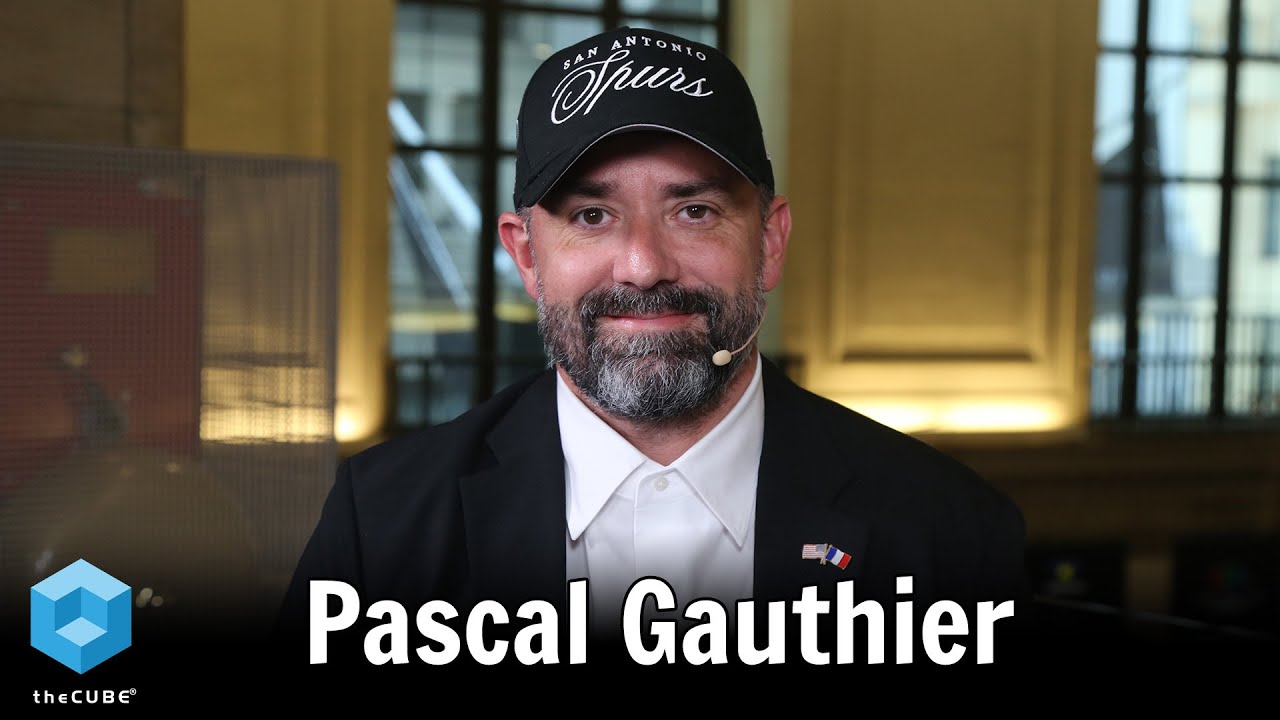
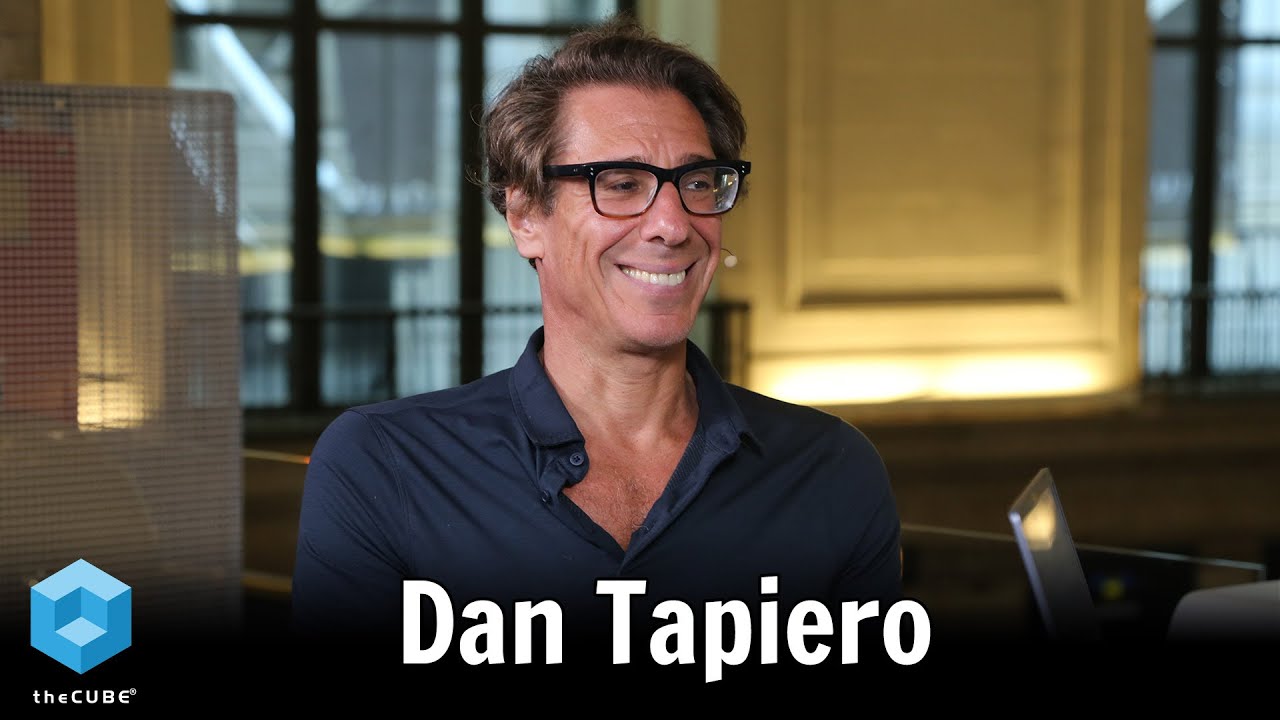
>> Welcome back everyone to theCUBE. I'm John Furrier host here in Palo Alto with the Crypto Trailblazer series. A two-day event with all the top leaders in the industry coming together -- developers, investors, participants in the community who are making the change, bringing the mainstream of blockchain, decentralized business models, just collaboration in general has been phenomenal. Of course, the Ethereum Foundation is in the Bay Area for the week at Stanford and Berkeley. Really activating the Bay Area is a lot of concentration of great people against the global society. And of course, theCUBE is here to cover it. Michael Heinrich is here, the CEO of 0G. I like to call OG because it looks like an O because he's kind of an OG. 0G as a network, you guys are doing some amazing things. I love what you're doing because it hits all my hot buttons. We've been talking about layer one, layer two, roll-ups, and the difference between the apples and oranges of layer one only. And so it's a big, big argument, discussion, conversation around the value. So I'm super excited to talk to you. Welcome to theCUBE. Thanks for coming in.
Michael Heinrich
>> Yeah, thanks for having me. Really excited about being here. So great.>> You're definitely a trailblazer because you're doing a layer one for AI, which is totally cool because we love talking about AI. It's the hottest topic in the commercial tech scene, but there's AI for things and things for AI, whether it's security for AI, AI for security network. You've heard all those stories. AI is everywhere. So there's kind of the two sides to the AI. So I want to just jump right in. Take a minute to explain, set the context. 0G, what's the mission? When did you start? What's the company?
Michael Heinrich
>> Yeah. At 0G, we're building the largest layer one for AI. We started in May of 2023, and basically what we observed then was that ChatGPT-3 was gaining a lot of popularity. And then as a founding team, we started thinking 10 years into the future, well, what's going to be built on this platform? It's a completely new computing shift. It had a break-up moment. And so we looked at it on a spectrum of there's individual use cases to societal-level use cases. And what I mean by societal-level use cases is things like logistic systems, manufacturing systems, governance systems, and how do we feel about a future where there's AI companies that we can't verify what's under the hood, complete black boxes. And for these level of applications, you want to know what's under the hood so that you can actually align these systems properly. And so we said this doesn't sound like a good reality that we want to live in, so we need to create a counterbalance to it. And so we created a decentralized AI-focused company. And that was really the start of 0G.>> Explain the rationale and thinking behind, looking under the covers. What was the motivation? What was the fear of the black box? For everyone, no one likes a black box because you don't know what's in there. What was some of the drivers around the thinking?
Michael Heinrich
>> Yeah, there's many issues with that. For example, you can't tell if there was a bias in the model. So let's say somebody managed to do a data poisoning attack and biased the model in such a way I'm wearing a Nike sweatshirt, for example, actually on this side and somehow trained it in such a way that every time you look up sports that Nike comes up. And so that's a subtle bias, but imagine that with a political bias, for example. So that's a major issue. If you don't have the provenance of how things happened, how can you then verify that that happened? And then the other part is verifiability. If you can't verify where an inference request came from, for example, and somebody spoofs the underlying model, that could literally be the difference between an airplane crashing into another or an airplane taking off successfully.>> Yeah. I mean, the data conversation is front and center. You see that in cybersecurity for years.
Michael Heinrich
>> Absolutely.>> AI is only as good as the data and the reliability. It brings up a conversation I'd love to get your thoughts on because it kind of connected a few dots, but also it's something not yet mainstream. It's nuanced. We've all talked about software supply chain. Where does that software come from? Hardware and software. It's very popular in the cloud-native world, but a new conversation with data supply chain. What's behind the API? That's where black boxes are bad because you don't have any lineage, you don't have any telemetry or any observability on the data. What's your view on that? Because I can almost see blockchain layer one being the perfect solution for just saying, okay, let's check the math on this one. Who touched it? What's the origination? What's the context? Is it up-to-date? I mean, these are the kinds of things that's going through my mind. What's your reaction? Is I getting that right? What's going on?
Michael Heinrich
>> Yeah, absolutely. That's what I meant by the provenance point, actually. So if you look under the hood and models are only going to be as good as the data that you feed into them. This is a really crass example, but if you feed a model in terms of how to make a bomb, then the model is going to have inference requests that basically tell you like, okay, well, this is how you make a bomb. So very crass example, but->> AI manipulation right there.
Michael Heinrich
>> Yeah, AI manipulation. Exactly. So data generation, where did the data actually come from? Did it come from the public internet sources? Was it biased? Did it come from a private data repository? And by the way, 99% of data is actually in private data repositories. So we can build significantly better expert models over time than who labeled the data, how was the data used in training? Were certain parts ignored? Were certain parts not ignored, whether the weights and biases, then how's the model or the agent actually running in production? Are there data poisoning attacks that are happening in production or jail-breaking attempts and so on? So all of these things, that whole data supply chain needs to be tracked if you want to have AI agents run these major societal use cases>> And the outcomes get better too as well because that's where the innovation is going to come from too. You mentioned societal change at the beginning. You also just mentioned the crass example you pointed out. I want to talk about societal impact because there's the confluence of tech, money and now impact. That's kind of a loose word, but societal change impact. So tech and money, we all know what that is Bitcoin and Ethereum. It's a lot of money involved there. We see companies going public, but now you have the confluence of all these things happening at the same time in one thing. What's your general reaction to that? Because I think this is a key part of the community, but that's also going mainstream, seeing a lot of the ventures coming out now people are starting to think like, Hey, I can actually ... I'm going to make impact. I'm going to be disruptive enablement of a wave, how do I inject that in? This is also brings into AI piece, AI for good. There's a lot of manipulation fears, and people ... guardrails. Guardrails aren't the answer at the end of the day, just a stop-gap. What's your view on this confluence of the nexus of tech, finance, and impact?
Michael Heinrich
>> So our mission is actually to make AI a public good. And so there's a huge potential in terms of AI. If we just increase productivity, that's trillions of dollars of value unlocked there. And some of my Stanford professors even gesture that maybe in two generations, we don't have to work for a living anymore. So what does a world like that even look like? Do we have just UBI, universal basic income everywhere and then we have a handful of companies like reaping all the benefits or can we present an alternative model where everything can be tracked? And if I'm going to present my data so that you can train better models, shouldn't I get compensated for that as well? So I think that's where the abundance comes from. Just by virtue of producing data for training and for producing data for usage and so on, I should be able to get compensated for that. If I'm producing useful content, then why can't I be the beneficiary? And so that's an alternative model to saying, okay, well, everybody will just get universal basic income. A few people benefit.>> The reason why I brought that up is because I think the efficiency piece you mentioned is key, but the money shifts, and whether it's basic income or saying, hey, that problem that people are trying to solve, social freedom, it could be anything. It could be solved, it just could be directed. Doesn't have to be a one-off siloed initiative.
Michael Heinrich
>> .>> This is where I see again, just the benefit of the culture shift and also the technology revolution going on. So okay, let's get back into the layer-one things. I want to dig into the service. Take us through what you guys are doing there. How does that work? Because right now, I'm going to be at GTC next week. I'm going to hear about the AI factories, AI infrastructure's booming, and then a software layer is going to be on top. You're going to see a wave of an OS model, and then the data agents going to come in. You mentioned agents earlier. What is on the layer-one AI? Okay, because that's like ... I mean, maybe a bad analogy, like a physical layer in my mind, but old stack reference. If you do that, what's that enable from a software standpoint? Take me through first what you're doing and then how that ties into the wave that's coming, which is composing apps, writing the app dev piece on top.
Michael Heinrich
>> Correct. Correct. Yeah. So actually the 0G comes from the word zero gravity. And our whole philosophy is around removing any barriers or friction that's found today in decentralized technology. So to give you an example, Ethereum today, for example, has a throughput of about 80 kilobytes per second. And you look at modern data centers and you're dealing with hundreds of gigabytes or even a terabyte or terabytes per second. So how do you bridge this gap of a million times data throughput difference? And so that's where we've come and thought through an architecture that actually enables horizontal scale so that we can remove all of the friction that's experienced from scalability so that if somebody wants to build an application, they no longer have to choose like, oh, I can only build it in a centralized way because the scale isn't there in a decentralized way. And so we figured out the data throughput. The way we've done it is we've architected a very high-performance data availability layer. It can do up to 50 gigabytes per second of throughput per consensus layer. And we enabled that through paralyzability. We essentially figured out that you can segment data into a data storage and into a data publishing lane. And because of that, you then don't get a broadcast bottleneck across the entire network. And then we figured out once you hit that maximum of 50 gigabytes per second, then you can actually paralyze the consensus layers as well. So it's kind of a data-sharding approach. So then we've essentially infinitely scaled data throughput. So you can now put four AI applications on chain, and then we can utilize that for the layer one and modularize the execution environment too, so that you can get to an infinite TPS standpoint. So in quotation marks, of course. And so scalability challenges and cost challenges should no longer be a barrier to building and Web3. So we're removing all of that friction.>> And so that's on layer one. So this is where the performance has been a problem.
Michael Heinrich
>> Exactly.>> So you're in that area. All right. Well, not to dig a little deeper in there. I'm curious because when you see training, inference, fine-tuning, reinforced learning, all the things people are working on, storage behaves differently when you're training versus writing, you're reading more reading and writing. So the read-write ratio is to bring a parallel. How do you guys look at that? Is that factored into your decisions or is it like inference behaves differently? What's going to be going on on the chain that you see that's prominent? Is it less training, more inference, more fine-tuning? I guess what's the brain of the chain if you will?
Michael Heinrich
>> Yeah, I think long-term it's going to be inference, but we've architected in a modular way. So we have a separate decentralized storage layer, and we've already tested that at about a two gigabytes per second of throughput, which is the fastest ever recorded in decentralized storage at a cost that's up to 80% less than centralized solutions. So you have a compelling case there because you can now move your data sets, your models, your data sets, your training data sets onto decentralized storage. It has fallback, it's censorship-resistant, it costs less and has essentially the same performance as centralized storage. And so we've also solved that very difficult problem to solve was based on my co-founder. He spent 11 years at Microsoft Research. He wrote some of the key papers like and Curfew on this space. So it's based a lot on his research essentially. I forgot to mention also fully EVM compatible on the layer one. So very easy to implement and build. And then we have a compute layer where we essentially use TEs today because they're the most practical. Otherwise, if you deal with technologies like ZKML, for example, you're going to wait many minutes or even hours before you get a response from a prompt. So TMLs, no overhead, secure, and we can use the latest models like DeepSeek R1 for example, or Llama 3 and so on.>> What's the use cases? Because you see ... not to compare other ways, but high-performance computing wave was very nichey. Now it's supercomputing. Everyone has supercomputing. supercomputing on AI show, but it's democratized supercomputing basically.
Michael Heinrich
>> Right.>> So how's the adoption? Where are people coming at you saying, "I want more of that," and how are they deploying?
Michael Heinrich
>> Yeah, the test net's only been around for less than a year. We've had more than close to 400 million transactions, 2 million wallets, more than 300 projects building on top of us. So we've seen a really nice early adopter curve, which has been really fun. And it's been all across the stack. It's been AI infra projects, companies like labeling companies, companies like data generation companies that provide synthetic data, even model training companies utilizing some of that infrastructure all the way to even the dApp stack. So we've got different types of AI agents being built, whether it's a DeFi AI agent or medical coding AI agent. So it's seen quite a range.>> So they want the speed and the throughput.
Michael Heinrich
>> They need the speed and throughput because otherwise you're basically left saying, I still need to build this in a centralized environment. And then decentralized AI is just inward decentralized, but you're basically doing API calls to OpenAI essentially.>> Yeah, I saw that with the early days. Just do it in the cloud and go do your smart contracts on chain. It's too slow.
Michael Heinrich
>> Yeah, exactly.>> What's your vision on steady state? I mean, look out, things are coming together. Love the whole aspect of programmable with Ethereum because Ethereum is great for developers, right?
Michael Heinrich
>> Absolutely.>> Clearly, the strategy, we were attracted to it immediately. E1 was slow, can't wait for the speed to get there. But what's the steady state look like for you? Is it infrastructure enabling a software layer, an OS concept? What's that vision of a steady state zero-gravity, high speed? It's almost like a super NVIDIA kind of vibe, but I mean-
Michael Heinrich
>> That would be .>> Let's not get ahead of ourselves. Trillion-dollar valuation. If this happens, you're enabling. You're disruptive, but you're enabling.
Michael Heinrich
>> And we want to build it in such a way that it's a one-stop shop experience, but we don't have to build everything in-house. We want to utilize a lot of the knowledge and the talent and create this one-stop experience. So for example, we don't need to be the ones writing ZKML algorithms. We can work with other partners that do that, but it should feel to the end user and developer that it's just like OpenAI, like some API calls, you can do fine-tuning, you can do inference. That's the experience that we envision, but it's through a community approach where we can build significantly faster. And so that's probably going to take a couple years to catch up with the hyperscalers, I would say. And then once we're at that catch-up phase, then we can start really using blockchain superpowers, kind of what I mentioned, verifiability, traceability or provenance, defensibility using blockchain economic, slashing mechanisms, incentive mechanisms for alignment. There's going to be a whole world of possibility that's going to be open.>> I mean, the token economics and the token economy is going to want to have total traceability.
Michael Heinrich
>> Absolutely.>> And that's the key value. I could see that being very interesting. So I could see social games, certain jumping on this right away.
Michael Heinrich
>> Fully on-chain games are now possible. So you could easily do that.>> What other use cases do you see, jumping out this right away? What's the low-hanging fruit for folks jumping in? Who's the early adopters? What's the profile look like?
Michael Heinrich
>> Yeah, absolutely. So it's anything that requires high-performance on-chain. So data marketplaces, on-chain order books for DeFi type of applications, AI agents, different types of flavors. It's really hard to scale them to millions of transactions per second if you don't have the underlying infrastructure. Gaming. On-chain gaming, it's now a possibility. So anything that requires high performance can now be built. Yeah.>> One of the things I learned when I was in LA last week is there's a lot of social change going on. I want to come back down to deploying that. The efficiency is going to enable some money to flow around when people start directing those funds or leveraging the economics because it does cut the intermediaries out. You'll see performance coming in on the apps. And the there. Where do you see social change happening the most? Any kind of vision there around ... Obviously, social freedom might be one. Mobilizing people. Now you can direct money at the speed of the chain, increase the speed, the money could be directed faster. That's going to enable a lot of people to have impact.
Michael Heinrich
>> And it's true ownership. So for example, we created a new standard called the ERC-7857 NFT standard because today if you create a AI agent on a centralized platform, who does that AI agent belong to? Well, it's probably in the terms and conditions, it may belong to that company. But with this, you can actually say, this particular AI agent belongs to this NFT because the private metadata is embedded in it, which that NFT, that belongs to a specific wallet. So I can now say I truly own this agent. Not only that, that agent can then own other agents. And so you could have a fully autonomous organization in the future.>> Social gaming at some level. I mean, it's a network of agents.
Michael Heinrich
>> Exactly. And hopefully, fully aligned. That's the key thing. Blockchains were designed for adversarial environments, trustless environments. So why don't we utilize those superpowers in AI alignment?>> Yeah, that's a great point. Trust is huge. Trust also agents. Is the agent trusted?
Michael Heinrich
>> Yeah.>> That's another one. Who am I talking to. Again, back to the black box. I mean this idea of a black box is super relevant here because now the inspection, all kinds of innovation could happen that you don't even know about that could come from the ecosystem.
Michael Heinrich
>> Exactly. And we have this concept of AI alignment nodes. It's still very much a research problem, but you could kind of think of it as a police force. So if there's model drift that's happening, if there's data poisoning attacks, jailbreak attacks, any of that happening, why can't another node kind of report that to the validator set?>> Yeah. One of the things that comes up a lot, and I was joking earlier and it was kind of tongue in cheek, but I don't mind the word guardrails, but like guardrails mean like caged in, you bounce around the guardrails, ball jumps over the guardrail and it's off the rails as they say. And here you can actually do policy into your AI and direct programming into ... and not even have the need for guardrails. You just kind of decide you can program what you want with your model. Is that accurate?
Michael Heinrich
>> Yeah, that's accurate. I mean, decentralization and privacy is all good until the Lazarus group basically hacks you and then moves billions of dollars out of the system for political gain. And so how do you create a system that's both super fair to the end user, but can also prevent things like that at the same time? And I think that's where some of the governance approaches around AI agents comes in.>> Well, I really appreciate the work that you guys are doing. And again, it's just technical problems also. Again, the societal change there. I have to ask you on the venture, how many people are working on it right now?
Michael Heinrich
>> I think last time I counted it was 50, but it's probably been 55 at this point. So it's been super fun.>> What's been the hardest thing you guys had to crack open here? Was it the parallel above layer one? Layer one. What was the hardest thing you guys had to do?
Michael Heinrich
>> From a tech perspective, initially, it was architecting that data availability layer. It took probably eight iterations before we came up with the architecture that truly scales. So that was one. And then now the challenge is to make sure that on the execution layer, we can do the same thing. And not only that, we also want to do it in such a way that the latency isn't the 100 milliseconds, that it's actually below a hundred milliseconds because if you have a server in let's say China and a server in the US and they're connected through this network, and usually in order to get consensus, you have a three hop consensus. And if you have speed of light, that's about 100 milliseconds. So how do you even go below that? Because certain applications require that. I mean, there's certain high frequency trading applications that are three milliseconds. So you can do that by staying sufficiently decentralized with a local type of consensus, kind of what centralized cloud providers do. They have like a US West, a US East.>> Segmentation's always a thing.
Michael Heinrich
>> Segmentation. But making sure that there's global consensus that's maintained. That's also very hard engineering problem. So we're working on that. Hopefully, we have an approach by the end of the year.>> Yeah, it's interesting data governance used to be the most boring topic on the planet until about two years ago, but it's changed. What you're basically getting at is what's the governance algorithm for consensus.
Michael Heinrich
>> Exactly.>> And governance is like security. It's got to be built in from day one. What are some of the challenges, just more generally, more broadly, do you see in governance? There's all these paradigms that are changed. What you went to school for now is no longer relevant. I'd say governance falls-
Michael Heinrich
>> Half life of four years, right?>> Exactly. Can't go wrong if you know architecture, security ... Systems architecture is a good degree.
Michael Heinrich
>> Yeah.>> Stay on systems was my advice. How do you think about governance? Because there are a lot of people that's working on this right now in the commercial side too. What's the view on governance? Because you got to think about it differently and it's a systems problem, but that hasn't always been there. It's just be, okay, I got my master data file here. I got all these identities, I've got identity involved. Does your solution, does blockchain solve a lot of those problems just naturally, inherently? Or does it simplify it or make it more complex?
Michael Heinrich
>> It simplifies it in a way because you just have complete visibility in terms of what happened to one particular thing over time because if you're a hyper-smart AI agent and you wake up one day and you're like, I get paid for doing a bunch of things, what if I break into the centralized database, change a bunch of records, create some deep fake images, and voila, I have my reward. That's not really possible. So we want to keep AI cheat-free, and especially if we start using governance models that include AI agents as part of the picture, maybe initially as a helper, but over time, maybe even as a decision-maker and facilitator, that sounds far off. But recently, there was a few papers that were submitted to a prestigious conference, completely written by an AI agent, and they were accepted into a peer-reviewed conference. So I don't think we're that far off where we're going to have AI agents actually supporting us in governance processes.>> Yeah, I mean, the reason it's moving so fast right now. Michael, great to have you on. Put a plug-in for what you're working on. What are you looking for? Team, money, support, collaboration, what are some of the things you're doing? What are some of your goals? Take a minute to put a plug-in.
Michael Heinrich
>> Yeah, we want to work with the best builders in this space. So we want to see really cool utility applications that are built on chain and actually utilize the superpowers that I talked about. So verification, provenance, decentralization. So primarily looking for builders. We have an ecosystem program as well, that's 88.8 million. So definitely happy to work with the best builders in the space and always looking for great partners that want to be part of the journey. So definitely chat with us through 0G.ai.>> I love the blockchain. It is a network. It's decentralized, it's built for a reason. Thanks for coming on theCUBE.
Michael Heinrich
>> Big pleasure. Thanks for having me.>> Crypto Trailblazer. He's based in the trail. Layer one AI, an innovative idea, a lot of benefits. Again, this is the trend that's happening. Putting AI fully on the chain, infinite scalable layer one, inference fine-tuning, really enabling developers to make social change, but also get the efficiencies. There's a lot of high scale coming to crypto. I'm John Furrier, host of theCUBE. Thanks for watching.
>> Welcome back everyone to theCUBE. I'm John Furrier host here in Palo Alto with the Crypto Trailblazer series. A two-day event with all the top leaders in the industry coming together -- developers, investors, participants in the community who are making the change, bringing the mainstream of blockchain, decentralized business models, just collaboration in general has been phenomenal. Of course, the Ethereum Foundation is in the Bay Area for the week at Stanford and Berkeley. Really activating the Bay Area is a lot of concentration of great people against the global society. And of course, theCUBE is here to cover it. Michael Heinrich is here, the CEO of 0G. I like to call OG because it looks like an O because he's kind of an OG. 0G as a network, you guys are doing some amazing things. I love what you're doing because it hits all my hot buttons. We've been talking about layer one, layer two, roll-ups, and the difference between the apples and oranges of layer one only. And so it's a big, big argument, discussion, conversation around the value. So I'm super excited to talk to you. Welcome to theCUBE. Thanks for coming in.
Michael Heinrich
>> Yeah, thanks for having me. Really excited about being here. So great.>> You're definitely a trailblazer because you're doing a layer one for AI, which is totally cool because we love talking about AI. It's the hottest topic in the commercial tech scene, but there's AI for things and things for AI, whether it's security for AI, AI for security network. You've heard all those stories. AI is everywhere. So there's kind of the two sides to the AI. So I want to just jump right in. Take a minute to explain, set the context. 0G, what's the mission? When did you start? What's the company?
Michael Heinrich
>> Yeah. At 0G, we're building the largest layer one for AI. We started in May of 2023, and basically what we observed then was that ChatGPT-3 was gaining a lot of popularity. And then as a founding team, we started thinking 10 years into the future, well, what's going to be built on this platform? It's a completely new computing shift. It had a break-up moment. And so we looked at it on a spectrum of there's individual use cases to societal-level use cases. And what I mean by societal-level use cases is things like logistic systems, manufacturing systems, governance systems, and how do we feel about a future where there's AI companies that we can't verify what's under the hood, complete black boxes. And for these level of applications, you want to know what's under the hood so that you can actually align these systems properly. And so we said this doesn't sound like a good reality that we want to live in, so we need to create a counterbalance to it. And so we created a decentralized AI-focused company. And that was really the start of 0G.>> Explain the rationale and thinking behind, looking under the covers. What was the motivation? What was the fear of the black box? For everyone, no one likes a black box because you don't know what's in there. What was some of the drivers around the thinking?
Michael Heinrich
>> Yeah, there's many issues with that. For example, you can't tell if there was a bias in the model. So let's say somebody managed to do a data poisoning attack and biased the model in such a way I'm wearing a Nike sweatshirt, for example, actually on this side and somehow trained it in such a way that every time you look up sports that Nike comes up. And so that's a subtle bias, but imagine that with a political bias, for example. So that's a major issue. If you don't have the provenance of how things happened, how can you then verify that that happened? And then the other part is verifiability. If you can't verify where an inference request came from, for example, and somebody spoofs the underlying model, that could literally be the difference between an airplane crashing into another or an airplane taking off successfully.>> Yeah. I mean, the data conversation is front and center. You see that in cybersecurity for years.
Michael Heinrich
>> Absolutely.>> AI is only as good as the data and the reliability. It brings up a conversation I'd love to get your thoughts on because it kind of connected a few dots, but also it's something not yet mainstream. It's nuanced. We've all talked about software supply chain. Where does that software come from? Hardware and software. It's very popular in the cloud-native world, but a new conversation with data supply chain. What's behind the API? That's where black boxes are bad because you don't have any lineage, you don't have any telemetry or any observability on the data. What's your view on that? Because I can almost see blockchain layer one being the perfect solution for just saying, okay, let's check the math on this one. Who touched it? What's the origination? What's the context? Is it up-to-date? I mean, these are the kinds of things that's going through my mind. What's your reaction? Is I getting that right? What's going on?
Michael Heinrich
>> Yeah, absolutely. That's what I meant by the provenance point, actually. So if you look under the hood and models are only going to be as good as the data that you feed into them. This is a really crass example, but if you feed a model in terms of how to make a bomb, then the model is going to have inference requests that basically tell you like, okay, well, this is how you make a bomb. So very crass example, but->> AI manipulation right there.
Michael Heinrich
>> Yeah, AI manipulation. Exactly. So data generation, where did the data actually come from? Did it come from the public internet sources? Was it biased? Did it come from a private data repository? And by the way, 99% of data is actually in private data repositories. So we can build significantly better expert models over time than who labeled the data, how was the data used in training? Were certain parts ignored? Were certain parts not ignored, whether the weights and biases, then how's the model or the agent actually running in production? Are there data poisoning attacks that are happening in production or jail-breaking attempts and so on? So all of these things, that whole data supply chain needs to be tracked if you want to have AI agents run these major societal use cases>> And the outcomes get better too as well because that's where the innovation is going to come from too. You mentioned societal change at the beginning. You also just mentioned the crass example you pointed out. I want to talk about societal impact because there's the confluence of tech, money and now impact. That's kind of a loose word, but societal change impact. So tech and money, we all know what that is Bitcoin and Ethereum. It's a lot of money involved there. We see companies going public, but now you have the confluence of all these things happening at the same time in one thing. What's your general reaction to that? Because I think this is a key part of the community, but that's also going mainstream, seeing a lot of the ventures coming out now people are starting to think like, Hey, I can actually ... I'm going to make impact. I'm going to be disruptive enablement of a wave, how do I inject that in? This is also brings into AI piece, AI for good. There's a lot of manipulation fears, and people ... guardrails. Guardrails aren't the answer at the end of the day, just a stop-gap. What's your view on this confluence of the nexus of tech, finance, and impact?
Michael Heinrich
>> So our mission is actually to make AI a public good. And so there's a huge potential in terms of AI. If we just increase productivity, that's trillions of dollars of value unlocked there. And some of my Stanford professors even gesture that maybe in two generations, we don't have to work for a living anymore. So what does a world like that even look like? Do we have just UBI, universal basic income everywhere and then we have a handful of companies like reaping all the benefits or can we present an alternative model where everything can be tracked? And if I'm going to present my data so that you can train better models, shouldn't I get compensated for that as well? So I think that's where the abundance comes from. Just by virtue of producing data for training and for producing data for usage and so on, I should be able to get compensated for that. If I'm producing useful content, then why can't I be the beneficiary? And so that's an alternative model to saying, okay, well, everybody will just get universal basic income. A few people benefit.>> The reason why I brought that up is because I think the efficiency piece you mentioned is key, but the money shifts, and whether it's basic income or saying, hey, that problem that people are trying to solve, social freedom, it could be anything. It could be solved, it just could be directed. Doesn't have to be a one-off siloed initiative.
Michael Heinrich
>> .>> This is where I see again, just the benefit of the culture shift and also the technology revolution going on. So okay, let's get back into the layer-one things. I want to dig into the service. Take us through what you guys are doing there. How does that work? Because right now, I'm going to be at GTC next week. I'm going to hear about the AI factories, AI infrastructure's booming, and then a software layer is going to be on top. You're going to see a wave of an OS model, and then the data agents going to come in. You mentioned agents earlier. What is on the layer-one AI? Okay, because that's like ... I mean, maybe a bad analogy, like a physical layer in my mind, but old stack reference. If you do that, what's that enable from a software standpoint? Take me through first what you're doing and then how that ties into the wave that's coming, which is composing apps, writing the app dev piece on top.
Michael Heinrich
>> Correct. Correct. Yeah. So actually the 0G comes from the word zero gravity. And our whole philosophy is around removing any barriers or friction that's found today in decentralized technology. So to give you an example, Ethereum today, for example, has a throughput of about 80 kilobytes per second. And you look at modern data centers and you're dealing with hundreds of gigabytes or even a terabyte or terabytes per second. So how do you bridge this gap of a million times data throughput difference? And so that's where we've come and thought through an architecture that actually enables horizontal scale so that we can remove all of the friction that's experienced from scalability so that if somebody wants to build an application, they no longer have to choose like, oh, I can only build it in a centralized way because the scale isn't there in a decentralized way. And so we figured out the data throughput. The way we've done it is we've architected a very high-performance data availability layer. It can do up to 50 gigabytes per second of throughput per consensus layer. And we enabled that through paralyzability. We essentially figured out that you can segment data into a data storage and into a data publishing lane. And because of that, you then don't get a broadcast bottleneck across the entire network. And then we figured out once you hit that maximum of 50 gigabytes per second, then you can actually paralyze the consensus layers as well. So it's kind of a data-sharding approach. So then we've essentially infinitely scaled data throughput. So you can now put four AI applications on chain, and then we can utilize that for the layer one and modularize the execution environment too, so that you can get to an infinite TPS standpoint. So in quotation marks, of course. And so scalability challenges and cost challenges should no longer be a barrier to building and Web3. So we're removing all of that friction.>> And so that's on layer one. So this is where the performance has been a problem.
Michael Heinrich
>> Exactly.>> So you're in that area. All right. Well, not to dig a little deeper in there. I'm curious because when you see training, inference, fine-tuning, reinforced learning, all the things people are working on, storage behaves differently when you're training versus writing, you're reading more reading and writing. So the read-write ratio is to bring a parallel. How do you guys look at that? Is that factored into your decisions or is it like inference behaves differently? What's going to be going on on the chain that you see that's prominent? Is it less training, more inference, more fine-tuning? I guess what's the brain of the chain if you will?
Michael Heinrich
>> Yeah, I think long-term it's going to be inference, but we've architected in a modular way. So we have a separate decentralized storage layer, and we've already tested that at about a two gigabytes per second of throughput, which is the fastest ever recorded in decentralized storage at a cost that's up to 80% less than centralized solutions. So you have a compelling case there because you can now move your data sets, your models, your data sets, your training data sets onto decentralized storage. It has fallback, it's censorship-resistant, it costs less and has essentially the same performance as centralized storage. And so we've also solved that very difficult problem to solve was based on my co-founder. He spent 11 years at Microsoft Research. He wrote some of the key papers like and Curfew on this space. So it's based a lot on his research essentially. I forgot to mention also fully EVM compatible on the layer one. So very easy to implement and build. And then we have a compute layer where we essentially use TEs today because they're the most practical. Otherwise, if you deal with technologies like ZKML, for example, you're going to wait many minutes or even hours before you get a response from a prompt. So TMLs, no overhead, secure, and we can use the latest models like DeepSeek R1 for example, or Llama 3 and so on.>> What's the use cases? Because you see ... not to compare other ways, but high-performance computing wave was very nichey. Now it's supercomputing. Everyone has supercomputing. supercomputing on AI show, but it's democratized supercomputing basically.
Michael Heinrich
>> Right.>> So how's the adoption? Where are people coming at you saying, "I want more of that," and how are they deploying?
Michael Heinrich
>> Yeah, the test net's only been around for less than a year. We've had more than close to 400 million transactions, 2 million wallets, more than 300 projects building on top of us. So we've seen a really nice early adopter curve, which has been really fun. And it's been all across the stack. It's been AI infra projects, companies like labeling companies, companies like data generation companies that provide synthetic data, even model training companies utilizing some of that infrastructure all the way to even the dApp stack. So we've got different types of AI agents being built, whether it's a DeFi AI agent or medical coding AI agent. So it's seen quite a range.>> So they want the speed and the throughput.
Michael Heinrich
>> They need the speed and throughput because otherwise you're basically left saying, I still need to build this in a centralized environment. And then decentralized AI is just inward decentralized, but you're basically doing API calls to OpenAI essentially.>> Yeah, I saw that with the early days. Just do it in the cloud and go do your smart contracts on chain. It's too slow.
Michael Heinrich
>> Yeah, exactly.>> What's your vision on steady state? I mean, look out, things are coming together. Love the whole aspect of programmable with Ethereum because Ethereum is great for developers, right?
Michael Heinrich
>> Absolutely.>> Clearly, the strategy, we were attracted to it immediately. E1 was slow, can't wait for the speed to get there. But what's the steady state look like for you? Is it infrastructure enabling a software layer, an OS concept? What's that vision of a steady state zero-gravity, high speed? It's almost like a super NVIDIA kind of vibe, but I mean-
Michael Heinrich
>> That would be .>> Let's not get ahead of ourselves. Trillion-dollar valuation. If this happens, you're enabling. You're disruptive, but you're enabling.
Michael Heinrich
>> And we want to build it in such a way that it's a one-stop shop experience, but we don't have to build everything in-house. We want to utilize a lot of the knowledge and the talent and create this one-stop experience. So for example, we don't need to be the ones writing ZKML algorithms. We can work with other partners that do that, but it should feel to the end user and developer that it's just like OpenAI, like some API calls, you can do fine-tuning, you can do inference. That's the experience that we envision, but it's through a community approach where we can build significantly faster. And so that's probably going to take a couple years to catch up with the hyperscalers, I would say. And then once we're at that catch-up phase, then we can start really using blockchain superpowers, kind of what I mentioned, verifiability, traceability or provenance, defensibility using blockchain economic, slashing mechanisms, incentive mechanisms for alignment. There's going to be a whole world of possibility that's going to be open.>> I mean, the token economics and the token economy is going to want to have total traceability.
Michael Heinrich
>> Absolutely.>> And that's the key value. I could see that being very interesting. So I could see social games, certain jumping on this right away.
Michael Heinrich
>> Fully on-chain games are now possible. So you could easily do that.>> What other use cases do you see, jumping out this right away? What's the low-hanging fruit for folks jumping in? Who's the early adopters? What's the profile look like?
Michael Heinrich
>> Yeah, absolutely. So it's anything that requires high-performance on-chain. So data marketplaces, on-chain order books for DeFi type of applications, AI agents, different types of flavors. It's really hard to scale them to millions of transactions per second if you don't have the underlying infrastructure. Gaming. On-chain gaming, it's now a possibility. So anything that requires high performance can now be built. Yeah.>> One of the things I learned when I was in LA last week is there's a lot of social change going on. I want to come back down to deploying that. The efficiency is going to enable some money to flow around when people start directing those funds or leveraging the economics because it does cut the intermediaries out. You'll see performance coming in on the apps. And the there. Where do you see social change happening the most? Any kind of vision there around ... Obviously, social freedom might be one. Mobilizing people. Now you can direct money at the speed of the chain, increase the speed, the money could be directed faster. That's going to enable a lot of people to have impact.
Michael Heinrich
>> And it's true ownership. So for example, we created a new standard called the ERC-7857 NFT standard because today if you create a AI agent on a centralized platform, who does that AI agent belong to? Well, it's probably in the terms and conditions, it may belong to that company. But with this, you can actually say, this particular AI agent belongs to this NFT because the private metadata is embedded in it, which that NFT, that belongs to a specific wallet. So I can now say I truly own this agent. Not only that, that agent can then own other agents. And so you could have a fully autonomous organization in the future.>> Social gaming at some level. I mean, it's a network of agents.
Michael Heinrich
>> Exactly. And hopefully, fully aligned. That's the key thing. Blockchains were designed for adversarial environments, trustless environments. So why don't we utilize those superpowers in AI alignment?>> Yeah, that's a great point. Trust is huge. Trust also agents. Is the agent trusted?
Michael Heinrich
>> Yeah.>> That's another one. Who am I talking to. Again, back to the black box. I mean this idea of a black box is super relevant here because now the inspection, all kinds of innovation could happen that you don't even know about that could come from the ecosystem.
Michael Heinrich
>> Exactly. And we have this concept of AI alignment nodes. It's still very much a research problem, but you could kind of think of it as a police force. So if there's model drift that's happening, if there's data poisoning attacks, jailbreak attacks, any of that happening, why can't another node kind of report that to the validator set?>> Yeah. One of the things that comes up a lot, and I was joking earlier and it was kind of tongue in cheek, but I don't mind the word guardrails, but like guardrails mean like caged in, you bounce around the guardrails, ball jumps over the guardrail and it's off the rails as they say. And here you can actually do policy into your AI and direct programming into ... and not even have the need for guardrails. You just kind of decide you can program what you want with your model. Is that accurate?
Michael Heinrich
>> Yeah, that's accurate. I mean, decentralization and privacy is all good until the Lazarus group basically hacks you and then moves billions of dollars out of the system for political gain. And so how do you create a system that's both super fair to the end user, but can also prevent things like that at the same time? And I think that's where some of the governance approaches around AI agents comes in.>> Well, I really appreciate the work that you guys are doing. And again, it's just technical problems also. Again, the societal change there. I have to ask you on the venture, how many people are working on it right now?
Michael Heinrich
>> I think last time I counted it was 50, but it's probably been 55 at this point. So it's been super fun.>> What's been the hardest thing you guys had to crack open here? Was it the parallel above layer one? Layer one. What was the hardest thing you guys had to do?
Michael Heinrich
>> From a tech perspective, initially, it was architecting that data availability layer. It took probably eight iterations before we came up with the architecture that truly scales. So that was one. And then now the challenge is to make sure that on the execution layer, we can do the same thing. And not only that, we also want to do it in such a way that the latency isn't the 100 milliseconds, that it's actually below a hundred milliseconds because if you have a server in let's say China and a server in the US and they're connected through this network, and usually in order to get consensus, you have a three hop consensus. And if you have speed of light, that's about 100 milliseconds. So how do you even go below that? Because certain applications require that. I mean, there's certain high frequency trading applications that are three milliseconds. So you can do that by staying sufficiently decentralized with a local type of consensus, kind of what centralized cloud providers do. They have like a US West, a US East.>> Segmentation's always a thing.
Michael Heinrich
>> Segmentation. But making sure that there's global consensus that's maintained. That's also very hard engineering problem. So we're working on that. Hopefully, we have an approach by the end of the year.>> Yeah, it's interesting data governance used to be the most boring topic on the planet until about two years ago, but it's changed. What you're basically getting at is what's the governance algorithm for consensus.
Michael Heinrich
>> Exactly.>> And governance is like security. It's got to be built in from day one. What are some of the challenges, just more generally, more broadly, do you see in governance? There's all these paradigms that are changed. What you went to school for now is no longer relevant. I'd say governance falls-
Michael Heinrich
>> Half life of four years, right?>> Exactly. Can't go wrong if you know architecture, security ... Systems architecture is a good degree.
Michael Heinrich
>> Yeah.>> Stay on systems was my advice. How do you think about governance? Because there are a lot of people that's working on this right now in the commercial side too. What's the view on governance? Because you got to think about it differently and it's a systems problem, but that hasn't always been there. It's just be, okay, I got my master data file here. I got all these identities, I've got identity involved. Does your solution, does blockchain solve a lot of those problems just naturally, inherently? Or does it simplify it or make it more complex?
Michael Heinrich
>> It simplifies it in a way because you just have complete visibility in terms of what happened to one particular thing over time because if you're a hyper-smart AI agent and you wake up one day and you're like, I get paid for doing a bunch of things, what if I break into the centralized database, change a bunch of records, create some deep fake images, and voila, I have my reward. That's not really possible. So we want to keep AI cheat-free, and especially if we start using governance models that include AI agents as part of the picture, maybe initially as a helper, but over time, maybe even as a decision-maker and facilitator, that sounds far off. But recently, there was a few papers that were submitted to a prestigious conference, completely written by an AI agent, and they were accepted into a peer-reviewed conference. So I don't think we're that far off where we're going to have AI agents actually supporting us in governance processes.>> Yeah, I mean, the reason it's moving so fast right now. Michael, great to have you on. Put a plug-in for what you're working on. What are you looking for? Team, money, support, collaboration, what are some of the things you're doing? What are some of your goals? Take a minute to put a plug-in.
Michael Heinrich
>> Yeah, we want to work with the best builders in this space. So we want to see really cool utility applications that are built on chain and actually utilize the superpowers that I talked about. So verification, provenance, decentralization. So primarily looking for builders. We have an ecosystem program as well, that's 88.8 million. So definitely happy to work with the best builders in the space and always looking for great partners that want to be part of the journey. So definitely chat with us through 0G.ai.>> I love the blockchain. It is a network. It's decentralized, it's built for a reason. Thanks for coming on theCUBE.
Michael Heinrich
>> Big pleasure. Thanks for having me.>> Crypto Trailblazer. He's based in the trail. Layer one AI, an innovative idea, a lot of benefits. Again, this is the trend that's happening. Putting AI fully on the chain, infinite scalable layer one, inference fine-tuning, really enabling developers to make social change, but also get the efficiencies. There's a lot of high scale coming to crypto. I'm John Furrier, host of theCUBE. Thanks for watching.