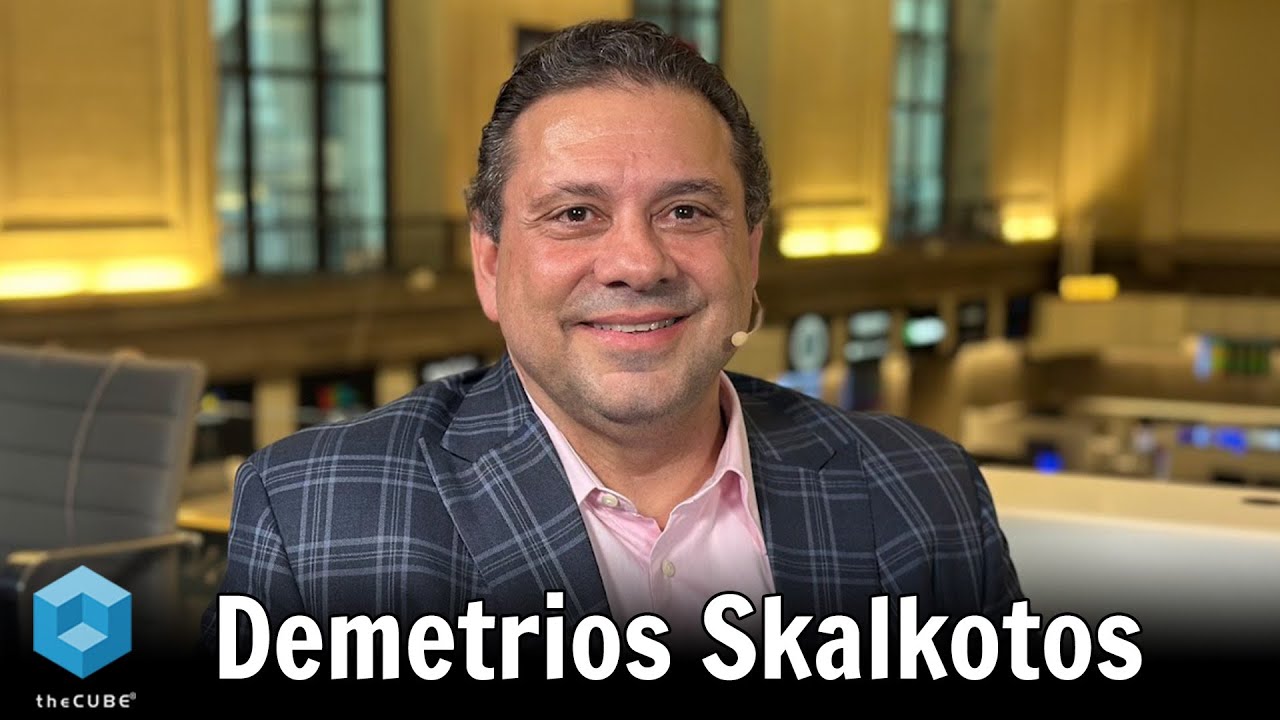
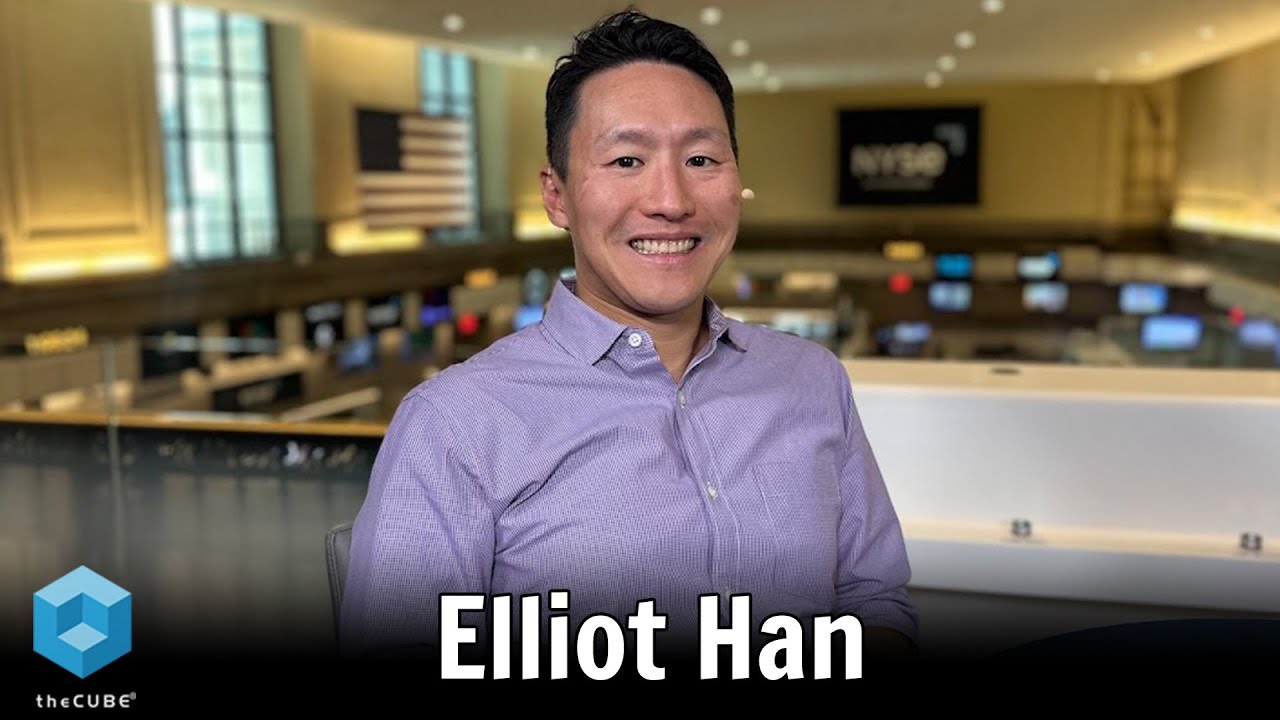
In this special edition of Crypto Trailblazer NYC, Yuval Rooz, co-founder and CEO of Digital Asset, sits down with theCUBE’s John Furrier to explore how enterprise blockchain is moving from hype to real-world transformation. Rooz shares his candid insights on the evolving regulatory climate in the US, the importance of financial sovereignty in a borderless world, and why institutional trust and control – not just transparency – will define the next phase of digital finance.
The conversation dives into the architecture behind Digital Asset’s Canton Network, a layer-one blockchain purpose-built for large-scale institutional adoption. Rooz outlines the design principles enabling privacy, programmability and compliance, positioning Canton as the “books and records” infrastructure for the next generation of on-chain activity. From tokenized treasuries and stablecoins to private equity and repo markets, Rooz reveals how real assets – not IOUs – are already running natively on Canton, with top financial institutions like Goldman Sachs, BNP Paribas and Euroclear participating in governance and adoption.
The interview also explores how Digital Asset’s $150M equity round, with backing from firms such as DRW, Citadel Securities and Tradeweb, signals confidence in the company’s approach to institutional-grade crypto infrastructure. Rooz emphasizes the importance of boring-but-critical foundations like title law, auditability and reconciliation – features that reduce operational risk while unlocking massive efficiency gains across sectors like insurance, fixed income and even sports betting.
This is a must-watch for anyone tracking the real shift from speculative crypto to systemic integration in global finance.
Forgot Password
Almost there!
We just sent you a verification email. Please verify your account to gain access to
theCUBE + NYSE Wired: Crypto Trailblazers. If you don’t think you received an email check your
spam folder.
Sign in to theCUBE + NYSE Wired: Crypto Trailblazers.
In order to sign in, enter the email address you used to registered for the event. Once completed, you will receive an email with a verification link. Open this link to automatically sign into the site.
Register For theCUBE + NYSE Wired: Crypto Trailblazers
Please fill out the information below. You will recieve an email with a verification link confirming your registration. Click the link to automatically sign into the site.
You’re almost there!
We just sent you a verification email. Please click the verification button in the email. Once your email address is verified, you will have full access to all event content for theCUBE + NYSE Wired: Crypto Trailblazers.
I want my badge and interests to be visible to all attendees.
Checking this box will display your presense on the attendees list, view your profile and allow other attendees to contact you via 1-1 chat. Read the Privacy Policy. At any time, you can choose to disable this preference.
Select your Interests!
add
Upload your photo
Uploading..
OR
Connect via Twitter
Connect via Linkedin
EDIT PASSWORD
Share
Forgot Password
Almost there!
We just sent you a verification email. Please verify your account to gain access to
theCUBE + NYSE Wired: Crypto Trailblazers. If you don’t think you received an email check your
spam folder.
Sign in to theCUBE + NYSE Wired: Crypto Trailblazers.
In order to sign in, enter the email address you used to registered for the event. Once completed, you will receive an email with a verification link. Open this link to automatically sign into the site.
Sign in to gain access to theCUBE + NYSE Wired: Crypto Trailblazers
Please sign in with LinkedIn to continue to theCUBE + NYSE Wired: Crypto Trailblazers. Signing in with LinkedIn ensures a professional environment.
Are you sure you want to remove access rights for this user?
Details
Manage Access
email address
Community Invitation
Simon McLoughlin, Uphold
Exploring the Future of Cryptocurrency with Offchain Labs
Join us as we delve into an insightful discussion with Steven Goldfeder of Offchain Labs, analyzed by theCUBE Research. This segment, part of the Crypto Trailblazers series in collaboration with NYSE Wired, explores the innovative efforts redefining the Ethereum ecosystem and the broader blockchain landscape.
Steven Goldfeder, co-founder and CEO of Offchain Labs, discusses significant advancements and strategic insights in blockchain technology. In this engaging episode, hosted at theCUBE Studios, Goldfeder shares their expertise on how Offchain Labs contributes to the evolution of Ethereum through groundbreaking projects such as Prysm and Arbitrum, while discussing impacts on scalability and decentralization.
In this discussion, Goldfeder elaborates on key technological initiatives driven by Offchain Labs, focusing particularly on Arbitrum, the pioneering layer two scaling solution for Ethereum. They illustrate how innovative platforms such as Arbitrum significantly enhance Ethereum's capacity, efficiency, and scalability without compromising security or decentralization, closely analyzed by theCUBE Research.
Highlights include Goldfeder's insights on the future trajectory of Ethereum and its ecosystem, emphasizing the sustainable development model and potential for global business transformations. Goldfeder states that engaging with regulators now can ensure crypto's lasting impact, aligning with a US administration open to embracing this technological shift. This discussion offers valuable perspectives for developers, businesses, and policymakers navigating the crypto landscape.
#OffchainLabs #Arbitrum #Ethereum #theCUBE #NYSEWired #Blockchain #CryptoTrailblazers #Scalability #Decentralization #Innovation #Crypto #SmartContracts #PaloAlto #CryptoRegulation
Find more SiliconANGLE news and analysis https://siliconangle.com/.
Follow theCUBE's wall-to-wall event coverage https://siliconangle.com/events/
Learn about the latest theCUBE events https://www.thecube.net/
00:00 - Intro
00:06 - Exploring Innovations in Blockchain: A Deep Dive into Offchain Labs and Arbitrum
05:23 - Ethereum's Scalability and the Layered Architecture
08:01 - Smart Contracts and Developer Innovations on Arbitrum
11:46 - The Impact of Arbitrum on Blockchain App Development
16:08 - Navigating the Future: Offchain Labs and Ethereum in a Regulatory Landscape
play_circle_outlineJohn Furrier hosts the Crypto Trailblazers series at NYSE Studios in NYC.
replyShare Clip
play_circle_outlineSimon McLoughlin Discusses Launch of easyBitcoin App for Simple Bitcoin Savings with Small Investments
replyShare Clip
play_circle_outlineDecentralization and Collaboration: How Crypto Adoption Is Transforming Financial Services with Cash-Back Incentives for Bitcoin Transactions
replyShare Clip
play_circle_outlineBlockchain perceived as a transformative technology for global financial systems.
>> Welcome back, everyone. I'm John Furrier, host of theCUBE. We are here at our NYSE Studios here in New York City, a part of the NYSE Wireless. This is the Crypto Trailblazers ongoing series where we feature the leaders who are making things happen as the world crosses over from real world assets going digital. This is the phenomenon around decentralized infrastructure, cryptocurrencies and money, so tech and money coming together. Got a great guest, Simon McLoughlin. He's on here, the CEO of Uphold. He's here in theCUBE and he's definitely blazing the trail. He's got a great platform. We've got some news to talk about. Simon, thanks for coming on.>> John, thanks for having me.>> So you guys are a global platform for digital assets across all currencies. Very successful, blazing the trail. Congratulations. Also got some news. So first, explain what you guys do and then I want to get into the news with the easyBitcoin application.>> Sure. Well, we're a platform for on-chain finance. We provide infrastructure to banks, brokers and traditional financial institutions who want to incorporate digital assets and blockchain in what they do.>> So you guys have a news launch?>> We do.>> So this is an example of the platformization of decentralized, which is going mainstream. It's not just a science project, it's happening. There's real money involved, real customers. You guys have a lot of those. Talk about the news. Why is this easyBitcoin app relevant?>> We're launching an app called easyBitcoin today, and for anybody who hasn't got into Bitcoin before and doesn't know how to get started, this is the app for you. And it recognizes that Bitcoin is arguably the best savings technology ever invented and it's gone mainstream. We're at a unique moment in history. The governments in the US, Europe, UK are all legitimizing digital assets and crypto as an asset class. And this app is all about... You don't need a hundred thousand bucks to get started, you can save just $10 a month in Bitcoin and have your purchasing power preserved over time.>> easyBitcoin app... I've stayed at the easyHotel in Barcelona. My favorite place is so close, the Fira. They have tons of properties. easyJet is another part of their business. So this is a real business. They're up and running, they're expanding and what this deal represents to me is the recognition of crypto infrastructure and payments for their business. They have customers. I'm a customer. So what does this mean for me as the customer and what does it mean for them as a business?>> Well, I think for them as a business, they pioneer access to traditionally expensive areas that deserve to go mainstream. So they open up access to the general public for a whole host of things. They started in air travel, then they went into hotels, and now Stelios, who's the founder, is super interested in Bitcoin and just opening up access so that it's not just the preserve of techno geeks and the wealthy, it's just something that ordinary people can incorporate in their investment portfolios.>> So are they looking at it as a customer of yours... They have customers, I mentioned. So is it to pay in Bitcoin? Is it to use for internal? Take me through their use case. What's the value proposition for them?>> So their use case is the recognition that Bitcoin is a great savings technology. And so the app is all about putting a small amount away regularly and using it as part of your investment portfolio. And what's unique about it is not only is it incredibly easy to use for the non-technical person, but you get... People don't want points today. They want Bitcoin. So when you buy Bitcoin, you get 1% back. When you hold Bitcoin on the app, you get 2% back. So you really have your money working harder. And think one of the remarkable features of the app is you can put up to $2.5 million if you wanted to and have it FDIC-insured, but you can take the interest in Bitcoin. Think about that for a second. You have dollars. Your dry powder on the platform is earning Bitcoin for you, if you so choose.>> So this is them expanding their business. This is not just a retail thing for them, it's more... This is a... What they did for travel and hotels, they're doing for finance.>> Absolutely. They love innovation. They love being pioneers in value. And so they chose us because of our unique platform attributes that allowed them to deliver that value proposition to the market, which is all about opening up access and delivering great value.>> Simon, you actually give me some ideas, maybe theCUBE should start its own EasyApp because this is not obvious. I mean, who would've thought that that could happen? That finance, which is a industry vertical by the old standards, they're sequencing into new business. This is like a complete... I mean, you go back 20 years, this never would've happened.>> No, I think it's a great example of how blockchain technology can open up new opportunities for existing companies. They have customer bases and they can introduce new financial products very quickly and very efficiently.>> This is what I love about the democratization way that's happening. There's real examples of assets that wouldn't have been recognized or even attainable before. So here, they have customers, they have distribution. That's a word that's been kicked around here in the entrepreneurial finance community. We're seeing a wave of entrepreneurial finance like I've never seen before. I mean, you'd have to be like a finance nerd or geek or in some big bank to do any of this. Here, you've got a visionary founder and team saying, "Hey, why don't we just get into the finance game?">> Absolutely.>> It's a turnkey.>> It's a turnkey solution and they don't have to worry about the infrastructure, they just have to worry about the customer. So our role is we come along with all of this infrastructure that's taken 10 years to build and they can plug it straight into their installed customer base.>> Well, let's get into your business because I think this is a great market opportunity. You're essentially highlighting through the news. Okay. You're now enabling very fast and agility to markets, if you have customers. There's lot of companies that have customers and they have distribution, they have assets called the customer and they have products and services that they're buying. But this hidden opportunity there, this is your platform from what I can gather, you're offering that market->> We are absolutely->> A stand-up.>> Yeah. Whether you are a traditional finance company or a different kind of traditional company. If you are thinking about incorporating blockchains or digital assets in what you do, we can help get you to market in around 90 days. We helped the first UK public listed company that supports crypto to go live within three months. So we are plug and play infrastructure. Our goal, as a business, is to be the best API-ed platform in crypto.>> Let's go back and take me through the progression because you're a infrastructure, you're a platform. Take me through how that played out. Were you guys building away and then said, "Hey, we built this platform, why don't we offer it to others"? When was that decision and then what's the results?>> Well, I think the results have been spectacular because if you API your platform, other things can grow on top of you and your scalability is just transformed because you can plug into large installed customer bases that other people have curated and built and it's a way to scale incredibly fast. Our platform is very special because we are not an exchange. Instead, we are connected to 32 different exchanges around the world, half of them decentralized, half of them centralized. So we're polling the entire crypto market for the best pricing and the best liquidity. That's very different from a traditional exchange. And when you think about it, that model produces more consistent and reliable outcomes than a traditional crypto exchange. So the likes of banks and brokers, they need to know they're plugging into a platform that will show them the right price globally for crypto, not just the right price on an individual exchange. So it's a very powerful model that works on behalf of our customers.>> So your differentiation is on the platform where you look at the feeds and the data as input. Talk about the differentiation. Can you explain that? Because I think that's a unique perspective.>> Yeah. Well, when you think about a traditional crypto exchange, firstly they're typically built for pro traders, but their limitation is they've only got one order book. So all you know when you go into a crypto exchange is, "This is the price on this exchange right now." You don't know if it's a good price and also there are other benefits to our model. Resilience, for example. During times of acute market stress, if an exchange goes down, you're stuck. With us, we can root around the problem, we can just divert to another one of the 32 exchanges. There's also way less complexity to it. So imagine you are a company you can just plug into us as a platform and access 32 different order books. You don't have to negotiate accounts and API keys and counterparty risk with 32 different venues. You've just got one node to plug into. So there's less complexity, greater resilience, better pricing, and it's a model that just makes... It works harder on behalf of customers in terms of predictability.>> Scope the magnitude of the problem that you guys solve because resilience is hard not to crack. That's a very difficult thing to have. I'm sure there's some design criteria evolved around because you got to almost simplify to the point of... Because if you're going to have all that going on on top of it, you have to be completely optimized, like scope how hard that is to do and what you guys did.>> It's incredibly hard to do. I mean, in technical terms, we've got an ultra-low latency, high-frequency trading stack connected to 32 different crypto venues around the world. We co-locate servers next to major trading venues in Asia, in the US, in Ireland. You try and build that yourself. You're looking at at least five years of time. But even the simple build, the real point is these services have to be optimized over time and our secret sauce is that we battle-tested and optimized these services on a retail business that serves 16 million customers. Now, that's a very high defensive moat because optimizing these services is incredibly complex and you can only do it if you've got an at-scale retail business. And that differentiates us from a lot of the infrastructure providers who don't have big retail business to battle-test these services.>> I've seen this movie before in the cloud wave where you had terms infrastructure as a service, platform as a service, software as a service. And it's interesting, AWS never really wanted to compete on the SaaS side because all their customers were SaaS. But they had SaaS offerings, they had databases, they had higher-level services. And the answer, Andy Jassy would always say to me, he's like, "Well, there's customers that want all Amazon, but we really want the best product to win." That is the approach of a platform. How do you guys view that in crypto? I know it's not apples-to-apples comparisons, but the similarities are similar in the sense that you have pure infrastructure, has to be high-performant, resilience on security and uptime and all those things that go on, and then you have that platform layer where there's a lot of this abstraction. Take me through how that translates to decentralize. Because it's a backend, basically. DeFi is basically the backend and TradFi is the front end. And not to oversimplify it, but that's the way I look at it.>> Well, that's right. I mean, we are connected to 43 different blockchains. We have on and off ramps in 150 countries in the fiat space. So we're like a regulated gateway that connects the world of decentralized finance with traditional finance. The complexity involved in building that is significant and we are super clear because you run into objections like, "Oh, but you'll cannibalize the retail business." As a platform-first company, you don't care about that. You care about being able to scale really quickly and globally because this model allows you to plug into big established brands all over the world as an infrastructure provider>> And you get the benefits of scale on your side. So I think the easyBitcoin launch app, that product news is relevant because that kind of handles that objection of commoditization. How is that commoditizing when you're enabling a company that does travel and hotels to essentially be in the finance business?>> Yeah.>> I mean, that is like... That illustrates->> Just how powerful this is. I mean, it's an enabling technology and it allows innovation to happen far more quickly. When you think of the great technologies over the last a hundred years, there are very few that have the potential to move global GDP by several percentage points. Blockchain is one of them, but it's been around for 16 years and it's been the pariah technology because governments have shied away from it. We're at a unique moment in time now where the US administration has thrown its weight behind crypto because it understands that this is a transformational tech that stands for competitive advantage.>> I think it's a no-brainer. I mean, I always scratch my head and ask myself, "Why doesn't everyone get this yet?" Because digital assets... I mean our bank statements are digital. I mean, there's no money in there. It's somewhere electronic. So I've always kind of laughed at that, but now you start getting into real money making, money flow, so you have... It's a systems problem. You guys are tackling that, "Okay, there's no commodity if there's growth." I mean, I guess it could be commodity growth, but no one's losing. It's not like... It's a rising tide.>> That's right.>> There will be losers if they don't adopt, for sure.>> I mean, the fundamental insight is that money and virtually all financial assets are just digital information on ledgers. Therefore, why shouldn't you be able to send them as easy as you send a text file or a video file across the internet? I like to think of blockchain as it's the second wave of the internet. It's the internet of value that allows money to be sent anywhere instantly with no intermediaries. It strips out a ton of costs.>> One of the themes, Simon, on the Crypto Trailblazers that's jumping out of the conversations that wasn't obvious to me when I first started doing these interviews and unpacking kind of the modern era is that the productization of what's enabled is... Some new stuff's happening. I just interviewed this whole credit facility going on, young guns coming in and just disrupting what was heavy back office stuff that the bank did. So there's a productization going on. So I like the fact that you can have a lot of tentacles of data sources. I'm predicting there's going to be a massive wave of new products that we've never seen before. A mix of this, a mix of that because you've got stablecoins, you're going to have staking, it's all kinds of businesses. Maybe theCUBE, we've got 15 million users, why not start a credit facility? I mean, I'm making that up, but that was never ever on the radar. This is the new thinking.>> It's the new->> Share your thoughts on this because I think this is going to make the opportunity recognition clear.>> Well, I think one of the most important things we're launching in the second half of the year is on-chain borrowing and lending. We're using a DOW, which is basically just a protocol and it allows anybody virtually anywhere to either lend money and earn interest or borrow money even if you don't have a credit record. The beautiful thing about blockchain is it's 24/7. So this is instant access to credit for pretty much anyone anywhere. And you have programmatic protocols in the middle that mean it's kind of riskless lending because you lock up in escrow, the collateral, and the person gets to take out a loan. So we're launching that in the second half of the year, but there's a wave of innovation that resides in making on-chain services easy and accessible for all->> It's tech and money. The confluence of tech and money coming together. Programmability. Observability. Concepts that are tech talk.>> Absolutely. Absolutely.>> I mean... And I just interviewed a bunch of young entrepreneurs recently, and they're in their 20s, and I asked them a question, I want to ask you the same question. We're living in a cultural revolution, but it's not the young guns replacing the old, it's a mesh between generations.>> That's the key inside.>> It's not they're replacing, it's just... All the successes are a combination of both generations. What's your thoughts on that?>> No. I mean, I... Our view is that blockchain technology is here to update the financial system. It's got nothing to do with replacing it. It's not an alternative system, and there are three outscale use cases. But Bitcoin is digital gold, stablecoin's for payments and tokenization of traditional asset classes. And you think of the societal benefits of that, in payments, it's stripping cost and friction out of the equation. In tokenization, it's opening up really interesting asset classes to ordinary people to participate in 24/7. And Bitcoin, most people think of it as a speculative asset. I think the right way to think about it is as potentially the best savings technology ever invented. And it's a little bit like salt in cooking, everybody's portfolio needs a little bit of Bitcoin.>> And the store of value is phenomenal. You bring up a good point, and I want to, if you don't mind, dig into it. If you look at the upgrade concept that you just basically upgrade. It's an upgrade. It's an upgrade of everything. When you have upgrades, you get better. So what do you see as the better upgrade? As long as it's not 1.0. We already kind of asked... Always the 0.1 release... Always on the odd releases as they say in software business, but what does the upgrade look like? Because upgrade implies better, more efficient, more functionality, more horsepower. If you go to the computer revolution, it never really got less expensive, it just got better with the horsepower it had. So the experience was better. What is the upgrade path in your mind? What's that look like?>> Well, I'll give you two thoughts. I mean, one of the most extraordinary facts is that money doesn't really move across border at all. It's an illusion. And there's roughly $22 trillion of money held in what are called nostro, vostro accounts. That's just money your bank holds in the foreign bank to make payments. That's crazy. Blockchain can condense all of that into one layer that settles instantly, and all of that capital could be freed up for more productive use. I think there's a fascinating upgrade coming, which is we are all talking about stablecoins, but I regard that as intermediate technology. I think the really interesting thing is we're going to see US banks issuing dollars directly on the blockchain. And when you think about it, that's way more interesting than stablecoin because you get FDIC insurance, Reg E protections, credit formation.>> Yeah, I mean the word ledger has been around for a while. That's the term that they use. It's a ledger.>> It's a ledger, right?>> It's a ledger.>> It's just electronic information that can be moved around.>> So efficiency's huge.>> Efficiency's huge.>> Transparency, efficiency. Talk about security. You mentioned at scale, bulletproof of the platform. I talked to a lot of banks mostly about AI, not all about crypto because they claim, "Well, we're not really into it," but they're working around the clock, but they have been for years. But in generative AI, I always ask the question, "How much apps do you have?" And they say, "Our security resilience bar is very high," so there's zero tolerance for hallucinations. That's on the AI side. Now, on the crypto side infrastructure, their bar is high on operational capabilities. You can't have disruptive operations, zero downtime, fault-tolerant. These are, again, back to old concepts, kind of brought into the new, how do you view resilience from security and ops perspective?>> Absolutely critical. I mean, the number one priority for any crypto platform is the security of customer assets, and we put ourselves through numerous audits every year. We've recently gone through a quantum computer audit that has confirmed us as quantum safe, which is great. But I think back to the underlying infrastructure, you think of Bitcoin, there's trillions of dollars on that network, and that network has never been hacked. And it's been the focus for every single elicit activity you can think of. Never been hacked. Never been hacked, because it's a revolution in computer science that's fundamentally about security. It's unhackable.>> Unless quantum as... By the way, it's Quantum Readiness week this week, in case anyone's interested. Quantum is interesting because... You brought that up, there's... Last year was kind of like, "Hey, get ready. Sound the alarm. Pay attention." This year, the NIST standards, they're making headway on algorithms on how to roll your keys because this is going to be a big thing. We all know the hackers have been ingesting and ready to decrypt all the keys. That's always a fear. I'm throwing it out there because people will say, "If quantum ever hacks Bitcoin, that would wipe out everything.">> That would wipe out everything.>> What's your take on that? I mean, it's a little bit doom and gloom, but what's your reaction?>> I think there's no credible evidence that suggests that quantum can hack Bitcoin. And the other thing, it's always easy to underestimate the pace of technology adaption. I'll give you an example. So in the early days of Bitcoin, key complexity was nothing like it is today. So my point is, as the threats increase, technology generally outpaces them because there's such a tremendous economic incentive for people to innovate>> And also incentive to hack too. It's a ratchet game. They got to keep ahead of it. Cat and mouse kind of thing. All right, final question. As technology infrastructure, you have a lot of customers, what's the focus for you guys right now in your business? What are you working on? Can you share your plans in terms of what's the momentum, how you're leveraging that?>> Sure. I mean, we're a hundred percent focused on being the best platform business in crypto. That means having the widest set of APIs, the greatest connectivity, supporting new assets first. We source assets out of DeFi decentralized exchanges, so we're often first for important new assets. But we are crystal clear that the focus is to create a crypto and AI enabled neobank on the retail side of our business, but then opening up those core services to enterprise customers through APIs.>> So they can do what you did for themselves, kind of like AWS did for the cloud.>> Absolutely, absolutely. So for any traditional finance company bank, if you're a bank or you're a broker and you're wondering how you support digital assets quickly or get into blockchain, we're a platform you can plug into and get into the market->> And the EasyApp's launch and the news that we were talking about earlier is an illustration of that, is that something that all customers can do if they have assets? How should someone think about how that news relates to them? What's some of the markers or indicators that they're ready to do that? I mean, is there a requirement list? I mean, obviously customers. What is the thoughts on that? Because people are going to be like, "Is that even possible?">> Well, I think the most basic level, if you are a financial institution and you don't support digital assets today, there's the largest wealth transfer in history coming, $80 trillion going to move towards digital native generations who are going to expect your business to support digital assets. We can get you up and running in two or three months.>> Yeah. Great platform. Platform approach, the platformization and upgrades, certainly, on the IT side, complete re-platforming, but in financial, the upgrade's coming. Simon, thank you for coming on theCUBE. Appreciate you coming to the NYC and the Wired studio here. Appreciate it. Thanks for coming on.>> That's great, John. Thank very much.>> Okay. I'm John Furrier, host of theCUBE here at our NYSE East Coast. Of course, we've got our Palo Alto studio connecting technology and money. Thanks for watching.
>> Welcome back, everyone. I'm John Furrier, host of theCUBE. We are here at our NYSE Studios here in New York City, a part of the NYSE Wireless. This is the Crypto Trailblazers ongoing series where we feature the leaders who are making things happen as the world crosses over from real world assets going digital. This is the phenomenon around decentralized infrastructure, cryptocurrencies and money, so tech and money coming together. Got a great guest, Simon McLoughlin. He's on here, the CEO of Uphold. He's here in theCUBE and he's definitely blazing the trail. He's got a great platform. We've got some news to talk about. Simon, thanks for coming on.>> John, thanks for having me.>> So you guys are a global platform for digital assets across all currencies. Very successful, blazing the trail. Congratulations. Also got some news. So first, explain what you guys do and then I want to get into the news with the easyBitcoin application.>> Sure. Well, we're a platform for on-chain finance. We provide infrastructure to banks, brokers and traditional financial institutions who want to incorporate digital assets and blockchain in what they do.>> So you guys have a news launch?>> We do.>> So this is an example of the platformization of decentralized, which is going mainstream. It's not just a science project, it's happening. There's real money involved, real customers. You guys have a lot of those. Talk about the news. Why is this easyBitcoin app relevant?>> We're launching an app called easyBitcoin today, and for anybody who hasn't got into Bitcoin before and doesn't know how to get started, this is the app for you. And it recognizes that Bitcoin is arguably the best savings technology ever invented and it's gone mainstream. We're at a unique moment in history. The governments in the US, Europe, UK are all legitimizing digital assets and crypto as an asset class. And this app is all about... You don't need a hundred thousand bucks to get started, you can save just $10 a month in Bitcoin and have your purchasing power preserved over time.>> easyBitcoin app... I've stayed at the easyHotel in Barcelona. My favorite place is so close, the Fira. They have tons of properties. easyJet is another part of their business. So this is a real business. They're up and running, they're expanding and what this deal represents to me is the recognition of crypto infrastructure and payments for their business. They have customers. I'm a customer. So what does this mean for me as the customer and what does it mean for them as a business?>> Well, I think for them as a business, they pioneer access to traditionally expensive areas that deserve to go mainstream. So they open up access to the general public for a whole host of things. They started in air travel, then they went into hotels, and now Stelios, who's the founder, is super interested in Bitcoin and just opening up access so that it's not just the preserve of techno geeks and the wealthy, it's just something that ordinary people can incorporate in their investment portfolios.>> So are they looking at it as a customer of yours... They have customers, I mentioned. So is it to pay in Bitcoin? Is it to use for internal? Take me through their use case. What's the value proposition for them?>> So their use case is the recognition that Bitcoin is a great savings technology. And so the app is all about putting a small amount away regularly and using it as part of your investment portfolio. And what's unique about it is not only is it incredibly easy to use for the non-technical person, but you get... People don't want points today. They want Bitcoin. So when you buy Bitcoin, you get 1% back. When you hold Bitcoin on the app, you get 2% back. So you really have your money working harder. And think one of the remarkable features of the app is you can put up to $2.5 million if you wanted to and have it FDIC-insured, but you can take the interest in Bitcoin. Think about that for a second. You have dollars. Your dry powder on the platform is earning Bitcoin for you, if you so choose.>> So this is them expanding their business. This is not just a retail thing for them, it's more... This is a... What they did for travel and hotels, they're doing for finance.>> Absolutely. They love innovation. They love being pioneers in value. And so they chose us because of our unique platform attributes that allowed them to deliver that value proposition to the market, which is all about opening up access and delivering great value.>> Simon, you actually give me some ideas, maybe theCUBE should start its own EasyApp because this is not obvious. I mean, who would've thought that that could happen? That finance, which is a industry vertical by the old standards, they're sequencing into new business. This is like a complete... I mean, you go back 20 years, this never would've happened.>> No, I think it's a great example of how blockchain technology can open up new opportunities for existing companies. They have customer bases and they can introduce new financial products very quickly and very efficiently.>> This is what I love about the democratization way that's happening. There's real examples of assets that wouldn't have been recognized or even attainable before. So here, they have customers, they have distribution. That's a word that's been kicked around here in the entrepreneurial finance community. We're seeing a wave of entrepreneurial finance like I've never seen before. I mean, you'd have to be like a finance nerd or geek or in some big bank to do any of this. Here, you've got a visionary founder and team saying, "Hey, why don't we just get into the finance game?">> Absolutely.>> It's a turnkey.>> It's a turnkey solution and they don't have to worry about the infrastructure, they just have to worry about the customer. So our role is we come along with all of this infrastructure that's taken 10 years to build and they can plug it straight into their installed customer base.>> Well, let's get into your business because I think this is a great market opportunity. You're essentially highlighting through the news. Okay. You're now enabling very fast and agility to markets, if you have customers. There's lot of companies that have customers and they have distribution, they have assets called the customer and they have products and services that they're buying. But this hidden opportunity there, this is your platform from what I can gather, you're offering that market->> We are absolutely->> A stand-up.>> Yeah. Whether you are a traditional finance company or a different kind of traditional company. If you are thinking about incorporating blockchains or digital assets in what you do, we can help get you to market in around 90 days. We helped the first UK public listed company that supports crypto to go live within three months. So we are plug and play infrastructure. Our goal, as a business, is to be the best API-ed platform in crypto.>> Let's go back and take me through the progression because you're a infrastructure, you're a platform. Take me through how that played out. Were you guys building away and then said, "Hey, we built this platform, why don't we offer it to others"? When was that decision and then what's the results?>> Well, I think the results have been spectacular because if you API your platform, other things can grow on top of you and your scalability is just transformed because you can plug into large installed customer bases that other people have curated and built and it's a way to scale incredibly fast. Our platform is very special because we are not an exchange. Instead, we are connected to 32 different exchanges around the world, half of them decentralized, half of them centralized. So we're polling the entire crypto market for the best pricing and the best liquidity. That's very different from a traditional exchange. And when you think about it, that model produces more consistent and reliable outcomes than a traditional crypto exchange. So the likes of banks and brokers, they need to know they're plugging into a platform that will show them the right price globally for crypto, not just the right price on an individual exchange. So it's a very powerful model that works on behalf of our customers.>> So your differentiation is on the platform where you look at the feeds and the data as input. Talk about the differentiation. Can you explain that? Because I think that's a unique perspective.>> Yeah. Well, when you think about a traditional crypto exchange, firstly they're typically built for pro traders, but their limitation is they've only got one order book. So all you know when you go into a crypto exchange is, "This is the price on this exchange right now." You don't know if it's a good price and also there are other benefits to our model. Resilience, for example. During times of acute market stress, if an exchange goes down, you're stuck. With us, we can root around the problem, we can just divert to another one of the 32 exchanges. There's also way less complexity to it. So imagine you are a company you can just plug into us as a platform and access 32 different order books. You don't have to negotiate accounts and API keys and counterparty risk with 32 different venues. You've just got one node to plug into. So there's less complexity, greater resilience, better pricing, and it's a model that just makes... It works harder on behalf of customers in terms of predictability.>> Scope the magnitude of the problem that you guys solve because resilience is hard not to crack. That's a very difficult thing to have. I'm sure there's some design criteria evolved around because you got to almost simplify to the point of... Because if you're going to have all that going on on top of it, you have to be completely optimized, like scope how hard that is to do and what you guys did.>> It's incredibly hard to do. I mean, in technical terms, we've got an ultra-low latency, high-frequency trading stack connected to 32 different crypto venues around the world. We co-locate servers next to major trading venues in Asia, in the US, in Ireland. You try and build that yourself. You're looking at at least five years of time. But even the simple build, the real point is these services have to be optimized over time and our secret sauce is that we battle-tested and optimized these services on a retail business that serves 16 million customers. Now, that's a very high defensive moat because optimizing these services is incredibly complex and you can only do it if you've got an at-scale retail business. And that differentiates us from a lot of the infrastructure providers who don't have big retail business to battle-test these services.>> I've seen this movie before in the cloud wave where you had terms infrastructure as a service, platform as a service, software as a service. And it's interesting, AWS never really wanted to compete on the SaaS side because all their customers were SaaS. But they had SaaS offerings, they had databases, they had higher-level services. And the answer, Andy Jassy would always say to me, he's like, "Well, there's customers that want all Amazon, but we really want the best product to win." That is the approach of a platform. How do you guys view that in crypto? I know it's not apples-to-apples comparisons, but the similarities are similar in the sense that you have pure infrastructure, has to be high-performant, resilience on security and uptime and all those things that go on, and then you have that platform layer where there's a lot of this abstraction. Take me through how that translates to decentralize. Because it's a backend, basically. DeFi is basically the backend and TradFi is the front end. And not to oversimplify it, but that's the way I look at it.>> Well, that's right. I mean, we are connected to 43 different blockchains. We have on and off ramps in 150 countries in the fiat space. So we're like a regulated gateway that connects the world of decentralized finance with traditional finance. The complexity involved in building that is significant and we are super clear because you run into objections like, "Oh, but you'll cannibalize the retail business." As a platform-first company, you don't care about that. You care about being able to scale really quickly and globally because this model allows you to plug into big established brands all over the world as an infrastructure provider>> And you get the benefits of scale on your side. So I think the easyBitcoin launch app, that product news is relevant because that kind of handles that objection of commoditization. How is that commoditizing when you're enabling a company that does travel and hotels to essentially be in the finance business?>> Yeah.>> I mean, that is like... That illustrates->> Just how powerful this is. I mean, it's an enabling technology and it allows innovation to happen far more quickly. When you think of the great technologies over the last a hundred years, there are very few that have the potential to move global GDP by several percentage points. Blockchain is one of them, but it's been around for 16 years and it's been the pariah technology because governments have shied away from it. We're at a unique moment in time now where the US administration has thrown its weight behind crypto because it understands that this is a transformational tech that stands for competitive advantage.>> I think it's a no-brainer. I mean, I always scratch my head and ask myself, "Why doesn't everyone get this yet?" Because digital assets... I mean our bank statements are digital. I mean, there's no money in there. It's somewhere electronic. So I've always kind of laughed at that, but now you start getting into real money making, money flow, so you have... It's a systems problem. You guys are tackling that, "Okay, there's no commodity if there's growth." I mean, I guess it could be commodity growth, but no one's losing. It's not like... It's a rising tide.>> That's right.>> There will be losers if they don't adopt, for sure.>> I mean, the fundamental insight is that money and virtually all financial assets are just digital information on ledgers. Therefore, why shouldn't you be able to send them as easy as you send a text file or a video file across the internet? I like to think of blockchain as it's the second wave of the internet. It's the internet of value that allows money to be sent anywhere instantly with no intermediaries. It strips out a ton of costs.>> One of the themes, Simon, on the Crypto Trailblazers that's jumping out of the conversations that wasn't obvious to me when I first started doing these interviews and unpacking kind of the modern era is that the productization of what's enabled is... Some new stuff's happening. I just interviewed this whole credit facility going on, young guns coming in and just disrupting what was heavy back office stuff that the bank did. So there's a productization going on. So I like the fact that you can have a lot of tentacles of data sources. I'm predicting there's going to be a massive wave of new products that we've never seen before. A mix of this, a mix of that because you've got stablecoins, you're going to have staking, it's all kinds of businesses. Maybe theCUBE, we've got 15 million users, why not start a credit facility? I mean, I'm making that up, but that was never ever on the radar. This is the new thinking.>> It's the new->> Share your thoughts on this because I think this is going to make the opportunity recognition clear.>> Well, I think one of the most important things we're launching in the second half of the year is on-chain borrowing and lending. We're using a DOW, which is basically just a protocol and it allows anybody virtually anywhere to either lend money and earn interest or borrow money even if you don't have a credit record. The beautiful thing about blockchain is it's 24/7. So this is instant access to credit for pretty much anyone anywhere. And you have programmatic protocols in the middle that mean it's kind of riskless lending because you lock up in escrow, the collateral, and the person gets to take out a loan. So we're launching that in the second half of the year, but there's a wave of innovation that resides in making on-chain services easy and accessible for all->> It's tech and money. The confluence of tech and money coming together. Programmability. Observability. Concepts that are tech talk.>> Absolutely. Absolutely.>> I mean... And I just interviewed a bunch of young entrepreneurs recently, and they're in their 20s, and I asked them a question, I want to ask you the same question. We're living in a cultural revolution, but it's not the young guns replacing the old, it's a mesh between generations.>> That's the key inside.>> It's not they're replacing, it's just... All the successes are a combination of both generations. What's your thoughts on that?>> No. I mean, I... Our view is that blockchain technology is here to update the financial system. It's got nothing to do with replacing it. It's not an alternative system, and there are three outscale use cases. But Bitcoin is digital gold, stablecoin's for payments and tokenization of traditional asset classes. And you think of the societal benefits of that, in payments, it's stripping cost and friction out of the equation. In tokenization, it's opening up really interesting asset classes to ordinary people to participate in 24/7. And Bitcoin, most people think of it as a speculative asset. I think the right way to think about it is as potentially the best savings technology ever invented. And it's a little bit like salt in cooking, everybody's portfolio needs a little bit of Bitcoin.>> And the store of value is phenomenal. You bring up a good point, and I want to, if you don't mind, dig into it. If you look at the upgrade concept that you just basically upgrade. It's an upgrade. It's an upgrade of everything. When you have upgrades, you get better. So what do you see as the better upgrade? As long as it's not 1.0. We already kind of asked... Always the 0.1 release... Always on the odd releases as they say in software business, but what does the upgrade look like? Because upgrade implies better, more efficient, more functionality, more horsepower. If you go to the computer revolution, it never really got less expensive, it just got better with the horsepower it had. So the experience was better. What is the upgrade path in your mind? What's that look like?>> Well, I'll give you two thoughts. I mean, one of the most extraordinary facts is that money doesn't really move across border at all. It's an illusion. And there's roughly $22 trillion of money held in what are called nostro, vostro accounts. That's just money your bank holds in the foreign bank to make payments. That's crazy. Blockchain can condense all of that into one layer that settles instantly, and all of that capital could be freed up for more productive use. I think there's a fascinating upgrade coming, which is we are all talking about stablecoins, but I regard that as intermediate technology. I think the really interesting thing is we're going to see US banks issuing dollars directly on the blockchain. And when you think about it, that's way more interesting than stablecoin because you get FDIC insurance, Reg E protections, credit formation.>> Yeah, I mean the word ledger has been around for a while. That's the term that they use. It's a ledger.>> It's a ledger, right?>> It's a ledger.>> It's just electronic information that can be moved around.>> So efficiency's huge.>> Efficiency's huge.>> Transparency, efficiency. Talk about security. You mentioned at scale, bulletproof of the platform. I talked to a lot of banks mostly about AI, not all about crypto because they claim, "Well, we're not really into it," but they're working around the clock, but they have been for years. But in generative AI, I always ask the question, "How much apps do you have?" And they say, "Our security resilience bar is very high," so there's zero tolerance for hallucinations. That's on the AI side. Now, on the crypto side infrastructure, their bar is high on operational capabilities. You can't have disruptive operations, zero downtime, fault-tolerant. These are, again, back to old concepts, kind of brought into the new, how do you view resilience from security and ops perspective?>> Absolutely critical. I mean, the number one priority for any crypto platform is the security of customer assets, and we put ourselves through numerous audits every year. We've recently gone through a quantum computer audit that has confirmed us as quantum safe, which is great. But I think back to the underlying infrastructure, you think of Bitcoin, there's trillions of dollars on that network, and that network has never been hacked. And it's been the focus for every single elicit activity you can think of. Never been hacked. Never been hacked, because it's a revolution in computer science that's fundamentally about security. It's unhackable.>> Unless quantum as... By the way, it's Quantum Readiness week this week, in case anyone's interested. Quantum is interesting because... You brought that up, there's... Last year was kind of like, "Hey, get ready. Sound the alarm. Pay attention." This year, the NIST standards, they're making headway on algorithms on how to roll your keys because this is going to be a big thing. We all know the hackers have been ingesting and ready to decrypt all the keys. That's always a fear. I'm throwing it out there because people will say, "If quantum ever hacks Bitcoin, that would wipe out everything.">> That would wipe out everything.>> What's your take on that? I mean, it's a little bit doom and gloom, but what's your reaction?>> I think there's no credible evidence that suggests that quantum can hack Bitcoin. And the other thing, it's always easy to underestimate the pace of technology adaption. I'll give you an example. So in the early days of Bitcoin, key complexity was nothing like it is today. So my point is, as the threats increase, technology generally outpaces them because there's such a tremendous economic incentive for people to innovate>> And also incentive to hack too. It's a ratchet game. They got to keep ahead of it. Cat and mouse kind of thing. All right, final question. As technology infrastructure, you have a lot of customers, what's the focus for you guys right now in your business? What are you working on? Can you share your plans in terms of what's the momentum, how you're leveraging that?>> Sure. I mean, we're a hundred percent focused on being the best platform business in crypto. That means having the widest set of APIs, the greatest connectivity, supporting new assets first. We source assets out of DeFi decentralized exchanges, so we're often first for important new assets. But we are crystal clear that the focus is to create a crypto and AI enabled neobank on the retail side of our business, but then opening up those core services to enterprise customers through APIs.>> So they can do what you did for themselves, kind of like AWS did for the cloud.>> Absolutely, absolutely. So for any traditional finance company bank, if you're a bank or you're a broker and you're wondering how you support digital assets quickly or get into blockchain, we're a platform you can plug into and get into the market->> And the EasyApp's launch and the news that we were talking about earlier is an illustration of that, is that something that all customers can do if they have assets? How should someone think about how that news relates to them? What's some of the markers or indicators that they're ready to do that? I mean, is there a requirement list? I mean, obviously customers. What is the thoughts on that? Because people are going to be like, "Is that even possible?">> Well, I think the most basic level, if you are a financial institution and you don't support digital assets today, there's the largest wealth transfer in history coming, $80 trillion going to move towards digital native generations who are going to expect your business to support digital assets. We can get you up and running in two or three months.>> Yeah. Great platform. Platform approach, the platformization and upgrades, certainly, on the IT side, complete re-platforming, but in financial, the upgrade's coming. Simon, thank you for coming on theCUBE. Appreciate you coming to the NYC and the Wired studio here. Appreciate it. Thanks for coming on.>> That's great, John. Thank very much.>> Okay. I'm John Furrier, host of theCUBE here at our NYSE East Coast. Of course, we've got our Palo Alto studio connecting technology and money. Thanks for watching.