We just sent you a verification email. Please verify your account to gain access to
theCUBE + NYSE Wired: Crypto Trailblazers. If you don’t think you received an email check your
spam folder.
Sign in to theCUBE + NYSE Wired: Crypto Trailblazers.
In order to sign in, enter the email address you used to registered for the event. Once completed, you will receive an email with a verification link. Open this link to automatically sign into the site.
Register For theCUBE + NYSE Wired: Crypto Trailblazers
Please fill out the information below. You will recieve an email with a verification link confirming your registration. Click the link to automatically sign into the site.
You’re almost there!
We just sent you a verification email. Please click the verification button in the email. Once your email address is verified, you will have full access to all event content for theCUBE + NYSE Wired: Crypto Trailblazers.
I want my badge and interests to be visible to all attendees.
Checking this box will display your presense on the attendees list, view your profile and allow other attendees to contact you via 1-1 chat. Read the Privacy Policy. At any time, you can choose to disable this preference.
Select your Interests!
add
Upload your photo
Uploading..
OR
Connect via Twitter
Connect via Linkedin
EDIT PASSWORD
Share
Forgot Password
Almost there!
We just sent you a verification email. Please verify your account to gain access to
theCUBE + NYSE Wired: Crypto Trailblazers. If you don’t think you received an email check your
spam folder.
Sign in to theCUBE + NYSE Wired: Crypto Trailblazers.
In order to sign in, enter the email address you used to registered for the event. Once completed, you will receive an email with a verification link. Open this link to automatically sign into the site.
Sign in to gain access to theCUBE + NYSE Wired: Crypto Trailblazers
Please sign in with LinkedIn to continue to theCUBE + NYSE Wired: Crypto Trailblazers. Signing in with LinkedIn ensures a professional environment.
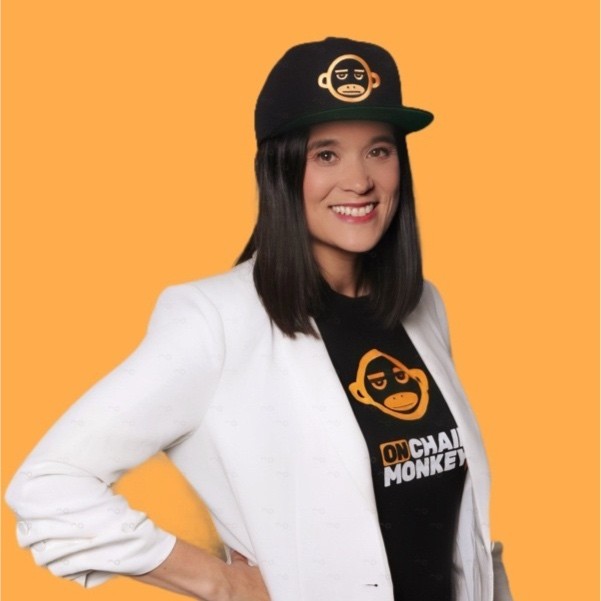
>> Welcome back, everyone, to theCUBE Trailblazers series, Crypto Trailblazers. We are here in Palo Alto in theCUBE Studios. I'm John Furrier, your host of theCUBE. Amanda Terry is here, she is the co-founder and CEO of Metagood. Amanda, thanks for coming on theCUBE. Appreciate it.>> Thank you. Thanks for having me.>> You've got a lot going on. Loved your company. I want to get into Metagood and some of the things you're doing. Bill Tai is involved, a friend of theCUBE, been involved from day one. You run a fund with him. A lot of smart people gathered around what you've been building, and it's got great momentum. So first of all, congratulations, you're definitely a Crypto Trailblazer. Appreciate you coming in. You also have some really good views between Bitcoin and Ethereum, how that's all shaping out, obviously for good with artists. It's a cultural tech story going on here.>> Yes. >> Explain what you guys are doing, set the table, set some context. What is Metagood? What do you guys do?>> Sure. Metagood is one of the leading pioneering companies in the Ordinal space. Ordinals is a protocol that was developed two years ago to put data and assets directly on the Bitcoin L1. That wasn't possible before. We launched an NFT collection called OnChainMonkey. We did that in 2021 before the protocol was available. That was actually done in a single Ethereum transaction, which was technically very historic at the time. Then, when the protocol came out, we moved all of those monkeys onto Bitcoin. It's the first 10,000 NFTs inscribed on Bitcoin, which also has historic provenance. I'm very lucky to have co-founded the company with Bill Tai, who's our chairman. Obviously, Bill's been in crypto since 2010, and Danny Yang, who founded the Stanford Bitcoin Meetup, just a few blocks from here. And MyCoin, which is the largest cryptocurrency exchange operating in Taiwan, has been operating for over a decade.>> Yeah. So, a lot of OGs, but also the technical innovation you mentioned, the On-Chain with Bitcoin, I think that's kind of historic. Obviously, Bitcoin has risen. We've seen the prices, they still move around. Oh, Bitcoin's down, then it's up. That's the overall growth. Look at the growth rates, about 45% return life of every year. >> I think it's still the ninth largest asset in the world and probably top performing over a long period.>> I'm in the school that still sees a small percentage of store of value, so I come from that school. But relative to the shift, clearly, people are getting behind it, including the US government.>> Yes.>> Talk about why that's important, the Bitcoin piece of it for the NFTs and the assets, because this is a huge thing, in my opinion.>> Yes. Well, we have a lot of macro tailwinds in the Bitcoin and the crypto space generally, right? Texas just passed a crypto strategic bill. I know that there's legislation in over 20 states right now that's being considered. Countries are also considering it. On Friday at the White House, there was a lot of talk about also developing some type of crypto strategic reserve. Really, the sentiment has changed a lot in the new administration, and I think that's a lot of tailwinds generally for the crypto space. Bitcoin, specifically, is obviously the largest layer one, most decentralized, and Bitcoin's here to stay. What we're doing is putting art onto Bitcoin, which is a really new thing. As I said, this protocol is only two years old. It was developed by Casey Rodarmor, and we've done a lot, not only for OnChainMonkey but really to bring other artists into the space. We launched a collection also called OCM Dimensions, which is the first 3D generative interactive art on Bitcoin. That code base is open source, and actually, hundreds of artists have used that code base to put their art on Bitcoin. We feel like it's very early innings. Many people are still being educated. Even in the NFT space, we were just at NFT Paris. A lot of people know about Ethereum, but they're still learning about, well, what's the significance of NFTs on Bitcoin? And the real difference is, on Ethereum, you own a digital certificate, which is pointing to an off-file storage system. So if someone doesn't pay their AWS bills or the founder decides to leave the project, you don't actually own the art. The art's not on-chain. What's really amazing and has incredible provenance for Bitcoin is that with Ordinals, they will, they're immutable, they're on-chain, and they're going to outlive all of us. I always think about it in kind of a layperson's office definition is think of the Lascaux cave paintings in France. They outlived the cave people that painted them, very similar to Ordinals and these OnChainMonkeys, they are going to outlive all of us.>> Yeah. It's interesting, you know, Sailor is always saying "store of value." He actually uses art as an example. The old-school art is not a good way to store value, which is actually, the art world has more value stored in it than the entire Bitcoin network. Just that in and of itself means that Bitcoin will probably double and triple if you take that philosophy. But you're doing both, you've got art storing value on the store, so it's a double bottom line.>> Yeah. Because literally, when you look at the Ordinals protocol, they're inscribed on satoshis, which is 1/100,000,000th of a Bitcoin. It's literally the smallest unit of Bitcoin. When you're stacking sats, you're actually, you have the store of value going up, which is the Bitcoin, and also the art on Bitcoin. With these extremely bullish things happening in the market right now, we feel there's going to be a lot of wealth created for crypto whales. What better way for these people that are already digitally savvy and digitally native to then want to show their wealth with digital assets, like Ordinals?>> Yeah, and it's one use case, as more assets will come on board. It's a sign, a template, if you will, for other things. I have to ask you, because you have such a great team, and obviously, the technical innovation is immutable. No one wants a pointer to a database.>> Exactly.>> Basically, that's what it is.>> Yes.>> Okay. That's a non-starter for all the reasons you mentioned though. The whole reason to have store of value is to not have things cause disruption, whether it's a fire for your real art hanging on the wall or whatever. These things happen, hurricanes happen, floods, fires. When you look at digital currency, this is going to be big. So that's a no-brainer. Anyone who's in the industry knows that there'll be a digital currency. There has to be. It's evolution.>> Right. Bitcoin is the biggest chain.>> The biggest chain. >> Mostly centralized. >> Centralized. All the benefits are there. As the OGs, as Bill and your team, you guys sit around the table and talk, or the virtual Telegram table, if you will, or messaging or Signal, what are some of the conversations you're having? Because, as you mentioned, you went to Paris, and the world is moving fast. People are coming on board, there's an in-migration of new talent, new buyers, new artists, new asset creators. What's that like right now? What's the sentiment? Where's the progress? Could you scope kind of the progress bar, the sentiment, the mindset? What are some of the market conditions right now?>> Sure. What's so incredible is, like I said, this protocol just launched two years ago, and obviously you mentioned Paris. Two years ago, I spoke on the only panel at NFT Paris on Ordinals. It was myself and two artists, and kind of an NFT influencer. Fast-forward to this year, and there were over 50 builders, people building Bitcoin infrastructure, artists, people in the Ordinals space, who spoke at NFT Paris. Just one year. Even speaking a couple of years ago at Consensus CoinDesk, and I think the title was something like "Can Bitcoin be anything but a store of value?" Here now, you see this kind of orange wave happening in the space where people are learning about Ordinals, excited about it, excited to put art and look at Ordinals as really a growth area within the Bitcoin space. >> Take a minute to explain Ordinals and the Ordinals protocol and why that's important. You mentioned the satoshi blockchain piece of it. Explain Ordinals and what it means in crypto.>> Yeah. So Ordinals inscribe data, so it can be music, art, directly onto satoshi, which is 1/100,000,000th of Bitcoin. It's the smallest unit of Bitcoin possible. There are rare sats. There's some interesting stuff that happens there. For example, our OCM Genesis collection is all on Block 9450 X sats, which was actually the first block of Bitcoin mined by Satoshi and given to Hal Finney, so very historic, very rare. There's->> It's a digital museum. >> Exactly. Yeah. Yeah. There's kind of rarity in the sats, which connote value, and because there's limited block space, it's expensive to inscribe art on Bitcoin. We were very fortunate to be early pioneers in the space and then also help other artists also onboard as well. There's actually an artist we just brought on, Michael Hofka, he's based out of Brooklyn. His works are in the Met, the MoMA, the British Museum. He just changed his profile on his socials to an OnChainMonkey, and he's doing some derivative works of OnChainMonkey on Bitcoin as well. We've created this incredible community that's very passionate about art on Bitcoin. Obviously, we kind of started with some of the early technologists, but then now we're kind of bringing artists and collectors into the space. >> So you've got great traction with the creators, artists.>> Yes.>> So you can almost say, "Okay, this is so good, it's going to attract more people, creating assets, artists to start and others potentially." What's the scalability? Are there challenges there, you mentioned rarity on the Bitcoin. Bitcoin, someone might say, "Well, isn't Bitcoin like 100,000, a Bitcoin?" You start to get into the math.>> Yes.>> And you go, "Hmm, is there a cap? Does it scale? What are some of the scalability challenges?">> I think some of it is really just that there is limited block space, so it can get very expensive to inscribe large files on Bitcoin, which is why the things that are happening now, it'll only get more expensive over time to inscribe. I think it's also still very early. Generally, just the infrastructure. There's a handful of wallets to even do this. You don't use a MetaMask wallet, you use other wallets that are specific to Bitcoin. There's a handful of marketplaces. A lot of the things that happen for Ethereum NFTs are still in the very early innings in sort of infrastructure to enable people to easily trade and buy and even show, in the best form, their ordinals. >> It's interesting, the theory kicks in. You're like, "Okay, so that means it's like beachfront property." If there's any kind of contention, that also is a valuation opportunity, potentially.>> Oh, yeah. No, we actually, we wrote about this in a Medium post, that these sats, right, like the Block 9450 X sats, are like the Palo Alto kind of University Avenue or->> Malibu.... >> the Central Park of New York. There is literally, it's digital real estate, and there's limited block space, and there are some that are going to be more valued than others. I just again feel very fortunate to work with Danny, who has a PhD in computer science from Stanford, so he knows how to find those rare sats and get our art on there, so that we are literally creating the highest value digital assets on the Bitcoin.>> Yeah, market forces and free markets are a beautiful thing when you have something as simple as Bitcoin layer one, because it is what it is so transparent.>> Yes.>> I think that'll shake itself out. >> You look over time as wealth has been created, what do people like to invest in as a store of value that goes up is art, right? As I mentioned before, you talk about Michael Saylor, we haven't yet orange-pilled him. Even though Bill and I have met with him, he hasn't yet bought.>> He's got to get on board. >> He hasn't yet bought OnChainMonkey.>> I mean, it's right. He talks about art, he should get on board. Michael, if you're watching, you've got to get on board. You should, because it's a double bottom line for you, to use that word.>> Exactly. >> Because he talks about art in a pejorative way, saying art is an old store of value, and he's not wrong, by the way. Art is a store of value. But someone's house could burn down. >> If you're making your wealth in digital assets, why wouldn't you want to then store it on digital assets? I will say there's actually one of our investors is Simon Gerovich, who is the CEO of Metaplanet, who has been following the playbook in Japan of MicroStrategy. He does have a number of Monkeys and is an investor. He's kind of the MicroStrategy of Japan, and he's a big OnChainMonkey fan. >> Yeah. What's great about the culture is that, I mean, it's obviously hardcore. I actually like Michael's views, because I think he's right.>> Yes.>> There are also other factors. I talked to a bunch of other folks as well who have a similar, but there's other conditions. If you look at finance, for instance, you have debt, you have housing. There's all kinds of financial insurance that's kind of intermingled.>> Mm-hmm.>> But you go to the chain, and it's as clean as you can be. It's transparent. >> Right.>> So I think the culture, we're already in. The thing we're watching on theCube is, as this goes mainstream, store of value, it will be a feature of life. Social change, commerce, as people start thinking about money in their life, then if you flip it around, you say, "Okay, money is just a scoreboard for success or an enabler for change," you start to get into things like social freedom, where Bitcoin is literally helping people get confidence to maybe potentially get dictators out of office. Bitcoin is very efficient.>> Yes.>> And so that culture is there. What does that speak to your culture? If you had to describe the culture of artists that are coming together, I'm sure the early adopters, what's it like? What's the mindset of the culture in your world? >> Yeah, I love that question. Definitely early adopters from a technology standpoint, big believers in the power of Bitcoin and kind of the freedom of decentralization and self-custody of your assets. As our collection, when we launched it, we launched with a series of values, which if you go in and you look at our Twitter or you look at our Discord, people are always typing exclamation point R-I-S-E, rise, which stands for, respect, treat others with respect; integrity, operate with the highest ethical standards; sustainability, we build for the future; and enrichment, we want to create wealth for our community so they can do good in the world. We've done a number of things on a social impact side as well. We've used some of our secondary train revenues and primary revenues from the sales of our NFTs to do things like we funded the evacuation of Sharbat Gula. She was the woman on the face of Nat Geo with the piercing green eyes. When the Taliban were entering Afghanistan, she reached out to one of our advisors, who used to be a former Nat Geo photographer, and said, "My life and my family's life are in danger. Is there anything you can do to help us?" We literally funded the mission. She ended up in Italy back a couple of years ago, but that was something we did. We also, yeah, anyways, we've done a lot in coral reef restoration. We recently donated to a professor that's doing Citizen Reef research in the Philippines. Yeah, so->> One of the things that, Amanda, we're seeing->> So Web3 can kind of bring communities together to do good as well. >> Well, I think Web3, and I think just if you look at what's going on with AI now. AI has got, if you look at, we talked about Nvidia before we came on. Nvidia did gaming, they did crypto, and then they did AI, but they're still doing all three, right?>> Yes.>> You see the tech culture is, for the first time in my life, I've ever seen this happen where you've got tech, money and now impact, or I won't say philanthropy, but impact and social connecting at a nexus. It used to be in undergraduate computer science or business school, it's like, "Hey, make a lot of money, get rich, and then do good." Now, it's all in parallel. It's all kind of sidecar. You can do tech, you can go make money, and provide impact. I think this is a generational standard that's evolving very fast, not just in Web3. They're an early indicator, I think, that's been happening, for sure, because of the mindset. But I think generally, the culture.>> Yeah, when you think of the holders of OnChainMonkey, it's almost like a nationless state, right? We're all bound together by this art that you own, that some people use as their profile pic on their socials. You look at what are you wearing today, or what watch, or what social signals are you giving in the physical world, you can also be doing it in the digital world? Like my Twitter PFP, profile pic, is my monkey, right? What does that stand for? It stands for that I believe in technical innovation. I believe in Bitcoin. I believe in art, and I also believe in the ability for a company to make positive world impact, which is what we're doing.>> Well, Amanda, I really appreciate you coming in. You're certainly a trailblazer. On that point, a lot of people are looking for the future of democracy, and I think if they just look at what's happening here, it's there. It's templates. >> Yes.>> They're looking for the old answer retrofitted when the new answer is the new communities that are developing that actually have muscle, tech, finance, and a mindset of impact. That's the new culture.>> Yeah, no, we were super fortunate to be named Fast Company's 20 Best World Changing Ideas for impact investing for some of that impact work we've done. But yeah, I always lead with really the technical innovation, the art, and yeah, as you said, I think we're all here to try to make a positive impact in the world. >> Congratulations, love your mission, Metagood. It's in the name.>> It's in the name. Yep.>> Metagreat, next.>> Great.>> The next company.>> Yep. You got to get Taylor on board. That's my next thing. . We're going to work on that.>> We'll personally target him.>> Okay. >> Okay. Taylor, we're going to get you on board. Thanks for coming in. He's a trailblazer too. He should be on the program. >> Yes, for sure.>> We are the Crypto Trailblazer series here at theCUBE in Palo Alto, in partnership with NYSE Wired community, a new open-source, open community revolving around content, good people, and of course, causing change, and making money, and creating tech. We're all for that too. I'm John Furrier, your host of theCUBE. Thanks for watching.