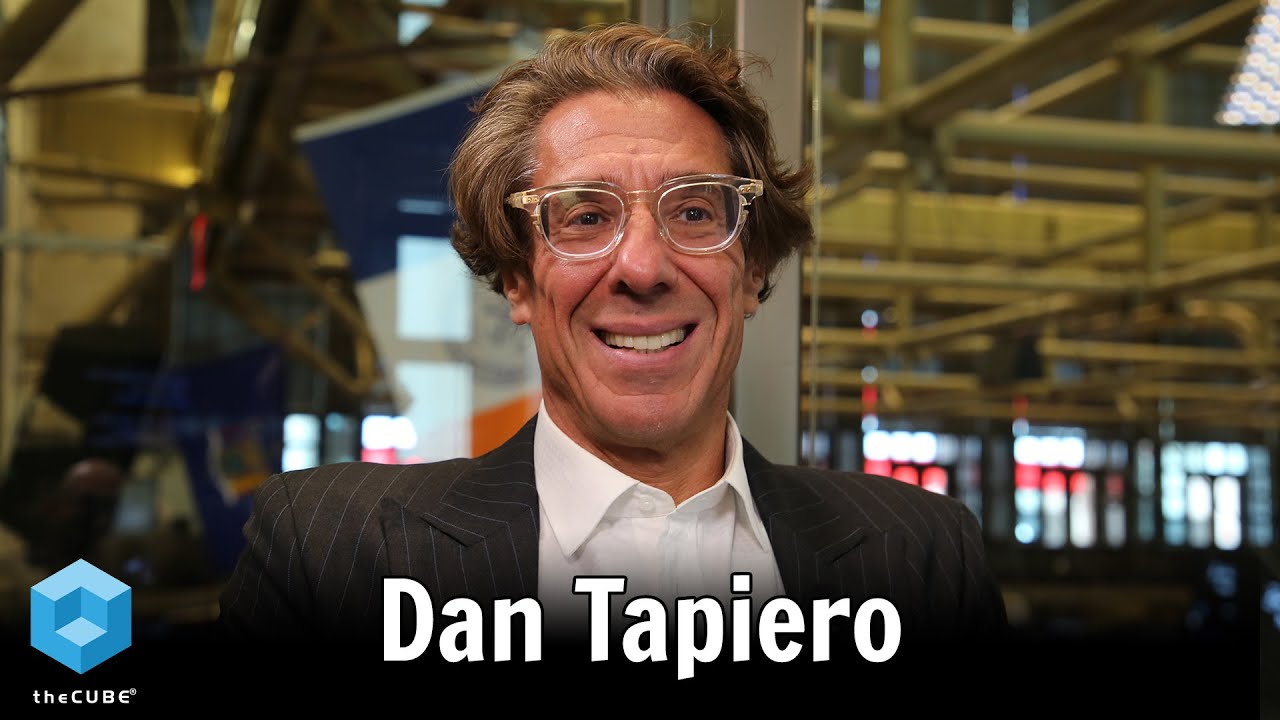
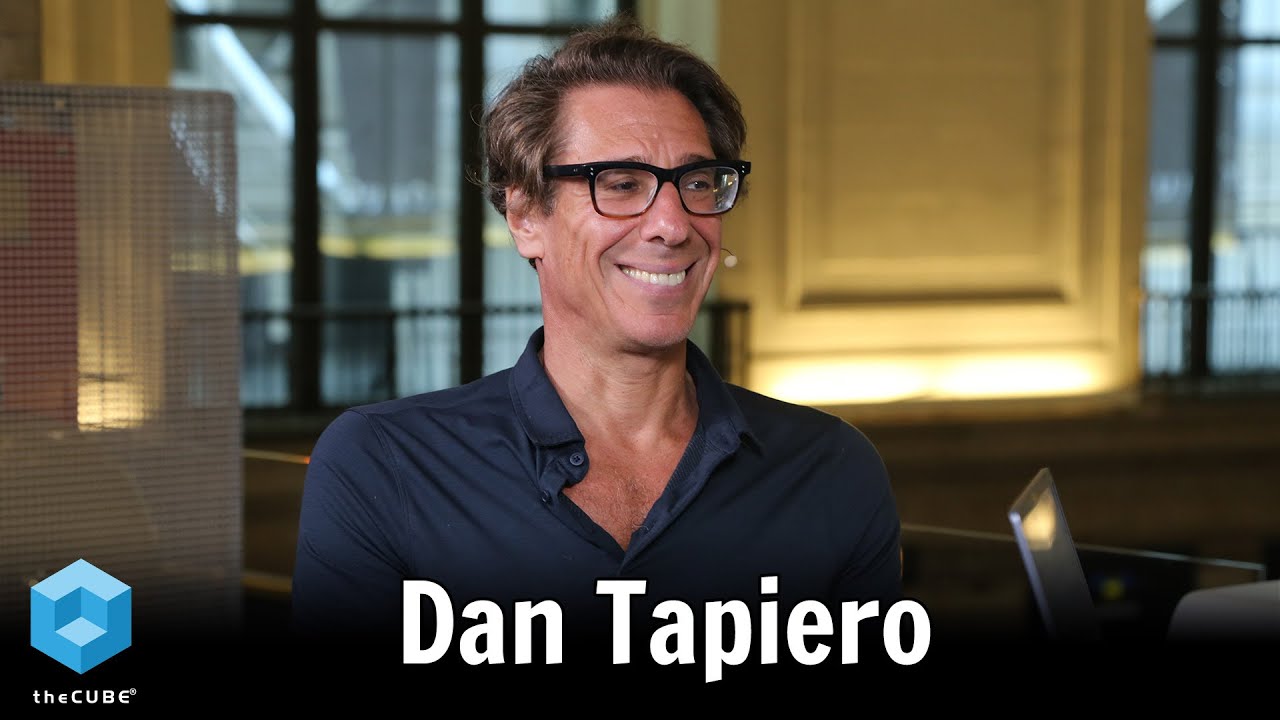
Dan Tapiero, co-founder and CEO of RoundTable Partners and 10T Holdings, joins theCUBE at the NYSE to discuss his extensive background in finance and his transition into the digital asset ecosystem. With over 20 years in the macro hedge fund industry, Tapiero brings valuable insights as he highlights the role of cryptocurrencies and blockchain in transforming business finance and infrastructure. theCUBE Research team, led by John Furrier, engages Tapiero in an in-depth discussion on the evolution of digital assets and the future of growth in this sector.
Tapiero emphasizes the potential of digital assets, predicting a substantial market value increase from $300 billion to a projected $10 trillion within the next decade. According to Tapiero, the current environment favors companies building this new ecosystem, as businesses generate significant revenue and prepare to enter public markets. The interview explores the role of US regulatory shifts in fostering a supportive atmosphere for cryptocurrencies, along with the importance of positioning the US as a global hub for blockchain technology and digital assets. #DanTapiero #DigitalAssets #theCUBE #NYSE #Crypto #Blockchain #Web3
Explore more about this topic and related insights on SiliconANGLE: siliconangle.com. Subscribe to our blockchain playlist for further discussions: [Blockchain Playlist](#).
00:00 - Intro
00:06 - Cryptocurrency and Blockchain: An Introductory Overview
02:31 - The Journey of Dan Tapiero and the Rise of 10T Holdings
09:09 - Crypto Industry Developments and Challenges
16:31 - Crypto Companies and Public Offerings
20:44 - The Future of Digital Assets
23:10 - The Digital Cultural Revolution: Final Reflections
Forgot Password
Almost there!
We just sent you a verification email. Please verify your account to gain access to
theCUBE + NYSE Wired: Crypto Trailblazers. If you don’t think you received an email check your
spam folder.
Sign in to theCUBE + NYSE Wired: Crypto Trailblazers.
In order to sign in, enter the email address you used to registered for the event. Once completed, you will receive an email with a verification link. Open this link to automatically sign into the site.
Register For theCUBE + NYSE Wired: Crypto Trailblazers
Please fill out the information below. You will recieve an email with a verification link confirming your registration. Click the link to automatically sign into the site.
You’re almost there!
We just sent you a verification email. Please click the verification button in the email. Once your email address is verified, you will have full access to all event content for theCUBE + NYSE Wired: Crypto Trailblazers.
I want my badge and interests to be visible to all attendees.
Checking this box will display your presense on the attendees list, view your profile and allow other attendees to contact you via 1-1 chat. Read the Privacy Policy. At any time, you can choose to disable this preference.
Select your Interests!
add
Upload your photo
Uploading..
OR
Connect via Twitter
Connect via Linkedin
EDIT PASSWORD
Share
Forgot Password
Almost there!
We just sent you a verification email. Please verify your account to gain access to
theCUBE + NYSE Wired: Crypto Trailblazers. If you don’t think you received an email check your
spam folder.
Sign in to theCUBE + NYSE Wired: Crypto Trailblazers.
In order to sign in, enter the email address you used to registered for the event. Once completed, you will receive an email with a verification link. Open this link to automatically sign into the site.
Sign in to gain access to theCUBE + NYSE Wired: Crypto Trailblazers
Please sign in with LinkedIn to continue to theCUBE + NYSE Wired: Crypto Trailblazers. Signing in with LinkedIn ensures a professional environment.
Are you sure you want to remove access rights for this user?
Details
Manage Access
email address
Community Invitation
Cosmo Jiang, Pantera Capital
Dan Tapiero, co-founder and CEO of RoundTable Partners and 10T Holdings, joins theCUBE at the NYSE to discuss his extensive background in finance and his transition into the digital asset ecosystem. With over 20 years in the macro hedge fund industry, Tapiero brings valuable insights as he highlights the role of cryptocurrencies and blockchain in transforming business finance and infrastructure. theCUBE Research team, led by John Furrier, engages Tapiero in an in-depth discussion on the evolution of digital assets and the future of growth in this sector.
Tapiero emphasizes the potential of digital assets, predicting a substantial market value increase from $300 billion to a projected $10 trillion within the next decade. According to Tapiero, the current environment favors companies building this new ecosystem, as businesses generate significant revenue and prepare to enter public markets. The interview explores the role of US regulatory shifts in fostering a supportive atmosphere for cryptocurrencies, along with the importance of positioning the US as a global hub for blockchain technology and digital assets. #DanTapiero #DigitalAssets #theCUBE #NYSE #Crypto #Blockchain #Web3
Explore more about this topic and related insights on SiliconANGLE: siliconangle.com. Subscribe to our blockchain playlist for further discussions: [Blockchain Playlist](#).
00:00 - Intro
00:06 - Cryptocurrency and Blockchain: An Introductory Overview
02:31 - The Journey of Dan Tapiero and the Rise of 10T Holdings
09:09 - Crypto Industry Developments and Challenges
16:31 - Crypto Companies and Public Offerings
20:44 - The Future of Digital Assets
23:10 - The Digital Cultural Revolution: Final Reflections
play_circle_outlineIntroduction to the Crypto Trailblazer series and focus on entrepreneurship in crypto.
replyShare Clip
play_circle_outlineMichael Saylor's Bitcoin Vision: Pioneering Corporate Assets and the Emergence of the First US DAT on Solana Investments
replyShare Clip
play_circle_outlineHelius HSDT raised $500 million through public offerings, with potential for further growth.
replyShare Clip
play_circle_outlineEvangelizing Solana's game-changing potential to revolutionize financial infrastructure and rails.
replyShare Clip
play_circle_outlineExploring Digital Asset Treasuries: Revolutionizing Finance with Enhanced Access and Governance Over Traditional Cryptocurrency Methods
>> Welcome back, everyone, to the Crypto Trailblazer series. I'm John Furrier, host of theCUBE as part of the NYSE and theCUBE, NYSE Wired community and the program. We feature the people trailblazing in crypto. Obviously the infrastructure changeover is happening. Of course, we all know blockchain, we all know about crypto, stable coins. All this is opening up massive wealth creation opportunities, but more importantly, entrepreneurship. We've got a great trailblazer here on Digital Asset Treasuries. Cosmo Jiang, who is the general partner of Pantera, all the hot deals. You guys are a firm's pioneer. You're trailblazing on the firm side and then on the DAT side, you guys anchored in April the first DAT, as they call it. And now today news is hitting half a billion dollar Solana Fund public listing. Congratulations. Welcome to theCUBE.
Cosmo Jiang
>> Yeah, thank you for having me. I think it's such an exciting day. I'm so pumped that our Helius HSDT, our company is out in the market.>> All right, explain first of all, what is a DAT first? Then I want to get into this to you, because there's a lot of money involved. It's also a megatrend we're seeing on this kind of start to kind of blow up a little bit, get a little bit of escape velocity. Explain what a DAT is.
Cosmo Jiang
>> Yeah, maybe it's helpful to go back to the history of how it all started, right? For sure the start of the industry was Michael Saylor at MicroStrategy. He thought, "Why don't I buy Bitcoin and try to buy as much Bitcoin as possible?" Over time, that evolved into a model of, "Wow, I really want to maximize the amount of Bitcoin I can own for my shareholders," and that's a great way to create shareholder value.>> He did that, by the way.
Cosmo Jiang
>> And he did that. It's been fantastic. The stock has gone, has been a massive performer since he's made that change in 2021. Naturally, a lot of other people thought, "Well, why don't I try doing that?"
And then MetaPlanet in Japan started this last year and they've also performed very well. But for some reason as I started to learn about it, I was like, "Wow, this actually makes a lot of sense."
There's a capital arbitrage, there's a capital access issue here that they're helping solve, and they actually are providing potentially better exposure than buying underlying Bitcoin by itself. But no one had done it. No one else had done it in the US and no one had done it for any other token. I just thought that didn't make a lot of sense. And so, when DeFi DevCorp DFDV approached us in late March, I was like, "Wow, this is probably it." We as a firm really loves Solana as a token. It's our largest active position at the firm, and I feel like we'd really underwritten why we think DATs make sense for investors. And so, we made what was then a very non-consensus call to invest in the first US DAT outside of MicroStrategy and it's called DFDV.>> And today, take us through the tranche with Helix, because this is again public company and explain how that works, because this is new. How did it all come together? What was the origination, how did it form? How much cash did you guys put in? What was the anchor position? Take us through the transaction.
Cosmo Jiang
>> Yeah, for sure. So Helius HSDT, we had been thinking about launching our own Solana DAT for some time. We had seen the growth of this industry over this last short, what is a short but very exciting five months, as we saw breakout Bitcoin DATs, breakout ETH DATs, both of which we backed, including Bitmine from Tom Lee. And we just thought, "Wow, there's still this white space for Solana." And so, it just made so much sense that after we had built up all this expertise, all this credibility, we were like, "Wait a minute. Why aren't we doing that? We feel passionate about Solana, we feel passionate about DATs. We should do this."
And so, we started putting this all together, found a management team that really understood the story and wanted to partner with us, and Helius. And so, we brought it to market and we raised over $500 million today. In total, it could be a billion and a quarter if you include all the stapled warrants. And we had a lot of great partners work with us. Summer Capital, which is a fund in Asia, and Falcon X, Arrington Capital, and many others participated in this offering.>> And so, this is to build large-scale financial assets or apps. What's the outcome of this? Can you take us through what you guys are going to see that's enabled from this?
Cosmo Jiang
>> Yeah, I think one thing that people don't understand about DATs, they don't appreciate that they can be much more than just an accumulation vehicle. Now the number one priority for a DAT is to, in this case, buy as much Solana as possible in a per share or creative way to create book value for shareholders. But in doing so, the core of what makes a DAT work is really you also have to evangelize and talk about the underlying token. And so, we are going to go out there and be very loud and proud about why we think Solana is a game-changing protocol. It is going to totally revolutionize so much of our legacy financial rails, and we're just really excited to now tell that story in a public way.>> Yeah, I like what you said earlier about access, because access to capital has been one of the big attractions to the token and what that enables. Entrepreneurs are using it just, and there's a little bit of arbitrage, but also there's value creation. So talk about the value creation aspect of it and then the extraction side. Talk about value creation first and then let's get into how the value is extracted. Then we get back to the treasury.
Cosmo Jiang
>> Yeah, I think the core of this is that not everyone has a Coinbase account. Not everyone has an exchange account. A lot of people live in their retail brokerage account, which is totally fair. That's what they know. That's what's easy. But today, you can't actually access Solana in your retail brokerage account. There's no ETF. And so, it's become very clear that there's clearly an unmet need by people who just trade in their brokerage, but can't access Solana. So we thought DATs really solved that problem by bringing that access to them and meeting people where they are.>> One of the things that's come up from our crypto trailblazers is, in talking to all the entrepreneurs and the leaders, by the way, come from finance backgrounds, so it's not like they're inside the ropes. They kind of are too. But you have the two worlds interacting. You have the old financial institutions now for the first time interacting with the new guard, old guard meets new guard, and the collision is serendipitous in the sense of they're on board too. It's not like they're rejecting, they're running to it. So that's accelerating interactions, kind of like accelerated computing. Nvidia talks about accelerated computing with GPUs. That's Jensen Wong's favorite topic, accelerated computing. This is accelerating finance. So talk about that dynamic, because I think that's something that to me, there's entrepreneurial things like staking, new products are coming out of this. I mean, it's a product-led market.
Cosmo Jiang
>> That's right.>> Can you share your vision on how you guys see that evolving? Because yeah, you're going to make money on the accumulation, that's going to be good. Blocking and tackling, keep plugging along there. Great. Check the box, got a treasury. What's that piece of it, the next piece? What's that kind of unknown territory? Everyone's agreeing by the way, it's not going to be bad. Well, there could be bad things that could happen from bad moves, but there's opportunity.
Cosmo Jiang
>> No, of course. So I spend a lot of my time speaking to our institutional LPs and endowments, pensions and all these guys, and they always ask, "Where are the use cases? What should we expect? What are the fruits of this labor?"
And I totally sympathize with that question. When I think about, and I consider myself a tech investor, as much as I am crypto-focused, I'm very much a consumer internet investor by training, and when I think about something like Solana, I always hearken back to what Jeff Bezos, Amazon used to say. The reason why Amazon was so successful, Jeff Bezos said, is because they tried to solve for the holy Trinity of consumer needs. They are faster, cheaper, more convenient.>> The classic flywheel.
Cosmo Jiang
>> That's right, and that's exactly what Solana is. It's faster, it's cheaper, it's more accessible than our existing financial rails. When you think about it from a payments perspective, well, Solana in the world today, only about 50% of the people are banked, and then less than 20% of the people have a credit card. But if you have a mobile phone and the internet, you can access Solana, you can create a Solana wire, so everyone in the world can access these new financial rails. It's more accessible, it's faster. Solana can process nine billion transactions a day. That's more than the total number of transactions in our capital markets combined. And then it's cheaper. Solana costs less than a fraction of a penny per transaction, God forbid, wires, banks, and that all costs a lot of money.>> It's interesting you mentioned some of the stats on the speeds and feeds of Solana. What's missing is that the organic adoption was driven by the people voting with their entrepreneurship, because they saw the opportunities saying, "Hey, we're not getting banked. I got mobile phones." That's in the market and Solana was the solution. And so, that's real value. That's product-market fit.
Cosmo Jiang
>> That's right.>> If you're in the tech invest, that's the classic product-market fit. Now as you move into the financial world, how do you see that not disrupting, disrupting and enabling, more value? What's your vision on that piece?
Cosmo Jiang
>> No, absolutely. I mean, you're seeing Solana strike so many partnerships with guys like Stripe and Robinhood and Visa, all using Solana rails to start to satisfy some of their financial payments, and so that's really powerful. The fact that these large institutions now realize Solana has matured to a point where they can no longer hold back. They're like, "This is better, faster, cheaper, more convenient than our current solution, so we have to adopt it.">> asset treasuries is opaque to many who aren't in the classic treasury market, or just don't even know about treasuries. But we've all seen the big short, a tranche built in layered products and it blew up. Not saying that's going to be the case, but there is definitely fud on that piece. Transparency with blockchain, working across chains, take us through why you think that's not an issue.
Cosmo Jiang
>> Yeah. Well, I think it goes back to what is the core of what a digital asset treasury is. It is trying to find per share of creative ways to acquire more underlying token, or in our case, Solana, and there are many ways to do this. The most common way is by using an ATM issuance or selling common stock into the market. That's pretty safe. That doesn't create any leverage, doesn't create anything. Now the second tool is selling convertible debt, which is effectively selling your volatility, but often as long as you partner with teams that are taking a very measured, methodical approach to building the capital structure, you can keep everything very safe. I think a lot of people look at MicroStrategy or now called Strategy and they say that, "Wow, Strategy has a lot of debt on it," but if you actually pull through the filings and look at their capital structure, Bitcoin has to go down 80 or 90% before they're at trouble and not paying off debt. So it seems pretty safe.>> Yeah, I mean they engineered it properly. Talk about transparency in this space, because that's a big part of why blockchain is successful. There's a lot of transparency.
Cosmo Jiang
>> That's right. I think it's so important. Some of the things that are magical about blockchain are that it's permissionless, accessible and transparent, and that transparency point is huge, right? A lot of people do not trust our legacy existing financial institutions for whatever reasons, but blockchain, everything is printed on the blockchain block by block. I often say back when I used to cover equities, I used to get the credit card. I pay for credit card data to be able to track all my companies, but I don't have to do that on blockchain. They literally print their revenue block by block, second by second on the blockchain, so I don't need to do that. It's all transparent.>> Talk about ecosystem, because that's another dynamic. So you've got transparency, you got the access, transparency and ecosystem. Part of the premise of Solana is the ecosystem. Talk about that. What makes it successful? How does that grow? How do you manage it? What do you see it looking like for success? What does success look like in an ecosystem?
Cosmo Jiang
>> Yeah, absolutely. Look, I'm a growth investor. As I'm looking for where users and developers are going, and where ultimately that's resulting in additional incremental usage. And over the last two years basically, Solana has taken nearly all of new incremental users and new incremental transactions that happened in blockchain. So factually speaking, Solana is a massive share gainer of all application usage. Now, what are those applications? I think one of the big areas is payments. We've talked about stable coins and payments, and tokenization. The other is just social applications. Because Solana's so easy to use for developers, Solana's adding the most new developers of any blockchain, because it's so easy to use and because users like it, developers creating really interesting applications. One of our investments in this company called PumpFun, which effectively is like a live-streaming platform, where people can watch live streams, engage, buy and sell tokens, and it's just really exciting and fun for the next generation.>> Your firm has all the best deals, been in crypto for a while, so you've seen the investment side, so you've seen kind of the use cases. I've talked to entrepreneurs that have built multiplayer gaming. They have their own economies. Perfect for token economics, great for decentralization on the performance. Great. But one of the things that's come up is, okay, now there's a lot of other chains out there. And so, interoperability in payments can be an opportunity to abstract away. What's your view on that as a tech investor, because you're kind of also ecosystem-focused as well? Then triple-focus, money-making ecosystem, and then now interoperability. What does that look like for you? How do you see that happening? Because the game entrepreneurs want to encourage interaction payments, data, perfect tech play for agents, other things. Where's the innovation in the cross-chain or interoperable? I'm making this up, but I guess is on-chain activity across chains.
Cosmo Jiang
>> Yeah, absolutely. Yeah. We are seeing the development, a lot of new chains, and it is becoming easier to abstract away that experience. I imagine five years from now, all the financial applications on your mobile phone today will run on blockchain rails and we, you and I won't know which blockchain it runs on, and that'll be the optimal experience. That said, when these applications are choosing which blockchain to grow on though, the developer tooling, the user density still matter a lot, and so there are huge benefits to scale and network effects. I expect there to be, there's not going to be just one blockchain to rule them all. There'll be a few. Clearly big Bitcoin has found its product Mugger fit, so has Ethereum and Solana, and maybe there will be a few others as well.>> That's use case-driven mainly by the value of what's on it.
Cosmo Jiang
>> That's right. That's use case-driven by the network effects of people already building there and then people choosing in particular Solana's technology for being faster, cheaper, more convenient.>> What's the impact to the financial institutions in your mind? Got stable coins. We're in a great regulatory environment, thank God. Finally, there's a tailwind. People are bullish. There's entrepreneurship flourishing in finance that looks a lot like the old tech entrepreneurship equations. It's not just your get the crumbs off the big guys and the old school old guard. It's now potential displacement and that's why the old guard, new guard are kind of coming together. What is the entrepreneurial opportunities? What are some of the things you see, because it's going to be a pretty ripe environment for you guys on the investment side, as well as other people who want to put money in?
Cosmo Jiang
>> That's right. I mean, I think we're going from tens of millions of users of Blockchain today to billions over time, so there's more than a hundred X in usage, as well as many applications that we could build. Certainly financial applications are the first place it starts, and we're seeing a lot of opportunity for existing legacy guys if they are willing to embrace it. They can manage to have a lot of cost savings and a lot of incremental growth, if they adopt blockchain rails. Now, the blockchain players that are servicing them will also benefit from the fees and the usage that comes from all these big guys, starting to use them.>> As the pioneer, I want you to talk to the folks out there who are looking at their money and saying, "Hey, I got it in these funds. I want to move it around. I got some equity deals."
There's interest in parking all the cash, in some cases to a larger portion of the portfolio into crypto. What's the benefit of the treasury, the DAT that you see? What's the opportunity for the investor? Obviously they can store their money, but leverage it. Talk about the opportunities with treasuries.
Cosmo Jiang
>> Yeah, I think DAT vehicles are really a better vehicle for access for the average investor. What we can do as a DAT is Pantera will be the asset manager for Helius HSDT, our Solana debt, which means we will be actively managing, myself and my team will be going out and staking Solana. We'll be interacting with DeFi and doing everything we can to maximize the value of that Solana. Now, anyone can go out and buy Solana themselves on Coinbase or another exchange, but then to go through and do that and interact with DeFi or to stake it, you're just not going to get that incremental seven, eight, 9% yield that we're going to deliver for you in this vehicle. And then we have an active management team that is using this corporate structure to then go out, issue stock, issue debt to buy more Solana in a shared creative way. And so, just in many ways, a much better vehicle if you're looking to maximize your exposure to what is truly a category defining blockchain technology.>> And there's definitely an appreciation there. I do like Saylor's position on Bitcoin, and it applies to generally the assets out there, is that if you look at the convergence of physical and digital, it's happening. I mean, it's early days, it's still hella early. I mean, scope that, because people don't understand how early this is.
Cosmo Jiang
>> Yeah. One of my favorite examples of really novel blockchain applications that are building on Solana is the area of DPIN, or Decentralized Physical Infrastructure Networks. One of the companies that we're very excited about is this company called Hivemapper. What they do is, you know how Google Maps drives around the world and it maps your road maybe once or twice a year. It's great. It's nice. It's kind of cute, but if you want real-time imagery, it doesn't deliver that, right? It just still shows your grandma raking the leaves from six months ago.>> The old car you had in your driveway.
Cosmo Jiang
>> And so, it's like it's nice, but not perfect. Hivemapper's thought was, "What if instead we, by using blockchain incentives, we coordinate a global group of everyday drivers, from Uber drivers to UPS drivers, what if they instead map the world?"
Imagine how much faster we can map the world and how much more real-time this map could be. And indeed, over the last two years, Hivemapper has now mapped 40% of the world's total global roads, not just the US, but the whole world. And they have a fresher, faster, better image map than Google Maps.>> And they got other data too. GPS coordinates-
Cosmo Jiang
>> Right, they have all this other data.>> ... all the directions. We've all had that experience where you take the wrong turn, "Oh, the map's wrong."
Cosmo Jiang
>> Right, right. And so, Hivemapper is actually now selling their mapping data to very large players, like they're selling their data to Lyft in the US. So Lyft is being powered by a blockchain protocol for their mapping in the US.>> Okay. Cosmo, I have to get to this next line of question, because this has come up a lot with the Trailblazer series is obviously if you look back at the previous regime in the US as kind of a headwind, nuclear winter, I call it, everyone fled the jurisdiction, went international. Now they're coming back into the US and now purely global, but the capital market, specifically the IPO windows opening up, seeing the IPO has gone out. There are real businesses that have numbers. This isn't like the NFT thing, a lot of the underbelly, early arbitrage plays. There's real businesses happening that have numbers that would blow away other IPOs, and they're now prime time.
Cosmo Jiang
>> That's right.>> Whether they're ready or not, that's a whole discussion. I won't go there on this one, but there is real things happening. Could you just share, I'd love you to share just examples of the real businesses that are won, that have billions, in some cases trillions, now their net would be billions, but still those numbers are massive. So they meet the threshold of all IPOs, kind of the bar versus say the tech company is, "Hey, I'm doing $300 million a year. I got a CAGR. I'm listening my market, big market TAM." So these numbers are blowing away some of the tech IPOs.
Cosmo Jiang
>> Yeah, I think to level set. And you mentioned this part of the unfortunate reality of the last couple of years, it's been very hard for a blockchain protocol to go out there and be very loud and proud. And so, we've had this dearth of IPOs over the last few years from blockchain, because it just didn't feel like it was safe to do so. But now with the changing regulatory environment, man, it's been such a wonderful opening up. We've had multiple portfolio companies of ours go public this year, such a Circle. Fantastic perform in the public markets, because people understand the total potential of stable coins. Another, Figure, which just went public last week, also a leader in tokenization, people understanding why it makes sense to put Helox on the blockchain. And then this week, really today, the launch of Helius HSDT, our Solana debt, just all these show really large, powerful companies coming to market now, because the public markets are now welcoming it.>> It's mainstreaming the industry. What are some markers you could share for folks that aren't inside the ropes around the reality that this has gone mainstream? What would be some of the things you'd say?
Cosmo Jiang
>> Yeah, so I think the biggest thing that people don't talk about enough is how big of a deal it was that Coinbase was added to the S&P 500 this year. All of a sudden, every single professional allocator in the world had to benchmark to crypto. Before that happened in April, basically, you could kind of choose to ignore it.>> Is that important? Explain why it's important to benchmark to crypto.
Cosmo Jiang
>> So everyone, every professional manage manager uses the S&P 500 as their benchmark, and if the S&P 500 includes something, then all of a sudden you're compared yourself against it. And so, Coinbase getting added to the S&P 500 means now everyone, whether they choose to or not, has to decide whether they're underweight, overweight, or equal weight crypto for the first time. This happened in April, and so that's why we're seeing this tremendous performance from Coinbase, Robinhood, Circle. Anything digital asset related is getting massive outperformance, because people are now saying, "Well, if I have to benchmark against it, I'm going to choose overweight.">> Awesome. Well, congratulations on pioneering the DAT. Love the product. I just love the fact that digital assets are finally being recognized as a first-class citizen, because whether you're talking about AI, physical AI, physical money and digital money all coming together, I mean, the hottest thing in tech is digital twins and kind of that formation of the blending of both. It's happening now in finance big time.
Cosmo Jiang
>> That's right. I'm so excited to tell the story of what we're doing with Helius and HSDT, and how Solana is amazing.>> Well, we got the expert here in theCUBE. Thanks for coming up. Really appreciate it.
Cosmo Jiang
>> Thank you for the time.>> Okay. We got the experts coming in, sharing the story, which is this: entrepreneurship's flourishing in finance and in tech. It's not just to find his place. It's a tech play as well. And the mainstreaming of real business being done on the blockchain with cryptocurrency as the form of money store, as well as value creation, and then ultimately extraction. Of course, theCUBE is doing its part here at the NYSC to bring that to you. I'm John Furrier with theCUBE. Thanks for watching.
>> Welcome back, everyone, to the Crypto Trailblazer series. I'm John Furrier, host of theCUBE as part of the NYSE and theCUBE, NYSE Wired community and the program. We feature the people trailblazing in crypto. Obviously the infrastructure changeover is happening. Of course, we all know blockchain, we all know about crypto, stable coins. All this is opening up massive wealth creation opportunities, but more importantly, entrepreneurship. We've got a great trailblazer here on Digital Asset Treasuries. Cosmo Jiang, who is the general partner of Pantera, all the hot deals. You guys are a firm's pioneer. You're trailblazing on the firm side and then on the DAT side, you guys anchored in April the first DAT, as they call it. And now today news is hitting half a billion dollar Solana Fund public listing. Congratulations. Welcome to theCUBE.
Cosmo Jiang
>> Yeah, thank you for having me. I think it's such an exciting day. I'm so pumped that our Helius HSDT, our company is out in the market.>> All right, explain first of all, what is a DAT first? Then I want to get into this to you, because there's a lot of money involved. It's also a megatrend we're seeing on this kind of start to kind of blow up a little bit, get a little bit of escape velocity. Explain what a DAT is.
Cosmo Jiang
>> Yeah, maybe it's helpful to go back to the history of how it all started, right? For sure the start of the industry was Michael Saylor at MicroStrategy. He thought, "Why don't I buy Bitcoin and try to buy as much Bitcoin as possible?" Over time, that evolved into a model of, "Wow, I really want to maximize the amount of Bitcoin I can own for my shareholders," and that's a great way to create shareholder value.>> He did that, by the way.
Cosmo Jiang
>> And he did that. It's been fantastic. The stock has gone, has been a massive performer since he's made that change in 2021. Naturally, a lot of other people thought, "Well, why don't I try doing that?"
And then MetaPlanet in Japan started this last year and they've also performed very well. But for some reason as I started to learn about it, I was like, "Wow, this actually makes a lot of sense."
There's a capital arbitrage, there's a capital access issue here that they're helping solve, and they actually are providing potentially better exposure than buying underlying Bitcoin by itself. But no one had done it. No one else had done it in the US and no one had done it for any other token. I just thought that didn't make a lot of sense. And so, when DeFi DevCorp DFDV approached us in late March, I was like, "Wow, this is probably it." We as a firm really loves Solana as a token. It's our largest active position at the firm, and I feel like we'd really underwritten why we think DATs make sense for investors. And so, we made what was then a very non-consensus call to invest in the first US DAT outside of MicroStrategy and it's called DFDV.>> And today, take us through the tranche with Helix, because this is again public company and explain how that works, because this is new. How did it all come together? What was the origination, how did it form? How much cash did you guys put in? What was the anchor position? Take us through the transaction.
Cosmo Jiang
>> Yeah, for sure. So Helius HSDT, we had been thinking about launching our own Solana DAT for some time. We had seen the growth of this industry over this last short, what is a short but very exciting five months, as we saw breakout Bitcoin DATs, breakout ETH DATs, both of which we backed, including Bitmine from Tom Lee. And we just thought, "Wow, there's still this white space for Solana." And so, it just made so much sense that after we had built up all this expertise, all this credibility, we were like, "Wait a minute. Why aren't we doing that? We feel passionate about Solana, we feel passionate about DATs. We should do this."
And so, we started putting this all together, found a management team that really understood the story and wanted to partner with us, and Helius. And so, we brought it to market and we raised over $500 million today. In total, it could be a billion and a quarter if you include all the stapled warrants. And we had a lot of great partners work with us. Summer Capital, which is a fund in Asia, and Falcon X, Arrington Capital, and many others participated in this offering.>> And so, this is to build large-scale financial assets or apps. What's the outcome of this? Can you take us through what you guys are going to see that's enabled from this?
Cosmo Jiang
>> Yeah, I think one thing that people don't understand about DATs, they don't appreciate that they can be much more than just an accumulation vehicle. Now the number one priority for a DAT is to, in this case, buy as much Solana as possible in a per share or creative way to create book value for shareholders. But in doing so, the core of what makes a DAT work is really you also have to evangelize and talk about the underlying token. And so, we are going to go out there and be very loud and proud about why we think Solana is a game-changing protocol. It is going to totally revolutionize so much of our legacy financial rails, and we're just really excited to now tell that story in a public way.>> Yeah, I like what you said earlier about access, because access to capital has been one of the big attractions to the token and what that enables. Entrepreneurs are using it just, and there's a little bit of arbitrage, but also there's value creation. So talk about the value creation aspect of it and then the extraction side. Talk about value creation first and then let's get into how the value is extracted. Then we get back to the treasury.
Cosmo Jiang
>> Yeah, I think the core of this is that not everyone has a Coinbase account. Not everyone has an exchange account. A lot of people live in their retail brokerage account, which is totally fair. That's what they know. That's what's easy. But today, you can't actually access Solana in your retail brokerage account. There's no ETF. And so, it's become very clear that there's clearly an unmet need by people who just trade in their brokerage, but can't access Solana. So we thought DATs really solved that problem by bringing that access to them and meeting people where they are.>> One of the things that's come up from our crypto trailblazers is, in talking to all the entrepreneurs and the leaders, by the way, come from finance backgrounds, so it's not like they're inside the ropes. They kind of are too. But you have the two worlds interacting. You have the old financial institutions now for the first time interacting with the new guard, old guard meets new guard, and the collision is serendipitous in the sense of they're on board too. It's not like they're rejecting, they're running to it. So that's accelerating interactions, kind of like accelerated computing. Nvidia talks about accelerated computing with GPUs. That's Jensen Wong's favorite topic, accelerated computing. This is accelerating finance. So talk about that dynamic, because I think that's something that to me, there's entrepreneurial things like staking, new products are coming out of this. I mean, it's a product-led market.
Cosmo Jiang
>> That's right.>> Can you share your vision on how you guys see that evolving? Because yeah, you're going to make money on the accumulation, that's going to be good. Blocking and tackling, keep plugging along there. Great. Check the box, got a treasury. What's that piece of it, the next piece? What's that kind of unknown territory? Everyone's agreeing by the way, it's not going to be bad. Well, there could be bad things that could happen from bad moves, but there's opportunity.
Cosmo Jiang
>> No, of course. So I spend a lot of my time speaking to our institutional LPs and endowments, pensions and all these guys, and they always ask, "Where are the use cases? What should we expect? What are the fruits of this labor?"
And I totally sympathize with that question. When I think about, and I consider myself a tech investor, as much as I am crypto-focused, I'm very much a consumer internet investor by training, and when I think about something like Solana, I always hearken back to what Jeff Bezos, Amazon used to say. The reason why Amazon was so successful, Jeff Bezos said, is because they tried to solve for the holy Trinity of consumer needs. They are faster, cheaper, more convenient.>> The classic flywheel.
Cosmo Jiang
>> That's right, and that's exactly what Solana is. It's faster, it's cheaper, it's more accessible than our existing financial rails. When you think about it from a payments perspective, well, Solana in the world today, only about 50% of the people are banked, and then less than 20% of the people have a credit card. But if you have a mobile phone and the internet, you can access Solana, you can create a Solana wire, so everyone in the world can access these new financial rails. It's more accessible, it's faster. Solana can process nine billion transactions a day. That's more than the total number of transactions in our capital markets combined. And then it's cheaper. Solana costs less than a fraction of a penny per transaction, God forbid, wires, banks, and that all costs a lot of money.>> It's interesting you mentioned some of the stats on the speeds and feeds of Solana. What's missing is that the organic adoption was driven by the people voting with their entrepreneurship, because they saw the opportunities saying, "Hey, we're not getting banked. I got mobile phones." That's in the market and Solana was the solution. And so, that's real value. That's product-market fit.
Cosmo Jiang
>> That's right.>> If you're in the tech invest, that's the classic product-market fit. Now as you move into the financial world, how do you see that not disrupting, disrupting and enabling, more value? What's your vision on that piece?
Cosmo Jiang
>> No, absolutely. I mean, you're seeing Solana strike so many partnerships with guys like Stripe and Robinhood and Visa, all using Solana rails to start to satisfy some of their financial payments, and so that's really powerful. The fact that these large institutions now realize Solana has matured to a point where they can no longer hold back. They're like, "This is better, faster, cheaper, more convenient than our current solution, so we have to adopt it.">> asset treasuries is opaque to many who aren't in the classic treasury market, or just don't even know about treasuries. But we've all seen the big short, a tranche built in layered products and it blew up. Not saying that's going to be the case, but there is definitely fud on that piece. Transparency with blockchain, working across chains, take us through why you think that's not an issue.
Cosmo Jiang
>> Yeah. Well, I think it goes back to what is the core of what a digital asset treasury is. It is trying to find per share of creative ways to acquire more underlying token, or in our case, Solana, and there are many ways to do this. The most common way is by using an ATM issuance or selling common stock into the market. That's pretty safe. That doesn't create any leverage, doesn't create anything. Now the second tool is selling convertible debt, which is effectively selling your volatility, but often as long as you partner with teams that are taking a very measured, methodical approach to building the capital structure, you can keep everything very safe. I think a lot of people look at MicroStrategy or now called Strategy and they say that, "Wow, Strategy has a lot of debt on it," but if you actually pull through the filings and look at their capital structure, Bitcoin has to go down 80 or 90% before they're at trouble and not paying off debt. So it seems pretty safe.>> Yeah, I mean they engineered it properly. Talk about transparency in this space, because that's a big part of why blockchain is successful. There's a lot of transparency.
Cosmo Jiang
>> That's right. I think it's so important. Some of the things that are magical about blockchain are that it's permissionless, accessible and transparent, and that transparency point is huge, right? A lot of people do not trust our legacy existing financial institutions for whatever reasons, but blockchain, everything is printed on the blockchain block by block. I often say back when I used to cover equities, I used to get the credit card. I pay for credit card data to be able to track all my companies, but I don't have to do that on blockchain. They literally print their revenue block by block, second by second on the blockchain, so I don't need to do that. It's all transparent.>> Talk about ecosystem, because that's another dynamic. So you've got transparency, you got the access, transparency and ecosystem. Part of the premise of Solana is the ecosystem. Talk about that. What makes it successful? How does that grow? How do you manage it? What do you see it looking like for success? What does success look like in an ecosystem?
Cosmo Jiang
>> Yeah, absolutely. Look, I'm a growth investor. As I'm looking for where users and developers are going, and where ultimately that's resulting in additional incremental usage. And over the last two years basically, Solana has taken nearly all of new incremental users and new incremental transactions that happened in blockchain. So factually speaking, Solana is a massive share gainer of all application usage. Now, what are those applications? I think one of the big areas is payments. We've talked about stable coins and payments, and tokenization. The other is just social applications. Because Solana's so easy to use for developers, Solana's adding the most new developers of any blockchain, because it's so easy to use and because users like it, developers creating really interesting applications. One of our investments in this company called PumpFun, which effectively is like a live-streaming platform, where people can watch live streams, engage, buy and sell tokens, and it's just really exciting and fun for the next generation.>> Your firm has all the best deals, been in crypto for a while, so you've seen the investment side, so you've seen kind of the use cases. I've talked to entrepreneurs that have built multiplayer gaming. They have their own economies. Perfect for token economics, great for decentralization on the performance. Great. But one of the things that's come up is, okay, now there's a lot of other chains out there. And so, interoperability in payments can be an opportunity to abstract away. What's your view on that as a tech investor, because you're kind of also ecosystem-focused as well? Then triple-focus, money-making ecosystem, and then now interoperability. What does that look like for you? How do you see that happening? Because the game entrepreneurs want to encourage interaction payments, data, perfect tech play for agents, other things. Where's the innovation in the cross-chain or interoperable? I'm making this up, but I guess is on-chain activity across chains.
Cosmo Jiang
>> Yeah, absolutely. Yeah. We are seeing the development, a lot of new chains, and it is becoming easier to abstract away that experience. I imagine five years from now, all the financial applications on your mobile phone today will run on blockchain rails and we, you and I won't know which blockchain it runs on, and that'll be the optimal experience. That said, when these applications are choosing which blockchain to grow on though, the developer tooling, the user density still matter a lot, and so there are huge benefits to scale and network effects. I expect there to be, there's not going to be just one blockchain to rule them all. There'll be a few. Clearly big Bitcoin has found its product Mugger fit, so has Ethereum and Solana, and maybe there will be a few others as well.>> That's use case-driven mainly by the value of what's on it.
Cosmo Jiang
>> That's right. That's use case-driven by the network effects of people already building there and then people choosing in particular Solana's technology for being faster, cheaper, more convenient.>> What's the impact to the financial institutions in your mind? Got stable coins. We're in a great regulatory environment, thank God. Finally, there's a tailwind. People are bullish. There's entrepreneurship flourishing in finance that looks a lot like the old tech entrepreneurship equations. It's not just your get the crumbs off the big guys and the old school old guard. It's now potential displacement and that's why the old guard, new guard are kind of coming together. What is the entrepreneurial opportunities? What are some of the things you see, because it's going to be a pretty ripe environment for you guys on the investment side, as well as other people who want to put money in?
Cosmo Jiang
>> That's right. I mean, I think we're going from tens of millions of users of Blockchain today to billions over time, so there's more than a hundred X in usage, as well as many applications that we could build. Certainly financial applications are the first place it starts, and we're seeing a lot of opportunity for existing legacy guys if they are willing to embrace it. They can manage to have a lot of cost savings and a lot of incremental growth, if they adopt blockchain rails. Now, the blockchain players that are servicing them will also benefit from the fees and the usage that comes from all these big guys, starting to use them.>> As the pioneer, I want you to talk to the folks out there who are looking at their money and saying, "Hey, I got it in these funds. I want to move it around. I got some equity deals."
There's interest in parking all the cash, in some cases to a larger portion of the portfolio into crypto. What's the benefit of the treasury, the DAT that you see? What's the opportunity for the investor? Obviously they can store their money, but leverage it. Talk about the opportunities with treasuries.
Cosmo Jiang
>> Yeah, I think DAT vehicles are really a better vehicle for access for the average investor. What we can do as a DAT is Pantera will be the asset manager for Helius HSDT, our Solana debt, which means we will be actively managing, myself and my team will be going out and staking Solana. We'll be interacting with DeFi and doing everything we can to maximize the value of that Solana. Now, anyone can go out and buy Solana themselves on Coinbase or another exchange, but then to go through and do that and interact with DeFi or to stake it, you're just not going to get that incremental seven, eight, 9% yield that we're going to deliver for you in this vehicle. And then we have an active management team that is using this corporate structure to then go out, issue stock, issue debt to buy more Solana in a shared creative way. And so, just in many ways, a much better vehicle if you're looking to maximize your exposure to what is truly a category defining blockchain technology.>> And there's definitely an appreciation there. I do like Saylor's position on Bitcoin, and it applies to generally the assets out there, is that if you look at the convergence of physical and digital, it's happening. I mean, it's early days, it's still hella early. I mean, scope that, because people don't understand how early this is.
Cosmo Jiang
>> Yeah. One of my favorite examples of really novel blockchain applications that are building on Solana is the area of DPIN, or Decentralized Physical Infrastructure Networks. One of the companies that we're very excited about is this company called Hivemapper. What they do is, you know how Google Maps drives around the world and it maps your road maybe once or twice a year. It's great. It's nice. It's kind of cute, but if you want real-time imagery, it doesn't deliver that, right? It just still shows your grandma raking the leaves from six months ago.>> The old car you had in your driveway.
Cosmo Jiang
>> And so, it's like it's nice, but not perfect. Hivemapper's thought was, "What if instead we, by using blockchain incentives, we coordinate a global group of everyday drivers, from Uber drivers to UPS drivers, what if they instead map the world?"
Imagine how much faster we can map the world and how much more real-time this map could be. And indeed, over the last two years, Hivemapper has now mapped 40% of the world's total global roads, not just the US, but the whole world. And they have a fresher, faster, better image map than Google Maps.>> And they got other data too. GPS coordinates-
Cosmo Jiang
>> Right, they have all this other data.>> ... all the directions. We've all had that experience where you take the wrong turn, "Oh, the map's wrong."
Cosmo Jiang
>> Right, right. And so, Hivemapper is actually now selling their mapping data to very large players, like they're selling their data to Lyft in the US. So Lyft is being powered by a blockchain protocol for their mapping in the US.>> Okay. Cosmo, I have to get to this next line of question, because this has come up a lot with the Trailblazer series is obviously if you look back at the previous regime in the US as kind of a headwind, nuclear winter, I call it, everyone fled the jurisdiction, went international. Now they're coming back into the US and now purely global, but the capital market, specifically the IPO windows opening up, seeing the IPO has gone out. There are real businesses that have numbers. This isn't like the NFT thing, a lot of the underbelly, early arbitrage plays. There's real businesses happening that have numbers that would blow away other IPOs, and they're now prime time.
Cosmo Jiang
>> That's right.>> Whether they're ready or not, that's a whole discussion. I won't go there on this one, but there is real things happening. Could you just share, I'd love you to share just examples of the real businesses that are won, that have billions, in some cases trillions, now their net would be billions, but still those numbers are massive. So they meet the threshold of all IPOs, kind of the bar versus say the tech company is, "Hey, I'm doing $300 million a year. I got a CAGR. I'm listening my market, big market TAM." So these numbers are blowing away some of the tech IPOs.
Cosmo Jiang
>> Yeah, I think to level set. And you mentioned this part of the unfortunate reality of the last couple of years, it's been very hard for a blockchain protocol to go out there and be very loud and proud. And so, we've had this dearth of IPOs over the last few years from blockchain, because it just didn't feel like it was safe to do so. But now with the changing regulatory environment, man, it's been such a wonderful opening up. We've had multiple portfolio companies of ours go public this year, such a Circle. Fantastic perform in the public markets, because people understand the total potential of stable coins. Another, Figure, which just went public last week, also a leader in tokenization, people understanding why it makes sense to put Helox on the blockchain. And then this week, really today, the launch of Helius HSDT, our Solana debt, just all these show really large, powerful companies coming to market now, because the public markets are now welcoming it.>> It's mainstreaming the industry. What are some markers you could share for folks that aren't inside the ropes around the reality that this has gone mainstream? What would be some of the things you'd say?
Cosmo Jiang
>> Yeah, so I think the biggest thing that people don't talk about enough is how big of a deal it was that Coinbase was added to the S&P 500 this year. All of a sudden, every single professional allocator in the world had to benchmark to crypto. Before that happened in April, basically, you could kind of choose to ignore it.>> Is that important? Explain why it's important to benchmark to crypto.
Cosmo Jiang
>> So everyone, every professional manage manager uses the S&P 500 as their benchmark, and if the S&P 500 includes something, then all of a sudden you're compared yourself against it. And so, Coinbase getting added to the S&P 500 means now everyone, whether they choose to or not, has to decide whether they're underweight, overweight, or equal weight crypto for the first time. This happened in April, and so that's why we're seeing this tremendous performance from Coinbase, Robinhood, Circle. Anything digital asset related is getting massive outperformance, because people are now saying, "Well, if I have to benchmark against it, I'm going to choose overweight.">> Awesome. Well, congratulations on pioneering the DAT. Love the product. I just love the fact that digital assets are finally being recognized as a first-class citizen, because whether you're talking about AI, physical AI, physical money and digital money all coming together, I mean, the hottest thing in tech is digital twins and kind of that formation of the blending of both. It's happening now in finance big time.
Cosmo Jiang
>> That's right. I'm so excited to tell the story of what we're doing with Helius and HSDT, and how Solana is amazing.>> Well, we got the expert here in theCUBE. Thanks for coming up. Really appreciate it.
Cosmo Jiang
>> Thank you for the time.>> Okay. We got the experts coming in, sharing the story, which is this: entrepreneurship's flourishing in finance and in tech. It's not just to find his place. It's a tech play as well. And the mainstreaming of real business being done on the blockchain with cryptocurrency as the form of money store, as well as value creation, and then ultimately extraction. Of course, theCUBE is doing its part here at the NYSC to bring that to you. I'm John Furrier with theCUBE. Thanks for watching.