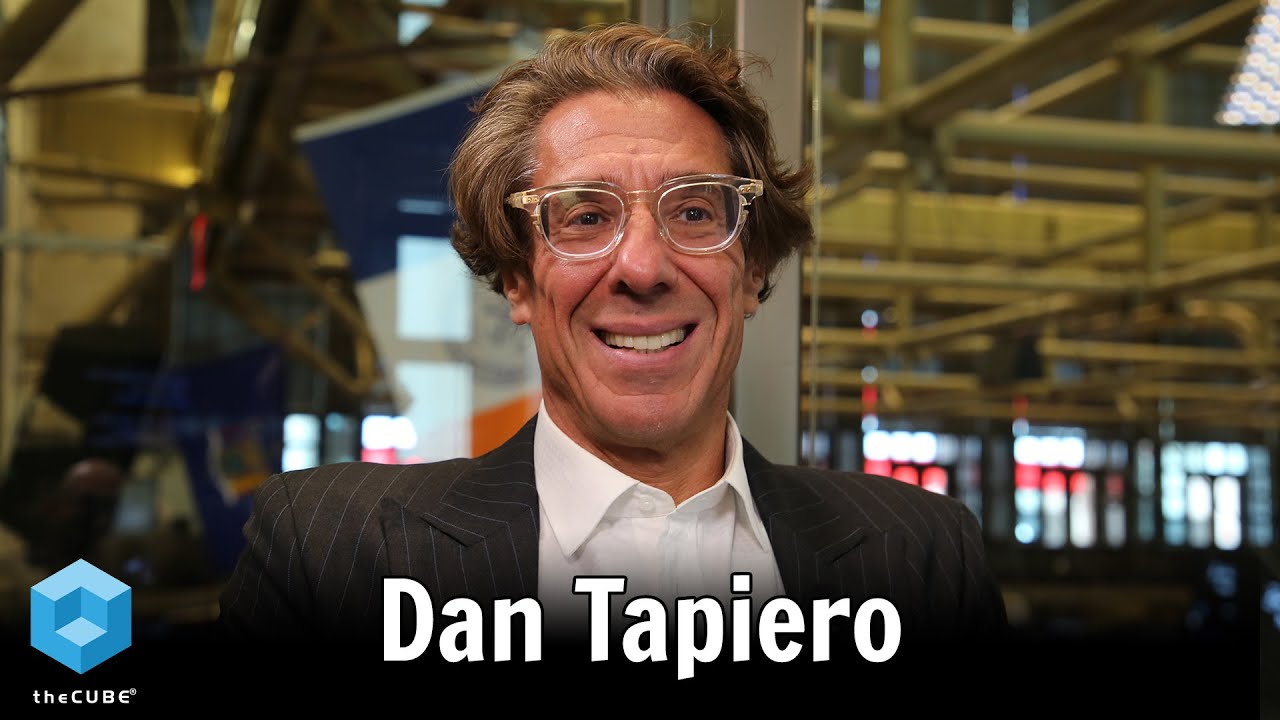
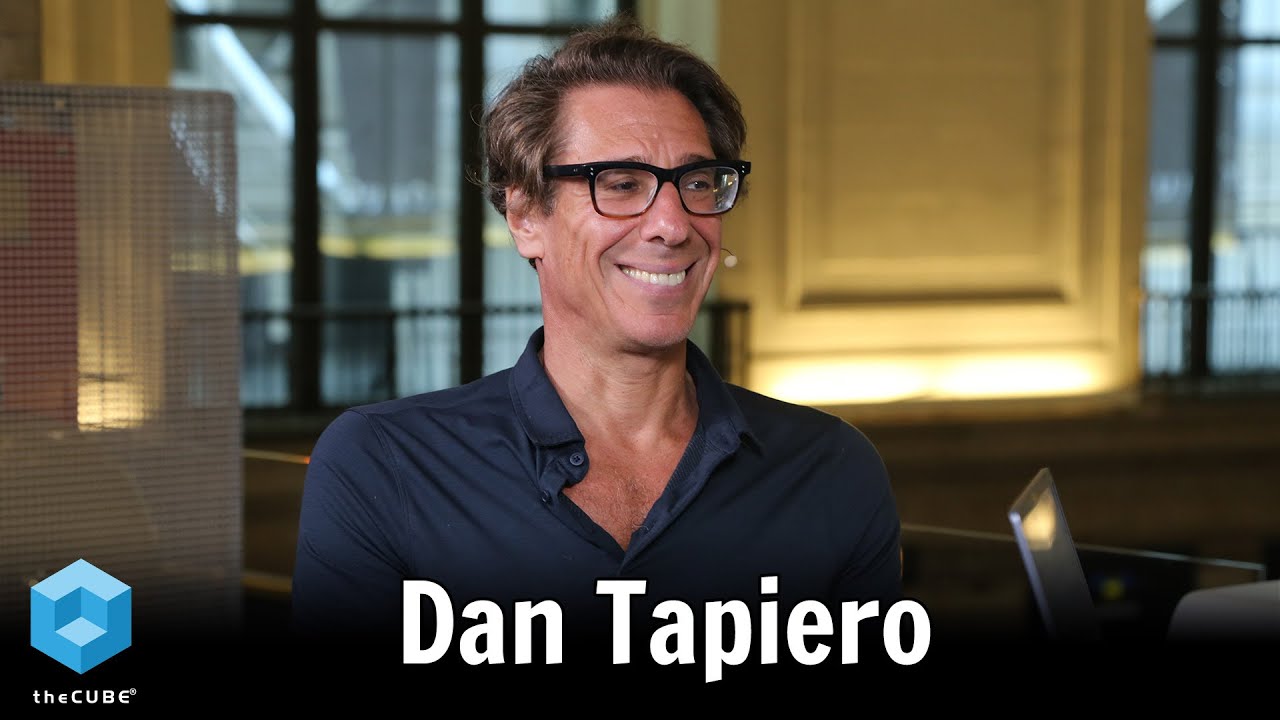
Dan Tapiero, co-founder and CEO of RoundTable Partners and 10T Holdings, joins theCUBE at the NYSE to discuss his extensive background in finance and his transition into the digital asset ecosystem. With over 20 years in the macro hedge fund industry, Tapiero brings valuable insights as he highlights the role of cryptocurrencies and blockchain in transforming business finance and infrastructure. theCUBE Research team, led by John Furrier, engages Tapiero in an in-depth discussion on the evolution of digital assets and the future of growth in this sector.
Tapiero emphasizes the potential of digital assets, predicting a substantial market value increase from $300 billion to a projected $10 trillion within the next decade. According to Tapiero, the current environment favors companies building this new ecosystem, as businesses generate significant revenue and prepare to enter public markets. The interview explores the role of US regulatory shifts in fostering a supportive atmosphere for cryptocurrencies, along with the importance of positioning the US as a global hub for blockchain technology and digital assets. #DanTapiero #DigitalAssets #theCUBE #NYSE #Crypto #Blockchain #Web3
Explore more about this topic and related insights on SiliconANGLE: siliconangle.com. Subscribe to our blockchain playlist for further discussions: [Blockchain Playlist](#).
00:00 - Intro
00:06 - Cryptocurrency and Blockchain: An Introductory Overview
02:31 - The Journey of Dan Tapiero and the Rise of 10T Holdings
09:09 - Crypto Industry Developments and Challenges
16:31 - Crypto Companies and Public Offerings
20:44 - The Future of Digital Assets
23:10 - The Digital Cultural Revolution: Final Reflections
Forgot Password
Almost there!
We just sent you a verification email. Please verify your account to gain access to
theCUBE + NYSE Wired: Crypto Trailblazers. If you don’t think you received an email check your
spam folder.
Sign in to theCUBE + NYSE Wired: Crypto Trailblazers.
In order to sign in, enter the email address you used to registered for the event. Once completed, you will receive an email with a verification link. Open this link to automatically sign into the site.
Register For theCUBE + NYSE Wired: Crypto Trailblazers
Please fill out the information below. You will recieve an email with a verification link confirming your registration. Click the link to automatically sign into the site.
You’re almost there!
We just sent you a verification email. Please click the verification button in the email. Once your email address is verified, you will have full access to all event content for theCUBE + NYSE Wired: Crypto Trailblazers.
I want my badge and interests to be visible to all attendees.
Checking this box will display your presense on the attendees list, view your profile and allow other attendees to contact you via 1-1 chat. Read the Privacy Policy. At any time, you can choose to disable this preference.
Select your Interests!
add
Upload your photo
Uploading..
OR
Connect via Twitter
Connect via Linkedin
EDIT PASSWORD
Share
Forgot Password
Almost there!
We just sent you a verification email. Please verify your account to gain access to
theCUBE + NYSE Wired: Crypto Trailblazers. If you don’t think you received an email check your
spam folder.
Sign in to theCUBE + NYSE Wired: Crypto Trailblazers.
In order to sign in, enter the email address you used to registered for the event. Once completed, you will receive an email with a verification link. Open this link to automatically sign into the site.
Sign in to gain access to theCUBE + NYSE Wired: Crypto Trailblazers
Please sign in with LinkedIn to continue to theCUBE + NYSE Wired: Crypto Trailblazers. Signing in with LinkedIn ensures a professional environment.
Are you sure you want to remove access rights for this user?
Details
Manage Access
email address
Community Invitation
Nic Cary, Blockchain.com
Dan Tapiero, co-founder and CEO of RoundTable Partners and 10T Holdings, joins theCUBE at the NYSE to discuss his extensive background in finance and his transition into the digital asset ecosystem. With over 20 years in the macro hedge fund industry, Tapiero brings valuable insights as he highlights the role of cryptocurrencies and blockchain in transforming business finance and infrastructure. theCUBE Research team, led by John Furrier, engages Tapiero in an in-depth discussion on the evolution of digital assets and the future of growth in this sector.
Tapiero emphasizes the potential of digital assets, predicting a substantial market value increase from $300 billion to a projected $10 trillion within the next decade. According to Tapiero, the current environment favors companies building this new ecosystem, as businesses generate significant revenue and prepare to enter public markets. The interview explores the role of US regulatory shifts in fostering a supportive atmosphere for cryptocurrencies, along with the importance of positioning the US as a global hub for blockchain technology and digital assets. #DanTapiero #DigitalAssets #theCUBE #NYSE #Crypto #Blockchain #Web3
Explore more about this topic and related insights on SiliconANGLE: siliconangle.com. Subscribe to our blockchain playlist for further discussions: [Blockchain Playlist](#).
00:00 - Intro
00:06 - Cryptocurrency and Blockchain: An Introductory Overview
02:31 - The Journey of Dan Tapiero and the Rise of 10T Holdings
09:09 - Crypto Industry Developments and Challenges
16:31 - Crypto Companies and Public Offerings
20:44 - The Future of Digital Assets
23:10 - The Digital Cultural Revolution: Final Reflections
>> Welcome back everyone to the Crypto Trailblazer series. I'm John Furrier, your host of theCUBE. This is theCUBE's NYSE East Coast studio. Of course, we have our Palo Alto studio connecting the West Coast and the East Coast, Silicon Valley to Wall Street, tech and money. We're featuring the leaders in this series that have not only made it happen, but continue to thrive ahead, set the agenda for the infrastructure, the monetization, the application layers that are coming into crypto, up and down the tech stack. It's a financial stack, it is an open stack for finance. This is the biggest story right now happening in the world, besides AI, but that's coming together too. Nic Cary, he's the co-founder, vice chairman of blockchain.com. Nic, thank you for spending your valuable time coming in to talk to us.>> John, it's an honor to be here. Thank you so much for hosting.
John Furrier
>> I love the fact that we got the technology West Coast, East Coast hubs developing with theCUBE because it's opened up at least my aperture, moving here from Palo Alto to seeing the tech disruption thinking, come to finance. You're seeing real entrepreneurial thinking, not just arbitrage, or what I call entrepreneurial hustle. "Hey, ride a prepaid whale, it makes 30 million, get a boat, get a house in the Hamptons." This is bigger. This is a big infrastructure business model flipping of the script. You guys have not only been there from day one, but you drove it through the headwinds, you had some tailwinds, headwinds. Now that we're in a great market, you guys are really leading the effort. You've diversified your portfolio, business is going well. We've had Lane on twice on theCUBE, triple trailblazers. What's your take as a vice chairman and co-founder, you've got to kind of have a reality moment of... Is it a pinch me moment? Because look where we are.>> Yeah, look, an awful lot has been achieved in the last decade and a half and we were really there at the very beginning of the big bang of crypto in 2011, and we're really proud of that role we've played in building some of the foundational infrastructure for this extraordinarily important movement. And what we're really talking about is future proofing the American economy, the global economy to run on better rails, to build a more efficient financial system that everyone can participate in. And it's almost vocational work. I mean, my grandfather I told you was a stockbroker. It's amazing to be in this building and the reverence I have for all of this, but really if you had told me 10, 15 years ago that we would now be at a four trillion dollar asset class that would be on the agenda of the American national interest to pursue putting digital dollars on the internet and proliferating them via layer one blockchains, that you would have tokenized equities being available to global populations all over the world to get access to American equities and that you would have Bitcoin be a store of value that's been widely adopted by institutions, pension funds and more. I'd say, well, that's an amazing outcome so far, but we really do have a lot of work to do.
John Furrier
>> And it's just the tip of the iceberg. If you look at the overall store of value mechanisms, it's kind of well documented inside the circles that it's still got so much headroom to grow and now with real world assets coming on chain and mainstream institutions leaning in, there's almost like a co-design vibe going on right now.>> Yeah, no, it feels much more like partnership. And I think for, there were aspects in periods of time where it was much more adversarial and I think one of the important things to understand about crypto is it was forged from a sort of retail adoption first, a bunch of nerds on the internet and then you had other cohorts that came into it, and now you've got really the merging happening between the tech stack, between the legacy financial stack and then all the capital that's trapped potentially in these alternative assets and real world assets. And what crypto really lets us do is put property rights on all kinds of things and then send precious information over the internet instantly basically for free. So we're really talking about internet scale, capital markets and the evolution of money in a way that's really future-proof for everything going on.
John Furrier
>> We've been covering crypto since 2011 on SiliconANGLE and theCUBE, of course, our other most popular program is our AI leaders program. If you look at the AI and the blockchain markets, both are bounded by power, so an inherent similarity there, but they all have the same tune, the rhyme is there. That acceleration, you're seeing AI accelerate computing, that's throwing off major benefits. We cover that like a blanket. And you're seeing NVIDIA stock, there on the board, all green today on the puts on the option floor. All that processing power is changing. Now you go over to the blockchain side, the DeFi and the TradFi, it has the same kind of tech stack vibe. Energy is almost like the physical layer and then now a complete solution stack of software, programmable money. So you got the convergence of physical digital happening.>> It's not a coincidence that these things are emerging at the same time, a lot of the foundational research and development that was critical for developing infrastructure for digital assets is very relevant for AI. We actually launched an initiative this summer. We've built a crypto-focused LLM called askjune.ai, really interesting, privacy first, non-custodial in its relationship with your data. Now, if you think about this, this is critical not only in financial services but also in how people develop trust. The most confidential conversations you have with your partner, your wife, your doctor, your lawyer, your best friends allow you to be vulnerable and allow you to learn and allow you to then discard nonsense. And so having a relationship with an AI like that is really quite key. And so we're very proud to launch askjune.ai. It's going to merge into the blockchain.com wallet experience. What that's going to provide for our retail users is basically like a CFO in your pocket, but on the institutional side, it's even more interesting. You'll be able to develop all these custom portfolios, define your risk limits, define your asset allocation strategies, and then implement them in a relatively autonomous but controlled way too.
John Furrier
>> I love the way you guys are thinking about this because you're already intersecting the benefits of AI but you're not pivoting anything. You're integrating the value proposition of AI into your mission and your products. And so I guess my next question would be, what's the result of that? Because what I'm seeing on the DeFi side with this infrastructure expansion, there's a huge accelerated enablement going on. New ventures are coming out, new products are being created. You mentioned CFO in your wallet, that's pretty amazing because now I can have agents work on my behalf->> Exactly, yeah.
John Furrier
>> ... in a trusted way. So the question is, what products come out of that? Will there be a new layer, "I'm going to buy a little bit of this.">> I mean, yeah, I think -
John Furrier
>> And, "Oh, manage my money, buy a house, stake my print position." All new credit products are emerging.>> Yeah, the world of opportunities is really exciting, but at the end of the day, it's about developing a better product experience and our customers are really pumped about this. We've had more than 500,000 people sign up for this beta. It's the fastest growing product launch we've ever had at blockchain.com. So it shows the appetite but also shows people's comfort and expectations are changing really, really quickly. AI can unlock all kind of benefits. They need to be developed in a way that are privacy first and then deeply integrated into the core value proposition. And for us, that's helping people and institutions navigate crypto in a responsible way and do it with a trusted partner.
John Furrier
>> Nic, let's talk about the venture you co-founded, obviously you guys have built that from day one. And then over the past, before Trump came into office, there was this, you guys were breaking through, eating glass and surviving that nuclear winter, but you were still building a great business. What's been the big momentum shift for blockchain.com in terms of the product portfolio, the value? When the sun came out, what really shined? What was flowering up? What did you see and what was the strategy and what did you double down on?>> Yeah, I think a lot of it's just frankly, persistence, but being early in crypto was important. Just like being an early pioneer allowed you to capture the most important land and territory as the west expanded, and the same is true in crypto. So getting those early vintages of adopters became very key because many of them have come very high up the wealth curve. So they've been influencing our product design and footprint and we've been expanding internationally basically since day one. We've obviously had different cycles in crypto where you have a very fast proliferation of new users, high volumes, incredible years, and then you've got years that are very difficult to navigate, and we had one of those cycles a few years ago, but companies like ours that have been doing this since the very beginning have learned that navigating volatility is actually one of the core competencies you have to develop. And sitting above it all is really proper governance. It means you've got leaders and people that have been through tough times that know how to stay super clear with their customers and responsibly manage their opportunities and balance sheet. And when you come out through the other side, then you have all this capital and all of this experience to basically deploy in the market.
John Furrier
>> Talk about the things that you guys have now in place for the folks that might not be fully aware of the history. How does that product portfolio look like? What are some of the customer bases? What are some of the lines of business that you guys have developed?>> Yeah, thank you. So we really have two sort of key customer segments. One is a retail offering. This is a wallet service you can download for free on iOS or Android or sign up for online. This allows you to send, receive, secure trade exchange or purchase a little bit of crypto or digital assets like dollars and now even tokenized equities. So it's a really exciting product, basically like a comprehensive brokerage super app right in your pocket. And it supports both DeFi features, which are self-custodial and account type features that look a lot more like your bank or brokerage account. So all that's bundled together. It's one of those popular applications in the digital assets base. We've had almost a hundred million people download and install that in the last decade.
John Furrier
>> That's the classic end user for you guys.>> Yeah, exactly. So retail is still very, very critical to us and critical to crypto. The other side of our business though is very, very healthy, and that's our institutional business. So we've had the banner year, almost 5,000 new institutions have signed up for crypto. And people always ask, "What kind of institutions really in this space? Talk to me about that."
John Furrier
>> Yeah, I was going to ask that. Yeah.>> Well, some of them are those crypto OGs that have all kinds of new requirements for how they're thinking about managing their wealth, and they need a trusted partner to do that. They expect white glove service and that's something we offer them.
John Furrier
>> I mean a whale's basically like a family office at that point.>> It is. So it's family offices, it's crypto hedge funds, it's crypto venture funds, it's regular venture funds, it's pension systems, it's financial institutions, and increasingly it's publicly traded companies that are coming to us because they want to diversify their treasuries and own something that has greater purchasing power. And so we come to them and we build solutions that work with them and we listen to what their goals are, and then we come up the crypto fluency curve with them on a journey. And that's been a very exciting business for us. It's very sticky and there's more and more of these institutions coming every single day.
John Furrier
>> I mean, that's basically wealth management in a way.>> It is. Yeah, and it's asset management as well. Yeah.
John Furrier
>> All right, so now on the real world assets on chain, what's your take on this? Because you're seeing a lot of activity.>> Yeah, I'm really excited about this. When we dreamed about where this could all go 10 years ago, and then Larry Fink kind of got it a couple years ago, which was like, "Oh, we can tokenize literally everything." What does that mean? Well, it means we're giving property rights to all kinds of illiquid things potentially. And that could be everything from alternative assets to things that regular people never had access to, credit instruments and debt instruments and much more. And so there's a movement now to basically create tokenized assets out of all kinds of exciting things, music catalogs, all kinds of resources that are previously locked up. So the future's very bright on that front and I'm very excited about how that's all going to develop.
John Furrier
>> See, what I like about that direction is putting my product management hat on, you're essentially enabling product management, product development because once you take something and put it on chain with tokens, you now have a token economic opportunity, you have capital, that's going to open up a lot of new thinking. So what are some of the things that you see that are working? And there's a lot of entrepreneurs. What entrepreneurs are really good at is opportunity recognition. So I'm sure things will pop up and they'll be like, "I can go after that.">> Look, I think we're not trying to boil the ocean. I think we're going to stay in our lanes in some ways, but there are amazing opportunities for entrepreneurs right now to go get into this space and build incredible products and opportunities. So they're going to dream up some fantastic things. I think some of the industries I'm most interested in seeing wildly disrupted here would be everything from the creative industries where you could imagine a future musician tokenizing their portfolio of music and then rewarding all of their listeners and fans with immediate fees that are drawn from the streaming revenues on some sort of new DeFi listening platform. That's kind of a wild example, but you could imagine completely new fan experiences. Even one of the things we've been working on in pioneering with our partners at the Dallas Cowboys, if you go through the stadium on the back of every seat is a little QR code, right then and there you can scan that, you'll have a personalized Dallas Cowboys themed crypto experience, download a wallet and much more. And so you can kind of integrate all these really interesting both real world and digital experiences with these capabilities. And it's going to touch almost everything you could imagine from finance to real estate to how we lend to much more. So yeah, it's pretty exciting.
John Furrier
>> That's the physical AI, that's where the physical AI is shining. That's where physical crypto... Because what you just described is essentially my personal life experience in the physical living world.>> I think it has to come out of the screen a little bit, sometimes to feel a little bit more real, but we're going to get to a point-
John Furrier
>> We can write software for that.>> Yeah, yeah.
John Furrier
>> I love that entrepreneurial kind of thought exercise because that's what will be dreamt up by the entrepreneur. So I guess my next question is, as Blockchain.com continues to make the market, as you guys are successful, you're also creating some flow, you're creating some gravity around your momentum. Is there white spaces that you see in your momentum that someone could work with you and partner on, ecosystems form around leaders, so that's going to be probably a natural progression. What are your thoughts to that?>> We're very open for business. We're excited to forge partnerships, especially with legacy financial institutions that have historically not been able to partner yet for legal or regulatory reasons. And the clarity we've gotten in the United States is really foundationally so important and is very much future-proof in the American economy to be highly digital and very globally competitive. And I have to say, it took us a while to get there to here, and we've seen sort of pockets of regulatory innovation happen in Dubai, in Singapore, in Europe, but the United States is now in an advantageous position and I'm so excited because we're finally able to bring all this capital home, this intellectual effort and really serve the American people and also the wider global markets with this capability.
John Furrier
>> We have a saying on theCUBE, it's kind of our Silicon Valley saying, but it's like, "Icebergs ahead," referencing the Titanic hitting the iceberg. And then I just said, "Look, if you don't want to hit an iceberg, don't sail in the North Atlantic." So now we had those iceberg moments in the industry and now we're kind of moving into more of the calmer waters and warmer... The sun's out, as I said. So it's a great market. As a founder, it's been an incredible journey, it must be. Take me through the origination story, how it all came together, because you go back to 2011 through '14, it was a bunch of OGs. I mean, this was hardcore.>> Yeah, it was not an obvious move, by the way.
John Furrier
>> Yeah, so take me through. You wake up one day and say, "Hey, grab the URL.">> Yeah, so we founded blockchain.com, the predecessor project was a website called blockchain.info. And we actually started the company in York, original York in Northern England, which I kind of love and it's especially funny to be here in New York-
John Furrier
>> New York.>> ... talking about it now, but it's also emblematic of kind of how this is a global phenomenon. And what allowed us to concentrate up there was just basically focusing first on understanding the economic velocity in first Bitcoin. And so that was the only digital currency at the beginning, and that's the one we kind of got all into this on. But the three founders of the company really focused on statistics and we're kind of nerdy and we wanted to basically understand, was anybody really using this? And it turns out, yeah, they were, but it was so complicated and so annoying, you kind of needed to be a little bit of a computer scientist to interact with it. So we're like, "You know what? We got to make this thing look a little bit more like PayPal. It's gotten a little bit easier to use." So we ended up building the world's first non-custodial wallet that was very popular at the time because it allowed people to purchase from exchanges and then store it themselves. So that was a big deal because some of those early exchanges had a lot of security problems. We have famously heard about .
John Furrier
>> Print out the paper with your code on it.>> It was totally annoying. And so we saw that opportunity to build a better product experience. At the end of the day, you got to build stuff customers love and developing that magic for them as key. And so we focused on all those things. We expanded our business footprint, came to America, started focusing our clientele here, and then globally expanded quite a bit. And so blockchain.com now has customers in basically every single non-sanctioned country in the world. Like I said, over a hundred million people have downloaded and interacted with our product experiences and now institutions are coming too. And we really wanted to build that financial house of the future. And that's what we're proud to have done so far. And we are very excited about the opportunity in the next decade.
John Furrier
>> It's a super great success story, and I love the fact that you guys are thriving and continue to accelerate your growth. It's just the beginning in my opinion. But I have to ask, what was the moment you're like kind knew, "Shit, we've got something big going on here." Was it when the people started buying the non-custodial wallet, was there a certain moment of you saying, "Damn, this is going to be big.>> John, yeah, there have been a bunch of moments that were really exciting and really scary.
John Furrier
>> Near-death experiences.>> . It was a little PTSD obviously. No, I think what I was really confident in is that digital assets, in first Bitcoin, it provided such this intellectually interesting alternative to all the other ways that we have thought about money. And money is this taboo topic in so many households and it's not really explained in school very well. And unfortunately, it's like a topic we all need to confront and be much more fluent in. And so money to me, and well understood now is that it's a social construct that allows us to exchange wealth over time. And as human beings, we've tried all kinds of technologies to make this work better. And that's why you find beads from the Middle East in burial sites in Scotland. 10,000 years ago, people were exchanging goods and services. And we've tried coins, we've tried paper, and now we're in an era with the internet where we can beam information around the world, but it's still sort of annoying to move money around the world. So why is it that way? Well, let's take the best things from technology, let's merge them with the best lessons about money and wealth preservation and merge them together, and that's really what digital assets and crypto are all about. And I think the future is really quite strong on this. It's about designing a better mousetrap in some ways, but also one that allows for more accessibility. And that's probably one of the most important things because if we can bring more economic actors to cooperate with each other, to perform commerce and build businesses, they're going to exchange wealth and ideas, we're going to have a more peaceful, more prosperous world and we should all be focused on that.
John Furrier
>> And I mean, the democratization cliche is legit here because it really does bring access. It reduces middlemen and middle blockers, arbitrage. I'll say everything's on chain. Well, congratulations. Thanks for coming in and sharing, and you certainly trailblazed and trailblazing. Congratulations on the success. I know you've got a big partnership with the Dallas Cowboys, which I think is super cool. You mentioned a little QR code. Talk about that deal and the relationship with the Cowboys and .>> Yeah, we're proud of our partnership with the NFL and the Cowboys. I mean, the Jones family has been incredibly professional, a great partner for us. And we are doing everything from teaching students in schools around the Dallas and Texas area about crypto, about math. Our partnership is both in the community, in the stadium, and then broadly about bringing trusted partners to the future of finance. We're really proud of that partnership.
John Furrier
>> Congratulations.>> All right, thank you, sir.
John Furrier
>> And thank you for sharing here on the Crypto Trailblazers. Certainly a crypto trailblazer here. Again, building the idea is just one step, execution and surviving and thriving and now we're in a market where mainstream commerce is clear, the money's on the table, the financial rails and systems and plumbing is being recast for a physical digital world. Of course, we're doing our job to bring you the coverage here on theCUBE. I'm John Furrier, the host. Thanks for watching.
>> Welcome back everyone to the Crypto Trailblazer series. I'm John Furrier, your host of theCUBE. This is theCUBE's NYSE East Coast studio. Of course, we have our Palo Alto studio connecting the West Coast and the East Coast, Silicon Valley to Wall Street, tech and money. We're featuring the leaders in this series that have not only made it happen, but continue to thrive ahead, set the agenda for the infrastructure, the monetization, the application layers that are coming into crypto, up and down the tech stack. It's a financial stack, it is an open stack for finance. This is the biggest story right now happening in the world, besides AI, but that's coming together too. Nic Cary, he's the co-founder, vice chairman of blockchain.com. Nic, thank you for spending your valuable time coming in to talk to us.>> John, it's an honor to be here. Thank you so much for hosting.
John Furrier
>> I love the fact that we got the technology West Coast, East Coast hubs developing with theCUBE because it's opened up at least my aperture, moving here from Palo Alto to seeing the tech disruption thinking, come to finance. You're seeing real entrepreneurial thinking, not just arbitrage, or what I call entrepreneurial hustle. "Hey, ride a prepaid whale, it makes 30 million, get a boat, get a house in the Hamptons." This is bigger. This is a big infrastructure business model flipping of the script. You guys have not only been there from day one, but you drove it through the headwinds, you had some tailwinds, headwinds. Now that we're in a great market, you guys are really leading the effort. You've diversified your portfolio, business is going well. We've had Lane on twice on theCUBE, triple trailblazers. What's your take as a vice chairman and co-founder, you've got to kind of have a reality moment of... Is it a pinch me moment? Because look where we are.>> Yeah, look, an awful lot has been achieved in the last decade and a half and we were really there at the very beginning of the big bang of crypto in 2011, and we're really proud of that role we've played in building some of the foundational infrastructure for this extraordinarily important movement. And what we're really talking about is future proofing the American economy, the global economy to run on better rails, to build a more efficient financial system that everyone can participate in. And it's almost vocational work. I mean, my grandfather I told you was a stockbroker. It's amazing to be in this building and the reverence I have for all of this, but really if you had told me 10, 15 years ago that we would now be at a four trillion dollar asset class that would be on the agenda of the American national interest to pursue putting digital dollars on the internet and proliferating them via layer one blockchains, that you would have tokenized equities being available to global populations all over the world to get access to American equities and that you would have Bitcoin be a store of value that's been widely adopted by institutions, pension funds and more. I'd say, well, that's an amazing outcome so far, but we really do have a lot of work to do.
John Furrier
>> And it's just the tip of the iceberg. If you look at the overall store of value mechanisms, it's kind of well documented inside the circles that it's still got so much headroom to grow and now with real world assets coming on chain and mainstream institutions leaning in, there's almost like a co-design vibe going on right now.>> Yeah, no, it feels much more like partnership. And I think for, there were aspects in periods of time where it was much more adversarial and I think one of the important things to understand about crypto is it was forged from a sort of retail adoption first, a bunch of nerds on the internet and then you had other cohorts that came into it, and now you've got really the merging happening between the tech stack, between the legacy financial stack and then all the capital that's trapped potentially in these alternative assets and real world assets. And what crypto really lets us do is put property rights on all kinds of things and then send precious information over the internet instantly basically for free. So we're really talking about internet scale, capital markets and the evolution of money in a way that's really future-proof for everything going on.
John Furrier
>> We've been covering crypto since 2011 on SiliconANGLE and theCUBE, of course, our other most popular program is our AI leaders program. If you look at the AI and the blockchain markets, both are bounded by power, so an inherent similarity there, but they all have the same tune, the rhyme is there. That acceleration, you're seeing AI accelerate computing, that's throwing off major benefits. We cover that like a blanket. And you're seeing NVIDIA stock, there on the board, all green today on the puts on the option floor. All that processing power is changing. Now you go over to the blockchain side, the DeFi and the TradFi, it has the same kind of tech stack vibe. Energy is almost like the physical layer and then now a complete solution stack of software, programmable money. So you got the convergence of physical digital happening.>> It's not a coincidence that these things are emerging at the same time, a lot of the foundational research and development that was critical for developing infrastructure for digital assets is very relevant for AI. We actually launched an initiative this summer. We've built a crypto-focused LLM called askjune.ai, really interesting, privacy first, non-custodial in its relationship with your data. Now, if you think about this, this is critical not only in financial services but also in how people develop trust. The most confidential conversations you have with your partner, your wife, your doctor, your lawyer, your best friends allow you to be vulnerable and allow you to learn and allow you to then discard nonsense. And so having a relationship with an AI like that is really quite key. And so we're very proud to launch askjune.ai. It's going to merge into the blockchain.com wallet experience. What that's going to provide for our retail users is basically like a CFO in your pocket, but on the institutional side, it's even more interesting. You'll be able to develop all these custom portfolios, define your risk limits, define your asset allocation strategies, and then implement them in a relatively autonomous but controlled way too.
John Furrier
>> I love the way you guys are thinking about this because you're already intersecting the benefits of AI but you're not pivoting anything. You're integrating the value proposition of AI into your mission and your products. And so I guess my next question would be, what's the result of that? Because what I'm seeing on the DeFi side with this infrastructure expansion, there's a huge accelerated enablement going on. New ventures are coming out, new products are being created. You mentioned CFO in your wallet, that's pretty amazing because now I can have agents work on my behalf->> Exactly, yeah.
John Furrier
>> ... in a trusted way. So the question is, what products come out of that? Will there be a new layer, "I'm going to buy a little bit of this.">> I mean, yeah, I think -
John Furrier
>> And, "Oh, manage my money, buy a house, stake my print position." All new credit products are emerging.>> Yeah, the world of opportunities is really exciting, but at the end of the day, it's about developing a better product experience and our customers are really pumped about this. We've had more than 500,000 people sign up for this beta. It's the fastest growing product launch we've ever had at blockchain.com. So it shows the appetite but also shows people's comfort and expectations are changing really, really quickly. AI can unlock all kind of benefits. They need to be developed in a way that are privacy first and then deeply integrated into the core value proposition. And for us, that's helping people and institutions navigate crypto in a responsible way and do it with a trusted partner.
John Furrier
>> Nic, let's talk about the venture you co-founded, obviously you guys have built that from day one. And then over the past, before Trump came into office, there was this, you guys were breaking through, eating glass and surviving that nuclear winter, but you were still building a great business. What's been the big momentum shift for blockchain.com in terms of the product portfolio, the value? When the sun came out, what really shined? What was flowering up? What did you see and what was the strategy and what did you double down on?>> Yeah, I think a lot of it's just frankly, persistence, but being early in crypto was important. Just like being an early pioneer allowed you to capture the most important land and territory as the west expanded, and the same is true in crypto. So getting those early vintages of adopters became very key because many of them have come very high up the wealth curve. So they've been influencing our product design and footprint and we've been expanding internationally basically since day one. We've obviously had different cycles in crypto where you have a very fast proliferation of new users, high volumes, incredible years, and then you've got years that are very difficult to navigate, and we had one of those cycles a few years ago, but companies like ours that have been doing this since the very beginning have learned that navigating volatility is actually one of the core competencies you have to develop. And sitting above it all is really proper governance. It means you've got leaders and people that have been through tough times that know how to stay super clear with their customers and responsibly manage their opportunities and balance sheet. And when you come out through the other side, then you have all this capital and all of this experience to basically deploy in the market.
John Furrier
>> Talk about the things that you guys have now in place for the folks that might not be fully aware of the history. How does that product portfolio look like? What are some of the customer bases? What are some of the lines of business that you guys have developed?>> Yeah, thank you. So we really have two sort of key customer segments. One is a retail offering. This is a wallet service you can download for free on iOS or Android or sign up for online. This allows you to send, receive, secure trade exchange or purchase a little bit of crypto or digital assets like dollars and now even tokenized equities. So it's a really exciting product, basically like a comprehensive brokerage super app right in your pocket. And it supports both DeFi features, which are self-custodial and account type features that look a lot more like your bank or brokerage account. So all that's bundled together. It's one of those popular applications in the digital assets base. We've had almost a hundred million people download and install that in the last decade.
John Furrier
>> That's the classic end user for you guys.>> Yeah, exactly. So retail is still very, very critical to us and critical to crypto. The other side of our business though is very, very healthy, and that's our institutional business. So we've had the banner year, almost 5,000 new institutions have signed up for crypto. And people always ask, "What kind of institutions really in this space? Talk to me about that."
John Furrier
>> Yeah, I was going to ask that. Yeah.>> Well, some of them are those crypto OGs that have all kinds of new requirements for how they're thinking about managing their wealth, and they need a trusted partner to do that. They expect white glove service and that's something we offer them.
John Furrier
>> I mean a whale's basically like a family office at that point.>> It is. So it's family offices, it's crypto hedge funds, it's crypto venture funds, it's regular venture funds, it's pension systems, it's financial institutions, and increasingly it's publicly traded companies that are coming to us because they want to diversify their treasuries and own something that has greater purchasing power. And so we come to them and we build solutions that work with them and we listen to what their goals are, and then we come up the crypto fluency curve with them on a journey. And that's been a very exciting business for us. It's very sticky and there's more and more of these institutions coming every single day.
John Furrier
>> I mean, that's basically wealth management in a way.>> It is. Yeah, and it's asset management as well. Yeah.
John Furrier
>> All right, so now on the real world assets on chain, what's your take on this? Because you're seeing a lot of activity.>> Yeah, I'm really excited about this. When we dreamed about where this could all go 10 years ago, and then Larry Fink kind of got it a couple years ago, which was like, "Oh, we can tokenize literally everything." What does that mean? Well, it means we're giving property rights to all kinds of illiquid things potentially. And that could be everything from alternative assets to things that regular people never had access to, credit instruments and debt instruments and much more. And so there's a movement now to basically create tokenized assets out of all kinds of exciting things, music catalogs, all kinds of resources that are previously locked up. So the future's very bright on that front and I'm very excited about how that's all going to develop.
John Furrier
>> See, what I like about that direction is putting my product management hat on, you're essentially enabling product management, product development because once you take something and put it on chain with tokens, you now have a token economic opportunity, you have capital, that's going to open up a lot of new thinking. So what are some of the things that you see that are working? And there's a lot of entrepreneurs. What entrepreneurs are really good at is opportunity recognition. So I'm sure things will pop up and they'll be like, "I can go after that.">> Look, I think we're not trying to boil the ocean. I think we're going to stay in our lanes in some ways, but there are amazing opportunities for entrepreneurs right now to go get into this space and build incredible products and opportunities. So they're going to dream up some fantastic things. I think some of the industries I'm most interested in seeing wildly disrupted here would be everything from the creative industries where you could imagine a future musician tokenizing their portfolio of music and then rewarding all of their listeners and fans with immediate fees that are drawn from the streaming revenues on some sort of new DeFi listening platform. That's kind of a wild example, but you could imagine completely new fan experiences. Even one of the things we've been working on in pioneering with our partners at the Dallas Cowboys, if you go through the stadium on the back of every seat is a little QR code, right then and there you can scan that, you'll have a personalized Dallas Cowboys themed crypto experience, download a wallet and much more. And so you can kind of integrate all these really interesting both real world and digital experiences with these capabilities. And it's going to touch almost everything you could imagine from finance to real estate to how we lend to much more. So yeah, it's pretty exciting.
John Furrier
>> That's the physical AI, that's where the physical AI is shining. That's where physical crypto... Because what you just described is essentially my personal life experience in the physical living world.>> I think it has to come out of the screen a little bit, sometimes to feel a little bit more real, but we're going to get to a point-
John Furrier
>> We can write software for that.>> Yeah, yeah.
John Furrier
>> I love that entrepreneurial kind of thought exercise because that's what will be dreamt up by the entrepreneur. So I guess my next question is, as Blockchain.com continues to make the market, as you guys are successful, you're also creating some flow, you're creating some gravity around your momentum. Is there white spaces that you see in your momentum that someone could work with you and partner on, ecosystems form around leaders, so that's going to be probably a natural progression. What are your thoughts to that?>> We're very open for business. We're excited to forge partnerships, especially with legacy financial institutions that have historically not been able to partner yet for legal or regulatory reasons. And the clarity we've gotten in the United States is really foundationally so important and is very much future-proof in the American economy to be highly digital and very globally competitive. And I have to say, it took us a while to get there to here, and we've seen sort of pockets of regulatory innovation happen in Dubai, in Singapore, in Europe, but the United States is now in an advantageous position and I'm so excited because we're finally able to bring all this capital home, this intellectual effort and really serve the American people and also the wider global markets with this capability.
John Furrier
>> We have a saying on theCUBE, it's kind of our Silicon Valley saying, but it's like, "Icebergs ahead," referencing the Titanic hitting the iceberg. And then I just said, "Look, if you don't want to hit an iceberg, don't sail in the North Atlantic." So now we had those iceberg moments in the industry and now we're kind of moving into more of the calmer waters and warmer... The sun's out, as I said. So it's a great market. As a founder, it's been an incredible journey, it must be. Take me through the origination story, how it all came together, because you go back to 2011 through '14, it was a bunch of OGs. I mean, this was hardcore.>> Yeah, it was not an obvious move, by the way.
John Furrier
>> Yeah, so take me through. You wake up one day and say, "Hey, grab the URL.">> Yeah, so we founded blockchain.com, the predecessor project was a website called blockchain.info. And we actually started the company in York, original York in Northern England, which I kind of love and it's especially funny to be here in New York-
John Furrier
>> New York.>> ... talking about it now, but it's also emblematic of kind of how this is a global phenomenon. And what allowed us to concentrate up there was just basically focusing first on understanding the economic velocity in first Bitcoin. And so that was the only digital currency at the beginning, and that's the one we kind of got all into this on. But the three founders of the company really focused on statistics and we're kind of nerdy and we wanted to basically understand, was anybody really using this? And it turns out, yeah, they were, but it was so complicated and so annoying, you kind of needed to be a little bit of a computer scientist to interact with it. So we're like, "You know what? We got to make this thing look a little bit more like PayPal. It's gotten a little bit easier to use." So we ended up building the world's first non-custodial wallet that was very popular at the time because it allowed people to purchase from exchanges and then store it themselves. So that was a big deal because some of those early exchanges had a lot of security problems. We have famously heard about .
John Furrier
>> Print out the paper with your code on it.>> It was totally annoying. And so we saw that opportunity to build a better product experience. At the end of the day, you got to build stuff customers love and developing that magic for them as key. And so we focused on all those things. We expanded our business footprint, came to America, started focusing our clientele here, and then globally expanded quite a bit. And so blockchain.com now has customers in basically every single non-sanctioned country in the world. Like I said, over a hundred million people have downloaded and interacted with our product experiences and now institutions are coming too. And we really wanted to build that financial house of the future. And that's what we're proud to have done so far. And we are very excited about the opportunity in the next decade.
John Furrier
>> It's a super great success story, and I love the fact that you guys are thriving and continue to accelerate your growth. It's just the beginning in my opinion. But I have to ask, what was the moment you're like kind knew, "Shit, we've got something big going on here." Was it when the people started buying the non-custodial wallet, was there a certain moment of you saying, "Damn, this is going to be big.>> John, yeah, there have been a bunch of moments that were really exciting and really scary.
John Furrier
>> Near-death experiences.>> . It was a little PTSD obviously. No, I think what I was really confident in is that digital assets, in first Bitcoin, it provided such this intellectually interesting alternative to all the other ways that we have thought about money. And money is this taboo topic in so many households and it's not really explained in school very well. And unfortunately, it's like a topic we all need to confront and be much more fluent in. And so money to me, and well understood now is that it's a social construct that allows us to exchange wealth over time. And as human beings, we've tried all kinds of technologies to make this work better. And that's why you find beads from the Middle East in burial sites in Scotland. 10,000 years ago, people were exchanging goods and services. And we've tried coins, we've tried paper, and now we're in an era with the internet where we can beam information around the world, but it's still sort of annoying to move money around the world. So why is it that way? Well, let's take the best things from technology, let's merge them with the best lessons about money and wealth preservation and merge them together, and that's really what digital assets and crypto are all about. And I think the future is really quite strong on this. It's about designing a better mousetrap in some ways, but also one that allows for more accessibility. And that's probably one of the most important things because if we can bring more economic actors to cooperate with each other, to perform commerce and build businesses, they're going to exchange wealth and ideas, we're going to have a more peaceful, more prosperous world and we should all be focused on that.
John Furrier
>> And I mean, the democratization cliche is legit here because it really does bring access. It reduces middlemen and middle blockers, arbitrage. I'll say everything's on chain. Well, congratulations. Thanks for coming in and sharing, and you certainly trailblazed and trailblazing. Congratulations on the success. I know you've got a big partnership with the Dallas Cowboys, which I think is super cool. You mentioned a little QR code. Talk about that deal and the relationship with the Cowboys and .>> Yeah, we're proud of our partnership with the NFL and the Cowboys. I mean, the Jones family has been incredibly professional, a great partner for us. And we are doing everything from teaching students in schools around the Dallas and Texas area about crypto, about math. Our partnership is both in the community, in the stadium, and then broadly about bringing trusted partners to the future of finance. We're really proud of that partnership.
John Furrier
>> Congratulations.>> All right, thank you, sir.
John Furrier
>> And thank you for sharing here on the Crypto Trailblazers. Certainly a crypto trailblazer here. Again, building the idea is just one step, execution and surviving and thriving and now we're in a market where mainstream commerce is clear, the money's on the table, the financial rails and systems and plumbing is being recast for a physical digital world. Of course, we're doing our job to bring you the coverage here on theCUBE. I'm John Furrier, the host. Thanks for watching.








































 John Furrier