In this insightful episode of the Crypto Trailblazers series hosted by theCUBE, Mike Cagney of Figure Markets sits down with analysts from theCUBE Research to discuss groundbreaking advancements in blockchain technology and their implications for the finance sector. This video is part of the NYSE Wired digital event, aimed at bridging the gap between Silicon Valley and Wall Street by integrating technology and finance.
Cagney, an eminent figure in fintech, shares expertise on the transformative role of blockchain in financial markets during this interview. Conducted by seasoned analysts at theCUBE, the discussion delves into Figure’s innovative contributions, including their blockchain-native loan origination and securitization process. He outlines how Figure leverages blockchain to achieve cost reductions, enhanced security and improved liquidity in financial transactions.
Key takeaways from the interview highlight insights on the evolution of the Web3 ecosystem, such as the emergence of stablecoins as pivotal to transaction processes and the rise of decentralized finance (DeFi). Oltsik states these developments signify a shift towards democratizing finance, wherein truth and transparency are foundational. The conversation concludes with a look at Figure’s pioneering efforts in creating a new financial marketplace utilizing blockchain technology.
#CryptoTrailblazers #FigureMarkets #BlockchainInnovation #Web3 #NYEWired #BlockchainFinance #DecentralizedFinance #Fintech #Stablecoins
Find more SiliconANGLE news and analysis https://siliconangle.com/.
Follow theCUBE's wall-to-wall event coverage https://siliconangle.com/events/
Learn about the latest theCUBE events https://www.thecube.net/
00:00 - Intro
00:05 - Emerging Innovations in Financial Technology and Market Dynamics
02:45 - Key Elements in Financial Ecosystem Dynamics
06:20 - Blockchain: Truth and Transformation
09:39 - Shaping the Future: Innovations in Financial Markets and Stablecoin Integration
13:15 - Enabling the Future: Navigating Disruptions in Banking and Lending
16:51 - Exploring Opportunities and Building Confidence in the Blockchain Ecosystem
Forgot Password
Almost there!
We just sent you a verification email. Please verify your account to gain access to
theCUBE + NYSE Wired: Crypto Trailblazers. If you don’t think you received an email check your
spam folder.
Sign in to theCUBE + NYSE Wired: Crypto Trailblazers.
In order to sign in, enter the email address you used to registered for the event. Once completed, you will receive an email with a verification link. Open this link to automatically sign into the site.
Register For theCUBE + NYSE Wired: Crypto Trailblazers
Please fill out the information below. You will recieve an email with a verification link confirming your registration. Click the link to automatically sign into the site.
You’re almost there!
We just sent you a verification email. Please click the verification button in the email. Once your email address is verified, you will have full access to all event content for theCUBE + NYSE Wired: Crypto Trailblazers.
I want my badge and interests to be visible to all attendees.
Checking this box will display your presense on the attendees list, view your profile and allow other attendees to contact you via 1-1 chat. Read the Privacy Policy. At any time, you can choose to disable this preference.
Select your Interests!
add
Upload your photo
Uploading..
OR
Connect via Twitter
Connect via Linkedin
EDIT PASSWORD
Share
Forgot Password
Almost there!
We just sent you a verification email. Please verify your account to gain access to
theCUBE + NYSE Wired: Crypto Trailblazers. If you don’t think you received an email check your
spam folder.
Sign in to theCUBE + NYSE Wired: Crypto Trailblazers.
In order to sign in, enter the email address you used to registered for the event. Once completed, you will receive an email with a verification link. Open this link to automatically sign into the site.
Sign in to gain access to theCUBE + NYSE Wired: Crypto Trailblazers
Please sign in with LinkedIn to continue to theCUBE + NYSE Wired: Crypto Trailblazers. Signing in with LinkedIn ensures a professional environment.
Are you sure you want to remove access rights for this user?
Details
Manage Access
email address
Community Invitation
Diogo Monica, Anchorage
In this insightful episode of the Crypto Trailblazers series hosted by theCUBE, Mike Cagney of Figure Markets sits down with analysts from theCUBE Research to discuss groundbreaking advancements in blockchain technology and their implications for the finance sector. This video is part of the NYSE Wired digital event, aimed at bridging the gap between Silicon Valley and Wall Street by integrating technology and finance.
Cagney, an eminent figure in fintech, shares expertise on the transformative role of blockchain in financial markets during this interview. Conducted by seasoned analysts at theCUBE, the discussion delves into Figure’s innovative contributions, including their blockchain-native loan origination and securitization process. He outlines how Figure leverages blockchain to achieve cost reductions, enhanced security and improved liquidity in financial transactions.
Key takeaways from the interview highlight insights on the evolution of the Web3 ecosystem, such as the emergence of stablecoins as pivotal to transaction processes and the rise of decentralized finance (DeFi). Oltsik states these developments signify a shift towards democratizing finance, wherein truth and transparency are foundational. The conversation concludes with a look at Figure’s pioneering efforts in creating a new financial marketplace utilizing blockchain technology.
#CryptoTrailblazers #FigureMarkets #BlockchainInnovation #Web3 #NYEWired #BlockchainFinance #DecentralizedFinance #Fintech #Stablecoins
Find more SiliconANGLE news and analysis https://siliconangle.com/.
Follow theCUBE's wall-to-wall event coverage https://siliconangle.com/events/
Learn about the latest theCUBE events https://www.thecube.net/
00:00 - Intro
00:05 - Emerging Innovations in Financial Technology and Market Dynamics
02:45 - Key Elements in Financial Ecosystem Dynamics
06:20 - Blockchain: Truth and Transformation
09:39 - Shaping the Future: Innovations in Financial Markets and Stablecoin Integration
13:15 - Enabling the Future: Navigating Disruptions in Banking and Lending
16:51 - Exploring Opportunities and Building Confidence in the Blockchain Ecosystem
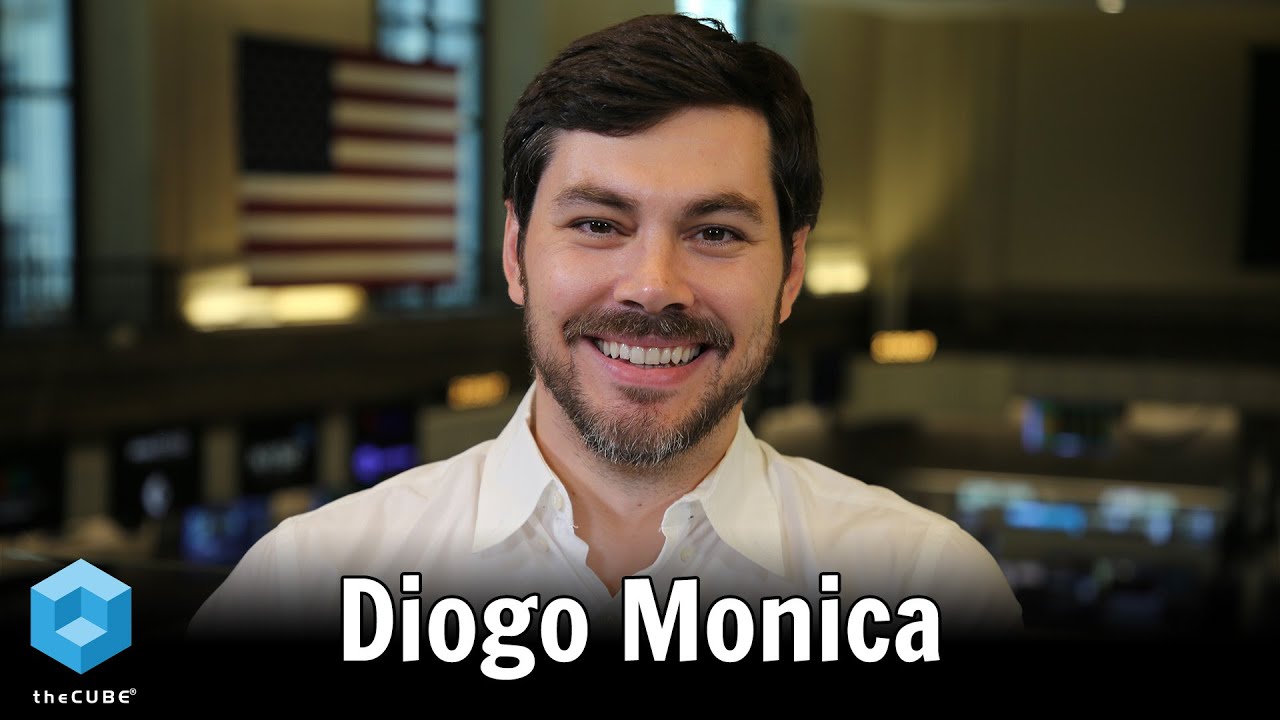
>> Welcome back to the New York Stock Exchange. My name is Dave Vellante and John Furrier is also here taking a little break, but this is our Crypto Trailblazers Media Week series and really excited to have Diogo Mónica here. He is a general partner at Haun Ventures and also executive chairman of Anchorage Digital and a bunch of other stuff. Diogo, great to see you. Thanks for coming back on theCUBE.
Diogo Mónica
>> Likewise. Thank you for having me.
Dave Vellante
>> So tell us, you as we were saying, had a big observation space. You got your hands in a lot of pies. Tell us about some of those ventures that you got going.
Diogo Mónica
>> So I feel like I've loved this industry for so long. I was in an industry of crypto when we called it distributed systems and it was just a pure economic pursuit. That's actually what I got my PhD on. And then I was lucky enough to be an early employee at Square, so do the payments thing and then lead security team at a company called Docker. So do cloud security and then finally be lucky enough to start a company called Anchorage Digital with my co-founder, Nathan. And so if you love a space, you really want all the viewpoints into this space and that is why I have an investor hat as a GP at Haun Ventures. I have the chairman of the NEAR Foundation, so it's a blockchain foundation. So that space is also really interesting to understand how these decentralized ecosystems work. And then obviously as an operator and as entrepreneur at Anchorage Digital, that has been eight years and has been a really fun ride.
Dave Vellante
>> So as crypto has gone mainstream, I think a lot of people have lost or maybe really never even appreciated the original thinking behind distributed infrastructure and the way I like to frame it is if you think about all the major internet protocols, whether it's SMPT or HTTP or pick your favorite protocol, essentially were co-opted by big internet giants and the little guys were left out. And so-
Diogo Mónica
>> And no value accrued to that intermediate layer of the internet itself. We can make a claim that DNS and domain name sales is actually a multi-billion dollar industry annually, and IP addresses are becoming so few that actually are worth something. But absolutely right. There was no value capture on the internet itself and everyone that won were the applications that co-opted the infrastructure to make money.
Dave Vellante
>> Yeah, and even open source, if you loved what Linus Torvalds was doing with Linux, you really couldn't invest in it. You had to wait. You could cheer him on, but you had to wait until Red Hat went public or something like that. Today that's different. There's so many opportunities for investors and anybody. Now of course that brings in concerns and people want to protect the main street investor. We've sort of over-rotated in the last administration with really Draconian posture toward the entire industry.
Diogo Mónica
>> Regulations reinforcement.
Dave Vellante
>> And kind of hostile toward the industry and I think to the detriment of innovation, at least in this country. And so what happens, leaves the country and goes elsewhere. Do you feel like we're in the right place now?
Diogo Mónica
>> I think we're in a much better place. I think we have the GENIUS Act hopefully going to the president's desk very soon and being approved. We've had the Circle IPO been a resounding success and really has been... The conversation on the mainstream is about stable coins and about how much utility these cryptocurrencies because they are cryptocurrencies have and how much they're changing the game in terms of anything that touches a cross-border payment, payout, pay-in, remittance, et cetera. And so to a large extent, the detractors of crypto for a long time said, "Where's the product market fit?" And we've presented over time many different product market fits. And then finally there's one that is so obvious and so in your face that they can't actually use that argument anymore. And so other arguments are being used to justify whatever counter crypto narrative that they want. But you're absolutely right, we're in a much, much better place. The industry is much more mature and we're seeing that even with Jay Powell's comments just this week.
Dave Vellante
>> Yeah, I guess you're either a believer or you're not. And the common narrative in the middle of last decade was, you'd hear this all the time, "Well, I believe in blockchain technology, but I'm not sure about crypto."
Diogo Mónica
>> Blockchain or crypto.
Dave Vellante
>> Yes, I'm like, "I was kind of the other way around." But there are underlying technologies that are emerging now to address some of the fundamental challenges with crypto and blockchain architecture, but also being true to the original vision of peer-to-peer and cutting out the middle man, if you will.
Diogo Mónica
>> You're absolutely right. Stablecoins could not have been this resounding success if we didn't have a credibly neutral decentralized infrastructure on top of which they could have been created because they could not have been created within the current rails. There's such a chokehold on access to the monetary system and the financial infrastructure in the core, the belly of the beast, so to speak, that it really had to be something that came without permission from the outside. And the only place on the internet that we have to do that in a credible, decentralized manner is what we call blockchains and what we call crypto and crypto is necessary. These tokens are the mechanism by which we coordinate all of the participants, in some cases adversarial participants, but coordinating, cooperating with one another to create an actual decentralized system that works. So it was a necessary condition to have these cryptocurrencies. It was a necessary condition for Bitcoin to show us how to do this in internet with anonymity, solving the civil identity protection. And then everything that we've built on top of us got us to this place.
Dave Vellante
>> It's an amazing Petri dish when you think about it. And when I first heard about it was just sort of this unhackable thing and I was like, "Wow, that's interesting." Sandy Pentland at MIT Labs was the one who exposed us to it many, many years ago. And so that was exciting. What's the state of technology in this space? It's gone from really nascent to quite sophisticated and to where are we at and where do you see it going? Especially as for a while when the AI that was heard around the world came in, all I heard was, "Oh, all the crypto developers are leaving to go do AI." So those worlds are going to come back together and they clearly have.
Diogo Mónica
>> They have. They have. And I think the narrative in the story is technology like this takes a long time to mature and a long time to develop. And in fact, Bitcoin was originally as a purpose to actually be a payments network, but it's demonstrated that the types of choices that is made are more beneficial and more better for something like sovereign sort of value, so sovereign resistance sort of value. So very quickly people gave up on using a Bitcoin infrastructure for true payments. Maybe they can use it for settlements but for true payments. And then from that moment on, you started this race towards, "Okay, now we have something that is credibly decentralized and actually is storing value and exchanging value with these characteristics in a decentralized fashion." Then we needed a smart contract programming language platform. That's where Ethereum comes in and all these Ethereum competitors. After Ethereum, we needed something that was much faster with more better capabilities, and then we needed sub one cent transactions because it was still very expensive to actually transact and to actually put transactions in the block space and on and on and on until we got to stablecoins and transactions that aren't across border, global from day one that cost less than 1 cent to transact, we needed to have built all of this infrastructure. And even 24 months ago, this wasn't there. We didn't have blockchains that were high throughput and allowed us to have sub one cent transactions to really be able to build businesses on top of.
Dave Vellante
>> And today your contention would be we have higher throughput.
Diogo Mónica
>> Much higher throughput.
Dave Vellante
>> Adequate to the point where it can be a tipping point in your view?
Diogo Mónica
>> Absolutely. In fact, I wouldn't say that blockspace availability is really the constraining factor at this point. I think we have unlimited blockspace. We have really explored the distributed system's realm in terms of different trade-offs, more centralized, less centralized, staking things that are proof of work. We've really generally have gone out there with zero knowledge proofs and really started to explore and there will always be innovations. The way that I think about blockchains, by the way, is I think about programming languages. People always ask me, "How many blockchains will there be? How many do we really need?" And the answer is how many programming languages do we really need?. If you think about it, every single programming language does the same. They're all . So from a computer science perspective, there are literally no program that I can build in one that I'm not capable of computing in programming another one. They're exactly the same thing. But yet we have thousands of them and hundreds of them in active use. And the reason why new programming languages come in is twofold. Number one, major technology disruptions. So memory safety, there's garbage collection, there's waves of technology and new things that operate and make you want to have a new programming language. And then the most important one are these exogenous factors, waves. So the web wave created PHP and Ruby on Rails. Then we had the mobile wave and we got Objective-C and Swift. Then we got the AI wave and we're seeing all of these new programming languages come up. So these exogenous force the technology to evolve, and it's the same thing for blockchains. So how many will there be? There will be an infinite number of them. It's just the rate of creation of new blockchains will be based on what do we actually need next? And what is this new technology wave? It may be AI that forces us to have a new very popular blockchain, but that's sort of what we're building and how these things progress, use case specific and fit for purpose. And in fact, we're seeing a lot of vertical integration. You're seeing blockchains like Plume that have as a sole purpose to do RWAs on chain. And there's RWAs, real world assets tokenizing say a stock or whatever has a real world application say real estate, but they need specific elements from the core underlying blockchain that are different than a generalized blockchain like Ethereum could provide them. So that is a vertically integrated example.
Dave Vellante
>> I mean it's fascinating and unique and at the same time it has followed some similar patterns. And you had early on the ICO craze, it brought in a lot of money. You had Silicon Valley investors getting in. You had young crypto folks to seasoned investors coming in. It was really a vibrant community. And then things really calmed down. I said, "Oh, that was just a fad." And then of course there was a lot of innovation, and of course you had fraud just like you do with money, a lot of fraud in US dollar based activities as well. But it hits the headlines and you see what happened with the tether situation, et cetera. Those things happen. And then things... Regulation comes in. There's more clarity. You were on a panel in Paris, I think it was either maybe earlier this month.
Diogo Mónica
>> That's right.
Dave Vellante
>> And you put forth the premise that I want to ask you about. You said stable coins are basically more stable than bank deposits was kind of your premise. Can you explain that and what kind of reception did that get?
Diogo Mónica
>> So the reception actually is not as adversarial as you would expect because people are finally understanding what stablecoins actually are. Stablecoins are narrow banks in a very specific definition. So when genius act stablecoin, a stablecoin needs to be backed by a very high percentage of T-bills. And T-bills have the full faith in credit of the United States. They are liabilities directly of the Fed. And so if you look at it in the right way, a stablecoin is backed one to one with either a dollar, usually at a GSIB, a systemically important bank or a T-bill. And there is no balance sheet in credit, in mortgages, in loans, .
Dave Vellante
>> More stable tractors.
Diogo Mónica
>> And so there's no risk because you're not actually incurring risk of any of these things. And so yes, in many cases a stablecoin is much safer than a commercial bank in which you're putting deposits in a bank and they're actually being borrowed out.
Dave Vellante
>> So these stable coins are, you're saying backed by GSIBs or T-bills, treasuries. Actually, the question broadly is what should be backing stablecoins? I guess you just answered that. And to what degree are they, are the preponderance of the backstop are these vehicles?
Diogo Mónica
>> The most popular stable coins, Tether and Circle, are very much this, so to different degrees of percentages, but they're very much backed by T-bills and backed by treasuries. And I think the interesting question is what should a stablecoin be? And the word stablecoin, should we have a definition of a stablecoin? If you say a dollar stablecoin, what should it be? And the GENIUS Act tells you what it should be and how actually-
Dave Vellante
>> Explain that.
Diogo Mónica
>> So because it's addressing what it is, providing if you call themselves a stablecoin and who can operate as a stable coin in the United States, in saying very simply, these are the rules of the road of what you can have as backing assets and how you need to operate your business in terms of transparency and proof of reserves, et cetera. So it just creates a transparent framework for me to be able to issue stablecoin in the United States and say, "This is a stablecoin." Now there's lots of things that are backed by other things that try to achieve price stability, peg to the dollar. There's a lot of peg to the dollar coins that shouldn't be called stablecoins because they use other types of mechanisms to achieve stability. And I think here has been really war of definitions. It's very important for a consumer in the United States to know that a dollar stablecoin that calls itself a dollar stable coin has this characteristic that I mentioned, which is extremely stable. It's almost a narrow bank.
Dave Vellante
>> And this really is the big change in the sort of regulatory guidance, right? There was real lack of clarity before, or the clarity before was, "Hey, we have laws on the books, follow them." And then you found out you got debanked overnight. So entrepreneurs like yourselves were really actually pushing for regulation. You weren't from to run away from regulation, you were asking for it, asking for the government to give us clarity. Correct?
Diogo Mónica
>> It's exactly right. In fact, Anchorage Digital is still the only federal chartered bank in the United States. We not only asked for regulation, we went and got the hardest thing that you can get, which is a federal bank, same charter, JP Morgan Chase. People were saying crypto is unregulated as the wild, wild west. And we went and got a bank charter so we could do these operations and we could do these businesses within the regulatory perimeter that is the clearest regulatory perimeter, which is under DOCC, the control of the currency. So entrepreneurs, American entrepreneurs, like we're going out and trying to get these charters and trying to these businesses. And even then there was a lot of adversarialness about the business and a lot of preconceived notions about crypto. And you're right that the headlines sort of follow you. And there's this drag of the bad stuff that has happened in the past that drags onto the future. But to your earlier question, we're in a very different state. We have federal banks that do custody for cryptocurrencies, do staking, settlement, trading. Some of our clients, BlackRock has announced, we announced in April that actually they're using Anchorage for custody of the Bitcoin on their ETFs. So clients like this, the largest financial institutions in the world are using our services. And we have many, many of those types of clients. So we're in a very different way or we're in a different place. Let me just say that five years ago, three years ago, people were saying, "When are institution's coming?" And it's very clear that right now in 2025, institutions are absolutely here.
Dave Vellante
>> Do you feel confident that the momentum that the current administration has put forth some of the work that frankly David Sacks has done, the frameworks that are getting put in place, maybe the education that's occurring now and the receptivity, the enthusiasm, do you feel like that momentum will carry through in perpetuity or do you worry that, oh, the next administration is going to... The pendulum is going to swing back? What do you have a point of view on that?
Diogo Mónica
>> I think you always worry that next administration will swing it back, which is why it's so important that the GENIUS Act gets signed and why we have legislation, because it's extremely hard to go back on legislation, especially very reasonable legislation that has been bipartisan. So that's why you want bipartisan support for legislation so you don't have interpretation of the regulators on how you actually go about doing something like this.
Dave Vellante
>> And you said something that reminded me of Larry Fink. Do you have a point of view from the standpoint of stablecoins being backed by physical assets that are tokenized, where are we at with that? Is that a pipe dream? Is it actually happening? Is it a viable component of this mix?
Diogo Mónica
>> I think it is a viable component of this mix. It is not in the GENIUS Act. For example, there's very popular stablecoins like Ethena that what they do is they're backed by other crypto assets and derivatives of those crypto assets, in fact. So they generate returns and rewards based on doing the basis trade. And so the difference between spot and future in the convergence there, betting on convergence, and those are very legitimate entrepreneurial plays and they're truly decentralized and they have different characteristics and these types of stable coins that we've talked about like Tether and Circle. And they should exist except that they potentially under the GENIUS Act shouldn't be called civil coins under this kind of regime so that it's very clear what a civil coin is and how it's backed and what is not. But they're very great attempts at new technology and new ways for us to interact with these types of backing. And now if you talk about tokenization, I think the next big path in the next big wave of things that are happening is the understanding that stablecoins are actually a tokenized dollar. And there is no difference between tokenizing a dollar and tokenizing a stock. I mean, there are obviously differences when it's security, one is not.
Dave Vellante
>> Or a physical asset.
Diogo Mónica
>> Or a physical asset. And so we've been talking as a crypto community for about real estate for a long time, and I think we've jumped a gun many, many times because real estate is actually going to be one of the last asset classes to go. First, you're going to obviously have money, dollars, then you're going to have yielding assets, so credits, you're going to have fixed income because they're easy. You're going to have equities and then you're actually going to get on the longer tail of things and then finally going to get to real estate because it's still extremely hard. At the end of the day, there is a deed that owns the house in that system. Is it digitized, not digitized? That link is always the weakest link. We can issue tokens on chain that represent your house all we want, but ultimately there's an actual physical ledger somewhere that actually represents the truth on the ground. And that's very hard to innovate.
Dave Vellante
>> And that's a very important asset of course, and one that's very emotional. Other physical, as the physical and digital worlds come together, however one could see the advantage of for the buyer and the seller minimizing the friction and lowering the transaction cost. I mean that really is the sort of objective here, is it not?
Diogo Mónica
>> It absolutely is. And in fact, every asset that we bring on chain makes the chain more powerful because now I can actually have a portfolio that has gold because I have a tokenized representation of gold. It can have uranium, I have a tokenized representation of uranium. And so all of those things in one place weren't really possible before that I could do sub one cent rebalancing of my portfolio using a smart contract without actually having a human involved. It just automatically rebalances every second if I want to across all the asset classes. And the other thing about tokenization that is really interesting is that when you tokenize something, you add more liquidity, you fractionalize it from day one. You obviously add the ability of knowing at one moment who owns what, and you make it global from day one. And global means global liquidity and global access. One of the things that has been very successful about stablecoins has been countries that are not us, that are not America. We have access to dollars just down the street, but countries that did not have access to dollars wanting to hold a currency that was not highly deflationary, that is one of the-
Dave Vellante
>> Vietnam was an example, right?
Diogo Mónica
>> Vietnam, Argentina, there's lots of these examples, but it's not just dollars that they want to hold. Wouldn't they love to hold Tesla stock? They would and they can't. And so that is the next wave is the ability for everyone in the world, a global market from day one, being able to hold .
Dave Vellante
>> Massive network effects because not only do you have humans on the network, you also have just a variety of assets that you can tap in a frictionless way.
Diogo Mónica
>> And they're interacting with an app that is crypto-enabled from day one in many cases. One of the questions that for the past eight years that have been building this business and the past 10 plus that we've been generally working in crypto, the question was, when is my grandmother going to use crypto? And then the reality is that, well, number one, maybe she never will, and that still can mean that crypto is very successful. But number two, the highest likelihood of someone interacting with crypto is that they're not going to know that it is.
Dave Vellante
>> They're already using it and they don't know it.
Diogo Mónica
>> They're already using it. I mean, you see dollars in your balance. You don't know that it's backed by a stablecoin, but you're using it.
Dave Vellante
>> Right. What are you investing in these days?
Diogo Mónica
>> Lots of things. Stablecoins obviously being one of the big themes. One of the things that was pretty interesting was one of our portfolio companies, which was Bridge was acquired by Stripe for $1.1 billion, and that was really the starting gun to the M&A season. There's been four over a billion dollar acquisitions in crypto, Circles IPO, so stables are up and they're growing. The issuance is at all time highs. So we obviously look up and down the stack. Right now we have a pyramid where the issuers on the bottom are making the most money. Tether is known for being one of the best businesses in history. And then on top of that, you have what I call money routers. So the people that are facilitating all the exchange of fiat to blockchain dollars and back and forth. Then you have the money apps and the value capture really is that the money apps are not making much money, but that pyramid has to invert. And so the money apps that are coming will capture the majority of the value because this infrastructure is better infrastructure.
Dave Vellante
>> And the IPO markets like a coiled spring, M&A starting to pick up second half looks really promising. Diogo, thanks so much for coming on theCUBE. It was great to have you.
Diogo Mónica
>> Thank you for having us.
Dave Vellante
>> You're very welcome. All right. Keep it right there, everybody. This is Dave Vellante for John Furrier and the whole NYSE Wired and CUBE team. We'll be right back right after this short break. You're watching Crypto Trailblazers from the New York Stock Exchange.
>> Welcome back to the New York Stock Exchange. My name is Dave Vellante and John Furrier is also here taking a little break, but this is our Crypto Trailblazers Media Week series and really excited to have Diogo Mónica here. He is a general partner at Haun Ventures and also executive chairman of Anchorage Digital and a bunch of other stuff. Diogo, great to see you. Thanks for coming back on theCUBE.
Diogo Mónica
>> Likewise. Thank you for having me.
Dave Vellante
>> So tell us, you as we were saying, had a big observation space. You got your hands in a lot of pies. Tell us about some of those ventures that you got going.
Diogo Mónica
>> So I feel like I've loved this industry for so long. I was in an industry of crypto when we called it distributed systems and it was just a pure economic pursuit. That's actually what I got my PhD on. And then I was lucky enough to be an early employee at Square, so do the payments thing and then lead security team at a company called Docker. So do cloud security and then finally be lucky enough to start a company called Anchorage Digital with my co-founder, Nathan. And so if you love a space, you really want all the viewpoints into this space and that is why I have an investor hat as a GP at Haun Ventures. I have the chairman of the NEAR Foundation, so it's a blockchain foundation. So that space is also really interesting to understand how these decentralized ecosystems work. And then obviously as an operator and as entrepreneur at Anchorage Digital, that has been eight years and has been a really fun ride.
Dave Vellante
>> So as crypto has gone mainstream, I think a lot of people have lost or maybe really never even appreciated the original thinking behind distributed infrastructure and the way I like to frame it is if you think about all the major internet protocols, whether it's SMPT or HTTP or pick your favorite protocol, essentially were co-opted by big internet giants and the little guys were left out. And so-
Diogo Mónica
>> And no value accrued to that intermediate layer of the internet itself. We can make a claim that DNS and domain name sales is actually a multi-billion dollar industry annually, and IP addresses are becoming so few that actually are worth something. But absolutely right. There was no value capture on the internet itself and everyone that won were the applications that co-opted the infrastructure to make money.
Dave Vellante
>> Yeah, and even open source, if you loved what Linus Torvalds was doing with Linux, you really couldn't invest in it. You had to wait. You could cheer him on, but you had to wait until Red Hat went public or something like that. Today that's different. There's so many opportunities for investors and anybody. Now of course that brings in concerns and people want to protect the main street investor. We've sort of over-rotated in the last administration with really Draconian posture toward the entire industry.
Diogo Mónica
>> Regulations reinforcement.
Dave Vellante
>> And kind of hostile toward the industry and I think to the detriment of innovation, at least in this country. And so what happens, leaves the country and goes elsewhere. Do you feel like we're in the right place now?
Diogo Mónica
>> I think we're in a much better place. I think we have the GENIUS Act hopefully going to the president's desk very soon and being approved. We've had the Circle IPO been a resounding success and really has been... The conversation on the mainstream is about stable coins and about how much utility these cryptocurrencies because they are cryptocurrencies have and how much they're changing the game in terms of anything that touches a cross-border payment, payout, pay-in, remittance, et cetera. And so to a large extent, the detractors of crypto for a long time said, "Where's the product market fit?" And we've presented over time many different product market fits. And then finally there's one that is so obvious and so in your face that they can't actually use that argument anymore. And so other arguments are being used to justify whatever counter crypto narrative that they want. But you're absolutely right, we're in a much, much better place. The industry is much more mature and we're seeing that even with Jay Powell's comments just this week.
Dave Vellante
>> Yeah, I guess you're either a believer or you're not. And the common narrative in the middle of last decade was, you'd hear this all the time, "Well, I believe in blockchain technology, but I'm not sure about crypto."
Diogo Mónica
>> Blockchain or crypto.
Dave Vellante
>> Yes, I'm like, "I was kind of the other way around." But there are underlying technologies that are emerging now to address some of the fundamental challenges with crypto and blockchain architecture, but also being true to the original vision of peer-to-peer and cutting out the middle man, if you will.
Diogo Mónica
>> You're absolutely right. Stablecoins could not have been this resounding success if we didn't have a credibly neutral decentralized infrastructure on top of which they could have been created because they could not have been created within the current rails. There's such a chokehold on access to the monetary system and the financial infrastructure in the core, the belly of the beast, so to speak, that it really had to be something that came without permission from the outside. And the only place on the internet that we have to do that in a credible, decentralized manner is what we call blockchains and what we call crypto and crypto is necessary. These tokens are the mechanism by which we coordinate all of the participants, in some cases adversarial participants, but coordinating, cooperating with one another to create an actual decentralized system that works. So it was a necessary condition to have these cryptocurrencies. It was a necessary condition for Bitcoin to show us how to do this in internet with anonymity, solving the civil identity protection. And then everything that we've built on top of us got us to this place.
Dave Vellante
>> It's an amazing Petri dish when you think about it. And when I first heard about it was just sort of this unhackable thing and I was like, "Wow, that's interesting." Sandy Pentland at MIT Labs was the one who exposed us to it many, many years ago. And so that was exciting. What's the state of technology in this space? It's gone from really nascent to quite sophisticated and to where are we at and where do you see it going? Especially as for a while when the AI that was heard around the world came in, all I heard was, "Oh, all the crypto developers are leaving to go do AI." So those worlds are going to come back together and they clearly have.
Diogo Mónica
>> They have. They have. And I think the narrative in the story is technology like this takes a long time to mature and a long time to develop. And in fact, Bitcoin was originally as a purpose to actually be a payments network, but it's demonstrated that the types of choices that is made are more beneficial and more better for something like sovereign sort of value, so sovereign resistance sort of value. So very quickly people gave up on using a Bitcoin infrastructure for true payments. Maybe they can use it for settlements but for true payments. And then from that moment on, you started this race towards, "Okay, now we have something that is credibly decentralized and actually is storing value and exchanging value with these characteristics in a decentralized fashion." Then we needed a smart contract programming language platform. That's where Ethereum comes in and all these Ethereum competitors. After Ethereum, we needed something that was much faster with more better capabilities, and then we needed sub one cent transactions because it was still very expensive to actually transact and to actually put transactions in the block space and on and on and on until we got to stablecoins and transactions that aren't across border, global from day one that cost less than 1 cent to transact, we needed to have built all of this infrastructure. And even 24 months ago, this wasn't there. We didn't have blockchains that were high throughput and allowed us to have sub one cent transactions to really be able to build businesses on top of.
Dave Vellante
>> And today your contention would be we have higher throughput.
Diogo Mónica
>> Much higher throughput.
Dave Vellante
>> Adequate to the point where it can be a tipping point in your view?
Diogo Mónica
>> Absolutely. In fact, I wouldn't say that blockspace availability is really the constraining factor at this point. I think we have unlimited blockspace. We have really explored the distributed system's realm in terms of different trade-offs, more centralized, less centralized, staking things that are proof of work. We've really generally have gone out there with zero knowledge proofs and really started to explore and there will always be innovations. The way that I think about blockchains, by the way, is I think about programming languages. People always ask me, "How many blockchains will there be? How many do we really need?" And the answer is how many programming languages do we really need?. If you think about it, every single programming language does the same. They're all . So from a computer science perspective, there are literally no program that I can build in one that I'm not capable of computing in programming another one. They're exactly the same thing. But yet we have thousands of them and hundreds of them in active use. And the reason why new programming languages come in is twofold. Number one, major technology disruptions. So memory safety, there's garbage collection, there's waves of technology and new things that operate and make you want to have a new programming language. And then the most important one are these exogenous factors, waves. So the web wave created PHP and Ruby on Rails. Then we had the mobile wave and we got Objective-C and Swift. Then we got the AI wave and we're seeing all of these new programming languages come up. So these exogenous force the technology to evolve, and it's the same thing for blockchains. So how many will there be? There will be an infinite number of them. It's just the rate of creation of new blockchains will be based on what do we actually need next? And what is this new technology wave? It may be AI that forces us to have a new very popular blockchain, but that's sort of what we're building and how these things progress, use case specific and fit for purpose. And in fact, we're seeing a lot of vertical integration. You're seeing blockchains like Plume that have as a sole purpose to do RWAs on chain. And there's RWAs, real world assets tokenizing say a stock or whatever has a real world application say real estate, but they need specific elements from the core underlying blockchain that are different than a generalized blockchain like Ethereum could provide them. So that is a vertically integrated example.
Dave Vellante
>> I mean it's fascinating and unique and at the same time it has followed some similar patterns. And you had early on the ICO craze, it brought in a lot of money. You had Silicon Valley investors getting in. You had young crypto folks to seasoned investors coming in. It was really a vibrant community. And then things really calmed down. I said, "Oh, that was just a fad." And then of course there was a lot of innovation, and of course you had fraud just like you do with money, a lot of fraud in US dollar based activities as well. But it hits the headlines and you see what happened with the tether situation, et cetera. Those things happen. And then things... Regulation comes in. There's more clarity. You were on a panel in Paris, I think it was either maybe earlier this month.
Diogo Mónica
>> That's right.
Dave Vellante
>> And you put forth the premise that I want to ask you about. You said stable coins are basically more stable than bank deposits was kind of your premise. Can you explain that and what kind of reception did that get?
Diogo Mónica
>> So the reception actually is not as adversarial as you would expect because people are finally understanding what stablecoins actually are. Stablecoins are narrow banks in a very specific definition. So when genius act stablecoin, a stablecoin needs to be backed by a very high percentage of T-bills. And T-bills have the full faith in credit of the United States. They are liabilities directly of the Fed. And so if you look at it in the right way, a stablecoin is backed one to one with either a dollar, usually at a GSIB, a systemically important bank or a T-bill. And there is no balance sheet in credit, in mortgages, in loans, .
Dave Vellante
>> More stable tractors.
Diogo Mónica
>> And so there's no risk because you're not actually incurring risk of any of these things. And so yes, in many cases a stablecoin is much safer than a commercial bank in which you're putting deposits in a bank and they're actually being borrowed out.
Dave Vellante
>> So these stable coins are, you're saying backed by GSIBs or T-bills, treasuries. Actually, the question broadly is what should be backing stablecoins? I guess you just answered that. And to what degree are they, are the preponderance of the backstop are these vehicles?
Diogo Mónica
>> The most popular stable coins, Tether and Circle, are very much this, so to different degrees of percentages, but they're very much backed by T-bills and backed by treasuries. And I think the interesting question is what should a stablecoin be? And the word stablecoin, should we have a definition of a stablecoin? If you say a dollar stablecoin, what should it be? And the GENIUS Act tells you what it should be and how actually-
Dave Vellante
>> Explain that.
Diogo Mónica
>> So because it's addressing what it is, providing if you call themselves a stablecoin and who can operate as a stable coin in the United States, in saying very simply, these are the rules of the road of what you can have as backing assets and how you need to operate your business in terms of transparency and proof of reserves, et cetera. So it just creates a transparent framework for me to be able to issue stablecoin in the United States and say, "This is a stablecoin." Now there's lots of things that are backed by other things that try to achieve price stability, peg to the dollar. There's a lot of peg to the dollar coins that shouldn't be called stablecoins because they use other types of mechanisms to achieve stability. And I think here has been really war of definitions. It's very important for a consumer in the United States to know that a dollar stablecoin that calls itself a dollar stable coin has this characteristic that I mentioned, which is extremely stable. It's almost a narrow bank.
Dave Vellante
>> And this really is the big change in the sort of regulatory guidance, right? There was real lack of clarity before, or the clarity before was, "Hey, we have laws on the books, follow them." And then you found out you got debanked overnight. So entrepreneurs like yourselves were really actually pushing for regulation. You weren't from to run away from regulation, you were asking for it, asking for the government to give us clarity. Correct?
Diogo Mónica
>> It's exactly right. In fact, Anchorage Digital is still the only federal chartered bank in the United States. We not only asked for regulation, we went and got the hardest thing that you can get, which is a federal bank, same charter, JP Morgan Chase. People were saying crypto is unregulated as the wild, wild west. And we went and got a bank charter so we could do these operations and we could do these businesses within the regulatory perimeter that is the clearest regulatory perimeter, which is under DOCC, the control of the currency. So entrepreneurs, American entrepreneurs, like we're going out and trying to get these charters and trying to these businesses. And even then there was a lot of adversarialness about the business and a lot of preconceived notions about crypto. And you're right that the headlines sort of follow you. And there's this drag of the bad stuff that has happened in the past that drags onto the future. But to your earlier question, we're in a very different state. We have federal banks that do custody for cryptocurrencies, do staking, settlement, trading. Some of our clients, BlackRock has announced, we announced in April that actually they're using Anchorage for custody of the Bitcoin on their ETFs. So clients like this, the largest financial institutions in the world are using our services. And we have many, many of those types of clients. So we're in a very different way or we're in a different place. Let me just say that five years ago, three years ago, people were saying, "When are institution's coming?" And it's very clear that right now in 2025, institutions are absolutely here.
Dave Vellante
>> Do you feel confident that the momentum that the current administration has put forth some of the work that frankly David Sacks has done, the frameworks that are getting put in place, maybe the education that's occurring now and the receptivity, the enthusiasm, do you feel like that momentum will carry through in perpetuity or do you worry that, oh, the next administration is going to... The pendulum is going to swing back? What do you have a point of view on that?
Diogo Mónica
>> I think you always worry that next administration will swing it back, which is why it's so important that the GENIUS Act gets signed and why we have legislation, because it's extremely hard to go back on legislation, especially very reasonable legislation that has been bipartisan. So that's why you want bipartisan support for legislation so you don't have interpretation of the regulators on how you actually go about doing something like this.
Dave Vellante
>> And you said something that reminded me of Larry Fink. Do you have a point of view from the standpoint of stablecoins being backed by physical assets that are tokenized, where are we at with that? Is that a pipe dream? Is it actually happening? Is it a viable component of this mix?
Diogo Mónica
>> I think it is a viable component of this mix. It is not in the GENIUS Act. For example, there's very popular stablecoins like Ethena that what they do is they're backed by other crypto assets and derivatives of those crypto assets, in fact. So they generate returns and rewards based on doing the basis trade. And so the difference between spot and future in the convergence there, betting on convergence, and those are very legitimate entrepreneurial plays and they're truly decentralized and they have different characteristics and these types of stable coins that we've talked about like Tether and Circle. And they should exist except that they potentially under the GENIUS Act shouldn't be called civil coins under this kind of regime so that it's very clear what a civil coin is and how it's backed and what is not. But they're very great attempts at new technology and new ways for us to interact with these types of backing. And now if you talk about tokenization, I think the next big path in the next big wave of things that are happening is the understanding that stablecoins are actually a tokenized dollar. And there is no difference between tokenizing a dollar and tokenizing a stock. I mean, there are obviously differences when it's security, one is not.
Dave Vellante
>> Or a physical asset.
Diogo Mónica
>> Or a physical asset. And so we've been talking as a crypto community for about real estate for a long time, and I think we've jumped a gun many, many times because real estate is actually going to be one of the last asset classes to go. First, you're going to obviously have money, dollars, then you're going to have yielding assets, so credits, you're going to have fixed income because they're easy. You're going to have equities and then you're actually going to get on the longer tail of things and then finally going to get to real estate because it's still extremely hard. At the end of the day, there is a deed that owns the house in that system. Is it digitized, not digitized? That link is always the weakest link. We can issue tokens on chain that represent your house all we want, but ultimately there's an actual physical ledger somewhere that actually represents the truth on the ground. And that's very hard to innovate.
Dave Vellante
>> And that's a very important asset of course, and one that's very emotional. Other physical, as the physical and digital worlds come together, however one could see the advantage of for the buyer and the seller minimizing the friction and lowering the transaction cost. I mean that really is the sort of objective here, is it not?
Diogo Mónica
>> It absolutely is. And in fact, every asset that we bring on chain makes the chain more powerful because now I can actually have a portfolio that has gold because I have a tokenized representation of gold. It can have uranium, I have a tokenized representation of uranium. And so all of those things in one place weren't really possible before that I could do sub one cent rebalancing of my portfolio using a smart contract without actually having a human involved. It just automatically rebalances every second if I want to across all the asset classes. And the other thing about tokenization that is really interesting is that when you tokenize something, you add more liquidity, you fractionalize it from day one. You obviously add the ability of knowing at one moment who owns what, and you make it global from day one. And global means global liquidity and global access. One of the things that has been very successful about stablecoins has been countries that are not us, that are not America. We have access to dollars just down the street, but countries that did not have access to dollars wanting to hold a currency that was not highly deflationary, that is one of the-
Dave Vellante
>> Vietnam was an example, right?
Diogo Mónica
>> Vietnam, Argentina, there's lots of these examples, but it's not just dollars that they want to hold. Wouldn't they love to hold Tesla stock? They would and they can't. And so that is the next wave is the ability for everyone in the world, a global market from day one, being able to hold .
Dave Vellante
>> Massive network effects because not only do you have humans on the network, you also have just a variety of assets that you can tap in a frictionless way.
Diogo Mónica
>> And they're interacting with an app that is crypto-enabled from day one in many cases. One of the questions that for the past eight years that have been building this business and the past 10 plus that we've been generally working in crypto, the question was, when is my grandmother going to use crypto? And then the reality is that, well, number one, maybe she never will, and that still can mean that crypto is very successful. But number two, the highest likelihood of someone interacting with crypto is that they're not going to know that it is.
Dave Vellante
>> They're already using it and they don't know it.
Diogo Mónica
>> They're already using it. I mean, you see dollars in your balance. You don't know that it's backed by a stablecoin, but you're using it.
Dave Vellante
>> Right. What are you investing in these days?
Diogo Mónica
>> Lots of things. Stablecoins obviously being one of the big themes. One of the things that was pretty interesting was one of our portfolio companies, which was Bridge was acquired by Stripe for $1.1 billion, and that was really the starting gun to the M&A season. There's been four over a billion dollar acquisitions in crypto, Circles IPO, so stables are up and they're growing. The issuance is at all time highs. So we obviously look up and down the stack. Right now we have a pyramid where the issuers on the bottom are making the most money. Tether is known for being one of the best businesses in history. And then on top of that, you have what I call money routers. So the people that are facilitating all the exchange of fiat to blockchain dollars and back and forth. Then you have the money apps and the value capture really is that the money apps are not making much money, but that pyramid has to invert. And so the money apps that are coming will capture the majority of the value because this infrastructure is better infrastructure.
Dave Vellante
>> And the IPO markets like a coiled spring, M&A starting to pick up second half looks really promising. Diogo, thanks so much for coming on theCUBE. It was great to have you.
Diogo Mónica
>> Thank you for having us.
Dave Vellante
>> You're very welcome. All right. Keep it right there, everybody. This is Dave Vellante for John Furrier and the whole NYSE Wired and CUBE team. We'll be right back right after this short break. You're watching Crypto Trailblazers from the New York Stock Exchange.










































 Dave Vellante