We just sent you a verification email. Please verify your account to gain access to
theCUBE + NYSE Wired: Crypto Trailblazers. If you don’t think you received an email check your
spam folder.
Sign in to theCUBE + NYSE Wired: Crypto Trailblazers.
In order to sign in, enter the email address you used to registered for the event. Once completed, you will receive an email with a verification link. Open this link to automatically sign into the site.
Register For theCUBE + NYSE Wired: Crypto Trailblazers
Please fill out the information below. You will recieve an email with a verification link confirming your registration. Click the link to automatically sign into the site.
You’re almost there!
We just sent you a verification email. Please click the verification button in the email. Once your email address is verified, you will have full access to all event content for theCUBE + NYSE Wired: Crypto Trailblazers.
I want my badge and interests to be visible to all attendees.
Checking this box will display your presense on the attendees list, view your profile and allow other attendees to contact you via 1-1 chat. Read the Privacy Policy. At any time, you can choose to disable this preference.
Select your Interests!
add
Upload your photo
Uploading..
OR
Connect via Twitter
Connect via Linkedin
EDIT PASSWORD
Share
Forgot Password
Almost there!
We just sent you a verification email. Please verify your account to gain access to
theCUBE + NYSE Wired: Crypto Trailblazers. If you don’t think you received an email check your
spam folder.
Sign in to theCUBE + NYSE Wired: Crypto Trailblazers.
In order to sign in, enter the email address you used to registered for the event. Once completed, you will receive an email with a verification link. Open this link to automatically sign into the site.
Sign in to gain access to theCUBE + NYSE Wired: Crypto Trailblazers
Please sign in with LinkedIn to continue to theCUBE + NYSE Wired: Crypto Trailblazers. Signing in with LinkedIn ensures a professional environment.
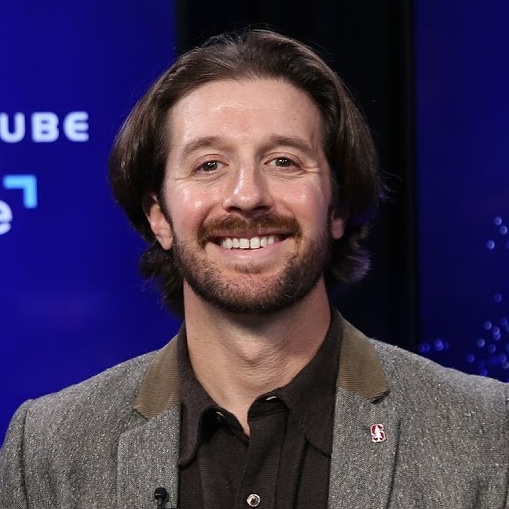
>> Welcome back everyone to the Crypto Trailblazer series, a two-day virtual event with theCUBE and the NYSE Wired community, an open community that revolves around content. My name is John Furrier, host of theCUBE. Steven Willinger's here, general partner of Blockchain Builders, and also runs the Stanford Blockchain Accelerator at Stanford University. Steven, great to see you. Thanks for coming in.
Steven Willinger
>> Yeah, thanks for having me.>> I got my Stanford pin there on the jacket. Go Cardinal.
Steven Willinger
>> Go Cardinal. Yep.>> Go Cardinal. I was going to say the other one, but... Cal and Stanford, both have been really instrumental in the Ethereum Foundation's visit. You got GTC next week. A lot of concentrated brain power in the Bay Area, activated, a lot of activities. You hosted, at Stanford, a big event. So tell us what's going on, then I'll get some things you're working on.
Steven Willinger
>> Yeah, sure thing. So Blockchain Builders is an early stage fund, and I guess I can go into it in depth, but a lot of what we've done is build a community and ecosystem around building the blockchain space, starting off with the Stanford ecosystem. But as we've grown, that's evolved, and we've partnered very closely with some great partners like the Berkeley blockchain ecosystem, and most recently the Ethereum Foundation.>> And they were in here all week?
Steven Willinger
>> They were here all week, right. And so ETHSF, which has happened all week this week, and I think has been a resounding success, exceeded expectations, was a close partnership of those three organizations.>> Talk about the shift. We were talking at dinner, the speakers dinner, you worked at Coinbase, you've got a lot of experience in the industry. As this community... I call it a community because it's really got... it's a movement, really, as well. Global movement. As the climate gets better, you start to see the commercialization, line of sight into commercialization, the maturization of the chain, apps being built on it. Ethereum's looking good, the team's coming together. Talk about that dynamic, and some of the focused conversations of this week. What was happening? What were some of the hackathon participants doing? What's the trends in the trenches?
Steven Willinger
>> Yeah, absolutely. So I think there's a couple things that are already old news, and everyone likes the new thing, but I think that they're critical, and they are actually what are being adopted quite quickly and getting a lot of regulatory clearance. And so I think in crypto, the original use cases have to do with payments, have to do with asset ownership and swaps. And those have grown quite rapidly in the DeFi ecosystem, but we're held back by an unclear regulatory environment, which has rapidly shifted. And so as the pendulum swings the other way, we're seeing really rapid growth in stable coins, and I think with the market structure bill, we'll also see really rapid growth and eagerness to bring both the crypto-native assets and also off-chain, quote-unquote "real world" assets on-chain, because of the incredible innovation that's happened in DeFi that enables really fast settlement, and really a cool interoperability between assets.>> Yeah. Yeah. Yeah, we just had Michael Hendrick on of 0G. I know that's one of your portfolio companies, right?
Steven Willinger
>> Probably.>> They're talking about high speed, and he talked about some of the latency requirements for DeFi. We're starting to already see liquidity happening in the sense of companies potentially going public. Brian Baumann, who's the founder of NYSE Wired, and I were talking about there's going to be a mag seven in crypto on the NYSE soon. And so you're starting to see companies going public. Crypto companies. Right? That's the next wave. So it's definitely coming to money. So tech and money are intersecting, hundred percent. Michael talked about social change, so you got money, tech and impact. What I like about your community is that everyone has an impact mindset, but they're not afraid to make money either, but the money's going to be directed other places. Sometimes in the pocket, but sometimes into social good because of the efficiency. This is the trend. It's a nexus of all three going at the same time. What's your reaction to that? Do you have any opinions and commentary on that dynamic?
Steven Willinger
>> Oh, totally. I'm a diehard capitalist, went to business school, work in this industry. I don't think everything that is good comes from greed per se, but it certainly drives ambition, right? And so having spent a bunch of time at Stanford, and spending every day, every week working with Stanford founders, intelligence is a really important vector for a successful entrepreneur, but so is ambition, right? And it's hard to meet founders more ambitious than those in the ecosystem, and also those in crypto, right? They really do want to change the world. They think very differently.>> Yeah.
Steven Willinger
>> I do think also that the crypto community is not a monolith, but there are certainly parts of it, and the parts that I gravitate towards, who do want to have a positive social impact. Those ideals are not always the most liberal of ideals. They don't think that good necessarily comes from just giving away money, they think good comes from building durable systems that give people rights, give people liberties.>> Yeah. I always say to people, radical is only a moment in time, because most radical stuff becomes mainstream. That's where innovation comes from. Obviously libertarian's a big view. I want to ask you about the Stanford piece, because you said business school, and I went to business school, I've obviously got a CS degree too. And we were joking on an earlier segment in the community here around, I think someone who said that the script is flipped. We hear that a lot. "Oh yeah, the script is flipped." But the comment was, what you learn, what you learn to do, is change because of the infrastructure changes, and some of the paradigm is changing at the same time, which is emotional. It's also financial, and it's also group connections that are involved in these things. So what are some of the things that are... I won't say becoming obsolete, because when I went to school, you made money and then you build a foundation, you know? Get out and a couple of nice homes, whatever you do with the money. But that's kind of when you're successful. There's now things that are changing. Even business model, "Like this is how you invest, this is how you invest in the people." We're talking to another founder who's doing trillions of dollars in trades with like 50 people. Like, what? That's not conventional.
Steven Willinger
>> Totally. >> What are the conventional wisdoms being slaughtered, if you will, or just flipped upside down or changed or modified?
Steven Willinger
>> That's a really interesting and philosophical question, and not one I've been asked before. I think I can take from some current examples, and...>> Yeah, just things you see, observations. There's no right answer. I'm thinking about it too.
Steven Willinger
>> Yeah, and I'm relatively unopinionated about these. I think it's sort of like any CapEx decision you need to make, right? If you manage to create a lot of value and you accrue a lot of wealth, that is not inherently a good or bad thing. I think as a system, it rewards, actually, innovation and ambition. And then what you choose to do next is another CapEx decision. Like, do I have another big idea, right? If you're Elon, you go, "Okay, I built a payments company, now a car company." He keeps having that next big idea, and love him or hate him, he takes all that wealth and doubles down on whatever he thinks that big needle-moving idea is. And he's not entered the ranks of a billionaire who's donating a lot to charity yet. The inverse might be how Bill Gates does it, right?>> Yeah.
Steven Willinger
>> Where he's very specific in how he donates, and he's not doubling down on commercial ideas in the same way. And so I don't know what the right answer is. >> Yeah. Yeah. Is there an entrepreneurial formula that you might see? Obviously we'll get into some of the things you're doing with Blockchain Builders. Is there an entrepreneurial formula, that may be an old VC model, changing? Because the teams are decentralized. I was joking the other day, two guys in a garage, now it's two guys on telegram.
Steven Willinger
>> Yeah.>> So you have a whole nother...
Steven Willinger
>> Yeah, there's maybe two vectors here, right? Just what it takes to build and be successful in crypto, and what size that needs to be, and then I also think there's another interesting vector as AI emerges, right? There's a lot of talk about we're going to have the first solo unicorn started in the next year, five years. Who knows, right?>> Yeah yeah.
Steven Willinger
>> It feels like it's right around the corner. Yeah, and I think in crypto, the model has changed. When you have these globally distributed state systems, and not only that, but you don't have to pay to grow the infrastructure, it's actually your user who pays to use the infrastructure... And we have founders like Michael, who build beautiful high-scale infrastructure. If you build something useful and that is captivating, you can deploy it and the distribution is taken care of.>> Yeah.
Steven Willinger
>> It's not always that easy, but it can be, right? The number of people who work at Uniswap, or Hyperliquid, right? Hyperliquid is one of the fastest growing protocols for DeFi right now. And I don't know, there's a handful of people who work there, and it manages billions in transactions and billions in TVL.>> Yeah.
Steven Willinger
>> So that model's flipped on its head totally. And then AI, in the same way, you probably don't need as many technical co-founders, maybe even any, to build a really successful business. So.>> Yeah, that's a great point. Talk about the work you're doing, and just give a quick plug for what happened this week with ETHSF in Stanford. What'd you guys do?
Steven Willinger
>> Yeah, absolutely. So yeah, a bit of context on me and Blockchain Builders. Blockchain Builders is an early stage fund. We're in fund one, and we invest primarily but not exclusively in Stanford founders, right? So alumni and students who have come from that ecosystem. So how did we get there though, right, in starting that fund? Before there was a fund, my two partners and I had already either worked on or started a couple of really important things that are all centered around building up a entrepreneurial ecosystem or community around Stanford. And so there's the Stanford Blockchain Accelerator, which is now in its seventh cohort and has put great teams like Michael and Zero Gravity through it, but many others, probably 70 teams who have raised hundreds and hundreds of millions of dollars from all the VCs you might know, the Andreessens or the Paradigms or the Electric or the Sequoias or whomever, right?>> Yeah. Yeah.
Steven Willinger
>> And there's awesome products that come out of there, have great product market fit, great marks, yada yada yada. So there's the accelerator, which is really what started it all for us and really gives entrepreneurs that leg up to try and be successful. But we also teach a class on blockchain entrepreneurship at Stanford called MSE 447. And so we do that to improve the odds of engagement in crypto, and also company formation, top of funnel for that ecosystem.>> Yeah.
Steven Willinger
>> It also happens to be a gathering point for the community, as basically anyone who's close to Stanford and is an alum or student often comes to those classes, because there's good content from us, and we also get amazing guest speakers.>> Yeah.
Steven Willinger
>> Like Vitalik was our guest speaker as a part of this week's programming, but also the guest speaker for our last day of class.>> Yeah.
Steven Willinger
>> And then we've also started an event series called BASS, Blockchain Application Summit at Stanford. And we throw a couple of events a year and they are kind of on the order of a thousand people, and they are very high signal for builders, right?>> Yeah. Yeah.
Steven Willinger
>> We get really strong presenters on stage to talk about the innovations they're creating and seeing, and then we also get new, really promising founders in the mix as well. And it ends up being just sort of like lightning in a bottle, right?>> Yeah. The magic happens when you put great people together.
Steven Willinger
>> Yeah, absolutely. So we work really hard on all those things, and we do all those things separate from the fund. Those are all essentially volunteer work, don't get paid to teach. The accelerator's free and non-dilutive. The BASS event is run out of a nonprofit and it's free to attend, and it's just funded by sponsors who get to put their logos all over the place.>> Yeah. I mean it's a great enablement for the community too, because like you said, you're pipelining in from the class, the event brings people together. So this is a very community vibe, but also it helps out on the fund.
Steven Willinger
>> Totally.>> The deal flow. I mean, that's a good... you know.
Steven Willinger
>> There is an incidental benefit that we do get a great deal flow, yes.>> Yeah. What's the coolest thing you're working on right now that you could point... Or maybe one or two things that you're working on right now. What are cool things?
Steven Willinger
>> Boy, cool from what perspective? Technologically interesting, or?>> Technology cool and business model, innovation cool. Take those two.
Steven Willinger
>> Yeah. So while your first question, I teed off what is actually happening in crypto, and I talked about some of the old guard of use cases, the most interesting stuff is definitely happening in AI. So you just had Michael up, right?>> Yeah.
Steven Willinger
>> And there's a bunch of categories in AI that are fascinating, and I'd say over half of our investments are somewhere in the intersection of crypto and AI, right?>> Yeah.
Steven Willinger
>> So what Zero Gravity is working on, which is a L1 specifically for AI that brings a ton of the benefits of hosting and serving inference in a decentralized manner to bear and making it easily accessible as one.>> Yeah.
Steven Willinger
>> But there's a bunch of other subcategories in AI that I think are interesting. So one, perhaps an input to what Michael's working on, is decentralized compute networks that can go from bare metal all the way to hosted models, to provide much more cost-effective inference for networks like Michael's, but also directly to users of that, and sort of give you an alternative to the hyperscalers that is both potentially cheaper but also permissionless and has those properties.>> Yeah. Yeah.
Steven Willinger
>> There's also the whole data side, right? We've reached this point in AI where scaling from training has tapered off a lot. We're getting cool scaling on inference from test time inference scaling->> Yeah....
Steven Willinger
>> but data is going to be the wall, right? And so crypto is an amazing platform to incentivize people to contribute novel data and then also provide labeling, that can train labelers ultimately, so that we can get past this quote-unquote "data wall" and train better AI models.>> Yeah, yeah. I love what you do. First of all, it's great for entrepreneurs. Entrepreneurship is the future, if the future's there. All the best brands come out of these waves. The cloud brought in no-names like Airbnb, Dropbox, you name them all. No names, just developers hanging out and doing things.
Steven Willinger
>> Literally homeless developers at Airbnb, yeah.>> Ruby on Rails. Okay, no problem. But what I love about blockchain, and love to get your perspective on this, is that it's such an infrastructure opportunity. And infrastructure always has those movements. People get caught up in the crypto, the coins, and I do like the stablecoin moment that we'll come back to in a second, but the infrastructure's where the action is, certainly on the AI side. Look at GTC. You mentioned a lot of the folks who are in town for GTC. AI factories are coming. Yeah, that's centralized, but it's also distributed computing, so there's dots that connect there. Decentralized will be a factor, and companies will have to build on it. So the question is, one, your perspective on that, and two, your strategy to, one, incubate them, and fund them. Are people on board with this? I mean, are the VCs? Are the checks coming in? Do you incubate them and then show them around? What happens?
Steven Willinger
>> Yeah, absolutely. It's super diverse, right? But I think just on infrastructure, it kind of has a dual meaning when you talk crypto. I imagine when you talk infrastructure, you think hyperscalers, you think the chips that go in the data center.>> Yeah.
Steven Willinger
>> When I think infrastructure, I think of the protocols that are able to serve general purpose blockchain applications. And they're not dissimilar, right? One's maybe just a layer abstracted above it. I think crypto, or at least a blockchain and decentralized AI, has a role to play in both of those. So when it comes to actual infrastructure, the things I mentioned, the decentralized compute, are going to be super important. Right? Not every bit of compute can come from a hyperscaler, and it really shouldn't. That would be a dark world, ultimately.>> Yeah.
Steven Willinger
>> And then I think that's referring mostly to inference, actually.>> Yeah.
Steven Willinger
>> The flip side of that is actually around training, right? I was really bearish on this concept, but there's a concept called decentralized training, and it sounds crazy, right? Because it's like, "Oh no, we need to co-locate all these machines. We need really high throughput memory to make the training runs even have a remote chance of being successful. So why would we do it any other way?">> Yeah.
Steven Willinger
>> But we're sort of hitting a wall there, not from the raw technology side, like, well, the GPUs will improve, the memory will improve. But we're going to hit a point where there's not enough power infrastructure in any one place to support the scale of training runs.>> Yeah.
Steven Willinger
>> So we're either building, you know, Dyson sphere like infrastructure or whatever, right? But that seems pretty impractical and I think we'll have our progress gated here soon.>> Yeah, yeah. Yeah.
Steven Willinger
>> And so instead it makes sense to come up with technologies that allows you to link up data centers more effectively and distribute training.>> Yeah. And we saw a lot of talks here on theCUBE around, I used to call it grid, but cycle time reuse, so all kinds of efficiencies around idle states or what's resource-clever ways to do that. That seemed to be one. Okay, so you got the cool things. How's it been being an incubator and an investor in this space? Because again, it's not for the faint of heart. This is a really technical community, okay? It's mission driven, and again, use the word... What was the word you used? But it's not monolithic. Very opinionated, I'll just say opinionated. So it's very active, which is a good thing.
Steven Willinger
>> Totally.>> What's it like?
Steven Willinger
>> Yeah, I wouldn't want to work with people who aren't passionate or opinionated. That would be pretty boring.>> Yeah.
Steven Willinger
>> What's it been like? Well, I guess if you ask for me personally, I've transitioned from a very transactional role at Coinbase Ventures, where the amount of deal flow is infinite and the job was very much to quickly evaluate and make good decisions. And it was an awesome job, I loved my time there, but what I'm doing is flipped entirely on its head, right? I spent almost all my time doing community building, and meeting great founders from a pretty small and self-selecting... or not self-selecting, just highly selective ecosystem. And then instead of spending all my time meeting with someone who somehow got a hold of me and trying to find out if they're a grifter scammer or a really awesome builder, I already am lucky enough to, A, have built relationships in the community, B, have all those community references, and C, know people before I even have to get to an investment decision.>> Yeah.
Steven Willinger
>> And then my job is way less about making smart decisions, because I've already come to an easy decision by having a longitudinal relationship with people. And instead, my job is to really help people, right?>> Yeah.
Steven Willinger
>> So instead of making a bunch of small investment decisions, I'm building community and working very closely with founders over intense periods of time to help them be successful.>> Yeah. Yeah, that is such a great attitude. because it's value add, right? If you look at the venture capital mall, some will say it's collapsing. It used to be value add, and then some would say it became value subtract. And then that's why this whole wave of the tech bro emerged, because they didn't want the VCs on their board. And by the way, that's why solo GPs, solo investors, are founders, and the first checks are coming from either solo general partners or networks.
Steven Willinger
>> Yeah.>> So you're already seeing trust as a huge factor in decision-making on investing. Those are the best deals, coming into the network, and then the VCs sit at the A-fence, series A, waiting for the deals to come up, and they pay more, obviously. But you know, this is good.
Steven Willinger
>> Yeah.>> I mean, I think it's a good thing.
Steven Willinger
>> I think so.>> I like that idea. I mean it makes the Cube Ventures idea pretty excellent. You know? Not that we would do that, but the point is maybe we would someday. But the point is relationships. People want value. It's so hard to do an early-stage company. The make or break factors could be... It's a thin line.
Steven Willinger
>> Oh yeah.>> I've seen companies make it because they got the right break. It could be a news article, could be an intro at the right time, and having an advisor or a friend, or... Those things are really super important.
Steven Willinger
>> So important, so important.>> Off my soapbox now, but...
Steven Willinger
>> No no, that's great. I could get on that soapbox with you.>> Yeah.
Steven Willinger
>> Some part of me believes that every VC should in some way run a simulacrum of an accelerator, right? The way we invest often involves so much time with the founder both before and after the check. And it's in a sprint format, so it scales.>> Yeah. Yeah.
Steven Willinger
>> But we know the team personally, we know what the genesis was, we know what they're working on.>> Yeah.
Steven Willinger
>> So even if after we finish the sprint with them, time passes, we are able to track the story and be far more helpful than if it was just the diligence process, which is a sales process, ultimately, that got us there.>> Yeah. Yeah. I love the whole transactional relationship. I think that's the future. We believe in trust networks with Cube and NYSE Wired, obviously. What are you up to now? What are some of your goals? Put a plug in for activities. What's on your agenda, what's your goals? Give us an update.
Steven Willinger
>> Sure thing. So we just finished a really busy quarter, right? And it was all around community building. So we had a big event in East Denver called BASS Denver, right? And we had 1200 people through our door, we put a bunch of our founders on stage, it was a lot of work and it was a great event. And then quickly after, like two weeks later, ETHSF was here, right? And ETHSF has been wonderful. It's in its first run, and I think it's brought a lot of blockchain energy back to the Bay Area.>> Yeah.
Steven Willinger
>> And it's also been purposely geared towards combining that energy with some of the momentum that AI has. And so we've had some wonderful collaborations with AI builders in the region too.>> Yeah.
Steven Willinger
>> So that has been top of mind. All those activities support our portfolio companies, which is good.>> Yeah.
Steven Willinger
>> But we certainly are excited to get off our event planning sort of sprint, and circle back and check in how teams are doing after we plug them into all these events.>> Yeah. Yeah, I mean, you've got to plant the crops and farm them up and get out and get help to companies.
Steven Willinger
>> Yep, absolutely.>> Love what you do, Steven. Great to meet you guys, and looking forward to working with you. theCUBE is here in Palo Alto. We support your mission and events. You need support, love what you do, and again, it's entrepreneurial, but it's value add for the companies and society. Thanks for coming on.
Steven Willinger
>> Yeah, thanks so much for having me.>> All right. The crypto trail, blazing the trails. New models are emerging, new ways to do business. Relationships matter in community. People are connected, but blockchain builders are out there. You're starting to see programmable infrastructure. You got the DApps has been around, that concept. People love that. But value, DeFi, money, impact? All happening here. Of course, theCUBE is bringing the data, theCUBE and the NYSE Wired community special series on the crypto, blockchain trailblazers, of course we're bringing you all the data. Thanks for watching.
>> Welcome back everyone to the Crypto Trailblazer series, a two-day virtual event with theCUBE and the NYSE Wired community, an open community that revolves around content. My name is John Furrier, host of theCUBE. Steven Willinger's here, general partner of Blockchain Builders, and also runs the Stanford Blockchain Accelerator at Stanford University. Steven, great to see you. Thanks for coming in.
Steven Willinger
>> Yeah, thanks for having me.>> I got my Stanford pin there on the jacket. Go Cardinal.
Steven Willinger
>> Go Cardinal. Yep.>> Go Cardinal. I was going to say the other one, but... Cal and Stanford, both have been really instrumental in the Ethereum Foundation's visit. You got GTC next week. A lot of concentrated brain power in the Bay Area, activated, a lot of activities. You hosted, at Stanford, a big event. So tell us what's going on, then I'll get some things you're working on.
Steven Willinger
>> Yeah, sure thing. So Blockchain Builders is an early stage fund, and I guess I can go into it in depth, but a lot of what we've done is build a community and ecosystem around building the blockchain space, starting off with the Stanford ecosystem. But as we've grown, that's evolved, and we've partnered very closely with some great partners like the Berkeley blockchain ecosystem, and most recently the Ethereum Foundation.>> And they were in here all week?
Steven Willinger
>> They were here all week, right. And so ETHSF, which has happened all week this week, and I think has been a resounding success, exceeded expectations, was a close partnership of those three organizations.>> Talk about the shift. We were talking at dinner, the speakers dinner, you worked at Coinbase, you've got a lot of experience in the industry. As this community... I call it a community because it's really got... it's a movement, really, as well. Global movement. As the climate gets better, you start to see the commercialization, line of sight into commercialization, the maturization of the chain, apps being built on it. Ethereum's looking good, the team's coming together. Talk about that dynamic, and some of the focused conversations of this week. What was happening? What were some of the hackathon participants doing? What's the trends in the trenches?
Steven Willinger
>> Yeah, absolutely. So I think there's a couple things that are already old news, and everyone likes the new thing, but I think that they're critical, and they are actually what are being adopted quite quickly and getting a lot of regulatory clearance. And so I think in crypto, the original use cases have to do with payments, have to do with asset ownership and swaps. And those have grown quite rapidly in the DeFi ecosystem, but we're held back by an unclear regulatory environment, which has rapidly shifted. And so as the pendulum swings the other way, we're seeing really rapid growth in stable coins, and I think with the market structure bill, we'll also see really rapid growth and eagerness to bring both the crypto-native assets and also off-chain, quote-unquote "real world" assets on-chain, because of the incredible innovation that's happened in DeFi that enables really fast settlement, and really a cool interoperability between assets.>> Yeah. Yeah. Yeah, we just had Michael Hendrick on of 0G. I know that's one of your portfolio companies, right?
Steven Willinger
>> Probably.>> They're talking about high speed, and he talked about some of the latency requirements for DeFi. We're starting to already see liquidity happening in the sense of companies potentially going public. Brian Baumann, who's the founder of NYSE Wired, and I were talking about there's going to be a mag seven in crypto on the NYSE soon. And so you're starting to see companies going public. Crypto companies. Right? That's the next wave. So it's definitely coming to money. So tech and money are intersecting, hundred percent. Michael talked about social change, so you got money, tech and impact. What I like about your community is that everyone has an impact mindset, but they're not afraid to make money either, but the money's going to be directed other places. Sometimes in the pocket, but sometimes into social good because of the efficiency. This is the trend. It's a nexus of all three going at the same time. What's your reaction to that? Do you have any opinions and commentary on that dynamic?
Steven Willinger
>> Oh, totally. I'm a diehard capitalist, went to business school, work in this industry. I don't think everything that is good comes from greed per se, but it certainly drives ambition, right? And so having spent a bunch of time at Stanford, and spending every day, every week working with Stanford founders, intelligence is a really important vector for a successful entrepreneur, but so is ambition, right? And it's hard to meet founders more ambitious than those in the ecosystem, and also those in crypto, right? They really do want to change the world. They think very differently.>> Yeah.
Steven Willinger
>> I do think also that the crypto community is not a monolith, but there are certainly parts of it, and the parts that I gravitate towards, who do want to have a positive social impact. Those ideals are not always the most liberal of ideals. They don't think that good necessarily comes from just giving away money, they think good comes from building durable systems that give people rights, give people liberties.>> Yeah. I always say to people, radical is only a moment in time, because most radical stuff becomes mainstream. That's where innovation comes from. Obviously libertarian's a big view. I want to ask you about the Stanford piece, because you said business school, and I went to business school, I've obviously got a CS degree too. And we were joking on an earlier segment in the community here around, I think someone who said that the script is flipped. We hear that a lot. "Oh yeah, the script is flipped." But the comment was, what you learn, what you learn to do, is change because of the infrastructure changes, and some of the paradigm is changing at the same time, which is emotional. It's also financial, and it's also group connections that are involved in these things. So what are some of the things that are... I won't say becoming obsolete, because when I went to school, you made money and then you build a foundation, you know? Get out and a couple of nice homes, whatever you do with the money. But that's kind of when you're successful. There's now things that are changing. Even business model, "Like this is how you invest, this is how you invest in the people." We're talking to another founder who's doing trillions of dollars in trades with like 50 people. Like, what? That's not conventional.
Steven Willinger
>> Totally. >> What are the conventional wisdoms being slaughtered, if you will, or just flipped upside down or changed or modified?
Steven Willinger
>> That's a really interesting and philosophical question, and not one I've been asked before. I think I can take from some current examples, and...>> Yeah, just things you see, observations. There's no right answer. I'm thinking about it too.
Steven Willinger
>> Yeah, and I'm relatively unopinionated about these. I think it's sort of like any CapEx decision you need to make, right? If you manage to create a lot of value and you accrue a lot of wealth, that is not inherently a good or bad thing. I think as a system, it rewards, actually, innovation and ambition. And then what you choose to do next is another CapEx decision. Like, do I have another big idea, right? If you're Elon, you go, "Okay, I built a payments company, now a car company." He keeps having that next big idea, and love him or hate him, he takes all that wealth and doubles down on whatever he thinks that big needle-moving idea is. And he's not entered the ranks of a billionaire who's donating a lot to charity yet. The inverse might be how Bill Gates does it, right?>> Yeah.
Steven Willinger
>> Where he's very specific in how he donates, and he's not doubling down on commercial ideas in the same way. And so I don't know what the right answer is. >> Yeah. Yeah. Is there an entrepreneurial formula that you might see? Obviously we'll get into some of the things you're doing with Blockchain Builders. Is there an entrepreneurial formula, that may be an old VC model, changing? Because the teams are decentralized. I was joking the other day, two guys in a garage, now it's two guys on telegram.
Steven Willinger
>> Yeah.>> So you have a whole nother...
Steven Willinger
>> Yeah, there's maybe two vectors here, right? Just what it takes to build and be successful in crypto, and what size that needs to be, and then I also think there's another interesting vector as AI emerges, right? There's a lot of talk about we're going to have the first solo unicorn started in the next year, five years. Who knows, right?>> Yeah yeah.
Steven Willinger
>> It feels like it's right around the corner. Yeah, and I think in crypto, the model has changed. When you have these globally distributed state systems, and not only that, but you don't have to pay to grow the infrastructure, it's actually your user who pays to use the infrastructure... And we have founders like Michael, who build beautiful high-scale infrastructure. If you build something useful and that is captivating, you can deploy it and the distribution is taken care of.>> Yeah.
Steven Willinger
>> It's not always that easy, but it can be, right? The number of people who work at Uniswap, or Hyperliquid, right? Hyperliquid is one of the fastest growing protocols for DeFi right now. And I don't know, there's a handful of people who work there, and it manages billions in transactions and billions in TVL.>> Yeah.
Steven Willinger
>> So that model's flipped on its head totally. And then AI, in the same way, you probably don't need as many technical co-founders, maybe even any, to build a really successful business. So.>> Yeah, that's a great point. Talk about the work you're doing, and just give a quick plug for what happened this week with ETHSF in Stanford. What'd you guys do?
Steven Willinger
>> Yeah, absolutely. So yeah, a bit of context on me and Blockchain Builders. Blockchain Builders is an early stage fund. We're in fund one, and we invest primarily but not exclusively in Stanford founders, right? So alumni and students who have come from that ecosystem. So how did we get there though, right, in starting that fund? Before there was a fund, my two partners and I had already either worked on or started a couple of really important things that are all centered around building up a entrepreneurial ecosystem or community around Stanford. And so there's the Stanford Blockchain Accelerator, which is now in its seventh cohort and has put great teams like Michael and Zero Gravity through it, but many others, probably 70 teams who have raised hundreds and hundreds of millions of dollars from all the VCs you might know, the Andreessens or the Paradigms or the Electric or the Sequoias or whomever, right?>> Yeah. Yeah.
Steven Willinger
>> And there's awesome products that come out of there, have great product market fit, great marks, yada yada yada. So there's the accelerator, which is really what started it all for us and really gives entrepreneurs that leg up to try and be successful. But we also teach a class on blockchain entrepreneurship at Stanford called MSE 447. And so we do that to improve the odds of engagement in crypto, and also company formation, top of funnel for that ecosystem.>> Yeah.
Steven Willinger
>> It also happens to be a gathering point for the community, as basically anyone who's close to Stanford and is an alum or student often comes to those classes, because there's good content from us, and we also get amazing guest speakers.>> Yeah.
Steven Willinger
>> Like Vitalik was our guest speaker as a part of this week's programming, but also the guest speaker for our last day of class.>> Yeah.
Steven Willinger
>> And then we've also started an event series called BASS, Blockchain Application Summit at Stanford. And we throw a couple of events a year and they are kind of on the order of a thousand people, and they are very high signal for builders, right?>> Yeah. Yeah.
Steven Willinger
>> We get really strong presenters on stage to talk about the innovations they're creating and seeing, and then we also get new, really promising founders in the mix as well. And it ends up being just sort of like lightning in a bottle, right?>> Yeah. The magic happens when you put great people together.
Steven Willinger
>> Yeah, absolutely. So we work really hard on all those things, and we do all those things separate from the fund. Those are all essentially volunteer work, don't get paid to teach. The accelerator's free and non-dilutive. The BASS event is run out of a nonprofit and it's free to attend, and it's just funded by sponsors who get to put their logos all over the place.>> Yeah. I mean it's a great enablement for the community too, because like you said, you're pipelining in from the class, the event brings people together. So this is a very community vibe, but also it helps out on the fund.
Steven Willinger
>> Totally.>> The deal flow. I mean, that's a good... you know.
Steven Willinger
>> There is an incidental benefit that we do get a great deal flow, yes.>> Yeah. What's the coolest thing you're working on right now that you could point... Or maybe one or two things that you're working on right now. What are cool things?
Steven Willinger
>> Boy, cool from what perspective? Technologically interesting, or?>> Technology cool and business model, innovation cool. Take those two.
Steven Willinger
>> Yeah. So while your first question, I teed off what is actually happening in crypto, and I talked about some of the old guard of use cases, the most interesting stuff is definitely happening in AI. So you just had Michael up, right?>> Yeah.
Steven Willinger
>> And there's a bunch of categories in AI that are fascinating, and I'd say over half of our investments are somewhere in the intersection of crypto and AI, right?>> Yeah.
Steven Willinger
>> So what Zero Gravity is working on, which is a L1 specifically for AI that brings a ton of the benefits of hosting and serving inference in a decentralized manner to bear and making it easily accessible as one.>> Yeah.
Steven Willinger
>> But there's a bunch of other subcategories in AI that I think are interesting. So one, perhaps an input to what Michael's working on, is decentralized compute networks that can go from bare metal all the way to hosted models, to provide much more cost-effective inference for networks like Michael's, but also directly to users of that, and sort of give you an alternative to the hyperscalers that is both potentially cheaper but also permissionless and has those properties.>> Yeah. Yeah.
Steven Willinger
>> There's also the whole data side, right? We've reached this point in AI where scaling from training has tapered off a lot. We're getting cool scaling on inference from test time inference scaling->> Yeah....
Steven Willinger
>> but data is going to be the wall, right? And so crypto is an amazing platform to incentivize people to contribute novel data and then also provide labeling, that can train labelers ultimately, so that we can get past this quote-unquote "data wall" and train better AI models.>> Yeah, yeah. I love what you do. First of all, it's great for entrepreneurs. Entrepreneurship is the future, if the future's there. All the best brands come out of these waves. The cloud brought in no-names like Airbnb, Dropbox, you name them all. No names, just developers hanging out and doing things.
Steven Willinger
>> Literally homeless developers at Airbnb, yeah.>> Ruby on Rails. Okay, no problem. But what I love about blockchain, and love to get your perspective on this, is that it's such an infrastructure opportunity. And infrastructure always has those movements. People get caught up in the crypto, the coins, and I do like the stablecoin moment that we'll come back to in a second, but the infrastructure's where the action is, certainly on the AI side. Look at GTC. You mentioned a lot of the folks who are in town for GTC. AI factories are coming. Yeah, that's centralized, but it's also distributed computing, so there's dots that connect there. Decentralized will be a factor, and companies will have to build on it. So the question is, one, your perspective on that, and two, your strategy to, one, incubate them, and fund them. Are people on board with this? I mean, are the VCs? Are the checks coming in? Do you incubate them and then show them around? What happens?
Steven Willinger
>> Yeah, absolutely. It's super diverse, right? But I think just on infrastructure, it kind of has a dual meaning when you talk crypto. I imagine when you talk infrastructure, you think hyperscalers, you think the chips that go in the data center.>> Yeah.
Steven Willinger
>> When I think infrastructure, I think of the protocols that are able to serve general purpose blockchain applications. And they're not dissimilar, right? One's maybe just a layer abstracted above it. I think crypto, or at least a blockchain and decentralized AI, has a role to play in both of those. So when it comes to actual infrastructure, the things I mentioned, the decentralized compute, are going to be super important. Right? Not every bit of compute can come from a hyperscaler, and it really shouldn't. That would be a dark world, ultimately.>> Yeah.
Steven Willinger
>> And then I think that's referring mostly to inference, actually.>> Yeah.
Steven Willinger
>> The flip side of that is actually around training, right? I was really bearish on this concept, but there's a concept called decentralized training, and it sounds crazy, right? Because it's like, "Oh no, we need to co-locate all these machines. We need really high throughput memory to make the training runs even have a remote chance of being successful. So why would we do it any other way?">> Yeah.
Steven Willinger
>> But we're sort of hitting a wall there, not from the raw technology side, like, well, the GPUs will improve, the memory will improve. But we're going to hit a point where there's not enough power infrastructure in any one place to support the scale of training runs.>> Yeah.
Steven Willinger
>> So we're either building, you know, Dyson sphere like infrastructure or whatever, right? But that seems pretty impractical and I think we'll have our progress gated here soon.>> Yeah, yeah. Yeah.
Steven Willinger
>> And so instead it makes sense to come up with technologies that allows you to link up data centers more effectively and distribute training.>> Yeah. And we saw a lot of talks here on theCUBE around, I used to call it grid, but cycle time reuse, so all kinds of efficiencies around idle states or what's resource-clever ways to do that. That seemed to be one. Okay, so you got the cool things. How's it been being an incubator and an investor in this space? Because again, it's not for the faint of heart. This is a really technical community, okay? It's mission driven, and again, use the word... What was the word you used? But it's not monolithic. Very opinionated, I'll just say opinionated. So it's very active, which is a good thing.
Steven Willinger
>> Totally.>> What's it like?
Steven Willinger
>> Yeah, I wouldn't want to work with people who aren't passionate or opinionated. That would be pretty boring.>> Yeah.
Steven Willinger
>> What's it been like? Well, I guess if you ask for me personally, I've transitioned from a very transactional role at Coinbase Ventures, where the amount of deal flow is infinite and the job was very much to quickly evaluate and make good decisions. And it was an awesome job, I loved my time there, but what I'm doing is flipped entirely on its head, right? I spent almost all my time doing community building, and meeting great founders from a pretty small and self-selecting... or not self-selecting, just highly selective ecosystem. And then instead of spending all my time meeting with someone who somehow got a hold of me and trying to find out if they're a grifter scammer or a really awesome builder, I already am lucky enough to, A, have built relationships in the community, B, have all those community references, and C, know people before I even have to get to an investment decision.>> Yeah.
Steven Willinger
>> And then my job is way less about making smart decisions, because I've already come to an easy decision by having a longitudinal relationship with people. And instead, my job is to really help people, right?>> Yeah.
Steven Willinger
>> So instead of making a bunch of small investment decisions, I'm building community and working very closely with founders over intense periods of time to help them be successful.>> Yeah. Yeah, that is such a great attitude. because it's value add, right? If you look at the venture capital mall, some will say it's collapsing. It used to be value add, and then some would say it became value subtract. And then that's why this whole wave of the tech bro emerged, because they didn't want the VCs on their board. And by the way, that's why solo GPs, solo investors, are founders, and the first checks are coming from either solo general partners or networks.
Steven Willinger
>> Yeah.>> So you're already seeing trust as a huge factor in decision-making on investing. Those are the best deals, coming into the network, and then the VCs sit at the A-fence, series A, waiting for the deals to come up, and they pay more, obviously. But you know, this is good.
Steven Willinger
>> Yeah.>> I mean, I think it's a good thing.
Steven Willinger
>> I think so.>> I like that idea. I mean it makes the Cube Ventures idea pretty excellent. You know? Not that we would do that, but the point is maybe we would someday. But the point is relationships. People want value. It's so hard to do an early-stage company. The make or break factors could be... It's a thin line.
Steven Willinger
>> Oh yeah.>> I've seen companies make it because they got the right break. It could be a news article, could be an intro at the right time, and having an advisor or a friend, or... Those things are really super important.
Steven Willinger
>> So important, so important.>> Off my soapbox now, but...
Steven Willinger
>> No no, that's great. I could get on that soapbox with you.>> Yeah.
Steven Willinger
>> Some part of me believes that every VC should in some way run a simulacrum of an accelerator, right? The way we invest often involves so much time with the founder both before and after the check. And it's in a sprint format, so it scales.>> Yeah. Yeah.
Steven Willinger
>> But we know the team personally, we know what the genesis was, we know what they're working on.>> Yeah.
Steven Willinger
>> So even if after we finish the sprint with them, time passes, we are able to track the story and be far more helpful than if it was just the diligence process, which is a sales process, ultimately, that got us there.>> Yeah. Yeah. I love the whole transactional relationship. I think that's the future. We believe in trust networks with Cube and NYSE Wired, obviously. What are you up to now? What are some of your goals? Put a plug in for activities. What's on your agenda, what's your goals? Give us an update.
Steven Willinger
>> Sure thing. So we just finished a really busy quarter, right? And it was all around community building. So we had a big event in East Denver called BASS Denver, right? And we had 1200 people through our door, we put a bunch of our founders on stage, it was a lot of work and it was a great event. And then quickly after, like two weeks later, ETHSF was here, right? And ETHSF has been wonderful. It's in its first run, and I think it's brought a lot of blockchain energy back to the Bay Area.>> Yeah.
Steven Willinger
>> And it's also been purposely geared towards combining that energy with some of the momentum that AI has. And so we've had some wonderful collaborations with AI builders in the region too.>> Yeah.
Steven Willinger
>> So that has been top of mind. All those activities support our portfolio companies, which is good.>> Yeah.
Steven Willinger
>> But we certainly are excited to get off our event planning sort of sprint, and circle back and check in how teams are doing after we plug them into all these events.>> Yeah. Yeah, I mean, you've got to plant the crops and farm them up and get out and get help to companies.
Steven Willinger
>> Yep, absolutely.>> Love what you do, Steven. Great to meet you guys, and looking forward to working with you. theCUBE is here in Palo Alto. We support your mission and events. You need support, love what you do, and again, it's entrepreneurial, but it's value add for the companies and society. Thanks for coming on.
Steven Willinger
>> Yeah, thanks so much for having me.>> All right. The crypto trail, blazing the trails. New models are emerging, new ways to do business. Relationships matter in community. People are connected, but blockchain builders are out there. You're starting to see programmable infrastructure. You got the DApps has been around, that concept. People love that. But value, DeFi, money, impact? All happening here. Of course, theCUBE is bringing the data, theCUBE and the NYSE Wired community special series on the crypto, blockchain trailblazers, of course we're bringing you all the data. Thanks for watching.