In this insightful episode of the Crypto Trailblazers series hosted by theCUBE, Mike Cagney of Figure Markets sits down with analysts from theCUBE Research to discuss groundbreaking advancements in blockchain technology and their implications for the finance sector. This video is part of the NYSE Wired digital event, aimed at bridging the gap between Silicon Valley and Wall Street by integrating technology and finance.
Cagney, an eminent figure in fintech, shares expertise on the transformative role of blockchain in financial markets during this interview. Conducted by seasoned analysts at theCUBE, the discussion delves into Figure’s innovative contributions, including their blockchain-native loan origination and securitization process. He outlines how Figure leverages blockchain to achieve cost reductions, enhanced security and improved liquidity in financial transactions.
Key takeaways from the interview highlight insights on the evolution of the Web3 ecosystem, such as the emergence of stablecoins as pivotal to transaction processes and the rise of decentralized finance (DeFi). Oltsik states these developments signify a shift towards democratizing finance, wherein truth and transparency are foundational. The conversation concludes with a look at Figure’s pioneering efforts in creating a new financial marketplace utilizing blockchain technology.
#CryptoTrailblazers #FigureMarkets #BlockchainInnovation #Web3 #NYEWired #BlockchainFinance #DecentralizedFinance #Fintech #Stablecoins
Find more SiliconANGLE news and analysis https://siliconangle.com/.
Follow theCUBE's wall-to-wall event coverage https://siliconangle.com/events/
Learn about the latest theCUBE events https://www.thecube.net/
00:00 - Intro
00:05 - Emerging Innovations in Financial Technology and Market Dynamics
02:45 - Key Elements in Financial Ecosystem Dynamics
06:20 - Blockchain: Truth and Transformation
09:39 - Shaping the Future: Innovations in Financial Markets and Stablecoin Integration
13:15 - Enabling the Future: Navigating Disruptions in Banking and Lending
16:51 - Exploring Opportunities and Building Confidence in the Blockchain Ecosystem
Forgot Password
Almost there!
We just sent you a verification email. Please verify your account to gain access to
theCUBE + NYSE Wired: Crypto Trailblazers. If you don’t think you received an email check your
spam folder.
Sign in to theCUBE + NYSE Wired: Crypto Trailblazers.
In order to sign in, enter the email address you used to registered for the event. Once completed, you will receive an email with a verification link. Open this link to automatically sign into the site.
Register For theCUBE + NYSE Wired: Crypto Trailblazers
Please fill out the information below. You will recieve an email with a verification link confirming your registration. Click the link to automatically sign into the site.
You’re almost there!
We just sent you a verification email. Please click the verification button in the email. Once your email address is verified, you will have full access to all event content for theCUBE + NYSE Wired: Crypto Trailblazers.
I want my badge and interests to be visible to all attendees.
Checking this box will display your presense on the attendees list, view your profile and allow other attendees to contact you via 1-1 chat. Read the Privacy Policy. At any time, you can choose to disable this preference.
Select your Interests!
add
Upload your photo
Uploading..
OR
Connect via Twitter
Connect via Linkedin
EDIT PASSWORD
Share
Forgot Password
Almost there!
We just sent you a verification email. Please verify your account to gain access to
theCUBE + NYSE Wired: Crypto Trailblazers. If you don’t think you received an email check your
spam folder.
Sign in to theCUBE + NYSE Wired: Crypto Trailblazers.
In order to sign in, enter the email address you used to registered for the event. Once completed, you will receive an email with a verification link. Open this link to automatically sign into the site.
Sign in to gain access to theCUBE + NYSE Wired: Crypto Trailblazers
Please sign in with LinkedIn to continue to theCUBE + NYSE Wired: Crypto Trailblazers. Signing in with LinkedIn ensures a professional environment.
Are you sure you want to remove access rights for this user?
Details
Manage Access
email address
Community Invitation
Tiago Sada, Tools for Humanity
In this insightful episode of the Crypto Trailblazers series hosted by theCUBE, Mike Cagney of Figure Markets sits down with analysts from theCUBE Research to discuss groundbreaking advancements in blockchain technology and their implications for the finance sector. This video is part of the NYSE Wired digital event, aimed at bridging the gap between Silicon Valley and Wall Street by integrating technology and finance.
Cagney, an eminent figure in fintech, shares expertise on the transformative role of blockchain in financial markets during this interview. Conducted by seasoned analysts at theCUBE, the discussion delves into Figure’s innovative contributions, including their blockchain-native loan origination and securitization process. He outlines how Figure leverages blockchain to achieve cost reductions, enhanced security and improved liquidity in financial transactions.
Key takeaways from the interview highlight insights on the evolution of the Web3 ecosystem, such as the emergence of stablecoins as pivotal to transaction processes and the rise of decentralized finance (DeFi). Oltsik states these developments signify a shift towards democratizing finance, wherein truth and transparency are foundational. The conversation concludes with a look at Figure’s pioneering efforts in creating a new financial marketplace utilizing blockchain technology.
#CryptoTrailblazers #FigureMarkets #BlockchainInnovation #Web3 #NYEWired #BlockchainFinance #DecentralizedFinance #Fintech #Stablecoins
Find more SiliconANGLE news and analysis https://siliconangle.com/.
Follow theCUBE's wall-to-wall event coverage https://siliconangle.com/events/
Learn about the latest theCUBE events https://www.thecube.net/
00:00 - Intro
00:05 - Emerging Innovations in Financial Technology and Market Dynamics
02:45 - Key Elements in Financial Ecosystem Dynamics
06:20 - Blockchain: Truth and Transformation
09:39 - Shaping the Future: Innovations in Financial Markets and Stablecoin Integration
13:15 - Enabling the Future: Navigating Disruptions in Banking and Lending
16:51 - Exploring Opportunities and Building Confidence in the Blockchain Ecosystem
>> I'm Gemma Allen, here at our studio in the New York Stock Exchange with theCUBE, connecting Wall Street to Web3 and Silicon Valley. Joining me now, we have a man who's no stranger to any of those paradigms, Tiago Sada, chief product officer at Tools for Humanity, better known to many of us as the team behind Worldcoin. Welcome, Tiago.
Tiago Sada
>> Thank you very much for having me.
Gemma Allen
>> So, Tiago, fascinating journey, fascinating company, but I think most importantly, what a crazy time we're in, right? We're living in a world that none of us imagined five or six years ago, 2019, when Tools for Humanity was first founded. The whole space of identity, it's something that used to be quite personal, quite emotional, but now, it's becoming cultural and I think perhaps even arguably national and certainly personal security risk. Tell me about the journey you guys have been on and what it is that you've been building and what's changed and accelerated in that time?
Tiago Sada
>> For sure. So, World is basically a network of real humans, and what that means is we think that in the age of AI, as cool as AI is and all of the new things that we'll get to do, it also comes with new challenges. And some of those challenges are like how do we know what's a human and what is not on the internet, whether it's social networks or everything that it is? And so, World is designed to build that. Now, we started this journey not recently, but many, many years ago, almost six years ago when Sam Altman from Y Combinator back then and then OpenAI, got together with Alex Blania and they back then thought, "You know what? We think this AI thing is going to happen much sooner than people expect. And so, the world is going to need new kinds of infrastructure to be able to adapt to those changes."
Gemma Allen
>> And your own relationship with Tools for Humanity and with Sam and the team, you've had an interesting career. You've been in TradFi, as we say. I think you've had some interesting jurisdictional responsibility too. Tell us a little bit about your journey to this and what brought you into this space, especially working with Sam and this team.
Tiago Sada
>> For sure. So, I actually started doing robotics engineering. I came to the United States from Mexico to study that, but I dropped that halfway through to start a FinTech in Latin America. So, we scaled that. We actually got to go through Y Combinator, and that's originally where I met Sam in 2017. And after selling that company and then scaling that throughout all of Latin America, places like Brazil, Colombia, Peru, Uruguay, I was about to start another company and I bumped into Alex and Sam and they told me how the project, and it was just so crazy. It was really cool how they were going to solve this problem that wasn't immediately present back then, but it was very clear how it could happen if AI actually fleshed out the way we thought it would. But then, it touched on a lot of these things with crypto that had been facing with FinTech, right? I'd been building FinTech products for many, many years and it was just very clear that we needed a new system, that we needed to update the system, because the current way of building a lot of financial products was broken. And now I think we've seen that play out, right? We've seen things like stablecoins take off and decentralized finance, and so it's very cool to see all these things come to fruition.
Gemma Allen
>> So, talk to us a little bit about the product itself. It's essentially blockchain and biometrics, based on the principles of Nathan's law, this idea that we need to democratize access for everybody, everywhere. Talk about what does this entail? I've certainly seen pictures and videos of Orbs. They're fascinating to look at. Fill us in on how this is executed.
Tiago Sada
>> So, the system is very simple. It's basically a network, just like Facebook or Twitter are networks, but this is a network where only real humans can join. And the really cool thing is that whilst you have that primitive, and because it is built not just as a product but as infrastructure, as an open protocol that anyone can integrate, now any website can know whether you're a real human or not. Now, that network has other features built into it. So, again, just like Facebook, you can share photos or you can have events. Money or digital money is a native feature of that network. And the reason for that is that we think that in a world with AI, we not only need proof of human, but we also need a global financial layer for the internet. So, we're building this at the same time. And so, you as a user, if you want to join World, you simply download an app and you can already start using it even without visiting an Orb. Now, to unlock most of the functionality, you have to verify yourself as human. And so, we built this device called the Orb. It looks very futuristic and cool, but it's basically a high-security camera that is able to tell whether you're a real human or not, without keeping any of your data. And so, you go and visit it. Just like you would go to the DMV to get a driver's license, you can go to an Orb near you at a mall or a coffee shop. It probably takes like 30 seconds and it issues you something called a World ID, which is this proof of human that you can now use on the internet, whether it is on our app or other third-party apps, like Tinder for example, to prove that you're a real and unique human.
Gemma Allen
>> Wow. And I want to get into the activation side of this and the marketing and the audience side because I think it's truly fascinating. But first, tell me a little about the decision to create the Orb. Did you try and test other technology and ways for identification and helping people understand how you can truly differentiate using, I don't know, passports? How did you end up with this solution?
Tiago Sada
>> It's a great question because I think no one wakes up one day and says, "I want to build a new kind of hardware device and then go and spread it all over the world." That's a really hard thing to do. So, as you can imagine, we tried every other thing that we could of before that. Started with the basics, can we do this with email or phone verification or a CAPTCHA? I think most of us understand nowadays that those things just don't work anymore. It's really easy to cheat them with AI. Then, we went to where I think a lot of people's head went originally, which is document or official ID verification, but that has a couple of challenges. First, more than half of the world's population doesn't have an ID that can be digitally verified, and that's just not in developing countries. That includes in many places like Europe or in the United States, a significant portion of population, you cannot verify their ID or they just don't have one, but it's also not private. To verify an ID, you have to see everything about a person. You have to see their name, their picture, their date of birth, oftentimes their address. And companies are terrified right now of storing that information, I think rightfully so. Customers don't want companies storing this information and companies don't want to store it, and we were no different. But then lastly, and more importantly, the problem with identity verification is you can actually just cheat that with AI. And so, as we were talking about, I ran a FinTech. Already back then for most of these KYC providers, you could just go on Google images and print a picture of an ID and show it on a little cardboard thing and you would go through the flow. Nowadays, with generative AI and deepfakes, it's very easy for me to create and print a sophisticated fake ID, and then wear a deepfake to show that either I'm a person that I'm not or I'm just a completely fictional person. And so, it just doesn't work at all. After that, we considered other things like mathematical models where people endorse each other, but at the end of the day, we reached the same conclusion that governments and big companies like Apple have for a long time, which is the fundamental answer is biometrics. Fundamentally, you have to verify that someone is there. And so, we had to spend three years to figure out how to do this in a way that was secure, in a way that was privacy-preserving and in a way that could scale to the whole world, not just a few people in a few cities.
Gemma Allen
>> Wow. And speaking of the whole world, I mean you've had some very interesting adoption and interesting jurisdictions right the world over. Fill us in and what that picture and what that engagement has been like in countries that many of us might not have expected to have had the success that you've had?
Tiago Sada
>> Absolutely. So, the growth has increased. I think this year especially, we've taken really big steps and it's important, right? Because at the end of the day, World is only as useful, like any other network, as the number of people that are on it. So, we're about to pass 40 million people on the network and we're getting close to 20 million of those verified with the Orb. And this is all over the world, in Latin America, in North America, in Europe, in Asia. And so, to give you a few examples, in Lisbon, Kuala Lumpur and Buenos Aires, in all those cities, somewhere between one in three and one in four people in the city have verified. And so, it's just crazy to be walking around the city. Then, you look at random people on the street and you know that at least one out of four of those has probably visited an Orb and have a verified World ID. And they not just have verified, but they're now starting to use the ecosystem. The applications developers are building the integrations, companies like Tinder are building, and so we're seeing a lot of momentum behind the project.
Gemma Allen
>> Wow, Tinder, that's so interesting. I never thought about the dating aspect, but it certainly has its use cases for sure. So, tell me about the activations on the ground. You go out to these cities and countries, the world over, you set up, I think from what I read, all over shopping centers, streets, different places where you can basically reach mass audiences. People sign up and then they come and have their picture verified through the Orb device. Even thinking about how you execute on that just sounds so phenomenally complicated. How have you mainstreamed this?
Tiago Sada
>> So, truth here is that if we try to figure all of that out in every single country around the world, we probably couldn't because every country works differently. And in some places, you want to be at the mall. In some places, you want to be at the coffee shops. Some places you want to be at the streets. And so, the way the network is set up is just like the protocol itself is decentralized, the operations are decentralized. Similar to you would see with something like Uber or Airbnb. And so, we as Tools for Humanity make the Orbs and we contribute to the protocol, but then we either lend out or rent out these Orbs to local entrepreneurs who earn a small fee for every verification they do, just like Bitcoin miners would earn a small fee for transactions they verify. And these entrepreneurs get very creative and they find what is the best way on any given country, on any given market, to explain people the project. And so, in some countries you go on, they have these huge verification sites, like DMV where people come over, but the most common model we've seen so far is the mall one, where people rent out a space on a mall, they'll have a lot of education about what the project is. And obviously, the Orb is kind of eye catching, no pun intended. And so, when people are walking by the mall, they see it and they want to hear about the project, and then some of them out of them end up verifying and joining the network.
Gemma Allen
>> I mean, it sure attracts attention and has those sci-fi cinematic vibes, right? In terms-
Tiago Sada
>> It feels like out of a Pixar movie.
Gemma Allen
>> I know, I can imagine being in the mall with my kids if they saw that. In terms of the use cases for this technology globally or this idea of identity and protecting your identity becoming a public utility, which I think is probably not too far away. Certainly, when you think about the risks ahead, we've seen interesting cases in India and countries around the world where governments at least are trying to really understand how they can use technology like this to democratize access. At the time, a lot of people have been marginalized from these traditional systems for a long time because of that for a reason because mass utility has never reached them. How do you think this differs?
Tiago Sada
>> So, I think the utility is immense. We very strongly believe that the internet needs a new layer of infrastructure that is proof of human, that we believe that as amazing as AI is, and we're not just believing, we're seeing a lot of things break. So, I think everyone can understand this in the context of social media, for example. Where bots on Twitter having an issue for a long, long time, but it goes beyond that, right? We're just talking about dating apps, where it's actually a very serious risk and it's one of the main focus that these apps have right now is how do you ensure that trust in the platform and safety of your users when people are getting catfished with deepfakes and with fake profiles. It goes into financial services, where any FinTech that you talk to will tell you that right now they're getting defrauded left and right with fraudulent accounts and stolen identities because of deepfakes and AI credentials that are getting created, and it's a cat and mouse game. You see these for retail companies or Shopify stores will put out promotions and they all get taken over by bots, credit card fraud. The list goes on and on and on. Even something as basic as Taylor Swift tickets, concert tickets. You put out your tickets and they all go to scalpers. And now, the fans, they either don't get to go to your concerts or they have to pay 5, 10 times the price to be able to go to it.
And so, I think the world is starting to realize that it's a really important problem, but the world is also starting to understand, including governments, that it's also a really hard problem to solve. And to solve it, you have to go to the root of the issue, and ideally, you have to do this in a way in which you don't have to trust anyone. In which everything is transparent, everything is open source, everything is decentralized. And your data is only under your control, under no one else's control. And so, yes, it's taken us a while to build the World. It started more than six years ago and it was a lot of years of research and development, but we think this is truly the solution and we're seeing it actually grow as such.
Gemma Allen
>> My God, when you mentioned ticket scalps, you're preaching to the converted here because that is a real pet peeve of mine. Please solve for that. I always say, "You shouldn't have to be a millionaire to take your kids to Taylor Swift," right? But talk to me a little bit about the technology layer to this. I think a lot of us just visualize a data center full of pictures of us or pictures of humans, which I don't think is actually the case at all because this is all based on anonymity, right? Can you help break it down for those of us who are perhaps less technical than yourself?
Tiago Sada
>> Absolutely. So, one of the most counterintuitive things about World is that it's not just privacy preserving, it's likely one of the most private systems you've ever used in your life, period. Much more than any app that you use in your phone. So, there's a couple of layers to this that I'll speak to high level, but we have a lot of blocks and explainers and videos about that, if anyone's curious about this. The first line of defense is that everything that happens on the Orb gets processed locally. And so, to be able to make this possible, the Orb actually inside of it has a really advanced NVIDIA chip, just like the ones that we use for training and running inference on AI systems. And so, the Orb, it allows you to process and to think whether you are actually a real human or not without having to send that data to a server. So, that is the first line of things. The Orb is able to process your data locally. Now, once the Orb is done with that, it actually encrypts that and it sends it directly to your personal phone and it deletes it from the device. And so, what that means is that now only you have control of your data. And after that, there's two new types of cryptography that we had to advance. One is called zero-knowledge proofs, and the other one is called anonymized multi-party computation that you can imagine as just as end-to-end encryption solves privacy for messaging, you're able to message your friends on iMessage without Apple being able to see that. Well, in the same way, zero-knowledge proofs and anonymized multi-party computation allows us to build a system and a protocol where you're able to verify your humanity and your identity without us or apps like Tinder or anyone else in the world knowing who you are or what you're doing, other than yourself.
Gemma Allen
>> Wow. You mentioned NVIDIA there. Talk to me a little about your partnership strategy. It must be pretty interesting at what is a very interesting time. Do you guys see a partnership with OpenAI in the future? How are you guys planning for that?
Tiago Sada
>> I think generally we imagine that in the future, every single app and website that you use on the internet will have to use proof of human one way or another. Whether you're doing that explicitly or your browser is doing it behind the scenes, I think it's very clear that most of the things that we need on the internet, they require trust and that trust will be underpinned by proof of humanity. And so, in terms of partnership within throughout this year, we started announcing some gaming partnerships. So, Mythical Games and Razer, one of the largest gaming companies in the world, are integrating World ID in the context of preventing bots and preventing cheaters with AI. Then, we moved to dating, where we announced a partnership with Match Group, the largest dating group in the world, with brands not only like Tinder, but Hinge and many others. And now we're starting to see expansion not just to other industries, but even to governments, right? So, we've announced an MOU with the government of Taiwan for a pilot where they're using it for polls, so that their polls are not manipulated and we think we'll see many more like this going forward. But in the future, what you can imagine is any company that you can ask me about, the answer is probably yes, because I think that every single app and website on the internet will eventually rely on proof of human.
Gemma Allen
>> It certainly feels like we're heading that way. So, Tiago, tell us last question. What's ahead for you and the team at Tools for Humanity? What are you working on right now? What's exciting you guys the most?
Tiago Sada
>> Yeah, so the biggest part of our focus is still just giving access to World to as many people around the world as . So, we're making Orbs as fast as we can. We're deploying in as many countries as fast as we can. We have a couple of country launches coming up before the end of the year, so that is our main priority is just meeting the demand that we have, which is huge all over the world. In addition to that, we're also working on continuing to make the network even more useful for people. And so, that means partnerships like these ones that we just talked about, but also some of our own products, like WorldApp that we build that are used by millions of people every day that let you do things like chat with humans in a private way or things like that. And so, those are our two biggest priorities. Continue to grow the network and continue to make it more useful both for developers and for users. We've made a huge progress this year and we have a lot of special things prepared for next year.
Gemma Allen
>> Well, we'll be watching here and we're very excited to see what unfolds for you and the team the year ahead. Thank you so much for coming on theCUBE.
Tiago Sada
>> Thank you so much for having me.
Gemma Allen
>> I'm Gemma Allen with theCUBE here at our studio in the New York Stock Exchange connecting Wall Street to Web3 and Silicon Valley. Thanks so much for watching.
>> I'm Gemma Allen, here at our studio in the New York Stock Exchange with theCUBE, connecting Wall Street to Web3 and Silicon Valley. Joining me now, we have a man who's no stranger to any of those paradigms, Tiago Sada, chief product officer at Tools for Humanity, better known to many of us as the team behind Worldcoin. Welcome, Tiago.
Tiago Sada
>> Thank you very much for having me.
Gemma Allen
>> So, Tiago, fascinating journey, fascinating company, but I think most importantly, what a crazy time we're in, right? We're living in a world that none of us imagined five or six years ago, 2019, when Tools for Humanity was first founded. The whole space of identity, it's something that used to be quite personal, quite emotional, but now, it's becoming cultural and I think perhaps even arguably national and certainly personal security risk. Tell me about the journey you guys have been on and what it is that you've been building and what's changed and accelerated in that time?
Tiago Sada
>> For sure. So, World is basically a network of real humans, and what that means is we think that in the age of AI, as cool as AI is and all of the new things that we'll get to do, it also comes with new challenges. And some of those challenges are like how do we know what's a human and what is not on the internet, whether it's social networks or everything that it is? And so, World is designed to build that. Now, we started this journey not recently, but many, many years ago, almost six years ago when Sam Altman from Y Combinator back then and then OpenAI, got together with Alex Blania and they back then thought, "You know what? We think this AI thing is going to happen much sooner than people expect. And so, the world is going to need new kinds of infrastructure to be able to adapt to those changes."
Gemma Allen
>> And your own relationship with Tools for Humanity and with Sam and the team, you've had an interesting career. You've been in TradFi, as we say. I think you've had some interesting jurisdictional responsibility too. Tell us a little bit about your journey to this and what brought you into this space, especially working with Sam and this team.
Tiago Sada
>> For sure. So, I actually started doing robotics engineering. I came to the United States from Mexico to study that, but I dropped that halfway through to start a FinTech in Latin America. So, we scaled that. We actually got to go through Y Combinator, and that's originally where I met Sam in 2017. And after selling that company and then scaling that throughout all of Latin America, places like Brazil, Colombia, Peru, Uruguay, I was about to start another company and I bumped into Alex and Sam and they told me how the project, and it was just so crazy. It was really cool how they were going to solve this problem that wasn't immediately present back then, but it was very clear how it could happen if AI actually fleshed out the way we thought it would. But then, it touched on a lot of these things with crypto that had been facing with FinTech, right? I'd been building FinTech products for many, many years and it was just very clear that we needed a new system, that we needed to update the system, because the current way of building a lot of financial products was broken. And now I think we've seen that play out, right? We've seen things like stablecoins take off and decentralized finance, and so it's very cool to see all these things come to fruition.
Gemma Allen
>> So, talk to us a little bit about the product itself. It's essentially blockchain and biometrics, based on the principles of Nathan's law, this idea that we need to democratize access for everybody, everywhere. Talk about what does this entail? I've certainly seen pictures and videos of Orbs. They're fascinating to look at. Fill us in on how this is executed.
Tiago Sada
>> So, the system is very simple. It's basically a network, just like Facebook or Twitter are networks, but this is a network where only real humans can join. And the really cool thing is that whilst you have that primitive, and because it is built not just as a product but as infrastructure, as an open protocol that anyone can integrate, now any website can know whether you're a real human or not. Now, that network has other features built into it. So, again, just like Facebook, you can share photos or you can have events. Money or digital money is a native feature of that network. And the reason for that is that we think that in a world with AI, we not only need proof of human, but we also need a global financial layer for the internet. So, we're building this at the same time. And so, you as a user, if you want to join World, you simply download an app and you can already start using it even without visiting an Orb. Now, to unlock most of the functionality, you have to verify yourself as human. And so, we built this device called the Orb. It looks very futuristic and cool, but it's basically a high-security camera that is able to tell whether you're a real human or not, without keeping any of your data. And so, you go and visit it. Just like you would go to the DMV to get a driver's license, you can go to an Orb near you at a mall or a coffee shop. It probably takes like 30 seconds and it issues you something called a World ID, which is this proof of human that you can now use on the internet, whether it is on our app or other third-party apps, like Tinder for example, to prove that you're a real and unique human.
Gemma Allen
>> Wow. And I want to get into the activation side of this and the marketing and the audience side because I think it's truly fascinating. But first, tell me a little about the decision to create the Orb. Did you try and test other technology and ways for identification and helping people understand how you can truly differentiate using, I don't know, passports? How did you end up with this solution?
Tiago Sada
>> It's a great question because I think no one wakes up one day and says, "I want to build a new kind of hardware device and then go and spread it all over the world." That's a really hard thing to do. So, as you can imagine, we tried every other thing that we could of before that. Started with the basics, can we do this with email or phone verification or a CAPTCHA? I think most of us understand nowadays that those things just don't work anymore. It's really easy to cheat them with AI. Then, we went to where I think a lot of people's head went originally, which is document or official ID verification, but that has a couple of challenges. First, more than half of the world's population doesn't have an ID that can be digitally verified, and that's just not in developing countries. That includes in many places like Europe or in the United States, a significant portion of population, you cannot verify their ID or they just don't have one, but it's also not private. To verify an ID, you have to see everything about a person. You have to see their name, their picture, their date of birth, oftentimes their address. And companies are terrified right now of storing that information, I think rightfully so. Customers don't want companies storing this information and companies don't want to store it, and we were no different. But then lastly, and more importantly, the problem with identity verification is you can actually just cheat that with AI. And so, as we were talking about, I ran a FinTech. Already back then for most of these KYC providers, you could just go on Google images and print a picture of an ID and show it on a little cardboard thing and you would go through the flow. Nowadays, with generative AI and deepfakes, it's very easy for me to create and print a sophisticated fake ID, and then wear a deepfake to show that either I'm a person that I'm not or I'm just a completely fictional person. And so, it just doesn't work at all. After that, we considered other things like mathematical models where people endorse each other, but at the end of the day, we reached the same conclusion that governments and big companies like Apple have for a long time, which is the fundamental answer is biometrics. Fundamentally, you have to verify that someone is there. And so, we had to spend three years to figure out how to do this in a way that was secure, in a way that was privacy-preserving and in a way that could scale to the whole world, not just a few people in a few cities.
Gemma Allen
>> Wow. And speaking of the whole world, I mean you've had some very interesting adoption and interesting jurisdictions right the world over. Fill us in and what that picture and what that engagement has been like in countries that many of us might not have expected to have had the success that you've had?
Tiago Sada
>> Absolutely. So, the growth has increased. I think this year especially, we've taken really big steps and it's important, right? Because at the end of the day, World is only as useful, like any other network, as the number of people that are on it. So, we're about to pass 40 million people on the network and we're getting close to 20 million of those verified with the Orb. And this is all over the world, in Latin America, in North America, in Europe, in Asia. And so, to give you a few examples, in Lisbon, Kuala Lumpur and Buenos Aires, in all those cities, somewhere between one in three and one in four people in the city have verified. And so, it's just crazy to be walking around the city. Then, you look at random people on the street and you know that at least one out of four of those has probably visited an Orb and have a verified World ID. And they not just have verified, but they're now starting to use the ecosystem. The applications developers are building the integrations, companies like Tinder are building, and so we're seeing a lot of momentum behind the project.
Gemma Allen
>> Wow, Tinder, that's so interesting. I never thought about the dating aspect, but it certainly has its use cases for sure. So, tell me about the activations on the ground. You go out to these cities and countries, the world over, you set up, I think from what I read, all over shopping centers, streets, different places where you can basically reach mass audiences. People sign up and then they come and have their picture verified through the Orb device. Even thinking about how you execute on that just sounds so phenomenally complicated. How have you mainstreamed this?
Tiago Sada
>> So, truth here is that if we try to figure all of that out in every single country around the world, we probably couldn't because every country works differently. And in some places, you want to be at the mall. In some places, you want to be at the coffee shops. Some places you want to be at the streets. And so, the way the network is set up is just like the protocol itself is decentralized, the operations are decentralized. Similar to you would see with something like Uber or Airbnb. And so, we as Tools for Humanity make the Orbs and we contribute to the protocol, but then we either lend out or rent out these Orbs to local entrepreneurs who earn a small fee for every verification they do, just like Bitcoin miners would earn a small fee for transactions they verify. And these entrepreneurs get very creative and they find what is the best way on any given country, on any given market, to explain people the project. And so, in some countries you go on, they have these huge verification sites, like DMV where people come over, but the most common model we've seen so far is the mall one, where people rent out a space on a mall, they'll have a lot of education about what the project is. And obviously, the Orb is kind of eye catching, no pun intended. And so, when people are walking by the mall, they see it and they want to hear about the project, and then some of them out of them end up verifying and joining the network.
Gemma Allen
>> I mean, it sure attracts attention and has those sci-fi cinematic vibes, right? In terms-
Tiago Sada
>> It feels like out of a Pixar movie.
Gemma Allen
>> I know, I can imagine being in the mall with my kids if they saw that. In terms of the use cases for this technology globally or this idea of identity and protecting your identity becoming a public utility, which I think is probably not too far away. Certainly, when you think about the risks ahead, we've seen interesting cases in India and countries around the world where governments at least are trying to really understand how they can use technology like this to democratize access. At the time, a lot of people have been marginalized from these traditional systems for a long time because of that for a reason because mass utility has never reached them. How do you think this differs?
Tiago Sada
>> So, I think the utility is immense. We very strongly believe that the internet needs a new layer of infrastructure that is proof of human, that we believe that as amazing as AI is, and we're not just believing, we're seeing a lot of things break. So, I think everyone can understand this in the context of social media, for example. Where bots on Twitter having an issue for a long, long time, but it goes beyond that, right? We're just talking about dating apps, where it's actually a very serious risk and it's one of the main focus that these apps have right now is how do you ensure that trust in the platform and safety of your users when people are getting catfished with deepfakes and with fake profiles. It goes into financial services, where any FinTech that you talk to will tell you that right now they're getting defrauded left and right with fraudulent accounts and stolen identities because of deepfakes and AI credentials that are getting created, and it's a cat and mouse game. You see these for retail companies or Shopify stores will put out promotions and they all get taken over by bots, credit card fraud. The list goes on and on and on. Even something as basic as Taylor Swift tickets, concert tickets. You put out your tickets and they all go to scalpers. And now, the fans, they either don't get to go to your concerts or they have to pay 5, 10 times the price to be able to go to it.
And so, I think the world is starting to realize that it's a really important problem, but the world is also starting to understand, including governments, that it's also a really hard problem to solve. And to solve it, you have to go to the root of the issue, and ideally, you have to do this in a way in which you don't have to trust anyone. In which everything is transparent, everything is open source, everything is decentralized. And your data is only under your control, under no one else's control. And so, yes, it's taken us a while to build the World. It started more than six years ago and it was a lot of years of research and development, but we think this is truly the solution and we're seeing it actually grow as such.
Gemma Allen
>> My God, when you mentioned ticket scalps, you're preaching to the converted here because that is a real pet peeve of mine. Please solve for that. I always say, "You shouldn't have to be a millionaire to take your kids to Taylor Swift," right? But talk to me a little bit about the technology layer to this. I think a lot of us just visualize a data center full of pictures of us or pictures of humans, which I don't think is actually the case at all because this is all based on anonymity, right? Can you help break it down for those of us who are perhaps less technical than yourself?
Tiago Sada
>> Absolutely. So, one of the most counterintuitive things about World is that it's not just privacy preserving, it's likely one of the most private systems you've ever used in your life, period. Much more than any app that you use in your phone. So, there's a couple of layers to this that I'll speak to high level, but we have a lot of blocks and explainers and videos about that, if anyone's curious about this. The first line of defense is that everything that happens on the Orb gets processed locally. And so, to be able to make this possible, the Orb actually inside of it has a really advanced NVIDIA chip, just like the ones that we use for training and running inference on AI systems. And so, the Orb, it allows you to process and to think whether you are actually a real human or not without having to send that data to a server. So, that is the first line of things. The Orb is able to process your data locally. Now, once the Orb is done with that, it actually encrypts that and it sends it directly to your personal phone and it deletes it from the device. And so, what that means is that now only you have control of your data. And after that, there's two new types of cryptography that we had to advance. One is called zero-knowledge proofs, and the other one is called anonymized multi-party computation that you can imagine as just as end-to-end encryption solves privacy for messaging, you're able to message your friends on iMessage without Apple being able to see that. Well, in the same way, zero-knowledge proofs and anonymized multi-party computation allows us to build a system and a protocol where you're able to verify your humanity and your identity without us or apps like Tinder or anyone else in the world knowing who you are or what you're doing, other than yourself.
Gemma Allen
>> Wow. You mentioned NVIDIA there. Talk to me a little about your partnership strategy. It must be pretty interesting at what is a very interesting time. Do you guys see a partnership with OpenAI in the future? How are you guys planning for that?
Tiago Sada
>> I think generally we imagine that in the future, every single app and website that you use on the internet will have to use proof of human one way or another. Whether you're doing that explicitly or your browser is doing it behind the scenes, I think it's very clear that most of the things that we need on the internet, they require trust and that trust will be underpinned by proof of humanity. And so, in terms of partnership within throughout this year, we started announcing some gaming partnerships. So, Mythical Games and Razer, one of the largest gaming companies in the world, are integrating World ID in the context of preventing bots and preventing cheaters with AI. Then, we moved to dating, where we announced a partnership with Match Group, the largest dating group in the world, with brands not only like Tinder, but Hinge and many others. And now we're starting to see expansion not just to other industries, but even to governments, right? So, we've announced an MOU with the government of Taiwan for a pilot where they're using it for polls, so that their polls are not manipulated and we think we'll see many more like this going forward. But in the future, what you can imagine is any company that you can ask me about, the answer is probably yes, because I think that every single app and website on the internet will eventually rely on proof of human.
Gemma Allen
>> It certainly feels like we're heading that way. So, Tiago, tell us last question. What's ahead for you and the team at Tools for Humanity? What are you working on right now? What's exciting you guys the most?
Tiago Sada
>> Yeah, so the biggest part of our focus is still just giving access to World to as many people around the world as . So, we're making Orbs as fast as we can. We're deploying in as many countries as fast as we can. We have a couple of country launches coming up before the end of the year, so that is our main priority is just meeting the demand that we have, which is huge all over the world. In addition to that, we're also working on continuing to make the network even more useful for people. And so, that means partnerships like these ones that we just talked about, but also some of our own products, like WorldApp that we build that are used by millions of people every day that let you do things like chat with humans in a private way or things like that. And so, those are our two biggest priorities. Continue to grow the network and continue to make it more useful both for developers and for users. We've made a huge progress this year and we have a lot of special things prepared for next year.
Gemma Allen
>> Well, we'll be watching here and we're very excited to see what unfolds for you and the team the year ahead. Thank you so much for coming on theCUBE.
Tiago Sada
>> Thank you so much for having me.
Gemma Allen
>> I'm Gemma Allen with theCUBE here at our studio in the New York Stock Exchange connecting Wall Street to Web3 and Silicon Valley. Thanks so much for watching.











































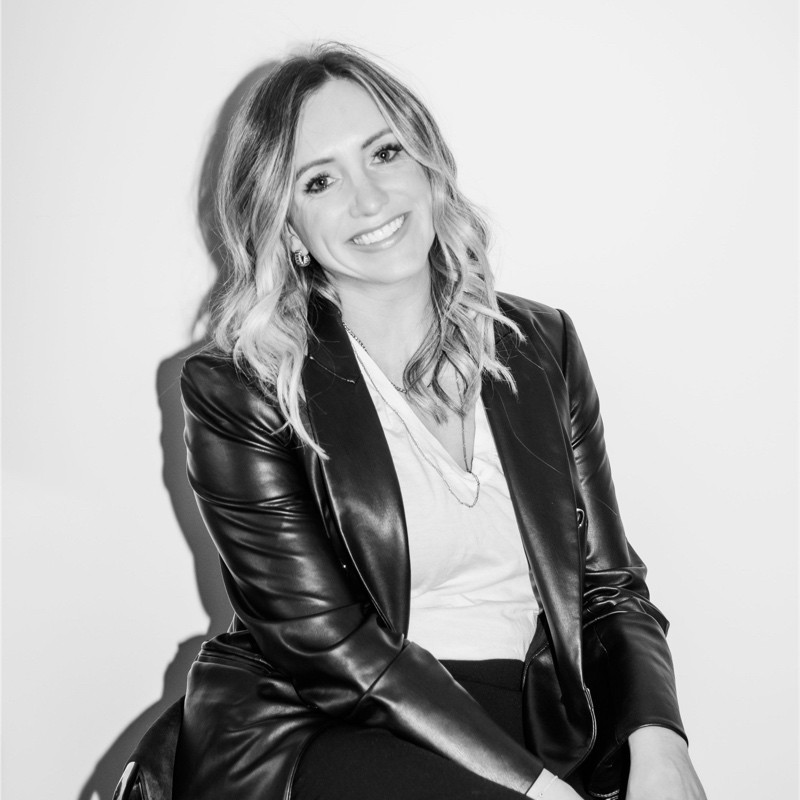 Gemma Allen