Exploring the Intersection of Crypto, AI, and Traditional Finance: Insights from theCUBE at NYSE Wired
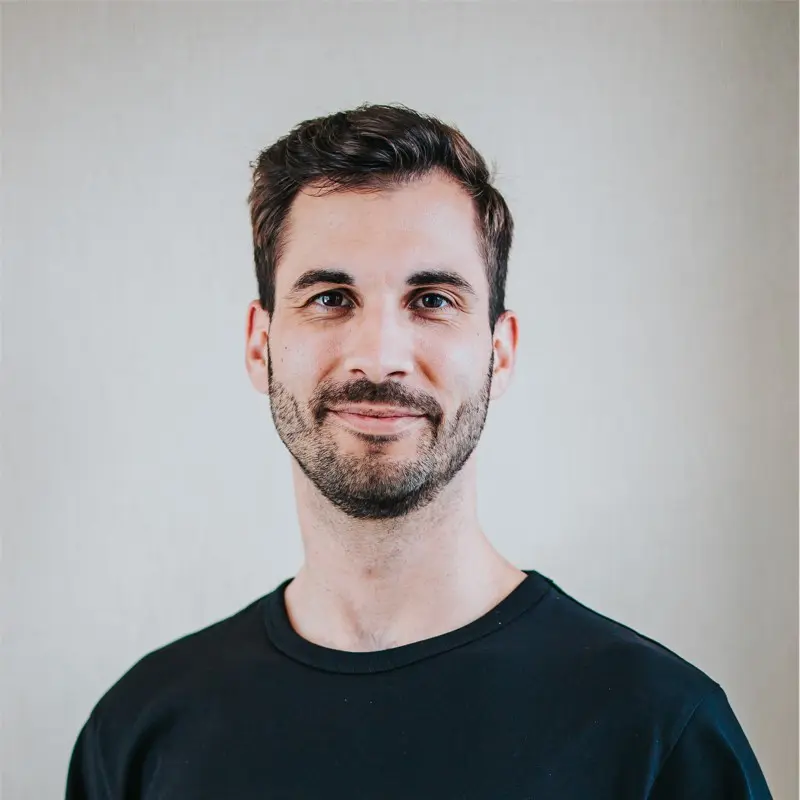
Niklas Kunkel, founder of Chronicle Labs, joins theCUBE's host for an insightful discussion during the "Crypto Trailblazers" series at the New York Stock Exchange. The event marks the tenth anniversary of Ethereum, providing a significant backdrop for exploring innovations and challenges facing the cryptocurrency landscape today.
In this video, they introduce Kunkel, a prominent figure in the blockchain world, who shares their experience and vision for Chronicle Labs. The conversation delves into the evolution of traditional finance systems through blockchain technology and how Chronicle Labs plays a pivotal role in this transformation. theCUBE Research explores the synergies between AI and crypto, focusing on the implications for data integrity and financial operations.
Key takeaways from this discussion include Kunkel's observations on the rapid growth of tokenized assets and the role Chronicle Labs plays in enhancing asset transparency and efficiency. According to Kunkel, the integration of real-time data metadata on-chain is a game-changer for automated risk management systems and financial robustness. The analysis underscores the growing confluence of AI and blockchain, highlighting opportunities for streamlining financial transactions and ensuring data authenticity.
Forgot Password
Almost there!
We just sent you a verification email. Please verify your account to gain access to
theCUBE + NYSE Wired: Crypto Trailblazers. If you don’t think you received an email check your
spam folder.
Sign in to theCUBE + NYSE Wired: Crypto Trailblazers.
In order to sign in, enter the email address you used to registered for the event. Once completed, you will receive an email with a verification link. Open this link to automatically sign into the site.
Register For theCUBE + NYSE Wired: Crypto Trailblazers
Please fill out the information below. You will recieve an email with a verification link confirming your registration. Click the link to automatically sign into the site.
You’re almost there!
We just sent you a verification email. Please click the verification button in the email. Once your email address is verified, you will have full access to all event content for theCUBE + NYSE Wired: Crypto Trailblazers.
I want my badge and interests to be visible to all attendees.
Checking this box will display your presense on the attendees list, view your profile and allow other attendees to contact you via 1-1 chat. Read the Privacy Policy. At any time, you can choose to disable this preference.
Select your Interests!
add
Upload your photo
Uploading..
OR
Connect via Twitter
Connect via Linkedin
EDIT PASSWORD
Share
Forgot Password
Almost there!
We just sent you a verification email. Please verify your account to gain access to
theCUBE + NYSE Wired: Crypto Trailblazers. If you don’t think you received an email check your
spam folder.
Sign in to theCUBE + NYSE Wired: Crypto Trailblazers.
In order to sign in, enter the email address you used to registered for the event. Once completed, you will receive an email with a verification link. Open this link to automatically sign into the site.
Sign in to gain access to theCUBE + NYSE Wired: Crypto Trailblazers
Please sign in with LinkedIn to continue to theCUBE + NYSE Wired: Crypto Trailblazers. Signing in with LinkedIn ensures a professional environment.
Are you sure you want to remove access rights for this user?
Details
Manage Access
email address
Community Invitation
Nik, Chronicle Labs
In this insightful episode of the Crypto Trailblazers series hosted by theCUBE, Mike Cagney of Figure Markets sits down with analysts from theCUBE Research to discuss groundbreaking advancements in blockchain technology and their implications for the finance sector. This video is part of the NYSE Wired digital event, aimed at bridging the gap between Silicon Valley and Wall Street by integrating technology and finance.
Cagney, an eminent figure in fintech, shares expertise on the transformative role of blockchain in financial markets during this interview. Conducted by seasoned analysts at theCUBE, the discussion delves into Figure’s innovative contributions, including their blockchain-native loan origination and securitization process. He outlines how Figure leverages blockchain to achieve cost reductions, enhanced security and improved liquidity in financial transactions.
Key takeaways from the interview highlight insights on the evolution of the Web3 ecosystem, such as the emergence of stablecoins as pivotal to transaction processes and the rise of decentralized finance (DeFi). Oltsik states these developments signify a shift towards democratizing finance, wherein truth and transparency are foundational. The conversation concludes with a look at Figure’s pioneering efforts in creating a new financial marketplace utilizing blockchain technology.
#CryptoTrailblazers #FigureMarkets #BlockchainInnovation #Web3 #NYEWired #BlockchainFinance #DecentralizedFinance #Fintech #Stablecoins
Find more SiliconANGLE news and analysis https://siliconangle.com/.
Follow theCUBE's wall-to-wall event coverage https://siliconangle.com/events/
Learn about the latest theCUBE events https://www.thecube.net/
00:00 - Intro
00:05 - Emerging Innovations in Financial Technology and Market Dynamics
02:45 - Key Elements in Financial Ecosystem Dynamics
06:20 - Blockchain: Truth and Transformation
09:39 - Shaping the Future: Innovations in Financial Markets and Stablecoin Integration
13:15 - Enabling the Future: Navigating Disruptions in Banking and Lending
16:51 - Exploring Opportunities and Building Confidence in the Blockchain Ecosystem
play_circle_outlineIntroduction of Niklas Kunkel, CEO of Chronicle Labs, on Ethereum's 10th anniversary.
replyShare Clip
play_circle_outlineImportance of blockchain in evolving the traditional financial system and tokenization.
replyShare Clip
play_circle_outlineLarry Fink's assertion about tokenizing all financial assets worldwide.
replyShare Clip
play_circle_outlineEnhancing On-Chain Finance: Chronicle's Real-Time Data Infrastructure and the Importance of Metadata for Tokenized Assets Integration
replyShare Clip
play_circle_outlineBlockchain technology offering permanent timestamps for creative works and potential copyright solutions.
>> Welcome back to theCUBE. I'm Gemma Allen, here at the New York Stock Exchange. This is our crypto trailblazer series. Today, we're marking 10 years of Ethereum. Right now, there's a lot of talk about AI and how to make AI more human. There's not a whole lot of talk though about how to make data more honest. Joining me today is Niklas Kunkel, CEO of Chronicle Labs, he's going to tell us a little bit about what you do. Welcome, Niklas.
Nik Kunkel
>> Amazing. Thank you for having me.
Gemma Allen
>> Tell me, Web2 two was about clicks, connection, activity. Web3 is a little bit more about receipts, right? Break that down for me. Tell me a little bit about what you guys do four years in, and how you're thinking about this moment right now from an opportunity perspective, especially as crypto seems to be the word on everyone's lips.
Nik Kunkel
>> Absolutely. I think what's really come to the forefront in the past few years is that blockchains, while they can serve a variety of purposes, are particularly suited to evolving the traditional financial system. To that end, I think we've had comments from, for example, Larry Fink, who very famously said recently, "We're going to tokenize all of the financial assets in the world. All financial assets will be tokenized." I think it's interesting to dig into why that is. But from the point of view of Chronicle, we are here to help catalyze that transformation.
Gemma Allen
>> You mentioned Larry Fink, and we've seen a lot of headlines, a lot of very high impact headlines around what is happening in terms of DeFi and TradFi, and how the old word is meaning the new, right?
Nik Kunkel
>> Mm-hmm.
Gemma Allen
>> You mentioned, when we were talking just now, before we came on air, that there's a lot of activity, a lot of community, a lot of conflict, and I guess a little bit of chaos behind some of those headlines. You're running an infrastructure layer essentially. Break it down for us. Tell us what is it like to sell into this space?
Nik Kunkel
>> Yeah, as we were talking about earlier, it really takes a village to tokenize something. Typically, you have an asset manager, you have a fund administrator, you have some tokenization agent, you have an Oracle, you will have a chain, you will have maybe a market maker, maybe a vault manager or risk curator. There is a huge number of parties that have to come together to be able to successfully tokenize something. It's really a Herculean effort. I think the industry is doing a crawl, walk, run type of approach, where the first few instances were really a monster effort by everyone figuring out what they needed to do, what kind of players or stakeholders needed to be involved. But over the last six to 12 months, this has been evolving rapidly. I think now we're seeing that consolidation. We're seeing those initial upfront costs really paying off and being able to scale this extremely quickly.
Gemma Allen
>> When you say crawl, walk, run, one part of this space that feels like it's taking off at the speed of sound is AI. It seems as though there is a huge opportunity in what you do as the worlds of AI and crypto collide and converge. Tell me a little bit about that, about the speed at which things are happening, the challenge around authenticity, what's real, what's fake, and what it means for clients and customers of yours and real life everyday use cases.
Nik Kunkel
>> The way I like to think about AI and how it interacts with different kind of pieces is think about what the internet brought us. The internet was the communication of data and the distribution of data. With crypto, the bolt-on attribute that was added here was, "Okay, now we're not just exchanging data. We're exchanging value." What I think AI brings to the table here is the automation of this distribution of data, the automation of the distribution of value. When we talk about the velocity of money or the velocity of financial assets, I think through AI agents that is just going to increase exponentially, almost in a pseudo Moore's law type of way.
Gemma Allen
>> What you're doing is essentially time-stamping, right? It's creating a moment in time at which truth was truth. Tell me a little bit about how the technology works from an execution perspective. Is this a layer that fits on top an infrastructure layer of what is already, I guess, quite a complex technical ecosystem? How does the product actually fit within the Venn diagram of, let's say, the world of financial markets, for example.
Nik Kunkel
>> Absolutely. I think it makes sense here to highlight the problem that we're trying to solve. Anyone can tokenize something, but tokenized assets have one key difference from native crypto assets, like Bitcoin or like Ethereum. It's that they're just this empty wrapper. They're this empty shell. A token is just an abstraction. The problem that you run into here is, when you are interacting with an asset that is tokenized, you have no visibility into, what is this thing? Is it actually backed, backed by what? Backed by whom? How do I know? This is the problem that Chronicle is solving, is we are this real time automated data infrastructure that is bringing all of this metadata, all of this context surrounding this tokenized asset on chain. What this does, what this enables is it solves this problem that tokenized assets had where if you tokenize something, the idea is, well, we're going to have more distribution for this financial instrument, or we're going to have more utility. But without any of this metadata, without any of this contextual data, these tokenized assets can't be integrated into the on chain finance ecosystem, right? Only through this contextual real-time metadata can you create these automated risk management systems. I think it might be helpful to walk through a few examples, right?
Gemma Allen
>> Yeah, please do. I'd love to hear it.
Nik Kunkel
>> We touched on, for example, how AI is going to increase the velocity of money and increase the velocity of financial assets. I think you could have a on-chain strategy that is looking for the best yield opportunities, right? It's a yield optimizing strategy. Well, this vault could have a list of approved financial assets, tokenized financial assets that it can invest in. Through Chronicle's data infrastructure that is in real time reporting this yield for every tokenized asset, this yield optimization strategy is just allocating a hundred million here. Oh, okay. The yield dropped and yield went up over here. Okay, we're going to reallocate 200 million of credit from this position into this other position. It's just really this automation and this ability to earn more yield or to reduce risk or to more responsibly manage credit risk that is the real unlock here.
Gemma Allen
>> I think one of the reasons that people play with risk is because of speed, right? Those two things have somewhat of a clash of circumstance at times. Right now, in the world of AI, it seems as though speed is front of mind and everyone's top priority. Security and authenticity and all of those things that are so important in the world of the web tend to be somewhat of a reactive layer. How do you think about that? Is there, I guess, a trade-off in implementing technologies like this? Does it in some way slow down or in any way impact the speed of which market activity happens, or use cases across the board? How do you answer that?
Nik Kunkel
>> I think speed is an interesting question. There seems to be this bifurcation of speed in finance. On the one hand, there's these algorithms that are trading on the order of milliseconds. On the other hand, we have funds that are end of day posting their fund accounting once per day, right? That is this duality of speed. On the one hand, some things are very, very fast, and some things are very, very slow. I think when we talk about data, faster is always better. You can build risk management systems that can react to shocks in the market and implement circuit breakers, right? This particular financial asset is more risky or the reserves have maybe some questions, or there is a maturity mismatch, right? You can have on-chain systems that immediately recognize this and maybe cut the amount of leverage that they extend, or maybe they would like to unwind some of their position, or maybe they just say, "Okay, no new positions can be created that would increase exposure to a particular financial asset." Yeah, when we're talking about speed, data needs to be on the order of milliseconds, and that's only going to help make these assets safer and make these on-chain credit systems much more reliable and trustworthy.
Gemma Allen
>> We're here today, 10 years of Ethereum. It's an industry and a space that's had a lot of swings when it comes to narrative, hype. I think right now we're in that boom period again in the crypto space. You mentioned when we were chatting offline a few minutes ago that when it comes to the collegiality of the industry, you guys think of yourself as Switzerland, you're everybody's friend, Ethereum, and all its competitors. But talk to me a little bit about the industry broadly, how you think about the time that we're in right now, especially when things are moving at, like I said, at phenomenal speed. Where you see the key opportunities for Chronicle, what sorts of industries you see, I guess also that could be alternative, outside of the box use case. I'm sure there must be so many for a company like this. Tell me what excites you.
Nik Kunkel
>> Well, I think it's just the scale at which tokenization is growing. You have to remember 18 months ago there were zero tokenized assets. Let me put out some numbers. The entire size of DeFi right now, less stablecoins, is around 150 billion. If we look at stablecoins themselves, total supply, maybe 450 billion, let's call it 500. We're expected to have $2 trillion of tokenized assets by 2030. The tokenized asset market alone is going to eclipse the size of DeFi in relatively short order. When we talk about what is the value of all financial assets out there, if we're excluding things like real estate, if we're just talking about financial assets, there is maybe 300 to 400 trillion of financial assets out there. The opportunity here really is endless, and this is where we're seeing the most growth. DeFi growth, while DeFi has been an incredible unlock, it has been relatively stagnant for the past few years. That is primarily because what is used as collateral in DeFi has been Bitcoin, has been Ethereum. It's not very interesting when Bitcoin does a 2X or Ethereum does a 2X, because it actually is pretty constrictive on how big DeFi can grow. It's really this promise of the injection of tokenized assets that are going to be the big growth unlock for DeFi. That's why this is so exciting, I think, for everyone, but especially for our business and why we're leaning into this approach.
Gemma Allen
>> I guess also the original principle or guiding principle, I guess, of this industry, which is around democratizing access to finance, right? A world where everyone can take part. It does seem as though, as we move closer and closer to Web3 and Wall Street and these worlds are becoming friendlier and more interconnected, who are the winners and losers in that game? Does that mean that the gamers, the artists, the folks who really had an opportunity to be part of a bigger picture of finance are somewhat losing out to institutional investors? How do you think about that? Do you think that we can continue with this something for everyone philosophy in the world of TradFi meets DeFi?
Nik Kunkel
>> Well, I think it's all about accessibility. Institutions joining crypto is nothing to be fearful of. It actually points to the success of crypto and being able to show that it is a stable, neutral platform where institutions don't have to be afraid of it as some kind of shadow system or some kind of competitive system. It is a way for them to compliment their existing businesses. I don't think there's necessarily a conflict of interest here. I think if you think about asset managers, they just want to broaden access to financial products. It's more profitable for them. From a consumer or retail consumer point of view, having greater access to get exposure to the products you want to get exposure to, it's a win-win for everybody.
Gemma Allen
>> Tell me about the technical aspect of this in terms of what you're building. Because when I read about this company, I thought, wow, this could be great for writers, for creatives, for those who are really concerned about how AI is parsing their work and regurgitating it to LMs and other means, right? This is an opportunity to timestamp and even copyright what's yours.
Nik Kunkel
>> Absolutely.
Gemma Allen
>> Tell me how that technology will evolve and how AI, I guess, will merge these two worlds. Do you see use cases where this could be a form or version of futuristic copyright systems?
Nik Kunkel
>> Absolutely. From a creative point of view, anything you publish on-chain is permanently recorded. We sometimes think of, "Oh, we filed a trademark on a particular date, or we copyrighted something on a particular date." I think a blockchain supersedes all of those. You have a cryptographic proof that I am the originator of this. I am the owner of this, and it's all timestamped. I think what we have to be careful of is, just because the underlying chain infrastructure is this neutral, decentralized, permissionless infrastructure. The things that we build on top of it don't necessarily have those same guarantees. If we value those properties, we have to imbue these secondary services and products that we build on top of these chains with these same immutable, permissionless properties. If we do that, then I think it's a really big unlock, not just for finance, but as you mentioned, also the creatives.
Gemma Allen
>> Well, as someone who's a lifelong optimist and a creative and hopes to continue to be able to feed my children 10 years from now, I certainly hope so too. Before we go, tell me, what's ahead for the company? More offsites to Dublin, Ireland, I hope. What do you see for the next 12 months? What are you guys working towards?
Nik Kunkel
>> At the moment, we're just trying to be the dominant Oracle partner in this tokenized asset vertical. I'm enormously proud of what the team has been able to achieve. We launched this product earlier this year, and in less than 10 months we've scaled it from zero to almost six billion in tokenized assets, which is the largest player by far. We're really looking forward to snowballing that momentum, to continuing to retain that market share position, and really benefiting from the growth in this vertical.
Gemma Allen
>> Well, we'll be watching closely from the slidelines. I wish you all the best. Niklas, thanks so much for coming on theCUBE.
Nik Kunkel
>> Thank you so much.
Gemma Allen
>> I'm Gemma Allen here at the New York Stock Exchange. This is our crypto trailblazer series. Today, we're marking 10 years of Ethereum. Thanks for watching.
>> Welcome back to theCUBE. I'm Gemma Allen, here at the New York Stock Exchange. This is our crypto trailblazer series. Today, we're marking 10 years of Ethereum. Right now, there's a lot of talk about AI and how to make AI more human. There's not a whole lot of talk though about how to make data more honest. Joining me today is Niklas Kunkel, CEO of Chronicle Labs, he's going to tell us a little bit about what you do. Welcome, Niklas.
Nik Kunkel
>> Amazing. Thank you for having me.
Gemma Allen
>> Tell me, Web2 two was about clicks, connection, activity. Web3 is a little bit more about receipts, right? Break that down for me. Tell me a little bit about what you guys do four years in, and how you're thinking about this moment right now from an opportunity perspective, especially as crypto seems to be the word on everyone's lips.
Nik Kunkel
>> Absolutely. I think what's really come to the forefront in the past few years is that blockchains, while they can serve a variety of purposes, are particularly suited to evolving the traditional financial system. To that end, I think we've had comments from, for example, Larry Fink, who very famously said recently, "We're going to tokenize all of the financial assets in the world. All financial assets will be tokenized." I think it's interesting to dig into why that is. But from the point of view of Chronicle, we are here to help catalyze that transformation.
Gemma Allen
>> You mentioned Larry Fink, and we've seen a lot of headlines, a lot of very high impact headlines around what is happening in terms of DeFi and TradFi, and how the old word is meaning the new, right?
Nik Kunkel
>> Mm-hmm.
Gemma Allen
>> You mentioned, when we were talking just now, before we came on air, that there's a lot of activity, a lot of community, a lot of conflict, and I guess a little bit of chaos behind some of those headlines. You're running an infrastructure layer essentially. Break it down for us. Tell us what is it like to sell into this space?
Nik Kunkel
>> Yeah, as we were talking about earlier, it really takes a village to tokenize something. Typically, you have an asset manager, you have a fund administrator, you have some tokenization agent, you have an Oracle, you will have a chain, you will have maybe a market maker, maybe a vault manager or risk curator. There is a huge number of parties that have to come together to be able to successfully tokenize something. It's really a Herculean effort. I think the industry is doing a crawl, walk, run type of approach, where the first few instances were really a monster effort by everyone figuring out what they needed to do, what kind of players or stakeholders needed to be involved. But over the last six to 12 months, this has been evolving rapidly. I think now we're seeing that consolidation. We're seeing those initial upfront costs really paying off and being able to scale this extremely quickly.
Gemma Allen
>> When you say crawl, walk, run, one part of this space that feels like it's taking off at the speed of sound is AI. It seems as though there is a huge opportunity in what you do as the worlds of AI and crypto collide and converge. Tell me a little bit about that, about the speed at which things are happening, the challenge around authenticity, what's real, what's fake, and what it means for clients and customers of yours and real life everyday use cases.
Nik Kunkel
>> The way I like to think about AI and how it interacts with different kind of pieces is think about what the internet brought us. The internet was the communication of data and the distribution of data. With crypto, the bolt-on attribute that was added here was, "Okay, now we're not just exchanging data. We're exchanging value." What I think AI brings to the table here is the automation of this distribution of data, the automation of the distribution of value. When we talk about the velocity of money or the velocity of financial assets, I think through AI agents that is just going to increase exponentially, almost in a pseudo Moore's law type of way.
Gemma Allen
>> What you're doing is essentially time-stamping, right? It's creating a moment in time at which truth was truth. Tell me a little bit about how the technology works from an execution perspective. Is this a layer that fits on top an infrastructure layer of what is already, I guess, quite a complex technical ecosystem? How does the product actually fit within the Venn diagram of, let's say, the world of financial markets, for example.
Nik Kunkel
>> Absolutely. I think it makes sense here to highlight the problem that we're trying to solve. Anyone can tokenize something, but tokenized assets have one key difference from native crypto assets, like Bitcoin or like Ethereum. It's that they're just this empty wrapper. They're this empty shell. A token is just an abstraction. The problem that you run into here is, when you are interacting with an asset that is tokenized, you have no visibility into, what is this thing? Is it actually backed, backed by what? Backed by whom? How do I know? This is the problem that Chronicle is solving, is we are this real time automated data infrastructure that is bringing all of this metadata, all of this context surrounding this tokenized asset on chain. What this does, what this enables is it solves this problem that tokenized assets had where if you tokenize something, the idea is, well, we're going to have more distribution for this financial instrument, or we're going to have more utility. But without any of this metadata, without any of this contextual data, these tokenized assets can't be integrated into the on chain finance ecosystem, right? Only through this contextual real-time metadata can you create these automated risk management systems. I think it might be helpful to walk through a few examples, right?
Gemma Allen
>> Yeah, please do. I'd love to hear it.
Nik Kunkel
>> We touched on, for example, how AI is going to increase the velocity of money and increase the velocity of financial assets. I think you could have a on-chain strategy that is looking for the best yield opportunities, right? It's a yield optimizing strategy. Well, this vault could have a list of approved financial assets, tokenized financial assets that it can invest in. Through Chronicle's data infrastructure that is in real time reporting this yield for every tokenized asset, this yield optimization strategy is just allocating a hundred million here. Oh, okay. The yield dropped and yield went up over here. Okay, we're going to reallocate 200 million of credit from this position into this other position. It's just really this automation and this ability to earn more yield or to reduce risk or to more responsibly manage credit risk that is the real unlock here.
Gemma Allen
>> I think one of the reasons that people play with risk is because of speed, right? Those two things have somewhat of a clash of circumstance at times. Right now, in the world of AI, it seems as though speed is front of mind and everyone's top priority. Security and authenticity and all of those things that are so important in the world of the web tend to be somewhat of a reactive layer. How do you think about that? Is there, I guess, a trade-off in implementing technologies like this? Does it in some way slow down or in any way impact the speed of which market activity happens, or use cases across the board? How do you answer that?
Nik Kunkel
>> I think speed is an interesting question. There seems to be this bifurcation of speed in finance. On the one hand, there's these algorithms that are trading on the order of milliseconds. On the other hand, we have funds that are end of day posting their fund accounting once per day, right? That is this duality of speed. On the one hand, some things are very, very fast, and some things are very, very slow. I think when we talk about data, faster is always better. You can build risk management systems that can react to shocks in the market and implement circuit breakers, right? This particular financial asset is more risky or the reserves have maybe some questions, or there is a maturity mismatch, right? You can have on-chain systems that immediately recognize this and maybe cut the amount of leverage that they extend, or maybe they would like to unwind some of their position, or maybe they just say, "Okay, no new positions can be created that would increase exposure to a particular financial asset." Yeah, when we're talking about speed, data needs to be on the order of milliseconds, and that's only going to help make these assets safer and make these on-chain credit systems much more reliable and trustworthy.
Gemma Allen
>> We're here today, 10 years of Ethereum. It's an industry and a space that's had a lot of swings when it comes to narrative, hype. I think right now we're in that boom period again in the crypto space. You mentioned when we were chatting offline a few minutes ago that when it comes to the collegiality of the industry, you guys think of yourself as Switzerland, you're everybody's friend, Ethereum, and all its competitors. But talk to me a little bit about the industry broadly, how you think about the time that we're in right now, especially when things are moving at, like I said, at phenomenal speed. Where you see the key opportunities for Chronicle, what sorts of industries you see, I guess also that could be alternative, outside of the box use case. I'm sure there must be so many for a company like this. Tell me what excites you.
Nik Kunkel
>> Well, I think it's just the scale at which tokenization is growing. You have to remember 18 months ago there were zero tokenized assets. Let me put out some numbers. The entire size of DeFi right now, less stablecoins, is around 150 billion. If we look at stablecoins themselves, total supply, maybe 450 billion, let's call it 500. We're expected to have $2 trillion of tokenized assets by 2030. The tokenized asset market alone is going to eclipse the size of DeFi in relatively short order. When we talk about what is the value of all financial assets out there, if we're excluding things like real estate, if we're just talking about financial assets, there is maybe 300 to 400 trillion of financial assets out there. The opportunity here really is endless, and this is where we're seeing the most growth. DeFi growth, while DeFi has been an incredible unlock, it has been relatively stagnant for the past few years. That is primarily because what is used as collateral in DeFi has been Bitcoin, has been Ethereum. It's not very interesting when Bitcoin does a 2X or Ethereum does a 2X, because it actually is pretty constrictive on how big DeFi can grow. It's really this promise of the injection of tokenized assets that are going to be the big growth unlock for DeFi. That's why this is so exciting, I think, for everyone, but especially for our business and why we're leaning into this approach.
Gemma Allen
>> I guess also the original principle or guiding principle, I guess, of this industry, which is around democratizing access to finance, right? A world where everyone can take part. It does seem as though, as we move closer and closer to Web3 and Wall Street and these worlds are becoming friendlier and more interconnected, who are the winners and losers in that game? Does that mean that the gamers, the artists, the folks who really had an opportunity to be part of a bigger picture of finance are somewhat losing out to institutional investors? How do you think about that? Do you think that we can continue with this something for everyone philosophy in the world of TradFi meets DeFi?
Nik Kunkel
>> Well, I think it's all about accessibility. Institutions joining crypto is nothing to be fearful of. It actually points to the success of crypto and being able to show that it is a stable, neutral platform where institutions don't have to be afraid of it as some kind of shadow system or some kind of competitive system. It is a way for them to compliment their existing businesses. I don't think there's necessarily a conflict of interest here. I think if you think about asset managers, they just want to broaden access to financial products. It's more profitable for them. From a consumer or retail consumer point of view, having greater access to get exposure to the products you want to get exposure to, it's a win-win for everybody.
Gemma Allen
>> Tell me about the technical aspect of this in terms of what you're building. Because when I read about this company, I thought, wow, this could be great for writers, for creatives, for those who are really concerned about how AI is parsing their work and regurgitating it to LMs and other means, right? This is an opportunity to timestamp and even copyright what's yours.
Nik Kunkel
>> Absolutely.
Gemma Allen
>> Tell me how that technology will evolve and how AI, I guess, will merge these two worlds. Do you see use cases where this could be a form or version of futuristic copyright systems?
Nik Kunkel
>> Absolutely. From a creative point of view, anything you publish on-chain is permanently recorded. We sometimes think of, "Oh, we filed a trademark on a particular date, or we copyrighted something on a particular date." I think a blockchain supersedes all of those. You have a cryptographic proof that I am the originator of this. I am the owner of this, and it's all timestamped. I think what we have to be careful of is, just because the underlying chain infrastructure is this neutral, decentralized, permissionless infrastructure. The things that we build on top of it don't necessarily have those same guarantees. If we value those properties, we have to imbue these secondary services and products that we build on top of these chains with these same immutable, permissionless properties. If we do that, then I think it's a really big unlock, not just for finance, but as you mentioned, also the creatives.
Gemma Allen
>> Well, as someone who's a lifelong optimist and a creative and hopes to continue to be able to feed my children 10 years from now, I certainly hope so too. Before we go, tell me, what's ahead for the company? More offsites to Dublin, Ireland, I hope. What do you see for the next 12 months? What are you guys working towards?
Nik Kunkel
>> At the moment, we're just trying to be the dominant Oracle partner in this tokenized asset vertical. I'm enormously proud of what the team has been able to achieve. We launched this product earlier this year, and in less than 10 months we've scaled it from zero to almost six billion in tokenized assets, which is the largest player by far. We're really looking forward to snowballing that momentum, to continuing to retain that market share position, and really benefiting from the growth in this vertical.
Gemma Allen
>> Well, we'll be watching closely from the slidelines. I wish you all the best. Niklas, thanks so much for coming on theCUBE.
Nik Kunkel
>> Thank you so much.
Gemma Allen
>> I'm Gemma Allen here at the New York Stock Exchange. This is our crypto trailblazer series. Today, we're marking 10 years of Ethereum. Thanks for watching.








































 Gemma Allen