In this insightful episode of the Crypto Trailblazers series hosted by theCUBE, Mike Cagney of Figure Markets sits down with analysts from theCUBE Research to discuss groundbreaking advancements in blockchain technology and their implications for the finance sector. This video is part of the NYSE Wired digital event, aimed at bridging the gap between Silicon Valley and Wall Street by integrating technology and finance.
Cagney, an eminent figure in fintech, shares expertise on the transformative role of blockchain in financial markets during this interview. Conducted by seasoned analysts at theCUBE, the discussion delves into Figure’s innovative contributions, including their blockchain-native loan origination and securitization process. He outlines how Figure leverages blockchain to achieve cost reductions, enhanced security and improved liquidity in financial transactions.
Key takeaways from the interview highlight insights on the evolution of the Web3 ecosystem, such as the emergence of stablecoins as pivotal to transaction processes and the rise of decentralized finance (DeFi). Oltsik states these developments signify a shift towards democratizing finance, wherein truth and transparency are foundational. The conversation concludes with a look at Figure’s pioneering efforts in creating a new financial marketplace utilizing blockchain technology.
#CryptoTrailblazers #FigureMarkets #BlockchainInnovation #Web3 #NYEWired #BlockchainFinance #DecentralizedFinance #Fintech #Stablecoins
Find more SiliconANGLE news and analysis https://siliconangle.com/.
Follow theCUBE's wall-to-wall event coverage https://siliconangle.com/events/
Learn about the latest theCUBE events https://www.thecube.net/
00:00 - Intro
00:05 - Emerging Innovations in Financial Technology and Market Dynamics
02:45 - Key Elements in Financial Ecosystem Dynamics
06:20 - Blockchain: Truth and Transformation
09:39 - Shaping the Future: Innovations in Financial Markets and Stablecoin Integration
13:15 - Enabling the Future: Navigating Disruptions in Banking and Lending
16:51 - Exploring Opportunities and Building Confidence in the Blockchain Ecosystem
Forgot Password
Almost there!
We just sent you a verification email. Please verify your account to gain access to
theCUBE + NYSE Wired: Crypto Trailblazers. If you don’t think you received an email check your
spam folder.
Sign in to theCUBE + NYSE Wired: Crypto Trailblazers.
In order to sign in, enter the email address you used to registered for the event. Once completed, you will receive an email with a verification link. Open this link to automatically sign into the site.
Register For theCUBE + NYSE Wired: Crypto Trailblazers
Please fill out the information below. You will recieve an email with a verification link confirming your registration. Click the link to automatically sign into the site.
You’re almost there!
We just sent you a verification email. Please click the verification button in the email. Once your email address is verified, you will have full access to all event content for theCUBE + NYSE Wired: Crypto Trailblazers.
I want my badge and interests to be visible to all attendees.
Checking this box will display your presense on the attendees list, view your profile and allow other attendees to contact you via 1-1 chat. Read the Privacy Policy. At any time, you can choose to disable this preference.
Select your Interests!
add
Upload your photo
Uploading..
OR
Connect via Twitter
Connect via Linkedin
EDIT PASSWORD
Share
Forgot Password
Almost there!
We just sent you a verification email. Please verify your account to gain access to
theCUBE + NYSE Wired: Crypto Trailblazers. If you don’t think you received an email check your
spam folder.
Sign in to theCUBE + NYSE Wired: Crypto Trailblazers.
In order to sign in, enter the email address you used to registered for the event. Once completed, you will receive an email with a verification link. Open this link to automatically sign into the site.
Sign in to gain access to theCUBE + NYSE Wired: Crypto Trailblazers
Please sign in with LinkedIn to continue to theCUBE + NYSE Wired: Crypto Trailblazers. Signing in with LinkedIn ensures a professional environment.
Are you sure you want to remove access rights for this user?
Details
Manage Access
email address
Community Invitation
Vincent Kadar, Polymath
In this insightful episode of the Crypto Trailblazers series hosted by theCUBE, Mike Cagney of Figure Markets sits down with analysts from theCUBE Research to discuss groundbreaking advancements in blockchain technology and their implications for the finance sector. This video is part of the NYSE Wired digital event, aimed at bridging the gap between Silicon Valley and Wall Street by integrating technology and finance.
Cagney, an eminent figure in fintech, shares expertise on the transformative role of blockchain in financial markets during this interview. Conducted by seasoned analysts at theCUBE, the discussion delves into Figure’s innovative contributions, including their blockchain-native loan origination and securitization process. He outlines how Figure leverages blockchain to achieve cost reductions, enhanced security and improved liquidity in financial transactions.
Key takeaways from the interview highlight insights on the evolution of the Web3 ecosystem, such as the emergence of stablecoins as pivotal to transaction processes and the rise of decentralized finance (DeFi). Oltsik states these developments signify a shift towards democratizing finance, wherein truth and transparency are foundational. The conversation concludes with a look at Figure’s pioneering efforts in creating a new financial marketplace utilizing blockchain technology.
#CryptoTrailblazers #FigureMarkets #BlockchainInnovation #Web3 #NYEWired #BlockchainFinance #DecentralizedFinance #Fintech #Stablecoins
Find more SiliconANGLE news and analysis https://siliconangle.com/.
Follow theCUBE's wall-to-wall event coverage https://siliconangle.com/events/
Learn about the latest theCUBE events https://www.thecube.net/
00:00 - Intro
00:05 - Emerging Innovations in Financial Technology and Market Dynamics
02:45 - Key Elements in Financial Ecosystem Dynamics
06:20 - Blockchain: Truth and Transformation
09:39 - Shaping the Future: Innovations in Financial Markets and Stablecoin Integration
13:15 - Enabling the Future: Navigating Disruptions in Banking and Lending
16:51 - Exploring Opportunities and Building Confidence in the Blockchain Ecosystem
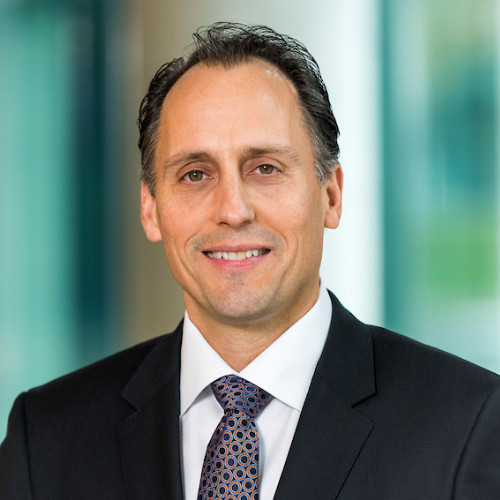
>> I'm Gemma Allen here live at the New York Stock Exchange with theCUBE, connecting Silicon Valley to Wall Street. This is our crypto trailblazer series. Joining me today, I have Vince Kadar, CEO of Polymath. Welcome, Vince.
Vincent Kadar
>> Yeah, thank you, Gemma.
Gemma Allen
>> So you have a big mission at Polymath. You want to put every asset on the blockchain, and you're even bringing your own blockchain public.
Vincent Kadar
>> Yes.
Gemma Allen
>> Let's start there. Let's unpack that.
Vincent Kadar
>> Let's unpack that. Yeah, so a bit of history on Polymath. We've been around since 2017. We've always been focused on this space. We didn't pivot our mission. We started off building a tokenization platform on Ethereum. After doing so, and after tokenizing a lot of assets with that application, we decided to build then our own layer one chain. Because Ethereum was just, it was at that point in time, it was going from proof of work to proof of stake. There was a lot of issues that we had around the whole compliance area and regulatory framework as well. And everything that you have to do on Ethereum and on other chains as well, and smart contracts just to build these wrappers in order to make a compliant token or security token. It was just a bit of a nightmare. Because you need smart contract developers, then auditors, and then you need to manage it. So we went out on a mission in 2018, 2019 then to build our own layer one chain Polymesh. That was created. It went live, main net went live October 2021, and it's been operational since then. And right now what we want to do is we want to boost the environment and raise the level of confidence of what it means to be a Web3 company, a company that's purely focused on tokenizing assets and bringing it on chain. By bringing it public, we boost that confidence. We're already a public permission chain. That means all of our validators have to be a financial services entities in order to validate the chain. If you're not a bank, an exchange, you don't hold a money services business license and reporting to a regulatory financial services regulator, you're not a validator on the chain. So we're building a network of trust. How do you increase that level of trust? Bring it to the public markets. And now the token holders that have been behind this overall project from the very beginning, they now have greater level of confidence in the chain, greater level of visibility in what we're doing. What layer one chain has is public. We will be. So now I've got greater level of governance because I've got a board that has to report to, again, public shareholders. I'm going to report my financials as well as a result of that. What Web3 company's doing that? And the level of transparency is greater.
Gemma Allen
>> Yeah. It gives you so much parameter control and legitimacy. I can completely understand the mission.
Vincent Kadar
>> Exactly.
Gemma Allen
>> 2018 to now in the world of crypto, Web3, blockchain, it feels like almost a century ago in some respects, right?
Vincent Kadar
>> Yeah.
Gemma Allen
>> You said offline when we were chatting before, things are moving really fast. So the narrative is moving fast, but parts of this system are still moving quite slow.
Vincent Kadar
>> That's right.
Gemma Allen
>> Unpack that for me too. Tell me what you mean by that.
Vincent Kadar
>> Well, and there is, again, in order for an industry to move, the players have to move with it. And so the player environment in capital markets, and the ones that are issuing security tokens in the private markets are broker dealers. Broker dealers need to amend their business licenses or business process licenses with their regulator, like FINRA or the regulator in Canada, or even in Dubai as an example, that they are permitted to issue security tokens on a DLT. So there's a very small handful of broker dealers in North America that have that in their registration. So they need to move and change their business process. So basically, they need to spend money, go through another review process with their regulator, get approved, and now they're open for business to be able to issue a security token on a DLT. And so it starts in that framework. Now, startups, people that maybe have money market funds, well, they can start heading down this token. The rule of thumb is that, if you own the asset, you could tokenize your asset. You can issue a debt against that. You could raise capital for your own company, and you could bring that onto a chain. So you're not the registered broker dealer, but you could do that yourself. But broker dealers in this compliance framework, they need to start moving in order to start moving the industry. Exchanges are setting up private market platforms, and we saw that with the London Stock Exchange Group announced that I think they've launched a private markets platform under a new subsidiary called Digital Markets Infrastructure. So we see the movement happening in the market. The narrative is there. So there's a lot of positive communication. And we're seeing assets that are coming on chain. Anybody can crawl our chain and look at it. There's a token issuance that's happening every day. There's investors coming on board as well. And I think you asked me before about, was it KPIs?
Gemma Allen
>> Yes.
Vincent Kadar
>> Yes. What moves the needle for me and what am I looking at?
Gemma Allen
>> Absolutely. Tell me what do you obsess over? What do you worry about? What excites you? What KPIs are you really honing in on?
Vincent Kadar
>> Assets on chain. That's the number one, I guess, KPI that I look at. Investors on chain or users that come on with registered wallets. Just activity in general as well.
Gemma Allen
>> And we talked a little bit offline as well, you've had a very interesting career. You've been on some global endeavors. You've seen a lot of different activity across different markets. Right now when you talk about regulators and FINRA and the SEC, and there's certainly an impression, again, and maybe it's a narrative-led impression that here in the US things are moving at the speed of sound. And in other jurisdictions, like in Europe, things are moving a lot slower. There's definitely a little bit more skepticism or concern. Tell us how you plan for that, especially as your company's in such a major space of growth.
Vincent Kadar
>> Well, it's working with all markets is really what we're doing. Because we're a North American operating company, but we operate globally. And in my past, I've always operated globally. Because you've got to. You've got to move to where the market is and potentially who's going to blaze a trail. And it could be that another market could blaze a trail. If you follow what's happening in UAE, in Dubai and Abu Dhabi, they've done some I'd say some astronomical things, actually, like moving at the speed of sound. They could tokenize real estate, and they have, in a matter of 24 hours and have an over subscription offering. And that's because everything is starting to run on the blockchain. Their Dubai land department. So all land titles are operating on a blockchain. That makes it so easy to tokenize real estate, that particular asset class. And there will be asset classes that come to market that we've never thought about before that. Wow. I didn't know that that could be tokenized.
Gemma Allen
>> And what are those kind of most surprising low-hanging fruit that you guys have come across? What has surprised you in terms of agility and adoption?
Vincent Kadar
>> Real estate is that one new asset class. And we've had a lot of, I'll call them, traditional real estate brokers that contact us and they want to start tokenizing. And even explaining, it's teaching the fundamentals that a real estate broker that sells real estate is not a securities broker that's selling a security token. You can't do both. And so you need to change your mindset. You need to upgrade your license.
Gemma Allen
>> It's not Better Call Saul.
Vincent Kadar
>> No, exactly. Exactly.
Gemma Allen
>> And I think, because there is this impression, I guess, that it is a bit of wild west right now in this space. I think from just an outside observer, every day you get the impression that there is a lot of crossover, a lot of pollination. But I'm sure, like you said, there's probably more guardrails and parameters than we realize, right?
Vincent Kadar
>> Well, and the moving fast and moving slow narrative is that move fast, there's a lot of interest. The move slow part is the regulatory framework. We want to ensure that anything that comes on our chain is coming on our chain in a compliant manner. We built this chain for compliance for regulators to feel comfortable with. And so if somebody's utilizing our platforms and our chain as well, we want to ensure that it is following that regulatory framework. And so our first question when we engage with a customer, and they want to tokenize an asset class, is that, do you have legal representation? Is this underwritten by somebody? And those are two important questions. If it's no and no, well come back to us when you have those checkboxed off. Because we're the infrastructure. We're a white label platform. We stand these things up. I don't have a broker dealer license, and maybe I should. And maybe that is a directional thing that we'll be heading down to towards and order to help push this market even faster. But we want to enable, we want to be the back office platform like the Microsoft that's running on your laptop or the iOS platform. We're the operating system for the capital markets industry that's going to power this next generation of tokenization.
Gemma Allen
>> Working so well people almost don't know you're there, right?
Vincent Kadar
>> That's right. Exactly.
Gemma Allen
>> So tell me a little bit about interoperability in this space. You obviously are building your own blockchain with Polymesh. It's very driven, it's mission-driven. But it's also a collegial space. It's perhaps more collegial than tech was 20 years ago. You mentioned Microsoft. Some of those players that have built phenomenal companies, but also perhaps monopolies at the time. Tell me about how that works, how you guys as an industry, I guess, cross-pollinate or cross-collaborate.
Vincent Kadar
>> Well, we have, so there's Polymath and Polymesh. And so Polymesh is building the layer one chain. They have an ecosystem. BitGo is part of that ecosystem. So we have all the digital custodians that we need to be part of or to help power the chain from an institutional point of view. We have other issuance platforms as well, and very specific niches of partners that are there as well. We know we're not going to build everything for everybody. And that's why ecosystems, partnerships are very important to us. We have, for example, there's two companies actually, one in Canada, one in the US as well, both approved by their respective regulators to issue security tokens backed by real estate. REtokens in the US, OCRI in Canada. And again, they do it in a compliant nature. They've built their own issuance platforms. They're experts in their space and they follow the regulatory framework. REtokens has even gone the next step where they've been approved by the SEC to stand up an alternative trading system to trade security tokens backed by real estate as well. So they've got the full ecosystem that's required and exclusively to our chain. When it comes to interoperability, interoperability will happen, but it's got to be a market-led thing. Interoperability and interconnect actually chains via bridges in order to bring security tokens across. What business is driving actually that need? Especially if a chain and an ecosystem has everything that it needs from alternative trading systems to decentralized exchanges. Decentralized exchanges, okay, what's missing?
Gemma Allen
>> Yeah. And tell me, you mentioned earlier, when clients come to you and say I want to tokenize this asset, what are the SLAs? How do those vary? Tell us a little bit about the circumstances around timing to make this happen.
Vincent Kadar
>> Well, Polymath, we can spin up a platform for them in 24 hours. So pretty quick for us to just like, what is it that you need? We'll call ourselves the Shopify, but for capital markets. It's a white-labeled solution. Put your logo on it. You have your own sub-domain. And we can do some customization for you if that's required as well. Or the end user or our customer can customize it themselves. So we're fast, actually, when it comes to spinning up a platform for an end customer. When it then comes to walking through the tokenization element, while there's frameworks that are built in, it's a very basic and simple user interface that walks them through as far as, okay, what type of offering are you doing? Is this a debt offering? Is it equity? What class is it? And what kind of compliance do you need? And so no smart contracts are required because we've built, in what I was talking about earlier, the whole smart contract layer, we've built that compliance layer right into the chain itself. So you don't need to hire smart contract developers, you don't need auditors. It's all built in there.
Gemma Allen
>> So it's like completely disrupting the services industry in some respects, the professional service industry, surrounding these companies too, right?
Vincent Kadar
>> Exactly. And I find it interesting because when you come out with a new technology stack, and then you put an onus on the end user that, oh, by the way, you need to hire smart contract developers, well, how did you just make my life simpler? You didn't. Now I've got to go out and hire an expensive crew of developers, auditors, and now I need to manage them as well. Build it right into the chain. Make it easy for me. And so that's always our frame of reference is that how do we take the cost out of what we're doing? If you're going to use a new tool set or technology, cost actually needs to be thought of of how you're going to reduce that for the end user, and then for other people in the ecosystem as well.
Gemma Allen
>> We talked earlier about how Polymath was here on theCUBE seven years ago. The tech journey in that space too has been pretty phenomenal. And I would say maybe 10 times a minute here, we say the word AI. There's obviously been a collision or a synergy between AI and Web3. Tell us a little bit about how you think about that, how you think about AI for Polymath and for the industry more broadly, and where you think the synergies are or the challenges too.
Vincent Kadar
>> Well, I think every industry actually, or in technology, we have these bubbles. There's always a bubble that forms. Web3 was a bubble. Before Web3, I think I remember even years ago, Bluetooth was a bubble. wow.
Gemma Allen
>> I did not know that.
Vincent Kadar
>> Yeah, exactly.
Gemma Allen
>> .
Vincent Kadar
>> Wifi was a bubble. Exactly. So Web3 was a bubble. We've lived through that. It's just like the first, the internet bubble, if you remember that. That was-
Gemma Allen
>> My mother was very reluctant to partake in the internet. She didn't think it would ever take off. In 1995 in Ireland. So by God was she wrong.
Vincent Kadar
>> And look at the adoption and what was required in order to adopt and to get everybody on the internet right now. And there's billions of people transacting every day on the internet from streaming to commerce to we all rely on it as a source of news, our source of entertainment, and our source of commerce as well. And now we're actually putting capital markets into a different realm and having it run more efficiently. So I think actually, what was your initial question again? Let's go back to that. Because I'm going to go down a rabbit hole here myself. But oh yeah.
Gemma Allen
>> I asked about AI. About the application. But I think you make some good points there around adoption cycle too. We talk about AI all the time, and we talk about it from the perspective of regulated industries, disruptors, non-disruptors. But I think clouds definitely had a skepticism period. I think Jamie Dimon himself said that JP Morgan would never be 100% cloud based. So when it comes to AI and the space in general, I think people are all in. And if you look at the speed, even for people like us using it every day in our lives, it's exceptional. But for your space, for Web3 and for blockchain and for this whole, which is also a disruptive futuristic space, which has I think really had a little bit of a reimagination from the kind of public narrative in a very short space of time, how do you think about it? Do you think-
Vincent Kadar
>> I think it'll be even easier. I think AI's going to play a fundamental role for doing a security token issuance. Where you're going to actually have a prompt to basically structure, and you'll ask, actually, the AI engine, please create for me a security token offering with these regulatory frameworks. And so that'll be programmed for you. You're not going to even need a UI. You'll have a prompt to do that. It'll create the security token offering. AI can even do the review process as well. Is everything required? Am I ready to launch? Can I launch my security token offering? What's missing right from there? Go through all the documents as well. So I think AI is really going to help in the capital markets industry, in the traditional one at first, but then in the security tokens industry specifically.
Gemma Allen
>> So tell me a little bit about the IPO. You guys had to go public in Canada this year, or am I correct?
Vincent Kadar
>> Yes, that's correct.
Gemma Allen
>> Yeah. And I think you mentioned that two years ago when you guys first filed or made this decision, things have changed quite a bit right here in the US.
Vincent Kadar
>> Yes.
Gemma Allen
>> Tell me about the plan. So have you guys got a timeline?
Vincent Kadar
>> Yes.
Gemma Allen
>> the exciting side of this.
Vincent Kadar
>> So our funding round is still open. It will be closing actually soon. We are scheduled to go public before the end of this year. There's a shareholders meeting that's already been scheduled, actually. It is an RTO actually through another operating business. We like the operating business because there was some assets in there, and there's an AI platform in the operating shell where we're in. That's of interest to us, and it currently serves the capital markets industry. But yeah, the plan is go public on the Toronto Stock Venture Exchange. Now we started, like what you just said, we started this activity more than a year ago, about a year and a half ago. The US market was not open. If you recall, all the crypto companies were listed on the Toronto Stock Exchange, right? Galaxy was there. There was a Voyager was there. Several of them. And they're still there. But the migration has also happened as well. Galaxy is now listed on a US exchange.
And now we see the floodgates opened in March, I'd say maybe April of this year, is when the floodgates opened. Well, we had already picked the shell, we've already gone through the compliance. And something else that we did was that we acquired our layer one chain back again. So when we created Polymesh, we spun it out as a Web3 company, what all Web3 companies do. You have your foundation, and then you've got your for-profit entity, which is Polymath. But in June of this year, we acquired Polymesh back as a subsidiary and a for-profit entity now. So now there's alignment and shared vision in what we're doing together. And that slowed us down a little bit because we needed to ensure that we were following all the proper regulatory approvals as far as setting up this structure and the alignment as well. So the idea is is, again, we'll be public by the end of this year. And what does that mean going forward? That means going forward is that we will be inquisitive in looking at other, I'd say, software companies that will help carry forward our mission, and we'll acquire them to be part of the Polymath journey going forward. So we'll be a compounder in this industry where we'll be building a, let's call it a portfolio of other companies to be part of our journey that are going to add value to our layer one chain. So if you can bring assets on chain, we're interested in having a discussion. If you can actually be powered by our chain, and even our utility token, we're interested in having a discussion as well. So like ATS technology providers, cryptocurrency exchange platforms, wealth management platforms, things that are actually going to help build that overall story that can be part of Polymath. Because like I said, we're not going to build everything ourselves. We have an ecosystem already with great partners and technology players that are out there, real leaders, but we also want to ensure that we help to guide the journey of where we think it needs to go.
Gemma Allen
>> Great. Well, Vince, hopefully at some point we'll see you here from the balcony, and perhaps ringing the bell at the NYSE. If not next year, who knows?
Vincent Kadar
>> .
Gemma Allen
>> It's a long and exciting road ahead.
Vincent Kadar
>> Exactly. Well, it's no mistake, maybe that's why we're having the discussion here.
Gemma Allen
>> Well, thanks so much coming on theCUBE. Wonderful to have you.
Vincent Kadar
>> Yeah, thank you.
Gemma Allen
>> I'm Gemma Allen here at the NYSE with our crypto trailblazer series. Thanks so much for tuning in.
>> I'm Gemma Allen here live at the New York Stock Exchange with theCUBE, connecting Silicon Valley to Wall Street. This is our crypto trailblazer series. Joining me today, I have Vince Kadar, CEO of Polymath. Welcome, Vince.
Vincent Kadar
>> Yeah, thank you, Gemma.
Gemma Allen
>> So you have a big mission at Polymath. You want to put every asset on the blockchain, and you're even bringing your own blockchain public.
Vincent Kadar
>> Yes.
Gemma Allen
>> Let's start there. Let's unpack that.
Vincent Kadar
>> Let's unpack that. Yeah, so a bit of history on Polymath. We've been around since 2017. We've always been focused on this space. We didn't pivot our mission. We started off building a tokenization platform on Ethereum. After doing so, and after tokenizing a lot of assets with that application, we decided to build then our own layer one chain. Because Ethereum was just, it was at that point in time, it was going from proof of work to proof of stake. There was a lot of issues that we had around the whole compliance area and regulatory framework as well. And everything that you have to do on Ethereum and on other chains as well, and smart contracts just to build these wrappers in order to make a compliant token or security token. It was just a bit of a nightmare. Because you need smart contract developers, then auditors, and then you need to manage it. So we went out on a mission in 2018, 2019 then to build our own layer one chain Polymesh. That was created. It went live, main net went live October 2021, and it's been operational since then. And right now what we want to do is we want to boost the environment and raise the level of confidence of what it means to be a Web3 company, a company that's purely focused on tokenizing assets and bringing it on chain. By bringing it public, we boost that confidence. We're already a public permission chain. That means all of our validators have to be a financial services entities in order to validate the chain. If you're not a bank, an exchange, you don't hold a money services business license and reporting to a regulatory financial services regulator, you're not a validator on the chain. So we're building a network of trust. How do you increase that level of trust? Bring it to the public markets. And now the token holders that have been behind this overall project from the very beginning, they now have greater level of confidence in the chain, greater level of visibility in what we're doing. What layer one chain has is public. We will be. So now I've got greater level of governance because I've got a board that has to report to, again, public shareholders. I'm going to report my financials as well as a result of that. What Web3 company's doing that? And the level of transparency is greater.
Gemma Allen
>> Yeah. It gives you so much parameter control and legitimacy. I can completely understand the mission.
Vincent Kadar
>> Exactly.
Gemma Allen
>> 2018 to now in the world of crypto, Web3, blockchain, it feels like almost a century ago in some respects, right?
Vincent Kadar
>> Yeah.
Gemma Allen
>> You said offline when we were chatting before, things are moving really fast. So the narrative is moving fast, but parts of this system are still moving quite slow.
Vincent Kadar
>> That's right.
Gemma Allen
>> Unpack that for me too. Tell me what you mean by that.
Vincent Kadar
>> Well, and there is, again, in order for an industry to move, the players have to move with it. And so the player environment in capital markets, and the ones that are issuing security tokens in the private markets are broker dealers. Broker dealers need to amend their business licenses or business process licenses with their regulator, like FINRA or the regulator in Canada, or even in Dubai as an example, that they are permitted to issue security tokens on a DLT. So there's a very small handful of broker dealers in North America that have that in their registration. So they need to move and change their business process. So basically, they need to spend money, go through another review process with their regulator, get approved, and now they're open for business to be able to issue a security token on a DLT. And so it starts in that framework. Now, startups, people that maybe have money market funds, well, they can start heading down this token. The rule of thumb is that, if you own the asset, you could tokenize your asset. You can issue a debt against that. You could raise capital for your own company, and you could bring that onto a chain. So you're not the registered broker dealer, but you could do that yourself. But broker dealers in this compliance framework, they need to start moving in order to start moving the industry. Exchanges are setting up private market platforms, and we saw that with the London Stock Exchange Group announced that I think they've launched a private markets platform under a new subsidiary called Digital Markets Infrastructure. So we see the movement happening in the market. The narrative is there. So there's a lot of positive communication. And we're seeing assets that are coming on chain. Anybody can crawl our chain and look at it. There's a token issuance that's happening every day. There's investors coming on board as well. And I think you asked me before about, was it KPIs?
Gemma Allen
>> Yes.
Vincent Kadar
>> Yes. What moves the needle for me and what am I looking at?
Gemma Allen
>> Absolutely. Tell me what do you obsess over? What do you worry about? What excites you? What KPIs are you really honing in on?
Vincent Kadar
>> Assets on chain. That's the number one, I guess, KPI that I look at. Investors on chain or users that come on with registered wallets. Just activity in general as well.
Gemma Allen
>> And we talked a little bit offline as well, you've had a very interesting career. You've been on some global endeavors. You've seen a lot of different activity across different markets. Right now when you talk about regulators and FINRA and the SEC, and there's certainly an impression, again, and maybe it's a narrative-led impression that here in the US things are moving at the speed of sound. And in other jurisdictions, like in Europe, things are moving a lot slower. There's definitely a little bit more skepticism or concern. Tell us how you plan for that, especially as your company's in such a major space of growth.
Vincent Kadar
>> Well, it's working with all markets is really what we're doing. Because we're a North American operating company, but we operate globally. And in my past, I've always operated globally. Because you've got to. You've got to move to where the market is and potentially who's going to blaze a trail. And it could be that another market could blaze a trail. If you follow what's happening in UAE, in Dubai and Abu Dhabi, they've done some I'd say some astronomical things, actually, like moving at the speed of sound. They could tokenize real estate, and they have, in a matter of 24 hours and have an over subscription offering. And that's because everything is starting to run on the blockchain. Their Dubai land department. So all land titles are operating on a blockchain. That makes it so easy to tokenize real estate, that particular asset class. And there will be asset classes that come to market that we've never thought about before that. Wow. I didn't know that that could be tokenized.
Gemma Allen
>> And what are those kind of most surprising low-hanging fruit that you guys have come across? What has surprised you in terms of agility and adoption?
Vincent Kadar
>> Real estate is that one new asset class. And we've had a lot of, I'll call them, traditional real estate brokers that contact us and they want to start tokenizing. And even explaining, it's teaching the fundamentals that a real estate broker that sells real estate is not a securities broker that's selling a security token. You can't do both. And so you need to change your mindset. You need to upgrade your license.
Gemma Allen
>> It's not Better Call Saul.
Vincent Kadar
>> No, exactly. Exactly.
Gemma Allen
>> And I think, because there is this impression, I guess, that it is a bit of wild west right now in this space. I think from just an outside observer, every day you get the impression that there is a lot of crossover, a lot of pollination. But I'm sure, like you said, there's probably more guardrails and parameters than we realize, right?
Vincent Kadar
>> Well, and the moving fast and moving slow narrative is that move fast, there's a lot of interest. The move slow part is the regulatory framework. We want to ensure that anything that comes on our chain is coming on our chain in a compliant manner. We built this chain for compliance for regulators to feel comfortable with. And so if somebody's utilizing our platforms and our chain as well, we want to ensure that it is following that regulatory framework. And so our first question when we engage with a customer, and they want to tokenize an asset class, is that, do you have legal representation? Is this underwritten by somebody? And those are two important questions. If it's no and no, well come back to us when you have those checkboxed off. Because we're the infrastructure. We're a white label platform. We stand these things up. I don't have a broker dealer license, and maybe I should. And maybe that is a directional thing that we'll be heading down to towards and order to help push this market even faster. But we want to enable, we want to be the back office platform like the Microsoft that's running on your laptop or the iOS platform. We're the operating system for the capital markets industry that's going to power this next generation of tokenization.
Gemma Allen
>> Working so well people almost don't know you're there, right?
Vincent Kadar
>> That's right. Exactly.
Gemma Allen
>> So tell me a little bit about interoperability in this space. You obviously are building your own blockchain with Polymesh. It's very driven, it's mission-driven. But it's also a collegial space. It's perhaps more collegial than tech was 20 years ago. You mentioned Microsoft. Some of those players that have built phenomenal companies, but also perhaps monopolies at the time. Tell me about how that works, how you guys as an industry, I guess, cross-pollinate or cross-collaborate.
Vincent Kadar
>> Well, we have, so there's Polymath and Polymesh. And so Polymesh is building the layer one chain. They have an ecosystem. BitGo is part of that ecosystem. So we have all the digital custodians that we need to be part of or to help power the chain from an institutional point of view. We have other issuance platforms as well, and very specific niches of partners that are there as well. We know we're not going to build everything for everybody. And that's why ecosystems, partnerships are very important to us. We have, for example, there's two companies actually, one in Canada, one in the US as well, both approved by their respective regulators to issue security tokens backed by real estate. REtokens in the US, OCRI in Canada. And again, they do it in a compliant nature. They've built their own issuance platforms. They're experts in their space and they follow the regulatory framework. REtokens has even gone the next step where they've been approved by the SEC to stand up an alternative trading system to trade security tokens backed by real estate as well. So they've got the full ecosystem that's required and exclusively to our chain. When it comes to interoperability, interoperability will happen, but it's got to be a market-led thing. Interoperability and interconnect actually chains via bridges in order to bring security tokens across. What business is driving actually that need? Especially if a chain and an ecosystem has everything that it needs from alternative trading systems to decentralized exchanges. Decentralized exchanges, okay, what's missing?
Gemma Allen
>> Yeah. And tell me, you mentioned earlier, when clients come to you and say I want to tokenize this asset, what are the SLAs? How do those vary? Tell us a little bit about the circumstances around timing to make this happen.
Vincent Kadar
>> Well, Polymath, we can spin up a platform for them in 24 hours. So pretty quick for us to just like, what is it that you need? We'll call ourselves the Shopify, but for capital markets. It's a white-labeled solution. Put your logo on it. You have your own sub-domain. And we can do some customization for you if that's required as well. Or the end user or our customer can customize it themselves. So we're fast, actually, when it comes to spinning up a platform for an end customer. When it then comes to walking through the tokenization element, while there's frameworks that are built in, it's a very basic and simple user interface that walks them through as far as, okay, what type of offering are you doing? Is this a debt offering? Is it equity? What class is it? And what kind of compliance do you need? And so no smart contracts are required because we've built, in what I was talking about earlier, the whole smart contract layer, we've built that compliance layer right into the chain itself. So you don't need to hire smart contract developers, you don't need auditors. It's all built in there.
Gemma Allen
>> So it's like completely disrupting the services industry in some respects, the professional service industry, surrounding these companies too, right?
Vincent Kadar
>> Exactly. And I find it interesting because when you come out with a new technology stack, and then you put an onus on the end user that, oh, by the way, you need to hire smart contract developers, well, how did you just make my life simpler? You didn't. Now I've got to go out and hire an expensive crew of developers, auditors, and now I need to manage them as well. Build it right into the chain. Make it easy for me. And so that's always our frame of reference is that how do we take the cost out of what we're doing? If you're going to use a new tool set or technology, cost actually needs to be thought of of how you're going to reduce that for the end user, and then for other people in the ecosystem as well.
Gemma Allen
>> We talked earlier about how Polymath was here on theCUBE seven years ago. The tech journey in that space too has been pretty phenomenal. And I would say maybe 10 times a minute here, we say the word AI. There's obviously been a collision or a synergy between AI and Web3. Tell us a little bit about how you think about that, how you think about AI for Polymath and for the industry more broadly, and where you think the synergies are or the challenges too.
Vincent Kadar
>> Well, I think every industry actually, or in technology, we have these bubbles. There's always a bubble that forms. Web3 was a bubble. Before Web3, I think I remember even years ago, Bluetooth was a bubble. wow.
Gemma Allen
>> I did not know that.
Vincent Kadar
>> Yeah, exactly.
Gemma Allen
>> .
Vincent Kadar
>> Wifi was a bubble. Exactly. So Web3 was a bubble. We've lived through that. It's just like the first, the internet bubble, if you remember that. That was-
Gemma Allen
>> My mother was very reluctant to partake in the internet. She didn't think it would ever take off. In 1995 in Ireland. So by God was she wrong.
Vincent Kadar
>> And look at the adoption and what was required in order to adopt and to get everybody on the internet right now. And there's billions of people transacting every day on the internet from streaming to commerce to we all rely on it as a source of news, our source of entertainment, and our source of commerce as well. And now we're actually putting capital markets into a different realm and having it run more efficiently. So I think actually, what was your initial question again? Let's go back to that. Because I'm going to go down a rabbit hole here myself. But oh yeah.
Gemma Allen
>> I asked about AI. About the application. But I think you make some good points there around adoption cycle too. We talk about AI all the time, and we talk about it from the perspective of regulated industries, disruptors, non-disruptors. But I think clouds definitely had a skepticism period. I think Jamie Dimon himself said that JP Morgan would never be 100% cloud based. So when it comes to AI and the space in general, I think people are all in. And if you look at the speed, even for people like us using it every day in our lives, it's exceptional. But for your space, for Web3 and for blockchain and for this whole, which is also a disruptive futuristic space, which has I think really had a little bit of a reimagination from the kind of public narrative in a very short space of time, how do you think about it? Do you think-
Vincent Kadar
>> I think it'll be even easier. I think AI's going to play a fundamental role for doing a security token issuance. Where you're going to actually have a prompt to basically structure, and you'll ask, actually, the AI engine, please create for me a security token offering with these regulatory frameworks. And so that'll be programmed for you. You're not going to even need a UI. You'll have a prompt to do that. It'll create the security token offering. AI can even do the review process as well. Is everything required? Am I ready to launch? Can I launch my security token offering? What's missing right from there? Go through all the documents as well. So I think AI is really going to help in the capital markets industry, in the traditional one at first, but then in the security tokens industry specifically.
Gemma Allen
>> So tell me a little bit about the IPO. You guys had to go public in Canada this year, or am I correct?
Vincent Kadar
>> Yes, that's correct.
Gemma Allen
>> Yeah. And I think you mentioned that two years ago when you guys first filed or made this decision, things have changed quite a bit right here in the US.
Vincent Kadar
>> Yes.
Gemma Allen
>> Tell me about the plan. So have you guys got a timeline?
Vincent Kadar
>> Yes.
Gemma Allen
>> the exciting side of this.
Vincent Kadar
>> So our funding round is still open. It will be closing actually soon. We are scheduled to go public before the end of this year. There's a shareholders meeting that's already been scheduled, actually. It is an RTO actually through another operating business. We like the operating business because there was some assets in there, and there's an AI platform in the operating shell where we're in. That's of interest to us, and it currently serves the capital markets industry. But yeah, the plan is go public on the Toronto Stock Venture Exchange. Now we started, like what you just said, we started this activity more than a year ago, about a year and a half ago. The US market was not open. If you recall, all the crypto companies were listed on the Toronto Stock Exchange, right? Galaxy was there. There was a Voyager was there. Several of them. And they're still there. But the migration has also happened as well. Galaxy is now listed on a US exchange.
And now we see the floodgates opened in March, I'd say maybe April of this year, is when the floodgates opened. Well, we had already picked the shell, we've already gone through the compliance. And something else that we did was that we acquired our layer one chain back again. So when we created Polymesh, we spun it out as a Web3 company, what all Web3 companies do. You have your foundation, and then you've got your for-profit entity, which is Polymath. But in June of this year, we acquired Polymesh back as a subsidiary and a for-profit entity now. So now there's alignment and shared vision in what we're doing together. And that slowed us down a little bit because we needed to ensure that we were following all the proper regulatory approvals as far as setting up this structure and the alignment as well. So the idea is is, again, we'll be public by the end of this year. And what does that mean going forward? That means going forward is that we will be inquisitive in looking at other, I'd say, software companies that will help carry forward our mission, and we'll acquire them to be part of the Polymath journey going forward. So we'll be a compounder in this industry where we'll be building a, let's call it a portfolio of other companies to be part of our journey that are going to add value to our layer one chain. So if you can bring assets on chain, we're interested in having a discussion. If you can actually be powered by our chain, and even our utility token, we're interested in having a discussion as well. So like ATS technology providers, cryptocurrency exchange platforms, wealth management platforms, things that are actually going to help build that overall story that can be part of Polymath. Because like I said, we're not going to build everything ourselves. We have an ecosystem already with great partners and technology players that are out there, real leaders, but we also want to ensure that we help to guide the journey of where we think it needs to go.
Gemma Allen
>> Great. Well, Vince, hopefully at some point we'll see you here from the balcony, and perhaps ringing the bell at the NYSE. If not next year, who knows?
Vincent Kadar
>> .
Gemma Allen
>> It's a long and exciting road ahead.
Vincent Kadar
>> Exactly. Well, it's no mistake, maybe that's why we're having the discussion here.
Gemma Allen
>> Well, thanks so much coming on theCUBE. Wonderful to have you.
Vincent Kadar
>> Yeah, thank you.
Gemma Allen
>> I'm Gemma Allen here at the NYSE with our crypto trailblazer series. Thanks so much for tuning in.








































 Gemma Allen