In this episode of theCUBE's Crypto Trailblazer series, Trevor Koverko of Polymath joins host Gemma Allen at the New York Stock Exchange in collaboration with NYSE Wired. Koverko, a notable figure in the world of cryptocurrency and artificial intelligence, delves into the groundbreaking paths they have charted from Wall Street to Web3 and beyond, emphasizing their work with SapienAI and its unique 'label to earn' network.
We introduce Trevor Koverko, known for their transformative impact on the Web3 space. From their origins in ice hockey to ventures in cryptocurrency, Koverko provides intriguing insights into their career journey. The discussion led by theCUBE Research and host Gemma Allen spans a variety of topics such as tokenization and the innovative work happening at SapienAI.
Key takeaways from the discussion include deep dives into the tokenization of real-world assets and the role of humans in the AI landscape. According to Koverko, the collaboration between humans and AI is more symbiotic than competitive, with SapienAI focusing on creating marketplaces for human-AI interaction. This video explores how enterprises can leverage proprietary data to craft superior AI models, providing both exciting opportunities and new forms of gig work according to Koverko.
Forgot Password
Almost there!
We just sent you a verification email. Please verify your account to gain access to
theCUBE + NYSE Wired: Crypto Trailblazers. If you don’t think you received an email check your
spam folder.
Sign in to theCUBE + NYSE Wired: Crypto Trailblazers.
In order to sign in, enter the email address you used to registered for the event. Once completed, you will receive an email with a verification link. Open this link to automatically sign into the site.
Register For theCUBE + NYSE Wired: Crypto Trailblazers
Please fill out the information below. You will recieve an email with a verification link confirming your registration. Click the link to automatically sign into the site.
You’re almost there!
We just sent you a verification email. Please click the verification button in the email. Once your email address is verified, you will have full access to all event content for theCUBE + NYSE Wired: Crypto Trailblazers.
I want my badge and interests to be visible to all attendees.
Checking this box will display your presense on the attendees list, view your profile and allow other attendees to contact you via 1-1 chat. Read the Privacy Policy. At any time, you can choose to disable this preference.
Select your Interests!
add
Upload your photo
Uploading..
OR
Connect via Twitter
Connect via Linkedin
EDIT PASSWORD
Share
Forgot Password
Almost there!
We just sent you a verification email. Please verify your account to gain access to
theCUBE + NYSE Wired: Crypto Trailblazers. If you don’t think you received an email check your
spam folder.
Sign in to theCUBE + NYSE Wired: Crypto Trailblazers.
In order to sign in, enter the email address you used to registered for the event. Once completed, you will receive an email with a verification link. Open this link to automatically sign into the site.
Sign in to gain access to theCUBE + NYSE Wired: Crypto Trailblazers
Please sign in with LinkedIn to continue to theCUBE + NYSE Wired: Crypto Trailblazers. Signing in with LinkedIn ensures a professional environment.
Are you sure you want to remove access rights for this user?
Details
Manage Access
email address
Community Invitation
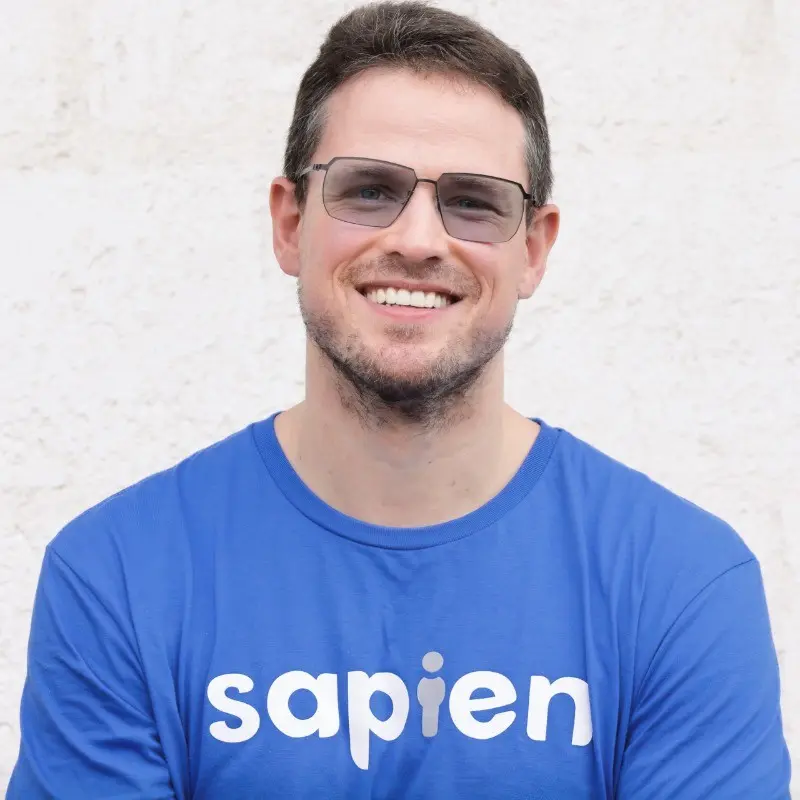
Trevor Koverko, SapienAI
In this theCUBE + NYSE Wired: Mixture of Experts segment from the New York Stock
Exchange, theCUBE’s John Furrier sits down with Raj Verma, CEO of SingleStore,
to unpack how the intersection of technology and finance is shaping enterprise
strategy. Verma shares why SingleStore is “on course” for the public markets,
reflects on brand-building through the company’s partnership with golf Hall of
Famer Padraig Harrington and connects that ethos to how SingleStore helps
organizations fix struggling data “swings.” The discussion zeroes in on what’s
next as Wall Street watches the AI infrastructure buildout: after chips and
systems, the software and data layers set the pace for value creation. Verma
outlines why enterprises must modernize “brown” data estates into “green” ones
to safely bring corporate context, governance and compliance into LLM workflows
via RAG – and why commoditized data-at-rest puts the advantage at the query
layer that unifies data in motion with data at rest. He predicts agentic AI will
gain reasoning capabilities in roughly 18 months, cites industry indicators like
Google reporting ~25% of its software now built by AI and argues that high
switching costs will give way to disruption as buyers reassess legacy vendors.
The conversation closes with concrete momentum: ~33% YoY growth, ARR in the
~$135M range, gross dollar retention ~98%, cloud NDR ~130, ~50% of business now
in the cloud, landing ~3 new customers per day, a path to cash-flow breakeven in
the next two quarters and a teaser for AI-related announcements in the next two
months. Listeners will find notable stats, real-world use cases and
forward-looking views on how databases power reliable AI at enterprise scale.
>> Welcome back to theCUBE. I'm Gemma Allen here in our studio at the New York Stock Exchange. This is our Crypto Trailblazer series in collaboration with NYSE Wired. And today we have joining us connecting Wall Street to Web3, a man who is blazed a trail in a number of arenas, Trevor Koverko. Welcome on Trevor.
Trevor Koverko
>> Thanks for having me. I'm super excited to be here.
Gemma Allen
>> So Trevor, you've had a fascinating career. You've gone from the ice hockey rink to the world of Web3, now to the next frontier of AI. Tell us a little bit about the journey you've been on. I was so amused when I read that you bought your first piece of Bitcoin on eBay in 2012. What a ride you've been on since then. Fill us in.
Trevor Koverko
>> More lucky than good. That's the story of my arc here, but I grew up in Canada and we have kind of a rule where if you don't play hockey, you kind of have the risk of being deported to America. So that's what I did. That was my first career as a kid and I ended up getting drafted to the New York Rangers in 2005. So that was kind of my proudest athletic moment. And being in New York the other day, it was great to hang out by MSG and brought back some memories, but unfortunately I was in a very abrupt ending to that. I was in a car accident in 2011 that was kind of an abrupt change to my trajectory and I didn't know what to do, so I kind of decided to reinvent myself. I really got excited about tech and ended up moving to San Francisco and kind of started my new career, which to your earlier comment coincided with the launch of Bitcoin as well. That was one of my first investments actually ever was in 2012. I invested $20 in a Bitcoin on eBay, which is a crazy place to buy Bitcoin. But that kind of started my journey in the Web3 space and it's just so exciting to see how far the industry has come along since then.
Gemma Allen
>> And we had Vince in us last week from Polymath, the company that's about to go public on the Canadian Stock Exchange in Toronto. So something that you've built from the ground up. And I think one of the things that you talked about and the whole process that led you to build that is this idea of this infra layer, that you can build a runway, right, but you got to build planes in which it can land so that people can get mass utility and impact. So talk to us a little bit about bringing that thinking and that next stage of this journey into Sapien, which is a very interesting company and concept.
Trevor Koverko
>> Yeah, absolutely. We started Polymath, just to tie the bow on that comment, with a thesis. And the thesis was that the world is being tokenized. And we started it back in 2017 and what we realized was that it was kind of like, you know Moore's Law every two years, the transistors on a chip double? Well, we kind of saw the same thing with tokenization where every two years, a new large category of assets seems to get tokenized, not all at once, but it's a bit of a curve. And so if you think about it, when Bitcoin and Ethereum launched, they were the first things to be tokenized, were protocols like Bitcoin and ETH. And then two years later we had like, a few years later we had NFTs. So art and digital assets are being tokenized, so not fully real, but it's getting in that direction. And then a couple years later we saw the launch of Tether, which was tokenized cash, and we're like, oh wow, this is a large market, fiat and money. And then a couple years later now we're seeing commodities tokenized gold and securities tokenized stocks with what's happening at Robinhood. So we're seeing this kind of explosion of the tokenization of what's now known as real world assets. And that was an early part of kind of what I got passionate about and with Polymath and as well as a DAT we're working on, which is kind of bringing in RWA tokens into one public vehicle. I'm so very excited and very passionate about this space. And it's just wild because I was kind of known as the boy who cried wolf because every year I was predicting this crazy tokenization inevitability and it never really happened. And then all of a sudden we woke up and Larry Fink was talking about $100 trillion dollars or something of assets that are inevitably going to be tokenized. And now we're seeing folks like Carlos, who's a friend of mine who just announced his SPAC. They're the leading RWA company as well. So super exciting time to be in the tokenization space.
Gemma Allen
>> Wow. We come to do this moment for you for sure. So Sapien, you describe it as a label to earn network. Talk to us a little bit about this. Is it a marketplace? I know it's like a blockchain focused company. Describe it to the outside ear.
Trevor Koverko
>> Well, we started, like with every kind of company that we do, and we don't start them very often, but we always try to start with a problem. We start with an opportunity that is big enough and exciting enough and maybe we have a unique insight into or we have some domain expertise. And this one was easy because our thesis was that humans are a critical component to the production of AI. And that sounds kind of counterintuitive because everybody's saying, no, no, no, AI is going to replace humans. They're antagonistic to each other. It's going to replace all these jobs. And we actually have the opposite view. We have good relationships with a lot of the top AI labs, think OpenAI and Google and folks like that. And what we learned is that the reason those models perform so well, like ChatGPT and others, is because of humans. It's because all the data that we produced on the internet over the decades and also because of purpose-built data production that happens in the production of these models. So what I mean is if you want to have a ChatGPT-5 or ChatGPT-6 type model that works magically, you need a lot of humans behind the scenes inputting data and structuring data. Because data is one of the three pillars of AI with compute and algorithms being the other two. But data is becoming the biggest bottleneck because we've kind of run out of new data to train on, and it's up to us as humans to produce new proprietary data sets that these models can use to improve on. So that was our insight with Sapien was that, hey, maybe there's a world where AI doesn't replace humans, but AI and humans work together and AI can actually employ humans, not replace them. And we're actually seeing that now, there's companies like Mercor, which showed a chart that I thought is very emblematic of what our thesis is, which was in the last couple of years they've paid out more to humans to train AI or to structure data before training AI than Google did in its first two years or excuse me, Uber did in its first two years to drivers and more than the DoorDashers paid to DoorDashers in the first two years by a factor of 10. So it's way bigger now that these models are needing human experts or just regular humans to make these AI models better. And that's kind of the premise that Sapien was set on was, hey, maybe we can be a marketplace where anyone, regardless of your skills, regardless of your ability to speak English, regardless of your location, you can earn a living wage by contributing data to these proliferating AI models around the world, not just the big ones either, by the way, like smaller academic models, more enterprise models that are coming out. We think every single one of those models demands human experts, and that's what we're trying to do.
Gemma Allen
>> I love this because I think if life is about anything, it's about nuance, right, and this idea that humans will continue to play a role in an AI-driven world, especially from the perspective of ethics and biases and different things that dictate how data gets labeled, like it's so key, it's so critical. But also what you're doing is decentralizing the cultural element of this too, right? Because it's a gig economy opportunity at a time, I think when there's a lot of inertia and fear around what the world would look like 10 years out. So tell me from a buyer perspective in terms of who your ideal customers are, who the ideal buyer persona is for this. Is it large enterprise? You mentioned a number of different models, large and small there and some big, big LM players, but who are you ideally focusing in on at this stage?
Trevor Koverko
>> There's a lot going on in AI right now, especially in San Francisco where we spend most of our time. And the market is not just one giant blob anymore. There's kind of segments forming. I kind of categorize paying customers or model builders into three categories. There's the large generalized hyper scaler models, that's the OpenAIs and the Google Geminis. Those are the models that are kind of the biggest and the most performant. Under them you have, I'll go to the very bottom next. The very bottom is these small agile vertical models. So these are startups coming out of Y Combinator in San Francisco that are building very specific models to solve a very specific problem. So kind of the opposite, but what we've kind of, I think ignored a bit as an industry is everything in between. So let's talk about the Fortune 500, a lot of companies that I'm sure you're very familiar with over at the New York Stock Exchange. They're kind of in a tough spot because they're getting disrupted from above, like these huge general models that are replacing a lot of the services of what they do in a kind of very cost-efficient way. And then from below you're getting all these startups kind of nibbling at your ankles and competing with you in your vertical as well. And so it's kind of a unique position. If you're like the chief investment officer, the chief technology officer of JPMorgan or a huge Fortune 500 company, you've got to have an AI strategy. And you're probably going to have to build your own proprietary models that leverage your own unique data sets that OpenAI might not have access to. And that's kind of where we sit. We sit in these large Fortune 100, Fortune 500 companies that are a little scared and a little excited about how they're going to surf this kind of AI wave. And we're kind of focused on helping them build models that are better than the big generalized models in their vertical, whatever that is, whether it's banking, healthcare, legal, or something else.
Gemma Allen
>> I think what really fascinates me about this is this idea of a decentralized talent workforce too. Right. And when you think about Uber or any of these folks that have made a lot of money in this space and have been hugely successful, you don't necessarily think about the enterprise buyer for say. You think more about the retail user, but you have big plans, I believe, to scale this into large enterprise customers. How would you think about annotation and quality and maintaining a level of scalability, high quality, high impact for both your users on both sides of that fence in this world?
Trevor Koverko
>> Yeah, that's exactly right, is there's two sides to servicing a customer. We need a customer who has capital, that they want to build a model and to build that model, they need data from humans to both produce that data and structure that data. But on the other side, we actually need the humans. And so the way we pitch Sapien is the largest global network of high quality human data producers. And so think of it in the cloud, we've got millions of humans that are waiting for job opportunities, kind of like drivers in Uber waiting for a rider to order a ride. And then as soon as a job comes up, they can instantly start servicing that for money. And so to your point earlier, we see this as a brand new form of gig work that's potentially going to be bigger than all other forms of Gig works combined, which is humans contributing their knowledge to these AI data sets. And we think that's super exciting because it's almost like the next form of gig work that's more empowering. You don't need to necessarily buy a car to drive an Uber. You don't need to walk around the city to deliver a DoorDash. And by the way, a lot of those are at risk of being disintermediated by AI. You might have self-driving taxis like Waymo, and you might have drone delivery of packages, so you don't need the human to do it anymore. But that's okay because I think this is a higher order form of work where you can leverage your knowledge and your expertise and you can sell it to these AI models for the benefit of humankind. And so that's kind of our core differentiator. It's not just the enterprise relationships we have, but it's this large global network of humans. And the reason, it's why we focus on this and it's a competitive advantage is because a unique part about producing data is the bigger the human category is, and the more diversity in that human network, the better quality data they produce. So if you just have a small group of 38-year-old men doing a data task, you actually get slanted in biased outputs. So these models prefer diversity. And so one of the benefits of having a decentralized network of humans is you actually have better quality data that gets produced at the end of the day. So we take pride in that as well, that diversity equals quality.
Gemma Allen
>> I love that. And tell me a little about these models. We sometimes hear too many models, not enough differentiators. Right. It seems as though right now, I mean, the word AI is used multiple times per minute here at the NYSE. It feels to some respects, like lots of people are building models. What are your thoughts on that? How do you see this frontier emerging from the perspective of value and impact?
Trevor Koverko
>> I think it's going to verticalize just like a SaaS company. There's not one SaaS company that runs all of enterprise. There's like dozens and thousands and even millions of software companies that solve a particular use case. And what we're seeing is, to use an example, a company like JPMorgan, they're sitting on probably the most valuable century old data set of financial information on the planet and they host that privately, like it's their competitive advantage. It's like a gold mine. And so they have a big decision to make. Do they license that data set out to OpenAI or do they leverage that data to build their own model that's going to be the best in the world because it has this proprietary data set that it's built up? Because literally high quality data equals better performing models. It's that simple, that correlation. And so we don't think they're going to license it. Some people will. So Reddit for example, I think licenses their data to OpenAI because they're not a model building company. They just want another revenue stream, and it's a nice revenue stream for a public company to get. But I don't know, companies like JPMorgan, that's too risky. If you open up the Pandora's Box, then everybody's just going to be able to automate what JPMorgan does. So we're starting to see that. They're leaning into this idea of maybe we can compete because we have the best quality data and the most diverse amount of data that we can build a model that's competitive. And so that's kind of our prediction, is we're going to see a lot of these, what we call vertical enterprise models popping up that are going to be even better than ChatGPT in one area. Maybe it's legal and we're going to build a legal fine tune model that's better in that specific use case, or it has more compliance baked in, or it has some kind of front end that's easier to use. We're seeing a lot of this with coding. So companies like Lovable, companies like Cursor that are built on top of other models, but they're just laser focused on one specific use case. So yes, ChatGPT can help you with coding, but most developers prefer a custom experience that's built just for their needs. And so we see that kind of forming as well, whether it's vertical models or whether it's user experiences and front ends around those models. It's getting so competitive that you have to be really good at one specific thing if you want to compete in the marketplace.
Gemma Allen
>> And I guess it allows you to hone in on context, right, which is so critical right now too, across all of these separate verticals. It gives you that speciality focus. So speaking of context, I know we have a lot of folks that are going to watch you who have followed your career as a founder. When I talk about you're founder, it's a career really built on resilience, I think, and courage, right? Talk to me just quickly a little bit about the kind of founder experience. I was so humored as well at one of the stories I read, that you once had a branding issue with Polymath because it was accidentally branded Polymeth by an agency firm. Right. I thought what a great founder story, but tell me a little bit about what you think about the kind of founder landscape right now. What advice you have to other founders that are watching or other folks that inspire to be more like you?
Trevor Koverko
>> Yeah, we have some naming catastrophes over the years. We had yeah, my friend who was a hockey buddy that became a lawyer, did a typo on our articles of incorporation. So as we were going public, the lawyers are looking at it and they're like, is this Polymeth Labs? I thought that this is a normal company. And he did an E instead of an A. We also did an event many years ago called Polycon. And it was an event to celebrate Polymath and all of our launches and announcements. And we got a legal letter from the old Polycon based out of Vancouver, which was the Polyamorous Society of Canada, and they had their own Polycon, so we had to change the name again. But that's part of the journey like as to your question.
Gemma Allen
>> Exactly.
Trevor Koverko
>> It's the ups and downs and the stories that you stress out about at the time, but you look back and you laugh about, that's what we do it for. The end goal of going public or selling for some large number is kind of not the point. It's the journey on the way there that really matters. So that's what I learned kind of early on. It's just to enjoy the ride and whatever happens kind of happens.
Gemma Allen
>> Take the learnings as they come. Okay. So close us out, Trevor. Tell us what's ahead for Sapien? What does the next 12 months look like? What are the big goals? Where do you see the trajectory?
Trevor Koverko
>> Yeah, the two categories I think everybody needs to focus on and be excited about and be educated on is RWA, the tokenization of real world assets. That is a large freight train, mega trend and stablecoins is an example of an RWA. You're probably hearing about all the exciting things happening in the global stablecoin market. So RWA, definitely check that out. And Polymath and RWA Labs are kind of our products that we're trying to bring to market to solve problems there. And on AI, my full-time job is bringing human powered AI to the masses. And so Sapien.io is our website and you should check it out.
Gemma Allen
>> Well, we'll be watching close, and we hope to have you here with us at the NYSE someday soon. Thanks so much for coming on.
Trevor Koverko
>> That was great.
Gemma Allen
>> I'm Gemma Allen. This is our Crypto Trailblazer series here at theCUBE at NYSE Wired. Thanks so much for watching.
>> Welcome back to theCUBE. I'm Gemma Allen here in our studio at the New York Stock Exchange. This is our Crypto Trailblazer series in collaboration with NYSE Wired. And today we have joining us connecting Wall Street to Web3, a man who is blazed a trail in a number of arenas, Trevor Koverko. Welcome on Trevor.
Trevor Koverko
>> Thanks for having me. I'm super excited to be here.
Gemma Allen
>> So Trevor, you've had a fascinating career. You've gone from the ice hockey rink to the world of Web3, now to the next frontier of AI. Tell us a little bit about the journey you've been on. I was so amused when I read that you bought your first piece of Bitcoin on eBay in 2012. What a ride you've been on since then. Fill us in.
Trevor Koverko
>> More lucky than good. That's the story of my arc here, but I grew up in Canada and we have kind of a rule where if you don't play hockey, you kind of have the risk of being deported to America. So that's what I did. That was my first career as a kid and I ended up getting drafted to the New York Rangers in 2005. So that was kind of my proudest athletic moment. And being in New York the other day, it was great to hang out by MSG and brought back some memories, but unfortunately I was in a very abrupt ending to that. I was in a car accident in 2011 that was kind of an abrupt change to my trajectory and I didn't know what to do, so I kind of decided to reinvent myself. I really got excited about tech and ended up moving to San Francisco and kind of started my new career, which to your earlier comment coincided with the launch of Bitcoin as well. That was one of my first investments actually ever was in 2012. I invested $20 in a Bitcoin on eBay, which is a crazy place to buy Bitcoin. But that kind of started my journey in the Web3 space and it's just so exciting to see how far the industry has come along since then.
Gemma Allen
>> And we had Vince in us last week from Polymath, the company that's about to go public on the Canadian Stock Exchange in Toronto. So something that you've built from the ground up. And I think one of the things that you talked about and the whole process that led you to build that is this idea of this infra layer, that you can build a runway, right, but you got to build planes in which it can land so that people can get mass utility and impact. So talk to us a little bit about bringing that thinking and that next stage of this journey into Sapien, which is a very interesting company and concept.
Trevor Koverko
>> Yeah, absolutely. We started Polymath, just to tie the bow on that comment, with a thesis. And the thesis was that the world is being tokenized. And we started it back in 2017 and what we realized was that it was kind of like, you know Moore's Law every two years, the transistors on a chip double? Well, we kind of saw the same thing with tokenization where every two years, a new large category of assets seems to get tokenized, not all at once, but it's a bit of a curve. And so if you think about it, when Bitcoin and Ethereum launched, they were the first things to be tokenized, were protocols like Bitcoin and ETH. And then two years later we had like, a few years later we had NFTs. So art and digital assets are being tokenized, so not fully real, but it's getting in that direction. And then a couple years later we saw the launch of Tether, which was tokenized cash, and we're like, oh wow, this is a large market, fiat and money. And then a couple years later now we're seeing commodities tokenized gold and securities tokenized stocks with what's happening at Robinhood. So we're seeing this kind of explosion of the tokenization of what's now known as real world assets. And that was an early part of kind of what I got passionate about and with Polymath and as well as a DAT we're working on, which is kind of bringing in RWA tokens into one public vehicle. I'm so very excited and very passionate about this space. And it's just wild because I was kind of known as the boy who cried wolf because every year I was predicting this crazy tokenization inevitability and it never really happened. And then all of a sudden we woke up and Larry Fink was talking about $100 trillion dollars or something of assets that are inevitably going to be tokenized. And now we're seeing folks like Carlos, who's a friend of mine who just announced his SPAC. They're the leading RWA company as well. So super exciting time to be in the tokenization space.
Gemma Allen
>> Wow. We come to do this moment for you for sure. So Sapien, you describe it as a label to earn network. Talk to us a little bit about this. Is it a marketplace? I know it's like a blockchain focused company. Describe it to the outside ear.
Trevor Koverko
>> Well, we started, like with every kind of company that we do, and we don't start them very often, but we always try to start with a problem. We start with an opportunity that is big enough and exciting enough and maybe we have a unique insight into or we have some domain expertise. And this one was easy because our thesis was that humans are a critical component to the production of AI. And that sounds kind of counterintuitive because everybody's saying, no, no, no, AI is going to replace humans. They're antagonistic to each other. It's going to replace all these jobs. And we actually have the opposite view. We have good relationships with a lot of the top AI labs, think OpenAI and Google and folks like that. And what we learned is that the reason those models perform so well, like ChatGPT and others, is because of humans. It's because all the data that we produced on the internet over the decades and also because of purpose-built data production that happens in the production of these models. So what I mean is if you want to have a ChatGPT-5 or ChatGPT-6 type model that works magically, you need a lot of humans behind the scenes inputting data and structuring data. Because data is one of the three pillars of AI with compute and algorithms being the other two. But data is becoming the biggest bottleneck because we've kind of run out of new data to train on, and it's up to us as humans to produce new proprietary data sets that these models can use to improve on. So that was our insight with Sapien was that, hey, maybe there's a world where AI doesn't replace humans, but AI and humans work together and AI can actually employ humans, not replace them. And we're actually seeing that now, there's companies like Mercor, which showed a chart that I thought is very emblematic of what our thesis is, which was in the last couple of years they've paid out more to humans to train AI or to structure data before training AI than Google did in its first two years or excuse me, Uber did in its first two years to drivers and more than the DoorDashers paid to DoorDashers in the first two years by a factor of 10. So it's way bigger now that these models are needing human experts or just regular humans to make these AI models better. And that's kind of the premise that Sapien was set on was, hey, maybe we can be a marketplace where anyone, regardless of your skills, regardless of your ability to speak English, regardless of your location, you can earn a living wage by contributing data to these proliferating AI models around the world, not just the big ones either, by the way, like smaller academic models, more enterprise models that are coming out. We think every single one of those models demands human experts, and that's what we're trying to do.
Gemma Allen
>> I love this because I think if life is about anything, it's about nuance, right, and this idea that humans will continue to play a role in an AI-driven world, especially from the perspective of ethics and biases and different things that dictate how data gets labeled, like it's so key, it's so critical. But also what you're doing is decentralizing the cultural element of this too, right? Because it's a gig economy opportunity at a time, I think when there's a lot of inertia and fear around what the world would look like 10 years out. So tell me from a buyer perspective in terms of who your ideal customers are, who the ideal buyer persona is for this. Is it large enterprise? You mentioned a number of different models, large and small there and some big, big LM players, but who are you ideally focusing in on at this stage?
Trevor Koverko
>> There's a lot going on in AI right now, especially in San Francisco where we spend most of our time. And the market is not just one giant blob anymore. There's kind of segments forming. I kind of categorize paying customers or model builders into three categories. There's the large generalized hyper scaler models, that's the OpenAIs and the Google Geminis. Those are the models that are kind of the biggest and the most performant. Under them you have, I'll go to the very bottom next. The very bottom is these small agile vertical models. So these are startups coming out of Y Combinator in San Francisco that are building very specific models to solve a very specific problem. So kind of the opposite, but what we've kind of, I think ignored a bit as an industry is everything in between. So let's talk about the Fortune 500, a lot of companies that I'm sure you're very familiar with over at the New York Stock Exchange. They're kind of in a tough spot because they're getting disrupted from above, like these huge general models that are replacing a lot of the services of what they do in a kind of very cost-efficient way. And then from below you're getting all these startups kind of nibbling at your ankles and competing with you in your vertical as well. And so it's kind of a unique position. If you're like the chief investment officer, the chief technology officer of JPMorgan or a huge Fortune 500 company, you've got to have an AI strategy. And you're probably going to have to build your own proprietary models that leverage your own unique data sets that OpenAI might not have access to. And that's kind of where we sit. We sit in these large Fortune 100, Fortune 500 companies that are a little scared and a little excited about how they're going to surf this kind of AI wave. And we're kind of focused on helping them build models that are better than the big generalized models in their vertical, whatever that is, whether it's banking, healthcare, legal, or something else.
Gemma Allen
>> I think what really fascinates me about this is this idea of a decentralized talent workforce too. Right. And when you think about Uber or any of these folks that have made a lot of money in this space and have been hugely successful, you don't necessarily think about the enterprise buyer for say. You think more about the retail user, but you have big plans, I believe, to scale this into large enterprise customers. How would you think about annotation and quality and maintaining a level of scalability, high quality, high impact for both your users on both sides of that fence in this world?
Trevor Koverko
>> Yeah, that's exactly right, is there's two sides to servicing a customer. We need a customer who has capital, that they want to build a model and to build that model, they need data from humans to both produce that data and structure that data. But on the other side, we actually need the humans. And so the way we pitch Sapien is the largest global network of high quality human data producers. And so think of it in the cloud, we've got millions of humans that are waiting for job opportunities, kind of like drivers in Uber waiting for a rider to order a ride. And then as soon as a job comes up, they can instantly start servicing that for money. And so to your point earlier, we see this as a brand new form of gig work that's potentially going to be bigger than all other forms of Gig works combined, which is humans contributing their knowledge to these AI data sets. And we think that's super exciting because it's almost like the next form of gig work that's more empowering. You don't need to necessarily buy a car to drive an Uber. You don't need to walk around the city to deliver a DoorDash. And by the way, a lot of those are at risk of being disintermediated by AI. You might have self-driving taxis like Waymo, and you might have drone delivery of packages, so you don't need the human to do it anymore. But that's okay because I think this is a higher order form of work where you can leverage your knowledge and your expertise and you can sell it to these AI models for the benefit of humankind. And so that's kind of our core differentiator. It's not just the enterprise relationships we have, but it's this large global network of humans. And the reason, it's why we focus on this and it's a competitive advantage is because a unique part about producing data is the bigger the human category is, and the more diversity in that human network, the better quality data they produce. So if you just have a small group of 38-year-old men doing a data task, you actually get slanted in biased outputs. So these models prefer diversity. And so one of the benefits of having a decentralized network of humans is you actually have better quality data that gets produced at the end of the day. So we take pride in that as well, that diversity equals quality.
Gemma Allen
>> I love that. And tell me a little about these models. We sometimes hear too many models, not enough differentiators. Right. It seems as though right now, I mean, the word AI is used multiple times per minute here at the NYSE. It feels to some respects, like lots of people are building models. What are your thoughts on that? How do you see this frontier emerging from the perspective of value and impact?
Trevor Koverko
>> I think it's going to verticalize just like a SaaS company. There's not one SaaS company that runs all of enterprise. There's like dozens and thousands and even millions of software companies that solve a particular use case. And what we're seeing is, to use an example, a company like JPMorgan, they're sitting on probably the most valuable century old data set of financial information on the planet and they host that privately, like it's their competitive advantage. It's like a gold mine. And so they have a big decision to make. Do they license that data set out to OpenAI or do they leverage that data to build their own model that's going to be the best in the world because it has this proprietary data set that it's built up? Because literally high quality data equals better performing models. It's that simple, that correlation. And so we don't think they're going to license it. Some people will. So Reddit for example, I think licenses their data to OpenAI because they're not a model building company. They just want another revenue stream, and it's a nice revenue stream for a public company to get. But I don't know, companies like JPMorgan, that's too risky. If you open up the Pandora's Box, then everybody's just going to be able to automate what JPMorgan does. So we're starting to see that. They're leaning into this idea of maybe we can compete because we have the best quality data and the most diverse amount of data that we can build a model that's competitive. And so that's kind of our prediction, is we're going to see a lot of these, what we call vertical enterprise models popping up that are going to be even better than ChatGPT in one area. Maybe it's legal and we're going to build a legal fine tune model that's better in that specific use case, or it has more compliance baked in, or it has some kind of front end that's easier to use. We're seeing a lot of this with coding. So companies like Lovable, companies like Cursor that are built on top of other models, but they're just laser focused on one specific use case. So yes, ChatGPT can help you with coding, but most developers prefer a custom experience that's built just for their needs. And so we see that kind of forming as well, whether it's vertical models or whether it's user experiences and front ends around those models. It's getting so competitive that you have to be really good at one specific thing if you want to compete in the marketplace.
Gemma Allen
>> And I guess it allows you to hone in on context, right, which is so critical right now too, across all of these separate verticals. It gives you that speciality focus. So speaking of context, I know we have a lot of folks that are going to watch you who have followed your career as a founder. When I talk about you're founder, it's a career really built on resilience, I think, and courage, right? Talk to me just quickly a little bit about the kind of founder experience. I was so humored as well at one of the stories I read, that you once had a branding issue with Polymath because it was accidentally branded Polymeth by an agency firm. Right. I thought what a great founder story, but tell me a little bit about what you think about the kind of founder landscape right now. What advice you have to other founders that are watching or other folks that inspire to be more like you?
Trevor Koverko
>> Yeah, we have some naming catastrophes over the years. We had yeah, my friend who was a hockey buddy that became a lawyer, did a typo on our articles of incorporation. So as we were going public, the lawyers are looking at it and they're like, is this Polymeth Labs? I thought that this is a normal company. And he did an E instead of an A. We also did an event many years ago called Polycon. And it was an event to celebrate Polymath and all of our launches and announcements. And we got a legal letter from the old Polycon based out of Vancouver, which was the Polyamorous Society of Canada, and they had their own Polycon, so we had to change the name again. But that's part of the journey like as to your question.
Gemma Allen
>> Exactly.
Trevor Koverko
>> It's the ups and downs and the stories that you stress out about at the time, but you look back and you laugh about, that's what we do it for. The end goal of going public or selling for some large number is kind of not the point. It's the journey on the way there that really matters. So that's what I learned kind of early on. It's just to enjoy the ride and whatever happens kind of happens.
Gemma Allen
>> Take the learnings as they come. Okay. So close us out, Trevor. Tell us what's ahead for Sapien? What does the next 12 months look like? What are the big goals? Where do you see the trajectory?
Trevor Koverko
>> Yeah, the two categories I think everybody needs to focus on and be excited about and be educated on is RWA, the tokenization of real world assets. That is a large freight train, mega trend and stablecoins is an example of an RWA. You're probably hearing about all the exciting things happening in the global stablecoin market. So RWA, definitely check that out. And Polymath and RWA Labs are kind of our products that we're trying to bring to market to solve problems there. And on AI, my full-time job is bringing human powered AI to the masses. And so Sapien.io is our website and you should check it out.
Gemma Allen
>> Well, we'll be watching close, and we hope to have you here with us at the NYSE someday soon. Thanks so much for coming on.
Trevor Koverko
>> That was great.
Gemma Allen
>> I'm Gemma Allen. This is our Crypto Trailblazer series here at theCUBE at NYSE Wired. Thanks so much for watching.











































 Gemma Allen