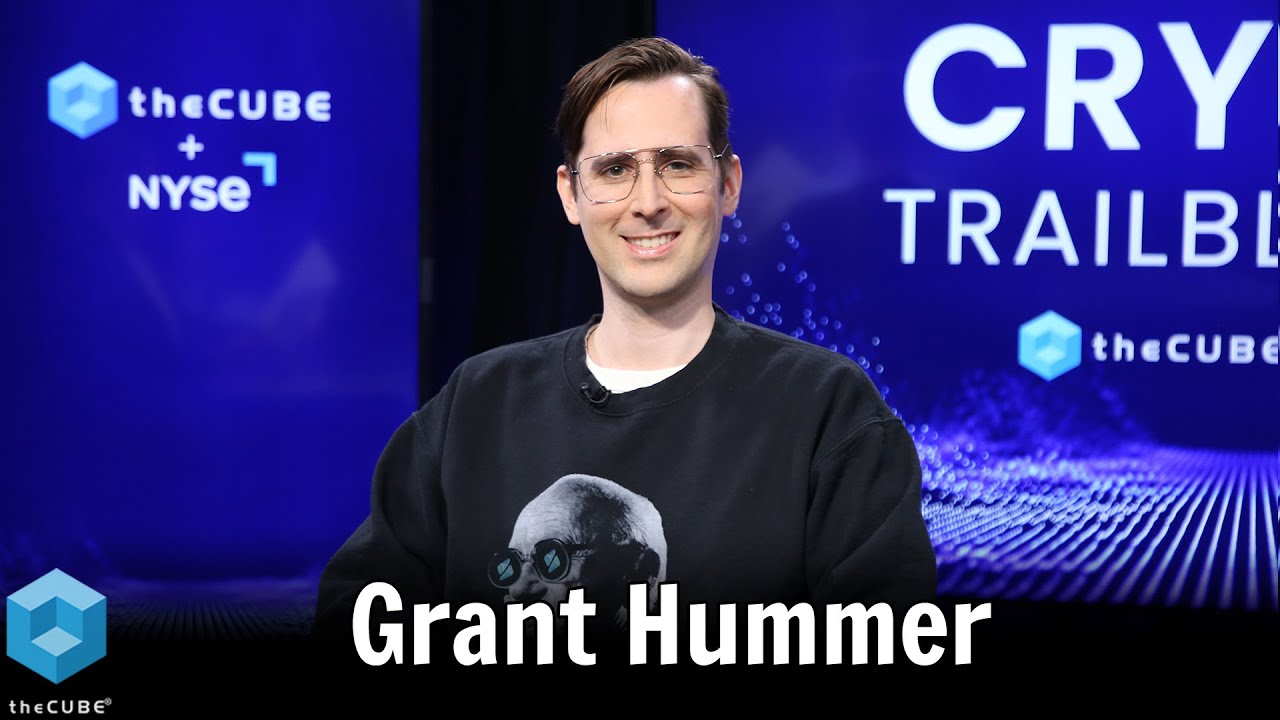
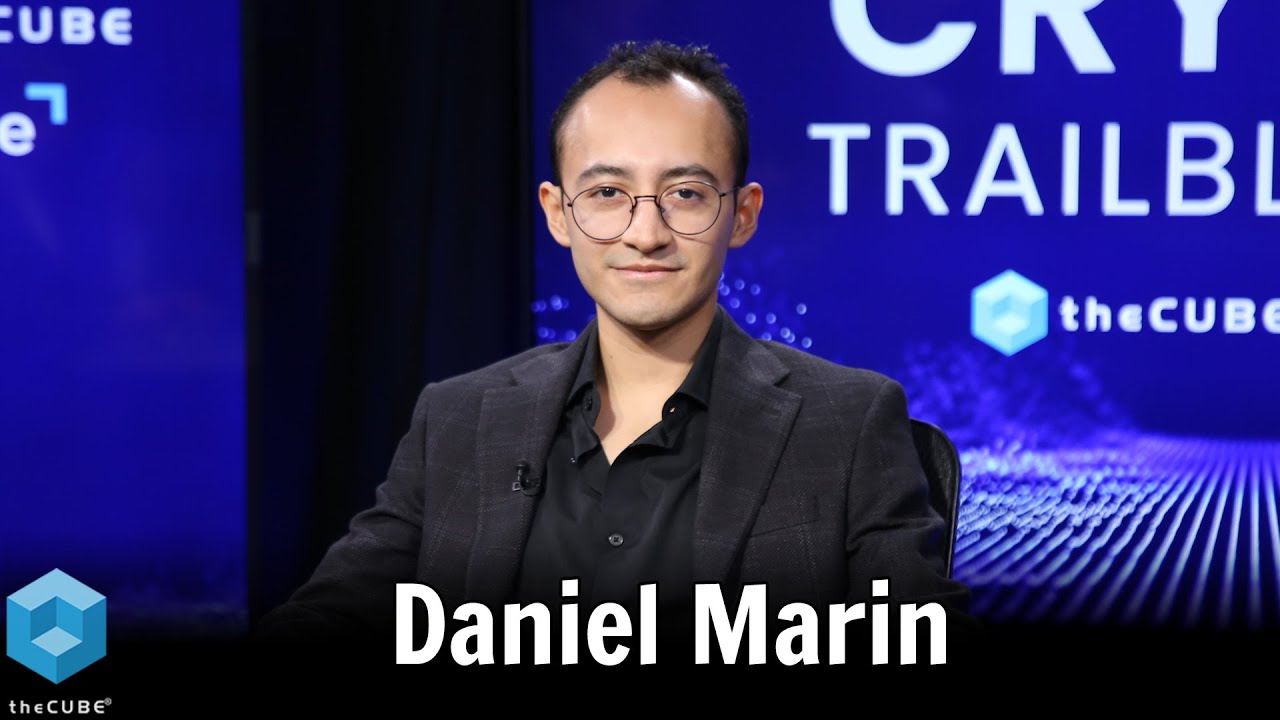
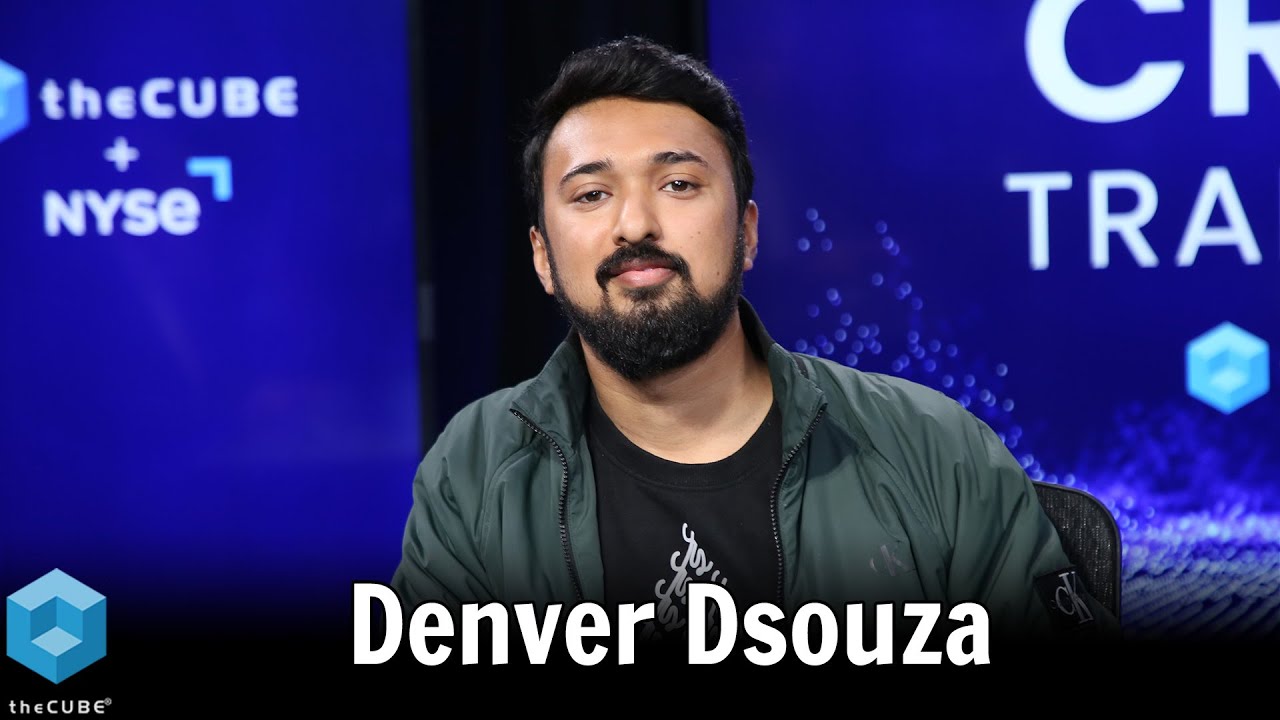
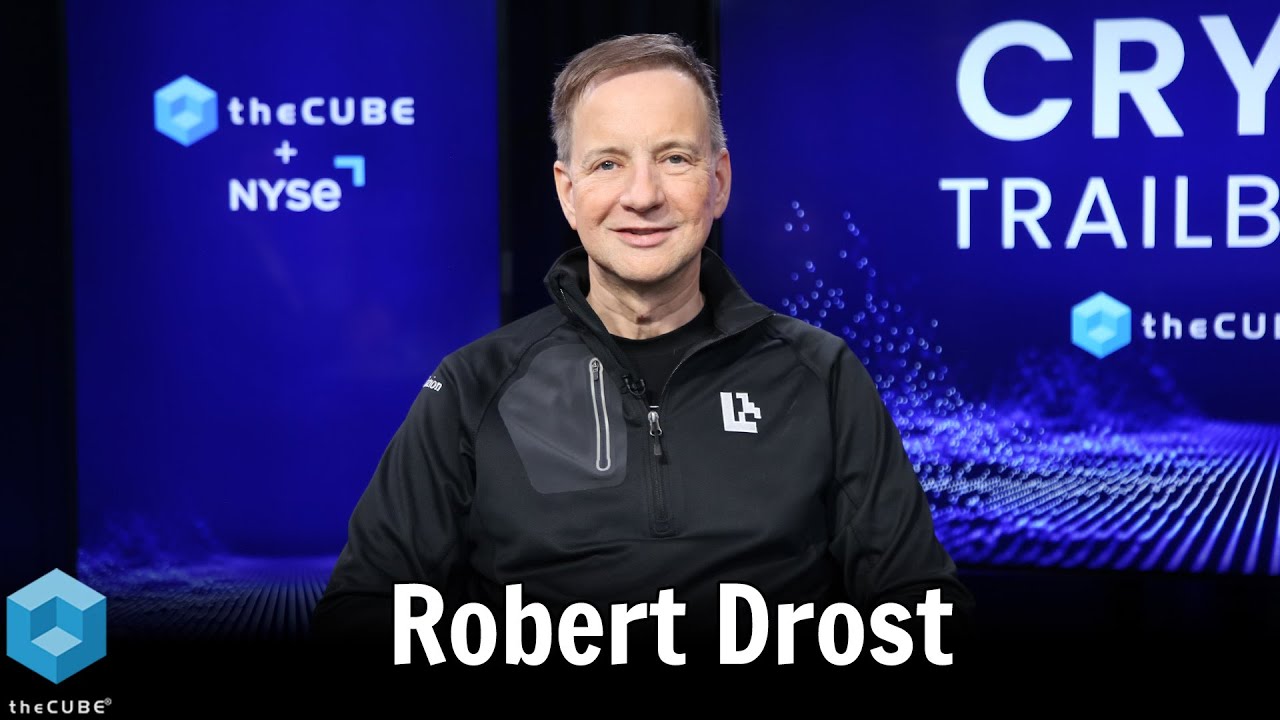
In this insightful episode of the Crypto Trailblazers series hosted by theCUBE, Mike Cagney of Figure Markets sits down with analysts from theCUBE Research to discuss groundbreaking advancements in blockchain technology and their implications for the finance sector. This video is part of the NYSE Wired digital event, aimed at bridging the gap between Silicon Valley and Wall Street by integrating technology and finance.
Cagney, an eminent figure in fintech, shares expertise on the transformative role of blockchain in financial markets during this interview. Conducted by seasoned analysts at theCUBE, the discussion delves into Figure’s innovative contributions, including their blockchain-native loan origination and securitization process. He outlines how Figure leverages blockchain to achieve cost reductions, enhanced security and improved liquidity in financial transactions.
Key takeaways from the interview highlight insights on the evolution of the Web3 ecosystem, such as the emergence of stablecoins as pivotal to transaction processes and the rise of decentralized finance (DeFi). Oltsik states these developments signify a shift towards democratizing finance, wherein truth and transparency are foundational. The conversation concludes with a look at Figure’s pioneering efforts in creating a new financial marketplace utilizing blockchain technology.
#CryptoTrailblazers #FigureMarkets #BlockchainInnovation #Web3 #NYEWired #BlockchainFinance #DecentralizedFinance #Fintech #Stablecoins
Find more SiliconANGLE news and analysis https://siliconangle.com/.
Follow theCUBE's wall-to-wall event coverage https://siliconangle.com/events/
Learn about the latest theCUBE events https://www.thecube.net/
00:00 - Intro
00:05 - Emerging Innovations in Financial Technology and Market Dynamics
02:45 - Key Elements in Financial Ecosystem Dynamics
06:20 - Blockchain: Truth and Transformation
09:39 - Shaping the Future: Innovations in Financial Markets and Stablecoin Integration
13:15 - Enabling the Future: Navigating Disruptions in Banking and Lending
16:51 - Exploring Opportunities and Building Confidence in the Blockchain Ecosystem
Forgot Password
Almost there!
We just sent you a verification email. Please verify your account to gain access to
theCUBE + NYSE Wired: Crypto Trailblazers. If you don’t think you received an email check your
spam folder.
Sign in to theCUBE + NYSE Wired: Crypto Trailblazers.
In order to sign in, enter the email address you used to registered for the event. Once completed, you will receive an email with a verification link. Open this link to automatically sign into the site.
Register For theCUBE + NYSE Wired: Crypto Trailblazers
Please fill out the information below. You will recieve an email with a verification link confirming your registration. Click the link to automatically sign into the site.
You’re almost there!
We just sent you a verification email. Please click the verification button in the email. Once your email address is verified, you will have full access to all event content for theCUBE + NYSE Wired: Crypto Trailblazers.
I want my badge and interests to be visible to all attendees.
Checking this box will display your presense on the attendees list, view your profile and allow other attendees to contact you via 1-1 chat. Read the Privacy Policy. At any time, you can choose to disable this preference.
Select your Interests!
add
Upload your photo
Uploading..
OR
Connect via Twitter
Connect via Linkedin
EDIT PASSWORD
Share
Forgot Password
Almost there!
We just sent you a verification email. Please verify your account to gain access to
theCUBE + NYSE Wired: Crypto Trailblazers. If you don’t think you received an email check your
spam folder.
Sign in to theCUBE + NYSE Wired: Crypto Trailblazers.
In order to sign in, enter the email address you used to registered for the event. Once completed, you will receive an email with a verification link. Open this link to automatically sign into the site.
Sign in to gain access to theCUBE + NYSE Wired: Crypto Trailblazers
Please sign in with LinkedIn to continue to theCUBE + NYSE Wired: Crypto Trailblazers. Signing in with LinkedIn ensures a professional environment.
play_circle_outlineEmpowering Entrepreneurs: Innovating Crypto Trading and Tokenization with Alpaca's Dual Infrastructure for Traditional and Digital Assets
replyShare Clip
play_circle_outlineEnsuring Investor Protection: The Role of Solid Custody in Regulated Crypto Platforms Like Alpaca
replyShare Clip
play_circle_outlineThe integration of finance and technology in modern financial services.
replyShare Clip
play_circle_outlineClosing thoughts on the future of global financial systems and technology disruptions.
>> Welcome back, everyone. I'm John Furrier, host of theCUBE here at our NYSE CUBE Studios on the East Coast here at the New York Stock Exchange overlooking the balcony of the floor. Of course we have our Palo Alto Studio kind of thing. Wall Street, Silicon Valley is part of the NYSE Wired program as well community. Hitoshi Harada is there, co-founder and CPO of Alpaca. They enabled developers to engage with crypto, build the crypto and take advantage in their trailblazing the crypto scene. Hitoshi, thanks for coming onto theCUBE. Appreciate you.
Hitoshi Harada
>> Thank you so much, John. Good to be here.>> So first, explain what you guys do. You're the chief product officer. You have the keys to the kingdom.
Hitoshi Harada
>> Sure.>> You set the agenda.
Hitoshi Harada
>> Yeah, sure. So Alpaca is a brokerage infrastructure API company. We help more than 280 companies across more than 40 countries, FinTech and the brokers to access liquidity of the US stocks, crypto, US options, all this stuff.>> So you're a crypto API basically?
Hitoshi Harada
>> Yeah.>> Explain what that is. What does it do?
Hitoshi Harada
>> Well, we are the infrastructure layer. So we provide a custody and trading all these necessary services through the one single API so that anyone can build the next generation, next innovation on top of our platform.>> So if I want to do a retail thing on crypto, that's what I would do?
Hitoshi Harada
>> Exactly.>> I'd use you guys.
Hitoshi Harada
>> Yeah, exactly.>> So what do they do? What are people building?
Hitoshi Harada
>> Well, we started from a more traditional finance space. So after the Robinhood skyrocketed in the US, there are so many entrepreneurs across the world, started building the next generation of Robinhood in each country. And that's how we started growing the business. But nowadays, of course, things are changing beyond just the traditional securities and options, but also they're building the next generation such as tokenization. Lately, we have been helping a lot of today's tokenization platforms. So if you come across any tokenized stocks, then we are behind that pretty much.>> You're enabling. You are an enablement to entrepreneurs.
Hitoshi Harada
>> Correct.>> They see Robinhood, "I got to have that." Why not? They're kicking ass. I mean it's awesome.
Hitoshi Harada
>> Awesome.>> And then now existing companies as well and they need you because you're the infrastructure. It's like a managed service for them.
Hitoshi Harada
>> Correct. And especially in the context of the tokenization, which is a hot topic today. So there are a bunch of clearing brokers out there, but what differentiates us from them is that we are also both... We are infrastructure for both traditional securities and the crypto in the platform. So that way, because in order to tokenize the traditional securities, you need to have both capabilities and you need to know the trade between the stablecoins and the real RW tokens and stuff like that. So we have the both capabilities, which is where... and that's why we are here, outstanding for those ways.>> People are really nervous. Enthusiasm is high, confidence levels are getting better, but to have full confidence, I got to make sure that the custody is rock solid and I don't want to lose my assets.
Hitoshi Harada
>> Sure.>> That's the mindset.
Hitoshi Harada
>> Sure.>> How are you guys ensuring that? What are some of the key technologies?
Hitoshi Harada
>> Sure. First all, we are the self-clearing direct membership of the DTCC and OCC, and FICC. So fully regulated under FINRA, the SEC as well. So that's how we understand what it takes and what it means to protect the investors. And we apply the same principles, same methodologies, practices to the digital asset side. And in fact, what we are seeing here at Alpaca is that the crypto and digital assets and the traditional finance is no longer separate things. They're the same thing. The same principle applies and we need to have the same, the principles of how to protect the investors, how to protect the markets. We have been doing this for very a diligent way. And that's how->> When did you guys start doing this?
Hitoshi Harada
>> 2018. We got the first license from FINRA and since then we grew to the DTCC membership and stuff like that for over eight years now.>> Yeah. So you got to check the boxes. You got to do the work.
Hitoshi Harada
>> Yes.>> How much of your team is software and versus business related?
Hitoshi Harada
>> Correct. Also difficult nuance. That point is that the FinTech is really finance and technology and we are definitely in the middle of that. We started as a technology company and we got acquired the financial license. So in that way, we are a finance technology company. And to indicate that, more than half of the employees are engineers here at Alpaca.>> Yeah. So you're a tech company?
Hitoshi Harada
>> Yeah. My background has been... I was a software engineer. I had no idea about the finance space. Being in the Wall Street here today->> It's like pretty cool.
Hitoshi Harada
>> Yeah, very cool.>> Very cool. So I want to share with you a story. I would like to get your reaction to it if you don't mind. A good friend of mine, Adrian Cockroft as an engineer, he worked for Netflix. He was a famous engineer at Netflix. I think he did the Chaos Monkey, the first DevOps through the really early days of the days, if you remember that.
Hitoshi Harada
>> Yes.>> You're software engineer. He then went and did a bunch of things, worked for Amazon. Now, he's just doing some cool projects. He's a friend of our community as well. He had a phrase, he said this on LinkedIn a while back, just recently. He said, when asked, "Why did you go to Amazon Web Services at that time, it was really contrarian. Why would you go take Netflix, which is growing so fast and go to some cloud that has basic building blocks?" And cloud at that time wasn't viewed as reliable. No one understood what it was. It was still magical even then. He had a line and I think it applies a little bit to what you're doing here in this world in finance. His answer was, it was easier to teach a developer how to do ops than teach an ops person how to be a developer. And that was a profound statement at that time because you optimize for what you're good at. And what ended up happening was he was right. DevOps happened. DevSecOps came after that for security. And so that was a fundamental contrarian script that flipped. He was ahead of the curve.
Hitoshi Harada
>> That's right.>> I think a lot of that's happening here in finance.
Hitoshi Harada
>> Exactly.>> What's your reaction to that? Comment, reaction?
Hitoshi Harada
>> A hundred percent. You nailed it down. Yeah, exactly. So the platform. And we often, when we are thinking about our strategy also, we look at the Amazon AWS strategy too, right? Yeah. We face the direct customers as a B2C, B2D in our products, but also our business comes from the B2B. And the reason is because we built ourselves in the trading platform, but then we build the infrastructure layer so that other can also build on top of that. So it's very similar to how e-commerce works on top of AWS and now everyone is using AWS. And you are right. You don't need to reinvent the fundamental infrastructure layer if it exists. And of course it comes with some... It's not straightforward compared to, what you have everything. For example, what you have everything underneath all this technology. But of course not everyone can afford, especially if you are starting. You should be on the robust platforms so that you don't need to worry about >> Yeah. You do the hard stuff at the infrastructure level, provide an API, which is very Amazonian. You got agents coming next. I mean, what's your thoughts on agentic? Because blockchain is not as easy as... Well, not... I should say it this way. It's not the same architecture as, say, distributed computing.
Hitoshi Harada
>> Sure.>> What's your view on that?
Hitoshi Harada
>> Well, to be a very futuristic mindset myself, I'm a technology innovator, well, all these, like the finance is coming to more like data. I mean, everything is coming to the data in a way that what you do makes you money and that basically your credit of your life is what you have as assets. And then everything is becoming a data in a way. So what do you have?>> Assets are data on the chain.
Hitoshi Harada
>> Exactly. And that money is not just different from the data, especially in the context of blockchain. If everything is organized and if you make money on chain, then it's basically data, right?>> It's money.
Hitoshi Harada
>> Yeah, it's still money. And when everything is like that, everything is data and money. And then of course the agent, the AI and agent comes into play and how to optimize it.>> They do tasks.
Hitoshi Harada
>> Exactly.>> They can do tasks for you.
Hitoshi Harada
>> On behalf of you, exactly. And so that's how I see it. I'm very bullish about how the AI plays in the financial space.>> I have to ask you this, Hitoshi, because it's an observation I've had, and you come from a similar product background than as I do. In finance, as it becomes more cloud-like in the sense of the disruption as you pointed out, you're seeing base infrastructure getting worked on, things like crypto APIs enables builders to do stuff. This is the layered approach of abstractions and I'm seeing an entrepreneurial wave coming. I'm seeing a product mindset, meaning I think there's going to be new products that will come out of this that we haven't seen yet. You're already starting to see some treasury stuff, people staking stuff. So the value of the blockchain and now the software capabilities is going to create white spaces and then just net new opportunities. What's your view on this product management role, opportunity? Not as a role, like my job, just as a mindset of saying, "Well, I could take that credit product and put it with a treasury and blend it with that, and I have a new product and it's not a big short problem. It's more of a... It's all tracks."
Hitoshi Harada
>> Yeah, you're right. Yeah. I mean operating this company for eight years now, and I've suddenly seen some... At the beginning, early days especially, we saw some distance between the tech and in the finance in a way that the people call products, but it's actually when in the finance, it's like a solution. Just equities and options and fixing them. Just call it the quality product. But then in the tech world, it's about mobile interface and user experiences and how do you access southern data.>> And those are colliding.
Hitoshi Harada
>> Yeah. So those are colliding nowadays. Yes, exactly. The people in the Wall Street and the finance space is definitely understanding better how to build a product.>> Basically they had a lot of vertical integration inside their company.
Hitoshi Harada
>> Yeah, exactly.>> Like a proprietary stack.
Hitoshi Harada
>> Yeah. And everyone understands these tradeable assets are basically commodities in a way. So how to differentiate yourself. It's not about what product you offer>> We both were at the Solana breakfast this morning. The title was State of Crypto, A View from Washington. That was the billing on the . What was your takeaway from that?
Hitoshi Harada
>> Well, yeah, that's definitely interesting question. And it was totally enlightening to me as well, how quickly the administration side is moving ahead and trying to build a framework around how the crypto and the digital assets coming into the traditional space. And in fact, again at Alpaca, how we are seeing this is that things are converging. And basically this is one of the biggest upgrade of the global financial systems in a way that it used... Securities used to be a paper certificate back then in '80s, '70s, and then the '90s basically everything got digitalized in the DTCC and the database, but still it was private. And then 2020s now we are seeing is things are going to token and on-chain, which means that it's going to be the publishing. It's going to be more global and transferable, and all these good stuff. But it's just a different format. It's nothing different. We're not quite inventing something totally different.>> It's a technology that's got horizontal capabilities.
Hitoshi Harada
>> Correct.>> Because it's distributed. It's blockchain, decentralized. The software layer provides rapid acceleration for agility, but it's the systems. It's not like building a SaaS app. So that's different.
Hitoshi Harada
>> What's interesting to me also from Alpaca's point of view compared to what we are seeing today in this morning was that of course things are happening from the US is the... When US changes, the global capital market changes. But while I was actually in Mumbai, India last week and also Saudi last week, I was talking with the local people, local regulators, local brokers, and the tokenization phenomenon is actually already seen there. They're not just falling, but they're trying to go ahead as well. And so the tokenization, like I said, it's going to be global. It's not just US.>> Actually one of the upsides of the US regime and the last administration was a lot of the work was done internationally. I mean that's a huge... Now it was a nuclear winter in the United States. Everyone fled the area. They fled the jurisdiction, as we say. Now, they're in migrating back in, but they're migrating with massive businesses. I mean, the companies that are going public, their numbers rival all the best tech companies.
Hitoshi Harada
>> You're right.>> The market is growing.
Hitoshi Harada
>> Yeah. It's interesting thing that's happening today is even companies like Klarna who is based in Europe is actually listing in NYC today because that's the center of the capital.>> Why would they?
Hitoshi Harada
>> Yeah. But then if the tokenization, token economy starts taking off then, people might start considering to go public on chain instead of going to the traditional markets. But then what's important is, again, we should not repeat the same mistake that we made in 2017-'18.>> Yeah, ICO crash.
Hitoshi Harada
>> Exactly. So how we make sure the companies are legit and what due diligence needs to happen, who endorses that and all those stuff. Framework is necessary and very important. That's why the crypto .>> Stablecoin helps that.
Hitoshi Harada
>> Yeah, stablecoins.>> And with the institutions coming in, real transparency.
Hitoshi Harada
>> Correct.>> I mean, really that was a fake market because it was really not... It was like a private market with public, uncontrollable, unregulated.
Hitoshi Harada
>> Correct.>> I mean, people were doing ICOs for like a hundred million. The next day convert it to fiat and see you later, investors.
Hitoshi Harada
>> Where'd that money go? Exactly, exactly.>> Shit, we didn't go public fast enough.
Hitoshi Harada
>> Everyone is aware of->> People got screwed over and that was terrible. But now-
Hitoshi Harada
>> Exactly. Everyone was->> By the way, the people who are hardcore doing the work, we were there. We had an ICO ready to go, but we pulled it. It took the big players that were actually doing legit work. It put a black eye on the wrong players. And so the good news is now the good players still did the work. You guys are still jamming away. The use cases are phenomenal. So I'll highlight a few because I think this is the most notable part of the story. Infrastructure, more chains, more public, more private chains. That's a KPI. We'll see that. That's infrastructure. End users are touching crypto value utility in about 20% estimated from a research shows that an average person is probably touching some sort of crypto thing. And app or transaction. So the user experience flywheels crossed over. Infrastructure stabilizing with stablecoins. So this abstraction layer, I believe, platform as a service and cloud nomenclature will evolve and decentralize. That's our research pointing all to that. I'm sure you agree. Yes?
Hitoshi Harada
>> Yeah, I agree.>> Okay. Let's go to the next level. If we believe that and we do, you're going to start to see use cases. Now ,you guys are touching FinTech startups, broker dealers, algorithmic traders, tokenization platforms, any new project. We could work on something, theCUBE coin.
Hitoshi Harada
>> Yes, exactly.>> Get your API and build a trading platform. Digital wallets, hedge funds and prop firms, robo-advisors and crypto exchanges. That's the use cases that you guys are enabling. That's horizontal. It's not like you started to coach with, "Hey, let's just target prop firms."
Hitoshi Harada
>> Correct, yeah.>> I mean, you are hitting a horizontal developer platform. That is validation in my mind that we are here.
Hitoshi Harada
>> Yeah. Appreciate it. Yeah, definitely. That's how you see how our vision is. Anyone should be able to build something awesome on top of... And without worrying about horrible stuff. What's important is that, again, nothing new is happening. What's needed to run the capital market in the financial system globally doesn't change. But it's slightly different.>> The mechanism has changed.
Hitoshi Harada
>> The mechanism has changed, yes.>> I mean cloud was just a data center in the sky.
Hitoshi Harada
>> Correct.>> Or there were servers in colos at Amazon owned called the cloud.
Hitoshi Harada
>> But every single piece needs to keep innovating and adapting to the new generation in the new world. And so someone like us definitely continue to help those people to keep innovating. The heart of the Alpaca is that we focus on the infrastructure so that more and more people can build it. We don't believe that one solution can fit into everyone on the planet, 8 billion people a day. So all these community needs to evolve and everyone needs to experiment and build something.>> The innovators will figure out what mechanisms need to change-
Hitoshi Harada
>> Correct, correct.>> ... to achieve what was already happening on chain. That's what you're saying?
Hitoshi Harada
>> Yes.>> Okay. So I saw a video with Sam Altman. It's not a non-sequitur, but I'll tie it over because it has to do with AI, because AI, we see a lot of use cases. It was an early video with Vinod Khosla from a venture firm, and it was talking about when ChatGPT was first released out on beta and they thought it was going to be used for something else. And then when they saw people were just talking to it, internally, they said, "Whoa, people, it's working." This is early days. And they pivoted... Not pivoted. They shifted to that. That became the ChatGPT moment that everyone talks about. So that is a direct result of getting it out there and looking at the data. So I have to ask you, what are you seeing as the data observations? Again, all those use cases give you an observation space. What's the pattern on use cases? What's the utility? What are people doing?
Hitoshi Harada
>> Well, yeah. I mean, first of all, to answer that question. I should explain our experience itself. Because Alpaca actually started as a training API for a software developer to build their own automated training system. So it was actually just a more concept-bound training experiences individually. But then all of a sudden all these entrepreneurs came to us in saying, "Hey, you guys have a good API on a good financial stack. Why don't you build a little bit more for us so that we can build more stuff on top of your platform?" And nobody was doing that, so, okay, that was very->> It's easier to use other people as distribution.
Hitoshi Harada
>> Exactly. Inspiring. And that's how we started this more, going deeper into the infrastructure layer and that...>> Optimize for this problem, "Whoa, this is the market."
Hitoshi Harada
>> Exactly. Yeah. That was very aha moment for us.>> Yeah. The funny story is, well, talking in Slack, as we all know, they were trying to build a game and the internal developer tool was that nothing out there was good. And then they just... instead of giving the money back to Andreessen Horowitz, they just released it. We hope this flies and then would kicked ass. The rest is history. So this is the entrepreneurial journey. Exactly.
Hitoshi Harada
>> And to that next level. So now we are playing the infrastructure. We are enabling lots of people to build more and more experiment next stuff. And like we are saying, definitely. For example, this tokenization, again, we didn't realize that the tokenization players are already three, four or five coming up very quickly and they're trying, of course, like today wrapped version of the token on top of the one-to-one, back to securities is a way to do it today. But people are definitely thinking about next way of doing it, which is basically to issue the tokens on change directly without having the underlying securities. But the big question is how to do it and it's incremental. We think that what's happening in five to 10 years now, but then you can't just directly jump into that. You have to build incrementally and experiment.>> You got to get in the arena and then grow with the market. I mean, just solve problems.
Hitoshi Harada
>> Yeah, exactly.>> watch the data like you guys did.
Hitoshi Harada
>> Yes.>> You could have been, "No, we're focused on our North Star."
Hitoshi Harada
>> Might be different. Might be wrong.>> The market is the market.
Hitoshi Harada
>> Exactly.>> I mean, you got to be aware.
Hitoshi Harada
>> And how to quickly adapt and how to build the hypothesis into your solution. That's how the entrepreneur is about.>> Well, talk about Alpaca. I'll give you the final word. Put a plug in for the company. How big are you guys? What's the focus? What are you optimizing for? Are you hiring? If so, who? Go, give a plug.
Hitoshi Harada
>> Thank you. So we are a global distributed company. We are remote-only company and we are 250 and more, employees all over the world. I'm based in Dubai, actually, originally from Japan. I used to be in Silicon Valley, but I moved and we have lots of these great talents. And like I said, we are a tech company before being a financial company, so we definitely continue to build a strong engineering team. We have lots of things to build and it's very exciting. I was just having a dinner with our engineers team and everyone is so excited to build the next generation of this. So we are looking for that more->> You're handling the crown jewels, custody and assets. And those are the two variables that matter.
Hitoshi Harada
>> Yeah, exactly.>> You missed one.
Hitoshi Harada
>> Trading?>> Everything crashes.
Hitoshi Harada
>> Yeah, exactly.>> A lot of pissed off customers.
Hitoshi Harada
>> Yeah, it's a very monumental moment for us and, again, building what's necessary for all the global to build a next generation of financial system.>> So maybe theCUBE could start our own Robinhood.
Hitoshi Harada
>> Sure, yeah.>> We had a CUBE coin. I love hanging out with the crypto people because all these ideas come in my head. Thank you, Hitoshi. Thanks for coming on theCUBE.
Hitoshi Harada
>> Thank you very much.>> We appreciate trailblazers.
Hitoshi Harada
>> Thank you.>> Again, this is another example of the crypto trailblazers. We're making things happen, building the next generation infrastructure. It's a disruptive enablement, which means it's going to disrupt the existing and but enable new capabilities. The role of building on top of change and using data and building just the utility that we know, but in a different way. The mechanisms will change. Everything is changing. Of course, we got you covered here on theCUBE. Thanks for watching.
>> Welcome back, everyone. I'm John Furrier, host of theCUBE here at our NYSE CUBE Studios on the East Coast here at the New York Stock Exchange overlooking the balcony of the floor. Of course we have our Palo Alto Studio kind of thing. Wall Street, Silicon Valley is part of the NYSE Wired program as well community. Hitoshi Harada is there, co-founder and CPO of Alpaca. They enabled developers to engage with crypto, build the crypto and take advantage in their trailblazing the crypto scene. Hitoshi, thanks for coming onto theCUBE. Appreciate you.
Hitoshi Harada
>> Thank you so much, John. Good to be here.>> So first, explain what you guys do. You're the chief product officer. You have the keys to the kingdom.
Hitoshi Harada
>> Sure.>> You set the agenda.
Hitoshi Harada
>> Yeah, sure. So Alpaca is a brokerage infrastructure API company. We help more than 280 companies across more than 40 countries, FinTech and the brokers to access liquidity of the US stocks, crypto, US options, all this stuff.>> So you're a crypto API basically?
Hitoshi Harada
>> Yeah.>> Explain what that is. What does it do?
Hitoshi Harada
>> Well, we are the infrastructure layer. So we provide a custody and trading all these necessary services through the one single API so that anyone can build the next generation, next innovation on top of our platform.>> So if I want to do a retail thing on crypto, that's what I would do?
Hitoshi Harada
>> Exactly.>> I'd use you guys.
Hitoshi Harada
>> Yeah, exactly.>> So what do they do? What are people building?
Hitoshi Harada
>> Well, we started from a more traditional finance space. So after the Robinhood skyrocketed in the US, there are so many entrepreneurs across the world, started building the next generation of Robinhood in each country. And that's how we started growing the business. But nowadays, of course, things are changing beyond just the traditional securities and options, but also they're building the next generation such as tokenization. Lately, we have been helping a lot of today's tokenization platforms. So if you come across any tokenized stocks, then we are behind that pretty much.>> You're enabling. You are an enablement to entrepreneurs.
Hitoshi Harada
>> Correct.>> They see Robinhood, "I got to have that." Why not? They're kicking ass. I mean it's awesome.
Hitoshi Harada
>> Awesome.>> And then now existing companies as well and they need you because you're the infrastructure. It's like a managed service for them.
Hitoshi Harada
>> Correct. And especially in the context of the tokenization, which is a hot topic today. So there are a bunch of clearing brokers out there, but what differentiates us from them is that we are also both... We are infrastructure for both traditional securities and the crypto in the platform. So that way, because in order to tokenize the traditional securities, you need to have both capabilities and you need to know the trade between the stablecoins and the real RW tokens and stuff like that. So we have the both capabilities, which is where... and that's why we are here, outstanding for those ways.>> People are really nervous. Enthusiasm is high, confidence levels are getting better, but to have full confidence, I got to make sure that the custody is rock solid and I don't want to lose my assets.
Hitoshi Harada
>> Sure.>> That's the mindset.
Hitoshi Harada
>> Sure.>> How are you guys ensuring that? What are some of the key technologies?
Hitoshi Harada
>> Sure. First all, we are the self-clearing direct membership of the DTCC and OCC, and FICC. So fully regulated under FINRA, the SEC as well. So that's how we understand what it takes and what it means to protect the investors. And we apply the same principles, same methodologies, practices to the digital asset side. And in fact, what we are seeing here at Alpaca is that the crypto and digital assets and the traditional finance is no longer separate things. They're the same thing. The same principle applies and we need to have the same, the principles of how to protect the investors, how to protect the markets. We have been doing this for very a diligent way. And that's how->> When did you guys start doing this?
Hitoshi Harada
>> 2018. We got the first license from FINRA and since then we grew to the DTCC membership and stuff like that for over eight years now.>> Yeah. So you got to check the boxes. You got to do the work.
Hitoshi Harada
>> Yes.>> How much of your team is software and versus business related?
Hitoshi Harada
>> Correct. Also difficult nuance. That point is that the FinTech is really finance and technology and we are definitely in the middle of that. We started as a technology company and we got acquired the financial license. So in that way, we are a finance technology company. And to indicate that, more than half of the employees are engineers here at Alpaca.>> Yeah. So you're a tech company?
Hitoshi Harada
>> Yeah. My background has been... I was a software engineer. I had no idea about the finance space. Being in the Wall Street here today->> It's like pretty cool.
Hitoshi Harada
>> Yeah, very cool.>> Very cool. So I want to share with you a story. I would like to get your reaction to it if you don't mind. A good friend of mine, Adrian Cockroft as an engineer, he worked for Netflix. He was a famous engineer at Netflix. I think he did the Chaos Monkey, the first DevOps through the really early days of the days, if you remember that.
Hitoshi Harada
>> Yes.>> You're software engineer. He then went and did a bunch of things, worked for Amazon. Now, he's just doing some cool projects. He's a friend of our community as well. He had a phrase, he said this on LinkedIn a while back, just recently. He said, when asked, "Why did you go to Amazon Web Services at that time, it was really contrarian. Why would you go take Netflix, which is growing so fast and go to some cloud that has basic building blocks?" And cloud at that time wasn't viewed as reliable. No one understood what it was. It was still magical even then. He had a line and I think it applies a little bit to what you're doing here in this world in finance. His answer was, it was easier to teach a developer how to do ops than teach an ops person how to be a developer. And that was a profound statement at that time because you optimize for what you're good at. And what ended up happening was he was right. DevOps happened. DevSecOps came after that for security. And so that was a fundamental contrarian script that flipped. He was ahead of the curve.
Hitoshi Harada
>> That's right.>> I think a lot of that's happening here in finance.
Hitoshi Harada
>> Exactly.>> What's your reaction to that? Comment, reaction?
Hitoshi Harada
>> A hundred percent. You nailed it down. Yeah, exactly. So the platform. And we often, when we are thinking about our strategy also, we look at the Amazon AWS strategy too, right? Yeah. We face the direct customers as a B2C, B2D in our products, but also our business comes from the B2B. And the reason is because we built ourselves in the trading platform, but then we build the infrastructure layer so that other can also build on top of that. So it's very similar to how e-commerce works on top of AWS and now everyone is using AWS. And you are right. You don't need to reinvent the fundamental infrastructure layer if it exists. And of course it comes with some... It's not straightforward compared to, what you have everything. For example, what you have everything underneath all this technology. But of course not everyone can afford, especially if you are starting. You should be on the robust platforms so that you don't need to worry about >> Yeah. You do the hard stuff at the infrastructure level, provide an API, which is very Amazonian. You got agents coming next. I mean, what's your thoughts on agentic? Because blockchain is not as easy as... Well, not... I should say it this way. It's not the same architecture as, say, distributed computing.
Hitoshi Harada
>> Sure.>> What's your view on that?
Hitoshi Harada
>> Well, to be a very futuristic mindset myself, I'm a technology innovator, well, all these, like the finance is coming to more like data. I mean, everything is coming to the data in a way that what you do makes you money and that basically your credit of your life is what you have as assets. And then everything is becoming a data in a way. So what do you have?>> Assets are data on the chain.
Hitoshi Harada
>> Exactly. And that money is not just different from the data, especially in the context of blockchain. If everything is organized and if you make money on chain, then it's basically data, right?>> It's money.
Hitoshi Harada
>> Yeah, it's still money. And when everything is like that, everything is data and money. And then of course the agent, the AI and agent comes into play and how to optimize it.>> They do tasks.
Hitoshi Harada
>> Exactly.>> They can do tasks for you.
Hitoshi Harada
>> On behalf of you, exactly. And so that's how I see it. I'm very bullish about how the AI plays in the financial space.>> I have to ask you this, Hitoshi, because it's an observation I've had, and you come from a similar product background than as I do. In finance, as it becomes more cloud-like in the sense of the disruption as you pointed out, you're seeing base infrastructure getting worked on, things like crypto APIs enables builders to do stuff. This is the layered approach of abstractions and I'm seeing an entrepreneurial wave coming. I'm seeing a product mindset, meaning I think there's going to be new products that will come out of this that we haven't seen yet. You're already starting to see some treasury stuff, people staking stuff. So the value of the blockchain and now the software capabilities is going to create white spaces and then just net new opportunities. What's your view on this product management role, opportunity? Not as a role, like my job, just as a mindset of saying, "Well, I could take that credit product and put it with a treasury and blend it with that, and I have a new product and it's not a big short problem. It's more of a... It's all tracks."
Hitoshi Harada
>> Yeah, you're right. Yeah. I mean operating this company for eight years now, and I've suddenly seen some... At the beginning, early days especially, we saw some distance between the tech and in the finance in a way that the people call products, but it's actually when in the finance, it's like a solution. Just equities and options and fixing them. Just call it the quality product. But then in the tech world, it's about mobile interface and user experiences and how do you access southern data.>> And those are colliding.
Hitoshi Harada
>> Yeah. So those are colliding nowadays. Yes, exactly. The people in the Wall Street and the finance space is definitely understanding better how to build a product.>> Basically they had a lot of vertical integration inside their company.
Hitoshi Harada
>> Yeah, exactly.>> Like a proprietary stack.
Hitoshi Harada
>> Yeah. And everyone understands these tradeable assets are basically commodities in a way. So how to differentiate yourself. It's not about what product you offer>> We both were at the Solana breakfast this morning. The title was State of Crypto, A View from Washington. That was the billing on the . What was your takeaway from that?
Hitoshi Harada
>> Well, yeah, that's definitely interesting question. And it was totally enlightening to me as well, how quickly the administration side is moving ahead and trying to build a framework around how the crypto and the digital assets coming into the traditional space. And in fact, again at Alpaca, how we are seeing this is that things are converging. And basically this is one of the biggest upgrade of the global financial systems in a way that it used... Securities used to be a paper certificate back then in '80s, '70s, and then the '90s basically everything got digitalized in the DTCC and the database, but still it was private. And then 2020s now we are seeing is things are going to token and on-chain, which means that it's going to be the publishing. It's going to be more global and transferable, and all these good stuff. But it's just a different format. It's nothing different. We're not quite inventing something totally different.>> It's a technology that's got horizontal capabilities.
Hitoshi Harada
>> Correct.>> Because it's distributed. It's blockchain, decentralized. The software layer provides rapid acceleration for agility, but it's the systems. It's not like building a SaaS app. So that's different.
Hitoshi Harada
>> What's interesting to me also from Alpaca's point of view compared to what we are seeing today in this morning was that of course things are happening from the US is the... When US changes, the global capital market changes. But while I was actually in Mumbai, India last week and also Saudi last week, I was talking with the local people, local regulators, local brokers, and the tokenization phenomenon is actually already seen there. They're not just falling, but they're trying to go ahead as well. And so the tokenization, like I said, it's going to be global. It's not just US.>> Actually one of the upsides of the US regime and the last administration was a lot of the work was done internationally. I mean that's a huge... Now it was a nuclear winter in the United States. Everyone fled the area. They fled the jurisdiction, as we say. Now, they're in migrating back in, but they're migrating with massive businesses. I mean, the companies that are going public, their numbers rival all the best tech companies.
Hitoshi Harada
>> You're right.>> The market is growing.
Hitoshi Harada
>> Yeah. It's interesting thing that's happening today is even companies like Klarna who is based in Europe is actually listing in NYC today because that's the center of the capital.>> Why would they?
Hitoshi Harada
>> Yeah. But then if the tokenization, token economy starts taking off then, people might start considering to go public on chain instead of going to the traditional markets. But then what's important is, again, we should not repeat the same mistake that we made in 2017-'18.>> Yeah, ICO crash.
Hitoshi Harada
>> Exactly. So how we make sure the companies are legit and what due diligence needs to happen, who endorses that and all those stuff. Framework is necessary and very important. That's why the crypto .>> Stablecoin helps that.
Hitoshi Harada
>> Yeah, stablecoins.>> And with the institutions coming in, real transparency.
Hitoshi Harada
>> Correct.>> I mean, really that was a fake market because it was really not... It was like a private market with public, uncontrollable, unregulated.
Hitoshi Harada
>> Correct.>> I mean, people were doing ICOs for like a hundred million. The next day convert it to fiat and see you later, investors.
Hitoshi Harada
>> Where'd that money go? Exactly, exactly.>> Shit, we didn't go public fast enough.
Hitoshi Harada
>> Everyone is aware of->> People got screwed over and that was terrible. But now-
Hitoshi Harada
>> Exactly. Everyone was->> By the way, the people who are hardcore doing the work, we were there. We had an ICO ready to go, but we pulled it. It took the big players that were actually doing legit work. It put a black eye on the wrong players. And so the good news is now the good players still did the work. You guys are still jamming away. The use cases are phenomenal. So I'll highlight a few because I think this is the most notable part of the story. Infrastructure, more chains, more public, more private chains. That's a KPI. We'll see that. That's infrastructure. End users are touching crypto value utility in about 20% estimated from a research shows that an average person is probably touching some sort of crypto thing. And app or transaction. So the user experience flywheels crossed over. Infrastructure stabilizing with stablecoins. So this abstraction layer, I believe, platform as a service and cloud nomenclature will evolve and decentralize. That's our research pointing all to that. I'm sure you agree. Yes?
Hitoshi Harada
>> Yeah, I agree.>> Okay. Let's go to the next level. If we believe that and we do, you're going to start to see use cases. Now ,you guys are touching FinTech startups, broker dealers, algorithmic traders, tokenization platforms, any new project. We could work on something, theCUBE coin.
Hitoshi Harada
>> Yes, exactly.>> Get your API and build a trading platform. Digital wallets, hedge funds and prop firms, robo-advisors and crypto exchanges. That's the use cases that you guys are enabling. That's horizontal. It's not like you started to coach with, "Hey, let's just target prop firms."
Hitoshi Harada
>> Correct, yeah.>> I mean, you are hitting a horizontal developer platform. That is validation in my mind that we are here.
Hitoshi Harada
>> Yeah. Appreciate it. Yeah, definitely. That's how you see how our vision is. Anyone should be able to build something awesome on top of... And without worrying about horrible stuff. What's important is that, again, nothing new is happening. What's needed to run the capital market in the financial system globally doesn't change. But it's slightly different.>> The mechanism has changed.
Hitoshi Harada
>> The mechanism has changed, yes.>> I mean cloud was just a data center in the sky.
Hitoshi Harada
>> Correct.>> Or there were servers in colos at Amazon owned called the cloud.
Hitoshi Harada
>> But every single piece needs to keep innovating and adapting to the new generation in the new world. And so someone like us definitely continue to help those people to keep innovating. The heart of the Alpaca is that we focus on the infrastructure so that more and more people can build it. We don't believe that one solution can fit into everyone on the planet, 8 billion people a day. So all these community needs to evolve and everyone needs to experiment and build something.>> The innovators will figure out what mechanisms need to change-
Hitoshi Harada
>> Correct, correct.>> ... to achieve what was already happening on chain. That's what you're saying?
Hitoshi Harada
>> Yes.>> Okay. So I saw a video with Sam Altman. It's not a non-sequitur, but I'll tie it over because it has to do with AI, because AI, we see a lot of use cases. It was an early video with Vinod Khosla from a venture firm, and it was talking about when ChatGPT was first released out on beta and they thought it was going to be used for something else. And then when they saw people were just talking to it, internally, they said, "Whoa, people, it's working." This is early days. And they pivoted... Not pivoted. They shifted to that. That became the ChatGPT moment that everyone talks about. So that is a direct result of getting it out there and looking at the data. So I have to ask you, what are you seeing as the data observations? Again, all those use cases give you an observation space. What's the pattern on use cases? What's the utility? What are people doing?
Hitoshi Harada
>> Well, yeah. I mean, first of all, to answer that question. I should explain our experience itself. Because Alpaca actually started as a training API for a software developer to build their own automated training system. So it was actually just a more concept-bound training experiences individually. But then all of a sudden all these entrepreneurs came to us in saying, "Hey, you guys have a good API on a good financial stack. Why don't you build a little bit more for us so that we can build more stuff on top of your platform?" And nobody was doing that, so, okay, that was very->> It's easier to use other people as distribution.
Hitoshi Harada
>> Exactly. Inspiring. And that's how we started this more, going deeper into the infrastructure layer and that...>> Optimize for this problem, "Whoa, this is the market."
Hitoshi Harada
>> Exactly. Yeah. That was very aha moment for us.>> Yeah. The funny story is, well, talking in Slack, as we all know, they were trying to build a game and the internal developer tool was that nothing out there was good. And then they just... instead of giving the money back to Andreessen Horowitz, they just released it. We hope this flies and then would kicked ass. The rest is history. So this is the entrepreneurial journey. Exactly.
Hitoshi Harada
>> And to that next level. So now we are playing the infrastructure. We are enabling lots of people to build more and more experiment next stuff. And like we are saying, definitely. For example, this tokenization, again, we didn't realize that the tokenization players are already three, four or five coming up very quickly and they're trying, of course, like today wrapped version of the token on top of the one-to-one, back to securities is a way to do it today. But people are definitely thinking about next way of doing it, which is basically to issue the tokens on change directly without having the underlying securities. But the big question is how to do it and it's incremental. We think that what's happening in five to 10 years now, but then you can't just directly jump into that. You have to build incrementally and experiment.>> You got to get in the arena and then grow with the market. I mean, just solve problems.
Hitoshi Harada
>> Yeah, exactly.>> watch the data like you guys did.
Hitoshi Harada
>> Yes.>> You could have been, "No, we're focused on our North Star."
Hitoshi Harada
>> Might be different. Might be wrong.>> The market is the market.
Hitoshi Harada
>> Exactly.>> I mean, you got to be aware.
Hitoshi Harada
>> And how to quickly adapt and how to build the hypothesis into your solution. That's how the entrepreneur is about.>> Well, talk about Alpaca. I'll give you the final word. Put a plug in for the company. How big are you guys? What's the focus? What are you optimizing for? Are you hiring? If so, who? Go, give a plug.
Hitoshi Harada
>> Thank you. So we are a global distributed company. We are remote-only company and we are 250 and more, employees all over the world. I'm based in Dubai, actually, originally from Japan. I used to be in Silicon Valley, but I moved and we have lots of these great talents. And like I said, we are a tech company before being a financial company, so we definitely continue to build a strong engineering team. We have lots of things to build and it's very exciting. I was just having a dinner with our engineers team and everyone is so excited to build the next generation of this. So we are looking for that more->> You're handling the crown jewels, custody and assets. And those are the two variables that matter.
Hitoshi Harada
>> Yeah, exactly.>> You missed one.
Hitoshi Harada
>> Trading?>> Everything crashes.
Hitoshi Harada
>> Yeah, exactly.>> A lot of pissed off customers.
Hitoshi Harada
>> Yeah, it's a very monumental moment for us and, again, building what's necessary for all the global to build a next generation of financial system.>> So maybe theCUBE could start our own Robinhood.
Hitoshi Harada
>> Sure, yeah.>> We had a CUBE coin. I love hanging out with the crypto people because all these ideas come in my head. Thank you, Hitoshi. Thanks for coming on theCUBE.
Hitoshi Harada
>> Thank you very much.>> We appreciate trailblazers.
Hitoshi Harada
>> Thank you.>> Again, this is another example of the crypto trailblazers. We're making things happen, building the next generation infrastructure. It's a disruptive enablement, which means it's going to disrupt the existing and but enable new capabilities. The role of building on top of change and using data and building just the utility that we know, but in a different way. The mechanisms will change. Everything is changing. Of course, we got you covered here on theCUBE. Thanks for watching.