Caroline D. Pham of MoonPay, chief legal officer and chief administrative officer, appears on Crypto Trailblazers and theCUBE + NYSE Wired at the New York Stock Exchange. Pham is a former regulator and an experienced market-structure leader. They discuss MoonPay Institutional, the strategic acquisition of Sodot, and the company’s vision for secure scalable digital-asset infrastructure.
Pham explains secure multi-party key management, cross-chain routing and agentic payments, and outlines a regulatory-first approach to blockchain market infrastructure. They describe a pragmatic buy-versus-build strategy and MoonPay’s roadmap toward open wallets, stablecoin settlement and interoperability across custody and settlement rails. The conversation addresses institutional crypto adoption, custody solutions, compliance and operational resilience.
Key takeaways include that secure multi-party key management is foundational for institutional adoption of digital assets and that Sodot serves as the anchor for MoonPay Institutional. Pham emphasizes a security-first and regulatory-first posture, a pragmatic approach to technology acquisition, and a roadmap that positions agentic payments stablecoin settlement and cross-chain routing as components of a future operating system of money.
Forgot Password
Almost there!
We just sent you a verification email. Please verify your account to gain access to
theCUBE + NYSE Wired: Crypto Trailblazers. If you don’t think you received an email check your
spam folder.
Sign in to theCUBE + NYSE Wired: Crypto Trailblazers.
In order to sign in, enter the email address you used to registered for the event. Once completed, you will receive an email with a verification link. Open this link to automatically sign into the site.
Register For theCUBE + NYSE Wired: Crypto Trailblazers
Please fill out the information below. You will recieve an email with a verification link confirming your registration. Click the link to automatically sign into the site.
You’re almost there!
We just sent you a verification email. Please click the verification button in the email. Once your email address is verified, you will have full access to all event content for theCUBE + NYSE Wired: Crypto Trailblazers.
I want my badge and interests to be visible to all attendees.
Checking this box will display your presense on the attendees list, view your profile and allow other attendees to contact you via 1-1 chat. Read the Privacy Policy. At any time, you can choose to disable this preference.
Select your Interests!
add
Upload your photo
Uploading..
OR
Connect via Twitter
Connect via Linkedin
EDIT PASSWORD
Share
Forgot Password
Almost there!
We just sent you a verification email. Please verify your account to gain access to
theCUBE + NYSE Wired: Crypto Trailblazers. If you don’t think you received an email check your
spam folder.
Sign in to theCUBE + NYSE Wired: Crypto Trailblazers.
In order to sign in, enter the email address you used to registered for the event. Once completed, you will receive an email with a verification link. Open this link to automatically sign into the site.
Sign in to gain access to theCUBE + NYSE Wired: Crypto Trailblazers
Please sign in with LinkedIn to continue to theCUBE + NYSE Wired: Crypto Trailblazers. Signing in with LinkedIn ensures a professional environment.
Are you sure you want to remove access rights for this user?
Details
Manage Access
email address
Community Invitation
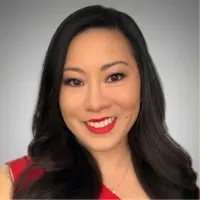
Caroline D. Pham, Moonpay
Caroline D. Pham of MoonPay, chief legal officer and chief administrative officer, appears on Crypto Trailblazers and theCUBE + NYSE Wired at the New York Stock Exchange. Pham is a former regulator and an experienced market-structure leader. They discuss MoonPay Institutional, the strategic acquisition of Sodot, and the company’s vision for secure scalable digital-asset infrastructure.
Pham explains secure multi-party key management, cross-chain routing and agentic payments, and outlines a regulatory-first approach to blockchain market infrastructure. They describe a pragmatic buy-versus-build strategy and MoonPay’s roadmap toward open wallets, stablecoin settlement and interoperability across custody and settlement rails. The conversation addresses institutional crypto adoption, custody solutions, compliance and operational resilience.
Key takeaways include that secure multi-party key management is foundational for institutional adoption of digital assets and that Sodot serves as the anchor for MoonPay Institutional. Pham emphasizes a security-first and regulatory-first posture, a pragmatic approach to technology acquisition, and a roadmap that positions agentic payments stablecoin settlement and cross-chain routing as components of a future operating system of money.
>> Welcome back to theCUBE Studio here at the New York Stock Exchange. I'm Gemma Allen, and this is part of our programming with NYSE Wired. And today we're talking all things crypto trailblazers. Joining me now is Caroline Pham, chief legal officer and chief admin officer at MoonPay. Welcome, Caroline.>> Hi, it's so great to be here. Thanks for having me.
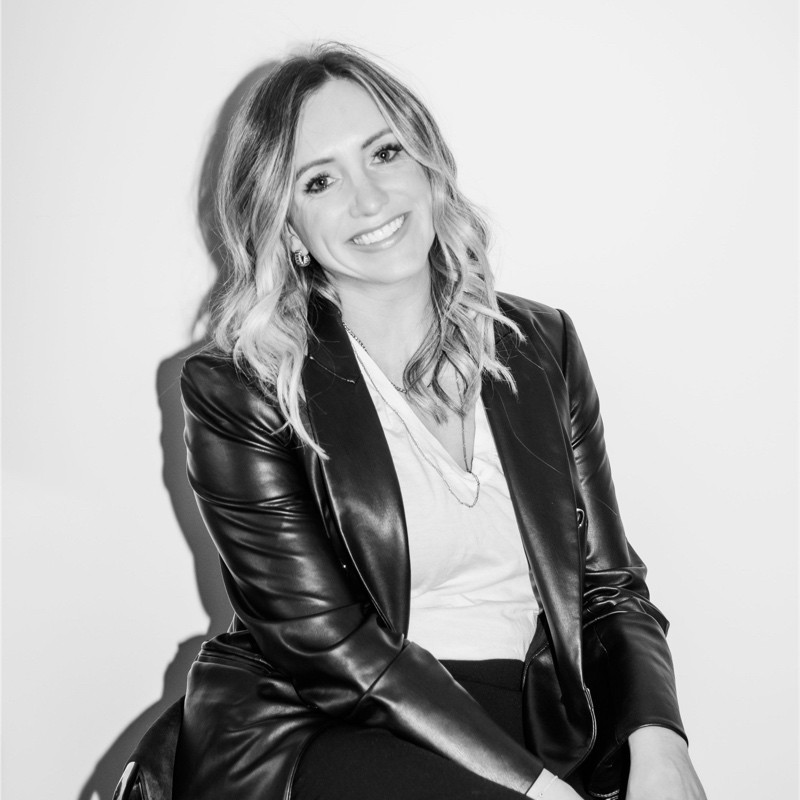
Gemma Allen
>> So you're in the building because you have some pretty exciting and fresh off the press news. You guys just made another acquisition, an Israeli cybersecurity company, Sodot, 100 million stock buy today. Talk to us a little bit about the story behind this news.>> Absolutely. So we're so excited to be launching MoonPay Institutional, which is our dedicated business unit that's going to be serving financial institutions, asset managers, trading firms, and exchanges. And we really see Sodot as the anchor of this business because Sodot represents secure key management with multi-computational security. And this is so important right now because the overall thesis, as we're seeing, is that crypto is maturing into a digital asset ecosystem where you're really seeing blockchain as being part of both payments and financial market infrastructure. But the reason why institutional adoption has been hindered to date was, one, regulatory clarity, which I'm sure we're going to talk about. And number two is about the security and the scalability of the technology. I mean, we're talking about financial markets. I mean, we're here in the New York Stock Exchange. Imagine the millions of trades that are happening every day, and you need to have a resilient infrastructure for that. With Sodot's technology, which is already powering like Flow Traders, Flowdesk, eToro, I mean, some of these incredible trading firms and exchanges, we see that as how you actually bridge now from TradFi to DeFi because I think that's really going to be the next horizon is DeFi liquidity has proven to be deep, to be liquid, to be 24/7. And when you're seeing people trading in things like oil perps, precious metals, and especially given the foundation here with ICE and the commodities business, I think you can see that that's where everything's going. But it has to be secure. There's been well publicized hacks. And then of course, it needs to be regulatorily compliant with KYC.
Gemma Allen
>> So you say something there in terms of the acquisition side of this business, right? You guys mentioned that you can't really build fast enough in this environment, and I guess ecosystem we're in right now. With these crypto acquisitions though, they're not just standard acquisitions like we see in tech. They're also positioning. It's about continuing to compound value, legitimacy. People talk about crypto without the chaos. Your own background is very interesting. I know you just joined this company in December of last year, but you come from a very traditional, legitimate, credible, all of the things that we like to see->> One of the oldest banks in the world.
Gemma Allen
>> ... here, right? Fill us in a little bit, Caroline, about your own journey into this.>> Thank you. Thanks so much. So I first got involved in Bitcoin and crypto in 2013 when I was staff at the CFTC. So at that point in time, the Bitcoin Foundation had come to the CFTC, and it was kind of like, are you my mother? They said, "We have this really cool innovation. It's Bitcoin. It's like a cryptocurrency, but it's also a way of moving value around the world through the Bitcoin blockchain." And they're like, "Do you regulate us? What is Bitcoin under US laws and regulations?"
And so first of all, I thought that that was very striking. Everybody's trying to portray crypto as this wild west, as a bunch of cowboys and that, sure, there's always people like that in every industry, but overall, I think the fact that the Bitcoin Foundation came in in 2013 to ask about regulations and how to be regulated and to introduce themselves in this innovation to regulators, I think it shows really where responsible actors in the crypto ecosystem started from. Anyway, so I thought that was fascinating because it really is interesting. Typically, what we have in financial markets and in the financial system is you have a store of value, which is like money or which is like a security. And then you have a means of exchange, which is like an exchange, literally, or ACH, or any kind of payment infrastructure. So to have that be combined into one technology, I always thought was interesting. So I continued getting into crypto and digital assets when I went to Citi. And so I was at Citi for about seven years. And so starting in about 2017, 2018, when actually the first Bitcoin futures were being listed on CFTC regulated exchanges, I started to work on that internally. And I spent a lot of time with the product development teams, with the business development teams, working with the innovation labs, working on solutions, and coming up with the digital asset strategy for the whole firm that eventually I ended up moving into the business development team for the investment bank as the head of market structure. So when I had the opportunity to go into the government, and when I joined the CFTC in 2022, I felt right now it's so important to get the regulations right for this innovation because, honestly, like crypto as an asset class is one thing, but what's really going to be transformative and have a lasting impact is the fact that I do believe that we are moving towards a next gen open payments and financial market infrastructure that is blockchain based. This is going to be just like when we went from like the trading pit and all the traders on the floor doing like shouting orders at each other to electronification of markets and using computers. And now I think we're going from that to digital, and it's going to be blockchain based. So it's going to be a whole sea change. And that's why you see so many exchanges, banks, everybody's investing in this blockchain technology. And so to be a part of history, to be able to make a difference, to feel like I actually had hands-on experience in this space, both being a regulator in the past and also building at, like you said, one of the most regulated, oldest, respected financial institutions, I just felt it's really rare to have that combination and to be able to serve my country.
Gemma Allen
>> Well, it's certainly a very exciting time. In terms of MoonPay, set out the stall here. This is a pretty successful company. You guys have, I think, 30 million customers, it's for 500 institutions. This is no small fish, and you've already been quite acquisition heavy as a company. Talk to me about the numbers and metrics and also the decision to buy versus build. Are we going to expect a lot more acquisitions of this type? Are you guys just trying to scale as quickly as you can?>> So what I love about MoonPay and what really brought me to the company, because of course last year when I announced live on TV that I was looking at going back to the private sector, it was an exciting time. And first of all, it's the leadership team at MoonPay. So you've got Ivan Soto-Wright, who's our founder and CEO. He has this vision where we are actually building towards a future operating system of money. I mean, it's really amazing how he's three steps ahead of everybody else. We just launched MoonPay Agents, and I think we are now one of the top downloads and the top used technology for agentic payments. And we launched the Open Wallet standard with 20 partners like that same day. So this is really just the vision of Ivan. And so he's got so much conviction, he's been so successful as a founder, so that was one thing. And then obviously Keith Grossman, who's our president. Keith's been a friend of mine for a long time. And I always believe that when you want to join a company, it's really about the people. And so with the two of them together, I just felt like I was meeting this team where it's full founder mode and truly like the sky is the limit. But also that there's a vision. There's a vision and there's a plan on how to get there and that's what I love. And so being able to come to MoonPay to grow and scale it, to bring my background in traditional financial institutions, TradFi, and also like a thesis that I have that we are going to see TradFi meeting DeFi, but it has to be controlled and it has to be regulated. It's not a free for all. A lot of people think DeFi is a free for all. It doesn't mean that. It's just open, it's peer-to-peer. It's a new way of liquidity formation, and it creates more capital efficiency. And one of the things that I actually think is really cool is I have this saying where there's really no new problems. There's just people who need to remember the old solutions. And so when you think about DeFi, I actually think a lot about ECNs, electronic communication networks. And I think that's a really interesting way to go there from a regulatory perspective. But anyway, back to MoonPay. So when I saw what they were building, and I saw what they were doing, and just also like MoonPay's proven scale, like you mentioned, like 30 million users, 180 countries, 500 plus enterprise partners, like you mentioned, but also over 3,000 in our network of merchants and everything. So when you take that scale and you think that MoonPay started in the non-custodial space, and it started with this thesis of non-custodial but with KYC. A lot of people didn't do that. They're arguing that you can't KYC DeFi, that that's against the ethos of DeFi. That's just not realistic. Nobody wants to be sponsoring terrorism. Everybody wants to make sure that we are protecting ourselves and that kind of thing and we're being safe. And so when you think about coming from non-custodial and DeFi, we're starting from this end because we know it better than anybody else. We've been doing it since 2019. And then with all of the licenses that we've built in the US, in the EU, in the UK, in APAC, that's a unique regulatory moat and footprint where we can partner with our open architecture, with institutions. We're not competing with them. We're not trying to lock them into a system. I think it's a lot like open banking. So when you can use our open platform, you use our best in class key management, because a lot of banks, think about it, they provide custody. That's literally what banks do. But they don't have the technology. So if somebody could come and give you crypto custody in a box, like stablecoins in a box, the entire access to blockchain markets. So we have a best in class natively cross chain router. So that's order routing, trade execution. It's connected to over 200 chains and millions of assets. We really believe that your tech stack should give you any chain, any token, any wallet.
Gemma Allen
>> Wow. So you talk there about impressions of crypto. And it's certainly a thing. I think people have every impression, impressions that crypto bros are like raving online to crypto isn't a safe and legitimate asset class. It's a broad mix. But one thing I think that does kind of, I guess, in some way remain is this idea of security, of legitimacy, of privacy. And even this buy, Sodot, it's interesting because it's an MCP play. And people traditionally think whoever owns the keys own the asset. So it's about agility in this ecosystem.>> Exactly. Exactly.
Gemma Allen
>> Talk to me a little bit about the security and the guardrails more broadly, especially coming from the background you've come from coming into this space. Are you trying to continue to buy additional cyber buyouts or cyber plays like this one? Are you looking to constantly build and innovate internally? Talk about what's happening on the security side of your house.>> Sure, of course. So one of the things that I realized very quickly when I joined MoonPay is that we have a top-notch security team. So our CISO and head of security, he was over 30 years at one of the biggest banks in the world. He's built this incredible team. We like to joke that they're like the NSA. And so again, because as a company, you have the trust of your users. And you can't squander that. That's so important. That is what people expect from you. That is who you are. So being security first, being KYC first, being regulated, that's always been something very key to what MoonPay is and making sure that we have those solutions, that's so important because, like I said, there's been some very well publicized hacks. So having that be part of the DNA. I think obviously with Sodot being in Tel Aviv and having sort of this best in class cybersecurity. When you think about how important it is, quantum computing. People are talking about can quantum computing break blockchains. Anthropic, really Mythos, people are talking about what kind of vulnerabilities this is going to show. I actually think that that is going to increase the migration towards blockchain based market infrastructure because it actually is more secure when you have the right tools in place, the right partners in place. And so I think that is the foundation, just like you said. But to your other point, absolutely. MoonPay has been building an entire end-to-end stack for, like I said, Ivan's vision for the future operating system of money. Because you should be able to just go to one place and seamlessly be able to fund, tokenized, spend, buy, whatever it is that you want, all in one. I mean, wallets are probably going to end up being our new, it's a bank account in one. It's a brokerage account in one. It's where you have your NFT collectibles. It's where you have your tickets to go to events. I really think everything's going to exist in a wallet. And again, we started with the non-custodial wallets. Sodot is upgrading that to just a whole new standard of wallet infrastructure and secure key management, and then you build everything on top of it. Because once you have it secure, then what do you want to do with it? You have to be able to move value everywhere. So that's where our order routers and trade execution comes into play. That's where we have the custodial solutions, non-custodial and custodial. That's where we have the stablecoin platform to do white label stablecoin issuance. We can do stablecoin settlement in 120 different fiat currencies. I mean, this is a level of connectivity and scale and breath that I don't think people realize. And like you pointed out, those were very well placed acquisitions over the last year. Last year, I think there were five deals that MoonPay had done to assemble the best in each vertical and create a seamless platform. So with one direct API integration, you have the whole digital asset ecosystem and DeFi ecosystem at your fingertips.
Gemma Allen
>> So Caroline, last question for you, and also somewhat of a cheeky industry question broadly. We do see quite a lot of crypto acquisitions in the security governance space. What are your thoughts on acquisitions in the agentic AI quantum space? Is that something you guys are actively scouting for? And then what's ahead? What does the next six to 12 months look like for you? Six months right now feels like a lifetime, Caroline, in this space, but close us out. Tell us what's on the product map.>> Absolutely. Absolutely. So agentic payments, we're already there. We were there from the beginning with MoonPay Agents. I think we've had over eight million tool calls using MoonPay Agent so far, and that's just the beginning. We're adding new skills all the time. So we're already at the forefront of the agentic economy. And then I think also when you think about how you combine that with AI prompts, and you can come up with trading strategies, and it really just opens up a whole new way of interacting with the world. Why couldn't you just use a search box and type what you want to do with your money and be able to do that? That's what we mean when we say future operating system of money. It's going to be a whole different way of engaging. But anyhow, what do the next six to 12 months look like? Well, I'm here to deliver. I'm here to win. We have a lot of really exciting announcements coming up in the next couple weeks. We're really excited about some of our partners that we are working together with. But like I said, think about it, you've got TradFi meets DeFi, tokenized fund distribution to DeFi liquidity pools, vaults. We haven't even started talking about a lot of the different innovations that are available right now, but I think that's going to be something really exciting. So stay tuned.
Gemma Allen
>> Well, Caroline, I love to hear a woman finalize the interview with I'm here to win. So wish you all the best.>> Thank you so much.
Gemma Allen
>> . Thanks so much for coming on theCUBE.>> Thank you. Thanks.
Gemma Allen
>> I'm Gemma Allen, coming to you from theCUBE Studio here at the New York Stock Exchange. This is Crypto Trailblazers, one of our programs with NYSE Wired. Thanks for watching.
>> Welcome back to theCUBE Studio here at the New York Stock Exchange. I'm Gemma Allen, and this is part of our programming with NYSE Wired. And today we're talking all things crypto trailblazers. Joining me now is Caroline Pham, chief legal officer and chief admin officer at MoonPay. Welcome, Caroline.>> Hi, it's so great to be here. Thanks for having me.
Gemma Allen
>> So you're in the building because you have some pretty exciting and fresh off the press news. You guys just made another acquisition, an Israeli cybersecurity company, Sodot, 100 million stock buy today. Talk to us a little bit about the story behind this news.>> Absolutely. So we're so excited to be launching MoonPay Institutional, which is our dedicated business unit that's going to be serving financial institutions, asset managers, trading firms, and exchanges. And we really see Sodot as the anchor of this business because Sodot represents secure key management with multi-computational security. And this is so important right now because the overall thesis, as we're seeing, is that crypto is maturing into a digital asset ecosystem where you're really seeing blockchain as being part of both payments and financial market infrastructure. But the reason why institutional adoption has been hindered to date was, one, regulatory clarity, which I'm sure we're going to talk about. And number two is about the security and the scalability of the technology. I mean, we're talking about financial markets. I mean, we're here in the New York Stock Exchange. Imagine the millions of trades that are happening every day, and you need to have a resilient infrastructure for that. With Sodot's technology, which is already powering like Flow Traders, Flowdesk, eToro, I mean, some of these incredible trading firms and exchanges, we see that as how you actually bridge now from TradFi to DeFi because I think that's really going to be the next horizon is DeFi liquidity has proven to be deep, to be liquid, to be 24/7. And when you're seeing people trading in things like oil perps, precious metals, and especially given the foundation here with ICE and the commodities business, I think you can see that that's where everything's going. But it has to be secure. There's been well publicized hacks. And then of course, it needs to be regulatorily compliant with KYC.
Gemma Allen
>> So you say something there in terms of the acquisition side of this business, right? You guys mentioned that you can't really build fast enough in this environment, and I guess ecosystem we're in right now. With these crypto acquisitions though, they're not just standard acquisitions like we see in tech. They're also positioning. It's about continuing to compound value, legitimacy. People talk about crypto without the chaos. Your own background is very interesting. I know you just joined this company in December of last year, but you come from a very traditional, legitimate, credible, all of the things that we like to see->> One of the oldest banks in the world.
Gemma Allen
>> ... here, right? Fill us in a little bit, Caroline, about your own journey into this.>> Thank you. Thanks so much. So I first got involved in Bitcoin and crypto in 2013 when I was staff at the CFTC. So at that point in time, the Bitcoin Foundation had come to the CFTC, and it was kind of like, are you my mother? They said, "We have this really cool innovation. It's Bitcoin. It's like a cryptocurrency, but it's also a way of moving value around the world through the Bitcoin blockchain." And they're like, "Do you regulate us? What is Bitcoin under US laws and regulations?"
And so first of all, I thought that that was very striking. Everybody's trying to portray crypto as this wild west, as a bunch of cowboys and that, sure, there's always people like that in every industry, but overall, I think the fact that the Bitcoin Foundation came in in 2013 to ask about regulations and how to be regulated and to introduce themselves in this innovation to regulators, I think it shows really where responsible actors in the crypto ecosystem started from. Anyway, so I thought that was fascinating because it really is interesting. Typically, what we have in financial markets and in the financial system is you have a store of value, which is like money or which is like a security. And then you have a means of exchange, which is like an exchange, literally, or ACH, or any kind of payment infrastructure. So to have that be combined into one technology, I always thought was interesting. So I continued getting into crypto and digital assets when I went to Citi. And so I was at Citi for about seven years. And so starting in about 2017, 2018, when actually the first Bitcoin futures were being listed on CFTC regulated exchanges, I started to work on that internally. And I spent a lot of time with the product development teams, with the business development teams, working with the innovation labs, working on solutions, and coming up with the digital asset strategy for the whole firm that eventually I ended up moving into the business development team for the investment bank as the head of market structure. So when I had the opportunity to go into the government, and when I joined the CFTC in 2022, I felt right now it's so important to get the regulations right for this innovation because, honestly, like crypto as an asset class is one thing, but what's really going to be transformative and have a lasting impact is the fact that I do believe that we are moving towards a next gen open payments and financial market infrastructure that is blockchain based. This is going to be just like when we went from like the trading pit and all the traders on the floor doing like shouting orders at each other to electronification of markets and using computers. And now I think we're going from that to digital, and it's going to be blockchain based. So it's going to be a whole sea change. And that's why you see so many exchanges, banks, everybody's investing in this blockchain technology. And so to be a part of history, to be able to make a difference, to feel like I actually had hands-on experience in this space, both being a regulator in the past and also building at, like you said, one of the most regulated, oldest, respected financial institutions, I just felt it's really rare to have that combination and to be able to serve my country.
Gemma Allen
>> Well, it's certainly a very exciting time. In terms of MoonPay, set out the stall here. This is a pretty successful company. You guys have, I think, 30 million customers, it's for 500 institutions. This is no small fish, and you've already been quite acquisition heavy as a company. Talk to me about the numbers and metrics and also the decision to buy versus build. Are we going to expect a lot more acquisitions of this type? Are you guys just trying to scale as quickly as you can?>> So what I love about MoonPay and what really brought me to the company, because of course last year when I announced live on TV that I was looking at going back to the private sector, it was an exciting time. And first of all, it's the leadership team at MoonPay. So you've got Ivan Soto-Wright, who's our founder and CEO. He has this vision where we are actually building towards a future operating system of money. I mean, it's really amazing how he's three steps ahead of everybody else. We just launched MoonPay Agents, and I think we are now one of the top downloads and the top used technology for agentic payments. And we launched the Open Wallet standard with 20 partners like that same day. So this is really just the vision of Ivan. And so he's got so much conviction, he's been so successful as a founder, so that was one thing. And then obviously Keith Grossman, who's our president. Keith's been a friend of mine for a long time. And I always believe that when you want to join a company, it's really about the people. And so with the two of them together, I just felt like I was meeting this team where it's full founder mode and truly like the sky is the limit. But also that there's a vision. There's a vision and there's a plan on how to get there and that's what I love. And so being able to come to MoonPay to grow and scale it, to bring my background in traditional financial institutions, TradFi, and also like a thesis that I have that we are going to see TradFi meeting DeFi, but it has to be controlled and it has to be regulated. It's not a free for all. A lot of people think DeFi is a free for all. It doesn't mean that. It's just open, it's peer-to-peer. It's a new way of liquidity formation, and it creates more capital efficiency. And one of the things that I actually think is really cool is I have this saying where there's really no new problems. There's just people who need to remember the old solutions. And so when you think about DeFi, I actually think a lot about ECNs, electronic communication networks. And I think that's a really interesting way to go there from a regulatory perspective. But anyway, back to MoonPay. So when I saw what they were building, and I saw what they were doing, and just also like MoonPay's proven scale, like you mentioned, like 30 million users, 180 countries, 500 plus enterprise partners, like you mentioned, but also over 3,000 in our network of merchants and everything. So when you take that scale and you think that MoonPay started in the non-custodial space, and it started with this thesis of non-custodial but with KYC. A lot of people didn't do that. They're arguing that you can't KYC DeFi, that that's against the ethos of DeFi. That's just not realistic. Nobody wants to be sponsoring terrorism. Everybody wants to make sure that we are protecting ourselves and that kind of thing and we're being safe. And so when you think about coming from non-custodial and DeFi, we're starting from this end because we know it better than anybody else. We've been doing it since 2019. And then with all of the licenses that we've built in the US, in the EU, in the UK, in APAC, that's a unique regulatory moat and footprint where we can partner with our open architecture, with institutions. We're not competing with them. We're not trying to lock them into a system. I think it's a lot like open banking. So when you can use our open platform, you use our best in class key management, because a lot of banks, think about it, they provide custody. That's literally what banks do. But they don't have the technology. So if somebody could come and give you crypto custody in a box, like stablecoins in a box, the entire access to blockchain markets. So we have a best in class natively cross chain router. So that's order routing, trade execution. It's connected to over 200 chains and millions of assets. We really believe that your tech stack should give you any chain, any token, any wallet.
Gemma Allen
>> Wow. So you talk there about impressions of crypto. And it's certainly a thing. I think people have every impression, impressions that crypto bros are like raving online to crypto isn't a safe and legitimate asset class. It's a broad mix. But one thing I think that does kind of, I guess, in some way remain is this idea of security, of legitimacy, of privacy. And even this buy, Sodot, it's interesting because it's an MCP play. And people traditionally think whoever owns the keys own the asset. So it's about agility in this ecosystem.>> Exactly. Exactly.
Gemma Allen
>> Talk to me a little bit about the security and the guardrails more broadly, especially coming from the background you've come from coming into this space. Are you trying to continue to buy additional cyber buyouts or cyber plays like this one? Are you looking to constantly build and innovate internally? Talk about what's happening on the security side of your house.>> Sure, of course. So one of the things that I realized very quickly when I joined MoonPay is that we have a top-notch security team. So our CISO and head of security, he was over 30 years at one of the biggest banks in the world. He's built this incredible team. We like to joke that they're like the NSA. And so again, because as a company, you have the trust of your users. And you can't squander that. That's so important. That is what people expect from you. That is who you are. So being security first, being KYC first, being regulated, that's always been something very key to what MoonPay is and making sure that we have those solutions, that's so important because, like I said, there's been some very well publicized hacks. So having that be part of the DNA. I think obviously with Sodot being in Tel Aviv and having sort of this best in class cybersecurity. When you think about how important it is, quantum computing. People are talking about can quantum computing break blockchains. Anthropic, really Mythos, people are talking about what kind of vulnerabilities this is going to show. I actually think that that is going to increase the migration towards blockchain based market infrastructure because it actually is more secure when you have the right tools in place, the right partners in place. And so I think that is the foundation, just like you said. But to your other point, absolutely. MoonPay has been building an entire end-to-end stack for, like I said, Ivan's vision for the future operating system of money. Because you should be able to just go to one place and seamlessly be able to fund, tokenized, spend, buy, whatever it is that you want, all in one. I mean, wallets are probably going to end up being our new, it's a bank account in one. It's a brokerage account in one. It's where you have your NFT collectibles. It's where you have your tickets to go to events. I really think everything's going to exist in a wallet. And again, we started with the non-custodial wallets. Sodot is upgrading that to just a whole new standard of wallet infrastructure and secure key management, and then you build everything on top of it. Because once you have it secure, then what do you want to do with it? You have to be able to move value everywhere. So that's where our order routers and trade execution comes into play. That's where we have the custodial solutions, non-custodial and custodial. That's where we have the stablecoin platform to do white label stablecoin issuance. We can do stablecoin settlement in 120 different fiat currencies. I mean, this is a level of connectivity and scale and breath that I don't think people realize. And like you pointed out, those were very well placed acquisitions over the last year. Last year, I think there were five deals that MoonPay had done to assemble the best in each vertical and create a seamless platform. So with one direct API integration, you have the whole digital asset ecosystem and DeFi ecosystem at your fingertips.
Gemma Allen
>> So Caroline, last question for you, and also somewhat of a cheeky industry question broadly. We do see quite a lot of crypto acquisitions in the security governance space. What are your thoughts on acquisitions in the agentic AI quantum space? Is that something you guys are actively scouting for? And then what's ahead? What does the next six to 12 months look like for you? Six months right now feels like a lifetime, Caroline, in this space, but close us out. Tell us what's on the product map.>> Absolutely. Absolutely. So agentic payments, we're already there. We were there from the beginning with MoonPay Agents. I think we've had over eight million tool calls using MoonPay Agent so far, and that's just the beginning. We're adding new skills all the time. So we're already at the forefront of the agentic economy. And then I think also when you think about how you combine that with AI prompts, and you can come up with trading strategies, and it really just opens up a whole new way of interacting with the world. Why couldn't you just use a search box and type what you want to do with your money and be able to do that? That's what we mean when we say future operating system of money. It's going to be a whole different way of engaging. But anyhow, what do the next six to 12 months look like? Well, I'm here to deliver. I'm here to win. We have a lot of really exciting announcements coming up in the next couple weeks. We're really excited about some of our partners that we are working together with. But like I said, think about it, you've got TradFi meets DeFi, tokenized fund distribution to DeFi liquidity pools, vaults. We haven't even started talking about a lot of the different innovations that are available right now, but I think that's going to be something really exciting. So stay tuned.
Gemma Allen
>> Well, Caroline, I love to hear a woman finalize the interview with I'm here to win. So wish you all the best.>> Thank you so much.
Gemma Allen
>> . Thanks so much for coming on theCUBE.>> Thank you. Thanks.
Gemma Allen
>> I'm Gemma Allen, coming to you from theCUBE Studio here at the New York Stock Exchange. This is Crypto Trailblazers, one of our programs with NYSE Wired. Thanks for watching.







































 Gemma Allen