In this insightful episode of the Crypto Trailblazers series hosted by theCUBE, Mike Cagney of Figure Markets sits down with analysts from theCUBE Research to discuss groundbreaking advancements in blockchain technology and their implications for the finance sector. This video is part of the NYSE Wired digital event, aimed at bridging the gap between Silicon Valley and Wall Street by integrating technology and finance.
Cagney, an eminent figure in fintech, shares expertise on the transformative role of blockchain in financial markets during this interview. Conducted by seasoned analysts at theCUBE, the discussion delves into Figure’s innovative contributions, including their blockchain-native loan origination and securitization process. He outlines how Figure leverages blockchain to achieve cost reductions, enhanced security and improved liquidity in financial transactions.
Key takeaways from the interview highlight insights on the evolution of the Web3 ecosystem, such as the emergence of stablecoins as pivotal to transaction processes and the rise of decentralized finance (DeFi). Oltsik states these developments signify a shift towards democratizing finance, wherein truth and transparency are foundational. The conversation concludes with a look at Figure’s pioneering efforts in creating a new financial marketplace utilizing blockchain technology.
#CryptoTrailblazers #FigureMarkets #BlockchainInnovation #Web3 #NYEWired #BlockchainFinance #DecentralizedFinance #Fintech #Stablecoins
Find more SiliconANGLE news and analysis https://siliconangle.com/.
Follow theCUBE's wall-to-wall event coverage https://siliconangle.com/events/
Learn about the latest theCUBE events https://www.thecube.net/
00:00 - Intro
00:05 - Emerging Innovations in Financial Technology and Market Dynamics
02:45 - Key Elements in Financial Ecosystem Dynamics
06:20 - Blockchain: Truth and Transformation
09:39 - Shaping the Future: Innovations in Financial Markets and Stablecoin Integration
13:15 - Enabling the Future: Navigating Disruptions in Banking and Lending
16:51 - Exploring Opportunities and Building Confidence in the Blockchain Ecosystem
Forgot Password
Almost there!
We just sent you a verification email. Please verify your account to gain access to
theCUBE + NYSE Wired: Crypto Trailblazers. If you don’t think you received an email check your
spam folder.
Sign in to theCUBE + NYSE Wired: Crypto Trailblazers.
In order to sign in, enter the email address you used to registered for the event. Once completed, you will receive an email with a verification link. Open this link to automatically sign into the site.
Register For theCUBE + NYSE Wired: Crypto Trailblazers
Please fill out the information below. You will recieve an email with a verification link confirming your registration. Click the link to automatically sign into the site.
You’re almost there!
We just sent you a verification email. Please click the verification button in the email. Once your email address is verified, you will have full access to all event content for theCUBE + NYSE Wired: Crypto Trailblazers.
I want my badge and interests to be visible to all attendees.
Checking this box will display your presense on the attendees list, view your profile and allow other attendees to contact you via 1-1 chat. Read the Privacy Policy. At any time, you can choose to disable this preference.
Select your Interests!
add
Upload your photo
Uploading..
OR
Connect via Twitter
Connect via Linkedin
EDIT PASSWORD
Share
Forgot Password
Almost there!
We just sent you a verification email. Please verify your account to gain access to
theCUBE + NYSE Wired: Crypto Trailblazers. If you don’t think you received an email check your
spam folder.
Sign in to theCUBE + NYSE Wired: Crypto Trailblazers.
In order to sign in, enter the email address you used to registered for the event. Once completed, you will receive an email with a verification link. Open this link to automatically sign into the site.
Sign in to gain access to theCUBE + NYSE Wired: Crypto Trailblazers
Please sign in with LinkedIn to continue to theCUBE + NYSE Wired: Crypto Trailblazers. Signing in with LinkedIn ensures a professional environment.
Are you sure you want to remove access rights for this user?
Details
Manage Access
email address
Community Invitation
Aki Balogh, BitSafe
In this insightful episode of the Crypto Trailblazers series hosted by theCUBE, Mike Cagney of Figure Markets sits down with analysts from theCUBE Research to discuss groundbreaking advancements in blockchain technology and their implications for the finance sector. This video is part of the NYSE Wired digital event, aimed at bridging the gap between Silicon Valley and Wall Street by integrating technology and finance.
Cagney, an eminent figure in fintech, shares expertise on the transformative role of blockchain in financial markets during this interview. Conducted by seasoned analysts at theCUBE, the discussion delves into Figure’s innovative contributions, including their blockchain-native loan origination and securitization process. He outlines how Figure leverages blockchain to achieve cost reductions, enhanced security and improved liquidity in financial transactions.
Key takeaways from the interview highlight insights on the evolution of the Web3 ecosystem, such as the emergence of stablecoins as pivotal to transaction processes and the rise of decentralized finance (DeFi). Oltsik states these developments signify a shift towards democratizing finance, wherein truth and transparency are foundational. The conversation concludes with a look at Figure’s pioneering efforts in creating a new financial marketplace utilizing blockchain technology.
#CryptoTrailblazers #FigureMarkets #BlockchainInnovation #Web3 #NYEWired #BlockchainFinance #DecentralizedFinance #Fintech #Stablecoins
Find more SiliconANGLE news and analysis https://siliconangle.com/.
Follow theCUBE's wall-to-wall event coverage https://siliconangle.com/events/
Learn about the latest theCUBE events https://www.thecube.net/
00:00 - Intro
00:05 - Emerging Innovations in Financial Technology and Market Dynamics
02:45 - Key Elements in Financial Ecosystem Dynamics
06:20 - Blockchain: Truth and Transformation
09:39 - Shaping the Future: Innovations in Financial Markets and Stablecoin Integration
13:15 - Enabling the Future: Navigating Disruptions in Banking and Lending
16:51 - Exploring Opportunities and Building Confidence in the Blockchain Ecosystem
>> Welcome back to theCUBE Studio here at the New York Stock Exchange. This is Crypto Trailblazers, one of our programs with NYSC Wired. And joining me now is Aki Balogh, CEO and co-founder of BitSafe. Welcome, Aki.
Aki Balogh
>> Thanks for having me.
Gemma Allen
>> So BitSafe, your company at an interesting time, on an interesting journey. For those who may not be so familiar, talk to me a little bit about what exactly it is that you guys do.
Aki Balogh
>> Yeah, absolutely. So this is my second startup. Prior to this, I did AI for a decade. I heard about Bitcoin in 2011. Regrettably, I didn't go all in. I went down the AI path, came to crypto 2021. Crypto crashed, AI shot up. So I always tell people my timing is terrible.
Gemma Allen
>> And AI is also on the up.
Aki Balogh
>> AI is off to the races. Yeah. Bitcoin's recovering, but what I really liked about crypto and Bitcoin were a couple of things that really drew me to the industry. The first is that the tech is really unique. And I feel that even today, more than 10 years in with Bitcoin or 15 years in, we still are just starting to discover what this can be used for. And I think Bitcoin, of course, has a big brand and a big network effect. But I really think the programability and just all the financial applications and financial products that can be built with Bitcoin and with decentralized technology, we are really, really early. So I always have to kind of remind myself. Why Bitcoin? I mean, we just wanted to build on it, because it looked very interesting, very unique from a security perspective. And without going too deep, basically of proof of work chains, which is Bitcoin and proof of stake. And you can have any number of proof of stake chains. But with proof of work, when you're thinking of like a store of value, the biggest proof of work chain is the most valuable. Because if the goal of the chain is to safeguard value and you have a really big proof of work chain and a really small one, why would you use the small one? So I thought in that regard, Bitcoin's unique because you have all these miners securing it. It basically has all this traction that it turns into like a feedback loop. So that made Bitcoin for us different than any other technology. And so we decided to build on it. We meaning my co-founder, Jesse and I. So this was the fall of 2021. We received a grant from Chainlink to get us started looking at a Bitcoin technology called DLCs, discrete log contracts. We worked on that for a while. We also got another grant from Stacks, which is a Bitcoin L2. And then we went on, raised some funding. And then fast-forward to today, we're focused on the Canton network. Canton is an institutional layer one technology.
Gemma Allen
>> Wow. Well, what a fascinating journey you've been on. I mean, you've been building and developing in what are very disruptive spaces for quite a while, right?
Aki Balogh
>> Yeah. I try to get into like, where can I get into trouble? So it used to be, I was in a VC in Boston looking at machine learning, big data 15 years ago. That was quite interesting to me. I wanted to learn AI. And then when it came to crypto, I'm like, "What's something where we can make a contribution?" Because I've been a founder for 15 years. It's a tough job. Some days are good, some days are tough. But what really keeps you going is if you see that this is going to be used, this is going to be useful to someone, it's going to make the world a better place. It sounds kind of cliche maybe, but that is really what keeps me going.
Gemma Allen
>> So 2021, you decide I'm going to build this BitSafe. 2021 in the world of crypto and DeFi and TradFi was very different to 2026, right? It's been an interesting 90 days or a couple of months here alone. In terms of the basics of this, so what you guys do is essentially you offer a way for capital markets to use collateral for Bitcoin to actually have immediate value. Because one thing we know these folks here behind us don't like is stagnant assets, right?
Aki Balogh
>> Yeah.
Gemma Allen
>> You're trying to create that bridge between capital markets and this whole institutional investment world and Bitcoin as a strategy. Talk to me a little bit about what has happened from a policy perspective, from a regulation perspective that has fundamentally shifted the value and the five-year roadmap for BitSafe.
Aki Balogh
>> Yeah. It's an interesting question because we started looking at it just from the technology angle. What can we build, what new capabilities it could provide. And then over the years, and we actually had several products. We had the first product was called DLCVTC, implementing this DLC technology into a Wrapped Bitcoin. Then we built and launched IBTC, which is an institutional Wrapped Bitcoin on Ripple on their XRPL chain. And then now we launched CBTC on Canton. And so we've kind of evolved our vision over the way because DLCBTC was very much focused toward retail. So kind of anonymous retail users, they all have some amount of Bitcoin. Gee, it's just sitting there. How can I use it? Can I get some yield? And we were going to launch like a DLC token and it was like a very different vibe for that. And I used to go to East Denver and these kind of like retail focused crypto builder conferences. Then like a couple of years later when we launched IBTC on XRPL, it was like, okay, well, what do your clients want? What problems are they looking to solve with Bitcoin collateral? And it was more focused on that kind of enterprise segment. And then on Canton, it's been a bit more of that too. So it's been, how would large banks use it? How would prop traders use it, et cetera. And also just how can you get yield on Bitcoin in a financialized situation? So instead of some kind of technology that kind of automatically generates yield on Bitcoin, what if you can use your Bitcoin in traditional finance trading flows? Well, guess what? For that, you need some specific capabilities and we think that Canton really provides that. So it's been kind of that evolution or that journey. So I would say we, broadly speaking, we work with large trading firms and companies that service large banks and so on. And then we also still work with crypto builders. So there's always a lot of building that can be done. And we're actually kind of pivoting too. It's not a big pivot, it's a soft pivot. We're the first asset issuer on Canton. So CBTC was the first asset live on Canton. So we're still committed to making CBTC a huge success, but we also see just a big opportunity in just decentralized technology in general on The Canton Network. And that was kind of what drew us to Bitcoin. It's the decentralized nature and what that kind of brings to the world. And so the next set of products are not going to be specifically Bitcoin related. They're going to be just decentralized technologies to enable builders to create new experiences.
Gemma Allen
>> Well, let's talk a little bit about the roadmap, but before we do, I mean, the wrapper space generally, it's becoming quite saturated, right? It's gotten pretty busy pretty quickly, I would say. Talk to me a little bit about the differentiators for BitSafe for you, for your product in terms of how you approach customers, how you think about things broadly, especially from the perspective of innovation and tech and longevity.
Aki Balogh
>> Yeah. Yeah, definitely. So building on Bitcoin, well, there are a lot of wrappers, a lot of stablecoins. They usually have different financial models or different setups. I'm not so much an expert on the rest of the category, but when it comes to Wrapped Bitcoin, it really is the technology that's used. So for example, first you had WBTC that was initially created by three companies, Bitco, Ren and Kyber. Bitco's still quite involved, although now there are other companies involved in that and it's evolved from there. But it was, I would say a brilliant but relatively simple wrapper. So basically in the early days, you give your Bitcoin a Bitco, Bitco gives you a Wrapped Bitcoin, they hold the Bitcoin, and then there's another layer they added the merchant system, where you have kind of market makers that can mint redeem and kind of make sure that there's liquidity on markets. So that was pretty simple. The problem we saw with that is Bitcoin is the most decentralized asset in the world. So it didn't really make sense that you would just give the decentralized asset to a centralized player, Bitco, even though we love Bitcoin and we're a big partner, but one entity kind of holding all the Bitcoin, that just didn't seem to make sense to us. And I would say others would agree with that as well. And so we thought there must be a technology that can really kind of separate this out. And first we started with this DLC technology. That had some advantages, but also some specific drawbacks that I won't bore you with. But that kind of led us to another technology called Frost, which I don't think a lot of people have heard about, but that's the thing that powers our technology. And we didn't invent Frost. We actually forked our Frost implementation from Zcash. So Zcash uses Frost, Stacks, who I mentioned uses Frost, some other Bitcoin players use Frost, but it's basically a way to create a decentralized party and a multi-sig on Bitcoin or with Bitcoin, I can say. So without getting too deep into the technical side, it really like moves Bitcoin toward a decentralized layer. And that's when we started thinking of just decentralization in general. And I really don't think any of you spend all day in this and I talk to traditional players and crypto players. And I really don't think that the world yet understands the true value of the crypto rails and the decentralization part of that, because there's so many advantages of that. And I think that's where we're going to see a lot of innovation in the years to come.
Gemma Allen
>> So you mentioned that your product roadmap or your mass applicability in terms of the transferability of this technology may extend beyond just Bitcoin, right?
Aki Balogh
>> Oh, definitely.
Gemma Allen
>> Talk to me a little bit about what spaces you are leaning into, like where you are investing time on research and discoverability. What are you seeing? Where do you see the low hanging fruit?
Aki Balogh
>> Yeah, definitely. Well, we are 100% committed to building on the Canton blockchain. We pivoted our whole company to this about a little bit over a year ago. We're just incredibly impressed by what the various teams, the Canton Foundation, Digital Asset, which was the first or largest technology provider on Canton. We're really impressed by how they thought through this. And a lot of these builders came from the trading world. So a lot of them came from DRW and other companies. So they've built something that really solves their problem. And we're not a financial expert, we're not a regulatory expert, we're a bunch of software builders. So it's really great working with experienced traders who know kind of what opportunities... They have a really good vision for what can be solved with this. And so that kind of brings it to, so what do we provide in this whole mix? Well, it's this whole concept of a... And I mean, let me ask you, have you ever heard of a multi-sig? Are you familiar with multi-sigs? Have you used Gnosis Safe or anything?
Gemma Allen
>> I'm familiar. I know exactly what you're referring to. I haven't used it, but I am familiar.
Aki Balogh
>> Yeah, that's awesome. So sometimes I have that conversation and half the time, people who are not already in crypto, they don't know what that is. And it's basically instead of trusting one counterparty on an infrastructure level, you can have multiple signers, you can have multiple participants. And put it another way, it's programmable. So instead of sending all your assets to one place and then having to worry about what if something goes wrong, what if there's a hack? You can just have multiple parties involved in that, which makes it programmable. And so that reduces counterparty risk because you still have the counterparties involved, but on the infrastructure level, you have multiple players. It uses what's called like a threshold signature. So let's say you have five operators and you need a threshold of three or threshold of four, however you set it. But basically like you can have one bad actor or even two companies can collude, but they can't steal the assets or they can't block the redemption of the assets. So it's really a way of like to split up control and that has... It sounds a bit odd for... In traditional finance, they're always used to, "Hey, I want a regulated custodian, I want one player, I trust this company, I trust that company." Fine. But what if you didn't even have to trust anyone, because it's set up in a way where you can inspect the smart contract? So you could see exactly where you're putting your money and you can just really control it, and you can program like really interesting rules and build really cool products that you couldn't otherwise.
Gemma Allen
>> Well, I mean, it's interoperability, right? And in this world of mass convergence across tech, across blockchain, in terms of where we're headed, we need to allow for that to have a level of agility that will meet the moment. Let's talk for a little bit about, just because of your background, the world of AI and agentic and how these two worlds, your timing and both is quite interesting, but how I guess they are synergizing, converging. What are your thoughts there, especially as a builder and builder, breaker, tinkerer yourself, right? How do you see these two technologies coming to fruition opportunistically?
Aki Balogh
>> Oh yeah. Yeah. I love talking about AI. I try to not bore the team with it, but I started looking at it as a VC in 2011. In 2013, I started building or getting into NLP, natural language processing. I hold two patents for NLP related topic modeling or semantic key phrase extraction. And we actually built an LLM in 2018 in my last company, although it was pretty cool, but not as cool as what came after, but we spent a couple million dollars building this LLM or NLG, natural language generation system. So I did a really deep dive in that. And the kind of quick secret no one knows about is BitSafe is also an AI company. It's like a crypto company wrapping an AI company. So we use AI extensively in our operations, which has been really cool. But to answer your question, I think it's really going to converge because what does technology help us do? And sometimes I like to do this exercise where when someone says AI, I think electricity. What does electricity allow you to do? Allows you to do things faster. You can go faster or whatever instead of just walking on your two feet or whatever. So AI is like another level of that. And so put another way, what does it do? It reduces waste. It reduces wasted time, it reduces bad ideas, reduces things that just don't work, it reduces confusion. So I think AI is like an efficiency, so far the ultimate efficiency tool. What does crypto that you do? Crypto lets you do complicated things where you can see you have immediate transparency, instead of having a book where you don't know what's in there and you don't know who's holding what, and you have to spend months piecing it out. You can just run a query and see what's on the chain, whatever asset that is, whether that's a financial asset or non-financial asset. So AI's ability to like understand complexity, figure out which blockchains are best for what purpose, navigate that, optimize that. I think that's going to really have profound implications. And the trustless nature of crypto means that you can use AI to really do these things, whatever these things are. I don't think we know what the use cases are. If you're an AI nerd like me, a lot of people are talking about MCP servers where basically you have some data and you expose a server, and any AI agent can access that and you just have to give it permission. Well, that's like the same thing here. What if the data is financial assets? Let's say it's your money and my money, and you can have different agents access that in different ways, permissioned, of course. And so I think the convergence of AI in crypto is going to be wild.
Gemma Allen
>> Wow. Okay. Well, two last questions. I'm going to ask you to keep the answers short.
Aki Balogh
>> Will do.
Gemma Allen
>> So you said you use AI every day operationally. Are you building things proprietary, using multi models? What's under the hood here? Give us a quick sense of what's happening because I think it's fascinating to think of how these two worlds are actually combining in an executionable way, right?
Aki Balogh
>> Yeah. Yeah. So in short, we have an AI system that we built, that I maintain, and now we have a couple of other admins. It ingests all of our client relationships, conversations, all of the source code relevant to us and our ecosystem partners that is public, everything. I mean, before this interview, it was giving me briefings on John Furrier and-
Gemma Allen
>> And then it was me.
Aki Balogh
>> And then it was you, which is great. So I have to rerun the AI, but what are the interesting things that have not been covered in previous versions of theCUBE? And I mean, it's really like you can plan extensively by giving it access to more data. So our whole team uses that all the time.
Gemma Allen
>> I mean, us too, quite frankly. And then lastly, Aki, what's ahead for you and the team? What does the next six to 12 months look like? Close us out with the goals for the rest of the year and a little bit beyond.
Aki Balogh
>> Yeah. So we're going to open source our decentralized party manager pretty soon, like in a few weeks, which will let any developer build decentralized parties on Canton. Then we're going to add some extensions to that. So a token launchpad we call Token Factory, Token Vault creator called Vault Factory. So there's all these tools that if you're like a crypto builder from DeFi, you'll be able to use these to build your experience within the uniqueness of the Canton blockchain. And then I think we're going to be more like a Red Hat for decentralized parties on Canton. That's our goal. So it's all going to be open source. We're going to be core contributors to Canton source code, and we're going to provide support and obviously white glove services for enterprises. So I think it's going to be wild. We're going to be like an open source, fully transparent, decentralized creator powered by AI.
Gemma Allen
>> Well, wild, I think is the ultimate world for it, right? But congrats you and the team and all your success. Look forward to following the journey and thanks so much for coming on theCUBE.
Aki Balogh
>> Thanks for having me.
Gemma Allen
>> I'm Gemma Allen at theCUBE Studio here at the New York Stock Exchange. This is Crypto Trailblazers, one of our programs with NYSC Wired. Thanks for watching.
>> Welcome back to theCUBE Studio here at the New York Stock Exchange. This is Crypto Trailblazers, one of our programs with NYSC Wired. And joining me now is Aki Balogh, CEO and co-founder of BitSafe. Welcome, Aki.
Aki Balogh
>> Thanks for having me.
Gemma Allen
>> So BitSafe, your company at an interesting time, on an interesting journey. For those who may not be so familiar, talk to me a little bit about what exactly it is that you guys do.
Aki Balogh
>> Yeah, absolutely. So this is my second startup. Prior to this, I did AI for a decade. I heard about Bitcoin in 2011. Regrettably, I didn't go all in. I went down the AI path, came to crypto 2021. Crypto crashed, AI shot up. So I always tell people my timing is terrible.
Gemma Allen
>> And AI is also on the up.
Aki Balogh
>> AI is off to the races. Yeah. Bitcoin's recovering, but what I really liked about crypto and Bitcoin were a couple of things that really drew me to the industry. The first is that the tech is really unique. And I feel that even today, more than 10 years in with Bitcoin or 15 years in, we still are just starting to discover what this can be used for. And I think Bitcoin, of course, has a big brand and a big network effect. But I really think the programability and just all the financial applications and financial products that can be built with Bitcoin and with decentralized technology, we are really, really early. So I always have to kind of remind myself. Why Bitcoin? I mean, we just wanted to build on it, because it looked very interesting, very unique from a security perspective. And without going too deep, basically of proof of work chains, which is Bitcoin and proof of stake. And you can have any number of proof of stake chains. But with proof of work, when you're thinking of like a store of value, the biggest proof of work chain is the most valuable. Because if the goal of the chain is to safeguard value and you have a really big proof of work chain and a really small one, why would you use the small one? So I thought in that regard, Bitcoin's unique because you have all these miners securing it. It basically has all this traction that it turns into like a feedback loop. So that made Bitcoin for us different than any other technology. And so we decided to build on it. We meaning my co-founder, Jesse and I. So this was the fall of 2021. We received a grant from Chainlink to get us started looking at a Bitcoin technology called DLCs, discrete log contracts. We worked on that for a while. We also got another grant from Stacks, which is a Bitcoin L2. And then we went on, raised some funding. And then fast-forward to today, we're focused on the Canton network. Canton is an institutional layer one technology.
Gemma Allen
>> Wow. Well, what a fascinating journey you've been on. I mean, you've been building and developing in what are very disruptive spaces for quite a while, right?
Aki Balogh
>> Yeah. I try to get into like, where can I get into trouble? So it used to be, I was in a VC in Boston looking at machine learning, big data 15 years ago. That was quite interesting to me. I wanted to learn AI. And then when it came to crypto, I'm like, "What's something where we can make a contribution?" Because I've been a founder for 15 years. It's a tough job. Some days are good, some days are tough. But what really keeps you going is if you see that this is going to be used, this is going to be useful to someone, it's going to make the world a better place. It sounds kind of cliche maybe, but that is really what keeps me going.
Gemma Allen
>> So 2021, you decide I'm going to build this BitSafe. 2021 in the world of crypto and DeFi and TradFi was very different to 2026, right? It's been an interesting 90 days or a couple of months here alone. In terms of the basics of this, so what you guys do is essentially you offer a way for capital markets to use collateral for Bitcoin to actually have immediate value. Because one thing we know these folks here behind us don't like is stagnant assets, right?
Aki Balogh
>> Yeah.
Gemma Allen
>> You're trying to create that bridge between capital markets and this whole institutional investment world and Bitcoin as a strategy. Talk to me a little bit about what has happened from a policy perspective, from a regulation perspective that has fundamentally shifted the value and the five-year roadmap for BitSafe.
Aki Balogh
>> Yeah. It's an interesting question because we started looking at it just from the technology angle. What can we build, what new capabilities it could provide. And then over the years, and we actually had several products. We had the first product was called DLCVTC, implementing this DLC technology into a Wrapped Bitcoin. Then we built and launched IBTC, which is an institutional Wrapped Bitcoin on Ripple on their XRPL chain. And then now we launched CBTC on Canton. And so we've kind of evolved our vision over the way because DLCBTC was very much focused toward retail. So kind of anonymous retail users, they all have some amount of Bitcoin. Gee, it's just sitting there. How can I use it? Can I get some yield? And we were going to launch like a DLC token and it was like a very different vibe for that. And I used to go to East Denver and these kind of like retail focused crypto builder conferences. Then like a couple of years later when we launched IBTC on XRPL, it was like, okay, well, what do your clients want? What problems are they looking to solve with Bitcoin collateral? And it was more focused on that kind of enterprise segment. And then on Canton, it's been a bit more of that too. So it's been, how would large banks use it? How would prop traders use it, et cetera. And also just how can you get yield on Bitcoin in a financialized situation? So instead of some kind of technology that kind of automatically generates yield on Bitcoin, what if you can use your Bitcoin in traditional finance trading flows? Well, guess what? For that, you need some specific capabilities and we think that Canton really provides that. So it's been kind of that evolution or that journey. So I would say we, broadly speaking, we work with large trading firms and companies that service large banks and so on. And then we also still work with crypto builders. So there's always a lot of building that can be done. And we're actually kind of pivoting too. It's not a big pivot, it's a soft pivot. We're the first asset issuer on Canton. So CBTC was the first asset live on Canton. So we're still committed to making CBTC a huge success, but we also see just a big opportunity in just decentralized technology in general on The Canton Network. And that was kind of what drew us to Bitcoin. It's the decentralized nature and what that kind of brings to the world. And so the next set of products are not going to be specifically Bitcoin related. They're going to be just decentralized technologies to enable builders to create new experiences.
Gemma Allen
>> Well, let's talk a little bit about the roadmap, but before we do, I mean, the wrapper space generally, it's becoming quite saturated, right? It's gotten pretty busy pretty quickly, I would say. Talk to me a little bit about the differentiators for BitSafe for you, for your product in terms of how you approach customers, how you think about things broadly, especially from the perspective of innovation and tech and longevity.
Aki Balogh
>> Yeah. Yeah, definitely. So building on Bitcoin, well, there are a lot of wrappers, a lot of stablecoins. They usually have different financial models or different setups. I'm not so much an expert on the rest of the category, but when it comes to Wrapped Bitcoin, it really is the technology that's used. So for example, first you had WBTC that was initially created by three companies, Bitco, Ren and Kyber. Bitco's still quite involved, although now there are other companies involved in that and it's evolved from there. But it was, I would say a brilliant but relatively simple wrapper. So basically in the early days, you give your Bitcoin a Bitco, Bitco gives you a Wrapped Bitcoin, they hold the Bitcoin, and then there's another layer they added the merchant system, where you have kind of market makers that can mint redeem and kind of make sure that there's liquidity on markets. So that was pretty simple. The problem we saw with that is Bitcoin is the most decentralized asset in the world. So it didn't really make sense that you would just give the decentralized asset to a centralized player, Bitco, even though we love Bitcoin and we're a big partner, but one entity kind of holding all the Bitcoin, that just didn't seem to make sense to us. And I would say others would agree with that as well. And so we thought there must be a technology that can really kind of separate this out. And first we started with this DLC technology. That had some advantages, but also some specific drawbacks that I won't bore you with. But that kind of led us to another technology called Frost, which I don't think a lot of people have heard about, but that's the thing that powers our technology. And we didn't invent Frost. We actually forked our Frost implementation from Zcash. So Zcash uses Frost, Stacks, who I mentioned uses Frost, some other Bitcoin players use Frost, but it's basically a way to create a decentralized party and a multi-sig on Bitcoin or with Bitcoin, I can say. So without getting too deep into the technical side, it really like moves Bitcoin toward a decentralized layer. And that's when we started thinking of just decentralization in general. And I really don't think any of you spend all day in this and I talk to traditional players and crypto players. And I really don't think that the world yet understands the true value of the crypto rails and the decentralization part of that, because there's so many advantages of that. And I think that's where we're going to see a lot of innovation in the years to come.
Gemma Allen
>> So you mentioned that your product roadmap or your mass applicability in terms of the transferability of this technology may extend beyond just Bitcoin, right?
Aki Balogh
>> Oh, definitely.
Gemma Allen
>> Talk to me a little bit about what spaces you are leaning into, like where you are investing time on research and discoverability. What are you seeing? Where do you see the low hanging fruit?
Aki Balogh
>> Yeah, definitely. Well, we are 100% committed to building on the Canton blockchain. We pivoted our whole company to this about a little bit over a year ago. We're just incredibly impressed by what the various teams, the Canton Foundation, Digital Asset, which was the first or largest technology provider on Canton. We're really impressed by how they thought through this. And a lot of these builders came from the trading world. So a lot of them came from DRW and other companies. So they've built something that really solves their problem. And we're not a financial expert, we're not a regulatory expert, we're a bunch of software builders. So it's really great working with experienced traders who know kind of what opportunities... They have a really good vision for what can be solved with this. And so that kind of brings it to, so what do we provide in this whole mix? Well, it's this whole concept of a... And I mean, let me ask you, have you ever heard of a multi-sig? Are you familiar with multi-sigs? Have you used Gnosis Safe or anything?
Gemma Allen
>> I'm familiar. I know exactly what you're referring to. I haven't used it, but I am familiar.
Aki Balogh
>> Yeah, that's awesome. So sometimes I have that conversation and half the time, people who are not already in crypto, they don't know what that is. And it's basically instead of trusting one counterparty on an infrastructure level, you can have multiple signers, you can have multiple participants. And put it another way, it's programmable. So instead of sending all your assets to one place and then having to worry about what if something goes wrong, what if there's a hack? You can just have multiple parties involved in that, which makes it programmable. And so that reduces counterparty risk because you still have the counterparties involved, but on the infrastructure level, you have multiple players. It uses what's called like a threshold signature. So let's say you have five operators and you need a threshold of three or threshold of four, however you set it. But basically like you can have one bad actor or even two companies can collude, but they can't steal the assets or they can't block the redemption of the assets. So it's really a way of like to split up control and that has... It sounds a bit odd for... In traditional finance, they're always used to, "Hey, I want a regulated custodian, I want one player, I trust this company, I trust that company." Fine. But what if you didn't even have to trust anyone, because it's set up in a way where you can inspect the smart contract? So you could see exactly where you're putting your money and you can just really control it, and you can program like really interesting rules and build really cool products that you couldn't otherwise.
Gemma Allen
>> Well, I mean, it's interoperability, right? And in this world of mass convergence across tech, across blockchain, in terms of where we're headed, we need to allow for that to have a level of agility that will meet the moment. Let's talk for a little bit about, just because of your background, the world of AI and agentic and how these two worlds, your timing and both is quite interesting, but how I guess they are synergizing, converging. What are your thoughts there, especially as a builder and builder, breaker, tinkerer yourself, right? How do you see these two technologies coming to fruition opportunistically?
Aki Balogh
>> Oh yeah. Yeah. I love talking about AI. I try to not bore the team with it, but I started looking at it as a VC in 2011. In 2013, I started building or getting into NLP, natural language processing. I hold two patents for NLP related topic modeling or semantic key phrase extraction. And we actually built an LLM in 2018 in my last company, although it was pretty cool, but not as cool as what came after, but we spent a couple million dollars building this LLM or NLG, natural language generation system. So I did a really deep dive in that. And the kind of quick secret no one knows about is BitSafe is also an AI company. It's like a crypto company wrapping an AI company. So we use AI extensively in our operations, which has been really cool. But to answer your question, I think it's really going to converge because what does technology help us do? And sometimes I like to do this exercise where when someone says AI, I think electricity. What does electricity allow you to do? Allows you to do things faster. You can go faster or whatever instead of just walking on your two feet or whatever. So AI is like another level of that. And so put another way, what does it do? It reduces waste. It reduces wasted time, it reduces bad ideas, reduces things that just don't work, it reduces confusion. So I think AI is like an efficiency, so far the ultimate efficiency tool. What does crypto that you do? Crypto lets you do complicated things where you can see you have immediate transparency, instead of having a book where you don't know what's in there and you don't know who's holding what, and you have to spend months piecing it out. You can just run a query and see what's on the chain, whatever asset that is, whether that's a financial asset or non-financial asset. So AI's ability to like understand complexity, figure out which blockchains are best for what purpose, navigate that, optimize that. I think that's going to really have profound implications. And the trustless nature of crypto means that you can use AI to really do these things, whatever these things are. I don't think we know what the use cases are. If you're an AI nerd like me, a lot of people are talking about MCP servers where basically you have some data and you expose a server, and any AI agent can access that and you just have to give it permission. Well, that's like the same thing here. What if the data is financial assets? Let's say it's your money and my money, and you can have different agents access that in different ways, permissioned, of course. And so I think the convergence of AI in crypto is going to be wild.
Gemma Allen
>> Wow. Okay. Well, two last questions. I'm going to ask you to keep the answers short.
Aki Balogh
>> Will do.
Gemma Allen
>> So you said you use AI every day operationally. Are you building things proprietary, using multi models? What's under the hood here? Give us a quick sense of what's happening because I think it's fascinating to think of how these two worlds are actually combining in an executionable way, right?
Aki Balogh
>> Yeah. Yeah. So in short, we have an AI system that we built, that I maintain, and now we have a couple of other admins. It ingests all of our client relationships, conversations, all of the source code relevant to us and our ecosystem partners that is public, everything. I mean, before this interview, it was giving me briefings on John Furrier and-
Gemma Allen
>> And then it was me.
Aki Balogh
>> And then it was you, which is great. So I have to rerun the AI, but what are the interesting things that have not been covered in previous versions of theCUBE? And I mean, it's really like you can plan extensively by giving it access to more data. So our whole team uses that all the time.
Gemma Allen
>> I mean, us too, quite frankly. And then lastly, Aki, what's ahead for you and the team? What does the next six to 12 months look like? Close us out with the goals for the rest of the year and a little bit beyond.
Aki Balogh
>> Yeah. So we're going to open source our decentralized party manager pretty soon, like in a few weeks, which will let any developer build decentralized parties on Canton. Then we're going to add some extensions to that. So a token launchpad we call Token Factory, Token Vault creator called Vault Factory. So there's all these tools that if you're like a crypto builder from DeFi, you'll be able to use these to build your experience within the uniqueness of the Canton blockchain. And then I think we're going to be more like a Red Hat for decentralized parties on Canton. That's our goal. So it's all going to be open source. We're going to be core contributors to Canton source code, and we're going to provide support and obviously white glove services for enterprises. So I think it's going to be wild. We're going to be like an open source, fully transparent, decentralized creator powered by AI.
Gemma Allen
>> Well, wild, I think is the ultimate world for it, right? But congrats you and the team and all your success. Look forward to following the journey and thanks so much for coming on theCUBE.
Aki Balogh
>> Thanks for having me.
Gemma Allen
>> I'm Gemma Allen at theCUBE Studio here at the New York Stock Exchange. This is Crypto Trailblazers, one of our programs with NYSC Wired. Thanks for watching.











































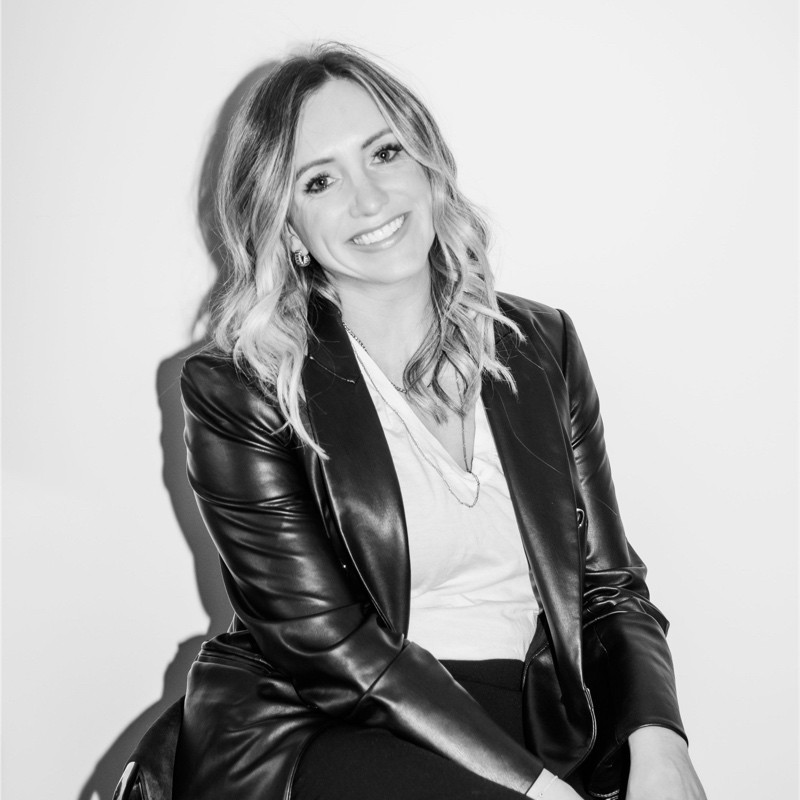 Gemma Allen