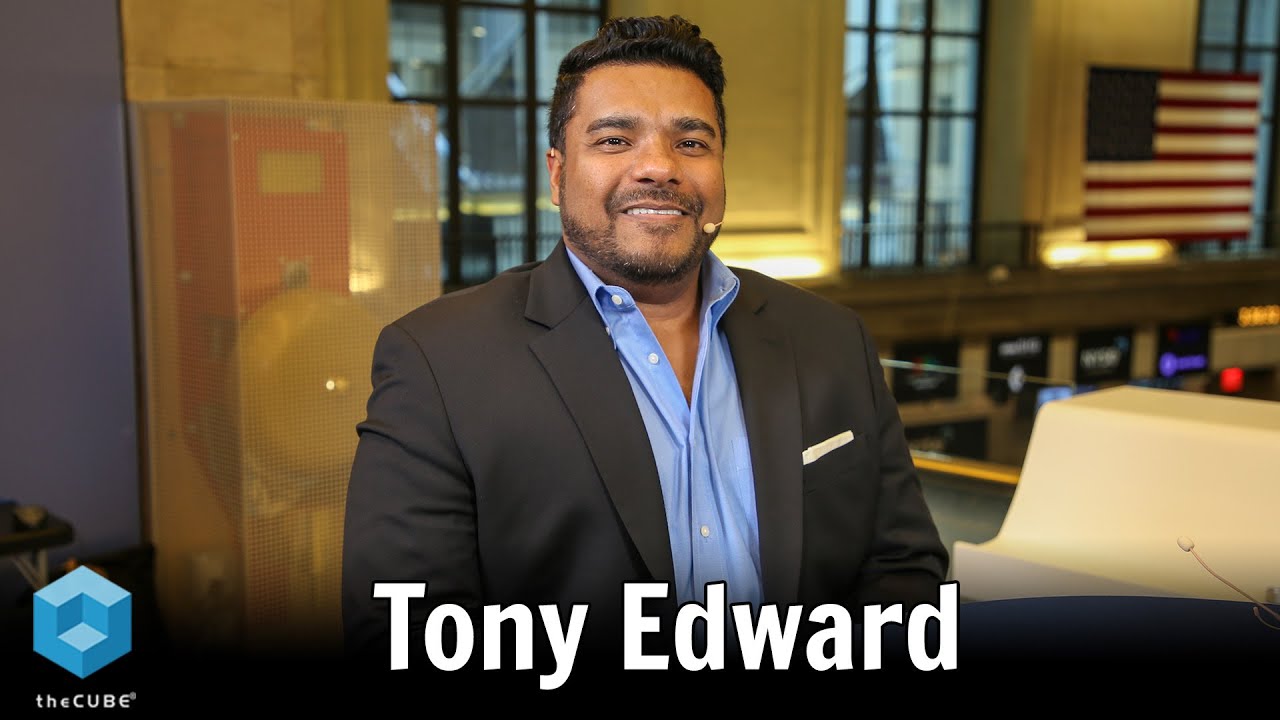
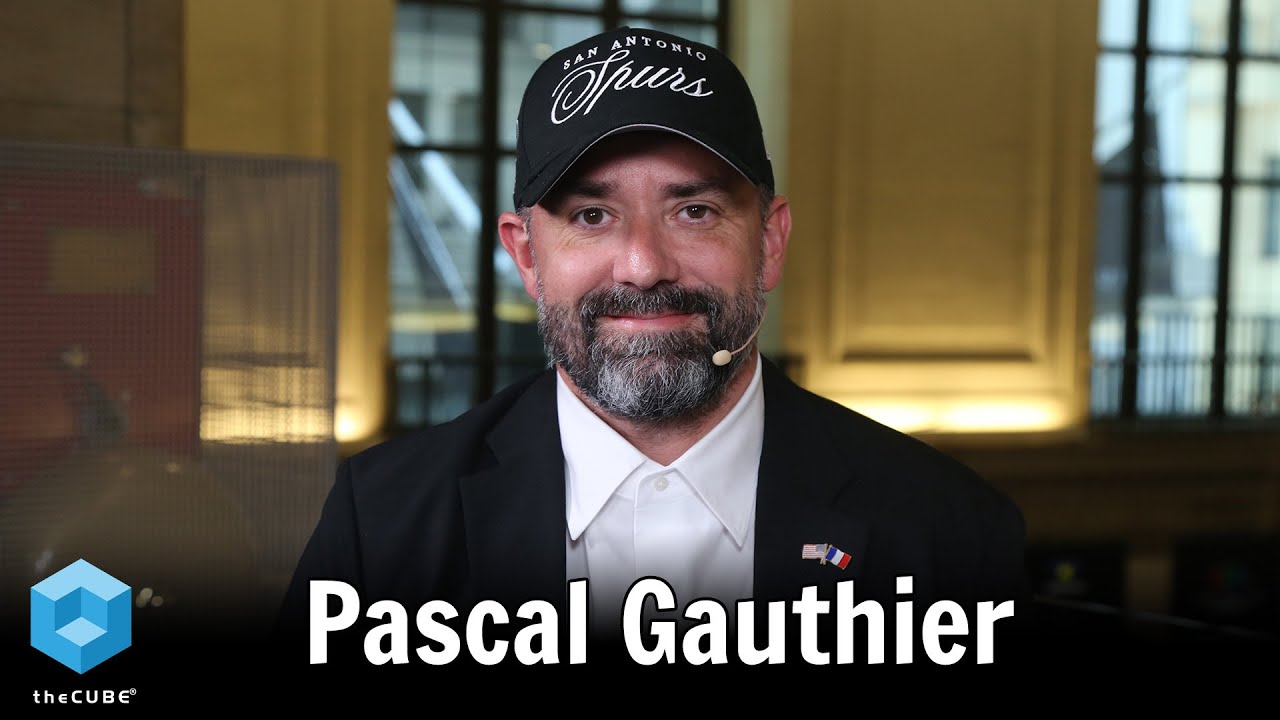
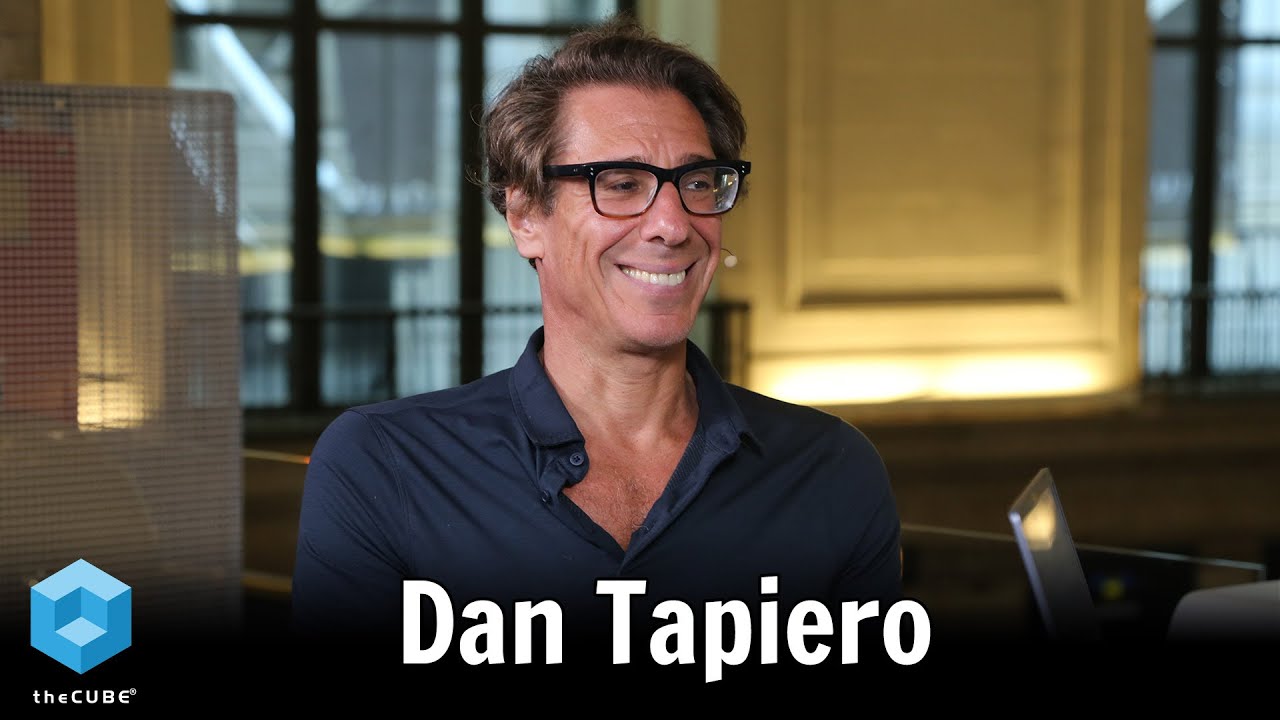
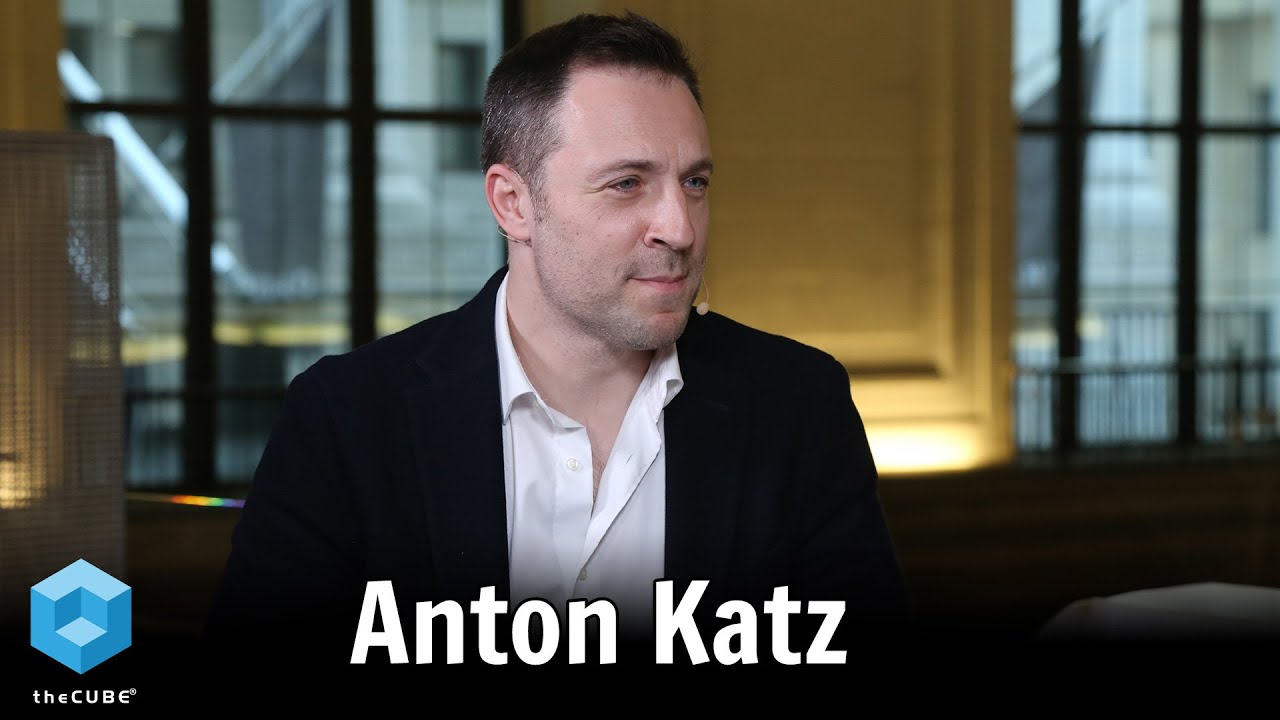
Exclusive from theCUBE + NYSE Wired’s “Crypto Trailblazers: Wall St On-Chain” series at the New York Stock Exchange, Shawn Douglass, co-founder and CEO of Amberdata, joins host John Furrier for an in-depth conversation unpacking the rapid convergence of TradFi and DeFi. Douglass details how regulatory clarity in the U.S. – via the GENIUS Act (stablecoins) and the CLARITY Act (market infrastructure) – is paving the way for mainstream adoption and transparent markets. He explains Amberdata’s role delivering “operational telemetry” to help institutions understand liquidity across 24/7 venues. Douglass also notes Nasdaq’s early investment in Amberdata and highlights Amberdata’s analytics powering trade-surveillance “smarts,” as market structure modernizes for an always-on economy.
Data, AI, and derivatives are all in discussion as Douglass reveals Amberdata’s 16 petabytes of digital-asset data from 60+ exchanges, long enhanced with AI/ML for anomaly detection and quality. He previews training LLMs on this corpus to power Wall Street–style analytics, while exploring stablecoins as the backbone of internet-scale commerce and 24/7 rails reshaping risk and product design. Douglass also calls Coinbase’s $4.4B Deribit deal a “kingmaker” move with big implications for tokenized commodities and global markets – underscoring why Amberdata’s eight-year data moat is now core infrastructure for traders, risk managers, regulators and builders.
Forgot Password
Almost there!
We just sent you a verification email. Please verify your account to gain access to
theCUBE + NYSE Wired: Crypto Trailblazers. If you don’t think you received an email check your
spam folder.
Sign in to theCUBE + NYSE Wired: Crypto Trailblazers.
In order to sign in, enter the email address you used to registered for the event. Once completed, you will receive an email with a verification link. Open this link to automatically sign into the site.
Register For theCUBE + NYSE Wired: Crypto Trailblazers
Please fill out the information below. You will recieve an email with a verification link confirming your registration. Click the link to automatically sign into the site.
You’re almost there!
We just sent you a verification email. Please click the verification button in the email. Once your email address is verified, you will have full access to all event content for theCUBE + NYSE Wired: Crypto Trailblazers.
I want my badge and interests to be visible to all attendees.
Checking this box will display your presense on the attendees list, view your profile and allow other attendees to contact you via 1-1 chat. Read the Privacy Policy. At any time, you can choose to disable this preference.
Select your Interests!
add
Upload your photo
Uploading..
OR
Connect via Twitter
Connect via Linkedin
EDIT PASSWORD
Share
Forgot Password
Almost there!
We just sent you a verification email. Please verify your account to gain access to
theCUBE + NYSE Wired: Crypto Trailblazers. If you don’t think you received an email check your
spam folder.
Sign in to theCUBE + NYSE Wired: Crypto Trailblazers.
In order to sign in, enter the email address you used to registered for the event. Once completed, you will receive an email with a verification link. Open this link to automatically sign into the site.
Sign in to gain access to theCUBE + NYSE Wired: Crypto Trailblazers
Please sign in with LinkedIn to continue to theCUBE + NYSE Wired: Crypto Trailblazers. Signing in with LinkedIn ensures a professional environment.
Are you sure you want to remove access rights for this user?
Details
Manage Access
email address
Community Invitation
Jing Wang, OP Labs
Exclusive from theCUBE + NYSE Wired’s “Crypto Trailblazers: Wall St On-Chain” series at the New York Stock Exchange, Shawn Douglass, co-founder and CEO of Amberdata, joins host John Furrier for an in-depth conversation unpacking the rapid convergence of TradFi and DeFi. Douglass details how regulatory clarity in the U.S. – via the GENIUS Act (stablecoins) and the CLARITY Act (market infrastructure) – is paving the way for mainstream adoption and transparent markets. He explains Amberdata’s role delivering “operational telemetry” to help institutions understand liquidity across 24/7 venues. Douglass also notes Nasdaq’s early investment in Amberdata and highlights Amberdata’s analytics powering trade-surveillance “smarts,” as market structure modernizes for an always-on economy.
Data, AI, and derivatives are all in discussion as Douglass reveals Amberdata’s 16 petabytes of digital-asset data from 60+ exchanges, long enhanced with AI/ML for anomaly detection and quality. He previews training LLMs on this corpus to power Wall Street–style analytics, while exploring stablecoins as the backbone of internet-scale commerce and 24/7 rails reshaping risk and product design. Douglass also calls Coinbase’s $4.4B Deribit deal a “kingmaker” move with big implications for tokenized commodities and global markets – underscoring why Amberdata’s eight-year data moat is now core infrastructure for traders, risk managers, regulators and builders.
play_circle_outlineChallenges and trade-offs in achieving scalability within crypto infrastructure.
replyShare Clip
play_circle_outlineUnderstanding OP Labs: Mission for Decentralized Computing Infrastructure and the Distinction Between its Foundation and For-Profit Arm
replyShare Clip
play_circle_outlineStatus of OP Labs: 65% market share of all L2 transactions on Ethereum.
>> Welcome back around to theCUBE at the NYSE. I'm John Furrier, host of theCUBE. This is part of the Crypto Trailblazers NYSE Wired program and community where we feature the trailblazers and crypto infrastructure, cryptocurrency, the shift in the world of FinTech, DeFi, TradFi.
Again, the revolution is happening, and the leaders are setting the pace. Jing Wang's here, the CEO and co-founder of OP Labs. Jing, thanks for coming on theCUBE. Appreciate you coming on the leaders of coming in, and thanks for coming in.
Jing Wang
>> Thanks for having me.>> So explain what OP Labs is doing. I know you got the protocol and the software stack, Optimism was the name before OP Labs. Give us a quick overview of what you do?
Jing Wang
>> Yeah. We build the infrastructure to enable decentralized computing to be done at scale. So back in the day when we started, transactions on Ethereum took 10 to 15 minutes. If it got congested, you could be paying 25-plus dollars. Oftentimes, the transaction fees required to purchase or send an asset were in excess of the cost of the asset itself, and so we've been trying to solve that problem for the last seven years.>> So I remember seven years ago, it felt like all the top minds were working on blockchain because I mean, it was really a fun time, right? It was all the brightest minds working on it because it's a technical problem. And then the ICO craze hit, and then the pandemic hit. Then, of course the regime change. We all know what happened. Now, we're in kind of glory days of stability with the GENIUS Act and the Clarity Act, the stable ones coming in. So things are clicking. Okay. And AI hits. So you got AI hitting, it's about seven years ago. Now, that's seven years in of hardcore to actually mainstream. So all bounded by power, okay? So you have a lot. Now, you've got the challenge of the technology and making it all work, so you have now another fun environment where the best computer scientists, the best algorithms, best problem solvers are working on this, and so now we have more chains, more protocols, but the game is still the same. What apps are going to run on this? Now, smart contracts is a revolution because that's a beautiful thing because it makes everything work and it's stored decentralized. But Ethereum is one big computer. So if you think about it as one big computer, you say, "Oh, what are we going to process?"
So take us through some of the things you're working on and what are the challenges, because this is going to bring in an era of innovation. So scope the challenges that you're working on, and why you're doing it, and your approach to targeting it. Because again, once this happens and it flips that bit, the next thing happens, which is good. So explain the complexity and some things you're working on and how you're attacking it?
Jing Wang
>> Yeah. Well, seven years ago, the infrastructure was really immature. That was the biggest problem. And so people who could see beyond the immaturity and see how the infrastructure might evolve over time, those were the people that were the most excited about crypto. But if you're kind of on the outside looking in, you're like, "What the fuck is this? This is a cartoon cat being sold for $200,000. I don't understand."
And so both are reasonable takes, but what we've seen is each time you mature one increment of the infrastructure, boom! There's a whole explosion of things that happen. Some of them stick, some of them don't. And 99% of those things are just testing out those primitives, whether it's enabling tokenization to happen really simply, so the ERC-20 or the ERC-721 NFTs, so on and so forth. And each time we've lowered transaction fees and the latency of transactions, you've also seen an explosion of new things taking place. So->> So the more you solve the problem, the more demand for the infrastructure. We're seeing this play out. I wrote a post about NVIDIA, and again, the inside baseball at NVIDIA is no matter how many Black Whales we make and how many times we connect them with InfiniBand or Ethernet or whatever, and KV cache, they want more. So you fill the void there, and then boom, there's more demand. So this is a beautiful thing, actually. It's an innovation cycle. What is the scale challenge? Is it speed, throughput? And what layer is the action at? Can you take us through that for the folks that aren't inside the ropes? Because this trail needs to be blazed right now.
Jing Wang
>> It's all of the above, and all of these things are often coupled, and there's always trade-offs. If you want high security and speed, then you're going to have to make a trade-off of cost potentially. And so it's about continuously lowering the need to make those trade-offs iteratively over time. And we're now sitting at 65% of all L2 transactions running through the OP stack, and we've seen that every single time we make it faster or make it cheaper. Block space, demand just fills back up the available compute that we've created, so it's pretty cool.>> So on the scale side, again, scaling laws kind of kick into effect. Is there a mental model or scaling law you like that you use? Or is there a way to explain the scaling law? Because you have to ride the wave, but again, the demand's coming in. So what does scale mean for you? I mean, how do you think about scale? Because you, again, they got the trade-offs. I get that. So from a scale standpoint, I mean, you'd buy a bunch of servers, put them in a rack. On the AI side, now it's the whole data center's a supercomputer, and now you've got the decentralized infrastructure and all kinds of things being enabled. What does scale mean to you? What's the problem statement, I guess? I guess, how would you think about scale and the problem statement of what scale looks like for you? Is it speed, throughput? Or number of nodes?
Jing Wang
>> I would say that everybody always wants to do whatever they're doing more cheaply and more quickly, and so it never ends. And the question then is where do the bottlenecks exist? At what point does the architecture become a bottleneck? At what point does the hardware become a bottleneck? And every use case is different also. So for institutions, we talk about and think about scale a little bit differently than we do for DeFi applications because each category performs different actions and cares about different things being cheap. Different trade-offs.>> So the scale's different to different people?
Jing Wang
>> It's different to different people.>> All right. So talk about the software stack because we were talking before we came on camera and the podcast around how you got the foundation and you got the for-profit. Explain the differences quickly. Is it the normal foundation role and then the company, and that's the key secret sauce is the software stack? Is that right? Explain the difference.
Jing Wang
>> The goal of the foundation is to steward the decentralization of the protocol and the token treasury. So for OP Labs, its mission is to build the underlying technology, the rails. So when you click send on a transaction, everything that is required for that transaction to actually go from person A to person B quickly at low cost, that's the software that's getting written.>> And what's the status of this? So how would you put that in the progress bar? You said 60% now? What's the-
Jing Wang
>> 65% market share for all L2 transactions->> On Ethereum?
Jing Wang
>> Yes. Ethereum L2 transactions. I mean, I guess there's always more. Every time we hit one milestone that we didn't think was possible previously, the progress bar lengthens. It changes.>> And so what are you working on now? What's the big problem statement that you're focused on now for the stack? Is it that next bottleneck, or what's the next thing that you're targeting?
Jing Wang
>> So Coinbase is probably doing more transactions per day than just about any other application on their chain. They're one of our customers. They're doing about 20 million transactions per day. And as institutions come in or FinTechs, they're regularly doing a lot more than that. Crypto today is incredibly small compared to finance in general, and so it's been really great partnering with Base to push the limits of what the scaling technology is capable of. And now, it's just about gearing up to be ready for this next wave of FinTech adoption.>> So one of the things of the Crypto Trailblazer series that I like is when I get to learn a lot more, but I can see some dots that are connecting. One is the financial markets, the traditional institutions. That if you go back to 2017, it was like, "Oh, yeah. Burn them to the ground. We're going to disrupt everyone!" But now there's a collaboration culturally between the two because of the environment we're in. There's an innovation synergy coming.
Jing Wang
>> Yeah, totally.>> And but there's still structural change. And now you have entrepreneurship kicking in where you're seeing entrepreneurs come in and see those white spaces and saying, "Lookit, I can actually take down part of the market that someone else had if they don't move fast enough. There's plenty of beachhead." And so I've never seen that before in my career, where in finance, where it was controlled by everyone, that there's actual take-down opportunities for markets. Now, this has been an entrepreneurship hustle. "Hey, get some prepaid cards, ride the rails, and buy a boat and make money," but not like this. This is really kind of game-changing wave. So we're starting to see product management thinking come into the equation or entrepreneurial VC-backed thinking around, "Hey, I actually could go make $1 billion dollars in this TAM. That's huge." And that's kind of a tech angle, but it's got money involved, but money's just like a packet. It moves from point A to point B. So what's your thoughts on that? What's your reaction? Do you see that? Do you feel that? Do you see examples of friends and colleagues who are thinking about this? Because I know the entrepreneurship is high, obviously, but actually going after the opportunities?
Jing Wang
>> Yeah, totally. The FinTechs that we're working with are interested in what we're calling the DeFi mullet, and so they want to be able to offer DeFi-level yields and opportunities to their in-app users. And so it's definitely super symbiotic right now with FinTechs, and we do a lot of legwork to help FinTechs integrate. We're not just infrastructure. We think of ourselves as kind of a one-stop shop because, I mean, we invented optimistic roll-ups. We've really built a lot of this infrastructure from the ground up. We've been here for a decade, and we understand every part of the stack really well. So it's really exciting to see, I don't know. In crypto, if you hit 10,000 real users, not bots, that's crazy, amazing! It's not just one guy on 10,000 computers farming your thing. And now we're talking to companies who don't only have 10,000 users, have 10 million users, and they're thinking about how to seriously integrate crypto into their applications. It's kind of mind-blowing.>> It's real. I mean, it makes it real.
Jing Wang
>> Yeah, it's real.>> It's real. And again, the impact on society is great. That's why I'm so excited to talk to you about that because one of the things I've been pro on is, one, it's breaking through the mainstream. And as the mainstream comes in more trend, to your point about one block's filled then another one, the demand is going to be huge. And so again, I'm predicting a tsunami of activity, real activity, and I'm just trying to squint through that. So when you look at the success now, what are your challenges? What are you thinking is next for you guys? Because you've got a great position and solving a big problem on Ethereum. I mean, gas prices has always been a challenge, throughput, so they're checking those boxes. I mean, Ethereum two years ago is not the same Ethereum now. What's on your to-do list now?
Jing Wang
>> Yeah. I mean, we can handle tens of millions of transactions per day on a chain pretty seamlessly on our infrastructure. And so the challenge is if you have a larger flood of activity, then either transactions slow down or they get more expensive. And our target on a per-transaction basis is 1/100th of a cent, which we have today. And so, I mean->> People must love you, by the way. I think you get a lot of love letters. "Hey, thank you so much."
Jing Wang
>> No, we don't.>> No, you don't? Okay.
Jing Wang
>> We get a lot of, "Hey, where are my tokens? I sent them to this string. Is that right?">> Verify!
Jing Wang
>> Yeah. Yeah. I mean, again, the infrastructure is still really immature. The fact that you visit a website and you know that the three-line hamburger icon is a menu that you click, these kinds of intuitions take years to develop for the broader public. And crypto is only at the beginning of developing thousands of intuitions like this to make the crypto experience more intuitive. Yeah.>> Talk about some of your customers. Share some information about the company, some stats, people, metrics, customers?
Jing Wang
>> Yeah. So->> Inside the numbers kind of thing, and how much money you've raised?
Jing Wang
>> Coinbase, World Chain. Have you guys heard of World Chain?>> Yeah. Mm-hmm.
Jing Wang
>> Really cool use case. Sony.>> What are they doing?
Jing Wang
>> Kraken. They are tokenizing identities through retinal scanning. It's not as scary as it sounds. They're using->> That's cool....
Jing Wang
>> that information that only you can generate, that only you have, to produce an identifier for you that nobody else in the world could steal or produce outside of you.>> Complete, non-forgeable-
Jing Wang
>> Verification of humanhood. Yeah.>> That's great.
Jing Wang
>> And so some of their partners are Match.com, for example, sites that are now being overrun by bots that genuinely need to do this human verification, and they're choosing to partner with World.>> It's a great use case.
Jing Wang
>> Great use case.>> All right. So Coinbase, World Coin, you mentioned Sony?
Jing Wang
>> Sony, Kraken. I mean, there's so many of them. Yeah. There's hundreds of OP stack chains out there.>> Congratulations. That's awesome. Funding? When did you first do a round? Who was involved? What was some of that? Can you share that, or is that private information? She's counting. It must be a big number.
Jing Wang
>> 390,000,000? Four? Something like that.>> That's a good amount. Yeah. Some good change.
Jing Wang
>> Over the last seven years. It's a big chunk of change. Yeah.>> And you've got revenue coming in from the partnerships? Okay.
Jing Wang
>> Yeah.>> So things are going great.
Jing Wang
>> Mm-hmm.>> Awesome. You guys hiring? Put a plug in for some of the things you're working on, folks watching?
Jing Wang
>> Oh, yeah.>> I mean, please share. People are interested, ad there's a migration happening from mainstream.
Jing Wang
>> Can I read off of a list of the->> Sure, yeah....
Jing Wang
>> roles we're hiring?>> Absolutely. Of course. Yeah. I mean, people want to know.
Jing Wang
>> Okay. Generally good engineers. You don't need to have Web3 experience. We'll teach you. We have plenty of that. If you're a good problem-solver, you can figure it out. We are hiring for a VP of partnerships, a VP of sales, and ICs on the partnerships and sales teams. We're looking for a marketing leader and->> No, continue. It's good. It's great. This is awesome. This is the best part of the video. I'm learning. Continue. It's an opportunity.
Jing Wang
>> Yeah. Okay. We're looking for a marketing leader. We're always looking for smart contract engineers. Jobs.Optimism.io. Yeah.>> Awesome. Jing, thank you so much for coming in. Congratulations. I'm super happy for you and the team. And again, it's the early days, so I'm sure we'll have another conversation, check in again. There's a lot of work to do, a lot of smart people who are working on this, and we appreciate what you do. And again, we want to get this thing's money flowing.
Jing Wang
>> Totally.>> The market's booming. And again, thanks to you and your team. All right. I'm John Furrier here at the NYSC CUBE Studios, part of the NYSC Wired and Wired community Crypto Trailblazers. Thanks for watching.
>> Welcome back around to theCUBE at the NYSE. I'm John Furrier, host of theCUBE. This is part of the Crypto Trailblazers NYSE Wired program and community where we feature the trailblazers and crypto infrastructure, cryptocurrency, the shift in the world of FinTech, DeFi, TradFi.
Again, the revolution is happening, and the leaders are setting the pace. Jing Wang's here, the CEO and co-founder of OP Labs. Jing, thanks for coming on theCUBE. Appreciate you coming on the leaders of coming in, and thanks for coming in.
Jing Wang
>> Thanks for having me.>> So explain what OP Labs is doing. I know you got the protocol and the software stack, Optimism was the name before OP Labs. Give us a quick overview of what you do?
Jing Wang
>> Yeah. We build the infrastructure to enable decentralized computing to be done at scale. So back in the day when we started, transactions on Ethereum took 10 to 15 minutes. If it got congested, you could be paying 25-plus dollars. Oftentimes, the transaction fees required to purchase or send an asset were in excess of the cost of the asset itself, and so we've been trying to solve that problem for the last seven years.>> So I remember seven years ago, it felt like all the top minds were working on blockchain because I mean, it was really a fun time, right? It was all the brightest minds working on it because it's a technical problem. And then the ICO craze hit, and then the pandemic hit. Then, of course the regime change. We all know what happened. Now, we're in kind of glory days of stability with the GENIUS Act and the Clarity Act, the stable ones coming in. So things are clicking. Okay. And AI hits. So you got AI hitting, it's about seven years ago. Now, that's seven years in of hardcore to actually mainstream. So all bounded by power, okay? So you have a lot. Now, you've got the challenge of the technology and making it all work, so you have now another fun environment where the best computer scientists, the best algorithms, best problem solvers are working on this, and so now we have more chains, more protocols, but the game is still the same. What apps are going to run on this? Now, smart contracts is a revolution because that's a beautiful thing because it makes everything work and it's stored decentralized. But Ethereum is one big computer. So if you think about it as one big computer, you say, "Oh, what are we going to process?"
So take us through some of the things you're working on and what are the challenges, because this is going to bring in an era of innovation. So scope the challenges that you're working on, and why you're doing it, and your approach to targeting it. Because again, once this happens and it flips that bit, the next thing happens, which is good. So explain the complexity and some things you're working on and how you're attacking it?
Jing Wang
>> Yeah. Well, seven years ago, the infrastructure was really immature. That was the biggest problem. And so people who could see beyond the immaturity and see how the infrastructure might evolve over time, those were the people that were the most excited about crypto. But if you're kind of on the outside looking in, you're like, "What the fuck is this? This is a cartoon cat being sold for $200,000. I don't understand."
And so both are reasonable takes, but what we've seen is each time you mature one increment of the infrastructure, boom! There's a whole explosion of things that happen. Some of them stick, some of them don't. And 99% of those things are just testing out those primitives, whether it's enabling tokenization to happen really simply, so the ERC-20 or the ERC-721 NFTs, so on and so forth. And each time we've lowered transaction fees and the latency of transactions, you've also seen an explosion of new things taking place. So->> So the more you solve the problem, the more demand for the infrastructure. We're seeing this play out. I wrote a post about NVIDIA, and again, the inside baseball at NVIDIA is no matter how many Black Whales we make and how many times we connect them with InfiniBand or Ethernet or whatever, and KV cache, they want more. So you fill the void there, and then boom, there's more demand. So this is a beautiful thing, actually. It's an innovation cycle. What is the scale challenge? Is it speed, throughput? And what layer is the action at? Can you take us through that for the folks that aren't inside the ropes? Because this trail needs to be blazed right now.
Jing Wang
>> It's all of the above, and all of these things are often coupled, and there's always trade-offs. If you want high security and speed, then you're going to have to make a trade-off of cost potentially. And so it's about continuously lowering the need to make those trade-offs iteratively over time. And we're now sitting at 65% of all L2 transactions running through the OP stack, and we've seen that every single time we make it faster or make it cheaper. Block space, demand just fills back up the available compute that we've created, so it's pretty cool.>> So on the scale side, again, scaling laws kind of kick into effect. Is there a mental model or scaling law you like that you use? Or is there a way to explain the scaling law? Because you have to ride the wave, but again, the demand's coming in. So what does scale mean for you? I mean, how do you think about scale? Because you, again, they got the trade-offs. I get that. So from a scale standpoint, I mean, you'd buy a bunch of servers, put them in a rack. On the AI side, now it's the whole data center's a supercomputer, and now you've got the decentralized infrastructure and all kinds of things being enabled. What does scale mean to you? What's the problem statement, I guess? I guess, how would you think about scale and the problem statement of what scale looks like for you? Is it speed, throughput? Or number of nodes?
Jing Wang
>> I would say that everybody always wants to do whatever they're doing more cheaply and more quickly, and so it never ends. And the question then is where do the bottlenecks exist? At what point does the architecture become a bottleneck? At what point does the hardware become a bottleneck? And every use case is different also. So for institutions, we talk about and think about scale a little bit differently than we do for DeFi applications because each category performs different actions and cares about different things being cheap. Different trade-offs.>> So the scale's different to different people?
Jing Wang
>> It's different to different people.>> All right. So talk about the software stack because we were talking before we came on camera and the podcast around how you got the foundation and you got the for-profit. Explain the differences quickly. Is it the normal foundation role and then the company, and that's the key secret sauce is the software stack? Is that right? Explain the difference.
Jing Wang
>> The goal of the foundation is to steward the decentralization of the protocol and the token treasury. So for OP Labs, its mission is to build the underlying technology, the rails. So when you click send on a transaction, everything that is required for that transaction to actually go from person A to person B quickly at low cost, that's the software that's getting written.>> And what's the status of this? So how would you put that in the progress bar? You said 60% now? What's the-
Jing Wang
>> 65% market share for all L2 transactions->> On Ethereum?
Jing Wang
>> Yes. Ethereum L2 transactions. I mean, I guess there's always more. Every time we hit one milestone that we didn't think was possible previously, the progress bar lengthens. It changes.>> And so what are you working on now? What's the big problem statement that you're focused on now for the stack? Is it that next bottleneck, or what's the next thing that you're targeting?
Jing Wang
>> So Coinbase is probably doing more transactions per day than just about any other application on their chain. They're one of our customers. They're doing about 20 million transactions per day. And as institutions come in or FinTechs, they're regularly doing a lot more than that. Crypto today is incredibly small compared to finance in general, and so it's been really great partnering with Base to push the limits of what the scaling technology is capable of. And now, it's just about gearing up to be ready for this next wave of FinTech adoption.>> So one of the things of the Crypto Trailblazer series that I like is when I get to learn a lot more, but I can see some dots that are connecting. One is the financial markets, the traditional institutions. That if you go back to 2017, it was like, "Oh, yeah. Burn them to the ground. We're going to disrupt everyone!" But now there's a collaboration culturally between the two because of the environment we're in. There's an innovation synergy coming.
Jing Wang
>> Yeah, totally.>> And but there's still structural change. And now you have entrepreneurship kicking in where you're seeing entrepreneurs come in and see those white spaces and saying, "Lookit, I can actually take down part of the market that someone else had if they don't move fast enough. There's plenty of beachhead." And so I've never seen that before in my career, where in finance, where it was controlled by everyone, that there's actual take-down opportunities for markets. Now, this has been an entrepreneurship hustle. "Hey, get some prepaid cards, ride the rails, and buy a boat and make money," but not like this. This is really kind of game-changing wave. So we're starting to see product management thinking come into the equation or entrepreneurial VC-backed thinking around, "Hey, I actually could go make $1 billion dollars in this TAM. That's huge." And that's kind of a tech angle, but it's got money involved, but money's just like a packet. It moves from point A to point B. So what's your thoughts on that? What's your reaction? Do you see that? Do you feel that? Do you see examples of friends and colleagues who are thinking about this? Because I know the entrepreneurship is high, obviously, but actually going after the opportunities?
Jing Wang
>> Yeah, totally. The FinTechs that we're working with are interested in what we're calling the DeFi mullet, and so they want to be able to offer DeFi-level yields and opportunities to their in-app users. And so it's definitely super symbiotic right now with FinTechs, and we do a lot of legwork to help FinTechs integrate. We're not just infrastructure. We think of ourselves as kind of a one-stop shop because, I mean, we invented optimistic roll-ups. We've really built a lot of this infrastructure from the ground up. We've been here for a decade, and we understand every part of the stack really well. So it's really exciting to see, I don't know. In crypto, if you hit 10,000 real users, not bots, that's crazy, amazing! It's not just one guy on 10,000 computers farming your thing. And now we're talking to companies who don't only have 10,000 users, have 10 million users, and they're thinking about how to seriously integrate crypto into their applications. It's kind of mind-blowing.>> It's real. I mean, it makes it real.
Jing Wang
>> Yeah, it's real.>> It's real. And again, the impact on society is great. That's why I'm so excited to talk to you about that because one of the things I've been pro on is, one, it's breaking through the mainstream. And as the mainstream comes in more trend, to your point about one block's filled then another one, the demand is going to be huge. And so again, I'm predicting a tsunami of activity, real activity, and I'm just trying to squint through that. So when you look at the success now, what are your challenges? What are you thinking is next for you guys? Because you've got a great position and solving a big problem on Ethereum. I mean, gas prices has always been a challenge, throughput, so they're checking those boxes. I mean, Ethereum two years ago is not the same Ethereum now. What's on your to-do list now?
Jing Wang
>> Yeah. I mean, we can handle tens of millions of transactions per day on a chain pretty seamlessly on our infrastructure. And so the challenge is if you have a larger flood of activity, then either transactions slow down or they get more expensive. And our target on a per-transaction basis is 1/100th of a cent, which we have today. And so, I mean->> People must love you, by the way. I think you get a lot of love letters. "Hey, thank you so much."
Jing Wang
>> No, we don't.>> No, you don't? Okay.
Jing Wang
>> We get a lot of, "Hey, where are my tokens? I sent them to this string. Is that right?">> Verify!
Jing Wang
>> Yeah. Yeah. I mean, again, the infrastructure is still really immature. The fact that you visit a website and you know that the three-line hamburger icon is a menu that you click, these kinds of intuitions take years to develop for the broader public. And crypto is only at the beginning of developing thousands of intuitions like this to make the crypto experience more intuitive. Yeah.>> Talk about some of your customers. Share some information about the company, some stats, people, metrics, customers?
Jing Wang
>> Yeah. So->> Inside the numbers kind of thing, and how much money you've raised?
Jing Wang
>> Coinbase, World Chain. Have you guys heard of World Chain?>> Yeah. Mm-hmm.
Jing Wang
>> Really cool use case. Sony.>> What are they doing?
Jing Wang
>> Kraken. They are tokenizing identities through retinal scanning. It's not as scary as it sounds. They're using->> That's cool....
Jing Wang
>> that information that only you can generate, that only you have, to produce an identifier for you that nobody else in the world could steal or produce outside of you.>> Complete, non-forgeable-
Jing Wang
>> Verification of humanhood. Yeah.>> That's great.
Jing Wang
>> And so some of their partners are Match.com, for example, sites that are now being overrun by bots that genuinely need to do this human verification, and they're choosing to partner with World.>> It's a great use case.
Jing Wang
>> Great use case.>> All right. So Coinbase, World Coin, you mentioned Sony?
Jing Wang
>> Sony, Kraken. I mean, there's so many of them. Yeah. There's hundreds of OP stack chains out there.>> Congratulations. That's awesome. Funding? When did you first do a round? Who was involved? What was some of that? Can you share that, or is that private information? She's counting. It must be a big number.
Jing Wang
>> 390,000,000? Four? Something like that.>> That's a good amount. Yeah. Some good change.
Jing Wang
>> Over the last seven years. It's a big chunk of change. Yeah.>> And you've got revenue coming in from the partnerships? Okay.
Jing Wang
>> Yeah.>> So things are going great.
Jing Wang
>> Mm-hmm.>> Awesome. You guys hiring? Put a plug in for some of the things you're working on, folks watching?
Jing Wang
>> Oh, yeah.>> I mean, please share. People are interested, ad there's a migration happening from mainstream.
Jing Wang
>> Can I read off of a list of the->> Sure, yeah....
Jing Wang
>> roles we're hiring?>> Absolutely. Of course. Yeah. I mean, people want to know.
Jing Wang
>> Okay. Generally good engineers. You don't need to have Web3 experience. We'll teach you. We have plenty of that. If you're a good problem-solver, you can figure it out. We are hiring for a VP of partnerships, a VP of sales, and ICs on the partnerships and sales teams. We're looking for a marketing leader and->> No, continue. It's good. It's great. This is awesome. This is the best part of the video. I'm learning. Continue. It's an opportunity.
Jing Wang
>> Yeah. Okay. We're looking for a marketing leader. We're always looking for smart contract engineers. Jobs.Optimism.io. Yeah.>> Awesome. Jing, thank you so much for coming in. Congratulations. I'm super happy for you and the team. And again, it's the early days, so I'm sure we'll have another conversation, check in again. There's a lot of work to do, a lot of smart people who are working on this, and we appreciate what you do. And again, we want to get this thing's money flowing.
Jing Wang
>> Totally.>> The market's booming. And again, thanks to you and your team. All right. I'm John Furrier here at the NYSC CUBE Studios, part of the NYSC Wired and Wired community Crypto Trailblazers. Thanks for watching.