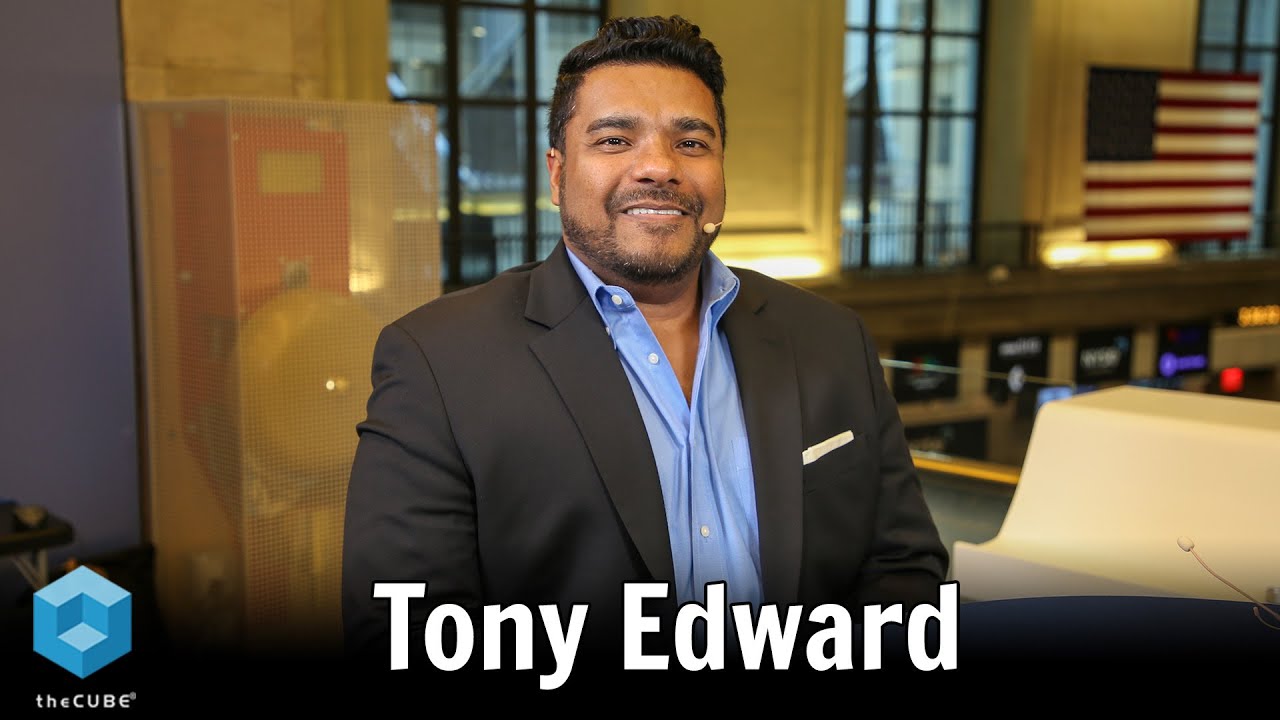
This discussion examines how regulation, tokenization and institutional adoption shape the future of crypto markets. Tony Edward of Thinking Crypto and Amanda Whitcroft of Thinking Crypto host the conversation recorded for theCUBE and NYSE Wired: Crypto Trailblazers. John Furrier of theCUBE and Gemma Allen of theCUBE guide the session, focusing on regulatory developments, tokenization, stablecoins and the convergence of traditional finance and crypto.
Whitcroft outlines how the Clarity Act aims to resolve jurisdictional disputes between the Securities and Exchange Commission and the Commodity Futures Trading Commission and emphasizes blockchain technology rather than only tokens. They stress the urgency of clear legislation to enable institutional participation and more efficient market structure. Edward contends tokenization will integrate markets over time, expanding access and liquidity while institutions drive mass adoption. They highlight implications for market structure and stablecoin payment rails. theCUBE analysts identify market implications and point to artificial intelligence driven blockchain use cases to monitor; AI applications are advancing research, trading and compliance workflows.
For practitioners and institutional investors this session provides actionable perspectives on crypto regulation, tokenization, stablecoins, blockchain infrastructure and institutional adoption. Watch the full NYSE Wired session for deeper analysis from industry leaders and research teams.
Forgot Password
Almost there!
We just sent you a verification email. Please verify your account to gain access to
theCUBE + NYSE Wired: Crypto Trailblazers. If you don’t think you received an email check your
spam folder.
Sign in to theCUBE + NYSE Wired: Crypto Trailblazers.
In order to sign in, enter the email address you used to registered for the event. Once completed, you will receive an email with a verification link. Open this link to automatically sign into the site.
Register For theCUBE + NYSE Wired: Crypto Trailblazers
Please fill out the information below. You will recieve an email with a verification link confirming your registration. Click the link to automatically sign into the site.
You’re almost there!
We just sent you a verification email. Please click the verification button in the email. Once your email address is verified, you will have full access to all event content for theCUBE + NYSE Wired: Crypto Trailblazers.
I want my badge and interests to be visible to all attendees.
Checking this box will display your presense on the attendees list, view your profile and allow other attendees to contact you via 1-1 chat. Read the Privacy Policy. At any time, you can choose to disable this preference.
Select your Interests!
add
Upload your photo
Uploading..
OR
Connect via Twitter
Connect via Linkedin
EDIT PASSWORD
Share
Forgot Password
Almost there!
We just sent you a verification email. Please verify your account to gain access to
theCUBE + NYSE Wired: Crypto Trailblazers. If you don’t think you received an email check your
spam folder.
Sign in to theCUBE + NYSE Wired: Crypto Trailblazers.
In order to sign in, enter the email address you used to registered for the event. Once completed, you will receive an email with a verification link. Open this link to automatically sign into the site.
Sign in to gain access to theCUBE + NYSE Wired: Crypto Trailblazers
Please sign in with LinkedIn to continue to theCUBE + NYSE Wired: Crypto Trailblazers. Signing in with LinkedIn ensures a professional environment.
Are you sure you want to remove access rights for this user?
Details
Manage Access
email address
Community Invitation
Tony Edward & Amanda Whitcroft, Thinking Crypto
This discussion examines how regulation, tokenization and institutional adoption shape the future of crypto markets. Tony Edward of Thinking Crypto and Amanda Whitcroft of Thinking Crypto host the conversation recorded for theCUBE and NYSE Wired: Crypto Trailblazers. John Furrier of theCUBE and Gemma Allen of theCUBE guide the session, focusing on regulatory developments, tokenization, stablecoins and the convergence of traditional finance and crypto.
Whitcroft outlines how the Clarity Act aims to resolve jurisdictional disputes between the Securities and Exchange Commission and the Commodity Futures Trading Commission and emphasizes blockchain technology rather than only tokens. They stress the urgency of clear legislation to enable institutional participation and more efficient market structure. Edward contends tokenization will integrate markets over time, expanding access and liquidity while institutions drive mass adoption. They highlight implications for market structure and stablecoin payment rails. theCUBE analysts identify market implications and point to artificial intelligence driven blockchain use cases to monitor; AI applications are advancing research, trading and compliance workflows.
For practitioners and institutional investors this session provides actionable perspectives on crypto regulation, tokenization, stablecoins, blockchain infrastructure and institutional adoption. Watch the full NYSE Wired session for deeper analysis from industry leaders and research teams.
>> Palo Alto Studio, connecting Silicon Valley and Wall Street. I'm John Furrier, host of theCUBE here with Dave Vellante, my co-host.
Gemma Allen
>> Welcome back to theCUBE Studio here at the New York Stock Exchange. I'm Gemma Allen with NYSE Wired's Crypto Trailblazers. And joining me now are two folks who host a crypto podcast of their own. Tony Edward and Amanda Whitcroft, who co-hosts Thinking Crypto. Welcome guys.
Amanda Whitcroft
>> Thank you for having us.
Tony Edward
>> Thank you.
Gemma Allen
>> So I don't get to talk to a lot of other podcast hosts. I hope you're going to make this very easy for me. But maybe just first, tell us a little bit about Thinking Crypto. Fill the audience in on the podcast.
Tony Edward
>> Sure. So the Thinking Crypto podcast covers the latest crypto news and we interview a lot of the stakeholders in the crypto industry as well as regulators like folks of the SEC and politicians working on crypto legislation.
Gemma Allen
>> Okay. So let's try and start with everything that's been happening in crypto this year, as complicated as that is. But let's start with, you mentioned regulators, regulation. The beginning of the year, there was a lot of promise around how this industry is being endorsed, legitimized by regulation. We talked about the GENIUS Act, the Clarity Act. There's been a little bit of a stop-start approach, especially to the Clarity Act. Some folks feel lots of more important act. Amanda, you start us off. What are your thoughts?
Amanda Whitcroft
>> Yeah. I mean, first of all, we had the GENIUS Act, which was strictly for stablecoins. I'm not sure if it made it all the more safer as much as it made it important and the awareness around it, which was extremely important for today. Now we have the Clarity Act, which is going to serve the broader market a lot better than it is today. For example, we have tokens that are being debated whether they're a security or a commodity. You have the SEC versus the CFTC that wants jurisdiction over these tokens based on what they are defined as. So it's really important that we have this legislation in place in order to have these federal agencies wanting jurisdiction over the token. But I'm also happy to see that as a part of Clarity, we're getting away from just crypto being a token asset class and more so the technology behind it.
Gemma Allen
>> And if we think about what the market needs and wants, right? They want market structure and Clarity Act can hopefully offer that. Where do you think this slowdown or their reluctance or the, I guess, time to actually implement this has been... Where is the slowdown happening? What do you think, Tony?
Tony Edward
>> Well, this technology in the first place is very disruptive. It's disrupting your traditional banking system. It's disrupting investment. And that's why you see the likes of Jamie Dimon and others are pushing hard against it. It's such a disruptive technology, but it's going to change the way moneys move, values move. So the headwinds are there where we have the banks fighting back, but also you have the ethics piece. Donald Trump is very invested in crypto and a lot of his political opponents want to use that against him to slow this bill down. So those are the headwinds the bill is facing. Yesterday, Senator Cynthia Lummis said the bill will make its way to the Senate floor in July, so fingers crossed we can get it passed then and then the actual rollout and implementation will happen after that. If it doesn't pass, well, we're going to have to wait possibly years because the midterm elections are coming up. It's looking like Democrats may grab more seats and they may continue to fight crypto and this legislation.
Gemma Allen
>> So we know one thing about Jamie Dimon, and that's he likes to make money, right? Jamie Dimon doesn't suffer fools. I guess like any industry though, banking has its challenges, right? It's slow. It's a challenge to, I'm sure, roll out anything new across JP Morgan. I can't imagine anything that they do happens in too agile a fashion, but what do you think is really at the root of somebody like Jamie Dimon pushing back on the crypto industry if you were to really boil it down?
Amanda Whitcroft
>> Well, he says the rewards on Stablecoin, the language behind the rewards on Stablecoin is his biggest issue. And I think something that I actually haven't seen addressed yet by Senator Lummis, and I'd like to hear it, is that he's specifically pointing out that you can be a part of certain member programs and still gain... So while there is language protecting rewards against stablecoins, there is still, you can be a member or a part of programs where you can still receive rewards. However, I think his approach in interviews is very hostile and it seems very personal versus people actually, because the legacy systems are outdated and there is a clear need as proven by other institutions. He is the one guy that's been so outspoken against it, and I am curious because of the hostility.
Gemma Allen
>> Well, let's talk about the other institutions for a second because there has been mass institutional adoption of crypto if we think about it in a five-year stint, right? If we think about 2021 versus 2026, we've seen a lot of folks like Fidelity, seen these ETFs, all these folks embrace crypto in a way that nobody really expected. There's this other view though that like, are we looking to then essentially centralize a technology that was designed to be decentralized, right? There is, even in the crypto community, that kind of skepticism. What do you guys think about that? And for those institutions that are adopting, what are your thoughts on how and what they're doing well?
Tony Edward
>> Yeah, that's a great question and that's a debate that's happening among industry folks and even the original Bitcoin believers. They believe the ethos of Bitcoin is dying because these centralized exchanges and platforms like your BlackRock and Fidelity are buying hoards of it, they have it in the ETF, and no longer will people have to worry about self-custody. Now, on one hand, that's good because it allows for mass adoption of the asset and technology, but on the other hand, to your point, it takes away some of that value and ethos of the crypto assets, being able to do decentralized finance, actually owning the asset where you control the private keys, that's kind of disappearing. But unfortunately, I think this is the nature of the beast because human beings want things easy. They don't want friction. They don't want things complicated. So I think they're going to go the route of the institutions.
Gemma Allen
>> And let's talk about tokenization for a second, Amanda, because there's also a conversation happening in terms of the breadth and scope of tokenization, right? Is Wall Street trying to tokenize Bitcoin or is it trying to tokenize Wall Street? And if we think about the asset class, the ever-growing asset class for tokenization, it's an interesting debate, right? Interesting phenomenon. What do you think?
Amanda Whitcroft
>> I think tokenization is as simple as, again, the outdated legacy systems of having 24/7 trading, of having eventually tokenized equities, which is a work in progress. I think you have a settlement that will be faster. And so for example, if you were to make a trade prior to Juneteenth, that's a three-day now Friday, Saturday, Sunday that you are out where you've lost days. So I think the incentive is certainly there for institutions as far as, as you pointed out, money making, like Jamie Dimon is no stranger to. But yeah, I think aside from the buzzword of tokenizing assets, this, that, and the other, it's happening and I'm happy to see this is the convergence of TradFi and crypto because of that.
Gemma Allen
>> And what are your thoughts, Tony, on whether or not tokenization could in a way, if it modernizes modern capital markets, could actually kind of dwarf cryptocurrency? Do you think that's a real risk? And again, it kind of changes the original thesis of crypto. What do you think?
Tony Edward
>> Sure. So I believe in 10 years time, these markets are all going to be blended. They're going to converge and it's going to be one whole market, but it's not necessarily going to overpower crypto because the tokenized assets are going to be built on blockchain rails. So the native tokens of those blockchains are going to go up in value. I think it's just all going to be one market, your tokenized real estate, tokenized gold, tokenized stocks and equities, crypto assets, and then you have stablecoins. It's all going to be one market running 24/7. And these institutions see that's a direction the puck is heading in and they're all building. It also allows them to make more money because when you tokenize an asset, it now allows you to push it into different regions and other countries that couldn't access those assets. So for example, not everyone in the continent of Africa or South America can access SpaceX or Tesla stock, but if you tokenize it and they have a wallet, they can easily access it and it can be fractionalized where they can buy five bucks of it. So that allows more liquidity to come into these assets, which the institutions have.
Gemma Allen
>> I've always loved that side of crypto that it kind of democratizes access, right? It does provide third world access to currencies that were really left behind by the last wave of capital markets, let's be frank. And I think sticking to that thesis, we have a lot of folks come on the show and they talk about that, right? A lot of crypto founders, they have immigrant parents or they have really interesting stories actually. They're an eclectic mix of interesting folks, but I think it's important, but we also see the race for public markets, right? And actually this side of crypto interests me and excites me too because like I'm a tech person at heart and some of us being built in the tech space is very interesting. We had the BitGo IPO earlier this year. A lot of speculation around Kraken, we've had them on the show. Again, I think the market and Wall Street is kind of really reacting to those who are building the rails as opposed to necessarily creating the coins. What are your thoughts on the IPO wave?
Amanda Whitcroft
>> So I mean, last year, you had Circle that started the trend.
Gemma Allen
>> Sure.
Amanda Whitcroft
>> Then you had BitGo who kind of followed suit, and now upcoming, you have Kraken who is starting to, and I think this is great because what you're seeing now is it's no longer about the hype. Slowly but surely, it's about use case, and you have to show proof of value really. And in order to do that, these infrastructure companies that are coming into the space are proving more and more valuable.
Gemma Allen
>> In a way, it's kind of a perfect storm of innovation, right? Because they have entered the space too at a time when everyone on the Fortune 500 is struggling to keep up with valuations for companies like SpaceX. The competition for capital and for attention is in a way worse than it's ever been. We're looking at the board right here, like some of the safest stocks in the world have been red for weeks. So it's a tough time to raise and to grab attention. Do you think the crypto industry does a good enough job of telling its own story? Like, what do you think, Tony? You have a lot of folks on the show.
Tony Edward
>> It's a turbulent time in the markets, stock and crypto. I think because we're in a bear market cycle and liquidity is tight, as you mentioned, there's a lot of competition, and even the previous crypto bull market was lackluster because attention mind share was towards gold and silver as well as the AI trade. But I do believe once the Clarity Act is passed, crypto is going to grab that narrative back again and there's going to be more liquidity coming in because AI will have to use blockchain and then you're going to have tokenized gold and silver. So those assets are going to go on the blockchain. And I believe crypto's story will come back to the forefront again. Right now, it's tough, but markets are cyclical. I think we're going to come be out of the bear market in maybe four to six months and I don't think Trump wants to go into the midterm elections with the markets in the dump. I think we're going to see a rally across the board.
Gemma Allen
>> Well, I certainly hope so as a 401k holder. I'll be 95 before I retire at this rate. So talking about the tech for a second, SpaceX, we have potential IPO from Anthropic or OpenAI this year. There is huge hype for MDI, right? There are also two interesting technology stories because blockchain, crypto, AI, I mean, they're disruptive technologies. They're technologies no one imagined 10, 15 years ago, well, no mainstream retail investors imagined. What are you guys seeing and hearing around the kind of AI meets crypto meets blockchain innovation? Are there any stories or guests that have really interested either of you?
Amanda Whitcroft
>> Yeah, I think the future markets, prediction markets that are coming with AI agents is the most fascinating, I think your Polygon and places like Kalshi that are building these future markets for people to bet on. And again, it operating 24/7 because it's not reliant on a human, it's reliant on AI agents, not to say that I think in traditional finance, for example, specifically private equity, you're not seeing a way with analysts. AI is simply like a collaborative component of that. I would compare it to crypto is that right now in this stage, your AI is just a, it's a leg up, but eventually I think one day it will take over.
Gemma Allen
>> What about you, Tony? What do you think from the perspective of AI meets blockchain meets crypto, the innovation cycle we're in?
Tony Edward
>> Yeah. Two major innovations I'm really excited about is what Amanda alluded to, AI agents doing things on behalf of you and booking your travel, doing your grocery shopping, things like that. They're going to use stablecoins because they're going to have to transact instantly, settle quickly. But the other thing that I'm monitoring is news outlets like Fox, CNN and so forth, they're building platforms that are blockchain-powered to help fight deepfakes. So it's going to timestamp content and show the origin of content. Deepfakes are on the rise. They're getting more sophisticated where you can't distinguish, is this real or is this AI? So just imagine what it's going to look like in five years. Blockchain's a solution where you're going to be able to click on a dialogue box and say, "Oh, this came from Gemma on June 24th, 2026 at 2:00 PM. It was published. We know what the source is from a verified account," versus 50 other Gemmas, bots who are impersonating you, putting out content and pretending to be you. The only way to fix that is with blockchain.
Gemma Allen
>> You mentioned Stablecoins. Another interesting space, right? Because there is a potential they could become more and more of the internet's payment rails, right? Again, similar to organization on the broad spec of asset class, we are going to see more ways in which they will be used in what were traditionally TradFi spaces. But what are your guys' thoughts? Again, I feel like Stablecoins had a moment, people felt like a lot of safety and security with the word Stablecoin, well branded, you could say. But again, like everything with crypto, there tends to be a bit of a rollercoaster of enthusiasm and skepticism. What do you think?
Amanda Whitcroft
>> Yeah, I think similar we always equate back to the internet in comparing crypto. And I think similar to the internet, you had the technology first and then came the applications. I think the same thing here where you have blockchain as the foundation and you're seeing there is no winner. You have people choosing Ethereum and Solana based on what they specialize in. And so I think Stablecoins being this digital-backed dollar is again, just a part of that infrastructure. Whether it's called Stablecoin in the future, who knows? Maybe it'll change. But I think right now, it's the only regulated way where institutions feel more confident to unlock that capital and finally invest in this space because of how much confidence they have in it.
Gemma Allen
>> When we look at those two coins you mentioned, Ethereum kind of tends to trade a little bit, right? Some people say that's just a timing issue. It's just a little bit too early. There's a lot of interesting stuff happening in the space of Ethereum. It's quite agile, quite fast in terms of what's being developed operationally. What do you guys think? I mean, it is obviously a race between the two.
Tony Edward
>> Yeah. To Amanda's point, it serves different purposes. I think Ethereum has been the leader in enterprise adoption. For example, BlackRock, when they launched your tokenized money market fund, it was on Ethereum first. Now, have they branched out to others blockchains? Yes, but Ethereum has been the number one as far as adoption and getting off the ground. Solana, historically, they were more retail, NFT, meme coin-focused. They have been getting some institutional adoption, but still Ethereum is a clear leader in that space. And I personally hold both because I think they serve different purposes and I believe it's going to be a multi-chain world. There's not going to be one blockchain to rule them all. So I'm betting on Ethereum and Solana, and they are down significantly right now, but it's all cyclical. I think as Bitcoin gets back into a bull market, these coins will follow.
Gemma Allen
>> Well, let's finish on a light and easy note. Let's try and predict the future.
Amanda Whitcroft
>> Sure.
Gemma Allen
>> So I guess every cycle has its trend, right? Like teams emerge, opportunities emerge. If we think about the space five years back and five years forward, so let's look at the world of 2031, scary to imagine. I mean, what do you guys predict from the perspective of the crypto industry broadly? What are your big bets?
Amanda Whitcroft
>> I have to believe that there is no longer, and I want to think it's now, but it's just in this bear market, it can't be possible that there is no longer a choosing... I think your crypto degens, your crypto natives that only they're criticizing what's happening now because of the convergence with TradFi, I think that's going to go by way of the Dodo. I think that's it. It's going to be just one industry and that this will no longer be a conversation of the big investment banks and crypto or even this talk of convergence. It will just be one industry. I think you've seen that now with digital or 250 Digital with Christopher Perkins and Franklin Templeton. They bought again this, where they were collaborating. This was a partnership. Now they've bought it out and made it Franklin Crypto. So you're already seeing that they're trying to say it. Under the Biden administration, your institutions couldn't even say crypto. They had to say digital assets. So now, like I said, I think the future is, it's one industry, there's no more speculation and now it's just we're back to the good old times of market volatility. No more having to figure out legislation amongst the two. It's just one industry at large.
Gemma Allen
>> I love it. What about you, Tony?
Tony Edward
>> Amanda summarized it very well, but to add to that, I would say blockchains could become ubiquitous. Every institution will be holding crypto and using blockchain tech. And to Amanda's point, the degens and the cipher punks are going to be a thing of the past. Institutions are going to run crypto and blockchain. That may be a statement a lot of people are going to get angry at me for saying, but that's where the puck is heading. And to Amanda's point, the convergence of these markets, the blending, it's all going to be one market, and I believe there's going to be higher valuations for these blockchains and higher prices for the tokens as well.
Gemma Allen
>> And Jamie Dimon is going to cry into his Scotch on his yacht.
Tony Edward
>> Well, JP Morgan is building with the technology.
Gemma Allen
>> I'm joking, obviously. Folks, thanks so much for joining us on theCUBE and NYSE Wired.
Amanda Whitcroft
>> Thank you for having us.
Tony Edward
>> Thank you, Gemma.
Gemma Allen
>> I'm Gemma Allen here at theCUBE Studio at the New York Stock Exchange. This is NYSE Wired's Crypto Trailblazers. Thanks for watching.
>> Palo Alto Studio, connecting Silicon Valley and Wall Street. I'm John Furrier, host of theCUBE here with Dave Vellante, my co-host.
Gemma Allen
>> Welcome back to theCUBE Studio here at the New York Stock Exchange. I'm Gemma Allen with NYSE Wired's Crypto Trailblazers. And joining me now are two folks who host a crypto podcast of their own. Tony Edward and Amanda Whitcroft, who co-hosts Thinking Crypto. Welcome guys.
Amanda Whitcroft
>> Thank you for having us.
Tony Edward
>> Thank you.
Gemma Allen
>> So I don't get to talk to a lot of other podcast hosts. I hope you're going to make this very easy for me. But maybe just first, tell us a little bit about Thinking Crypto. Fill the audience in on the podcast.
Tony Edward
>> Sure. So the Thinking Crypto podcast covers the latest crypto news and we interview a lot of the stakeholders in the crypto industry as well as regulators like folks of the SEC and politicians working on crypto legislation.
Gemma Allen
>> Okay. So let's try and start with everything that's been happening in crypto this year, as complicated as that is. But let's start with, you mentioned regulators, regulation. The beginning of the year, there was a lot of promise around how this industry is being endorsed, legitimized by regulation. We talked about the GENIUS Act, the Clarity Act. There's been a little bit of a stop-start approach, especially to the Clarity Act. Some folks feel lots of more important act. Amanda, you start us off. What are your thoughts?
Amanda Whitcroft
>> Yeah. I mean, first of all, we had the GENIUS Act, which was strictly for stablecoins. I'm not sure if it made it all the more safer as much as it made it important and the awareness around it, which was extremely important for today. Now we have the Clarity Act, which is going to serve the broader market a lot better than it is today. For example, we have tokens that are being debated whether they're a security or a commodity. You have the SEC versus the CFTC that wants jurisdiction over these tokens based on what they are defined as. So it's really important that we have this legislation in place in order to have these federal agencies wanting jurisdiction over the token. But I'm also happy to see that as a part of Clarity, we're getting away from just crypto being a token asset class and more so the technology behind it.
Gemma Allen
>> And if we think about what the market needs and wants, right? They want market structure and Clarity Act can hopefully offer that. Where do you think this slowdown or their reluctance or the, I guess, time to actually implement this has been... Where is the slowdown happening? What do you think, Tony?
Tony Edward
>> Well, this technology in the first place is very disruptive. It's disrupting your traditional banking system. It's disrupting investment. And that's why you see the likes of Jamie Dimon and others are pushing hard against it. It's such a disruptive technology, but it's going to change the way moneys move, values move. So the headwinds are there where we have the banks fighting back, but also you have the ethics piece. Donald Trump is very invested in crypto and a lot of his political opponents want to use that against him to slow this bill down. So those are the headwinds the bill is facing. Yesterday, Senator Cynthia Lummis said the bill will make its way to the Senate floor in July, so fingers crossed we can get it passed then and then the actual rollout and implementation will happen after that. If it doesn't pass, well, we're going to have to wait possibly years because the midterm elections are coming up. It's looking like Democrats may grab more seats and they may continue to fight crypto and this legislation.
Gemma Allen
>> So we know one thing about Jamie Dimon, and that's he likes to make money, right? Jamie Dimon doesn't suffer fools. I guess like any industry though, banking has its challenges, right? It's slow. It's a challenge to, I'm sure, roll out anything new across JP Morgan. I can't imagine anything that they do happens in too agile a fashion, but what do you think is really at the root of somebody like Jamie Dimon pushing back on the crypto industry if you were to really boil it down?
Amanda Whitcroft
>> Well, he says the rewards on Stablecoin, the language behind the rewards on Stablecoin is his biggest issue. And I think something that I actually haven't seen addressed yet by Senator Lummis, and I'd like to hear it, is that he's specifically pointing out that you can be a part of certain member programs and still gain... So while there is language protecting rewards against stablecoins, there is still, you can be a member or a part of programs where you can still receive rewards. However, I think his approach in interviews is very hostile and it seems very personal versus people actually, because the legacy systems are outdated and there is a clear need as proven by other institutions. He is the one guy that's been so outspoken against it, and I am curious because of the hostility.
Gemma Allen
>> Well, let's talk about the other institutions for a second because there has been mass institutional adoption of crypto if we think about it in a five-year stint, right? If we think about 2021 versus 2026, we've seen a lot of folks like Fidelity, seen these ETFs, all these folks embrace crypto in a way that nobody really expected. There's this other view though that like, are we looking to then essentially centralize a technology that was designed to be decentralized, right? There is, even in the crypto community, that kind of skepticism. What do you guys think about that? And for those institutions that are adopting, what are your thoughts on how and what they're doing well?
Tony Edward
>> Yeah, that's a great question and that's a debate that's happening among industry folks and even the original Bitcoin believers. They believe the ethos of Bitcoin is dying because these centralized exchanges and platforms like your BlackRock and Fidelity are buying hoards of it, they have it in the ETF, and no longer will people have to worry about self-custody. Now, on one hand, that's good because it allows for mass adoption of the asset and technology, but on the other hand, to your point, it takes away some of that value and ethos of the crypto assets, being able to do decentralized finance, actually owning the asset where you control the private keys, that's kind of disappearing. But unfortunately, I think this is the nature of the beast because human beings want things easy. They don't want friction. They don't want things complicated. So I think they're going to go the route of the institutions.
Gemma Allen
>> And let's talk about tokenization for a second, Amanda, because there's also a conversation happening in terms of the breadth and scope of tokenization, right? Is Wall Street trying to tokenize Bitcoin or is it trying to tokenize Wall Street? And if we think about the asset class, the ever-growing asset class for tokenization, it's an interesting debate, right? Interesting phenomenon. What do you think?
Amanda Whitcroft
>> I think tokenization is as simple as, again, the outdated legacy systems of having 24/7 trading, of having eventually tokenized equities, which is a work in progress. I think you have a settlement that will be faster. And so for example, if you were to make a trade prior to Juneteenth, that's a three-day now Friday, Saturday, Sunday that you are out where you've lost days. So I think the incentive is certainly there for institutions as far as, as you pointed out, money making, like Jamie Dimon is no stranger to. But yeah, I think aside from the buzzword of tokenizing assets, this, that, and the other, it's happening and I'm happy to see this is the convergence of TradFi and crypto because of that.
Gemma Allen
>> And what are your thoughts, Tony, on whether or not tokenization could in a way, if it modernizes modern capital markets, could actually kind of dwarf cryptocurrency? Do you think that's a real risk? And again, it kind of changes the original thesis of crypto. What do you think?
Tony Edward
>> Sure. So I believe in 10 years time, these markets are all going to be blended. They're going to converge and it's going to be one whole market, but it's not necessarily going to overpower crypto because the tokenized assets are going to be built on blockchain rails. So the native tokens of those blockchains are going to go up in value. I think it's just all going to be one market, your tokenized real estate, tokenized gold, tokenized stocks and equities, crypto assets, and then you have stablecoins. It's all going to be one market running 24/7. And these institutions see that's a direction the puck is heading in and they're all building. It also allows them to make more money because when you tokenize an asset, it now allows you to push it into different regions and other countries that couldn't access those assets. So for example, not everyone in the continent of Africa or South America can access SpaceX or Tesla stock, but if you tokenize it and they have a wallet, they can easily access it and it can be fractionalized where they can buy five bucks of it. So that allows more liquidity to come into these assets, which the institutions have.
Gemma Allen
>> I've always loved that side of crypto that it kind of democratizes access, right? It does provide third world access to currencies that were really left behind by the last wave of capital markets, let's be frank. And I think sticking to that thesis, we have a lot of folks come on the show and they talk about that, right? A lot of crypto founders, they have immigrant parents or they have really interesting stories actually. They're an eclectic mix of interesting folks, but I think it's important, but we also see the race for public markets, right? And actually this side of crypto interests me and excites me too because like I'm a tech person at heart and some of us being built in the tech space is very interesting. We had the BitGo IPO earlier this year. A lot of speculation around Kraken, we've had them on the show. Again, I think the market and Wall Street is kind of really reacting to those who are building the rails as opposed to necessarily creating the coins. What are your thoughts on the IPO wave?
Amanda Whitcroft
>> So I mean, last year, you had Circle that started the trend.
Gemma Allen
>> Sure.
Amanda Whitcroft
>> Then you had BitGo who kind of followed suit, and now upcoming, you have Kraken who is starting to, and I think this is great because what you're seeing now is it's no longer about the hype. Slowly but surely, it's about use case, and you have to show proof of value really. And in order to do that, these infrastructure companies that are coming into the space are proving more and more valuable.
Gemma Allen
>> In a way, it's kind of a perfect storm of innovation, right? Because they have entered the space too at a time when everyone on the Fortune 500 is struggling to keep up with valuations for companies like SpaceX. The competition for capital and for attention is in a way worse than it's ever been. We're looking at the board right here, like some of the safest stocks in the world have been red for weeks. So it's a tough time to raise and to grab attention. Do you think the crypto industry does a good enough job of telling its own story? Like, what do you think, Tony? You have a lot of folks on the show.
Tony Edward
>> It's a turbulent time in the markets, stock and crypto. I think because we're in a bear market cycle and liquidity is tight, as you mentioned, there's a lot of competition, and even the previous crypto bull market was lackluster because attention mind share was towards gold and silver as well as the AI trade. But I do believe once the Clarity Act is passed, crypto is going to grab that narrative back again and there's going to be more liquidity coming in because AI will have to use blockchain and then you're going to have tokenized gold and silver. So those assets are going to go on the blockchain. And I believe crypto's story will come back to the forefront again. Right now, it's tough, but markets are cyclical. I think we're going to come be out of the bear market in maybe four to six months and I don't think Trump wants to go into the midterm elections with the markets in the dump. I think we're going to see a rally across the board.
Gemma Allen
>> Well, I certainly hope so as a 401k holder. I'll be 95 before I retire at this rate. So talking about the tech for a second, SpaceX, we have potential IPO from Anthropic or OpenAI this year. There is huge hype for MDI, right? There are also two interesting technology stories because blockchain, crypto, AI, I mean, they're disruptive technologies. They're technologies no one imagined 10, 15 years ago, well, no mainstream retail investors imagined. What are you guys seeing and hearing around the kind of AI meets crypto meets blockchain innovation? Are there any stories or guests that have really interested either of you?
Amanda Whitcroft
>> Yeah, I think the future markets, prediction markets that are coming with AI agents is the most fascinating, I think your Polygon and places like Kalshi that are building these future markets for people to bet on. And again, it operating 24/7 because it's not reliant on a human, it's reliant on AI agents, not to say that I think in traditional finance, for example, specifically private equity, you're not seeing a way with analysts. AI is simply like a collaborative component of that. I would compare it to crypto is that right now in this stage, your AI is just a, it's a leg up, but eventually I think one day it will take over.
Gemma Allen
>> What about you, Tony? What do you think from the perspective of AI meets blockchain meets crypto, the innovation cycle we're in?
Tony Edward
>> Yeah. Two major innovations I'm really excited about is what Amanda alluded to, AI agents doing things on behalf of you and booking your travel, doing your grocery shopping, things like that. They're going to use stablecoins because they're going to have to transact instantly, settle quickly. But the other thing that I'm monitoring is news outlets like Fox, CNN and so forth, they're building platforms that are blockchain-powered to help fight deepfakes. So it's going to timestamp content and show the origin of content. Deepfakes are on the rise. They're getting more sophisticated where you can't distinguish, is this real or is this AI? So just imagine what it's going to look like in five years. Blockchain's a solution where you're going to be able to click on a dialogue box and say, "Oh, this came from Gemma on June 24th, 2026 at 2:00 PM. It was published. We know what the source is from a verified account," versus 50 other Gemmas, bots who are impersonating you, putting out content and pretending to be you. The only way to fix that is with blockchain.
Gemma Allen
>> You mentioned Stablecoins. Another interesting space, right? Because there is a potential they could become more and more of the internet's payment rails, right? Again, similar to organization on the broad spec of asset class, we are going to see more ways in which they will be used in what were traditionally TradFi spaces. But what are your guys' thoughts? Again, I feel like Stablecoins had a moment, people felt like a lot of safety and security with the word Stablecoin, well branded, you could say. But again, like everything with crypto, there tends to be a bit of a rollercoaster of enthusiasm and skepticism. What do you think?
Amanda Whitcroft
>> Yeah, I think similar we always equate back to the internet in comparing crypto. And I think similar to the internet, you had the technology first and then came the applications. I think the same thing here where you have blockchain as the foundation and you're seeing there is no winner. You have people choosing Ethereum and Solana based on what they specialize in. And so I think Stablecoins being this digital-backed dollar is again, just a part of that infrastructure. Whether it's called Stablecoin in the future, who knows? Maybe it'll change. But I think right now, it's the only regulated way where institutions feel more confident to unlock that capital and finally invest in this space because of how much confidence they have in it.
Gemma Allen
>> When we look at those two coins you mentioned, Ethereum kind of tends to trade a little bit, right? Some people say that's just a timing issue. It's just a little bit too early. There's a lot of interesting stuff happening in the space of Ethereum. It's quite agile, quite fast in terms of what's being developed operationally. What do you guys think? I mean, it is obviously a race between the two.
Tony Edward
>> Yeah. To Amanda's point, it serves different purposes. I think Ethereum has been the leader in enterprise adoption. For example, BlackRock, when they launched your tokenized money market fund, it was on Ethereum first. Now, have they branched out to others blockchains? Yes, but Ethereum has been the number one as far as adoption and getting off the ground. Solana, historically, they were more retail, NFT, meme coin-focused. They have been getting some institutional adoption, but still Ethereum is a clear leader in that space. And I personally hold both because I think they serve different purposes and I believe it's going to be a multi-chain world. There's not going to be one blockchain to rule them all. So I'm betting on Ethereum and Solana, and they are down significantly right now, but it's all cyclical. I think as Bitcoin gets back into a bull market, these coins will follow.
Gemma Allen
>> Well, let's finish on a light and easy note. Let's try and predict the future.
Amanda Whitcroft
>> Sure.
Gemma Allen
>> So I guess every cycle has its trend, right? Like teams emerge, opportunities emerge. If we think about the space five years back and five years forward, so let's look at the world of 2031, scary to imagine. I mean, what do you guys predict from the perspective of the crypto industry broadly? What are your big bets?
Amanda Whitcroft
>> I have to believe that there is no longer, and I want to think it's now, but it's just in this bear market, it can't be possible that there is no longer a choosing... I think your crypto degens, your crypto natives that only they're criticizing what's happening now because of the convergence with TradFi, I think that's going to go by way of the Dodo. I think that's it. It's going to be just one industry and that this will no longer be a conversation of the big investment banks and crypto or even this talk of convergence. It will just be one industry. I think you've seen that now with digital or 250 Digital with Christopher Perkins and Franklin Templeton. They bought again this, where they were collaborating. This was a partnership. Now they've bought it out and made it Franklin Crypto. So you're already seeing that they're trying to say it. Under the Biden administration, your institutions couldn't even say crypto. They had to say digital assets. So now, like I said, I think the future is, it's one industry, there's no more speculation and now it's just we're back to the good old times of market volatility. No more having to figure out legislation amongst the two. It's just one industry at large.
Gemma Allen
>> I love it. What about you, Tony?
Tony Edward
>> Amanda summarized it very well, but to add to that, I would say blockchains could become ubiquitous. Every institution will be holding crypto and using blockchain tech. And to Amanda's point, the degens and the cipher punks are going to be a thing of the past. Institutions are going to run crypto and blockchain. That may be a statement a lot of people are going to get angry at me for saying, but that's where the puck is heading. And to Amanda's point, the convergence of these markets, the blending, it's all going to be one market, and I believe there's going to be higher valuations for these blockchains and higher prices for the tokens as well.
Gemma Allen
>> And Jamie Dimon is going to cry into his Scotch on his yacht.
Tony Edward
>> Well, JP Morgan is building with the technology.
Gemma Allen
>> I'm joking, obviously. Folks, thanks so much for joining us on theCUBE and NYSE Wired.
Amanda Whitcroft
>> Thank you for having us.
Tony Edward
>> Thank you, Gemma.
Gemma Allen
>> I'm Gemma Allen here at theCUBE Studio at the New York Stock Exchange. This is NYSE Wired's Crypto Trailblazers. Thanks for watching.


















































 John Furrier
 Gemma Allen