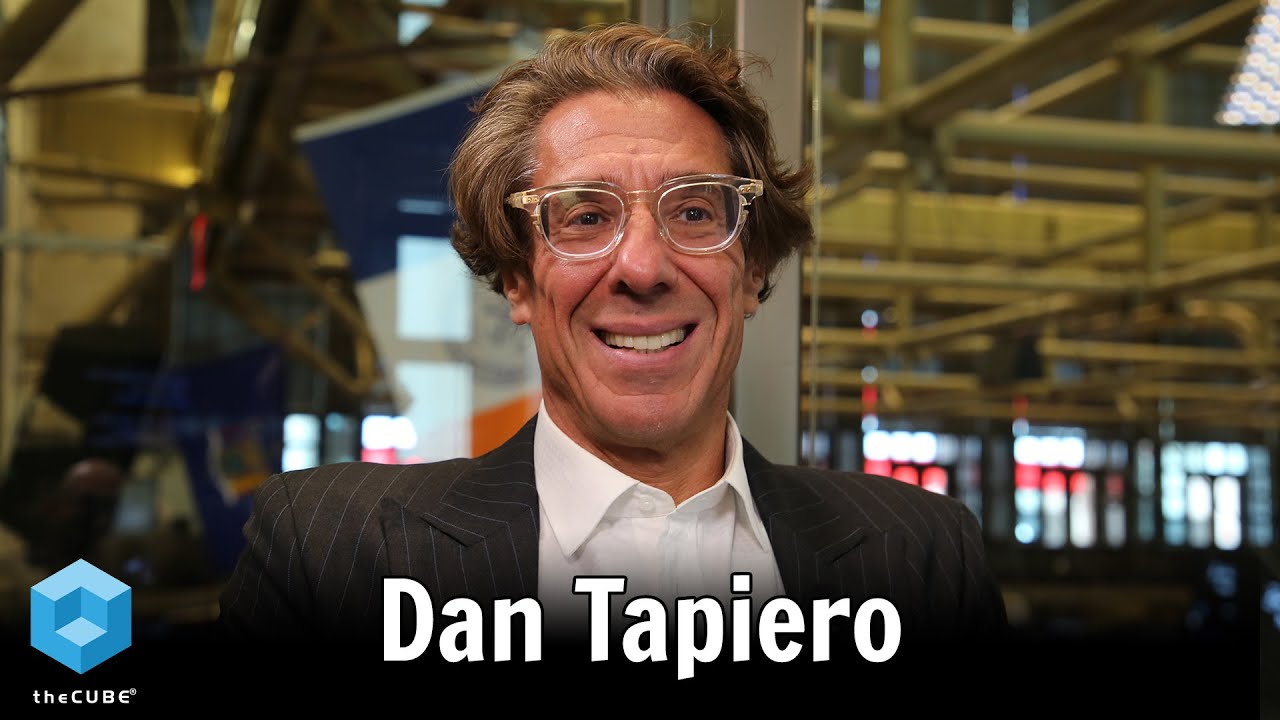
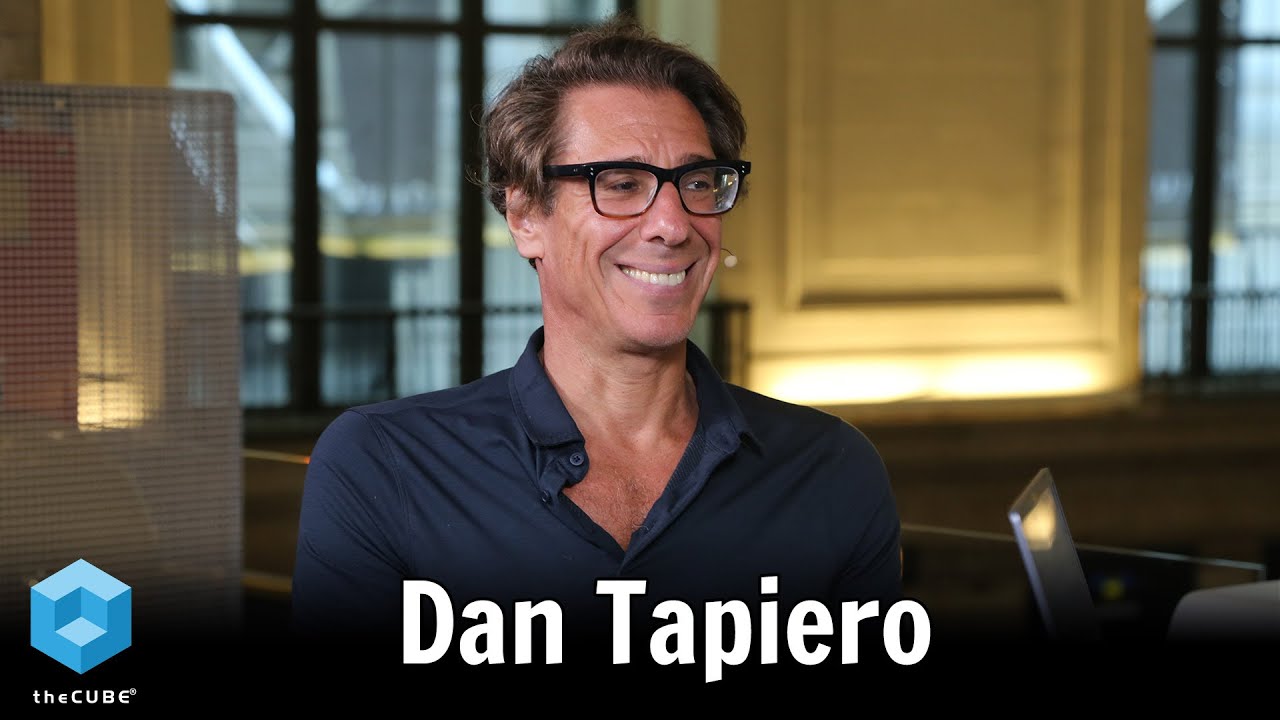
Dan Tapiero, co-founder and CEO of RoundTable Partners and 10T Holdings, joins theCUBE at the NYSE to discuss his extensive background in finance and his transition into the digital asset ecosystem. With over 20 years in the macro hedge fund industry, Tapiero brings valuable insights as he highlights the role of cryptocurrencies and blockchain in transforming business finance and infrastructure. theCUBE Research team, led by John Furrier, engages Tapiero in an in-depth discussion on the evolution of digital assets and the future of growth in this sector.
Tapiero emphasizes the potential of digital assets, predicting a substantial market value increase from $300 billion to a projected $10 trillion within the next decade. According to Tapiero, the current environment favors companies building this new ecosystem, as businesses generate significant revenue and prepare to enter public markets. The interview explores the role of US regulatory shifts in fostering a supportive atmosphere for cryptocurrencies, along with the importance of positioning the US as a global hub for blockchain technology and digital assets. #DanTapiero #DigitalAssets #theCUBE #NYSE #Crypto #Blockchain #Web3
Explore more about this topic and related insights on SiliconANGLE: siliconangle.com. Subscribe to our blockchain playlist for further discussions: [Blockchain Playlist](#).
00:00 - Intro
00:06 - Cryptocurrency and Blockchain: An Introductory Overview
02:31 - The Journey of Dan Tapiero and the Rise of 10T Holdings
09:09 - Crypto Industry Developments and Challenges
16:31 - Crypto Companies and Public Offerings
20:44 - The Future of Digital Assets
23:10 - The Digital Cultural Revolution: Final Reflections
Forgot Password
Almost there!
We just sent you a verification email. Please verify your account to gain access to
theCUBE + NYSE Wired: Crypto Trailblazers. If you don’t think you received an email check your
spam folder.
Sign in to theCUBE + NYSE Wired: Crypto Trailblazers.
In order to sign in, enter the email address you used to registered for the event. Once completed, you will receive an email with a verification link. Open this link to automatically sign into the site.
Register For theCUBE + NYSE Wired: Crypto Trailblazers
Please fill out the information below. You will recieve an email with a verification link confirming your registration. Click the link to automatically sign into the site.
You’re almost there!
We just sent you a verification email. Please click the verification button in the email. Once your email address is verified, you will have full access to all event content for theCUBE + NYSE Wired: Crypto Trailblazers.
I want my badge and interests to be visible to all attendees.
Checking this box will display your presense on the attendees list, view your profile and allow other attendees to contact you via 1-1 chat. Read the Privacy Policy. At any time, you can choose to disable this preference.
Select your Interests!
add
Upload your photo
Uploading..
OR
Connect via Twitter
Connect via Linkedin
EDIT PASSWORD
Share
Forgot Password
Almost there!
We just sent you a verification email. Please verify your account to gain access to
theCUBE + NYSE Wired: Crypto Trailblazers. If you don’t think you received an email check your
spam folder.
Sign in to theCUBE + NYSE Wired: Crypto Trailblazers.
In order to sign in, enter the email address you used to registered for the event. Once completed, you will receive an email with a verification link. Open this link to automatically sign into the site.
Sign in to gain access to theCUBE + NYSE Wired: Crypto Trailblazers
Please sign in with LinkedIn to continue to theCUBE + NYSE Wired: Crypto Trailblazers. Signing in with LinkedIn ensures a professional environment.
Are you sure you want to remove access rights for this user?
Details
Manage Access
email address
Community Invitation
Michael Shaulov, Fireblocks
Dan Tapiero, co-founder and CEO of RoundTable Partners and 10T Holdings, joins theCUBE at the NYSE to discuss his extensive background in finance and his transition into the digital asset ecosystem. With over 20 years in the macro hedge fund industry, Tapiero brings valuable insights as he highlights the role of cryptocurrencies and blockchain in transforming business finance and infrastructure. theCUBE Research team, led by John Furrier, engages Tapiero in an in-depth discussion on the evolution of digital assets and the future of growth in this sector.
Tapiero emphasizes the potential of digital assets, predicting a substantial market value increase from $300 billion to a projected $10 trillion within the next decade. According to Tapiero, the current environment favors companies building this new ecosystem, as businesses generate significant revenue and prepare to enter public markets. The interview explores the role of US regulatory shifts in fostering a supportive atmosphere for cryptocurrencies, along with the importance of positioning the US as a global hub for blockchain technology and digital assets. #DanTapiero #DigitalAssets #theCUBE #NYSE #Crypto #Blockchain #Web3
Explore more about this topic and related insights on SiliconANGLE: siliconangle.com. Subscribe to our blockchain playlist for further discussions: [Blockchain Playlist](#).
00:00 - Intro
00:06 - Cryptocurrency and Blockchain: An Introductory Overview
02:31 - The Journey of Dan Tapiero and the Rise of 10T Holdings
09:09 - Crypto Industry Developments and Challenges
16:31 - Crypto Companies and Public Offerings
20:44 - The Future of Digital Assets
23:10 - The Digital Cultural Revolution: Final Reflections
play_circle_outlineImportance of stablecoins as a foundational utility in mainstream finance.
replyShare Clip
play_circle_outlineFireblocks Network: Revolutionizing Secure Digital Asset Payments and Overcoming Challenges in Stablecoin Integration for Financial Institutions
replyShare Clip
play_circle_outlineOverview of Fireblocks transaction volume, highlighting stablecoin growth and usage statistics.
replyShare Clip
play_circle_outlineOpportunities for businesses to leverage stablecoins for international money movement.
replyShare Clip
play_circle_outlineConclusion on the ongoing digital revolution and transformation in commerce through stablecoins.
>> Hello, I'm John Furrier with theCUBE. We are here at the NYSE Studio here in New York City for NYSE Wired. This is our Crypto Trailblazer series. Also part of the Wall Street on-chain exclusive VIP event happening here in New York City. Got a lot of great action. The leaders have come on who are making things happen, the news makers, the builders. We've got some exclusive news here that's out. Fireblocks and the Fireblocks Network for Payments. Michael Shaulov is here, the CEO. Michael, thanks for coming on remotely to our NYSE Studio. Really appreciate you.
Michael Shaulov
>> John, thanks for having us.>> So you guys got the news out, the Fireblocks Network for Payments. Let's break it down. Let's get right into it. What is the news?
Michael Shaulov
>> The news is that we basically launched this new capability that allows basically all the payment service providers, bank, financial institutions to connect globally to different service providers and enable payments, movements and various use cases around stablecoins. It's basically bringing capabilities similar to SWIFT for stablecoins.>> You guys built a platform, enterprise platform grade for digital assets, moving things around, securing it. Can you share the importance of why the stablecoins has been such an instrumental piece of the movement right now and how that's accelerating the industry in the sense of, one, confidence but also money?
Michael Shaulov
>> Yeah. I mean, the reality is that stablecoins are just basically the first and probably the most important capability or the most important utility that we started to see from crypto that is hitting mainstream or early mainstream financial use cases. And it's the most basic thing around moving money around the globe in a way that is compatible with the internet, and that's basically what stablecoin is. No longer you need to wait three days to move money on international rails. It doesn't cost you $100. It doesn't get stuck in the middle. It settles instantaneously. It costs fractions of dollar, a fraction of cents to move money and you have the full transparency and confidence that it basically moved and arrived to its destination.>> So Fireblocks Network of Payments, explain how it works. The financial institutions are going crazy right now with stablecoins. They're seeing that as a confidence booster. How is the payments network work?
Michael Shaulov
>> So Fireblocks has been the biggest infrastructure provider for all the financial institutions that are working with digital assets, including stablecoins. Over the past several years, over $10 trillion were transferred through Fireblocks. And this year, we'll actually transfer $2.5 trillion worth of stablecoins. Basically, our customers that are the payment providers, the banks, the various fintechs. Now, they're actually running into two specific challenges when they come and building their various use cases or essentially enabling their business using stablecoins. The first one is that they need to find international partners, and it's just very difficult to understand what service providers what on-ramps, off-ramps and equity providers, and the other payment facilitators exist globally. So the first thing that we are doing is to bring everyone into one ecosystem where you can find the right partners for you with the right licenses, with the right compliance requirements, with the right geographical and FX coverage. And the second issue that people have is that when they need to work with over one provider, which is usually the case, they can't really scale because there is no standardization for the instructions, for the APIs, for the compliance that has to be collaborated between multiple parties. And the Fireblocks Network for Payments, it brings all of that into a single framework, into a single API. And we're basically allowing our clients to access this network, find the providers and scale with as many providers that they need without the additional complexity, operational cost, and burden of scaling out their business.>> A lot of people I talk to love the trend, but the question I get is there's so many different stablecoins out there, it's fragmented landscape. Can there be a single platform to handle all this? What's your reaction to that?
Michael Shaulov
>> So actually, what we bring in is the ability to deal with this complexity. We support all the different stablecoins, right? So we are big partners of Circle, big partners of Tether, big partners of Paxos, Agora, Bridge, a lot of those players that they have their own stablecoins. We're also supporting a lot of international and domestic stablecoin issuers. We underpinned, from a technology standpoint, the issuance of the Wyoming state. In Brazil, we are working with BRL1 consortium. In Europe, we are working with banking consortiums to help create stablecoins. So it's not going to stop here. We're going to see more and more stablecoins until probably at some point we might see a certain consolidation. That work that allows people to use those capabilities across the globe.>> So you're okay with the fragmentation as long as they're unified? At some point it settles in.
Michael Shaulov
>> I believe that it will, over the long horizon, like many markets, there will be less fragmentation and a certain level of consolidation. Time will tell, but we are very early. And I think that everyone, or at least the trend that we are seeing is that everyone want to issue their own stablecoin.
And to be fair, large portions of the market right now are completely untapped. You don't really have a dominant player in Europe from a euro stablecoin. You don't have dominant Canadian. You have many markets in LATAM, in Africa, in Far East Asia that they're currently using US-denominated stablecoins like Circle and Tether. So it's pretty clear that we will have more and more FX stablecoins at the very least. It's also likely that a lot of big players in the United States like the major banks will issue their own stablecoin. So I think for the next 18, 24 months, 36 months, we are going to see more and more stablecoins coming to the market. We provide the ability to both the interoperability, but of course the ability to operationalize the workflows and the connectivity between all of them.>> So you're stablecoin agnostic then?
Michael Shaulov
>> Yeah, we are completely stablecoin agnostic. We are provider-agnostic, we are use case agnostic. And honestly what Fireblocks was providing from day one, regardless of the specific use case of digital assets, is the operating system and the agnostic network to be able to enable all those use cases. And what we really bring to this partnership with our clients and the various providers is the ability for them to scale. Because to be fair, we know what are the main use cases that people are interested in right now. For example, cross border transfers, payouts, stablecoin accounts, stablecoin international accounts, but we also see trends around AI, trade finance, NGOs and governments that are looking to create more transparency in terms of their workflows with stablecoins. So I think that there is going to be a lot of innovation over the next several years. And our goal is to provide a future-proof infrastructure for people to continue and innovate and not being locked into either a single stablecoin or a single use case.>> Yeah, no one wants lock-in. I have to ask you on volume and just throughput, can you share the scope of some of the throughput transaction volumes, ranges, dollars? Explain what's going through the Fireblocks network.
Michael Shaulov
>> Yeah, for sure. So this year, inception to date, we transferred over $10 trillion of digital assets. In the last couple of quarters, actually probably more than the last 24 months or so, 50% of that was stablecoins. So this year, we already transacted over half a trillion dollars of stablecoin per quarter. So we are at about 1.5 trillion of stablecoins that were moved through Fireblocks since the beginning of 2025. So pretty on track to somewhere around 2.5 if not more through the year, and this is just general stablecoins.
On top of it, we also have a sub-categorization of what the various use cases that are being moved. So right now, stablecoins are both used for settling trading activity around crypto, but also for pure money movement along for players like Worldpay, and Visa, and Stripe and all those guys. And over there, we are just seeing this crazy acceleration of over 80% quarter-over-quarter growth, which is now about $200 billion per quarter of volume that we are seeing through the platform.>> It's amazing how this is just accelerated the market. It's just been amazing. Can you share your thoughts on why stablecoins for the folks that might not be inside the industry or inside the ropes as we say, why is this so important? Why is stablecoins this moment in time that's moving the needle?
Michael Shaulov
>> Yeah, of course. I think that there are a couple of interesting trends and I would recommend to anyone who haven't done a stablecoin transaction to do so. It's actually fairly easy from a consumer standpoint to get a wallet to do a stablecoin transaction. And I think this is probably the first time that you actually feel the power of this technology. It's almost obvious, it's like moving from a Nokia feature phone to an iPhone. That's pretty much how you feel the first time you've done a book on transaction. I'm pretty serious about it. What got us here is actually that over the last couple of years, we have this massive grassroot adoption of stablecoins predominantly outside of the US. So in Latin America, in Africa, in Far East Asia, in all those economies that actually it's very scholars or there is a lot of volatility in the domestic market around their currency, there was a mass brutal adoption that then sort of propagated to businesses that started to use that as their international wiring mechanism and the ability to really hold dollar accounts. And that now basically comes to the US on the back of the GENIUS Act and a lot of the clarity that was made by the current administration, which is great. I mean, I think it's phenomenal for the US economy because it does distribute the power of the dollar. And right now, we are seeing this adoption starts to propagate and hit all the US commercial sector. So from Fortune 500s that are starting to use a leverage stablecoins for their business operations and moving money around the globe primarily to geographies where the traditional rails are very clunky or expensive or slow. And on top of that, we are basically starting to see fintechs and money movers like the various payment service providers heavily investing in using stablecoins. And I think that the next thing, or honestly the next thing that we are just seeing right now is that the banks are trying to figure out how to adopt it from both a competitive advantage and defensible technology that they need to implement and provide those services to their clients. Otherwise, their clients will start working more and more with the fintechs for what is the core business of banks just basically holding it with money.>> Yeah. If they don't get on board, they'll be off board. So love the stablecoin transaction. People should do it. We should have a stablecoin party. It reminds me of just sharing some stablecoin transactions. It reminds me of the early days of Bitcoin when people would actually give Bitcoin away, if you remember back then. So, yeah, we're kind of in that early moments of a cultural shift. What is the one cultural shift people should pay attention to that will come out of the stablecoin party that's happening right now that will mature?
Michael Shaulov
>> I think that there will be just huge adoption in terms of an innovation of use cases. I think that what we know how to do right now with stablecoins is a bit like the early days of the internet that people would say, "Oh, okay, well why are you going to use the internet for?" "I'm going to read my newspaper on my computer."
But actually, what came out of the adoption of the internet is a lot of innovation, a lot of new things that were not possible before. I think the intersection with AI is really going to be important in terms of new things that you will see and use cases we're going to see from the stablecoin adoption. So I think what we are going to see here is just a full transformation of how money moves and how we are able to much easily interact with money in a way that is really native to the internet.>> Michael it's a great example. Remember the old days, e-commerce, e-business, maybe we should call it d-business, digital business, because this is kind of the revolution. We are in a digital native world right now.
Michael Shaulov
>> Yeah, I totally agree. I think that there was a point in time that people said that every business is going to be an online business and people were scratching their head why a coffee shop is an online business. And I think what we're seeing right now is people ordering their coffee online before they arrive to their favorite coffee branch. I think that it's pretty clear and it's actually happening that every business is going to use initially stablecoin. But to be fair, stablecoin is one of those foundational capabilities and components that are going to move a lot of the financial operations into the blockchain. And the next thing that we actually that it enables is really the proper use of RWAs. So financing, great finance, loyalty clubs, I think a lot of those interesting use cases that are truly underpinned by the ability to move money or to settle money against something, they're going to move that something also on the blockchain because then it becomes very simple, easy, cheap, transparent to get access to all those other applications. Maybe one interesting example that we are seeing already from a capital market standpoint is that in Latin America, you now have people that didn't have the ability to access the US capital market in terms of investing in US stock like Apple or Nvidia. So they're actually using stablecoins to access US brokerages. And the next thing that we are going to see and Robinhood did a few months ago is a prime example is that once that stock is going to be tokenized and sit on a blockchain, they will be able to operate with all that in a fully digital form.>> Robinhood is a great example of the leverage of new products when you're getting at is the productization of this. That's a huge enabler.
Michael Shaulov
>> Yeah. And I think what we are seeing is that the leading fintechs like Robinhood, like Revolut, like Nubank, eToro, and so on, that they sit in the cross-section between traditional finance Stripe that sit in the cross-section between traditional finance and they are already digital native. They already have the technology. Many of them, or actually all the names more or less that I mentioned are using the Fireblocks infrastructure. They're able to now merge those two worlds together. And just going back to the importance of the Fireblocks Network for Payments launch is that what we were seeing with almost each one of those companies when we enabled them is that very quickly, those businesses, the ability or the operationalization of stablecoins and the meaning of stablecoins for their business, for their internal operations, for the quality of service, for the new products that they are offering their customers, it's almost like a flywheel that builds more and more momentum and they need to continue and innovate. So they need to create more partnerships and the standardization and all the benefits that we bring to them in terms of reducing the complexity to work with more stablecoins, more blockchains, more partners is critical to the velocity in which they can innovate and improve the user experience to their end client, which eventually goes to the top line.>> And it's a great ecosystem too. More people are going to come in. Michael, congratulations. My final question for you is, what's on your agenda now? You got the launch of the payments in the network, what's next for you? What are you optimizing for? What's your focus right now?
Michael Shaulov
>> So our focus is continuing to double down that direction. We currently brought in 40 providers at launch. We're going to add dozens of providers every, at least like every quarter to pre-vetted providers into this ecosystem. And our goal right now is really focused on bringing a lot of the traditional financial institutions to adopt this technology. To your previous point about the stablecoin party, we are doing a lot of stablecoin dinners or stablecoin mini parties where we are educating them about how to use and leverage this technology. Being the trusted advisor on both the business case but also how to securely and compliantly implement the underlying technology. And as many of those, we can enable and get them into the market and have them use this technology and re-platform from the traditional rails. That's the real focus for us in the next, I would say, 24 months. There's just a lot of it.>> All right, we're going to have to make stablecoin parties a must-see and watch and participate event. And I'll just point out worth noting that if you were involved in Bitcoin during the days of sharing and teaching people by giving someone a Bitcoin, you are very well off right now. So you are on the front end. So stablecoins is in the similar situation. It's at the beginning of a massive shift. Michael, congratulations. Thank you for taking the time to come on our Crypto Trailblazers, love your name of your company, love what you guys do, and appreciate it. Thanks for coming on.
Michael Shaulov
>> Thanks so much for having us, John.>> Okay, we got the great Crypto Trailblazers series. Again, the leaders were making things happen here in commerce around the world and it is a global phenomenon. It's a re-platforming of commerce, digital, money movement, money programming. This is the digital revolution, of course. It's theCUBE doing our part here at our NYC Studio. Of course, we got our Palo Alto Studio and look for us around the world. I'm John Furrier, your host. Thanks for watching.
>> Hello, I'm John Furrier with theCUBE. We are here at the NYSE Studio here in New York City for NYSE Wired. This is our Crypto Trailblazer series. Also part of the Wall Street on-chain exclusive VIP event happening here in New York City. Got a lot of great action. The leaders have come on who are making things happen, the news makers, the builders. We've got some exclusive news here that's out. Fireblocks and the Fireblocks Network for Payments. Michael Shaulov is here, the CEO. Michael, thanks for coming on remotely to our NYSE Studio. Really appreciate you.
Michael Shaulov
>> John, thanks for having us.>> So you guys got the news out, the Fireblocks Network for Payments. Let's break it down. Let's get right into it. What is the news?
Michael Shaulov
>> The news is that we basically launched this new capability that allows basically all the payment service providers, bank, financial institutions to connect globally to different service providers and enable payments, movements and various use cases around stablecoins. It's basically bringing capabilities similar to SWIFT for stablecoins.>> You guys built a platform, enterprise platform grade for digital assets, moving things around, securing it. Can you share the importance of why the stablecoins has been such an instrumental piece of the movement right now and how that's accelerating the industry in the sense of, one, confidence but also money?
Michael Shaulov
>> Yeah. I mean, the reality is that stablecoins are just basically the first and probably the most important capability or the most important utility that we started to see from crypto that is hitting mainstream or early mainstream financial use cases. And it's the most basic thing around moving money around the globe in a way that is compatible with the internet, and that's basically what stablecoin is. No longer you need to wait three days to move money on international rails. It doesn't cost you $100. It doesn't get stuck in the middle. It settles instantaneously. It costs fractions of dollar, a fraction of cents to move money and you have the full transparency and confidence that it basically moved and arrived to its destination.>> So Fireblocks Network of Payments, explain how it works. The financial institutions are going crazy right now with stablecoins. They're seeing that as a confidence booster. How is the payments network work?
Michael Shaulov
>> So Fireblocks has been the biggest infrastructure provider for all the financial institutions that are working with digital assets, including stablecoins. Over the past several years, over $10 trillion were transferred through Fireblocks. And this year, we'll actually transfer $2.5 trillion worth of stablecoins. Basically, our customers that are the payment providers, the banks, the various fintechs. Now, they're actually running into two specific challenges when they come and building their various use cases or essentially enabling their business using stablecoins. The first one is that they need to find international partners, and it's just very difficult to understand what service providers what on-ramps, off-ramps and equity providers, and the other payment facilitators exist globally. So the first thing that we are doing is to bring everyone into one ecosystem where you can find the right partners for you with the right licenses, with the right compliance requirements, with the right geographical and FX coverage. And the second issue that people have is that when they need to work with over one provider, which is usually the case, they can't really scale because there is no standardization for the instructions, for the APIs, for the compliance that has to be collaborated between multiple parties. And the Fireblocks Network for Payments, it brings all of that into a single framework, into a single API. And we're basically allowing our clients to access this network, find the providers and scale with as many providers that they need without the additional complexity, operational cost, and burden of scaling out their business.>> A lot of people I talk to love the trend, but the question I get is there's so many different stablecoins out there, it's fragmented landscape. Can there be a single platform to handle all this? What's your reaction to that?
Michael Shaulov
>> So actually, what we bring in is the ability to deal with this complexity. We support all the different stablecoins, right? So we are big partners of Circle, big partners of Tether, big partners of Paxos, Agora, Bridge, a lot of those players that they have their own stablecoins. We're also supporting a lot of international and domestic stablecoin issuers. We underpinned, from a technology standpoint, the issuance of the Wyoming state. In Brazil, we are working with BRL1 consortium. In Europe, we are working with banking consortiums to help create stablecoins. So it's not going to stop here. We're going to see more and more stablecoins until probably at some point we might see a certain consolidation. That work that allows people to use those capabilities across the globe.>> So you're okay with the fragmentation as long as they're unified? At some point it settles in.
Michael Shaulov
>> I believe that it will, over the long horizon, like many markets, there will be less fragmentation and a certain level of consolidation. Time will tell, but we are very early. And I think that everyone, or at least the trend that we are seeing is that everyone want to issue their own stablecoin.
And to be fair, large portions of the market right now are completely untapped. You don't really have a dominant player in Europe from a euro stablecoin. You don't have dominant Canadian. You have many markets in LATAM, in Africa, in Far East Asia that they're currently using US-denominated stablecoins like Circle and Tether. So it's pretty clear that we will have more and more FX stablecoins at the very least. It's also likely that a lot of big players in the United States like the major banks will issue their own stablecoin. So I think for the next 18, 24 months, 36 months, we are going to see more and more stablecoins coming to the market. We provide the ability to both the interoperability, but of course the ability to operationalize the workflows and the connectivity between all of them.>> So you're stablecoin agnostic then?
Michael Shaulov
>> Yeah, we are completely stablecoin agnostic. We are provider-agnostic, we are use case agnostic. And honestly what Fireblocks was providing from day one, regardless of the specific use case of digital assets, is the operating system and the agnostic network to be able to enable all those use cases. And what we really bring to this partnership with our clients and the various providers is the ability for them to scale. Because to be fair, we know what are the main use cases that people are interested in right now. For example, cross border transfers, payouts, stablecoin accounts, stablecoin international accounts, but we also see trends around AI, trade finance, NGOs and governments that are looking to create more transparency in terms of their workflows with stablecoins. So I think that there is going to be a lot of innovation over the next several years. And our goal is to provide a future-proof infrastructure for people to continue and innovate and not being locked into either a single stablecoin or a single use case.>> Yeah, no one wants lock-in. I have to ask you on volume and just throughput, can you share the scope of some of the throughput transaction volumes, ranges, dollars? Explain what's going through the Fireblocks network.
Michael Shaulov
>> Yeah, for sure. So this year, inception to date, we transferred over $10 trillion of digital assets. In the last couple of quarters, actually probably more than the last 24 months or so, 50% of that was stablecoins. So this year, we already transacted over half a trillion dollars of stablecoin per quarter. So we are at about 1.5 trillion of stablecoins that were moved through Fireblocks since the beginning of 2025. So pretty on track to somewhere around 2.5 if not more through the year, and this is just general stablecoins.
On top of it, we also have a sub-categorization of what the various use cases that are being moved. So right now, stablecoins are both used for settling trading activity around crypto, but also for pure money movement along for players like Worldpay, and Visa, and Stripe and all those guys. And over there, we are just seeing this crazy acceleration of over 80% quarter-over-quarter growth, which is now about $200 billion per quarter of volume that we are seeing through the platform.>> It's amazing how this is just accelerated the market. It's just been amazing. Can you share your thoughts on why stablecoins for the folks that might not be inside the industry or inside the ropes as we say, why is this so important? Why is stablecoins this moment in time that's moving the needle?
Michael Shaulov
>> Yeah, of course. I think that there are a couple of interesting trends and I would recommend to anyone who haven't done a stablecoin transaction to do so. It's actually fairly easy from a consumer standpoint to get a wallet to do a stablecoin transaction. And I think this is probably the first time that you actually feel the power of this technology. It's almost obvious, it's like moving from a Nokia feature phone to an iPhone. That's pretty much how you feel the first time you've done a book on transaction. I'm pretty serious about it. What got us here is actually that over the last couple of years, we have this massive grassroot adoption of stablecoins predominantly outside of the US. So in Latin America, in Africa, in Far East Asia, in all those economies that actually it's very scholars or there is a lot of volatility in the domestic market around their currency, there was a mass brutal adoption that then sort of propagated to businesses that started to use that as their international wiring mechanism and the ability to really hold dollar accounts. And that now basically comes to the US on the back of the GENIUS Act and a lot of the clarity that was made by the current administration, which is great. I mean, I think it's phenomenal for the US economy because it does distribute the power of the dollar. And right now, we are seeing this adoption starts to propagate and hit all the US commercial sector. So from Fortune 500s that are starting to use a leverage stablecoins for their business operations and moving money around the globe primarily to geographies where the traditional rails are very clunky or expensive or slow. And on top of that, we are basically starting to see fintechs and money movers like the various payment service providers heavily investing in using stablecoins. And I think that the next thing, or honestly the next thing that we are just seeing right now is that the banks are trying to figure out how to adopt it from both a competitive advantage and defensible technology that they need to implement and provide those services to their clients. Otherwise, their clients will start working more and more with the fintechs for what is the core business of banks just basically holding it with money.>> Yeah. If they don't get on board, they'll be off board. So love the stablecoin transaction. People should do it. We should have a stablecoin party. It reminds me of just sharing some stablecoin transactions. It reminds me of the early days of Bitcoin when people would actually give Bitcoin away, if you remember back then. So, yeah, we're kind of in that early moments of a cultural shift. What is the one cultural shift people should pay attention to that will come out of the stablecoin party that's happening right now that will mature?
Michael Shaulov
>> I think that there will be just huge adoption in terms of an innovation of use cases. I think that what we know how to do right now with stablecoins is a bit like the early days of the internet that people would say, "Oh, okay, well why are you going to use the internet for?" "I'm going to read my newspaper on my computer."
But actually, what came out of the adoption of the internet is a lot of innovation, a lot of new things that were not possible before. I think the intersection with AI is really going to be important in terms of new things that you will see and use cases we're going to see from the stablecoin adoption. So I think what we are going to see here is just a full transformation of how money moves and how we are able to much easily interact with money in a way that is really native to the internet.>> Michael it's a great example. Remember the old days, e-commerce, e-business, maybe we should call it d-business, digital business, because this is kind of the revolution. We are in a digital native world right now.
Michael Shaulov
>> Yeah, I totally agree. I think that there was a point in time that people said that every business is going to be an online business and people were scratching their head why a coffee shop is an online business. And I think what we're seeing right now is people ordering their coffee online before they arrive to their favorite coffee branch. I think that it's pretty clear and it's actually happening that every business is going to use initially stablecoin. But to be fair, stablecoin is one of those foundational capabilities and components that are going to move a lot of the financial operations into the blockchain. And the next thing that we actually that it enables is really the proper use of RWAs. So financing, great finance, loyalty clubs, I think a lot of those interesting use cases that are truly underpinned by the ability to move money or to settle money against something, they're going to move that something also on the blockchain because then it becomes very simple, easy, cheap, transparent to get access to all those other applications. Maybe one interesting example that we are seeing already from a capital market standpoint is that in Latin America, you now have people that didn't have the ability to access the US capital market in terms of investing in US stock like Apple or Nvidia. So they're actually using stablecoins to access US brokerages. And the next thing that we are going to see and Robinhood did a few months ago is a prime example is that once that stock is going to be tokenized and sit on a blockchain, they will be able to operate with all that in a fully digital form.>> Robinhood is a great example of the leverage of new products when you're getting at is the productization of this. That's a huge enabler.
Michael Shaulov
>> Yeah. And I think what we are seeing is that the leading fintechs like Robinhood, like Revolut, like Nubank, eToro, and so on, that they sit in the cross-section between traditional finance Stripe that sit in the cross-section between traditional finance and they are already digital native. They already have the technology. Many of them, or actually all the names more or less that I mentioned are using the Fireblocks infrastructure. They're able to now merge those two worlds together. And just going back to the importance of the Fireblocks Network for Payments launch is that what we were seeing with almost each one of those companies when we enabled them is that very quickly, those businesses, the ability or the operationalization of stablecoins and the meaning of stablecoins for their business, for their internal operations, for the quality of service, for the new products that they are offering their customers, it's almost like a flywheel that builds more and more momentum and they need to continue and innovate. So they need to create more partnerships and the standardization and all the benefits that we bring to them in terms of reducing the complexity to work with more stablecoins, more blockchains, more partners is critical to the velocity in which they can innovate and improve the user experience to their end client, which eventually goes to the top line.>> And it's a great ecosystem too. More people are going to come in. Michael, congratulations. My final question for you is, what's on your agenda now? You got the launch of the payments in the network, what's next for you? What are you optimizing for? What's your focus right now?
Michael Shaulov
>> So our focus is continuing to double down that direction. We currently brought in 40 providers at launch. We're going to add dozens of providers every, at least like every quarter to pre-vetted providers into this ecosystem. And our goal right now is really focused on bringing a lot of the traditional financial institutions to adopt this technology. To your previous point about the stablecoin party, we are doing a lot of stablecoin dinners or stablecoin mini parties where we are educating them about how to use and leverage this technology. Being the trusted advisor on both the business case but also how to securely and compliantly implement the underlying technology. And as many of those, we can enable and get them into the market and have them use this technology and re-platform from the traditional rails. That's the real focus for us in the next, I would say, 24 months. There's just a lot of it.>> All right, we're going to have to make stablecoin parties a must-see and watch and participate event. And I'll just point out worth noting that if you were involved in Bitcoin during the days of sharing and teaching people by giving someone a Bitcoin, you are very well off right now. So you are on the front end. So stablecoins is in the similar situation. It's at the beginning of a massive shift. Michael, congratulations. Thank you for taking the time to come on our Crypto Trailblazers, love your name of your company, love what you guys do, and appreciate it. Thanks for coming on.
Michael Shaulov
>> Thanks so much for having us, John.>> Okay, we got the great Crypto Trailblazers series. Again, the leaders were making things happen here in commerce around the world and it is a global phenomenon. It's a re-platforming of commerce, digital, money movement, money programming. This is the digital revolution, of course. It's theCUBE doing our part here at our NYC Studio. Of course, we got our Palo Alto Studio and look for us around the world. I'm John Furrier, your host. Thanks for watching.