We just sent you a verification email. Please verify your account to gain access to
theCUBE + NYSE Wired: Crypto Trailblazers. If you don’t think you received an email check your
spam folder.
Sign in to theCUBE + NYSE Wired: Crypto Trailblazers.
In order to sign in, enter the email address you used to registered for the event. Once completed, you will receive an email with a verification link. Open this link to automatically sign into the site.
Register For theCUBE + NYSE Wired: Crypto Trailblazers
Please fill out the information below. You will recieve an email with a verification link confirming your registration. Click the link to automatically sign into the site.
You’re almost there!
We just sent you a verification email. Please click the verification button in the email. Once your email address is verified, you will have full access to all event content for theCUBE + NYSE Wired: Crypto Trailblazers.
I want my badge and interests to be visible to all attendees.
Checking this box will display your presense on the attendees list, view your profile and allow other attendees to contact you via 1-1 chat. Read the Privacy Policy. At any time, you can choose to disable this preference.
Select your Interests!
add
Upload your photo
Uploading..
OR
Connect via Twitter
Connect via Linkedin
EDIT PASSWORD
Share
Forgot Password
Almost there!
We just sent you a verification email. Please verify your account to gain access to
theCUBE + NYSE Wired: Crypto Trailblazers. If you don’t think you received an email check your
spam folder.
Sign in to theCUBE + NYSE Wired: Crypto Trailblazers.
In order to sign in, enter the email address you used to registered for the event. Once completed, you will receive an email with a verification link. Open this link to automatically sign into the site.
Sign in to gain access to theCUBE + NYSE Wired: Crypto Trailblazers
Please sign in with LinkedIn to continue to theCUBE + NYSE Wired: Crypto Trailblazers. Signing in with LinkedIn ensures a professional environment.
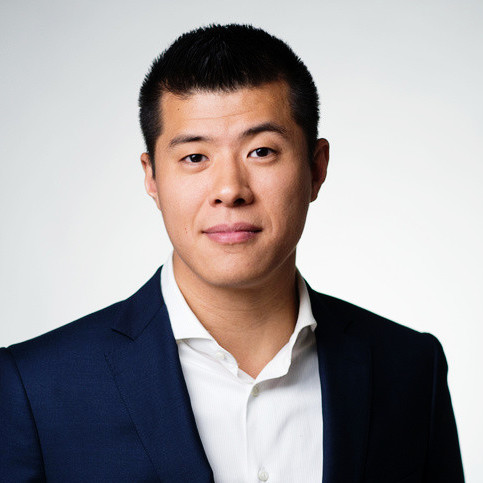
>> Hey, welcome go back to theCUBE here in our Palo Alto Studios. I'm John Furrier, your host of theCUBE. We're here for the crypto trailblazer two-day digital event. We're talking to all the top experts in the field who are looking at the future of infrastructure, finance, builders, entrepreneurs. Huge time right now. The crypto spring is upon us, and we're starting to see the continued movement and momentum of crypto infrastructure, certainly Ethereum and Bitcoin. Bitcoin's at the record high. Again, the market's now reacting. Businesses are moving onto the chain and higher level services, layer two and roll ups on Ethereum. A lot of great action. Franklin's here, he's a general partner at Pantera Capital. Franklin, thanks for coming on theCUBE. Appreciate it.
Franklin Bi
>> Thanks for having me, John.>> So you've been investing, just a quick overview on, for a long time, early days, and now through this cycle, you've seen a couple market turns. Now, we're looking like we're on the upslope. Still a little headwind, but great environment certainly here in the United States.
Franklin Bi
>> I completely agree. I mean, we've been investing in blockchain and crypto for about the past 12 years, since 2013, and back then, it was really just Bitcoin as the most compelling opportunity we can see in the space. But there was so much to grow from. I mean, Bitcoin back then was $65 a coin, and we saw the opportunity for it to become really the foundation of a new financial system. But for that to happen, we really needed institutions to see the potential there, and we needed regulation to become more clear. So today, I'm as optimistic as I've ever been that entrepreneurs are able to build on the technology now and take full advantage of what blockchains can bring to the world, and we can see use cases from financial services to social networks and decentralize the infrastructure actually become real.>> Yeah, you guys have been quite the enabler. Appreciate what you guys do. Back in the day, that was when they were buying pizzas with Bitcoin and really evangelizing, give away a Bitcoin to a friend, get wallets going. So the community was really evangelizing it. Now, mainstream, you're seeing with the prices, the government's in with a reserve. You got a crypto czar now in the White House, so now mainstream gets in. Okay, so we've seen these cycles in innovation. You've seen these ways before where your early adopters come in, there's a little bit of arbitrage. Underbelly comes in. We saw some of that with the ICOs and some of the coin activity, NFTs among others. But now, you're starting to see the velocity, the metroidization of the market. Real businesses are coming in. You guys were leading the wave in on the investment side, financial institutions coming in. So you got money, you got tech, and now you've got the social community aspect of it kicking in on high gear. What's your view right now of the market? Obviously, in the US, the climate's good. It's not a hurricane headwind, it's died down. Not yet a tailwind in my opinion, but I'd love to get your perspective, your reaction to the current market.
Franklin Bi
>> Yeah, a lot of things that have been holding us back in the blockchain sector have now finally become the wind behind our sails. We're starting to move so much faster now because entrepreneurs feel like they can finally move ahead without the kind of regulatory uncertainty that they've had in the past. And one of the things that people maybe don't understand that well is it feels like the opportunity has exploded so much that there's nothing left. And actually, our view is that there's still so much ahead of us. Bitcoin has grown 1,000 X since we first invested, but there's so many more opportunities. I mean, when you look at just what's on chain today, it's really just two to $3 trillion of market cap that's being served by blockchain technology. But that's really not the end goal that we had in mind when we started in 2013. We're looking at the bigger target of $500 trillion of assets that are still sitting off chain in the traditional financial system. Still to be tokenized, still to be modernized by blockchain technology.>> Yeah. And you're seeing the usage where the Ethereum team's here, the whole foundation's in the Bay Area. So you're starting to see obviously Stanford and Cal Berkeley, two big areas, obviously the gravity around those two schools, but the Bay Area in general, high concentration, the enthusiasm is high. You're starting to see the financial markets mature. We just did a podcast on the stock exchange. The conversation around liquidity comes in, so now that's your business now. So we're seeing a market where, okay, long game players, durability, you guys are one of them. Great vision by the way, point that out with your firm, there's liquidity and now you're starting to see a lot more motion going on around money, the money side, your take on that, how you guys look at that. Obviously, liquidity is great for investments, but it's still scratching the surface because the usage is still high, hackathons are going on, people are building after it. It feels like the cloud days with blockchain. Now, cloud is just compute storage networking, and queuing basic building blocks. Now, there's high level services, still not a true blockchain. So now, you've got this whole movement where it's like builders are going on board. How's that impacting your thinking? Obviously, making more money with liquidity, liquidity and builders, how's that flywheel looking like to you?
Franklin Bi
>> Well, I think first of all, the fact that the markets have really opened up to blockchain through the Bitcoin ETF and hopefully through the IPO window, just opening up for new companies that are building on blockchains to actually become accessible to public markets. Those are huge deals because it means that the opportunity is going to be so much more well understood by the mainstream public. Now, when it comes to how that flows into entrepreneurship, I think it's absolutely that we're competing against other technologies. We're competing for Mindshare. Every founder has the opportunity to build something, whether it's an AI, SaaS or blockchain. And so competing for that attention is really the big thing that's going to shift now.>> Brian Baumann, who was the founder of Wire, which is an open source community we're working with together on, it's like no one owns it. They have the vision and they're in exchange. Obviously, the big name, but when you start looking at liquidity, that opens up a whole nother persona in terms of the market opportunity because now you've got money, you've got growth on the company side, entrepreneurs are cranking. I'm expecting just looking at the data from Stanford and Cal and here in the Bay Area and the global kind of ecosystem that's going to flower and grow, a thousand flowers are blooming there. But now on the liquidity side, talk about that dynamic, because now you have beyond ETFs, you're going to have all kinds of new ideas in FinTech, so it's an opportunity not just to get liquid as an investor, there's new products that are going to come to the market. I've heard like four or five great ideas already that are happening today. What's your reaction?
Franklin Bi
>> Yeah, here's a perfect example of liquidity being such a big deal. Stablecoins are going to become, I think, a transformative new payment rail for FinTech. I mean, you're seeing it now with Stripe having made a huge acquisition with Bridge for $1 billion. They're realizing that if they're going to be building the future of financial services, it needs to be on modernized rails. And so looking at what blockchain is doing for money and for liquidity, it's turning it into an API. It's turning it into a form of money that has finally been able to keep up with the internet instead of being this siloed technology that we really only designed in the 1970s and 1980s. So finally, I think that's going to unlock new use cases for payment companies, FinTech companies, to be built around the world, better access to US-based financial products that people just haven't been able to distribute globally before.>> I mean, democratization is always a big buzzword kicked around. Certainly entrepreneurship and access is one. Just on the access to the opportunity for the retail investor or the common person. I heard companies saying, we don't need to have credit investors. We can actually put stuff on the chain. You got transparency, you have all kinds of new factors. What do you like most about that piece of it? Does anything jump out at you in saying this actually is an accelerant to what we're trying to do?
Franklin Bi
>> Well, we talk a lot about how new companies starting to think about their IPO, well, hopefully, think about doing that on chain because we have this concept of global capital markets, right? It's existed for 50 years supposedly. But actually, I would say the markets that exist on a blockchain are the first truly global capital markets. So for a founder who's looking to take his or her company public, okay, well, maybe now's the time to finally make it available to everybody who wants to own a piece of Tesla, a piece of Stripe, a piece of Apple.>> Well, it's definitely going to come from this community because this community, it's a radical idea at first, but when it comes mainstream, they're going to play by different rules. But the game is still the same. I still want to trade my stock. I want to make it work effectively in my world, which is compatible with everyone who's buying. Now, they're getting the retail guys in. What does that piece look like? Because now as you're starting to see everyone migrate in, is it a full transformation or is it just hybrid? Or does it have to be all in? I mean, you see cloud never really, when all cloud and cloud is hybrid, a lot of parallel. I bring up cloud, because to me, cloud is a nice mental model of growth. I mean, look at Amazon Web Services just dominates the earnings for say, Amazon, and they get the big retail, but they make all their money on AWS. So this is going to be an opportunity. Is it hybrid or does it go all in crypto? What's your view?
Franklin Bi
>> I think it's transformative. I think it goes back to the idea that everything will eventually become tokenized because it's a law of financial physics almost, that everything needs to flow where it can trade the most easily, trade the most cheaply and command its highest price. So I'll give you a great example of this. In Latin America, one of our portfolio companies, Bitso is the leading exchange in Mexico and across the whole continent there. Their products now are becoming this gateway for people who weren't investors before who didn't have access to capital markets, to be able to build their wealth, to actually become that. First, through just cross-border remittances, right? That's how they first access Bitso is 11% of US to Mexico remittances happen through Bitso. They come for the payments, and then they realize, wait, I can build a portfolio here. I can build assets here. I can eventually be able to access tokenized treasuries or tokenized stocks. And in that way, it truly is democratizing.>> That's a great example. I know you've got a hard stop, and I want to get into what you guys are doing. Obviously, now you've got this next wave coming. You've been on the wave hanging 10, surfing that wave. Great. Yeah, it's some rough waters a little bit. What are you guys investing in now? What's some of the investment thesis? Share some of your top bets you've made that are coming through that might go public or get liquid? Talk about the investment thesis and some of your big winners.
Franklin Bi
>> Yeah, absolutely. I think there's two areas we're paying a lot of attention to. One is the intersection of crypto and AI. It's obviously this big shift for all of us as a society that AI is becoming this omnipotent technology in our lives. But crypto, I think, has an important role to play, which is it can complement AI by incentivizing the kind of data that's going to make LLMs and AI agents more and more powerful, and it's going to give agents the financial tools to be able to act on our behalf. And so creating the kinds of tools and software for AI to actually take advantage of blockchains is going to be incredibly important. We've made investments in companies like Sentient that's enabling open source AI models so that we can finally have open AI, that open AI is actually built...>> Real open AI. They were actually called a proprietary model when they first started. They changed the frontier model because I think proprietary didn't go very well.
Franklin Bi
>> Exactly. And the other sector we're looking at is on the consumer side. I think it's time finally for mainstream consumers to have a reason to do things on a blockchain. And so where we're seeing that happen the most is in the gaming sector. We're expecting now that the industry is coming finally to its Farmville moment. If you remember back in the old days of Facebook becoming the giant that it is today, it used to be just a photo sharing app for college students, and then Farmville took over, 80 million users at its peak. It connected all of those different networks to finally create something that had a true network effect. And I think games are going to do that .>> Social games are a home run for tokens out of the gate. No doubt about it. And I think someone will build a Facebook because the users of the product, if you're going to be the product, you might as well get paid and tokens allow you to do that. That's an example of a use case that's now on the table.
Franklin Bi
>> Exactly.>> Many more like that. Franklin, it's great to have you on. Again, you're a trailblazer, again, congratulations to your firm. We've been following you guys here in theCUBE for over a decade. I know it's been some trailblazing moments where when you plow on the field, you get a lot of stuff in your face. Sometimes you're spitting out glass in some of these markets. Now, we've got a good market cycle. What are you most proud of and what's the big learning as you guys have been plowing through and blazing the trail, so to speak?
Franklin Bi
>> I think it's just that we've kept our nose down for the past 12 years, and we've really just focused on partnering with the best founders in the world. I mean, when you look at some of the folks that we've worked with in the past, Jeremy Allaire at Circle, Steven Goldfeder at Arbitrum, I mean, these are the folks that, like you said, our trailblazers. They're pushing our industry forward. So the more that we get to find these pioneers and be able to give them the support that they need, the better we are at what we want to do.>> Well, we'll get Jeremy on. We had Steven on earlier, yesterday. Congratulations, and thanks for coming on theCUBE. Appreciate it.
Franklin Bi
>> Thank you so much.>> Okay. We're blazing the trail here with theCUBE. We're back on the crypto coverage. It's important movement happening. It continues to happen, stories, power movements, and more stories coming on theCUBE. I'm John Furrier, your host. Thanks for watching.
>> Hey, welcome go back to theCUBE here in our Palo Alto Studios. I'm John Furrier, your host of theCUBE. We're here for the crypto trailblazer two-day digital event. We're talking to all the top experts in the field who are looking at the future of infrastructure, finance, builders, entrepreneurs. Huge time right now. The crypto spring is upon us, and we're starting to see the continued movement and momentum of crypto infrastructure, certainly Ethereum and Bitcoin. Bitcoin's at the record high. Again, the market's now reacting. Businesses are moving onto the chain and higher level services, layer two and roll ups on Ethereum. A lot of great action. Franklin's here, he's a general partner at Pantera Capital. Franklin, thanks for coming on theCUBE. Appreciate it.
Franklin Bi
>> Thanks for having me, John.>> So you've been investing, just a quick overview on, for a long time, early days, and now through this cycle, you've seen a couple market turns. Now, we're looking like we're on the upslope. Still a little headwind, but great environment certainly here in the United States.
Franklin Bi
>> I completely agree. I mean, we've been investing in blockchain and crypto for about the past 12 years, since 2013, and back then, it was really just Bitcoin as the most compelling opportunity we can see in the space. But there was so much to grow from. I mean, Bitcoin back then was $65 a coin, and we saw the opportunity for it to become really the foundation of a new financial system. But for that to happen, we really needed institutions to see the potential there, and we needed regulation to become more clear. So today, I'm as optimistic as I've ever been that entrepreneurs are able to build on the technology now and take full advantage of what blockchains can bring to the world, and we can see use cases from financial services to social networks and decentralize the infrastructure actually become real.>> Yeah, you guys have been quite the enabler. Appreciate what you guys do. Back in the day, that was when they were buying pizzas with Bitcoin and really evangelizing, give away a Bitcoin to a friend, get wallets going. So the community was really evangelizing it. Now, mainstream, you're seeing with the prices, the government's in with a reserve. You got a crypto czar now in the White House, so now mainstream gets in. Okay, so we've seen these cycles in innovation. You've seen these ways before where your early adopters come in, there's a little bit of arbitrage. Underbelly comes in. We saw some of that with the ICOs and some of the coin activity, NFTs among others. But now, you're starting to see the velocity, the metroidization of the market. Real businesses are coming in. You guys were leading the wave in on the investment side, financial institutions coming in. So you got money, you got tech, and now you've got the social community aspect of it kicking in on high gear. What's your view right now of the market? Obviously, in the US, the climate's good. It's not a hurricane headwind, it's died down. Not yet a tailwind in my opinion, but I'd love to get your perspective, your reaction to the current market.
Franklin Bi
>> Yeah, a lot of things that have been holding us back in the blockchain sector have now finally become the wind behind our sails. We're starting to move so much faster now because entrepreneurs feel like they can finally move ahead without the kind of regulatory uncertainty that they've had in the past. And one of the things that people maybe don't understand that well is it feels like the opportunity has exploded so much that there's nothing left. And actually, our view is that there's still so much ahead of us. Bitcoin has grown 1,000 X since we first invested, but there's so many more opportunities. I mean, when you look at just what's on chain today, it's really just two to $3 trillion of market cap that's being served by blockchain technology. But that's really not the end goal that we had in mind when we started in 2013. We're looking at the bigger target of $500 trillion of assets that are still sitting off chain in the traditional financial system. Still to be tokenized, still to be modernized by blockchain technology.>> Yeah. And you're seeing the usage where the Ethereum team's here, the whole foundation's in the Bay Area. So you're starting to see obviously Stanford and Cal Berkeley, two big areas, obviously the gravity around those two schools, but the Bay Area in general, high concentration, the enthusiasm is high. You're starting to see the financial markets mature. We just did a podcast on the stock exchange. The conversation around liquidity comes in, so now that's your business now. So we're seeing a market where, okay, long game players, durability, you guys are one of them. Great vision by the way, point that out with your firm, there's liquidity and now you're starting to see a lot more motion going on around money, the money side, your take on that, how you guys look at that. Obviously, liquidity is great for investments, but it's still scratching the surface because the usage is still high, hackathons are going on, people are building after it. It feels like the cloud days with blockchain. Now, cloud is just compute storage networking, and queuing basic building blocks. Now, there's high level services, still not a true blockchain. So now, you've got this whole movement where it's like builders are going on board. How's that impacting your thinking? Obviously, making more money with liquidity, liquidity and builders, how's that flywheel looking like to you?
Franklin Bi
>> Well, I think first of all, the fact that the markets have really opened up to blockchain through the Bitcoin ETF and hopefully through the IPO window, just opening up for new companies that are building on blockchains to actually become accessible to public markets. Those are huge deals because it means that the opportunity is going to be so much more well understood by the mainstream public. Now, when it comes to how that flows into entrepreneurship, I think it's absolutely that we're competing against other technologies. We're competing for Mindshare. Every founder has the opportunity to build something, whether it's an AI, SaaS or blockchain. And so competing for that attention is really the big thing that's going to shift now.>> Brian Baumann, who was the founder of Wire, which is an open source community we're working with together on, it's like no one owns it. They have the vision and they're in exchange. Obviously, the big name, but when you start looking at liquidity, that opens up a whole nother persona in terms of the market opportunity because now you've got money, you've got growth on the company side, entrepreneurs are cranking. I'm expecting just looking at the data from Stanford and Cal and here in the Bay Area and the global kind of ecosystem that's going to flower and grow, a thousand flowers are blooming there. But now on the liquidity side, talk about that dynamic, because now you have beyond ETFs, you're going to have all kinds of new ideas in FinTech, so it's an opportunity not just to get liquid as an investor, there's new products that are going to come to the market. I've heard like four or five great ideas already that are happening today. What's your reaction?
Franklin Bi
>> Yeah, here's a perfect example of liquidity being such a big deal. Stablecoins are going to become, I think, a transformative new payment rail for FinTech. I mean, you're seeing it now with Stripe having made a huge acquisition with Bridge for $1 billion. They're realizing that if they're going to be building the future of financial services, it needs to be on modernized rails. And so looking at what blockchain is doing for money and for liquidity, it's turning it into an API. It's turning it into a form of money that has finally been able to keep up with the internet instead of being this siloed technology that we really only designed in the 1970s and 1980s. So finally, I think that's going to unlock new use cases for payment companies, FinTech companies, to be built around the world, better access to US-based financial products that people just haven't been able to distribute globally before.>> I mean, democratization is always a big buzzword kicked around. Certainly entrepreneurship and access is one. Just on the access to the opportunity for the retail investor or the common person. I heard companies saying, we don't need to have credit investors. We can actually put stuff on the chain. You got transparency, you have all kinds of new factors. What do you like most about that piece of it? Does anything jump out at you in saying this actually is an accelerant to what we're trying to do?
Franklin Bi
>> Well, we talk a lot about how new companies starting to think about their IPO, well, hopefully, think about doing that on chain because we have this concept of global capital markets, right? It's existed for 50 years supposedly. But actually, I would say the markets that exist on a blockchain are the first truly global capital markets. So for a founder who's looking to take his or her company public, okay, well, maybe now's the time to finally make it available to everybody who wants to own a piece of Tesla, a piece of Stripe, a piece of Apple.>> Well, it's definitely going to come from this community because this community, it's a radical idea at first, but when it comes mainstream, they're going to play by different rules. But the game is still the same. I still want to trade my stock. I want to make it work effectively in my world, which is compatible with everyone who's buying. Now, they're getting the retail guys in. What does that piece look like? Because now as you're starting to see everyone migrate in, is it a full transformation or is it just hybrid? Or does it have to be all in? I mean, you see cloud never really, when all cloud and cloud is hybrid, a lot of parallel. I bring up cloud, because to me, cloud is a nice mental model of growth. I mean, look at Amazon Web Services just dominates the earnings for say, Amazon, and they get the big retail, but they make all their money on AWS. So this is going to be an opportunity. Is it hybrid or does it go all in crypto? What's your view?
Franklin Bi
>> I think it's transformative. I think it goes back to the idea that everything will eventually become tokenized because it's a law of financial physics almost, that everything needs to flow where it can trade the most easily, trade the most cheaply and command its highest price. So I'll give you a great example of this. In Latin America, one of our portfolio companies, Bitso is the leading exchange in Mexico and across the whole continent there. Their products now are becoming this gateway for people who weren't investors before who didn't have access to capital markets, to be able to build their wealth, to actually become that. First, through just cross-border remittances, right? That's how they first access Bitso is 11% of US to Mexico remittances happen through Bitso. They come for the payments, and then they realize, wait, I can build a portfolio here. I can build assets here. I can eventually be able to access tokenized treasuries or tokenized stocks. And in that way, it truly is democratizing.>> That's a great example. I know you've got a hard stop, and I want to get into what you guys are doing. Obviously, now you've got this next wave coming. You've been on the wave hanging 10, surfing that wave. Great. Yeah, it's some rough waters a little bit. What are you guys investing in now? What's some of the investment thesis? Share some of your top bets you've made that are coming through that might go public or get liquid? Talk about the investment thesis and some of your big winners.
Franklin Bi
>> Yeah, absolutely. I think there's two areas we're paying a lot of attention to. One is the intersection of crypto and AI. It's obviously this big shift for all of us as a society that AI is becoming this omnipotent technology in our lives. But crypto, I think, has an important role to play, which is it can complement AI by incentivizing the kind of data that's going to make LLMs and AI agents more and more powerful, and it's going to give agents the financial tools to be able to act on our behalf. And so creating the kinds of tools and software for AI to actually take advantage of blockchains is going to be incredibly important. We've made investments in companies like Sentient that's enabling open source AI models so that we can finally have open AI, that open AI is actually built...>> Real open AI. They were actually called a proprietary model when they first started. They changed the frontier model because I think proprietary didn't go very well.
Franklin Bi
>> Exactly. And the other sector we're looking at is on the consumer side. I think it's time finally for mainstream consumers to have a reason to do things on a blockchain. And so where we're seeing that happen the most is in the gaming sector. We're expecting now that the industry is coming finally to its Farmville moment. If you remember back in the old days of Facebook becoming the giant that it is today, it used to be just a photo sharing app for college students, and then Farmville took over, 80 million users at its peak. It connected all of those different networks to finally create something that had a true network effect. And I think games are going to do that .>> Social games are a home run for tokens out of the gate. No doubt about it. And I think someone will build a Facebook because the users of the product, if you're going to be the product, you might as well get paid and tokens allow you to do that. That's an example of a use case that's now on the table.
Franklin Bi
>> Exactly.>> Many more like that. Franklin, it's great to have you on. Again, you're a trailblazer, again, congratulations to your firm. We've been following you guys here in theCUBE for over a decade. I know it's been some trailblazing moments where when you plow on the field, you get a lot of stuff in your face. Sometimes you're spitting out glass in some of these markets. Now, we've got a good market cycle. What are you most proud of and what's the big learning as you guys have been plowing through and blazing the trail, so to speak?
Franklin Bi
>> I think it's just that we've kept our nose down for the past 12 years, and we've really just focused on partnering with the best founders in the world. I mean, when you look at some of the folks that we've worked with in the past, Jeremy Allaire at Circle, Steven Goldfeder at Arbitrum, I mean, these are the folks that, like you said, our trailblazers. They're pushing our industry forward. So the more that we get to find these pioneers and be able to give them the support that they need, the better we are at what we want to do.>> Well, we'll get Jeremy on. We had Steven on earlier, yesterday. Congratulations, and thanks for coming on theCUBE. Appreciate it.
Franklin Bi
>> Thank you so much.>> Okay. We're blazing the trail here with theCUBE. We're back on the crypto coverage. It's important movement happening. It continues to happen, stories, power movements, and more stories coming on theCUBE. I'm John Furrier, your host. Thanks for watching.