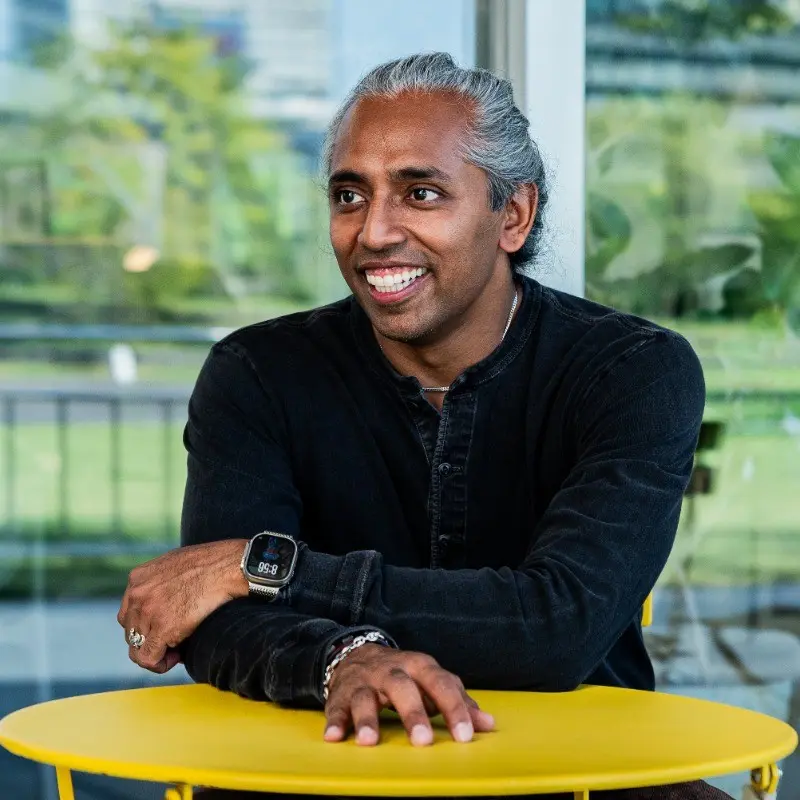
Mo Shaikh | theCUBE + NYSE Wired: Crypto Trailblazers
Forgot Password
Almost there!
We just sent you a verification email. Please verify your account to gain access to
theCUBE + NYSE Wired: Crypto Trailblazers. If you don’t think you received an email check your
spam folder.
Sign in to theCUBE + NYSE Wired: Crypto Trailblazers.
In order to sign in, enter the email address you used to registered for the event. Once completed, you will receive an email with a verification link. Open this link to automatically sign into the site.
Register For theCUBE + NYSE Wired: Crypto Trailblazers
Please fill out the information below. You will recieve an email with a verification link confirming your registration. Click the link to automatically sign into the site.
You’re almost there!
We just sent you a verification email. Please click the verification button in the email. Once your email address is verified, you will have full access to all event content for theCUBE + NYSE Wired: Crypto Trailblazers.
I want my badge and interests to be visible to all attendees.
Checking this box will display your presense on the attendees list, view your profile and allow other attendees to contact you via 1-1 chat. Read the Privacy Policy. At any time, you can choose to disable this preference.
Select your Interests!
add
Upload your photo
Uploading..
OR
Connect via Twitter
Connect via Linkedin
EDIT PASSWORD
Share
Forgot Password
Almost there!
We just sent you a verification email. Please verify your account to gain access to
theCUBE + NYSE Wired: Crypto Trailblazers. If you don’t think you received an email check your
spam folder.
Sign in to theCUBE + NYSE Wired: Crypto Trailblazers.
In order to sign in, enter the email address you used to registered for the event. Once completed, you will receive an email with a verification link. Open this link to automatically sign into the site.
Sign in to gain access to theCUBE + NYSE Wired: Crypto Trailblazers
Please sign in with LinkedIn to continue to theCUBE + NYSE Wired: Crypto Trailblazers. Signing in with LinkedIn ensures a professional environment.
Are you sure you want to remove access rights for this user?
Details
Manage Access
email address
Community Invitation
Mo Shaikh, Maximum Frequency Ventures
In this insightful episode of the Crypto Trailblazers series hosted by theCUBE, Mike Cagney of Figure Markets sits down with analysts from theCUBE Research to discuss groundbreaking advancements in blockchain technology and their implications for the finance sector. This video is part of the NYSE Wired digital event, aimed at bridging the gap between Silicon Valley and Wall Street by integrating technology and finance.
Cagney, an eminent figure in fintech, shares expertise on the transformative role of blockchain in financial markets during this interview. Conducted by seasoned analysts at theCUBE, the discussion delves into Figure’s innovative contributions, including their blockchain-native loan origination and securitization process. He outlines how Figure leverages blockchain to achieve cost reductions, enhanced security and improved liquidity in financial transactions.
Key takeaways from the interview highlight insights on the evolution of the Web3 ecosystem, such as the emergence of stablecoins as pivotal to transaction processes and the rise of decentralized finance (DeFi). Oltsik states these developments signify a shift towards democratizing finance, wherein truth and transparency are foundational. The conversation concludes with a look at Figure’s pioneering efforts in creating a new financial marketplace utilizing blockchain technology.
#CryptoTrailblazers #FigureMarkets #BlockchainInnovation #Web3 #NYEWired #BlockchainFinance #DecentralizedFinance #Fintech #Stablecoins
Find more SiliconANGLE news and analysis https://siliconangle.com/.
Follow theCUBE's wall-to-wall event coverage https://siliconangle.com/events/
Learn about the latest theCUBE events https://www.thecube.net/
00:00 - Intro
00:05 - Emerging Innovations in Financial Technology and Market Dynamics
02:45 - Key Elements in Financial Ecosystem Dynamics
06:20 - Blockchain: Truth and Transformation
09:39 - Shaping the Future: Innovations in Financial Markets and Stablecoin Integration
13:15 - Enabling the Future: Navigating Disruptions in Banking and Lending
16:51 - Exploring Opportunities and Building Confidence in the Blockchain Ecosystem
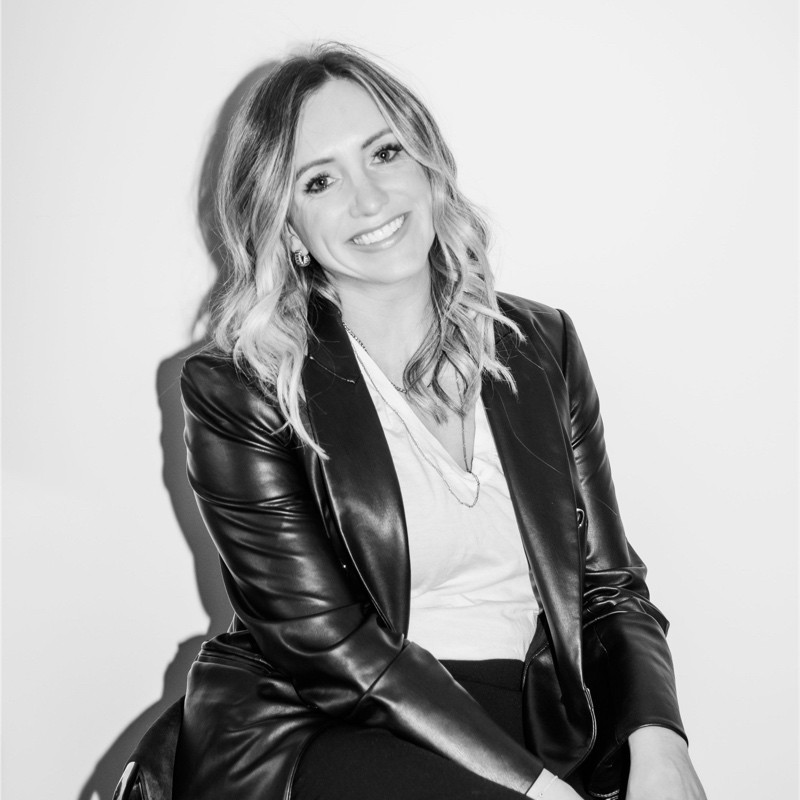
>> Hi, I'm Gemma Allen here at the NYSE. This is our Crypto Trailblazer series, connecting Silicon Valley to Wall Street and Web3 to Wall Street. Joining me today, I have Mo Shaikh, CEO and managing partner at Maximum Frequency Ventures. Welcome, Mo.
Mo Shaikh
>> Thank you for having me, Gemma. It's a pleasure to be here.
Gemma Allen
>> Thanks so much for being on. So tell me, you have built your career, and you've had a very storied career, right? You've worked at a lot of big names, BlackRock, Facebook, now Meta. You've had your own company. You've really kind of been through, I guess, the peaks and troughs of Web3. What made you decide to set up this fund and create Maximum Frequency Ventures now? Why now?
Mo Shaikh
>> It is kind of interesting to recall everything, but I thought the timing to build a fund that supports founders in crypto couldn't be better today. The reason for that is, founders are starting to enter in a way where they want to build products that are supported by some of the world's largest institutions. We're starting to see that with obviously regulations coming in and supporting. When I think about my story, I've been at some of these large companies that are able to think about how they evolve in the world of Web3. So we have this deep insight. But I would say the most important thing from our angle at Maximum Frequency Ventures is, we are founders. We're builders. We're operators. We know what founders need firsthand. So when founders are looking for an investment partner to help them not only go from zero to one, but zero to scale in this new environment, they end up working very closely with us. That's why Maximum Frequency Ventures exist.
Gemma Allen
>> Tell me a little bit about what you're looking for. When you guys are out scouting and vetting these founders and these opportunities, where do you see the maximum opportunity right now? It's a space that's changing so much so fast.
Mo Shaikh
>> Yep.
Gemma Allen
>> So much hype, so much narrative. How do you really boil it down?
Mo Shaikh
>> There is a lot of hype, but MFV looks for people. When we think about those people, we think about what they could look like as founders running their own companies in this new landscape. Some of them have been founders before, others might be first-time founders, but we see a sense of them where they understand the depth of an industry. They know how to problem solve, and they obviously have some components of resiliency, have the ability to build product and get it out in the market. What we bring to the table is, we act in a way as a little bit of a ghost co-founder, where whatever skills they might be missing, whether it be product sense or business and go-to-market, we augment that behind the scenes and help really elevate those founders to their next level.
Gemma Allen
>> One thing I love about you when I researched your story is you're somebody who really thinks internationally, right? You're the child of immigrants. You really think on a global scale. We know that there has certainly been, I guess, some regulatory and cultural nuances as we think about the world of Web3 around the world. You've seen a lot of opportunity in Asia. Talk to me a little bit about that and how you think about that from a US perspective, because here we kind of think the world revolves around us.
Mo Shaikh
>> Yeah.
Gemma Allen
>> But share some of your thoughts on that.
Mo Shaikh
>> Sure. I mean, my parents came to America in the 1990s as immigrants, and in no other country would you have had an opportunity to become a founder and do what I do today, growing up in the streets of Brooklyn. So it's the best country in the world, especially when it comes from innovation to entrepreneurship. So when you think about what that's allowed other countries to do is look at America as a role model country. They want to be able to innovate themselves. So they're inspired by the American dream, and that's something we should all be incredibly proud of as Americans. When we look for these founders, they are looking to do exactly that, whether they're in Southeast Asia, East Asia, or South Asia. What they have today, what they typically would not have access to, are sources of capital and resources that, of course, not only we bring, but also a lot of our partners brings to the table as well. So if you're a founder looking at the American dream but aren't living in America, you now have an opportunity to access and build alongside some of the best founders in the world. But at the same time, we have a great presence here in New York and in the US. We have founders and partners sitting here as well.
Gemma Allen
>> Are there any specific industries or spaces where you feel like there's low-hanging fruit right now for blockchain and crypto and Web3, where you see the kind of maximum utility, I guess?
Mo Shaikh
>> Maximum utility, I like what you did there. There are some very low-hanging fruits. Those low-hanging fruits, unfortunately, are some of the hardest low-hanging fruits to capture, unfortunately. So when you think about money, for example, yes, it is quite easy to issue a stablecoin. In the past 10 years ago, we've seen algorithmic stablecoins like DAI, issued by Maker that are backed by ETH and managed by a DAO. Today, when we're looking at large financial institutions that want to implement stablecoins, and I was just at the Federal Reserve last week talking about the future of payments, you might need regulated forms of stablecoins. Those hurdles, although that fruit may seem so close, it's actually very hard to grab. So we help founders navigate very complex, very opaque environments where regulation might be required. Or if regulation isn't required, structuring your stablecoins so that it can remain sound. This is where Maximum Frequency Venture sort of stands out and helps these founders navigate these low-hanging fruits and capture them.
Gemma Allen
>> I heard you talk one time. I listened to you on a podcast about how you can democratize access to opportunity through the use of crypto and blockchain, and how it really can be somewhat of an equalizer. You speak about countries that are unbanked. I think, in this piece, you're talking maybe about Pakistan where your family is from and how 50% of folks there are right now unbanked, right? How do you think about that in terms of financial literacy? If you are working with or hoping to really teach and inform and educate individuals that right now struggle with the banking concept, how do you think that the world of Web3 can essentially enable access?
Mo Shaikh
>> There are a lot of great points in there, and I'll try to break them down. I mean, one, you talk about access; second, you talk about these new systems that are being formed; and the third is what actually helps them eventually get education here. So if you think about access, today that's made available. You no longer have to walk to a teller, worry about being able to get identity, and then being able to eventually open up a bank account. In fact, today, people don't necessarily want to have bank accounts. They just want access to their money, and they want to be able to take their money and have utility with it. Stablecoins and crypto provide that, and it provides that today with forms that are just akin to the banking industry. Typically, places where people are unbanked now have access immediately when they pull out their phone, open up a digital wallet, and are able to get access to dollar-backed stablecoins, for example. In fact, some of them might even offer yield. So the savings that they might be getting in their own countries is actually not as competitive as the US dollar. And that's something that is great from access perspective. Now, the second point on education, yeah, financial literacy has historically been a gap. However, today with, obviously, again, the platforms that are doing a better job of not only providing stablecoins, but showing you what you can do with stablecoins, are doing a great job of getting people up the education curve very, very quickly.
Gemma Allen
>> Yeah.
Mo Shaikh
>> The last point, what is the incentive? I mean, if you have a highly inflationary currency in your country, if you typically historically did not have access to dollars and you now do, you probably want to learn about money very, very quickly. There are obviously many macro backdrops and factors to take into consideration too, but I think all of these three things combined together have really democratized the access to money, as you mentioned.
Gemma Allen
>> Yeah, no, for sure. When you think about what's happening here in the US, especially in terms of there's been some mass changes really in the narrative and the sentiment around crypto, and what has been quite a short space of time, right? We have now the GENIUS Act, Clarity Act. Tell me about how you think about those things and how you think about the global, I guess, transformative impacts that they can have.
Mo Shaikh
>> The impact potential is massive. You're absolutely right, the historical landscape for us was operating in an ambiguous environment. Now, instead of having to worry about having to need a bank account if you're a crypto company, you have very clear guidelines and rules of how you can get a bank account, and many banks are willing to offer that. Why are they willing to do that? Partly because of the GENIUS Act, to your point. Having that pass now gives a lot of comfort to financial institutions to not only custody crypto and stablecoins, but also bank clients again. So the sentiment or the vibes have gotten better for the crypto landscape for sure. The second component, another major legislation that is being reviewed today, is the Clarity Act or Market Structure Bill. As that sort of makes its way through the red lines, and a lot of that is going back and forth between the relevant folks, we feel pretty confident that that's going to be the missing piece that crypto really needs in this next chapter. With those two components in place, I think the impact will be even even greater because banks and financial institutions will be able to do even more. For example, digital securities regulated by the SEC. Truly, that unlocks trillions of dollars of value in far more efficient ways. To your previous question about access, imagine having the world be able to tap into US capital markets.
Gemma Allen
>> For sure. So Maximum Frequency Ventures, it sounds like speed, right? You think hear this and you think this is about speed, agility. But you also are somebody who has talked a lot about guardrails and about protection and about ensuring that retail investors and all sorts of investors get the protections that they need, right? When you hear regulatory sandboxes and terms like this, to me, I think that's going to be slow, that's going to take a lot of time. You hear any of those large government institutions, you're like, "Okay, that's going to add a year onto this." It's just something that... How do you think about that when you... How do you balance speed and agility, and then regulation and protection?
Mo Shaikh
>> Well, the best way to manage that is obviously make sure you have founders and operators that have done it before. We've had to do that at previous companies that I've worked at. But to your point, things like sandboxes, although may provide an environment for you to build, you may not be able to build as fast as you wanted to. So there's kind of this double-edged sword. There's positive direction and movement, but that direction and movement is not as fast as we would hope for. If you can go back and look at different innovation cycles and see what their environment was like. Did Uber operate in a sandbox? Absolutely not. Eventually, ride-hailing was made... There was clarity in terms of how ride-hailing would take place. We see something similar happening today. There are folks that are providing sandbox environments, countries that are willing to do that. Sure, you may have folks that build, but in an open environment where regulation does not impede innovation, those countries, those founders, and those companies will be able to go much farther very fast.
Gemma Allen
>> Let's talk a little bit where the money is flowing to and from.
Mo Shaikh
>> Sure.
Gemma Allen
>> I know you have personally talked a lot about Asia and the opportunity in Asia. And Europe, I guess, at least to an outside perspective and impression, it's a little bit behind when it comes to the world of Web3 and the opportunity. How do you think about that? Where do you see the real appetite and enthusiasm for Web3? Even when you think about it from the perspective of your own venture fund, where are you really honing in on?
Mo Shaikh
>> Yeah, this is a great point. In terms of global innovation again, and you look at where the asset class is today, it's nearing $4 trillion.
Gemma Allen
>> Mm-hmm.
Mo Shaikh
>> The point in America that allows US users to get access to that is kind of through one exchange. Coinbase captures 90% of the US market. The rest of the world uses exchanges that are based in Singapore and other parts of Asia. So there's really only one exchange here in the US that we have access to. Does that proportionally make sense? Likely not. So the volumes have shifted and been enormous in parts of East and Southeast Asia. We expect those to continue to be dominant. We have two partners on our team, one based in Hong Kong and Seoul, the other based in Singapore. Both those co-founders and partners have extensive experience in understanding these markets where majority of the volume actually sits today for crypto. So as things continue to clear up here in the US, we expect exchanges to be out here and access to increase. However, Asia has been incredibly important cornerstone of the crypto markets, and we're very happy to be tapped into that in a very deep way.
Gemma Allen
>> I love it. Tell me a little bit about this fund. So 50 million already have six portcos, if I'm correct.
Mo Shaikh
>> That's right.
Gemma Allen
>> Half in the US, three outside. Tell me a little bit about what kind of spaces they're in. Is it like Layer 1? Is it infrastructure? Where are you seeing these efforts focus?
Mo Shaikh
>> Sure. Yeah. I think there is an enormous amount of energy right now in infrastructure as large companies like Stripe and others continue to go into market, and we're spending a lot of time with those folks. However, similar to early days of networking, we believe that the infrastructure is kind of in a place where it's pretty much set, although we'll see innovation on the margin. Where we see energy shifting towards now are, what are the products that we built in an environment where there's clarity and appetite and propensity to act. So based on that, we focus on products. Those products are squarely in kind of the finance or the fintech industry, whether it's stablecoin, capital markets, decentralized financial systems or DeFi, among among other payment components, all the way to other consumer products, whether they might be things along the lines of IP management for, let's say, a new form of animated content generated by AI, where you and I can both use that that content to create derivative content, for example, using, of course, our AI models. In this new chapter, we're investing in companies that are pursuing this. As you mentioned, three of them are right here in the US, and the other three are spread throughout Asia.
Gemma Allen
>> You mentioned innovation. I mean, we have to talk a little bit about AI and the convergence/conflict opportunity. These are two very hyped games right now. Tell me how you think about that. Are any of these companies merging in the AI space? How do you think about the whole, I guess, opportunity for AI and Web3 in general?
Mo Shaikh
>> Yeah. Speaking from my perspective as an investor in companies like OpenAI and others, I think AI has a lot to offer crypto. What crypto has to offer AI though is actually far more important and economic value. Imagine an agent being able to transact with stablecoins on your behalf and make your life more convenient when you need to pick up a few things for your two daughters before you get home. An agent will be able to do that very soon, and likely, that agent will not be using your credit card. They'll just use stablecoins. So when we think about crypto or these amazing financial tools that are now available that are programmatic, that are available for agents that will be acting on your behalf, it unlocks an incredible amount of human productivity that I'm very excited about personally as well. So both of these two industries, yes, there may be ideas that have come and go and gone, but fortunately we're seeing some really interesting ideas stick, and some of those announcements are out around where money and agents are sort of transacting as well.
Gemma Allen
>> Let's talk a little bit about the cultural inertia that still in, to some respects, circles of space, right? So you said a $4 million asset class, 40 million users. The opportunity is mammoth. Why do you think that cultural inertia is still prevalent? Even right now, we're seeing so much of a discourse change in the space. What do you say to people? What do you say to people who have that skepticism?
Mo Shaikh
>> I try not to have conversations with people that are skeptical. I think that's probably best for everyone's sanity. But you do have to bring everyone along. I think the way that a lot of folks that are skeptics will come along is when crypto starts to fade into the background, and it's already starting to happen, right? When PayPal already issues a stablecoin, and soon, if a merchant is accepting money through PayPal, they might just get a stablecoin. Those people may be against crypto, but they're using crypto products. So for folks that might be on the margin, that's fine. The people on the fringe that are setting the pace of culture in a way that it is innovation, the early days of rock and roll and hip hop, those folks have done an amazing job of building products that are introducing new consumer behavior. If you look at companies like Polymarket, for example, that allow you to have an economic outcome based on your belief, we think that's incredibly fascinating. This is not novel. This is human behavior that's existed, that to your point earlier is now accessible. The only way you were able to access making a bet on rain or snow before on crops was through a regulated CFTC commodity. And that was designed for a company that was popularized by traders. So today, we're seeing these beliefs now be available to a new form of trader. That trader happens to be an individual that's willing to take that bet or willing to make that prediction. So we're excited about what this is going to do, but this isn't anything new. It's just now far more accessible than it historically was.
Gemma Allen
>> I love it. To close this out, tell us a little bit about the fund. What's planned next? How do you think about the next 12 months ahead? Are you going to continue to scout, bring in new portcos?
Mo Shaikh
>> Well, all of those things, for sure. But our teams are, as I mentioned, they're distributed throughout the world, and we're continuing to meet with amazing founders. We're also having off-sites with those founders in different parts of the countries where we come in, or they come in, and spend a full day with us, and we solve the hardest problem that that company is facing. We've taken a couple of pages out of my BCG days, but also kind of how Elon runs his book, right? He'll come in and solve the hardest problem at one of his companies. We do the same, but we do it for many companies versus just a few. I think that hands-on approach is what founders really want. The second thing that we're doing beyond looking for founders, investing in founders, and obviously helping them grow is, we're incubating a couple of things. So as we think about, again, this new world of fintech, Web3, and AI all sort of converging, we see products that can be built that no one is really building. So we're excited to be incubating some of those right now, and we'll probably share a little bit more about those in the future.
Gemma Allen
>> Well, I'm excited to learn what those are. Thanks so much for being on, Mo.
Mo Shaikh
>> Thank you, Gemma.
Gemma Allen
>> Great to talk to you.
Mo Shaikh
>> Thank you.
Gemma Allen
>> I'm Gemma Allen here at the NYSE. This is our Crypto Trailblazer series, connecting Silicon Valley to Wall Street and Web3 to Wall Street. Thanks so much for watching.
>> Hi, I'm Gemma Allen here at the NYSE. This is our Crypto Trailblazer series, connecting Silicon Valley to Wall Street and Web3 to Wall Street. Joining me today, I have Mo Shaikh, CEO and managing partner at Maximum Frequency Ventures. Welcome, Mo.
Mo Shaikh
>> Thank you for having me, Gemma. It's a pleasure to be here.
Gemma Allen
>> Thanks so much for being on. So tell me, you have built your career, and you've had a very storied career, right? You've worked at a lot of big names, BlackRock, Facebook, now Meta. You've had your own company. You've really kind of been through, I guess, the peaks and troughs of Web3. What made you decide to set up this fund and create Maximum Frequency Ventures now? Why now?
Mo Shaikh
>> It is kind of interesting to recall everything, but I thought the timing to build a fund that supports founders in crypto couldn't be better today. The reason for that is, founders are starting to enter in a way where they want to build products that are supported by some of the world's largest institutions. We're starting to see that with obviously regulations coming in and supporting. When I think about my story, I've been at some of these large companies that are able to think about how they evolve in the world of Web3. So we have this deep insight. But I would say the most important thing from our angle at Maximum Frequency Ventures is, we are founders. We're builders. We're operators. We know what founders need firsthand. So when founders are looking for an investment partner to help them not only go from zero to one, but zero to scale in this new environment, they end up working very closely with us. That's why Maximum Frequency Ventures exist.
Gemma Allen
>> Tell me a little bit about what you're looking for. When you guys are out scouting and vetting these founders and these opportunities, where do you see the maximum opportunity right now? It's a space that's changing so much so fast.
Mo Shaikh
>> Yep.
Gemma Allen
>> So much hype, so much narrative. How do you really boil it down?
Mo Shaikh
>> There is a lot of hype, but MFV looks for people. When we think about those people, we think about what they could look like as founders running their own companies in this new landscape. Some of them have been founders before, others might be first-time founders, but we see a sense of them where they understand the depth of an industry. They know how to problem solve, and they obviously have some components of resiliency, have the ability to build product and get it out in the market. What we bring to the table is, we act in a way as a little bit of a ghost co-founder, where whatever skills they might be missing, whether it be product sense or business and go-to-market, we augment that behind the scenes and help really elevate those founders to their next level.
Gemma Allen
>> One thing I love about you when I researched your story is you're somebody who really thinks internationally, right? You're the child of immigrants. You really think on a global scale. We know that there has certainly been, I guess, some regulatory and cultural nuances as we think about the world of Web3 around the world. You've seen a lot of opportunity in Asia. Talk to me a little bit about that and how you think about that from a US perspective, because here we kind of think the world revolves around us.
Mo Shaikh
>> Yeah.
Gemma Allen
>> But share some of your thoughts on that.
Mo Shaikh
>> Sure. I mean, my parents came to America in the 1990s as immigrants, and in no other country would you have had an opportunity to become a founder and do what I do today, growing up in the streets of Brooklyn. So it's the best country in the world, especially when it comes from innovation to entrepreneurship. So when you think about what that's allowed other countries to do is look at America as a role model country. They want to be able to innovate themselves. So they're inspired by the American dream, and that's something we should all be incredibly proud of as Americans. When we look for these founders, they are looking to do exactly that, whether they're in Southeast Asia, East Asia, or South Asia. What they have today, what they typically would not have access to, are sources of capital and resources that, of course, not only we bring, but also a lot of our partners brings to the table as well. So if you're a founder looking at the American dream but aren't living in America, you now have an opportunity to access and build alongside some of the best founders in the world. But at the same time, we have a great presence here in New York and in the US. We have founders and partners sitting here as well.
Gemma Allen
>> Are there any specific industries or spaces where you feel like there's low-hanging fruit right now for blockchain and crypto and Web3, where you see the kind of maximum utility, I guess?
Mo Shaikh
>> Maximum utility, I like what you did there. There are some very low-hanging fruits. Those low-hanging fruits, unfortunately, are some of the hardest low-hanging fruits to capture, unfortunately. So when you think about money, for example, yes, it is quite easy to issue a stablecoin. In the past 10 years ago, we've seen algorithmic stablecoins like DAI, issued by Maker that are backed by ETH and managed by a DAO. Today, when we're looking at large financial institutions that want to implement stablecoins, and I was just at the Federal Reserve last week talking about the future of payments, you might need regulated forms of stablecoins. Those hurdles, although that fruit may seem so close, it's actually very hard to grab. So we help founders navigate very complex, very opaque environments where regulation might be required. Or if regulation isn't required, structuring your stablecoins so that it can remain sound. This is where Maximum Frequency Venture sort of stands out and helps these founders navigate these low-hanging fruits and capture them.
Gemma Allen
>> I heard you talk one time. I listened to you on a podcast about how you can democratize access to opportunity through the use of crypto and blockchain, and how it really can be somewhat of an equalizer. You speak about countries that are unbanked. I think, in this piece, you're talking maybe about Pakistan where your family is from and how 50% of folks there are right now unbanked, right? How do you think about that in terms of financial literacy? If you are working with or hoping to really teach and inform and educate individuals that right now struggle with the banking concept, how do you think that the world of Web3 can essentially enable access?
Mo Shaikh
>> There are a lot of great points in there, and I'll try to break them down. I mean, one, you talk about access; second, you talk about these new systems that are being formed; and the third is what actually helps them eventually get education here. So if you think about access, today that's made available. You no longer have to walk to a teller, worry about being able to get identity, and then being able to eventually open up a bank account. In fact, today, people don't necessarily want to have bank accounts. They just want access to their money, and they want to be able to take their money and have utility with it. Stablecoins and crypto provide that, and it provides that today with forms that are just akin to the banking industry. Typically, places where people are unbanked now have access immediately when they pull out their phone, open up a digital wallet, and are able to get access to dollar-backed stablecoins, for example. In fact, some of them might even offer yield. So the savings that they might be getting in their own countries is actually not as competitive as the US dollar. And that's something that is great from access perspective. Now, the second point on education, yeah, financial literacy has historically been a gap. However, today with, obviously, again, the platforms that are doing a better job of not only providing stablecoins, but showing you what you can do with stablecoins, are doing a great job of getting people up the education curve very, very quickly.
Gemma Allen
>> Yeah.
Mo Shaikh
>> The last point, what is the incentive? I mean, if you have a highly inflationary currency in your country, if you typically historically did not have access to dollars and you now do, you probably want to learn about money very, very quickly. There are obviously many macro backdrops and factors to take into consideration too, but I think all of these three things combined together have really democratized the access to money, as you mentioned.
Gemma Allen
>> Yeah, no, for sure. When you think about what's happening here in the US, especially in terms of there's been some mass changes really in the narrative and the sentiment around crypto, and what has been quite a short space of time, right? We have now the GENIUS Act, Clarity Act. Tell me about how you think about those things and how you think about the global, I guess, transformative impacts that they can have.
Mo Shaikh
>> The impact potential is massive. You're absolutely right, the historical landscape for us was operating in an ambiguous environment. Now, instead of having to worry about having to need a bank account if you're a crypto company, you have very clear guidelines and rules of how you can get a bank account, and many banks are willing to offer that. Why are they willing to do that? Partly because of the GENIUS Act, to your point. Having that pass now gives a lot of comfort to financial institutions to not only custody crypto and stablecoins, but also bank clients again. So the sentiment or the vibes have gotten better for the crypto landscape for sure. The second component, another major legislation that is being reviewed today, is the Clarity Act or Market Structure Bill. As that sort of makes its way through the red lines, and a lot of that is going back and forth between the relevant folks, we feel pretty confident that that's going to be the missing piece that crypto really needs in this next chapter. With those two components in place, I think the impact will be even even greater because banks and financial institutions will be able to do even more. For example, digital securities regulated by the SEC. Truly, that unlocks trillions of dollars of value in far more efficient ways. To your previous question about access, imagine having the world be able to tap into US capital markets.
Gemma Allen
>> For sure. So Maximum Frequency Ventures, it sounds like speed, right? You think hear this and you think this is about speed, agility. But you also are somebody who has talked a lot about guardrails and about protection and about ensuring that retail investors and all sorts of investors get the protections that they need, right? When you hear regulatory sandboxes and terms like this, to me, I think that's going to be slow, that's going to take a lot of time. You hear any of those large government institutions, you're like, "Okay, that's going to add a year onto this." It's just something that... How do you think about that when you... How do you balance speed and agility, and then regulation and protection?
Mo Shaikh
>> Well, the best way to manage that is obviously make sure you have founders and operators that have done it before. We've had to do that at previous companies that I've worked at. But to your point, things like sandboxes, although may provide an environment for you to build, you may not be able to build as fast as you wanted to. So there's kind of this double-edged sword. There's positive direction and movement, but that direction and movement is not as fast as we would hope for. If you can go back and look at different innovation cycles and see what their environment was like. Did Uber operate in a sandbox? Absolutely not. Eventually, ride-hailing was made... There was clarity in terms of how ride-hailing would take place. We see something similar happening today. There are folks that are providing sandbox environments, countries that are willing to do that. Sure, you may have folks that build, but in an open environment where regulation does not impede innovation, those countries, those founders, and those companies will be able to go much farther very fast.
Gemma Allen
>> Let's talk a little bit where the money is flowing to and from.
Mo Shaikh
>> Sure.
Gemma Allen
>> I know you have personally talked a lot about Asia and the opportunity in Asia. And Europe, I guess, at least to an outside perspective and impression, it's a little bit behind when it comes to the world of Web3 and the opportunity. How do you think about that? Where do you see the real appetite and enthusiasm for Web3? Even when you think about it from the perspective of your own venture fund, where are you really honing in on?
Mo Shaikh
>> Yeah, this is a great point. In terms of global innovation again, and you look at where the asset class is today, it's nearing $4 trillion.
Gemma Allen
>> Mm-hmm.
Mo Shaikh
>> The point in America that allows US users to get access to that is kind of through one exchange. Coinbase captures 90% of the US market. The rest of the world uses exchanges that are based in Singapore and other parts of Asia. So there's really only one exchange here in the US that we have access to. Does that proportionally make sense? Likely not. So the volumes have shifted and been enormous in parts of East and Southeast Asia. We expect those to continue to be dominant. We have two partners on our team, one based in Hong Kong and Seoul, the other based in Singapore. Both those co-founders and partners have extensive experience in understanding these markets where majority of the volume actually sits today for crypto. So as things continue to clear up here in the US, we expect exchanges to be out here and access to increase. However, Asia has been incredibly important cornerstone of the crypto markets, and we're very happy to be tapped into that in a very deep way.
Gemma Allen
>> I love it. Tell me a little bit about this fund. So 50 million already have six portcos, if I'm correct.
Mo Shaikh
>> That's right.
Gemma Allen
>> Half in the US, three outside. Tell me a little bit about what kind of spaces they're in. Is it like Layer 1? Is it infrastructure? Where are you seeing these efforts focus?
Mo Shaikh
>> Sure. Yeah. I think there is an enormous amount of energy right now in infrastructure as large companies like Stripe and others continue to go into market, and we're spending a lot of time with those folks. However, similar to early days of networking, we believe that the infrastructure is kind of in a place where it's pretty much set, although we'll see innovation on the margin. Where we see energy shifting towards now are, what are the products that we built in an environment where there's clarity and appetite and propensity to act. So based on that, we focus on products. Those products are squarely in kind of the finance or the fintech industry, whether it's stablecoin, capital markets, decentralized financial systems or DeFi, among among other payment components, all the way to other consumer products, whether they might be things along the lines of IP management for, let's say, a new form of animated content generated by AI, where you and I can both use that that content to create derivative content, for example, using, of course, our AI models. In this new chapter, we're investing in companies that are pursuing this. As you mentioned, three of them are right here in the US, and the other three are spread throughout Asia.
Gemma Allen
>> You mentioned innovation. I mean, we have to talk a little bit about AI and the convergence/conflict opportunity. These are two very hyped games right now. Tell me how you think about that. Are any of these companies merging in the AI space? How do you think about the whole, I guess, opportunity for AI and Web3 in general?
Mo Shaikh
>> Yeah. Speaking from my perspective as an investor in companies like OpenAI and others, I think AI has a lot to offer crypto. What crypto has to offer AI though is actually far more important and economic value. Imagine an agent being able to transact with stablecoins on your behalf and make your life more convenient when you need to pick up a few things for your two daughters before you get home. An agent will be able to do that very soon, and likely, that agent will not be using your credit card. They'll just use stablecoins. So when we think about crypto or these amazing financial tools that are now available that are programmatic, that are available for agents that will be acting on your behalf, it unlocks an incredible amount of human productivity that I'm very excited about personally as well. So both of these two industries, yes, there may be ideas that have come and go and gone, but fortunately we're seeing some really interesting ideas stick, and some of those announcements are out around where money and agents are sort of transacting as well.
Gemma Allen
>> Let's talk a little bit about the cultural inertia that still in, to some respects, circles of space, right? So you said a $4 million asset class, 40 million users. The opportunity is mammoth. Why do you think that cultural inertia is still prevalent? Even right now, we're seeing so much of a discourse change in the space. What do you say to people? What do you say to people who have that skepticism?
Mo Shaikh
>> I try not to have conversations with people that are skeptical. I think that's probably best for everyone's sanity. But you do have to bring everyone along. I think the way that a lot of folks that are skeptics will come along is when crypto starts to fade into the background, and it's already starting to happen, right? When PayPal already issues a stablecoin, and soon, if a merchant is accepting money through PayPal, they might just get a stablecoin. Those people may be against crypto, but they're using crypto products. So for folks that might be on the margin, that's fine. The people on the fringe that are setting the pace of culture in a way that it is innovation, the early days of rock and roll and hip hop, those folks have done an amazing job of building products that are introducing new consumer behavior. If you look at companies like Polymarket, for example, that allow you to have an economic outcome based on your belief, we think that's incredibly fascinating. This is not novel. This is human behavior that's existed, that to your point earlier is now accessible. The only way you were able to access making a bet on rain or snow before on crops was through a regulated CFTC commodity. And that was designed for a company that was popularized by traders. So today, we're seeing these beliefs now be available to a new form of trader. That trader happens to be an individual that's willing to take that bet or willing to make that prediction. So we're excited about what this is going to do, but this isn't anything new. It's just now far more accessible than it historically was.
Gemma Allen
>> I love it. To close this out, tell us a little bit about the fund. What's planned next? How do you think about the next 12 months ahead? Are you going to continue to scout, bring in new portcos?
Mo Shaikh
>> Well, all of those things, for sure. But our teams are, as I mentioned, they're distributed throughout the world, and we're continuing to meet with amazing founders. We're also having off-sites with those founders in different parts of the countries where we come in, or they come in, and spend a full day with us, and we solve the hardest problem that that company is facing. We've taken a couple of pages out of my BCG days, but also kind of how Elon runs his book, right? He'll come in and solve the hardest problem at one of his companies. We do the same, but we do it for many companies versus just a few. I think that hands-on approach is what founders really want. The second thing that we're doing beyond looking for founders, investing in founders, and obviously helping them grow is, we're incubating a couple of things. So as we think about, again, this new world of fintech, Web3, and AI all sort of converging, we see products that can be built that no one is really building. So we're excited to be incubating some of those right now, and we'll probably share a little bit more about those in the future.
Gemma Allen
>> Well, I'm excited to learn what those are. Thanks so much for being on, Mo.
Mo Shaikh
>> Thank you, Gemma.
Gemma Allen
>> Great to talk to you.
Mo Shaikh
>> Thank you.
Gemma Allen
>> I'm Gemma Allen here at the NYSE. This is our Crypto Trailblazer series, connecting Silicon Valley to Wall Street and Web3 to Wall Street. Thanks so much for watching.