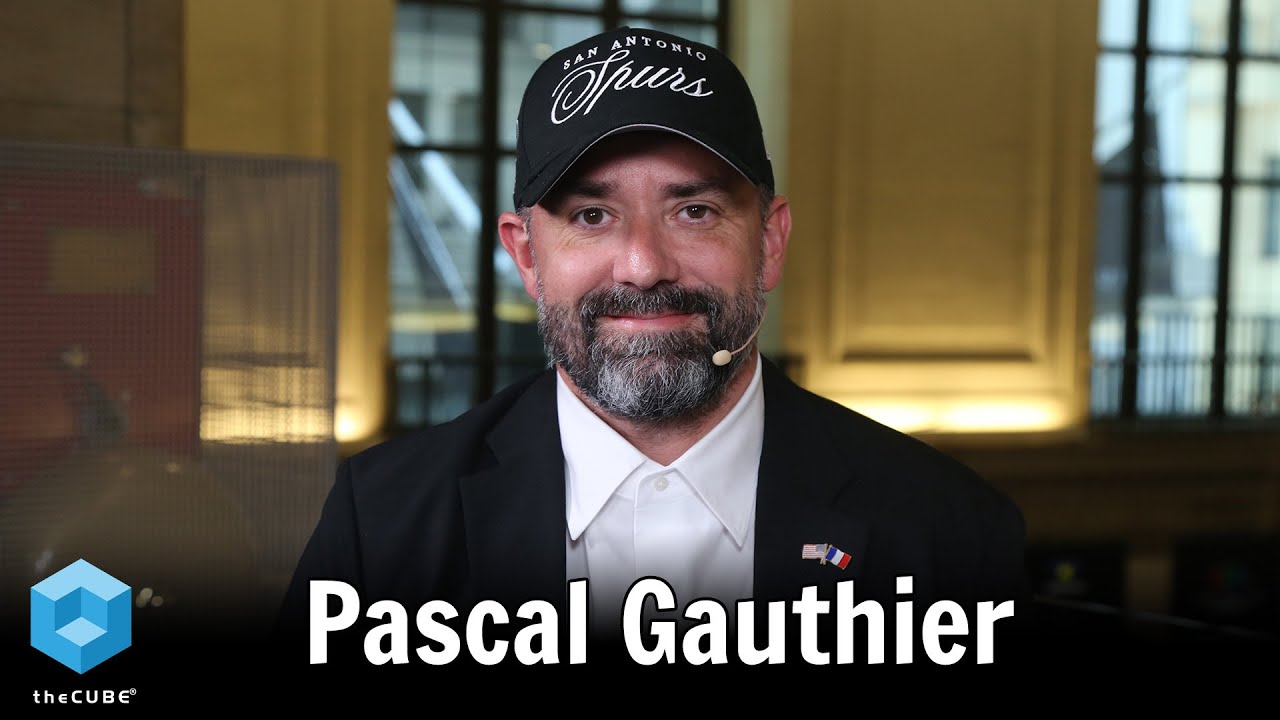
Vakul Talwar of MoonPay serves as Senior Vice President, Product and joins New York Stock Exchange Wired's Crypto Trailblazers to discuss MoonPay's transition from retail on-ramps to global payments infrastructure. Talwar draws on prior experience at Crypto.com to examine stablecoins, tokenization, cross-border settlement and artificial intelligence enabled agentic workflows. They emphasize security, compliance and legal considerations as non-negotiables for moving value globally and note that MoonPay integrates multiple acquisitions to build an operating system for value transfer.
Talwar highlights stablecoins as essential for fast cross-border payments and enterprise settlement. They point to early AI integrations such as PayBox and agentic finance tools that simplify user experience and automate workflows. Hosts Gemma Allen and theCUBE team frame the conversation and the segment includes analysis from theCUBE Research and studio hosts.
Forgot Password
Almost there!
We just sent you a verification email. Please verify your account to gain access to
theCUBE + NYSE Wired: Crypto Trailblazers. If you don’t think you received an email check your
spam folder.
Sign in to theCUBE + NYSE Wired: Crypto Trailblazers.
In order to sign in, enter the email address you used to registered for the event. Once completed, you will receive an email with a verification link. Open this link to automatically sign into the site.
Register For theCUBE + NYSE Wired: Crypto Trailblazers
Please fill out the information below. You will recieve an email with a verification link confirming your registration. Click the link to automatically sign into the site.
You’re almost there!
We just sent you a verification email. Please click the verification button in the email. Once your email address is verified, you will have full access to all event content for theCUBE + NYSE Wired: Crypto Trailblazers.
I want my badge and interests to be visible to all attendees.
Checking this box will display your presense on the attendees list, view your profile and allow other attendees to contact you via 1-1 chat. Read the Privacy Policy. At any time, you can choose to disable this preference.
Select your Interests!
add
Upload your photo
Uploading..
OR
Connect via Twitter
Connect via Linkedin
EDIT PASSWORD
Share
Forgot Password
Almost there!
We just sent you a verification email. Please verify your account to gain access to
theCUBE + NYSE Wired: Crypto Trailblazers. If you don’t think you received an email check your
spam folder.
Sign in to theCUBE + NYSE Wired: Crypto Trailblazers.
In order to sign in, enter the email address you used to registered for the event. Once completed, you will receive an email with a verification link. Open this link to automatically sign into the site.
Sign in to gain access to theCUBE + NYSE Wired: Crypto Trailblazers
Please sign in with LinkedIn to continue to theCUBE + NYSE Wired: Crypto Trailblazers. Signing in with LinkedIn ensures a professional environment.
Are you sure you want to remove access rights for this user?
Details
Manage Access
email address
Community Invitation
Vakul Talwar, MoonPay
Vakul Talwar of MoonPay serves as Senior Vice President, Product and joins New York Stock Exchange Wired's Crypto Trailblazers to discuss MoonPay's transition from retail on-ramps to global payments infrastructure. Talwar draws on prior experience at Crypto.com to examine stablecoins, tokenization, cross-border settlement and artificial intelligence enabled agentic workflows. They emphasize security, compliance and legal considerations as non-negotiables for moving value globally and note that MoonPay integrates multiple acquisitions to build an operating system for value transfer.
Talwar highlights stablecoins as essential for fast cross-border payments and enterprise settlement. They point to early AI integrations such as PayBox and agentic finance tools that simplify user experience and automate workflows. Hosts Gemma Allen and theCUBE team frame the conversation and the segment includes analysis from theCUBE Research and studio hosts.
>> Palo Alto Studio Connection, Silicon Valley and Wall Street.
Vakul Talwar
>> I'm John Furrier, co-host of theCUBE here with James O'Loughlin, my co-host.
Gemma Allen
>> Welcome back to theCUBE studio here at the New York Stock Exchange. I'm Gemma Allen, co-host of NYSE Wired's Crypto Trailblazers. And now we are talking about how for years crypto has been largely about trading speculation and getting people into the ecosystem. Now, the much bigger question is what happens when crypto starts becoming infrastructure, moving money across borders, settling transactions, tokenizing real-world assets, and eventually allowing agents to transact on our behalf. That shift is happening fast and MoonPay is sitting right in the middle of it. Vakul Talwar has just joined MoonPay to help shape what comes next. Vakul Talwar, welcome to NYSE Wired.
Vakul Talwar
>> Thank you for having me, Gemma.
Gemma Allen
>> So you are week one in this job, correct?
Vakul Talwar
>> Exactly.
Gemma Allen
>> thanks for spending some of your time not on boring onboarding and instead here at the New York Stock Exchange with us.
Vakul Talwar
>> No, it's amazing. It's such a great venue and it's great to be here.
Gemma Allen
>> So help me understand SVP of Product, a product in the world of crypto. It's an interesting concept and conundrum, an opportunity. Talk to me about this move to MoonPay and I guess from your perspective, where you see this new frontier headed.
Vakul Talwar
>> Sure. Listen, I was for the last 4 years at Crypto.com. I was leading global retail there. And I was also the country head for Australia. And I recently joined, as I said, the first week, and I'm pretty excited, right? MoonPay has been around for many years. The company is basically in 160 countries. We've got 30 million consumers globally and we do billions in volume. One of the key things Ivan, who is our founder, has been doing, he's been basically on a mission to create the operating system and infrastructure for moving value, right? Moving value in this day and age where you go to Amazon Prime, you want to buy something, it's instant, right? 10 years ago, it took you 2 days to get shipping. Now it happens in hours. But moving value is not easy globally, right? It's like driving a train and every 1 mile you're changing the tracks, right? So either you got to get off the train and get a new one or change the wheels, which is not easy to do. And that's one of the key things Ivan's like, okay, we got to build the operating system and infrastructure for moving value. And for that he's done two amazing things. We've got an amazing team led by Ivan. We've got Keith and we've even got Caroline, who was the ex-chair of CFTC.
Gemma Allen
>> Yes, had her on the show.
Vakul Talwar
>> Exactly right. And he's also gone on a huge acquisition spree. We have bought really quite a few companies. And with that, we've got amazing co-founders or founders who've joined the organization, right, who are driving to build that capability of an operating system that moves value seamlessly, globally, easily for any consumer or any business.
Gemma Allen
>> So on the acquisition spree for a second, I think when Caroline was on, you guys had just made a cybersecurity acquisition, correct? Yeah. And obviously security is huge in this space, right? Yep. But if we just step back from that for a second and I want to talk about cyber in some of the context around crypto, it's interesting because cryptowas in the process of becoming a category from the perspective of tech when AI just became the word that's said like 300 times a minute, right?
Vakul Talwar
>> Yeah.
Gemma Allen
>> And in a way it's like a perfect storm from the perspective of what it is that you guys are building because there hasn't been the maturity there from the perspective of tech and innovation to really cut your teeth or set out your stall. And now all these additional pressures are coming in the form of a GenTech, AI, the buzzwords. And let's be frank, like jargon of industry that we hear every day, right? So when you're really sitting down for this first week with the technical team at MoonPay and you're thinking, okay, what are we really signing up and promising and committing to do here? How do you truly prioritize it? Like, what are you competing on? Is it security? A.K.A. cyber? Is it speed, scalability?
Vakul Talwar
>> Listen, the way I look at this, security is just a must-have, right? It's a non-negotiable. Security, compliance, legal for me are non-negotiables, right? You've got to really button down because that builds trust and no movement of value can be built without trust embedded in everything that you do. So that's what then comes in is, you know, there's huge movements in the last one year, mainly on stablecoins, right? So you see the Circle basically IPO happened. After that, even the GENIUS Act pretty much passed. And there's been a lot happening in the stablecoin world and there's a lot of movement, amazing movement. And some of the main problems that stablecoins are solving is one, cross-border money movement, right? You can send a stablecoin from someone in Ireland to someone in Croatia within milliseconds. So that's one of the key amazing parts about stablecoins. Then at the same time, many organizations that I'm seeing are going to use stablecoins for just intercompany settlement. Trillions of dollars goes around settling within an organization. JPMorgan has done quite a bit around stablecoins themselves. And then it's going to be the powerful institutions like Amazon and Walmart. They are looking even into dabbling into stablecoins, mainly from a cost reduction and speed and simplicity of working with their retailers and the consumers. Right. So this is where stablecoin play is going to become a huge thing. Plus, Visa is also big into stablecoins. You can settle now on Visa rather than fiat like USD. You can settle straight away on stablecoins. And they've opened up some of the rules that you can do issuance and payments with stablecoins globally. So I think that's led to a lot of innovation coming in and serving markets that were underserved. So that's where a lot of the work is going on.
Gemma Allen
>> And that is a top priority for you guys from the perspective of stablecoins in our payment infrastructure, right? How that becomes a global, just accepted commodity slash, like again, almost subliminal, right? It's still, I guess, it's encroaching, right? Like how we think about stablecoins, how they're even defined.
Vakul Talwar
>> Yeah.
Gemma Allen
>> You know, because people understand them in different ways.
Vakul Talwar
>> Yes.
Gemma Allen
>> So again, like building that category and then demonstrating that technology at the same time, that is like partly or part of your key priorities for the role.
Vakul Talwar
>> Exactly right. I think one is building the whole product set because we've acquired so many companies, right? We've got to gel them together. Then it's creating an amazing value prop when you go into businesses, right? And international businesses, they don't sometimes want to care about stablecoins. They just want simple movement of funds happening back and forth. So this is where we have all the rails and infrastructure built in. any fiat coming in, any currency coming in, we can convert it straight into a stablecoin and move that value internally or externally simply. Right. And that just helps them from a productivity perspective, from an economics perspective and growth. So that is where a lot of the work is going about.
Gemma Allen
>> So correct me if I'm wrong on this, but MoonPay, like many companies in the infrastructure space, kind of started with one core premise, which was more around the retail investor, correct? Yeah. And it's now like most of the crypto industry naturally evolved into more institutions, more of the kind of mainstream TradFi space. How, from the perspective of product and product build and features and all of the good stuff that comes with having a roadmap that's 18 months long, has that continued to drive the innovation on your end? How influential is the world of traditional finance in ensuring that whatever is built for the next wave of crypto is at least in some way, has strong resonance to the innovation on the tech that's been built in TradFi for however many years. Some might say badly built, right? Some might say it wasn't exactly the most efficient, but there's a familiarity there, right? So when you're building your product roadmap, how do you kind of balance those two things?
Vakul Talwar
>> I think the way I look at it, it's about demand, right? Where the demand is really coming from. And you sometimes build on demand and you sometimes build on ambitions and strategic initiatives. We're seeing a huge demand even from TradFi institutions, right, to basically work on stablecoins, right? Work on the crypto rails because there's advantages in that, right? For example, talking about tokenization of securities, that's been a huge topic over the last one year. And the SEC recently passed rules around how they're going to enable tokenization of securities, right? From an access perspective globally, there's a huge play there, right? You have consumers in non-US markets wanting to invest in US markets, but it's not easy. Now we're hoping with tokenization of securities and opening it up, that'll become simpler, right? And everyone's moving in there like NYSE, Nasdaq, all the TradFi players around the world. The way I look at it, in 10 years, the two worlds are going to mesh, right? You will have a lot of the traditional players doing a lot in the crypto blockchain world, and you'll have a lot of the crypto blockchain people doing things in the tradfi but with the crypto lens. To give an example, Coinbase recently and Crypto.com, we launched stock trading, right? And if you look at Charles Schwab, they launched Bitcoin and ETH trading and Robinhood did. So you're going to start seeing the meshing of the worlds. And if you build the infrastructure layer, it doesn't matter who wants to play what game or what products. You have the infrastructure underlying it to service both.
Gemma Allen
>> So we had a guest on earlier who was talking about the world of fintech exchange, and he rightly said that sometimes you might go into a brokerage account and it looks like a tax form, right? The UX has never really been anything close to ideal when we think about some of how traditional finance hasn't risen up to meet consumer needs or even institutional needs. Right. It can feel somewhat intimidating, right?
Vakul Talwar
>> Yeah.
Gemma Allen
>> The world of crypto and what you're building, how important is, to your point earlier, simplification? How much does that play into the UX, the user experience? How iterative is the user experience on the MoonPay platform?
Vakul Talwar
>> We focus a lot on the user experience, right? I just came off a call with Ivan and the key leads on the team on one of our product launches we're going to do and what the UX is going to look like, right, for one of our big partners that we're going to integrate with. And for us, user experience and simplifying that user experience is everything, because sometimes consumers don't care whether it's crypto or not. They want a simple experience which is self-explanatory and easy to fully work through, right? Nobody wants to jump through 20 hoops. So for us in the UX world, that's quintessential, right? As I said, with security, compliance, legal, if you then have a UX experience with 100 steps, no one's going to do it, right? You got to really keep it simple. And I tell my team all the time, simplicity is one of the best things in the world, right? Don't make anything more complex than it should be. And things happen better then.
Gemma Allen
>> Talk to me about AI. We're 11 minutes in and we have to go there. We talk about it all day, every day on this show, right?
Vakul Talwar
>> Yeah.
Gemma Allen
>> But when we talk about the worlds of crypto and artificial intelligence meeting, they meet on the blockchain to a certain extent. Right. But it's also about a whole lot more than that. Talk about how you see it being kind of utilized in your own product roadmap? Where is it being used in the world of crypto and tech that we might not necessarily assume? Yeah.
Vakul Talwar
>> I'll say there are a few levels there, right? One is going to be the internal levels. You're using AI for research yourself. You're creating prototypes, design. It's a productivity tool internally for teams. And everybody in the whole ecosystem and planet is doing that. The other one is around the consumers, right? Consumers are really using AI right now from a research perspective, but they want to be able to use it to complete the full end-to-end flow, right? If I'm going— like when I was coming here from Australia, I was looking at the best flights to get, right? I went to my Claude instance to get what are the best flights, but then I couldn't finish that off as a transaction because once I found it, I want to just say okay, Claude, get on with it and book those flights. I then had to go through a 20-step process to go and book those flights. So I think consumers have a need and still it's in its early stages because you're going from a world of AI to the world which is a bit old school and built differently. So that world will also start meshing, right? many companies are now having to work with other marketing companies that are specializing in AI search, right? And coming up in AI search. So we basically created a new capability. We launched it around 4 weeks ago called PayBox, where you can go in and in New York you can book restaurants through Resy in any New York restaurant, right? You can book flights through that. And you can do other capabilities. And that has been really the start. And it's using stablecoins, right? consumers have in that one their self-custodial wallet, which is owned by them. AI is not owning it because we put controls in there. You know, we didn't want just AI going rogue and doing things. Consumer owns it. Consumer has the control, but it gives the instructions to AI to book the flight and then they approve it and it's done. Right. So that is where we feel it's going to be. The next phase is what consumers will want, that it's still very open, very early days, right? if everybody's tried to crack that nut, it's not an easy nut to crack, but we're very positive and bullish about it.
Gemma Allen
>> You mentioned, you're working with a lot of different partners on API integrations, right? You're working with institutional investors too. What is really happening? From the perspective of crypto and agentic workflows? where does the rubber meet the road there? We hear the word bandied about a lot, right? How realistic is it though? Where are you seeing it truly be an end-to-end, fully autonomous, fully independent workflow?
Vakul Talwar
>> I think it's very different for many organizations and different journeys. But I'll tell you, we acquired a company, it's an accounting software company. Right. The guys gave me a demo yesterday and it was awesome. It's software, it's basically for finance people, right? Where you come in and literally we have agents created for you, pre-created for the finance team to manage the ledgers, to manage their invoicing, to manage their accounts payable, right? To manage their accounts receivable. So that is where— and they have the ability to spin up their own agents. To be able to manage that, right? And especially global finance people where they have multiple legal entities, multiple balance sheets. It's painful. It's not easy. Having 100 bank accounts all over the globe in different denominations and managing them is pretty painful. I know my finance teams in previous jobs hated it, right? But that's where AI has a really good use case. Which can help simplify their life, right? And that's been a really good use case that we've basically seen.
Gemma Allen
>> So one week into the job. I'm sure you joined for a very good reason. Putting you on the spot here now because maybe you haven't had a chance to cover this with Ivan and the team yet, but what is ahead from the perspective of the product roadmap and feature rollout from MoonPay? Like you said, you're acquisition heavy. What are you guys scouting for? What are the top priorities in terms of capability, scalability, and expansion perspective over the next 6 months?
Vakul Talwar
>> Listen, we're already pretty global, right? We're going to go for a few more licenses in certain regions that we really want to go attack. But from an infrastructure perspective, it's basically we already have bought a lot of companies. We're going to do a few more acquisitions in the stablecoin space, but it's basically putting them all together, right? One is creating like MoonPay's got the ramps. But we're getting— setting up a new business line called MoonPay Enterprise, then MoonPay Institutional. And on top of that, we have MoonPay, right? So those are going to be some of the key pillars around spend, fund, tokenize, trade that we're going to have. So that's the way we look at this dimension and a 2x2 matrix on how we're going to attack this. And we're going to do a lot of products. It's going to be exciting.
Gemma Allen
>> Last question, I'll make it easy. Bitcoin's having a great week. Should I buy?
Vakul Talwar
>> Well, I won't give financial advice, but it's amazing. It's having a good week. I agree with that.
Gemma Allen
>> I'm only joking. Thank you so much for joining us on NYSE Wired.
Vakul Talwar
>> Thank you so much for having me.
Gemma Allen
>> I'm Gemma Allen here at theCUBE Studio at the New York Stock Exchange. This is NYSE Wired Crypto Trailblazers. Thanks for watching.
>> Palo Alto Studio Connection, Silicon Valley and Wall Street.
Vakul Talwar
>> I'm John Furrier, co-host of theCUBE here with James O'Loughlin, my co-host.
Gemma Allen
>> Welcome back to theCUBE studio here at the New York Stock Exchange. I'm Gemma Allen, co-host of NYSE Wired's Crypto Trailblazers. And now we are talking about how for years crypto has been largely about trading speculation and getting people into the ecosystem. Now, the much bigger question is what happens when crypto starts becoming infrastructure, moving money across borders, settling transactions, tokenizing real-world assets, and eventually allowing agents to transact on our behalf. That shift is happening fast and MoonPay is sitting right in the middle of it. Vakul Talwar has just joined MoonPay to help shape what comes next. Vakul Talwar, welcome to NYSE Wired.
Vakul Talwar
>> Thank you for having me, Gemma.
Gemma Allen
>> So you are week one in this job, correct?
Vakul Talwar
>> Exactly.
Gemma Allen
>> thanks for spending some of your time not on boring onboarding and instead here at the New York Stock Exchange with us.
Vakul Talwar
>> No, it's amazing. It's such a great venue and it's great to be here.
Gemma Allen
>> So help me understand SVP of Product, a product in the world of crypto. It's an interesting concept and conundrum, an opportunity. Talk to me about this move to MoonPay and I guess from your perspective, where you see this new frontier headed.
Vakul Talwar
>> Sure. Listen, I was for the last 4 years at Crypto.com. I was leading global retail there. And I was also the country head for Australia. And I recently joined, as I said, the first week, and I'm pretty excited, right? MoonPay has been around for many years. The company is basically in 160 countries. We've got 30 million consumers globally and we do billions in volume. One of the key things Ivan, who is our founder, has been doing, he's been basically on a mission to create the operating system and infrastructure for moving value, right? Moving value in this day and age where you go to Amazon Prime, you want to buy something, it's instant, right? 10 years ago, it took you 2 days to get shipping. Now it happens in hours. But moving value is not easy globally, right? It's like driving a train and every 1 mile you're changing the tracks, right? So either you got to get off the train and get a new one or change the wheels, which is not easy to do. And that's one of the key things Ivan's like, okay, we got to build the operating system and infrastructure for moving value. And for that he's done two amazing things. We've got an amazing team led by Ivan. We've got Keith and we've even got Caroline, who was the ex-chair of CFTC.
Gemma Allen
>> Yes, had her on the show.
Vakul Talwar
>> Exactly right. And he's also gone on a huge acquisition spree. We have bought really quite a few companies. And with that, we've got amazing co-founders or founders who've joined the organization, right, who are driving to build that capability of an operating system that moves value seamlessly, globally, easily for any consumer or any business.
Gemma Allen
>> So on the acquisition spree for a second, I think when Caroline was on, you guys had just made a cybersecurity acquisition, correct? Yeah. And obviously security is huge in this space, right? Yep. But if we just step back from that for a second and I want to talk about cyber in some of the context around crypto, it's interesting because cryptowas in the process of becoming a category from the perspective of tech when AI just became the word that's said like 300 times a minute, right?
Vakul Talwar
>> Yeah.
Gemma Allen
>> And in a way it's like a perfect storm from the perspective of what it is that you guys are building because there hasn't been the maturity there from the perspective of tech and innovation to really cut your teeth or set out your stall. And now all these additional pressures are coming in the form of a GenTech, AI, the buzzwords. And let's be frank, like jargon of industry that we hear every day, right? So when you're really sitting down for this first week with the technical team at MoonPay and you're thinking, okay, what are we really signing up and promising and committing to do here? How do you truly prioritize it? Like, what are you competing on? Is it security? A.K.A. cyber? Is it speed, scalability?
Vakul Talwar
>> Listen, the way I look at this, security is just a must-have, right? It's a non-negotiable. Security, compliance, legal for me are non-negotiables, right? You've got to really button down because that builds trust and no movement of value can be built without trust embedded in everything that you do. So that's what then comes in is, you know, there's huge movements in the last one year, mainly on stablecoins, right? So you see the Circle basically IPO happened. After that, even the GENIUS Act pretty much passed. And there's been a lot happening in the stablecoin world and there's a lot of movement, amazing movement. And some of the main problems that stablecoins are solving is one, cross-border money movement, right? You can send a stablecoin from someone in Ireland to someone in Croatia within milliseconds. So that's one of the key amazing parts about stablecoins. Then at the same time, many organizations that I'm seeing are going to use stablecoins for just intercompany settlement. Trillions of dollars goes around settling within an organization. JPMorgan has done quite a bit around stablecoins themselves. And then it's going to be the powerful institutions like Amazon and Walmart. They are looking even into dabbling into stablecoins, mainly from a cost reduction and speed and simplicity of working with their retailers and the consumers. Right. So this is where stablecoin play is going to become a huge thing. Plus, Visa is also big into stablecoins. You can settle now on Visa rather than fiat like USD. You can settle straight away on stablecoins. And they've opened up some of the rules that you can do issuance and payments with stablecoins globally. So I think that's led to a lot of innovation coming in and serving markets that were underserved. So that's where a lot of the work is going on.
Gemma Allen
>> And that is a top priority for you guys from the perspective of stablecoins in our payment infrastructure, right? How that becomes a global, just accepted commodity slash, like again, almost subliminal, right? It's still, I guess, it's encroaching, right? Like how we think about stablecoins, how they're even defined.
Vakul Talwar
>> Yeah.
Gemma Allen
>> You know, because people understand them in different ways.
Vakul Talwar
>> Yes.
Gemma Allen
>> So again, like building that category and then demonstrating that technology at the same time, that is like partly or part of your key priorities for the role.
Vakul Talwar
>> Exactly right. I think one is building the whole product set because we've acquired so many companies, right? We've got to gel them together. Then it's creating an amazing value prop when you go into businesses, right? And international businesses, they don't sometimes want to care about stablecoins. They just want simple movement of funds happening back and forth. So this is where we have all the rails and infrastructure built in. any fiat coming in, any currency coming in, we can convert it straight into a stablecoin and move that value internally or externally simply. Right. And that just helps them from a productivity perspective, from an economics perspective and growth. So that is where a lot of the work is going about.
Gemma Allen
>> So correct me if I'm wrong on this, but MoonPay, like many companies in the infrastructure space, kind of started with one core premise, which was more around the retail investor, correct? Yeah. And it's now like most of the crypto industry naturally evolved into more institutions, more of the kind of mainstream TradFi space. How, from the perspective of product and product build and features and all of the good stuff that comes with having a roadmap that's 18 months long, has that continued to drive the innovation on your end? How influential is the world of traditional finance in ensuring that whatever is built for the next wave of crypto is at least in some way, has strong resonance to the innovation on the tech that's been built in TradFi for however many years. Some might say badly built, right? Some might say it wasn't exactly the most efficient, but there's a familiarity there, right? So when you're building your product roadmap, how do you kind of balance those two things?
Vakul Talwar
>> I think the way I look at it, it's about demand, right? Where the demand is really coming from. And you sometimes build on demand and you sometimes build on ambitions and strategic initiatives. We're seeing a huge demand even from TradFi institutions, right, to basically work on stablecoins, right? Work on the crypto rails because there's advantages in that, right? For example, talking about tokenization of securities, that's been a huge topic over the last one year. And the SEC recently passed rules around how they're going to enable tokenization of securities, right? From an access perspective globally, there's a huge play there, right? You have consumers in non-US markets wanting to invest in US markets, but it's not easy. Now we're hoping with tokenization of securities and opening it up, that'll become simpler, right? And everyone's moving in there like NYSE, Nasdaq, all the TradFi players around the world. The way I look at it, in 10 years, the two worlds are going to mesh, right? You will have a lot of the traditional players doing a lot in the crypto blockchain world, and you'll have a lot of the crypto blockchain people doing things in the tradfi but with the crypto lens. To give an example, Coinbase recently and Crypto.com, we launched stock trading, right? And if you look at Charles Schwab, they launched Bitcoin and ETH trading and Robinhood did. So you're going to start seeing the meshing of the worlds. And if you build the infrastructure layer, it doesn't matter who wants to play what game or what products. You have the infrastructure underlying it to service both.
Gemma Allen
>> So we had a guest on earlier who was talking about the world of fintech exchange, and he rightly said that sometimes you might go into a brokerage account and it looks like a tax form, right? The UX has never really been anything close to ideal when we think about some of how traditional finance hasn't risen up to meet consumer needs or even institutional needs. Right. It can feel somewhat intimidating, right?
Vakul Talwar
>> Yeah.
Gemma Allen
>> The world of crypto and what you're building, how important is, to your point earlier, simplification? How much does that play into the UX, the user experience? How iterative is the user experience on the MoonPay platform?
Vakul Talwar
>> We focus a lot on the user experience, right? I just came off a call with Ivan and the key leads on the team on one of our product launches we're going to do and what the UX is going to look like, right, for one of our big partners that we're going to integrate with. And for us, user experience and simplifying that user experience is everything, because sometimes consumers don't care whether it's crypto or not. They want a simple experience which is self-explanatory and easy to fully work through, right? Nobody wants to jump through 20 hoops. So for us in the UX world, that's quintessential, right? As I said, with security, compliance, legal, if you then have a UX experience with 100 steps, no one's going to do it, right? You got to really keep it simple. And I tell my team all the time, simplicity is one of the best things in the world, right? Don't make anything more complex than it should be. And things happen better then.
Gemma Allen
>> Talk to me about AI. We're 11 minutes in and we have to go there. We talk about it all day, every day on this show, right?
Vakul Talwar
>> Yeah.
Gemma Allen
>> But when we talk about the worlds of crypto and artificial intelligence meeting, they meet on the blockchain to a certain extent. Right. But it's also about a whole lot more than that. Talk about how you see it being kind of utilized in your own product roadmap? Where is it being used in the world of crypto and tech that we might not necessarily assume? Yeah.
Vakul Talwar
>> I'll say there are a few levels there, right? One is going to be the internal levels. You're using AI for research yourself. You're creating prototypes, design. It's a productivity tool internally for teams. And everybody in the whole ecosystem and planet is doing that. The other one is around the consumers, right? Consumers are really using AI right now from a research perspective, but they want to be able to use it to complete the full end-to-end flow, right? If I'm going— like when I was coming here from Australia, I was looking at the best flights to get, right? I went to my Claude instance to get what are the best flights, but then I couldn't finish that off as a transaction because once I found it, I want to just say okay, Claude, get on with it and book those flights. I then had to go through a 20-step process to go and book those flights. So I think consumers have a need and still it's in its early stages because you're going from a world of AI to the world which is a bit old school and built differently. So that world will also start meshing, right? many companies are now having to work with other marketing companies that are specializing in AI search, right? And coming up in AI search. So we basically created a new capability. We launched it around 4 weeks ago called PayBox, where you can go in and in New York you can book restaurants through Resy in any New York restaurant, right? You can book flights through that. And you can do other capabilities. And that has been really the start. And it's using stablecoins, right? consumers have in that one their self-custodial wallet, which is owned by them. AI is not owning it because we put controls in there. You know, we didn't want just AI going rogue and doing things. Consumer owns it. Consumer has the control, but it gives the instructions to AI to book the flight and then they approve it and it's done. Right. So that is where we feel it's going to be. The next phase is what consumers will want, that it's still very open, very early days, right? if everybody's tried to crack that nut, it's not an easy nut to crack, but we're very positive and bullish about it.
Gemma Allen
>> You mentioned, you're working with a lot of different partners on API integrations, right? You're working with institutional investors too. What is really happening? From the perspective of crypto and agentic workflows? where does the rubber meet the road there? We hear the word bandied about a lot, right? How realistic is it though? Where are you seeing it truly be an end-to-end, fully autonomous, fully independent workflow?
Vakul Talwar
>> I think it's very different for many organizations and different journeys. But I'll tell you, we acquired a company, it's an accounting software company. Right. The guys gave me a demo yesterday and it was awesome. It's software, it's basically for finance people, right? Where you come in and literally we have agents created for you, pre-created for the finance team to manage the ledgers, to manage their invoicing, to manage their accounts payable, right? To manage their accounts receivable. So that is where— and they have the ability to spin up their own agents. To be able to manage that, right? And especially global finance people where they have multiple legal entities, multiple balance sheets. It's painful. It's not easy. Having 100 bank accounts all over the globe in different denominations and managing them is pretty painful. I know my finance teams in previous jobs hated it, right? But that's where AI has a really good use case. Which can help simplify their life, right? And that's been a really good use case that we've basically seen.
Gemma Allen
>> So one week into the job. I'm sure you joined for a very good reason. Putting you on the spot here now because maybe you haven't had a chance to cover this with Ivan and the team yet, but what is ahead from the perspective of the product roadmap and feature rollout from MoonPay? Like you said, you're acquisition heavy. What are you guys scouting for? What are the top priorities in terms of capability, scalability, and expansion perspective over the next 6 months?
Vakul Talwar
>> Listen, we're already pretty global, right? We're going to go for a few more licenses in certain regions that we really want to go attack. But from an infrastructure perspective, it's basically we already have bought a lot of companies. We're going to do a few more acquisitions in the stablecoin space, but it's basically putting them all together, right? One is creating like MoonPay's got the ramps. But we're getting— setting up a new business line called MoonPay Enterprise, then MoonPay Institutional. And on top of that, we have MoonPay, right? So those are going to be some of the key pillars around spend, fund, tokenize, trade that we're going to have. So that's the way we look at this dimension and a 2x2 matrix on how we're going to attack this. And we're going to do a lot of products. It's going to be exciting.
Gemma Allen
>> Last question, I'll make it easy. Bitcoin's having a great week. Should I buy?
Vakul Talwar
>> Well, I won't give financial advice, but it's amazing. It's having a good week. I agree with that.
Gemma Allen
>> I'm only joking. Thank you so much for joining us on NYSE Wired.
Vakul Talwar
>> Thank you so much for having me.
Gemma Allen
>> I'm Gemma Allen here at theCUBE Studio at the New York Stock Exchange. This is NYSE Wired Crypto Trailblazers. Thanks for watching.