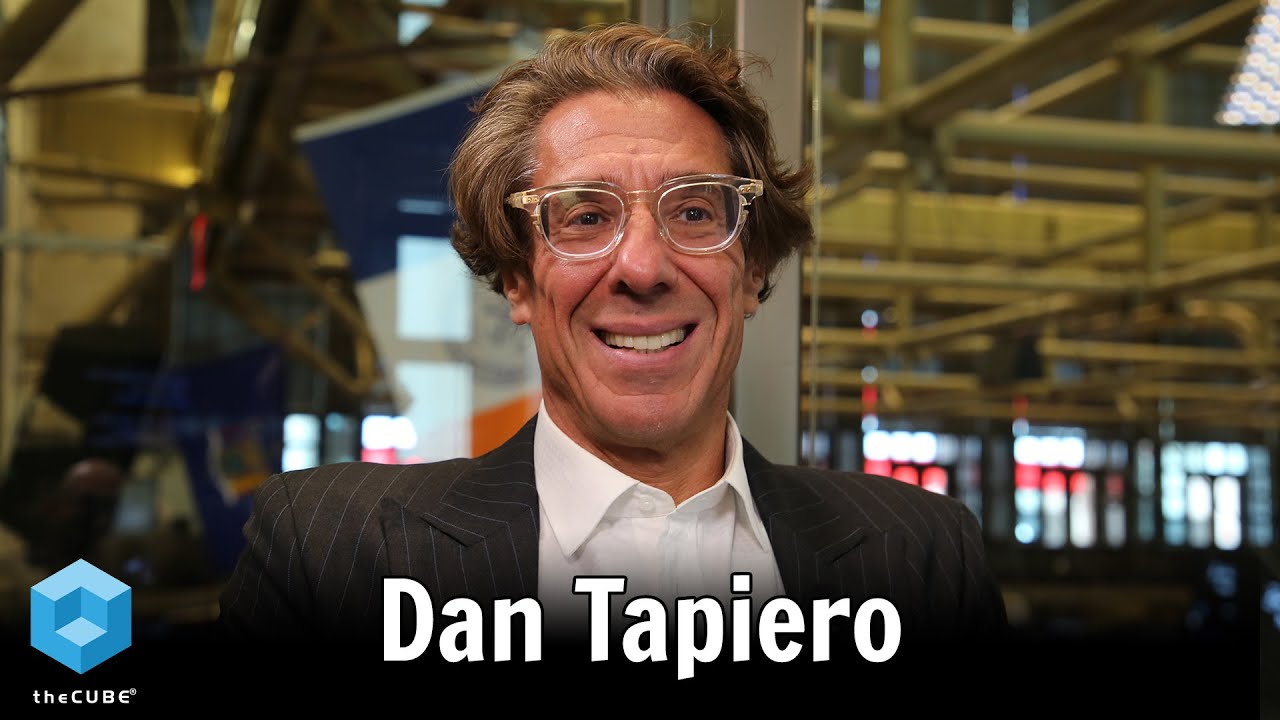
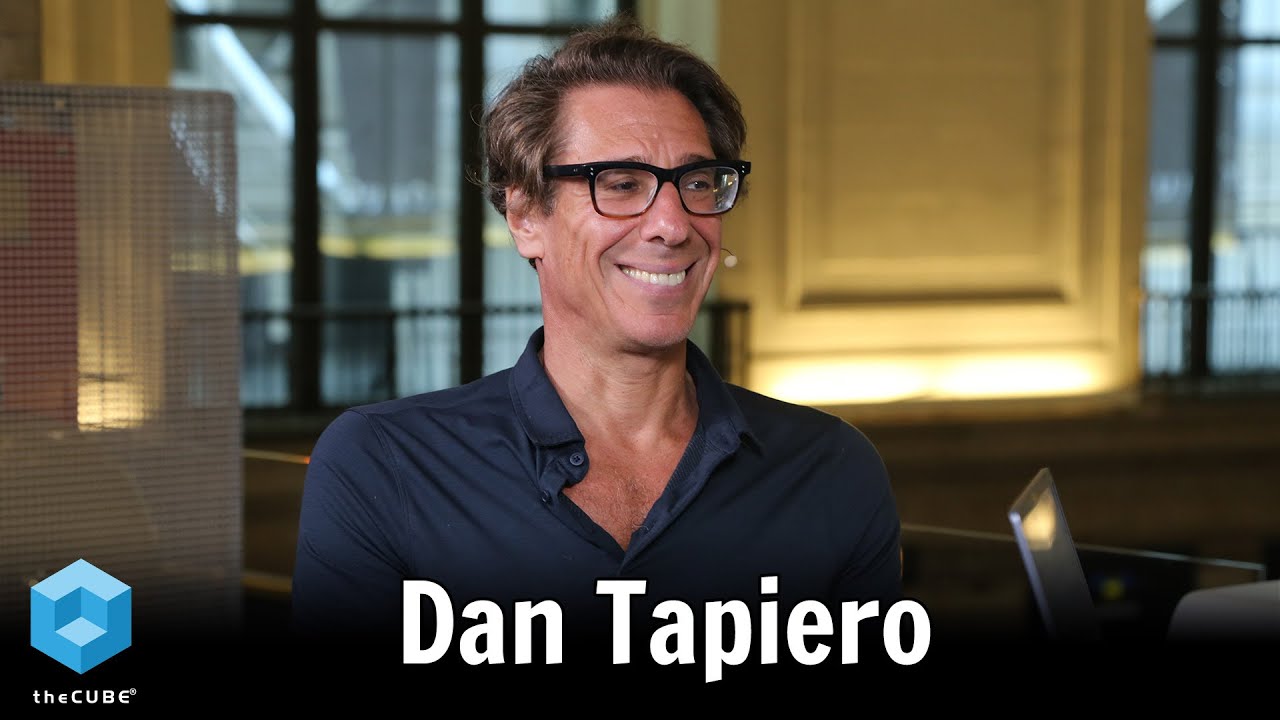
Dan Tapiero, co-founder and CEO of RoundTable Partners and 10T Holdings, joins theCUBE at the NYSE to discuss his extensive background in finance and his transition into the digital asset ecosystem. With over 20 years in the macro hedge fund industry, Tapiero brings valuable insights as he highlights the role of cryptocurrencies and blockchain in transforming business finance and infrastructure. theCUBE Research team, led by John Furrier, engages Tapiero in an in-depth discussion on the evolution of digital assets and the future of growth in this sector.
Tapiero emphasizes the potential of digital assets, predicting a substantial market value increase from $300 billion to a projected $10 trillion within the next decade. According to Tapiero, the current environment favors companies building this new ecosystem, as businesses generate significant revenue and prepare to enter public markets. The interview explores the role of US regulatory shifts in fostering a supportive atmosphere for cryptocurrencies, along with the importance of positioning the US as a global hub for blockchain technology and digital assets. #DanTapiero #DigitalAssets #theCUBE #NYSE #Crypto #Blockchain #Web3
Explore more about this topic and related insights on SiliconANGLE: siliconangle.com. Subscribe to our blockchain playlist for further discussions: [Blockchain Playlist](#).
00:00 - Intro
00:06 - Cryptocurrency and Blockchain: An Introductory Overview
02:31 - The Journey of Dan Tapiero and the Rise of 10T Holdings
09:09 - Crypto Industry Developments and Challenges
16:31 - Crypto Companies and Public Offerings
20:44 - The Future of Digital Assets
23:10 - The Digital Cultural Revolution: Final Reflections
Forgot Password
Almost there!
We just sent you a verification email. Please verify your account to gain access to
theCUBE + NYSE Wired: Crypto Trailblazers. If you don’t think you received an email check your
spam folder.
Sign in to theCUBE + NYSE Wired: Crypto Trailblazers.
In order to sign in, enter the email address you used to registered for the event. Once completed, you will receive an email with a verification link. Open this link to automatically sign into the site.
Register For theCUBE + NYSE Wired: Crypto Trailblazers
Please fill out the information below. You will recieve an email with a verification link confirming your registration. Click the link to automatically sign into the site.
You’re almost there!
We just sent you a verification email. Please click the verification button in the email. Once your email address is verified, you will have full access to all event content for theCUBE + NYSE Wired: Crypto Trailblazers.
I want my badge and interests to be visible to all attendees.
Checking this box will display your presense on the attendees list, view your profile and allow other attendees to contact you via 1-1 chat. Read the Privacy Policy. At any time, you can choose to disable this preference.
Select your Interests!
add
Upload your photo
Uploading..
OR
Connect via Twitter
Connect via Linkedin
EDIT PASSWORD
Share
Forgot Password
Almost there!
We just sent you a verification email. Please verify your account to gain access to
theCUBE + NYSE Wired: Crypto Trailblazers. If you don’t think you received an email check your
spam folder.
Sign in to theCUBE + NYSE Wired: Crypto Trailblazers.
In order to sign in, enter the email address you used to registered for the event. Once completed, you will receive an email with a verification link. Open this link to automatically sign into the site.
Sign in to gain access to theCUBE + NYSE Wired: Crypto Trailblazers
Please sign in with LinkedIn to continue to theCUBE + NYSE Wired: Crypto Trailblazers. Signing in with LinkedIn ensures a professional environment.
Are you sure you want to remove access rights for this user?
Details
Manage Access
email address
Community Invitation
Travis McGhee, Crypto.com
Dan Tapiero, co-founder and CEO of RoundTable Partners and 10T Holdings, joins theCUBE at the NYSE to discuss his extensive background in finance and his transition into the digital asset ecosystem. With over 20 years in the macro hedge fund industry, Tapiero brings valuable insights as he highlights the role of cryptocurrencies and blockchain in transforming business finance and infrastructure. theCUBE Research team, led by John Furrier, engages Tapiero in an in-depth discussion on the evolution of digital assets and the future of growth in this sector.
Tapiero emphasizes the potential of digital assets, predicting a substantial market value increase from $300 billion to a projected $10 trillion within the next decade. According to Tapiero, the current environment favors companies building this new ecosystem, as businesses generate significant revenue and prepare to enter public markets. The interview explores the role of US regulatory shifts in fostering a supportive atmosphere for cryptocurrencies, along with the importance of positioning the US as a global hub for blockchain technology and digital assets. #DanTapiero #DigitalAssets #theCUBE #NYSE #Crypto #Blockchain #Web3
Explore more about this topic and related insights on SiliconANGLE: siliconangle.com. Subscribe to our blockchain playlist for further discussions: [Blockchain Playlist](#).
00:00 - Intro
00:06 - Cryptocurrency and Blockchain: An Introductory Overview
02:31 - The Journey of Dan Tapiero and the Rise of 10T Holdings
09:09 - Crypto Industry Developments and Challenges
16:31 - Crypto Companies and Public Offerings
20:44 - The Future of Digital Assets
23:10 - The Digital Cultural Revolution: Final Reflections
play_circle_outlineCelebrating a Decade of Ethereum: Reflecting on Crypto Evolution, Regulatory Growth, and Technological Innovations with Travis McGhee
replyShare Clip
play_circle_outlineTransforming Finance: The Shift from Cryptocurrency as Currency to Unlocking Blockchain's Revolutionary Potential
replyShare Clip
play_circle_outlineInteroperability and integration are key focuses for the crypto industry.
replyShare Clip
play_circle_outlineNavigating Innovation and Regulation: Building Trust with Regulators and Industries for a Mature Future
>> Welcome back to theCUBE here at the New York Stock Exchange. I'm Gemma Allen, and this is our Crypto Trailblazer series. Today, we're marking 10 years of Ethereum, and crypto as an industry which has gone from code to whiteboards to strategy decks to coffee shop payments. Joining me now is Travis McGhee, Managing Director and Global Head of Capital Markets at Crypto.com. Welcome, Travis.
Travis McGhee
>> Hi, Gemma. Thanks for having me.
Gemma Allen
>> Absolutely. So Travis, this is an industry that's been on quite the journey in what feels like a long and very short space of time. Tell me, how do you think about the evolution of the industry? Where do you think we're at from a regulatory growth, technology innovation perspective?
Travis McGhee
>> Yeah, so I think there's a lot of excitement. I think it goes without saying, certainly over the last 12 months it's been a very exciting space. But even if you look back, you talk about 10 years of the history, the 10-year anniversary of Ethereum, right? So it's 10 years, not that long of a time. Certainly if you look over history, 10-year periods and the evolution of technology during that time, what we've seen in crypto versus what we've seen with technological innovation in the past has just been absolutely incredible on a global scale. And for me and the rest of us at Crypto.com, that's really what excites us is the opportunity and how the game continues to change. You look back six years ago or so, and very much the focus was on cryptocurrency or more of the currency aspect. So looking at individual tokens. Well, what's Bitcoin doing? What's Ethereum doing? So on and so forth. And where we've gone now is I feel like we've moved beyond that, where we're starting to understand that behind these is serious technology and it's technology that's changing the way we live our lives and the way we do things. It's changing 200-year-old technological financial rails. It is just making our life easier in a number of aspects. And for us, that excites us because that provides us with an opportunity every single day to come in and look at areas that we can disrupt, areas that we can improve. What more can we do to help accelerate not only the growth of cryptocurrency and blockchain, but really help society move forward in a way where we're able to just live more efficiently in an optimized fashion? We can help small businesses, large businesses, we can help the economy. We can see growth that's holistic and start moving society on the rails that are built on top of blockchain and provides us with that technological advantage moving forward.
Gemma Allen
>> So you guys play a pretty pivotal role. You mentioned a number of competitors there in one very broad, but very fast growing industry. Do you think that we're at a point now where we're starting to see the beginning of a cycle of real integration and interoperability in this space? How do you think about that from a technical perspective? And what sorts of areas or frontiers are you guys really leaning in on?
Travis McGhee
>> Yeah, well, we're leaning in on a number of frontiers. But when you talk about that interoperability and the integration, and really over the last 12 months, you've seen with a, let's call it a comfort, right? So in an increase in comfort level. We're starting to see legislation come out from a variety of jurisdictions that provide those much needed guardrails and some of the regulatory and compliance clarity that we need to operate, which that's just how a industry matures. You saw the same thing with the equity market. You've seen it with derivative markets. Now you're seeing it in the crypto markets. It's just a natural evolution. You just have to mature as an industry. And as we do that, you're seeing more players in adjacent industries start to tap into blockchain, start to tap into cryptocurrency for those integrations, everything from card processors that can then enable cryptocurrency to be used for everyday purchases. You're seeing it on the banking side with various banking relationships. You're seeing it for collateral, for margin products and loans. So it's being used in a multitude of areas, which brings in all these different organizations, businesses, and industries that then afford you the ability to integrate and cast a much wider net.
Gemma Allen
>> We talked a little bit, before you came on air, about the Visa card. You guys were very innovative and very fast and futuristically thinking when you launch that. And some of the data around how it's being used, like for groceries, coffee shops, again, quite an interesting story, and it tells a story about an industry that has become mainstream very fast. Tell me a little bit about that.
Travis McGhee
>> Yeah, no, you're exactly right. Again, there's so much of what we do, and again, I say that as a player in the crypto industry, but I also say that as someone who spent quite a bit of time in traditional finance in the financial industry, there's so much of what we do that is built on trust. And the more a industry starts to garner the trust of other players in adjacent industries and larger players, so take, you had mentioned Visa as an example, once you start to develop that level of trust where the partner is trusting you to provide and live up to your end of the bargain what it is that you have in the rails that you're operating on, and then vice versa, there's trust going the other way, those relationships start to happen. And Visa is a great example of that where you've got a mature industry, again, going back to Ethereum 10 years now, Bitcoin, some of the OG blockchains, but now you have a lot of new ones popping into the space as well. But you've got an industry now that has established itself as here to stay. And through partnerships with Visa and others, those integrations are really what's going to help drive the industry forward, because it's going to create this growth effect through ubiquity where more and more people, without even knowing it, are going to be able to use a Visa card to go in and make an everyday purchase for a cup of coffee without even knowing that blockchain is operating behind the scenes. That's ultimately where we want to get to, and that's where we're quickly starting to make those strides as an industry.
Gemma Allen
>> And I think trust is technically led, but it's also a motive, right? It's something that people need to gain over time. But there's a sense that when it comes to innovation and regulation, that these two worlds stifle the other. How do you think about that? What have you guys seen in the journey you've been on around how you can remain innovative and ahead of the curve, but also meet the regulatory needs of an industry that's becoming mainstream very quickly?
Travis McGhee
>> So, yeah, it's incumbent upon any industry, crypto being no different, to innovate, but simultaneously innovate while working with regulators. You have to develop that relationship. Because again, it's not just trust at the end of the day with the end user, but you also have to build that trust with the regulatory bodies. And as a byproduct of that, once you have that trust, you can continue to build trust with other large stakeholders within adjacent industries. So it's a balance. You don't want to find yourself moving to one extreme or the other. You really have got to try and balance those together, and it's something I think we've done exceptionally well at Crypto.com.
Gemma Allen
>> So speaking of adjacent players and adjacent industries, I don't think I can go a minute here at the NYSE without talking about AI. It's the hot word in everyone's lips. But tell me, what are you seeing from an innovation perspective in terms of how AI and crypto are converging? Have you any interesting use cases or examples you could share with the audience?
Travis McGhee
>> Sure. Well, I think one example, a lot of... Again, let's go back to cryptocurrency and focus more on the currency side, which is the tokens and the trading of those tokens. When you think about AI, there's a number of use cases and we've seen just some really fantastic data coming out of the use of AI with trading platforms. And that's everything from helping to automate customer service, helping to automate customer onboarding, helping to surface trading ideas to end users as far as what's going on in the market. Why is Ethereum up today? What are some of the things that maybe I'm not seeing that I don't have to go and do all this research online and dig through periodical through periodical. We can surface that to our clients in a matter of seconds. And you're seeing that, again, across a multitude of industries, not just in cryptocurrency, but you're seeing it traditional finance as well. So I think that's one very interesting use case. So you're talking about AI helping create efficiencies inside of businesses. And not only efficiencies, and I think AI certainly gets a bad rap from a headcount related efficiency where you just need less people, I'm talking less that. I mean more efficiencies around the less time our consumers and our end clients have to spend really digging through data to try and make informed decisions, and the more concise we can be in serving up data, I think the better. Again, we're all limited in our time at the end of the day, and any way we can help our clients save time I think is just a great service and a value add to any end user.
Gemma Allen
>> Absolutely. Like mass utility is a big opportunity and advantage of AI, and crypto has been built on this idea of democratizing access to finance. So it seems to me as though those two energies have to but come in some sort of positive shape. But tell me, Crypto.com, you've also had some very interesting partnerships strategy, product strategy. We've seen now other payments providers and platforms eying crypto guardrails. What's ahead from your perspective on the product roadmap? How are you thinking about and planning for this next wave?
Travis McGhee
>> Yeah, so I think the wave comes in a variety of waves. I don't think it's just one wave. And I think, one, if I were to thread a needle through some of the waves happening right now, again, and we talked a little bit about this at the onset, one massive convergence we have going on right now is, again, this convergence of traditional finance and cryptocurrency. And it's really changing the landscape and the way we've done things on a number of fronts. But I think one area in particular that we're focused on is, again, with 152 million clients globally, all using our application certainly to trade cryptocurrency. Those same 152 million people have other opportunities that they want to take advantage of as well, or at least you would like to assume so. So for us, it's being able to, while we have them in the app, we want to ensure that we provide our customers with access to any opportunity that presents itself at any time. That opportunity one day could be Ethereum, could be Bitcoin, but at the same time it could be a US stock or an equity. Could be Apple, it could be NVIDIA. It could also be through derivatives and being able to hedge a portfolio using Ethereum futures. Obviously all the rage right now, and a lot of the conversation has been, over the past 12 months, around prediction markets. And that's something that we have and are playing a major role in with our CFTC regulated exchange. So enabling our end users to be able to access an event contract on a political outcome. We just had the most recent New York mayoral race where we had markets live for that. Or it could be an upcoming sports event. So we're trying to provide a single app experience for our customers, and using our capabilities both with blockchain and traditional finance, providing them with an infinite number of opportunities to access financial markets.
Gemma Allen
>> So while we're talking about sports events and large scale audience engagement and getting them in the app, it seems to me, as an outside observer, Crypto.com has been very strong in the visibility game. You guys have really invested in the marketing spend and reach. How do you measure like the ROI on that, and how do you think about it too as this audience grows and expands?
Travis McGhee
>> Sure. Well, certainly there are very detailed and granular marketing metrics that we use as far as net promoter score, so on and so forth. I tend to use just a general litmus test. And when it's easy for me is if my 12-year-old son and his friends, in just general conversation, if our name comes up in conversation, then you've done a pretty good job of getting your name out there and creating some general awareness around the brand. And that's definitely the case. And I think we've been very successful in being very early on in some very key strategic partnerships that's helped us in a number of ways. And they're partnerships where it's not just simply spending money to put your name on something, but it's true partnerships where they're helping us as well, making sure that we're engaging, making sure that we're activating, making sure that we're really uniting all of our efforts and bringing a full experience onto the customer. So listen, I think it's really exciting. I think it's really impressive what we've been able to accomplish in a very short amount of time. I think generally speaking, we've only scratched the surface though. I think we have a lot more that's coming down the pipe here that is going to be really exciting and hopefully makes a really big splash.
Gemma Allen
>> Certainly, and we'll be watching closely. So before we go, Travis, tell me, we're all predicting what's ahead for Ethereum and the world of crypto here today. What's ahead for Crypto.com? What's the plan for the next 12 months? What's exciting you guys? And close us out with what's going down.
Travis McGhee
>> Yeah, that's great. Well, it's funny you say predict. We should create a prediction market on it, on our exchange. Because in a lot of ways, that's a really big focus for us is to make sure that we are the player in not only the crypto space, but as well as the prediction market space in using the technology that we have, the best in class technology, in all of our relationships and partnerships to continue to bring really sound products both on the crypto side as well as the traditional finance and prediction side to our customers. So we're going to continue to lean really heavy into that. And like I said, over the next couple of weeks, months ahead, we're going to have some really exciting announcements.
Gemma Allen
>> Well, Travis, we hope to have you here at the NYSE at some point live in our studio. In the meantime, I wish you guys all the best. Thanks so much for joining.
Travis McGhee
>> Thanks, Gemma. It's always good to see you. Thank you.
Gemma Allen
>> I'm Gemma Allen here at the New York Stock Exchange reporting on Crypto Trailblazers. This is the day we're marking 10 years of Ethereum. Thanks so much for watching.
>> Welcome back to theCUBE here at the New York Stock Exchange. I'm Gemma Allen, and this is our Crypto Trailblazer series. Today, we're marking 10 years of Ethereum, and crypto as an industry which has gone from code to whiteboards to strategy decks to coffee shop payments. Joining me now is Travis McGhee, Managing Director and Global Head of Capital Markets at Crypto.com. Welcome, Travis.
Travis McGhee
>> Hi, Gemma. Thanks for having me.
Gemma Allen
>> Absolutely. So Travis, this is an industry that's been on quite the journey in what feels like a long and very short space of time. Tell me, how do you think about the evolution of the industry? Where do you think we're at from a regulatory growth, technology innovation perspective?
Travis McGhee
>> Yeah, so I think there's a lot of excitement. I think it goes without saying, certainly over the last 12 months it's been a very exciting space. But even if you look back, you talk about 10 years of the history, the 10-year anniversary of Ethereum, right? So it's 10 years, not that long of a time. Certainly if you look over history, 10-year periods and the evolution of technology during that time, what we've seen in crypto versus what we've seen with technological innovation in the past has just been absolutely incredible on a global scale. And for me and the rest of us at Crypto.com, that's really what excites us is the opportunity and how the game continues to change. You look back six years ago or so, and very much the focus was on cryptocurrency or more of the currency aspect. So looking at individual tokens. Well, what's Bitcoin doing? What's Ethereum doing? So on and so forth. And where we've gone now is I feel like we've moved beyond that, where we're starting to understand that behind these is serious technology and it's technology that's changing the way we live our lives and the way we do things. It's changing 200-year-old technological financial rails. It is just making our life easier in a number of aspects. And for us, that excites us because that provides us with an opportunity every single day to come in and look at areas that we can disrupt, areas that we can improve. What more can we do to help accelerate not only the growth of cryptocurrency and blockchain, but really help society move forward in a way where we're able to just live more efficiently in an optimized fashion? We can help small businesses, large businesses, we can help the economy. We can see growth that's holistic and start moving society on the rails that are built on top of blockchain and provides us with that technological advantage moving forward.
Gemma Allen
>> So you guys play a pretty pivotal role. You mentioned a number of competitors there in one very broad, but very fast growing industry. Do you think that we're at a point now where we're starting to see the beginning of a cycle of real integration and interoperability in this space? How do you think about that from a technical perspective? And what sorts of areas or frontiers are you guys really leaning in on?
Travis McGhee
>> Yeah, well, we're leaning in on a number of frontiers. But when you talk about that interoperability and the integration, and really over the last 12 months, you've seen with a, let's call it a comfort, right? So in an increase in comfort level. We're starting to see legislation come out from a variety of jurisdictions that provide those much needed guardrails and some of the regulatory and compliance clarity that we need to operate, which that's just how a industry matures. You saw the same thing with the equity market. You've seen it with derivative markets. Now you're seeing it in the crypto markets. It's just a natural evolution. You just have to mature as an industry. And as we do that, you're seeing more players in adjacent industries start to tap into blockchain, start to tap into cryptocurrency for those integrations, everything from card processors that can then enable cryptocurrency to be used for everyday purchases. You're seeing it on the banking side with various banking relationships. You're seeing it for collateral, for margin products and loans. So it's being used in a multitude of areas, which brings in all these different organizations, businesses, and industries that then afford you the ability to integrate and cast a much wider net.
Gemma Allen
>> We talked a little bit, before you came on air, about the Visa card. You guys were very innovative and very fast and futuristically thinking when you launch that. And some of the data around how it's being used, like for groceries, coffee shops, again, quite an interesting story, and it tells a story about an industry that has become mainstream very fast. Tell me a little bit about that.
Travis McGhee
>> Yeah, no, you're exactly right. Again, there's so much of what we do, and again, I say that as a player in the crypto industry, but I also say that as someone who spent quite a bit of time in traditional finance in the financial industry, there's so much of what we do that is built on trust. And the more a industry starts to garner the trust of other players in adjacent industries and larger players, so take, you had mentioned Visa as an example, once you start to develop that level of trust where the partner is trusting you to provide and live up to your end of the bargain what it is that you have in the rails that you're operating on, and then vice versa, there's trust going the other way, those relationships start to happen. And Visa is a great example of that where you've got a mature industry, again, going back to Ethereum 10 years now, Bitcoin, some of the OG blockchains, but now you have a lot of new ones popping into the space as well. But you've got an industry now that has established itself as here to stay. And through partnerships with Visa and others, those integrations are really what's going to help drive the industry forward, because it's going to create this growth effect through ubiquity where more and more people, without even knowing it, are going to be able to use a Visa card to go in and make an everyday purchase for a cup of coffee without even knowing that blockchain is operating behind the scenes. That's ultimately where we want to get to, and that's where we're quickly starting to make those strides as an industry.
Gemma Allen
>> And I think trust is technically led, but it's also a motive, right? It's something that people need to gain over time. But there's a sense that when it comes to innovation and regulation, that these two worlds stifle the other. How do you think about that? What have you guys seen in the journey you've been on around how you can remain innovative and ahead of the curve, but also meet the regulatory needs of an industry that's becoming mainstream very quickly?
Travis McGhee
>> So, yeah, it's incumbent upon any industry, crypto being no different, to innovate, but simultaneously innovate while working with regulators. You have to develop that relationship. Because again, it's not just trust at the end of the day with the end user, but you also have to build that trust with the regulatory bodies. And as a byproduct of that, once you have that trust, you can continue to build trust with other large stakeholders within adjacent industries. So it's a balance. You don't want to find yourself moving to one extreme or the other. You really have got to try and balance those together, and it's something I think we've done exceptionally well at Crypto.com.
Gemma Allen
>> So speaking of adjacent players and adjacent industries, I don't think I can go a minute here at the NYSE without talking about AI. It's the hot word in everyone's lips. But tell me, what are you seeing from an innovation perspective in terms of how AI and crypto are converging? Have you any interesting use cases or examples you could share with the audience?
Travis McGhee
>> Sure. Well, I think one example, a lot of... Again, let's go back to cryptocurrency and focus more on the currency side, which is the tokens and the trading of those tokens. When you think about AI, there's a number of use cases and we've seen just some really fantastic data coming out of the use of AI with trading platforms. And that's everything from helping to automate customer service, helping to automate customer onboarding, helping to surface trading ideas to end users as far as what's going on in the market. Why is Ethereum up today? What are some of the things that maybe I'm not seeing that I don't have to go and do all this research online and dig through periodical through periodical. We can surface that to our clients in a matter of seconds. And you're seeing that, again, across a multitude of industries, not just in cryptocurrency, but you're seeing it traditional finance as well. So I think that's one very interesting use case. So you're talking about AI helping create efficiencies inside of businesses. And not only efficiencies, and I think AI certainly gets a bad rap from a headcount related efficiency where you just need less people, I'm talking less that. I mean more efficiencies around the less time our consumers and our end clients have to spend really digging through data to try and make informed decisions, and the more concise we can be in serving up data, I think the better. Again, we're all limited in our time at the end of the day, and any way we can help our clients save time I think is just a great service and a value add to any end user.
Gemma Allen
>> Absolutely. Like mass utility is a big opportunity and advantage of AI, and crypto has been built on this idea of democratizing access to finance. So it seems to me as though those two energies have to but come in some sort of positive shape. But tell me, Crypto.com, you've also had some very interesting partnerships strategy, product strategy. We've seen now other payments providers and platforms eying crypto guardrails. What's ahead from your perspective on the product roadmap? How are you thinking about and planning for this next wave?
Travis McGhee
>> Yeah, so I think the wave comes in a variety of waves. I don't think it's just one wave. And I think, one, if I were to thread a needle through some of the waves happening right now, again, and we talked a little bit about this at the onset, one massive convergence we have going on right now is, again, this convergence of traditional finance and cryptocurrency. And it's really changing the landscape and the way we've done things on a number of fronts. But I think one area in particular that we're focused on is, again, with 152 million clients globally, all using our application certainly to trade cryptocurrency. Those same 152 million people have other opportunities that they want to take advantage of as well, or at least you would like to assume so. So for us, it's being able to, while we have them in the app, we want to ensure that we provide our customers with access to any opportunity that presents itself at any time. That opportunity one day could be Ethereum, could be Bitcoin, but at the same time it could be a US stock or an equity. Could be Apple, it could be NVIDIA. It could also be through derivatives and being able to hedge a portfolio using Ethereum futures. Obviously all the rage right now, and a lot of the conversation has been, over the past 12 months, around prediction markets. And that's something that we have and are playing a major role in with our CFTC regulated exchange. So enabling our end users to be able to access an event contract on a political outcome. We just had the most recent New York mayoral race where we had markets live for that. Or it could be an upcoming sports event. So we're trying to provide a single app experience for our customers, and using our capabilities both with blockchain and traditional finance, providing them with an infinite number of opportunities to access financial markets.
Gemma Allen
>> So while we're talking about sports events and large scale audience engagement and getting them in the app, it seems to me, as an outside observer, Crypto.com has been very strong in the visibility game. You guys have really invested in the marketing spend and reach. How do you measure like the ROI on that, and how do you think about it too as this audience grows and expands?
Travis McGhee
>> Sure. Well, certainly there are very detailed and granular marketing metrics that we use as far as net promoter score, so on and so forth. I tend to use just a general litmus test. And when it's easy for me is if my 12-year-old son and his friends, in just general conversation, if our name comes up in conversation, then you've done a pretty good job of getting your name out there and creating some general awareness around the brand. And that's definitely the case. And I think we've been very successful in being very early on in some very key strategic partnerships that's helped us in a number of ways. And they're partnerships where it's not just simply spending money to put your name on something, but it's true partnerships where they're helping us as well, making sure that we're engaging, making sure that we're activating, making sure that we're really uniting all of our efforts and bringing a full experience onto the customer. So listen, I think it's really exciting. I think it's really impressive what we've been able to accomplish in a very short amount of time. I think generally speaking, we've only scratched the surface though. I think we have a lot more that's coming down the pipe here that is going to be really exciting and hopefully makes a really big splash.
Gemma Allen
>> Certainly, and we'll be watching closely. So before we go, Travis, tell me, we're all predicting what's ahead for Ethereum and the world of crypto here today. What's ahead for Crypto.com? What's the plan for the next 12 months? What's exciting you guys? And close us out with what's going down.
Travis McGhee
>> Yeah, that's great. Well, it's funny you say predict. We should create a prediction market on it, on our exchange. Because in a lot of ways, that's a really big focus for us is to make sure that we are the player in not only the crypto space, but as well as the prediction market space in using the technology that we have, the best in class technology, in all of our relationships and partnerships to continue to bring really sound products both on the crypto side as well as the traditional finance and prediction side to our customers. So we're going to continue to lean really heavy into that. And like I said, over the next couple of weeks, months ahead, we're going to have some really exciting announcements.
Gemma Allen
>> Well, Travis, we hope to have you here at the NYSE at some point live in our studio. In the meantime, I wish you guys all the best. Thanks so much for joining.
Travis McGhee
>> Thanks, Gemma. It's always good to see you. Thank you.
Gemma Allen
>> I'm Gemma Allen here at the New York Stock Exchange reporting on Crypto Trailblazers. This is the day we're marking 10 years of Ethereum. Thanks so much for watching.

















































 Gemma Allen