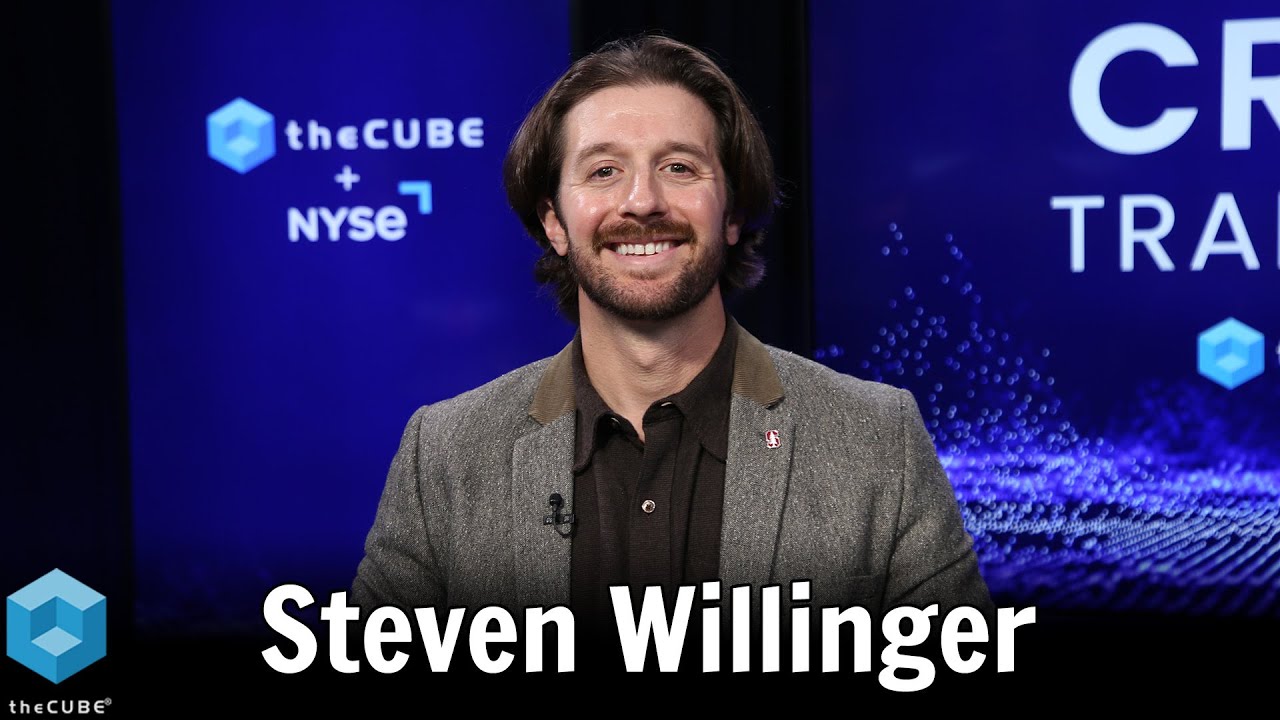
Steven Willinger of Stanford Blockchain Accelerator and Blockchain Builders discusses the "Crypto Trailblazers" series, a virtual event co-hosted by theCUBE and NYSE Wired. This event, in collaboration with the Ethereum Foundation and Stanford University, aims to explore blockchain innovations occurring in Silicon Valley.
In this segment, Willinger examines the evolving blockchain landscape. Drawing from his experience at Coinbase, Willinger addresses the collaborative efforts within the blockchain community that include Stanford University, the University of California Berkeley, and the Ethereum Foundation. The discussion emphasizes the momentum in decentralized finance, the significant shift in regulatory landscapes, and the rise of stablecoins.
Willinger notes that technology and finance-driven initiatives within the blockchain space are progressing, supported by considerable expertise and focused discussions, such as those held during ETHSF. They identify significant industry trends, noting that the forefront is the intersection of blockchain and AI. Hosts from theCUBE also provide additional insights into these promising developments.
#BlockchainBuilders #StanfordBlockchainAccelerator #CryptoTrailblazers #theCUBE #ETHSF #DecentralizedFinance #Stablecoins #AIandBlockchain #CryptoInnovation
Find more SiliconANGLE news and analysis https://siliconangle.com/
Follow theCUBE's wall-to-wall event coverage https://siliconangle.com/events/
Learn about the latest theCUBE events https://www.thecube.net/
00:00 - Intro
00:05 - Exploring the Blockchain Ecosystem: Community, Innovation, and Regulation
02:12 - Entrepreneurship, Impact, and Commercialization in Crypto
04:57 - Changing Paradigms: Business Models and Investments
07:56 - Stanford's Role in Blockchain and AI
10:53 - Innovations in Crypto and AI
13:27 - Infrastructure Opportunities in Blockchain
15:51 - The Challenges and Opportunities of Community-Building
18:10 - Accelerating Innovation: The Intersection of Incubators and Blockchain Initiatives
Forgot Password
Almost there!
We just sent you a verification email. Please verify your account to gain access to
theCUBE + NYSE Wired: Crypto Trailblazers. If you don’t think you received an email check your
spam folder.
Sign in to theCUBE + NYSE Wired: Crypto Trailblazers.
In order to sign in, enter the email address you used to registered for the event. Once completed, you will receive an email with a verification link. Open this link to automatically sign into the site.
Register For theCUBE + NYSE Wired: Crypto Trailblazers
Please fill out the information below. You will recieve an email with a verification link confirming your registration. Click the link to automatically sign into the site.
You’re almost there!
We just sent you a verification email. Please click the verification button in the email. Once your email address is verified, you will have full access to all event content for theCUBE + NYSE Wired: Crypto Trailblazers.
I want my badge and interests to be visible to all attendees.
Checking this box will display your presense on the attendees list, view your profile and allow other attendees to contact you via 1-1 chat. Read the Privacy Policy. At any time, you can choose to disable this preference.
Select your Interests!
add
Upload your photo
Uploading..
OR
Connect via Twitter
Connect via Linkedin
EDIT PASSWORD
Share
Forgot Password
Almost there!
We just sent you a verification email. Please verify your account to gain access to
theCUBE + NYSE Wired: Crypto Trailblazers. If you don’t think you received an email check your
spam folder.
Sign in to theCUBE + NYSE Wired: Crypto Trailblazers.
In order to sign in, enter the email address you used to registered for the event. Once completed, you will receive an email with a verification link. Open this link to automatically sign into the site.
Sign in to gain access to theCUBE + NYSE Wired: Crypto Trailblazers
Please sign in with LinkedIn to continue to theCUBE + NYSE Wired: Crypto Trailblazers. Signing in with LinkedIn ensures a professional environment.
Are you sure you want to remove access rights for this user?
Details
Manage Access
email address
Community Invitation
Amanda Terry, Metagood
Steven Willinger of Stanford Blockchain Accelerator and Blockchain Builders discusses the "Crypto Trailblazers" series, a virtual event co-hosted by theCUBE and NYSE Wired. This event, in collaboration with the Ethereum Foundation and Stanford University, aims to explore blockchain innovations occurring in Silicon Valley.
In this segment, Willinger examines the evolving blockchain landscape. Drawing from his experience at Coinbase, Willinger addresses the collaborative efforts within the blockchain community that include Stanford University, the University of California Berkeley, and the Ethereum Foundation. The discussion emphasizes the momentum in decentralized finance, the significant shift in regulatory landscapes, and the rise of stablecoins.
Willinger notes that technology and finance-driven initiatives within the blockchain space are progressing, supported by considerable expertise and focused discussions, such as those held during ETHSF. They identify significant industry trends, noting that the forefront is the intersection of blockchain and AI. Hosts from theCUBE also provide additional insights into these promising developments.
#BlockchainBuilders #StanfordBlockchainAccelerator #CryptoTrailblazers #theCUBE #ETHSF #DecentralizedFinance #Stablecoins #AIandBlockchain #CryptoInnovation
Find more SiliconANGLE news and analysis https://siliconangle.com/
Follow theCUBE's wall-to-wall event coverage https://siliconangle.com/events/
Learn about the latest theCUBE events https://www.thecube.net/
00:00 - Intro
00:05 - Exploring the Blockchain Ecosystem: Community, Innovation, and Regulation
02:12 - Entrepreneurship, Impact, and Commercialization in Crypto
04:57 - Changing Paradigms: Business Models and Investments
07:56 - Stanford's Role in Blockchain and AI
10:53 - Innovations in Crypto and AI
13:27 - Infrastructure Opportunities in Blockchain
15:51 - The Challenges and Opportunities of Community-Building
18:10 - Accelerating Innovation: The Intersection of Incubators and Blockchain Initiatives
>> Hi, I'm Gemma Allen. Welcome back to theCUBE here at our studio in the New York Stock Exchange. This is our Crypto Trailblazers series, and today we are marking 10 years of Ethereum. Joining me now, I have Amanda Terry, co-founder of Metagood. Welcome, Amanda.
Amanda Terry
>> Thank you, Gemma. So excited to be here.
Gemma Allen
>> So this is a full circle moment for you back here at the NYSE, 10 years of Ethereum, both have played a role in your journey. Tell us a little bit about that.
Amanda Terry
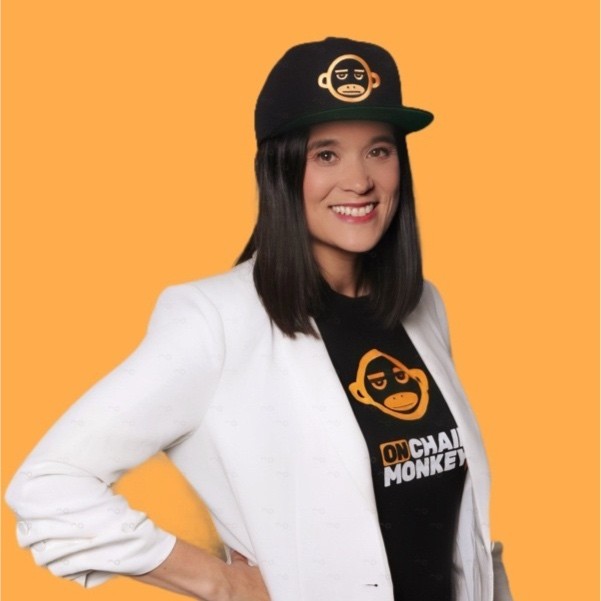
>> Oh, no, I'm thrilled to be here. As you know, Metagood is working on tokenizing real world assets and helping to organize all of the assets in the world to make them into an open and tradable marketplace. We started with OnChainMonkey, which was an NFT collection we launched in 2021, which was the first 10,000 NFT collection done in a single Ethereum transaction. So that was quite historic for Ethereum, and then we put them onto Bitcoin when the Ordinals protocol launched. So also the first 10,000 digital art collection on Bitcoin. We started in art because that's not a regulated market, but now we're kind of moving up the stack of real world assets. We're looking at corporate real estate, corporate debt, even rare earth minerals could be tokenized to make them more open and tradable potentially and open up to world markets.
Gemma Allen
>> That's so interesting, right? What an evolution from art to rare earth minerals. Tell me though, when it comes to tokenization, it feels like it's a word that gets a lot of use. I think it maybe confuses some folks. A lot of folks think about regulation, what the future could look like. What sort of conversations are you having? What's driving investor sentiment on thinking?
Amanda Terry
>> Yeah, I think the idea is how can you create a digital representation of real world goods, which are normally quite illiquid, right? Let's think of the case of Manhattan real estate, right? If you look at a large commercial real estate building, you normally need a lot of capital to invest. There's a lot of processes that need to happen. You need to verify what the property is. It's not easy for global investors to access that type of property and to access it in smaller chunks of capital than let's say millions and millions of dollars. The idea behind tokenization is we could actually take real estate, divide it, fractionalize that ownership, and make it much easier to trade, and also tradable in a 24/7 environment so you don't have to do it all just through brokers. So that's the idea. That's one asset class. You could look at a company like CoreWeave, right? They have a lot of debt creating all of these incredible data centers. We could offer a tranche of tokenized debt so that for CoreWeave, their terms better than maybe what they can get currently in the market. And then it opens it up to a number of credit investors who normally could not access that type of debt, and they can basically earn interests on their tokens. And down the line also, we could create products on top of those tokens like DeFi and yield, which would create even more returns for investors.
Gemma Allen
>> Wow, fascinating space and time.
Amanda Terry
>> Yes.
Gemma Allen
>> The infrastructure, we have so many folks in here on theCUBE talking about the infrastructure layer and the plumbing.
Amanda Terry
>> Yes.
Gemma Allen
>> Of this new frontier of AI, which seems to be hot on the lips of pretty much everybody.
Amanda Terry
>> It's also not our first time doing this. So I'm the co-founder and COO of Metagood. My other two co-founders are Bill Tai.
Gemma Allen
>> Wow.
Amanda Terry
>> Bill was the first investor in Zoom. He seeded Canva. He's seeded now 23 public trading companies. And Danny Yang who created the Stanford Bitcoin Meetup, he also created the largest cryptocurrency exchange in Taiwan called Maicoin, which is going public next year, and a company called Blockseer, which government agencies use for blockchain analytics. These guys actually tried to do this back in 2015 with Peruvian economist Hernando de Soto, who wrote the book The Mystery of Capital. They literally tried to bring property rights on chain in Egypt. Now, it was a little too early, both technically and also I would say politically, but Danny and Bill basically created the framework to do this in Egypt. So this is not the first go at this. And then Bill, he's been in Bitcoin since 2010, so very, very OG, actually was advising the Fluidity team, and they actually did tokenize a $30 million condo building in Manhattan. Their team was acquired by Joe Lubin's ConsenSys, and actually that dev team became the team behind the MetaMask wallet. So it is, as you said, this really full circle, but this is not our team's first time looking at this space. I think with current regulation and how things are, the markets are opening for more of this to happen. You're hearing BlackRock, NASDAQ, a number of very large organizations are trying to figure out how do we tokenize these assets to make them more open, more accessible, more freely tradable, and more open to go open markets. And that's kind of what we're really excited about at Metagood.
Gemma Allen
>> And I guess what's really interesting about some of the partners, the names you mentioned there, is they're all phenomenal community builders, right? There's a sense of or an ethos of collegiality to everything that they build and do.
Amanda Terry
>> Yes.
Gemma Allen
>> Tell me a little bit about what's happening right now, broadly speaking in the crypto space, digital assets, tokenization, it's heating up, it's getting more competitive. Where do you think the clash and opportunities lie?
Amanda Terry
>> Yeah, I think that there's been a lot of news cycle about tokenization. Generally, I think people have said in the billions of dollars, maybe up to $50 billion, has been tokenized of real world assets today, but people are projecting it could be up to upwards of $30 trillion by 2034. And so I think we're still very early. As you look at the infrastructure, it's not turnkey yet to do this. And there will be several players, obviously it's a huge market. So I think Metagood will be one, and there will be other ones as well.
Gemma Allen
>> And you mentioned starting with art, which isn't regulated, and the word regulation also seems to be hot on the lips of a lot of folks. It's definitely a key driver right now. What are your thoughts on this idea that as things get more regulated, they become less innovative, or there is one can tend to stifle the other? Is that something you kind of see or hear? Where do you really see the innovation happening for this next asset class outside of art?
Amanda Terry
>> Oh, I think if anything, in some ways, some regulation is good. It just helps startups to be able to feel comfortable building in this jurisdiction versus let's say Dubai or Singapore. There's many countries that right now even have no capital gains tax on crypto. We're not quite there yet from a regulatory perspective, but I think the U.S. realizes that we want a competitive advantage in blockchain, in crypto, in AI. So we need to create the environment that enables companies like ours, a startup, we started this company back in '21 to continue to build and grow here. And it feels like with the current administration that things are very pro crypto right now, which is great, and enables us to build a business here.
Gemma Allen
>> For sure. And Amanda, you're also an investor, you're a venture capitalist.
Amanda Terry
>> Yes.
Gemma Allen
>> You've learned a lot, I'm sure, in the last decade or so in an industry that's evolving and changing, it kind of feels almost like by the minute. AI is huge right now. It's basically synonymous with just tech.
Amanda Terry
>> Yes.
Gemma Allen
>> Tell me a little bit about what you're seeing, but also how those worlds are overlapping as well.
Amanda Terry
>> Sure. So I also co-founded a venture fund with Bill Tai called ACTAI Ventures. It stands for athletes, conservationists, technologists, artists and innovators. And we're really doing kind of pre-seed seed stage investing. The current fund is about 60% in AI companies, 40% in blockchain. But even as you think about what's driving AI, it's also power. Power and the access to energy directly correlates to GDP, right? So the fund is also looking at what are new ways to create sustainable power in a more cost-effective manner? How do we do that? That's going to basically both impact companies who are investing in the AI space, and also companies in the blockchain space. So that's something that we're very closely looking at. And it ties back a lot to even what we're doing at Metagood, right? Like I mentioned, CoreWeave, building out data centers, needing a lot of debt. How can they find ways to access capital markets in a way that might create better terms for them to continue to build out of these data centers? So it is all tied together in many ways.
Gemma Allen
>> No, for sure. Are you seeing any kind of interesting and niche investment spaces like nuclear? Have you come across anything that I guess would certainly be a headline in a number of months or years from now?
Amanda Terry
>> Oh, well, I think, I just came back with Bill from Sydney, we were at South by Southwest. And one area I think we're really interesting in is quantum computing.
Gemma Allen
>> Wow.
Amanda Terry
>> So we met with a company that has actually created a chip that can go into data centers to speed up the AI compute, which is really very innovative and maybe first of its kind. Many people have been talking about quantum computing coming in years from now, but this company actually has a chip that's available in the market today. So that's something we're very excited about and excited for the possibilities for the specific company. So that's something I'm very interested in. And I think also another area outside of AI and blockchain I'm personally interested is in longevity. We have a aging population globally. There's going to be many, I think, discoveries, especially with AI, to help people live not just longer, but also just have more high quality lifespan as well.
Gemma Allen
>> Wow. So Metagood, how old is the company? Tell me what size, state are you guys at?
Amanda Terry
>> Yeah.
Gemma Allen
>> Fill us in, give us the industry scoop.
Amanda Terry
>> Yeah, so Metagood, we started the company in 2021, and obviously Danny, Bill and myself really were thinking about how can we use crypto to make positive world impact? So when we first launched OnChainMonkey, we actually used a number of our primary and secondary trading revenues to fund a number of impactful things, like we funded the evacuation of Sharbat Gula. If you've seen the woman on the cover of Nat Geo, the piercing green eyes, as the Taliban were entering Afghanistan, she asked us, and actually she kept in touch with the former Nat Geo photographer, and said, "Can you help me and my family get out of Afghanistan because I feel like my life's in danger?" We were actually able to fund that evacuation through the sale of our NFTs. We've also done things like coral reef restoration. We actually won Fast Company's one of the 20 best companies for world changing impact.
Gemma Allen
>> Wow.
Amanda Terry
>> And so that's kind of the roots of our company. And so we're always about innovation. How can you use technology as a force for good to create more open, accessible markets, create economic opportunity for people? So that was the roots of Metagood, even with OnChainMonkey and our NFT collection back in the day. And now we're excited because there is a whole group of, I think, assets that are basically ready, similar to what Google did really, Google organize the world's information.
Gemma Allen
>> Yeah, for sure.
Amanda Terry
>> Ultimately. We want to do that, but we want to bring these assets on chain, in a trusted layer, which is blockchain. And we feel like the timing is right, both from a technology and a regulatory perspective, which maybe wasn't the case back in 2015 and 2018, in previous times.
Gemma Allen
>> Wow. So talk to me about accessibility, because I think when you think of anything that's about the betterment of humanity, a lot of it's about inclusion, right? And it seems as though crypto and blockchain can certainly allow the world to transcend spaces that folks that have been excluded perhaps haven't been able to before. What are you seeing there in way of everyday opportunities and use cases and increase in things like digital literacy, et cetera?
Amanda Terry
>> Yeah, I think just even in the case of let's say commercial real estate, it's been very much a cottage industry, right? To even find the deals, you need to know somebody. You're probably playing golf with them or doing something else to really find the good real estate deals. And then on top of that, just think, a Manhattan condo, for example, you need millions of dollars or access to that to buy one and it's not really open to global markets. And there's quite a bit of friction if you're a global investor trying to invest in Manhattan realty. So the idea with tokenization is you can basically bring an asset on chain, you can digitize it, you can verify who owns it and what it is, and then you can make it easily tradable. So you don't need necessarily all the middleman to make it accessible for much smaller amounts of money than were previously available, that were actually probably not even available to a lot of global investors. And as I mentioned, there are a number of jurisdictions in the world that do have no capital gains on crypto. So instead of them buying real estate or trying to buy real estate, they can buy the tokens, own the tokens. It enables the people that own the real estate to keep control of that property until they're ready to sell it, but still able to create liquidity from their equity.
Gemma Allen
>> So Amanda, you brought a book with you today. I know Brian Baumann was certainly excited to receive a copy. Tell me a little bit about what is this?
Amanda Terry
>> Yeah, so this is actually written by one of our investors, both for Metagood and for my fund. George Kikvadze was the founder of Bitfury. Bitfury created the first ASIC chip to do Bitcoin mining way back in the day. My co-founder Bill actually helped to lend the money for them to buy the silicon to create the chip. Very OG. Out of this, several companies like Hut 8, which also spun out of this, which is doing digital asset mining, also cipher mining as well. So several multi-billion dollar companies have come out of this. And this is about basically the story of the grit, grind and glory to get Bitfury off the ground. And we were very honored, in the back of the book, there's a little chapter about OnChainMonkey and our community with Danny, Bill and myself. So yeah, highly recommend, on Amazon.
Gemma Allen
>> Oh, my God, I have to read this, and I absolutely will. So before you finish up, tell me, Amanda, what's ahead for you and the team at Metagood? What do the next 12 to 18 months look like?
Amanda Terry
>> Yeah, we just couldn't be more excited. We're speaking with a number of partners who I can't announce today, but there will be announcements soon, of some very large partners that'll be coming onto our platform to work with us on tokenization. So I would just say stay tuned and very excited about the future.
Gemma Allen
>> Well, we certainly will, we'll watching close by.
Amanda Terry
>> Thank you so much.
Gemma Allen
>> Thanks so much for coming on theCUBE.
Amanda Terry
>> Thank you for your time.
Gemma Allen
>> I'm Gemma Allen here at the New York Stock Exchange. This is part of our Crypto Trailblazers series in partnership with NYSE Wired. Today, we're marking 10 years of Ethereum. Thanks so much for watching.
>> Hi, I'm Gemma Allen. Welcome back to theCUBE here at our studio in the New York Stock Exchange. This is our Crypto Trailblazers series, and today we are marking 10 years of Ethereum. Joining me now, I have Amanda Terry, co-founder of Metagood. Welcome, Amanda.
Amanda Terry
>> Thank you, Gemma. So excited to be here.
Gemma Allen
>> So this is a full circle moment for you back here at the NYSE, 10 years of Ethereum, both have played a role in your journey. Tell us a little bit about that.
Amanda Terry
>> Oh, no, I'm thrilled to be here. As you know, Metagood is working on tokenizing real world assets and helping to organize all of the assets in the world to make them into an open and tradable marketplace. We started with OnChainMonkey, which was an NFT collection we launched in 2021, which was the first 10,000 NFT collection done in a single Ethereum transaction. So that was quite historic for Ethereum, and then we put them onto Bitcoin when the Ordinals protocol launched. So also the first 10,000 digital art collection on Bitcoin. We started in art because that's not a regulated market, but now we're kind of moving up the stack of real world assets. We're looking at corporate real estate, corporate debt, even rare earth minerals could be tokenized to make them more open and tradable potentially and open up to world markets.
Gemma Allen
>> That's so interesting, right? What an evolution from art to rare earth minerals. Tell me though, when it comes to tokenization, it feels like it's a word that gets a lot of use. I think it maybe confuses some folks. A lot of folks think about regulation, what the future could look like. What sort of conversations are you having? What's driving investor sentiment on thinking?
Amanda Terry
>> Yeah, I think the idea is how can you create a digital representation of real world goods, which are normally quite illiquid, right? Let's think of the case of Manhattan real estate, right? If you look at a large commercial real estate building, you normally need a lot of capital to invest. There's a lot of processes that need to happen. You need to verify what the property is. It's not easy for global investors to access that type of property and to access it in smaller chunks of capital than let's say millions and millions of dollars. The idea behind tokenization is we could actually take real estate, divide it, fractionalize that ownership, and make it much easier to trade, and also tradable in a 24/7 environment so you don't have to do it all just through brokers. So that's the idea. That's one asset class. You could look at a company like CoreWeave, right? They have a lot of debt creating all of these incredible data centers. We could offer a tranche of tokenized debt so that for CoreWeave, their terms better than maybe what they can get currently in the market. And then it opens it up to a number of credit investors who normally could not access that type of debt, and they can basically earn interests on their tokens. And down the line also, we could create products on top of those tokens like DeFi and yield, which would create even more returns for investors.
Gemma Allen
>> Wow, fascinating space and time.
Amanda Terry
>> Yes.
Gemma Allen
>> The infrastructure, we have so many folks in here on theCUBE talking about the infrastructure layer and the plumbing.
Amanda Terry
>> Yes.
Gemma Allen
>> Of this new frontier of AI, which seems to be hot on the lips of pretty much everybody.
Amanda Terry
>> It's also not our first time doing this. So I'm the co-founder and COO of Metagood. My other two co-founders are Bill Tai.
Gemma Allen
>> Wow.
Amanda Terry
>> Bill was the first investor in Zoom. He seeded Canva. He's seeded now 23 public trading companies. And Danny Yang who created the Stanford Bitcoin Meetup, he also created the largest cryptocurrency exchange in Taiwan called Maicoin, which is going public next year, and a company called Blockseer, which government agencies use for blockchain analytics. These guys actually tried to do this back in 2015 with Peruvian economist Hernando de Soto, who wrote the book The Mystery of Capital. They literally tried to bring property rights on chain in Egypt. Now, it was a little too early, both technically and also I would say politically, but Danny and Bill basically created the framework to do this in Egypt. So this is not the first go at this. And then Bill, he's been in Bitcoin since 2010, so very, very OG, actually was advising the Fluidity team, and they actually did tokenize a $30 million condo building in Manhattan. Their team was acquired by Joe Lubin's ConsenSys, and actually that dev team became the team behind the MetaMask wallet. So it is, as you said, this really full circle, but this is not our team's first time looking at this space. I think with current regulation and how things are, the markets are opening for more of this to happen. You're hearing BlackRock, NASDAQ, a number of very large organizations are trying to figure out how do we tokenize these assets to make them more open, more accessible, more freely tradable, and more open to go open markets. And that's kind of what we're really excited about at Metagood.
Gemma Allen
>> And I guess what's really interesting about some of the partners, the names you mentioned there, is they're all phenomenal community builders, right? There's a sense of or an ethos of collegiality to everything that they build and do.
Amanda Terry
>> Yes.
Gemma Allen
>> Tell me a little bit about what's happening right now, broadly speaking in the crypto space, digital assets, tokenization, it's heating up, it's getting more competitive. Where do you think the clash and opportunities lie?
Amanda Terry
>> Yeah, I think that there's been a lot of news cycle about tokenization. Generally, I think people have said in the billions of dollars, maybe up to $50 billion, has been tokenized of real world assets today, but people are projecting it could be up to upwards of $30 trillion by 2034. And so I think we're still very early. As you look at the infrastructure, it's not turnkey yet to do this. And there will be several players, obviously it's a huge market. So I think Metagood will be one, and there will be other ones as well.
Gemma Allen
>> And you mentioned starting with art, which isn't regulated, and the word regulation also seems to be hot on the lips of a lot of folks. It's definitely a key driver right now. What are your thoughts on this idea that as things get more regulated, they become less innovative, or there is one can tend to stifle the other? Is that something you kind of see or hear? Where do you really see the innovation happening for this next asset class outside of art?
Amanda Terry
>> Oh, I think if anything, in some ways, some regulation is good. It just helps startups to be able to feel comfortable building in this jurisdiction versus let's say Dubai or Singapore. There's many countries that right now even have no capital gains tax on crypto. We're not quite there yet from a regulatory perspective, but I think the U.S. realizes that we want a competitive advantage in blockchain, in crypto, in AI. So we need to create the environment that enables companies like ours, a startup, we started this company back in '21 to continue to build and grow here. And it feels like with the current administration that things are very pro crypto right now, which is great, and enables us to build a business here.
Gemma Allen
>> For sure. And Amanda, you're also an investor, you're a venture capitalist.
Amanda Terry
>> Yes.
Gemma Allen
>> You've learned a lot, I'm sure, in the last decade or so in an industry that's evolving and changing, it kind of feels almost like by the minute. AI is huge right now. It's basically synonymous with just tech.
Amanda Terry
>> Yes.
Gemma Allen
>> Tell me a little bit about what you're seeing, but also how those worlds are overlapping as well.
Amanda Terry
>> Sure. So I also co-founded a venture fund with Bill Tai called ACTAI Ventures. It stands for athletes, conservationists, technologists, artists and innovators. And we're really doing kind of pre-seed seed stage investing. The current fund is about 60% in AI companies, 40% in blockchain. But even as you think about what's driving AI, it's also power. Power and the access to energy directly correlates to GDP, right? So the fund is also looking at what are new ways to create sustainable power in a more cost-effective manner? How do we do that? That's going to basically both impact companies who are investing in the AI space, and also companies in the blockchain space. So that's something that we're very closely looking at. And it ties back a lot to even what we're doing at Metagood, right? Like I mentioned, CoreWeave, building out data centers, needing a lot of debt. How can they find ways to access capital markets in a way that might create better terms for them to continue to build out of these data centers? So it is all tied together in many ways.
Gemma Allen
>> No, for sure. Are you seeing any kind of interesting and niche investment spaces like nuclear? Have you come across anything that I guess would certainly be a headline in a number of months or years from now?
Amanda Terry
>> Oh, well, I think, I just came back with Bill from Sydney, we were at South by Southwest. And one area I think we're really interesting in is quantum computing.
Gemma Allen
>> Wow.
Amanda Terry
>> So we met with a company that has actually created a chip that can go into data centers to speed up the AI compute, which is really very innovative and maybe first of its kind. Many people have been talking about quantum computing coming in years from now, but this company actually has a chip that's available in the market today. So that's something we're very excited about and excited for the possibilities for the specific company. So that's something I'm very interested in. And I think also another area outside of AI and blockchain I'm personally interested is in longevity. We have a aging population globally. There's going to be many, I think, discoveries, especially with AI, to help people live not just longer, but also just have more high quality lifespan as well.
Gemma Allen
>> Wow. So Metagood, how old is the company? Tell me what size, state are you guys at?
Amanda Terry
>> Yeah.
Gemma Allen
>> Fill us in, give us the industry scoop.
Amanda Terry
>> Yeah, so Metagood, we started the company in 2021, and obviously Danny, Bill and myself really were thinking about how can we use crypto to make positive world impact? So when we first launched OnChainMonkey, we actually used a number of our primary and secondary trading revenues to fund a number of impactful things, like we funded the evacuation of Sharbat Gula. If you've seen the woman on the cover of Nat Geo, the piercing green eyes, as the Taliban were entering Afghanistan, she asked us, and actually she kept in touch with the former Nat Geo photographer, and said, "Can you help me and my family get out of Afghanistan because I feel like my life's in danger?" We were actually able to fund that evacuation through the sale of our NFTs. We've also done things like coral reef restoration. We actually won Fast Company's one of the 20 best companies for world changing impact.
Gemma Allen
>> Wow.
Amanda Terry
>> And so that's kind of the roots of our company. And so we're always about innovation. How can you use technology as a force for good to create more open, accessible markets, create economic opportunity for people? So that was the roots of Metagood, even with OnChainMonkey and our NFT collection back in the day. And now we're excited because there is a whole group of, I think, assets that are basically ready, similar to what Google did really, Google organize the world's information.
Gemma Allen
>> Yeah, for sure.
Amanda Terry
>> Ultimately. We want to do that, but we want to bring these assets on chain, in a trusted layer, which is blockchain. And we feel like the timing is right, both from a technology and a regulatory perspective, which maybe wasn't the case back in 2015 and 2018, in previous times.
Gemma Allen
>> Wow. So talk to me about accessibility, because I think when you think of anything that's about the betterment of humanity, a lot of it's about inclusion, right? And it seems as though crypto and blockchain can certainly allow the world to transcend spaces that folks that have been excluded perhaps haven't been able to before. What are you seeing there in way of everyday opportunities and use cases and increase in things like digital literacy, et cetera?
Amanda Terry
>> Yeah, I think just even in the case of let's say commercial real estate, it's been very much a cottage industry, right? To even find the deals, you need to know somebody. You're probably playing golf with them or doing something else to really find the good real estate deals. And then on top of that, just think, a Manhattan condo, for example, you need millions of dollars or access to that to buy one and it's not really open to global markets. And there's quite a bit of friction if you're a global investor trying to invest in Manhattan realty. So the idea with tokenization is you can basically bring an asset on chain, you can digitize it, you can verify who owns it and what it is, and then you can make it easily tradable. So you don't need necessarily all the middleman to make it accessible for much smaller amounts of money than were previously available, that were actually probably not even available to a lot of global investors. And as I mentioned, there are a number of jurisdictions in the world that do have no capital gains on crypto. So instead of them buying real estate or trying to buy real estate, they can buy the tokens, own the tokens. It enables the people that own the real estate to keep control of that property until they're ready to sell it, but still able to create liquidity from their equity.
Gemma Allen
>> So Amanda, you brought a book with you today. I know Brian Baumann was certainly excited to receive a copy. Tell me a little bit about what is this?
Amanda Terry
>> Yeah, so this is actually written by one of our investors, both for Metagood and for my fund. George Kikvadze was the founder of Bitfury. Bitfury created the first ASIC chip to do Bitcoin mining way back in the day. My co-founder Bill actually helped to lend the money for them to buy the silicon to create the chip. Very OG. Out of this, several companies like Hut 8, which also spun out of this, which is doing digital asset mining, also cipher mining as well. So several multi-billion dollar companies have come out of this. And this is about basically the story of the grit, grind and glory to get Bitfury off the ground. And we were very honored, in the back of the book, there's a little chapter about OnChainMonkey and our community with Danny, Bill and myself. So yeah, highly recommend, on Amazon.
Gemma Allen
>> Oh, my God, I have to read this, and I absolutely will. So before you finish up, tell me, Amanda, what's ahead for you and the team at Metagood? What do the next 12 to 18 months look like?
Amanda Terry
>> Yeah, we just couldn't be more excited. We're speaking with a number of partners who I can't announce today, but there will be announcements soon, of some very large partners that'll be coming onto our platform to work with us on tokenization. So I would just say stay tuned and very excited about the future.
Gemma Allen
>> Well, we certainly will, we'll watching close by.
Amanda Terry
>> Thank you so much.
Gemma Allen
>> Thanks so much for coming on theCUBE.
Amanda Terry
>> Thank you for your time.
Gemma Allen
>> I'm Gemma Allen here at the New York Stock Exchange. This is part of our Crypto Trailblazers series in partnership with NYSE Wired. Today, we're marking 10 years of Ethereum. Thanks so much for watching.








































 Gemma Allen