In this insightful episode of the Crypto Trailblazers series hosted by theCUBE, Mike Cagney of Figure Markets sits down with analysts from theCUBE Research to discuss groundbreaking advancements in blockchain technology and their implications for the finance sector. This video is part of the NYSE Wired digital event, aimed at bridging the gap between Silicon Valley and Wall Street by integrating technology and finance.
Cagney, an eminent figure in fintech, shares expertise on the transformative role of blockchain in financial markets during this interview. Conducted by seasoned analysts at theCUBE, the discussion delves into Figure’s innovative contributions, including their blockchain-native loan origination and securitization process. He outlines how Figure leverages blockchain to achieve cost reductions, enhanced security and improved liquidity in financial transactions.
Key takeaways from the interview highlight insights on the evolution of the Web3 ecosystem, such as the emergence of stablecoins as pivotal to transaction processes and the rise of decentralized finance (DeFi). Oltsik states these developments signify a shift towards democratizing finance, wherein truth and transparency are foundational. The conversation concludes with a look at Figure’s pioneering efforts in creating a new financial marketplace utilizing blockchain technology.
#CryptoTrailblazers #FigureMarkets #BlockchainInnovation #Web3 #NYEWired #BlockchainFinance #DecentralizedFinance #Fintech #Stablecoins
Find more SiliconANGLE news and analysis https://siliconangle.com/.
Follow theCUBE's wall-to-wall event coverage https://siliconangle.com/events/
Learn about the latest theCUBE events https://www.thecube.net/
00:00 - Intro
00:05 - Emerging Innovations in Financial Technology and Market Dynamics
02:45 - Key Elements in Financial Ecosystem Dynamics
06:20 - Blockchain: Truth and Transformation
09:39 - Shaping the Future: Innovations in Financial Markets and Stablecoin Integration
13:15 - Enabling the Future: Navigating Disruptions in Banking and Lending
16:51 - Exploring Opportunities and Building Confidence in the Blockchain Ecosystem
Forgot Password
Almost there!
We just sent you a verification email. Please verify your account to gain access to
theCUBE + NYSE Wired: Crypto Trailblazers. If you don’t think you received an email check your
spam folder.
Sign in to theCUBE + NYSE Wired: Crypto Trailblazers.
In order to sign in, enter the email address you used to registered for the event. Once completed, you will receive an email with a verification link. Open this link to automatically sign into the site.
Register For theCUBE + NYSE Wired: Crypto Trailblazers
Please fill out the information below. You will recieve an email with a verification link confirming your registration. Click the link to automatically sign into the site.
You’re almost there!
We just sent you a verification email. Please click the verification button in the email. Once your email address is verified, you will have full access to all event content for theCUBE + NYSE Wired: Crypto Trailblazers.
I want my badge and interests to be visible to all attendees.
Checking this box will display your presense on the attendees list, view your profile and allow other attendees to contact you via 1-1 chat. Read the Privacy Policy. At any time, you can choose to disable this preference.
Select your Interests!
add
Upload your photo
Uploading..
OR
Connect via Twitter
Connect via Linkedin
EDIT PASSWORD
Share
Forgot Password
Almost there!
We just sent you a verification email. Please verify your account to gain access to
theCUBE + NYSE Wired: Crypto Trailblazers. If you don’t think you received an email check your
spam folder.
Sign in to theCUBE + NYSE Wired: Crypto Trailblazers.
In order to sign in, enter the email address you used to registered for the event. Once completed, you will receive an email with a verification link. Open this link to automatically sign into the site.
Sign in to gain access to theCUBE + NYSE Wired: Crypto Trailblazers
Please sign in with LinkedIn to continue to theCUBE + NYSE Wired: Crypto Trailblazers. Signing in with LinkedIn ensures a professional environment.
Are you sure you want to remove access rights for this user?
Details
Manage Access
email address
Community Invitation
Yoshi Yokokawa, Alpaca
In this insightful episode of the Crypto Trailblazers series hosted by theCUBE, Mike Cagney of Figure Markets sits down with analysts from theCUBE Research to discuss groundbreaking advancements in blockchain technology and their implications for the finance sector. This video is part of the NYSE Wired digital event, aimed at bridging the gap between Silicon Valley and Wall Street by integrating technology and finance.
Cagney, an eminent figure in fintech, shares expertise on the transformative role of blockchain in financial markets during this interview. Conducted by seasoned analysts at theCUBE, the discussion delves into Figure’s innovative contributions, including their blockchain-native loan origination and securitization process. He outlines how Figure leverages blockchain to achieve cost reductions, enhanced security and improved liquidity in financial transactions.
Key takeaways from the interview highlight insights on the evolution of the Web3 ecosystem, such as the emergence of stablecoins as pivotal to transaction processes and the rise of decentralized finance (DeFi). Oltsik states these developments signify a shift towards democratizing finance, wherein truth and transparency are foundational. The conversation concludes with a look at Figure’s pioneering efforts in creating a new financial marketplace utilizing blockchain technology.
#CryptoTrailblazers #FigureMarkets #BlockchainInnovation #Web3 #NYEWired #BlockchainFinance #DecentralizedFinance #Fintech #Stablecoins
Find more SiliconANGLE news and analysis https://siliconangle.com/.
Follow theCUBE's wall-to-wall event coverage https://siliconangle.com/events/
Learn about the latest theCUBE events https://www.thecube.net/
00:00 - Intro
00:05 - Emerging Innovations in Financial Technology and Market Dynamics
02:45 - Key Elements in Financial Ecosystem Dynamics
06:20 - Blockchain: Truth and Transformation
09:39 - Shaping the Future: Innovations in Financial Markets and Stablecoin Integration
13:15 - Enabling the Future: Navigating Disruptions in Banking and Lending
16:51 - Exploring Opportunities and Building Confidence in the Blockchain Ecosystem
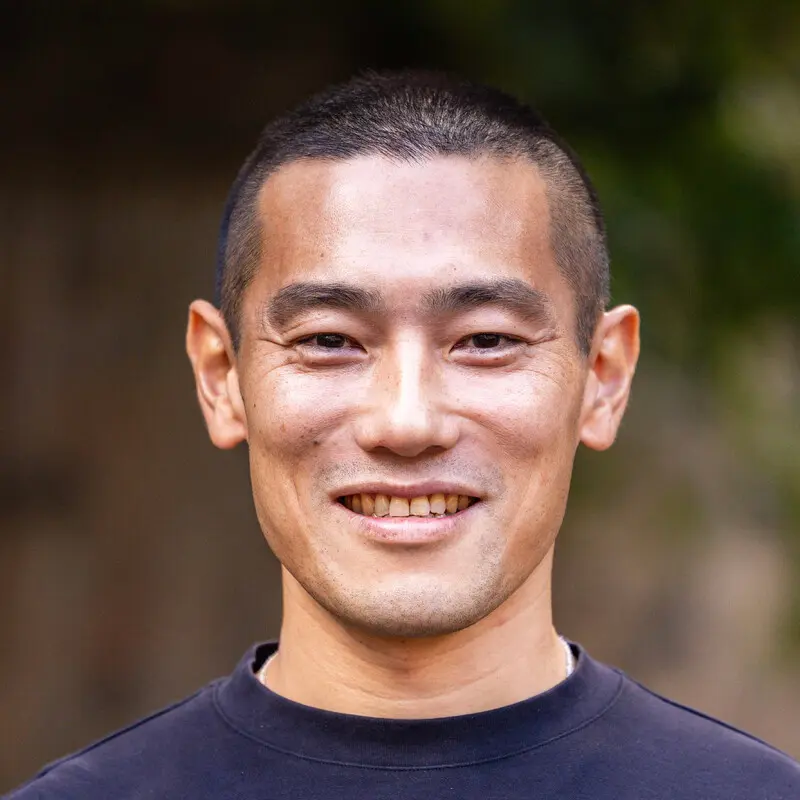
In this interview from theCUBE + NYSE Wired: Crypto Trailblazers, Yoshi Yokokawa, chief executive officer and co-founder of Alpaca, joins theCUBE + NYSE Wired's Gemma Allen to discuss how an API-first approach to securities clearing is positioning Alpaca at the intersection of traditional finance and the programmable financial system of the future. Yokokawa traces Alpaca's origins to a 2019 Y Combinator cohort, where the absence of a broker dealer API emerged as a clear market gap — one mirroring what Plaid and Stripe had accomplished in their respective vert...Read more
exploreKeep Exploring
What was the pivotal realization that led to founding the company—specifically, why build an API-focused self‑clearing broker‑dealer and custodial clearing infrastructure?add
How will the company's business model hold up in an AI-first world, and what is its current fundraising status (valuation, major investor-customers, amount raised, and runway)?add
How has involvement with the Endeavor Network affected your company’s global expansion, and what patterns or nuances do you see in developer audiences across different countries?add
There are two questions answered in the excerpt. In neutral form they are:
1) What factors motivated your move to Miami?
2) How many people work at your company, and what are your plans for hiring, growth, fundraising, and product focus over the next 12 months?add
>> Welcome back to theCUBE here at the New York Stock Exchange. This is Crypto Trailblazers, part of our program with NYSE Wired. And this is an epic week for the Crypto Trailblazer community with a lot of big events happening here throughout the week. Joining me now is a man who has surely made his mark on this industry in just under a decade, Yoshi Yokokawa, CEO and co-founder of Alpaca. Welcome, Yoshi.
Yoshi Yokokawa
>> Great to be here.
Gemma Allen
>> So you have a very interesting resume, right? Started your career in Lehman. From there, you have been certainly doing your bit to disrupt or to bring, I guess, some level of marriage of unity to Wall Street and the world of DeFi. Talk to me a little bit about Alpaca. What is this company? What do you do? And what is the mission statement here?
Yoshi Yokokawa
>> Yeah. Alpaca is a self-clearing broker dealer in the United States. And then also, we are a custodian clearing infrastructure API. So basically, what we do is that we are behind the scene players for a lot of retail broker dealers and the tokenization players around the globe. So that's what we do.
Gemma Allen
>> Okay. So the idea for this company, I know you were part of the 2019 YC intake, which had some very famous peers, right? Like Kalshi and Deel, companies that have gone onto very interesting trajectories like your own. But talk to me about the overall premise of this. You worked in the brokerage space yourself, saw some of the ways in which legacy tech was causing somewhat of an ongoing turn. Where was the kind of come to Jesus moment for you?
Yoshi Yokokawa
>> Yeah. I think before going into YC, obviously, we had some idea about being a broker dealer ourselves. But although I started my career at the Lehman, I never built our own brokerage because we're in the front office, but actually building a broker dealer is really more about compliance, operations, regulatory framework. It's more of the back office, mid-office. So I had to really learn everything from scratch. So that's what we had to do. But through YC, what we really learned is that there's definitely like a macro trend that was happening at that time. API, which is the interface with the programming has been really big. There's a success from the Plaid, success of the Stripe. Those are YC companies as well. That was really led the trend of how we can provide the API in the financial services in each verticals. And then broker dealer, you really didn't have an API. So that was really our problem statement when we went into YC.
Gemma Allen
>> So this API model, you decide, you wake up one day, any entrepreneur the world over and you want to build a FinTech app. Okay? You don't want the stress of having to go through FINRA and all of the regulations that come with doing business here on Wall Street. Your company essentially streamlines all of that for you. It's almost like a plug and play model, a UX front end model for that very problem, right? You leaned into the coding base or software engineers and developers as your key audience. Talk to me a little bit about that decision and how ... It's interesting, right? Because they are somewhat of a behind the curtain player for the most part. Explain what that audience engagement is like.
Yoshi Yokokawa
>> Yeah. I think there are two things that happen. So we definitely try to ... We love the app as Robinhood when we are kind of brainstorm, what is it for the FinTech? In 2015, 2016 when I was just playing out a lot of apps and then I really loved the Robinhood app. But what I realized is that it's so hard to kind of do an even better job than Robinhood did in the mobile first space. So what we realized is, okay, what is it that comes after the mobile first? Because when we are interacting, it's like a human first, and then it became like telephone, it became web browser. And Robinhood nailed it in the mobile first. So what comes after that? And we thought, "Oh, it's going to be programmings and then it's going to be more the algorithms and the AI will come that interface with that is needed." So that was really the kind of idea that we had, what comes after the mobile first. So that was really the idea that we had.
Gemma Allen
>> So you're selling into an audience on a base that's also going through somewhat of a re-imagination, right? We think about coders and software developers right now, there is a lot of question around what the future of that space will look like from the perspective of vibe coding and all of what we're seeing in the agentic gear, right? What are your thoughts? What are you seeing? Do you think that the sensationalist headlines are real? Do you think that the world of a software engineer has shifted fundamentally in three years? Talk to me about it.
Yoshi Yokokawa
>> I really think so. Because when we launched Alpaca as the stock trading API in 2018, we had a thesis that it's going to be a lot more software engineers because at that time there was like a lot of coding scores like Lambda School and then programming language is becoming even simpler, like Python and everything. So what we were thinking about, like definition of coding is evolving day by day. And what happened literally like last year with the vibe coding and everything, literally, everyone became a software developer. You don't have to write it, but like you can vibe code it to be a software engineer. So in a way, like our thesis back in 2018 has been always the same and they just suddenly accelerate it. So that's how I see what's happening in this AI first world.
Gemma Allen
>> Wow. And when you think back to that early days, you're going through the YC program, so much has changed in the market, right? In terms of how we think about what the future will look like from the perspective of audience engagement, how revenue models are vetted and the longevity of which, right? What are your thoughts and way of how this model is evolving? We think a lot about subscription, annuity revenue in the kind of software space that. We don't know what 10 years from now will look like. What are your thoughts? How do you think about it from the perspective of Alpaca?
Yoshi Yokokawa
>> I think that's a great question, because people talk about how the SaaS will actually survive with this like AI first and everything. But even though we talk about we are clearing broker dealer, we're the broker of infrastructure API, the reality of what we do is really just being a security clearing and custody business, and this business has existed more than 100 years.
Gemma Allen
>> For sure.
Yoshi Yokokawa
>> So regardless of what technology comes in, I believe that this foundation will continue to stay and exist. So I think like business model, at least for us, I don't think it will change much.
Gemma Allen
>> Okay.
Yoshi Yokokawa
>> Yeah.
Gemma Allen
>> So let's talk numbers for a second. Company is valued at over a billion dollars. Congratulations. That's phenomenal. You've raised 150 million to date. Two of your big backers are also customers. I'm guessing Kraken and Citadel. Talk to me a little bit about the process right now, raising money, where the company's at from the perspective of runway, et cetera.
Yoshi Yokokawa
>> Yeah. I mean, we've been always intentional about how we raise investments from who. Every investment that we receive, we consider them as our business partners. So that can be our clients, that can be our ecosystem partners. It can be part of our business development team. So that's how we think about it. And in terms of our business trajectory, our business again is in the securities clearing and custody business. This is a humongous, like $350 trillion security custody in the TradFi space. So it's a lot of dollar amount. We're just like scratching only the surface of it, so we're very excited for what's coming next.
Gemma Allen
>> We've seen a lot of activity in the crypto industry broadly over the last, I guess you could say two years or so, right? There's certainly been a massive narrative shift around just how impactful and anti-skepticism that was kind of, I guess. Brooming has certainly had its moment, right? Talk to me a little bit about the industry broadly. What sorts of trends are you seeing, especially from a builder perspective? I feel as though the world of AI and crypto, it's kind of been, is it a perfect storm? Is it a perfect marriage? What are your thoughts?
Yoshi Yokokawa
>> I think what's interesting is that, obviously, crypto price is not the highest compared to last year. But what's so cool about it is that the actual foundations of the buildup is not really stopping. If you think about stablecoin adoption or this system around the tokenization, that conversations continue to moving forward. So I think that's a very different thing that we're seeing compared to several cycles of the downturn of the crypto market. Right now, we're really thinking about this crypto related thing like stablecoins and tokenization to be real part of the financial system evolution. Just like New York Stock Exchange is involved, Nasdaq is involved, everyone's involved. So I'm very excited about that. And that's the reason why it's amazing time for the builders to come in because there's a whole big shift happening from the financial services moving from firstly paper to computer and now computer TradFi to the own chain. So when this big shift happens, I think there is a humongous opportunities exist.
Gemma Allen
>> And I guess when we look at the industry broadly, these shifts are happening. There's a lot more activity, a lot more hype and a little bit more noise, right? How do you think companies or especially companies like yours continue to stand out? What are companies really looking for? Is it like a very slick UX? Is it a very integrated experience? What is the real kind of buyer decision? What sorts of, I guess, nuances are happening in the background around these kind of buyer decisions? How do you stay competitive?
Yoshi Yokokawa
>> I think because we target developers, they are like very smart people and because they can build, they understand what's behind the scene and they're curious about what's behind the scene, which means that our job as an infrastructure facing developers is how we can build stuff internally as much as possible by ourselves so that developers can see that, "Oh, we are also building stuff by ourself." Instead of like outsourcing the licenses or outsourcing some systems, we internalize everything. I think that matters a lot for even developers as well, because we can talk in that same level, right? It's not like we are wrapping up the pieces together and providing the service. We're actually building everything internally. Same thing as license stack, same thing as like the system stack as well. So I think that is how we continue to stay extremely competitive. We are, of course, extremely regulated financial services company, but even before that, we are a tech company. We are the company who builds technology and systems, so I hope that we stay that way very much.
Gemma Allen
>> We hear a little bit about this idea of companies like yours being virtually integrated and horizontally aligned, right? How do you think about that from the perspective of this mass integration that some folks feel is actually at the cusp or the cutting edge of the competitive advantage of tomorrow? Is that something you think about a lot from, especially in the world of brokerages where systems have historically been clunky, there's a lot of different ... We look down here, for example, there's a lot of screens open at any one time, right?
Yoshi Yokokawa
>> Yeah, yeah.
Gemma Allen
>> Some of them have five or six screens on the globe. What are your thoughts?
Yoshi Yokokawa
>> I think that when we're thinking about bundling, there are multiple dimensions that we have to think about. One is there's always a trend of swinging of the bundling to unbundling. And then there's also, there is no one can really internalize, bundle everything in every single asset classes or every single financial services. So if you think about even like Goldman or JP Morgan or anyone, they don't own every stack, even in the United States, definitely not in the world. They always rely on someone else as a layer. So I think what's very important in my opinion is that what is our core strength and core value and in that space, we want to make sure that we vertically integrate, but others that may not be core, we want to prioritize the speed, which means that we want to partner with people and then we want to make sure that we launch first. So I think that understanding of the strength and what is a supplemental is, in my opinion, very important.
Gemma Allen
>> Wow, that's interesting perspective. So you have definitely had an interesting year two from the perspective of the Endeavor Entrepreneur Award. I guess it's an honor.
Yoshi Yokokawa
>> Yes, thank you.
Gemma Allen
>> I guess I should describe it, right? Less than 1.6% of applicants make the cut. Talk to me a little bit about that. Give us the background on that program. And also, what it means, like what sorts of doors does it open for you?
Yoshi Yokokawa
>> Yeah, yeah. I think Endeavor Network is extremely unique. One, it's very, very global and international. I think that when they launched it, their focus was what's happening outside of the Bay Area, Silicon Valley. And there are so many different companies and different businesses that's happening, not only in the Bay Area, not only in the United States, but really globally. So I think it allows us to get into so many different countries that we may not have a very close relationships to. So currently, we work with the financial institutions in 45 different countries. So that allows us to understand importance of being able to understand the cultures, being able to connect with the regulators in all different countries, having the right connections. That has been very, very important for us to expand our business. So Endeavor does have extremely strong relationship to so many different countries. So being entrepreneur, Endeavor entrepreneur, they see us as kind of, "Oh, they're actually Alpaca's legitimate company to be able to connect with certain people in many different countries." So that has been pushing our business grow faster.
Gemma Allen
>> That is so interesting. In terms of the developer audiences globally, do you see any interesting nuances?
Yoshi Yokokawa
>> Yes.
Gemma Allen
>> Is there any patterns emerged?
Yoshi Yokokawa
>> Yes. I think when I think about it, when we focus on developers, it doesn't matter if you speak English or not, right? As long as you understand the code, that's all that matters, which means that you may not speak English, it's okay, as long as you can code, which means that actually it's extremely universal than English. So I think it just happened to be the developer community is always global, international, and that has been helping our business. For example, one of the businesses that we work with in Saudi Arabia, they called up to us probably four years ago without knowing anything at all. I've never been to at the point Saudi Arabia and they said, "App is ready, just need to get approved so we can just launch it next week." I was like, "Whoa." They were like, "Oh, we're developers. We read your API docs, did the API keys in the sandbox environment apps already without us never talking to us, talking to them."
Gemma Allen
>> So the Saudis don't mess around, I guess.
Yoshi Yokokawa
>> Yeah, yeah. So developer community is universal, global, so it's really cool.
Gemma Allen
>> Okay. So Alpaca, talk to me a little bit about that. You yourself, I know it's not necessarily a global move, but you just moved to Miami, right?
Yoshi Yokokawa
>> Yeah.
Gemma Allen
>> There's a thriving tech scene emerging there.
Yoshi Yokokawa
>> Yes. Yes.
Gemma Allen
>> Is there any specific reason for the move? How would you rate? Because you knew enough to it, I think.
Yoshi Yokokawa
>> Yes.
Gemma Allen
>> At least you avoided the New York winter, which is terrific. It's still ongoing. What drove that move?
Yoshi Yokokawa
>> Well, I think one thing is that I continue to travel a lot because of these clients and partners that's truly across the globe. And then also, we are a full remote company, so we have employees from all the continents. For me to visit all the places, continue to be very, very important. And then also, I have to be, of course, close to here, New York. A lot of events happening. So we thought that, that place is going to be a right place for me, at least for now.
Gemma Allen
>> Well, not just for the sun then. There is multiple reasons. Alpaca, how many people are you? What is the plan? Are you guys hiring, growing, trying to raise more money? What does the next 12 months look like?
Yoshi Yokokawa
>> So we are now a little bit more than 350 people globally. And then, yes, we are very much hiring. And then we have a lot of things happening, right? AI, everything, because us being API, API is really the foundation of the AI and agents. So it's a lot of tailwind there. So we're investing a lot into that space as well, even more than just API. And then of course, tokenization. Tokenization has been moving superfast in terms of regulatory framework, even like New York Stock Exchange as well. A lot of partnerships happening. So we happen to have a lot of market share in the underlying securities of the tokenized stocks. So we are continuing to push that, partnering with a lot of people. So a lot of tailwinds into our business. So we're very excited and we're of course hiring.
Gemma Allen
>> Well, we love tailwinds and we love companies that are hiring. So Yoshi, wish you guys all the best.
Yoshi Yokokawa
>> Thank you.
Gemma Allen
>> Hope to have you back on theCUBE in the not too distant future. Thanks so much for joining.
Yoshi Yokokawa
>> Thank you. Thank you for having me.
Gemma Allen
>> I'm Gemma Allen here at theCUBE Studio at the New York Stock Exchange. This is Crypto Trailblazers, part of our programming with the NYSE Wired. Thanks so much for watching.









































 Gemma Allen