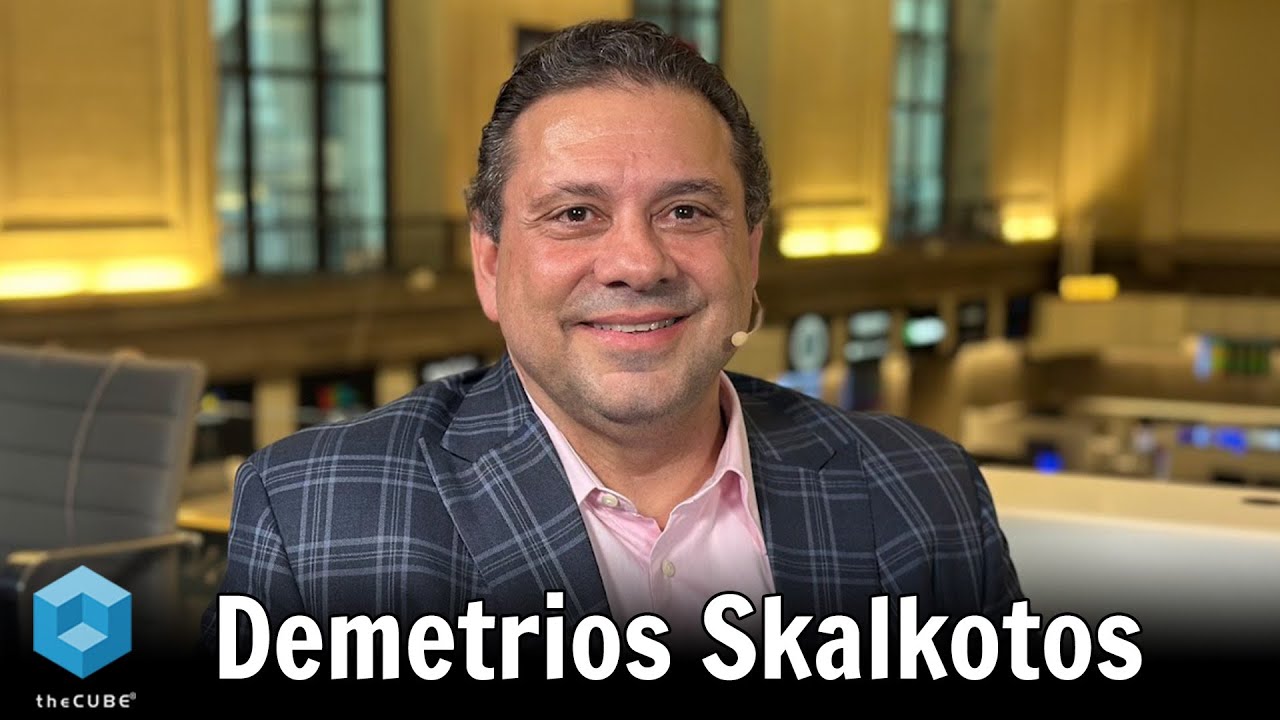
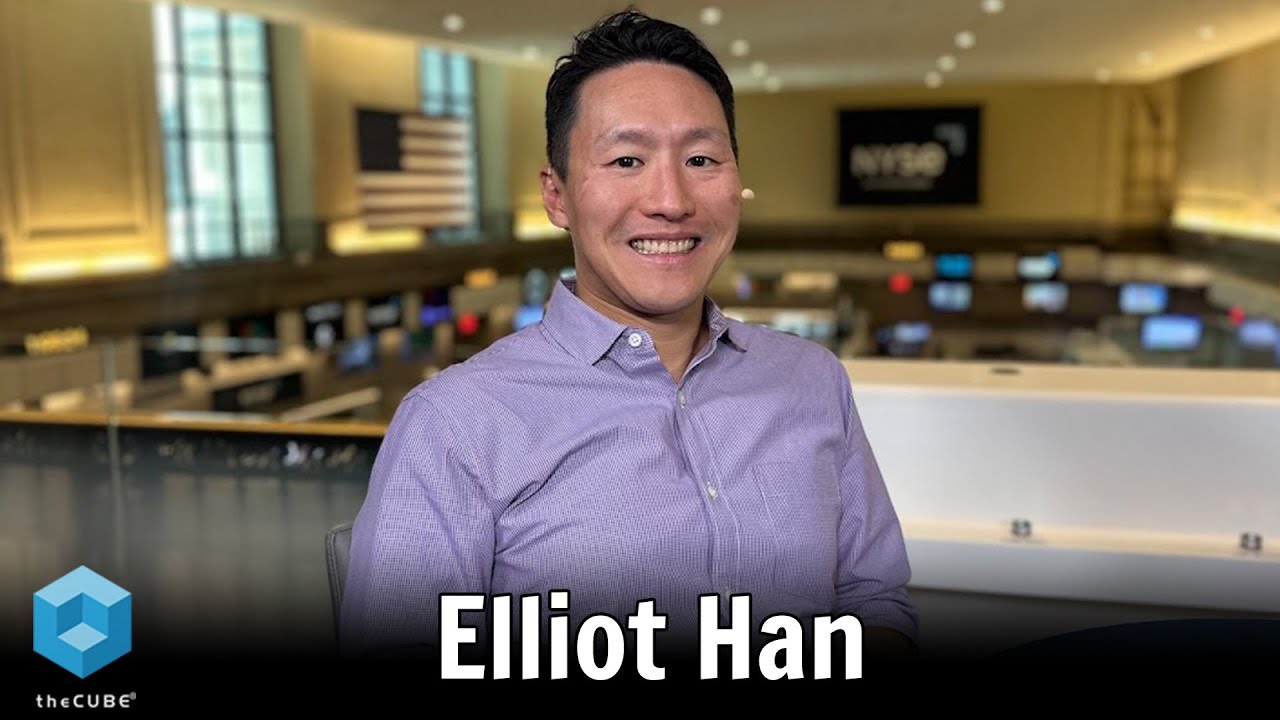
In this insightful episode of the Crypto Trailblazers series hosted by theCUBE, Mike Cagney of Figure Markets sits down with analysts from theCUBE Research to discuss groundbreaking advancements in blockchain technology and their implications for the finance sector. This video is part of the NYSE Wired digital event, aimed at bridging the gap between Silicon Valley and Wall Street by integrating technology and finance.
Cagney, an eminent figure in fintech, shares expertise on the transformative role of blockchain in financial markets during this interview. Conducted by seasoned analysts at theCUBE, the discussion delves into Figure’s innovative contributions, including their blockchain-native loan origination and securitization process. He outlines how Figure leverages blockchain to achieve cost reductions, enhanced security and improved liquidity in financial transactions.
Key takeaways from the interview highlight insights on the evolution of the Web3 ecosystem, such as the emergence of stablecoins as pivotal to transaction processes and the rise of decentralized finance (DeFi). Oltsik states these developments signify a shift towards democratizing finance, wherein truth and transparency are foundational. The conversation concludes with a look at Figure’s pioneering efforts in creating a new financial marketplace utilizing blockchain technology.
#CryptoTrailblazers #FigureMarkets #BlockchainInnovation #Web3 #NYEWired #BlockchainFinance #DecentralizedFinance #Fintech #Stablecoins
Find more SiliconANGLE news and analysis https://siliconangle.com/.
Follow theCUBE's wall-to-wall event coverage https://siliconangle.com/events/
Learn about the latest theCUBE events https://www.thecube.net/
00:00 - Intro
00:05 - Emerging Innovations in Financial Technology and Market Dynamics
02:45 - Key Elements in Financial Ecosystem Dynamics
06:20 - Blockchain: Truth and Transformation
09:39 - Shaping the Future: Innovations in Financial Markets and Stablecoin Integration
13:15 - Enabling the Future: Navigating Disruptions in Banking and Lending
16:51 - Exploring Opportunities and Building Confidence in the Blockchain Ecosystem
Forgot Password
Almost there!
We just sent you a verification email. Please verify your account to gain access to
theCUBE + NYSE Wired: Crypto Trailblazers. If you don’t think you received an email check your
spam folder.
Sign in to theCUBE + NYSE Wired: Crypto Trailblazers.
In order to sign in, enter the email address you used to registered for the event. Once completed, you will receive an email with a verification link. Open this link to automatically sign into the site.
Register For theCUBE + NYSE Wired: Crypto Trailblazers
Please fill out the information below. You will recieve an email with a verification link confirming your registration. Click the link to automatically sign into the site.
You’re almost there!
We just sent you a verification email. Please click the verification button in the email. Once your email address is verified, you will have full access to all event content for theCUBE + NYSE Wired: Crypto Trailblazers.
I want my badge and interests to be visible to all attendees.
Checking this box will display your presense on the attendees list, view your profile and allow other attendees to contact you via 1-1 chat. Read the Privacy Policy. At any time, you can choose to disable this preference.
Select your Interests!
add
Upload your photo
Uploading..
OR
Connect via Twitter
Connect via Linkedin
EDIT PASSWORD
Share
Forgot Password
Almost there!
We just sent you a verification email. Please verify your account to gain access to
theCUBE + NYSE Wired: Crypto Trailblazers. If you don’t think you received an email check your
spam folder.
Sign in to theCUBE + NYSE Wired: Crypto Trailblazers.
In order to sign in, enter the email address you used to registered for the event. Once completed, you will receive an email with a verification link. Open this link to automatically sign into the site.
Sign in to gain access to theCUBE + NYSE Wired: Crypto Trailblazers
Please sign in with LinkedIn to continue to theCUBE + NYSE Wired: Crypto Trailblazers. Signing in with LinkedIn ensures a professional environment.
Are you sure you want to remove access rights for this user?
Details
Manage Access
email address
Community Invitation
Edward Woodford, zerohash
In this insightful episode of the Crypto Trailblazers series hosted by theCUBE, Mike Cagney of Figure Markets sits down with analysts from theCUBE Research to discuss groundbreaking advancements in blockchain technology and their implications for the finance sector. This video is part of the NYSE Wired digital event, aimed at bridging the gap between Silicon Valley and Wall Street by integrating technology and finance.
Cagney, an eminent figure in fintech, shares expertise on the transformative role of blockchain in financial markets during this interview. Conducted by seasoned analysts at theCUBE, the discussion delves into Figure’s innovative contributions, including their blockchain-native loan origination and securitization process. He outlines how Figure leverages blockchain to achieve cost reductions, enhanced security and improved liquidity in financial transactions.
Key takeaways from the interview highlight insights on the evolution of the Web3 ecosystem, such as the emergence of stablecoins as pivotal to transaction processes and the rise of decentralized finance (DeFi). Oltsik states these developments signify a shift towards democratizing finance, wherein truth and transparency are foundational. The conversation concludes with a look at Figure’s pioneering efforts in creating a new financial marketplace utilizing blockchain technology.
#CryptoTrailblazers #FigureMarkets #BlockchainInnovation #Web3 #NYEWired #BlockchainFinance #DecentralizedFinance #Fintech #Stablecoins
Find more SiliconANGLE news and analysis https://siliconangle.com/.
Follow theCUBE's wall-to-wall event coverage https://siliconangle.com/events/
Learn about the latest theCUBE events https://www.thecube.net/
00:00 - Intro
00:05 - Emerging Innovations in Financial Technology and Market Dynamics
02:45 - Key Elements in Financial Ecosystem Dynamics
06:20 - Blockchain: Truth and Transformation
09:39 - Shaping the Future: Innovations in Financial Markets and Stablecoin Integration
13:15 - Enabling the Future: Navigating Disruptions in Banking and Lending
16:51 - Exploring Opportunities and Building Confidence in the Blockchain Ecosystem
>> Hey, I'm John Furrier with theCUBE. We are here at the New York Stock Exchange. This is our East Coast studio, our access point. It's our hub on the East Coast. Of course, we've got theCUBE Studios in Palo Alto, connecting tech with money, connecting money with tech. Obviously, you got a great community and the Crypto Trailblazers series, which started out as a very humble series, is now continuing to thunder away where we feature the leaders in crypto as crypto infrastructure, cryptocurrency. Digital goods are all now going mainstream, we continue that here. Edward Woodford, founder and CEO of Zero Hash is here. He's been innovating since the mid 2010, 2015, 2017, started this company in 2017, now establishing connections with the financial system where we start to see the ushering in of a new generation. Edward, thanks for coming in to our Crypto Trailblazers, you've been blazing the trails, now it's going mainstream. Thanks for coming in.
Edward Woodford
>> Yeah, thanks for having me.>> On the monologue intro there I was kind of hinting at something that we've been covering with this Crypto Trailblazers series is that it's so obvious to us, and now the world that the new guard and the old guard are working together. In traditional tech disruption the new guard displaces the old guard, not so much here, because they know they'll be displaced. So, you start to see real synergies and real working relationships. You guys have a platform that's being adopted and moving the needle. Explain what you guys do. Let's get into it. Because I think this is another example of crypto infrastructure with stablecoins and now things having visibility into how to make money.
Edward Woodford
>> Yeah, no, absolutely. I mean, our thesis is very aligned that there's effectively this blend of two worlds, and that's been our thesis since 2017. So, very briefly, I mean what we do is we allow brokerage platforms, wealth platforms to launch crypto within the application. So, think of groups like Interactive Brokers, and today we announced Morgan Stanley as a client, think of stablecoins as a payment method. We work with groups like Stripe and Shift4 and Caoshi, and then we also provide tokenization infrastructure. Our view is that those three pieces together increasingly are being leveraged within large financial institutions, so that's effectively what we do.>> And the other thing too, if you're inside the ropes, you've been inside the industry, now that's going mainstream. It's been going on for a while. If you look at a lot of the communities, their economies, okay, so you have now digital worlds merging in with the physical world. Go to look at Jensen Huang, they all over the news. Even yesterday a 100 billion investment in OpenAI. He talks about physical AI. Now, I want to bring that up, because the physical finance is meeting digital finance, and they work together. So, it's a one system. It's like first-party relationship between digital, and with digital assets now money's being made, money's being transacted. So Morgan Stanley adopts your platform. I can see them doing that. Take us through that interaction, because that's again, more evidence that the physical digital world, I mean we all get bank statements that's actually digital technically, but I mean, it's already here.
Edward Woodford
>> Yeah, no, I agree. I mean, look, I think this technology is effectively a disruptive way to change value globally, and it's a way to make money and value programmable. To your point around digital communities, it's now effectively allowing us to move value in a more seamless global instant 24/7 low-cost way that could be programmed in the same way that we program anything else. And obviously, you mentioned agents, for example. There's an increasingly a blend between agentic payments and blockchain, because agents want to be able to program things and you want to be able to authorize things. I think there's a beautiful application to blockchain more generally. But in terms of what we do with groups like Interactive Brokers and Morgan Stanley, effectively there where we've started is with their wealth and trade inside. And effectively, their clients are saying, "Look, we want crypto and or we already do this today somewhere else." And so, these groups are looking to offer crypto as an asset class, no different to any other asset that they offer today, seamless embedded within that customer experience. And that's effectively how I think banks will start. But these banks have already in some sense already put crypto in the rear-view mirror from a trading perspective. They're now spending an increased amounts of times in terms of tokenization and stable points. To your point about really looking at this as its core technology, that can disrupt the way that banks and large financial institutions move value globally around the world.>> What I love about what you guys are doing is that the platformization of finances here, and it's not like you buy a platform, it's truly enabling stuff. So yeah, look in the rear-view mirror, because that's enabled from the platform. Morgan Stanley is not like a low-end customer, I mean. So, that's a huge accomplishment. A lot of startups, they get some names, look at our roster and you don't usually see the big names on there. So Morgan, obviously huge endorsement. What's their use case? Take us through the mindset, what's going on in Morgan, because it's now being reported. We all knew this in the industry that all the banks we've been working on crypto trying to figure out where the shoe will drop. And even though they might not have publicly been talking about it, have had teams, because it's a technology play and a business model reinvention or renewal or extension.
Edward Woodford
>> Yeah, I mean, look, I think a lot of these banks are not starting from a static start. They're effectively moving from a moving start. And in the last year they've been able to effectively unlock a lot of this momentum. Sometimes I feel like a confessional, these groups, these very senior leaders of banks tell me all the things they've been doing in a personal capacity that they are able to bring into a professional capacity. But specifically to a question around Morgan Stanley, yes, they're a globally, systemically important bank. A bank that is 90 years old, has a massive reputation, a global footprint. And really the proposition to them and why partners like them use Zero Hash is because of our ability to deliver trust and to be able to innovate, but equally balance that with trust and security and soundness and compliance. But what I'm really excited about, and Jed Finn, who leads wealth from Morgan Stanley, did a deep dive interview with Bloomberg this morning. What I'm really excited there is the ability to offer clients instantly the ability access to spot crypto that they've been demanding within the existing interface that they use today to buy stocks or to manage their bank balance. And that is really, really exciting.>> It's interesting. The mainstreaming is also a forcing function from the demand. I mean, people see the price of Bitcoin going up, they see the price of Ethereum, they know it's a story value, they're starting to get it. "Okay, great. Welcome to the party." Now, let's talk about the business model you guys have, because now the market's clearly rocking. We see that clearly. How big are you guys? What's the business model? Take us through some of the fundamentals.
Edward Woodford
>> Yeah, so we don't share our revenue publicly as a private company, but what we do share is that we've grown revenue year-on-year for the last three years in an environment that frankly has been challenging. So, we're really excited by the step function from a global regulatory perspective to be able to continue to accelerate our growth. We're about 200 people based globally and we service about 75 of the world's largest brands and companies. And there'll be many, many more announcements over the next six months.>> How many employees you guys have?
Edward Woodford
>> About 200.>> So, you guys are growing?
Edward Woodford
>> Yeah, look, we've really been patient taking a long-term view. Look, I'm happy to keep building this business for another 10, 20 years. We take a really, really long view in terms of the world and the geographical potential here. And we've been building since 2017 when this was not the easiest thing to push on. And obviously, the dominoes have started to fall, but I still think we're incredibly early in terms of the unlocks here.>> Yeah. Talk about the momentum. Are you putting your pedal to the metal? Are you pressing the gas, pun intended? Are you investing in more growth? Is that the focus?
Edward Woodford
>> Yeah, so obviously with the raise today, over $100 million raised, really the core value proposition from the raise is bringing in a large number of strategics, whether that be Interactive Brokers, Morgan Stanley, SoFi, Apollo, Jump.trade and IMC. So, really a top tier set of players where there's a strategic angle with all of them. But yes, our goal is to continue to accelerate the growth and to frankly keep up with the demand of these very, very large institutions.>> You got to go to market opportunity, huge opportunity.
Edward Woodford
>> I'm confident we can achieve more in the next two years than we have in the last eight.>> All right, you got a great market. You got the fresh funding, you got great logos, great clients, got some partners getting on board. Let's talk about the platform, because I think this is the most interesting piece other than the momentum is that you're creating a platform that companies are going to be building on. And the enthusiasm has certainly been there, but confidence has always been that one factor. What's the platform's secret sauce? What's the key to the platform?
Edward Woodford
>> Yeah, I would say one is trust. So, taking a very prudential approach to being an enterprise, high throughput, stable platform, very secure. But I think really it's that balance between that trust factor, but then also being able to innovate. What I think is core, and you know this, but this is a fundamental technology. The same Bitcoin that has traded on platform today is actually fundamentally different technically from the Bitcoin that we started trading in 2017. And so, this space moves at such a velocity and such a pace that we have to be able to keep up with those innovations. And so we continue to innovate with the assets that we support, the implementations that we power, and the core deep technology around the stack. So, that is really our differentiator as well is to be able to innovate and to keep up with demand.>> Is there an order of operations that you see? Obviously, you have to knock down the low-hanging fruit and you got to get the stable platform, you got the crypto, you get the trading. You mentioned tokenization. This is again a huge, hot area. There's more being tokenized than just-
Edward Woodford
>> Exactly. I mean, look, these pieces, all of these pieces on the platform are live today with real implementation. But yes, tokenization is accelerating, and in part it's because of clarity from the SEC saying that fundamentally the technology in which securities are traded on doesn't fundamentally change the underlying asset. So, there's been a lot of clarity there. I think what you'll see is large institutions move from largely a proof of concept into actually mainstream.>> It's been quite genius actually, the clarity. The GENIUS Act and the CLARITY Act definitely have been amazing. I mean, when stablecoins, obviously a lot of different stablecoins really makes the U.S. dollar also a sovereign growth opportunity. Because you look at inflation outside the United States, now you have now a little bit global market. What's your perspective and reaction to stablecoins in terms of what that's going to impact outside of the obvious of making people comfortable clearing and trading?
Edward Woodford
>> Yeah, look, I think obviously GENIUS effectively requires issuers to hold dollars in short-term treasuries, and that's obviously attractive. But what I think people talk a lot about the store value story with regards to stables, I think what really excites me is this power as a effectively the world's global instant alternative payment method. Really is a method to move value instantly and globally. The store value is definitely an interesting piece, but for me it's that kind of transactional element that really, really excites me.>> And the stability. I mean, you can actually transact internationally paid against the U.S. dollar with any coin.
Edward Woodford
>> And globally and low cost. And I think a lot of the narrative today is focused on AUC, asset under custody of the issuer. I think the story will increasingly become, what is the total process volume? What is the TPV on which stable coins are leveraged globally? I think that would be a growing part of the story over the next 12 to 24 months.>> Yeah, I have to ask you, being an entrepreneur, because one of the things that I've been seeing, it's very clear to me coming from Silicon Valley to New York is, in my entire life I've never seen the financial sector truly have pure entrepreneurship. Now, there's been entrepreneurial activity in the New York financial world, be it get a prepaid calling card, sit under a rail, make a bunch and buy a boat, get a house in the Hamptons, but never structural change where someone can say, "Hey, I was working at Goldman Sachs, I was an associate of a hedge fund. I could do better and actually leave and actually start a company and they take territory." So, you're starting to see the infrastructure of finance, the stuff you're working on be an opportunity for entrepreneurs like in tech where smart people can just go see an opportunity and take it down. And actually, take sheer away from a big institutional incumbent.
Edward Woodford
>> Yeah, I mean, I agree with that largely. I mean, I think the last very dramatic shift in this space was the electronification of markets. And so, if you look at the story of, for example, Interactive Brokers who led our round, if you look at the story of Thomas Peterffy, the founder, he was one of the innovators in electronification of markets. And there was some pushback in terms of what he was doing. And so, I think this is actually a very similar disruptive power. It was 40 years old.>> Those gatekeepers already vulnerable and they know it, but they have to align with the people.
Edward Woodford
>> They have to adapt, and I think there's a huge velocity to adapt. And now there's a desire effectively to catch up.>> You said it's early days, early innings, early days. Peg what's coming. Because again, if you've got entrepreneurship, which we kind of agree that if you agree that's happening, then you say, "Okay, what's next?" What's next is, at least my view, and I'll get your thoughts on this, is that productization happens. We've been seeing the evolution of staking all these new products, especially with assets, treasuries, all kinds of kind of stuff. So, the question is, is there products that will come in your mind from this dislocation or this transition? When markets are in transition, winners emerge and losers emerge too, but the productization of finance is happening. What's your thoughts on that? Do you have any opinion?
Edward Woodford
>> Yeah, look, I think over the next 12 months every single bank in the U.S. that has a wealth of trading arm will offer crypto. I also think over the next 24 months banks will, and every financial institution will meaningfully move into the tokenization space. I think that you'll see meaningful parts of financial institution balance sheets be tokenized in a way to create additional value. And I think that's very, very clear.>> Talk about your company, what's next for you guys? What's on the plan? What are you focused on? What are you optimizing for? Put a plug-in.
Edward Woodford
>> Yeah, I mean, look, we're continuing to scale. I mean, the world has shifted in the last 12 months dramatically. And so, looking to continue to scale, looking to continue to innovate. You mentioned, for example, staking. We're rolling out staking later this year with a number of our largest partners. So, more of growing the total addressable market across the space.>> You're blazing trail.
Edward Woodford
>> Thank you.>> All right, congratulations. Thanks for coming on our trailblazer program. Appreciate it.
Edward Woodford
>> Thanks for having me.>> Thank you.
Edward Woodford
>> Appreciate it.>> All right. I'm John Furry with theCUBE. The Crypto Trailblazer series really is highlighting the leaders, but more importantly, it's highlighting the work that's getting done. And you're starting to see the replatformization of money, software, infrastructure, and finance. And it's converging with AI agents and other things will make the software smarter. And again, like automated trading, automated everything on digital will come. And of course, we're doing our best to bring that to you. Thanks for watching.
>> Hey, I'm John Furrier with theCUBE. We are here at the New York Stock Exchange. This is our East Coast studio, our access point. It's our hub on the East Coast. Of course, we've got theCUBE Studios in Palo Alto, connecting tech with money, connecting money with tech. Obviously, you got a great community and the Crypto Trailblazers series, which started out as a very humble series, is now continuing to thunder away where we feature the leaders in crypto as crypto infrastructure, cryptocurrency. Digital goods are all now going mainstream, we continue that here. Edward Woodford, founder and CEO of Zero Hash is here. He's been innovating since the mid 2010, 2015, 2017, started this company in 2017, now establishing connections with the financial system where we start to see the ushering in of a new generation. Edward, thanks for coming in to our Crypto Trailblazers, you've been blazing the trails, now it's going mainstream. Thanks for coming in.
Edward Woodford
>> Yeah, thanks for having me.>> On the monologue intro there I was kind of hinting at something that we've been covering with this Crypto Trailblazers series is that it's so obvious to us, and now the world that the new guard and the old guard are working together. In traditional tech disruption the new guard displaces the old guard, not so much here, because they know they'll be displaced. So, you start to see real synergies and real working relationships. You guys have a platform that's being adopted and moving the needle. Explain what you guys do. Let's get into it. Because I think this is another example of crypto infrastructure with stablecoins and now things having visibility into how to make money.
Edward Woodford
>> Yeah, no, absolutely. I mean, our thesis is very aligned that there's effectively this blend of two worlds, and that's been our thesis since 2017. So, very briefly, I mean what we do is we allow brokerage platforms, wealth platforms to launch crypto within the application. So, think of groups like Interactive Brokers, and today we announced Morgan Stanley as a client, think of stablecoins as a payment method. We work with groups like Stripe and Shift4 and Caoshi, and then we also provide tokenization infrastructure. Our view is that those three pieces together increasingly are being leveraged within large financial institutions, so that's effectively what we do.>> And the other thing too, if you're inside the ropes, you've been inside the industry, now that's going mainstream. It's been going on for a while. If you look at a lot of the communities, their economies, okay, so you have now digital worlds merging in with the physical world. Go to look at Jensen Huang, they all over the news. Even yesterday a 100 billion investment in OpenAI. He talks about physical AI. Now, I want to bring that up, because the physical finance is meeting digital finance, and they work together. So, it's a one system. It's like first-party relationship between digital, and with digital assets now money's being made, money's being transacted. So Morgan Stanley adopts your platform. I can see them doing that. Take us through that interaction, because that's again, more evidence that the physical digital world, I mean we all get bank statements that's actually digital technically, but I mean, it's already here.
Edward Woodford
>> Yeah, no, I agree. I mean, look, I think this technology is effectively a disruptive way to change value globally, and it's a way to make money and value programmable. To your point around digital communities, it's now effectively allowing us to move value in a more seamless global instant 24/7 low-cost way that could be programmed in the same way that we program anything else. And obviously, you mentioned agents, for example. There's an increasingly a blend between agentic payments and blockchain, because agents want to be able to program things and you want to be able to authorize things. I think there's a beautiful application to blockchain more generally. But in terms of what we do with groups like Interactive Brokers and Morgan Stanley, effectively there where we've started is with their wealth and trade inside. And effectively, their clients are saying, "Look, we want crypto and or we already do this today somewhere else." And so, these groups are looking to offer crypto as an asset class, no different to any other asset that they offer today, seamless embedded within that customer experience. And that's effectively how I think banks will start. But these banks have already in some sense already put crypto in the rear-view mirror from a trading perspective. They're now spending an increased amounts of times in terms of tokenization and stable points. To your point about really looking at this as its core technology, that can disrupt the way that banks and large financial institutions move value globally around the world.>> What I love about what you guys are doing is that the platformization of finances here, and it's not like you buy a platform, it's truly enabling stuff. So yeah, look in the rear-view mirror, because that's enabled from the platform. Morgan Stanley is not like a low-end customer, I mean. So, that's a huge accomplishment. A lot of startups, they get some names, look at our roster and you don't usually see the big names on there. So Morgan, obviously huge endorsement. What's their use case? Take us through the mindset, what's going on in Morgan, because it's now being reported. We all knew this in the industry that all the banks we've been working on crypto trying to figure out where the shoe will drop. And even though they might not have publicly been talking about it, have had teams, because it's a technology play and a business model reinvention or renewal or extension.
Edward Woodford
>> Yeah, I mean, look, I think a lot of these banks are not starting from a static start. They're effectively moving from a moving start. And in the last year they've been able to effectively unlock a lot of this momentum. Sometimes I feel like a confessional, these groups, these very senior leaders of banks tell me all the things they've been doing in a personal capacity that they are able to bring into a professional capacity. But specifically to a question around Morgan Stanley, yes, they're a globally, systemically important bank. A bank that is 90 years old, has a massive reputation, a global footprint. And really the proposition to them and why partners like them use Zero Hash is because of our ability to deliver trust and to be able to innovate, but equally balance that with trust and security and soundness and compliance. But what I'm really excited about, and Jed Finn, who leads wealth from Morgan Stanley, did a deep dive interview with Bloomberg this morning. What I'm really excited there is the ability to offer clients instantly the ability access to spot crypto that they've been demanding within the existing interface that they use today to buy stocks or to manage their bank balance. And that is really, really exciting.>> It's interesting. The mainstreaming is also a forcing function from the demand. I mean, people see the price of Bitcoin going up, they see the price of Ethereum, they know it's a story value, they're starting to get it. "Okay, great. Welcome to the party." Now, let's talk about the business model you guys have, because now the market's clearly rocking. We see that clearly. How big are you guys? What's the business model? Take us through some of the fundamentals.
Edward Woodford
>> Yeah, so we don't share our revenue publicly as a private company, but what we do share is that we've grown revenue year-on-year for the last three years in an environment that frankly has been challenging. So, we're really excited by the step function from a global regulatory perspective to be able to continue to accelerate our growth. We're about 200 people based globally and we service about 75 of the world's largest brands and companies. And there'll be many, many more announcements over the next six months.>> How many employees you guys have?
Edward Woodford
>> About 200.>> So, you guys are growing?
Edward Woodford
>> Yeah, look, we've really been patient taking a long-term view. Look, I'm happy to keep building this business for another 10, 20 years. We take a really, really long view in terms of the world and the geographical potential here. And we've been building since 2017 when this was not the easiest thing to push on. And obviously, the dominoes have started to fall, but I still think we're incredibly early in terms of the unlocks here.>> Yeah. Talk about the momentum. Are you putting your pedal to the metal? Are you pressing the gas, pun intended? Are you investing in more growth? Is that the focus?
Edward Woodford
>> Yeah, so obviously with the raise today, over $100 million raised, really the core value proposition from the raise is bringing in a large number of strategics, whether that be Interactive Brokers, Morgan Stanley, SoFi, Apollo, Jump.trade and IMC. So, really a top tier set of players where there's a strategic angle with all of them. But yes, our goal is to continue to accelerate the growth and to frankly keep up with the demand of these very, very large institutions.>> You got to go to market opportunity, huge opportunity.
Edward Woodford
>> I'm confident we can achieve more in the next two years than we have in the last eight.>> All right, you got a great market. You got the fresh funding, you got great logos, great clients, got some partners getting on board. Let's talk about the platform, because I think this is the most interesting piece other than the momentum is that you're creating a platform that companies are going to be building on. And the enthusiasm has certainly been there, but confidence has always been that one factor. What's the platform's secret sauce? What's the key to the platform?
Edward Woodford
>> Yeah, I would say one is trust. So, taking a very prudential approach to being an enterprise, high throughput, stable platform, very secure. But I think really it's that balance between that trust factor, but then also being able to innovate. What I think is core, and you know this, but this is a fundamental technology. The same Bitcoin that has traded on platform today is actually fundamentally different technically from the Bitcoin that we started trading in 2017. And so, this space moves at such a velocity and such a pace that we have to be able to keep up with those innovations. And so we continue to innovate with the assets that we support, the implementations that we power, and the core deep technology around the stack. So, that is really our differentiator as well is to be able to innovate and to keep up with demand.>> Is there an order of operations that you see? Obviously, you have to knock down the low-hanging fruit and you got to get the stable platform, you got the crypto, you get the trading. You mentioned tokenization. This is again a huge, hot area. There's more being tokenized than just-
Edward Woodford
>> Exactly. I mean, look, these pieces, all of these pieces on the platform are live today with real implementation. But yes, tokenization is accelerating, and in part it's because of clarity from the SEC saying that fundamentally the technology in which securities are traded on doesn't fundamentally change the underlying asset. So, there's been a lot of clarity there. I think what you'll see is large institutions move from largely a proof of concept into actually mainstream.>> It's been quite genius actually, the clarity. The GENIUS Act and the CLARITY Act definitely have been amazing. I mean, when stablecoins, obviously a lot of different stablecoins really makes the U.S. dollar also a sovereign growth opportunity. Because you look at inflation outside the United States, now you have now a little bit global market. What's your perspective and reaction to stablecoins in terms of what that's going to impact outside of the obvious of making people comfortable clearing and trading?
Edward Woodford
>> Yeah, look, I think obviously GENIUS effectively requires issuers to hold dollars in short-term treasuries, and that's obviously attractive. But what I think people talk a lot about the store value story with regards to stables, I think what really excites me is this power as a effectively the world's global instant alternative payment method. Really is a method to move value instantly and globally. The store value is definitely an interesting piece, but for me it's that kind of transactional element that really, really excites me.>> And the stability. I mean, you can actually transact internationally paid against the U.S. dollar with any coin.
Edward Woodford
>> And globally and low cost. And I think a lot of the narrative today is focused on AUC, asset under custody of the issuer. I think the story will increasingly become, what is the total process volume? What is the TPV on which stable coins are leveraged globally? I think that would be a growing part of the story over the next 12 to 24 months.>> Yeah, I have to ask you, being an entrepreneur, because one of the things that I've been seeing, it's very clear to me coming from Silicon Valley to New York is, in my entire life I've never seen the financial sector truly have pure entrepreneurship. Now, there's been entrepreneurial activity in the New York financial world, be it get a prepaid calling card, sit under a rail, make a bunch and buy a boat, get a house in the Hamptons, but never structural change where someone can say, "Hey, I was working at Goldman Sachs, I was an associate of a hedge fund. I could do better and actually leave and actually start a company and they take territory." So, you're starting to see the infrastructure of finance, the stuff you're working on be an opportunity for entrepreneurs like in tech where smart people can just go see an opportunity and take it down. And actually, take sheer away from a big institutional incumbent.
Edward Woodford
>> Yeah, I mean, I agree with that largely. I mean, I think the last very dramatic shift in this space was the electronification of markets. And so, if you look at the story of, for example, Interactive Brokers who led our round, if you look at the story of Thomas Peterffy, the founder, he was one of the innovators in electronification of markets. And there was some pushback in terms of what he was doing. And so, I think this is actually a very similar disruptive power. It was 40 years old.>> Those gatekeepers already vulnerable and they know it, but they have to align with the people.
Edward Woodford
>> They have to adapt, and I think there's a huge velocity to adapt. And now there's a desire effectively to catch up.>> You said it's early days, early innings, early days. Peg what's coming. Because again, if you've got entrepreneurship, which we kind of agree that if you agree that's happening, then you say, "Okay, what's next?" What's next is, at least my view, and I'll get your thoughts on this, is that productization happens. We've been seeing the evolution of staking all these new products, especially with assets, treasuries, all kinds of kind of stuff. So, the question is, is there products that will come in your mind from this dislocation or this transition? When markets are in transition, winners emerge and losers emerge too, but the productization of finance is happening. What's your thoughts on that? Do you have any opinion?
Edward Woodford
>> Yeah, look, I think over the next 12 months every single bank in the U.S. that has a wealth of trading arm will offer crypto. I also think over the next 24 months banks will, and every financial institution will meaningfully move into the tokenization space. I think that you'll see meaningful parts of financial institution balance sheets be tokenized in a way to create additional value. And I think that's very, very clear.>> Talk about your company, what's next for you guys? What's on the plan? What are you focused on? What are you optimizing for? Put a plug-in.
Edward Woodford
>> Yeah, I mean, look, we're continuing to scale. I mean, the world has shifted in the last 12 months dramatically. And so, looking to continue to scale, looking to continue to innovate. You mentioned, for example, staking. We're rolling out staking later this year with a number of our largest partners. So, more of growing the total addressable market across the space.>> You're blazing trail.
Edward Woodford
>> Thank you.>> All right, congratulations. Thanks for coming on our trailblazer program. Appreciate it.
Edward Woodford
>> Thanks for having me.>> Thank you.
Edward Woodford
>> Appreciate it.>> All right. I'm John Furry with theCUBE. The Crypto Trailblazer series really is highlighting the leaders, but more importantly, it's highlighting the work that's getting done. And you're starting to see the replatformization of money, software, infrastructure, and finance. And it's converging with AI agents and other things will make the software smarter. And again, like automated trading, automated everything on digital will come. And of course, we're doing our best to bring that to you. Thanks for watching.