We just sent you a verification email. Please verify your account to gain access to
theCUBE + NYSE Wired: Crypto Trailblazers. If you don’t think you received an email check your
spam folder.
Sign in to theCUBE + NYSE Wired: Crypto Trailblazers.
In order to sign in, enter the email address you used to registered for the event. Once completed, you will receive an email with a verification link. Open this link to automatically sign into the site.
Register For theCUBE + NYSE Wired: Crypto Trailblazers
Please fill out the information below. You will recieve an email with a verification link confirming your registration. Click the link to automatically sign into the site.
You’re almost there!
We just sent you a verification email. Please click the verification button in the email. Once your email address is verified, you will have full access to all event content for theCUBE + NYSE Wired: Crypto Trailblazers.
I want my badge and interests to be visible to all attendees.
Checking this box will display your presense on the attendees list, view your profile and allow other attendees to contact you via 1-1 chat. Read the Privacy Policy. At any time, you can choose to disable this preference.
Select your Interests!
add
Upload your photo
Uploading..
OR
Connect via Twitter
Connect via Linkedin
EDIT PASSWORD
Share
Forgot Password
Almost there!
We just sent you a verification email. Please verify your account to gain access to
theCUBE + NYSE Wired: Crypto Trailblazers. If you don’t think you received an email check your
spam folder.
Sign in to theCUBE + NYSE Wired: Crypto Trailblazers.
In order to sign in, enter the email address you used to registered for the event. Once completed, you will receive an email with a verification link. Open this link to automatically sign into the site.
Sign in to gain access to theCUBE + NYSE Wired: Crypto Trailblazers
Please sign in with LinkedIn to continue to theCUBE + NYSE Wired: Crypto Trailblazers. Signing in with LinkedIn ensures a professional environment.
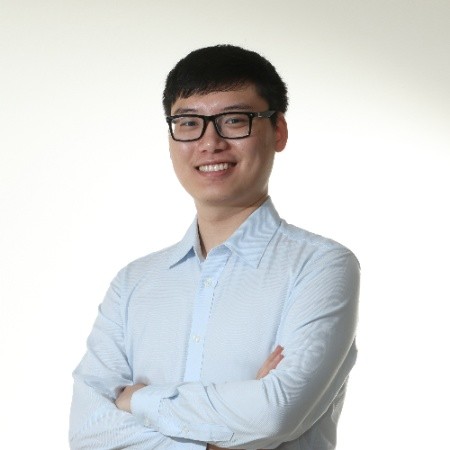
>> Welcome back everyone to theCUBE's presentation of Crypto Trailblazers here. I'm John Furrier and the Palo Alto Studio's host of theCUBE. YQ is here. He is the co-founder of AltLayer, part of the series where all the experts are coming in, the Ethereum Foundation, the entire communities in the Bay Area, having great activations at Stanford and Berkeley and all through the Bay Area, dinners, meetups, hackathons, the best of the best are in town, and of course, the movement of Ethereum continues. YQ, thanks for coming in theCUBE. Appreciate it as we conclude day one. Thanks for coming in.
YQ Jia
>> Yeah, thanks for the invite. It's great to be here.>> Yeah, so dCELL's coming, Metallic's in town, everyone's excited. Ethereum has always been a great developer platform. I call it Act Two because Act One was the beginning. Now we get seeing some scales, some competition, but the game is still the same, open decentralized build apps, have smart contracts, have scalability, have value creation as the ethos.
YQ Jia
>> Yeah, absolutely.>> The market's good right now. Give us your perspective.
YQ Jia
>> Yeah, so I feel like, so basically Ethereum ecosystem, I've been Ethereum ecosystem since 2015. So in Singapore hosted Vitalik and Ethereum Foundation people for multiple conferences in Singapore. And I feel like for the past decade we really achieved a lot of milestones. For example, we make Ethereum and L2 so fast and so efficient and also affordable for a lot of developers and users. And at the same time as we know right after so many years we roughly solved the scalability issues. But right now it's really about how we can really address the problem to bring more users for the applications. And so that's why you can see probably we encounter a bunch of these challenges from Solana, the other chains because they have a lot of retail users in this cycle. But I believe if you look at the participants builders and also developers in today's event, I have all that, this phase in that we definitely have more long-term builders building all different applications like this DeFi social game and at the same time a lot of these new phases and we just feel like probably beyond the traditional application in crypto we can also bring AI agents into blockchain. That's also one of the biggest themes in today's event.>> It's funny, it's like you look at Nvidia. Nvidia stock was doing great when the AI wave, but before AI, you have gaming, crypto AI, nice progression for an Nvidia. Hats off to Nvidia is making some good money on that. But the reality is that a lot of crypto engineering went to AI and AI is coming back to blockchain, a lot of good problems to solve. What are some of your solutions that you're building to make it easier because I think there's going to be a resurgence of Ethereum one momentum in that movement. Part two I call it because we're now on that next wave. You got AI which helps with code assistance and could fill in some gaps potentially. So what are you seeing with AI as it intersects the blockchain with Ethereum?
YQ Jia
>> Yeah, I feel like as you mentioned, so in the previous keynotes and panels I already mentioned crypto AI is always a natural fit because for AI agents and probably in the future this AGI, it definitely needs its own identity, probably wallets and also vaults for its own data and also assets. And if we look at blockchains or Ethereum, naturally all these agents or AGI in the future, they can naturally have all these wallets, identities on-chain. And at the same times, as you mentioned, we are also actively building a bunch of these infrastructure for the agents on-chain. So one of the things we build called Autonome is basically a verifiable agent hosting platform. It's a local platform. So basically any developers or user can just quickly launch agent on this platform. And we already have a lot of these agent frameworks. For example, we collaborate Coinbase building this crypto AI agent framework on top of it.
But at the same time, as you mentioned, we also need to address some sort of pinpoints, which the Web-to-AI couldn't address. For example, this verifiability. There's some very popular crypto AI agents in the market. One of them is called AIXBT. It's a lot of fun tweets and people doctor that it's basically behind the scenes is a bunch of students how to manually reply the tweets and also the comments. So then the blockchain and also technology we have right now, we can also provide this verifiability. So that means in Web-to-AI, we don't know whether it's by a bunch of students and replying the content. But in crypto we can use this confidential compute also this AVS and ZK technology to make sure this supply chain is verifiable from these training inference and also the AI agents to reply to the users or clients. So that's something I believe either with us or with all the latest blockchain technologies we can uniquely provide for this AI space.>> I just love the idea of any acceleration is great, certainly in a market where decentralization is becoming the norm. People are seeing open source certainly on the AI side become a bit very important. It's already been important for your community. Talk about your company, AltLayer. What does it do? Give a quick overview of what you guys do.
YQ Jia
>> Yeah, since 2021 we started AltLayer and the biggest vision we have is to really accelerate the scaling of crypto. So since day one, we are providing this so called roll-up as a service and basically help all different applications and also projects to scale their infrastructure. So basically it's really similar to AWS or Google Cloud, but in crypto, if you want to quickly launch a chain, you can just use our platform, click a bunch of buttons, and then we can quickly launch a roll-up for the projects. And we already have over 40 paid clients and launch these infrastructures for them to scale. And beyond that, the crypto space is moving so fast and with our close partners, like EigenLayer, we granually provide another line of business called AVS as a service. It's for roll-up as a service. You can treat it as we are providing this on-chain execution as service. And how about off-chain? And then the AVS as a service basically we can handle all different services off-chain and just wrap up everything into a local platform. And beyond that is also the third business line, as I mentioned to you just now. It's verifiable agents as a service. So there is a local platform you can just quickly click and then you can launch a verifiable agent and we basically finish all the heavy lifting so everything is transparent to the developers and the user.>> Do you provision infrastructure for crypto that's essentially like AWS?
YQ Jia
>> Yes.>> Stand it up. What's the scope? You got 40 customers, what's the scope of the execution? How big are the chains? What are some of the use cases? Can you give some examples?
YQ Jia
>> Yeah, so far we help our partners and clients precise, I think over 600 million transactions and as I just mentioned all different companies. Some of them running these centralized exchanges like this HashKey chain, they are the first licensed centralized exchange in Asia. And beyond that they're another company called Swell. They are providing this risk taking service. There are this Eigenlayer and also some other providers. And beyond that, we are also working with one of the biggest blockchain gaming company, as I mentioned to you, the DJT. We are launching this Sangouchi rollout for them to host these Sangouchi games. And beyond that, we are also working with->> Games are hot right now.
YQ Jia
>> Yes .>> Games are great. You've got players, you got audience, they want measurement.
YQ Jia
>> Yeah, the cool part, we remove the gas, so it's a blockchain, but at the same time there's no gas. So literally you play like a web to player, but at the same time underlying is blockchain.>> So it's attainable.
YQ Jia
>> Yes.>> So if someone can actually do it, not worry about gas or other overhead.
YQ Jia
>> Yeah, yeah, yeah.>> And performance is good too?
YQ Jia
>> Super good. I mean it is based on the stacks. For example, we work closely with our partners like OP and Arbitrum and also some other ZK providers. We make this throughput easily precise, a few thousand transaction per second. And beyond that with our internal, a bunch of these experts improving this underlying infrastructure, we also reduce the cost to a very affordable price. So that's something as you mentioned. So I just feel like nowadays blockchain is no longer as difficult as 10 years ago to launch. And right now with our service we can just help them just as I mentioned, click and deploy.>> Got it. Final question for you. What's the big stories coming out of the Bay Area visit and where are you based out of?
YQ Jia
>> Singapore.>> You're in Singapore. So there's a contingent from Singapore. Welcome to the Bay Area. What's it like? Give me some stories, observations, hallway, conversations, presentations, what's your observation? Share a couple stories with us.
YQ Jia
>> I really love Bay Area or San Francisco. At least 10 years ago, the first time when I came to San Jose for my first computer security conference is called Security and Privacy. We typically would call it Auckland because originally it was held in Auckland but later moved to San Jose. It was so good. I love the culture, the environment, especially the people here. There's so many talents here.>> Super geeks are here. They love it.
YQ Jia
>> Super geeks. A lot of ideas. People love to exchange ideas.>> What's the coolest idea you heard?
YQ Jia
>> So far, I still feel like it's around this crypto AI. I got some new artifacts around people are building all different companies around these verifiable AI. As I mentioned, it's a natural feat. Beyond that, I also met a bunch of my old friends like Vitalik, Tomas and also a bunch of friends. They're based in San Francisco. I really love the people here to be honest, all the new ideas. It's .>> Yes, energy is great, people are cool.
YQ Jia
>> Energy is great. Yeah.>> So like Amazon Web Services, in the early days, because I remember that generation because I was using it before they had custom domains and you'd see two strings were like this long and then you could put URLs in there, was how early it was. And I'll never forget how cool it was to just not have to buy a box and post it in a shared rack with the top open so it would cool down and the noise. And I got neighbors and I'm sharing a switch. So what happened with Amazon, it attracted a lot of startups, names no one's ever heard of like Airbnb, Dropbox. I just saw Drew Houston at the HumanX in Vegas and he's aged a bit. Obviously that generation's gotten older, but now the new generation's coming in. So the next startup that no one's ever heard of will be a big name and usually that no one knows and they're usually crazy ideas like Airbnb was the craziest idea ever, the original idea, everyone knows that story. What are some of the things you're seeing? Because you're probably going to see those startups because they're going to go the path of least resistance. How do I stand up some infrastructure to see and just to play around or launch an idea and its democratization is beautiful with decentralization. So you're going to see that. What are you seeing for those startup customers, not the big money deals but the ones that are doing stuff. What are you seeing with the builders that are putting stuff together, a couple friends sharing an apartment, dorm room? There's a lot of collaboration going on right now. What are cool things you're seeing?
YQ Jia
>> You are completely right. I think in crypto, another thing's quite different from the Internet era is that people no longer working at garage. Everyone is working at his home and working remotely. And I talk to a lot of my friends, they're also the founder of different projects. Almost everyone is working remotely even they have the office but people don't really go to the office. That's the one trend. And beyond that it is as you mentioned, ow about the cool ideas. I just feel like so far I can->> Two guys hanging out on Telegram, okay?
YQ Jia
>> Yes, absolutely. And at the same time I feel like definitely this social plus AI plus crypto will be the future.>> What do you mean by that?
YQ Jia
>> I mean as I mentioned to you, right now infrastructure is no longer the blocker for application builders, but what are the biggest application or the crypto native application we have in crypto is still about trading. So beyond trading, we really need to have some cool ideas around to replace the Internet application. I believe social AI probably in the next generation TikTok or something will be crypto native. It'll be natively with these ->> On-chain crypto with tokens, with all the features of the infrastructure.
YQ Jia
>> And also social. Definitely social. It's because->> People are part of the equation.
YQ Jia
>> Yes, yes. I already talked to a bunch of projects and friends. They're trying to figure out how to have the best combination for it. For the past few years we had this friend tag, we have Pump.fun, we have a bunch of these similar ideas, but it's not sustainable. You got ideas some bonding curve like the token economics not working, but I just feel like after multiple social experiments, definitely for the next few at regions of this kind of social AI and DeFi ideas will just come out, as you mentioned, can be the next big probably Google, Facebook, something like that.>> YQ, great to have you on. Last minute we have left, put a plug in for the company. What are you working on? What's the cool things? What are you most excited about?
YQ Jia
>> I did my PD in consensus and also privacy and I build this earlier, as I mentioned, our vision is to really accelerate and skill this crypto and Web3. I hope probably for the next few years, as you mentioned, we can be one of the biggest players in the space to continuously providing the infrastructure for all the big companies in crypto. And at the same time, probably as you mentioned, we can probably incubate or collaborate with a bunch of cool application company together to make it into the next billing or tons of billing level companies.>> And it's coming too. I think there's going to be a tsunami of innovation. In every wave I've lived, whether it's pre-cloud, cloud, post-cloud, cloud native, AI native, now we got crypto native, the infrastructure enables disruption and it's disruption, but it's enabling. It's not disruption for bad, it's for good.
YQ Jia
>> Yes.>> And the long game is there. Thanks for coming on. Appreciate and great to see you in the Bay Area and can't wait to continue the conversation.
YQ Jia
>> Yeah, thanks, John. Yeah, great to talk today.>> YQ is in the house here. Again, it's Crypto Trailblazers. Ethereum Foundation is in the Bay Area, activating Stanford, Berkeley, the two biggest real institutions where the academic and the brains are, the smart people are getting together. It's an open community. It's a long game, but it's a real fast shift. Ethereum is a movement and the stories coming out of that are looking really good. I'm John Furrier, you're here with theCUBE sharing the stories here and all the data not yet on-chain, but it will be soon. We'll get you there soon. We may give you a call for our CUBE coin maybe soon.
YQ Jia
>> Yes, absolutely.>> All right, thanks for watching. See you next time.
>> Welcome back everyone to theCUBE's presentation of Crypto Trailblazers here. I'm John Furrier and the Palo Alto Studio's host of theCUBE. YQ is here. He is the co-founder of AltLayer, part of the series where all the experts are coming in, the Ethereum Foundation, the entire communities in the Bay Area, having great activations at Stanford and Berkeley and all through the Bay Area, dinners, meetups, hackathons, the best of the best are in town, and of course, the movement of Ethereum continues. YQ, thanks for coming in theCUBE. Appreciate it as we conclude day one. Thanks for coming in.
YQ Jia
>> Yeah, thanks for the invite. It's great to be here.>> Yeah, so dCELL's coming, Metallic's in town, everyone's excited. Ethereum has always been a great developer platform. I call it Act Two because Act One was the beginning. Now we get seeing some scales, some competition, but the game is still the same, open decentralized build apps, have smart contracts, have scalability, have value creation as the ethos.
YQ Jia
>> Yeah, absolutely.>> The market's good right now. Give us your perspective.
YQ Jia
>> Yeah, so I feel like, so basically Ethereum ecosystem, I've been Ethereum ecosystem since 2015. So in Singapore hosted Vitalik and Ethereum Foundation people for multiple conferences in Singapore. And I feel like for the past decade we really achieved a lot of milestones. For example, we make Ethereum and L2 so fast and so efficient and also affordable for a lot of developers and users. And at the same time as we know right after so many years we roughly solved the scalability issues. But right now it's really about how we can really address the problem to bring more users for the applications. And so that's why you can see probably we encounter a bunch of these challenges from Solana, the other chains because they have a lot of retail users in this cycle. But I believe if you look at the participants builders and also developers in today's event, I have all that, this phase in that we definitely have more long-term builders building all different applications like this DeFi social game and at the same time a lot of these new phases and we just feel like probably beyond the traditional application in crypto we can also bring AI agents into blockchain. That's also one of the biggest themes in today's event.>> It's funny, it's like you look at Nvidia. Nvidia stock was doing great when the AI wave, but before AI, you have gaming, crypto AI, nice progression for an Nvidia. Hats off to Nvidia is making some good money on that. But the reality is that a lot of crypto engineering went to AI and AI is coming back to blockchain, a lot of good problems to solve. What are some of your solutions that you're building to make it easier because I think there's going to be a resurgence of Ethereum one momentum in that movement. Part two I call it because we're now on that next wave. You got AI which helps with code assistance and could fill in some gaps potentially. So what are you seeing with AI as it intersects the blockchain with Ethereum?
YQ Jia
>> Yeah, I feel like as you mentioned, so in the previous keynotes and panels I already mentioned crypto AI is always a natural fit because for AI agents and probably in the future this AGI, it definitely needs its own identity, probably wallets and also vaults for its own data and also assets. And if we look at blockchains or Ethereum, naturally all these agents or AGI in the future, they can naturally have all these wallets, identities on-chain. And at the same times, as you mentioned, we are also actively building a bunch of these infrastructure for the agents on-chain. So one of the things we build called Autonome is basically a verifiable agent hosting platform. It's a local platform. So basically any developers or user can just quickly launch agent on this platform. And we already have a lot of these agent frameworks. For example, we collaborate Coinbase building this crypto AI agent framework on top of it.
But at the same time, as you mentioned, we also need to address some sort of pinpoints, which the Web-to-AI couldn't address. For example, this verifiability. There's some very popular crypto AI agents in the market. One of them is called AIXBT. It's a lot of fun tweets and people doctor that it's basically behind the scenes is a bunch of students how to manually reply the tweets and also the comments. So then the blockchain and also technology we have right now, we can also provide this verifiability. So that means in Web-to-AI, we don't know whether it's by a bunch of students and replying the content. But in crypto we can use this confidential compute also this AVS and ZK technology to make sure this supply chain is verifiable from these training inference and also the AI agents to reply to the users or clients. So that's something I believe either with us or with all the latest blockchain technologies we can uniquely provide for this AI space.>> I just love the idea of any acceleration is great, certainly in a market where decentralization is becoming the norm. People are seeing open source certainly on the AI side become a bit very important. It's already been important for your community. Talk about your company, AltLayer. What does it do? Give a quick overview of what you guys do.
YQ Jia
>> Yeah, since 2021 we started AltLayer and the biggest vision we have is to really accelerate the scaling of crypto. So since day one, we are providing this so called roll-up as a service and basically help all different applications and also projects to scale their infrastructure. So basically it's really similar to AWS or Google Cloud, but in crypto, if you want to quickly launch a chain, you can just use our platform, click a bunch of buttons, and then we can quickly launch a roll-up for the projects. And we already have over 40 paid clients and launch these infrastructures for them to scale. And beyond that, the crypto space is moving so fast and with our close partners, like EigenLayer, we granually provide another line of business called AVS as a service. It's for roll-up as a service. You can treat it as we are providing this on-chain execution as service. And how about off-chain? And then the AVS as a service basically we can handle all different services off-chain and just wrap up everything into a local platform. And beyond that is also the third business line, as I mentioned to you just now. It's verifiable agents as a service. So there is a local platform you can just quickly click and then you can launch a verifiable agent and we basically finish all the heavy lifting so everything is transparent to the developers and the user.>> Do you provision infrastructure for crypto that's essentially like AWS?
YQ Jia
>> Yes.>> Stand it up. What's the scope? You got 40 customers, what's the scope of the execution? How big are the chains? What are some of the use cases? Can you give some examples?
YQ Jia
>> Yeah, so far we help our partners and clients precise, I think over 600 million transactions and as I just mentioned all different companies. Some of them running these centralized exchanges like this HashKey chain, they are the first licensed centralized exchange in Asia. And beyond that they're another company called Swell. They are providing this risk taking service. There are this Eigenlayer and also some other providers. And beyond that, we are also working with one of the biggest blockchain gaming company, as I mentioned to you, the DJT. We are launching this Sangouchi rollout for them to host these Sangouchi games. And beyond that, we are also working with->> Games are hot right now.
YQ Jia
>> Yes .>> Games are great. You've got players, you got audience, they want measurement.
YQ Jia
>> Yeah, the cool part, we remove the gas, so it's a blockchain, but at the same time there's no gas. So literally you play like a web to player, but at the same time underlying is blockchain.>> So it's attainable.
YQ Jia
>> Yes.>> So if someone can actually do it, not worry about gas or other overhead.
YQ Jia
>> Yeah, yeah, yeah.>> And performance is good too?
YQ Jia
>> Super good. I mean it is based on the stacks. For example, we work closely with our partners like OP and Arbitrum and also some other ZK providers. We make this throughput easily precise, a few thousand transaction per second. And beyond that with our internal, a bunch of these experts improving this underlying infrastructure, we also reduce the cost to a very affordable price. So that's something as you mentioned. So I just feel like nowadays blockchain is no longer as difficult as 10 years ago to launch. And right now with our service we can just help them just as I mentioned, click and deploy.>> Got it. Final question for you. What's the big stories coming out of the Bay Area visit and where are you based out of?
YQ Jia
>> Singapore.>> You're in Singapore. So there's a contingent from Singapore. Welcome to the Bay Area. What's it like? Give me some stories, observations, hallway, conversations, presentations, what's your observation? Share a couple stories with us.
YQ Jia
>> I really love Bay Area or San Francisco. At least 10 years ago, the first time when I came to San Jose for my first computer security conference is called Security and Privacy. We typically would call it Auckland because originally it was held in Auckland but later moved to San Jose. It was so good. I love the culture, the environment, especially the people here. There's so many talents here.>> Super geeks are here. They love it.
YQ Jia
>> Super geeks. A lot of ideas. People love to exchange ideas.>> What's the coolest idea you heard?
YQ Jia
>> So far, I still feel like it's around this crypto AI. I got some new artifacts around people are building all different companies around these verifiable AI. As I mentioned, it's a natural feat. Beyond that, I also met a bunch of my old friends like Vitalik, Tomas and also a bunch of friends. They're based in San Francisco. I really love the people here to be honest, all the new ideas. It's .>> Yes, energy is great, people are cool.
YQ Jia
>> Energy is great. Yeah.>> So like Amazon Web Services, in the early days, because I remember that generation because I was using it before they had custom domains and you'd see two strings were like this long and then you could put URLs in there, was how early it was. And I'll never forget how cool it was to just not have to buy a box and post it in a shared rack with the top open so it would cool down and the noise. And I got neighbors and I'm sharing a switch. So what happened with Amazon, it attracted a lot of startups, names no one's ever heard of like Airbnb, Dropbox. I just saw Drew Houston at the HumanX in Vegas and he's aged a bit. Obviously that generation's gotten older, but now the new generation's coming in. So the next startup that no one's ever heard of will be a big name and usually that no one knows and they're usually crazy ideas like Airbnb was the craziest idea ever, the original idea, everyone knows that story. What are some of the things you're seeing? Because you're probably going to see those startups because they're going to go the path of least resistance. How do I stand up some infrastructure to see and just to play around or launch an idea and its democratization is beautiful with decentralization. So you're going to see that. What are you seeing for those startup customers, not the big money deals but the ones that are doing stuff. What are you seeing with the builders that are putting stuff together, a couple friends sharing an apartment, dorm room? There's a lot of collaboration going on right now. What are cool things you're seeing?
YQ Jia
>> You are completely right. I think in crypto, another thing's quite different from the Internet era is that people no longer working at garage. Everyone is working at his home and working remotely. And I talk to a lot of my friends, they're also the founder of different projects. Almost everyone is working remotely even they have the office but people don't really go to the office. That's the one trend. And beyond that it is as you mentioned, ow about the cool ideas. I just feel like so far I can->> Two guys hanging out on Telegram, okay?
YQ Jia
>> Yes, absolutely. And at the same time I feel like definitely this social plus AI plus crypto will be the future.>> What do you mean by that?
YQ Jia
>> I mean as I mentioned to you, right now infrastructure is no longer the blocker for application builders, but what are the biggest application or the crypto native application we have in crypto is still about trading. So beyond trading, we really need to have some cool ideas around to replace the Internet application. I believe social AI probably in the next generation TikTok or something will be crypto native. It'll be natively with these ->> On-chain crypto with tokens, with all the features of the infrastructure.
YQ Jia
>> And also social. Definitely social. It's because->> People are part of the equation.
YQ Jia
>> Yes, yes. I already talked to a bunch of projects and friends. They're trying to figure out how to have the best combination for it. For the past few years we had this friend tag, we have Pump.fun, we have a bunch of these similar ideas, but it's not sustainable. You got ideas some bonding curve like the token economics not working, but I just feel like after multiple social experiments, definitely for the next few at regions of this kind of social AI and DeFi ideas will just come out, as you mentioned, can be the next big probably Google, Facebook, something like that.>> YQ, great to have you on. Last minute we have left, put a plug in for the company. What are you working on? What's the cool things? What are you most excited about?
YQ Jia
>> I did my PD in consensus and also privacy and I build this earlier, as I mentioned, our vision is to really accelerate and skill this crypto and Web3. I hope probably for the next few years, as you mentioned, we can be one of the biggest players in the space to continuously providing the infrastructure for all the big companies in crypto. And at the same time, probably as you mentioned, we can probably incubate or collaborate with a bunch of cool application company together to make it into the next billing or tons of billing level companies.>> And it's coming too. I think there's going to be a tsunami of innovation. In every wave I've lived, whether it's pre-cloud, cloud, post-cloud, cloud native, AI native, now we got crypto native, the infrastructure enables disruption and it's disruption, but it's enabling. It's not disruption for bad, it's for good.
YQ Jia
>> Yes.>> And the long game is there. Thanks for coming on. Appreciate and great to see you in the Bay Area and can't wait to continue the conversation.
YQ Jia
>> Yeah, thanks, John. Yeah, great to talk today.>> YQ is in the house here. Again, it's Crypto Trailblazers. Ethereum Foundation is in the Bay Area, activating Stanford, Berkeley, the two biggest real institutions where the academic and the brains are, the smart people are getting together. It's an open community. It's a long game, but it's a real fast shift. Ethereum is a movement and the stories coming out of that are looking really good. I'm John Furrier, you're here with theCUBE sharing the stories here and all the data not yet on-chain, but it will be soon. We'll get you there soon. We may give you a call for our CUBE coin maybe soon.
YQ Jia
>> Yes, absolutely.>> All right, thanks for watching. See you next time.