Nicholas Cannon of Gauntlet serves as chief executive officer and appears on theCUBE and NYSE Wired in the Crypto Trailblazers series. The discussion with hosts John Furrier and Dave Vellante examines vaults, wallets and the role of stablecoins in scaling decentralized finance, or DeFi, infrastructure.
Cannon discusses vaults, wallets, on-chain risk management, composability, tokenization and the role of stablecoins in driving institutional adoption within DeFi. They note the rapid growth of vaults, currently roughly $10 billion, and identify stablecoins as the principal tailwind for on-chain capital. They emphasize the need for rigorous simulation, ratings for vaults and hybrid compliance models to bridge traditional finance and DeFi. The hosts observe that improved infrastructure, clearer regulation and tokenization accelerate institutional participation.
Forgot Password
Almost there!
We just sent you a verification email. Please verify your account to gain access to
theCUBE + NYSE Wired: Crypto Trailblazers. If you don’t think you received an email check your
spam folder.
Sign in to theCUBE + NYSE Wired: Crypto Trailblazers.
In order to sign in, enter the email address you used to registered for the event. Once completed, you will receive an email with a verification link. Open this link to automatically sign into the site.
Register For theCUBE + NYSE Wired: Crypto Trailblazers
Please fill out the information below. You will recieve an email with a verification link confirming your registration. Click the link to automatically sign into the site.
You’re almost there!
We just sent you a verification email. Please click the verification button in the email. Once your email address is verified, you will have full access to all event content for theCUBE + NYSE Wired: Crypto Trailblazers.
I want my badge and interests to be visible to all attendees.
Checking this box will display your presense on the attendees list, view your profile and allow other attendees to contact you via 1-1 chat. Read the Privacy Policy. At any time, you can choose to disable this preference.
Select your Interests!
add
Upload your photo
Uploading..
OR
Connect via Twitter
Connect via Linkedin
EDIT PASSWORD
Share
Forgot Password
Almost there!
We just sent you a verification email. Please verify your account to gain access to
theCUBE + NYSE Wired: Crypto Trailblazers. If you don’t think you received an email check your
spam folder.
Sign in to theCUBE + NYSE Wired: Crypto Trailblazers.
In order to sign in, enter the email address you used to registered for the event. Once completed, you will receive an email with a verification link. Open this link to automatically sign into the site.
Sign in to gain access to theCUBE + NYSE Wired: Crypto Trailblazers
Please sign in with LinkedIn to continue to theCUBE + NYSE Wired: Crypto Trailblazers. Signing in with LinkedIn ensures a professional environment.
Are you sure you want to remove access rights for this user?
Details
Manage Access
email address
Community Invitation
Nicholas Cannon, Gauntlet | theCUBE + NYSE Wired: Crypto Trailblazers
Nicholas Cannon of Gauntlet serves as chief executive officer and appears on theCUBE and NYSE Wired in the Crypto Trailblazers series. The discussion with hosts John Furrier and Dave Vellante examines vaults, wallets and the role of stablecoins in scaling decentralized finance, or DeFi, infrastructure.
Cannon discusses vaults, wallets, on-chain risk management, composability, tokenization and the role of stablecoins in driving institutional adoption within DeFi. They note the rapid growth of vaults, currently roughly $10 billion, and identify stablecoins as the principal tailwind for on-chain capital. They emphasize the need for rigorous simulation, ratings for vaults and hybrid compliance models to bridge traditional finance and DeFi. The hosts observe that improved infrastructure, clearer regulation and tokenization accelerate institutional participation.
Nicholas Cannon, Gauntlet | theCUBE + NYSE Wired: Crypto Trailblazers
search
John Furrier
>> Palo Alto Studio connecting, Silicon Valley and Wall Street. I'm John Furrier, co-host of theCUBE, here with Dave Vellante, my co-host. Hello, I'm John Furrier, host of theCUBE. We are here at theCUBE's NYSE studios. Of course, we are Palo Alto Studio connecting Silicon Valley to Wall Street. This is our Crypto Trailblazers series where we talk to the leaders who are making it happen, not only in crypto, but the fintech exchange side of the business starting to see a lot more activity. Obviously, decentralized infrastructure has changed the game. It's kind of like an AI wave in a way. It's a lot of math involved, a lot of immutability. Again, the decentralization is not just about cryptocurrency, it's about the infrastructure. Nick Cannon is here as the chief business officer of Gauntlet. Nick, great to have you on theCUBE, an NYSE Wired program. Thanks for coming on.
John Furrier
>> It's good to be here.
John Furrier
>> Thanks for having me. Besides having a poker career, which is so interesting, we could probably do like 20 minutes just on that. But, gamification, you're starting to see algorithms dominate in crypto. Math is just another gamification that has really been a big driver. And even on the AI side, you got most of the mathematics that drives a lot of the AI. So, mathematics talking to other math. This is kind of the market we're in, but there's a lot of infrastructure changes. Talk about what you guys are doing right now and how that relates to some of the things happening in the market.
Nicholas Cannon
>> Yeah, the founding thesis of the company since 2018, founded by high-frequency trading quants, probably in and around here at some point a decade ago, they came into DeFi and on-chain rails understanding these were the financial systems of the future. And we're starting to see this with regulation conversation and traditional capital markets and tokenization. But that's always been the thesis roughly of the company. Bring the quant side, bring the economic rigor that capital markets has long thought about and figured out and been fearful of and bring that intelligence on-chain. And that's been hard to do. There's a lot of education that we've done for a number of years, but I think that that's finally transitioning.
John Furrier
>> The risk management— we were actually joking when we were coming into the building. We came in together this morning. Someone was talking about Aegis in the lobby. It's like you made a comment, oh, they really got the risk management nailed down. Risk management is not a new concept. Okay. And also simulation is not a new concept, but with all the supercomputing power. You're seeing simulation obviously happening on the AI side, but simulation on the DeFi side is also very important. What's been the biggest change from the traditional quant simulation analysis? And with the DeFi protocols emerging, you have now multiple scenarios, different surface areas. It's all kinds of conditions. Talk us through the biggest change of old way new way.
Nicholas Cannon
>> A lot of the pitch of blockchains and decentralized finance is these composable Legos, right? You can use them across the board, they can plug into different geos, different chains, different tokenizations. You can create novel structured products and similar with that. And the 24/7 nature, global aspects of on-chain becomes these increased attack vectors. What do liquidation paths look like on nights and weekends? How does security and economic risk, especially when any actor— permissionless, North Korea, retail, institution— can use these blockchains and these products. And so this is something we've focused on. Historically, it's been— you've had to be extremely conservative because of either slow governance or updating parameters or things like that. And as we've moved to more tokenization and capital markets on-chain and bringing a lot of these practices and this education has finally caught up, for better or worse, because of the hacks and the risks and the exploits that we've seen over time, a lot of which I'm proud to say our company has avoided and guided a lot of protocols and teams to avoid, that's very much changing. So this adoption is changing. And then so we're still working on the human side, but the AI agents, they'll have their day in the sun, I'm sure.
John Furrier
>> Yeah, of course they're going to be programmable. It's easy to kind of attract those with good content and good algorithms. I want to ask you a question around some of the financing trends and where engineers and entrepreneurs spend their time. I wrote a post called Follow the constraints. Well, follow the money. Everyone knows that one, right? Follow. But there's a lot of constraints as these new markets emerge that people work on, and that's what seems— the dollars seem to focus on. That's where the entrepreneurial energy is. What would you say are the biggest constraints that you guys have seen from an opportunity standpoint? What did you have? What did you tackle first? What are you seeing on the radar? How do you look at those constraints? Is it volatility? Is it security? What are some of the things you guys are looking at, have done, and are doing?
Nicholas Cannon
>> So if we look at our historic adoption curve, it goes from this purely permissionless system, right? Bitcoin, we don't know who founded it or why. A lot of these stablecoin rails, freely transferable. But most of the capital market system doesn't want that. They want some hybrid version of that. And there's different constraints, KYC compliance along the way. And making sure we map those without being too restrictive, both on the regulatory aspect, depending on if we're US. We just took a big investment from SBI in Japan as well, and they're obviously very different, but we're trying to blend those two worlds, East, West, different stablecoins, forex, and otherwise. And so it's really about trying to map that adoption curve around that, permissionless curve more than anything.
John Furrier
>> So, vaults and wallets are the two topics that we hear the most about. I just wish finally someone just built a crypto wallet that was as easy as Apple Pay, and they're getting there.
Nicholas Cannon
>> Yes.
John Furrier
>> Vaults are different. Talk about those two things and why they're important and how you guys look at that from a risk management standpoint.
Nicholas Cannon
>> Yeah, we've thought about embedded finance for a long time. This is very well known in fintech as well. But vaults, you can just think of it as a code wrapper for assets that exist on blockchain for immutable parameters and risk parameters to help them in a lot of cases seek out a yield. And for better or worse, there's a lot of hard constraints on there. And isolation is a feature, not a bug. And so our job is to make sure that code is instantiated and set up correctly from the start. And so users, platforms, wallets, and the, the big exchanges that you're starting to see across the world start to embed them, know what they're getting, and then can just disclose accordingly.
John Furrier
>> So what would you say the velocity is for the on-chain migration? real-world assets are going on-chain. It's a matter of time, right? I'm one of those believers, so I'm biased. And I think that's definitely going to happen. The trends are already there. What's the velocity? What would you say the progress bar looks like.
Nicholas Cannon
>> So vaults are about $10 billion right now. 2 years ago it was zero, so I'm rounding to zero. Yeah. And our proxy is always the stablecoin tailwind. So you'll see the ECB, Citi, and every big bank have a low trillions estimate in 2 to 3 years, right? Where do those go when they're not doing payments and remittances, which are very valuable use cases? Where do stablecoins sit when they're at rest? They likely sit in vaults. And that's our bet. Yeah.
John Furrier
>> And so that has to be secure. Is that your business model? Vaults? Explain your business model.
Nicholas Cannon
>> Absolutely. Historically we started it as advisory consulting, helping blockchains and DeFi protocols understand economic risk. They were great software engineers, not so much from the quant or financial side. So now we're there. That moved to more dynamic optimization services. So we were kind of like an auditor layer within a stack, a lot of credit protocols, decentralized exchanges, things like that. In the past 2.5 years, this admin and other regulators have given us a lot of clarity to get comfortable in how we build vaults on-chain. And that's very much where we're going. We have 80 to 100 today, about $2 billion largely in stablecoins and increasingly foreign stablecoins, Mexican peso, euro, and yen to come.
John Furrier
>> On the gaps, what are the gaps that you see right now in terms of progress? Are there blockers? Are there constraints that need to be worked through? Or is itjust continue to grind awayand move the ball down the field, move the needle, you know, as fast as you can?
Nicholas Cannon
>> The promise of blockchain, it enables transferability, verifiability, and permissionlessness. We don't have those ratings agencies doing it just yet. I talked to S&P more recently and Moody's. They will rate vaults very soon. And I think that's a stamp of approval that I think is extremely important. There's a lot of plumbing, right? You do have to come on and off chain. You do have to pay the bills in the regular world. You do need real people that don't want to have a hardware wallet or worry about crypto keys or a new technology. To just have the backend rails like they do the internet.
John Furrier
>> Yeah. In the data business, we have a lot of conversations here on my show around data and data movement, data at rest. You mentioned where the stablecoins land when they're not moving around. That's the vaults. How do you see the importance of vaults growing? Where does it go? Because it's been politicized, certainly stablecoins. You know, we have a great tailwind with the recent GENIUS Act around things. Obviously, there's great sovereignty opportunities for the US dollar. What is the future of wallets in your mind? Well, how would you describe the vision of where this goes?
Nicholas Cannon
>> So the vision for wallets and fintechs and exchanges, they very much know that they need these products in order to be on a blockchain. Why would a Robinhood start a blockchain and then start to enable wallets when they have more users than anybody could want globally? Right. We have most of the fintechs in Indonesia and everyone else kind of just trying to copy the Robinhood playbook. But they're opening up that walled garden, so to speak, because they see the value of Robinhood very much. Right. They have their own chain.
John Furrier
>> They have wallets to other wallets, not their wallet.
Nicholas Cannon
>> Absolutely.
John Furrier
>> They make their own wallet.
Nicholas Cannon
>> They have embedded those in their own platform. Right. And you'll see that with their tokenized equities. And similarly, there won't be walled gardens on blockchains. And this is the future that the leaders like Robinhood, like the big exchanges are very much betting on. And I'd also say the asset managers, right, those with Various obvious distribution in trillions. It's not just plug and play to tokenize, to come on-chain. You still have those same things. How do you get liquidity facilities? How do you think about on and off ramping? How do you think about composability across chain, across vault constructs and similar? Those are the problems we're trying to tackle.
John Furrier
>> So the integration is a huge deal, making sure there's compatibility on the business model side. The mechanics got to be lined up, even if there's a little bit of a translation. From the old to new.
Nicholas Cannon
>> Correct. Right. This is historically— this is what fintechs know how to do, right? Traditional brokerages and similar made it more transparent, verifiable. There was more legibility within the apps for the millennials, so to speak. How do we do that for blockchains?
John Furrier
>> Someone asked me the other day, and I really couldn't give a good answer other than I tried to wing it. But I will ask you, what does the stablecoin effort mean for the US dollar? Does that make the US dollar better? And what would that impact be if it continues to go on the trajectory the way this administration has laid out a good path? There's benefits to the US dollar. What would you say the biggest benefits are to the United States and the US dollar?
Nicholas Cannon
>> At the end of the day, more global liquidity, right? If we think the world will move faster as it did in the age of the internet, more global dollars is better. And I would just say this is why you see the foreign stablecoins copying the US playbook. Japan specifically are trying to export yen. Do that carry trade on-chain with a stablecoin. Why do you have to do it in traditional forex markets? Euro, Mexican peso and similar. They want that access for sure.
John Furrier
>> And of course, sovereignty opportunities. In countries that have massive inflation, why wouldn't I want to do commerce and hold assets in crypto? And this is because the value could be wiped out through some other external factor.
Nicholas Cannon
>> 100%. And this is where we see a lot of demand for the dollar as well. LATAM and the Global South, where they not only want these vaults, they want these earn programs, but they don't want their local sovereign stablecoin. They want the US dollar. Absolutely.
John Furrier
>> For all the reasons you just mentioned— liquidity, global commerce. Yeah, it really is a commerce system.
Nicholas Cannon
>> And there's no reason— yeah. And they want to be on-chain and liquid and they still have bills to pay and they still need to go in and out quickly. And stablecoins help with that.
John Furrier
>> What scares you the most? Because I hate to bring this up because I'm pro-AI, obviously pro-blockchain too. I see the big, big picture. There's a real doom and gloom on AI right now. I'll use that as context for this question. People that don't know what the frick they're talking about are throwing haymakers. We're going to get killed. And now all the memes are like— and everyone thinks AI is bad. And people that I— good friends of mine that aren't even in tech are like, John, is AI going to really— is it really bad? So it's gotten out of control, been politicized. Yes. I think that blockchain has kind of also been politicized in the past, but it's been a great headwind. What needs to happen from a government standpoint to eliminate that? What should people know? Because we don't want to see that doom and gloom impact because it's really misinformation because people just don't have clarity around what the hell this means on the AI side. But blockchain, same thing. There's a lot of nuances to the infrastructure, the economic risk.
Nicholas Cannon
>> Correct. A lot of parallels, right? And unfortunately, or for better or worse, why I think it's taken so long for blockchain, vaults, stablecoins to get this far. It's because a lot of the scams and the hacks that very much stained this industry. And while we were trying to do good risk management, and we think there's a lot of good actors that are still the live players in the space, we had to clear that baggage. And maybe AI will have to do as well. But I think those lessons of security and being proactive, in a lot of cases, our sector was reactive. And I think a lot of the AI sector is starting to be reactive as well. Oh, a new model drops. Let's be reactive to it, right? Yeah.
John Furrier
>> We don't want to have a long game be impacted by political regimes.
John Furrier
>> Right.the joke on the Hill over the past couple of days has been it's a midterm election, stalking horse. Sure. Okay. I get that. Everyone knows the obvious— the benefits are too good. And there's definitely some foreign dynamics with China. I see that clearly on the stablecoin. We have another potential—
John Furrier
>> what?
John Furrier
>> Well, what that could really hold back if there's a regime change on the political front. And then they go, whoa, let's just stop this. It's capitalism is bad. Why do we want to actually, this is pure capitalism at its best when you have transparency.
Nicholas Cannon
>> I think we're in a good spot with a lot of genius implementations. Circle launched their Arc chain today. You see a lot of payments use cases embedded in Stripe and just global players. And, one of my arguments for a long time of our own company 5 years ago was I don't like our competition. Now our competition is pretty stiff. They have— they've built great products and they're coming on-chain. And this will make our job harder, but it also validates the industry.
John Furrier
>> people do good work. Competition is what moves the needle.
John Furrier
>> Absolutely.
John Furrier
>> And you don't want to have it politicized. All right. Final question. What's your bull case for crypto infrastructure globally? For people watching, certainly people do vote with their— in elections. They want to have leaders that see the future. What's your bull case for crypto infrastructure and fintech and DeFi?
Nicholas Cannon
>> We were talking about San Francisco Bay Area. I was in there pre-COVID seeing the boom of DeFi and it started and then we functionally exported that all. It was called the Future of Finance and a lot of the best projects came out of Europe and elsewhere. I want to bring that back and there's no reason those shouldn't be built in the Bay or New York or elsewhere.
John Furrier
>> Yeah, in the US. Thanks for coming on. I really appreciate it. Congratulations. Got it. Got the risk management, got the DeFi. The economic impacts. the similarity to AI is the economic impacts, not just tech. Yes, there's real money on the table. Can't be ignored.
Nicholas Cannon
>> Yeah. Despite regulatory bump with CLARITY yesterday, I think we've never been more bullish.
John Furrier
>> All right. This is a great, great conversation. The leaders really are weighing in and the solidarity around the one concept, the long game of global finance, bringing the systems together, digital and physical. That is what's really happening. It's not just about Bitcoin, Ethereum, it's about The underlying— a lot like AI, it's not about the GPUs, it's about the infrastructure and then the acceleration that comes behind it that fuels entrepreneurship and new economies. Doing our part here on theCUBE and our NYSE Wired program and community. Thanks for watching.
Nicholas Cannon, Gauntlet | theCUBE + NYSE Wired: Crypto Trailblazers
search
John Furrier
>> Palo Alto Studio connecting, Silicon Valley and Wall Street. I'm John Furrier, co-host of theCUBE, here with Dave Vellante, my co-host. Hello, I'm John Furrier, host of theCUBE. We are here at theCUBE's NYSE studios. Of course, we are Palo Alto Studio connecting Silicon Valley to Wall Street. This is our Crypto Trailblazers series where we talk to the leaders who are making it happen, not only in crypto, but the fintech exchange side of the business starting to see a lot more activity. Obviously, decentralized infrastructure has changed the game. It's kind of like an AI wave in a way. It's a lot of math involved, a lot of immutability. Again, the decentralization is not just about cryptocurrency, it's about the infrastructure. Nick Cannon is here as the chief business officer of Gauntlet. Nick, great to have you on theCUBE, an NYSE Wired program. Thanks for coming on.
John Furrier
>> It's good to be here.
John Furrier
>> Thanks for having me. Besides having a poker career, which is so interesting, we could probably do like 20 minutes just on that. But, gamification, you're starting to see algorithms dominate in crypto. Math is just another gamification that has really been a big driver. And even on the AI side, you got most of the mathematics that drives a lot of the AI. So, mathematics talking to other math. This is kind of the market we're in, but there's a lot of infrastructure changes. Talk about what you guys are doing right now and how that relates to some of the things happening in the market.
Nicholas Cannon
>> Yeah, the founding thesis of the company since 2018, founded by high-frequency trading quants, probably in and around here at some point a decade ago, they came into DeFi and on-chain rails understanding these were the financial systems of the future. And we're starting to see this with regulation conversation and traditional capital markets and tokenization. But that's always been the thesis roughly of the company. Bring the quant side, bring the economic rigor that capital markets has long thought about and figured out and been fearful of and bring that intelligence on-chain. And that's been hard to do. There's a lot of education that we've done for a number of years, but I think that that's finally transitioning.
John Furrier
>> The risk management— we were actually joking when we were coming into the building. We came in together this morning. Someone was talking about Aegis in the lobby. It's like you made a comment, oh, they really got the risk management nailed down. Risk management is not a new concept. Okay. And also simulation is not a new concept, but with all the supercomputing power. You're seeing simulation obviously happening on the AI side, but simulation on the DeFi side is also very important. What's been the biggest change from the traditional quant simulation analysis? And with the DeFi protocols emerging, you have now multiple scenarios, different surface areas. It's all kinds of conditions. Talk us through the biggest change of old way new way.
Nicholas Cannon
>> A lot of the pitch of blockchains and decentralized finance is these composable Legos, right? You can use them across the board, they can plug into different geos, different chains, different tokenizations. You can create novel structured products and similar with that. And the 24/7 nature, global aspects of on-chain becomes these increased attack vectors. What do liquidation paths look like on nights and weekends? How does security and economic risk, especially when any actor— permissionless, North Korea, retail, institution— can use these blockchains and these products. And so this is something we've focused on. Historically, it's been— you've had to be extremely conservative because of either slow governance or updating parameters or things like that. And as we've moved to more tokenization and capital markets on-chain and bringing a lot of these practices and this education has finally caught up, for better or worse, because of the hacks and the risks and the exploits that we've seen over time, a lot of which I'm proud to say our company has avoided and guided a lot of protocols and teams to avoid, that's very much changing. So this adoption is changing. And then so we're still working on the human side, but the AI agents, they'll have their day in the sun, I'm sure.
John Furrier
>> Yeah, of course they're going to be programmable. It's easy to kind of attract those with good content and good algorithms. I want to ask you a question around some of the financing trends and where engineers and entrepreneurs spend their time. I wrote a post called Follow the constraints. Well, follow the money. Everyone knows that one, right? Follow. But there's a lot of constraints as these new markets emerge that people work on, and that's what seems— the dollars seem to focus on. That's where the entrepreneurial energy is. What would you say are the biggest constraints that you guys have seen from an opportunity standpoint? What did you have? What did you tackle first? What are you seeing on the radar? How do you look at those constraints? Is it volatility? Is it security? What are some of the things you guys are looking at, have done, and are doing?
Nicholas Cannon
>> So if we look at our historic adoption curve, it goes from this purely permissionless system, right? Bitcoin, we don't know who founded it or why. A lot of these stablecoin rails, freely transferable. But most of the capital market system doesn't want that. They want some hybrid version of that. And there's different constraints, KYC compliance along the way. And making sure we map those without being too restrictive, both on the regulatory aspect, depending on if we're US. We just took a big investment from SBI in Japan as well, and they're obviously very different, but we're trying to blend those two worlds, East, West, different stablecoins, forex, and otherwise. And so it's really about trying to map that adoption curve around that, permissionless curve more than anything.
John Furrier
>> So, vaults and wallets are the two topics that we hear the most about. I just wish finally someone just built a crypto wallet that was as easy as Apple Pay, and they're getting there.
Nicholas Cannon
>> Yes.
John Furrier
>> Vaults are different. Talk about those two things and why they're important and how you guys look at that from a risk management standpoint.
Nicholas Cannon
>> Yeah, we've thought about embedded finance for a long time. This is very well known in fintech as well. But vaults, you can just think of it as a code wrapper for assets that exist on blockchain for immutable parameters and risk parameters to help them in a lot of cases seek out a yield. And for better or worse, there's a lot of hard constraints on there. And isolation is a feature, not a bug. And so our job is to make sure that code is instantiated and set up correctly from the start. And so users, platforms, wallets, and the, the big exchanges that you're starting to see across the world start to embed them, know what they're getting, and then can just disclose accordingly.
John Furrier
>> So what would you say the velocity is for the on-chain migration? real-world assets are going on-chain. It's a matter of time, right? I'm one of those believers, so I'm biased. And I think that's definitely going to happen. The trends are already there. What's the velocity? What would you say the progress bar looks like.
Nicholas Cannon
>> So vaults are about $10 billion right now. 2 years ago it was zero, so I'm rounding to zero. Yeah. And our proxy is always the stablecoin tailwind. So you'll see the ECB, Citi, and every big bank have a low trillions estimate in 2 to 3 years, right? Where do those go when they're not doing payments and remittances, which are very valuable use cases? Where do stablecoins sit when they're at rest? They likely sit in vaults. And that's our bet. Yeah.
John Furrier
>> And so that has to be secure. Is that your business model? Vaults? Explain your business model.
Nicholas Cannon
>> Absolutely. Historically we started it as advisory consulting, helping blockchains and DeFi protocols understand economic risk. They were great software engineers, not so much from the quant or financial side. So now we're there. That moved to more dynamic optimization services. So we were kind of like an auditor layer within a stack, a lot of credit protocols, decentralized exchanges, things like that. In the past 2.5 years, this admin and other regulators have given us a lot of clarity to get comfortable in how we build vaults on-chain. And that's very much where we're going. We have 80 to 100 today, about $2 billion largely in stablecoins and increasingly foreign stablecoins, Mexican peso, euro, and yen to come.
John Furrier
>> On the gaps, what are the gaps that you see right now in terms of progress? Are there blockers? Are there constraints that need to be worked through? Or is itjust continue to grind awayand move the ball down the field, move the needle, you know, as fast as you can?
Nicholas Cannon
>> The promise of blockchain, it enables transferability, verifiability, and permissionlessness. We don't have those ratings agencies doing it just yet. I talked to S&P more recently and Moody's. They will rate vaults very soon. And I think that's a stamp of approval that I think is extremely important. There's a lot of plumbing, right? You do have to come on and off chain. You do have to pay the bills in the regular world. You do need real people that don't want to have a hardware wallet or worry about crypto keys or a new technology. To just have the backend rails like they do the internet.
John Furrier
>> Yeah. In the data business, we have a lot of conversations here on my show around data and data movement, data at rest. You mentioned where the stablecoins land when they're not moving around. That's the vaults. How do you see the importance of vaults growing? Where does it go? Because it's been politicized, certainly stablecoins. You know, we have a great tailwind with the recent GENIUS Act around things. Obviously, there's great sovereignty opportunities for the US dollar. What is the future of wallets in your mind? Well, how would you describe the vision of where this goes?
Nicholas Cannon
>> So the vision for wallets and fintechs and exchanges, they very much know that they need these products in order to be on a blockchain. Why would a Robinhood start a blockchain and then start to enable wallets when they have more users than anybody could want globally? Right. We have most of the fintechs in Indonesia and everyone else kind of just trying to copy the Robinhood playbook. But they're opening up that walled garden, so to speak, because they see the value of Robinhood very much. Right. They have their own chain.
John Furrier
>> They have wallets to other wallets, not their wallet.
Nicholas Cannon
>> Absolutely.
John Furrier
>> They make their own wallet.
Nicholas Cannon
>> They have embedded those in their own platform. Right. And you'll see that with their tokenized equities. And similarly, there won't be walled gardens on blockchains. And this is the future that the leaders like Robinhood, like the big exchanges are very much betting on. And I'd also say the asset managers, right, those with Various obvious distribution in trillions. It's not just plug and play to tokenize, to come on-chain. You still have those same things. How do you get liquidity facilities? How do you think about on and off ramping? How do you think about composability across chain, across vault constructs and similar? Those are the problems we're trying to tackle.
John Furrier
>> So the integration is a huge deal, making sure there's compatibility on the business model side. The mechanics got to be lined up, even if there's a little bit of a translation. From the old to new.
Nicholas Cannon
>> Correct. Right. This is historically— this is what fintechs know how to do, right? Traditional brokerages and similar made it more transparent, verifiable. There was more legibility within the apps for the millennials, so to speak. How do we do that for blockchains?
John Furrier
>> Someone asked me the other day, and I really couldn't give a good answer other than I tried to wing it. But I will ask you, what does the stablecoin effort mean for the US dollar? Does that make the US dollar better? And what would that impact be if it continues to go on the trajectory the way this administration has laid out a good path? There's benefits to the US dollar. What would you say the biggest benefits are to the United States and the US dollar?
Nicholas Cannon
>> At the end of the day, more global liquidity, right? If we think the world will move faster as it did in the age of the internet, more global dollars is better. And I would just say this is why you see the foreign stablecoins copying the US playbook. Japan specifically are trying to export yen. Do that carry trade on-chain with a stablecoin. Why do you have to do it in traditional forex markets? Euro, Mexican peso and similar. They want that access for sure.
John Furrier
>> And of course, sovereignty opportunities. In countries that have massive inflation, why wouldn't I want to do commerce and hold assets in crypto? And this is because the value could be wiped out through some other external factor.
Nicholas Cannon
>> 100%. And this is where we see a lot of demand for the dollar as well. LATAM and the Global South, where they not only want these vaults, they want these earn programs, but they don't want their local sovereign stablecoin. They want the US dollar. Absolutely.
John Furrier
>> For all the reasons you just mentioned— liquidity, global commerce. Yeah, it really is a commerce system.
Nicholas Cannon
>> And there's no reason— yeah. And they want to be on-chain and liquid and they still have bills to pay and they still need to go in and out quickly. And stablecoins help with that.
John Furrier
>> What scares you the most? Because I hate to bring this up because I'm pro-AI, obviously pro-blockchain too. I see the big, big picture. There's a real doom and gloom on AI right now. I'll use that as context for this question. People that don't know what the frick they're talking about are throwing haymakers. We're going to get killed. And now all the memes are like— and everyone thinks AI is bad. And people that I— good friends of mine that aren't even in tech are like, John, is AI going to really— is it really bad? So it's gotten out of control, been politicized. Yes. I think that blockchain has kind of also been politicized in the past, but it's been a great headwind. What needs to happen from a government standpoint to eliminate that? What should people know? Because we don't want to see that doom and gloom impact because it's really misinformation because people just don't have clarity around what the hell this means on the AI side. But blockchain, same thing. There's a lot of nuances to the infrastructure, the economic risk.
Nicholas Cannon
>> Correct. A lot of parallels, right? And unfortunately, or for better or worse, why I think it's taken so long for blockchain, vaults, stablecoins to get this far. It's because a lot of the scams and the hacks that very much stained this industry. And while we were trying to do good risk management, and we think there's a lot of good actors that are still the live players in the space, we had to clear that baggage. And maybe AI will have to do as well. But I think those lessons of security and being proactive, in a lot of cases, our sector was reactive. And I think a lot of the AI sector is starting to be reactive as well. Oh, a new model drops. Let's be reactive to it, right? Yeah.
John Furrier
>> We don't want to have a long game be impacted by political regimes.
John Furrier
>> Right.the joke on the Hill over the past couple of days has been it's a midterm election, stalking horse. Sure. Okay. I get that. Everyone knows the obvious— the benefits are too good. And there's definitely some foreign dynamics with China. I see that clearly on the stablecoin. We have another potential—
John Furrier
>> what?
John Furrier
>> Well, what that could really hold back if there's a regime change on the political front. And then they go, whoa, let's just stop this. It's capitalism is bad. Why do we want to actually, this is pure capitalism at its best when you have transparency.
Nicholas Cannon
>> I think we're in a good spot with a lot of genius implementations. Circle launched their Arc chain today. You see a lot of payments use cases embedded in Stripe and just global players. And, one of my arguments for a long time of our own company 5 years ago was I don't like our competition. Now our competition is pretty stiff. They have— they've built great products and they're coming on-chain. And this will make our job harder, but it also validates the industry.
John Furrier
>> people do good work. Competition is what moves the needle.
John Furrier
>> Absolutely.
John Furrier
>> And you don't want to have it politicized. All right. Final question. What's your bull case for crypto infrastructure globally? For people watching, certainly people do vote with their— in elections. They want to have leaders that see the future. What's your bull case for crypto infrastructure and fintech and DeFi?
Nicholas Cannon
>> We were talking about San Francisco Bay Area. I was in there pre-COVID seeing the boom of DeFi and it started and then we functionally exported that all. It was called the Future of Finance and a lot of the best projects came out of Europe and elsewhere. I want to bring that back and there's no reason those shouldn't be built in the Bay or New York or elsewhere.
John Furrier
>> Yeah, in the US. Thanks for coming on. I really appreciate it. Congratulations. Got it. Got the risk management, got the DeFi. The economic impacts. the similarity to AI is the economic impacts, not just tech. Yes, there's real money on the table. Can't be ignored.
Nicholas Cannon
>> Yeah. Despite regulatory bump with CLARITY yesterday, I think we've never been more bullish.
John Furrier
>> All right. This is a great, great conversation. The leaders really are weighing in and the solidarity around the one concept, the long game of global finance, bringing the systems together, digital and physical. That is what's really happening. It's not just about Bitcoin, Ethereum, it's about The underlying— a lot like AI, it's not about the GPUs, it's about the infrastructure and then the acceleration that comes behind it that fuels entrepreneurship and new economies. Doing our part here on theCUBE and our NYSE Wired program and community. Thanks for watching.










































 John Furrier
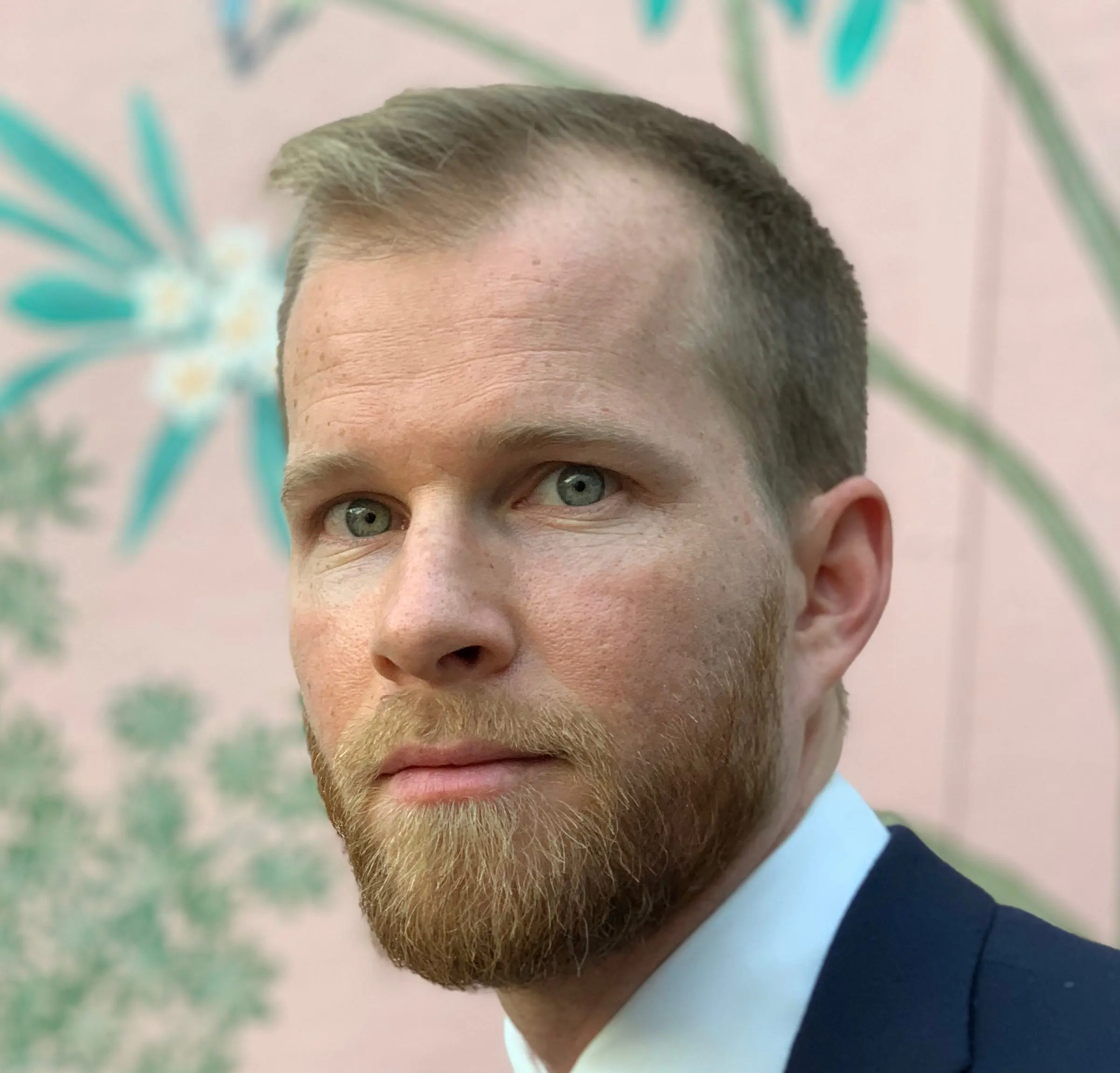 Nicholas Cannon