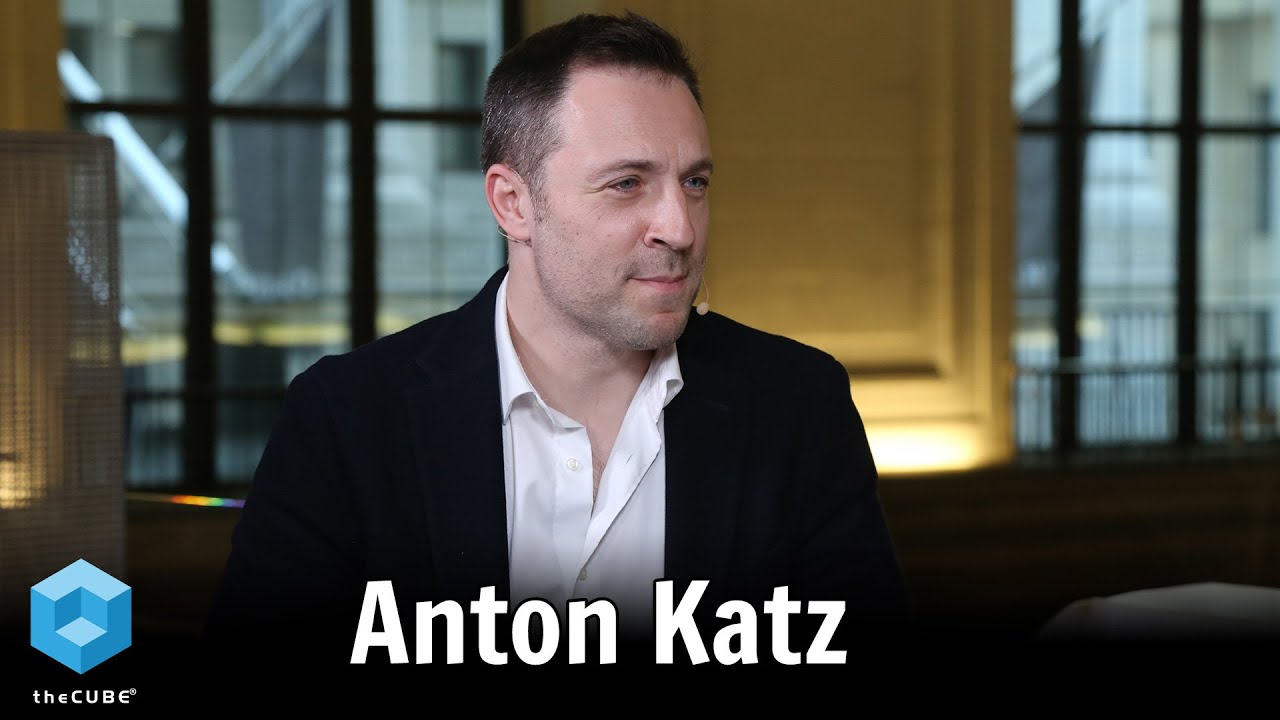
In this Crypto Trailblazers segment from the NYSE Wired studio, theCUBE’s John Furrier sits down with Anton Katz, co-founder and CEO of Talos, to discuss how the company is building the institutional backbone for digital assets. Katz unpacks Talos’ evolution from serving hedge funds and proprietary trading desks to powering crypto capabilities for neobanks, retail brokers and global super apps. He explains how Talos’ one-stop platform streamlines the entire investment lifecycle – from trading and algorithmic execution to settlement, reconciliation and white-label infrastructure – while meeting the high compliance and integration standards of the largest financial institutions.
The conversation spotlights Talos’ recent acquisition of Coin Metrics, a move that deepens its data capabilities by combining Talos’ centralized market intelligence with Coin Metrics’ decentralized data delivery. Katz shares how this integration strengthens risk management, benchmarking and post-trade processes while creating a defensible “data plus workflow” moat. He also explores the market momentum driving institutional adoption, the engineering culture fueling Talos’s growth past 200 employees and the strategic vision to expand across all asset classes.
From the reopening of the IPO window to the retooling of global financial infrastructure, Katz outlines why the next 18 months represent a critical window for digital assets and how Talos aims to be at the center of that transformation.
Forgot Password
Almost there!
We just sent you a verification email. Please verify your account to gain access to
theCUBE + NYSE Wired: Crypto Trailblazers. If you don’t think you received an email check your
spam folder.
Sign in to theCUBE + NYSE Wired: Crypto Trailblazers.
In order to sign in, enter the email address you used to registered for the event. Once completed, you will receive an email with a verification link. Open this link to automatically sign into the site.
Register For theCUBE + NYSE Wired: Crypto Trailblazers
Please fill out the information below. You will recieve an email with a verification link confirming your registration. Click the link to automatically sign into the site.
You’re almost there!
We just sent you a verification email. Please click the verification button in the email. Once your email address is verified, you will have full access to all event content for theCUBE + NYSE Wired: Crypto Trailblazers.
I want my badge and interests to be visible to all attendees.
Checking this box will display your presense on the attendees list, view your profile and allow other attendees to contact you via 1-1 chat. Read the Privacy Policy. At any time, you can choose to disable this preference.
Select your Interests!
add
Upload your photo
Uploading..
OR
Connect via Twitter
Connect via Linkedin
EDIT PASSWORD
Share
Forgot Password
Almost there!
We just sent you a verification email. Please verify your account to gain access to
theCUBE + NYSE Wired: Crypto Trailblazers. If you don’t think you received an email check your
spam folder.
Sign in to theCUBE + NYSE Wired: Crypto Trailblazers.
In order to sign in, enter the email address you used to registered for the event. Once completed, you will receive an email with a verification link. Open this link to automatically sign into the site.
Sign in to gain access to theCUBE + NYSE Wired: Crypto Trailblazers
Please sign in with LinkedIn to continue to theCUBE + NYSE Wired: Crypto Trailblazers. Signing in with LinkedIn ensures a professional environment.
Are you sure you want to remove access rights for this user?
Details
Manage Access
email address
Community Invitation
Anton Katz, Talos
In this Crypto Trailblazers segment from the NYSE Wired studio, theCUBE’s John Furrier sits down with Anton Katz, co-founder and CEO of Talos, to discuss how the company is building the institutional backbone for digital assets. Katz unpacks Talos’ evolution from serving hedge funds and proprietary trading desks to powering crypto capabilities for neobanks, retail brokers and global super apps. He explains how Talos’ one-stop platform streamlines the entire investment lifecycle – from trading and algorithmic execution to settlement, reconciliation and white-label infrastructure – while meeting the high compliance and integration standards of the largest financial institutions.
The conversation spotlights Talos’ recent acquisition of Coin Metrics, a move that deepens its data capabilities by combining Talos’ centralized market intelligence with Coin Metrics’ decentralized data delivery. Katz shares how this integration strengthens risk management, benchmarking and post-trade processes while creating a defensible “data plus workflow” moat. He also explores the market momentum driving institutional adoption, the engineering culture fueling Talos’s growth past 200 employees and the strategic vision to expand across all asset classes.
From the reopening of the IPO window to the retooling of global financial infrastructure, Katz outlines why the next 18 months represent a critical window for digital assets and how Talos aims to be at the center of that transformation.
>> Hello and welcome to theCUBE here at our NYSE studios, part of theCUBE and NYSE Wired Crypto Trailblazers. I'm John Furrier, your host, here with Dave Vellante. We're here featuring the leaders in crypto as it goes mainstream. One of the big things that's happening is the capital markets are exploding, the IPO window is open, and you're starting to see the real business growth kick in across the entire world, certainly in the US, we've got a really friendly regime. Anton Katz is here, he's the co-founder and CEO of Talos, a company that's succeedingly on the platform side, doing great stuff, recent acquisition. Anton, great to see you, thanks for coming on.
Anton Katz
>> Great to see you. Thank you very much for having me.>> You were on with Dave in a previous Crypto Trailblazers, a lot of updates. You got an acquisition under your belt in recent weeks, got a great platform strategy. The mainstreaming of crypto is not just a retail market for buying bitcoin, there's a lot more going on. Stablecoins are booming, you're starting to see institutional plumbing rethinking and getting aligned with the digital age, so super relevant and a lot of headroom. So first, tell us what the platform is, for people don't know what you guys do, what do you guys do?
Anton Katz
>> Absolutely. That's a good way to look at the market, actually, because where we sit, we see both sides of the market. We're seeing the institutional and we're seeing the retail lens as well. But generally speaking, our job is to provide institutions with the ability to enter the crypto market, enter the digital assets market. The platform is a technology platform that provides connectivity to all the individual exchanges, OTC desks, we connect to individual custodians. So we really are a one-stop shop, providing institutions full investment life cycle support. So people come to us for portfolio management, portfolio implementation, so that's rebalancing. They come to us for trading and algorithm trading exceedingly. They come to us for clearing settlement and reconciliation on the post-trade side reporting. And we have a white labeling infrastructure, which that's now probably around half of our business.>> You know what I loved about this wave of crypto is, one, it's been hitting the mainstream, as I mentioned, but I remember the early days of cloud computing, it was basically infrastructure-as-a-service and then platform-as-a-service abstractions on top. You guys have a platform that, as technologists, you built it, so there's a real thirst for integrate. You've got the white label, you've got the clients, almost half your business roughly, so to speak, white label. How do you guys maintain that platform? What are some of the key things you've done? Why is the focus there and what's some of the reaction from some of the institutions?
Anton Katz
>> Yeah. So the growth of the company, so we established the company in 2018, myself and Ethan Feldman, my co-founder and our CTO, the growth has been largely organic. So we do have four acquisitions and we'll talk about that, I'm happy to tell you about it too. But generally speaking, we started from trading and we started by focusing on the buy-side. So the platform was really in one spot saying, "Hey, if you're a hedge fund, if you're a proprietary trading desk, come here, we'll give you institutional tools to actually interact with crypto," which was very, very much missing in the ecosystem. About three years in, we had initial clients coming in from the sell-side saying, "Hey, we now want to offer crypto trading capabilities to our customers," and that's an interesting pivot of the market that basically says that institutional customers are starting to listening to their individual clients saying, "Okay, we need to provide this." They're coming to us because they're asking us. It's not because they thought it's a great idea, it's because their customers came to them and said, "Let's do this."
So that's where the balance on our side created was created, where half of the system is really pointing towards buy-side institutions, half of the system is pointed towards the sell-side providers, neobanks, retail brokers, even super apps at this point globally, to be able to provide these kind of capabilities to our customers. That's generally been the evolution of that.>> And you guys then sequenced to other positions once you nailed that one.
Anton Katz
>> Yeah. So for us, the holy grail has always been becoming the one-stop shop for institutions. And so, the acquisition with Coin Metrics is, again, like I mentioned, the organic growth, we're building a lot of these pieces, you build trading, you build portfolio management, you build settlement. And then, you look at the other pieces where your clients tend to spend some time and tend to spend some money, and Coin Metrics is the leader in the data space in crypto, they're the largest one by far. We acquired Coin Metrics to bring them under the Talos umbrella to provide our clients, again, with this ability to go, "For data, you can come here, and for the rest of your services, you can come here.">> So you just announced the acquisition of Coin Metrics, when was that, a couple weeks ago?
Anton Katz
>> Yeah, we closed that a couple of weeks ago.>> What was the reason behind that? Was it the data you needed? Was it the needs for the client? What was the core reason? How additive was that to your platform?
Anton Katz
>> Yeah, that's an awesome question. From a data perspective, Coin Metrics does bring some things. So Coin Metrics has a lot of data on the decentralized side, which is we have never collected data in decentralized markets, but Talos, as a trading platform, we have tons and tons of data at our disposal from centralized markets. When you're running an algorithm trading platform, you have to have the most reliable, the most up-to-date data, you have to be super, super correct. What we didn't have is we didn't have the delivery mechanism for that data as a standalone business to the clients, and we always said, so we are capturing data from day one, from the moment we connected to the very first exchange, we're capturing data, at some point we said, "Hey, data is going to be massive here, just like it is massive in capital markets, and so we need a strategy around that". And for us, it was do we build versus do we buy. And Coin Metrics has done a tremendous job over the past six years building this client delivery platform, building the derivative service on top of that, so that's the rationale.>> Yeah, I think that's always the case, and this market speeds everything. When you look at the data, that is clearly a moat for you guys, the technology integration, the data moat. How's that all integrated in, is it seamless? Talk about the integration with, one, Coin Metrics, and also the customers. How does that fit into their systems? Because sometimes, the systems aren't always the best. It's IT from the '90s maybe in some cases, I'm oversimplifying it, it's not that bad, but it could feel a little bit monolithic.
Anton Katz
>> Absolutely. So part of the reason why Coin Metrics is the right acquisition for us is because Coin Metrics and Talos think very, very similarly in that sense. Our job is not to criticize anybody's infrastructure, our job is to provide the service, we're the service provider. Coin Metrics focused on exactly the same client segments as we have, the largest institutions, the most global institutions in the world, and so we have a nice overlap in terms of clients. So from a client's perspective, client migration, the story is generally done. They have attestations to their side, they are a buttoned-up company, they're coming in under Talos, Talos is obviously a global brand and quite a lot of attestations and a lot of compliance on our side as well. So we're able to service those kind of institutions already. From an integration perspective, data has always been at the core of the platform. Today, we're effectively taking in the Coin Metrics data to plug into our individual streams. So it goes into our portfolio management for risk assessment, goes into trading for benchmarking, goes into post-trade to mark portfolios of our existing customers, so quite a lot of capabilities there. You mentioned data as a moat, for us, the moat is actually the integrated part of it all, it's the fact that you can use data for all those kinds of things and it's data that you trust. You don't compromise on quality here or here or here.>> So it's data availability, data workflows, that's the key to the platform.
Anton Katz
>> That's right. You have to. If you think about any client, whether it's a retail aggregator, whether it's a hedge fund, whether it's a systematic firm, data is at the core of everybody's business.>> All right. So in the GenAI market, we'll go pivot to a little GenAI integration here, workflows and data drive the generative AI process, so how does that relate to you guys? What is your secret sauce, the data, the workflows, the integration, how would you describe the secret sauce?
Anton Katz
>> The secret sauce?>> Yeah.
Anton Katz
>> We only have one, that's the team. We have the best team out there, that's actually how we win. This is the team that you can go and you can take it to run anything you want. We have been meticulous in finding the right people and partnering with the right people. Today, we crossed the 200 people line.>> Congratulations.
Anton Katz
>> It's quite a milestone for us and it's a phenomenal team, that's the actual->> Talk about the team, because I think this also brings in the conversation around the demand side, because you have to have best-of-breed in the platform. So we're seeing this in other markets, like cybersecurity, where point solutions were good in the old model, now with integrated platforms, you want best-of-breed in a platform.
Anton Katz
>> That's right.>> And it's kind of difficult to do. So talk about the team, how they think about that. And what are the needs for the customer, what are the key problems, is it compliance, is it reporting, is it risk management?
Anton Katz
>> Well, the customer use cases have been advancing pretty meticulously over the past seven years. In the beginning, people were looking for access and connectivity to the markets. Today, there's a lot more sophisticated use cases. So for instance, we do rebalancing for some of our customers. In terms of the team, it means that you need to hire and you need to work with the kind of folks that have done this before, generally speaking, and pretty much everybody at Talos comes from capital markets or have some capital markets background.>> So you have tech nerds and capital market-savvy people in one-
Anton Katz
>> It's the right combination.>> Of course. All right, talk about the data stacks. I love the data, because everything's a data problem and opportunity, because obviously the data is key. What's the stack look like? Can you share specifics around how you guys think about the technology stack? You've got to have good integration, you've got to have agility on that, you've got to have good deployments, reliability.
Anton Katz
>> So first of all, it's 2025, so the ability to release and to deploy software is unbelievable, because we're in this year and we're not running with a lot of technical debt, our ability... For instance, in some of our previous jobs, when we're releasing this kind of platform, we release a trading stack or a data stack, usually it's about a month to two months, maybe, the release cycle. We can get you running by the end of today given the tools that we have. So there's a lot of newer tools that we use, a lot of abstracting that we use to our advantage to be able to get to the market faster, to be able to test, to be able to detect issues sooner. There's a lot more obstructions in the market right now, it's a lot nicer to build these days.>> Yeah. The pipelines for coding is so awesome. GenAI is only going to help that. Talk about the customer integration, what's in it for them? Take me through a day in the life of an integration. Okay, I want to deploy Talos, what happens?
Anton Katz
>> Yeah. So it really depends on the customer. So if we take somebody like a proprietary trading desk, they're coming in and they're saying, "Look, we have either this systematic alpha, or intend to trade using the platform," that integration, it could not be simpler. We literally deploy the platform, we give them access to the platform, they tell us who they want to connect to. They're saying, "Hey, I want to connect with these five OTCs, I want to trade with these six exchanges, and I want to connect to these two custodians." That's one run. For them, it's a single integration. For us, it's just a flip of a switch at that point. If they want to add any other providers, they can do it. To the more sophisticated side, if you're talking about a bank that's looking to roll out crypto trading or digital assets trading capabilities to their customers, obviously a lot more touch points. So what we do is we have a team that's responsible for solutioning, we look at all the touch points that we have with their organization, post-trade risk settlements, really giving the transparency what's happening.>> They have requirements, they have detailed requirements.
Anton Katz
>> 100%. Compliance is a big, big thing. We know how to do this. This is exactly the stuff we did for the past 16 years. So it's a huge, huge variety between them.>> Well, not to get all techie on you, but on the resilience is a big factor-
Anton Katz
>> By all means, let's go techie.>> Well, okay. So if I talked to JP Morgan Chase, one of the things they have a very high bar on, cyber resilience, so resilience in the platform is critical, how do you guys view that in terms of tech standpoint?
Anton Katz
>> Yeah. So there's two answers that are generally that you think about. One is that redundancy and the ability to fail over is one thing, so this resiliency to any kind of issues. Very, very good monitoring that puts in place and provides the customer with the ability to detect any kind of situations is the other one. So we do a lot, a lot of testing there. We have tons of deployments that are for... The medium to largest customers, there's no such thing as having only one environment. Majority of the cases, it's two or more environments, different regions, different zones, potentially different electricity grids. This is the kind of stuff we took from capital markets. We've done exactly this in every other asset class.>> Yeah. You've got to have the resilience, you've got to have the report, and you've got to have the observability data in there all laid down. Is there issues, I'm asking only because I really don't know, on sovereignty, either in states or countries? How do you guys look at sovereignty? Because sovereignty is a big conversation we're having these days.
Anton Katz
>> Well, so just to be clear, Talos is a global country, we have clients in, I think at this point, 19 countries, we have offices in five. We treat every region almost independently, we have compliance checks for every single region. If there are requirements for a region... For instance, there are regions that say, "The data for our system has to live in exactly this kind of center or location." This is the kind of stuff that we can do for our clients. But you're absolutely right. Even from a compliance perspective, what they can do for their clients, what they can't do for their clients, that's the kind of stuff we track, this is the kind of stuff we work with our->> Yeah, I just love this market right now, because you have the confluence of cloud computing scale meeting money and programmable money, all kinds of new ways to integrate into existing systems. Is there a rip and replace? Is it additive to these legacy platforms? What's the environment look like? Is there disruptive operations? How do you guys handle some of those thoughts around, hey, okay, so am I replacing something, am I adding something, how does that factor in? It sounds like you guys are just plugging in.
Anton Katz
>> It has to be. So especially for the largest institutions, it has to be plugged in. There is no rip and replace when you're driving a bus that's going 100 miles an hour. You can't just stop operations for one of the largest banks and say, "Oh, let's work on getting this system up to-">> It'll take months and years to do that.
Anton Katz
>> Years, actually. So our job as a technology provider is to figure out what their set of requirements is, do the integration, create a path that allows them to migrate it. Ultimately, here's the thing, the customers should not necessarily be influenced by what's happening underlying, what is the technology. We're not asking every financial institution world to be fluent in what blockchain is and then how blockchain impacts their operation. It's our job as vendors to provide that layer to them. They need to continue doing what they're doing, which is provide their customers with the ability to trade, to invest. Our job is to platform.>> And they want to move fast, so this platform, this is where it fits. All right, talk about the market, because one of the things that's obviously exciting now is the IPO market is opening up. Just general thoughts, as CEO at the helm of your company, market's looking good, what's your take on this current window?
Anton Katz
>> Yeah. I think that the question is, it is always a window, the question is how long the window's going to be open. 100%, the year to do things in digital assets, it's this year. I figure we have 18 months of go, go, go, go, go, very, very fast, and we're seeing this across all of our peers, we're seeing it across all of our clients as well. So it started in the beginning of 2025, and we figure there's at least 18 months path there. To your point, we're seeing quite a lot of companies, a lot of our peers, are thinking about public markets, a lot of them are going after public markets. Some of them behind the scenes, some of them we already know. We think we're going to see that more. That's an awesome thing. You said this right before the interview, it cements the position of digital assets in the financial industry, and that's the holy grail.>> Absolutely, digital's here. Just advice for folks watching that might want to try to read the tea leaves around what's a good investment, fundamentals. Are there any changes in the new normal now with crypto becoming mainstream that you like to point to and say, "Hey, if you're going to watch the space, here's some things to look for"? Obviously, revenue, profit, people are staking coins all over the place, all kinds of changes happening.
Anton Katz
>> Nothing new. You still have to think about the fundamentals. Those are still businesses. Our business is a business. The fact that we're in digital assets and... We started in crypto today, we support other asset classes, and that's where we're headed to. It doesn't change fundamentally the fact that we are still a business and we have fundamental KPIs that we have to meet and we have to work through. That goes true for the entire environment. I definitely want to make sure that the... There's been a couple of really quick run-ups in crypto, and unfortunately also quite a lot of quick falls.>> Yeah, decays.
Anton Katz
>> Yeah. And so, my hope is you're going to be just a little bit more moderate that there's impedance to the market, and institutional adoption actually brings that.>> I think structural changes here, if you could observe on the institutional side, because you're in the mainstream plumbing, I would say, my word, but this is structure, structural... This is money systems being retooled.
Anton Katz
>> You're exactly right. Look, our belief is that all assets are ultimately digital assets. I'm an engineer, I'm not a salesperson. We've built, Ethan and I and our team, we've built quite a lot of these systems in every other asset classes. I can tell you that there's huge benefits into adopting digital assets as the medium underneath the financial markets, and that's exactly where things are headed to. So if you're talking about investors, that's what I would watch for, because we are going to see the re-plumbing of the entire financial sector here.>> Yeah, yeah. And what's crazy is software's at the heart of it too. Software's eating money, as I would say, if I was going to revise the memo from Marc Andreessen.
Anton Katz
>> One of our investors.>> God, really? I didn't know that. Who else is invested in you guys?
Anton Katz
>> We have a good number of investors. So Andreessen Horowitz led one of our rounds. General Atlantic led another one of our rounds. Castle Island is a big investor of ours. We have Wells Fargo, Citibank, BNY Mellon.>> You've got some big names.
Anton Katz
>> We have big names.>> Across multiple sectors, VC class, institutional.
Anton Katz
>> Yes. We have VCs, we have private equity and we have strategics, which are the largest banks in the world, the largest financial institutions.>> So when are you guys going to go public?
Anton Katz
>> I don't think there's an announcement I can make right now.>> As you smile. Okay. Well, again, stick to your business, love the platform play. Just your take on upside potential, you mentioned the retooling of the infrastructures here, what are some of those things in your vision of the upside that's going to come from this? Digital assets will happen, no doubt in my mind, clear to me, I'm totally biased on that. We're already seeing physical AI come together on the AI side, physical and digital coming together here in crypto and finance. What are some of the upside benefits effects you might see in your vision of what's going to happen next?
Anton Katz
>> So I think benefits can be divided between the institutional sector and the retail sector. On the institutional sector, I can tell you unequivocally, it means a lot faster markets, it means a lot less risky markets, because transparency is going to become key. The things that we can do right now with blockchain, we could never dream of in doing in capital markets. For the retail sector, it probably means access. It means globally access, it means access to the kind of financial tools and financial instruments that were never accessible to the retail sector before. The Robinhood announcement a couple of weeks ago was around private equity and bringing it to the now how that's done from a regulatory perspective remains to be seen, but that's a huge, huge push in there. We're seeing tokenization of equities, and that's being done just because the retail sector has a real affinity to it, they want to push towards that. So I think it's ->> And the geopolitical thing is under-discussed, because once you have this kind of transparency and currency system digitally, you now have standalone sovereignty, which then creates an open borderless network, basically.
Anton Katz
>> Potentially. I don't know if I would go that far. I do think that there will be less restrictions or less bumps in between sending capital across the world. The aspect of borders exist because of countries, not necessarily because of financial markets. And so, I don't think it erases everything, but I do think it's going to make the system a lot more connected and smooth.>> It'll put pressure on policymakers, don't you think?
Anton Katz
>> We think that any change puts policy on policymakers.>> Yeah, yeah. All right, so what's next for you, what's on the agenda? Talk about some of the acquisitions you're eyeing, areas and white spaces you're looking to expand on, put a plug in for what you're working on, you're hiring, what's going on. Put a plug in for what you're working on.
Anton Katz
>> Thank you for that.>> Yeah, no problem.
Anton Katz
>> We are always hiring and we have a bunch of jobs open on our website, I encourage everybody to go there, it's an awesome, awesome team to join. The strategy remains the same, we continue building quite a lot. We are engineers at our core, it's a big engineering company. But we also inorganic growth, so acquisitions, is a part of the methodology for us too. So we are constantly reviewing companies. The stuff that we look for is really the thing that moves the vision of a one-stop shop forward. We want to be a one-stop shop, we want to be a one-stop shop across every asset class. That's the kind of thing that we .>> Yeah, single pane of glass, I used to say, easy integration, leverage the data, make it available, low latency, make people do their job. Great.
Anton Katz
>> That's exactly right.>> Thanks for coming on, appreciate it.
Anton Katz
>> Thank you so much for having me.>> Thanks for coming on the Crypto Trailblazers again. The trail is being blazed by the entrepreneurs out there and the new models emerging, digital currency, assets on chain, digital assets, all happening right now. As the system and the structural changes are happening, theCUBE's got you covered. We're doing our best to share the data with you. I'm John Furrier, with Dave Vellante, here at our NYSE studio. Thanks for watching.
>> Hello and welcome to theCUBE here at our NYSE studios, part of theCUBE and NYSE Wired Crypto Trailblazers. I'm John Furrier, your host, here with Dave Vellante. We're here featuring the leaders in crypto as it goes mainstream. One of the big things that's happening is the capital markets are exploding, the IPO window is open, and you're starting to see the real business growth kick in across the entire world, certainly in the US, we've got a really friendly regime. Anton Katz is here, he's the co-founder and CEO of Talos, a company that's succeedingly on the platform side, doing great stuff, recent acquisition. Anton, great to see you, thanks for coming on.
Anton Katz
>> Great to see you. Thank you very much for having me.>> You were on with Dave in a previous Crypto Trailblazers, a lot of updates. You got an acquisition under your belt in recent weeks, got a great platform strategy. The mainstreaming of crypto is not just a retail market for buying bitcoin, there's a lot more going on. Stablecoins are booming, you're starting to see institutional plumbing rethinking and getting aligned with the digital age, so super relevant and a lot of headroom. So first, tell us what the platform is, for people don't know what you guys do, what do you guys do?
Anton Katz
>> Absolutely. That's a good way to look at the market, actually, because where we sit, we see both sides of the market. We're seeing the institutional and we're seeing the retail lens as well. But generally speaking, our job is to provide institutions with the ability to enter the crypto market, enter the digital assets market. The platform is a technology platform that provides connectivity to all the individual exchanges, OTC desks, we connect to individual custodians. So we really are a one-stop shop, providing institutions full investment life cycle support. So people come to us for portfolio management, portfolio implementation, so that's rebalancing. They come to us for trading and algorithm trading exceedingly. They come to us for clearing settlement and reconciliation on the post-trade side reporting. And we have a white labeling infrastructure, which that's now probably around half of our business.>> You know what I loved about this wave of crypto is, one, it's been hitting the mainstream, as I mentioned, but I remember the early days of cloud computing, it was basically infrastructure-as-a-service and then platform-as-a-service abstractions on top. You guys have a platform that, as technologists, you built it, so there's a real thirst for integrate. You've got the white label, you've got the clients, almost half your business roughly, so to speak, white label. How do you guys maintain that platform? What are some of the key things you've done? Why is the focus there and what's some of the reaction from some of the institutions?
Anton Katz
>> Yeah. So the growth of the company, so we established the company in 2018, myself and Ethan Feldman, my co-founder and our CTO, the growth has been largely organic. So we do have four acquisitions and we'll talk about that, I'm happy to tell you about it too. But generally speaking, we started from trading and we started by focusing on the buy-side. So the platform was really in one spot saying, "Hey, if you're a hedge fund, if you're a proprietary trading desk, come here, we'll give you institutional tools to actually interact with crypto," which was very, very much missing in the ecosystem. About three years in, we had initial clients coming in from the sell-side saying, "Hey, we now want to offer crypto trading capabilities to our customers," and that's an interesting pivot of the market that basically says that institutional customers are starting to listening to their individual clients saying, "Okay, we need to provide this." They're coming to us because they're asking us. It's not because they thought it's a great idea, it's because their customers came to them and said, "Let's do this."
So that's where the balance on our side created was created, where half of the system is really pointing towards buy-side institutions, half of the system is pointed towards the sell-side providers, neobanks, retail brokers, even super apps at this point globally, to be able to provide these kind of capabilities to our customers. That's generally been the evolution of that.>> And you guys then sequenced to other positions once you nailed that one.
Anton Katz
>> Yeah. So for us, the holy grail has always been becoming the one-stop shop for institutions. And so, the acquisition with Coin Metrics is, again, like I mentioned, the organic growth, we're building a lot of these pieces, you build trading, you build portfolio management, you build settlement. And then, you look at the other pieces where your clients tend to spend some time and tend to spend some money, and Coin Metrics is the leader in the data space in crypto, they're the largest one by far. We acquired Coin Metrics to bring them under the Talos umbrella to provide our clients, again, with this ability to go, "For data, you can come here, and for the rest of your services, you can come here.">> So you just announced the acquisition of Coin Metrics, when was that, a couple weeks ago?
Anton Katz
>> Yeah, we closed that a couple of weeks ago.>> What was the reason behind that? Was it the data you needed? Was it the needs for the client? What was the core reason? How additive was that to your platform?
Anton Katz
>> Yeah, that's an awesome question. From a data perspective, Coin Metrics does bring some things. So Coin Metrics has a lot of data on the decentralized side, which is we have never collected data in decentralized markets, but Talos, as a trading platform, we have tons and tons of data at our disposal from centralized markets. When you're running an algorithm trading platform, you have to have the most reliable, the most up-to-date data, you have to be super, super correct. What we didn't have is we didn't have the delivery mechanism for that data as a standalone business to the clients, and we always said, so we are capturing data from day one, from the moment we connected to the very first exchange, we're capturing data, at some point we said, "Hey, data is going to be massive here, just like it is massive in capital markets, and so we need a strategy around that". And for us, it was do we build versus do we buy. And Coin Metrics has done a tremendous job over the past six years building this client delivery platform, building the derivative service on top of that, so that's the rationale.>> Yeah, I think that's always the case, and this market speeds everything. When you look at the data, that is clearly a moat for you guys, the technology integration, the data moat. How's that all integrated in, is it seamless? Talk about the integration with, one, Coin Metrics, and also the customers. How does that fit into their systems? Because sometimes, the systems aren't always the best. It's IT from the '90s maybe in some cases, I'm oversimplifying it, it's not that bad, but it could feel a little bit monolithic.
Anton Katz
>> Absolutely. So part of the reason why Coin Metrics is the right acquisition for us is because Coin Metrics and Talos think very, very similarly in that sense. Our job is not to criticize anybody's infrastructure, our job is to provide the service, we're the service provider. Coin Metrics focused on exactly the same client segments as we have, the largest institutions, the most global institutions in the world, and so we have a nice overlap in terms of clients. So from a client's perspective, client migration, the story is generally done. They have attestations to their side, they are a buttoned-up company, they're coming in under Talos, Talos is obviously a global brand and quite a lot of attestations and a lot of compliance on our side as well. So we're able to service those kind of institutions already. From an integration perspective, data has always been at the core of the platform. Today, we're effectively taking in the Coin Metrics data to plug into our individual streams. So it goes into our portfolio management for risk assessment, goes into trading for benchmarking, goes into post-trade to mark portfolios of our existing customers, so quite a lot of capabilities there. You mentioned data as a moat, for us, the moat is actually the integrated part of it all, it's the fact that you can use data for all those kinds of things and it's data that you trust. You don't compromise on quality here or here or here.>> So it's data availability, data workflows, that's the key to the platform.
Anton Katz
>> That's right. You have to. If you think about any client, whether it's a retail aggregator, whether it's a hedge fund, whether it's a systematic firm, data is at the core of everybody's business.>> All right. So in the GenAI market, we'll go pivot to a little GenAI integration here, workflows and data drive the generative AI process, so how does that relate to you guys? What is your secret sauce, the data, the workflows, the integration, how would you describe the secret sauce?
Anton Katz
>> The secret sauce?>> Yeah.
Anton Katz
>> We only have one, that's the team. We have the best team out there, that's actually how we win. This is the team that you can go and you can take it to run anything you want. We have been meticulous in finding the right people and partnering with the right people. Today, we crossed the 200 people line.>> Congratulations.
Anton Katz
>> It's quite a milestone for us and it's a phenomenal team, that's the actual->> Talk about the team, because I think this also brings in the conversation around the demand side, because you have to have best-of-breed in the platform. So we're seeing this in other markets, like cybersecurity, where point solutions were good in the old model, now with integrated platforms, you want best-of-breed in a platform.
Anton Katz
>> That's right.>> And it's kind of difficult to do. So talk about the team, how they think about that. And what are the needs for the customer, what are the key problems, is it compliance, is it reporting, is it risk management?
Anton Katz
>> Well, the customer use cases have been advancing pretty meticulously over the past seven years. In the beginning, people were looking for access and connectivity to the markets. Today, there's a lot more sophisticated use cases. So for instance, we do rebalancing for some of our customers. In terms of the team, it means that you need to hire and you need to work with the kind of folks that have done this before, generally speaking, and pretty much everybody at Talos comes from capital markets or have some capital markets background.>> So you have tech nerds and capital market-savvy people in one-
Anton Katz
>> It's the right combination.>> Of course. All right, talk about the data stacks. I love the data, because everything's a data problem and opportunity, because obviously the data is key. What's the stack look like? Can you share specifics around how you guys think about the technology stack? You've got to have good integration, you've got to have agility on that, you've got to have good deployments, reliability.
Anton Katz
>> So first of all, it's 2025, so the ability to release and to deploy software is unbelievable, because we're in this year and we're not running with a lot of technical debt, our ability... For instance, in some of our previous jobs, when we're releasing this kind of platform, we release a trading stack or a data stack, usually it's about a month to two months, maybe, the release cycle. We can get you running by the end of today given the tools that we have. So there's a lot of newer tools that we use, a lot of abstracting that we use to our advantage to be able to get to the market faster, to be able to test, to be able to detect issues sooner. There's a lot more obstructions in the market right now, it's a lot nicer to build these days.>> Yeah. The pipelines for coding is so awesome. GenAI is only going to help that. Talk about the customer integration, what's in it for them? Take me through a day in the life of an integration. Okay, I want to deploy Talos, what happens?
Anton Katz
>> Yeah. So it really depends on the customer. So if we take somebody like a proprietary trading desk, they're coming in and they're saying, "Look, we have either this systematic alpha, or intend to trade using the platform," that integration, it could not be simpler. We literally deploy the platform, we give them access to the platform, they tell us who they want to connect to. They're saying, "Hey, I want to connect with these five OTCs, I want to trade with these six exchanges, and I want to connect to these two custodians." That's one run. For them, it's a single integration. For us, it's just a flip of a switch at that point. If they want to add any other providers, they can do it. To the more sophisticated side, if you're talking about a bank that's looking to roll out crypto trading or digital assets trading capabilities to their customers, obviously a lot more touch points. So what we do is we have a team that's responsible for solutioning, we look at all the touch points that we have with their organization, post-trade risk settlements, really giving the transparency what's happening.>> They have requirements, they have detailed requirements.
Anton Katz
>> 100%. Compliance is a big, big thing. We know how to do this. This is exactly the stuff we did for the past 16 years. So it's a huge, huge variety between them.>> Well, not to get all techie on you, but on the resilience is a big factor-
Anton Katz
>> By all means, let's go techie.>> Well, okay. So if I talked to JP Morgan Chase, one of the things they have a very high bar on, cyber resilience, so resilience in the platform is critical, how do you guys view that in terms of tech standpoint?
Anton Katz
>> Yeah. So there's two answers that are generally that you think about. One is that redundancy and the ability to fail over is one thing, so this resiliency to any kind of issues. Very, very good monitoring that puts in place and provides the customer with the ability to detect any kind of situations is the other one. So we do a lot, a lot of testing there. We have tons of deployments that are for... The medium to largest customers, there's no such thing as having only one environment. Majority of the cases, it's two or more environments, different regions, different zones, potentially different electricity grids. This is the kind of stuff we took from capital markets. We've done exactly this in every other asset class.>> Yeah. You've got to have the resilience, you've got to have the report, and you've got to have the observability data in there all laid down. Is there issues, I'm asking only because I really don't know, on sovereignty, either in states or countries? How do you guys look at sovereignty? Because sovereignty is a big conversation we're having these days.
Anton Katz
>> Well, so just to be clear, Talos is a global country, we have clients in, I think at this point, 19 countries, we have offices in five. We treat every region almost independently, we have compliance checks for every single region. If there are requirements for a region... For instance, there are regions that say, "The data for our system has to live in exactly this kind of center or location." This is the kind of stuff that we can do for our clients. But you're absolutely right. Even from a compliance perspective, what they can do for their clients, what they can't do for their clients, that's the kind of stuff we track, this is the kind of stuff we work with our->> Yeah, I just love this market right now, because you have the confluence of cloud computing scale meeting money and programmable money, all kinds of new ways to integrate into existing systems. Is there a rip and replace? Is it additive to these legacy platforms? What's the environment look like? Is there disruptive operations? How do you guys handle some of those thoughts around, hey, okay, so am I replacing something, am I adding something, how does that factor in? It sounds like you guys are just plugging in.
Anton Katz
>> It has to be. So especially for the largest institutions, it has to be plugged in. There is no rip and replace when you're driving a bus that's going 100 miles an hour. You can't just stop operations for one of the largest banks and say, "Oh, let's work on getting this system up to-">> It'll take months and years to do that.
Anton Katz
>> Years, actually. So our job as a technology provider is to figure out what their set of requirements is, do the integration, create a path that allows them to migrate it. Ultimately, here's the thing, the customers should not necessarily be influenced by what's happening underlying, what is the technology. We're not asking every financial institution world to be fluent in what blockchain is and then how blockchain impacts their operation. It's our job as vendors to provide that layer to them. They need to continue doing what they're doing, which is provide their customers with the ability to trade, to invest. Our job is to platform.>> And they want to move fast, so this platform, this is where it fits. All right, talk about the market, because one of the things that's obviously exciting now is the IPO market is opening up. Just general thoughts, as CEO at the helm of your company, market's looking good, what's your take on this current window?
Anton Katz
>> Yeah. I think that the question is, it is always a window, the question is how long the window's going to be open. 100%, the year to do things in digital assets, it's this year. I figure we have 18 months of go, go, go, go, go, very, very fast, and we're seeing this across all of our peers, we're seeing it across all of our clients as well. So it started in the beginning of 2025, and we figure there's at least 18 months path there. To your point, we're seeing quite a lot of companies, a lot of our peers, are thinking about public markets, a lot of them are going after public markets. Some of them behind the scenes, some of them we already know. We think we're going to see that more. That's an awesome thing. You said this right before the interview, it cements the position of digital assets in the financial industry, and that's the holy grail.>> Absolutely, digital's here. Just advice for folks watching that might want to try to read the tea leaves around what's a good investment, fundamentals. Are there any changes in the new normal now with crypto becoming mainstream that you like to point to and say, "Hey, if you're going to watch the space, here's some things to look for"? Obviously, revenue, profit, people are staking coins all over the place, all kinds of changes happening.
Anton Katz
>> Nothing new. You still have to think about the fundamentals. Those are still businesses. Our business is a business. The fact that we're in digital assets and... We started in crypto today, we support other asset classes, and that's where we're headed to. It doesn't change fundamentally the fact that we are still a business and we have fundamental KPIs that we have to meet and we have to work through. That goes true for the entire environment. I definitely want to make sure that the... There's been a couple of really quick run-ups in crypto, and unfortunately also quite a lot of quick falls.>> Yeah, decays.
Anton Katz
>> Yeah. And so, my hope is you're going to be just a little bit more moderate that there's impedance to the market, and institutional adoption actually brings that.>> I think structural changes here, if you could observe on the institutional side, because you're in the mainstream plumbing, I would say, my word, but this is structure, structural... This is money systems being retooled.
Anton Katz
>> You're exactly right. Look, our belief is that all assets are ultimately digital assets. I'm an engineer, I'm not a salesperson. We've built, Ethan and I and our team, we've built quite a lot of these systems in every other asset classes. I can tell you that there's huge benefits into adopting digital assets as the medium underneath the financial markets, and that's exactly where things are headed to. So if you're talking about investors, that's what I would watch for, because we are going to see the re-plumbing of the entire financial sector here.>> Yeah, yeah. And what's crazy is software's at the heart of it too. Software's eating money, as I would say, if I was going to revise the memo from Marc Andreessen.
Anton Katz
>> One of our investors.>> God, really? I didn't know that. Who else is invested in you guys?
Anton Katz
>> We have a good number of investors. So Andreessen Horowitz led one of our rounds. General Atlantic led another one of our rounds. Castle Island is a big investor of ours. We have Wells Fargo, Citibank, BNY Mellon.>> You've got some big names.
Anton Katz
>> We have big names.>> Across multiple sectors, VC class, institutional.
Anton Katz
>> Yes. We have VCs, we have private equity and we have strategics, which are the largest banks in the world, the largest financial institutions.>> So when are you guys going to go public?
Anton Katz
>> I don't think there's an announcement I can make right now.>> As you smile. Okay. Well, again, stick to your business, love the platform play. Just your take on upside potential, you mentioned the retooling of the infrastructures here, what are some of those things in your vision of the upside that's going to come from this? Digital assets will happen, no doubt in my mind, clear to me, I'm totally biased on that. We're already seeing physical AI come together on the AI side, physical and digital coming together here in crypto and finance. What are some of the upside benefits effects you might see in your vision of what's going to happen next?
Anton Katz
>> So I think benefits can be divided between the institutional sector and the retail sector. On the institutional sector, I can tell you unequivocally, it means a lot faster markets, it means a lot less risky markets, because transparency is going to become key. The things that we can do right now with blockchain, we could never dream of in doing in capital markets. For the retail sector, it probably means access. It means globally access, it means access to the kind of financial tools and financial instruments that were never accessible to the retail sector before. The Robinhood announcement a couple of weeks ago was around private equity and bringing it to the now how that's done from a regulatory perspective remains to be seen, but that's a huge, huge push in there. We're seeing tokenization of equities, and that's being done just because the retail sector has a real affinity to it, they want to push towards that. So I think it's ->> And the geopolitical thing is under-discussed, because once you have this kind of transparency and currency system digitally, you now have standalone sovereignty, which then creates an open borderless network, basically.
Anton Katz
>> Potentially. I don't know if I would go that far. I do think that there will be less restrictions or less bumps in between sending capital across the world. The aspect of borders exist because of countries, not necessarily because of financial markets. And so, I don't think it erases everything, but I do think it's going to make the system a lot more connected and smooth.>> It'll put pressure on policymakers, don't you think?
Anton Katz
>> We think that any change puts policy on policymakers.>> Yeah, yeah. All right, so what's next for you, what's on the agenda? Talk about some of the acquisitions you're eyeing, areas and white spaces you're looking to expand on, put a plug in for what you're working on, you're hiring, what's going on. Put a plug in for what you're working on.
Anton Katz
>> Thank you for that.>> Yeah, no problem.
Anton Katz
>> We are always hiring and we have a bunch of jobs open on our website, I encourage everybody to go there, it's an awesome, awesome team to join. The strategy remains the same, we continue building quite a lot. We are engineers at our core, it's a big engineering company. But we also inorganic growth, so acquisitions, is a part of the methodology for us too. So we are constantly reviewing companies. The stuff that we look for is really the thing that moves the vision of a one-stop shop forward. We want to be a one-stop shop, we want to be a one-stop shop across every asset class. That's the kind of thing that we .>> Yeah, single pane of glass, I used to say, easy integration, leverage the data, make it available, low latency, make people do their job. Great.
Anton Katz
>> That's exactly right.>> Thanks for coming on, appreciate it.
Anton Katz
>> Thank you so much for having me.>> Thanks for coming on the Crypto Trailblazers again. The trail is being blazed by the entrepreneurs out there and the new models emerging, digital currency, assets on chain, digital assets, all happening right now. As the system and the structural changes are happening, theCUBE's got you covered. We're doing our best to share the data with you. I'm John Furrier, with Dave Vellante, here at our NYSE studio. Thanks for watching.