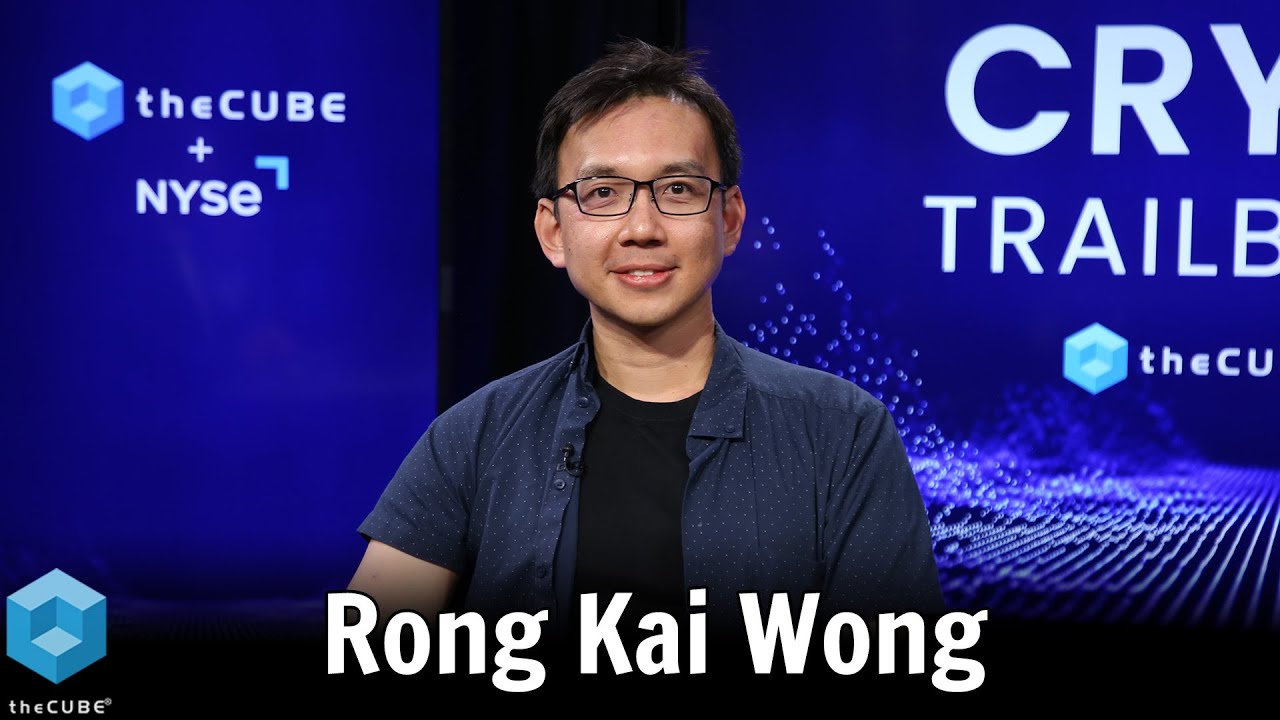
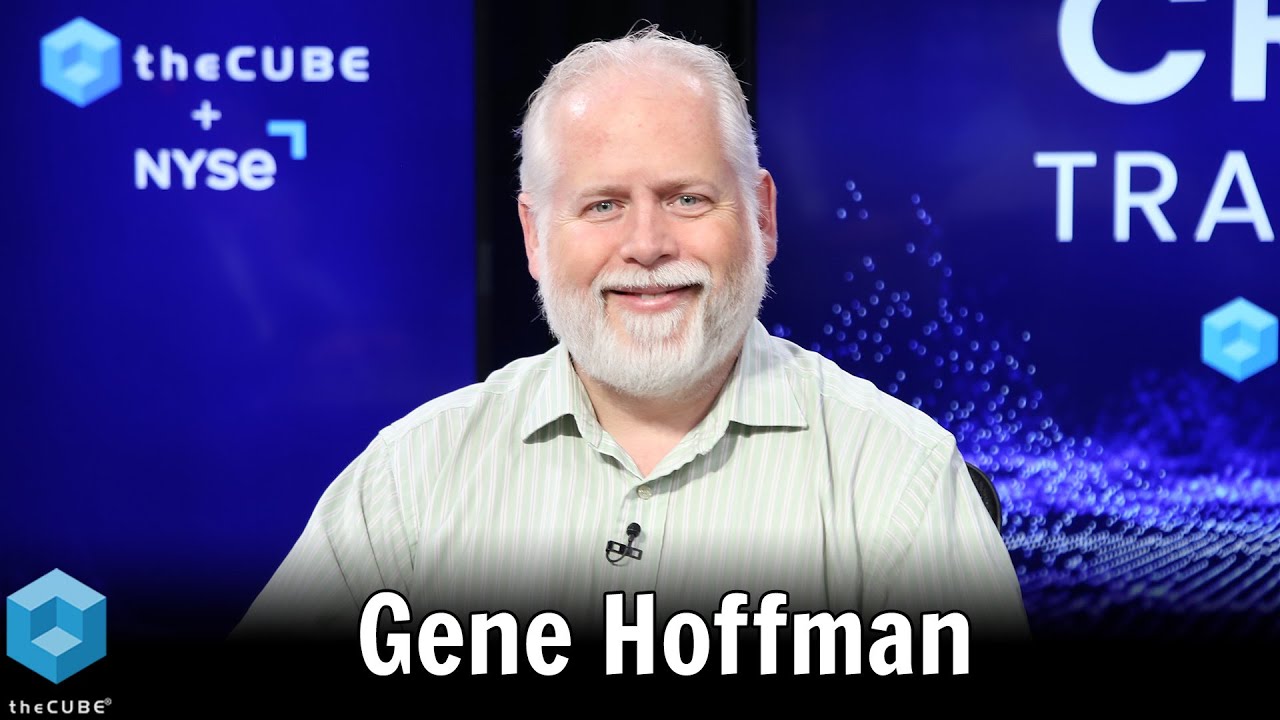
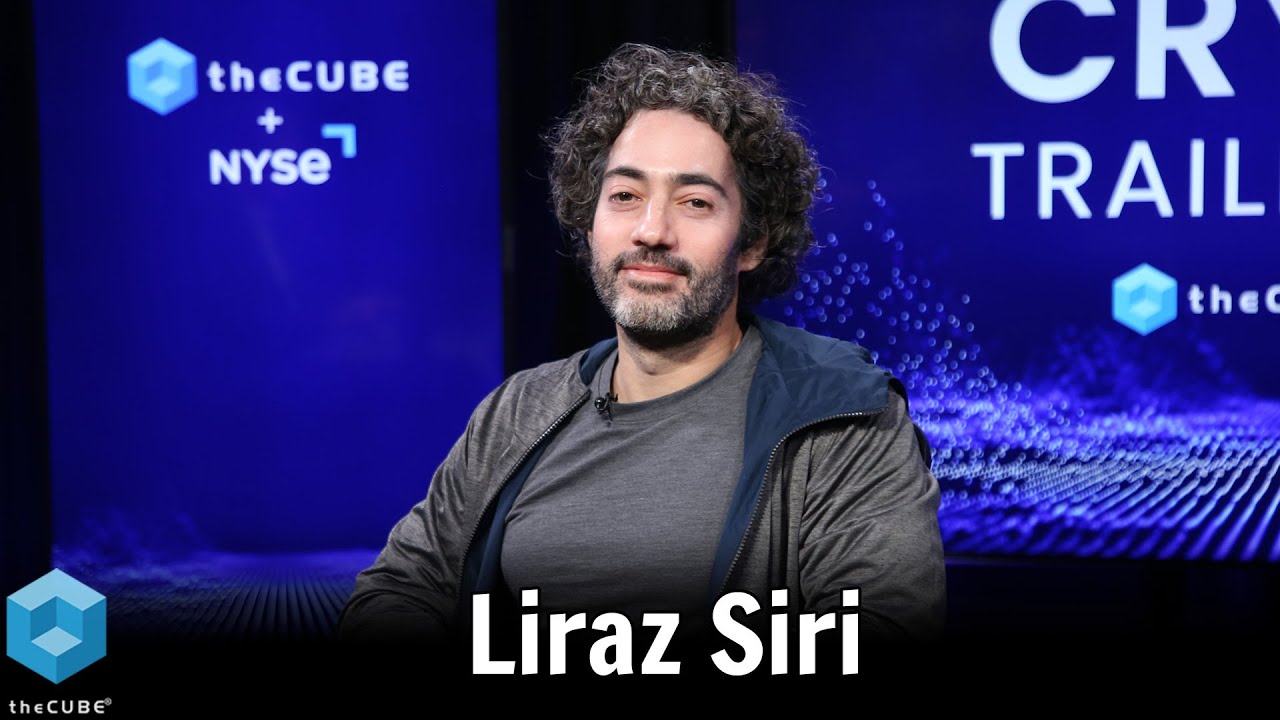
In this insightful episode of the Crypto Trailblazers series hosted by theCUBE, Mike Cagney of Figure Markets sits down with analysts from theCUBE Research to discuss groundbreaking advancements in blockchain technology and their implications for the finance sector. This video is part of the NYSE Wired digital event, aimed at bridging the gap between Silicon Valley and Wall Street by integrating technology and finance.
Cagney, an eminent figure in fintech, shares expertise on the transformative role of blockchain in financial markets during this interview. Conducted by seasoned analysts at theCUBE, the discussion delves into Figure’s innovative contributions, including their blockchain-native loan origination and securitization process. He outlines how Figure leverages blockchain to achieve cost reductions, enhanced security and improved liquidity in financial transactions.
Key takeaways from the interview highlight insights on the evolution of the Web3 ecosystem, such as the emergence of stablecoins as pivotal to transaction processes and the rise of decentralized finance (DeFi). Oltsik states these developments signify a shift towards democratizing finance, wherein truth and transparency are foundational. The conversation concludes with a look at Figure’s pioneering efforts in creating a new financial marketplace utilizing blockchain technology.
#CryptoTrailblazers #FigureMarkets #BlockchainInnovation #Web3 #NYEWired #BlockchainFinance #DecentralizedFinance #Fintech #Stablecoins
Find more SiliconANGLE news and analysis https://siliconangle.com/.
Follow theCUBE's wall-to-wall event coverage https://siliconangle.com/events/
Learn about the latest theCUBE events https://www.thecube.net/
00:00 - Intro
00:05 - Emerging Innovations in Financial Technology and Market Dynamics
02:45 - Key Elements in Financial Ecosystem Dynamics
06:20 - Blockchain: Truth and Transformation
09:39 - Shaping the Future: Innovations in Financial Markets and Stablecoin Integration
13:15 - Enabling the Future: Navigating Disruptions in Banking and Lending
16:51 - Exploring Opportunities and Building Confidence in the Blockchain Ecosystem
Forgot Password
Almost there!
We just sent you a verification email. Please verify your account to gain access to
theCUBE + NYSE Wired: Crypto Trailblazers. If you don’t think you received an email check your
spam folder.
Sign in to theCUBE + NYSE Wired: Crypto Trailblazers.
In order to sign in, enter the email address you used to registered for the event. Once completed, you will receive an email with a verification link. Open this link to automatically sign into the site.
Register For theCUBE + NYSE Wired: Crypto Trailblazers
Please fill out the information below. You will recieve an email with a verification link confirming your registration. Click the link to automatically sign into the site.
You’re almost there!
We just sent you a verification email. Please click the verification button in the email. Once your email address is verified, you will have full access to all event content for theCUBE + NYSE Wired: Crypto Trailblazers.
I want my badge and interests to be visible to all attendees.
Checking this box will display your presense on the attendees list, view your profile and allow other attendees to contact you via 1-1 chat. Read the Privacy Policy. At any time, you can choose to disable this preference.
Select your Interests!
add
Upload your photo
Uploading..
OR
Connect via Twitter
Connect via Linkedin
EDIT PASSWORD
Share
Forgot Password
Almost there!
We just sent you a verification email. Please verify your account to gain access to
theCUBE + NYSE Wired: Crypto Trailblazers. If you don’t think you received an email check your
spam folder.
Sign in to theCUBE + NYSE Wired: Crypto Trailblazers.
In order to sign in, enter the email address you used to registered for the event. Once completed, you will receive an email with a verification link. Open this link to automatically sign into the site.
Sign in to gain access to theCUBE + NYSE Wired: Crypto Trailblazers
Please sign in with LinkedIn to continue to theCUBE + NYSE Wired: Crypto Trailblazers. Signing in with LinkedIn ensures a professional environment.
Are you sure you want to remove access rights for this user?
Details
Manage Access
email address
Community Invitation
Jerald David, Lynq
In this insightful episode of the Crypto Trailblazers series hosted by theCUBE, Mike Cagney of Figure Markets sits down with analysts from theCUBE Research to discuss groundbreaking advancements in blockchain technology and their implications for the finance sector. This video is part of the NYSE Wired digital event, aimed at bridging the gap between Silicon Valley and Wall Street by integrating technology and finance.
Cagney, an eminent figure in fintech, shares expertise on the transformative role of blockchain in financial markets during this interview. Conducted by seasoned analysts at theCUBE, the discussion delves into Figure’s innovative contributions, including their blockchain-native loan origination and securitization process. He outlines how Figure leverages blockchain to achieve cost reductions, enhanced security and improved liquidity in financial transactions.
Key takeaways from the interview highlight insights on the evolution of the Web3 ecosystem, such as the emergence of stablecoins as pivotal to transaction processes and the rise of decentralized finance (DeFi). Oltsik states these developments signify a shift towards democratizing finance, wherein truth and transparency are foundational. The conversation concludes with a look at Figure’s pioneering efforts in creating a new financial marketplace utilizing blockchain technology.
#CryptoTrailblazers #FigureMarkets #BlockchainInnovation #Web3 #NYEWired #BlockchainFinance #DecentralizedFinance #Fintech #Stablecoins
Find more SiliconANGLE news and analysis https://siliconangle.com/.
Follow theCUBE's wall-to-wall event coverage https://siliconangle.com/events/
Learn about the latest theCUBE events https://www.thecube.net/
00:00 - Intro
00:05 - Emerging Innovations in Financial Technology and Market Dynamics
02:45 - Key Elements in Financial Ecosystem Dynamics
06:20 - Blockchain: Truth and Transformation
09:39 - Shaping the Future: Innovations in Financial Markets and Stablecoin Integration
13:15 - Enabling the Future: Navigating Disruptions in Banking and Lending
16:51 - Exploring Opportunities and Building Confidence in the Blockchain Ecosystem
play_circle_outlineDescription of Link Network's innovative approach to tokenized deposits and interest generation.
replyShare Clip
play_circle_outlineFinancial institutions are more advanced in digital asset integration than commonly perceived.
replyShare Clip
play_circle_outlineStrengthening Link Network: Partnerships, Collaborations, and Regulatory Advances Shaping the Future of Digital Asset Marketplace Growth
>> Hello, I'm John Furrier here at theCUBE's NYSE Studio overlooking the trading floor, of course, part of the NYSE Wired, our Crypto Trailblazer series. We interview the leaders who are making things happen, building the next generation infrastructure and applications to provide digital currency. And of course, the Wall Street on Chain exclusive event happening here at the NYSE. It is all the best people coming in. The newsmakers, the game changers, and also the inventors, the builders. The Link network, CEO, Jerry David is here, crypto trailblazer. Welcome to theCUBE here at their NYSE Wired Studios. Thanks for coming in.
Jerald David
>> Thanks for having me, John. Excited to be with you today.>> I'm smiling because before we came on camera, we were talking about the old ICO days, 2017, 2018, and we had kind of a nuclear winter here in the US. Bad environment. A lot of people had to flee the jurisdiction or stay international. Still, we have a global ecosystem in the crypto blockchain infrastructure and other ecosystem around it. And right now it's good times in the sense of the builders are here. They're global. The financial institutions are leaning into recognizing digital currency, digital work is going to be digitized. I mean, we all get bank statements. It's not really hard money, but you're starting to see the revolution moving faster. You're in the middle of it. What does Link Network do? And we'll get into some of the market dynamics.
Jerald David
>> Yeah. Well again, thanks for having me on the show. Really glad to be with you today. I think Link Network itself really solves a gap in the marketplace right now that's been created. I think one of the biggest challenges within digital assets itself, specifically for trading of digital assets, has always been the settlement component. Settlements always been really, really hard. That's really the reason why stable tokens evolved. Don't forget, right? Is that there wasn't really a natural way for one to transfer a US dollar because banking roles were significantly slower than blockchain technology itself really is. So there was a technology that existed, created by a company called Signature Bank, Signet that was created by a company called Tacit. And they created the first tokenized deposit network and it allowed for people to transfer, really institutions to transfer tokenized shares back and forth, tokenized dollars from one to the other to settle a transaction on board to exchange, or really to go ahead and create, let's say, a stable token. So we've actually taken that technology and we've revolutionized it now to take a different instrument, to have that travel on the rails and deliver interest back to users who are doing it.>> And we hear at the NYC, it's behind us. They're trading, real time's everything. Payment rails have been around. Settlement has always been that code to crack. I mean, it sounds like it's easy to do. Payment rails are easier, much easier than settlement. Talk about why that's the case and why it's so important to nail this one piece.
Jerald David
>> Yeah, I think you probably have to be our age to really understand it because you look back at history and you can think about how this evolved in the way that it did, but really the reason why you have these T plus one, T plus two, and T plus three settlements was that you had paper trails and you had to go ahead and process paper in order for you to actually transfer the actual dollars that were underlying it. As technology has developed, obviously now technology's caught up and you no longer need these T plus one, T plus two and T plus three settlements. I think that blockchain or many have realized that blockchain is an ideal solution and a way for the industry itself to come together to try to solve for that.>> Yeah, the Crypto Trailblazers series, we've been uncovering a lot of new data and interesting trends. I think for me the most exciting is the one that kind of caught me off guard. I actually thought the financial industry was a lot slower, like the telco industry, I always say call them icebergs that move at glacier speed, but surprisingly the financial institutions have been working on stuff for years. So even though you hear, oh, we're never going to do this, that the other thing, they're actually further along. Share your perspective on this because the disruption that's coming is significant to the plumbing of how money moves. You've got programmable money, you've got store of value, all those things are in place. The regime and the regulatory side's looking really good. You got the Genius Act, the Clarity Act, so you got... Things are lining up.
Jerald David
>> That's right.>> What is the state of the financial markets, the people, the institutions behind it, are they as far along than they're saying and what do you see? What's that next shoe to drop?
Jerald David
>> Yeah, so I think that that is a large misunderstanding in the industry. I think people look at these banks and they look at different financial institutions, even beautiful NYSE over here as well. And people think that there are these old stodgy institutions and that couldn't be further from the truth. The banks themselves have innovation labs. They've been exploring digital asset use cases all along. They've been dealing with things like how is it that one can take a tokenized treasure and use that for collateral and move that within the bank. There have been so many different explorations that have happened outside of some of the leading institutions, not to mention JP Morgan and Citi and other different projects like Project Guardian for example, which is so important to the industry. So when I think about what's going to happen next and how this all works, you think about adding blockchain into this and then you think about adding the digital asset that can ride on those rails. I think that things like T plus one, T plus two, T plus three go away very, very fast.>> What's the bar in terms of the hurdle in terms of mass adoption in your mind? What's needed? Where's the to-do items? Take us through the key sequence of events that need to happen or need to accelerate.
Jerald David
>> So I think it's retail applications that are going to be the key that's going to start driving this further. You've got a segment of the retail market right now that's actually utilizing digital assets, but the use case they're using it for is for transactional value. They're using it as a speculative instrument. They've heard about Doge Coin, they've heard about some of these other different names that are out there. Maybe it's Solana, maybe it's Avalanche. And essentially they're buying those tokens and speculating on whether or not they're going to actually appreciate or depreciate. That essentially is what the use case is right now. That couldn't be further from the truth going forward. On a go-forward basis, I think that stablecoins are going to begin to drive adoption. I think there's going to be a bifurcation in the marketplace between stable tokens, which will be used for use cases, and then tokenized versions of let's say a treasury that'll be used in financial institutions that'll be sending tokenized versions of these cross-border and to other different counterparties they have.>> That's basically front-end, back-end kind of situation as we talk about in tech.
Jerald David
>> Yeah.>> All right. So the market's looking good. You got to love the market right now. Talk about the business model for you guys. How's your business doing? Give us some stats on how big the team is, the business model, what's the value proposition?
Jerald David
>> Absolutely. So we couldn't be happier. We've been working on this project for over two years, believe it or not. We actually had this in stealth for about 18 months whereby ourselves, and at the time I was the president of ARCA prior to this, which is leading asset manager in this space. I had partnered up with two different other entities in order to create a joint venture. The three entities are ARCA, the asset manager. Then you ultimately have TZERO, which is a very important piece of infrastructure. They're a special purpose broker dealer. They're one of two only that exists, which gives them the ability to custody digital asset securities, which is critically important. And then the third party is the company I mentioned before called Tacit.>> And the team size. How big is the company? Can you share some of the milestones and momentum?
Jerald David
>> Absolutely. So the team itself right now is a combination of seconded resources from all the different parties. So in total, we have over 60 people working on this project. A large number of them are technology driven as well as you can imagine. But we do have a very strong customer facing team that's working to evangelize the industry and share what it is that we're building.>> I mean, there's a lot of evangelism. You got to get people confident. I mean, enthusiasm's high. Now confidence is a whole nother ball game, right? So that's awesome. So on that note, what's the secret sauce? I mean, you obviously the products, the technologies. What's the core enabler for you guys from a growth perspective?
Jerald David
>> Absolutely, John. For us, the timing can be better for us to actually be launching the business, right? Regulation finally is clear and folks have an understanding of what you can and cannot do. What is permissible, the regulatory clarity can't be understated here. But I think that there are a couple other elements that are really, really interesting and important for us. The first is that what we built here is a utility function. We built something that was already in the industry, was taken away, and now it's been replaced in a better way. It solved for some of the problems people are talking about. This craze of real world assets right now, there's an interest bearing asset that's on this platform that ultimately is helpful to large scale participants that are looking at striving for this interest that's available. The other thing is that we're using a tested technology. The technology is something that the industry really appreciated. It's something when we talk to folks about the business, they say, oh, it's the SIGNET technology. That's great. There's familiarity.>> They can relate to it.
Jerald David
>> They can relate to it, but it also it's trust. So when you're dealing with something that's managed over $3 trillion worth of transactions and had over 2,000 clients that were connected to it, there's a familiarity that then ultimately engages with that trust and allows your folks to realize that those assets aren't going to disappear.>> Well Jerry, I'm glad you brought up trust. So trust is a big thing we talk about. The other word that comes up a lot is scale. So talk about the scalability side of it, because this is not small things that are going on with money.
Jerald David
>> 100%. And I think that if you ask what the value proposition is, I would say the first that is interest bearing. The second is that we're solving for fragmentation, but the third is that we're prepared for scale and that's really, really important. There are a couple other different systems that are out there that do something similar, managing tokenized deposits or cash and send them back and forth. But the leading one here in the US has some restrictions on it and it really has reached its cap. It's unable to grow. We know that there's over 2000 different institutions that can use this platform and that's when it was a North American deployment only. That's not including what you said before, but I'm talking about the global nature of what we're doing here.>> Talk about the settlement thing. Again, this has come up in other interviews. Payment Rail's been around, but the settlement has been, I mean, I guess kind of a blocker in the sense of that's a key thing and it's not like for the faint of heart, there's a lot of things that need to be trusted, scale. It's money we're talking about here. You can pay some on, but how do you settle it, right? It's always been a hard thing. How important is that in the scheme of the level of difficulty, degree of difficulty and just scope of how fast that changes the game. It's almost like the rock in the river that's blocking the water and all of a sudden it's gone. Now everything's flowing.
Jerald David
>> That's right.>> That's the way I see it. Do you agree and what's that scope look like and why is it important?
Jerald David
>> Yeah, this business is very hard, right? It's very, very hard because like you said, you're dealing with real dollars. So for us, dealing with the tried and tested technology was the first part of the equation. The second part was really, like I said, dealing with institutions that have been around and are credible, right? There aren't many institutions that have been around this industry for over eight years, and we've got three that have as well in doing so. And I think the final part is really, really offering value to the marketplace. So the question you're asking before about why is settlement so hard? Well, the reason why settlement is so hard is because you're dealing with large-scale transactions, extreme amounts of volume, and in many scenarios you're dealing with different timelines for actually the flow of instruments, which is why the settlement system is so important because you can't use U.S dollars to settle, right? Because there's a lag. There's that T plus two or T plus three lag, which introduces counterparty credit risk, which is a theme here in NYSE.>> Yeah, I mean, real time is critical. So I got to ask, when you're in the day of the life, you're out there doing your job, you're talking to folks, what are some of the conversations? What are some of the questions you get? And you got probably a spectrum of customers heavily leaning in, well down the path in the red zone, use a football analogy, ready to go in and score and get launched, and some people tire kicking. What are some of the questions? What do you get? What's the FAQ?
Jerald David
>> Yeah, I mean there's a ton of questions because what we built is really, really complicated. We've taken three standalone institutions and bolted them together and offered a bespoke platform for clients, which no one's done before. There are other different kind of funds that are out there that offer bespoke tokens, but no one's bolted the whole thing together. So I think kind of questions that we're getting really here the most, which are institutional grade products, where's my counterparty credit risk? How do you mitigate that? And things of that nature. And I think that the solution we've put forward is so regulatory compliant that it instills confidence when users actually dissect and understand what we've built.>> Yeah, I mean, hats off to you. I really appreciate what you do. And curious question for you is, I was talking with Dave Vellante, my co-founder, co-CEO, we were talking about FinTech and it's like, is that even still a category? So technically I would say crypto has evolved to be FinTech because crypto is probably the most cutting edge and the infrastructure underneath it is FinTech infrastructure wave we've seen. Commerce is commerce, you mentioned retail. Is FinTech even a category? Is it just native now? So what's your view on that whole categorization?
Jerald David
>> Absolutely.>> FinTech.
Jerald David
>> Yeah, I mean John, one school of thought would be what you're saying, which you take and I would look at it a little differently. I wouldn't say crypto, but it's say blockchain, right? That blockchain fits squarely into that. But I think that what you're seeing now is the vertical is becoming this AI blockchain vertical right now, which is standalone. You've got venture capitalists who are investing solely in this field right now. You've got an entire burgeoning industry that's grown. There's a global presence right now and it's becoming mainstream. So I would go on a limb... Not even go on a limb, I would say very, very confidently.>> The latest product of AI. We always... We're what? 20 minutes in, we haven't talked about AI yet, which is probably a record these days. The confluence of AI and blockchain are really interesting. One, and I just want to get your reaction to this. I'll just lay it out. One, alpha developers work on both. You go back to the 2016, 2017, 20 8 timeframe. All the brightest minds were working on blockchain.
Jerald David
>> Right.>> Not cryptocurrency.
Jerald David
>> That's right.>> Bitcoin was out there, Ethereum was merged, but it was really hardcore tech and then some stuff happened. We all know that. What happened next? AI, same thing, was a race for talent, both of them bounded by power. So there's a lot of similarities between the AI wave and crypto.
Jerald David
>> That's right.>> What's your opinion on how that comes together? We're already seeing AI infusing into everything. We're seeing blockchain being infused into the infrastructure, very decentralized, distributed computing, all that's together. What's your reaction to that?
Jerald David
>> I think it's a logical confluence. I think that if you had to think about the way the two industries would converge and what the benefits are, you've got the two industries now that are on the cutting edge. I think it's really interesting from an asset management perspective to see how some of the traditional asset managers are utilizing AI technology in order for them to make selections on what their portfolio construction is going to look like. Right? In the past, the way we used to look at it was that it was an algorithm that would do that, and now you've got kind of a technology that's emerged that can supersede that.>> It's funny, I have a lot of conversations with banks around AI and generative AI, and of course if you go back to Main Street, you pull anyone out in New York and you say generative AI, oh, hallucinations. That was kind of like you go back up a year, hallucination was the top story. That kind of still has some hangover. But banks don't tolerate any operational failure.
Jerald David
>> They can't.>> Zero tolerance. And so it's a fatal flaw. So as you look at the stability, what is the view from your perspective? Is it regulatory? Is we need more rules? Is it less rules? We've had conversations around how do you account for these things? Are they intangible assets? Are they tangible assets? So there's a lot of things that are going to have to catch up. What's your opinion on what you see as needed to do items for areas that, hey, don't lag because if you do, you'll either be out of business or things won't work, right?
Jerald David
>> 100%. And this is where I have to fall back on the answer to the question has to simply be a strong foundation and infrastructure that's in place right now that paves the way for other pieces of adoption. You take a place like the parent company of the New York Stock Exchange, Intercontinental Exchange, you think about what their model looks like right now, the ability to go ahead and use, let's say, tokenized treasury funds or tokenized deposits as a form of collateral. Makes total sense. It revolutionizes the way that the actual plumbing is set up and it works. And if you're to take an instrument like that, that solves other problems that we were talking about before, that gets the T plus one, the T plus two and T plus three. That lets funds go from a client, from a trading firm or a corporation, to their clearing member, their FCM, and then forward straight to the clearing house within hours or minutes versus three days.>> Well, I think that whole ICE, International Continental Exchange is a great example. They're huge. They got a lot of data, proprietary data. They've got money-making plumbing. So for them to lean in, what does that mean for the market in your opinion?
Jerald David
>> Well, you're starting to see it happen now, and I'd be shocked if the New York Stock Exchange doesn't have a research lab whereby they're investigating and already piloting this. But you've got things that are very simple and tangible, like tokenized shares of inequity, right? You're dealing with the largest marketplace in the world right behind us. So it would be logical to think that that would be a front-end customer facing to go back to before. How do customers come in? You give them a digital asset they could hold onto themselves that represents their own interest in a company.>> Yeah, it's mind blowing. I want to get your mind-blowing ideas of what could happen. I'll just give you my observation of some of the interviews. I had a startup in here, and his kind of crazy idea was let's tokenize equity and stock options.
Jerald David
>> Crazy idea.>> Crazy idea. It's going to be valuable someday. And selling it.
Jerald David
>> And holding it yourself.>> Holding it.
Jerald David
>> Or transferring it to your mother to let her have it.>> These are like non-linear thoughts in the old world now become standard. What are some of the disruptive ideas that you see that might emerge from... Because you see both sides, right? So I mean, that's just a weird example, but it makes sense like, hey, if I have employee stock options in a pre-IPO company, why wouldn't I tokenize it? It's an asset.
Jerald David
>> Right? Absolutely.>> But is there accounting for that? There's not really. Not yet.
Jerald David
>> Well, not yet. But I think that the main reason why one would want to do that is to actually have and hold the sovereign entity itself or the piece of interest that you have. Why is it that your broker dealer should have to hold, or your brokerage account, why can't you hold it yourself? Like I said, the example before about your mother, but if you're dealing with a tokenized share of a treasury fund, why wouldn't you be able to, instead of Venmo-ing your mom, send her a hundred bucks of an interest-bearing asset where she could gain interest on it and have it accruing and have it delivered daily. And she could actually hold it herself. She can put it in a ledger, she can put it in her pocketbook, and she could have it herself and know that she's got it. Now, I'm not one of these folks that are out there that says the banks are totally have to go away. You can't trust them. There's a role and there's a place for them. But for the folks that may have that insight, this is a way that you can go ahead and solve it.>> I think what you're getting at is interesting. AI, they call it human in the loop. The banks will be in the loop. The institutions have to be in the loop. It's interesting because if you think about how radical the idea is, one of the things that's happening in Silicon Valley right now is SPV special purpose vehicles being set up to essentially wrangle equity out of these secondaries. Now, that's a random thought, but that's what's happening. So that's essentially a form that there's not yet... It could move more efficiently. There's a lot of been blow back for some of these SPVs, if you've been following that. It's like, wait a minute, is that even legal? One, wait a minute, who's actually getting liquid? So I mean, to me, that's just a tell sign. It's that the inevitable is going to be happening here. Do you agree? What's your thoughts on that? Or, I mean, is that a wrong example?
Jerald David
>> No, I think it's happening, right? And I think that the SPV craze, as we're talking before the show started, it is not just out in Silicon Valley. It's happening across the entire country in the world right now. SPVs are popping up left and right, and they're trying to obviously be used as a vehicle in order to offer to the public digital asset companies, digital asset treasuries, or even some firms that are out there that potentially even could be a combination or a roll-up of other firms.>> Awesome. Well, Jerry, great conversation. Definitely want to look forward to drilling down. Congratulations on the progress. Final thought, put a plug in for what you're working on. You guys hiring, going public, what are you going to do? What are you optimizing for? What's on your to-do list?
Jerald David
>> Yeah, I think that we're in serious growth mode right now. That's where we are. We've onboarded our first 16 companies to the broker-dealer in partnership with Galaxy BTC2, Wintermute, Crypto.com, Falcon X, and a whole bunch of other investors on our cap table. We're super excited about the future and really creating a utility layer for the entire industry.>> Well, great to have you on. FinTech TV's going to be doing a lot of content. theCUBE's going to do a lot of content, NWC Wired community. We've got the Wall Street on Chain exclusive event. Of course, Crypto Trailblazer series. Thanks for being part of it. Appreciate it.
Jerald David
>> Appreciate it. Thanks for having on the show today.>> All right. I'm John Furrier with theCUBE here, bringing all the data and all the transformations happening. We are living in a world that is evolving very, very fast and digital, everything's up in the air. And when it comes down, it's going to land and be a whole new reality. Of course, we're doing our part to keep you informed. Thanks for watching.
>> Hello, I'm John Furrier here at theCUBE's NYSE Studio overlooking the trading floor, of course, part of the NYSE Wired, our Crypto Trailblazer series. We interview the leaders who are making things happen, building the next generation infrastructure and applications to provide digital currency. And of course, the Wall Street on Chain exclusive event happening here at the NYSE. It is all the best people coming in. The newsmakers, the game changers, and also the inventors, the builders. The Link network, CEO, Jerry David is here, crypto trailblazer. Welcome to theCUBE here at their NYSE Wired Studios. Thanks for coming in.
Jerald David
>> Thanks for having me, John. Excited to be with you today.>> I'm smiling because before we came on camera, we were talking about the old ICO days, 2017, 2018, and we had kind of a nuclear winter here in the US. Bad environment. A lot of people had to flee the jurisdiction or stay international. Still, we have a global ecosystem in the crypto blockchain infrastructure and other ecosystem around it. And right now it's good times in the sense of the builders are here. They're global. The financial institutions are leaning into recognizing digital currency, digital work is going to be digitized. I mean, we all get bank statements. It's not really hard money, but you're starting to see the revolution moving faster. You're in the middle of it. What does Link Network do? And we'll get into some of the market dynamics.
Jerald David
>> Yeah. Well again, thanks for having me on the show. Really glad to be with you today. I think Link Network itself really solves a gap in the marketplace right now that's been created. I think one of the biggest challenges within digital assets itself, specifically for trading of digital assets, has always been the settlement component. Settlements always been really, really hard. That's really the reason why stable tokens evolved. Don't forget, right? Is that there wasn't really a natural way for one to transfer a US dollar because banking roles were significantly slower than blockchain technology itself really is. So there was a technology that existed, created by a company called Signature Bank, Signet that was created by a company called Tacit. And they created the first tokenized deposit network and it allowed for people to transfer, really institutions to transfer tokenized shares back and forth, tokenized dollars from one to the other to settle a transaction on board to exchange, or really to go ahead and create, let's say, a stable token. So we've actually taken that technology and we've revolutionized it now to take a different instrument, to have that travel on the rails and deliver interest back to users who are doing it.>> And we hear at the NYC, it's behind us. They're trading, real time's everything. Payment rails have been around. Settlement has always been that code to crack. I mean, it sounds like it's easy to do. Payment rails are easier, much easier than settlement. Talk about why that's the case and why it's so important to nail this one piece.
Jerald David
>> Yeah, I think you probably have to be our age to really understand it because you look back at history and you can think about how this evolved in the way that it did, but really the reason why you have these T plus one, T plus two, and T plus three settlements was that you had paper trails and you had to go ahead and process paper in order for you to actually transfer the actual dollars that were underlying it. As technology has developed, obviously now technology's caught up and you no longer need these T plus one, T plus two and T plus three settlements. I think that blockchain or many have realized that blockchain is an ideal solution and a way for the industry itself to come together to try to solve for that.>> Yeah, the Crypto Trailblazers series, we've been uncovering a lot of new data and interesting trends. I think for me the most exciting is the one that kind of caught me off guard. I actually thought the financial industry was a lot slower, like the telco industry, I always say call them icebergs that move at glacier speed, but surprisingly the financial institutions have been working on stuff for years. So even though you hear, oh, we're never going to do this, that the other thing, they're actually further along. Share your perspective on this because the disruption that's coming is significant to the plumbing of how money moves. You've got programmable money, you've got store of value, all those things are in place. The regime and the regulatory side's looking really good. You got the Genius Act, the Clarity Act, so you got... Things are lining up.
Jerald David
>> That's right.>> What is the state of the financial markets, the people, the institutions behind it, are they as far along than they're saying and what do you see? What's that next shoe to drop?
Jerald David
>> Yeah, so I think that that is a large misunderstanding in the industry. I think people look at these banks and they look at different financial institutions, even beautiful NYSE over here as well. And people think that there are these old stodgy institutions and that couldn't be further from the truth. The banks themselves have innovation labs. They've been exploring digital asset use cases all along. They've been dealing with things like how is it that one can take a tokenized treasure and use that for collateral and move that within the bank. There have been so many different explorations that have happened outside of some of the leading institutions, not to mention JP Morgan and Citi and other different projects like Project Guardian for example, which is so important to the industry. So when I think about what's going to happen next and how this all works, you think about adding blockchain into this and then you think about adding the digital asset that can ride on those rails. I think that things like T plus one, T plus two, T plus three go away very, very fast.>> What's the bar in terms of the hurdle in terms of mass adoption in your mind? What's needed? Where's the to-do items? Take us through the key sequence of events that need to happen or need to accelerate.
Jerald David
>> So I think it's retail applications that are going to be the key that's going to start driving this further. You've got a segment of the retail market right now that's actually utilizing digital assets, but the use case they're using it for is for transactional value. They're using it as a speculative instrument. They've heard about Doge Coin, they've heard about some of these other different names that are out there. Maybe it's Solana, maybe it's Avalanche. And essentially they're buying those tokens and speculating on whether or not they're going to actually appreciate or depreciate. That essentially is what the use case is right now. That couldn't be further from the truth going forward. On a go-forward basis, I think that stablecoins are going to begin to drive adoption. I think there's going to be a bifurcation in the marketplace between stable tokens, which will be used for use cases, and then tokenized versions of let's say a treasury that'll be used in financial institutions that'll be sending tokenized versions of these cross-border and to other different counterparties they have.>> That's basically front-end, back-end kind of situation as we talk about in tech.
Jerald David
>> Yeah.>> All right. So the market's looking good. You got to love the market right now. Talk about the business model for you guys. How's your business doing? Give us some stats on how big the team is, the business model, what's the value proposition?
Jerald David
>> Absolutely. So we couldn't be happier. We've been working on this project for over two years, believe it or not. We actually had this in stealth for about 18 months whereby ourselves, and at the time I was the president of ARCA prior to this, which is leading asset manager in this space. I had partnered up with two different other entities in order to create a joint venture. The three entities are ARCA, the asset manager. Then you ultimately have TZERO, which is a very important piece of infrastructure. They're a special purpose broker dealer. They're one of two only that exists, which gives them the ability to custody digital asset securities, which is critically important. And then the third party is the company I mentioned before called Tacit.>> And the team size. How big is the company? Can you share some of the milestones and momentum?
Jerald David
>> Absolutely. So the team itself right now is a combination of seconded resources from all the different parties. So in total, we have over 60 people working on this project. A large number of them are technology driven as well as you can imagine. But we do have a very strong customer facing team that's working to evangelize the industry and share what it is that we're building.>> I mean, there's a lot of evangelism. You got to get people confident. I mean, enthusiasm's high. Now confidence is a whole nother ball game, right? So that's awesome. So on that note, what's the secret sauce? I mean, you obviously the products, the technologies. What's the core enabler for you guys from a growth perspective?
Jerald David
>> Absolutely, John. For us, the timing can be better for us to actually be launching the business, right? Regulation finally is clear and folks have an understanding of what you can and cannot do. What is permissible, the regulatory clarity can't be understated here. But I think that there are a couple other elements that are really, really interesting and important for us. The first is that what we built here is a utility function. We built something that was already in the industry, was taken away, and now it's been replaced in a better way. It solved for some of the problems people are talking about. This craze of real world assets right now, there's an interest bearing asset that's on this platform that ultimately is helpful to large scale participants that are looking at striving for this interest that's available. The other thing is that we're using a tested technology. The technology is something that the industry really appreciated. It's something when we talk to folks about the business, they say, oh, it's the SIGNET technology. That's great. There's familiarity.>> They can relate to it.
Jerald David
>> They can relate to it, but it also it's trust. So when you're dealing with something that's managed over $3 trillion worth of transactions and had over 2,000 clients that were connected to it, there's a familiarity that then ultimately engages with that trust and allows your folks to realize that those assets aren't going to disappear.>> Well Jerry, I'm glad you brought up trust. So trust is a big thing we talk about. The other word that comes up a lot is scale. So talk about the scalability side of it, because this is not small things that are going on with money.
Jerald David
>> 100%. And I think that if you ask what the value proposition is, I would say the first that is interest bearing. The second is that we're solving for fragmentation, but the third is that we're prepared for scale and that's really, really important. There are a couple other different systems that are out there that do something similar, managing tokenized deposits or cash and send them back and forth. But the leading one here in the US has some restrictions on it and it really has reached its cap. It's unable to grow. We know that there's over 2000 different institutions that can use this platform and that's when it was a North American deployment only. That's not including what you said before, but I'm talking about the global nature of what we're doing here.>> Talk about the settlement thing. Again, this has come up in other interviews. Payment Rail's been around, but the settlement has been, I mean, I guess kind of a blocker in the sense of that's a key thing and it's not like for the faint of heart, there's a lot of things that need to be trusted, scale. It's money we're talking about here. You can pay some on, but how do you settle it, right? It's always been a hard thing. How important is that in the scheme of the level of difficulty, degree of difficulty and just scope of how fast that changes the game. It's almost like the rock in the river that's blocking the water and all of a sudden it's gone. Now everything's flowing.
Jerald David
>> That's right.>> That's the way I see it. Do you agree and what's that scope look like and why is it important?
Jerald David
>> Yeah, this business is very hard, right? It's very, very hard because like you said, you're dealing with real dollars. So for us, dealing with the tried and tested technology was the first part of the equation. The second part was really, like I said, dealing with institutions that have been around and are credible, right? There aren't many institutions that have been around this industry for over eight years, and we've got three that have as well in doing so. And I think the final part is really, really offering value to the marketplace. So the question you're asking before about why is settlement so hard? Well, the reason why settlement is so hard is because you're dealing with large-scale transactions, extreme amounts of volume, and in many scenarios you're dealing with different timelines for actually the flow of instruments, which is why the settlement system is so important because you can't use U.S dollars to settle, right? Because there's a lag. There's that T plus two or T plus three lag, which introduces counterparty credit risk, which is a theme here in NYSE.>> Yeah, I mean, real time is critical. So I got to ask, when you're in the day of the life, you're out there doing your job, you're talking to folks, what are some of the conversations? What are some of the questions you get? And you got probably a spectrum of customers heavily leaning in, well down the path in the red zone, use a football analogy, ready to go in and score and get launched, and some people tire kicking. What are some of the questions? What do you get? What's the FAQ?
Jerald David
>> Yeah, I mean there's a ton of questions because what we built is really, really complicated. We've taken three standalone institutions and bolted them together and offered a bespoke platform for clients, which no one's done before. There are other different kind of funds that are out there that offer bespoke tokens, but no one's bolted the whole thing together. So I think kind of questions that we're getting really here the most, which are institutional grade products, where's my counterparty credit risk? How do you mitigate that? And things of that nature. And I think that the solution we've put forward is so regulatory compliant that it instills confidence when users actually dissect and understand what we've built.>> Yeah, I mean, hats off to you. I really appreciate what you do. And curious question for you is, I was talking with Dave Vellante, my co-founder, co-CEO, we were talking about FinTech and it's like, is that even still a category? So technically I would say crypto has evolved to be FinTech because crypto is probably the most cutting edge and the infrastructure underneath it is FinTech infrastructure wave we've seen. Commerce is commerce, you mentioned retail. Is FinTech even a category? Is it just native now? So what's your view on that whole categorization?
Jerald David
>> Absolutely.>> FinTech.
Jerald David
>> Yeah, I mean John, one school of thought would be what you're saying, which you take and I would look at it a little differently. I wouldn't say crypto, but it's say blockchain, right? That blockchain fits squarely into that. But I think that what you're seeing now is the vertical is becoming this AI blockchain vertical right now, which is standalone. You've got venture capitalists who are investing solely in this field right now. You've got an entire burgeoning industry that's grown. There's a global presence right now and it's becoming mainstream. So I would go on a limb... Not even go on a limb, I would say very, very confidently.>> The latest product of AI. We always... We're what? 20 minutes in, we haven't talked about AI yet, which is probably a record these days. The confluence of AI and blockchain are really interesting. One, and I just want to get your reaction to this. I'll just lay it out. One, alpha developers work on both. You go back to the 2016, 2017, 20 8 timeframe. All the brightest minds were working on blockchain.
Jerald David
>> Right.>> Not cryptocurrency.
Jerald David
>> That's right.>> Bitcoin was out there, Ethereum was merged, but it was really hardcore tech and then some stuff happened. We all know that. What happened next? AI, same thing, was a race for talent, both of them bounded by power. So there's a lot of similarities between the AI wave and crypto.
Jerald David
>> That's right.>> What's your opinion on how that comes together? We're already seeing AI infusing into everything. We're seeing blockchain being infused into the infrastructure, very decentralized, distributed computing, all that's together. What's your reaction to that?
Jerald David
>> I think it's a logical confluence. I think that if you had to think about the way the two industries would converge and what the benefits are, you've got the two industries now that are on the cutting edge. I think it's really interesting from an asset management perspective to see how some of the traditional asset managers are utilizing AI technology in order for them to make selections on what their portfolio construction is going to look like. Right? In the past, the way we used to look at it was that it was an algorithm that would do that, and now you've got kind of a technology that's emerged that can supersede that.>> It's funny, I have a lot of conversations with banks around AI and generative AI, and of course if you go back to Main Street, you pull anyone out in New York and you say generative AI, oh, hallucinations. That was kind of like you go back up a year, hallucination was the top story. That kind of still has some hangover. But banks don't tolerate any operational failure.
Jerald David
>> They can't.>> Zero tolerance. And so it's a fatal flaw. So as you look at the stability, what is the view from your perspective? Is it regulatory? Is we need more rules? Is it less rules? We've had conversations around how do you account for these things? Are they intangible assets? Are they tangible assets? So there's a lot of things that are going to have to catch up. What's your opinion on what you see as needed to do items for areas that, hey, don't lag because if you do, you'll either be out of business or things won't work, right?
Jerald David
>> 100%. And this is where I have to fall back on the answer to the question has to simply be a strong foundation and infrastructure that's in place right now that paves the way for other pieces of adoption. You take a place like the parent company of the New York Stock Exchange, Intercontinental Exchange, you think about what their model looks like right now, the ability to go ahead and use, let's say, tokenized treasury funds or tokenized deposits as a form of collateral. Makes total sense. It revolutionizes the way that the actual plumbing is set up and it works. And if you're to take an instrument like that, that solves other problems that we were talking about before, that gets the T plus one, the T plus two and T plus three. That lets funds go from a client, from a trading firm or a corporation, to their clearing member, their FCM, and then forward straight to the clearing house within hours or minutes versus three days.>> Well, I think that whole ICE, International Continental Exchange is a great example. They're huge. They got a lot of data, proprietary data. They've got money-making plumbing. So for them to lean in, what does that mean for the market in your opinion?
Jerald David
>> Well, you're starting to see it happen now, and I'd be shocked if the New York Stock Exchange doesn't have a research lab whereby they're investigating and already piloting this. But you've got things that are very simple and tangible, like tokenized shares of inequity, right? You're dealing with the largest marketplace in the world right behind us. So it would be logical to think that that would be a front-end customer facing to go back to before. How do customers come in? You give them a digital asset they could hold onto themselves that represents their own interest in a company.>> Yeah, it's mind blowing. I want to get your mind-blowing ideas of what could happen. I'll just give you my observation of some of the interviews. I had a startup in here, and his kind of crazy idea was let's tokenize equity and stock options.
Jerald David
>> Crazy idea.>> Crazy idea. It's going to be valuable someday. And selling it.
Jerald David
>> And holding it yourself.>> Holding it.
Jerald David
>> Or transferring it to your mother to let her have it.>> These are like non-linear thoughts in the old world now become standard. What are some of the disruptive ideas that you see that might emerge from... Because you see both sides, right? So I mean, that's just a weird example, but it makes sense like, hey, if I have employee stock options in a pre-IPO company, why wouldn't I tokenize it? It's an asset.
Jerald David
>> Right? Absolutely.>> But is there accounting for that? There's not really. Not yet.
Jerald David
>> Well, not yet. But I think that the main reason why one would want to do that is to actually have and hold the sovereign entity itself or the piece of interest that you have. Why is it that your broker dealer should have to hold, or your brokerage account, why can't you hold it yourself? Like I said, the example before about your mother, but if you're dealing with a tokenized share of a treasury fund, why wouldn't you be able to, instead of Venmo-ing your mom, send her a hundred bucks of an interest-bearing asset where she could gain interest on it and have it accruing and have it delivered daily. And she could actually hold it herself. She can put it in a ledger, she can put it in her pocketbook, and she could have it herself and know that she's got it. Now, I'm not one of these folks that are out there that says the banks are totally have to go away. You can't trust them. There's a role and there's a place for them. But for the folks that may have that insight, this is a way that you can go ahead and solve it.>> I think what you're getting at is interesting. AI, they call it human in the loop. The banks will be in the loop. The institutions have to be in the loop. It's interesting because if you think about how radical the idea is, one of the things that's happening in Silicon Valley right now is SPV special purpose vehicles being set up to essentially wrangle equity out of these secondaries. Now, that's a random thought, but that's what's happening. So that's essentially a form that there's not yet... It could move more efficiently. There's a lot of been blow back for some of these SPVs, if you've been following that. It's like, wait a minute, is that even legal? One, wait a minute, who's actually getting liquid? So I mean, to me, that's just a tell sign. It's that the inevitable is going to be happening here. Do you agree? What's your thoughts on that? Or, I mean, is that a wrong example?
Jerald David
>> No, I think it's happening, right? And I think that the SPV craze, as we're talking before the show started, it is not just out in Silicon Valley. It's happening across the entire country in the world right now. SPVs are popping up left and right, and they're trying to obviously be used as a vehicle in order to offer to the public digital asset companies, digital asset treasuries, or even some firms that are out there that potentially even could be a combination or a roll-up of other firms.>> Awesome. Well, Jerry, great conversation. Definitely want to look forward to drilling down. Congratulations on the progress. Final thought, put a plug in for what you're working on. You guys hiring, going public, what are you going to do? What are you optimizing for? What's on your to-do list?
Jerald David
>> Yeah, I think that we're in serious growth mode right now. That's where we are. We've onboarded our first 16 companies to the broker-dealer in partnership with Galaxy BTC2, Wintermute, Crypto.com, Falcon X, and a whole bunch of other investors on our cap table. We're super excited about the future and really creating a utility layer for the entire industry.>> Well, great to have you on. FinTech TV's going to be doing a lot of content. theCUBE's going to do a lot of content, NWC Wired community. We've got the Wall Street on Chain exclusive event. Of course, Crypto Trailblazer series. Thanks for being part of it. Appreciate it.
Jerald David
>> Appreciate it. Thanks for having on the show today.>> All right. I'm John Furrier with theCUBE here, bringing all the data and all the transformations happening. We are living in a world that is evolving very, very fast and digital, everything's up in the air. And when it comes down, it's going to land and be a whole new reality. Of course, we're doing our part to keep you informed. Thanks for watching.