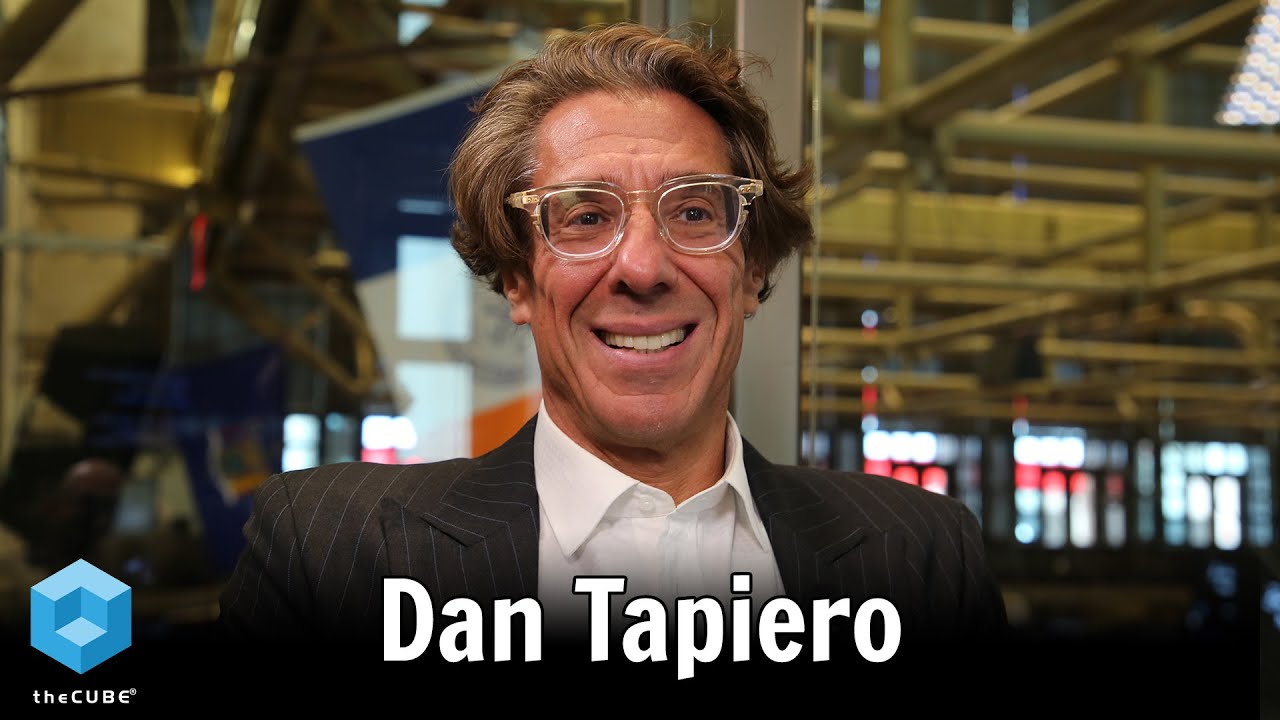
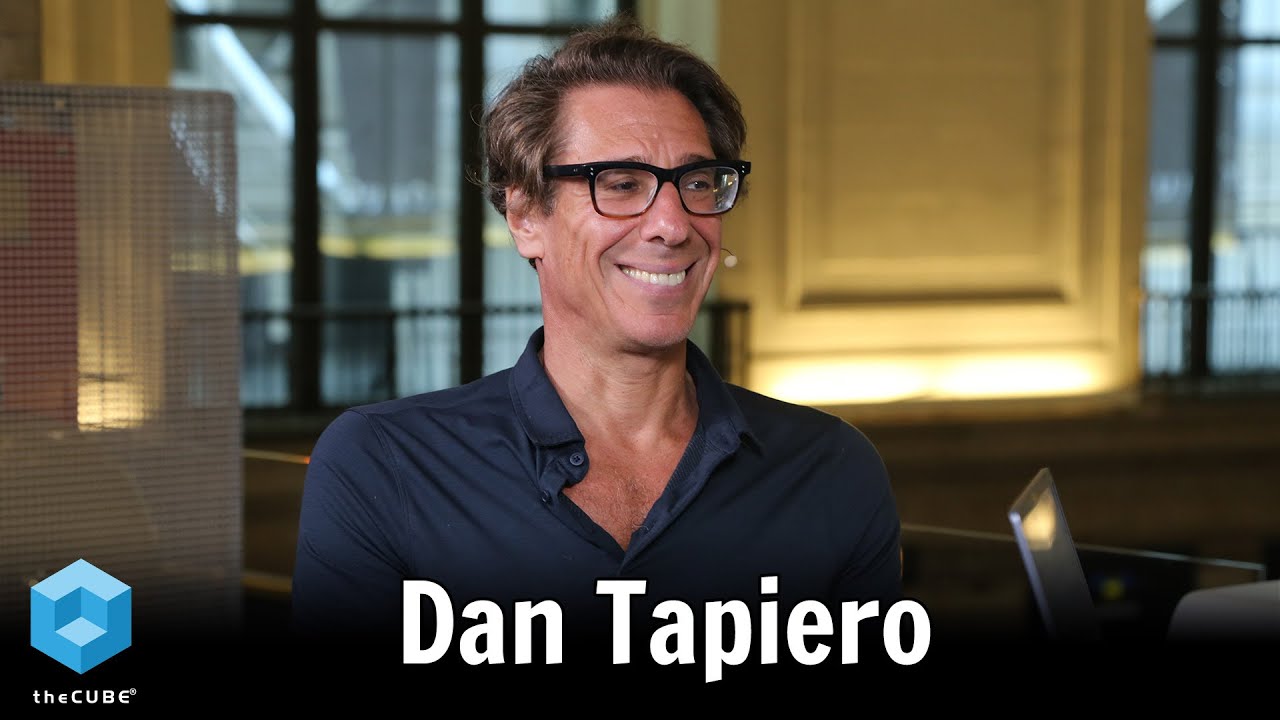
Dan Tapiero, co-founder and CEO of RoundTable Partners and 10T Holdings, joins theCUBE at the NYSE to discuss his extensive background in finance and his transition into the digital asset ecosystem. With over 20 years in the macro hedge fund industry, Tapiero brings valuable insights as he highlights the role of cryptocurrencies and blockchain in transforming business finance and infrastructure. theCUBE Research team, led by John Furrier, engages Tapiero in an in-depth discussion on the evolution of digital assets and the future of growth in this sector.
Tapiero emphasizes the potential of digital assets, predicting a substantial market value increase from $300 billion to a projected $10 trillion within the next decade. According to Tapiero, the current environment favors companies building this new ecosystem, as businesses generate significant revenue and prepare to enter public markets. The interview explores the role of US regulatory shifts in fostering a supportive atmosphere for cryptocurrencies, along with the importance of positioning the US as a global hub for blockchain technology and digital assets. #DanTapiero #DigitalAssets #theCUBE #NYSE #Crypto #Blockchain #Web3
Explore more about this topic and related insights on SiliconANGLE: siliconangle.com. Subscribe to our blockchain playlist for further discussions: [Blockchain Playlist](#).
00:00 - Intro
00:06 - Cryptocurrency and Blockchain: An Introductory Overview
02:31 - The Journey of Dan Tapiero and the Rise of 10T Holdings
09:09 - Crypto Industry Developments and Challenges
16:31 - Crypto Companies and Public Offerings
20:44 - The Future of Digital Assets
23:10 - The Digital Cultural Revolution: Final Reflections
Forgot Password
Almost there!
We just sent you a verification email. Please verify your account to gain access to
theCUBE + NYSE Wired: Crypto Trailblazers. If you don’t think you received an email check your
spam folder.
Sign in to theCUBE + NYSE Wired: Crypto Trailblazers.
In order to sign in, enter the email address you used to registered for the event. Once completed, you will receive an email with a verification link. Open this link to automatically sign into the site.
Register For theCUBE + NYSE Wired: Crypto Trailblazers
Please fill out the information below. You will recieve an email with a verification link confirming your registration. Click the link to automatically sign into the site.
You’re almost there!
We just sent you a verification email. Please click the verification button in the email. Once your email address is verified, you will have full access to all event content for theCUBE + NYSE Wired: Crypto Trailblazers.
I want my badge and interests to be visible to all attendees.
Checking this box will display your presense on the attendees list, view your profile and allow other attendees to contact you via 1-1 chat. Read the Privacy Policy. At any time, you can choose to disable this preference.
Select your Interests!
add
Upload your photo
Uploading..
OR
Connect via Twitter
Connect via Linkedin
EDIT PASSWORD
Share
Forgot Password
Almost there!
We just sent you a verification email. Please verify your account to gain access to
theCUBE + NYSE Wired: Crypto Trailblazers. If you don’t think you received an email check your
spam folder.
Sign in to theCUBE + NYSE Wired: Crypto Trailblazers.
In order to sign in, enter the email address you used to registered for the event. Once completed, you will receive an email with a verification link. Open this link to automatically sign into the site.
Sign in to gain access to theCUBE + NYSE Wired: Crypto Trailblazers
Please sign in with LinkedIn to continue to theCUBE + NYSE Wired: Crypto Trailblazers. Signing in with LinkedIn ensures a professional environment.
Are you sure you want to remove access rights for this user?
Details
Manage Access
email address
Community Invitation
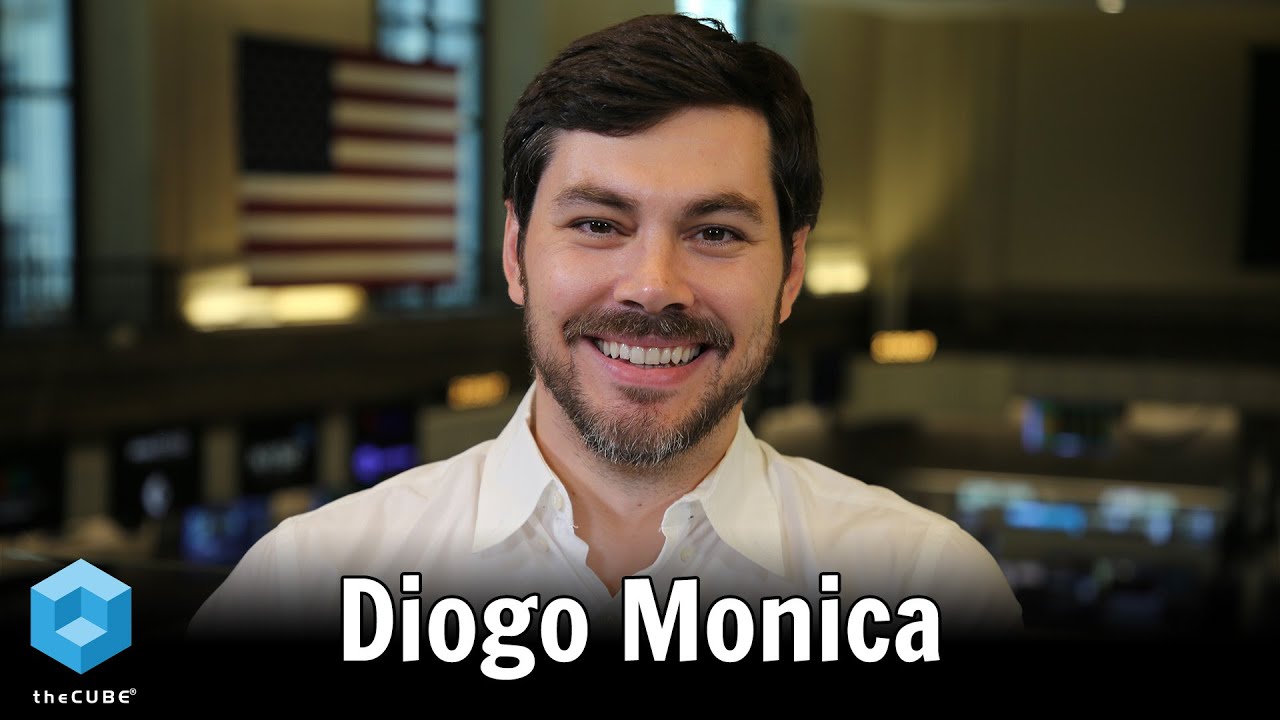
Diogo Mónica, Anchorage
Dan Tapiero, co-founder and CEO of RoundTable Partners and 10T Holdings, joins theCUBE at the NYSE to discuss his extensive background in finance and his transition into the digital asset ecosystem. With over 20 years in the macro hedge fund industry, Tapiero brings valuable insights as he highlights the role of cryptocurrencies and blockchain in transforming business finance and infrastructure. theCUBE Research team, led by John Furrier, engages Tapiero in an in-depth discussion on the evolution of digital assets and the future of growth in this sector.
Tapiero emphasizes the potential of digital assets, predicting a substantial market value increase from $300 billion to a projected $10 trillion within the next decade. According to Tapiero, the current environment favors companies building this new ecosystem, as businesses generate significant revenue and prepare to enter public markets. The interview explores the role of US regulatory shifts in fostering a supportive atmosphere for cryptocurrencies, along with the importance of positioning the US as a global hub for blockchain technology and digital assets. #DanTapiero #DigitalAssets #theCUBE #NYSE #Crypto #Blockchain #Web3
Explore more about this topic and related insights on SiliconANGLE: siliconangle.com. Subscribe to our blockchain playlist for further discussions: [Blockchain Playlist](#).
00:00 - Intro
00:06 - Cryptocurrency and Blockchain: An Introductory Overview
02:31 - The Journey of Dan Tapiero and the Rise of 10T Holdings
09:09 - Crypto Industry Developments and Challenges
16:31 - Crypto Companies and Public Offerings
20:44 - The Future of Digital Assets
23:10 - The Digital Cultural Revolution: Final Reflections
>> Welcome back. I'm John Furrier, your host of theCUBE. We are here in our CUBE's NYSE studio, of course Palo Alto Studio connecting Silicon Valley and Wall Street. We've got some great guests here. It's part of our Crypto Trailblazers series. As the world's changing, the future's being reinvented in front of us every day and the pioneers that are blazing the trail are opening up new doors and our next guest, CUBE alumni is back, Diogo is back. General partner at Han Ventures, co-founder, executive chairman Anchorage, pioneer, blazing the trail, taking a few bullets in the back probably. Great to see you again.>> Great to see you, John.>> We were talking before we came on camera about just some of the market dynamics going on right now. You guys were the first chartered bank doing your own banking. We have Palmer Luckey is in the building, a bunch of others here. You're an investor in that deal->> That's right.>> ... his new bank, the tech bank.>> Yeah. I'm one of the very few people that is on the board of two federal chartered banks which I don't know if I should be happy or extremely sad about.>> You're our go-to expert on the banking. So first explain... Let's just back up. So talk about the impact of Anchorage, what you did, why that was relevant. It was first of its kind and then what Palmer and team are doing again has a mission. It's almost on the same trajectory. It's almost a revolution that's happening.>> Yes. In very different banks. And so back in 2021, Anchorage got the first Federal chartered bank. It proved that you could operate an actual business model that is innovative and provide crypto products under the umbrella of the oldest and most scrutinizing banking regulator, which was the OCC. So for many years we were the only OCC chartered bank that operated that did custody, etc. And proven the path and blazed the trail showing everybody that this was possible. And now what has happened is under the new administration, new banks are actually being chartered. After the 2008 crisis, where Dodd-Frank and all of these capital ratios that changed and the stress testing requirements meant that federal banks were down and to the right. There were only less banks than there were the prior year. And then finally for the first time, we have dozens of new charters actually being requested and being approved. And the whole point is that right now is a great time to actually be under the oldest regulator in the United States and create a full banking charter. What Erebor is taken forward with is it's taken this opportunity to create a full depository bank to be able to serve A.I. That are underserved, crypto companies that are underserved, and defense tech companies that are underserved, all of it with modern engineering, modern technology trading 24/7.>> What I love about this trend, specifically what you did and then whatever is doing is that essentially it's classic capitalism and entrepreneurship. Market opportunity, underserved market, they have needs->> That's exactly right.>> ... and they weren't being served.>> And not only were they being served, if you recall back in the prior administration, they were being unbanked. Crypto companies were actually expelled of the financial industry and we're not being allowed to actually just have operating accounts and corporate accounts. And so now we've gone to the other extreme and we have a regulator that is pro-innovation and that is allowing new charters to actually come out and maintain the same bar, if not higher for regulation, but allowing these companies to come into the scrutinized world where they should always have been.>> We've got a lot of trading options going behind us. It's the open trading floor. You can hear the noise. To me, I think that is the most malpractice of that debanking of companies and we've seen evidence, I have friends that were in the middle of product market fit, hitting escape velocity, boom, debanked.>> And this is a reaction on the exact opposite end of the spectrum. It's both a reaction to expelling people from the financial system and the old guard of the banks deciding on their own whether they allow somebody to have banking access or not, and a reaction to the SVB collapse where these banks were clearly over leveraged. And so Erebor comes in as a very conservative bank with 12% of leverage ratio, 60% of actually high quality assets. It's actually a very under leveraged bank, especially compare it with all the other->> That's not capitalism, it's Darwinism.>> That's right. Right.>> If they're going to have bad behavior over lever, they deserve to be eaten.>> And if you' are in Silicon Valley, wouldn't you want to have a bank that is actually not taking undue risks with your capital and that is actually there as a solid partner?>> Back in the days when I was younger, breaking into the business, Silicon Valley Bank was that the friends of the VCs, "We'll start our bank." It was kind of a quasi but it was off, it was arm's length. It wasn't truly a tech bank, but it kind of was. Get your funding, put it there. They went under, they became a bank or changed and I sold the first citizen split up. What does that look like? This is a revolution because now the opportunity seems to be tracking. What is some of the data you're getting? Are other people doing it? Are charters up? You mentioned the numbers. What is this? What's the process? How does someone start a bank?>> Yes.>> I got 25 million users in our network, theCUBE, I could have those as customers. I could start a bank maybe.>> The funny part is that this is the first time where people are actually considering starting banks. It was just not something that people even thought about post 2008 and definitely not something that the regulators were very happy with. It's much easier to say no. And for a long time they were burned post 2008 and this was something that was actually extremely hard to get. The process is very high, very demanding, and there's a very high bar to meet. There's essentially two different paths. There's a path that Anchorage trail blazed, which is a national trust bank, which is a bank that generally obviously meets all of the regulatory hurdles of being under the OCC and being a bank but doesn't necessarily take deposits. And there's the full depository bank, FDIC insurance that can do all of the businesses and take deposits directly onto their balance sheet and use that. So a bank like Anchorage is actually a full reserve bank where if you deposit crypto in an Anchorage vault, it stays there until you withdraw it. And an actual bank like Erebor is more of a traditional bank that can actually do loans with a capital that is actually deposited. And both of those paths are now available.>> What's the trend? What's the process? Just take me through, I have no idea what the workflow looks like. How would I even start a charter bank?>> So it would be an application with the OCC. This part now there's a lot of experience because there's so many charters that have been applied for in the past 12 to 18 months and it's actually a process as you'd expect of due diligence of the actual organizers of the bank, of understanding whether you have the capital that is required to actually start a bank, whether the people around the table have the experience and the resume to start a bank, whether the business model makes sense or not. Anybody that has done very high-end regulation, it has many regulatory applications or charters and has done it before, it's not going to find the process particularly different, but they're going to find it a process that is extremely detailed and that is extremely careful about who comes through or not.>> So, it's well formed due diligence->> That's exactly right.>> ... on the classic regulatory front. Just line up and check the boxes and you're in.>> And there is actually a team now at the regulator in particular OCC, that understands these business models and understands crypto and understands digital assets and knows what they're actually looking for, which was not the case five, six years ago.>> Talk about your personal opinion of this market. We were chatting before we came on camera. theCUBE is kind of a rebel in the media world. We're not a traditional kind of place, but this is a rebel market. My words not yours, but do you agree? How would you describe this market? Is it the bomb throwers? Hey, we're going to break up the institution, so if they're going to get in the way, get out of the way. Is it if you're not going to move fast enough, how do you view the participants that are leading? You're one of them, you're leading the charge. Is it more of a rebel vibe?>> I think it's less of a rebel vibe and just reaction to the frustration that it is to want to build businesses, want to build value-add companies for the economy and being blocked by the current rails, being blocked by the fact that the current banks are not actually serving the needs of the companies as they should. It's a little bit born out of frustration and for a long time, as you know, FinTechs have gone into this banking as a service model where they're effectively renting charters from small banks around the United States. Then something like Synapse happens where literally they don't know and it's still being litigated who the money belongs to. And then you realize the emperor has no clothes and that the tech companies cannot really build world-class products on top of non-world-class rails. So if you want to build world-class products, the tech industry is realizing you have to do it yourself. So this is us doing it ourselves.>> I think it's an amazing opportunity and you're doing it right. It's not like you're building it on sand. It's on bedrock with the foundational services->> Even safer than traditional bank ratios.>> How does this all come together? I've been screaming at the top of my lungs for many years, but I know Marc Andreessen, I think five years ago was also talking about this and seeing the debanking trend. A lot of people in the industry were watching it. Was it a moment where everyone's sitting around saying, "Well, you know FinTech's arbitraging their own bank to make their business work. It's almost like you're priming the pump, but also its key." How did it all come together in your mind? Was there a moment? Was there a->> It's a combination of things. So it was a combination of companies being debanked, which wasn't really happening before. We had debanking 1.0, in which there was a series of companies that were considered by the administration to be unsavory that couldn't be banks. Then we have debanking 2.0, in which crypto companies were actively be yanked out of financial system. That was number one. Number two was the fact that there was Synapse in problems with the rent a charter model and banking as a service model where the opaqueness of how the money was actually being stored and how it was being handled was not obvious at all. And then the third thing was a new administration came in that is more pro-business and a new friendliness in the regulator emerged in terms of wanting innovation to be made within America versus outside of America. Those three things came together to allow this to happen.>> And having you in the industry, Haun Ventures and Teresa, people who were in the business, Sachs is in there. It's like what you just described is basically just entrepreneurial evolution. Opportunity hits, 1.0, 2.0, drag net, black balling, just because you say crypto and that's not really fair. It's more drag net. And then three, how do we make it work? How do we put product market? Oh, it didn't work. Now it's like, okay, here's the new version. That's progression.>> I agree. But you have to realize the level of frustration that a whole industry has to get to go through the process of getting a regulated bank so that we can operate. That is a very high level of frustration.>> You have a huge technical background, PhD, computer science, investing in a lot of great deals, forefront software, hardware, robotics is booming. AI obviously on a tear. Physical AI is really what we focus a lot on. But the agents are coming in. What do you look at? I mean, you were back in the day in Docker days. Remember when Solomon put together the container. In your mind, where are we? Go back to 2010 to here. What's changed the most? What's the most compelling thing that you had looked back and historically look at?>> So I've mostly only done one thing in my career, my PhD was in distributed systems, at Square I was working in distributed systems and security at Docker when I co-founded Anchorage and now as an investor, I'm investing in distributed systems. So finance, FinTech, distributed systems has always been my field and that field has changed dramatically. 20 something years ago, my PhD was useless. It had no utility outside of academic publishing papers and now it's literally what we call blockchain. And so tons of utility there and I would say that I have seen crypto go from what people were playing with on weekends to being something in which the largest financial institutions have a cogent coherent and are actually coming to the strategy. Apollo just announced a partnership with Morpho. You have BlackRock coming into space in a very meaningful manner, participating in even buying Uniswap tokens and participating in DeFi. All these things were just absolutely, if somebody told me eight years ago or 10 years ago this was going to happen, I would have told them they would be crazy. Not in this timeline. It would've taken way longer.>> Yeah. I love the distributed angle. I mean it's a systems world we're living in. It's connected networks, physical, digital coming together, that's well documented. We're talking about it every day. Are there primitives that are needed now that you think are first principle primitives?>> Yes.>> What are the key primitives? I mean Amazon Web Services started out as, "Hey. We're going to have all this stuff internally and let's see if we can sell it." Of course there was no takers on the enterprise. They didn't crack the security code. But if you were a startup like, "Hey, I don't want to buy a box and put it in a data center in Mountain View in the ghetto rack, shared cage, I'm going to go to the cloud, put my credit card down. Yeah, we'll maybe share our apartment." Airbnb is born. Okay. That's what happens when you have the magic of some simple primitives.>> That's right.>> What are the primitives we are needing that are in place now that you're comfortable with and what's coming?>> I think what's coming is the most interesting thing, which is we're realizing that blockchain and crypto is actually a countervailing force to everything that is happening in AI. And the new primitives that are going to be required are the primitives that ensure that the internet doesn't become an awful place for everyone. Pieces like distributed identity pieces like zero knowledge, trust, all of these capabilities that we just don't have to distinguish what's real and what's not real. And if you're a human or not a human or if you're a bot on the internet, all of this is required. All of this clearly is needed and blockchain has a unique solution that is uniquely tailored for the problems that AI is creating. So new primitives actually are necessary because AI is demanding them.>> It's interesting if you look at it, blockchain could be the savior for AI.>> A counter->> And by the way, AI fuses beautifully into blockchain. They're both bounded by energy, similar shared problem opportunity.>> AI creates digital abundance and crypto enforces digital scarcity.>> Yeah.>> They're perfect for each other.>> I had a guest on earlier today and said, "You can't vibe code liquidity.">> I love it.>> And I'm like, "I'm going to use that." So blockchain and crypto, it is independent of a lot of that software acceleration, but fundamental on the financial side. What's your vision on that, liquidity's relationship to agents? Again, I mean, liquidity is an outcome. What's your thoughts on that? Do you have any thoughts on that concept of you can't vibe code your way to the liquidity?>> Yes. You can't vibe code your way to liquidity and the jury's still out on how agents pay each other and interact with money. And I think that is one of the things that so many entrepreneurs are working on now, which is how do bots pay? How do bots pay each other and how do bots interact with commerce? Are we still going to use Visa credentials or MasterCard credentials or are we going to have to use wallets and stablecoins as a more natural internet native money? So that question, is the jury still out? I think the bet seems very clear that stablecoins are perfectly matched for AI agents.>> If you look at some of the cryptography work in blockchain, the proofs, this is where the action is. Not really well talked about in mainstream, but there's real advances in security around identity. Now agents, I think we would agree that what you just said comes down to identity, delegation, trust, right? I mean, so trust and security. So how do you see the security piece playing in? And we know that the enterprises won't do anything with AI agents until the enterprise sees security. Amazon Web Service, I said earlier, I studied them, used them from day one. They could not crack the code on the enterprise until they nailed the security problem and the floodgates opened up. AI is going through the same thing, but there's math now in crypto and all these identity systems, the proofs. Is that going to play a role do you think for agents? Because I'm trying to figure out if the blockchain can solve a lot of this identity problem. It's immutable, it's lot of decentralized. Sorry. I mean, it might be a good solution.>> And there's lots of SDKs and lots of tools that are being composed together to try to solve the problems that you're describing. Obviously the jury's still out on what's actually going to work at the end of the day, but you're absolutely right. At the core of it, we've poured billions of dollars of research into zero-knowledge proofs, fully homomorphic encryption, which candidly will have five or six orders of magnitude more impact outside of crypto than it will have inside of crypto because it solves such fundamental problems.>> Yeah. Yeah. Yeah. It does. All right. What are you investing in now? Give us the secret Midas touch view of what you're working on.>> Well, we are very much crypto investors. We invest in FinTech, lots of stablecoin enabled companies. We really want to make sure this world of RWAs comes to fruition. So we're investing behind companies like SuperState. We've invested in asset managers like Bitwise, companies that are doing really cool financial AI, like Chaos Labs. We're investing in all sorts of companies that are advancing the state of crypto, AI and crypto intersection and just traditional finance and->> And how are you spending your time these days between Haun Ventures, Anchorage and your board and you're plotting strategies with the coolness of the banks.>> It's beautiful. You always spend time on the thing that gives you the most leverage. But I spend the majority of my time right now allocating capital, which is what I call it, instead of investing. And I call myself an engineer that allocates capital because I feel like VC is a little bit of a dirty word, but spend lots of time at Anchorage on the board, on the board of Erebor, helping portfolio companies and obviously investing into new companies.>> Yeah, I love the tech bank. It serves the market, shows entrepreneurship and happening in real time. I guess my final question is that if you look at the AI side and what you're working on, what's the coolest thing you think people should be thinking about? What should be thinking about that they're not in the Y combinator batch? What are some of the key tech opportunities that you think are out there or white spaces?>> I think if you combine artificial intelligence right now, specifically the models being able to code so well at a superhuman capability in finance and specifically immutable smart contracts and blockchain, I think the combination is fascinating. If you can turn language into code in crypto, allows you to turn code into financial instruments. Now this means that it can turn language directly into financial instruments. So now you can do what I'm calling generative finance, which is you can actually have a product that is tailored specifically for you and instead of an asset manager selling you products, products are not going to be sold anymore. They're going to be bought. I'm going to build a product that's specifically is tailored for Diogo, for John or for Peter, and that it works exclusively for you. So generative finance is a pretty cool concept>> And I'll go to my friend's bank in the tribe to bank it->> That's right.>> ... reliably.>> You should come to Erebor, come to Anchorage.>> Thanks for coming on. I really appreciate it. It's always a master class. Again, the opportunities, it's entrepreneurial, but it's a little bit of Darwinism involved because the incumbents who don't move and take down the new space, this is a classic case of territory opportunity to be taken by upstarts. And again, it's a little bit rebel in my view. And this is a good thing. You see these shifts every generation, once in a generation lifetime. So it's happening now. That keeps doing his part here to bring it to you. I'm John Furrier, the host. Thanks for watching.
>> Welcome back. I'm John Furrier, your host of theCUBE. We are here in our CUBE's NYSE studio, of course Palo Alto Studio connecting Silicon Valley and Wall Street. We've got some great guests here. It's part of our Crypto Trailblazers series. As the world's changing, the future's being reinvented in front of us every day and the pioneers that are blazing the trail are opening up new doors and our next guest, CUBE alumni is back, Diogo is back. General partner at Han Ventures, co-founder, executive chairman Anchorage, pioneer, blazing the trail, taking a few bullets in the back probably. Great to see you again.>> Great to see you, John.>> We were talking before we came on camera about just some of the market dynamics going on right now. You guys were the first chartered bank doing your own banking. We have Palmer Luckey is in the building, a bunch of others here. You're an investor in that deal->> That's right.>> ... his new bank, the tech bank.>> Yeah. I'm one of the very few people that is on the board of two federal chartered banks which I don't know if I should be happy or extremely sad about.>> You're our go-to expert on the banking. So first explain... Let's just back up. So talk about the impact of Anchorage, what you did, why that was relevant. It was first of its kind and then what Palmer and team are doing again has a mission. It's almost on the same trajectory. It's almost a revolution that's happening.>> Yes. In very different banks. And so back in 2021, Anchorage got the first Federal chartered bank. It proved that you could operate an actual business model that is innovative and provide crypto products under the umbrella of the oldest and most scrutinizing banking regulator, which was the OCC. So for many years we were the only OCC chartered bank that operated that did custody, etc. And proven the path and blazed the trail showing everybody that this was possible. And now what has happened is under the new administration, new banks are actually being chartered. After the 2008 crisis, where Dodd-Frank and all of these capital ratios that changed and the stress testing requirements meant that federal banks were down and to the right. There were only less banks than there were the prior year. And then finally for the first time, we have dozens of new charters actually being requested and being approved. And the whole point is that right now is a great time to actually be under the oldest regulator in the United States and create a full banking charter. What Erebor is taken forward with is it's taken this opportunity to create a full depository bank to be able to serve A.I. That are underserved, crypto companies that are underserved, and defense tech companies that are underserved, all of it with modern engineering, modern technology trading 24/7.>> What I love about this trend, specifically what you did and then whatever is doing is that essentially it's classic capitalism and entrepreneurship. Market opportunity, underserved market, they have needs->> That's exactly right.>> ... and they weren't being served.>> And not only were they being served, if you recall back in the prior administration, they were being unbanked. Crypto companies were actually expelled of the financial industry and we're not being allowed to actually just have operating accounts and corporate accounts. And so now we've gone to the other extreme and we have a regulator that is pro-innovation and that is allowing new charters to actually come out and maintain the same bar, if not higher for regulation, but allowing these companies to come into the scrutinized world where they should always have been.>> We've got a lot of trading options going behind us. It's the open trading floor. You can hear the noise. To me, I think that is the most malpractice of that debanking of companies and we've seen evidence, I have friends that were in the middle of product market fit, hitting escape velocity, boom, debanked.>> And this is a reaction on the exact opposite end of the spectrum. It's both a reaction to expelling people from the financial system and the old guard of the banks deciding on their own whether they allow somebody to have banking access or not, and a reaction to the SVB collapse where these banks were clearly over leveraged. And so Erebor comes in as a very conservative bank with 12% of leverage ratio, 60% of actually high quality assets. It's actually a very under leveraged bank, especially compare it with all the other->> That's not capitalism, it's Darwinism.>> That's right. Right.>> If they're going to have bad behavior over lever, they deserve to be eaten.>> And if you' are in Silicon Valley, wouldn't you want to have a bank that is actually not taking undue risks with your capital and that is actually there as a solid partner?>> Back in the days when I was younger, breaking into the business, Silicon Valley Bank was that the friends of the VCs, "We'll start our bank." It was kind of a quasi but it was off, it was arm's length. It wasn't truly a tech bank, but it kind of was. Get your funding, put it there. They went under, they became a bank or changed and I sold the first citizen split up. What does that look like? This is a revolution because now the opportunity seems to be tracking. What is some of the data you're getting? Are other people doing it? Are charters up? You mentioned the numbers. What is this? What's the process? How does someone start a bank?>> Yes.>> I got 25 million users in our network, theCUBE, I could have those as customers. I could start a bank maybe.>> The funny part is that this is the first time where people are actually considering starting banks. It was just not something that people even thought about post 2008 and definitely not something that the regulators were very happy with. It's much easier to say no. And for a long time they were burned post 2008 and this was something that was actually extremely hard to get. The process is very high, very demanding, and there's a very high bar to meet. There's essentially two different paths. There's a path that Anchorage trail blazed, which is a national trust bank, which is a bank that generally obviously meets all of the regulatory hurdles of being under the OCC and being a bank but doesn't necessarily take deposits. And there's the full depository bank, FDIC insurance that can do all of the businesses and take deposits directly onto their balance sheet and use that. So a bank like Anchorage is actually a full reserve bank where if you deposit crypto in an Anchorage vault, it stays there until you withdraw it. And an actual bank like Erebor is more of a traditional bank that can actually do loans with a capital that is actually deposited. And both of those paths are now available.>> What's the trend? What's the process? Just take me through, I have no idea what the workflow looks like. How would I even start a charter bank?>> So it would be an application with the OCC. This part now there's a lot of experience because there's so many charters that have been applied for in the past 12 to 18 months and it's actually a process as you'd expect of due diligence of the actual organizers of the bank, of understanding whether you have the capital that is required to actually start a bank, whether the people around the table have the experience and the resume to start a bank, whether the business model makes sense or not. Anybody that has done very high-end regulation, it has many regulatory applications or charters and has done it before, it's not going to find the process particularly different, but they're going to find it a process that is extremely detailed and that is extremely careful about who comes through or not.>> So, it's well formed due diligence->> That's exactly right.>> ... on the classic regulatory front. Just line up and check the boxes and you're in.>> And there is actually a team now at the regulator in particular OCC, that understands these business models and understands crypto and understands digital assets and knows what they're actually looking for, which was not the case five, six years ago.>> Talk about your personal opinion of this market. We were chatting before we came on camera. theCUBE is kind of a rebel in the media world. We're not a traditional kind of place, but this is a rebel market. My words not yours, but do you agree? How would you describe this market? Is it the bomb throwers? Hey, we're going to break up the institution, so if they're going to get in the way, get out of the way. Is it if you're not going to move fast enough, how do you view the participants that are leading? You're one of them, you're leading the charge. Is it more of a rebel vibe?>> I think it's less of a rebel vibe and just reaction to the frustration that it is to want to build businesses, want to build value-add companies for the economy and being blocked by the current rails, being blocked by the fact that the current banks are not actually serving the needs of the companies as they should. It's a little bit born out of frustration and for a long time, as you know, FinTechs have gone into this banking as a service model where they're effectively renting charters from small banks around the United States. Then something like Synapse happens where literally they don't know and it's still being litigated who the money belongs to. And then you realize the emperor has no clothes and that the tech companies cannot really build world-class products on top of non-world-class rails. So if you want to build world-class products, the tech industry is realizing you have to do it yourself. So this is us doing it ourselves.>> I think it's an amazing opportunity and you're doing it right. It's not like you're building it on sand. It's on bedrock with the foundational services->> Even safer than traditional bank ratios.>> How does this all come together? I've been screaming at the top of my lungs for many years, but I know Marc Andreessen, I think five years ago was also talking about this and seeing the debanking trend. A lot of people in the industry were watching it. Was it a moment where everyone's sitting around saying, "Well, you know FinTech's arbitraging their own bank to make their business work. It's almost like you're priming the pump, but also its key." How did it all come together in your mind? Was there a moment? Was there a->> It's a combination of things. So it was a combination of companies being debanked, which wasn't really happening before. We had debanking 1.0, in which there was a series of companies that were considered by the administration to be unsavory that couldn't be banks. Then we have debanking 2.0, in which crypto companies were actively be yanked out of financial system. That was number one. Number two was the fact that there was Synapse in problems with the rent a charter model and banking as a service model where the opaqueness of how the money was actually being stored and how it was being handled was not obvious at all. And then the third thing was a new administration came in that is more pro-business and a new friendliness in the regulator emerged in terms of wanting innovation to be made within America versus outside of America. Those three things came together to allow this to happen.>> And having you in the industry, Haun Ventures and Teresa, people who were in the business, Sachs is in there. It's like what you just described is basically just entrepreneurial evolution. Opportunity hits, 1.0, 2.0, drag net, black balling, just because you say crypto and that's not really fair. It's more drag net. And then three, how do we make it work? How do we put product market? Oh, it didn't work. Now it's like, okay, here's the new version. That's progression.>> I agree. But you have to realize the level of frustration that a whole industry has to get to go through the process of getting a regulated bank so that we can operate. That is a very high level of frustration.>> You have a huge technical background, PhD, computer science, investing in a lot of great deals, forefront software, hardware, robotics is booming. AI obviously on a tear. Physical AI is really what we focus a lot on. But the agents are coming in. What do you look at? I mean, you were back in the day in Docker days. Remember when Solomon put together the container. In your mind, where are we? Go back to 2010 to here. What's changed the most? What's the most compelling thing that you had looked back and historically look at?>> So I've mostly only done one thing in my career, my PhD was in distributed systems, at Square I was working in distributed systems and security at Docker when I co-founded Anchorage and now as an investor, I'm investing in distributed systems. So finance, FinTech, distributed systems has always been my field and that field has changed dramatically. 20 something years ago, my PhD was useless. It had no utility outside of academic publishing papers and now it's literally what we call blockchain. And so tons of utility there and I would say that I have seen crypto go from what people were playing with on weekends to being something in which the largest financial institutions have a cogent coherent and are actually coming to the strategy. Apollo just announced a partnership with Morpho. You have BlackRock coming into space in a very meaningful manner, participating in even buying Uniswap tokens and participating in DeFi. All these things were just absolutely, if somebody told me eight years ago or 10 years ago this was going to happen, I would have told them they would be crazy. Not in this timeline. It would've taken way longer.>> Yeah. I love the distributed angle. I mean it's a systems world we're living in. It's connected networks, physical, digital coming together, that's well documented. We're talking about it every day. Are there primitives that are needed now that you think are first principle primitives?>> Yes.>> What are the key primitives? I mean Amazon Web Services started out as, "Hey. We're going to have all this stuff internally and let's see if we can sell it." Of course there was no takers on the enterprise. They didn't crack the security code. But if you were a startup like, "Hey, I don't want to buy a box and put it in a data center in Mountain View in the ghetto rack, shared cage, I'm going to go to the cloud, put my credit card down. Yeah, we'll maybe share our apartment." Airbnb is born. Okay. That's what happens when you have the magic of some simple primitives.>> That's right.>> What are the primitives we are needing that are in place now that you're comfortable with and what's coming?>> I think what's coming is the most interesting thing, which is we're realizing that blockchain and crypto is actually a countervailing force to everything that is happening in AI. And the new primitives that are going to be required are the primitives that ensure that the internet doesn't become an awful place for everyone. Pieces like distributed identity pieces like zero knowledge, trust, all of these capabilities that we just don't have to distinguish what's real and what's not real. And if you're a human or not a human or if you're a bot on the internet, all of this is required. All of this clearly is needed and blockchain has a unique solution that is uniquely tailored for the problems that AI is creating. So new primitives actually are necessary because AI is demanding them.>> It's interesting if you look at it, blockchain could be the savior for AI.>> A counter->> And by the way, AI fuses beautifully into blockchain. They're both bounded by energy, similar shared problem opportunity.>> AI creates digital abundance and crypto enforces digital scarcity.>> Yeah.>> They're perfect for each other.>> I had a guest on earlier today and said, "You can't vibe code liquidity.">> I love it.>> And I'm like, "I'm going to use that." So blockchain and crypto, it is independent of a lot of that software acceleration, but fundamental on the financial side. What's your vision on that, liquidity's relationship to agents? Again, I mean, liquidity is an outcome. What's your thoughts on that? Do you have any thoughts on that concept of you can't vibe code your way to the liquidity?>> Yes. You can't vibe code your way to liquidity and the jury's still out on how agents pay each other and interact with money. And I think that is one of the things that so many entrepreneurs are working on now, which is how do bots pay? How do bots pay each other and how do bots interact with commerce? Are we still going to use Visa credentials or MasterCard credentials or are we going to have to use wallets and stablecoins as a more natural internet native money? So that question, is the jury still out? I think the bet seems very clear that stablecoins are perfectly matched for AI agents.>> If you look at some of the cryptography work in blockchain, the proofs, this is where the action is. Not really well talked about in mainstream, but there's real advances in security around identity. Now agents, I think we would agree that what you just said comes down to identity, delegation, trust, right? I mean, so trust and security. So how do you see the security piece playing in? And we know that the enterprises won't do anything with AI agents until the enterprise sees security. Amazon Web Service, I said earlier, I studied them, used them from day one. They could not crack the code on the enterprise until they nailed the security problem and the floodgates opened up. AI is going through the same thing, but there's math now in crypto and all these identity systems, the proofs. Is that going to play a role do you think for agents? Because I'm trying to figure out if the blockchain can solve a lot of this identity problem. It's immutable, it's lot of decentralized. Sorry. I mean, it might be a good solution.>> And there's lots of SDKs and lots of tools that are being composed together to try to solve the problems that you're describing. Obviously the jury's still out on what's actually going to work at the end of the day, but you're absolutely right. At the core of it, we've poured billions of dollars of research into zero-knowledge proofs, fully homomorphic encryption, which candidly will have five or six orders of magnitude more impact outside of crypto than it will have inside of crypto because it solves such fundamental problems.>> Yeah. Yeah. Yeah. It does. All right. What are you investing in now? Give us the secret Midas touch view of what you're working on.>> Well, we are very much crypto investors. We invest in FinTech, lots of stablecoin enabled companies. We really want to make sure this world of RWAs comes to fruition. So we're investing behind companies like SuperState. We've invested in asset managers like Bitwise, companies that are doing really cool financial AI, like Chaos Labs. We're investing in all sorts of companies that are advancing the state of crypto, AI and crypto intersection and just traditional finance and->> And how are you spending your time these days between Haun Ventures, Anchorage and your board and you're plotting strategies with the coolness of the banks.>> It's beautiful. You always spend time on the thing that gives you the most leverage. But I spend the majority of my time right now allocating capital, which is what I call it, instead of investing. And I call myself an engineer that allocates capital because I feel like VC is a little bit of a dirty word, but spend lots of time at Anchorage on the board, on the board of Erebor, helping portfolio companies and obviously investing into new companies.>> Yeah, I love the tech bank. It serves the market, shows entrepreneurship and happening in real time. I guess my final question is that if you look at the AI side and what you're working on, what's the coolest thing you think people should be thinking about? What should be thinking about that they're not in the Y combinator batch? What are some of the key tech opportunities that you think are out there or white spaces?>> I think if you combine artificial intelligence right now, specifically the models being able to code so well at a superhuman capability in finance and specifically immutable smart contracts and blockchain, I think the combination is fascinating. If you can turn language into code in crypto, allows you to turn code into financial instruments. Now this means that it can turn language directly into financial instruments. So now you can do what I'm calling generative finance, which is you can actually have a product that is tailored specifically for you and instead of an asset manager selling you products, products are not going to be sold anymore. They're going to be bought. I'm going to build a product that's specifically is tailored for Diogo, for John or for Peter, and that it works exclusively for you. So generative finance is a pretty cool concept>> And I'll go to my friend's bank in the tribe to bank it->> That's right.>> ... reliably.>> You should come to Erebor, come to Anchorage.>> Thanks for coming on. I really appreciate it. It's always a master class. Again, the opportunities, it's entrepreneurial, but it's a little bit of Darwinism involved because the incumbents who don't move and take down the new space, this is a classic case of territory opportunity to be taken by upstarts. And again, it's a little bit rebel in my view. And this is a good thing. You see these shifts every generation, once in a generation lifetime. So it's happening now. That keeps doing his part here to bring it to you. I'm John Furrier, the host. Thanks for watching.