We just sent you a verification email. Please verify your account to gain access to
theCUBE + NYSE Wired: CMO Leaders. If you don’t think you received an email check your
spam folder.
In order to sign in, enter the email address you used to registered for the event. Once completed, you will receive an email with a verification link. Open this link to automatically sign into the site.
Register For theCUBE + NYSE Wired: CMO Leaders
Please fill out the information below. You will recieve an email with a verification link confirming your registration. Click the link to automatically sign into the site.
You’re almost there!
We just sent you a verification email. Please click the verification button in the email. Once your email address is verified, you will have full access to all event content for theCUBE + NYSE Wired: CMO Leaders.
I want my badge and interests to be visible to all attendees.
Checking this box will display your presense on the attendees list, view your profile and allow other attendees to contact you via 1-1 chat. Read the Privacy Policy. At any time, you can choose to disable this preference.
Select your Interests!
add
Upload your photo
Uploading..
OR
Connect via Twitter
Connect via Linkedin
EDIT PASSWORD
Share
Forgot Password
Almost there!
We just sent you a verification email. Please verify your account to gain access to
theCUBE + NYSE Wired: CMO Leaders. If you don’t think you received an email check your
spam folder.
In order to sign in, enter the email address you used to registered for the event. Once completed, you will receive an email with a verification link. Open this link to automatically sign into the site.
Sign in to gain access to theCUBE + NYSE Wired: CMO Leaders
Please sign in with LinkedIn to continue to theCUBE + NYSE Wired: CMO Leaders. Signing in with LinkedIn ensures a professional environment.
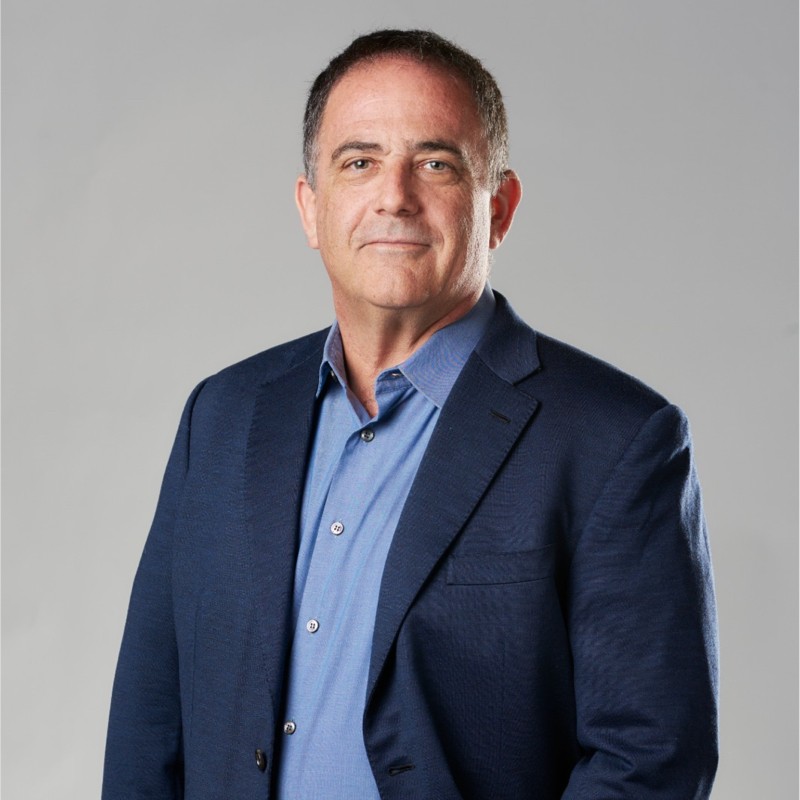
Shlomo Kramer, co-founder and CEO of Cato Networks, joins theCUBE at the CMO Leaders Summit hosted in Palo Alto by the NYSC Wire community. With an illustrious background from leading companies like Check Point and Palo Alto Networks, Kramer delves into key discussions surrounding the evolution of network security and the role of Secure Access Service Edge (SASE) in modern enterprises. theCUBE analysts navigate the conversation, exploring how data proliferation poses increasing security challenges and discussing how innovations like those from Cato Networks a...Read more
exploreKeep Exploring
What problem did the founders of Cato identify and aim to solve with their new way and next generation solution?add
What is the key to solving security in a digital business environment and why is SASE poised to replace appliance-based network security?add
>> Welcome back everyone to theCube here in the Palo Alto Studios. I'm John Furrier, host at theCube. We are here for the CMO Leaders Summit with the NYSC Wire community and theCube bringing all the action on how data is changing the world from user experience to security. Shlomo Kramer is co-founder and CEO of Cato Networks. Thanks for coming on theCube. Great to see you. Thanks for coming on.
Shlomo Kramer
>> Thank you for having me.>> So you've got a great background. You've had a lot of many endeavors, checkpoint, SASE now third generation. A big part of the conversation is data is everywhere. The growth of data as security is the key. We've had you guys on theCube many times as people try to figure out more and more touch points. The perimeter has been dead for over a decade. Now you have all this access points for users coming into applications. So the bar for resilience is really, really high for these companies. This has been big parts. So now you go back to the network, say, "That's what the packets are moving." From point A to point B on multiple touch points.
Shlomo Kramer
>> And they're doing that everywhere. It's not an office, somebody working by the table on the application in the on-prem data center. People can be anywhere, application can be anywhere, IOT can be anywhere, and yet you need to provide security. And how do you do that? That's been the struggle for the last 10 years and that's why we founded Cato. Because we found a new way and next generation for network security to actually do that.>> You guys are announcing $250 million in ARR, over 3,000 customers. Obviously the success has been great. We've been covering that on SiliconANGLE and theCube. This points to the success of the model. Tools have been out, platforms have been out. The platforms of platforms. You got tool sprawl, you got platform sprawl, but yet, are we solving security?
Shlomo Kramer
>> Yeah. So the key here is that security is a data problem. And in order to provide a secure solution and a solution that from an operational perspective is manageable at the budget and from a business perspective provides the agility of the digital business, you really need to have a platform that has all the data in the same place to make a decision. And that's key. That's key on the end point with companies such as CrowdStrike, that's key on the cloud with companies such as Wiz, and that's key on the network with companies such as Cato. And that's the heart of what SASE is and that's why SASE is going to replace the appliance based network security and that's a huge opportunity. Tens of billions of dollar that are going to be re-architected and infrastructure reset over the next decade.>> Talk about that reset because the AI is a combination of forcing function. We hear things like speed matters. We've been seeing a lot of successes here where speed is competitive advantage because that's what the users want. So speed in terms of semiconductors to applications to AI results. But when you look at platforms that are running everything, the security market has been in this world. And you've been involved in first check-in at Palo Alto Networks so you know a lot about these platforms. How do I reset when I have all this legacy? So I'm moving so fast as an organization. I still got the bad guys coming in. What's the key about the platform? What does the new platform look like? Is it connecting platforms together? Is it unifying them?
Shlomo Kramer
>> No. Platform you have to build from the ground up. So AWS, what AWS did for the data center, Cato is doing for network security. And we have today more than 3,000 enterprise customers. We are growing at 46%. We just announced 46% year-over-year growth at $250 million ARR. So you can't do that with larger enterprise unless you are able to very smoothly grow the SASE platform within the organization side by side with what you have and slowly move assets from the old to the new. And we've got companies that has 1,500, 5,000 locations around the world and they are slowly moving their assets from the old to the new. Very smooth process.>> Oh, sorry. There's two things there I want to get your thoughts on. One, what's the secret sauce of Cato? How would you describe that? And two, the change management is critical. What's the best practice for the change management? So secret sauce and then the change management process, motivation and benefits.
Shlomo Kramer
>> The secret sauce is that we've rebuilt the network and network security into a single stack that is in more than 90 around the world, that delivers two things that nobody was able to deliver before. A Five9 telco-like cloud network with the best security stack that requires 3,000 updates a year. And we are able to deliver that together.>> So the customer says, "Okay, I'm sold. You got me. I want to do this." What happens next? How does that go? What happens? Do I just say, "Okay guys, turn the lights off, put the new stuff in"?
Shlomo Kramer
>> Usually people don't say that. Usually people try the product. And you know what? 70% of the people that try the product buy the product because when they see it and they understand how this is going to fundamentally change the economics of their operating IT security and being able to say yes to the business, they go for Cato.>> So it's not a hard sell then. Say, "Here, try the product. You like it, call us back." Is that the motion?
Shlomo Kramer
>> It's getting the product in front of the people, but there's a long legacy of appliances. There's 20... By the way, appliances were not always here. I'm old enough to remember well all network security was in software. And suddenly that became too complex and over five, seven years it became appliances. So that's what's going to happen with network security. Next it's going to become cloud-based.>> So full circle. Back to software?
Shlomo Kramer
>> Cloud service. Not software.>> Cloud service. All right. So let's talk about open source. I saw the DeepSeq news. That got everyone attention at many levels. One was the Chinese aspect of it. And two, it's also the combination of clever ingenuity around open source. What's your reaction to that?
Shlomo Kramer
>> Well, AI is a major concern to our customers. Shadow AI, data leakage around AI, attacks that are mass-produced around AI, the ability to attain the results of the... And the list goes on and on. It's a whole new category in security and in fraud, by the way, that platforms such as ours needs to give a solution to.>> And what's the customer reaction to that? When they say, "Hey, I don't know what I don't know yet," how do you guys look at that? Because is it a network traffic containment? Is it more of ?
Shlomo Kramer
>> Yeah. I would say it's an expansion of our data and application security capabilities to general cloud applications with specific focus around the AI applications.>> What's the big customer reaction or reasons why they go with you guys on, is it because of the unification? Is it because everything's in one spot? Is it just the security? What-
Shlomo Kramer
>> I would say that it's the day-two value. The day-two value. If you're taking appliances and you're saying, "Hey, this is too complex. I'm a CISO of an organization. I've got 50 different appliances that I need to manage. I need to converge them into a platform," and I get these appliances now on Google Cloud, this is not going to simplify my day-two operation. With us, it's AWS. I don't know if you remember when AWS came out, there was Rackspace and people didn't quite understand difference. Both of them are cloud. We are AWS. Our competition is Rackspace.>> Amazon's got scale. On the operator side, you mentioned day-two. How does the skills gap fit in? Because what we're seeing is there's a tsunami of inbound, got to defend, also handle all the security, endpoint protection is hot. What's the operator side of this? What's the benefit to me? Is it speed of time, better telemetry? What's the...
Shlomo Kramer
>> Yeah. So we have a customer that is a large electric vehicle component manufacturer. 40,000 people worldwide use their entire network, their entire security, everything. Three people are managing that. And the CISO, CIO told me that in the previous company he would've needed 30 people with the appliance-based solutions. So really, we enable organization in a world where there are four million open position for security at each given time to really deliver top-notch security and deliver results for the business.>> I got to ask you on the origination story. When you started Cato Networks, what was the process? Were you guys sitting around saying, "Hey, we got to solve this? Was it something that you saw earlier on?" You're like, "Hey, this is coming." Obviously you saw Palo Alto. We've been seeing sprawl on both platforms and tools. "I got too many tools. I got too many platforms." What was the motivation? What was the origination?
Shlomo Kramer
>> Actually, I think the key, oh, there's always, if you look at the iPhone, what was the driver there? The SSDs and stuff. The key is, what's new technology that enables this? And the new technology was very high-speed software-defined networks. Everybody back then was focused in the data center and we decided to look at these networks across data centers and users and applications and use that. Because we came from the CDN, from the Cloudflare, Fastly encapsular world, that's what we want to replicate not on the customer network, but on the corporate network.>> One of the things we've been talking a lot on theCUBE in the past two years specifically, basically for over a decade, but past two years been specifically cloud one, I call it cloud one. Okay, Amazon SaaS. Okay, yeah. Pricing goes to SaaS subscriber. You got usage now coming. But cloud's also going next generation. You got ecosystems on top of Amazon. You got on-premise with AI, some workloads there. You got the edge. Basically, it's distributed computing. It's a network again. So how do you see that vision of a customer saying, "Hey, it's cloud operations. It's not about on-prem or cloud. I'm running everything in a new way"?
Shlomo Kramer
>> Right. Exactly. And people are saying, "Oh, it's cloud?" Thinking it's one thing, but it's very, very different if it's cloud of data centers like Google Cloud or Amazon or Azure or whether it's a CDN application delivery like Cloudflare or it's a SASE. These are three different types of architecture. They're all called cloud. But that's where the similarities stop.>> I won't get into the whole multi-cloud thing. We call it super cloud, but it should be abstraction. If I have across multiple environments, the customer should see that as one network or not. What-
Shlomo Kramer
>> Exactly. Exactly. And with us, we have many, many different customers that use multiple cloud providers and interconnect them using our network. So think about data center in Google, data center in AWS, data center in Azure, data center on-prem, it doesn't matter. As long as they on-ramp into our cloud network, they're on the same network.>> So I was talking to Dave Vellante, my co-host of theCUBE. We're old enough to remember the days when Cisco was growing from a small little company. Get the routing, they cracked the code on routing. You remember those days. You were in that wave. They bought everyone through M&A and they became a hodgepodge of siloed divisions. They tried to stitch it together, but ultimately they didn't really have a lot of success with that. A lot of companies have similar problems. Also, competition on your side looks at, okay, we grow through acquisitions. Talk about the organic versus M&A dynamic. And this is a huge potential issue or an opportunity.
Shlomo Kramer
>> So this is an excellent question because in cyber, there's much more startup activity than any other category. And there's one reason for that. That in cyber, there's the bad guy that innovates and forces innovation on the category in a much faster pace. And innovation traditionally in the last of the years came from startups, point products that were consolidated into portfolio companies. And now you've got great portfolio companies, but with dozens and dozens of point products that they are shoved into the CISO and now the CISO has to make a solution out of that. That can't continue anymore. And there's new way of innovation. And that's one of the messages that I think CrowdStrike and Wiz and Cloudflare and us are bringing to the market. There can be fast innovation, even faster innovation over a platform. There is the equation where 90% of engineering is provided by the platform and then you add additional blades and you move faster than a startup. And we've shown that in the last few years. Just last year we came with IOT security, digital experience management, EPP, XDR, many SASE for partner platform. All of these innovation 10x the speed of a startup because we had the platform. And some of these are extremely important markets, like IOT security or digital experience management, that don't achieve their size because the customer needs to deploy every time probes and agent or do heavy lifting. With us, because they have the platform, they can just switch a toggle and they're up and running.>> Yeah. And all those-
Shlomo Kramer
>> So it's a win-win situation.>> All those agents cause more traffic too. They take up, it's like clogging up the roads. The good point about the other platforms, because when they pull all the startups together, they call that best of breed. We have a platform that's got all the best of breed point products. Sub-optimized. So you're saying is that if you have the network, the ability to get these adjacencies or markets, the alternative would've been what? Start a company, go after it, try to compete with a platform?
Shlomo Kramer
>> Right.>> So you're saying having the platform gives you that edge that enable-
Shlomo Kramer
>> The ability now to go and add 10, 20 different add-ons that used to be each one of them a separate product that replicates the platform work and leaves the CISO with a huge problem of integrating it all and provides a much inferior security solution because the data is not centralized. And we will end where we began. Security is a data problem and you need the data to be converged.>> And the holistic end-to-end view of things. You get more data, more context.
Shlomo Kramer
>> Exactly.>> All those things come together. Okay. I have to bring up, since you're a successful entrepreneur, you're well-known, really amazing successes, so congratulations. If you were a startup entrepreneur today, go back and talk to your 22-year-old self and saying, "Hey, I want go disrupt and build a company," what would you do if you were a startup right now? Because you have to integrate to stack. So it's not about replacing. Would it be an integration story? If you were giving advice, I'm sure you invest in a lot of startups, but if you were a startup, what would you do?
Shlomo Kramer
>> Yeah. First of all, the life of a startup is much easier with AI because you need much less developers and you've got these IDEs that help you .>> Don't need venture capital. Just go after it.
Shlomo Kramer
>> Much cheaper, much smaller . So that's the good news. The bad news is that in security, every good idea have 10 different competitors. So be ready. Even if you think your idea is great, be ready to execute. And if you don't think you can out-execute your competition, it doesn't matter how great your idea is.>> In security, there's a very low tolerance for the wrong answer. All you got to be wrong is once.
Shlomo Kramer
>> Right.>> The bad guy could be wrong a lot, right?
Shlomo Kramer
>> Exactly.>> That's the old saying. All right. I want to ask you about the cybersecurity market. Obviously Israel has a lot of startups. We've interviewed a ton on theCUBE. It's a mecca of great startups and a lot of energy coming out of there.
Shlomo Kramer
>> Yes.>> What's your perspective on what's going on in that market? Because again, this is a huge in-migration global market for security. What's your take on the situation in Israel from the startup standpoint?
Shlomo Kramer
>> So this is a great situation these days. Companies such as Cato and Wiz and many others are blossoming investments at very high valuations. So we see worldwide recognition in the fact that Israel is, if not number one, the number two cyber startup hub in the world.>> Yeah. We saw a bunch of those cyber startups at the NYSC. You see the banner falling down at the NYSC for Cato soon?
Shlomo Kramer
>> Yeah.>> They're doing extremely well. All that revenue. Another IPO in the works for you?
Shlomo Kramer
>> Yeah. I can't comment on that.>> Of course you can't. Well, back to, to close out, for companies that are actually sitting there, the platform architects, what's the conversation? What's your advice? Whether it's a big bank or big insurance company, big enterprise, they get the cloud-native thing going on. You're seeing that growth on the platform engineering. Data's coming in. That layer's being looked at. From Cato's perspective, how do you view the stack and what's your advice to platform architects who are really trying to think through the end-to-end architecture?
Shlomo Kramer
>> I'm more concerned about the 50% of the market that is not the big banks, that is the hospital in Alabama that doesn't have all the resources. That's 50% GDP that is completely broken. And my advice to them, buy Cato.>> Cato fixes the broken security.
Shlomo Kramer
>> Exactly.>> Shlo, thanks for coming on theCUBE. Appreciate you.
Shlomo Kramer
>> Thank you.>> Okay. We are here in theCUBE in Palo Alto. I'm John Furrier, host of theCUBE. Thanks for watching.