We just sent you a verification email. Please verify your account to gain access to
theCUBE + NYSE Wired: CMO Leaders. If you don’t think you received an email check your
spam folder.
In order to sign in, enter the email address you used to registered for the event. Once completed, you will receive an email with a verification link. Open this link to automatically sign into the site.
Register For theCUBE + NYSE Wired: CMO Leaders
Please fill out the information below. You will recieve an email with a verification link confirming your registration. Click the link to automatically sign into the site.
You’re almost there!
We just sent you a verification email. Please click the verification button in the email. Once your email address is verified, you will have full access to all event content for theCUBE + NYSE Wired: CMO Leaders.
I want my badge and interests to be visible to all attendees.
Checking this box will display your presense on the attendees list, view your profile and allow other attendees to contact you via 1-1 chat. Read the Privacy Policy. At any time, you can choose to disable this preference.
Select your Interests!
add
Upload your photo
Uploading..
OR
Connect via Twitter
Connect via Linkedin
EDIT PASSWORD
Share
Forgot Password
Almost there!
We just sent you a verification email. Please verify your account to gain access to
theCUBE + NYSE Wired: CMO Leaders. If you don’t think you received an email check your
spam folder.
In order to sign in, enter the email address you used to registered for the event. Once completed, you will receive an email with a verification link. Open this link to automatically sign into the site.
Sign in to gain access to theCUBE + NYSE Wired: CMO Leaders
Please sign in with LinkedIn to continue to theCUBE + NYSE Wired: CMO Leaders. Signing in with LinkedIn ensures a professional environment.
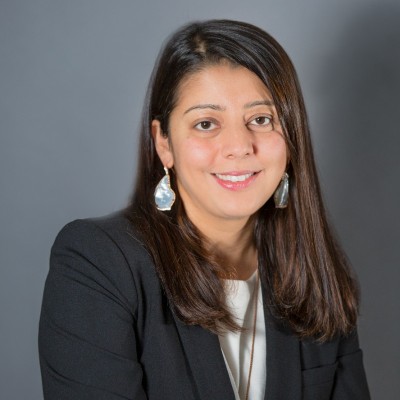
Corporate Vice President, AI & Enterprise MarketingAMD
Akanksha Mehrotra, corporate vice president of Artificial Intelligence and enterprise marketing at Advanced Micro Devices, joins theCUBE’s John Furrier for an insightful discussion as part of the CUBE and NYSE Wired community event. With a rich background including experience at Dell, Mehrotra provides a deep dive into the evolving landscape of AI in marketing, highlighting AMD’s strategic role in advancing AI infrastructure. The conversation is enriched by insights from theCUBE Research and its analysts.
Key takeaways from the discussion focus on th...Read more
exploreKeep Exploring
How would you frame it on how you would start planning and framing a future roadmap for AI?add
What are some considerations when adopting AI within a data center for a set of workloads?add
What are some of the potential future plans for utilizing AI in content creation and customer targeting?add
What are AMD's future plans for extending into localization, translation, and more production aspects of creating content, as well as their positioning in the AI space?add
>> Hello and welcome back to theCUBE here in our Palo Alto Studios. I'm John Furrier, host of theCUBE. We're here as part of theCUBE and the NYSE Wired community. Brian Baumann and team are in town for three days of interviews with AMD and industry leaders. Of course, we have AMD's corporate vice president of AI and enterprise marketing, Akanksha Mehrotra, is here. Cube alumni many times formerly at Dell, recognize your face. AMD is part of the industry leaders. All the chips and the AI infrastructure is booming everything. You guys are driving it. Thank you very much for doing that and coming on theCUBE.
Akanksha Mehrotra
>> Absolutely. Thank you, John. Great to see you again virtually and in real life. It is really an exciting time to be alive, both as a marketer but also as a professional... I know we like to say never a dull moment, but there's truly never a dull moment now.>> It's super awesome. I think the AI leaders we've been talking to have been all leaning in, but also curious. There's also optimism and there's also an understanding that what was once the way it was is going to change all at once, right? So it's happening. I think the common thread is we know how to do lead gen in multiple ways, that's changing, but the game is still the same. You still got to reach customers and you know who they are. Bring that value proposition out to them. They should receive it. If they like it, they pay you, you keep them, and you just keep it going. There's all kinds of mechanisms around it for performance marketing, events, face-to-face, digital, everything, lead gen, all that's changing. But marketers have data. They have data, they have customers, and they want to implement AI. I want to get your thoughts as you see AI coming, how would you look at it? How would you frame it on how you would start planning and framing a future roadmap for AI?
Akanksha Mehrotra
>> John, I think it's a particularly exciting time for marketers. One way to look at it is creativity is being quickly commoditized, if you will. For a marketer that is both exciting as well as a challenge. I like to think that marketing has always been at the intersection of both art and science. I think with AI, to your point, with all the data that is now available and our ability to harness that data becoming faster and frankly equally available to everyone, I would say that science ratio, if you will, is going up a bit. I think for any marketer who's approached their job as a data-informed way of thinking, I think it's a really exciting time. I certainly am excited about the ways in which we're leveraging it both internally as well as what we're looking forward to doing over time.>> The word B2B2C has come up a lot. It's been talked about before, but now more than ever. I mean, AMD, you guys make the infrastructure semis and the chips that go around building these new AI systems. But your customer's customers are also... You can think about them. You start to see a much bigger horizon to the customer no matter who the marketer is. How do you see that changing, the thought process? Does that change some of the execution things you might look at? Again, knowing what's pre-existing, what changes? What buttons do you push? What levers do you see? How do you see AI impacting the key levers?
Akanksha Mehrotra
>> I look at AMD, we are fortunate in that we get to partner with a variety of players within the ecosystem. As you said, we obviously, provide a lot of the chips to everything from data centers to OEM providers like the ones that I came from to edge to embedded as well as to the largest hyperscalers. We certainly have those B2B relationships, but increasingly, we're also now developing, and certainly, we intend to continue developing relationships with the end customers that are using solutions that are based on our software and our silicon. I think as a marketer, that means that my team and I need to stay up to date on not just the needs of our partners, who, obviously, we are very committed to supporting, but also the end customers and their customers who they are focused on supporting. So what that means is a few examples, I would say, it's just insights on the end customers. It's not just about lead gen going to an event and capturing the lead. But are you on a real-time basis now you have the ability to derive customers that are actually in market for your product? There's intent data that's available either through your first-party signals that you may have or through your partners. As a marketer, are you harnessing that so that you're delivering not just the right message to the right audience and the right persona, but also doing it at the right time? Maybe within the same end customer, there's a group of people, let's say, within the IT organization that are actively considering, let's say, a client refresh because they're looking to transform their workforce. So to that population, you probably need to deliver maybe a mid-funnel or a lower-funnel message because they've already decided they're in the market for it versus maybe there's another group within the IT organization on the data center side who are still evaluating how they're going to adopt AI within their data center for a set of workloads. So maybe there it's more about awareness and more about helping them figure out, "Well, what type of a solution do you need? Do you need to first modernize your infrastructure so that you can create space for AI? Once you do that, what type does your workload really need a GPU or could you use a CPU?" That's a very different message, but having the intelligence around where that end customer is in their journey through the intent data helps you make that decision. I think with AI and with just the ability to harness all these data points that we have, you can now do it in, I would say, near real-time and not really real-time, but certainly better than a shot in the dark of like, "I'm going to throw a client message out there and I'm going to throw a data center out and then hope whoever picks up sticks, and then I'll get a lead and throw it over to the sales team.">> We used to say, throw spaghetti against the wall, see what sticks, and throw it in the dark. That is exactly the point I wanted to get to you on. Because in the classic, go back to test 15 years, just obviously with theCUBE, we talked to a lot of marketers, a lot of organic activity was successful. A lot of the marketing has been data-driven. That has been a term that's been relevant. So data-driven has been use the data, but now the word data native is interesting. You mentioned real time. There's a lot more going on in real-time. That's gettable, that was fantasy in the past like, "Hey, maybe what if we could slice our segment, our audience this way, and in this group and then do different things, A, B test and do other things?" But the idea of actually hitting the audience in real-time and having real-time data come back, you got to have a mechanism for that. What's your vision on this? Because being data-driven is great, you got dashboards but rearview mirror, research lag six months. Things can lag a little bit just on the inertia of systems, but when you shift to a real-time mindset, the game changes. What's your vision on that? Because I'd love to get your reaction.
Akanksha Mehrotra
>> Term I like to use... I mean, yes, everybody wants to be data-driven, but exactly to your point, that usually is in rearview mirror, right? The term I like to use is being data-informed because as a marketer there's value to the data and then there's value to the intuition that you have and the knowledge that maybe you've built up over the years. I think you need the right mix of both of them to do it near real-time because you will have seen those patterns before hopefully. Therefore, you're able to make a different decision than perhaps what somebody else would've made. My vision for this, and frankly some of the things that we're doing already is having our own propensity-based models that we use to group accounts or group customers into categories, folks that are maybe in market right now and ready. Just the example that I used just a few minutes ago versus maybe another group of customers who... Perhaps these are contacts that we just harnessed through an event we did last week. So we don't know where they are because we literally just found out about them. I think it's more about having that mindset of constantly evaluating and looking and having a agile planning approach. I like to tell my team that planning is great. You want to have maybe, I like to call it, a 60%, 70% plan of what you're going to do for the year, but then the remaining time, you need to be flexible and agile enough to be able to adjust because this market is moving so quickly that you don't want to get married to a plan or an idea or a campaign or a strategy that maybe is out of date. Taking that data-informed mindset and coupling that with being agile, I think allows us to react faster.>> I love the agile methodology. We had one guest on theCUBE said, "You going to be like a director?" I'm like, "Yeah, you don't always get the first take, take two." You can try things, but being mindful of the experimentation, but also getting accuracy on unbiased or preexisting information. Sometimes bias creeps in. This is the way we sell to companies. You got to look for new things. What's your thoughts on that? Because the bias is potentially in there because there's a lot of data in the systems about customers, about sale promotions, about how things were done. What's your view on that and where do you see that evolving and does that impact anything?
Akanksha Mehrotra
>> I think this is where I feel lucky being relatively new to the space at AMD because I can truly say I have a fresh pair of eyes on things. That doesn't mean I don't have my own biases from maybe previous engagements, but this is where I think you want to have a culture where people feel empowered to challenge each other. Part of that agile methodology is also making sure that you're not punishing or seeing as a failure, a change of plan. Because it's designed, if you're not changing things, you're perhaps being too conservative and not aggressive enough. So I don't know that there is a silver bullet or an answer to that aside from just always being eyes wide open around the idea that you're going to come at a situation based on your previous experiences, somebody else will come at it through theirs. As long as we can agree to hopefully a few sources of truth that we're going to look at and agree to debate it and look at it. Then also, agree to gave each other grace when we try things and maybe they don't work, I think that'd be fine.>> I love the idea that you don't want to bring too much pre-existing, you bring the experience over. But if you bring the same playbook over, the competition's going to know what you're doing too. Plus, there's new opportunities. How do you set your team up? Because one of the other thing I want to get your thoughts on is what does a good team makeup look like. Now we're seeing things like interdisciplinary skills, maybe having some knowledge of how systems work, tooling, maybe not using the old legacy systems. What is your strategy there at AMD for you or maybe you personally around how you look at how to grow a team? Because again, it's early, so it's going to probably continue to evolve. The team might get bigger, it might be different, might be more horizontally spread out, or it might be bigger.
Akanksha Mehrotra
>> Yeah. The way I think about it is probably in three buckets if you will. I always like to set a good foundation from a data knowledge and analytics standpoint for all the reasons I just talked about, right? None of this works, you can't make data-informed decisions if you don't have data, if it's not being collected, if the data pipes aren't built in a way, if you don't have clarity around what metrics we're going to be looking at and what cadence and with whom. There's just some basic hygiene work around what we need from our analytics infrastructure standpoint. I think that's like foundation, number one. I think number two is what the approach I'm taking now is frankly more integrated marketing because I think we have AI tools that can help you specialize in many areas. What you need is a marketer with generalist skillsets that is able to harness those tools and that has enough experience with maybe previously having done the social and the content and the amplification and the campaigns and da-da-da-da-da, right? Who's able to take, let's say, the 60%, 70% version that the AI tool gave you, and then look at it with a human in loop, and then turn that into something that has a better likelihood of, let's say, resonating with our end customer. I mean, I don't know what the right technical term for it is. I call it integrated marketing, which is put together a 360-degree omnichannel campaign that is leveraging all of the vehicles that we know and love and is likely leveraging, by the way, AI tools to develop the first cut of all of them. But then provides this human oversight to turn it into a product that we can all be proud of. Then I think the third to the stool, if you will, that goes without saying, is just simply good old-fashioned collaboration. I mean, the one thing that's clear in AI is this moving too fast for any one individual or one team to keep up with it. Having strong partnerships and relationships, whether it's with my product marketing counterparts or whether it's my partners who are doing the same things and candidly are one step closer to the end customer that we're trying to get at, or maybe it's my engineering counterparts, whatever it is. I think there's not a replacement, technology doesn't replace that human connection, those relationships, and those partnerships. I think especially in this day and age, I think that's even more important. I'm not moving away from that.>> Creative process and the team work's critical. The creative process is awesome. Akanksha, thanks so much for coming on theCUBE. Final question for you. What are you most excited about? What's your plans for the year for you as you get settled in? AMD is doing extremely well. Congratulations to the company and congratulations on the new role there. What are you excited about and what's your goals for the year?
Akanksha Mehrotra
>> I think I'm, from an AI standpoint, super excited about harnessing the capabilities. We're already trying, we're using AI, we POC'd it before and now we're using it for some of our content creation, both on the campaign as well as other content side. We're also using it on customer targeting as we talked about. Obviously, we want to be able to go deeper. I think future plans for us is to extend that into things like localization, translation, more of the production aspects of creating content. That's one thing that we're looking forward to. Then finally, from a gold standpoint for us at AMD, we think we're very favorably positioned in this AI space, having the broadest end-to-end portfolio, having this software based on an open ecosystem, and then the partnerships that we have, our goal is to keep doing what we're doing and extend that message deeper into our enterprise and customers so they can see the value that we bring through our solutions. So partnering with my counterparts to help the company get to its goals is what we are all striving for.>> Well, it's great to see you. Dave Vellante and I are looking forward to seeing the analyst events and your events. Again, congratulations on continuing to have great success there. We'll keep in touch, and this is just the beginning. We're going to be doing the CMO Leaders events. We're going to continue this as an open community and thanks for being part of theCUBE community. Of course, now part of the NYSE Wired community, which is theCUBE and NYSE working together to create this open network. We really appreciate you taking the time out of your super busy schedule, and we'll keep in touch.
Akanksha Mehrotra
>> Absolutely. Thank you. It's been wonderful talking to you and meeting with the NYSE Wired team. Thanks for having me.>> Thanks, Akanksha. Appreciate you. All right. We are here in Palo Alto. I'm John Furrier, host of theCUBE with Brian Baumann, the founder of NYC Wired, the new community with theCUBE and the NYC coming together in an open way to bring content out in the open sharing through and bringing a trust network together on top of our existing networks. Again, bringing a community in to share the knowledge because as AI comes in, the CMO, just like every other persona inside the enterprise is leveraging and getting AI infused into their workflows. It is a superpower that will certainly enhance the human in the loop. Of course, we're bringing all the action on siliconangle.com and on theCUBE. I'm John Furrier. Thanks for watching.